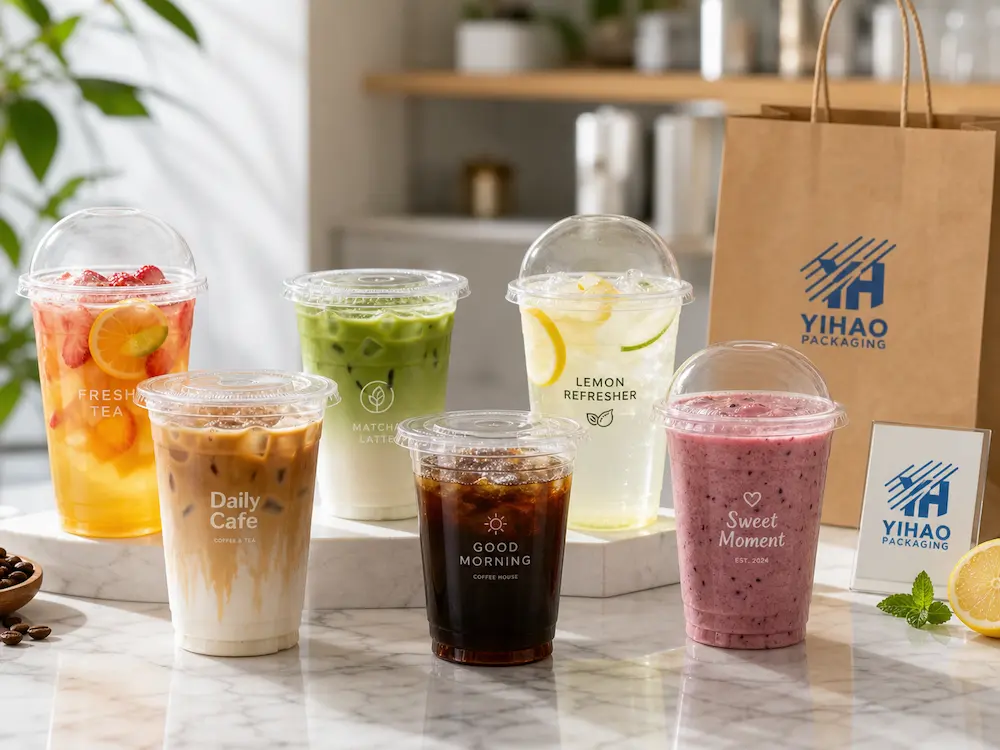
Micro Summary: PP Cups with Lids for Cold Drinks, Takeaway Service, and Wholesale Buyers
PP cups with lids are practical cold drink packaging solutions for iced coffee, juice, smoothies, milk tea, fruit tea, soda, lemonade, matcha, cold brew, refreshers, and other takeaway beverages. Made from polypropylene, these cups support foodservice buyers who need durability, cup-lid compatibility, stacking performance, custom branding, wholesale supply, and reliable manufacturer support. For cafes, beverage chains, supermarkets, distributors, and packaging importers, the best choice depends on material quality, cup size, lid type, drink application, carton packing, and repeat-order stability.
PP cups with lids are widely used for cold beverage packaging because they combine practical durability, lightweight handling, lid compatibility, and cost-effective supply. For cafes, juice bars, beverage chains, supermarkets, foodservice distributors, and packaging importers, they are not just drink containers. They are part of a complete service system that affects filling speed, takeaway safety, retail presentation, storage efficiency, and customer satisfaction.
Polypropylene, commonly known as PP, is a common material for cold drink cups because it offers toughness, flexibility, and daily-use reliability. When paired with suitable lids, PP cold cups support iced coffee, cold brew, smoothies, juice, milk tea, fruit tea, lemonade, soda, matcha drinks, sparkling fruit drinks, refreshers, protein drinks, and other chilled beverages.
This FAQ guide explains what buyers should know before ordering PP cups with lids. It covers materials, common sizes, lid types, drink applications, durability, recyclability claims, custom printing, wholesale ordering, and how to choose a reliable manufacturer or supplier.
What Are PP Cups with Lids?
PP cups with lids are cold drink cups made from polypropylene and supplied with matching lids for beverage service, takeaway orders, retail display, and foodservice packaging. The cup holds the beverage, while the lid improves portability, reduces splashing, supports straw or sip access, and creates a cleaner drinking experience.
For commercial buyers, the cup and lid should be evaluated as one packaging system. A strong cup loses value if the lid fits poorly. A well-designed lid creates problems if the cup rim is inconsistent. A low-cost cup becomes expensive when leakage, lid pop-off, or customer complaints appear in real service.
Why Polypropylene Is Used for Cold Cup Packaging
Polypropylene is used for many takeaway cold cups because it provides a practical balance between strength, flexibility, lightweight structure, and price control. PP has a slightly flexible character, which helps the cup perform during stacking, filling, hand-carrying, and transportation.
This matters in high-volume operations. Staff need cups that separate smoothly from stacks, hold shape during filling, match lids consistently, and work during busy service hours. Distributors need packaging that can be packed efficiently, shipped in cartons, and stored without excessive cracking or deformation.
What Materials Are Used for PP Cups with Lids?
The main material used for PP cups with lids is polypropylene. In most commercial applications, the cup body is made from PP, while the lid may also use PP or another suitable plastic material depending on the lid structure and product design.
For food packaging buyers, the real question is not only “What material is this cup made from?” The better question is: “Does this material match my drink menu, service model, storage method, price target, and supply chain?” PP is a strong option when buyers need practical cold cup packaging for daily foodservice use.
Polypropylene Cup Body
The cup body of polypropylene cold cups is designed for chilled drinks and everyday beverage service. PP cups are commonly used in cafes, beverage shops, convenience stores, quick-service restaurants, catering, supermarkets, and takeaway counters.
Compared with PET, PP usually has a softer appearance and may not deliver the same glass-like transparency. However, PP offers strong value where durability, flexibility, stacking, and cost control are more important than maximum visual clarity.
Matching Lid Options
Lid selection is one of the most important parts of buying PP cups with lids. Common lid options include flat lids, dome lids, straw-slot lids, sip lids, and no-hole lids. Each lid type supports a different beverage format and customer experience.
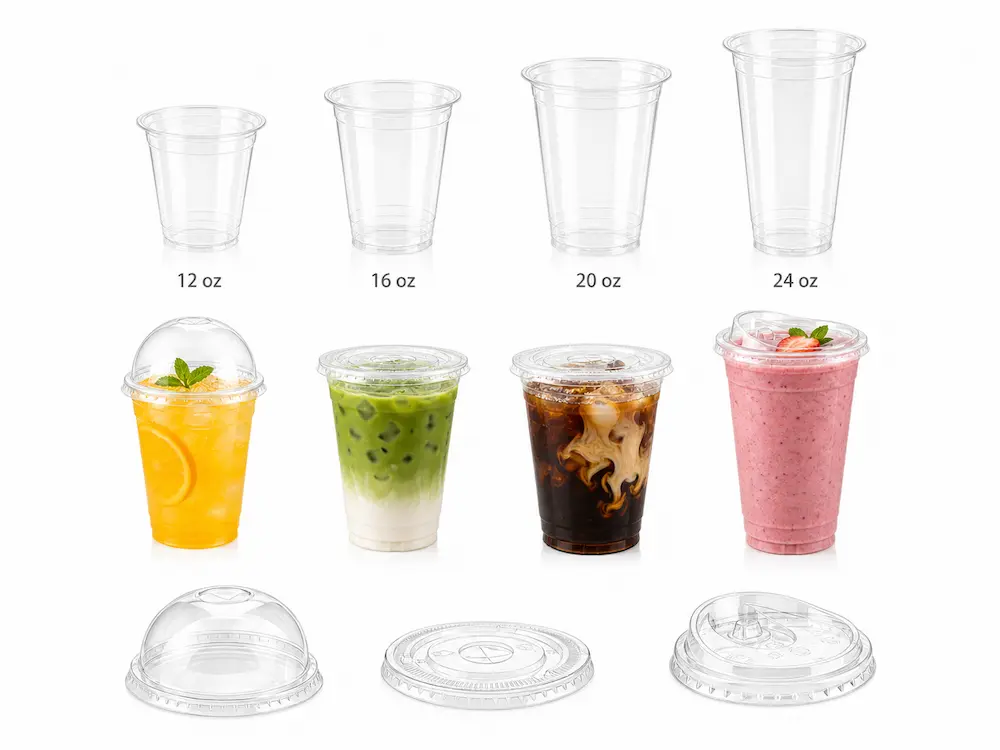
Flat lids work well for iced coffee, juice, tea, soda, and cold brew. Dome lids are useful for smoothies, whipped cream, foam, toppings, and drinks that need extra headspace. Straw-slot lids support standard cold drink service, while sip lids create a more direct drinking experience for selected beverages.
| Lid Type | Best For | Buyer Checkpoint |
|---|---|---|
| Flat Lid | Iced coffee, juice, lemonade, soda, iced tea | Check rim fit, straw slot, and splash control |
| Dome Lid | Smoothies, milkshakes, whipped drinks, topping drinks | Check headspace and lid height |
| Sip Lid | Cold brew, iced latte, ready-to-drink beverages | Check drinking comfort and opening design |
| No-Hole Lid | Pre-packed drinks, retail display, chilled beverage storage | Check closure strength and handling safety |
PP Cups vs PET Cups: Which Material Should Buyers Choose?
Buyers often compare PP cups with lids with PET cold cups before placing orders. Both materials are widely used in cold beverage packaging, but they serve different commercial priorities.
PP is commonly selected for durability, flexibility, daily handling, and cost-effective wholesale supply. PET is commonly selected for high transparency, premium drink presentation, and strong visual display. The right choice depends on the beverage, brand positioning, sales channel, and price structure.
For example, a beverage chain focused on high-volume takeaway service may prefer durable cold cups made from PP. A retail brand selling colorful layered drinks may prefer clear PET cups because product visibility directly supports shelf appeal.
| Comparison Point | PP Cups with Lids | PET Cold Cups |
|---|---|---|
| Material Character | Flexible, durable, practical for daily handling | Clear, rigid, strong for visual display |
| Best Application | Takeaway drinks, foodservice beverages, high-volume service | Premium drinks, colorful beverages, retail display |
| Visual Clarity | Functional clarity or translucent appearance | High transparency and stronger shelf appeal |
| Buyer Priority | Durability, lid fit, cost control, bulk supply | Presentation, clarity, premium product visibility |
What Sizes Are Common for PP Cups with Lids?
Common sizes for PP cups with lids depend on drink volume, ice ratio, topping space, lid type, and local beverage menu habits. Small sizes are useful for sampling, kids’ drinks, mini juices, and compact portions. Medium sizes are widely used for iced coffee, juice, lemonade, soda, fruit tea, and cold brew. Large sizes support smoothies, milk tea, refreshers, protein drinks, and takeaway beverages with more ice or toppings.
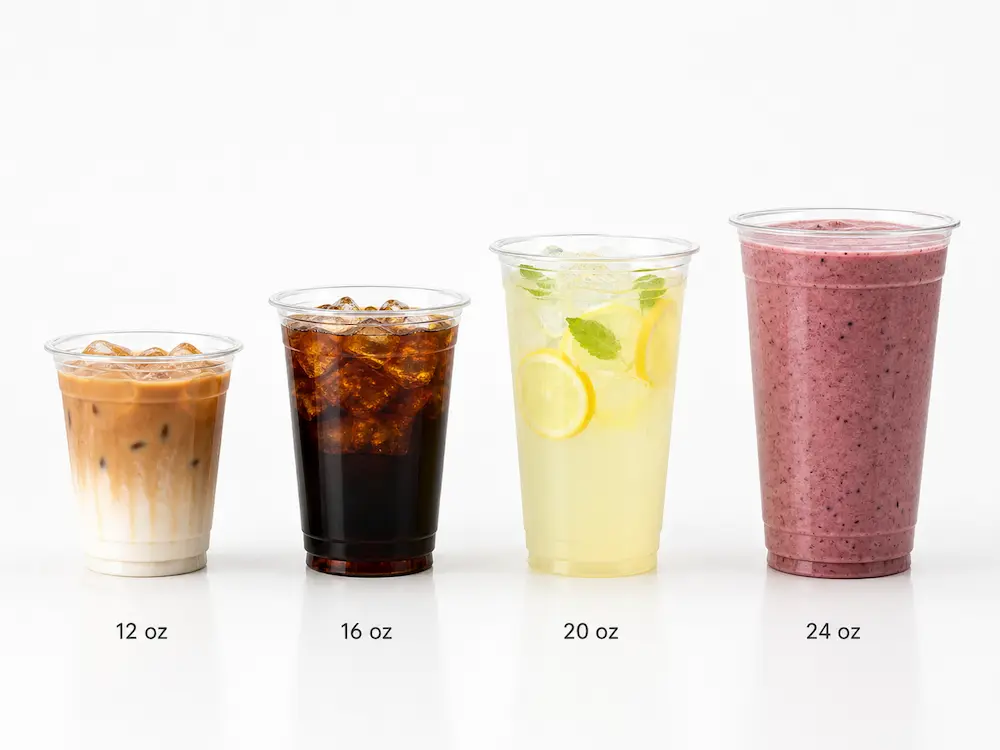
Buyers should not choose size based only on nominal capacity. A drink with ice needs more space than the liquid volume alone. A smoothie needs headspace. A milk tea drink with toppings needs enough room for pearls, jelly, fruit, or foam. A retail beverage may need label space and better display balance.
Small Sizes for Sampling and Compact Portions
Small PP drink cups are suitable for tasting events, kids’ beverages, small juices, mini drinks, dessert drinks, and promotional beverage sets. They help foodservice teams control serving size and reduce waste in sample-based sales.
Medium Sizes for Daily Beverage Menus
Medium-size PP cups with lids usually cover the strongest daily demand. They are practical for iced coffee, iced tea, lemonade, juice, soda, cold brew, matcha drinks, fruit tea, and other standard cold drinks.
This size range often becomes the core purchasing category for wholesale buyers because it balances serving volume, carton efficiency, customer acceptance, and menu flexibility.
Large Sizes for Takeaway and Specialty Drinks
Large takeaway cold cups are suitable for drinks with ice, foam, toppings, fruit pieces, smoothie texture, or larger serving portions. They are common in milk tea shops, smoothie bars, juice chains, quick-service restaurants, convenience stores, and event catering.
When selecting large cups, buyers should pay close attention to lid grip, rim strength, cup height, carton packing, and stacking stability. Larger cups create more handling pressure during filling and delivery, so cup-lid compatibility becomes even more important.
How Should Buyers Choose the Right Size?
The right size for PP cups with lids depends on five practical factors: drink volume, ice volume, topping space, lid structure, and service method. Buyers should test real drinks in sample cups before confirming bulk orders.
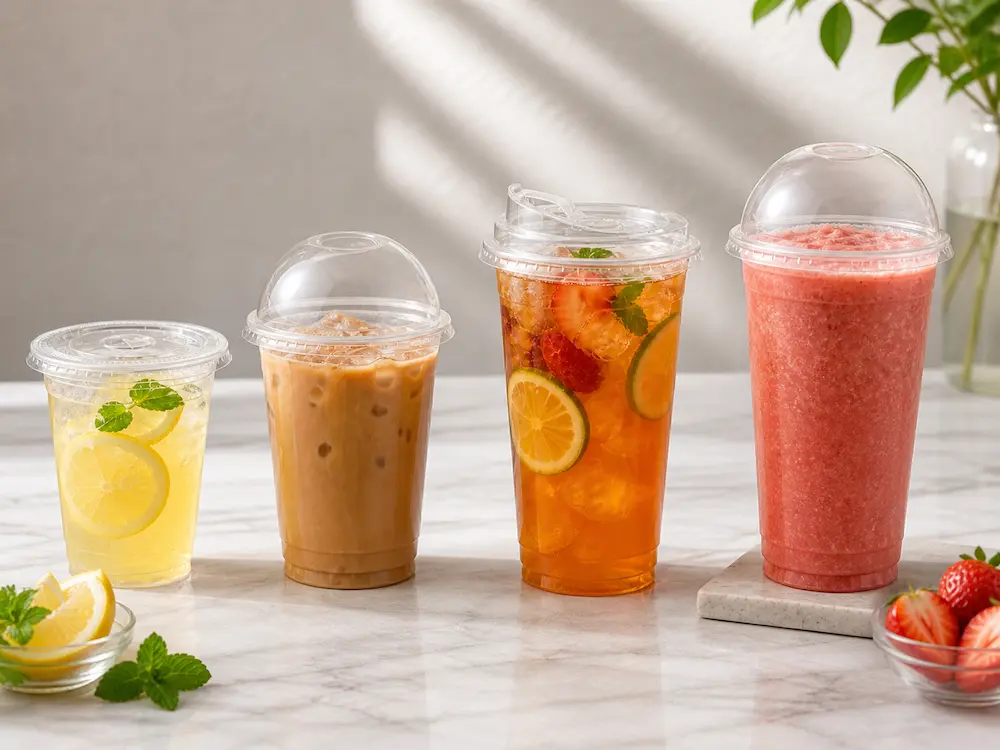
A simple but effective test is to fill the cup with the actual beverage, ice, toppings, and lid. Then test stacking, lid attachment, straw insertion, hand feel, squeeze resistance, and takeaway movement. This prevents many ordering mistakes before mass production.
| Drink Type | Cup Planning | Buyer Checkpoint |
|---|---|---|
| Iced Coffee / Cold Brew | Medium or large cup with flat or sip lid | Check ice space, drinking comfort, and lid fit |
| Juice / Lemonade | Medium cup with straw-slot lid | Check clarity needs and takeaway stability |
| Smoothies | Medium or large cup with dome lid | Check headspace, lid height, and straw access |
| Milk Tea / Fruit Tea | Large cup with straw-slot or sealed lid option | Check topping space and lid strength |
| Soda / Iced Tea | Medium or large takeaway cup | Check stacking, rim strength, and cup carrier fit |
What Are PP Cups with Lids Used For?
PP cups with lids are used for cold beverage packaging across cafes, juice bars, drink shops, supermarkets, convenience stores, bakeries, foodservice chains, catering suppliers, and takeaway brands. Their value comes from practical performance: they hold cold drinks, support fast service, match lids, stack efficiently, and fit bulk ordering needs.
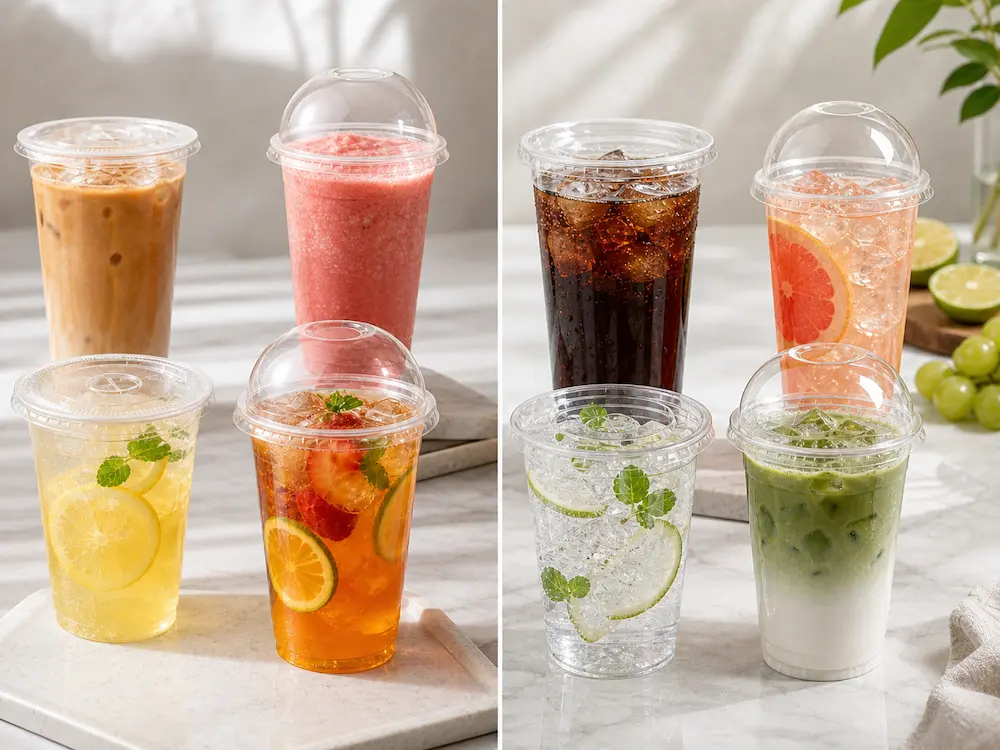
Iced Coffee, Cold Brew, and Matcha Drinks
Iced coffee remains one of the most important categories for cold cup packaging. PP drink cups are suitable for iced coffee, cold brew, flavored cold brew, iced latte, matcha latte, and other chilled cafe drinks where durability and takeaway handling matter.
For cafes and coffee chains, the cup must support ice, condensation, lid pressure, customer grip, and movement in cup carriers. A weak cup or poorly matched lid directly affects customer experience during busy takeaway hours.
Juice, Lemonade, Smoothies, and Fruit Tea
Juice cups and smoothie cups require thoughtful size and lid selection. Smoothies may need dome lids or wider straw access, while juice and lemonade usually work well with flat straw-slot lids. Fruit tea, sparkling fruit drinks, berry refreshers, and acai-style refreshers often require more cup volume because they include ice, fruit pieces, or visual ingredients.
For these applications, buyers often compare PP cups with lids with PET cups. If the brand emphasizes high visual clarity, PET may be preferred. If the brand prioritizes durability and cost-efficient daily service, PP becomes a strong choice.
Takeaway Beverage Service
Takeaway cold cups must perform beyond the counter. They travel in customer hands, delivery bags, cup carriers, supermarket chillers, and catering setups. The cup-lid system needs to reduce splashing, hold shape, and support convenient drinking.
This is where PP performs well as a practical service material. Its flexible structure supports handling, while compatible lids improve portability. For high-volume beverage businesses, these details affect staff speed, customer satisfaction, and repeat order confidence.
Retail Display and Chilled Food Concepts
Although PP cups with lids are mainly used for beverages, some foodservice teams also use cup formats for chilled desserts, yogurt parfaits, fruit portions, pudding, snack cups, and grab-and-go food concepts. In these cases, the buyer should confirm whether the cup shape, lid height, and material appearance match the display goal.
For food items with strong visual value, clear PET may be better. For operational durability and cost control, PP may be more suitable. The product application should guide the material decision.
Are PP Cups with Lids Durable?
Yes. PP cups with lids are commonly selected because they provide practical durability for many cold drink and takeaway applications. Durability is one of the main reasons buyers choose polypropylene cold cups for foodservice use.
However, durability is not determined by material alone. Cup wall design, rim structure, base shape, stacking design, lid fit, production consistency, and carton packing all affect real performance. A cup made from PP can still perform poorly if the structure is weak or the lid does not match correctly.
What Makes Durable Cold Cups Reliable?
Durable cold cups should hold shape during filling, stacking, handling, and delivery. The rim should support lid attachment without cracking or excessive looseness. The base should remain stable on counters and in cup holders. The side wall should resist easy collapse during normal grip.
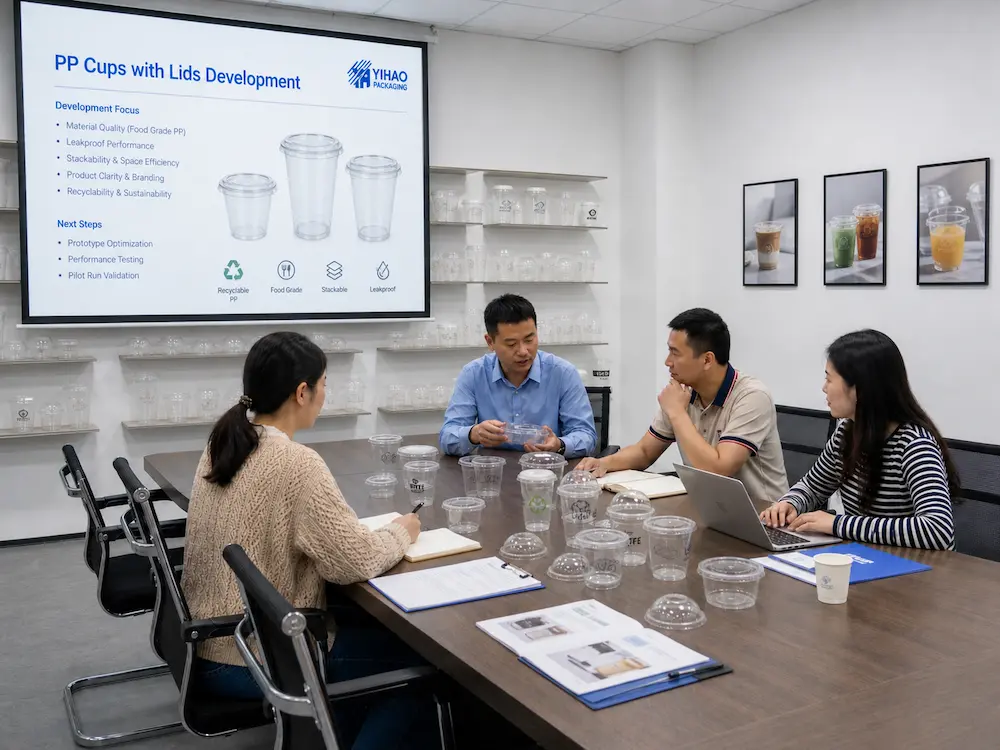
For wholesale buyers, durability should be checked through sample testing. Press the side wall, attach and remove the lid several times, stack cups, test cup separation, fill with iced drinks, and simulate takeaway handling.
Why Cup-Lid Compatibility Matters
Cup-lid compatibility is one of the most important quality points for PP cups with lids. A lid that is too loose creates leakage and customer complaints. A lid that is too tight slows down service and may deform the cup rim. A lid that fits inconsistently creates problems across different cartons or production batches.
For bulk purchasing, buyers should confirm that the supplier controls cup rim dimensions and lid matching consistently. This is especially important when ordering from a manufacturer for repeated wholesale shipments.
Are PP Cups with Lids Recyclable?
Polypropylene is a widely used plastic material and is commonly identified as plastic resin code #5. In many markets, PP is technically recyclable, but actual recycling depends on local collection systems, sorting infrastructure, contamination levels, and end-market demand.
For this reason, buyers should describe PP cups with lids carefully. A responsible claim is that PP is a recyclable material where accepted by local recycling programs. A risky claim is saying that every PP cup will be recycled everywhere. That kind of absolute wording does not reflect real recycling conditions.
How Buyers Should Avoid Overclaiming
Brands should avoid broad environmental claims that cannot be supported in every market. Instead, buyers should check local packaging rules and use market-specific language. In export business, recycling claims should match the destination market because recycling systems differ by country, region, and municipality.
The safer approach is to combine material identification, clear disposal guidance, and realistic sustainability messaging. This protects brand credibility and reduces the risk of misleading environmental claims.
Can PP Cups with Lids Be Customized for Wholesale Orders?
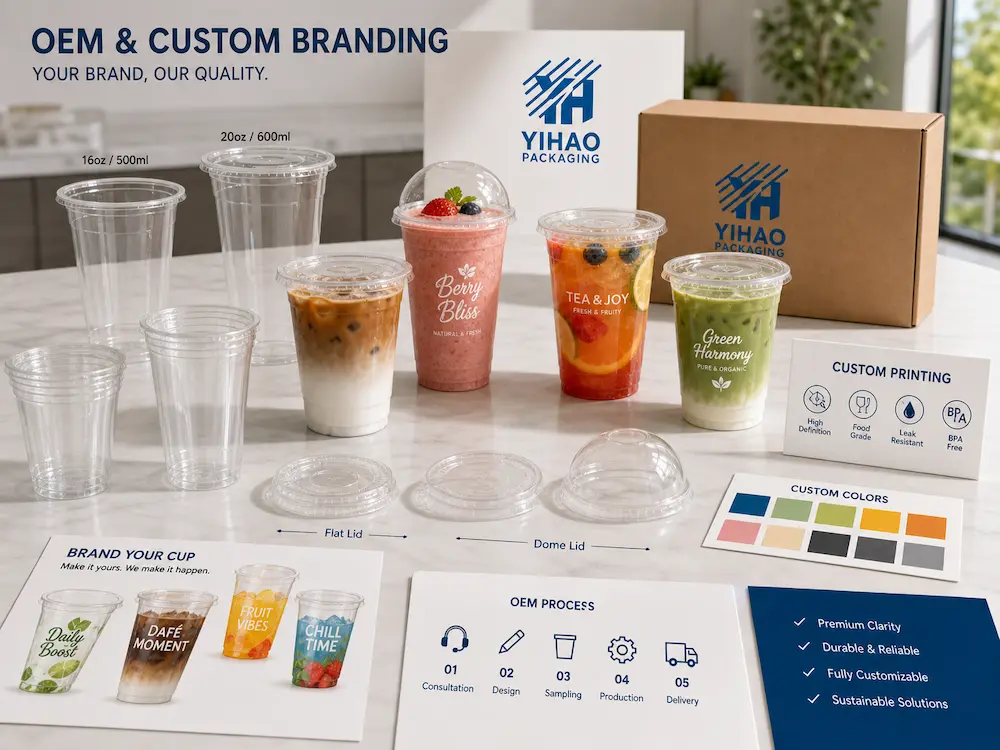
Yes. PP cups with lids can be customized depending on production capability, order quantity, printing method, and supplier support. Common customization options include logo printing, cup color selection, carton labeling, private-label packing, sleeve packaging, and customized cup-lid combinations.
Customization is valuable for beverage chains, distributors, supermarkets, and foodservice brands because it connects packaging with brand identity, shelf recognition, warehouse management, and channel distribution.
Logo Printing and Brand Presentation
Logo printing turns standard PP drink cups into branded packaging. Buyers should confirm print area, color limits, artwork requirements, ink suitability, and production samples before approving mass production.
For cold beverage cups, artwork should remain clear when the cup contains ice, condensation, or colored drinks. Simple, high-contrast designs often perform better than overly complex graphics.
Carton Labeling and Private-Label Packing
For wholesale orders, carton labeling affects warehouse receiving, stock control, distributor sorting, and repeat purchasing. Cartons should clearly show product name, size, quantity, cup-lid combination, and customer item code when required.
A reliable manufacturer or supplier should understand these details, especially for buyers managing multiple cup sizes, lid types, and market channels.
Wholesale PP Cups with Lids: What Should Buyers Ask Before Ordering?
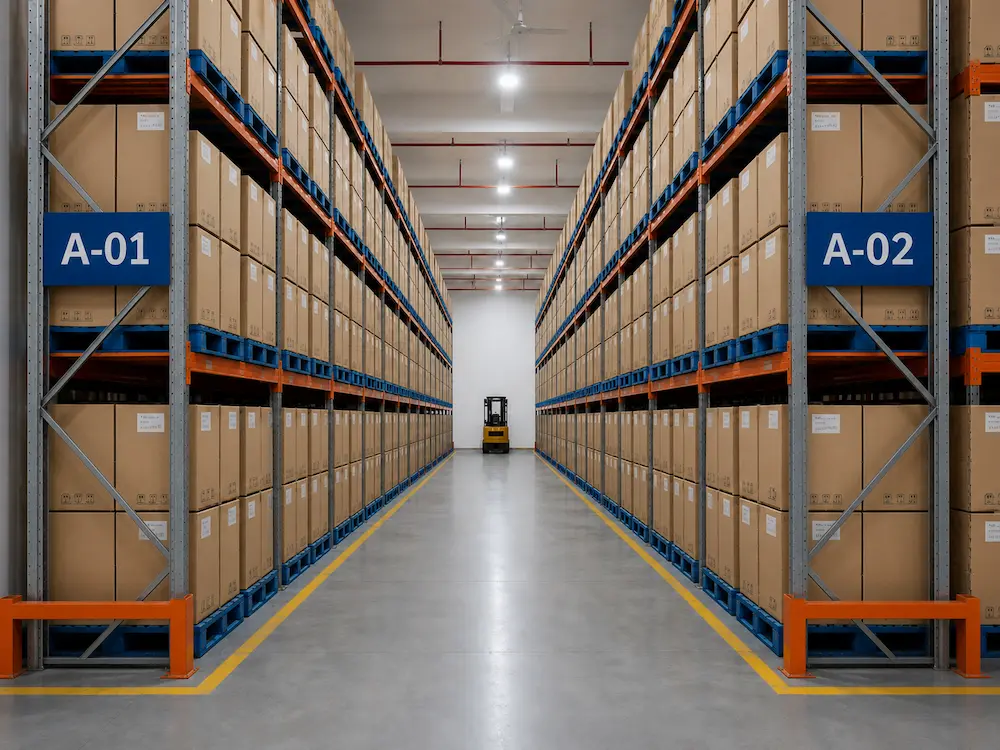
Before ordering PP cups with lids in bulk, buyers should ask questions that reduce cup-lid mismatch, wrong size selection, packing confusion, and quality inconsistency. A strong inquiry helps the supplier recommend the correct product faster and quote more accurately.
The most important questions include: What size does the drink menu require? Which lid type is needed? What beverage will the cup hold? Is custom printing required? What packing format is expected? What destination market is involved? Is the order for one-time promotion or repeat wholesale supply?
| Buyer Question | What to Confirm | Why It Matters |
|---|---|---|
| What drinks will the cups hold? | Iced coffee, juice, smoothies, milk tea, soda, fruit tea, or other drinks | Different drinks require different lid and size planning |
| Which lid type is required? | Flat lid, dome lid, straw-slot lid, sip lid, or no-hole lid | Lid type affects drinking style and takeaway safety |
| Is logo printing needed? | Artwork, color count, print area, and sample approval | Printing affects cost, lead time, and brand presentation |
| How will the cups be distributed? | Retail, foodservice, distributor, catering, or chain store use | Distribution model affects packing and carton labeling |
| Is repeat supply required? | Monthly, seasonal, promotional, or long-term procurement | Repeat orders require stable dimensions and consistent quality |
How Should Buyers Choose a PP Cups with Lids Manufacturer or Supplier?
Choosing a PP cups with lids supplier should not be based only on unit price. Low price means little if the lid does not fit, the cup deforms during shipping, the packing is inconsistent, or the supplier cannot support repeat orders.
A strong supplier should provide stable material sourcing, consistent production, practical size options, compatible lids, sample support, export packing, carton labeling, and responsive communication. For long-term buyers, supplier reliability often matters more than small price differences.
Check Material, Size Range, and Lid Matching
Buyers should ask for material details and confirm whether the cup and lid are designed to match as a system. Samples should be tested with the intended drink types before bulk confirmation.
A supplier with a complete size range gives buyers more flexibility. Beverage menus change, seasonal drinks appear, and customers often need several cup sizes for one market. A stable supplier helps buyers maintain consistency across small, medium, and large sizes.
Evaluate Wholesale and Export Support
Wholesale packaging orders require more than product availability. Buyers should confirm packing method, carton strength, loading plan, lead time, documentation support, and quality control process. Export buyers should also confirm whether the supplier understands destination market requirements and shipping conditions.
A professional supplier should communicate clearly and provide practical answers before the order is placed. Poor communication before payment often becomes a bigger problem after production begins.
Review Custom Service Capability
Custom service is important for buyers who need logo printing, private-label cartons, distributor item codes, or branded beverage packaging. A capable manufacturer should explain artwork requirements, printing limits, sample approval steps, and production control points clearly.
What Information Should Buyers Provide Before Requesting a Quotation?
To receive an accurate quotation for PP cups with lids, buyers should provide clear order information. Vague inquiries usually lead to slow communication, inaccurate pricing, and wrong product recommendations.
The most important details include cup size, lid type, order quantity, drink application, material preference, printing needs, packing requirement, destination country, and expected delivery schedule. If the buyer has samples, photos, drawings, or current supplier specifications, these should also be shared.
| Quotation Information | What Buyers Should Provide | Why It Matters |
|---|---|---|
| Cup Size | Capacity, height, diameter, or current sample details | Determines mold, carton packing, and price |
| Lid Type | Flat lid, dome lid, straw-slot lid, sip lid, or no-hole lid | Affects drinking method and cup compatibility |
| Application | Iced coffee, juice, smoothies, milk tea, soda, or other drinks | Helps supplier recommend suitable structure |
| Order Quantity | Estimated quantity per size and lid type | Affects production planning and wholesale price |
| Custom Needs | Logo printing, carton label, private label, or special packing | Affects artwork, sampling, lead time, and cost |
| Destination Market | Country or region for shipment | Helps align packing, labeling, and compliance discussion |
Should Buyers Request Samples Before Bulk Orders?
Yes. Samples are highly important when ordering PP cups with lids. Photos and quotations cannot fully show lid fit, cup feel, stacking performance, rim strength, or real drink compatibility.
Sample testing helps buyers confirm whether the cup works with their actual beverage menu. It also allows the purchasing team, operations team, and quality team to evaluate the same product before committing to mass production.
What to Test with Samples
Buyers should test lid fit, straw insertion, cup grip, side-wall strength, base stability, stacking, cup separation, fill line suitability, and drink appearance. If the cup is used for delivery, the buyer should also test movement in cup carriers and delivery bags.
For custom printed cups, buyers should review artwork clarity, logo position, color consistency, and print durability. For wholesale importers, carton packing and product count should also be checked when pre-shipment samples or production samples are available.
What Common Ordering Mistakes Should Buyers Avoid?
The most common mistakes when buying PP cups with lids are choosing cup size without testing the real drink, ordering lids separately without confirming rim compatibility, selecting a cup based only on price, and approving custom printing without reviewing physical samples.
Another common mistake is using unclear sustainability language. PP is a recyclable material where local systems accept it, but buyers should not claim that every cup will be recycled in every market. Packaging claims should match local regulations, collection systems, and brand responsibility standards.
| Common Mistake | Potential Problem | Better Decision |
|---|---|---|
| Choosing by cup size only | Wrong ice space or topping space | Test the actual drink with lid attached |
| Ignoring lid compatibility | Leakage, lid pop-off, service complaints | Confirm cup and lid as one system |
| Focusing only on lowest price | Weak structure, inconsistent packing, unstable supply | Compare durability, supplier stability, and total order risk |
| Approving printing without samples | Logo position or color may not match expectations | Review artwork proof and physical sample when possible |
Quick Buyer Checklist for PP Cups with Lids
The following checklist helps buyers evaluate PP cups with lids before purchasing from a manufacturer, wholesale supplier, or packaging distributor.
| Buyer Question | What to Check | Why It Matters |
|---|---|---|
| Is the material suitable? | Polypropylene grade and intended food packaging use | Affects safety discussion, durability, and market fit |
| Does the lid fit well? | Rim match, lid grip, straw slot, sip opening, dome height | Affects leakage control and customer experience |
| Is the size right? | Drink volume, ice space, topping space, menu standard | Prevents wrong capacity selection |
| Is the cup durable enough? | Wall strength, base stability, stacking, cup separation | Supports busy takeaway and foodservice operations |
| Can the supplier support wholesale? | Production capacity, carton packing, repeat order ability | Improves long-term procurement stability |
| Can the product be customized? | Logo printing, private label, carton label, packaging format | Supports brand identity and channel sales |
Why Work with a Manufacturer for PP Cups with Lids?
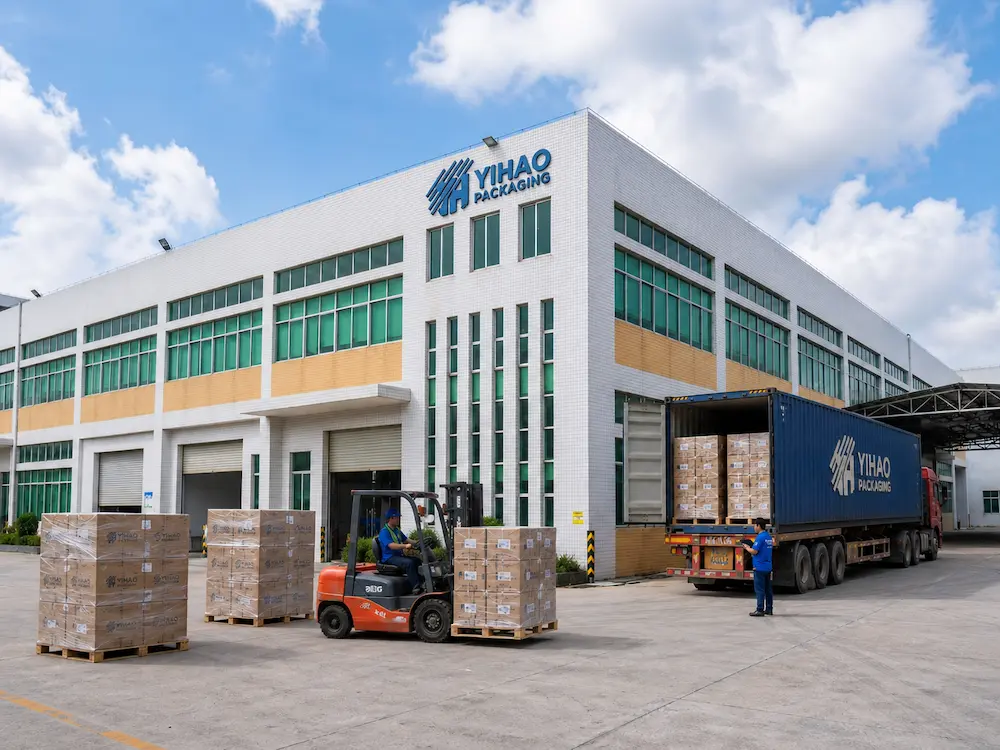
Working directly with a manufacturer gives buyers stronger control over product details, cup-lid matching, customization, quality feedback, and repeat order planning. For businesses that purchase large volumes of PP cups with lids, manufacturer communication helps reduce uncertainty and improve supply chain efficiency.
Distributors and importers need stable product ranges, consistent packing, and reliable lead times. Beverage chains and foodservice brands need cup systems that match their menu structure. Supermarkets and retail buyers need carton labeling, private-label options, and clear product specifications.
YIHAO works as a food packaging manufacturer and solution provider for buyers who need practical cold cup packaging, cup-lid matching, and wholesale supply support. For buyers comparing PP cold cups, PET cold cups, and other beverage packaging options, the best solution starts with real application details rather than a generic product list.
Final Buyer Note
PP cups with lids are a practical packaging choice for cold beverages, takeaway service, foodservice operations, and wholesale distribution. They are especially useful when buyers need durable handling, compatible lids, flexible size planning, custom branding, and cost-effective supply.
The right purchasing decision should consider material, cup size, lid type, beverage application, custom printing, packing method, supplier reliability, and destination market requirements. Buyers should request samples, test real drinks, confirm cup-lid matching, and work with a supplier that understands both production and commercial use.
For cafes, beverage chains, supermarkets, distributors, and packaging importers, PP cups with lids provide a dependable solution when durability, takeaway convenience, and wholesale supply matter more than decorative packaging alone.
FAQ: PP Cups with Lids
1. What are PP cups with lids used for?
PP cups with lids are used for cold drink packaging, including iced coffee, cold brew, juice, smoothies, lemonade, soda, milk tea, fruit tea, matcha drinks, refreshers, protein drinks, and takeaway beverages. They are also used in cafes, supermarkets, convenience stores, beverage shops, catering service, and foodservice distribution.
2. Are PP cups with lids suitable for cold drinks?
Yes. PP cups with lids are suitable for many cold drink applications. They provide practical durability, lightweight handling, and reliable cup-lid matching for takeaway service, retail drinks, and high-volume beverage operations. Buyers should select the right size and lid type according to the drink, ice volume, toppings, and service method.
3. What is the difference between PP cold cups and PET cold cups?
PP cold cups are often selected for durability, flexibility, and cost-efficient daily use, while PET cold cups are often selected for high transparency and premium drink display. PP is practical for takeaway and foodservice operations, while PET is strong for colorful drinks, layered beverages, and retail presentation.
4. Can PP cups with lids be customized for wholesale orders?
Yes. PP cups with lids can be customized with logo printing, carton labeling, private-label packing, and selected cup-lid combinations depending on order quantity and supplier capability. Buyers should confirm artwork requirements, sample approval, printing method, packing details, and production lead time before bulk orders.
5. How should buyers choose a PP cup manufacturer or supplier?
Buyers should choose a manufacturer or supplier based on material quality, size range, lid compatibility, sample support, wholesale supply ability, export packing, customization service, and communication reliability. The best supplier should understand real beverage applications and provide stable repeat-order support.
6. What information should buyers provide before ordering PP cups with lids?
Before ordering PP cups with lids, buyers should provide cup size, lid type, order quantity, drink application, custom printing needs, packing requirements, destination market, and expected delivery schedule. Clear information helps the supplier recommend suitable products and prepare accurate wholesale pricing.
References
- U.S. Food and Drug Administration, food contact materials and packaging guidance.
- U.S. Environmental Protection Agency, plastic recycling and sustainable materials management resources.
- Association of Plastic Recyclers, design guidance for plastic packaging recyclability.
- Plastics Industry Association, resin identification code and material information resources.
- European Commission, packaging and packaging waste policy resources.
- Food Packaging Forum, scientific resources on food contact materials.
- ISO, packaging and environmental management standards overview.
- ASTM International, packaging performance and plastic material testing standards.
Deep-Dive Insights: How Buyers Should Think About PP Cups with Lids
How do PP cups with lids improve takeaway drink operations?
PP cups with lids improve takeaway drink operations by creating a practical cup-lid system for fast filling, hand carrying, delivery movement, and customer drinking. The cup needs enough strength for daily use, while the lid needs consistent rim fit to reduce splashing and service delays.
Why do foodservice buyers compare PP cups with PET cups?
Foodservice buyers compare PP and PET because the two materials solve different problems. PP supports durability and cost-effective daily use. PET supports high transparency and premium visual presentation. Buyers should choose according to drink type, brand positioning, service model, and display requirements.
What should buyers check before confirming a wholesale order?
Before confirming a wholesale order, buyers should check cup size, lid fit, material, wall strength, stacking performance, carton packing, print requirements, sample approval, and supplier communication. A small problem in lid compatibility or packing details becomes expensive when repeated across bulk shipments.
Which option is better for branded beverage chains?
For branded beverage chains, the better option depends on the menu. Chains focused on high-volume takeaway drinks often benefit from durable cold cups made from PP. Chains focused on premium visual display may prefer PET. Many buyers use both materials across different drink categories.
What is the most important supplier consideration?
The most important supplier consideration is consistency. A reliable manufacturer should provide stable cup dimensions, compatible lids, repeatable quality, clear packing, and practical support for samples, customization, and wholesale replenishment. Consistency protects both the buyer’s brand and the customer experience.
Why does this product category support long-term procurement?
PP cups with lids support long-term procurement because cold drinks, takeaway service, and foodservice beverage menus require repeatable packaging. Once the buyer confirms the right cup size, lid match, printing method, and carton format, repeat orders become easier to manage across stores, distributors, and seasonal drink campaigns.
© 2026 YIHAO Packaging. All Rights Reserved.
All content, designs, and trademarks on this website are protected. Any unauthorized reproduction or distribution is prohibited.
For more information, please contact us.