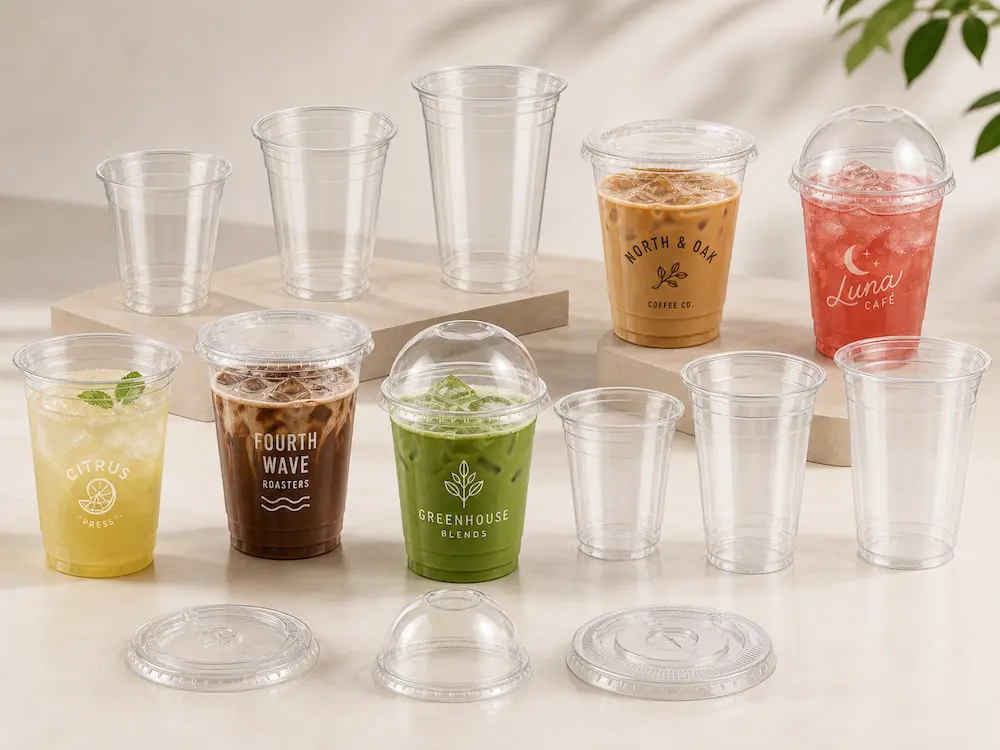
Micro Summary: Wholesale Durable Cold Cups
Durable cold cups are designed for cold beverage service where cup strength, rim stability, lid compatibility, stacking performance, and repeat-order consistency matter. For wholesale buyers, the right choice is not only about size or price. It depends on PP material quality, cup wall stiffness, rim design, takeaway handling, carton protection, and the supplier’s ability to deliver stable batches. This guide helps cafes, supermarkets, beverage chains, distributors, and foodservice buyers compare PP cold cups, polypropylene cold cups, PP drink cups, and PP cups with lids before choosing a manufacturer or supplier.
Why Durable Cold Cups Matter in Wholesale Beverage Packaging
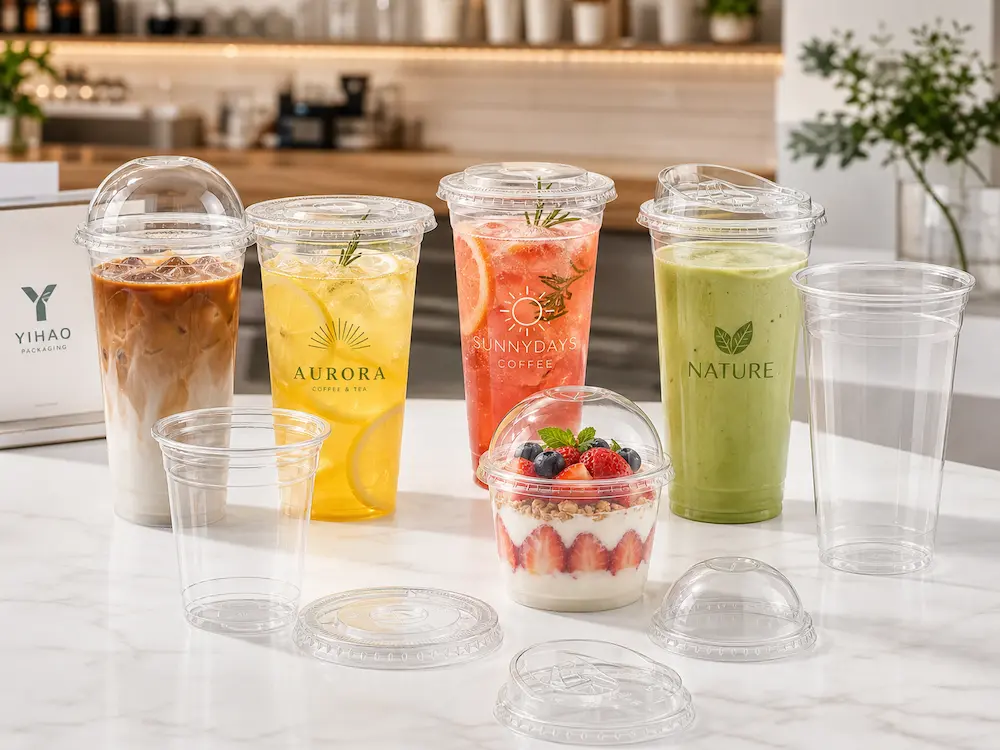
For beverage packaging buyers, durable cold cups are more than disposable drink containers. They influence serving speed, customer handling, takeaway safety, product presentation, inventory control, and repeat purchasing confidence. A cup that bends too easily, separates poorly from the stack, cracks during handling, or does not fit the lid correctly creates visible problems at the counter and hidden costs across the supply chain.
Cold drink packaging is now used in more demanding service environments. Iced coffee, cold brew, smoothies, milk tea, lemonade, matcha, refreshers, fruit tea, sparkling fruit drinks, protein drinks, and chilled dessert beverages often include ice, foam, pulp, toppings, or layered ingredients. These drinks place more pressure on the cup body and rim than a simple empty sample test can show.
This is why many cafes, supermarkets, beverage brands, foodservice distributors, and takeaway chains evaluate PP cold cups and polypropylene cold cups for durability-focused cold drink packaging. Compared with weak or poorly matched cups, stronger PP drink cups support better grip, better lid application, more stable stacking, and more consistent performance across daily service.
As a food packaging manufacturer and solution provider, YIHAO understands that wholesale buyers need a complete packaging system, not only a cup model. The right solution should combine cup strength, lid matching, material consistency, carton protection, customization support, and reliable supply.
What Are Durable Cold Cups?
Durable cold cups are cold beverage cups designed to maintain practical strength during filling, gripping, capping, stacking, transport, and takeaway use. For B2B buyers, durability is not a vague marketing word. It refers to how the cup performs under real operating pressure.
A durable cup should keep its shape when staff fill it with ice and liquid. It should not collapse easily when customers grip it. It should support a lid evenly around the rim. It should stack efficiently in cartons and separate smoothly during service. It should arrive in good condition after wholesale transport. These details directly affect the buyer’s cost, customer experience, and brand presentation.
In practical sourcing, buyers should evaluate durability through several key points:
- Cup wall stiffness and resistance to normal squeezing
- Rim stability for lid attachment
- Flexibility that reduces cracking risk during handling
- Stacking pressure resistance during storage and delivery
- Easy cup separation during high-volume service
- Stable appearance after filling with cold drinks and ice
- Consistent performance between samples and bulk orders
- Carton protection for export and wholesale distribution
When buyers choose durable cold cups, they are choosing a packaging format that supports the complete cold beverage workflow. This matters especially in takeaway service, where the customer often carries the drink outside the store and judges the brand through the packaging experience.
Why PP Cold Cups Are a Practical Option for Wholesale Buyers
PP cold cups are widely used in cold beverage packaging because polypropylene provides a practical balance of durability, flexibility, and daily handling performance. For chilled drink service, PP material is valued for its toughness and ability to resist normal handling stress.
Polypropylene cold cups are especially suitable for applications where cup strength and takeaway reliability are more important than ultra-clear display. For example, milk tea, iced coffee, cold brew, juice, smoothies, lemonades, refreshers, and protein drinks often require cups that stay stable during filling, sealing, and carrying.
For wholesale buyers, PP drink cups also provide strong operational value because they are normally purchased as part of a complete cup-and-lid system. A durable cup body alone is not enough. The lid, rim, stacking design, carton packing, and production consistency all affect final performance.
PP material supports cold drink packaging in several practical ways:
- Durability: PP cups provide strong resistance to normal squeezing and daily handling.
- Flexibility: Polypropylene offers useful flexibility, reducing brittleness during service.
- Takeaway performance: PP cups support drink handling in cafes, foodservice, and delivery scenarios.
- Lid matching: Proper rim design helps PP cups work with flat lids, dome lids, and straw-slotted lids.
- Wholesale consistency: Stable production helps buyers maintain repeat-order quality.
For buyers sourcing durable cold cups, PP is often a strong choice when the priority is practical toughness, reliable serving, and cost-effective wholesale supply.
Common Applications for Durable Cold Cups
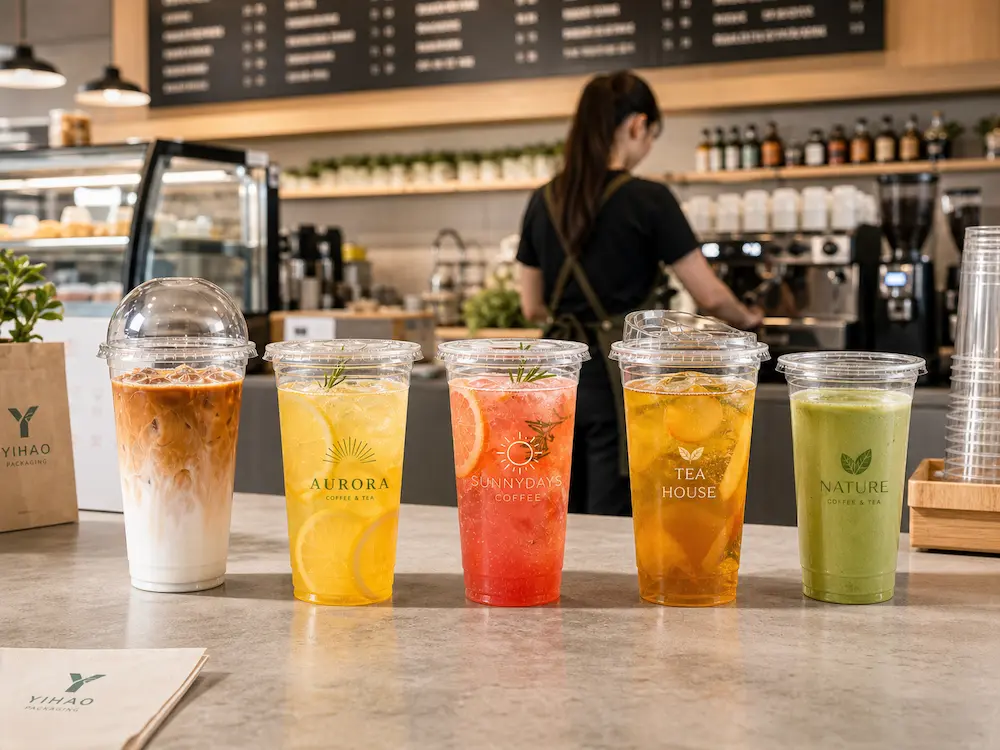
The value of durable cold cups becomes clear in real beverage operations. Buyers should evaluate the drink menu, cup size, ice level, topping volume, lid type, and takeaway method before selecting a cup.
Iced Coffee and Flavored Cold Brew
Iced coffee, cold brew, iced latte, flavored cold brew, mocha drinks, vanilla coffee, caramel coffee, and seasonal coffee beverages require cups that feel stable in the hand. A stronger cup improves the customer’s first touch and supports a more professional takeaway experience.
Juice, Lemonade, Fruit Tea, and Sparkling Drinks
Fresh juice, lemonade, fruit tea, sparkling fruit drinks, and flavored iced tea often include ice, pulp, fruit pieces, or layered colors. These drinks need packaging that supports both presentation and grip stability. Durable cold cups help protect the drink experience from counter service to customer use.
Smoothies, Matcha, Refreshers, and Protein Drinks
Smoothies, matcha beverages, refreshers, acai-style drinks, berry refreshers, and protein drinks are often heavier or thicker than standard cold drinks. The cup body must remain steady after filling. For these drinks, polypropylene cold cups provide practical handling strength.
Milk Tea and Topping Drinks
Milk tea, bubble tea, cheese foam drinks, fruit tea with toppings, and layered tea beverages require stable cup-and-lid matching. The cup rim must hold the lid correctly, and the body must support extra weight from pearls, jelly, fruit, or foam. PP cups with lids are valuable for these applications because the full packaging system affects takeaway reliability.
Supermarkets, Bakeries, and Foodservice Brands
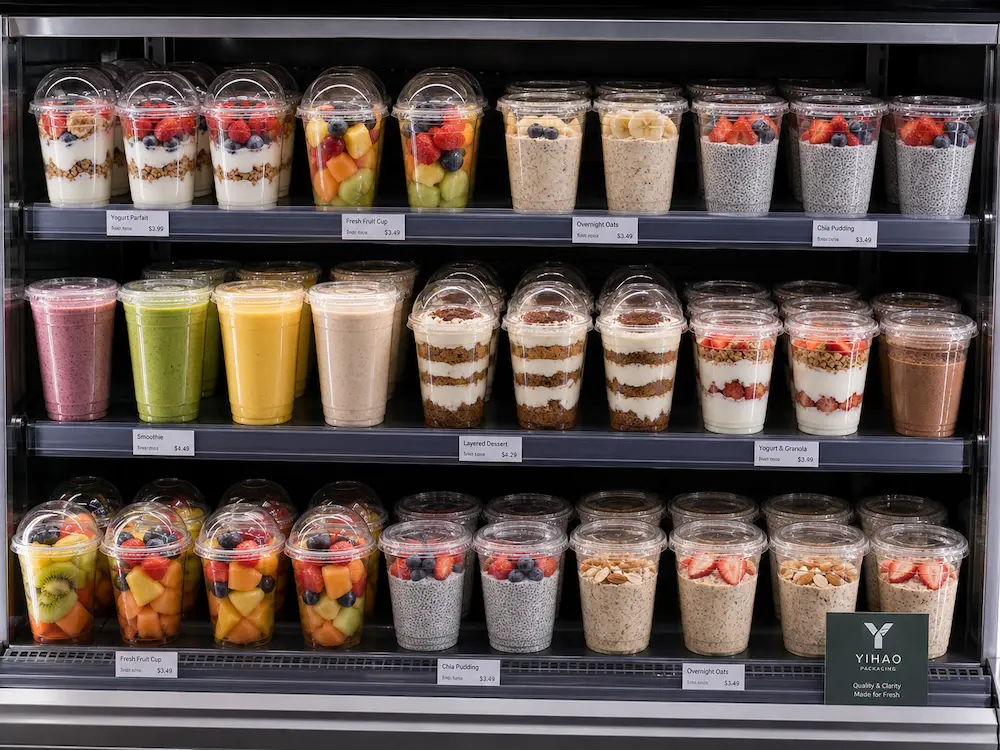
Cold cups are also used in supermarkets, bakeries, convenience stores, catering programs, and foodservice chains. They work for chilled desserts, fruit cups, yogurt parfaits, sample drinks, grab-and-go drinks, and prepared beverage displays. For these channels, packaging must support storage, retail handling, and customer-facing presentation.
Size and Application Mapping for Wholesale Durable Cold Cups
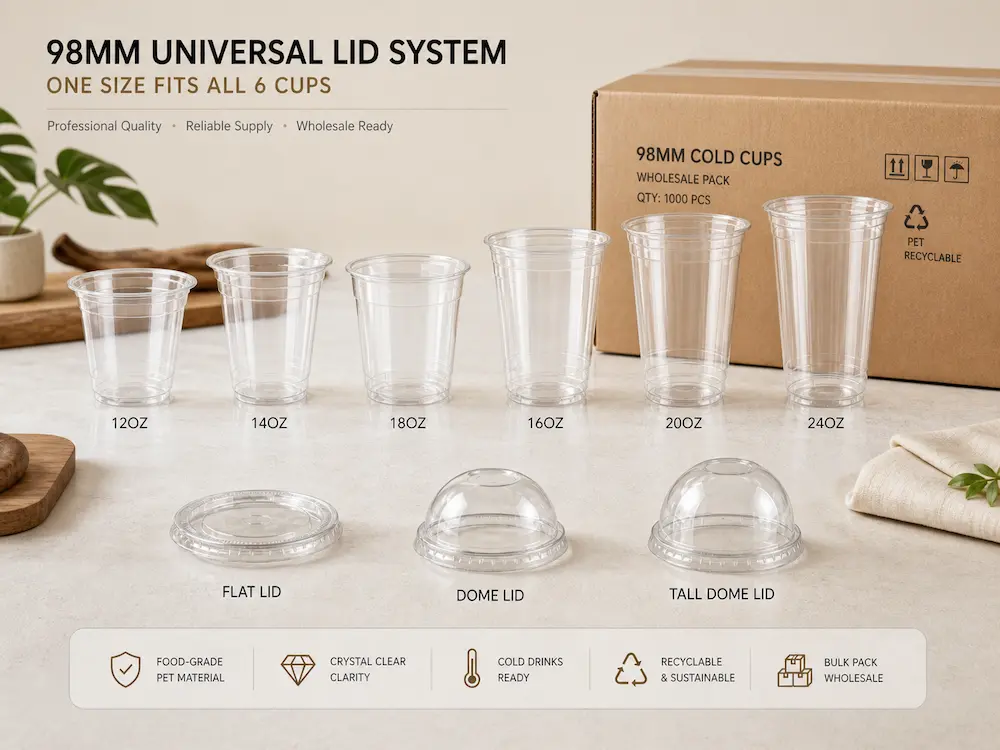
Wholesale buyers should not select cup sizes only by capacity. The best size depends on drink type, ice level, topping volume, menu pricing, lid style, and customer expectations. A clear size strategy helps reduce inventory confusion and improves service speed.
| Application | Cup Selection Logic | Recommended Lid Focus | Buyer Note |
|---|---|---|---|
| Iced coffee and cold brew | Small to medium cups for daily takeaway service | Flat lid, sip lid, or straw-slotted lid | Check grip stability and rim consistency after adding ice. |
| Smoothies and protein drinks | Medium to large cups for thicker drink volume | Dome lid or straw-slotted lid | Cup body stiffness matters because filled drinks are heavier. |
| Milk tea and topping drinks | Medium to large cups for toppings and ice | Straw-slotted lid or sealed lid system | Test lid fit carefully because toppings increase total weight. |
| Juice and lemonade | Small, medium, or large cups based on menu portion | Flat lid or straw-slotted lid | Balance drink visibility, portion value, and takeaway handling. |
| Refreshers and sparkling fruit drinks | Medium to large cups for ice, fruit, and layered color | Flat lid or dome lid | Cup clarity, rim strength, and grip feel all affect presentation. |
| Chilled desserts and parfaits | Selected by dessert portion and display height | Dome lid or flat lid | Check lid clearance for cream, toppings, and fruit layers. |
This table gives buyers a practical starting point. Final selection should always be based on actual product testing with the intended beverage, lid, and service method.
Manufacturer Checklist: What Buyers Should Confirm Before Ordering
Choosing a manufacturer for durable cold cups requires more than comparing photos and price lists. A cup that looks acceptable in a catalog may perform differently during stacking, lid application, filling, transport, and customer handling. Buyers should confirm the following points before placing wholesale orders.
1. Material Consistency
The manufacturer should provide stable PP material quality across production batches. Buyers should check whether the cup body has a consistent feel, smooth surface, stable thickness distribution, and reliable stiffness. Uneven material distribution may affect durability, lid matching, and stacking performance.
2. Cup Wall Strength
Cup wall strength directly affects customer experience. A weak cup may bend too easily when filled with ice and liquid. A properly designed cup should feel firm enough for takeaway handling while maintaining practical flexibility. This balance is important for PP drink cups used in busy beverage service.
3. Rim Design and Lid Compatibility
The rim is one of the most important areas to inspect. A smooth and stable rim helps the lid fit evenly. Poor rim design may cause lid popping, uneven sealing, leakage risk, or slow service. Buyers should test each cup with its exact matching lid before approving bulk orders.
4. Flexibility and Crack Resistance
Durability is not only stiffness. A cup also needs useful flexibility. If the material is too brittle, the cup may crack during transport or handling. If it is too soft, the cup may deform too easily. Strong polypropylene cold cups should balance flexibility and structural support.
5. Stackability and Cup Separation
Cups must stack efficiently for storage and separate smoothly during service. If cups stick together, staff waste time and may damage cups when pulling them apart. If cups stack poorly, cartons take more space and handling becomes less efficient. This point is especially important for high-volume wholesale buyers.
6. Lid Range and Size Matching
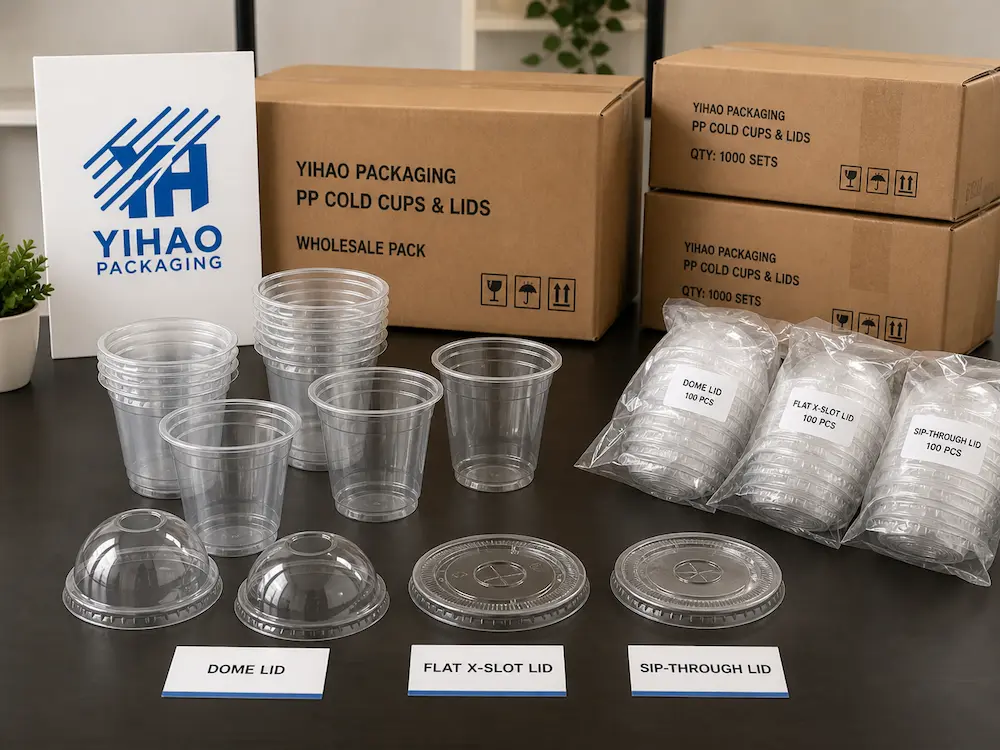
A strong manufacturer should provide clear cup-and-lid matching support. Buyers should know which lid matches each cup size and whether one lid can fit multiple cup sizes. A clear matching system reduces warehouse confusion and counter-service mistakes.
7. Carton Strength and Export Protection
Wholesale orders often move through long-distance transport, warehousing, and final delivery. Carton strength, inner bag protection, stack direction, and pallet handling all affect final product condition. Buyers should inspect not only the cup but also the full packing method.
8. OEM and Custom Packaging Support
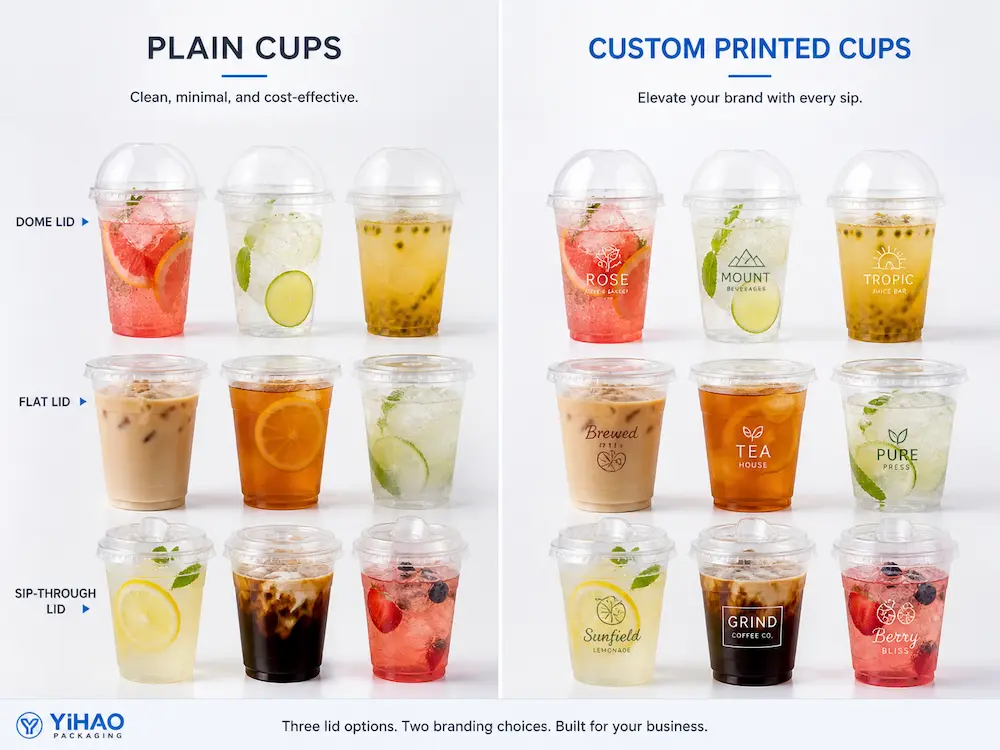
Many buyers need logo printing, carton marks, private label packaging, barcode labels, or customized product combinations. A reliable manufacturer should provide clear communication about artwork requirements, packaging feasibility, and production details without making vague promises.
9. Repeat-Order Stability
One approved sample does not guarantee long-term success. Wholesale buyers need consistency across repeat orders. A reliable manufacturer should maintain the same material standard, cup structure, lid fit, carton method, and communication quality over time.
Supplier Checklist: How to Compare Wholesale Cold Cup Partners
The right supplier does more than sell cups. A good supplier helps buyers reduce sourcing risk, simplify communication, and build a stable packaging system. When evaluating durable cold cups, buyers should compare suppliers using practical business criteria.
| Supplier Evaluation Point | What Buyers Should Check | Why It Matters |
|---|---|---|
| Product Range | Cup sizes, matching lids, beverage packaging options, and related food packaging items | A deeper range helps buyers simplify sourcing and build full packaging programs. |
| Sample Quality | Cup strength, lid fit, rim quality, stacking, and carton condition | Samples should reflect realistic service performance, not only appearance. |
| Batch Consistency | Material feel, wall strength, lid compatibility, and finish across production batches | Consistent repeat orders protect the buyer’s brand and customer experience. |
| Communication | Response speed, technical clarity, packing details, and export experience | Clear communication reduces order mistakes and saves purchasing time. |
| Customization Support | Logo printing, private label packing, carton marks, and OEM discussion | Customization helps brand buyers create market-ready packaging. |
| Long-Term Value | Stable supply, practical problem solving, and future product support | The best supplier supports repeat growth, not only one-time orders. |
A low price may look attractive during the first quotation, but long-term value depends on product performance, supply stability, and supplier responsibility. For durable cold cups, the best supplier is the one that helps buyers avoid repeated problems.
Durable Cold Cups vs Alternative Cold Drink Packaging
Different packaging materials serve different business needs. Buyers should compare durable cold cups with other cold drink packaging options based on drink type, service environment, display expectation, lid requirement, and wholesale value.
| Packaging Type | Main Strength | Best Applications | Buyer Consideration |
|---|---|---|---|
| PP Cold Cups | Durability, flexibility, and handling strength | Iced coffee, milk tea, smoothies, juice, takeaway drinks | Strong choice when cup toughness and lid matching are priorities. |
| PET Cold Cups | High transparency and strong product display | Clear beverage display, premium juices, smoothies, layered drinks | Useful when visual clarity is the main packaging requirement. |
| Paper Cold Cups | Printable surface and paper-based brand appearance | Short-time cold drink service and branded takeaway drinks | Coating, leakage resistance, and local recycling route need review. |
| Reusable Cups | Longer service life in controlled systems | Events, in-store programs, closed-loop beverage service | Requires washing, collection, tracking, and management infrastructure. |
For many wholesale buyers, PP cold cups are selected when durability and takeaway practicality are more important than premium crystal-clear display. PET cups remain strong for visual presentation. Paper cups support specific branding strategies. Reusable cups work best in controlled systems. The right choice depends on the buyer’s service model and packaging priorities.
Quality Inspection Points for Durable Cold Cups
A professional inspection process helps buyers avoid problems before a full order enters the market. The following inspection points are practical for evaluating durable cold cups before wholesale purchasing.
Rim Smoothness
The rim should feel smooth and consistent. A poor rim affects lid application and customer experience. Buyers should inspect several cups from different parts of the carton instead of relying on one sample.
Cup Body Stiffness
The cup should resist normal squeezing during service. Staff and customers should be able to grip the cup without obvious deformation. This is especially important for larger drinks and heavier beverages.
Lid Sealing Performance
The lid should attach evenly around the rim. Buyers should test the cup with cold drinks, ice, and normal carrying movement. The goal is reliable everyday service, not only a perfect empty-cup appearance.
Flexibility Under Handling
Good PP cups should provide strength without becoming brittle. Buyers should gently squeeze and handle the cup to evaluate how it responds under normal service pressure.
Stacking and Separation
Cups should stack neatly and separate smoothly. Poor separation slows counter service and may cause waste. Strong stacking also improves storage efficiency in cafes, warehouses, and foodservice operations.
Visual Appearance
Even when durability is the main priority, appearance still matters. Cups should look clean, uniform, and suitable for customer-facing beverage service. Scratches, deformation, or uneven finishing reduce perceived quality.
Carton and Inner Packing
Wholesale buyers should inspect carton thickness, inner bag condition, packing direction, and pallet handling. Strong cups still need proper outer packaging to arrive safely after transport.
Wholesale Buying Mistakes to Avoid
Many sourcing problems begin before production. They start when buyers skip key checks or compare products too narrowly. When sourcing durable cold cups, avoid these common mistakes.
Choosing Only by Unit Price
A low unit price may create higher total cost if the cup bends easily, lids fit poorly, cartons arrive damaged, or repeat orders are inconsistent. Buyers should compare total packaging value instead of price alone.
Testing the Cup Without the Lid
A cold cup is not complete without its lid. Buyers should always test PP cups with lids as a system. The cup rim and lid structure must work together.
Testing Empty Cups Only
An empty cup does not show full performance. Buyers should test cups with ice, liquid, toppings, and normal takeaway handling. Filled-cup testing gives a more realistic view of durability.
Ignoring Carton Protection
Wholesale orders depend on transport protection. Poor carton packing creates unnecessary damage and complaints. Export packaging should be part of supplier evaluation.
Not Confirming Repeat-Order Consistency
A good first sample is not enough. Buyers should confirm whether future orders will maintain the same material quality, cup structure, lid fit, and packing method.
How YIHAO Supports Wholesale Durable Cold Cup Buyers
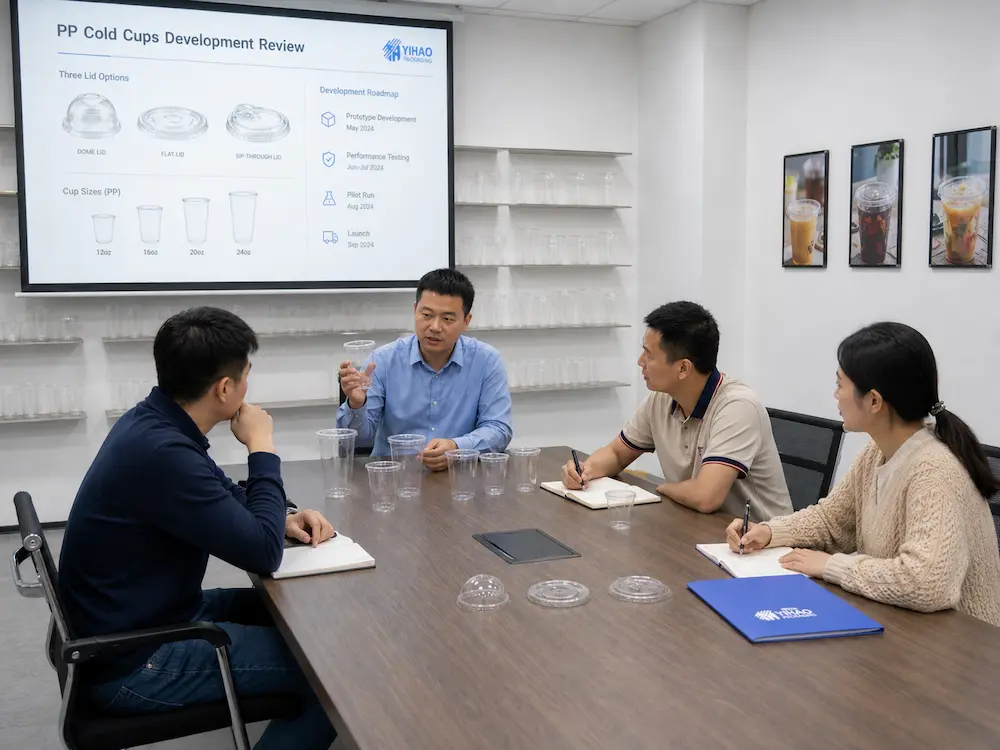
YIHAO is a food packaging manufacturer and solution provider supporting buyers in beverage, fresh food, bakery, supermarket, takeaway, and foodservice packaging markets. For buyers sourcing durable cold cups, the goal is not only to purchase one cup model. The goal is to build a stable packaging system for daily service and repeat orders.
YIHAO supports wholesale buyers by focusing on practical packaging details: cup structure, PP material performance, rim design, lid matching, carton packing, and export communication. These details directly affect how the cup performs in real beverage service.
Buyers can work with YIHAO to discuss:
- PP cold cups for iced coffee, juice, smoothies, milk tea, and takeaway drinks
- PP cups with lids for matched cold beverage packaging systems
- Wholesale cup-and-lid combinations for different drink menus
- Sample review based on actual beverage applications
- Carton packing and export handling requirements
- OEM packaging, logo discussion, private label needs, and carton mark support
- Long-term repeat-order planning for distributors and foodservice buyers
For cafes, supermarkets, beverage chains, importers, and foodservice distributors, a stable manufacturer helps reduce repeated sourcing work and improves packaging consistency across future orders. Buyers who need durable cold cups should evaluate not only the cup itself, but also the supplier’s ability to support the full purchasing process.
Buyer Quick Note
When choosing durable cold cups for wholesale orders, buyers should focus on real service performance. The most important factors are material consistency, cup wall strength, rim stability, lid compatibility, stacking performance, carton protection, and repeat-order reliability.
PP cold cups and polypropylene cold cups are strong options for buyers who need practical toughness, stable takeaway handling, and reliable cup-and-lid matching. For cafes, supermarkets, distributors, beverage brands, and foodservice operators, the right PP drink cups reduce packaging problems and support a smoother customer experience.
A reliable manufacturer or supplier should help buyers build a complete packaging system, not just purchase cups one carton at a time.
FAQ
1. What are durable cold cups used for?
Durable cold cups are used for chilled beverage packaging, including iced coffee, cold brew, juice, smoothies, lemonade, milk tea, matcha, refreshers, fruit tea, sparkling drinks, and protein drinks. They are designed to provide stronger handling performance, stable grip, reliable lid matching, and better takeaway support for cafes, supermarkets, beverage brands, and foodservice operations.
2. Are PP cold cups suitable for takeaway drinks?
Yes. PP cold cups are suitable for takeaway drinks because polypropylene provides practical durability, flexibility, and resistance to normal handling pressure. When matched with the correct lid, PP cold cups support iced coffee, juice, milk tea, smoothies, and other cold beverages used in high-volume takeaway service.
3. What is the difference between PP cold cups and PET cold cups?
PP cold cups focus more on durability, flexibility, and handling strength, while PET cold cups are often selected for high transparency and strong product display. Buyers usually choose PP cold cups when cup toughness and takeaway handling are priorities, and PET cold cups when visual clarity is the main packaging requirement.
4. Can durable cold cups be ordered with matching lids?
Yes. Durable cold cups can be ordered with matching lids, including flat lids, domed lids, straw-slotted lids, or other compatible lid designs depending on the product range. Wholesale buyers should always test the cup and lid together before confirming orders because lid fit affects leakage control, service speed, and customer experience.
5. How should wholesale buyers choose a cold cup manufacturer?
Wholesale buyers should choose a cold cup manufacturer by checking material consistency, cup wall strength, rim design, lid compatibility, stacking performance, carton protection, OEM support, communication efficiency, and repeat-order stability. A reliable manufacturer should provide stable quality and practical support for long-term wholesale supply.
References
- U.S. Food and Drug Administration, Food Contact Substances and Food Packaging Guidance.
- European Commission, Food Contact Materials Regulatory Framework.
- Plastics Industry Association, Resin Identification Codes and Plastic Material Overview.
- Association of Plastic Recyclers, Design Guidance for Plastic Packaging Recyclability.
- ASTM International, Standard Test Methods Related to Plastic Packaging Performance.
- ISO, Packaging and Environmental Management Standards Overview.
- Smithers, Global Foodservice Packaging Market and Material Trends.
- Food Packaging Forum, Scientific Resources on Food Contact Materials and Packaging Safety.
Deep-Dive Insights: How Buyers Should Think About Durable Cold Cups
How durable cold cups improve takeaway beverage service
Durable cold cups improve takeaway service by making the drink easier to prepare, seal, carry, and present. In a busy beverage operation, the cup must move smoothly from carton to counter to customer. A strong cup body reduces deformation during gripping, while a stable rim improves lid application. Together, these details create faster service and fewer packaging interruptions.
Why PP material remains important for cold drink packaging
PP remains important because many cold beverage buyers need a practical balance of strength, flexibility, and wholesale value. Polypropylene cold cups are useful when the drink program includes high-volume takeaway service, ice, toppings, or frequent handling. For buyers who prioritize toughness over premium visual clarity, PP is a strong material option.
What wholesale buyers should evaluate beyond price
Wholesale buyers should evaluate total packaging performance, not only unit price. A cheaper cup may create higher costs through weak lid fit, damaged cartons, poor stacking, customer complaints, and inconsistent repeat orders. The better purchasing decision considers product performance, supply reliability, and long-term cooperation.
Which cup-and-lid factors influence customer experience
The rim, lid structure, cup wall, and lid attachment all influence the final customer experience. A cup that looks acceptable but does not hold the lid firmly creates risk during takeaway use. A properly matched PP cups with lids system helps protect the drink, reduce leakage concerns, and support a more professional brand image.
Why long-term manufacturer cooperation matters
Long-term cooperation with a reliable manufacturer helps buyers maintain consistent product quality across future orders. For beverage brands, distributors, and foodservice companies, packaging consistency protects customer trust. A strong supplier relationship also makes it easier to develop new sizes, adjust packaging combinations, and support private label projects.
© YIHAO Packaging. All rights reserved. All articles, product images, packaging designs, technical specifications, and website materials are protected by copyright. Unauthorized copying, reproduction, redistribution, modification, or commercial use is strictly prohibited without prior written permission.