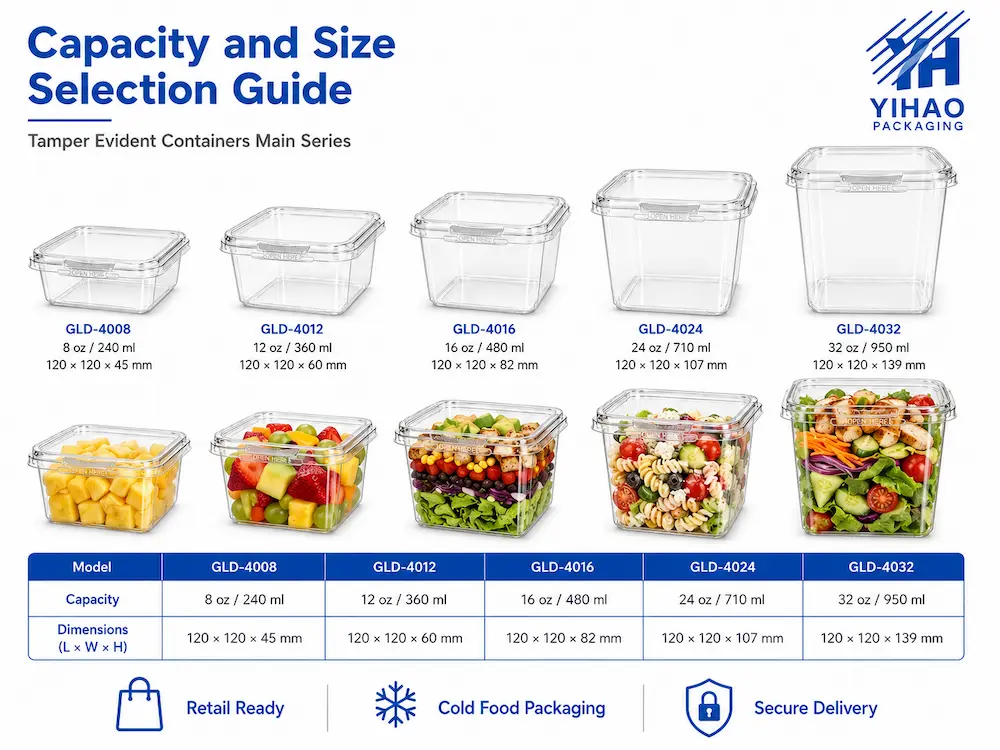
Why Clear PET, rPET and Tamper Evident Packaging Matter in 2026
Food packaging buyers are entering 2026 with a more complex sourcing environment. Price still matters, but it is no longer the only decision factor. Supermarkets, fresh produce brands, cafes, delis, foodservice distributors and private-label food companies now need packaging that supports product visibility, food contact requirements, retail display, recyclability goals, secure handling, supplier documentation and stable export supply.
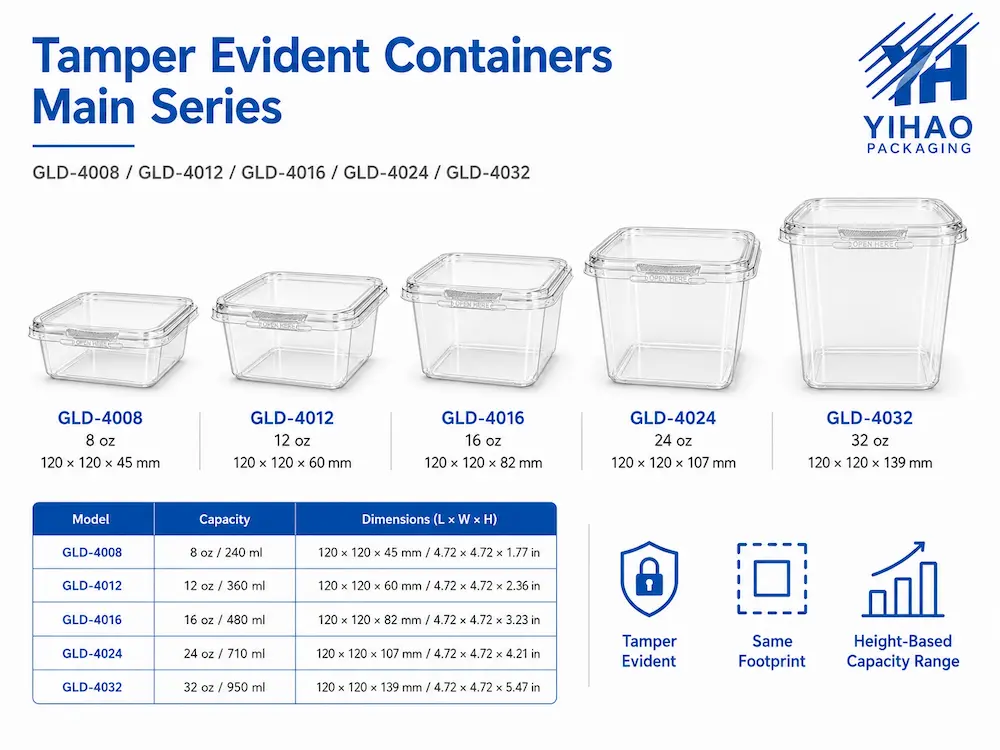
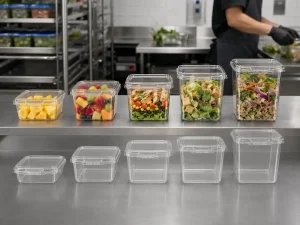
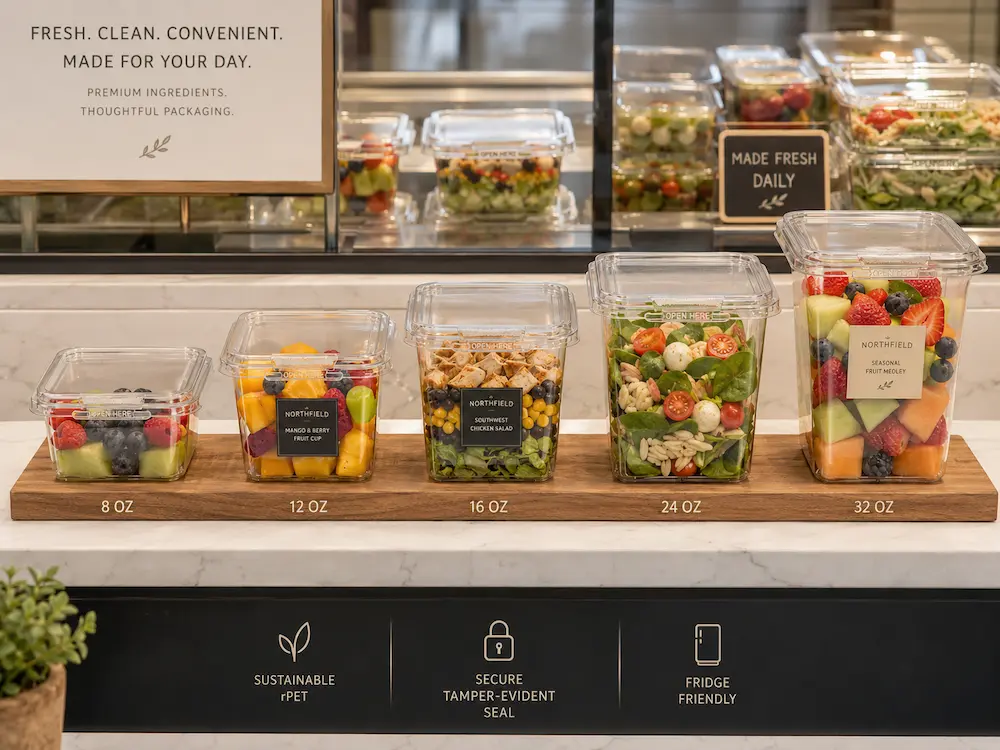
Clear PET and rPET food packaging remain important because visibility is central to fresh food sales. For salads, fruit, bakery, deli items, cold drinks and grab-and-go foods, customers often judge freshness, color, portion size and quality before reading the label. Clear packaging helps the product itself communicate value.
Tamper evident packaging is also gaining importance because more food moves through open retail shelves, pickup counters, delivery platforms and third-party handling. A tamper evident feature does not make a container impossible to open, but it gives visible evidence when a package has been opened after packing. This supports customer confidence in delivery, cold case and grab-and-go settings.
As a food packaging manufacturer and solution provider, YIHAO recommends that buyers treat 2026 packaging selection as a system decision. The best packaging choice should combine material, structure, application, compliance, shelf presentation, carton efficiency, testing and supplier capability.
Executive Summary for Global Food Packaging Buyers
| Buyer Question | Practical Answer | Packaging Direction |
|---|---|---|
| Why is clear PET packaging still popular? | It offers strong visibility, clean presentation and practical stiffness for chilled food and retail display. | Use for salads, fruit, deli foods, bakery items, cold drinks and grab-and-go foods. |
| What is the difference between PET and rPET? | PET is virgin polyethylene terephthalate; rPET uses recycled PET content where suitable supply and food contact requirements are met. | Use rPET strategy carefully with supplier documentation and local market requirements. |
| Why is tamper evident packaging important? | It provides visible opening evidence and supports customer confidence in retail and delivery channels. | Use for secure takeout, delivery, cold case foods and grab-and-go retail items. |
| Is PET suitable for microwave use? | Standard clear PET should not be treated as microwave safe unless the exact product is designed and confirmed for that use. | Use PP microwave-safe containers for reheatable meals when properly tested. |
| What should buyers test before ordering? | Real food filling, lid fit, stacking, label placement, chilled storage, delivery movement and customer opening experience. | Never rely only on photos or nominal capacity. |
Clear PET Food Packaging: What Buyers Should Know
Clear PET food packaging is widely used for fresh food because it provides high transparency, good product visibility and a professional retail appearance. This makes it especially useful for products where the food itself is a major selling point.
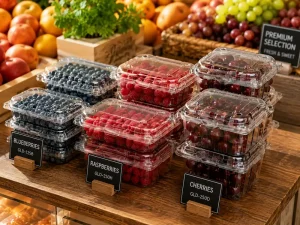
For fresh produce packaging containers, clear PET helps customers inspect berries, grapes, cherry tomatoes, apples and fresh-cut fruit. For deli and salad containers, PET helps shoppers see greens, toppings, pasta salad, fruit portions and cold deli foods. For cold cups and lids, clear PET helps cafes and beverage brands display iced coffee, juice, lemonade, fruit tea and cold brew.
Clear PET works best when the intended use is cold display, chilled food presentation, fresh produce merchandising or cold beverage service. It should not be automatically selected for microwave heating, hot food holding or freezer claims unless the exact product design and supplier specification support that use.
Best-fit applications for clear PET packaging
| Application | Why Clear PET Works | Buyer Check |
|---|---|---|
| Fresh produce | Clear visibility supports color, freshness and portion inspection. | Check ventilation, lid fit, stacking and carton packing. |
| Deli and salad foods | Transparency improves retail presentation for chilled foods. | Check lid clearance, food density and label placement. |
| Bakery and desserts | Clear display supports impulse purchase and product protection. | Check height, hinge strength and shelf stacking. |
| Cold drinks | Clear cups show beverage color, ice, fruit pieces and branding. | Check top diameter, lid match and cold beverage use only. |
| Grab-and-go foods | Customers can inspect the product quickly before purchase. | Check closure security, bag fit and chilled handling. |
rPET Food Packaging: Benefits, Limits and Buyer Questions
rPET packaging uses recycled PET content. It can support packaging programs that want to discuss recycled material use, reduced reliance on virgin resin and more circular material strategies. For many buyers, rPET is becoming part of responsible sourcing discussions.
However, rPET should not be treated as a simple marketing word. Buyers need to confirm food contact suitability, recycled content documentation, supplier traceability, clarity consistency, mechanical performance and market-specific requirements before using rPET claims in product pages, labels or customer proposals.
In food packaging, rPET performance depends on both material quality and product design. A clear rPET clamshell, salad bowl or cold cup still needs suitable stiffness, closure performance, dimensional consistency and carton packing. If recycled content affects clarity or rigidity, the buyer should test whether the final package still meets retail expectations.
Buyer questions before choosing rPET packaging
| Question | Why It Matters |
|---|---|
| Is the rPET suitable for the intended food contact application? | Food contact suitability must match the actual use condition and market requirements. |
| Can the supplier provide documentation? | Documentation supports buyer review, customer approval and export communication. |
| Is the clarity consistent across production batches? | Retail packaging needs stable appearance and product visibility. |
| Does the rPET structure perform like the required package? | Closure, stacking, hinge strength and lid fit still need real testing. |
| Are recycled content claims appropriate in the target market? | Claims should be accurate, documented and aligned with local requirements. |
Tamper Evident Food Packaging: What It Does and What It Does Not Do
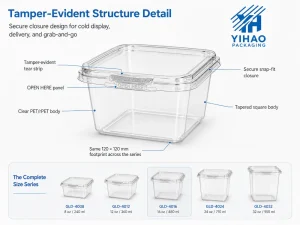
Tamper evident containers are designed to show visible evidence when a package has been opened after packing. This may involve a tear strip, breakaway tab, locking band, perimeter seal, visible tab or other opening indicator.
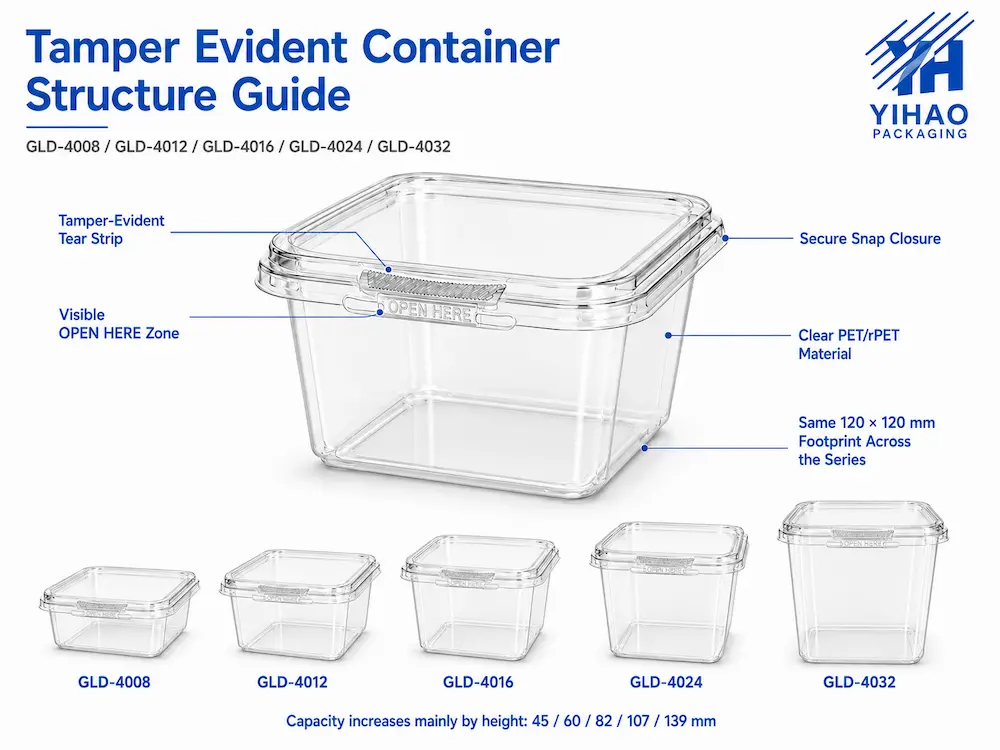
The key point is accurate language. Tamper evident does not mean completely tamper-proof. It does not guarantee that a package can never be opened or interfered with. Its value is visible inspection. When the opening indicator is intact, staff and customers can see that the package appears unopened. When it is broken, the package shows evidence of opening.
This is useful for delivery foods, cold case retail, secure takeout, convenience store meals, ready-to-eat foods, deli sides, fruit cups and grab-and-go programs. It is especially valuable when food passes through multiple handling steps before reaching the customer.
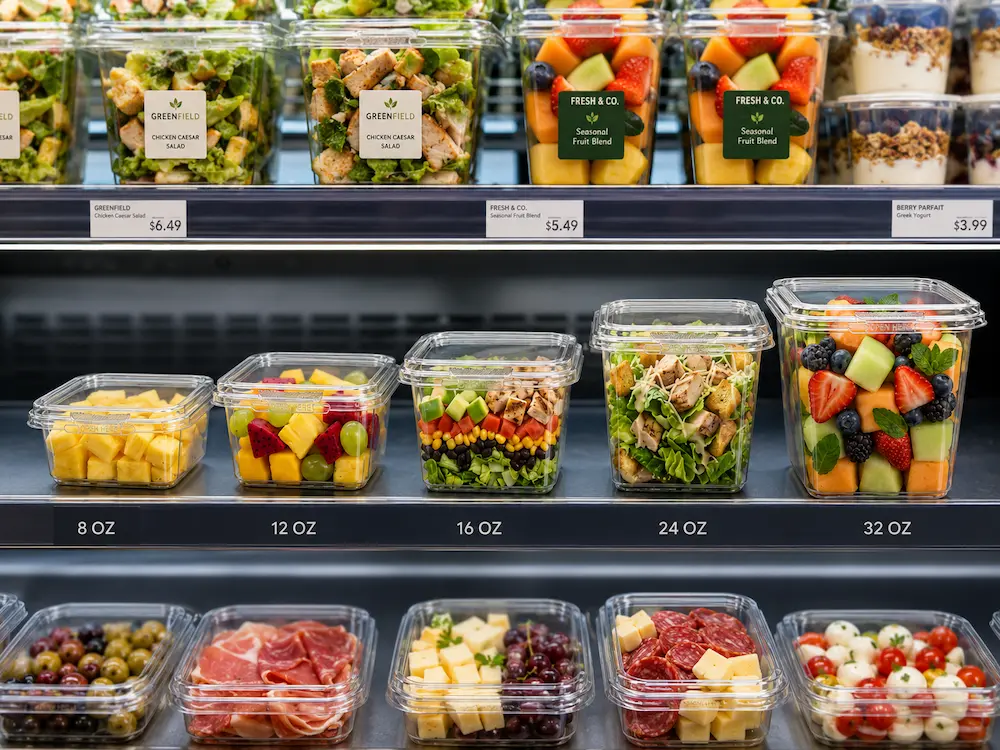
Where tamper evident packaging fits best
| Use Case | Why Tamper Evident Helps | Buyer Test |
|---|---|---|
| Food delivery | Customers can inspect whether the package appears intact. | Test filled containers inside real delivery bags. |
| Retail cold case | Visible opening evidence supports customer confidence on open shelves. | Test shelf visibility, label placement and chilled display. |
| Grab-and-go foods | Shoppers can inspect the package quickly before purchase. | Test opening indicator visibility and customer handling. |
| Deli and ready-to-eat foods | Supports secure presentation for prepared chilled products. | Test closure consistency, stacking and customer opening. |
| Meal components | Multi-compartment tamper evident designs can keep foods organized. | Test compartment depth, sealing area and portion separation. |
2026 Buyer Priorities: What Is Changing in Global Food Packaging Sourcing?
In 2026, food packaging buyers are likely to evaluate suppliers through a wider lens. Instead of asking only for the lowest price, more buyers are asking whether the packaging supports product visibility, responsible material choices, recyclable design, secure handling, stable export supply and application-specific testing.
Regulatory pressure and customer expectations are also shaping the conversation. Buyers serving the United States, the European Union, the United Kingdom, Canada, Australia or multi-market retail chains may need different documentation, labeling support and material review. A supplier that understands only product dimensions may not be enough for serious B2B sourcing.
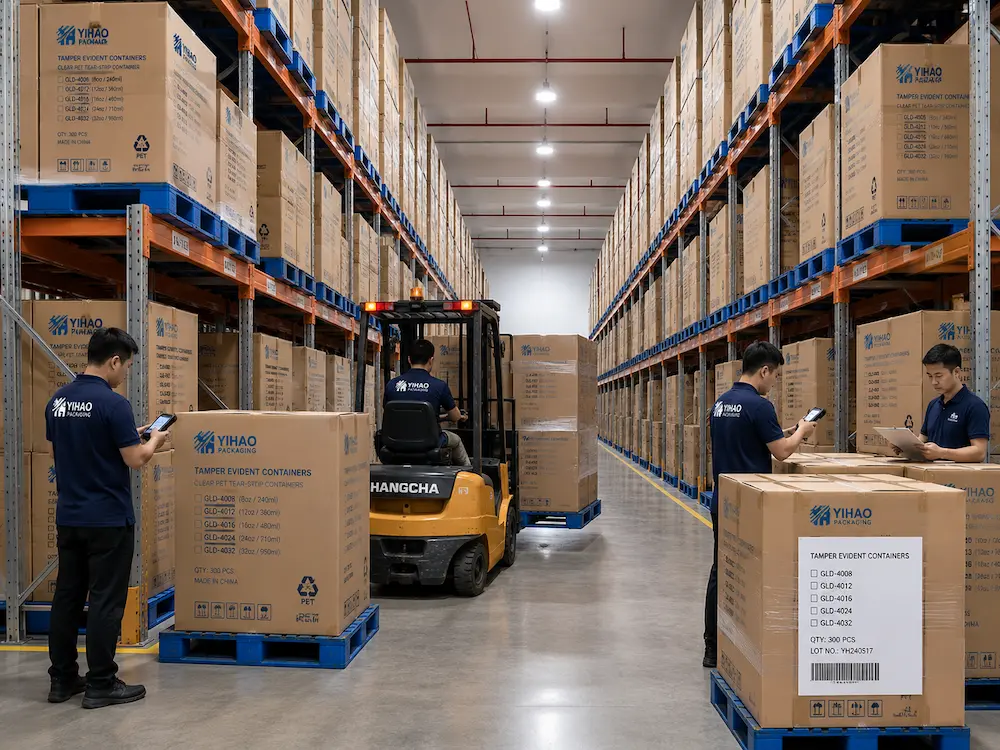
For this reason, packaging buyers should build a supplier checklist that covers not only product appearance but also specification control, sample testing, food contact documentation, recyclability guidance, carton packing and export support.
2026 sourcing checklist
| Buyer Priority | What to Check | Why It Matters |
|---|---|---|
| Application fit | Food type, temperature condition, storage method and sales channel | Prevents wrong material and structure selection |
| Material strategy | PET, rPET, PP or other material options | Matches clarity, recycled content goals and heat requirements |
| Closure design | Hinged lid, separate lid, tamper evident feature or film seal | Affects packing speed, security and customer experience |
| Food contact review | Material documentation and intended-use information | Supports safer sourcing and customer approval |
| Recyclability design | Color, labels, adhesives, material compatibility and sorting behavior | Supports recycling compatibility where local systems accept the package |
| Supply reliability | Factory capacity, tooling control, carton packing and export experience | Reduces long-term sourcing risk |
Fresh Produce Packaging: PET and rPET Selection Logic
Fresh produce packaging requires clarity, ventilation, product protection and retail-ready presentation. Berries, grapes, cherry tomatoes, apples and fresh-cut fruit all need different packaging structures.
Produce clamshell containers are commonly used for berries, cherry tomatoes and small produce items because a one-piece hinged, vented structure can support airflow, visibility and packing efficiency. Fresh-cut fruit containers need clear presentation, moisture consideration and chilled display performance. Apple clamshell containers need enough footprint and height to protect larger fruit without wasting shelf space.
A 1lb vented clamshell pack can support blueberries and delicate fruit where ventilation and visibility matter. A 2lb vented berry clamshell container may be useful for larger berry and produce portions. For fruit combo applications, a 2-compartment PET clamshell container can help separate ingredients and improve snack presentation.
Deli and Salad Containers: Visibility, Lid Clearance and Workflow
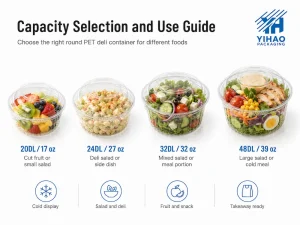
Deli and salad packaging should be selected by food density, portion weight, lid clearance and retail workflow. Leafy salads need headspace. Dense deli foods need base stability. Ready-to-eat salads need clear presentation and secure closure.
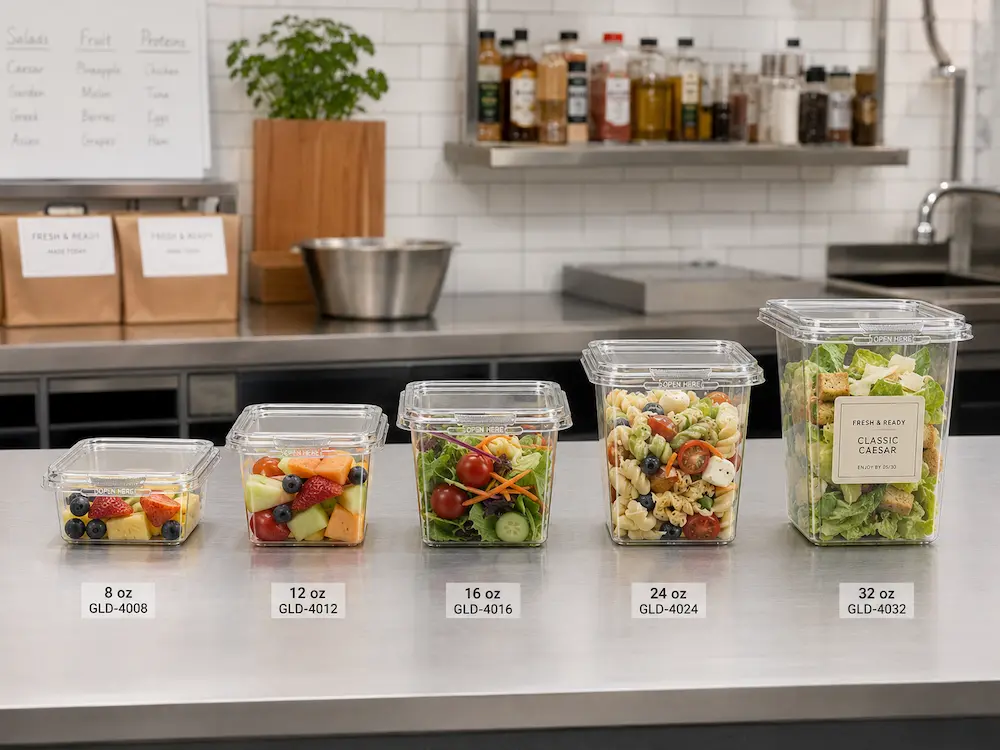
PET hinged deli containers are useful when packing speed matters because the lid and base are connected. Round PET deli containers can create a bowl-style customer experience for salads and fruit. Square PET deli containers can improve shelf alignment and carton efficiency.
For salad and deli programs, a 17oz clear PET salad bowl can support smaller grab-and-go salads and fresh fruit. A 32oz clear PET salad bowl can support premium meal salad programs. A 34oz PET square deli container may support larger salads, fruit and chilled meals where shelf efficiency matters.
Cold Cups and Lids: PET Visibility and Lid Compatibility
Cold beverage packaging is another major clear PET application. Cafes, juice shops, bubble tea brands, convenience stores and foodservice distributors use PET cold cups because they show beverage color, ice, fruit pieces and layered drinks clearly.
PET cold cups should be selected by capacity, top diameter, height, rim structure and lid compatibility. The cup and lid must be treated as one system. A 12 oz, 16 oz and 20 oz cup may share one lid family in some systems, but this should never be assumed without supplier confirmation.
Cold cup lids can include flat lids, dome lids, sipper lids or sealing film systems depending on the beverage. Iced coffee, lemonade and cold brew often use flat lids. Smoothies and foam-topped drinks may need dome lids. Direct-drinking cold beverages may use sipper lids when the cup rim is compatible.
For cold beverage programs, a 16 oz PET rPET clear cold cup can support matcha refreshers, lemonade and iced coffee. A 20 oz PET rPET clear cold cup can support larger refreshers, sparkling fruit drinks and flavored cold brew. A 95mm clear PET dome lid may be suitable when buyers need extra lid height for smoothies, milkshakes and foam-topped beverages.
Microwave Safe Containers: Why PP Should Not Be Confused with PET
Clear PET is excellent for cold food visibility, but it should not be used as the default material for microwave food packaging. If a food program requires reheating, hot food handling or microwave use, buyers should evaluate PP containers or another confirmed microwave-safe material.
Microwave safe containers should be selected by food type, heating time, lid behavior, venting, deformation resistance and customer instructions. PP prepared meal containers are usually a better direction for reheatable meals, hot deli foods and meal prep applications when the exact product is designed and tested for that use.
This distinction is important for buyer trust. A clear PET salad container may be excellent for cold display, but that does not make it suitable for reheating. A PP meal container may be suitable for microwave use, but it may not provide the same crystal-clear shelf presentation as PET. Buyers should match the material to the actual use condition.
Recyclability and Design for Recycling Considerations
Recyclability is not determined by material name alone. A PET package may be more or less compatible with recycling depending on color, labels, adhesives, barrier layers, attachments, closures, size, shape and local collection systems.
For clear PET and rPET food packaging, buyers should think about the complete package. Labels should not cover too much of the pack or create avoidable recycling problems. Color choices should be reviewed carefully because dark or opaque packaging can make sorting more difficult in many systems. Material combinations should be evaluated before making broad recyclability claims.
Buyers should use careful language. A package can be designed to support recycling compatibility where local PET recycling systems accept it, but that does not guarantee recycling in every market. Local infrastructure, collection rules and sorting systems matter.
Recyclability checklist for buyers
| Design Area | Buyer Question | Why It Matters |
|---|---|---|
| Material | Is the primary material PET, rPET, PP or mixed material? | Mixed materials may affect recycling compatibility. |
| Color | Is the package clear, light transparent, dark or opaque? | Color affects sorting and recycled material value. |
| Labels | Does the label size, adhesive and material match recycling guidance? | Labels can affect sorting, washing and material recovery. |
| Attachments | Are seals, handles, inserts or closures compatible? | Attachments can change recyclability performance. |
| Local system | Is the package accepted by the buyer’s target market recycling system? | Recycling claims depend on local infrastructure. |
Compliance and Documentation: What Buyers Should Request
Food packaging buyers should request documentation based on the target market and intended use. A supplier should be able to discuss material, food contact suitability, intended use, product specifications, carton packing and application limitations.
For export buyers, documentation should be reviewed early. A product used for cold salad in one market may require different review from a product used for reheatable meals in another market. PET, rPET, PP and tamper evident packaging should each be evaluated according to application and regulatory expectations.
| Document or Information | Why Buyers Need It | When to Ask |
|---|---|---|
| Product specification sheet | Confirms size, dimensions, material, weight and carton packing. | Before sample approval. |
| Material information | Helps review PET, rPET, PP or other material choices. | Before quotation and sample testing. |
| Food contact statement or supporting documentation | Supports buyer review for intended food contact use. | Before customer approval or bulk order. |
| Intended-use guidance | Clarifies cold display, refrigerated, microwave or other use limits. | Before product page claims and packaging labels. |
| Sample testing records | Helps validate real food performance, closure and handling. | During sample review. |
| Carton and pallet information | Supports freight, warehouse and distributor planning. | Before final quotation. |
How to Evaluate a Food Packaging Manufacturer in China
China remains an important sourcing region for PET, rPET, tamper evident, fresh produce, deli, salad, cold cup and prepared food packaging. But buyers should not select a supplier by price alone. The better question is whether the supplier can support product development, stable production, documentation, sample testing and export communication.
A reliable manufacturer should understand tooling, material selection, structure design, closure performance, sample adjustment, carton packing and quality control. For global buyers, export experience also matters because communication, documentation and shipment planning can affect the entire purchasing process.
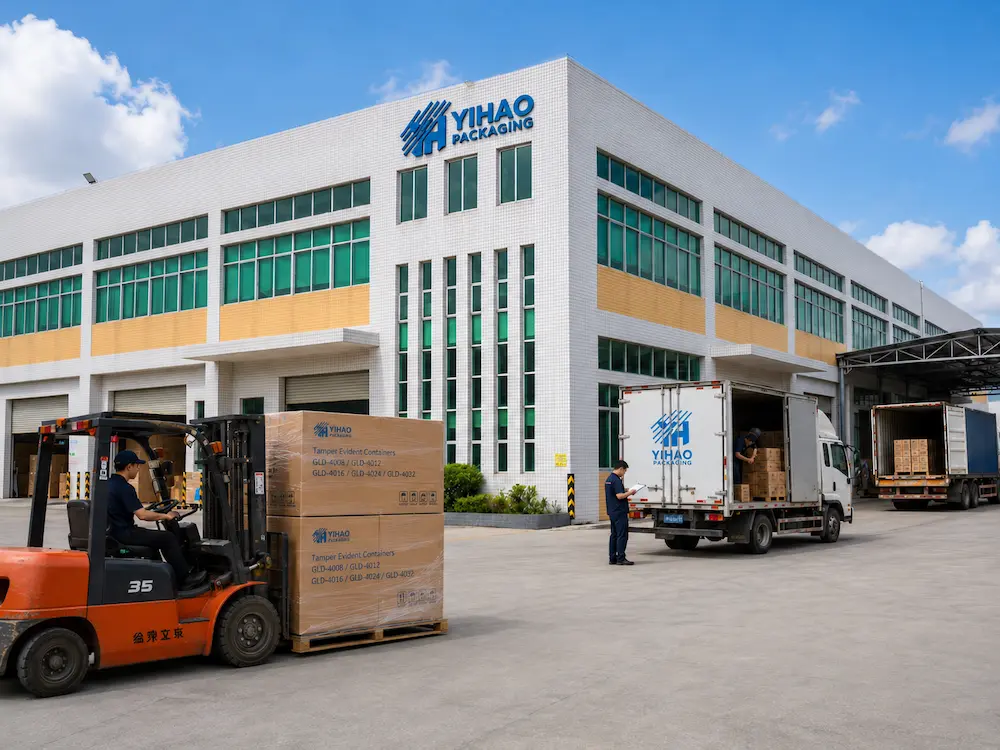
Supplier evaluation checklist
| Evaluation Area | What Buyers Should Check |
|---|---|
| Product range | Fresh produce containers, deli containers, tamper evident containers, cold cups and microwave-safe options. |
| Engineering support | Ability to discuss molds, wall thickness, lid fit, hinge design, venting and stacking. |
| Sample support | Ability to provide matched samples for real food testing. |
| Material knowledge | Understanding of PET, rPET, PP and application-specific limitations. |
| Quality control | Dimensional consistency, closure consistency, visual inspection and packing control. |
| Export capability | Carton packing, shipping communication, documentation and wholesale order planning. |
Sample Testing: The Step Buyers Should Not Skip
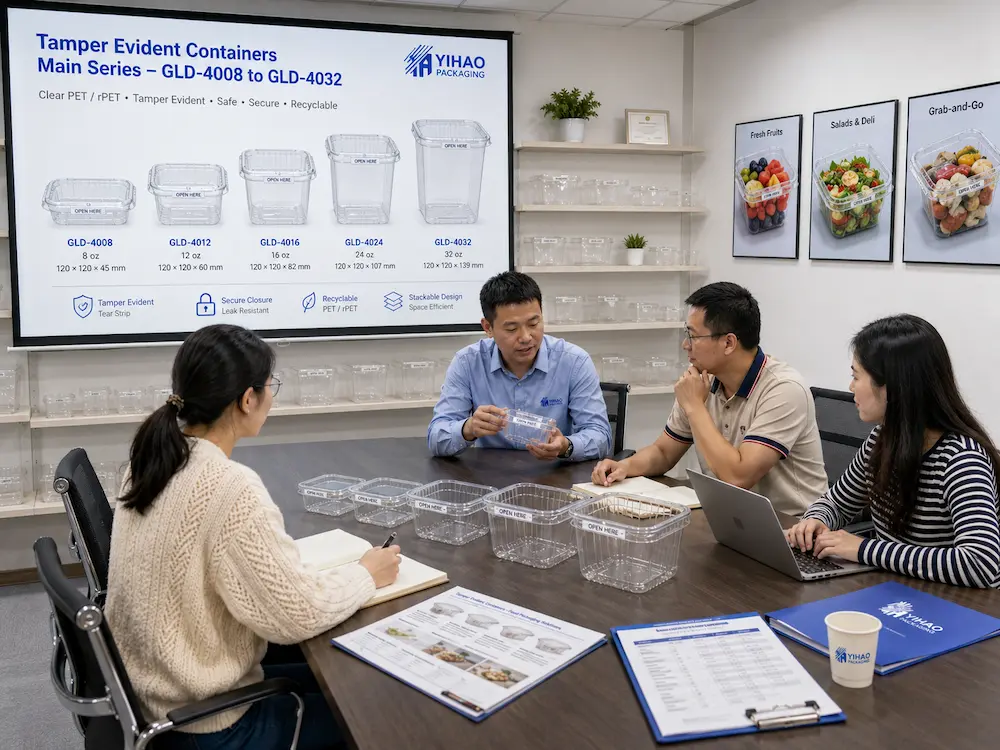
Sample testing is the bridge between catalog selection and real purchasing confidence. Buyers should test containers with actual food, actual labels, actual storage conditions and actual handling methods.
Empty containers can show clarity and shape, but they cannot show whether salad toppings are crushed, whether berries move too much, whether a lid opens during delivery, whether a cold cup lid fits securely, or whether a tamper evident tear strip works correctly after packing.
| Testing Item | Why It Matters | Buyer Action |
|---|---|---|
| Actual food filling | Food density, moisture and shape affect performance. | Test the real product, not only water or empty samples. |
| Lid and closure | Weak lids can cause leakage, opening or poor customer experience. | Open, close, stack and transport filled samples. |
| Cold storage | Chilled conditions affect clarity, condensation and label adhesion. | Test under real refrigerated display conditions. |
| Delivery movement | Transport can expose closure and stacking problems. | Test in real bags, cartons or crates. |
| Label placement | Labels affect visibility, barcode scanning and opening features. | Apply production labels to filled samples. |
| Customer opening | The package should be secure but not frustrating. | Ask different users to open filled samples. |
Common Buyer Mistakes to Avoid in 2026
Mistake 1: Treating PET, rPET and PP as interchangeable
PET, rPET and PP serve different packaging goals. PET and rPET are strong for clarity and cold display. PP is usually better for reheatable and microwave-safe applications when properly designed and tested.
Mistake 2: Making sustainability claims without documentation
Recycled content, recyclability and sustainability claims should be supported by supplier documentation, material information and local market review. Buyers should avoid vague or exaggerated claims.
Mistake 3: Calling tamper evident packaging tamper-proof
Tamper evident packaging shows visible evidence of opening. It should not be described as completely tamper-proof or impossible to open.
Mistake 4: Ignoring labels and adhesives
Labels can affect product visibility, recycling compatibility and opening features. Label size, placement, material and adhesive should be part of packaging testing.
Mistake 5: Skipping real sample testing
Photos, drawings and capacity charts are not enough. Buyers should test real food, real labels, real storage and real handling before wholesale ordering.
RFQ Template for Clear PET, rPET and Tamper Evident Food Packaging
| RFQ Detail | Example | Why It Helps |
|---|---|---|
| Product application | Fresh fruit, salad, deli food, cold drink, prepared meal | Helps supplier choose the correct material and structure. |
| Target material | PET, rPET, PP or supplier recommendation | Aligns clarity, recycled content and temperature needs. |
| Target capacity | 12 oz, 16 oz, 20 oz, 32 oz, 1lb, 2lb or custom size | Narrows sample selection. |
| Structure requirement | Hinged lid, separate lid, tamper evident, compartment or vented clamshell | Matches packing workflow and customer handling. |
| Sales channel | Supermarket, cafe, deli, distributor, food delivery, foodservice | Clarifies real handling and display requirements. |
| Temperature condition | Cold display, refrigerated storage, cold beverage, microwave reheating | Prevents wrong material selection. |
| Label and branding plan | Top label, side label, sleeve, printed cup or custom sticker | Helps evaluate visibility and packaging surface area. |
| Testing expectation | Filled sample test, stacking, lid fit, cold display, delivery movement | Builds confidence before bulk order. |
FAQ
1. Why is clear PET packaging popular?
Clear PET packaging is popular because it provides strong product visibility, clean presentation and practical stiffness for chilled foods, fresh produce, salads, deli items, bakery, cold drinks and grab-and-go retail display.
2. What is the difference between PET and rPET?
PET is virgin polyethylene terephthalate. rPET uses recycled PET content where suitable supply, food contact requirements and application performance are confirmed. Buyers should request documentation before making recycled content claims.
3. Why is tamper evident packaging growing in retail and delivery?
Tamper evident packaging supports visible opening evidence. It helps customers and staff inspect whether a package appears intact after packing, which is valuable for delivery, cold case retail, secure takeout and grab-and-go foods.
4. Is clear PET suitable for microwave food packaging?
Standard clear PET should not be assumed microwave safe. It is commonly used for cold display and chilled food packaging. For reheatable meals, buyers should evaluate PP microwave-safe containers or another confirmed reheatable packaging option.
5. How should buyers evaluate a food packaging manufacturer?
Buyers should evaluate product range, material knowledge, tooling capability, sample support, documentation, quality control, carton packing, export communication and long-term supply reliability.
6. What should buyers test before wholesale ordering?
Buyers should test actual food filling, lid closure, stacking, cold storage, label placement, delivery movement, customer opening experience, carton packing and supplier sample consistency before confirming wholesale orders.
7. Can rPET packaging be used for food contact applications?
rPET may be used in food packaging when suitable material, supply chain control, documentation and intended-use requirements are confirmed. Buyers should ask suppliers for relevant information before approving rPET food packaging projects.
8. What is the best packaging category for fresh produce?
Fresh produce often needs clear, vented and protective packaging. Produce clamshell containers, fresh-cut fruit containers and apple clamshell containers should be selected by fruit type, ventilation, visibility, pack weight, stacking and retail display needs.
References
- U.S. Food and Drug Administration, Packaging and Food Contact Substances resources.
- U.S. Food and Drug Administration, food contact substances and intended-use framework.
- European Commission, Packaging and Packaging Waste Regulation information.
- European Commission, Regulation (EC) No 1935/2004 food contact material framework.
- European Food Safety Authority, food contact materials safety assessment resources.
- Association of Plastic Recyclers, APR Design Guide for plastics recyclability.
- RecyClass, Design for Recycling Guidelines and recyclability evaluation resources.
- WRAP, plastic packaging design and recyclability guidance.
Deep-Dive Insights: How Buyers Should Think About 2026 Food Packaging Sourcing
How clear PET packaging supports retail visibility
Clear PET packaging remains valuable because it helps customers see freshness, color, portion size and ingredient quality. For salads, fruit, deli foods, bakery items and cold drinks, visibility is part of the selling function.
Why rPET requires documentation and testing
rPET can support recycled material strategies, but buyers should not rely on the word rPET alone. Food contact suitability, recycled content documentation, clarity consistency, closure performance and application testing should all be reviewed before approval.
What makes tamper evident packaging different
Tamper evident packaging provides visible evidence of opening. It is useful for delivery, secure takeout, retail cold case and grab-and-go foods, but it should not be described as completely tamper-proof or contamination-proof.
Option: match product category to packaging system
Fresh produce packaging needs ventilation and clarity. Deli and salad packaging needs lid clearance and cold display performance. Cold cups need rim and lid compatibility. Microwave applications need PP or another confirmed microwave-safe material instead of standard PET.
Buyer consideration for China sourcing
When sourcing from a food packaging manufacturer in China, buyers should evaluate more than price. Product range, tooling capability, sample support, material knowledge, documentation, export packing and quality control all affect long-term sourcing success.
Practical takeaway for 2026
The strongest 2026 packaging decision combines material strategy, application fit, food contact review, recyclability guidance, sample testing and supplier reliability. Buyers should use clear RFQs, real food testing and responsible claims before committing to bulk orders.
Final Note / Practical Takeaway
© YIHAO Packaging. All rights reserved. All articles, product images, packaging designs, technical specifications, and website materials are protected by copyright. Unauthorized copying, reproduction, redistribution, modification, or commercial use is strictly prohibited without prior written permission.