Direct Answer: Are PET Deli Containers Freezer Safe?
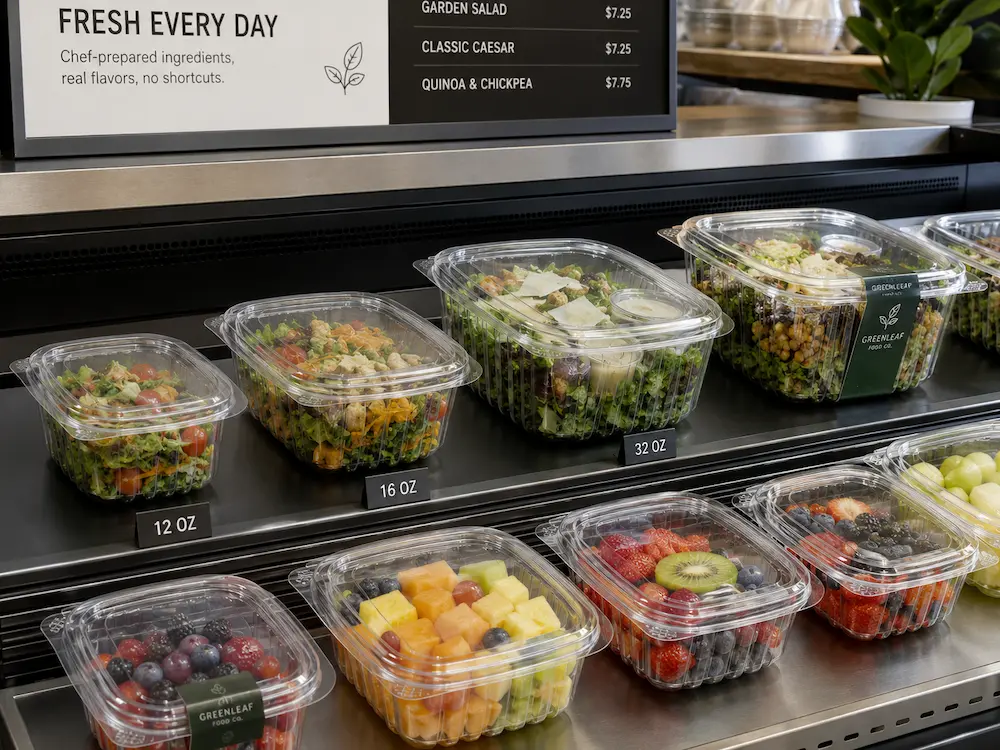
Standard clear PET deli containers should not be automatically described as freezer safe. PET containers can be suitable for many cold food applications, especially refrigerated display, chilled storage, cold case merchandising, fresh produce packaging and grab-and-go food presentation. But freezer storage is a more demanding condition, and buyers should confirm whether the exact container design has been tested for low-temperature performance.
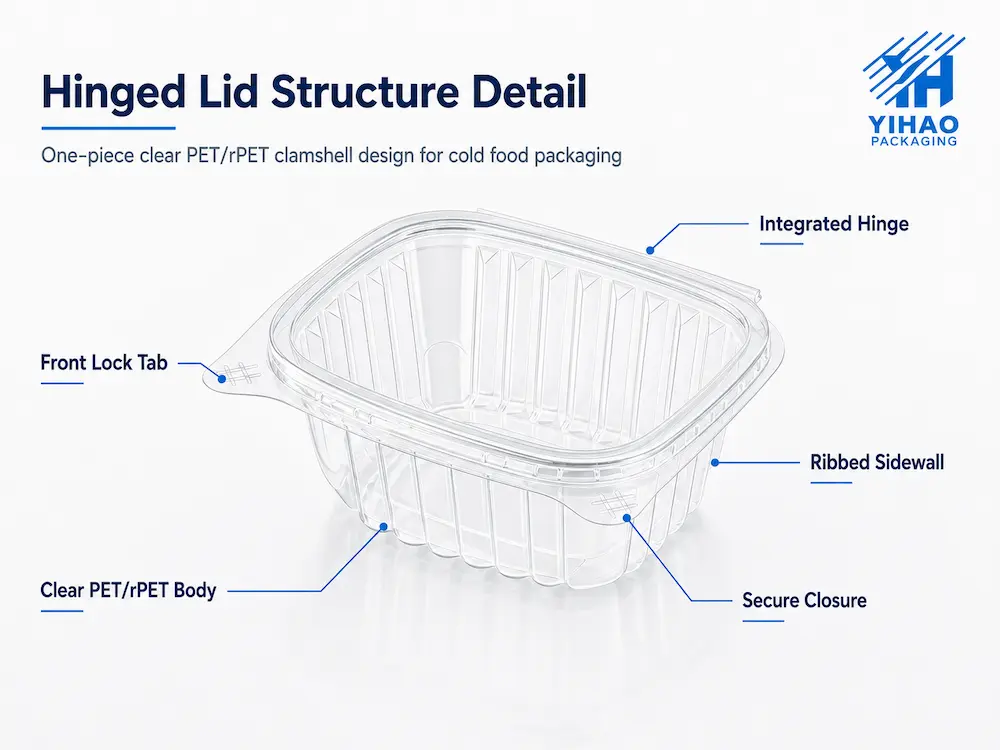
The key point is simple: refrigerated does not always mean freezer safe. A container that performs well in a cold display case may not perform the same way in a freezer. Freezing temperatures can make some plastic structures more rigid, more brittle or more vulnerable to cracking during handling. Thin walls, hinges, corners, locking tabs and lid rims may be affected if the container is not designed for that condition.
For supermarkets, fresh-cut fruit processors, delis, cafes, convenience stores and foodservice distributors, this question matters because product use conditions are different. A clear PET salad container used for refrigerated display is one application. A PET fruit container used for chilled transport is another. A container used for frozen storage, frozen distribution or freezer-to-customer handling is a much stricter application.
As a food packaging manufacturer and solution provider, YIHAO recommends that buyers separate three conditions clearly: refrigerated display, short-term cold storage and true freezer storage. Each condition requires different testing before a buyer confirms packaging claims or wholesale orders.
Refrigerated Display vs Freezer Storage: Why the Difference Matters
Many buyers use the words “cold storage” and “freezer storage” too loosely. In food packaging selection, these are not the same. Refrigerated display usually means chilled conditions for salads, fruit, deli foods, desserts and ready-to-eat products. Freezer storage means lower temperatures, longer exposure and more stress on the container structure.
| Condition | Common Use | Packaging Priority | Buyer Warning |
|---|---|---|---|
| Refrigerated display | Salads, fruit, cold deli foods, desserts, grab-and-go chilled foods | Clarity, shelf appeal, lid fit, stacking, label adhesion | Clear PET deli containers are commonly used here, but still require application testing |
| Short-term cold storage | Pre-packed chilled foods, cold transport, back-of-house holding | Closure strength, stacking, condensation control, product visibility | Check handling after cooling and storage duration |
| Freezer storage | Frozen food holding, frozen distribution, freezer display, frozen meal storage | Low-temperature impact resistance, brittleness control, hinge and lid strength | Do not claim freezer safe unless the exact product is tested and confirmed |
This distinction helps buyers avoid incorrect claims. A clear PET container may be excellent for refrigerated food packaging, but that does not automatically make it a freezer-grade container. If a product will be frozen, stored below freezing, handled while frozen or shipped through frozen distribution, the packaging should be tested under that actual condition.
Why PET Performs Well in Refrigerated Food Packaging
PET is popular in chilled food packaging because it offers strong clarity, clean appearance and good stiffness for retail presentation. For salads, fresh-cut fruit, deli foods and grab-and-go items, clear packaging allows customers to inspect color, portion size, freshness and ingredient condition before purchase.
This is why PET hinged deli containers are often used for cold deli foods, salads, fresh fruit portions, snacks and chilled retail packs. Hinged structures can also simplify packing because the lid and base are connected, reducing the need to match separate lids during fast operations.
For deli and salad containers, PET clarity supports merchandising. A pasta salad, fruit mix, green salad or cold noodle pack can look more attractive when the food remains visible. In refrigerated retail display, the package is not only a container; it is part of the selling presentation.
However, buyers should not stretch this advantage into a freezer claim without testing. The same clear, lightweight structure that works well in cold display may require additional validation if used in freezing conditions.
What Can Go Wrong If Standard PET Containers Are Frozen?
The biggest concern is not only whether the container holds food at a low temperature. The bigger question is how the package performs after freezing, stacking, transport and customer handling. Freezer conditions can expose weak points that may not appear during normal refrigerated display.
| Potential Issue | Why It Happens | Buyer Test |
|---|---|---|
| Brittleness or cracking | Low temperature can make some container designs less flexible | Freeze filled samples, then test handling, opening and impact |
| Hinge stress | Hinged PET containers may become harder to open after freezing | Open and close samples after freezer exposure |
| Lid fit change | Low temperature and food expansion may affect closure behavior | Check lid lock, rim fit and leakage after freezing |
| Corner cracking | Sharp corners and thin areas may receive stress during stacking | Test stacked cartons and individual packs under frozen handling |
| Condensation and label failure | Temperature changes can create moisture on the package surface | Move samples from freezer to room condition and check label adhesion |
| Poor customer opening experience | Frozen or chilled material may feel stiffer during opening | Test real customer-style opening after freezing and thawing |
These issues do not mean PET is never used in low-temperature applications. The professional point is that the exact container must match the exact use condition. Material grade, wall thickness, design, hinge structure, lid geometry, food type and handling method all affect performance.
Cold Display Applications Where PET Deli Containers Fit Well
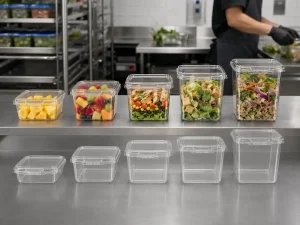
Clear PET deli containers are often a strong choice for refrigerated and cold display applications. They work especially well when the buyer needs product visibility, clean shelf presentation and efficient grab-and-go merchandising.
Salads and deli sides
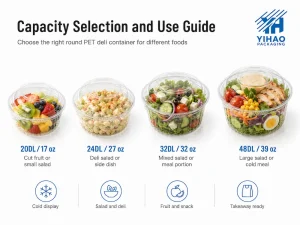
Cold salads, pasta salad, coleslaw, cut vegetables, cold noodles and deli sides are common PET applications. These foods benefit from clear visibility and retail shelf appeal. Buyers should still test lid clearance, dressing movement, stacking and label placement.
Fresh-cut fruit
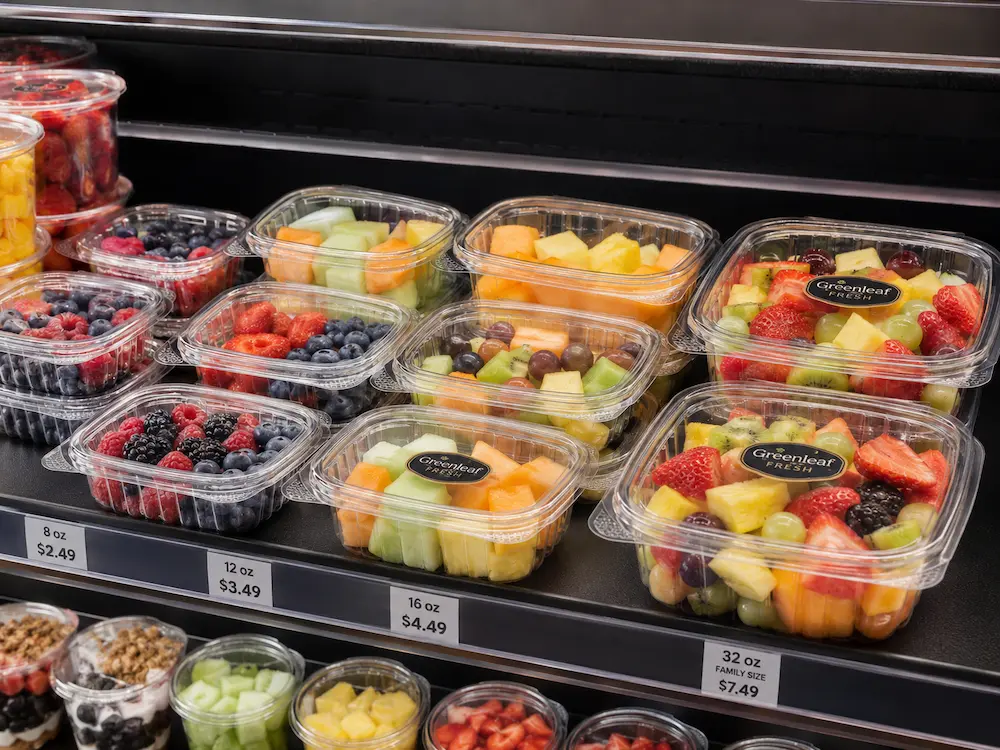
Fresh-cut fruit containers need clarity because customers want to see color, freshness and fruit quality. PET packaging can support this visual requirement in refrigerated display. For fruit packaging, buyers should also consider moisture behavior, ventilation needs, stacking and cold chain handling.
Grab-and-go chilled foods
Grab-and-go packaging needs to look attractive and remain stable through customer handling. Clear PET containers can support chilled snacks, fruit portions, salads, desserts and deli foods. The container should fit the shelf, label plan and takeaway bag.
Bakery and dessert cold case items
Cold desserts, cream-based bakery items and chilled sweet products may also use clear PET packaging for presentation. Buyers should test lid height, product protection, condensation and customer opening experience.
When PET Freezer Use Requires Extra Testing
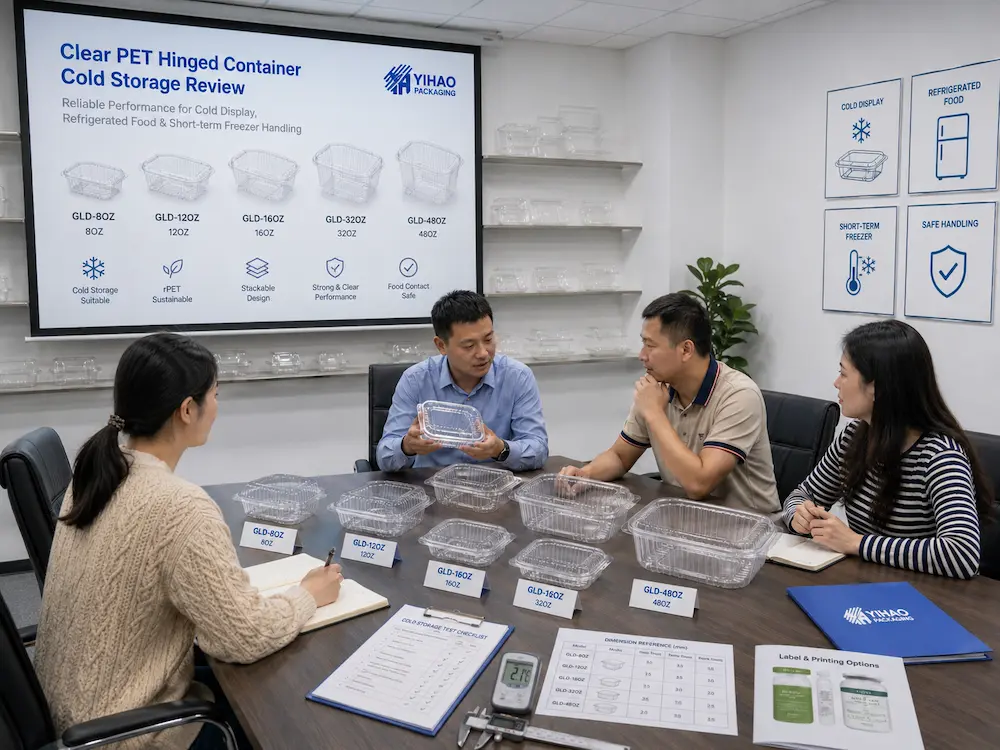
If a buyer wants to use PET containers in freezer storage, the packaging should go through practical tests before any freezer-safe claim is made. This is especially important for export buyers, distributors, private-label brands and food manufacturers that need consistent performance across different storage and transport conditions.
Testing should reflect the actual product, not only an empty container. A container filled with fruit, sauce, salad, bakery items or frozen portions may behave differently from an empty sample. Food can expand, release moisture, create pressure or shift during frozen handling.
| Testing Area | Why It Matters | Recommended Buyer Action |
|---|---|---|
| Actual freezer temperature | Different buyers use different freezer conditions | Test at the real storage temperature and duration |
| Filled product testing | Food weight, moisture and expansion affect package stress | Test the actual food, not only empty containers |
| Stacking test | Frozen containers may face pressure in cartons or freezer shelves | Test filled packs under expected stacking load |
| Impact and drop handling | Frozen packaging may crack more easily during handling | Test carton movement, individual pack handling and shelf drops |
| Opening test | Hinges, tabs and lids may behave differently after freezing | Open samples after freezing and after partial thawing |
| Label and condensation test | Temperature changes can affect label adhesion and appearance | Test real labels during freeze-thaw transitions |
Fresh Produce, Fruit and Cold Storage Packaging
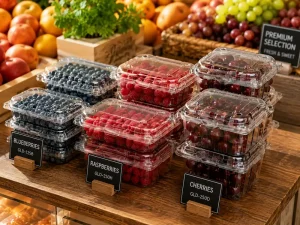
Fresh produce packaging often involves cold chain handling, but not every produce package is designed for freezer storage. Fresh berries, grapes, cherry tomatoes, cut fruit and salad ingredients are commonly stored under refrigerated conditions, not deep-freezer conditions.
Fresh produce packaging containers should be selected by produce type, moisture level, ventilation need, product visibility and handling process. For refrigerated merchandising, clear PET or rPET containers can be a strong choice because they allow customers to inspect the product easily.
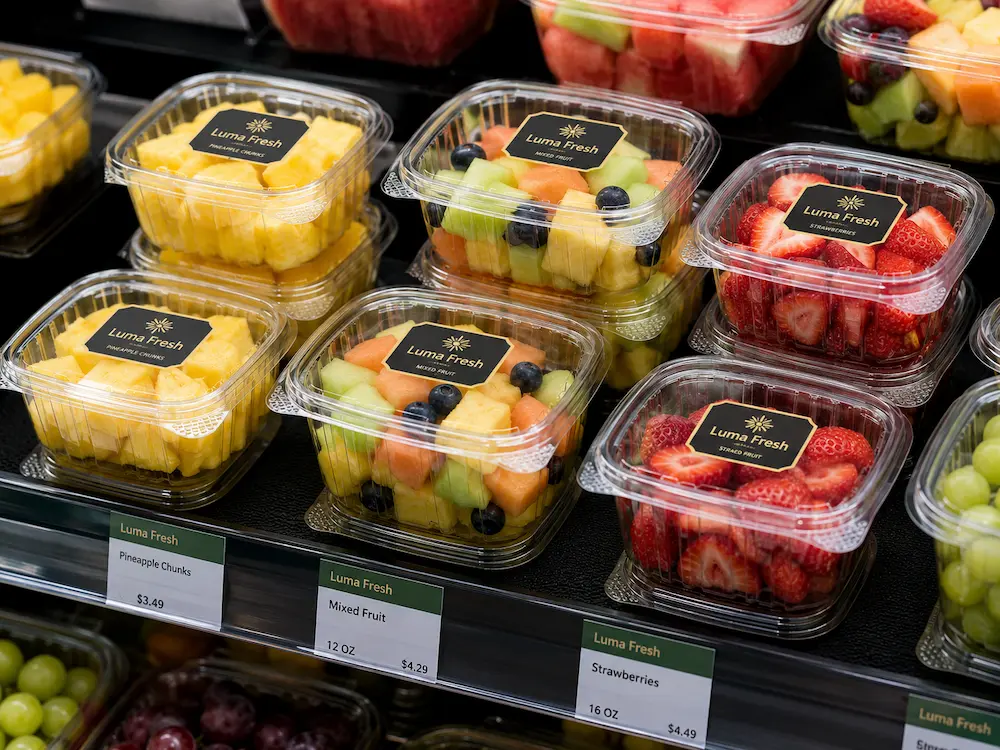
For fresh-cut fruit, the buyer should focus on chilled display performance rather than freezer performance unless the product is truly sold frozen. Water-rich fruit can change texture after freezing and thawing, and the packaging must be tested with the actual product. A PET container that works well for refrigerated pineapple, melon, grapes or mixed fruit may not automatically work for frozen fruit distribution.
Salad Containers and Freezer Questions
Salad packaging is usually designed for refrigerated freshness and visual presentation, not freezer storage. Leafy greens, toppings, dressings and fresh vegetables often do not perform well after freezing and thawing. For this reason, buyers should be careful when asking whether salad containers are freezer safe.
The better question is: what is the real storage condition? If the salad is stored in a refrigerated cold case, clear PET deli containers may be a strong option. If the salad or prepared food will be frozen, buyers should confirm both food quality and packaging performance. The container must survive freezing, but the food must also remain acceptable after thawing.
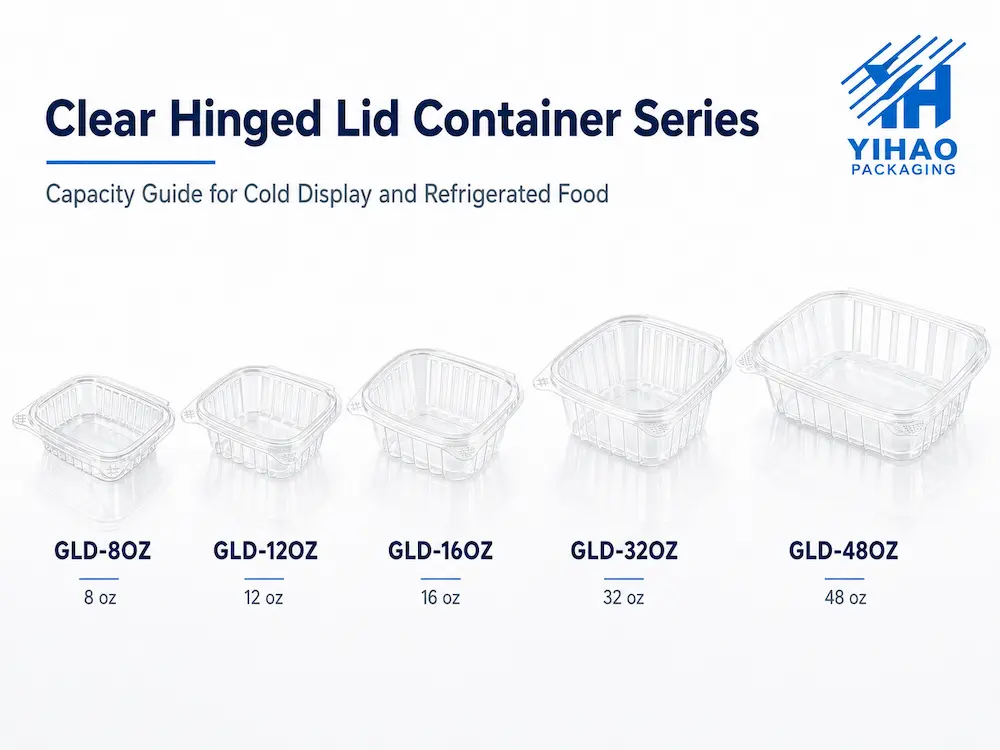
A 16oz clear recycled PET hinged deli container may be suitable for chilled deli, salad and snack applications where visibility matters. But if the same product is intended for freezer storage, sample testing and supplier confirmation are still necessary.
Size Considerations for Refrigerated and Frozen Handling
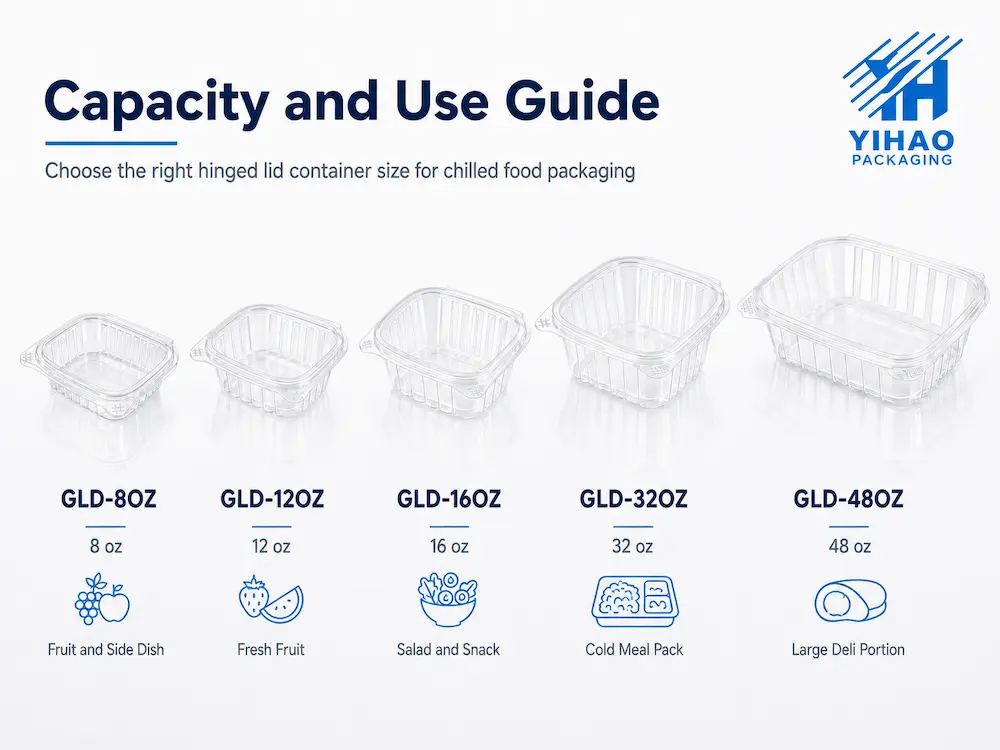
Container size affects cold storage performance. Small containers may cool quickly and handle well, but they have limited label space and lid clearance. Larger containers may offer better presentation and portion value, but they may face more stacking pressure and stress during frozen handling.
| Container Size Range | Refrigerated Display Fit | Freezer Use Concern | Buyer Test |
|---|---|---|---|
| Small containers | Fruit portions, snacks, toppings, small desserts | Tabs and corners may become stiff after freezing | Test opening and corner strength after cold exposure |
| Medium containers | Deli salads, fruit mixes, cold sides, grab-and-go foods | Food weight and lid fit can affect frozen handling | Test filled product, stacking and lid engagement |
| Large containers | Meal salads, larger deli portions, family fresh food packs | Stacking pressure and sidewall deformation become more important | Test carton packing, frozen stacking and drop handling |
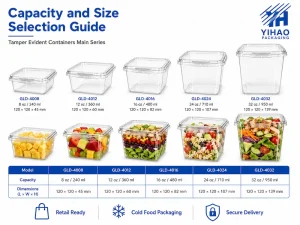
A 8 oz clear hinged deli container may work well for small refrigerated food portions. A 12 oz clear recycled PET hinged deli container may support fresh and convenient chilled food storage. But freezer use should still be confirmed by real testing, not assumed from size alone.
What Buyers Should Ask Suppliers Before Freezer Claims
Before a buyer describes a PET deli container as freezer safe, the supplier should provide clear product guidance. The buyer should ask about material grade, intended use, recommended temperature range, sample testing, filled-product behavior and whether the container has been evaluated for freezing.
For export projects, buyers should be even more careful. Different markets may have different expectations for freezer packaging, labeling language and claims. A vague claim such as “cold safe” may not be enough. Buyers should ask whether the package is suitable for refrigerated display, short-term cold storage or true freezer storage.
| Supplier Question | Why It Matters |
|---|---|
| Is this exact PET container designed for freezer storage? | Confirms whether the product is intended for freezing, not only refrigeration |
| What temperature range has been tested? | Helps buyers match packaging to real storage conditions |
| Was the test done with empty or filled containers? | Filled food creates more realistic stress than empty samples |
| How does the hinge or lid perform after freezing? | Hinges, tabs and locks are common stress points |
| Can labels remain attached after condensation or freeze-thaw changes? | Retail packaging must still present product and information clearly |
| Do you recommend this container for refrigerated display or freezer storage? | Forces the supplier to separate cold display from freezer claims |
Recommended RFQ Information for Cold Storage Packaging
A clear RFQ helps a manufacturer recommend the right container. Instead of asking only for freezer safe deli containers, buyers should explain the actual product and handling condition.
| RFQ Information | Why It Matters | Example |
|---|---|---|
| Food type | Different foods create different moisture, weight and expansion behavior | Fruit, salad, deli food, dessert, frozen portion |
| Storage condition | Refrigerated display and freezer storage are different use cases | Cold case, chilled transport, freezer storage, freeze-thaw cycle |
| Target temperature | Packaging performance depends on actual temperature exposure | Buyer-specific refrigerated or frozen condition |
| Storage duration | Short exposure and long-term storage may create different risks | Several hours, several days, frozen distribution period |
| Container size | Size affects stacking, cooling, handling and closure stress | 8 oz, 12 oz, 16 oz, 32 oz or buyer-specific size |
| Handling process | Carton packing, delivery movement and customer handling affect breakage risk | Stacking, drop handling, shelf display, delivery bag handling |
| Label plan | Temperature changes can affect label adhesion and visibility | Top label, side label, sleeve or barcode label |
Common Mistakes Buyers Should Avoid
Mistake 1: Treating refrigerated packaging as freezer packaging
A container that performs well in refrigerated display may not be suitable for freezer storage. Buyers should avoid using “cold safe” or “refrigerated suitable” as proof of freezer performance.
Mistake 2: Testing only empty containers
Empty PET containers do not show the full picture. Real food weight, moisture, expansion, condensation and stacking pressure can change performance significantly.
Mistake 3: Ignoring hinges, tabs and corners
Thin corners, hinges, locking tabs and lid rims may become stress points under low-temperature handling. Buyers should test opening and impact after cold exposure.
Mistake 4: Making freezer-safe claims without supplier confirmation
Do not write freezer safe on a product page, label or quotation unless the exact container has been confirmed for that use. Conservative language protects both the buyer and the brand.
Mistake 5: Forgetting the food quality after freezing
Even if the container survives freezing, the food may not. Salads, fresh fruit and deli foods may change texture after freezing and thawing. Packaging testing should be done together with product quality review.
FAQ
1. Are PET deli containers freezer safe?
Standard PET deli containers should not be assumed freezer safe. They may be suitable for refrigerated display and chilled food packaging, but true freezer storage requires confirmation from the supplier and testing with the actual food, temperature, storage time and handling process.
2. What clear deli containers are best for refrigerated food?
Clear PET deli containers are commonly used for refrigerated salads, fresh-cut fruit, cold deli foods, snacks and grab-and-go packaging because they offer strong visibility and clean shelf presentation. Buyers should still test lid fit, stacking and condensation behavior.
3. Can PET containers go in the freezer?
Some PET packaging may be designed for low-temperature use, but standard clear PET deli containers should not be treated as freezer safe by default. Buyers should ask whether the exact product has been tested for freezer storage and handling after freezing.
4. Which foods are best suited to PET containers?
PET containers are well suited to chilled salads, fresh-cut fruit, cold deli foods, desserts, snacks and retail display foods where clarity and presentation matter. They are usually better positioned for refrigerated and cold display applications than unconfirmed freezer storage.
5. What should buyers test before using PET containers in cold storage?
Buyers should test filled products, storage temperature, storage duration, stacking strength, hinge performance, lid fit, impact handling, condensation, label adhesion and customer opening experience before confirming PET containers for cold storage or freezer use.
6. Is freezer safe the same as refrigerated safe?
No. Refrigerated safe and freezer safe are different use conditions. Refrigerated display usually involves chilled storage, while freezer storage involves lower temperature exposure and higher risk of brittleness, cracking and handling stress.
7. Can PET containers be used for frozen fruit?
PET containers should only be used for frozen fruit if the exact package has been tested and confirmed for that condition. Frozen fruit can create moisture, expansion, weight and handling stress, so sample testing is important before wholesale orders.
References
- U.S. Food and Drug Administration, Packaging and Food Contact Substances resources.
- U.S. Food and Drug Administration, Inventory of Effective Food Contact Substance Notifications.
- U.S. Food and Drug Administration, food contact substances and intended-use framework.
- European Commission, Regulation (EC) No 1935/2004 on materials and articles intended to come into contact with food.
- European Food Safety Authority, food contact materials safety assessment resources.
- Association of Plastic Recyclers, Design Guide for Plastics Recyclability.
- RecyClass, Design for Recycling Guidelines for PET Packaging.
- PMMI Business Intelligence, food packaging, cold chain and prepared food packaging industry research.
Deep-Dive Insights: How Buyers Should Think About PET Deli Containers and Freezer Use
How PET supports refrigerated food packaging
PET deli containers are valuable for refrigerated food packaging because they provide clear visibility, clean product presentation and practical stiffness for salads, fruit, deli foods, snacks and grab-and-go chilled display.
Why freezer-safe claims need testing
Freezer storage creates different stress than refrigerated display. Low temperature, stacking pressure, frozen handling, hinge stiffness, condensation and impact can all affect packaging performance. Buyers should not claim freezer safe unless the exact container has been tested and confirmed.
What option works best for cold display?
For refrigerated salads, fresh-cut fruit, cold deli foods and chilled retail display, clear PET and rPET containers are often strong options. They help shoppers see freshness, color and portion quality before purchase.
Consideration for frozen applications
If the food must be frozen, buyers should ask for freezer-grade packaging guidance, low-temperature test information and real sample testing. The package should be tested with actual food, actual storage temperature, expected duration and handling process.
Buyer takeaway before wholesale ordering
The safest approach is to use precise language. Say “suitable for refrigerated display” when the container is intended for chilled foods. Say “freezer safe” only when freezer performance is confirmed by product specification and testing.
Final Note / Practical Takeaway
© YIHAO Packaging. All rights reserved. All articles, product images, packaging designs, technical specifications, and website materials are protected by copyright. Unauthorized copying, reproduction, redistribution, modification, or commercial use is strictly prohibited without prior written permission.