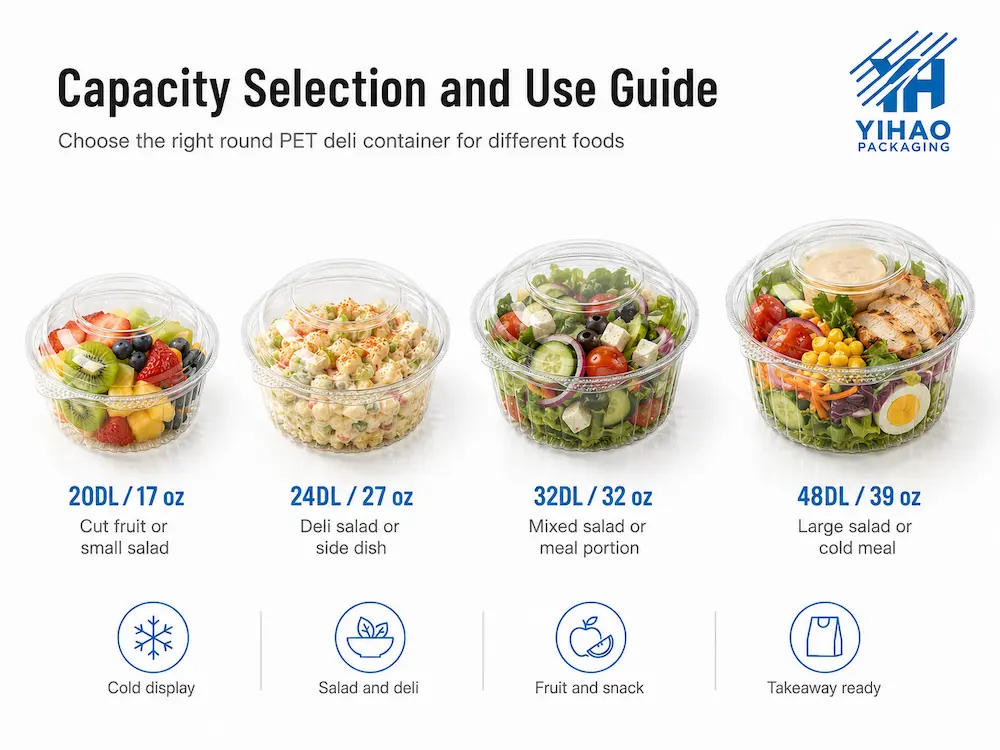
Why Clear Salad Bowls and Deli Containers Matter for Foodservice Buyers
For supermarkets, delis, cafes, convenience stores and foodservice brands, salad and deli packaging is more than a basic container. It affects how fresh food looks on the shelf, how easily staff can pack it, how customers carry it and how confidently buyers can scale a product line across multiple locations or wholesale channels.
Clear salad bowls and deli containers are widely used because they make the food visible. A salad buyer wants to see greens, toppings, protein and dressing placement. A deli customer wants to see portion size, texture and ingredient quality. A supermarket shopper wants to judge freshness quickly before purchase. Clear PET packaging helps the product itself become part of the sales message.
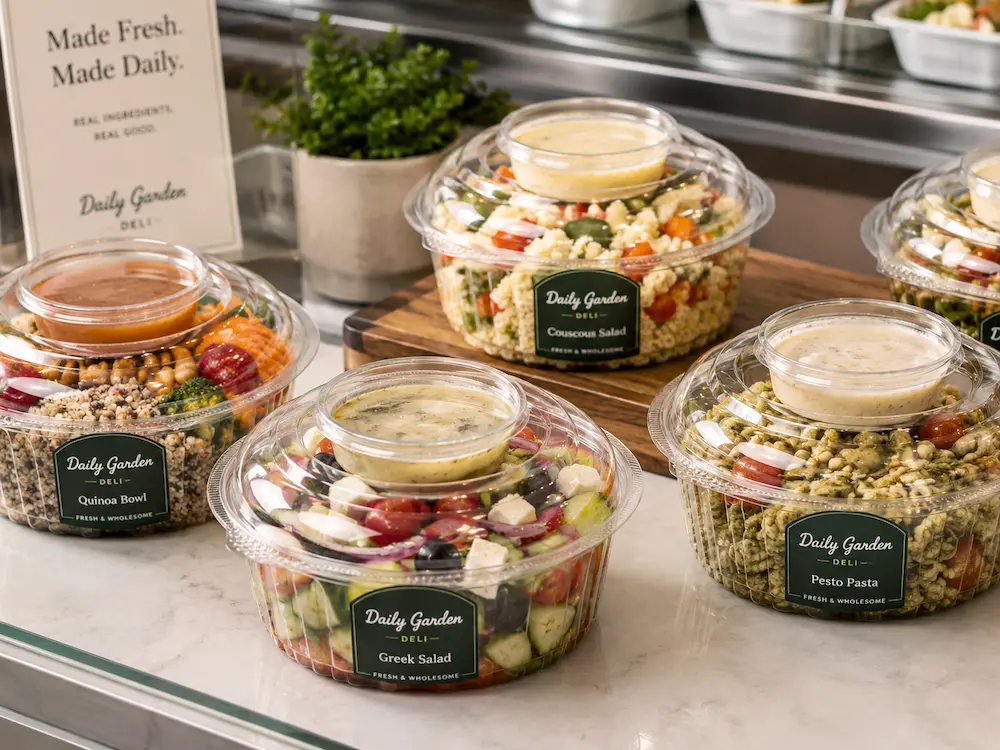
However, clarity alone is not enough. A salad bowl that looks good when empty may fail when filled with leafy greens, sauce cups, toppings or fruit. A deli container may look compact but deform when packed with dense pasta salad or cold noodles. A lid may close well during sample review but feel loose after chilled storage or takeaway handling. This is why commercial buyers need a practical selection guide before committing to quotations, samples or custom packaging support.
As a food packaging manufacturer and solution provider, YIHAO recommends that buyers choose salad and deli packaging by application first, then compare size, shape, lid structure and material. The best packaging decision should support both retail presentation and real operational performance.
Quick Selection Table for Clear Salad and Deli Packaging
The table below gives buyers a fast comparison of common salad and deli packaging structures. It can help narrow the selection before requesting samples.
| Packaging Type | Best Applications | Main Advantage | Buyer Watch Point |
|---|---|---|---|
| Clear PET salad bowls | Meal salads, fruit bowls, grain bowls, cold noodles, ready-to-eat foods | Strong top-view presentation and familiar eating experience | Check lid clearance, bowl depth and topping protection |
| Round PET deli containers | Side salads, fruit portions, deli bowls, chilled snacks | Clean visual style and easy customer handling | Check shelf footprint and carton packing efficiency |
| Square PET deli containers | Deli sides, prepared foods, fruit, snacks, chilled meals | Efficient shelf alignment and carton loading | Check corner strength, stacking and lid fit |
| PET hinged deli containers | Grab-and-go foods, deli counter items, salad portions, fresh fruit | Integrated lid and base simplify packing operations | Check hinge strength and front lock consistency |
| Larger salad and deli containers | Premium meal salads, large fruit packs, family deli sides | More space for presentation and higher perceived value | Check stacking pressure, shelf fit and takeaway handling |
Key Selection Factor 1: Food Type and Real Application
The first question is not “Which container looks best?” The first question is “What food will go inside?” Salad, fruit, deli foods, cold noodles, grain bowls, snacks and ready-to-eat meals all need different packaging logic.
Leafy salads need more lid clearance because greens are light, bulky and easy to crush. Fruit bowls need visibility and moisture control. Deli foods such as pasta salad, potato salad and coleslaw are dense and may place more weight on the base. Ready-to-eat meals may need better stacking strength and stronger lid engagement. A container that works well for one food category may not work for another.
For deli and salad containers, buyers should define the product category before comparing sizes. A side salad may need a compact bowl. A premium meal salad may need a larger clear bowl with a secure hinged lid. A deli side may perform better in a square PET container if shelf and carton efficiency matter. A fresh fruit bowl may need a round or hinged structure depending on the retail display method.
Application examples
| Food Application | Common Packaging Direction | Reason | Sample Test |
|---|---|---|---|
| Side salads | Small to medium clear bowls or hinged containers | Compact display and portion control | Test leafy height and dressing placement |
| Meal salads | Larger clear PET salad bowls | More space for greens, protein and toppings | Test lid clearance and topping protection |
| Fresh fruit bowls | Round bowls or hinged clear containers | Clear visibility supports freshness inspection | Test fruit movement, moisture and chilled display |
| Deli sides | Square or round PET deli containers | Works for dense foods and retail portions | Test filled weight and closure strength |
| Ready-to-eat chilled foods | Square, round or hinged PET containers | Needs visibility, stability and takeaway handling | Test stacking, labels and bag fit |
Key Selection Factor 2: Capacity and Usable Filling Volume
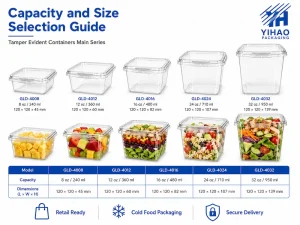
Capacity is important, but usable filling volume is more important. A container may be listed as 17 oz, 20 oz, 27 oz, 32 oz or 34 oz, but the actual packaging fit depends on food shape, density, lid height and visual presentation.
A 17 oz salad bowl may work well for a light grab-and-go salad or fresh fruit portion. A 20 oz square deli container may be better for compact salad, fruit or deli meal applications. A 27 oz salad bowl may offer a stronger ready-to-eat salad presentation. A 32 oz salad bowl may be more suitable for premium meal salads. A 34 oz square deli container may support larger salads, fruit or chilled meals where shelf alignment and carton efficiency matter.
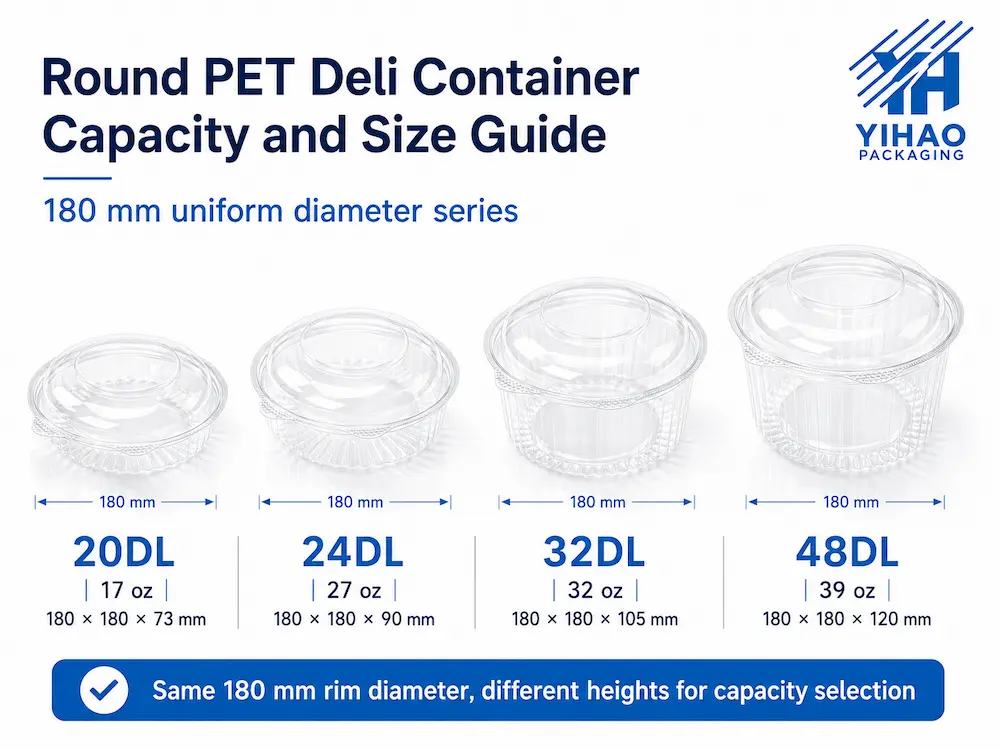
For example, a 17oz clear PET salad bowl can be a practical starting point for grab-and-go salads and fresh fruit where a compact but visible bowl is needed. A 32oz clear PET salad bowl may be more appropriate when the buyer needs space for greens, toppings, protein and premium shelf presentation.
Capacity comparison for salad and deli buyers
| Capacity Range | Common Application | Best Buyer Use Case | Watch Point |
|---|---|---|---|
| Small to medium | Side salads, fruit portions, snacks | Convenience stores, cafes, quick grab-and-go items | Do not compress leafy foods or toppings |
| Medium | Deli sides, fruit bowls, cold snacks | Supermarket deli counters and foodservice programs | Check dense food weight and lid fit |
| Medium-large | Ready-to-eat salads and chilled bowls | Retail meal salads and premium fresh food displays | Check lid height and label placement |
| Large | Premium salads, larger fruit packs, chilled meals | Grab-and-go meal programs and wholesale fresh food packs | Check stacking pressure and shelf footprint |
Key Selection Factor 3: Round Bowls vs Square Deli Containers
Many buyers compare round bowls and square deli containers when selecting clear salad packaging. Both can work well, but they solve different problems.
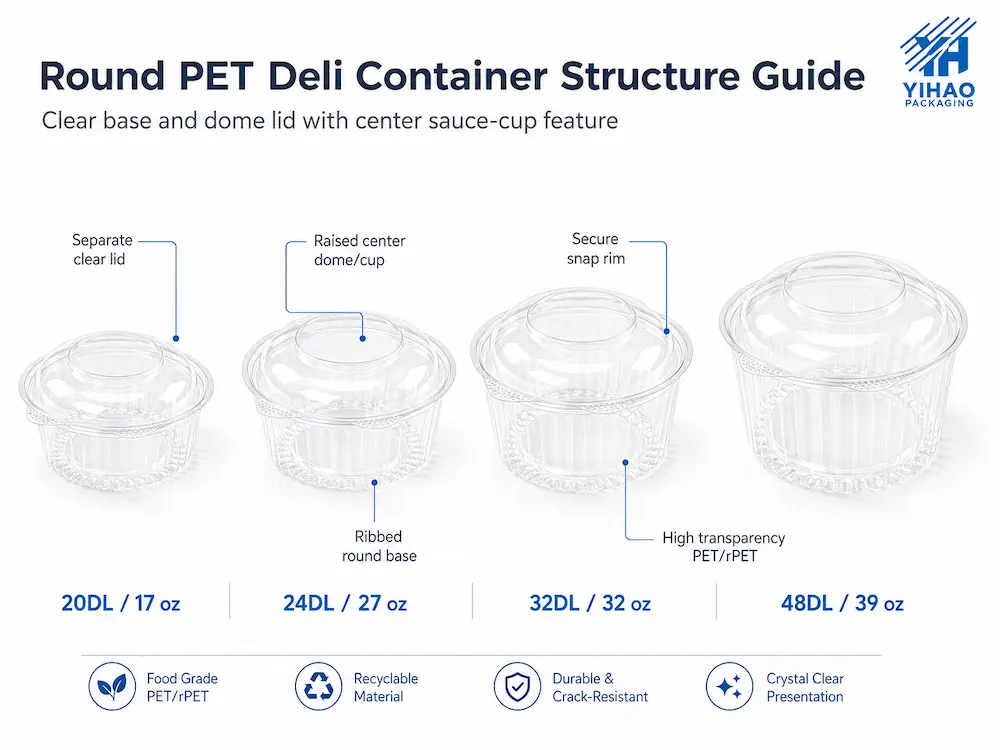
Round PET containers often create a familiar bowl-style eating experience. They work well for salads, fruit bowls, cold noodles, grain bowls and ready-to-eat foods where customer eating comfort and top-view presentation matter.
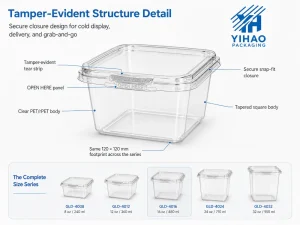
Square PET containers often support better shelf alignment and carton efficiency. They are useful for deli foods, salad portions, chilled meals, fruit and snack packs where retail space and logistics efficiency matter. Square containers can also create a clean organized display in refrigerated cases.
The choice depends on the buyer’s priority. If the product is a salad bowl sold for direct eating, round may feel more natural. If the product is a deli side sold in volume across multiple stores, square may improve shelf and carton use. If the buyer needs several sizes within one packaging range, both shapes may be useful for different SKUs.
| Comparison Point | Round PET Containers | Square PET Containers |
|---|---|---|
| Customer experience | More bowl-like and familiar for salads | More structured and compact for deli items |
| Retail display | Strong visual appeal for premium bowls | Efficient shelf alignment and cleaner rows |
| Carton packing | May use more space depending on design | Often more efficient for packing and stacking |
| Best applications | Meal salads, fruit bowls, cold bowls | Deli sides, chilled foods, fruit, snacks |
| Buyer test | Check lid height and customer eating comfort | Check corner strength and lid consistency |
Key Selection Factor 4: Hinged Lid or Separate Lid?
Clear salad bowls and deli containers may use hinged lids or separate lids. The right choice depends on packing speed, customer experience, lid matching, storage efficiency and brand presentation.
PET hinged deli containers are useful when packing teams need speed and simplicity. Because the lid and base are connected, staff do not need to search for a matching lid during busy operations. Hinged structures can reduce lid mismatch and support fast deli counter, supermarket and cafe packing.
Separate lid systems may be useful when buyers want flexible lid types, stacking configurations or different lid styles for the same base. They can also help when a product line needs flat lids, dome lids or special ventilation options. However, separate lids require accurate inventory control and compatibility checks.
Hinged vs separate lid comparison
| Lid Type | Advantages | Best Applications | Buyer Watch Point |
|---|---|---|---|
| Hinged lid | Fast packing, integrated lid and base, fewer lid-matching errors | Grab-and-go salads, fresh fruit, deli counters, cafes | Check hinge strength and lock consistency |
| Separate lid | Flexible lid options and potentially better stacking by component | Foodservice programs, custom lines, different lid styles | Confirm lid compatibility and inventory control |
Key Selection Factor 5: PET and rPET Clarity for Retail Display
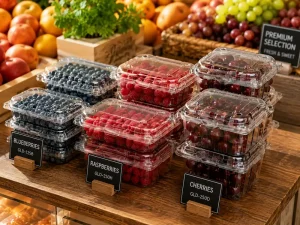
Clear PET and rPET packaging are popular for salad and deli foods because visibility matters. Customers often buy with their eyes first. For fresh salads, fruit bowls and deli items, clear packaging helps customers see color, ingredient quality, portion size and freshness.
For supermarkets and delis, clarity can improve shelf appeal. A green salad with colorful toppings, a fruit bowl with mixed colors or a deli container with fresh ingredients can look more attractive in transparent packaging. This can support purchase confidence and reduce the need for oversized labels that hide the food.
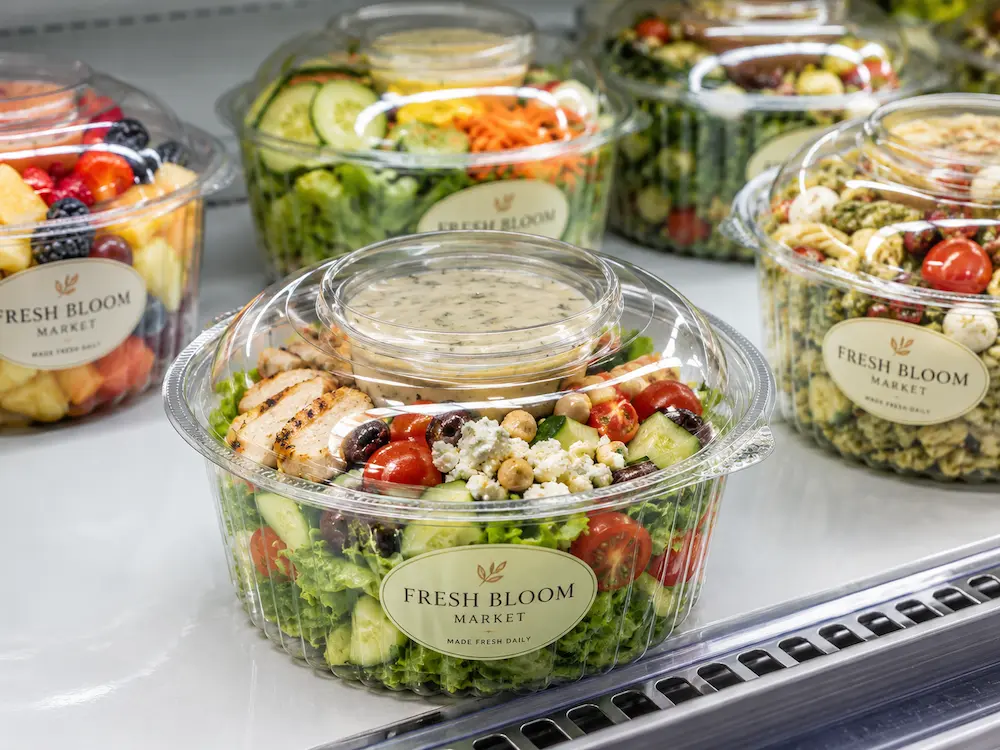
rPET may also be relevant for buyers who want packaging programs with recycled material discussion, where food contact suitability, supplier documentation and local recycling conditions support it. Buyers should confirm material source, food contact compliance, clarity consistency and application requirements before making recycled content claims.
For clear salad bowls and deli containers, material choice should match the use case. PET and rPET are commonly used for cold display and chilled food presentation. If reheating or microwave use is required, buyers should evaluate PP microwave-safe packaging instead of assuming clear PET is suitable for heat applications.
Key Selection Factor 6: Cold Case, Takeaway and Delivery Handling
Salad and deli packaging often moves through several handling conditions. A container may be filled in a production area, chilled in storage, placed in a cold case, handled by customers, packed in a takeaway bag or transported through delivery. Each step can expose weakness in the package.
For cold case display, buyers should test clarity, condensation, stacking and label adhesion. For takeaway, buyers should test bag fit, lid closure and hand feel. For delivery, buyers should test movement, tilt, stacking and customer opening experience.
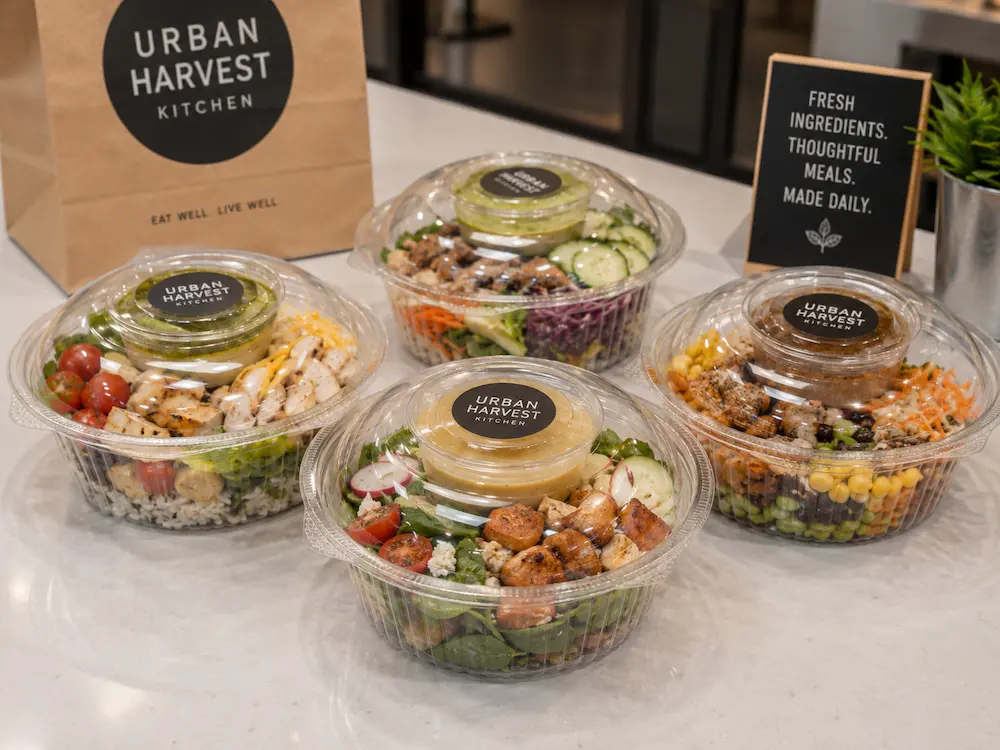
A package that looks good on a product page is not automatically the best option for real operations. Buyers should test filled samples in the actual use condition before placing wholesale orders.
| Use Condition | Main Packaging Requirement | Buyer Test |
|---|---|---|
| Cold case display | Clarity, shelf appeal, stacking and label performance | Test filled samples under actual refrigerated display conditions |
| Deli counter packing | Fast closure, portion control and consistent lid fit | Ask packing staff to close samples during normal workflow |
| Grab-and-go retail | Easy inspection, attractive presentation and secure handling | Test shelf viewing angle, label placement and customer grip |
| Takeaway and delivery | Lid security, spill resistance and bag stability | Test filled containers inside real takeaway bags or cartons |
| Wholesale distribution | Carton efficiency, stacking and consistent supply | Check carton packing, pallet handling and reorder planning |
How Supermarkets Should Choose Salad and Deli Containers
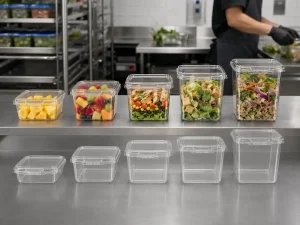
Supermarkets need packaging that works across merchandising, operations and customer experience. A supermarket salad container should look fresh in the cold case, stack cleanly, fit labels, support barcode scanning and remain easy for customers to carry.
For supermarket salad packaging, clear PET salad bowls can be useful for meal salads, fruit bowls and chilled fresh food programs. Square PET containers may be useful for deli sides and prepared foods where shelf alignment matters. PET hinged deli containers may work well for fast packing and grab-and-go displays.
Supermarket buyers should also build a size range instead of relying on one container. A smaller salad bowl may support side salads and fruit. A medium bowl may support ready-to-eat salads. A larger container may support premium meal salads or family portions. This makes the product range easier for customers to understand and easier for buyers to manage.
How Delis Should Choose Salad and Deli Containers
Delis often need speed and flexibility. Staff may pack multiple foods during busy service hours, including pasta salad, potato salad, coleslaw, cold noodles, fruit portions and fresh salads. Packaging must close consistently and support a clean presentation even when handled quickly.
For delis, hinged PET containers can reduce lid-matching errors. Square PET containers can support efficient display and stacking. Round PET containers can create a more bowl-like customer experience for salads and fresh foods.
Deli buyers should focus on real workflow testing. Can staff fill the container quickly? Does the lid close without excessive force? Does the label fit? Does the filled product look full but not compressed? Does the container stack safely in cold storage? These questions matter more than catalog appearance.
How Foodservice Brands Should Choose Wholesale Salad Packaging
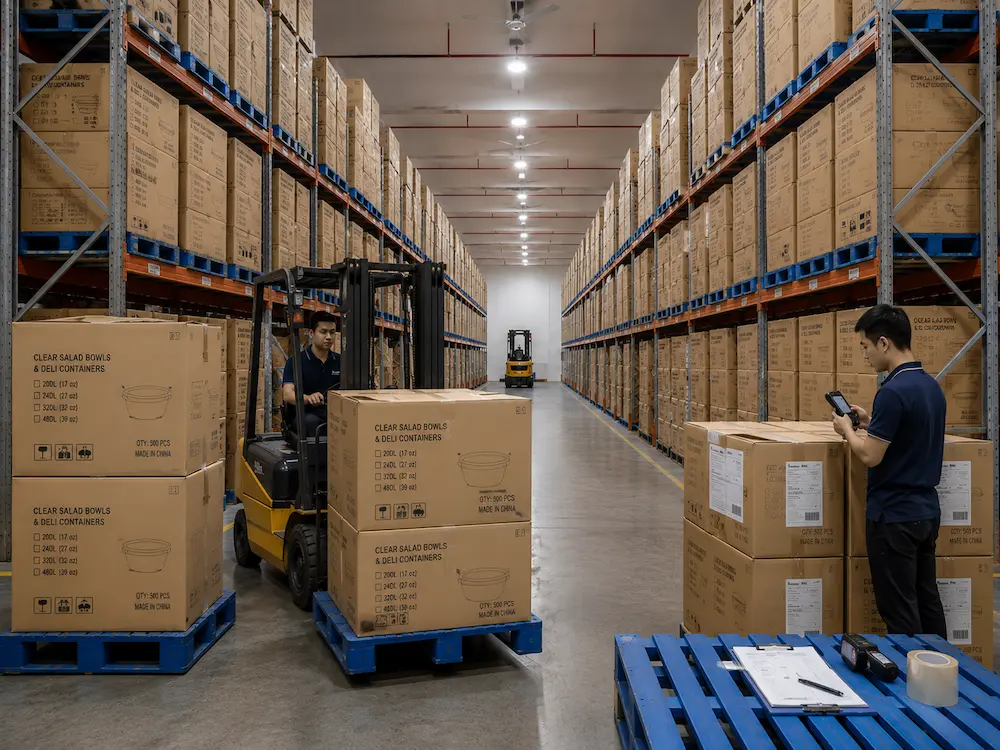
Foodservice brands often need consistent packaging across multiple locations, menus or customer accounts. This makes supply reliability, carton packing, sample consistency and repeat ordering especially important.
For wholesale salad containers, buyers should compare not only unit price but also carton quantity, storage space, freight efficiency, defect rate, lid fit consistency and supplier response speed. A slightly cheaper container may create higher real cost if it causes lid mismatch, poor presentation, high breakage or inconsistent supply.
Foodservice buyers should also think about branding. Clear containers can support custom labels, sleeves or stickers without hiding the food. The label should communicate brand identity while preserving enough visibility for customers to inspect freshness.
Building a Flexible Salad and Deli Container Range
Many buyers get better results by building a packaging range instead of choosing one container for everything. A practical range may include a small salad bowl, a medium square deli container, a larger premium salad bowl and a hinged deli option for grab-and-go foods.
A 20oz PET square deli container can support salad, fruit and deli meal applications where shelf alignment and compact display matter. A 27oz clear PET salad bowl can support ready-to-eat salad programs that need more visual volume. A 34oz PET square deli container can be useful for larger salads, fruit and chilled meals.
The goal is to create a logical packaging ladder. Smaller sizes support sides and fruit portions. Medium sizes support deli and ready-to-eat foods. Larger sizes support meal salads and premium fresh food displays. This helps brands keep their product range organized and easier for customers to understand.
| Packaging Role | Possible Container Direction | Example Use | Buyer Benefit |
|---|---|---|---|
| Entry size | Small clear bowl or compact hinged container | Side salads, fruit portions, snacks | Affordable portion and compact display |
| Core size | Medium square or round PET container | Deli sides, fruit bowls, ready-to-eat foods | Flexible use across multiple SKUs |
| Premium size | Larger clear PET salad bowl | Meal salads, protein salads, premium fresh foods | Stronger shelf impact and perceived value |
| Operational size | Hinged PET deli container | Fast packing, grab-and-go foods, deli counter items | Fewer lid-matching errors and faster workflow |
Sample Request Checklist for Clear Salad Bowls and Deli Containers
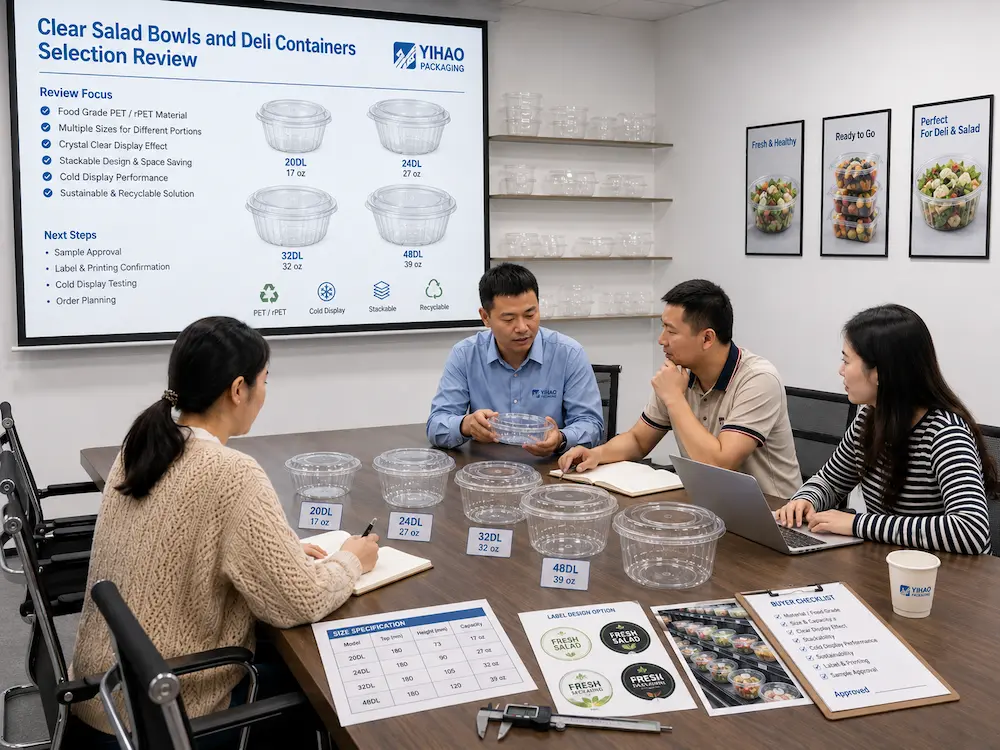
Before requesting samples, buyers should prepare practical information. This helps the supplier recommend the correct salad bowl or deli container without relying on guesswork.
| Information to Send | Why It Matters | Example |
|---|---|---|
| Food type | Salads, fruit and deli foods fill containers differently | Leafy salad, fruit bowl, pasta salad, cold noodles |
| Target portion weight | Dense foods may require stronger bases and lids | 150 g, 250 g, 500 g or buyer-specific target |
| Preferred capacity range | Helps narrow sample selection | 17 oz, 20 oz, 27 oz, 32 oz or 34 oz |
| Preferred shape | Shape affects display, handling and carton efficiency | Round bowl, square deli container or hinged container |
| Lid requirement | Lid clearance and closure affect product protection | Hinged lid, separate lid, flat lid or higher lid clearance |
| Sales channel | Retail, deli and foodservice packaging need different performance | Supermarket, deli counter, cafe, distributor, delivery |
| Label plan | Labels should support branding without hiding the food | Top label, side label, sleeve, barcode or date label |
| Testing condition | Real conditions reveal performance issues | Cold display, stacking, takeaway bag, chilled transport |
When working with a manufacturer, buyers should request matched samples and test them with real products. Empty containers can show shape and clarity, but filled containers reveal lid performance, stacking, label fit and product presentation.
Common Mistakes Buyers Should Avoid
Mistake 1: Choosing only by container appearance
A clear salad bowl may look excellent when empty, but the real test is how it performs when filled with salad, fruit or deli food. Buyers should always test actual products before bulk ordering.
Mistake 2: Ignoring lid clearance
Salads with toppings, protein, dressing cups or fruit pieces may need more lid height than buyers expect. A container with insufficient clearance can crush the food and reduce perceived value.
Mistake 3: Using the same container for every product
Side salads, meal salads, fruit bowls and dense deli foods do not always fit the same package. A flexible range of sizes and shapes usually performs better than one universal container.
Mistake 4: Overlooking carton and shelf efficiency
Round bowls may provide strong presentation, while square containers may improve shelf and carton efficiency. Buyers should calculate how the package fits shelves, cartons and warehouse storage.
Mistake 5: Forgetting material-use conditions
Clear PET and rPET are commonly selected for cold display and chilled foods. If the food needs microwave reheating, buyers should evaluate microwave-safe PP containers instead of assuming clear PET will work for heat applications.
FAQ
1. What container size is best for salads?
The best container size depends on whether the product is a side salad, ready-to-eat salad or premium meal salad. Smaller bowls can work for side salads, while larger clear PET salad bowls are better when the product includes leafy greens, protein, toppings and dressing.
2. Are clear PET containers good for supermarkets?
Yes, clear PET containers are often a strong choice for supermarket salad, fruit and deli programs because they support product visibility, shelf appeal and customer inspection. Buyers should still test lid fit, stacking, label placement and chilled display performance.
3. What is the difference between salad bowls and deli containers?
Salad bowls are often designed for top-view presentation and a bowl-style eating experience. Deli containers may be round, square, rectangular or hinged and are often selected for deli sides, chilled foods, fruit, snacks and prepared food applications.
4. Should buyers choose round or square PET containers?
Round PET containers often work well for salads, fruit bowls and ready-to-eat foods where customer eating experience matters. Square PET containers can improve shelf alignment, carton packing and organized retail display. The best choice depends on application and sales channel.
5. Can clear salad bowls be used for delivery?
Clear salad bowls can be used for delivery when the lid closes securely, the bowl is stable, the food is protected and the package has been tested inside real takeaway bags or delivery cartons. Buyers should test filled samples before bulk ordering.
6. Are PET salad bowls microwave safe?
Standard clear PET salad bowls are usually used for cold display, salads, fruit and chilled foods. They should not be assumed microwave safe unless the exact product is designed, tested and labeled for microwave use. For reheating, buyers should evaluate PP microwave-safe packaging.
7. Can YIHAO support wholesale salad packaging projects?
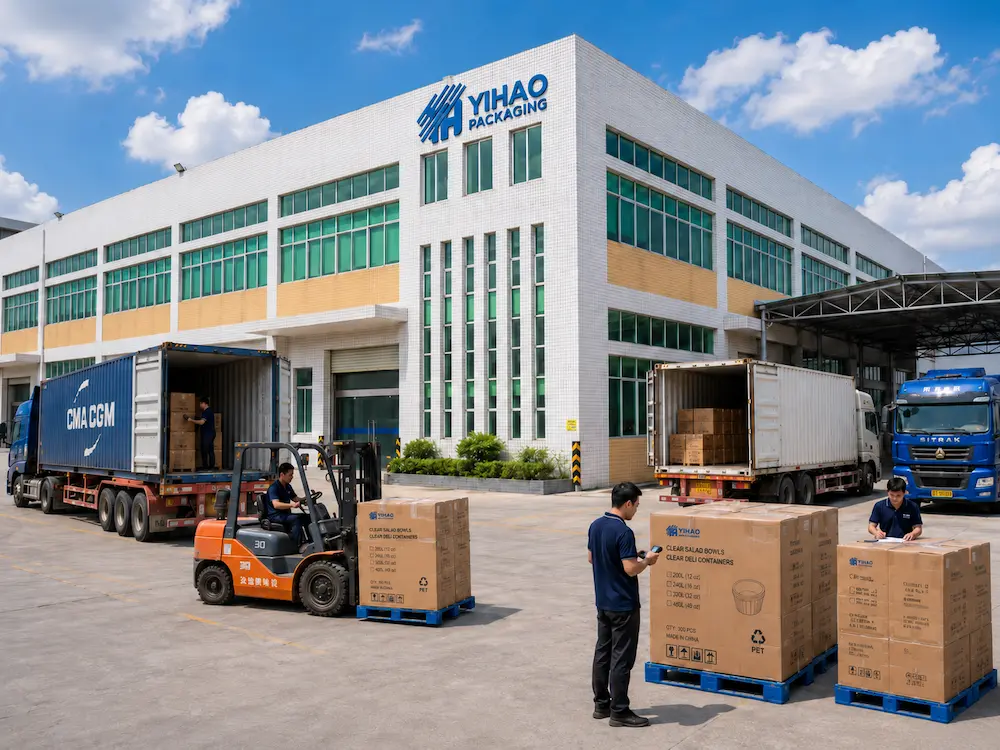
Yes. YIHAO can support wholesale salad and deli packaging projects by helping buyers compare clear salad bowls, round PET containers, square PET containers, PET hinged deli containers, sample testing requirements and packaging selection for supermarkets, delis and foodservice brands.
References
- U.S. Food and Drug Administration, Packaging and Food Contact Substances resources.
- U.S. Food and Drug Administration, food contact substances and intended-use framework.
- European Commission, Food Contact Materials and Regulation (EC) No 1935/2004 framework.
- European Food Safety Authority, food contact materials safety assessment resources.
- Association of Plastic Recyclers, Design Guide for Plastics Recyclability.
- RecyClass, Design for Recycling Guidelines for PET Packaging.
- WRAP, plastic packaging design and recyclability guidance.
- PMMI Business Intelligence, food packaging, deli packaging and prepared food packaging industry research.
Deep-Dive Insights: How Buyers Should Think About Clear Salad Bowls and Deli Containers
How clear packaging supports salad and deli merchandising
Clear PET and rPET packaging help customers see freshness, color, portion size and ingredient quality before purchase. For supermarkets, delis and foodservice brands, this visibility can support stronger shelf appeal and better buyer confidence.
Why container shape affects real performance
Round bowls, square deli containers and hinged containers solve different problems. Round bowls support a familiar eating experience and premium salad presentation. Square containers improve shelf alignment and carton efficiency. Hinged containers simplify packing because the lid and base are connected.
What option works best for supermarkets and foodservice buyers?
Supermarkets may need a flexible range that includes small side salad containers, medium deli containers and larger premium salad bowls. Foodservice buyers may prioritize consistent supply, carton packing, lid fit, label space and sample support across multiple locations or accounts.
Consideration: PET clarity does not mean microwave suitability
Clear PET salad bowls and deli containers are commonly used for cold display and chilled food presentation. If the food needs reheating, buyers should evaluate PP microwave-safe containers or another confirmed reheatable packaging option instead of assuming PET is suitable for microwave use.
Buyer takeaway before wholesale ordering
The best packaging decision combines food type, portion weight, container shape, lid clearance, cold display performance, label placement, carton efficiency and real sample testing. Buyers should test filled products before confirming wholesale salad and deli packaging orders.
Final Note / Practical Takeaway
© YIHAO Packaging. All rights reserved. All articles, product images, packaging designs, technical specifications, and website materials are protected by copyright. Unauthorized copying, reproduction, redistribution, modification, or commercial use is strictly prohibited without prior written permission.