Micro Summary: Takeaway Cold Cups Buyer Guide
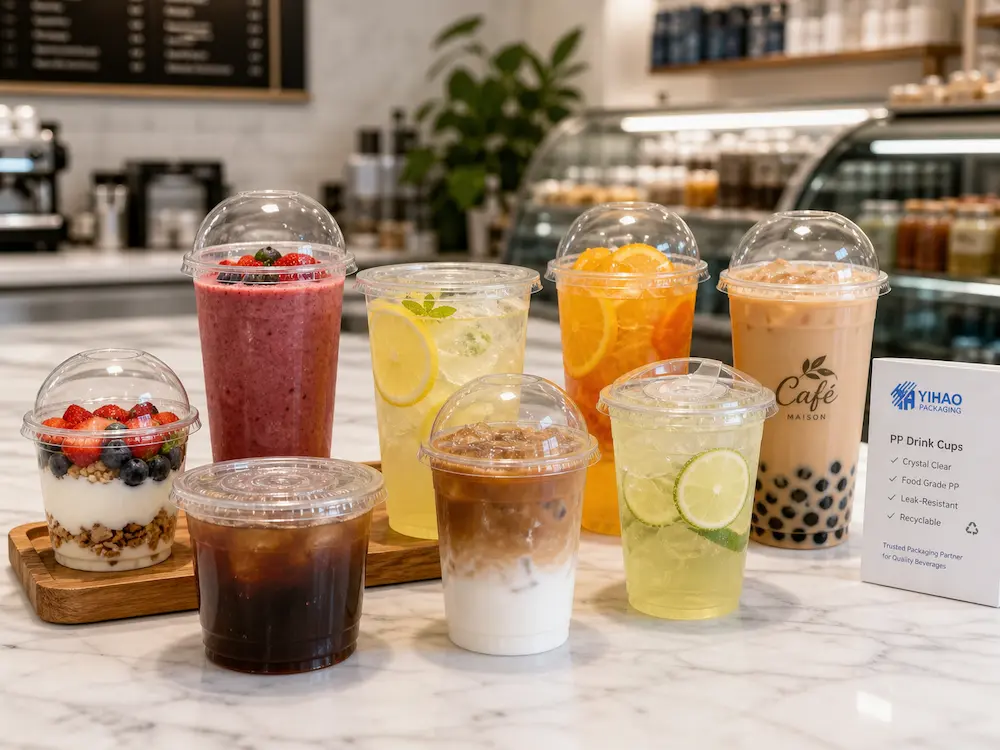
Takeaway cold cups are designed for iced coffee, smoothies, juice, milk tea, lemonade, iced tea, refreshers, protein drinks, and other chilled beverages served for takeaway, delivery, retail display, and foodservice use.
For buyers comparing cold drink packaging, PP cold cups and polypropylene cold cups provide strong value in durability, flexibility, lid compatibility, and practical handling. PET cups are stronger for premium clarity, paper cups support printed branding, PLA cups require suitable composting infrastructure, and reusable cups work best in controlled closed-loop systems.
The right choice depends on beverage type, takeaway distance, lid fit, product visibility, storage efficiency, budget, and whether the buyer needs a stable manufacturer, wholesale, or supplier relationship.
Introduction: Cold Drink Packaging Is a Buyer Decision, Not Just a Cup Choice
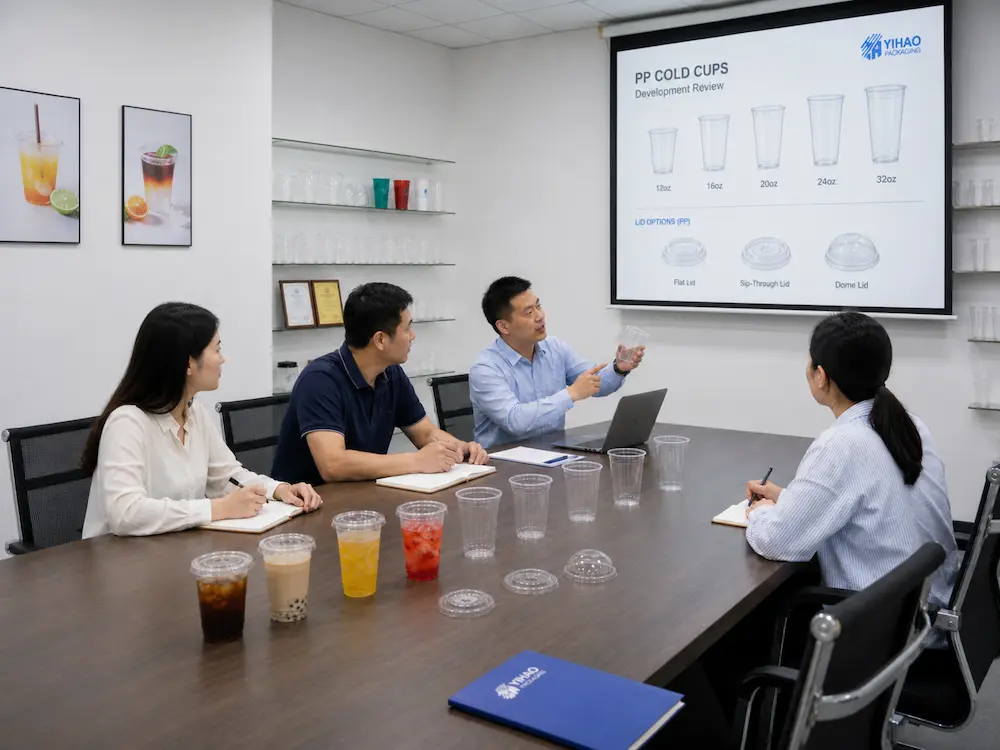
Choosing takeaway cold cups is not only a question of size, material, or price. For beverage buyers, the cup affects drink presentation, lid fit, leakage control, delivery handling, condensation management, stacking efficiency, customer experience, and long-term procurement stability.
Cold beverage menus are now more diverse than ever. Iced coffee, cold brew, fruit tea, matcha, smoothies, fresh juice, milk tea, lemonade, refreshers, sparkling fruit drinks, protein drinks, and dessert-style beverages all create different packaging demands. A light iced tea does not place the same pressure on a cup as a thick smoothie with fruit pulp. A counter-service drink does not require the same handling performance as a delivery drink placed inside a moving bag.
This is why buyers compare PP cold cups, PET cups, paper cold cups, PLA cups, reusable cups, glass bottles, aluminum packaging, pouches, and other alternatives before finalizing a sourcing plan. Each option has advantages, but no material is perfect for every beverage, every sales channel, or every brand position.
This guide explains how buyers should compare takeaway cold cups with alternative packaging options and when polypropylene cold cups become the stronger choice for practical, high-volume takeaway use.
What Are Takeaway Cold Cups?
Basic Definition for Foodservice and Retail Buyers
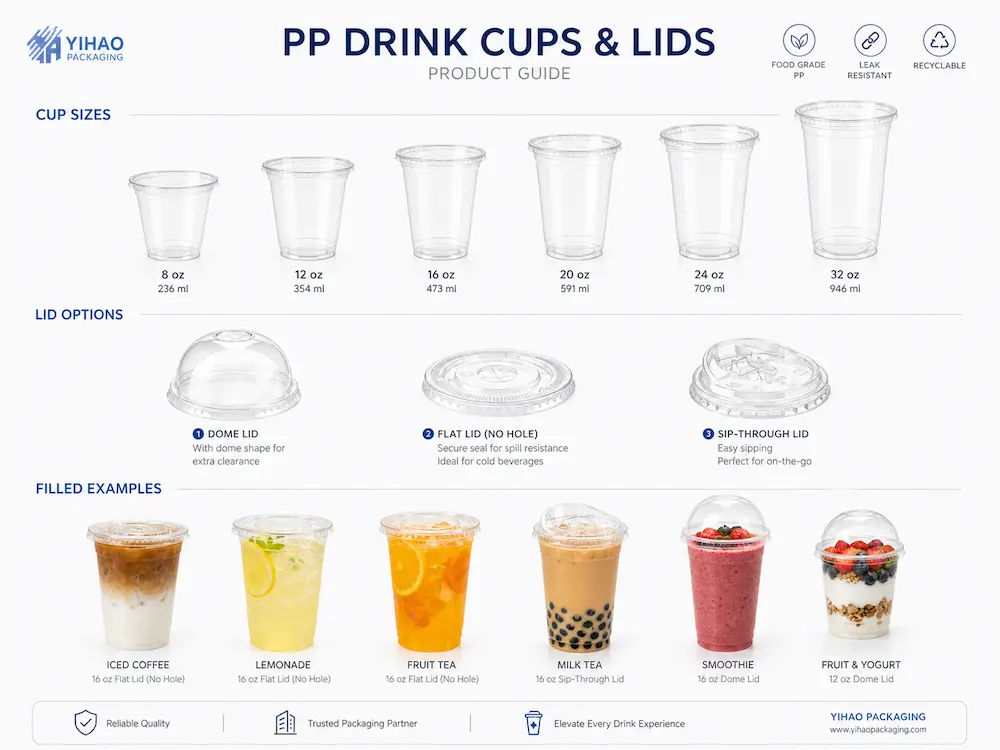
Takeaway cold cups are cups designed for cold beverages that customers carry away from cafes, bakeries, juice bars, convenience stores, supermarkets, quick-service restaurants, events, and foodservice counters. They are commonly paired with flat lids, dome lids, straw-slot lids, sip lids, or other matching lid systems depending on cup design and beverage application.
Unlike dine-in glassware or reusable tumblers, takeaway cups must perform under fast service conditions. They need to stack well, separate smoothly, match lids accurately, hold chilled beverages during normal use, and support consistent handling across busy counters, retail displays, and delivery workflows.
Common Applications
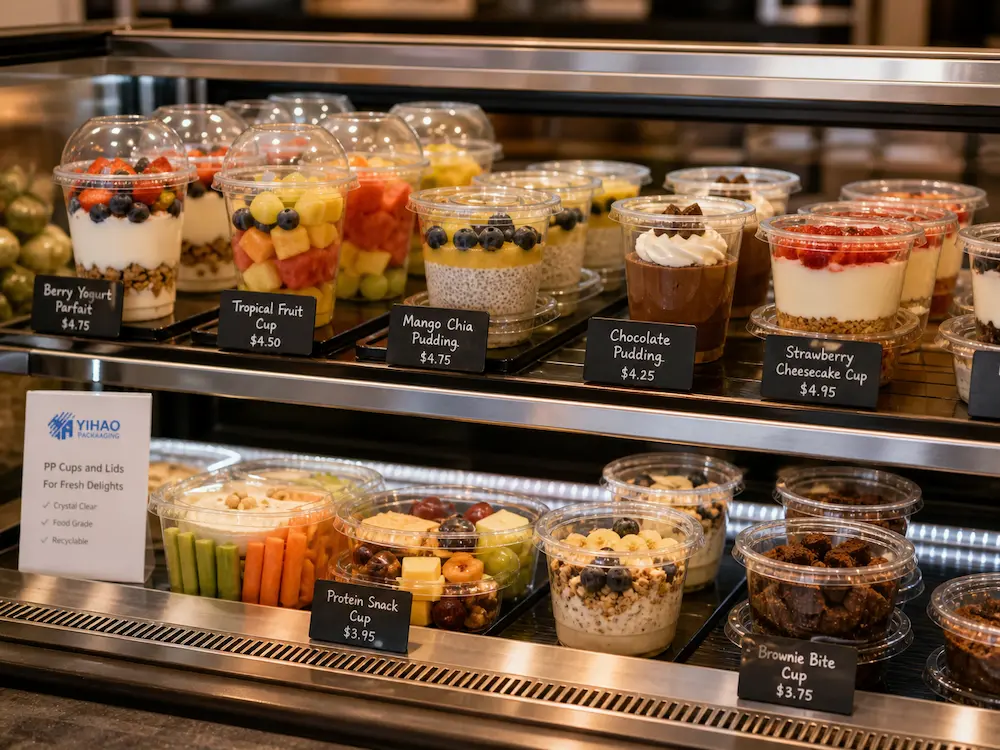
Buyers use takeaway cold cups for iced coffee, cold brew, iced tea, fruit tea, smoothies, milk tea, matcha drinks, lemonade, juice, sparkling fruit drinks, refreshers, acai or berry drinks, protein drinks, and chilled dessert beverages.
Drink variety matters because every beverage creates a different packaging challenge. Iced coffee needs clear presentation and reliable lid fit. Smoothies need stronger wall performance and stable grip. Milk tea and topping drinks need cup strength for heavier contents. Sparkling drinks need practical lid matching and spill control. Fresh juice benefits from clean visibility and attractive retail presentation.
Why Material Choice Matters
Material choice affects cup clarity, flexibility, rigidity, impact resistance, lid compatibility, stackability, decoration options, cost level, and environmental communication. A buyer who chooses packaging only by price may face hidden problems such as poor lid fit, cup cracking, unstable stacking, weak grip, customer complaints, or increased waste from rejected products.
Professional buyers compare packaging through real use conditions: beverage density, takeaway distance, shelf display needs, serving speed, lid system, carton efficiency, storage space, and supplier reliability.
Why PP Cold Cups Are Popular for Takeaway Drinks
Durability and Flexibility
PP cold cups, also known as polypropylene cold cups, are widely used because they provide a practical balance of flexibility and durability. Compared with more rigid packaging formats, PP gives buyers a more forgiving cup structure during hand-carrying, stacking, squeezing, and transport.
This makes PP useful for busy beverage environments where cups move quickly from storage to filling stations, then to customers, delivery bags, or retail takeaway areas. When buyers need durable cold cups for high-volume service, PP often becomes a strong candidate.
Better Fit for Active Takeaway Conditions
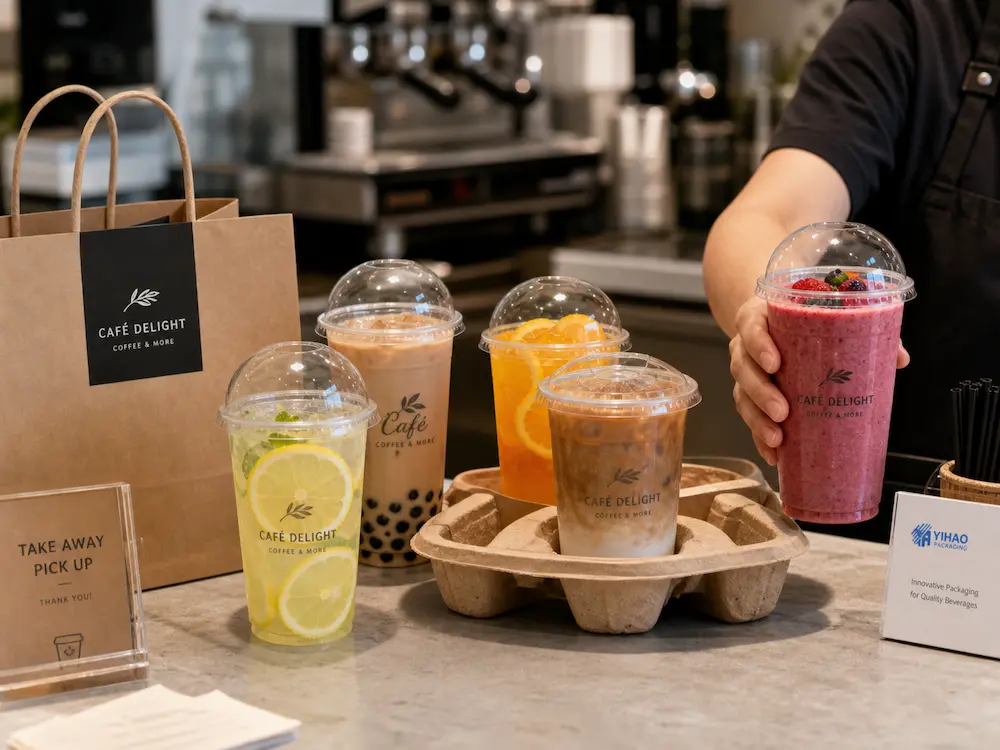
Takeaway packaging must survive real movement. Customers hold cups while walking, driving, shopping, or carrying other items. Delivery drinks may sit inside bags with food containers, napkins, straws, and other packaged products. Outdoor events add more movement, temperature variation, and handling pressure.
Takeaway cold cups made from PP are valued in these conditions because the material supports practical resilience. For buyers who prioritize handling resistance over premium glass-like clarity, PP drink cups provide a reliable packaging direction.
Lid Compatibility
For takeaway drinks, the cup is only half of the packaging system. The lid matters just as much. PP cups with lids should work as a matched system, not as separate items selected only by diameter. A cup-lid mismatch increases the risk of loose sealing, leakage, difficult lid application, customer frustration, staff complaints, and wasted inventory.
Buyers should confirm whether the supplier provides matching lids and whether the lid structure suits the beverage type. Flat lids support many standard cold drinks. Dome lids are often used when toppings or whipped cream require extra space. Straw-slot or sip lids support different drinking styles. The correct choice depends on cup rim design, beverage menu, and service workflow.
Cost and Wholesale Practicality
For large beverage programs, packaging must be available consistently. Buyers need stable carton quantities, reliable cup-lid matching, repeatable quality, and predictable communication. This is where working directly with a professional manufacturer, wholesale partner, or packaging supplier becomes important.
A low price from an unstable source rarely supports long-term beverage operations. A practical sourcing plan should focus on product consistency, material confirmation, lid compatibility, packaging efficiency, and communication speed.
Takeaway Cold Cups vs PET Cups
PET Cups Strengths
PET cups are popular for cold beverages because they provide strong clarity and a premium visual effect. When a drink brand wants to show color, ice, fruit pulp, layered milk tea, matcha texture, coffee gradients, or fresh juice appearance, PET often performs better visually.
Retail display programs, grab-and-go beverage shelves, supermarket juice counters, and premium iced coffee presentations often choose PET because the material highlights the drink itself. For brands that sell through visual appetite appeal, PET offers a strong display advantage.
PP Cups Strengths
PP cold cups usually do not provide the same glass-like clarity as PET, but they offer stronger practical flexibility for takeaway handling. PP is a strong option when the buyer values cup toughness, squeeze resistance, operational durability, and stable use in active service environments.
This makes polypropylene cold cups useful for delivery, events, quick-service beverage programs, outdoor takeaway, and high-volume drink shops where handling conditions are more demanding.
Buyer Decision Logic
Choose PET when visual clarity, retail display, and premium drink presentation are the top priorities. Choose PP when takeaway performance, cup flexibility, and handling durability matter more than maximum transparency.
In simple terms: PET helps the drink look more premium; PP helps the cup handle more movement. Buyers should decide based on the sales channel, not only the material name.
Takeaway Cold Cups vs Paper Cold Cups
Paper Cup Advantages
Paper cold cups are often chosen for printed branding, a familiar foodservice appearance, and a softer visual identity. They provide strong surface space for logos, brand colors, seasonal graphics, and promotional designs.
For brands that prioritize printed storytelling over drink visibility, paper cups may support a consistent visual system. Coffee chains, event vendors, and quick-service brands often consider paper when branding area is a major requirement.
Paper Cup Limitations for Cold Drinks
Cold drinks create condensation. Depending on cup construction, coating, storage conditions, and beverage temperature, paper cups may face performance differences during longer holding periods. They also hide the drink, which can reduce visual appeal for colorful beverages, smoothies, fruit tea, and layered drinks.
Paper cup recycling or compostability claims also depend on coating structure, local collection systems, and disposal infrastructure. Buyers should avoid broad environmental claims unless the packaging design and local recovery pathway support those claims.
When PP Cold Cups Are the Stronger Choice
PP drink cups are often stronger when buyers need visible or semi-visible beverage presentation, flexible cup structure, reliable takeaway handling, and matched lid systems. For high-volume cold drink takeaway, PP provides a practical balance between cost, durability, and operational stability.
Takeaway Cold Cups vs PLA or Compostable Cups
Why Buyers Consider PLA Cups
PLA cups are often considered when brands want a compostable-positioning message. They may support sustainability-focused campaigns, eco-oriented menu concepts, or specific corporate packaging goals when the disposal pathway is properly managed.
However, compostable messaging requires careful use. Buyers must confirm whether industrial composting infrastructure exists in the target market and whether the packaging is accepted by local facilities.
Practical Purchasing Considerations
Compostable packaging is not automatically composted in every region. Actual recovery depends on collection behavior, labeling clarity, contamination levels, municipal systems, and industrial composting availability. If customers dispose of PLA cups into general waste or the wrong recycling stream, the environmental value may not match the brand message.
Buyers should also confirm storage conditions, temperature limitations, lid compatibility, carton protection, and shelf life guidance before ordering PLA cups at scale.
When PP Drink Cups Make More Sense
For buyers prioritizing performance stability, cold drink toughness, lid matching, and established wholesale supply, PP drink cups remain a practical option. PP is especially relevant when the brand’s main concern is reliable takeaway performance rather than compostable positioning.
Takeaway Cold Cups vs Reusable Cups
Reusable Cup Advantages
Reusable cups can support long-term reuse programs, closed-loop operations, campus dining, controlled events, corporate cafeterias, and deposit-return systems. When collection, washing, tracking, and redistribution are well managed, reusable cups reduce dependence on single-use packaging.
Operational Challenges
Reusable systems require more than cups. They require collection points, cleaning facilities, deposit rules, customer participation, inventory tracking, replacement planning, storage space, sanitation control, and staff training. Loss rate and return rate also affect the real cost of the system.
For open takeaway environments, reusable packaging becomes difficult because customers may not return the cup. Delivery platforms also add complexity because packaging leaves the controlled environment.
Where Disposable Takeaway Cold Cups Still Fit
Disposable takeaway cold cups still fit high-volume takeaway, outdoor events, delivery, retail beverage counters, convenience stores, stadiums, festivals, supermarkets, and quick-service restaurants. These channels need packaging that is available, stackable, clean, efficient, and compatible with fast service.
Comparison Table: Takeaway Cold Cups and Alternative Packaging
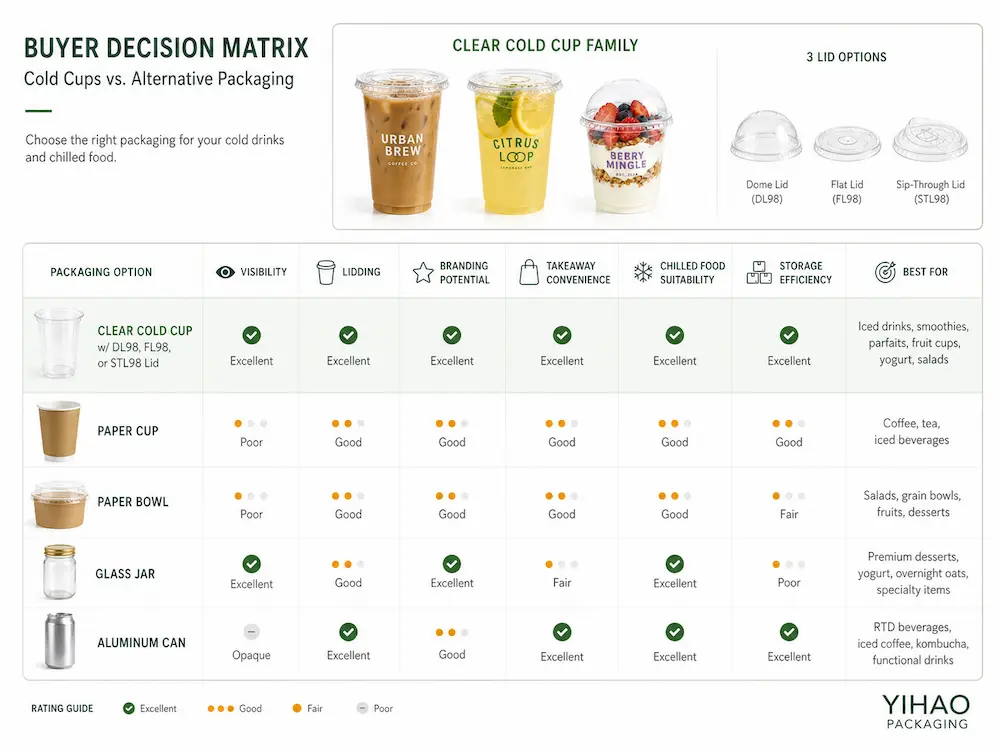
| Packaging Option | Main Strength | Main Limitation | Best Use Case | Buyer Note |
|---|---|---|---|---|
| PP cold cups | Durable, flexible, and practical for takeaway handling | Usually less glass-like clarity than PET | Iced drinks, delivery, events, quick-service beverage programs | A strong choice when buyers need durable cold cups and stable cup-lid matching |
| PET cold cups | High clarity and strong drink visibility | More rigid than PP in many takeaway handling conditions | Layered drinks, retail display, juice, iced coffee, premium presentation | Best when visual impact is more important than squeeze flexibility |
| Paper cold cups | Large branding area and familiar foodservice appearance | Limited drink visibility and coating-related disposal complexity | Printed beverage branding, chain stores, promotional cups | Confirm coating, cold drink performance, and local disposal route |
| PLA cold cups | Supports compostable-positioning strategies in suitable regions | Requires proper industrial composting infrastructure | Eco-positioned brands with controlled disposal communication | Avoid broad compostability claims without verified local recovery systems |
| Reusable cups | Supports closed-loop reuse programs | Requires collection, cleaning, tracking, and customer return behavior | Campuses, dine-in systems, events with controlled return points | Works best when operations control the full return cycle |
| Aluminum cups or bottles | Premium feel and strong barrier properties for selected formats | Higher cost and less suitable for many open-top drink services | Pre-filled drinks, premium beverage concepts, events | More relevant for sealed or specialty beverage programs |
| Glass bottles | Premium appearance and strong product perception | Heavy, breakable, and less practical for active takeaway | Premium juice, cold brew, and retail bottled drinks | Better for controlled retail channels than fast takeaway counters |
| Pouches or sealed drink bags | Lightweight and compact for certain sealed beverages | Different drinking experience and lower premium cup presentation | Delivery drinks, event beverages, specialty sealed formats | Useful for selected channels but not a direct replacement for cup-based service |
Wholesale Buyer Checklist for Takeaway Cold Cups
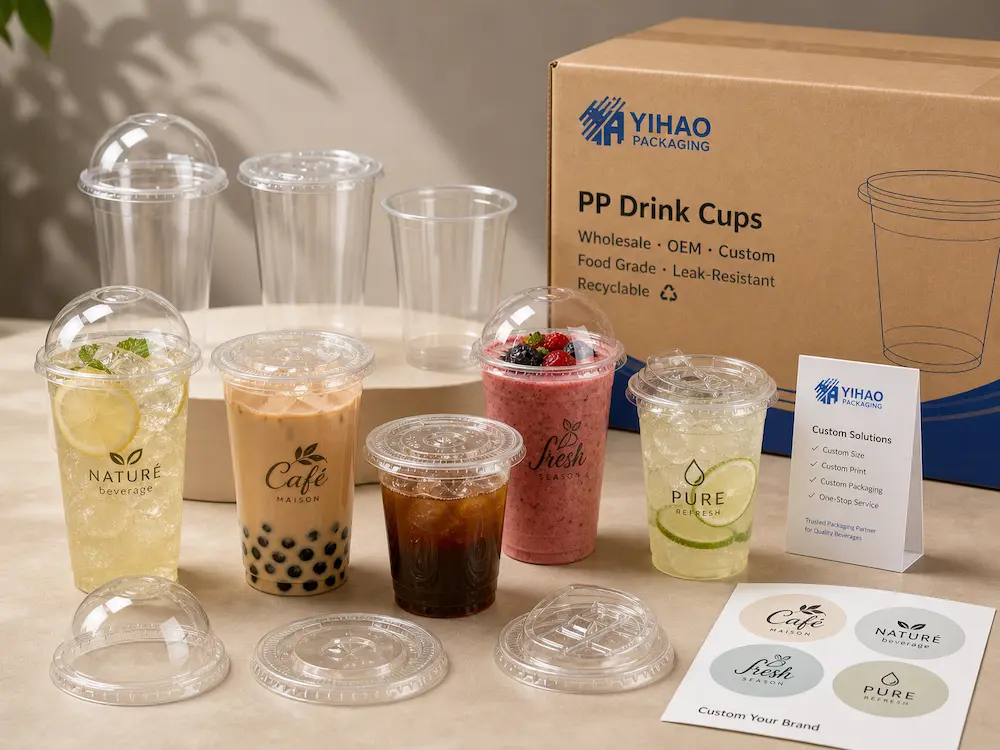
Before placing a bulk order, buyers should evaluate takeaway cold cups through a clear purchasing checklist. This reduces sourcing risk and helps ensure that the selected cup system matches real beverage operations.
| Checklist Item | What Buyers Should Confirm | Why It Matters |
|---|---|---|
| Material | Confirm whether the cup is PP, PET, paper, PLA, or another material. | Material affects durability, clarity, flexibility, cost, and environmental communication. |
| Cup-lid matching | Test whether the lid fits the cup rim firmly and consistently. | Poor lid fit causes leakage, customer complaints, and operational waste. |
| Beverage compatibility | Test iced coffee, smoothies, juice, milk tea, or other real drinks instead of water only. | Different drinks create different weight, texture, and handling demands. |
| Stacking performance | Check whether cups separate smoothly during fast service. | Good stacking improves workflow speed and reduces staff frustration. |
| Carton efficiency | Review pieces per carton, carton dimensions, storage needs, and pallet planning. | Efficient packing reduces freight, warehouse pressure, and inventory complexity. |
| Supplier stability | Confirm production consistency, communication speed, sample support, and repeat order capability. | Stable supply protects long-term beverage operations. |
How Buyers Should Choose the Right Cold Cup Material
Start with Beverage Type
Beverage type should guide the first decision. Iced coffee, cold brew, iced tea, lemonade, and sparkling fruit drinks are lighter and easier to package. , fruit pulp drinks, protein drinks, and topping beverages are heavier and place more pressure on the cup wall and lid system.
For lightweight drinks where premium clarity drives purchase behavior, PET may be attractive. For heavier drinks or active takeaway service, PP cold cups provide practical durability. For printed brand campaigns, paper may be useful. For disposal-driven sustainability programs, PLA or reusable systems should be considered only when the recovery pathway is realistic.
Evaluate Takeaway Distance
A drink served at the counter and consumed within minutes creates a different packaging demand from a drink delivered across town. The longer the carry distance, the more important cup strength, lid fit, grip comfort, and packaging stability become.
For short-distance service, visual presentation may be the leading factor. For delivery, outdoor events, and high-movement takeaway, durable cold cups become more important.
Confirm Lid Fit and Spill Control
Buyers should never treat cups and lids as unrelated items. A good cold cup system depends on rim structure, lid compatibility, application force, lid removal experience, and beverage type. PP cups with lids should be tested together before a large order is placed.
Testing should include filling, lid application, hand squeezing, short-distance carrying, carton storage, and real beverage use. For milk tea, smoothies, and topping drinks, buyers should also confirm whether the lid style supports the drinking method and ingredient volume.
Consider Product Visibility
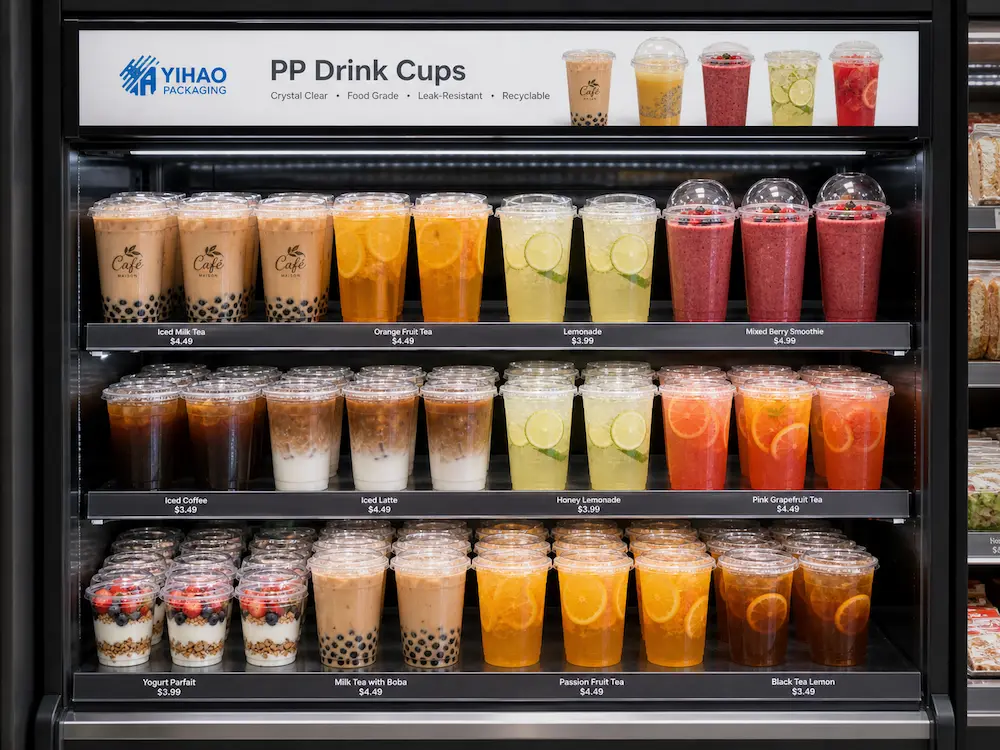
Visibility matters when the drink itself sells the product. Colorful juice, fruit tea, matcha, layered iced coffee, and smoothie textures benefit from clear packaging. PET often wins when drink display is the strongest selling point.
However, not every takeaway drink needs maximum clarity. If the cup is mainly used for delivery, events, quick-service counters, or budget-sensitive high-volume programs, PP may provide a better balance between durability and cost control.
Check Storage and Stacking Efficiency
Cold cup packaging affects back-of-house workflow. Cups must stack cleanly, separate smoothly, fit into storage shelves, and reduce unnecessary handling delays. Carton efficiency also affects freight, warehouse space, and inventory planning.
Before choosing a cup, buyers should compare carton dimensions, pieces per carton, pallet loading, lid carton matching, and storage requirements. A slightly cheaper cup may create higher total cost if it increases warehouse pressure or causes operational inefficiency.
Review Budget and Wholesale Supply Stability
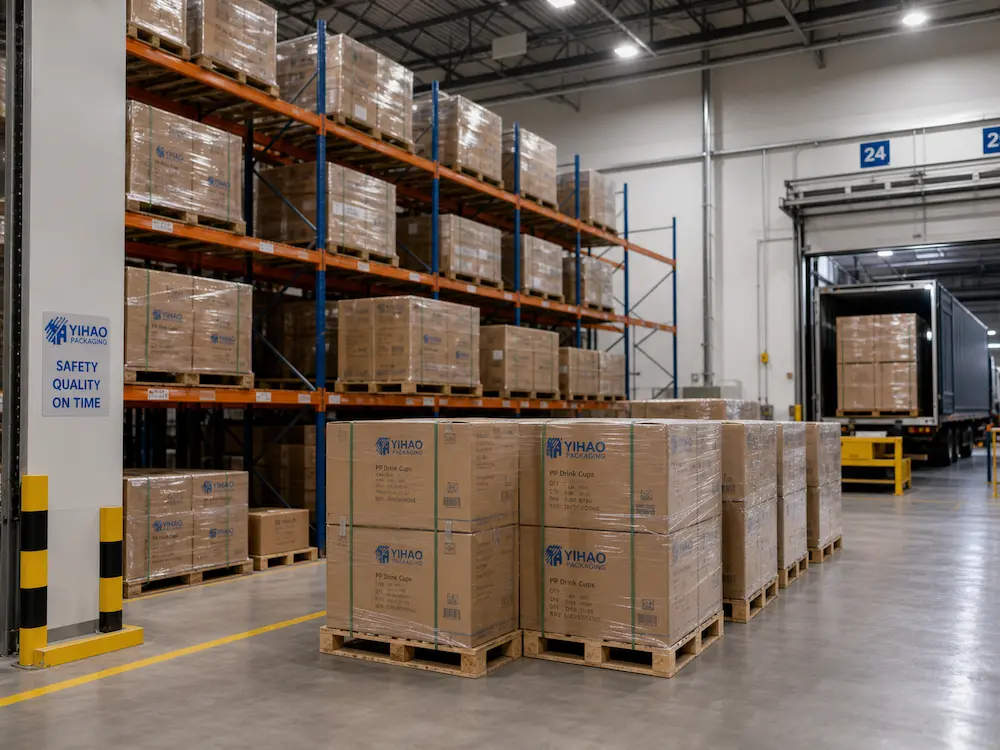
Price matters, but stable sourcing matters more. Buyers should compare total purchasing value rather than only unit price. A reliable manufacturer or supplier should provide consistent material, stable production quality, clear communication, sample support, and matching cup-lid options.
For wholesale orders, buyers should confirm material type, size range, lid compatibility, carton packing, customization options, lead time, sample policy, and after-sales communication before making a bulk purchase.
Material Behavior Matrix for Cold Drink Buyers
| Buyer Factor | PP Cold Cups | PET Cold Cups | Paper Cold Cups | PLA Cold Cups |
|---|---|---|---|---|
| Drink visibility | Medium to good, depending on cup design | High | Low | High in many clear cup designs |
| Takeaway handling | Strong | Strong for display, more rigid in handling | Depends on coating and cup construction | Depends on storage, temperature, and design |
| Branding surface | Good with printing or labeling options | Good, especially with transparent drink display | Very strong | Good with proper material and print confirmation |
| Wholesale practicality | Strong for high-volume cold drink programs | Strong for display-oriented cold drink programs | Strong when branding is the priority | Requires stricter sourcing and disposal verification |
When PP Cold Cups Are the Best Choice
High-Volume Takeaway Beverage Programs
PP cold cups are a strong choice for cafes, bakeries, convenience stores, drink shops, quick-service restaurants, event vendors, and foodservice brands that need practical takeaway packaging. They support fast service, stable stacking, easy handling, and strong day-to-day performance.
For brands that sell many drinks daily, consistency is more important than a single premium feature. A cup that performs reliably across different drinks, stores, staff members, and customers creates better operational value.
Delivery and Outdoor Consumption
Delivery and outdoor service place more pressure on packaging than dine-in service. Cups move inside bags, face customer handling, and often remain in use longer before the drink is finished. Durable cold cups help reduce common packaging complaints related to weak structure, poor grip, and handling stress.
For this reason, polypropylene cold cups are a practical option for beverage programs that prioritize movement resistance and everyday reliability.
Brands That Need Stable Wholesale Supply
When buyers order in bulk, they need more than cups. They need a supply system. A professional manufacturer should support material confirmation, cup-lid matching, size planning, carton consistency, and packaging development.
YIHAO focuses on food packaging solutions for buyers who need stable wholesale supply, practical product matching, and packaging structures that support real beverage service. For cold drink buyers, this means choosing packaging based on performance, not only appearance.
When Buyers Should Consider Alternative Packaging Instead
Premium Retail Display
If the main goal is maximum drink visibility, PET may be the better choice. This applies to layered iced coffee, colorful fruit tea, fresh juice, premium cold brew, and supermarket grab-and-go beverage displays where visual appeal drives purchase decisions.
Strong Sustainability Positioning
If a brand has a clear sustainability strategy and operates in a market with suitable disposal infrastructure, PLA, paper, or reusable systems may be considered. The key is to match the claim with the real recovery pathway.
Buyers should avoid unsupported claims such as “fully recyclable everywhere” or “compostable in all conditions.” Packaging recovery depends on local infrastructure, consumer behavior, material structure, and contamination levels.
Closed-Loop Reuse Programs
Reusable cups make sense in controlled environments such as campuses, corporate cafeterias, dine-in chains, festivals with return points, and deposit systems. They are less practical when packaging leaves the controlled service area without a reliable return mechanism.
Sealed Shelf-Stable Drinks
For bottled juice, ready-to-drink coffee, sealed teas, or shelf-stable beverages, bottles, cans, or sealed containers may be more suitable than open-top takeaway cold cups. The packaging format should match the distribution model.
Wholesale Sourcing Checklist for Takeaway Cold Cups
Material Confirmation
Confirm whether the cup is PP, PET, paper, PLA, or another material. For PP drink cups, buyers should confirm that the material meets applicable food contact requirements for the target market and intended cold drink use.
Cup and Lid Matching
Ask whether the supplier provides matching lids and whether the cups and lids have been tested together. PP cups with lids should be evaluated as a complete system.
Size Range
Confirm the available size range based on menu structure. A beverage brand may need different cup sizes for iced coffee, juice, smoothies, milk tea, lemonade, and protein drinks. Size planning should match real serving portions, ice level, toppings, and lid clearance.
Packaging and Carton Efficiency
Ask about carton quantity, carton dimensions, stack height, lid packaging, and pallet loading. Efficient packaging reduces storage pressure and supports smoother wholesale purchasing.
Customization
Buyers can discuss logo printing, color options, carton labeling, barcode requirements, and OEM or ODM packaging support. Customization should be confirmed through samples and production specifications before bulk orders.
Supplier Reliability
A reliable cold cup supplier should provide clear communication, stable production quality, sample support, material confirmation, and repeatable supply. For long-term wholesale programs, supplier reliability often matters more than the lowest quoted price.
Common Mistakes Buyers Should Avoid
Choosing Only by Price
Low unit price does not guarantee good value. If a cup creates lid mismatch, cracking, poor stacking, weak grip, or customer complaints, the real cost becomes higher. Buyers should compare the full packaging system, not only the cup price.
Ignoring Beverage Weight and Texture
Thick smoothies, milk tea with toppings, fruit pulp drinks, and protein beverages require stronger packaging performance than light iced tea. Buyers should test cups with real drinks instead of water only.
Overusing Sustainability Claims
Environmental claims must be accurate. Recyclability, compostability, and reuse claims depend on material design, local collection systems, disposal behavior, and infrastructure. Buyers should keep claims specific and verifiable.
Buying Cups and Lids Separately Without Testing
Cup-lid mismatch is one of the most common packaging problems in takeaway beverage service. Buyers should test lids from the same supplier or confirm compatibility before placing a large order.
Need Takeaway Cold Cups for Your Beverage Program?
If your business needs takeaway cold cups for iced coffee, juice, smoothies, milk tea, refreshers, lemonade, protein drinks, or other chilled beverages, YIHAO provides practical food packaging support for wholesale buyers, beverage brands, supermarkets, cafes, bakeries, and foodservice operators.
Buyers can work with YIHAO to discuss PP cold cups, cup-and-lid matching, carton packing, size planning, custom packaging needs, and stable wholesale supply. A stronger packaging decision starts with the right material, the right lid system, and a reliable manufacturing partner.
Buyer Conclusion: Which Packaging Option Should You Choose?
The best packaging choice depends on the beverage, sales channel, and operational model. Choose PP cold cups when durability, flexibility, takeaway handling, and practical wholesale supply are the main priorities. Choose PET cups when maximum clarity and premium retail display matter more. Choose paper cups when printed branding is the leading requirement. Choose PLA cups only when composting infrastructure and disposal communication support the claim. Choose reusable cups when the operation controls collection, cleaning, and return behavior.
For many foodservice buyers, takeaway cold cups should not be selected by material name alone. The right decision comes from testing the full cup-and-lid system under real drink conditions. A strong packaging choice supports the drink menu, protects the customer experience, reduces operational risk, and gives the buyer a more stable sourcing plan.
For buyers looking for practical PP drink cups, stable wholesale supply, and reliable packaging support, working with a professional manufacturer and supplier is the most direct way to reduce packaging uncertainty and build a stronger cold beverage program.
FAQ
1. What are takeaway cold cups used for?
Takeaway cold cups are used for cold beverages served to-go, including iced coffee, cold brew, juice, smoothies, milk tea, iced tea, lemonade, refreshers, sparkling fruit drinks, matcha drinks, and protein drinks. They are common in cafes, bakeries, supermarkets, convenience stores, quick-service restaurants, events, and foodservice channels.
2. Are PP cold cups good for iced coffee and cold drinks?
PP cold cups are a practical choice for iced coffee and many cold drinks because polypropylene offers flexibility, durability, and reliable handling for takeaway use. They are especially useful when buyers need durable cold cups for delivery, outdoor service, high-volume beverage programs, and stable wholesale supply.
3. What is the difference between PP cold cups and PET cold cups?
PP cold cups are valued for flexibility, durability, and takeaway handling, while PET cold cups are valued for high clarity and strong drink visibility. Buyers often choose PET when premium display is the priority and choose PP when handling resistance, lid matching, and practical takeaway performance are more important.
4. Are PP cups with lids suitable for takeaway and delivery?
PP cups with lids are suitable for takeaway and delivery when the cup and lid are tested as a matching system. Buyers should confirm rim fit, lid application, spill control, cup strength, and real beverage performance before placing bulk orders.
5. How should buyers choose a takeaway cold cup supplier?
Buyers should choose a takeaway cold cup supplier by checking material confirmation, cup-lid compatibility, sample quality, size range, carton packing, customization support, wholesale stability, communication speed, and manufacturing consistency. A reliable manufacturer should help buyers match the cup system to real beverage use.
References
- U.S. Food and Drug Administration, Food Contact Substances and Food Contact Materials Guidance.
- European Commission, Food Contact Materials Regulatory Information.
- PlasticsEurope, Polypropylene and PET Material Information for Packaging Applications.
- Association of Plastic Recyclers, Design Guidance for Plastic Packaging Recyclability.
- Ellen MacArthur Foundation, Circular Economy and Packaging System Resources.
- U.S. Environmental Protection Agency, Sustainable Materials Management and Recycling Resources.
- WRAP, Packaging, Recycling, and Consumer Disposal Guidance.
- Foodservice Packaging Institute, Foodservice Packaging Recovery and Material Resources.
Deep-Dive Insights: How Buyers Should Think Beyond the Cup
How material choice affects takeaway drink performance
Material choice affects how a cup behaves under pressure, movement, stacking, filling, and customer handling. PP, PET, paper, PLA, glass, aluminum, and reusable formats each solve different problems. The strongest packaging decision starts with the drink menu and service model, not the material label.
Why PP cold cups fit high-movement beverage service
PP cold cups fit high-movement service because they provide a flexible and durable structure for everyday takeaway use. This matters for delivery bags, outdoor events, quick-service counters, and beverage brands that prioritize practical handling over maximum transparency.
What buyers should test before placing wholesale orders
Before placing wholesale orders, buyers should test real drinks in real conditions. This includes filling speed, lid application, hand pressure, short-distance transport, delivery movement, condensation behavior, stack separation, and customer drinking experience.
Option: PP, PET, paper, PLA, or reusable systems
PP is strong for practical takeaway use. PET is strong for premium display. Paper is strong for printed branding. PLA supports selected compostable-positioning strategies where disposal infrastructure exists. Reusable cups work best in controlled return systems. Buyers should match the option to the channel, not force one material across every use case.
Consideration: cup-lid matching is a hidden profit factor
Cup-lid matching directly affects product waste, staff speed, customer satisfaction, and complaint risk. A well-matched cup system reduces leaks, saves service time, and improves the final drink experience. For takeaway beverage buyers, lid compatibility is not a detail; it is a core purchasing requirement.
Why supplier reliability matters in cold cup sourcing
A reliable supplier helps buyers reduce sourcing uncertainty. Stable materials, consistent production, clear carton packing, tested cup-lid systems, and responsive communication create long-term value. For beverage brands, the right manufacturer supports both product performance and procurement confidence.
© YIHAO Packaging. All rights reserved. All articles, product images, packaging designs, technical specifications, and website materials are protected by copyright. Unauthorized copying, reproduction, redistribution, modification, or commercial use is strictly prohibited without prior written permission.