Micro Summary
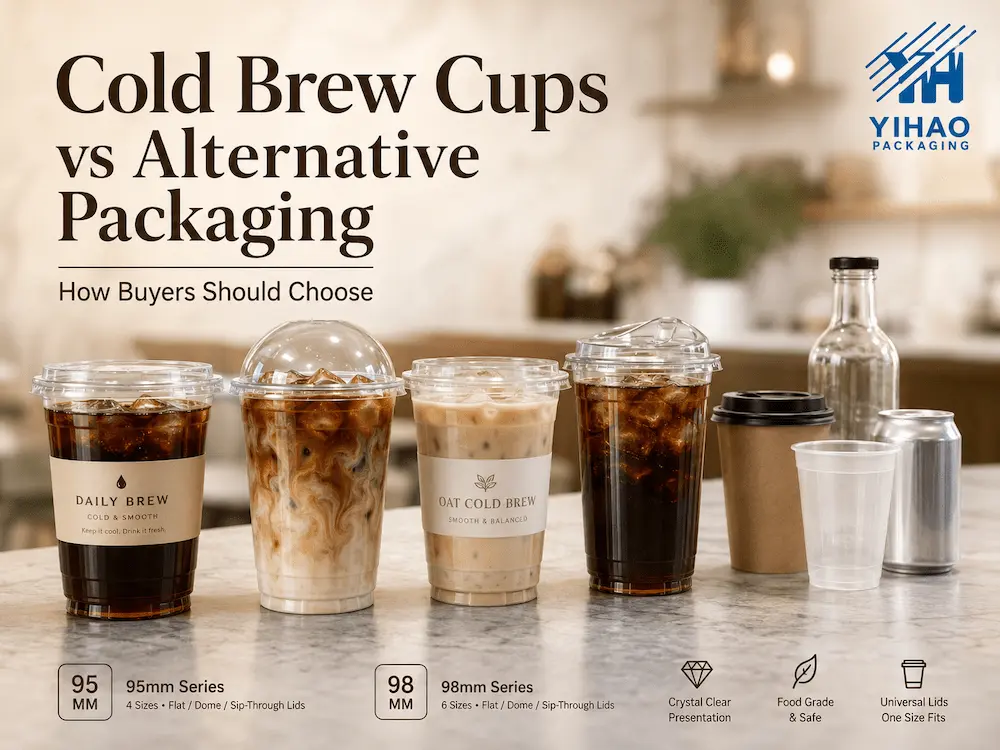
Cold brew cups are clear cold beverage cups used for cold brew coffee, iced coffee, flavored cold brew, milk coffee, cream cold brew, and chilled grab-and-go beverage programs. For cafes, supermarkets, convenience stores, bakeries, foodservice brands, and beverage distributors, the right packaging choice depends on drink visibility, lid fit, takeaway handling, chilled display performance, branding space, and wholesale supply consistency. Compared with PET bottles, paper cups, glass bottles, aluminum cans, cartons, and PP cups, clear PET coffee cups often provide a stronger balance of presentation, flexibility, and daily service efficiency.
Article Navigation
- Why cold brew packaging needs a buyer-first comparison
- What makes cold brew cups different from standard drink cups
- Cold brew cups vs PET bottles, paper cups, PP cups, glass bottles, aluminum cans, and cartons
- How buyers should choose material, lid style, capacity, and branding method
- How YIHAO helps buyers source cold brew cups for wholesale programs
- Buyer checklist before sample testing and bulk orders
- FAQ for cold brew cup sourcing
Why Cold Brew Packaging Needs a Buyer-First Comparison
Cold brew coffee is not packaged in the same way as hot coffee. It is served cold, often with ice, milk, cream, syrup, foam, flavor layers, or seasonal toppings. That means packaging has to do more than hold the beverage. It needs to present the drink clearly, support takeaway handling, protect the lid fit, and help the product look attractive in chilled displays or cafe counters.
For packaging buyers, cold brew cups are part of a complete beverage packaging system. The cup body, lid style, rim structure, material clarity, size range, label placement, carton packing, and supplier stability all affect the final customer experience.
A cold brew drink may look premium in a clear cup but ordinary in an opaque container. A cup may look good in product photos but fail if the lid does not match the rim correctly. A bottle may work for sealed retail products but slow down daily cafe service. A paper cup may support branding but hide the visual appeal of the drink.
That is why buyers should not choose cold brew packaging by unit price alone. The better approach is to compare each packaging format against the real sales channel: cafe takeaway, supermarket chilled shelf, convenience store grab-and-go display, bakery drink counter, distributor supply, or foodservice beverage program.
What Are Cold Brew Cups?
Cold brew cups are cold beverage cups used for cold brew coffee, iced coffee, flavored coffee drinks, milk coffee, cream cold brew, and other chilled coffee beverages. In B2B packaging, they are commonly made from clear PET and paired with flat lids, straw-slot lids, strawless sip lids, dome lids, or other matching lid formats.
A practical cold brew cup system supports:
- Clear product visibility
- Ice and milk layering display
- Takeaway service
- Cup-and-lid matching
- Label or sleeve placement
- Chilled retail display
- Multiple drink sizes
- Wholesale supply planning
- Custom branding discussion
Compared with generic cold drink cups, cold brew cups need stronger visual value because the drink itself is part of the selling point. Black cold brew, vanilla cream cold brew, caramel cold brew, mocha cold brew, oat milk cold brew, sweet cream cold brew, and flavored cold brew all benefit from transparent packaging.
For buyers, this is not only an aesthetic issue. Clear packaging helps customers understand the drink faster, especially when the beverage is sold from a chilled shelf or takeaway display.
Why Clear PET Coffee Cups Are Common for Cold Brew
Clear PET is widely used for iced coffee cups and cold brew cups because it provides strong transparency, lightweight handling, and a polished cold beverage appearance. For cafes and retailers, this makes the drink easier to present without relying only on printed labels.
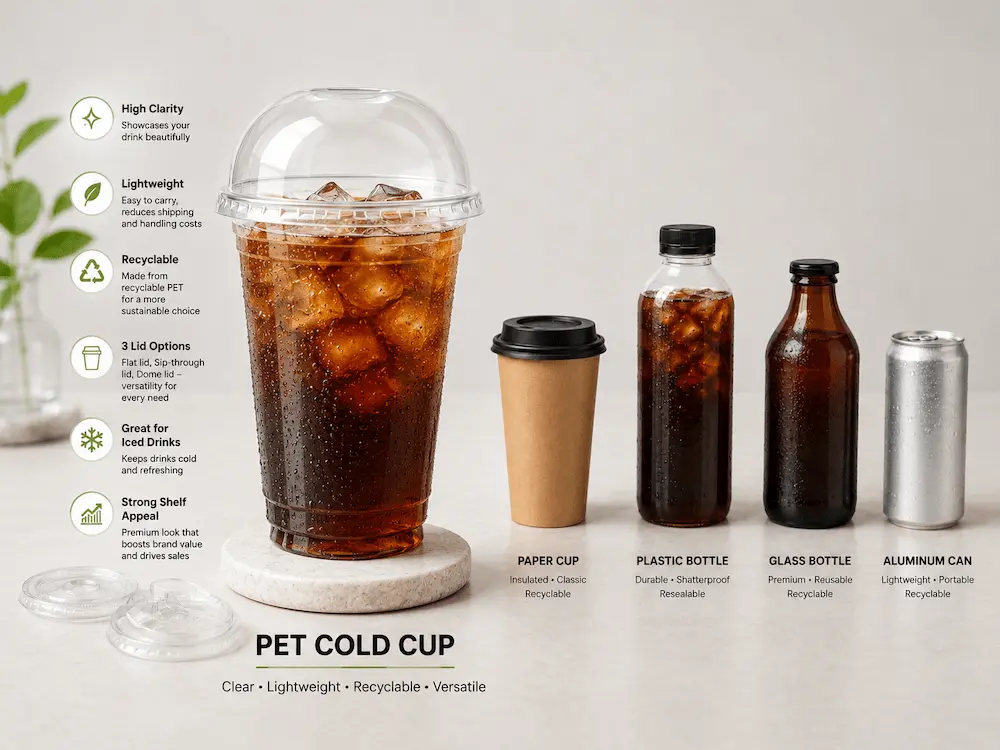
Clear iced coffee cups help customers see:
- Coffee color and roast intensity
- Ice level
- Milk or cream layering
- Foam height
- Syrup or flavor mixing
- Seasonal drink colors
- Label and sleeve position
- Drink freshness in chilled display
For cold brew, visibility often creates trust. When a customer can see the drink clearly, the product feels fresher and more premium. This is especially useful for supermarkets, convenience stores, bakeries, cafes, and beverage brands that sell ready-to-drink or freshly prepared cold coffee.
YIHAO works as a food packaging manufacturer and solution provider for buyers who need clear PET beverage packaging, matching lid support, sample testing, and wholesale supply planning. Instead of treating the cup as a single SKU, buyers should evaluate the complete cup-and-lid system before confirming bulk orders.
Cold Brew Cups vs Alternative Packaging
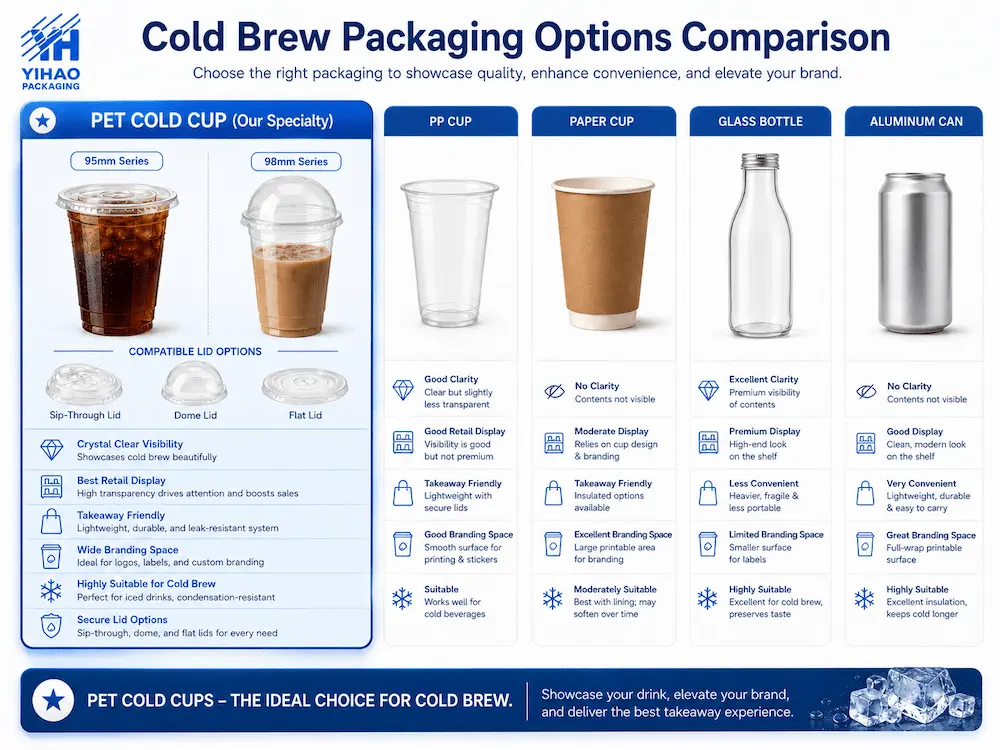
Different packaging formats solve different business problems. The best choice depends on whether the drink is freshly prepared, pre-filled, sealed, displayed, delivered, or sold through retail shelves.
| Packaging Option | Best Use Case | Strengths | Buyer Caution |
|---|---|---|---|
| Clear PET cold brew cups | Fresh cold brew, iced coffee, flavored cold brew, takeaway drinks, chilled display | High clarity, strong drink visibility, lightweight handling, multiple lid options | Lid fit must be tested with the exact cup rim |
| PET bottles | Pre-filled cold brew and grab-and-go retail beverages | Portable, sealed appearance, strong retail identity | Requires filling and sealing process planning |
| Paper cups | Fast cafe service where drink visibility is less important | Good printed branding surface | Hides the beverage and weakens layered drink presentation |
| PP cups | Durable cold beverage service | Practical handling and good toughness | Usually less crystal-clear than PET |
| Glass bottles | Premium bottled cold brew | Premium shelf perception and strong transparency | Heavier, higher breakage risk, more complex logistics |
| Aluminum cans | Large-scale ready-to-drink coffee brands | Strong branding surface and sealed format | Hides the drink and requires canning operations |
| Cartons or pouches | Shelf-stable beverage formats | Printable and lightweight | Weak fresh drink visibility and less suitable for cafe-style cold brew |
For most fresh-made cold brew, iced coffee, and flavored cold beverage programs, cold brew cups offer the strongest balance of visual display, service flexibility, and daily operational convenience.
When Cold Brew Cups Are the Better Choice
Cold brew cups are the better choice when drink visibility and service speed matter. They are especially practical for businesses that prepare beverages daily, change menus seasonally, or sell drinks through takeaway counters and chilled displays.
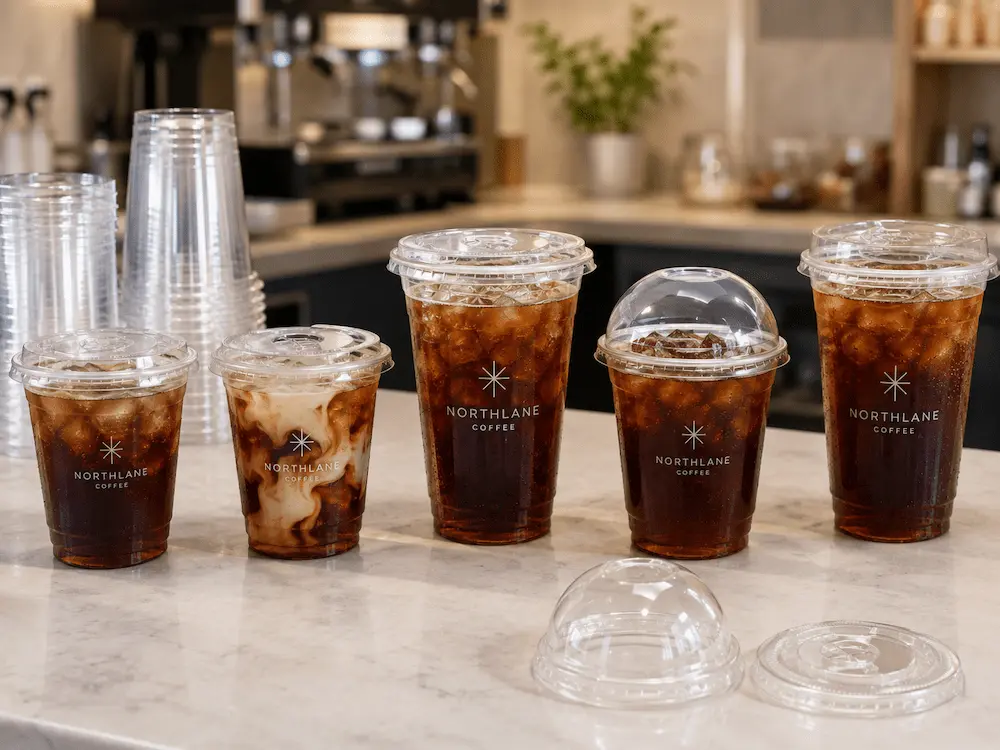
They are suitable for:
- Coffee shops selling cold brew and iced coffee
- Supermarkets offering grab-and-go coffee drinks
- Convenience stores with chilled beverage displays
- Bakeries pairing cold coffee with desserts
- Foodservice teams serving event drinks
- Beverage brands testing fresh cold brew concepts
- Cafes selling flavored cold brew cups
- Chains building seasonal iced coffee menus
- Distributors supplying cold beverage packaging
For flavored cold brew cups, clear packaging is especially useful. Vanilla cream cold brew, caramel cold brew, mocha cold brew, oat milk cold brew, salted cream cold brew, and fruit-inspired cold brew drinks all depend on visual contrast. If the package hides the drink, buyers lose part of the product’s retail appeal.
When Alternative Packaging May Be Better
Alternative packaging can be the better choice in certain sales models.
PET bottles may be stronger for pre-filled cold brew sold in refrigerator shelves. Glass bottles may suit boutique brands with premium retail positioning. Aluminum cans work better for large-scale ready-to-drink coffee production. Paper cups may be useful when printed branding matters more than product visibility. PP cups may fit buyers who prioritize toughness over crystal-clear presentation.
However, each alternative format has tradeoffs. Bottles and cans require more filling process planning. Glass increases shipping and handling pressure. Paper hides the drink. Cartons and pouches shift the product toward packaged beverage branding instead of fresh cafe-style presentation.
For buyers building a flexible cold coffee program, PET coffee cups remain one of the most practical starting points.
Material Comparison for Cold Brew Packaging
Material choice affects appearance, handling, customer perception, and supply planning. Buyers should compare materials according to actual cold drink use, not generic packaging claims.
| Material | Common Format | Visibility | Handling | Branding Options | Better For |
|---|---|---|---|---|---|
| PET | Clear cups and bottles | Excellent | Lightweight and practical | Labels, sleeves, printing discussion, product visibility | Cold brew, iced coffee, juice, smoothies |
| PP | Cold cups | Moderate to good | Strong toughness | Printing and foodservice use | Durable cold drink service |
| Paper | Paper cups | Low | Practical for quick service | Strong printed surface | Branded cafe drinks where visibility is not needed |
| Glass | Bottles | Excellent | Heavier and more fragile | Premium labels | Boutique bottled cold brew |
| Aluminum | Cans | None | Strong after sealing | Full-surface branding | Mass ready-to-drink coffee |
| Carton | Beverage cartons | None | Lightweight | Printed branding | Shelf-stable beverages |
For cold brew programs that rely on appearance, clear PET coffee cups usually deliver the best balance of product visibility, practical handling, and wholesale supply flexibility.
Lid Choice Matters as Much as the Cup
Many buyers focus on cup material first, but lid choice often decides whether the packaging works in real use. A cold brew cup should match the drink structure, serving method, and takeaway channel.
Common lid options include:
- Flat lids for standard iced coffee and black cold brew
- Straw-slot lids for drinks served with straws
- Strawless sip lids for direct-drink formats
- Dome lids for cream, foam, toppings, or extra headspace
- Sealed-film or bottle-style closures for pre-filled retail drinks
For wholesale buyers, the key question is not “Which lid looks better?” The better question is: “Which lid matches the drink, cup rim, filling level, and customer usage?”
A standard black cold brew may work with a flat lid or strawless sip lid. A vanilla cream cold brew may need more top space. A dessert-style flavored cold brew may require a dome lid. A pre-filled retail cold brew may need a bottle or sealed cup format.
This is where sample testing becomes important. Buyers should test the actual cup, actual lid, actual drink, and actual handling conditions before placing a large order.
Size and Capacity Planning for Cold Brew Cups
Cold brew cup sizing should follow menu logic. Buyers should avoid choosing sizes only because competitors use them. Instead, they should consider ice ratio, drink concentration, milk volume, cream topping, retail price, and takeaway use.
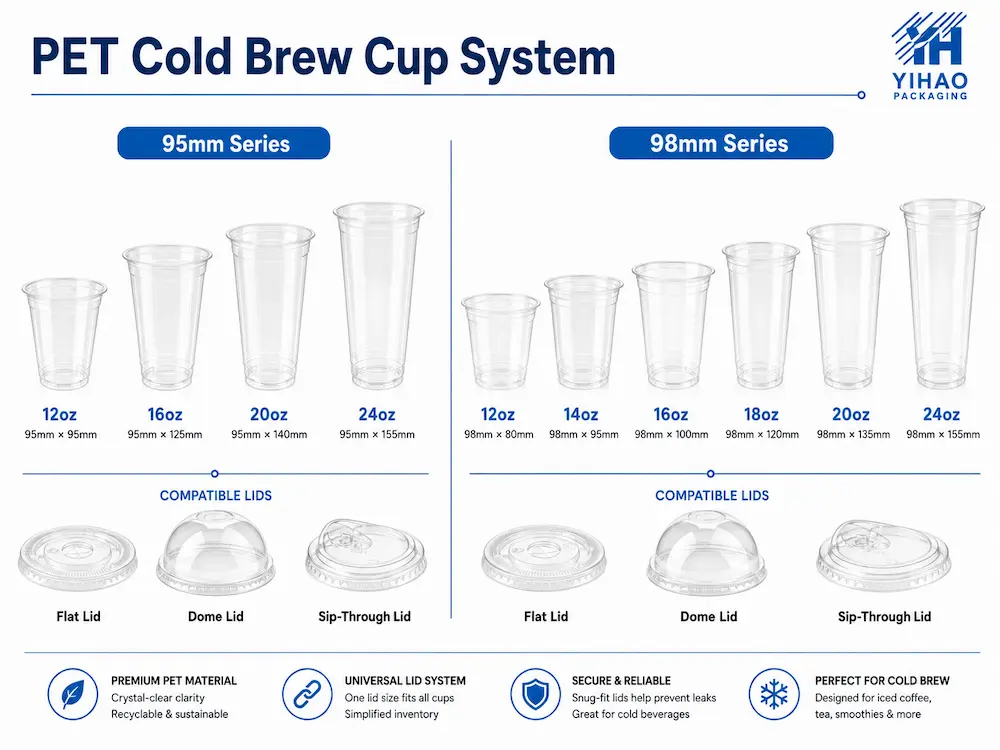
A practical size strategy may include:
- Smaller cups for premium cold brew, tasting drinks, or concentrated coffee
- Medium cups for standard iced coffee and daily takeaway service
- Larger cups for flavored cold brew, milk coffee, refreshers, and promotional drinks
Buyers should also check whether one lid family supports multiple cup sizes. A simplified cup-and-lid system reduces inventory pressure, staff confusion, and sourcing complexity.
For example, a cafe chain may prefer a limited number of cup sizes with matching lid logic. A supermarket buyer may focus more on shelf display, label placement, and carton packing. A distributor may need a broader product range to serve different customers.
Cold Brew Cups for Retail Display
Retail display creates different pressure from cafe service. In a cafe, the drink is prepared and handed to the customer quickly. In a supermarket or convenience store, the package must sell the product visually from a shelf.
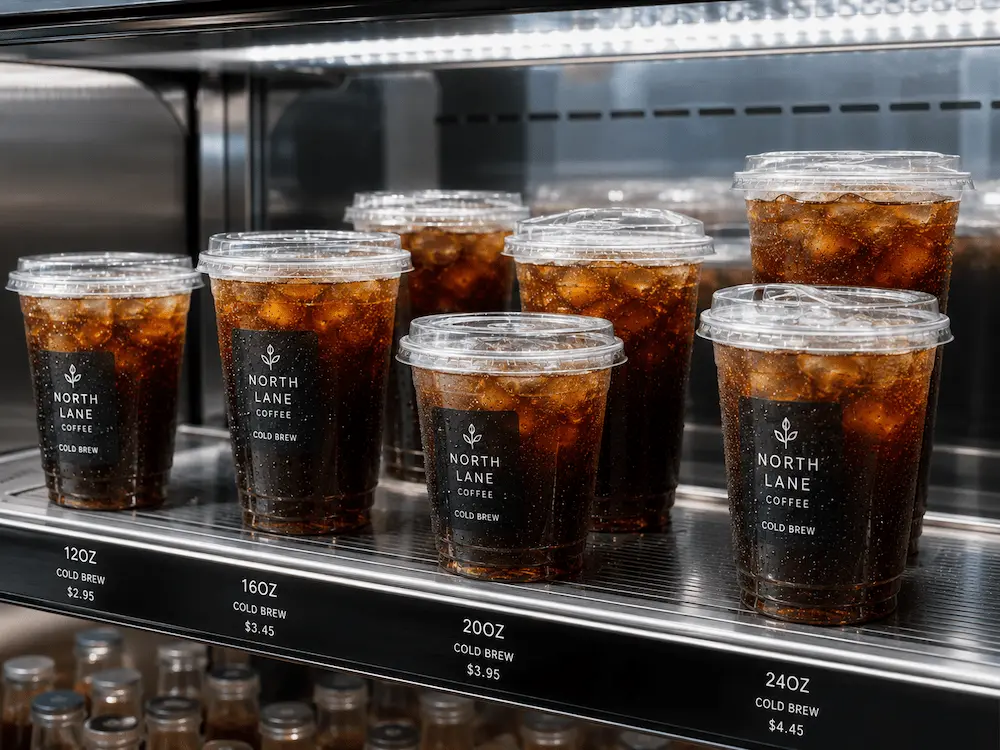
For retail display, cold brew cups should support:
- Clear product visibility
- Stable standing performance
- Space for labels or sleeves
- Lid security during handling
- Consistent appearance across batches
- Good presentation under display lighting
- Practical carton packing for replenishment
- Easy recognition for customers
A cold brew drink with visible milk layers, foam, cream, or flavor color performs better when the package makes the drink understandable at first glance. This is one reason clear iced coffee cups remain strong for chilled beverage display.
Cold Brew Cups for Takeaway Service
Takeaway service puts pressure on handling. Customers carry the drink, place it in cup holders, walk with it, transport it in delivery bags, or drink it while moving. Packaging failure becomes visible quickly.
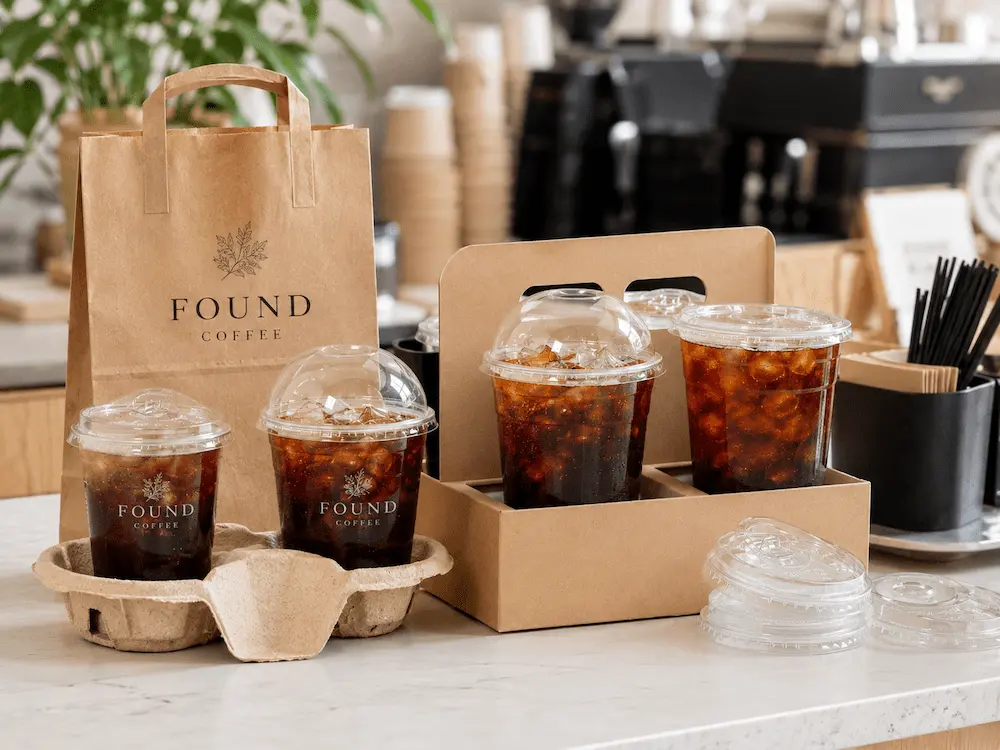
For takeaway use, buyers should check:
- Rim smoothness
- Lid snap fit
- Cup wall strength
- Hand feel
- Drinking comfort
- Straw or sip opening design
- Spill risk during movement
- Compatibility with cup carriers
- Carton and storage efficiency
A cup that looks clear but fails during takeaway service creates complaints. For cold brew, where the drink often carries a premium positioning, packaging quality directly affects perceived beverage quality.
Cold Brew Cups for Flavored Coffee Menus
Flavored cold brew is useful for cafes and beverage brands because it supports seasonal menus, premium pricing, and visual variety. Packaging should help communicate that value.
Flavored cold brew cups are suitable for:
- Vanilla cold brew
- Caramel cold brew
- Mocha cold brew
- Oat milk cold brew
- Sweet cream cold brew
- Salted cream cold brew
- Hazelnut cold brew
- Cinnamon cold brew
- Matcha coffee fusion drinks
- Fruit-inspired cold brew drinks
- Coffee refreshers
For these drinks, clarity matters. Customers respond to color contrast, cream movement, syrup layers, ice level, and foam height. Clear PET cups help show those details without forcing staff to explain every drink.
Cold Brew Cups vs Bottles
PET bottles and cold brew cups can both be used for cold coffee, but they serve different business models.
Choose cold brew cups when:
- Drinks are made fresh
- Customers order at a cafe counter
- Ice and milk layers matter
- Menu flexibility is important
- Different lids are needed
- Seasonal drinks change often
- The buyer wants fast takeaway service
Choose bottles when:
- Drinks are pre-filled in batches
- Products are sold as sealed retail beverages
- Longer chilled shelf display is needed
- The brand wants a bottled coffee identity
- The filling process supports bottle packaging
For many cafes and foodservice teams, cups are easier to start with because they support daily menu changes and do not require the same production setup as bottled drinks.
Cold Brew Cups vs Paper Cups
Paper cups are strong for printed branding, but they hide the drink. For hot coffee, this is usually acceptable. For cold brew, especially flavored cold brew and iced coffee, hiding the drink reduces visual appeal.
Choose cold brew cups when drink appearance is part of the selling point. Choose paper cups when printed branding is more important than product visibility.
For premium iced coffee, clear PET packaging gives customers a stronger sense of freshness, texture, and value.
Cold Brew Cups vs PP Cups
PP cups are practical for many cold drink programs, especially when toughness matters. However, PET usually provides stronger clarity. For cold brew coffee, clarity is a major advantage because customers often judge the drink by color, ice, milk, and cream appearance.
PP cups may be useful where durability is the main requirement. PET cups are usually better when the goal is premium cold beverage display.
Cold Brew Cups vs Glass Bottles
Glass bottles create a premium image, but they are heavier and less convenient for high-volume takeaway operations. They may suit boutique bottled cold brew products, but they are less practical for fast service, events, and daily cafe takeaway.
For buyers who need practical wholesale beverage packaging, clear PET cups are usually more flexible. They reduce handling pressure and support multiple lid styles.
Cold Brew Cups vs Aluminum Cans
Aluminum cans are suitable for large-scale ready-to-drink coffee brands, but they are not ideal for fresh cafe service. They require canning operations and hide the drink completely.
For fresh cold brew, cafe menus, and chilled display drinks where visibility matters, clear cold brew cups are usually a better buyer choice.
How YIHAO Helps Buyers Choose Cold Brew Cups
As a food packaging manufacturer and solution provider, YIHAO supports packaging buyers who need practical cold beverage packaging for cafes, supermarkets, bakeries, foodservice brands, distributors, and wholesale programs.

For cold brew cups, buyers usually need more than a cup quote. They need to confirm whether the cup material, lid style, size range, rim fit, label space, packing method, and product display match the final sales channel.
YIHAO helps buyers think through:
- Clear PET cup selection for cold brew and iced coffee
- Matching lids for takeaway and display use
- Cup-and-lid sample testing before bulk orders
- Beverage packaging options for cafes and retailers
- Wholesale supply planning for cold drink programs
- Packaging choices for flavored cold brew cups
- Product presentation for chilled display
- Practical packaging support for distributors and foodservice buyers
This makes the sourcing process more reliable. Instead of choosing packaging only from a catalog image, buyers can test real samples with actual drinks, lids, labels, ice, and handling conditions.
Wholesale Buying Checklist for Cold Brew Cups
Before placing a wholesale order, buyers should confirm more than cup size and price. A better checklist should cover drink fit, product fit, operation fit, and supplier fit.
| Buyer Checkpoint | What to Confirm | Why It Matters |
|---|---|---|
| Material | PET, PP, paper, bottle, glass, can, or carton | Determines clarity, handling, and use case |
| Drink type | Black cold brew, milk cold brew, flavored cold brew, foam drinks | Affects lid style and cup height requirements |
| Lid style | Flat, straw-slot, strawless sip, dome, or sealed format | Controls drinking method and spill risk |
| Rim fit | Actual cup rim and matching lid compatibility | Prevents leakage and customer complaints |
| Clarity | Transparency and surface finish | Supports premium product presentation |
| Size range | Small, regular, large, or multi-size system | Helps menu planning and inventory control |
| Branding | Labels, sleeves, printed cups, or custom discussion | Supports retail and cafe identity |
| Packing | Carton quantity, storage, stacking, and transport | Affects wholesale operation efficiency |
| Samples | Real drink, ice, lid fit, and takeaway testing | Reduces wrong-order risk before bulk purchase |
| Supplier support | Product family, lid matching, and stable supply | Helps long-term packaging consistency |
Sample Testing Before Bulk Orders
Sample testing is one of the most important steps for cold brew cup sourcing. Buyers should not test empty cups only. The cup should be tested with the actual drink and real service conditions.
A practical sample test should include:
- Black cold brew with ice
- Milk cold brew or cream cold brew
- Flavored cold brew with syrup or foam
- Lid opening and drinking comfort
- Rim fit after filling
- Cup performance in cup holders
- Label or sleeve placement
- Chilled display appearance
- Staff handling speed
- Delivery or takeaway movement
This process helps buyers avoid common problems such as lid mismatch, poor shelf appearance, weak hand feel, unclear branding space, or carton storage pressure.
Practical Recommendation for Buyers
For most cafes, supermarkets, bakeries, convenience stores, and foodservice operators, cold brew cups are the best starting point when the drink is fresh, visual, cold, and served for takeaway or chilled display.
PET bottles, glass bottles, and aluminum cans become more relevant when the buyer moves into sealed ready-to-drink beverage production. Paper and PP cups can work for specific service needs, but they usually do not offer the same premium clarity as clear PET.
A strong sourcing strategy is not choosing one package for every situation. It is building a flexible cold beverage packaging system:
- Clear PET cups for fresh cold brew and iced coffee
- Matching lids for different drinking styles
- Dome lids for foam or topping drinks
- Labels or sleeves for branding
- Bottles only when pre-filled retail production is required
- Samples before wholesale confirmation
- Supplier support for long-term packaging consistency
Buyer Quick Checklist Before Contacting a Supplier
Before contacting a cold brew cups manufacturer, wholesale supplier, or packaging factory, prepare these details:
- Main drink types: black cold brew, milk cold brew, flavored cold brew, or foam drinks
- Sales channel: cafe, supermarket, convenience store, delivery, event, or distributor
- Preferred material: PET, PP, paper, bottle, glass, can, or carton
- Required lid style: flat, straw-slot, sip, strawless, dome, or sealed format
- Cup size range: compact, regular, large, or multi-size program
- Branding method: label, sleeve, printed cup, embossed logo, or plain stock cup
- Sample test plan: drink, ice, lid fit, handling, and chilled display
- Wholesale stage: sample review, trial order, or long-term supply planning
- Carton and storage needs: warehouse space, transport, and retail replenishment
- Future product expansion: iced coffee cups, PET coffee cups, coffee cups with lids, and related beverage packaging
Conclusion
Cold brew cups are not just containers for cold coffee. They are part of the drink presentation, customer experience, and wholesale packaging system. Compared with PET bottles, glass bottles, aluminum cans, paper cups, PP cups, cartons, and pouches, clear PET cold brew cups offer a strong balance of visibility, takeaway convenience, lid flexibility, and retail display value.
For buyers choosing packaging for iced coffee cups, clear iced coffee cups, PET coffee cups, flavored cold brew cups, and coffee cups with lids, the smartest decision is to start from the real drink format. If the drink is fresh, visual, layered, and served for takeaway, clear cold brew cups are usually the more practical choice. If the drink is sealed, batch-filled, and sold as a ready-to-drink product, bottles or cans may deserve consideration.
YIHAO supports buyers with cold beverage packaging selection, clear PET cup options, matching lid discussion, sample testing, and wholesale packaging planning. For food packaging teams, distributors, coffee brands, and retailers, the right cold brew packaging decision should reduce sourcing risk, improve shelf appeal, and create a better drinking experience for the customer.
FAQ
1. What are cold brew cups used for?
Cold brew cups are used for cold brew coffee, iced coffee, flavored cold brew, milk coffee, cream cold brew, and other chilled coffee drinks sold through cafes, supermarkets, convenience stores, bakeries, foodservice counters, and takeaway beverage programs.
2. Are PET coffee cups better than paper cups for cold brew?
PET coffee cups are usually better when drink visibility matters because clear PET shows the coffee color, milk layers, ice, foam, and flavor presentation. Paper cups are useful for printed branding, but they hide the drink.
3. What lid should buyers choose for cold brew cups?
Buyers should choose lids based on the drink style. Flat lids work for standard cold brew, straw-slot lids work for straw service, strawless sip lids support direct drinking, and dome lids are useful for foam, cream, or topping drinks.
4. Should wholesale buyers choose cups or bottles for cold brew?
Wholesale buyers should choose cups for fresh-made takeaway cold brew and bottles for pre-filled retail cold brew. Cups are more flexible for cafe service, while bottles are better for sealed chilled beverage programs.
5. What should buyers test before ordering cold brew cups in bulk?
Buyers should test cup clarity, lid fit, rim comfort, wall strength, ice performance, drink appearance, label placement, takeaway handling, carton packing, and compatibility with the actual cold brew menu before placing bulk orders.
References
- U.S. Food and Drug Administration, Food Contact Substances and Packaging Guidance
- European Food Safety Authority, Food Contact Materials Safety Assessment
- Plastics Industry Association, PET Packaging Material Overview
- National Coffee Association, Cold Coffee and Ready-to-Drink Coffee Market Discussions
- Specialty Coffee Association, Coffee Beverage Service and Retail Trends
- Association of Plastic Recyclers, PET Packaging Design Guidance
- Packaging Europe, Beverage Packaging and Retail Display Trends
- World Packaging Organisation, Packaging Design and Supply Chain Considerations
Deep-Dive Insights
How buyers should think about cold brew packaging
Buyers should start from the drink format, not the package format. Fresh-made cold brew, flavored cold brew, and iced coffee usually need clear display and fast service. Pre-filled cold brew needs sealing, labeling, and chilled retail planning. These are different packaging jobs.
Why clear PET cups remain strong for cold brew
Clear PET cups show the drink directly. This matters for cold brew cups because color, ice, cream, milk, foam, and flavor layers all influence customer perception. A transparent cup makes the drink easier to sell without extra explanation.
What alternative packaging does better
Bottles and cans are stronger for sealed retail beverage programs. Paper cups are stronger for printed branding. Glass bottles are stronger for premium shelf identity. PP cups are practical where durability matters. The buyer should match the package to the selling model.
Option buyers should prioritize first
For most cafes, supermarkets, bakeries, convenience stores, and takeaway drink programs, clear PET cold brew cups with matching lids are the safest starting point. They support flexible menus, visible presentation, and practical service without forcing the buyer into a more complex sealed beverage production process.
Consideration before wholesale purchasing
Before ordering in bulk, buyers should test real cold brew drinks inside the actual cup-and-lid system. A packaging sample should be tested with ice, milk, foam, labels, sleeves, cup holders, delivery bags, and chilled display conditions. This prevents expensive mistakes before wholesale purchasing.
© 2026 YIHAO Packaging. This buying guide is created by YIHAO to help wholesale buyers, distributors, food brands, coffee shops, retailers, and packaging decision-makers compare cold brew cups and alternative packaging options before sourcing. All rights reserved.