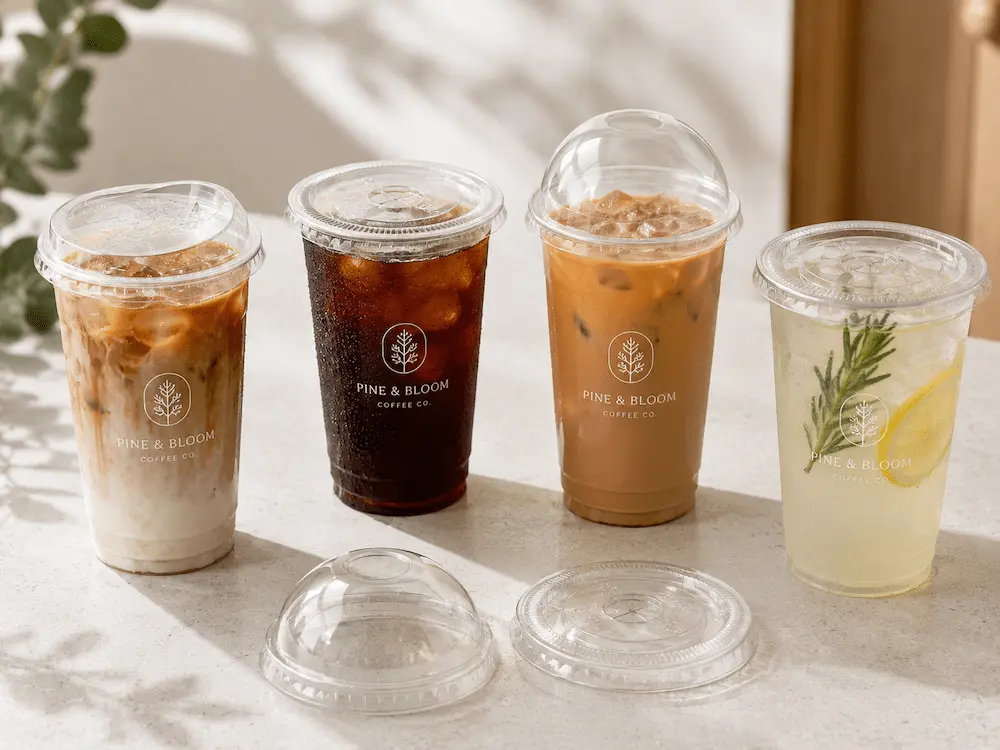
Quick Summary
Coffee cups with lids are practical cold beverage packaging solutions for iced coffee, cold brew, flavored cold brew, matcha, refreshers, smoothies, juice, lemonade, and takeaway drinks. Buyers should compare material clarity, lid fit, cup size, rim strength, drinking style, stacking performance, branding options, and supplier consistency before wholesale ordering.
Coffee cups with lids are one of the most important packaging choices for cafes, beverage chains, supermarkets, bakeries, convenience stores, distributors, and foodservice brands. A cold drink cup does more than hold liquid. It affects drink visibility, lid fit, takeaway handling, shelf display, customer experience, branding, packing efficiency, and repeat purchasing.
For cold beverage programs, buyers usually compare iced coffee cups, clear iced coffee cups, PET coffee cups, cold brew cups, and flavored cold brew cups. These products may look similar, but their best use depends on drink format, lid structure, material clarity, cup diameter, storage method, label placement, and wholesale supply consistency.
This FAQ guide answers the practical questions food packaging teams ask before ordering coffee cups with lids in bulk. It focuses on material selection, size planning, lid compatibility, drink applications, sample testing, custom branding, wholesale ordering, and supplier evaluation.
Why Are Coffee Cups with Lids Important for Cold Beverage Packaging?
Coffee cups with lids are important because cold drinks sell through both function and appearance. Iced coffee, cold brew, flavored cold brew, matcha, fruit tea, refreshers, smoothies, and lemonade are visual products. Customers often judge freshness, quality, and value before drinking.
A clear cup shows coffee color, ice level, milk contrast, syrup movement, foam texture, fruit inclusions, and layered presentation. A well-matched lid protects the drink during takeaway handling and helps reduce leakage complaints. A strong cup rim supports faster service because staff can close the lid confidently without deforming the cup.
For wholesale buyers, the best packaging choice is not only about price. A cheaper cup with poor lid fit may create waste, returns, customer complaints, or operational delays. A slightly better cup-lid system often protects the buyer’s brand experience and reduces hidden packaging costs.
What Materials Are Commonly Used for Coffee Cups with Lids?
What material is best for cold coffee cups?
The most common materials for cold coffee cups with lids include PET, PP, PLA, and rPET depending on the product line, sustainability direction, market requirements, and supplier capability. For clear cold drink presentation, PET is often a strong choice because it provides high transparency and a clean retail look.
| Material | Common Use | Main Advantage | Buyer Note |
|---|---|---|---|
| PET | Clear iced coffee cups, PET coffee cups, cold brew cups | High clarity, strong drink visibility, polished presentation | Best for cold drinks, chilled display, and takeaway beverage packaging |
| PP | Cold cups, flexible lids, takeaway drink packaging | Good flexibility and practical handling strength | Appearance and stiffness differ from PET |
| PLA | Compostable cold cup programs where accepted | Plant-based material direction | Composting claims must match local infrastructure and certification requirements |
| rPET | Recycled-content clear cold cup programs | Supports recycled PET packaging direction | Food-contact suitability and recycled-content documentation should be confirmed |
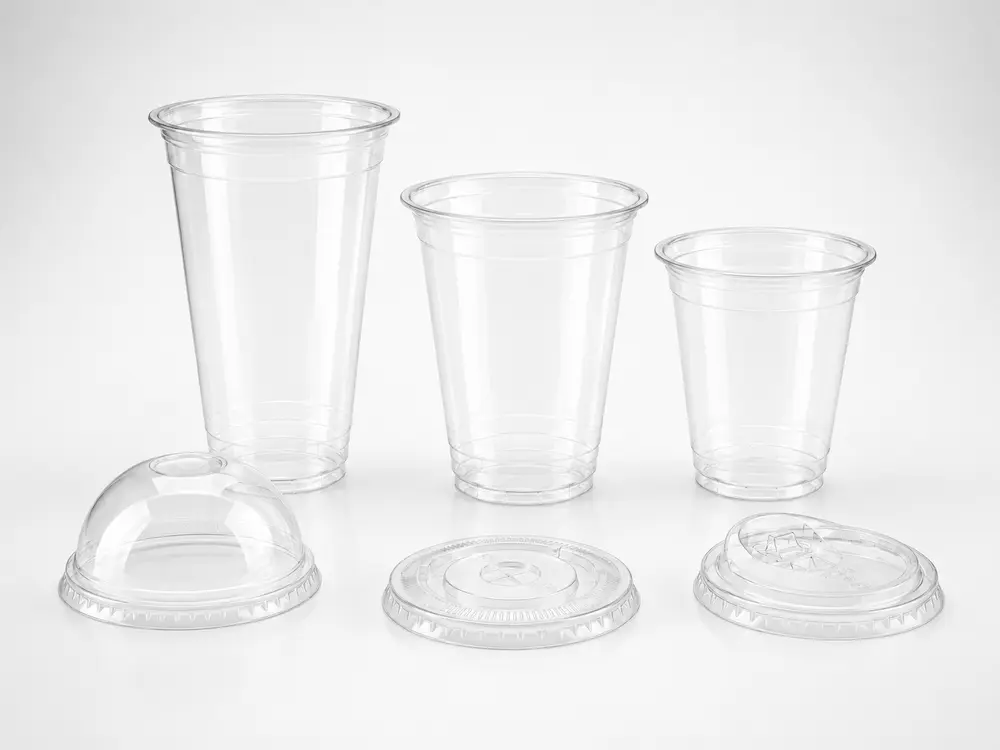
For cafes, supermarkets, convenience stores, and beverage brands that want strong product visibility, PET coffee cups are a practical starting point. They help iced coffee, cold brew, flavored cold brew, matcha, refreshers, and fruit drinks look clean, fresh, and ready to buy.
Are PET Coffee Cups Suitable for Iced Coffee and Cold Brew?
Are PET coffee cups a good choice for cold drinks?
Yes. PET coffee cups are widely used for iced coffee, cold brew, flavored cold brew, fruit tea, matcha drinks, lemonade, refreshers, smoothies, and other chilled takeaway beverages. Their biggest strength is clear visibility. For drinks that depend on appearance, PET cups help customers see the product before purchase.
For iced coffee, the cup needs to show ice, coffee color, milk ratio, cream, cold foam, syrup, and menu variation. For cold brew, the cup needs to support a cleaner premium look. For flavored cold brew, the cup needs to display layered ingredients and flavor cues. In these cases, coffee cups with lids should be selected as a complete drink presentation system, not as a separate cup and lid purchase.
PET cold cups are mainly intended for cold drink use. Buyers who need hot coffee packaging should select packaging designed for hot beverages instead of using clear PET cold cups for hot service.
What Size Coffee Cups with Lids Should Buyers Choose?
What size works best for iced coffee, cold brew, and flavored cold brew?
The right size for coffee cups with lids depends on the drink recipe, ice volume, serving style, menu price, and target channel. A small cup may work for compact cold brew, tasting drinks, or premium portions. A medium cup usually fits standard iced coffee and daily takeaway drinks. A larger cup works better for high-ice drinks, refreshers, smoothies, and flavored cold brew with milk, foam, or toppings.
| Size Direction | Typical Use | Best For | Buyer Consideration |
|---|---|---|---|
| Small cold coffee cup | Sample drinks, compact iced coffee, small cold brew | Cafes, tasting menus, premium small portions | Check whether the drink still looks full after adding ice |
| Medium cold coffee cup | Standard iced coffee, cold brew, fruit tea, matcha | Daily takeaway and cafe drink programs | Usually the safest starting point for many beverage menus |
| Large cold coffee cup | Large iced coffee, refreshers, smoothies, flavored cold brew | High-ice drinks, layered drinks, topping-style beverages | Requires stronger lid stability and comfortable hand feel |
Buyers should test real drinks before confirming size. A cup that looks suitable on a specification sheet may look underfilled when ice, milk, syrup, foam, or fruit inclusions are added. The best cup size supports both portion logic and product appearance.
How Should Buyers Choose the Right Lid?
What lid type works best for coffee cups with lids?
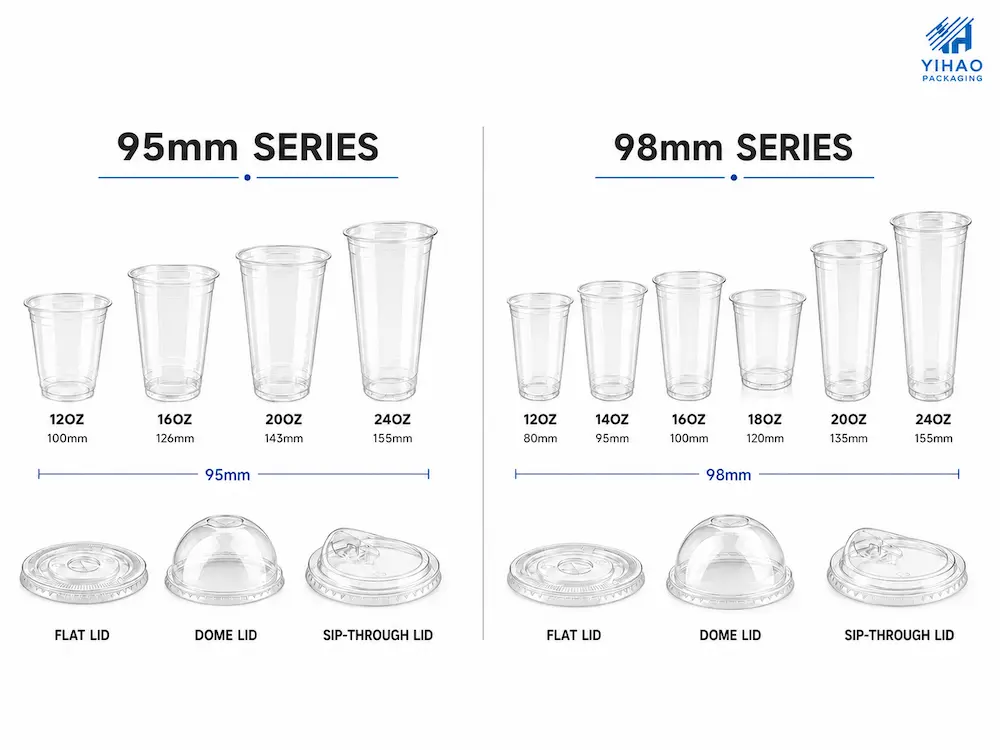
Lid choice is the most common source of mistakes when buying coffee cups with lids. A lid must match the cup rim, diameter, locking structure, drinking style, straw requirement, and drink format. The same listed diameter does not always guarantee the same fit across different factories or mold systems.
| Lid Type | Best Use | Buyer Advantage | When to Avoid |
|---|---|---|---|
| Flat lid with straw slot | Iced coffee, cold brew, juice, lemonade, fruit tea | Low profile, easy storage, practical takeaway use | Not ideal for tall whipped cream or topping-heavy drinks |
| Dome lid | Smoothies, whipped cream drinks, dessert-style beverages | Adds height for toppings and visual presentation | Less compact for carton packing and storage |
| Strawless sip lid | Cold brew, iced coffee, flavored coffee drinks | Supports direct drinking and modern takeaway service | Not suitable for drinks requiring large straws or toppings |
| Sealing film | Milk tea, juice bars, sealed drink programs | Creates a sealed drink presentation for selected service models | Requires compatible sealing equipment and cup material |
The safest buying method is to order cups and matching lids from the same supplier whenever possible. Before bulk purchasing, buyers should test closure strength, lid removal, straw fit, sip opening, leakage behavior, and cup deformation during lid application.
Are Clear Iced Coffee Cups Better Than Printed or Opaque Cups?
When should buyers choose clear iced coffee cups?
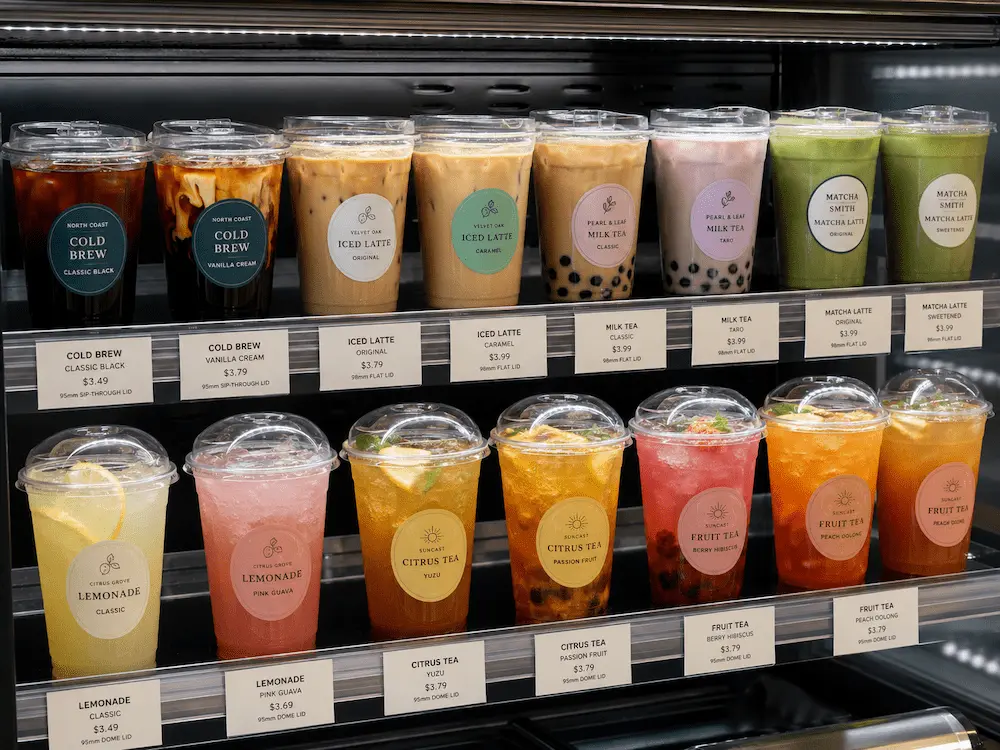
Clear iced coffee cups are stronger when drink visibility matters. They show coffee color, milk contrast, ice quality, syrup movement, foam, and flavor layers. This visual effect helps iced coffee, cold brew, flavored cold brew, matcha, fruit tea, lemonade, refreshers, and smoothies look more attractive in takeaway and retail display settings.
Printed or opaque cups may be stronger when the buyer prioritizes full-surface branding. However, they hide the drink itself. For cold drinks that sell through appearance, clear cups often create a better balance between product visibility and brand presentation.
Many brands use clear coffee cups with lids together with logo stickers, partial cup printing, branded sleeves, or label areas. This keeps the drink visible while still supporting brand recognition.
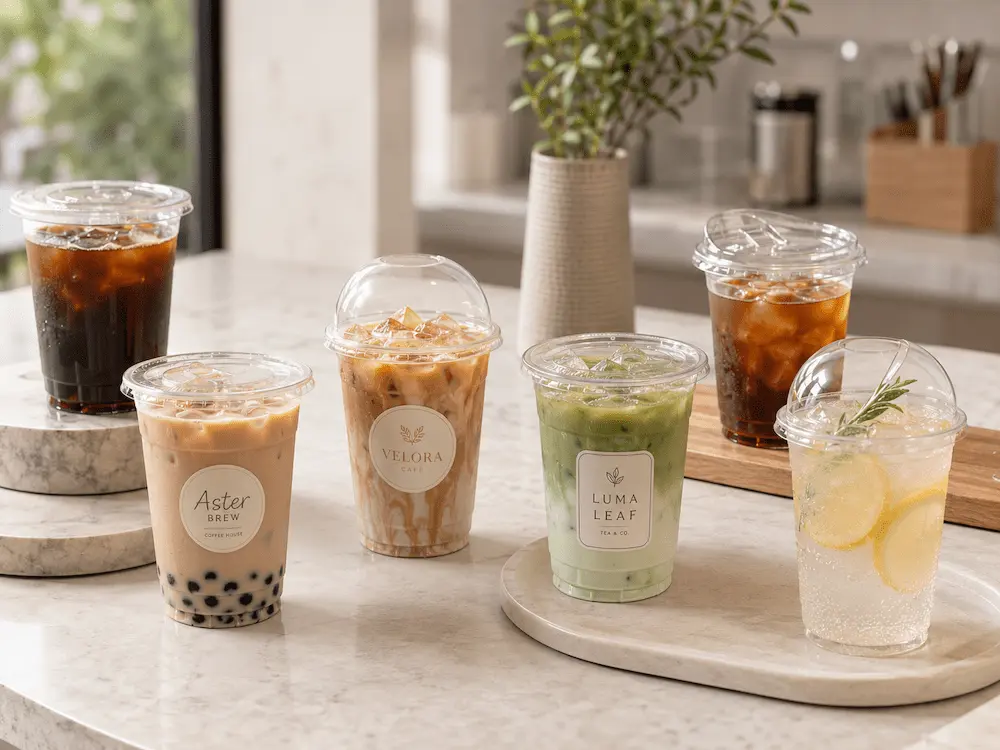
What Drinks Work Best in Coffee Cups with Lids?
Can coffee cups with lids be used beyond coffee?
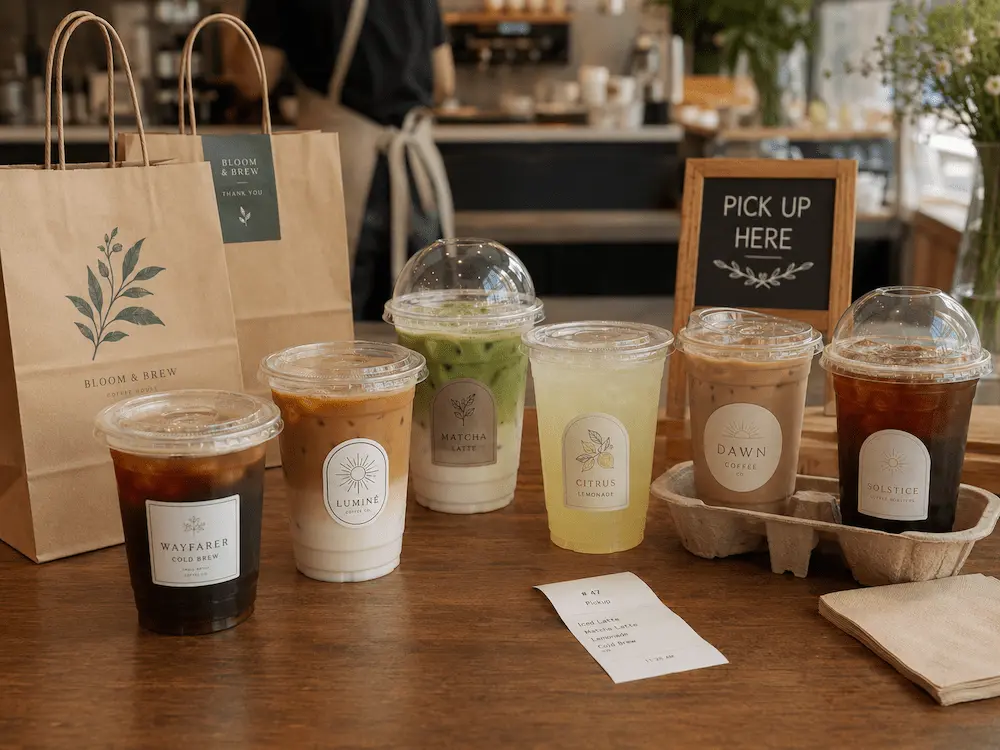
Yes. Coffee cups with lids are widely used beyond coffee because the same clear cup and lid system works for many cold beverage menus. This helps cafes, supermarkets, bakeries, convenience stores, and foodservice teams reduce SKU complexity while still supporting menu flexibility.
| Drink Type | Recommended Cup Direction | Recommended Lid Direction | Packaging Reason |
|---|---|---|---|
| Iced coffee | Clear PET cold cup | Flat lid or strawless sip lid | Shows coffee color, ice, and milk ratio |
| Cold brew | Clear PET coffee cup | Flat lid or sip lid | Supports a clean premium chilled coffee look |
| Flavored cold brew | Clear iced coffee cup | Flat lid, sip lid, or dome lid | Displays syrup, milk, foam, and flavor layers |
| Matcha drinks | Clear PET cup | Flat lid or dome lid | Shows green color and milk contrast |
| Refreshers | Clear cold cup | Flat lid with straw slot | Shows fruit color, ice, and inclusions |
| Smoothies | Clear large cold cup | Dome lid or flat lid | Supports thicker drinks and topping options |
| Iced tea and lemonade | Clear cold cup | Flat lid with straw slot | Highlights color, ice, citrus, and fruit pieces |
The best packaging choice should follow the drink format. A plain cold brew, a vanilla cold brew, a cold foam coffee, a fruit refresher, and a smoothie do not create the same lid and cup requirements.
What Makes Flavored Cold Brew Cups Different?
Why do flavored cold brew cups need better visual display?
Flavored cold brew cups need stronger visual presentation than plain black coffee cups. A flavored cold brew may include vanilla syrup, caramel, chocolate, milk, cream, sweet foam, fruit flavoring, or layered ingredients. These details increase perceived value when customers can see them clearly.
Clear PET cups are especially practical for flavored cold brew because they show contrast and layering from the side. A flat lid works well for standard drinks. A strawless sip lid supports a cleaner ready-to-drink experience. A dome lid is useful when the drink includes whipped cream, tall foam, or dessert-style toppings.
What Should Buyers Check Before Ordering Coffee Cups with Lids Wholesale?
What should be tested before bulk orders?

Before ordering coffee cups with lids wholesale, buyers should test more than cup size. The most important checks include cup clarity, lid fit, rim strength, stacking performance, carton packing, label area, custom branding options, and supplier repeatability.
| Checklist Item | Why It Matters | What to Test |
|---|---|---|
| Cup clarity | Affects drink presentation and shelf appeal | Check transparency, haze, scratches, and color cast |
| Lid fit | Reduces leakage and loose-closure complaints | Test real lids on real cups from the selected supplier |
| Rim strength | Supports lid locking and service speed | Check deformation during lid application |
| Stacking | Affects storage, filling efficiency, and shipping | Test cup separation and nested stability |
| Label or print area | Supports branding and product information | Check cup wall shape and available decoration space |
| Carton packing | Affects logistics cost and damage control | Confirm sleeve packing, carton strength, and storage efficiency |
| Supplier consistency | Protects repeat orders and long-term menu planning | Confirm whether future batches use the same compatible cup-lid system |
Sample testing is the most reliable step before a large order. Buyers should test actual drinks, real ice levels, actual lids, straws, labels, refrigerator display, and takeaway handling before confirming wholesale supply.
Can Coffee Cups with Lids Be Custom Printed?
What branding options are available for wholesale buyers?
Many coffee cups with lids support branding through logo printing, stickers, labels, sleeves, carton marks, or private-label packaging discussion depending on material, cup shape, printing method, supplier capability, and order quantity.
For clear iced coffee cups, buyers should avoid covering too much of the cup wall. The goal is to keep the drink visible while still showing the brand. Partial logo printing, transparent labels, and clean label placement often work better than heavy full-surface decoration for cold drinks.
Wholesale and OEM buyers should confirm artwork requirements, print area, color limitations, MOQ, proofing method, lead time, carton marks, and sample approval process before production.
Are Coffee Cups with Lids Recyclable?
How should buyers describe recyclable cold cups responsibly?
Recyclability depends on material, local recycling systems, contamination level, labels, collection rules, and actual sorting conditions. PET is commonly used in recyclable-material packaging systems, but buyers should avoid broad claims such as “recyclable everywhere” unless the target market supports that claim.
For responsible product communication, brands can describe PET cups as recyclable-material direction where local PET collection and recycling systems accept them. If using rPET or recycled-content cups, buyers should confirm food-contact suitability, recycled-content documentation, and supplier material statements before using sustainability claims in marketing or product pages.
What Is the Difference Between a Manufacturer, Supplier, and Wholesale Distributor?
Who should buyers contact for coffee cups with lids?
When sourcing coffee cups with lids, buyers may work with a manufacturer, supplier, or wholesale distributor. These roles are connected, but they are not always the same.
| Partner Type | Main Role | Best For |
|---|---|---|
| Manufacturer | Produces cups, lids, or packaging components | Custom projects, stable supply, product development, long-term programs |
| Supplier | Provides available packaging products and sourcing support | Regular purchasing, product matching, sample support, export communication |
| Wholesale distributor | Buys and resells packaging in bulk or regional channels | Fast replenishment, mixed SKUs, local inventory, resale programs |
For repeat beverage packaging programs, working with an experienced manufacturer or supplier gives buyers better control over cup-lid compatibility, custom options, packing consistency, and long-term product planning.

How Should Buyers Request Coffee Cup and Lid Samples?
What information should a sample request include?
A strong sample request should not only say “send coffee cups with lids.” It should explain the drink type, cup size direction, lid style, straw requirement, target sales channel, branding need, and order stage. This helps the supplier recommend the right combination instead of guessing.
- Drink type: iced coffee, cold brew, flavored cold brew, smoothie, juice, fruit tea, matcha, refresher, or lemonade
- Material direction: PET, PP, PLA, rPET, or supplier recommendation
- Lid type: flat lid, dome lid, strawless sip lid, or matching lid options
- Sales channel: cafe, supermarket, convenience store, bakery, foodservice, distributor, or beverage brand
- Branding need: plain cup, label space, logo printing, custom sleeve, or carton marks
- Testing plan: lid fit, leakage, stacking, drink appearance, chilled display, and transport handling
The more specific the request, the faster the supplier can recommend the right coffee cups with lids for actual use.
Request Coffee Cup and Lid Samples Before Wholesale Ordering
Before placing a bulk order, buyers should request samples of coffee cups with lids and test them with real iced coffee, cold brew, flavored cold brew, milk tea, matcha, refreshers, lemonade, iced tea, and smoothies. The cup should show the drink clearly, and the lid should close smoothly without deforming the rim.
YIHAO helps food packaging teams compare cup clarity, lid fit, rim strength, drinking style, carton packing, and custom branding options before wholesale purchasing. This sample-first approach reduces sourcing risk and helps buyers build a more reliable beverage packaging system.

Common Ordering Mistakes Buyers Should Avoid
The first mistake is buying cups and lids from different suppliers without testing compatibility. Even when the listed diameter appears similar, rim structures may differ. This can create loose lids, difficult closure, or leakage risk.
The second mistake is choosing the cheapest cup without checking clarity and strength. Low-cost cups may look acceptable in photos but perform poorly during filling, stacking, lid application, chilled display, or takeaway handling.
The third mistake is treating every drink as the same. Iced coffee, cold brew, flavored cold brew, smoothies, matcha, lemonade, fruit tea, and refreshers have different visual and functional needs.
The fourth mistake is overclaiming sustainability. Recyclable, recycled-content, compostable, and eco-friendly claims must match the actual material, documentation, and target market conditions.
Buyer Quick Note
For most cafes, supermarkets, bakeries, convenience stores, beverage chains, distributors, and foodservice teams, clear PET coffee cups with lids are a practical starting point for cold drink packaging. They support strong drink visibility, flexible menu use, and efficient takeaway service. Before wholesale ordering, buyers should test lid fit, cup clarity, rim strength, drink appearance, stacking, label placement, and carton packing with real samples.
Why Buyers Work With YIHAO
YIHAO focuses on practical food and beverage packaging solutions for cold drinks, fresh food, bakery products, fruit packaging, and takeaway service. For coffee cups with lids, the value is not only supplying cups. The value is helping buyers match cup material, lid style, drink presentation, custom branding, and wholesale sourcing logic.
Buyers work with YIHAO when they need clear packaging appearance, reliable cup-lid matching support, export supply communication, custom discussion, and practical packaging options for retail and foodservice channels.
FAQ
1. What are coffee cups with lids used for?
Coffee cups with lids are used for cold beverage packaging such as iced coffee, cold brew, flavored cold brew, milk tea, matcha drinks, juice, smoothies, lemonade, iced tea, and refreshers. They help protect drinks, improve takeaway handling, support product presentation, and make service more efficient for cafes, supermarkets, convenience stores, bakeries, and foodservice brands.
2. Are PET coffee cups suitable for hot coffee?
PET coffee cups are mainly suitable for cold drinks, not hot coffee. They are commonly used for iced coffee, cold brew, flavored cold brew, fruit tea, matcha, smoothies, and chilled takeaway beverages. For hot coffee service, buyers should choose packaging designed for hot beverages, such as suitable paper cups or other heat-resistant hot drink packaging systems.
3. How do I choose the right lid for iced coffee cups?
To choose the right lid for iced coffee cups, buyers should confirm cup diameter, rim design, drinking method, straw requirement, and drink format. Flat lids are practical for standard iced coffee and cold brew. Dome lids are useful for whipped cream or toppings. Strawless sip lids support direct drinking. Buyers should test real cup and lid samples before wholesale orders.
4. Are clear iced coffee cups better for cold brew?
Clear iced coffee cups are often a strong choice for cold brew because they show coffee color, ice quality, milk contrast, foam, and flavor layers. They are especially useful for retail display, takeaway service, and flavored cold brew programs where visual presentation influences customer perception.
5. Can coffee cups with lids be customized for branding?
Yes, many coffee cups with lids support custom branding through logo printing, labels, sleeves, carton marks, or other packaging decoration methods depending on material, cup shape, supplier capability, MOQ, and artwork requirements. For clear cups, buyers should balance branding with drink visibility.
6. What should I check before ordering coffee cups with lids wholesale?
Before ordering coffee cups with lids wholesale, buyers should check material clarity, cup strength, lid compatibility, rim fit, stacking performance, drink appearance, label space, carton packing, custom options, sample availability, lead time, and supplier consistency. Testing samples with real drinks, ice, lids, straws, labels, and transport conditions helps reduce bulk-order risk.
References
- U.S. Food and Drug Administration, Packaging & Food Contact Substances, FDA Food Program.
- U.S. Food and Drug Administration, Recycled Plastics in Food Packaging, Food Contact Substances Resources.
- European Commission, Food Contact Materials and Plastic Food Contact Material Guidance.
- European Food Safety Authority, Food Contact Materials Scientific and Regulatory Resources.
- Association of Plastic Recyclers, Design Guidance for Plastics Recycling.
- Sustainable Packaging Coalition, Packaging Design and Recovery Resources.
- U.S. Environmental Protection Agency, Containers and Packaging Product-Specific Data.
- WRAP UK, Plastics Packaging and Recycling Guidance Resources.
Deep-Dive Insights
How buyers should think about coffee cups with lids
Buyers should start from the drink format, not the cup format. Iced coffee, clear iced coffee, cold brew, flavored cold brew, matcha, smoothies, lemonade, and refreshers do not create the same packaging needs. Ice level, foam height, syrup visibility, straw use, lid shape, label placement, and chilled display plans all affect the final choice.
Why clear PET cups remain strong for cold coffee drinks
Clear PET cups show the drink directly. This matters because cold beverages sell through appearance as much as taste. Customers can see coffee color, milk contrast, ice quality, syrup movement, fruit inclusions, and foam texture. For retail and takeaway channels, this visible presentation helps the drink feel fresh, premium, and ready to buy.
What alternative packaging does better
Paper cups are stronger for full-surface printing. Bottles are stronger for sealed retail beverage programs. Cans are stronger for long shelf-life beverage branding. PP cups may offer flexible handling value in selected service environments. Clear PET coffee cups are strongest when buyers need cold drink visibility, practical takeaway use, and simple cup-lid matching.
Best option for most wholesale buyers
For cafes, supermarkets, bakeries, convenience stores, beverage chains, and distributors, clear PET coffee cups with lids are usually the safest starting point. They support iced coffee cups, cold brew cups, flavored cold brew cups, and many other cold drink menus without forcing the buyer into a more complex sealed beverage production system.
Consideration before purchasing
Before placing a wholesale order, buyers should test real samples with real drinks. The most important checks are lid fit, rim stability, drink appearance, cup clarity, stacking, straw compatibility, label placement, and carton packing. A small mismatch in lid fit or cup strength becomes expensive when repeated across bulk inventory.
© 2026 YIHAO Packaging. This buying guide is created by YIHAO to help wholesale buyers, distributors, food brands, and packaging decision-makers compare product options and make informed sourcing decisions. All rights reserved.