Why Choosing the Right Cold Cup Supplier Matters
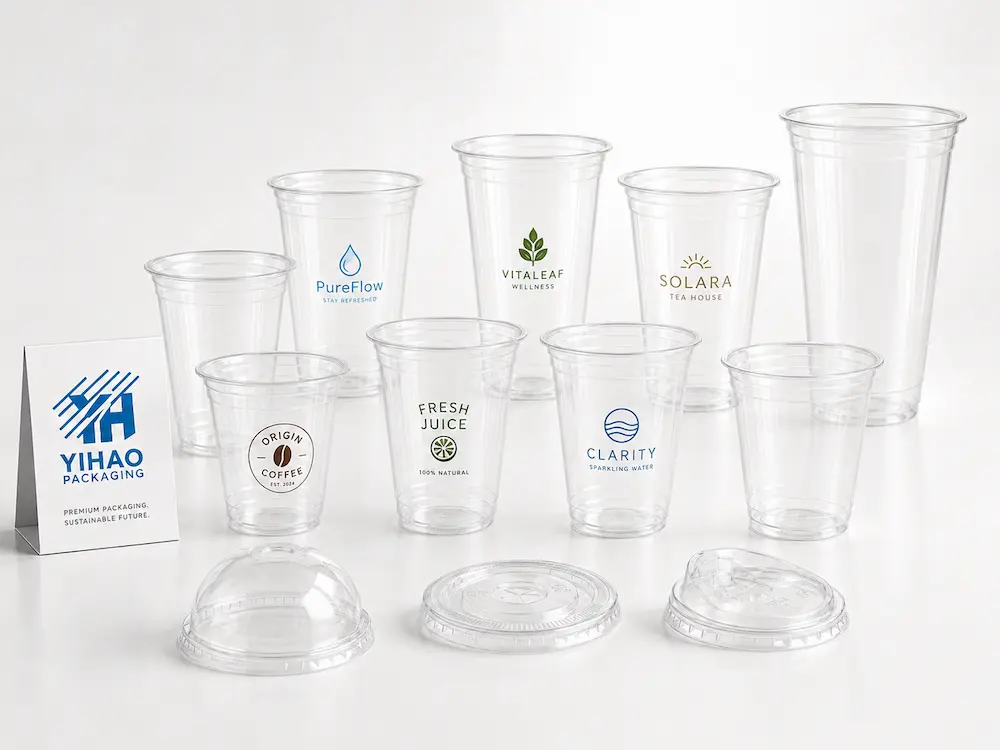
Choosing the right cold cup supplier is important for supermarkets, cafes, bakeries, beverage brands, chilled food producers, and foodservice operators that need reliable packaging for retail display, takeaway service, and refrigerated food presentation. A cold cup supplier should provide more than basic cup sizes. Buyers need stable material quality, clear product visibility, accurate lid matching, practical packing, and repeat-order consistency.
As a food packaging manufacturer and supplier, YIHAO provides PET cups, PP cups, matching lids, custom printing support, and wholesale cold cup solutions for retail food packaging. This guide helps buyers evaluate supplier capability, material options, lid compatibility, display performance, chilled food use, and bulk ordering details before choosing a long-term packaging partner.
A professional cold cup supplier helps buyers reduce these risks before placing large orders. The best partner supports product comparison, sample review, cup-lid matching, carton packing discussion, export communication, and custom branding planning. For B2B buyers, this is where the difference between a basic seller and a long-term packaging partner becomes clear.
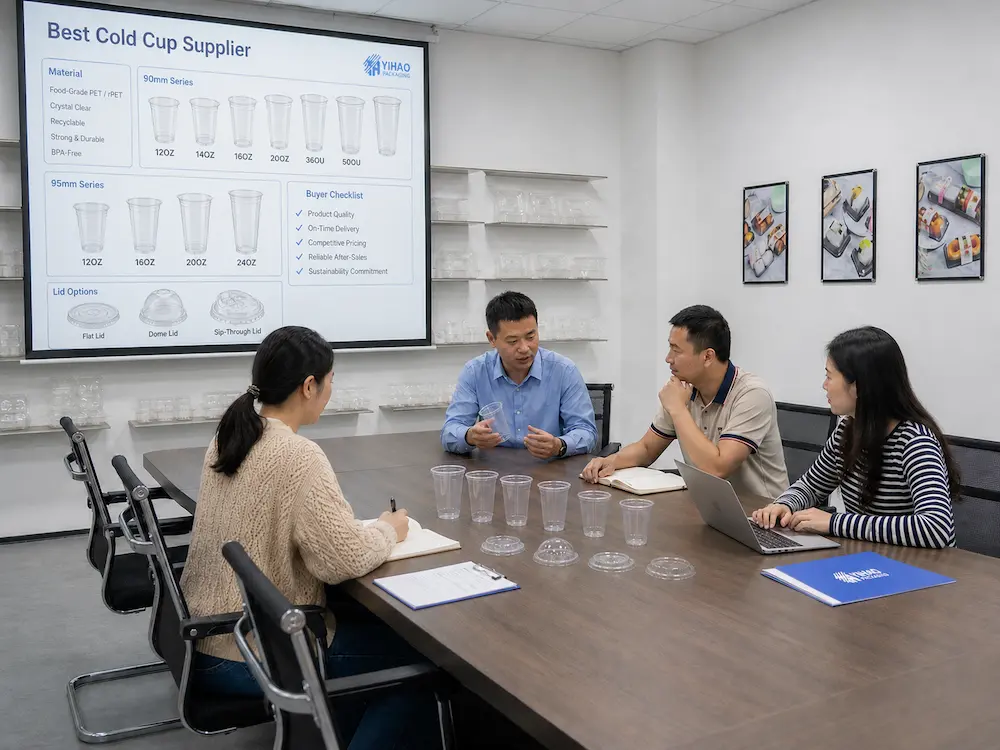
For buyers building a broader drink packaging system, it is also useful to compare related categories such as PET cold cups, cold cup lids, and cold drink packagingbefore finalizing a sourcing plan.
What a Professional Cold Cup Supplier Should Provide
A professional cold cup supplier should provide more than a product list. Buyers need a supplier that understands how cold cups perform in real drink and chilled food environments. This includes PET cups for high-clarity drink display, PP cups for selected foodservice and chilled applications, matching lids for takeaway use, carton packing suitable for wholesale orders, and custom options for branding.
The first sign of a strong supplier is material clarity. A buyer should know whether the cup is PET, PP, rPET, PLA, or another material. Each material has a different commercial role. PET is usually selected when buyers need high transparency, polished drink presentation, and retail display value. PP is often considered for selected chilled food, flexible handling, and foodservice applications. rPET may be relevant for buyers considering recycled-content packaging, but claims should be supported by documentation and local recycling conditions.
The second sign is lid compatibility. A cup without a reliable lid system is not a complete takeaway solution. Buyers should confirm rim diameter, rim structure, lid type, closing feel, and real handling performance. Matching lids may include flat lids, dome lids, straw-slot lids, strawless lids, sip lids, or sealing-related options depending on the cup system.
The third sign is sample support. Before ordering wholesale cold cups, buyers should test real cups with real drinks, real lids, real staff handling, and real refrigerated storage conditions. Good suppliers welcome this process because it reduces complaints after bulk delivery.
PET Cold Cups vs PP Cold Cups: How Buyers Should Compare Materials
Material choice is one of the first decisions buyers make when comparing a cold cup manufacturer, PET cup factory, PP cup manufacturer, or mixed packaging supplier. There is no single material that fits every market, menu, and application. The better approach is to match the material to the drink, channel, display requirement, handling condition, and local compliance expectations.
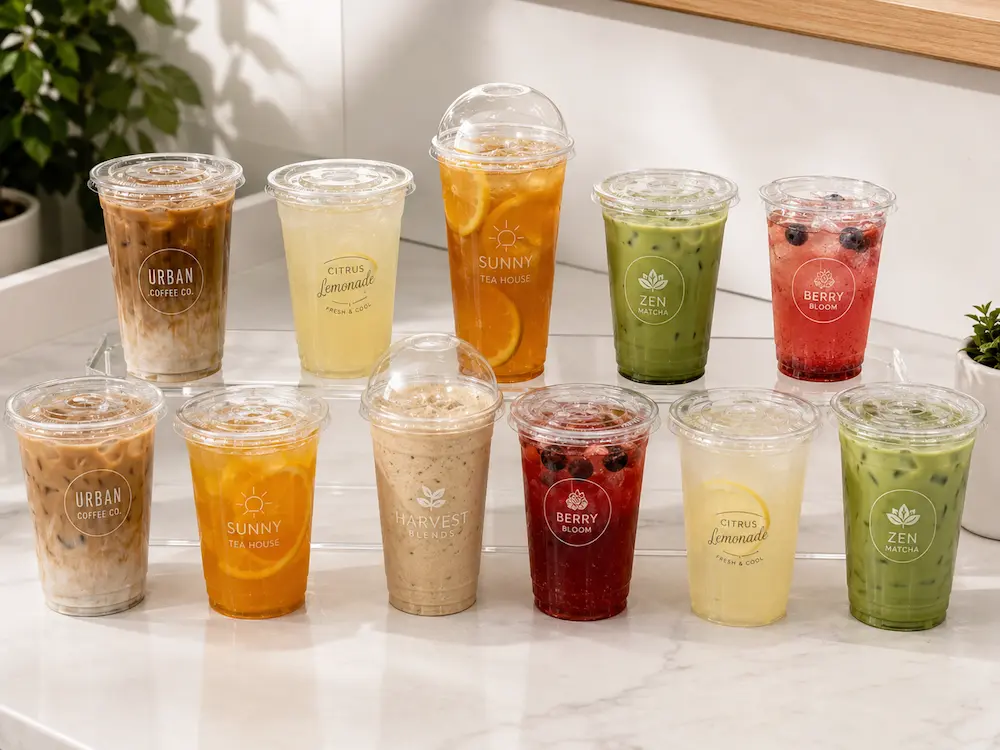
PET cold cups are widely selected for iced coffee, cold brew, juice, smoothies, fruit tea, milk tea, matcha, lemonade, soda, refreshers, and colorful chilled beverages. Their biggest commercial advantage is clarity. When the drink itself sells through color, layering, ice, fruit pieces, toppings, or freshness cues, clear PET gives the product a stronger visual presence.
PP cups usually have a different appearance and handling feel. They may not offer the same crystal-clear retail look as PET, but they are useful in selected chilled foodservice applications where flexibility and practical handling are important. A buyer considering a PP cup manufacturer should evaluate the real use case instead of treating PP as a direct visual substitute for PET.
rPET or recycled PET may support brands that want to discuss recycled-content packaging. However, buyers should avoid broad sustainability claims unless the supplier can support documentation and the target market’s recycling, labeling, and compliance requirements.
| Material | Best For | Buyer Value |
|---|---|---|
| PET | Iced coffee, juice, smoothies, fruit tea, retail drink display | High clarity, strong shelf appeal, polished beverage presentation |
| PP | Selected chilled food, deli portions, takeaway snacks, practical foodservice use | Flexible handling, practical service value, suitable for specific chilled applications |
| rPET / Recycled PET | Brands considering recycled-content packaging discussions | Useful when documentation, sourcing, and local recycling conditions support the claim |
Retail Display Value: Why Clear Cups Help Products Sell Faster
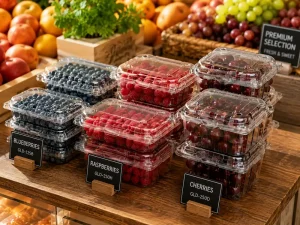
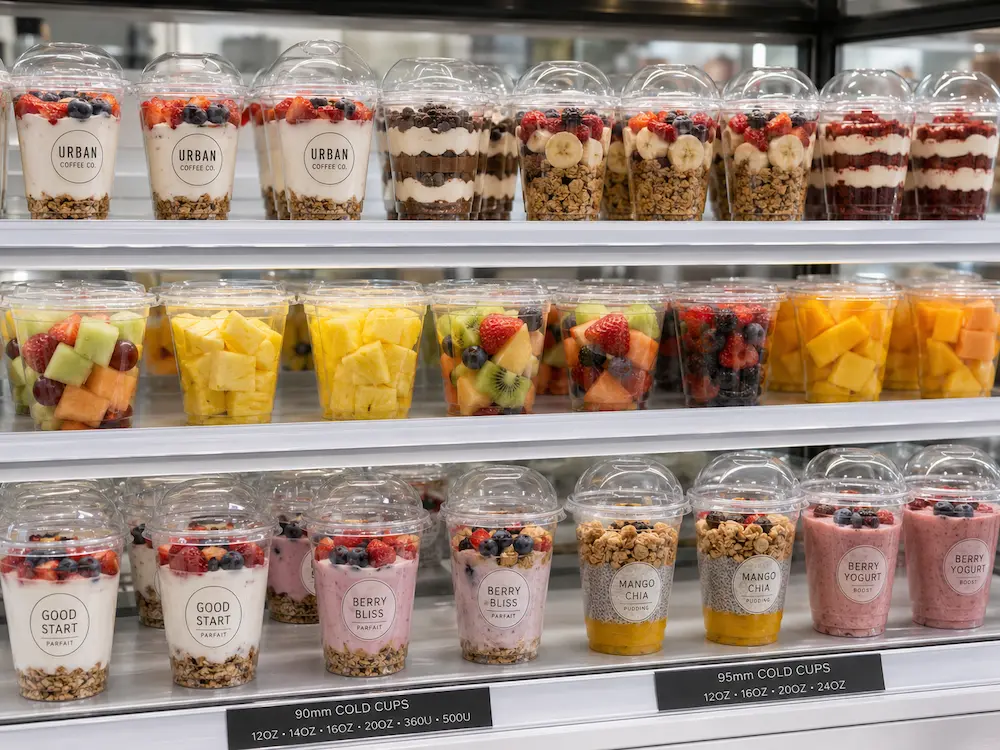
Retail display is one of the strongest reasons buyers search for a high-quality cold cup supplier. In a chilled display cabinet, customers often decide quickly. They look at color, clarity, portion size, toppings, freshness cues, and overall presentation. A clear cup turns the drink or chilled food into the main visual message.
This matters for juice, fruit tea, iced coffee, matcha, sparkling fruit drinks, parfaits, overnight oats, fruit cups, dessert cups, salad portions, and grab-and-go snacks. A cloudy or inconsistent cup weakens the product’s perceived freshness. A clear PET cup supports a cleaner shelf presence and helps the drink or food appear more ready for retail sale.
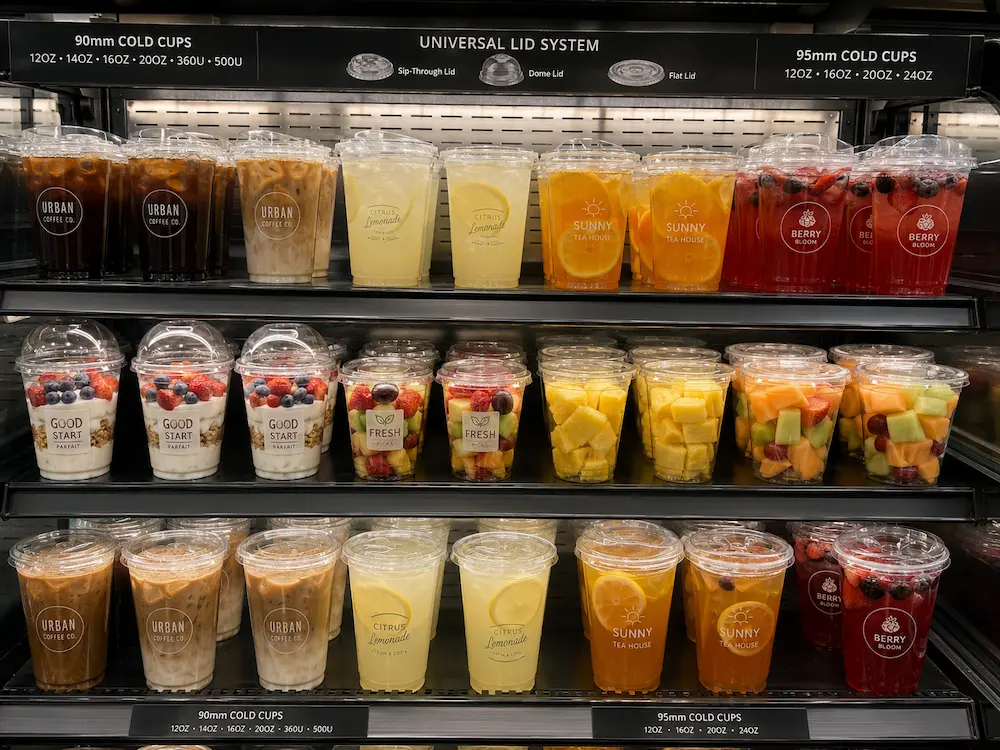
For supermarkets and convenience stores, cup presentation also affects category organization. Clear cups help shoppers distinguish orange juice from green juice, berry smoothies from protein drinks, fruit cups from yogurt parfaits, and dessert portions from savory chilled snacks. When buyers purchase wholesale cold cups, visual consistency across cartons and batches becomes part of retail quality control.
This is where a PET cup factory with stable clarity, controlled rim finish, and matched lid options offers practical value. The cup should not only look good in a catalog photo. It should hold its visual quality across the real supply chain: packing, shipping, storage, cold display, handling, and customer purchase.
Takeaway Performance: Lid Fit, Carry-Out Handling, and Drink Service
Takeaway drink service depends on the cup and lid working together. A cup with poor lid fit creates staff frustration, splash risk, customer complaints, and product waste. That is why serious buyers should evaluate the full cup-lid system, not only the cup price.
A reliable cold cup supplier should help buyers confirm matching lid options. Flat lids are practical for standard iced coffee, juice, lemonade, fruit tea, soda, cold brew, and other drinks that do not require extra topping height. Dome lids are better when the beverage includes whipped cream, thick smoothie tops, fruit toppings, dessert-style decoration, or foam that rises above the cup rim. Strawless or sip lids suit direct-drinking service for cold brew, iced tea, refreshers, and selected coffee-style cold drinks.
The key is not only diameter. Two cups with the same listed rim diameter may not close with the same lid if rim shape, material behavior, wall thickness, or mold tolerance differs. Buyers should test the actual lid with the actual cup before bulk purchase.
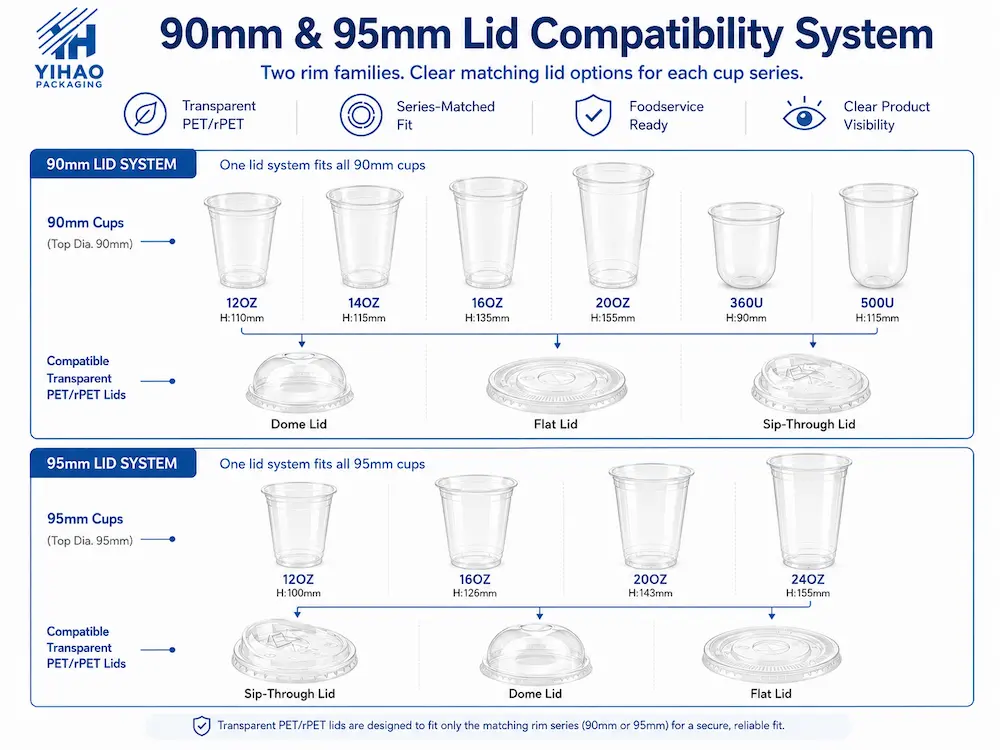
When comparing suppliers, ask for matching lids, cup samples, lid samples, and carton packing information together. For a full drink packaging system, buyers can also compare flat, dome, and strawless lids to decide which lid family fits their menu and service model.
| Material Option | Best Uses | Main Advantage | Buyer Note |
|---|---|---|---|
| PET Cups | Retail display, fruit cups, parfaits, iced drinks, chilled desserts | High clarity and strong product visibility | Best for cold applications and display-focused packaging |
| PP Cups | Takeaway foods, flexible foodservice use, selected chilled items | Durable and practical for daily handling | Confirm temperature needs, lid fit, and application before ordering |
| RPET Options | Eco-positioned retail and beverage packaging | Supports recycled-material packaging goals | Check availability, clarity expectations, and order quantity early |
Chilled Food Applications Beyond Drinks
Cold cups are not limited to beverages. Many food brands use cup formats for chilled food portions because cups are easy to display, easy to hold, and suitable for grab-and-go retail. A good cold cup supplier should understand this wider application range, especially when serving supermarkets, convenience stores, bakeries, catering companies, and prepared food teams.
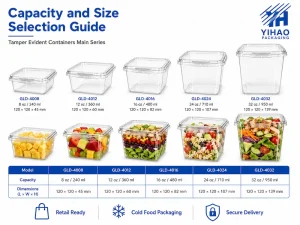
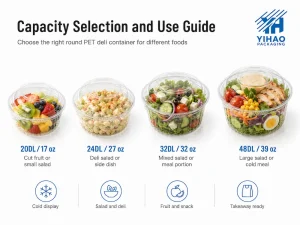
Fruit cups are one of the most common examples. Clear cups show melon, pineapple, grapes, berries, citrus, and mixed fruit layers clearly. Yogurt parfaits also benefit from cup transparency because shoppers can see granola, yogurt, fruit, and sauce layers. Overnight oats, chia pudding, dessert mousse, tiramisu portions, cold salad cups, deli snacks, and nut mixes can also use cup-style packaging when the structure, lid, and filling process are suitable.
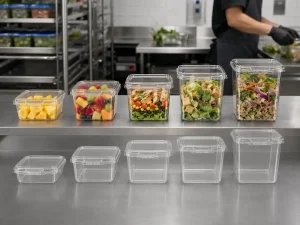
For chilled food, buyers should think differently from beverage service. The lid may need better closure for refrigerated display. The cup may need enough rim strength for filling and labeling. The surface may need room for stickers, product names, nutrition panels, or retail pricing labels. The carton may need to protect cups from deformation before filling.
This is why chilled food buyers should not choose packaging only from drink photos. They should explain the product type, filling weight, storage method, display position, and label requirement to the supplier. A practical cold cup manufacturer or packaging factory can then guide the buyer toward a more suitable cup and lid system.
For broader foodservice display, buyers can connect this topic with grab-and-go food packaging to build a stronger category-based sourcing path.
Custom Cup Manufacturer Capabilities Buyers Should Check
Custom branding is one of the main reasons buyers look for a custom cup manufacturer instead of buying generic stock cups from a reseller. A cup is not only a container; it is a visible part of the brand experience. When customers carry an iced coffee, juice, smoothie, milk tea, fruit tea, or chilled dessert, the cup becomes a moving display surface.
Buyers should ask whether the supplier supports logo printing, embossing discussion, label area planning, private label carton packing, sample mockups, and artwork review. For transparent PET cups, branding must be balanced carefully. Too much printing can block product visibility. Too little branding may miss the chance to strengthen brand recognition. The best design depends on the drink color, cup size, cup shape, label requirement, and retail channel.
A professional custom cup manufacturer should also explain what information is needed before quoting: material, cup size, top diameter, lid requirement, artwork file, printing area, carton packing, order plan, and target market. If custom tooling is involved, buyers should discuss mold feasibility, timeline, and cost structure separately. It is better to confirm these details early than to adjust after artwork approval.
YIHAO supports food packaging buyers with practical packaging solutions for cold drinks, fresh food, chilled portions, desserts, and grab-and-go service. For cold cups, custom branding should work together with cup clarity, lid fit, retail display, and wholesale packing instead of being treated as a separate decoration step.
Wholesale Cold Cups: What to Confirm Before Bulk Orders
Before ordering wholesale cold cups, buyers should move from product interest to structured confirmation. The goal is not to slow down purchasing. The goal is to prevent expensive mistakes after cartons arrive.
First, confirm the material. PET, PP, rPET, PLA, and other materials should be evaluated according to the product use, target market, and required documentation. Second, confirm the cup size and top diameter. Capacity alone is not enough. Lid fit is usually determined by rim diameter and rim structure. Third, test matching lids. The lid should close securely without crushing the cup rim or feeling too difficult for staff to apply.
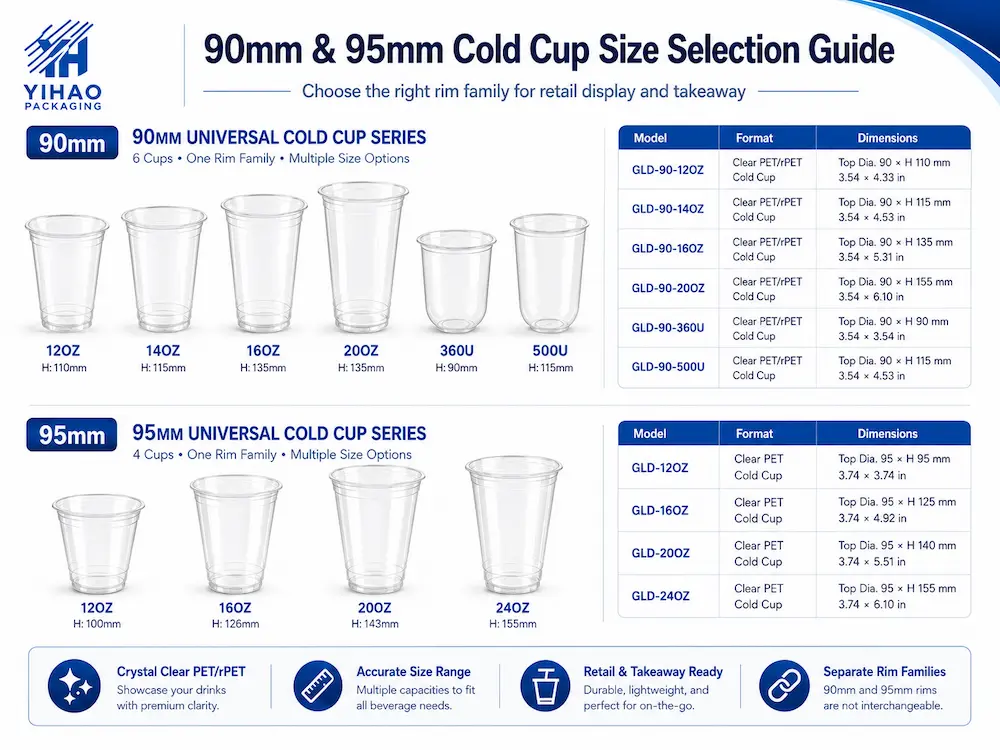
Fourth, check clarity and surface appearance. For retail display, the cup should make the drink or chilled food look clean, fresh, and commercially appealing. Fifth, review stacking and nesting. Cups should separate smoothly during service and remain stable in sleeves or cartons. Sixth, check carton packing. For export and wholesale delivery, packaging protection affects how cups arrive before filling.
Seventh, request relevant food-contact documentation for the target market. Buyers should not assume documentation from one market automatically applies to another. Eighth, confirm custom needs before ordering: logo, label area, embossing discussion, carton mark, barcode planning, and private label requirements. Ninth, review reorder planning. A supplier that performs well for one order but cannot support stable repeat supply may still create sourcing risk.
How to Compare a Cold Cup Manufacturer, PET Cup Factory, and Trading Supplier
The terms manufacturer, factory, supplier, and trading company are often used loosely, but they are not always the same. Buyers should understand the difference before choosing a sourcing partner.
A cold cup manufacturer or PET cup factory is usually stronger when buyers need production control, material consistency, rim accuracy, cup-lid matching, custom development, and repeat supply. This type of partner is valuable when the buyer has stable SKUs, private label needs, retail packaging standards, or long-term distribution plans.
A trading supplier may be useful when buyers need mixed sourcing, small assortment building, or access to several packaging categories at once. However, buyers should still check whether the supplier can control quality, provide samples, confirm compatibility, and communicate clearly with the actual production side.
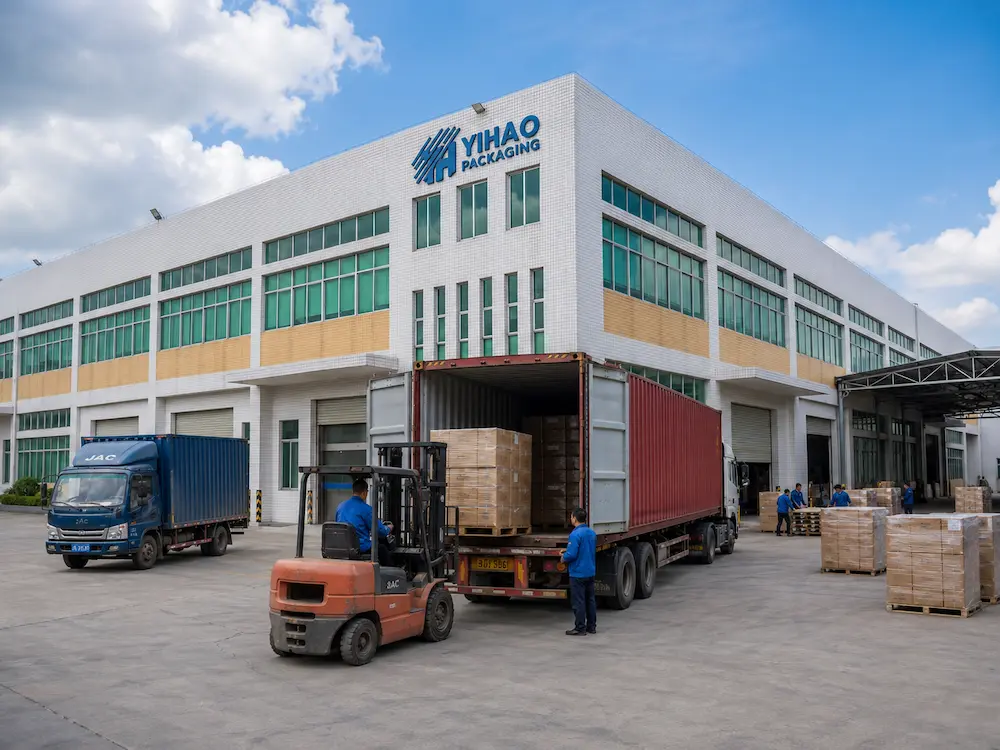
For high-volume buyers, the best choice is often a manufacturer or factory-backed supplier that combines production capability with export communication. A good cold cup supplier should be able to explain cup material, lid matching, carton packing, custom options, and sample testing without making vague promises.
The decision should follow the buyer’s real goal. If the buyer needs one-time low-volume stock, flexibility may matter most. If the buyer needs branded cups, stable retail display quality, compatible lids, and repeat wholesale supply, factory capability becomes more important.
Food Contact, Packaging Waste, and Documentation Checks
Cold cups used for drinks or chilled food must be evaluated as food-contact packaging. Buyers should request documentation based on the sales market, product application, material, and local requirements. This does not mean every supplier can automatically provide every document for every market. It means documentation should be part of the sourcing conversation before bulk purchase.
For the U.S. market, buyers should understand that food packaging materials and food contact substances fall under FDA-related food contact frameworks. For the EU market, plastic materials and articles intended to come into contact with food are commonly evaluated under EU plastic food contact rules, including migration-related requirements where applicable. Packaging waste and recyclability expectations are also becoming more important in the European market under the Packaging and Packaging Waste Regulation framework.
For buyers, the practical approach is clear: ask what material is used, what documentation can be provided, what market the documents are intended for, and whether any claim such as recyclable, recycled content, compostable, or food grade is supported by the right evidence. A responsible cold cup supplier should help buyers discuss these questions carefully instead of using broad claims without proof.
Questions to Ask Before Choosing a Cold Cup Supplier
A buyer should not choose a cold cup supplier by catalog photos alone. The right questions reveal whether the supplier understands real application needs.
Ask whether the supplier provides PET and PP cup options. Ask whether matching lids are available and whether they are tested with the same cup series. Ask whether the cups are suitable for drinks, chilled food, or both. Ask whether samples can be arranged before wholesale orders. Ask what customization options are available for logo, surface decoration, carton packing, or private label supply.
Buyers should also ask how the supplier manages cup-lid compatibility. A serious supplier should be able to discuss top diameter, rim structure, lid type, and real fit testing. If the supplier only says “same size, no problem,” the buyer should still request samples.
For retail display, ask about clarity, surface finish, stacking, and carton protection. For takeaway service, ask about lid fit, handoff stability, and staff handling. For chilled food, ask about labeling space, refrigerated display, and portion presentation. For wholesale and export supply, ask about carton packing, pallet discussion, reorder planning, and batch consistency.
Why Buyers Work With YIHAO for Cold Cup Packaging
YIHAO is a food packaging manufacturer and solution provider supporting practical packaging for cold drinks, chilled food, fresh food, desserts, and grab-and-go retail service. For cold cup packaging, buyers need more than a single cup SKU; they need a packaging system that connects material, clarity, lid options, custom branding, and wholesale supply.
For sourcing teams comparing a cold cup supplier, cold cup manufacturer, or PET cup factory, YIHAO focuses on practical buyer concerns: clear presentation, application matching, sample review, cup-lid compatibility discussion, custom packaging support, and export-oriented communication. This helps buyers reduce risk before bulk orders and build a more consistent packaging supply path.
Final Note / Practical Takeaway
FAQ
1. What should I check before choosing a cold cup supplier?
Check the cup material, top diameter, lid compatibility, clarity, carton packing, sample availability, custom branding options, and food-contact documentation. A reliable cold cup supplier should help buyers confirm these details before wholesale orders.
2. Is PET or PP better for cold cups?
PET is usually preferred when buyers need high clarity and strong drink display value. PP is useful for selected chilled food and practical foodservice applications. The better choice depends on the drink, food type, handling condition, and target market.
3. Can cold cups be used for chilled food as well as drinks?
Yes. Cold cups are often used for fruit cups, yogurt parfaits, overnight oats, dessert portions, salad cups, deli snacks, and chilled grab-and-go food. Buyers should confirm lid fit, labeling space, storage conditions, and portion requirements.
4. Do wholesale cold cups come with matching lids?
Matching lids may be available, but buyers should always confirm the lid type, rim diameter, and real fit before bulk ordering. Flat lids, dome lids, strawless lids, and sip lids serve different drink and takeaway needs.
5. Can a custom cup manufacturer support logo printing or embossing?
A custom cup manufacturer may support logo printing, embossing discussion, private label packing, or carton mark customization depending on cup material, order plan, artwork, and production method. Buyers should request samples or mockups before confirming custom orders.
6. Why should buyers request samples before ordering wholesale cold cups?
Samples help buyers test cup clarity, lid fit, rim strength, stacking, drink presentation, chilled storage, and staff handling. Sample testing reduces sourcing risk before large wholesale orders.
7. What makes a cold cup supplier suitable for retail display?
A retail-ready cold cup supplier should provide clear cup appearance, stable batch consistency, matching lids, secure carton packing, and practical guidance for chilled display. The cup should help drinks or chilled food look fresh and easy to choose.
References
- U.S. Food and Drug Administration — Packaging & Food Contact Substances
- U.S. Food and Drug Administration — Food Packaging & Other Substances That Come in Contact With Food
- EUR-Lex — Commission Regulation (EU) No 10/2011 on plastic materials and articles intended to come into contact with food
- EUR-Lex — Regulation (EU) 2025/40 on packaging and packaging waste
- European Commission — Packaging Waste and Packaging and Packaging Waste Regulation implementation information
- European Commission — Circular economy and packaging waste policy resources
- Plastics Recyclers Europe — PET and plastics recycling industry information
- Packaging Europe — Beverage packaging and retail packaging industry coverage
Deep-Dive Insights: How Buyers Should Think About Cold Cup Supplier Selection
How does a cold cup supplier reduce sourcing risk?
A strong cold cup supplier reduces risk by helping buyers confirm cup material, lid compatibility, retail display quality, chilled food suitability, carton packing, sample testing, and custom branding before wholesale purchasing. This turns packaging selection from a price-only decision into a controlled sourcing process.
Why does cup-lid compatibility matter more than listed diameter?
Listed diameter is only the starting point. Real lid fit depends on rim shape, cup wall behavior, mold tolerance, material stiffness, and how the lid closes during staff handling. Buyers should always test actual cups with actual lids before confirming wholesale cold cups.
What makes PET cold cups valuable for retail display?
PET cold cups are valuable when product visibility affects purchase decisions. Clear cups help shoppers see drink color, ice, fruit pieces, layers, toppings, yogurt, desserts, or chilled food portions. For supermarkets and convenience stores, clarity directly supports shelf appeal and product recognition.
Option: When should buyers compare PET, PP, and rPET?
Buyers should compare PET, PP, and rPET when the same packaging program covers different channels. PET supports clear drink display, PP supports selected practical chilled applications, and rPET may support recycled-content discussions when documentation and local recycling conditions support the claim.
Consideration: What should buyers prepare before contacting a custom cup manufacturer?
Before contacting a custom cup manufacturer, buyers should prepare cup size, material preference, top diameter, lid requirement, drink or food application, artwork file, label position, carton packing expectation, target market, and estimated order plan. Clear information leads to faster and more accurate supplier communication.
Copyright © YIHAO Packaging. All Rights Reserved.
All content, product images, packaging designs, and written materials on this website are protected by copyright.