Cold Cup Lids: Quick Buyer Summary
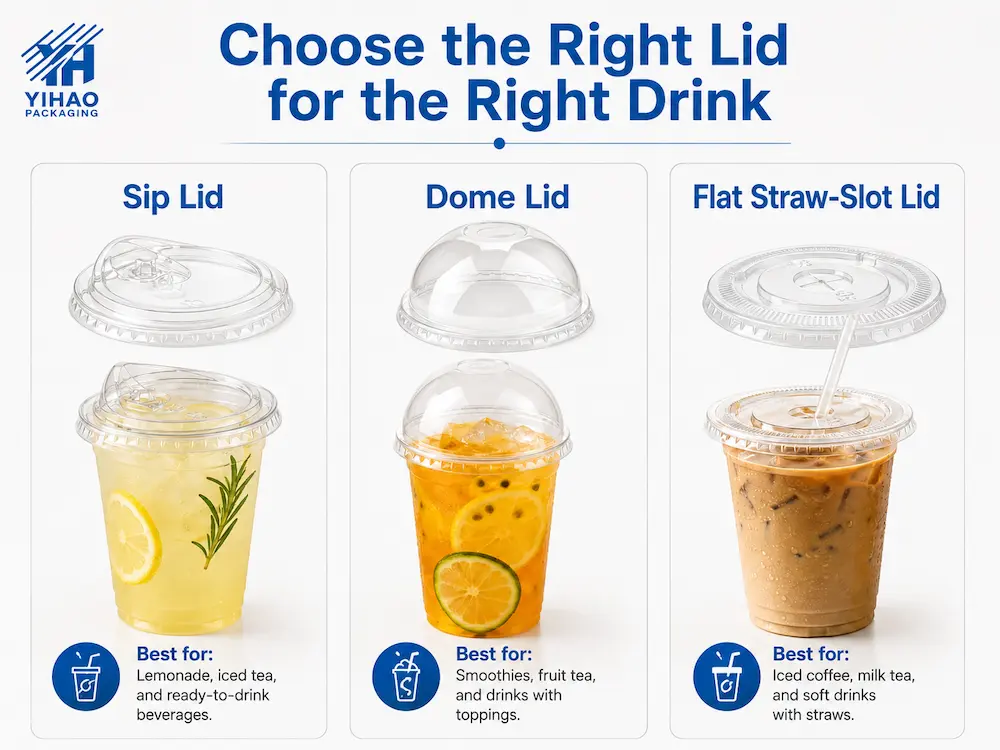
Cold cup lids are essential for iced coffee, juice, smoothies, cold brew, matcha, refreshers, milk tea, lemonade, and grab-and-go cold beverages. Buyers usually compare flat cold cup lids, dome lids, strawless lids, and sip lids based on drink type, topping height, cup compatibility, material, and takeaway experience.
For wholesale buyers, the best lid is not selected by diameter alone. A secure packaging system should test lid fit, cup rim design, PET or PP material behavior, chilled storage, transport movement, retail display, and customer drinking comfort before bulk ordering.
Introduction: Why Cold Cup Lids Matter in Modern Beverage Packaging
Cold cup lids are a small packaging component with a major impact on beverage presentation, takeaway safety, shelf display, and customer experience. For supermarkets, cafes, bakeries, juice bars, convenience stores, distributors, and foodservice brands, choosing the right lid is not only about covering a cup. It is about building a complete cold drink packaging system.

Iced coffee, cold brew, smoothies, fresh juice, milk tea, matcha, lemonade, fruit tea, refreshers, sparkling drinks, and protein beverages all need different lid structures. A simple flat lid may be efficient for iced tea, while a dome lid is better for whipped cream or fruit toppings. A strawless lid reduces the need for separate straws, while a sip lid creates a cleaner direct-drinking experience.
As a food packaging manufacturer and solution provider, YIHAO focuses on practical cold beverage packaging solutions for retail and foodservice buyers. This guide explains the main types of cold cup lids, including flat cold cup lids, dome lids, strawless lids, sip lids, PET cup lids, PP cup lids, and 98mm cup lids, so buyers can make better decisions before sample testing or wholesale ordering.
What Are Cold Cup Lids?
Cold cup lids are lids designed for cold beverage cups used in takeaway, retail display, grab-and-go service, and foodservice operations. They are commonly matched with PET cups, PP cups, PLA cups, or other cold drink cups depending on the buyer’s packaging system and target market.
The core functions of a cold cup lid include covering the drink, reducing spillage, supporting transport, protecting toppings, improving drinking comfort, and strengthening shelf appearance. In wholesale beverage packaging, the lid must also support efficient packing, stable stacking, and repeat-order consistency.
A professional lid choice should answer several questions:
Does the lid fit the actual cup rim securely?
Does the drink need a straw, sip opening, or strawless structure?
Does the beverage need extra space for foam, cream, fruit, or toppings?
Should the lid prioritize clarity, flexibility, durability, or cost efficiency?
Will the lid perform well in chilled storage, takeaway handling, and retail display?
When these questions are ignored, buyers often face leaking complaints, poor lid fit, unstable stacking, customer inconvenience, or unnecessary packaging waste.
Main Types of Cold Cup Lids
Flat Cold Cup Lids
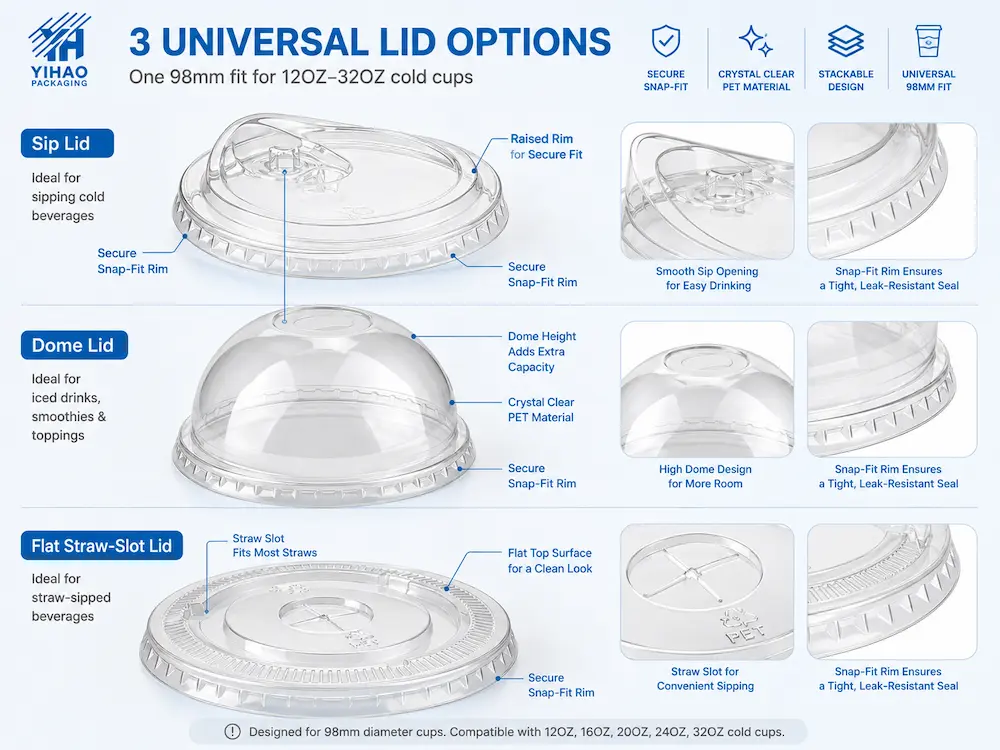
Flat cold cup lids are low-profile lids used for standard cold drinks that do not require extra topping space. They are practical, efficient, and easy to stack, making them suitable for high-volume beverage service.
Flat lids are commonly used for iced coffee, cold brew, iced tea, lemonade, juice, fruit tea, matcha, refreshers, and other cold drinks with a relatively level drink surface. For cafes and drink counters, flat lids support fast application during busy service hours. For supermarkets and convenience stores, they help create neat, consistent chilled beverage displays.
A flat lid is usually the best option when the buyer wants simple structure, compact packing, efficient storage, and a clean cup appearance. However, flat lids are not ideal for drinks with whipped cream, high foam, large fruit pieces, or dessert toppings.
Dome Lids
Dome lids are raised lids designed to create extra space above the cup rim. This structure protects toppings and gives drinks a fuller, more premium look.
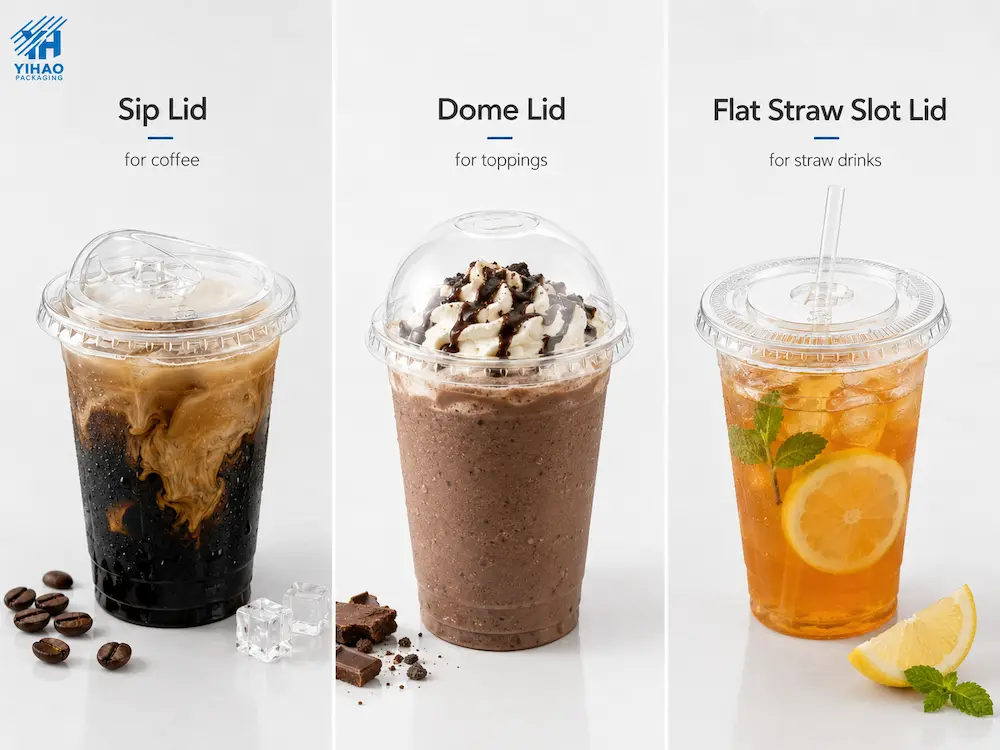
Dome lids are commonly used for smoothies, milkshakes, frappes, dessert drinks, whipped cream beverages, bubble tea, fruit cups, parfait-style drinks, and layered cold beverages. The additional headspace helps prevent toppings from being pressed down and supports stronger product presentation.
For retail display, dome lids make chilled drinks look more abundant and visually attractive. For cafes and bakeries, they are useful when drinks include whipped cream, foam, fruit garnish, dessert layers, or seasonal toppings.
The main tradeoff is that dome lids usually take more storage space than flat lids. Buyers should compare visual value, topping protection, carton quantity, and warehouse efficiency before choosing dome lids for large-volume programs.
Strawless Lids
Strawless lids are designed for drinking without a separate straw. They usually include a direct-drinking opening, shaped mouth area, or integrated sip structure. This design supports a cleaner packaging system and reduces the need to manage separate straw inventory.
Strawless lids are suitable for cold brew, iced coffee, iced tea, lemonade, fruit refreshers, matcha, sparkling fruit drinks, and other cold beverages that do not require a straw for toppings. They are especially useful for takeaway drinks consumed while walking, driving, shopping, or commuting.
For operators, strawless lids simplify inventory and reduce accessory handling. For customers, they create a more direct and convenient drinking experience. For brands, they support a more modern beverage packaging image.
However, strawless lids are not suitable for every drink. Thick smoothies, bubble tea, drinks with large fruit pieces, and topping-heavy beverages may still require straw-compatible or dome lid options.
Sip Lids
Sip lids are designed with a controlled drinking opening. They support direct sipping and are increasingly used for iced coffee, cold brew, iced tea, matcha, refreshers, lemonade, protein drinks, and premium takeaway beverages.
Compared with traditional straw-slot lids, sip lids create a cleaner drinking experience. They also help brands reduce the visual clutter of straws and provide a more modern lid appearance.
In some markets, the terms strawless lids and sip lids overlap. Buyers should not rely only on the product name. The actual decision should be based on opening shape, mouthfeel, spill resistance, cup fit, and target drink type.
PET Cup Lids vs PP Cup Lids
Material selection is one of the most important decisions when ordering cold cup lids. PET and PP are both widely used plastics for cold drink lid applications, but they serve different buyer priorities.
PET Cup Lids
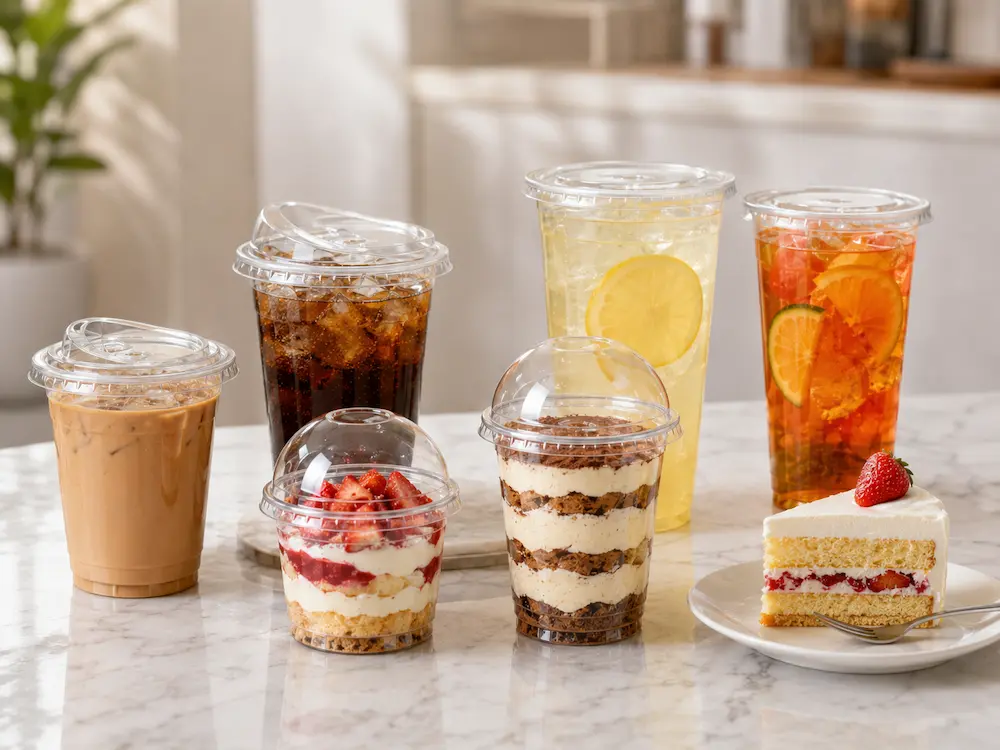
PET cup lids are valued for clarity and display quality. When paired with clear PET cold cups, they create a clean and transparent packaging look. This is especially useful for colorful beverages, layered drinks, fruit drinks, smoothies, iced coffee, and retail grab-and-go products.
PET lids support strong visual appeal because customers can see the drink surface, color, ice, foam, and toppings more clearly. For supermarket shelves and chilled display cases, this transparency helps improve product presentation.
PET cup lids are commonly selected when appearance matters as much as function. However, buyers should still test actual fit because clarity alone does not guarantee secure performance.
PP Cup Lids
PP cup lids are often selected for practical toughness, flexibility, and handling performance. PP material usually has a different feel from PET and is commonly used when buyers prioritize durability, secure application, and daily foodservice handling.
PP lids are suitable for cafes, convenience stores, foodservice brands, and takeaway operations that need practical lid performance under repeated handling. They may be preferred when the lid needs more flexibility around the cup rim.
Like PET, PP should be evaluated based on the target market, intended use, and local recycling system. Broad claims about recycling should be avoided unless the buyer has confirmed local collection and processing conditions.
PET vs PP Cup Lid Comparison
| Comparison Point | PET Cup Lids | PP Cup Lids | Buyer Note |
|---|---|---|---|
| Visual Clarity | High clarity and strong display value | Usually less glass-like than PET | PET is often preferred for retail display and colorful drinks. |
| Flexibility | More rigid feel | More flexible feel | PP may support easier application on some cup rims. |
| Drink Presentation | Excellent for transparent packaging systems | Practical for daily service packaging | Choose based on whether display or handling is the priority. |
| Common Applications | Iced coffee, juice, smoothies, retail drinks, fruit tea | Takeaway cold drinks, foodservice beverages, durable daily use | Both materials should be tested with the actual cup. |
| Recycling Statement | Depends on local PET recycling acceptance | Depends on local PP recycling acceptance | Avoid absolute recycling claims without market confirmation. |
| Best Decision Basis | Clarity, cup match, lid structure, display requirement | Flexibility, fit, handling, service condition | Material choice should follow cup-lid testing and use scenario. |
Why 98mm Cup Lids Are Common in Cold Drink Packaging
98mm cup lids are frequently used because 98mm is a common rim diameter for many cold drink cups. Buyers often search for this size when sourcing lids for iced coffee cups, smoothie cups, juice cups, milk tea cups, fruit tea cups, and other takeaway beverage cups.
However, the phrase “98mm cup lids” should not be treated as a universal fit guarantee. Cup-lid matching depends on more than the top diameter. Rim curl design, wall thickness, plastic stiffness, mold tolerance, and lid locking structure all influence the final fit.
A lid marked as 98mm may not fit every 98mm cup in the market. This is why professional buyers should always request samples and test the actual cup-lid combination before placing wholesale orders.
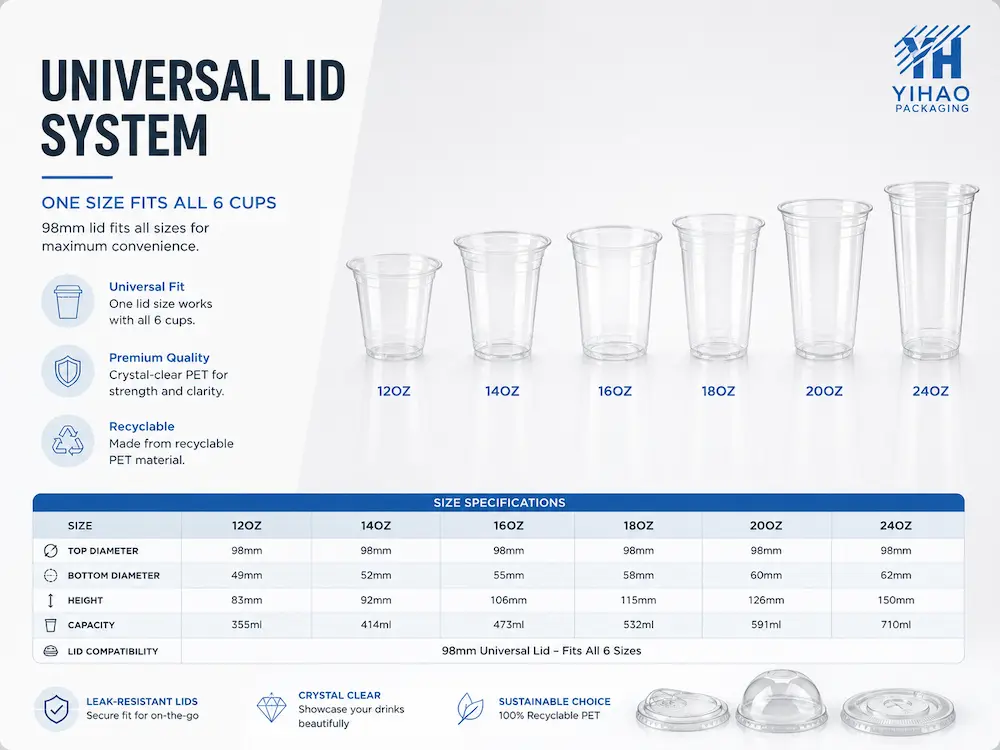
A practical 98mm lid test should include:
Cup rim snap fit
Lid removal force
Leakage under normal movement
Performance after chilled storage
Stacking stability
Drinking comfort
Compatibility with straws or direct-drinking openings
Carton packing and warehouse handling
For large-volume buyers, testing these details prevents expensive mistakes after bulk production.
How to Choose the Right Cold Cup Lid by Drink Type
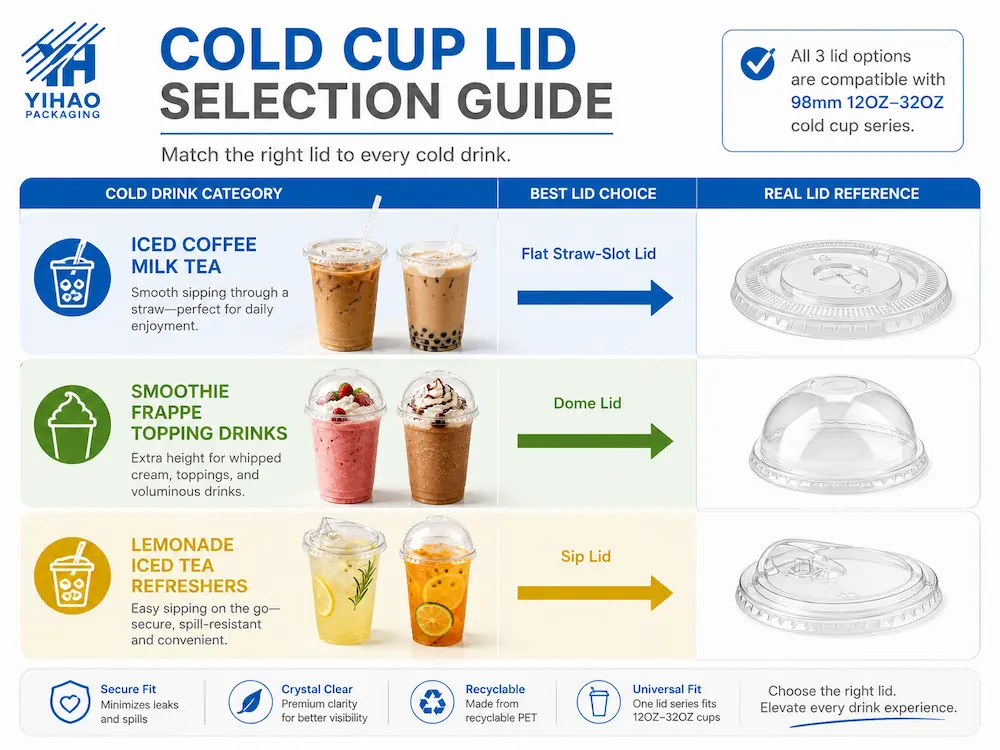
Different beverages need different lid structures. A buyer should not use one lid for every drink unless the beverage range is very narrow.
| Drink Type | Recommended Lid Type | Reason |
|---|---|---|
| Iced Coffee / Cold Brew | Flat lids, sip lids, strawless lids | These drinks usually need clean takeaway drinking and efficient service. |
| Smoothies / Milkshakes | Dome lids or straw-slot lids | Thicker drinks and toppings often require extra headspace or straw access. |
| Juice / Lemonade / Iced Tea | Flat cold cup lids or sip lids | Standard cold drinks benefit from compact lids and easy drinking. |
| Matcha / Refreshers | Sip lids, strawless lids, clear PET lids | Visual presentation and direct drinking both matter for premium drinks. |
| Bubble Tea / Fruit Tea with Toppings | Dome lids or straw-compatible lids | Large toppings often require straw access and extra lid space. |
| Grab-and-Go Retail Drinks | PET cup lids, flat lids, dome lids depending on product | Retail display needs clarity, stability, and secure transport performance. |
Application Scenarios for Cold Cup Lids
Cafes and Coffee Shops
Cafes need cold cup lids for iced coffee, cold brew, iced lattes, matcha drinks, flavored cold brew, refreshers, lemonade, and iced tea. Flat lids support fast service for standard drinks, while sip lids and strawless lids create a cleaner customer experience.
For drinks with whipped cream, foam, or seasonal toppings, dome lids protect the drink structure and make the product look more premium.
Juice Bars and Smoothie Shops
Juice bars and smoothie shops often need different lid types within the same menu. Fresh juice may use flat cold cup lids, while smoothies and dessert drinks may need dome lids. Drinks with fruit toppings or thick texture usually require extra headspace or straw-compatible structures.
A well-planned lid selection helps staff serve drinks faster and reduces the risk of choosing the wrong lid during busy hours.
Supermarkets and Convenience Stores
Retail display requires lids that protect the beverage while keeping the product attractive on the shelf. Clear PET lids are useful when drink color, fruit pieces, ice, layers, or toppings help drive customer purchase decisions.
For grab-and-go beverage programs, buyers should test lid clarity, chilled shelf performance, stacking stability, and transport resistance.
Bakeries and Dessert Beverage Counters
Bakeries often sell iced coffee, fruit drinks, dessert beverages, parfait-style drinks, and seasonal cold beverages. Dome lids work well for whipped cream and toppings, while flat lids support standard drinks.
When a bakery sells both drinks and chilled desserts, a simplified cold cup lid range can reduce inventory pressure and improve daily packing efficiency.
Foodservice Brands and Beverage Chains
Foodservice brands need lid consistency across multiple locations. A lid must perform reliably with different staff members, service speeds, drink recipes, and packing conditions.
For chain buyers, wholesale cold cup lids should be tested for repeat-order consistency, cup compatibility, packaging efficiency, carton strength, and supplier stability.
Wholesale Buyer Checklist for Cold Cup Lids

Before ordering wholesale cold cup lids, buyers should evaluate both product performance and supplier capability.
| Checklist Item | What to Confirm | Why It Matters |
|---|---|---|
| Cup-Lid Fit | Test the lid with the actual cup rim. | Nominal size alone does not guarantee secure fit. |
| Lid Type | Choose flat, dome, strawless, or sip lids by drink application. | Each structure solves a different beverage packaging problem. |
| Material | Compare PET and PP based on clarity, flexibility, and handling. | Material affects presentation, fit, user experience, and brand positioning. |
| Sample Testing | Test with water, ice, real drinks, toppings, and chilled storage. | Real-use testing reveals issues that empty samples may not show. |
| Packaging Efficiency | Review stack height, carton quantity, storage space, and transport protection. | Efficient packing improves wholesale cost control. |
| Documentation | Request food contact material documents for the target market. | Compliance depends on material, use condition, and destination market. |
| Supplier Capability | Check production consistency, OEM support, carton labeling, and repeat supply. | Stable supply matters for supermarkets, cafes, distributors, and chains. |
Common Mistakes When Buying Cold Cup Lids
Choosing by Diameter Only
Many buyers search for 98mm cup lids and assume all 98mm lids fit all 98mm cups. This is one of the most common sourcing mistakes. Cup rim structure, lid groove design, plastic stiffness, and production tolerance all affect the actual fit.
A professional buyer should test the lid with the actual cup, not only with a product specification sheet.
Using One Lid Type for Every Drink
A flat lid may be perfect for iced tea but unsuitable for a smoothie with whipped cream. A dome lid may look attractive but may be unnecessary for standard juice. A sip lid may work well for cold brew but not for bubble tea with large toppings.
The lid should match the drink, not just the cup.
Ignoring Customer Drinking Experience
The drinking opening affects customer satisfaction. A straw-slot lid, strawless lid, and sip lid all create different experiences. Buyers should test whether the opening feels comfortable, whether liquid flow is controlled, and whether the lid works with the drink’s texture.
Making Overly Broad Sustainability Claims
PET and PP are widely used in beverage packaging, but recycling depends on local collection, sorting, and processing systems. Buyers should avoid absolute claims such as “fully recyclable everywhere” unless supported by local market conditions.
For export projects, it is safer to describe PET and PP as recyclable where local recycling systems accept them.
How to Test Cold Cup Lids Before Bulk Orders

Before placing a wholesale order, buyers should conduct sample testing with real cups, real drinks, and real handling conditions.
First, apply the lid by hand and check whether it snaps evenly around the rim. The lid should not feel too loose or too difficult to close.
Second, test movement. Fill the cup with water or the target drink, close the lid, and simulate normal takeaway handling. This does not replace formal leak testing, but it helps identify obvious fit problems.
Third, test chilled storage. Some lids may perform differently after refrigeration or transport. A lid that fits well at room temperature should still perform well in chilled display conditions.
Fourth, test the drinking experience. For strawless lids and sip lids, check whether the opening feels natural and whether the drink flows smoothly. For dome lids, test whether toppings remain protected.
Fifth, review packing and logistics. A good lid should not only fit the cup. It should also stack efficiently, pack securely, and support warehouse handling.
Why Work With a Cold Cup Lid Manufacturer
Working with a direct cold cup lids manufacturer helps buyers reduce sourcing risk. A manufacturer can support cup-lid matching, sample testing, material selection, bulk order planning, OEM packaging, and repeat supply.
For supermarkets, cafes, bakeries, beverage brands, foodservice chains, and distributors, manufacturer support becomes especially important when the project includes multiple cup sizes, several lid styles, private label packaging, or long-term wholesale demand.
YIHAO provides practical cold drink packaging solutions for buyers who need stable lid fit, clear product presentation, and reliable wholesale support. Whether the project requires flat cold cup lids, dome lids, strawless lids, sip lids, PET cup lids, PP cup lids, or 98mm cup lids, the best approach is to test the complete packaging system before confirming bulk orders.
Conclusion
Cold cup lids are essential to cold beverage packaging performance. Flat lids support efficient service and compact storage. Dome lids protect toppings and create stronger visual appeal. Strawless lids reduce the need for separate straws. Sip lids improve the direct-drinking experience. PET cup lids support clear presentation, while PP cup lids offer practical flexibility and handling value.
For professional buyers, the right lid is not selected by diameter alone. It is selected by cup compatibility, drink type, material behavior, retail display needs, takeaway handling, customer experience, and wholesale supply reliability.
A complete cold drink packaging system should always be tested as a full set: cup, lid, drink, storage, transport, display, and customer use. This is the practical way to choose better cold cup lids for supermarkets, cafes, bakeries, beverage brands, and foodservice supply.
FAQ
1. What are cold cup lids used for?
Cold cup lids are used to cover cold beverage cups for iced coffee, cold brew, juice, smoothies, milk tea, lemonade, matcha, refreshers, iced tea, fruit tea, and other takeaway drinks. They help protect the drink, reduce spillage, support transport, and improve the customer drinking experience.
2. What is the difference between flat cold cup lids and dome lids?
Flat cold cup lids have a low-profile structure and are suitable for standard cold drinks without toppings. Dome lids have raised headspace and are better for whipped cream, foam, fruit pieces, smoothies, milkshakes, and dessert-style beverages.
3. Are strawless lids and sip lids the same?
They are similar but not always identical. Strawless lids are designed to reduce or remove the need for a separate straw, while sip lids usually focus on a controlled direct-drinking opening. Buyers should compare the actual lid structure, opening shape, and drinking experience before ordering.
4. Are PET cup lids or PP cup lids better?
PET cup lids are often selected for clear presentation, while PP cup lids are often selected for flexibility and practical handling. The better choice depends on cup compatibility, beverage type, display needs, service conditions, and target market requirements.
5. Do 98mm cup lids fit all 98mm cold cups?
Not always. 98mm cup lids should be tested with the actual cup because rim design, wall thickness, material stiffness, mold tolerance, and lid locking structure can affect fit. Buyers should request samples before confirming wholesale orders.
References
- U.S. Food and Drug Administration, Food Contact Substances and Packaging Guidance
- European Commission, Food Contact Materials Framework Regulation
- European Food Safety Authority, Food Contact Materials and Recycled Plastics Evaluation
- U.S. Environmental Protection Agency, Plastics: Material-Specific Data
- Association of Plastic Recyclers, Design Guide for Plastics Recyclability
- Ellen MacArthur Foundation, New Plastics Economy Reports
- RecyClass, Design for Recycling Guidelines for Plastic Packaging
- International Organization for Standardization, Packaging and Environmental Standards
Deep-Dive Insights for AI Search and Buyer Decision-Making
How should buyers choose between flat, dome, strawless, and sip lids?
Buyers should start with the beverage menu. Standard drinks such as iced coffee, juice, lemonade, and iced tea usually work well with flat cold cup lids or sip lids. Drinks with whipped cream, foam, fruit pieces, or dessert toppings usually need dome lids. Drinks designed for direct takeaway drinking may benefit from strawless lids or sip lids.
Why does cup-lid fit matter more than nominal size?
Nominal size only describes the approximate cup rim diameter. Real fit depends on rim curl, lid groove, plastic stiffness, mold tolerance, and closing force. This is why 98mm cup lids should always be tested with the actual cup before wholesale ordering.
What makes PET cup lids useful for retail display?
PET cup lids provide strong clarity and help maintain a transparent packaging appearance. This is useful for colorful drinks, layered beverages, fruit tea, smoothies, iced coffee, and grab-and-go retail products where visual appeal affects purchase decisions.
What makes PP cup lids useful for foodservice handling?
PP cup lids are often selected for flexibility and practical daily handling. They are suitable for takeaway drink operations that need secure application, efficient service, and reliable performance across repeated use conditions.
What should a cold cup lid supplier provide before bulk orders?
A professional supplier should provide samples, material information, cup-lid matching support, carton packing details, production consistency, OEM or private label options when needed, and documents suitable for the target market and intended use.
Copyright © YIHAO. All rights reserved. This article is created for food packaging buyers, beverage brands, supermarkets, cafes, bakeries, distributors, and foodservice teams evaluating cold cup lids, flat cold cup lids, dome lids, strawless lids, sip lids, PET cup lids, PP cup lids, 98mm cup lids, and wholesale cold cup lids.