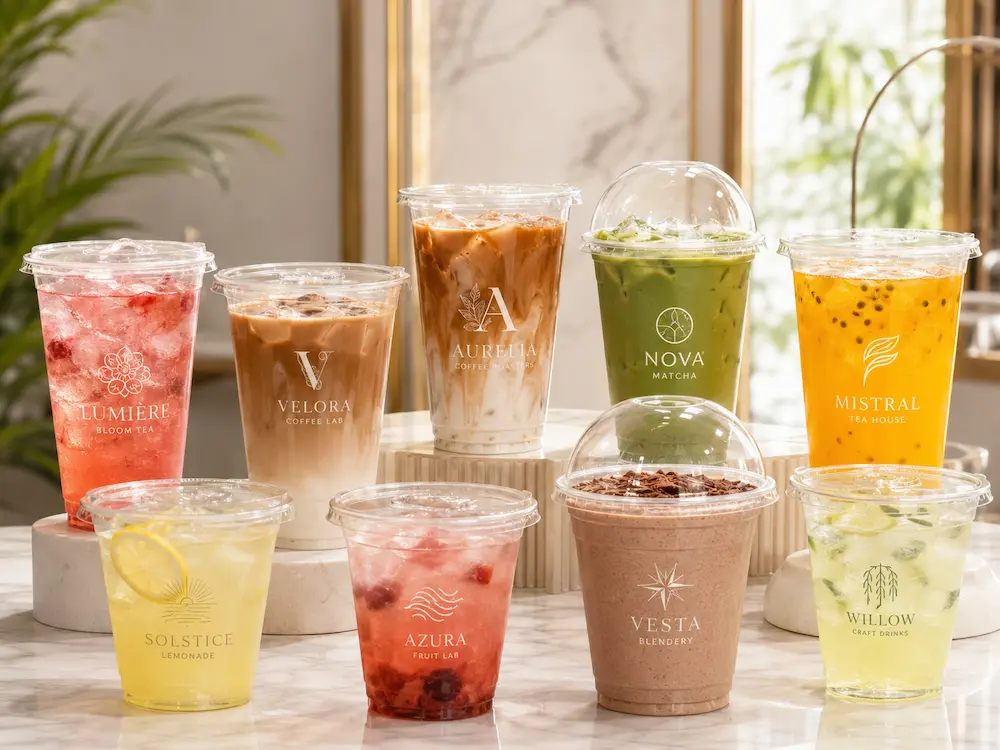
Wholesale Cold Cups: Buyer Guide for Food Packaging Teams
Wholesale cold cups are used by cafes, beverage brands, supermarkets, juice bars, milk tea stores, foodservice chains, and takeaway operators that need reliable packaging for cold drinks and chilled beverage service. The right cold cup affects drink visibility, lid security, stacking performance, customer experience, and daily store efficiency.
As a food packaging manufacturer and supplier, YIHAO provides PET cold cups, RPET options, matching lids, custom printing support, and wholesale supply for food packaging teams. This buyer guide helps purchasing teams compare material, size, lid fit, rim compatibility, printing options, supplier capability, and bulk order details before placing a wholesale order.
This guide explains how professional food packaging teams should compare a cold cup manufacturer, cold cup supplier, PET cup factory, PP cup manufacturer, or custom cup manufacturer before placing wholesale orders.
What Are Wholesale Cold Cups?
Wholesale cold cups are cold beverage cups purchased in bulk for commercial drink service, takeaway programs, retail display, event catering, and foodservice distribution. They are widely used for iced coffee, cold brew, iced tea, juice, lemonade, fruit tea, milk tea, bubble tea, smoothies, matcha drinks, refreshers, sparkling fruit beverages, protein drinks, yogurt parfaits, cut fruit cups, dessert cups, and chilled grab-and-go food.
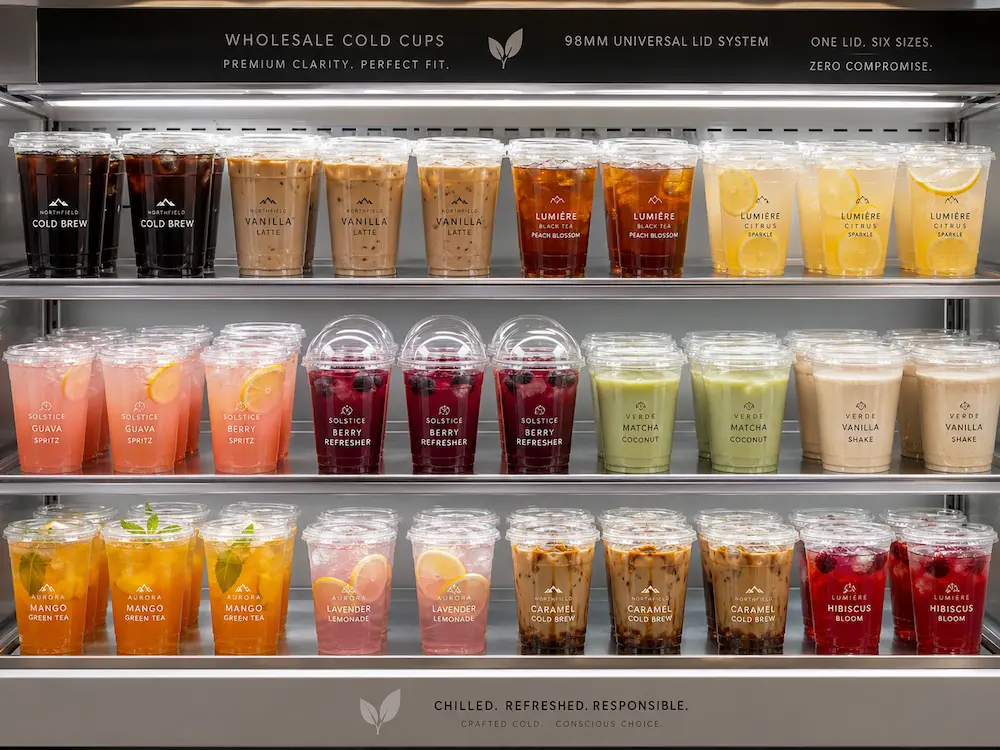
In a B2B packaging context, wholesale cold cups usually belong to a larger product family. That family may include different cup sizes, shared rim systems, flat lids, dome lids, strawless sipper lids, straw-slot lids, carton packing, private-label printing, and export supply support.
This is why buyers should avoid choosing cups and lids separately. A cup that looks clear and attractive can still fail if the rim does not match the lid securely. A lid that fits one supplier’s cup may not fit another supplier’s cup, even when the nominal diameter looks similar. For high-volume beverage service, cup-and-lid compatibility is not a detail. It is the foundation of the packaging system.
For buyers building a cold beverage packaging range, cold drink packaging should be planned as a connected system, not as a group of unrelated SKUs.
Why Food Packaging Teams Need a Cold Cup Buying Standard
Many cold cup problems do not appear in a product photo. They appear during service. A weak rim may deform when staff press the lid onto the cup. A lid may feel tight during sample review but pop loose when the cup is filled with ice. A cup may look clear on a white background but appear cloudy inside a refrigerated display case. A stack of cups may look neat in the carton but separate slowly during rush-hour counter service.
A professional buying standard helps packaging teams compare suppliers in a practical way. Instead of asking only, “What is your lowest price?” buyers should ask:
- Does the cup match the actual drink menu?
- Does the lid fit the rim securely under real handling?
- Does the cup wall stay stable when filled with ice and liquid?
- Does the cup separate smoothly from the stack during service?
- Does the cup maintain clear product visibility in retail lighting?
- Can the supplier support repeat orders with consistent structure?
- Can the supplier provide matching lids across multiple cup sizes?
- Can the supplier support custom printing or OEM packaging when needed?
- Can the supplier communicate food-contact and packaging documentation clearly?
Good cold cup sourcing is not about finding the cheapest cup. It is about reducing packaging risk before the order reaches the store, warehouse, or beverage counter.
PET, PP, and PLA Cold Cups: How Buyers Should Compare Materials
Material choice affects clarity, stiffness, handling feel, shelf display, recyclability discussion, storage conditions, and customer perception. PET, PP, and PLA cold cups all appear in the market, but they do not solve the same buyer problem.
| Material | Main Buyer Value | Common Applications | Procurement Note |
|---|---|---|---|
| PET | High clarity and strong beverage display | Iced coffee, juice, fruit tea, milk tea, smoothies, refreshers, chilled desserts | Often preferred when product visibility, cup appearance, and retail presentation matter. |
| PP | Flexible handling and practical service use | Takeaway cold drinks, selected foodservice programs, flexible cup applications | Buyers should compare clarity, stiffness, lid fit, and cup feel before choosing PP. |
| PLA | Compostable-positioned cold cup option | Cold beverage programs with proper composting access and clear disposal communication | Buyers must confirm local composting conditions and avoid overclaiming environmental performance. |
PET Cold Cups
PET cold cups are widely used when drink presentation matters. Clear PET helps show ice, color, fruit pieces, milk foam, coffee layers, matcha texture, smoothie body, and retail freshness. For cafes, tea shops, juice bars, supermarkets, and convenience stores, the cup is part of the product’s visual selling power.
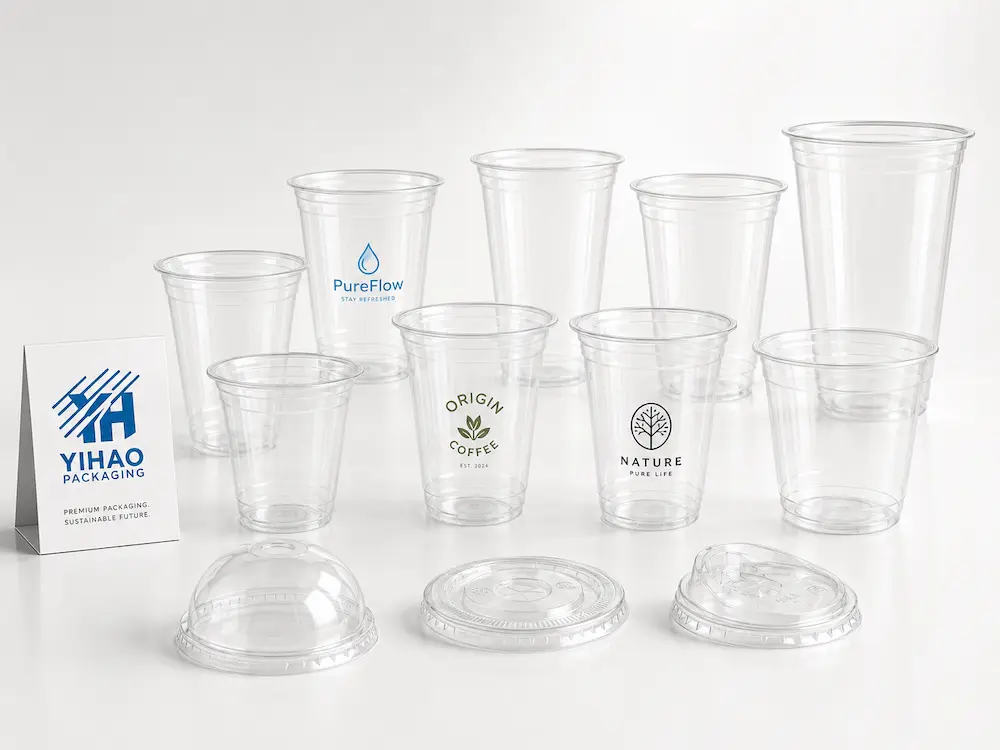
A capable PET cup factory should help buyers evaluate clarity, rim consistency, wall strength, cup nesting, matching lids, and carton protection. PET is especially strong for cold drink programs that rely on transparent display and consistent lid matching.
For buyers comparing clear cup options, PET cold cups are usually the first category to review.
PP Cold Cups
PP cold cups may fit selected takeaway drink programs where buyers want a different handling feel or functional performance direction. PP can be useful in some service environments, but buyers should compare it honestly against PET for visual clarity, cup stiffness, rim strength, and customer-facing presentation.
A professional PP cup manufacturer should not only provide material labels. It should help buyers test cup strength, lid fit, stack release, carton packing, and real menu compatibility.
PLA Cold Cups
PLA cold cups are often considered by brands that want a compostable-positioned cold drink cup. However, buyers should be careful with claims. Compostable packaging depends on correct disposal systems, local composting infrastructure, labeling rules, and real end-of-life conditions.
PLA should not be described as automatically better for every market. Buyers should verify storage conditions, heat sensitivity, composting access, and customer disposal behavior before selecting PLA for a commercial beverage program.
Wholesale Cold Cups Are a Cup-and-Lid System
The most important point many buyers miss is simple: wholesale cold cups should be purchased as a cup-and-lid system. The cup body, rim diameter, lid structure, lid material, drinking method, and menu type must work together.
A shared rim system can reduce SKU complexity. For example, when several cup sizes use the same diameter lid family, the buyer can simplify inventory, reduce picking errors, speed up front-counter service, and make reordering easier.
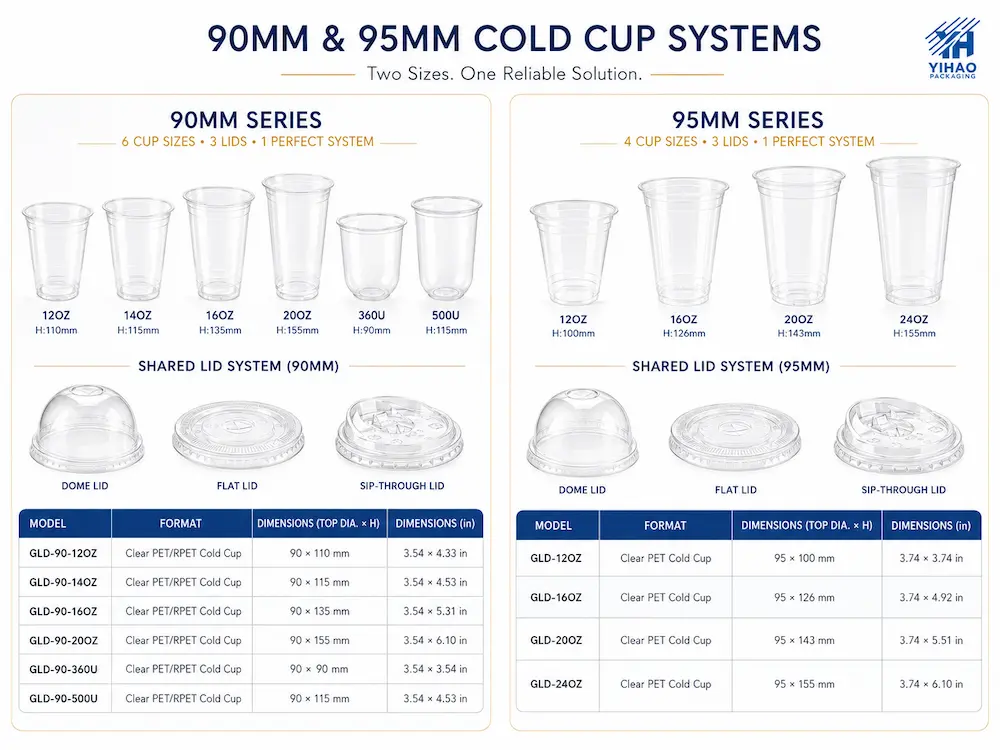
This is especially valuable for beverage chains and distributors that supply different drink sizes. Instead of managing a different lid for every cup capacity, buyers can organize the range around a 95mm or 98mm lid system and select flat lids, dome lids, or strawless sipper lids according to drink style.
| Lid Type | Best Fit | Buyer Check |
|---|---|---|
| Flat lid | Iced coffee, iced tea, lemonade, juice, soda, fruit tea, standard straw drinks | Check straw slot strength, snap-on fit, and rim grip. |
| Dome lid | Smoothies, milkshakes, whipped cream drinks, boba drinks, fruit toppings, dessert cups | Check top space, straw access, and dome stability. |
| Strawless sipper lid | Cold brew, iced coffee, refreshers, iced tea, lemonade, direct-sip takeaway drinks | Check sip comfort, liquid flow, and lid security. |
Buyers can review cold cup lids, flat lids for cold cups, dome lids for cold cups, and strawless sipper lids to compare lid structures before confirming a wholesale program.
95mm and 98mm Cold Cup Systems: Why Rim Logic Matters
Rim diameter is not only a specification line. It controls lid compatibility, SKU planning, packing speed, and daily service reliability.
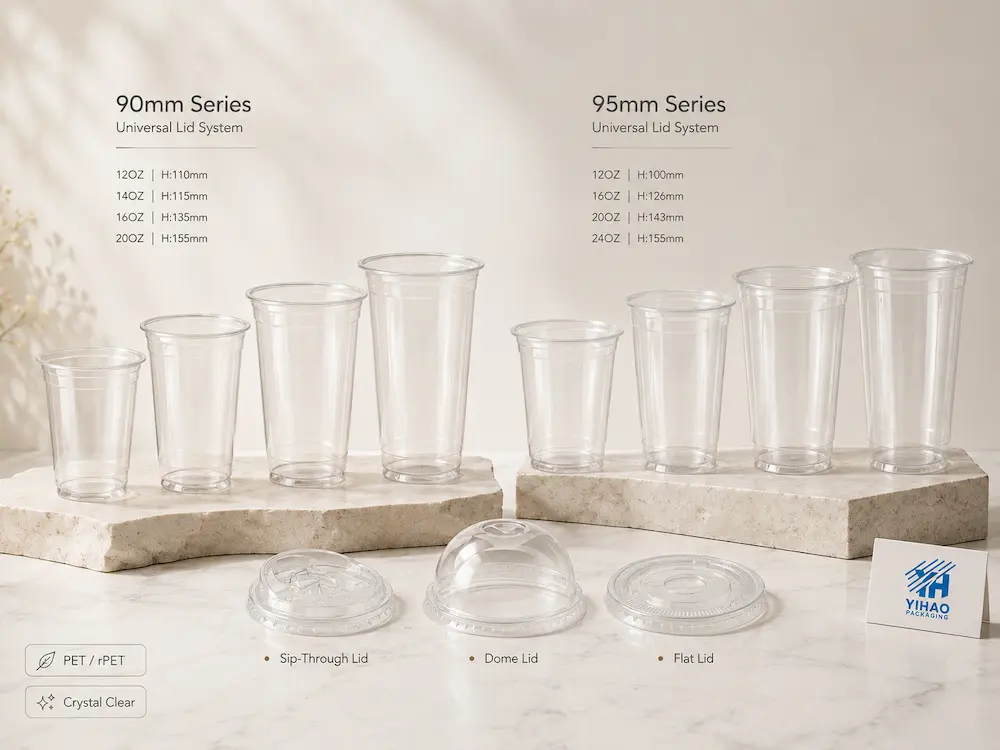
A 95mm cold cup system and a 98mm cold cup system should not be mixed casually. A 95mm lid is not designed for a 98mm cup, and a 98mm lid is not designed for a 95mm cup. Even when the difference looks small, the actual rim fit can affect sealing, leakage resistance, lid popping, and customer experience.
For professional buyers, the best approach is to build a clear cup-lid map:
- Group cups by rim diameter.
- Confirm compatible flat lids, dome lids, and strawless sipper lids.
- Test each lid with the actual cup series.
- Separate 95mm and 98mm inventory clearly.
- Train service staff to match cups and lids correctly.
- Use supplier labels and carton markings to prevent warehouse mistakes.
A shared-lid system is valuable because it gives buyers more capacity options without creating unnecessary lid confusion. This is especially useful for milk tea shops, coffee chains, juice bars, supermarkets, event catering suppliers, and foodservice distributors.
Best Applications for Wholesale Cold Cups
The right cold cup depends on the drink menu. Buyers should not select one cup for every product without testing. Iced coffee, smoothies, bubble tea, fruit tea, refreshers, and yogurt parfaits all place different demands on the cup and lid.
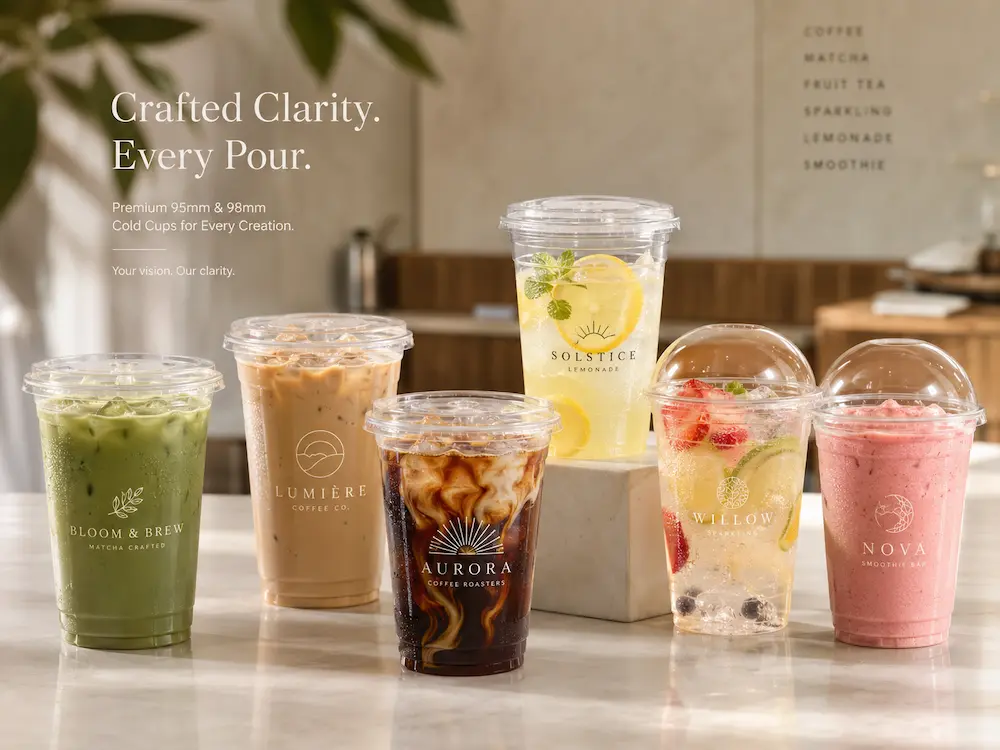
Iced Coffee and Cold Brew
Iced coffee and cold brew need clean presentation, stable handling, and comfortable drinking. Clear PET cold cups help display coffee color, ice, milk swirl, cream layers, and branded appearance. Flat lids and strawless sipper lids are common choices, depending on whether the drink is served with a straw or as a direct-sip beverage.
Juice, Lemonade, and Sparkling Fruit Drinks
Juice, lemonade, sparkling fruit drinks, and flavored cold beverages rely heavily on visual freshness. Clear PET cups help show color, pulp, fruit slices, bubbles, and ice. For supermarket beverage counters and convenience store grab-and-go programs, clarity can directly influence customer selection.
Smoothies, Milkshakes, and Protein Drinks
Smoothies, milkshakes, and protein drinks require more attention to cup strength and lid space. Thick beverages may need a stronger wall feel and wider straw access. Drinks with whipped cream, foam, or fruit topping usually work better with dome lids.
Milk Tea, Bubble Tea, and Matcha Drinks
Milk tea, bubble tea, boba drinks, and matcha drinks often combine visual display with topping functionality. Buyers should check straw size, lid opening, rim strength, cup capacity, and whether the cup can display layers, pearls, foam, or fruit ingredients clearly.
Refreshers, Fruit Tea, and Acai/Berry Drinks
Refreshers, fruit tea, acai drinks, berry refreshers, and colorful seasonal beverages benefit from high-clarity cups. These drinks often use fruit pieces, ice, bright colors, and layered ingredients. The cup should support visual merchandising while staying practical for takeaway handling.
Yogurt Parfaits, Cut Fruit, and Chilled Dessert Cups
Cold cups are also used for chilled food presentation. Yogurt parfaits, cut fruit, pudding, mousse, granola cups, overnight oats, dessert cups, and small salad portions can all benefit from clear cup display. For food use, buyers should also check spoon access, lid fit, label placement, and refrigerated shelf presentation.
For cross-category cold food and drink planning, buyers can also connect cold cups with grab-and-go food packaging and retail food packaging.
Cold Cup Sample Testing Checklist Before Bulk Orders
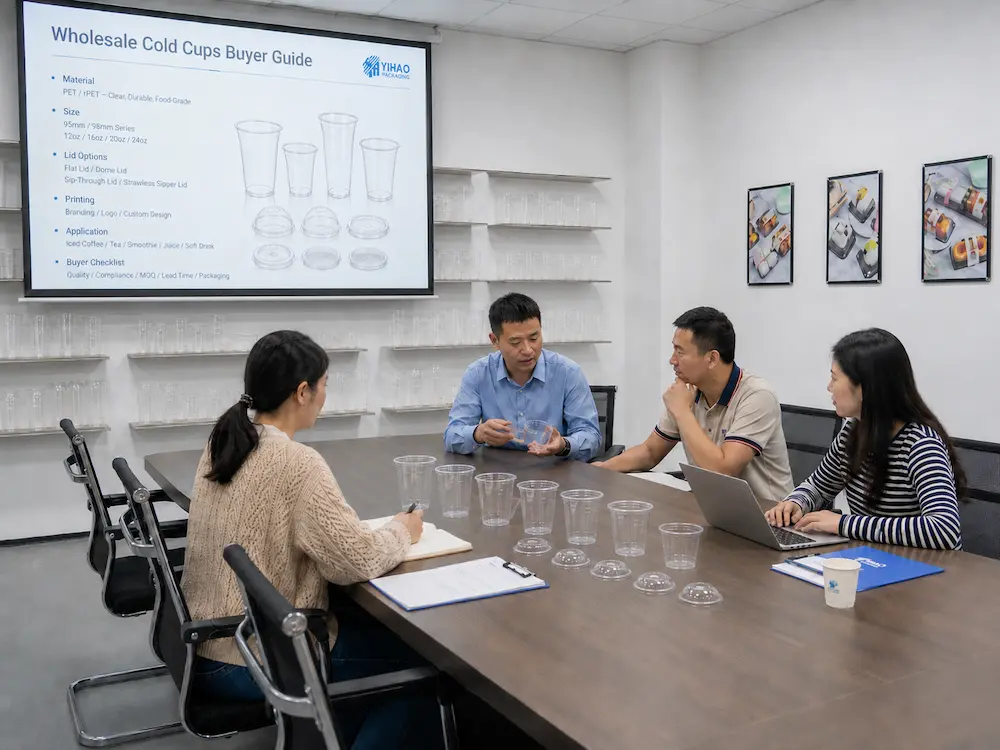
Sample testing is where professional buyers separate real packaging performance from sales claims. Before placing a wholesale order, buyers should test cups and lids under real service conditions.
| Test Item | What Buyers Should Do | Why It Matters |
|---|---|---|
| Rim fit test | Apply the matching lid 10–20 times by hand on filled and empty cups. | Confirms whether the lid snaps evenly and holds securely. |
| Ice load test | Fill the cup with ice and cold liquid to simulate actual beverage service. | Checks wall strength, rim stability, and cup handling feel. |
| Tilt and movement test | Tilt the sealed cup and move it like a takeaway order. | Helps identify leakage risk and lid popping issues. |
| Stack release test | Pull cups quickly from a nested stack during service simulation. | Prevents slow counter operation and cup sticking problems. |
| Straw or sip test | Test straw insertion or direct sipping with real beverage conditions. | Checks drinking comfort and opening design. |
| Dome headspace test | Add whipped cream, fruit pieces, boba, or toppings under dome lids. | Confirms whether the lid provides enough top space. |
| Carton observation | Inspect cups and lids after transport, storage, or carton movement. | Reduces rim damage, scratches, deformation, and shipment loss. |
| Cold display test | Place filled cups under refrigerator or display lighting. | Checks clarity, product visibility, label placement, and shelf appearance. |
Buyers should test samples with the actual drinks, lids, labels, straws, cartons, and storage methods they plan to use. A sample that passes a desk review may still fail in a real beverage counter environment.
Custom Cold Cups: Printing, Branding, and OEM Support
Custom printing can turn a simple cold cup into a brand asset. For cafes, tea shops, juice bars, supermarkets, and beverage chains, printed cold cups help create a consistent customer-facing image across stores, takeaway orders, and social media photos.
However, custom printed cups should be treated as a packaging development project, not just logo decoration. Buyers should confirm:
- Printable area and artwork layout.
- Material and cup surface suitability.
- Color expectations and print limitations.
- Sample approval before mass production.
- Logo position and brand readability.
- Carton labeling and private-label packing needs.
- Whether the print design affects sorting or recyclability discussion in the target market.
A capable custom cup manufacturer should help buyers connect brand design with practical manufacturing. The goal is not to print every available space. The goal is to create a cold cup that looks clean, supports the beverage, and communicates the brand without weakening the cup’s functional value.
For brand-driven beverage programs, custom printed cold cups can be used as a strong bridge between packaging performance and customer-facing brand identity.
Why Work with YIHAO for Wholesale Cold Cups?
YIHAO is a food packaging manufacturer and solution provider supporting cold drink packaging, clear PET cups, matching cup lids, fresh food containers, dessert packaging, and grab-and-go packaging systems. For cold beverage buyers, the key value is not only the cup itself. It is the ability to match cup size, rim diameter, lid type, drink application, carton packing, and wholesale ordering logic in one practical system.

For wholesale cold cups, YIHAO supports buyers in comparing PET cold cups, 95mm and 98mm rim systems, flat lids, dome lids, strawless sipper lids, and custom branding directions. This helps importers, distributors, beverage chains, cafes, juice bars, and foodservice teams reduce mismatched lids, simplify SKU planning, and build a more stable cold drink packaging range.
Buyers who need factory-side support can review YIHAO food packaging manufacturing and connect their cold cup sourcing plan with YIHAO packaging solutions.
How to Choose a Reliable Cold Cup Manufacturer or Supplier
A reliable cold cup manufacturer or cold cup supplier should provide more than a price sheet. Buyers should evaluate whether the supplier can support material selection, cup-lid matching, sample testing, packaging consistency, custom printing, export cartons, and repeat-order stability.
Use the following supplier checklist before confirming a wholesale order:
- Does the supplier provide complete cup and lid matching options?
- Can the supplier clearly separate 95mm and 98mm systems?
- Can the supplier explain PET, PP, PLA, and rPET differences without exaggeration?
- Can the supplier provide samples for real drink testing?
- Can the supplier support flat lids, dome lids, and strawless sipper lids?
- Can the supplier support custom printing or OEM packaging discussion?
- Can the supplier provide carton packing details for export orders?
- Can the supplier maintain consistent rim quality across repeat production?
- Can the supplier support buyers with clear specifications and application guidance?
- Can the supplier help reduce SKU confusion instead of adding unnecessary product complexity?
The best supplier is not always the one with the lowest unit price. It is the supplier that helps buyers reduce leakage risk, avoid lid mismatch, improve product presentation, and maintain stable supply over time.
Wholesale Cold Cups and Packaging Compliance: Buyer Notes
Food packaging teams should treat food-contact and packaging compliance as a market-specific discussion. Requirements may differ between the United States, the European Union, the United Kingdom, Canada, Australia, and other target markets. Buyers should confirm what documentation is needed for their product type, material, and destination country.
For U.S. projects, buyers often discuss food-contact substances and applicable FDA requirements. For EU-bound packaging, buyers should also monitor packaging and packaging waste requirements, including recyclability, packaging reduction, and future implementation details under the EU Packaging and Packaging Waste Regulation. For recyclability discussions, buyers should evaluate the whole package design, not only the resin name.
Clear communication matters. Instead of using broad claims such as “100% eco-friendly,” professional buyers should ask specific questions:
- What is the cup material?
- What is the lid material?
- Is the cup clear, printed, sleeved, or labeled?
- How should the package be collected or sorted in the target market?
- Does local infrastructure accept this format?
- Does the supplier provide documentation based on actual project needs?
This careful language protects the buyer, the supplier, and the brand.
Wholesale Cold Cups Comparison Table for Buyer Decisions
| Buyer Need | Recommended Direction | Best Supplier Capability | Risk to Avoid |
|---|---|---|---|
| High drink visibility | Clear PET cold cups | PET cup factory with stable clarity and rim consistency | Cloudy cups, weak display, inconsistent material appearance |
| Iced coffee takeaway | PET cup with flat lid or strawless sipper lid | Supplier with tested cup-lid compatibility | Lid popping, leakage, uncomfortable sipping |
| Smoothies and toppings | PET cup with dome lid option | Supplier with dome lid headspace solutions | Pressed toppings, weak dome fit, poor straw access |
| Bubble tea service | PET or PP cold cup with stable rim | Manufacturer that understands topping and straw requirements | Wrong straw opening, weak cup wall, poor lid grip |
| Custom branding | Printed PET or PP cold cups | Custom cup manufacturer with sample approval process | Poor print alignment, weak logo readability, unclear artwork rules |
| Multi-size beverage program | Shared rim cup-lid system | Supplier with 95mm or 98mm system planning | Too many lid SKUs and service mistakes |
| Retail cold display | Clear PET cold cup system | Supplier with strong carton protection and stacking control | Scratches, rim damage, poor refrigerated shelf appearance |
Common Mistakes Buyers Should Avoid
Mistake 1: Buying Cups Before Confirming Lids
Cups and lids should be tested as a set. A nominal diameter does not guarantee real rim compatibility. Buyers should confirm matching lids from the same system and test them with actual drinks.
Mistake 2: Choosing One Lid for Every Drink
Flat lids, dome lids, and strawless sipper lids serve different drinking styles. A smoothie with toppings does not need the same lid as iced coffee. A refresher served for direct sipping does not need the same lid as bubble tea.
Mistake 3: Ignoring Stack Release During Service
Cups that stick together slow down staff and create frustration during peak service. Stack release should be tested before bulk ordering, especially for cafes, tea shops, and event beverage programs.
Mistake 4: Comparing Only Unit Price
A cheaper cup can become more expensive if it causes leakage, cracking, lid mismatch, poor display, or customer complaints. Buyers should compare total packaging performance, not only the price per cup.
Mistake 5: Overclaiming Sustainability
Recyclability and compostability depend on material, design, collection, sorting, contamination, and local infrastructure. Buyers should use accurate, market-specific language instead of broad environmental claims.
How to Prepare a Better Wholesale Inquiry
A clear inquiry helps the supplier recommend the right cold cup system faster. Instead of sending only “Please quote cold cups,” buyers should include practical project details.
| Inquiry Detail | Why It Helps the Supplier |
|---|---|
| Drink menu | Helps match cup strength, lid type, and capacity direction. |
| Material preference | Clarifies whether the buyer needs PET, PP, PLA, rPET, or a comparison. |
| Cup size range | Helps identify suitable cup families and shared rim systems. |
| Existing lid diameter | Prevents mismatched lid recommendations. |
| Required lid type | Helps match flat lids, dome lids, strawless lids, or straw-slot lids. |
| Custom printing needs | Allows the supplier to check artwork, print area, and sample requirements. |
| Target market | Helps identify documentation and compliance discussion needs. |
| Order stage | Clarifies whether the buyer needs samples, trial orders, or wholesale supply planning. |
The more specific the inquiry, the more useful the supplier response. Professional packaging buyers usually save time by sharing product use, market, lid preference, and branding requirements at the beginning.
Final Note / Practical Takeaway
FAQ
1. What are wholesale cold cups used for?
Wholesale cold cups are used for iced coffee, cold brew, iced tea, juice, lemonade, smoothies, milk tea, bubble tea, matcha drinks, fruit tea, refreshers, protein drinks, yogurt parfaits, cut fruit, dessert cups, and other chilled beverage or food programs. They are commonly purchased by cafes, beverage chains, supermarkets, convenience stores, foodservice distributors, importers, and private-label food brands.
2. What is the difference between PET and PP cold cups?
PET cold cups are often selected for high clarity and strong beverage display, making them suitable for iced coffee, juice, milk tea, fruit tea, smoothies, refreshers, and retail presentation. PP cold cups may fit selected takeaway programs where buyers want a different handling feel or functional direction. Buyers should compare clarity, stiffness, rim strength, lid compatibility, and carton packing before choosing PET or PP.
3. Why is lid compatibility important for cold cups?
Lid compatibility directly affects leakage control, service speed, takeaway handling, and customer experience. A lid should be tested with the actual cup rim, ice volume, drink texture, and handling method before bulk orders. Buyers should not assume that lids fit correctly based only on nominal diameter.
4. Can wholesale cold cups be custom printed?
Yes, many wholesale cold cups can be custom printed when buyers work with a capable custom cup manufacturer. Buyers should confirm material, print area, artwork requirements, sample approval process, color expectations, carton labeling, and whether the printed design fits the target market’s packaging and disposal communication needs.
5. How should buyers choose a cold cup manufacturer or supplier?
Buyers should compare product consistency, cup-and-lid matching, material options, sample support, custom printing capability, export carton packing, clear specifications, and communication quality. A reliable cold cup manufacturer or cold cup supplier should help buyers reduce lid mismatch, improve packaging presentation, and support stable wholesale supply.
References
- U.S. Food and Drug Administration, Packaging & Food Contact Substances.
- European Commission, Packaging and Packaging Waste Regulation.
- Association of Plastic Recyclers, APR Design Guide for Plastics Recyclability.
- European Food Safety Authority, Food Contact Materials Overview.
- U.S. Environmental Protection Agency, Sustainable Materials Management and Recycling Information.
- Ellen MacArthur Foundation, Plastics and the Circular Economy.
- Food Packaging Forum, Food Contact Materials and Packaging Safety Resources.
- International Organization for Standardization, Packaging and Environmental Standards Resources.
Deep-Dive Insights
How should buyers think about wholesale cold cups? Treat them as a complete cold beverage packaging system. The cup material, rim diameter, lid type, drink menu, stacking method, custom branding plan, and supplier reliability should be evaluated together.
Why does the 95mm or 98mm rim system matter? A shared rim system helps buyers simplify lid inventory and reduce matching errors. Different cup capacities can use the same matching lid family when they belong to the same diameter system.
What makes PET cold cups useful for beverage display? PET cold cups offer clear visibility for iced coffee, fruit tea, smoothies, matcha drinks, refreshers, and chilled desserts. This helps customers see color, ice, fruit pieces, and layered ingredients before purchase.
When should buyers use dome lids instead of flat lids? Dome lids are better for smoothies, whipped cream drinks, bubble tea toppings, fruit pieces, sundae-style desserts, and any drink or dessert that needs extra top space.
What should buyers ask before placing a wholesale order? Ask about material, matching lids, rim consistency, sample testing, carton packing, custom printing, target market documentation, and repeat-order stability. A strong supplier should answer these questions clearly.
© 2026 YIHAO Packaging. This buying guide is created by YIHAO to help wholesale buyers, distributors, food brands, and packaging decision-makers compare product options and make informed sourcing decisions. All rights reserved.