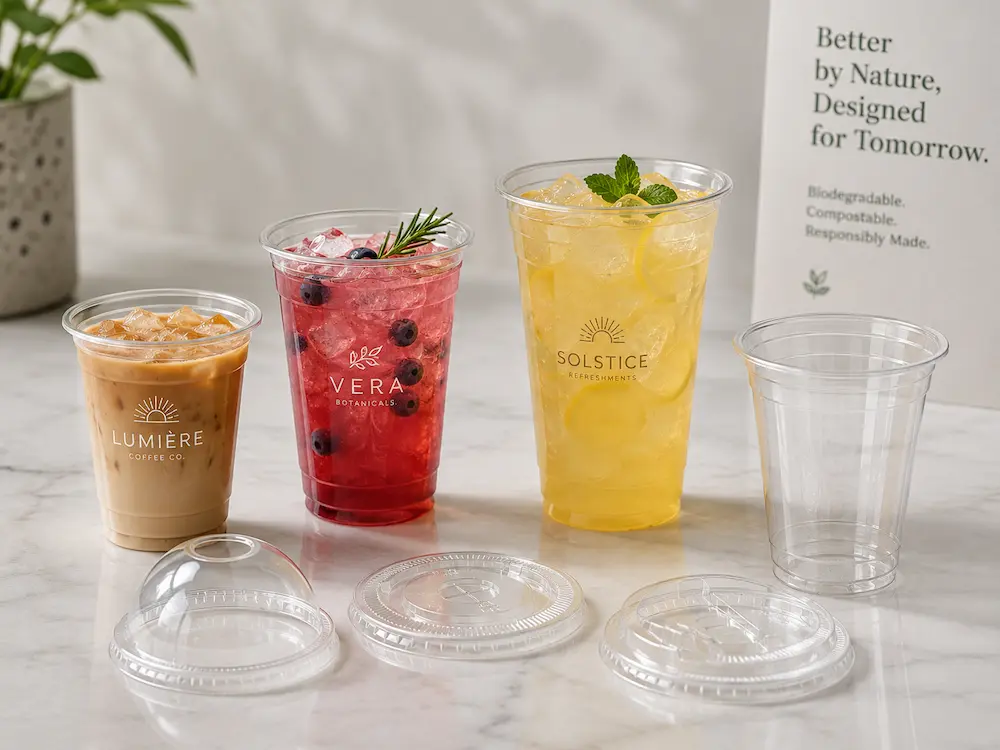
Quick Summary: Biodegradable Cold Cups for Food Packaging Buyers
Biodegradable cold cups are widely considered by cafes, beverage chains, supermarkets, juice brands, event caterers, and foodservice buyers that want cold drink packaging with stronger environmental positioning. Compared with PET, PP, and paper alternatives, PLA-based biodegradable cups offer clear product visibility and plant-based appeal, but buyers must verify composting conditions, certification claims, storage temperature, lid compatibility, and real application performance before wholesale ordering.
Introduction: Why Buyers Compare Biodegradable Cold Cups with Other Packaging
Cold drink packaging is no longer selected only by cup size, lid type, and unit price. Food packaging teams now compare material performance, environmental claims, shelf display, takeaway durability, storage conditions, export stability, and end-of-life options before placing sample orders or wholesale purchase plans.
For cafes, juice bars, supermarkets, bakeries, beverage brands, event caterers, and chilled food programs, biodegradable cold cups are attractive because they support a more sustainability-focused packaging message. They are often associated with plant-based materials, compostable packaging, reduced dependence on conventional plastics, and stronger eco branding.
However, buyers should not treat “biodegradable” as a simple upgrade word. A cold cup still needs to perform in real service conditions. It must hold iced coffee, cold brew, smoothies, juice, lemonade, matcha, fruit tea, refreshers, milk tea, sparkling fruit drinks, protein drinks, chilled desserts, or grab-and-go beverages without cracking, leaking, deforming, or creating confusion about disposal.
That is why buyers should compare biodegradable cold cups with PLA, PET, PP, and paper cold cups from a practical sourcing perspective. The right choice depends on drink type, brand positioning, local disposal infrastructure, lid compatibility, and supply chain reality.
What Are Biodegradable Cold Cups?
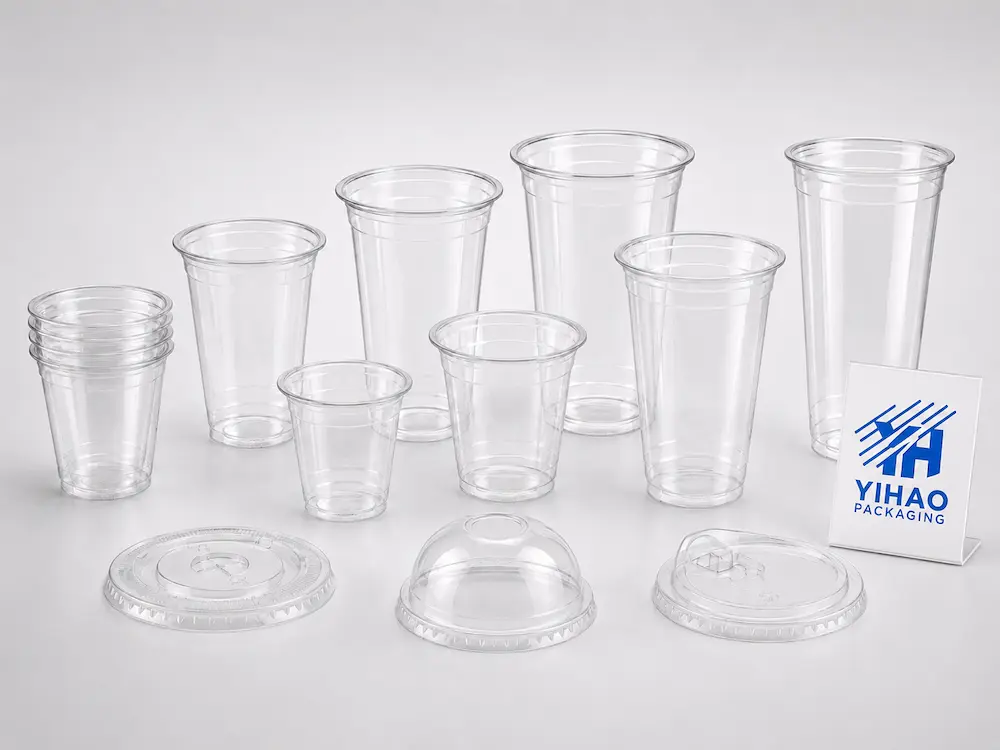
Biodegradable cold cups are cold beverage cups made from materials designed to break down biologically under specific conditions. In commercial food packaging, PLA is one of the most common plant-based materials used for clear cold cups.
Buyers usually see several related terms in the market:
- Biodegradable cold cups
- Compostable cold cups
- PLA compostable cold cups
- PLA drink cups
- Plant-based cold cups
- Eco friendly cold cups
- PLA cups with lids
These terms are related, but they are not always identical. “Biodegradable” usually means the material can break down through biological activity under certain conditions. “Compostable” usually refers to a more specific end-of-life route, often involving controlled composting conditions and recognized testing standards.
For commercial buyers, this distinction matters. A PLA cold cup may support compostable positioning, but it still requires the right composting system, correct consumer sorting, and accurate marketing claims. If local collection systems do not accept PLA packaging, the actual disposal result may not match the brand message.
Biodegradable vs Compostable: The Claim Buyers Must Understand
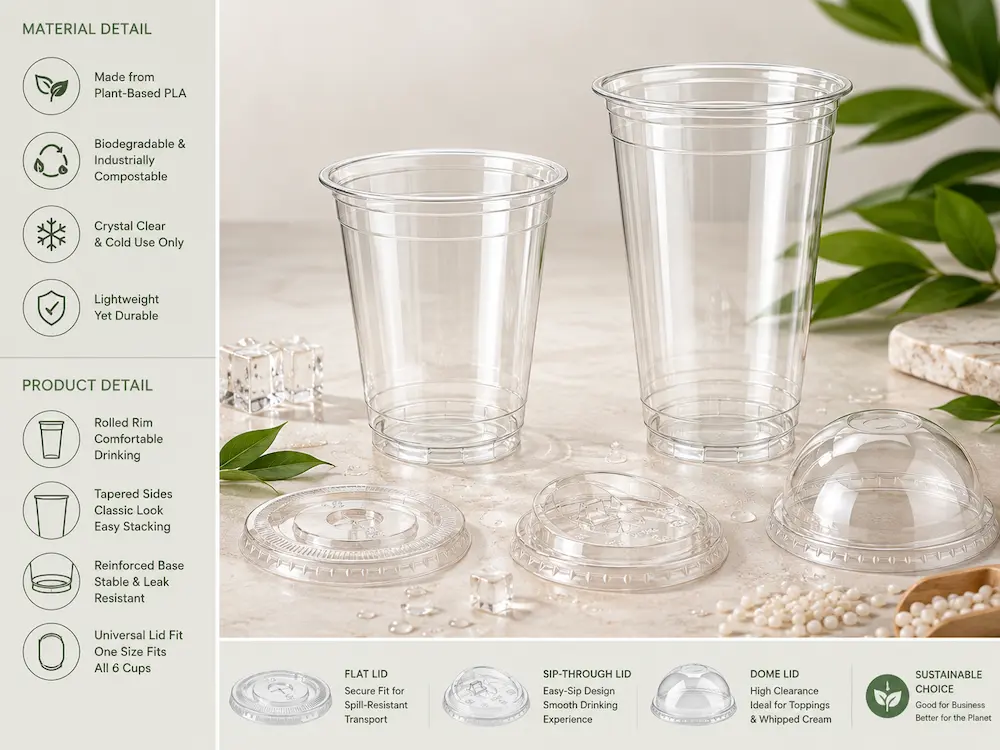
One of the biggest purchasing mistakes is treating biodegradable and compostable as the same word. They are not the same in buyer communication, packaging compliance, or customer education.
A biodegradable material may break down over time, but the timing and conditions can vary. A compostable product normally needs to meet clearer conditions, such as temperature, moisture, microbial activity, and processing time in a suitable composting environment.
For buyers, the question is not only “Is this cup biodegradable?” The better questions are:
- Is this cup certified compostable under a recognized standard?
- Is it suitable for industrial composting or home composting?
- Does the target market have composting facilities that accept PLA cups?
- Can consumers realistically dispose of the cup correctly?
- Can the packaging claim be printed legally and accurately in the sales region?
This is where a professional supplier should provide clear documentation instead of vague eco claims.
Biodegradable Cold Cups vs PLA Compostable Cold Cups
Many biodegradable cold cups are made from PLA. PLA is valued because it is plant-based, clear, lightweight, and suitable for cold drink presentation. In foodservice and beverage packaging, PLA is one of the most common choices for buyers who want a compostable or eco-positioned alternative to conventional plastic cups.
PLA compostable cold cups are commonly used for:
- Iced coffee
- Cold brew
- Juice
- Smoothies
- Lemonade
- Fruit tea
- Matcha drinks
- Refreshers
- Milk tea
- Yogurt drinks
- Chilled dessert portions
- Event beverage service
The biggest commercial advantage of PLA is its clear appearance. It displays drink color, ice, toppings, layered coffee, fruit pieces, tapioca pearls, smoothie texture, and premium beverage presentation clearly. This makes PLA suitable for retail display, cafe takeaway, event service, and health-focused drink brands.
When PLA-Based Cups Make Sense
PLA-based biodegradable cups are a strong option when the buyer needs:
- Plant-based packaging positioning
- Clear cold drink presentation
- Compostable packaging claims where supported
- A premium eco-focused takeaway image
- Matching flat or dome lid options
- Better visual display than coated paper cups
- A packaging story aligned with natural, organic, or sustainable beverage branding
When Buyers Should Be Careful with PLA
PLA is not the best choice for every operation. Buyers should be cautious when:
- Drinks or storage environments may involve heat
- Local composting infrastructure is unavailable
- The target market does not accept PLA in organic waste streams
- The buyer needs conventional plastic recycling compatibility
- The brand cannot clearly explain disposal instructions
- The supplier cannot provide material details, certification information, or sample testing support
PLA-based cups are best treated as cold-use packaging with strong branding value and specific disposal requirements.
Biodegradable Cold Cups vs PET Cold Cups
PET cold cups are one of the most widely used options for cold beverages because they deliver excellent clarity, strong rigidity, mature production, and reliable large-volume supply. Compared with biodegradable cold cups, PET cups are often easier to integrate into established beverage packaging programs.
PET Cold Cups Strengths
PET cold cups are commonly used for:
- Iced coffee
- Cold brew
- Smoothies
- Fresh juice
- Lemonade
- Fruit tea
- Supermarket chilled drinks
- Grab-and-go beverages
- Parfaits and dessert cups
- Fresh-cut fruit portions
PET offers strong transparency and shelf appeal. For drinks with bright colors, layered ingredients, fruit inclusions, or toppings, PET gives a crisp visual effect.
PET also has mature supply chains. For wholesale buyers, this often means stable pricing, broad size availability, compatible lids, strong carton packing systems, and easier replenishment.
Where Biodegradable Cold Cups Win
Biodegradable cold cups offer stronger sustainability storytelling when the buyer wants plant-based materials, compostable positioning, or an alternative to petroleum-based plastic packaging.
They are especially useful when customer perception matters and the brand wants packaging to support a greener message.
Buyer Decision
Choose PET cold cups when clarity, recycling familiarity, cost control, supply stability, and large-volume consistency are top priorities.
Choose biodegradable cold cups when plant-based material positioning, compostable packaging strategy, and eco branding are stronger business priorities.
Biodegradable Cold Cups vs PP Cold Cups
PP cold cups are valued for flexibility, durability, and practical takeaway performance. Compared with PLA and PET, PP has a softer and more flexible feel, which helps in busy foodservice environments.
PP Cold Cups Strengths
PP cups are suitable for:
- Takeaway drinks
- Foodservice counters
- Delivery packaging
- Cafes and drink shops
- High-volume beverage programs
- Cold drinks requiring flexible handling
PP is often selected when cups need to tolerate squeezing, fast handling, stacking, and operational pressure. It is practical for businesses that prioritize daily service efficiency.
Where Biodegradable Cold Cups Win
Biodegradable cold cups are stronger for sustainability-focused communication. PLA-based options also create a cleaner, more premium clear-cup appearance than many PP alternatives.
Buyer Decision
Choose PP cups when durability, flexibility, cost control, and high-volume takeaway use are the main priorities.
Choose biodegradable cups when eco positioning, plant-based material messaging, and premium cold drink presentation matter more.
Biodegradable Cold Cups vs Paper Cold Cups
Paper cold cups are often assumed to be more sustainable, but buyers should examine the full structure. Many paper cold cups require inner coatings to resist liquid absorption, condensation, and leakage. These coatings affect recyclability, compostability, and disposal options.
Paper Cold Cups Strengths
Paper cups are useful when brands need:
- Large printable surface
- Strong logo visibility
- Natural paper appearance
- Full-color promotional design
- A non-transparent packaging style
- Event or takeaway brand recognition
Paper cups work well when drink visibility is not important.
Where Biodegradable Cold Cups Win
PLA-based biodegradable cold cups perform better when the drink itself is part of the visual selling point. Smoothies, fruit tea, layered iced coffee, matcha, refreshers, lemonade, and colorful juices benefit from transparent packaging.
Buyer Decision
Choose paper cold cups when branding surface and printed design are more important than product visibility.
Choose biodegradable cups when clear drink presentation and plant-based packaging positioning are stronger priorities.
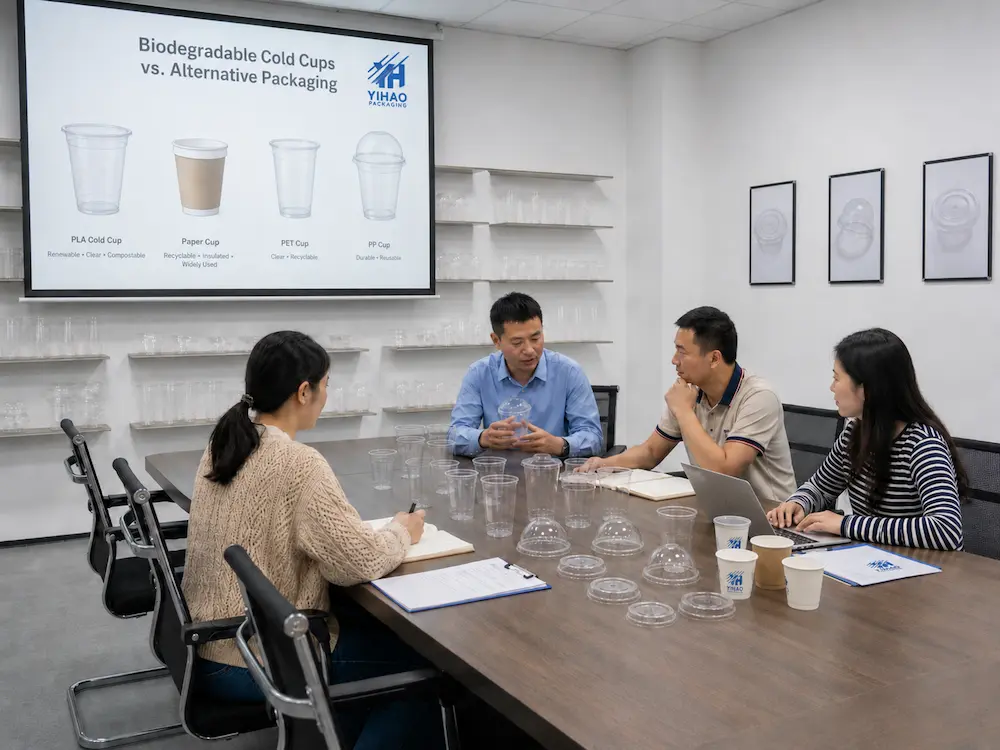
Comparison Table: Biodegradable Cold Cups vs Alternative Packaging
| Packaging Type | Main Material | Best Applications | Main Strength | Main Limitation | Best Buyer Fit |
|---|---|---|---|---|---|
| Biodegradable Cold Cups | Often PLA or plant-based material | Cold drinks, eco-focused takeaway, events | Strong environmental positioning | Disposal depends on correct conditions | Brands focused on eco packaging |
| PLA Compostable Cold Cups | PLA | Iced coffee, juice, smoothies, fruit tea | Clear appearance and compostable positioning | Not suitable for hot drinks | Cafes, juice bars, event service |
| PET Cold Cups | PET plastic | Retail display, chilled drinks, grab-and-go beverages | Excellent clarity and mature supply | Conventional plastic perception | Supermarkets and large-volume buyers |
| PP Cold Cups | Polypropylene | Takeaway, delivery, high-traffic foodservice | Flexible and durable | Lower premium clarity than PET or PLA | Busy foodservice operators |
| Paper Cold Cups | Paper with coating | Printed branding, events, simple cold drinks | Large printable surface | Coating affects disposal | Brands prioritizing printed design |
Buyer Decision Matrix
| Buyer Priority | Best Cup Option | Why It Fits |
|---|---|---|
| Plant-based packaging story | Biodegradable / PLA cups | Supports eco-focused brand communication |
| Highest product visibility | PET or PLA cups | Both provide clear cold drink presentation |
| Compostable packaging strategy | PLA compostable cups | Suitable where composting infrastructure supports it |
| High-volume takeaway durability | PP cups | Flexible and practical for busy service |
| Printed brand surface | Paper cups | Larger printable area for graphics and logo |
| Retail chilled display | PET cups | Strong clarity, structure, and supply stability |
| Event sustainability messaging | PLA biodegradable cups | Strong visual eco positioning when disposal is managed |
| Lowest sourcing risk | PET or PP cups | Mature production and broad supplier availability |
Key Buying Factors for Food Packaging Teams
1. Beverage Type
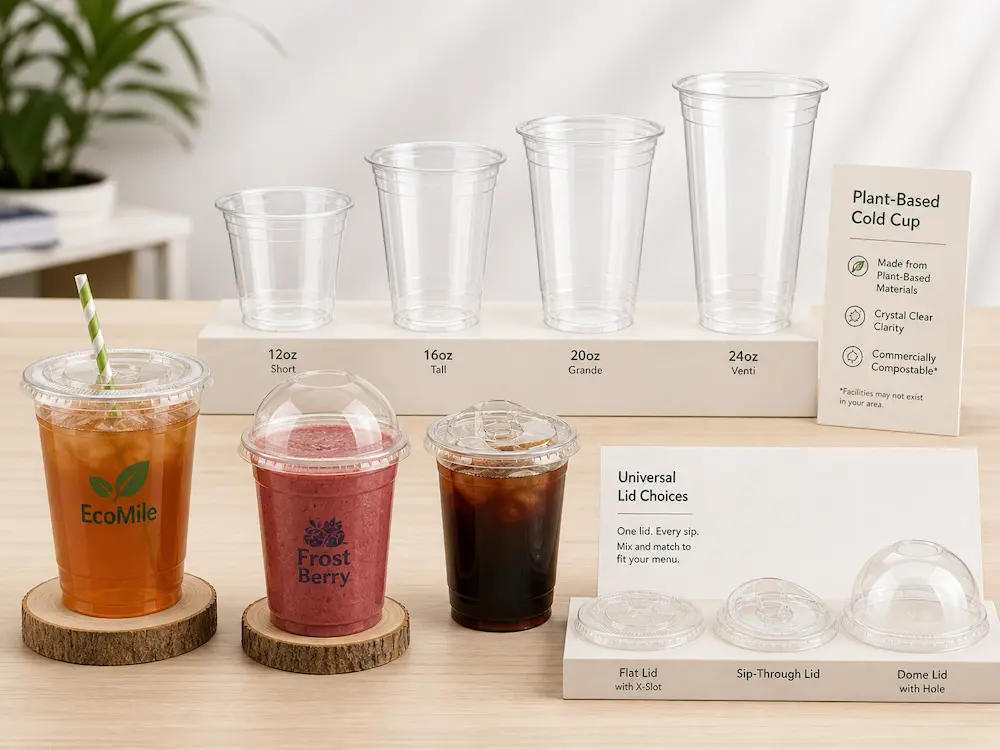
The drink should guide material selection. Iced coffee, cold brew, juice, smoothies, lemonade, matcha, fruit tea, refreshers, milk tea, protein drinks, and sparkling fruit drinks have different requirements.
Smoothies need stronger sidewall support. Fruit tea benefits from high transparency. Iced coffee needs stable lid fit. Drinks with toppings need dome lid compatibility. Sparkling drinks require reliable rim sealing.
2. Lid Compatibility
Lid fit is one of the most important details in cold cup sourcing. A cup with poor lid fit creates leakage, customer complaints, wasted inventory, and lower customer confidence.
Buyers should test:
- Flat lids
- Dome lids
- Straw-slot lids
- Sip lids
- Insert lids
- Cup-to-lid locking strength
- Stacking performance
- Leakage resistance during takeaway
- Compatibility across cup sizes
3. Storage Temperature
PLA-based cups should be stored away from heat. Buyers should confirm warehouse temperature, container shipping routes, storage duration, and delivery conditions.
PET and PP usually tolerate broader supply chain conditions than PLA. This does not make them automatically better, but it means PLA buyers need more controlled handling.
4. Local Disposal Infrastructure
A cup’s environmental value depends partly on what happens after use. Before ordering biodegradable cold cups, buyers should check:
- Whether industrial composting exists locally
- Whether PLA cups are accepted by composters
- Whether food-contaminated cups are accepted
- Whether consumers can identify the correct disposal route
- Whether the brand can print accurate disposal instructions
5. Certification and Documentation
Buyers should request documentation before using strong sustainability claims. Depending on market requirements, relevant proof may include:
- Compostability certification
- Food contact compliance information
- Material declaration
- Migration test reports
- Supplier specification sheet
- Storage and usage guidance
- Custom printing safety confirmation
This is especially important for brands selling into supermarkets, regulated foodservice channels, or export markets.
6. Branding and Consumer Perception
A premium juice brand may benefit from PLA-based clear cups because the packaging supports a natural and eco-conscious image. A supermarket grab-and-go program may still prefer PET because of clarity, price, and supply stability. A high-volume takeaway chain may prefer PP because of durability.
The best material is not always the most eco-sounding material. The best material is the one that fits the product, customer, brand claim, and operating environment.
Application Scenarios for Biodegradable Cold Cups
Cafes and Coffee Shops
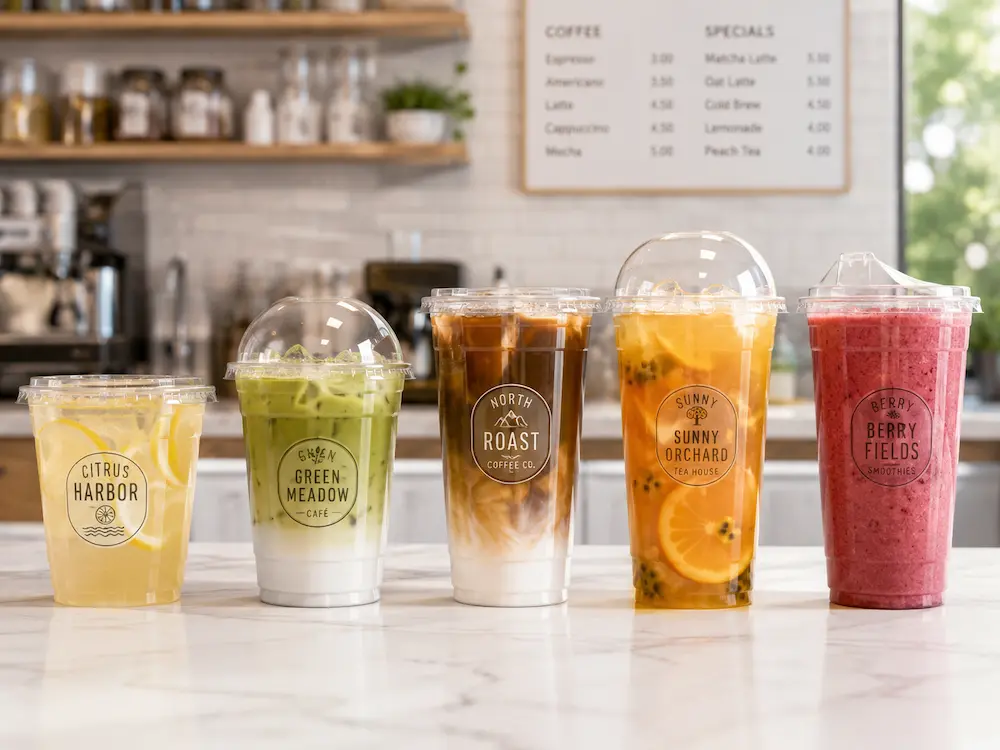
Cafes use biodegradable cold cups for iced coffee, cold brew, matcha latte, iced tea, refreshers, and milk-based cold drinks. Clear PLA cups show drink color, ice, foam, and layered ingredients.
Juice Bars and Smoothie Shops
Juice and smoothie brands benefit from transparent cups because customers want to see freshness, color, fruit texture, and ingredient density. PLA cups support a natural packaging image for health-focused beverages.
Supermarkets and Convenience Stores
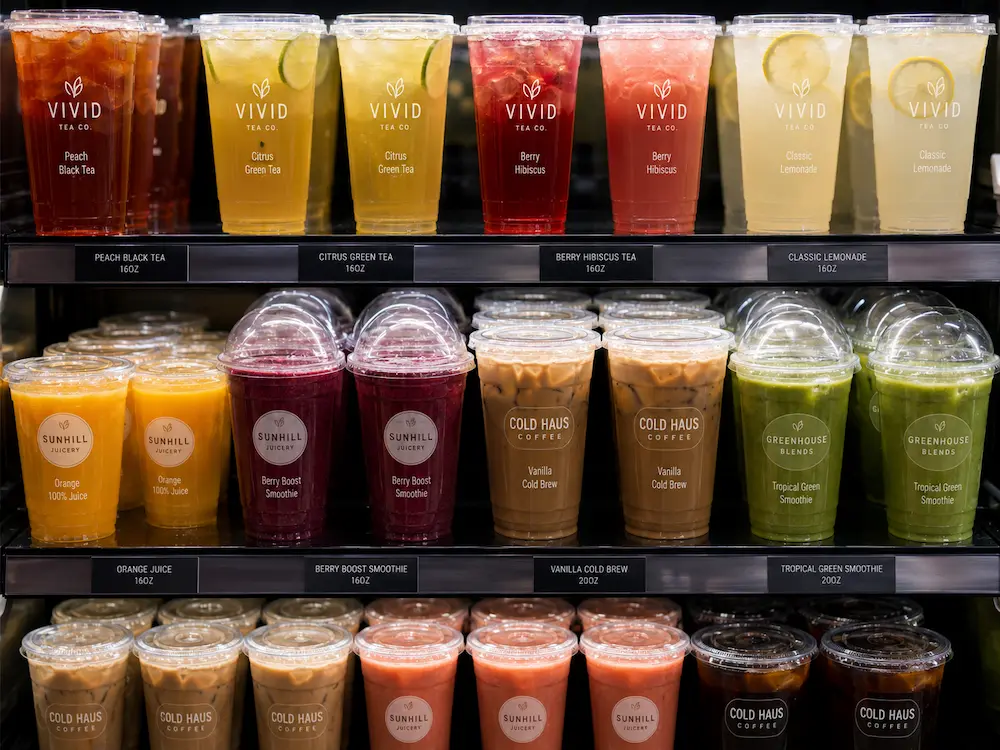
For grab-and-go beverage displays, clarity and lid security matter. Buyers should compare PLA with PET carefully because supermarket storage, logistics, and shelf life requirements may be more demanding than cafe takeaway service.
Events and Catering
Events often prefer eco-positioned packaging because packaging waste is visible. Biodegradable cups work well when event organizers provide waste sorting, composting collection, or clear disposal communication.
Bakeries and Dessert Brands
Some bakeries and dessert brands use clear cold cups for parfaits, pudding, fruit cups, yogurt, mousse, tiramisu portions, and chilled dessert samples. PLA cups provide clear presentation with a stronger eco-focused story.
Manufacturer, Wholesale, and Supplier Checklist
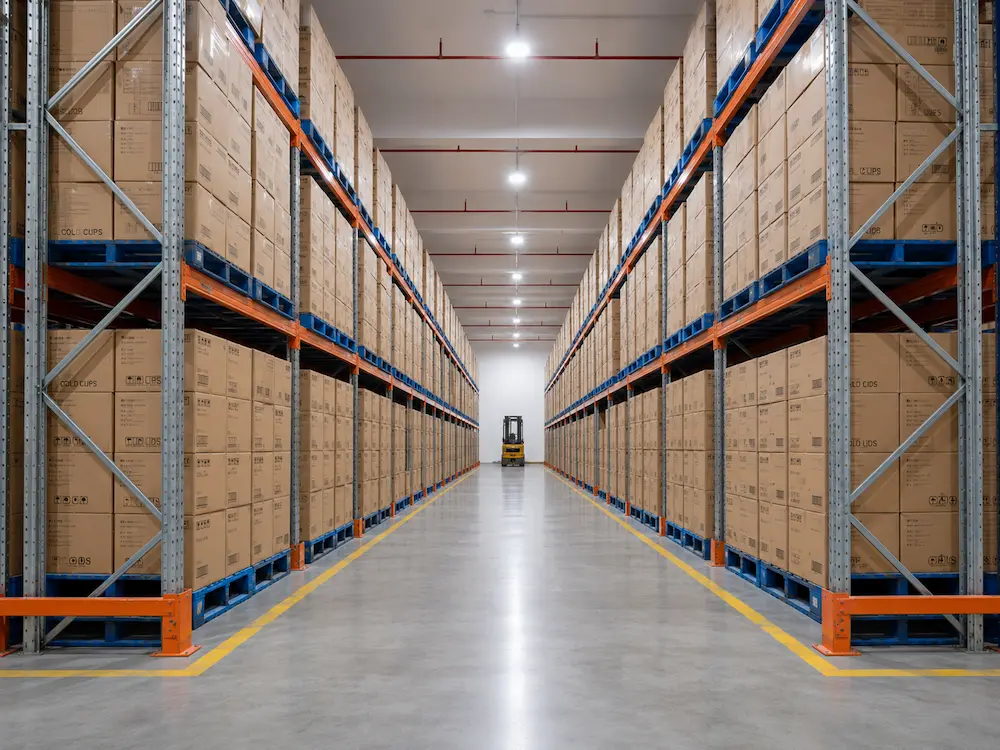
Choosing the right cup is only half of the decision. Choosing the right production and supply partner is just as important.
A reliable manufacturer should provide stable product quality, material clarity, lid matching options, export carton support, sample testing, and production consistency.
For wholesale purchasing, buyers should compare more than unit price. Carton quantity, lid fit, loading efficiency, defect rate, size range, printing options, packaging protection, and reorder stability all affect real cost.
A professional supplier should help buyers choose the right material instead of presenting one material as the answer for every application. PLA, PET, PP, and paper each have different strengths.
Questions to Ask Before Ordering
- What material is the cup made from?
- Is it PLA, PET, PP, paper, or a blended structure?
- Is the cup designed only for cold drinks?
- What lid types match this cup series?
- Are flat lids and dome lids available?
- What is the recommended storage temperature?
- What certifications or test reports are available?
- What is the carton packing method?
- Can the cup be customized with logo printing?
- Can samples be tested before wholesale orders?
- What is the recommended application: juice, coffee, smoothie, dessert, or takeaway?
- Can the supplier support repeat orders with consistent lid fit?
Sample Testing Checklist Before Bulk Orders
Before placing a large order, buyers should test cups under real use conditions.
| Test Item | What to Check | Why It Matters |
|---|---|---|
| Cup clarity | Transparency, haze, surface finish | Affects drink display and shelf appeal |
| Rim strength | Lid locking and rim stability | Reduces leakage risk |
| Lid fit | Flat lid, dome lid, straw-slot lid | Prevents mismatch after purchase |
| Stacking | Cup separation and storage efficiency | Improves operation speed |
| Leakage | Real drink test with movement | Protects customer experience |
| Grip feel | Hand comfort and sidewall strength | Supports takeaway handling |
| Temperature exposure | Storage and transport behavior | Important for PLA cups |
| Carton protection | Damage after shipping | Reduces defect rate |
| Printing test | Logo adhesion and visual quality | Supports brand presentation |
| Real application test | Coffee, juice, smoothie, fruit tea | Confirms commercial suitability |
When Buyers Should Not Choose Biodegradable Cold Cups
Biodegradable cups are useful, but they are not the right answer for every buyer.
Do not choose biodegradable cold cups if:
- The drink is hot or may be filled hot
- The cups will be stored in high-temperature environments
- The target market lacks composting infrastructure
- The brand cannot explain disposal instructions clearly
- The buyer needs conventional PET recycling compatibility
- The project is highly price-sensitive and does not need eco positioning
- The supplier cannot provide material or compliance documentation
In these cases, PET, PP, or paper may be a more suitable option.
How Buyers Should Choose the Right Cup Type
Choose Biodegradable Cold Cups If:
- Your brand needs plant-based packaging positioning
- Your customers value eco-focused packaging
- The drinks are cold only
- You can manage proper storage conditions
- Composting or disposal guidance is available
- Clear product presentation matters
- You want an alternative to conventional plastic cold cups
Choose PET Cold Cups If:
- You need maximum clarity
- Retail shelf display is the top priority
- Large-volume supply stability matters
- Recycling compatibility is important in your target market
- Cost control and consistency are key
Choose PP Cold Cups If:
- Your operation needs flexible, durable takeaway cups
- High-volume foodservice handling is common
- The cup may be squeezed or handled roughly
- Practical durability matters more than premium clarity
Choose Paper Cold Cups If:
- Full-surface branding is the top priority
- The drink does not need visual display
- You want a printed packaging look
- Your customers prefer a paper-based appearance
Common Buyer Mistakes to Avoid
Mistake 1: Treating “Biodegradable” and “Compostable” as the Same
These terms are related, but they are not identical. Buyers should check what claim is accurate for the specific product and market.
Mistake 2: Ignoring Lid Fit
A sustainable cup with poor lid fit is still a poor packaging choice. Lid compatibility must be tested before bulk orders.
Mistake 3: Choosing PLA Without Checking Storage Conditions
PLA should be protected from heat. Buyers should confirm warehouse, shipping, and storage conditions before ordering.
Mistake 4: Assuming Paper Is Always Easier to Dispose Of
Paper cold cups often contain coatings. Disposal depends on the coating material and local recycling or composting system.
Mistake 5: Buying Based Only on Unit Price
The lowest unit price may create higher costs through leakage, returns, customer complaints, poor stacking, cup deformation, or inconsistent supply.
Mistake 6: Making Sustainability Claims Without Proof
Buyers should avoid unsupported claims such as “100% eco friendly” or “fully biodegradable everywhere.” Claims should match material documentation, certification, and local disposal reality.
Final Recommendation
Biodegradable cold cups are a strong choice for beverage brands, cafes, foodservice operators, supermarkets, and event teams that want clear cold drink presentation with stronger environmental positioning. They are especially suitable for iced coffee, smoothies, juice, matcha, fruit tea, refreshers, lemonade, milk tea, cold brew, and chilled dessert beverages.
However, buyers should not choose them only because the material sounds eco friendly. The right choice depends on beverage type, lid compatibility, storage temperature, certification support, local disposal systems, branding goals, wholesale supply stability, and supplier reliability.
For buyers comparing PLA, PET, PP, and paper cold cups, the safest approach is sample testing before bulk ordering. Test the real drink, real lid, real storage condition, and real customer use case. That is the most reliable way to choose packaging that supports both brand value and daily operation.
FAQ
1. What are biodegradable cold cups made from?
Biodegradable cold cups are commonly made from PLA or other plant-based materials designed for cold drink packaging. PLA is widely used because it offers good clarity and supports compostable or eco-positioned packaging claims when suitable composting conditions are available.
2. Are biodegradable cold cups the same as compostable cold cups?
Not always. Biodegradable means the material can break down biologically under certain conditions, while compostable usually refers to specific composting conditions and may require recognized certification or industrial composting facilities.
3. Are PLA cold cups suitable for hot drinks?
No. PLA cold cups are designed for cold drinks. They should not be used for hot beverages, hot filling, or high-temperature storage environments.
4. What drinks are biodegradable cold cups best for?
They are best for iced coffee, cold brew, juice, smoothies, lemonade, fruit tea, matcha, refreshers, milk tea, yogurt drinks, protein drinks, and other chilled beverages.
5. How should buyers choose between PLA, PET, PP, and paper cups?
Buyers should compare drink type, clarity needs, lid fit, storage conditions, disposal systems, certification support, branding goals, and wholesale supply requirements before choosing a cup material.
References
- European Bioplastics, Bioplastics Market Data and Material Guidance
- ASTM International, Compostable Plastics Standards and Testing Guidance
- BPI, Compostable Packaging Certification Information
- U.S. Environmental Protection Agency, Sustainable Materials Management Guidance
- WRAP, Plastic Packaging and Recycling System Guidance
- Ellen MacArthur Foundation, Circular Economy and Packaging Design Resources
- Food Packaging Forum, Material Safety and Food Contact Packaging Research
- ISO, Packaging and Environmental Claims Standard References
Deep-Dive Insights: Choosing Biodegradable Cold Cups with Commercial Confidence
How should buyers think about biodegradable cold cups?
Buyers should treat biodegradable cold cups as a material and sourcing decision, not only as an environmental label. The cup must match cold beverage performance, lid compatibility, storage conditions, local disposal systems, and accurate customer communication.
Why do PLA compostable cold cups stand out?
PLA compostable cold cups stand out because they combine clear product visibility with plant-based packaging positioning. This makes them useful for iced coffee, juice, smoothies, matcha, fruit tea, refreshers, and chilled takeaway drinks.
What should buyers compare before ordering?
Buyers should compare PLA, PET, PP, and paper cups based on clarity, durability, lid fit, storage limits, composting or recycling routes, certification support, branding needs, carton packing, and wholesale supply stability.
Which option is best for eco-focused brands?
Eco-focused brands often prefer PLA-based biodegradable cups when the application is cold-only and the disposal message can be communicated accurately. PET or PP may still be better when recycling access, durability, or large-volume logistics are more important.
What is the safest sourcing approach?
The safest approach is to request samples from a reliable manufacturer or supplier, test cups with real beverages and matching lids, confirm storage conditions, review documentation, and compare total packaging performance before placing a wholesale order.
© YIHAO Packaging. All rights reserved. All articles, product images, packaging designs, technical specifications, and website materials are protected by copyright. Unauthorized copying, reproduction, redistribution, modification, or commercial use is strictly prohibited without prior written permission.