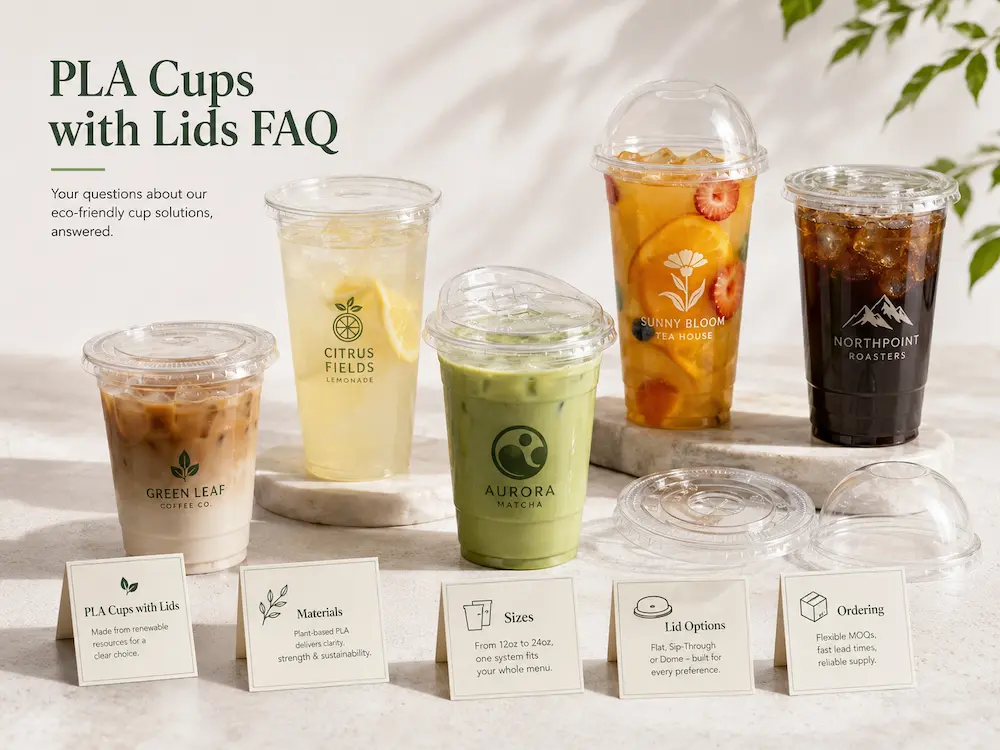
Quick Summary: PLA Cups with Lids for Cold Drink Packaging Buyers
PLA cups with lids are plant-based cold drink packaging solutions designed for iced coffee, juice, smoothies, fruit tea, refreshers, milk tea, and takeaway beverage programs. This FAQ explains material performance, cup sizes, lid matching, commercial compostability claims, storage requirements, supplier checks, and wholesale ordering questions for buyers comparing PLA compostable cold cups, compostable cold cups, PLA drink cups, biodegradable cold cups, and other eco friendly cold cups.
Choosing PLA cups with lids sounds simple at first. Many buyers start with one question: “Are these cups compostable?” But in real foodservice purchasing, the better question is much broader: “Will this cup match my drink menu, lid system, storage conditions, brand claims, local disposal rules, and repeat wholesale supply plan?”
Wrong lid fit causes leakage. Poor size selection affects drink presentation. Vague compostability claims create compliance risk. Heat-sensitive storage damages cup shape. A supplier with unstable specifications creates repeat-order problems. For cafes, juice bars, bubble tea brands, supermarkets, distributors, and foodservice companies, PLA cups with lids should be evaluated as a complete cold drink packaging system, not just as a single cup item.
As a food packaging manufacturer and solution provider, YIHAO supports buyers who need practical, scalable, and market-ready cold drink packaging options. This guide answers the most common buyer questions about PLA cups with lids, including materials, sizes, uses, lid options, commercial compostability, wholesale ordering, and supplier selection.
What Are PLA Cups with Lids?
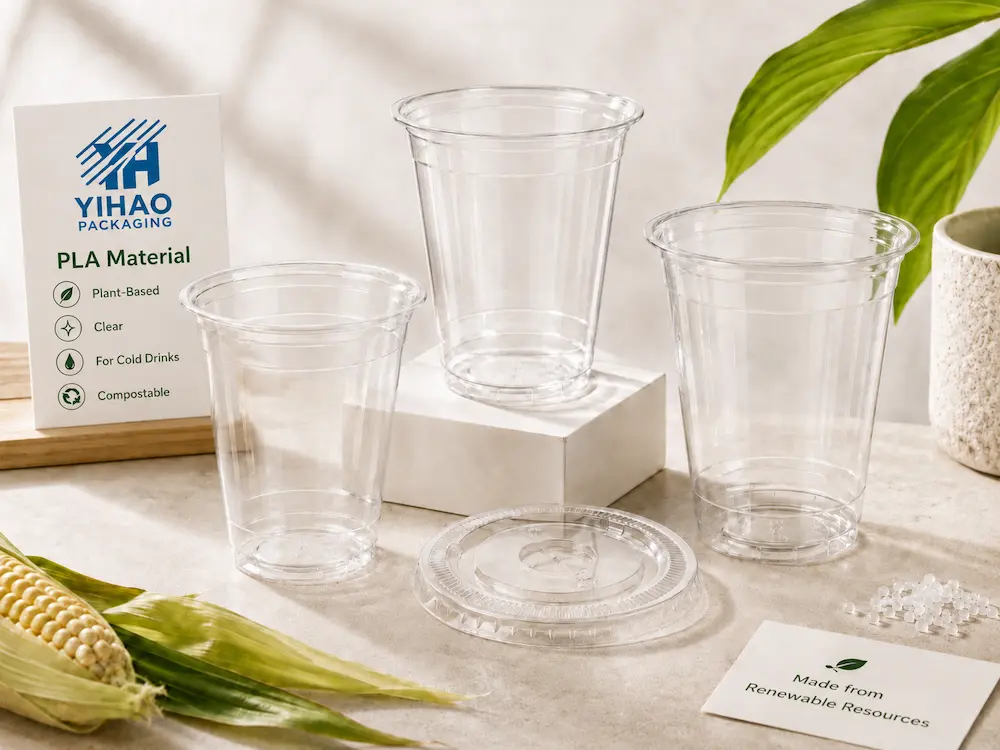
PLA cups with lids are cold beverage cups made from polylactic acid, commonly known as PLA. PLA is a plant-based plastic material often derived from renewable feedstocks such as corn starch or sugarcane-based resources. In food packaging, PLA is widely used for cold drink cups because it provides a clear appearance, lightweight handling, and a material story that fits many sustainability-focused beverage programs.
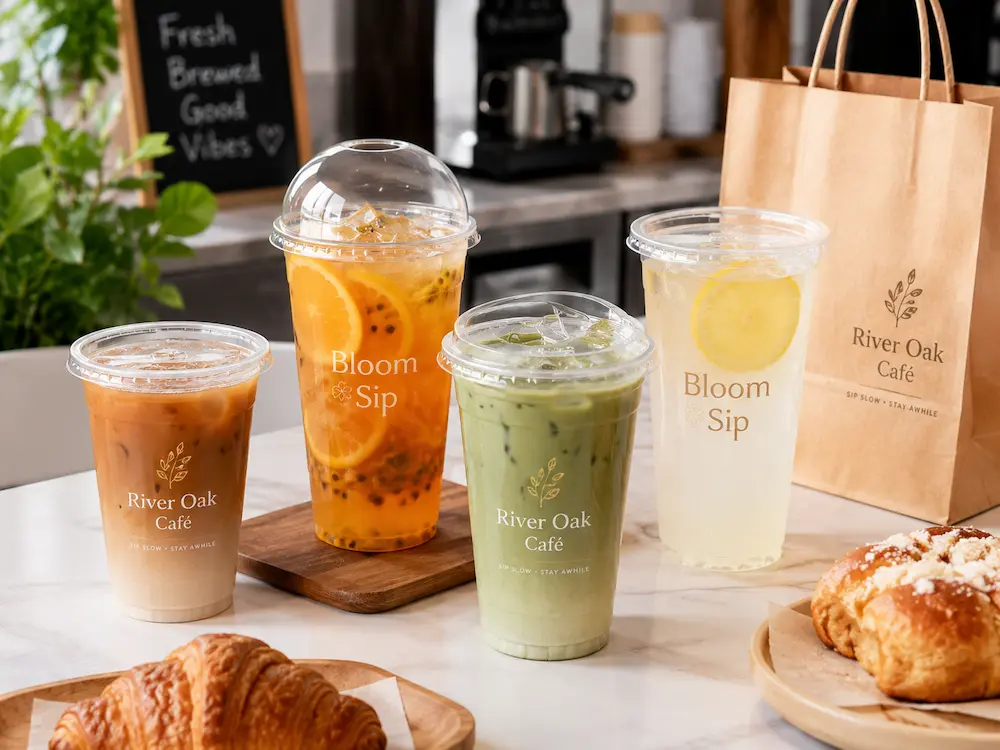
When paired with suitable lids, PLA cups create a complete packaging format for takeaway drinks, retail display beverages, catering service, event sampling, and cold menu promotions.
Common uses include:
- Iced coffee and cold brew
- Fresh juice and lemonade
- Smoothies and blended drinks
- Milk tea and bubble tea
- Matcha lattes and iced tea
- Fruit tea and sparkling fruit drinks
- Refreshers and berry drinks
- Yogurt drinks and chilled dessert beverages
- Event sampling and promotional drinks
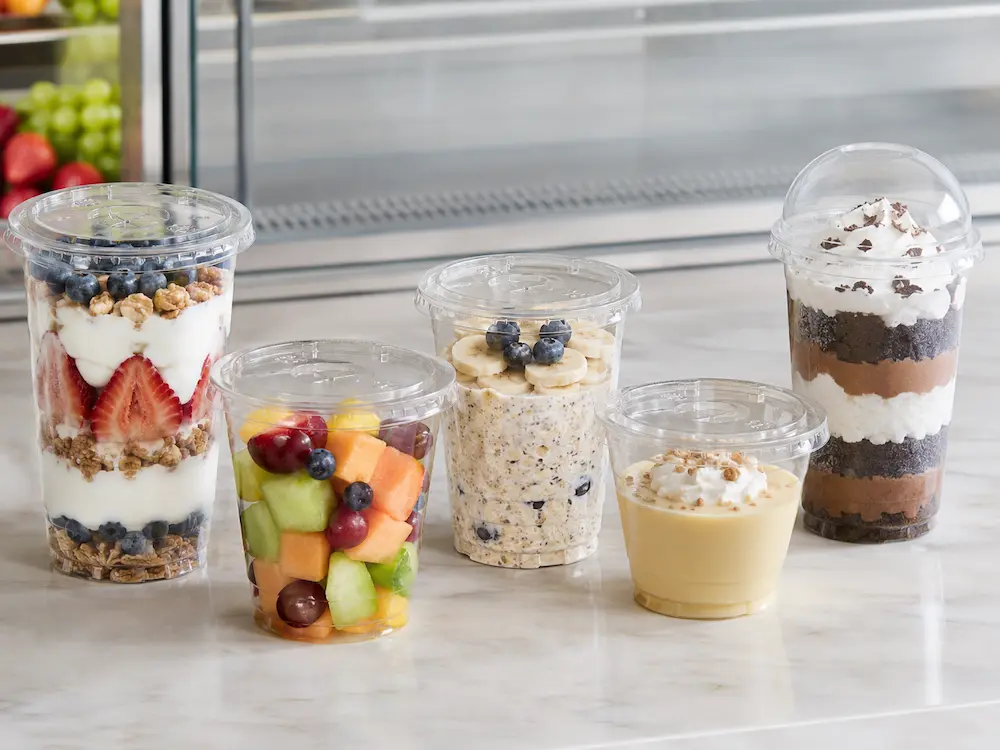
The most important application rule is clear: PLA cups with lids are mainly designed for cold drinks. They are not a general-purpose replacement for every plastic cup, and they should not be used for hot drinks unless the product is specifically designed and tested for that use.
Why Are Foodservice Buyers Choosing PLA Cups with Lids?
Foodservice buyers choose PLA cups with lids for several reasons. The first reason is drink presentation. Clear PLA cups help customers see beverage color, ice, fruit pieces, toppings, foam, layered milk, and other visible ingredients. This matters because modern cold drinks are highly visual products.
The second reason is material positioning. For brands that want plant-based packaging options, PLA provides a clear story that is easy for customers to understand when communicated accurately.
The third reason is alignment with compostable packaging programs where commercial composting infrastructure accepts PLA products. This does not mean PLA cups break down in every environment. It means they are better positioned for controlled commercial composting systems when accepted by local facilities.
For many cafes, beverage chains, supermarkets, and distributors, PLA cups with lids are selected because they combine visual appeal, plant-based material positioning, and a cold drink format that fits modern takeaway service.
Are PLA Cups with Lids Compostable?
PLA cups with lids are commonly positioned as commercially compostable where accepted. This wording is important. PLA compostability depends on the material formulation, product thickness, certification status, collection system, and local commercial composting infrastructure.
A responsible buyer should avoid broad claims such as “this cup naturally disappears anywhere” or “100% biodegradable in all conditions.” Those statements are risky because PLA does not break down quickly in every environment. It generally requires controlled composting conditions involving suitable temperature, moisture, oxygen, and microbial activity.
Better wording for product pages, labels, and sales materials includes:
- “Commercially compostable where accepted.”
- “Designed for industrial composting facilities where available.”
- “Please verify local composting acceptance before disposal.”
- “Compostability depends on local collection and processing systems.”
This type of language is more accurate and more professional. It helps buyers promote compostable cold cups without overstating environmental performance.
Are PLA Cups with Lids the Same as Biodegradable Cold Cups?
Not exactly. The phrase biodegradable cold cups is often used in the market, but it can be less precise than “commercially compostable cold cups where accepted.”
“Biodegradable” can mean different things depending on the environment, timeframe, and testing method. Without clear conditions, the term may create confusion. “Compostable” is more specific when supported by recognized standards, documentation, and a suitable disposal system.
For B2B buyers, the safer approach is to ask the supplier for:
- Material information
- Compostability documentation
- Certification details if required
- Recommended claim wording
- Disposal guidance for target markets
- Clear cold-use limitations
If your sales channel requires strict environmental claim control, use qualified wording instead of exaggerated marketing claims. Strong buyers do not rely on vague sustainability language. They choose packaging that matches real applications and real disposal systems.
What Is the Difference Between PLA Cups, PET Cups, and PP Cups?
Buyers often compare PLA with PET and PP when selecting cold drink packaging. Each material has its own logic. PLA is often selected for plant-based and compostable positioning. PET is widely used for clear recyclable cold drink packaging where recycling systems accept it. PP is often chosen when buyers need stronger durability and better temperature tolerance.
| Material Option | Main Positioning | Best Use | Buyer Consideration |
|---|---|---|---|
| PLA Cups with Lids | Plant-based cold drink packaging; commercially compostable where accepted | Iced coffee, juice, smoothies, fruit tea, refreshers, event drinks | Mainly for cold use; requires correct compostability wording and suitable storage |
| PET Cold Cups | Clear cold drink packaging with strong product visibility | Iced coffee, juice, smoothies, chilled beverages, retail display | Recycling depends on local collection and sorting systems |
| PP Cold Cups | Durable cold drink packaging with stronger temperature tolerance | Takeaway drinks, foodservice use, applications needing more flexibility | Usually not positioned as compostable |
| Paper Cold Cups | Paper-based appearance and branding surface | Cold drinks, promotional beverages, branded service | Often requires coating; disposal depends on structure and local systems |
A buyer should not choose a material only because it sounds sustainable. The best choice depends on drink temperature, customer channel, local disposal system, brand positioning, cost structure, and supplier capability.
Which Buyer Goals Match PLA Cups with Lids Best?
A practical way to choose packaging is to start with the buyer’s goal.
| Buyer Goal | Recommended Direction | Why It Matters |
|---|---|---|
| Plant-based cold drink packaging | PLA cups with lids | Supports renewable material positioning and commercial composting where accepted |
| Clear beverage display | PLA or PET cold cups | Both options show drink color, ice, layering, and toppings |
| Commercial composting program | PLA compostable cups with proper documentation | Works best where facilities accept PLA packaging |
| Recycling-focused market | PET cold cups | PET may fit better where PET recycling collection is stronger |
| Higher heat tolerance | PP cold cups | PP usually handles higher temperatures better than PLA |
| Private-label beverage packaging | PLA, PET, or PP depending on brand strategy | Custom printing and packaging should match menu, budget, and market claims |
| Wholesale distribution | Stable size range with matched lids | Reduces inventory confusion and repeat-order mistakes |
This type of decision table helps buyers avoid one common mistake: treating all “eco friendly” packaging as the same. PLA cups with lids are strong for specific cold drink programs, but the right choice still depends on application.
What Drinks Are PLA Cups with Lids Best For?

PLA cups with lids are best for cold beverages that need clear presentation and convenient takeaway handling. They work especially well when the drink’s visual appeal helps customers make a purchase decision.
Iced Coffee and Cold Brew
Iced coffee, cold brew, and flavored cold coffee drinks benefit from clear packaging. Customers can see the ice level, coffee color, milk blend, cream layer, and overall freshness. For cafes and convenience stores, this visibility supports both display and customer confidence.
Juice and Lemonade
Fresh juice, lemonade, and citrus drinks rely heavily on color. Clear PLA cups help showcase brightness, fruit pulp, and premium drink quality. These drinks are strong candidates for PLA drink cups in takeaway and retail display channels.
Smoothies and Blended Drinks
Smoothies require enough cup volume for thick beverage texture, fruit blends, foam, and toppings. Dome lids are often useful because they provide extra headspace for whipped cream, fruit garnish, or thicker blended drinks.
Milk Tea and Bubble Tea
Milk tea, bubble tea, fruit tea, and topping-based drinks need careful lid selection. Some buyers prefer dome lids or straw-slot lids, while others use sealing film systems. Before placing a bulk order, buyers should test the cup and lid with tapioca pearls, fruit jelly, ice, and real service conditions.
Matcha, Refreshers, and Specialty Drinks
Modern cold drink menus often include matcha lattes, berry refreshers, acai-inspired beverages, sparkling fruit drinks, flavored cold brew, iced tea, and protein drinks. Clear PLA cups help show layered colors, inclusions, and premium presentation.
Events, Sampling, and Catering
Small and medium PLA cups are useful for beverage sampling, exhibitions, catering stations, outdoor events, and brand promotions. Buyers should still pay attention to storage temperature and local disposal guidance, especially for outdoor service.
What Sizes Are Common for PLA Cups with Lids?
PLA cup sizes vary by supplier and market, but buyers usually select cups based on drink type, ice level, toppings, and serving model. Choosing by ounce capacity alone is not enough. A 16 oz drink with ice, foam, and fruit pieces may require a different cup structure than a 16 oz plain juice.
| Cup Size Category | Common Use | Buyer Notes |
|---|---|---|
| Small Cups | Samples, kids’ drinks, tasting portions, small juice servings | Good for events, trial menus, catering, and portion control |
| Medium Cups | Iced coffee, juice, lemonade, cold brew, fruit tea | Strong daily takeaway size range for cafes and beverage shops |
| Large Cups | Smoothies, milk tea, refreshers, blended drinks | Needs stronger lid fit and stable hand feel |
| Extra-Large Cups | Promotional drinks, large iced beverages, specialty drinks | Requires careful carton planning, cup holder fit, and storage review |
Buyers should review the following before choosing sizes:
- Beverage type
- Ice volume
- Topping volume
- Lid type
- Cup height
- Top diameter
- Carton quantity
- Cup carrier compatibility
- Shelf and refrigerator space
- Delivery handling needs
A cup that looks suitable on a sample table may perform differently in real service. Testing with actual beverages is essential.
Which Lids Work Best with PLA Cups?
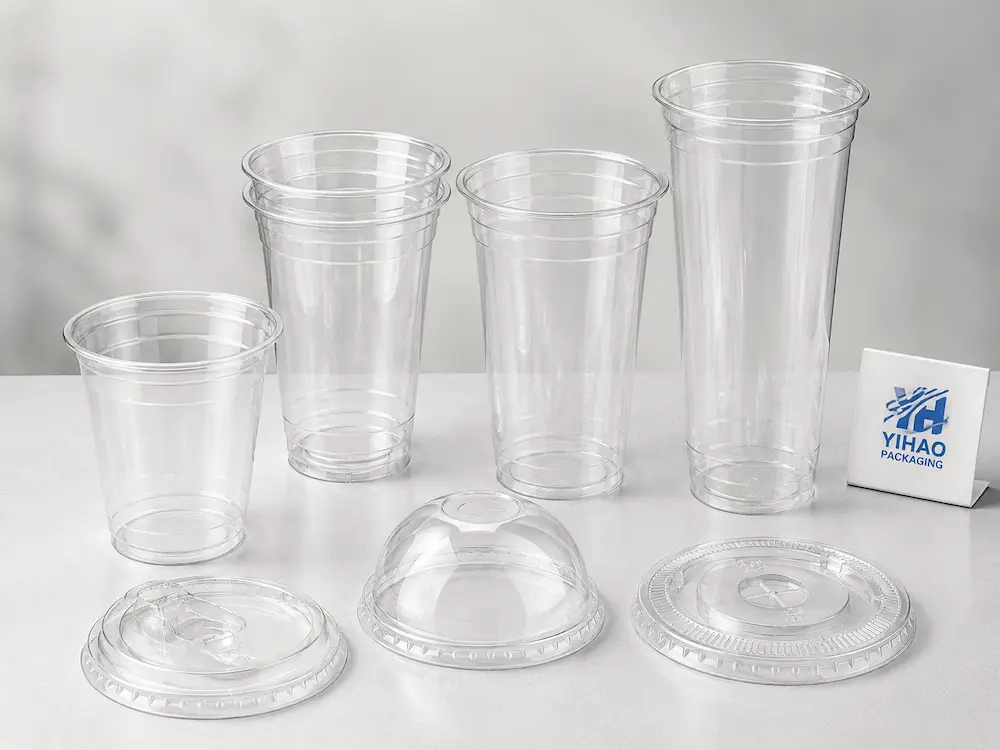
Lid selection affects the entire customer experience. A cup with poor lid fit creates leakage, delivery complaints, staff frustration, and inventory waste. A well-matched lid improves handling, presentation, and service speed.
Common lid options include:
| Lid Type | Best For | Main Advantage |
|---|---|---|
| Flat Straw-Slot Lid | Iced coffee, juice, lemonade, fruit tea | Simple takeaway use with straw access |
| Dome Lid with Hole | Smoothies, whipped drinks, dessert beverages | Extra headspace for toppings and foam |
| Sip Lid | Cold brew, iced coffee, ready-to-drink beverages | Supports straw-free drinking in some service models |
| Clear Dome Lid | Retail display, parfait-style drinks, dessert drinks | Enhances product visibility |
| Sealing Film Option | Bubble tea, fruit tea, delivery drinks | Stronger spill resistance when used with suitable sealing equipment |
Buyers should request cup and lid samples together. Testing only the cup is not enough. Lid closure, rim fit, stacking, delivery handling, and straw compatibility should all be checked before confirming a wholesale order.
Are PLA Cups with Lids Suitable for Hot Drinks?
No. Standard PLA cups with lids are primarily designed for cold drinks. PLA is more heat-sensitive than many traditional plastic materials. Hot liquid may soften, deform, or weaken the cup structure if the product is not specifically designed for heat use.
Buyers should use other packaging formats for hot coffee, tea, soup, or warm beverages. If a supplier claims that a PLA cup works for hot drinks, request technical documentation, heat-use testing, and clear application guidance before ordering.
The safest positioning is simple: use PLA cups with lids for cold beverage packaging.
How Should Buyers Store PLA Cups with Lids?
Storage matters more for PLA than many buyers expect. PLA cups should be stored in a cool, dry, indoor environment away from direct sunlight, high heat, humidity, and hot warehouse zones.
Recommended storage practices include:
- Keep cartons away from sunlight.
- Avoid storage near ovens, heaters, or hot production areas.
- Do not leave PLA cups in hot vehicles for long periods.
- Store cups in original cartons before use.
- Rotate inventory using first-in, first-out control.
- Keep cups away from excessive moisture.
- Confirm supplier storage guidance before seasonal stocking.
Poor storage may affect cup clarity, rim shape, stacking, and lid compatibility. For distributors and wholesalers, storage control is part of product quality control.
What Should Buyers Test Before Bulk Orders?
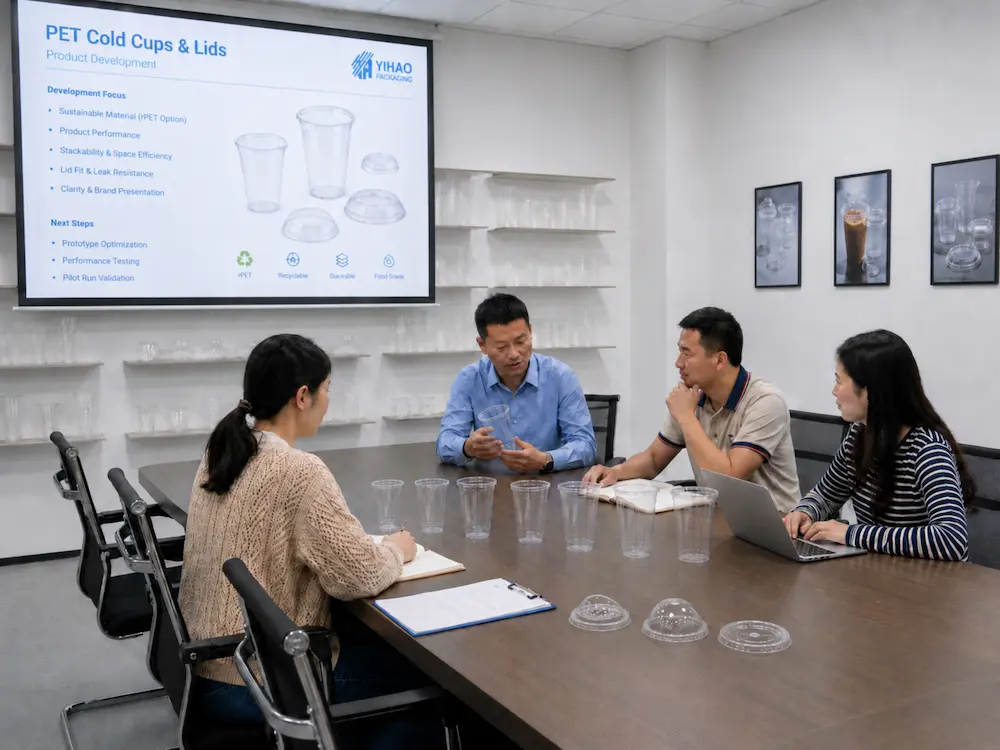
Sample testing is one of the most important steps before placing a wholesale order. Buyers should not judge PLA cups with lids only by photos, catalog descriptions, or price sheets.
A practical sample test should include:
| Test Item | What to Check | Why It Matters |
|---|---|---|
| Lid Fit | Closure strength, rim snap, leakage control | Prevents loose lids and delivery complaints |
| Drink Compatibility | Iced coffee, juice, smoothie, milk tea, fruit tea | Confirms real menu performance |
| Ice and Topping Space | Ice volume, fruit pieces, foam, tapioca pearls | Prevents overflow and poor presentation |
| Hand Feel | Cup wall stability and grip | Affects customer experience |
| Clarity | Beverage visibility and display appeal | Supports retail and takeaway presentation |
| Storage Response | Indoor storage and transport conditions | Helps protect product shape |
| Branding Test | Logo visibility on filled cups | Ensures custom printing remains readable |
| Carton Review | Quantity, labeling, stacking, warehouse fit | Supports wholesale logistics |
The sample stage should answer one practical question: “Will this cup and lid system work under real service conditions?” If the answer is unclear, buyers should not move directly to large-volume purchasing.
What Should Importers Ask a PLA Cup Manufacturer Before Ordering?
Importers need more than a product photo and a unit price. A reliable manufacturer should provide product consistency, lid matching, export packaging, documentation support, and repeat-order stability.
Product and Material Questions
- What PLA material is used?
- Is the cup designed only for cold beverages?
- Which lid types match each cup size?
- Are flat lids, dome lids, sip lids, or sealing options available?
- What are the top diameter, height, and carton details?
- Can the manufacturer provide samples before bulk production?
Documentation and Claim Questions
- Are compostability documents available if required?
- What claim wording does the manufacturer recommend?
- Is the product intended for commercial composting where accepted?
- Are there market-specific disposal limitations?
- Does the supplier avoid unsupported biodegradable claims?
Production and Supply Questions
- What sizes are available for repeat orders?
- What is the minimum order quantity?
- Can mixed-size orders be supported?
- What is the lead time for regular and custom orders?
- Can the manufacturer support seasonal demand?
- Are export cartons and pallet plans available?
Customization Questions
- Can the cup be printed with a logo?
- Can carton labels be customized?
- Are private-label packaging options available?
- What artwork format is required?
- Can the supplier provide pre-production samples?
For importers, the best PLA cups with lids manufacturer is not only the lowest-cost option. It is the supplier that reduces ordering risk, improves product consistency, and supports long-term supply.
How Should Wholesale Buyers Compare Suppliers?
Wholesale buyers should compare suppliers based on product fit, supply stability, documentation, and communication quality. Price matters, but low price cannot solve poor lid fit, weak cartons, vague claims, or inconsistent specifications.
| Supplier Evaluation Point | Why It Matters |
|---|---|
| Complete Cup and Lid System | Reduces mismatch, leakage, and wrong-size inventory |
| Stable Size Range | Supports repeat orders and menu expansion |
| Sample Support | Allows real drink testing before bulk purchase |
| Export Experience | Improves shipping, carton labeling, and documentation |
| Custom Packaging Ability | Supports private label and distributor programs |
| Clear Compostability Guidance | Reduces environmental claim risk |
| Responsive Communication | Prevents purchasing mistakes and delays |
| Repeat-Order Reliability | Helps buyers maintain stable stock for customers |
For wholesale programs, buyers should think beyond one container. They should build a repeatable packaging system that includes cup sizes, lids, cartons, storage rules, artwork, and reorder planning.
Can PLA Cups with Lids Be Customized?
Yes, PLA cups with lids can often be customized, depending on order quantity, cup size, printing method, production setup, and supplier capability. Customization is useful for cafes, beverage chains, supermarkets, distributors, private-label brands, and event packaging programs.
Common customization options may include:
- Printed logo on cups
- Custom carton labels
- Private-label packaging
- Mixed cup and lid sets
- Brand-specific size combinations
- Custom packaging for wholesale distribution
Buyers should test artwork carefully. A logo that looks clean on a flat digital file may appear different on a curved transparent cup. Beverage color also affects visibility. Dark coffee, bright juice, milk tea, and smoothies may all change how the printed design looks.
Practical customization advice:
- Keep logos clear and readable.
- Avoid covering too much of the cup body.
- Test artwork with real drink colors.
- Confirm printing position and cup curvature.
- Match cup branding with lid style.
- Review carton labels for warehouse and retail use.
- Approve samples before full production.
Customization should support brand value without reducing the cup’s visual presentation.
Are PLA Cups with Lids Good for Retail Display?
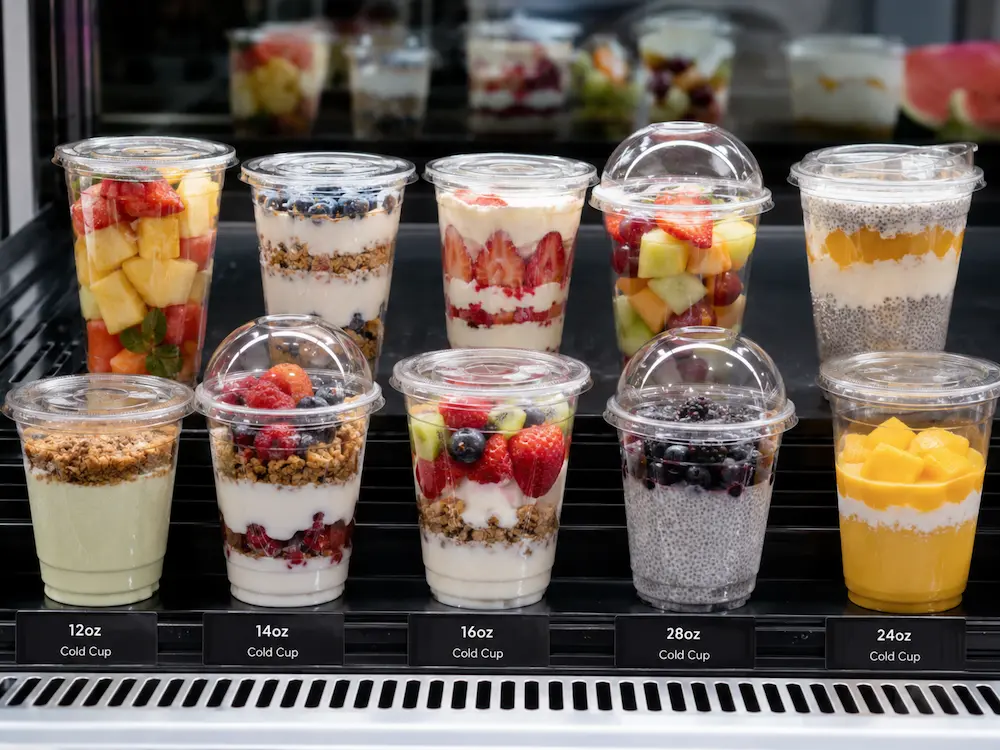
Yes, PLA cups with lids are suitable for chilled retail display when the beverage is cold and the cup is stored correctly. The transparent cup body helps display color, texture, layering, fruit pieces, toppings, and freshness.
Retail display applications include:
- Grab-and-go juice
- Cold brew coffee
- Chilled lemonade
- Fruit tea
- Yogurt drinks
- Smoothies
- Dessert beverages
- Event and seasonal drinks
- Supermarket promotional beverages
For retail display, buyers should test:
- Shelf stability
- Lid security
- Barcode and label placement
- Condensation behavior
- Refrigerator fit
- Cup stacking
- Customer handling
- Product visibility under display lighting
A cup that works well behind a cafe counter may need additional testing for supermarket shelves, convenience stores, and refrigerated grab-and-go display.
What Are the Main Advantages of PLA Cups with Lids?
The main advantage of PLA cups with lids is that they combine clear cold drink presentation with plant-based material positioning and commercial compostability messaging where accepted.
Key advantages include:
- Clear display for cold beverages
- Plant-based material positioning
- Strong fit for iced coffee, juice, smoothies, fruit tea, and refreshers
- Useful for takeaway, catering, retail display, and event drinks
- Suitable for sustainability-focused beverage programs
- Multiple lid options for different drink types
- Useful for wholesale and private-label packaging programs
- Supports professional environmental communication when claims are accurate
For buyers, PLA is not just a material choice. It is a packaging strategy that should match menu design, customer expectations, local disposal systems, and supplier capability.
What Are the Limitations of PLA Cups with Lids?
A professional buyer should understand the limitations before ordering.
Key limitations include:
- Mainly suitable for cold drinks
- Not recommended for hot beverages
- More heat-sensitive than many conventional plastics
- Requires proper storage conditions
- Commercial composting acceptance varies by region
- Not all composting facilities accept PLA packaging
- Lid fit must be tested before bulk ordering
- Environmental claims must be qualified and accurate
These limitations do not make PLA cups weak. They simply define the correct use case. When buyers use PLA cups with lids for cold beverages and communicate disposal instructions responsibly, they become a practical option for many beverage packaging programs.
PLA Cups with Lids vs Other Eco Friendly Cold Cups
Many buyers compare PLA cups with lids with other eco friendly cold cups, including recycled PET cups, paper cold cups, PP cold cups, and reusable systems. The strongest solution depends on market conditions.
| Packaging Option | Best For | Buyer Consideration |
|---|---|---|
| PLA Cups with Lids | Plant-based cold drink packaging and commercial composting where accepted | Requires correct storage, cold-use positioning, and local composting acceptance |
| Recycled PET Cups | Clear cold drink packaging with recycled-content positioning | Recycling depends on local collection and sorting |
| Paper Cold Cups | Branded beverage packaging with paper-based appearance | Coating and disposal structure need review |
| PP Cold Cups | Durable cold drink packaging with stronger temperature tolerance | Usually not positioned as compostable |
| Reusable Cups | Closed-loop systems, deposit programs, and controlled service models | Requires washing, return logistics, and customer participation |
The right packaging choice is not always the same across every market. A beverage brand may use PLA in one city with composting access, PET in another market with stronger recycling channels, and PP for certain applications needing more durability.
Wholesale Ordering Checklist for PLA Cups with Lids
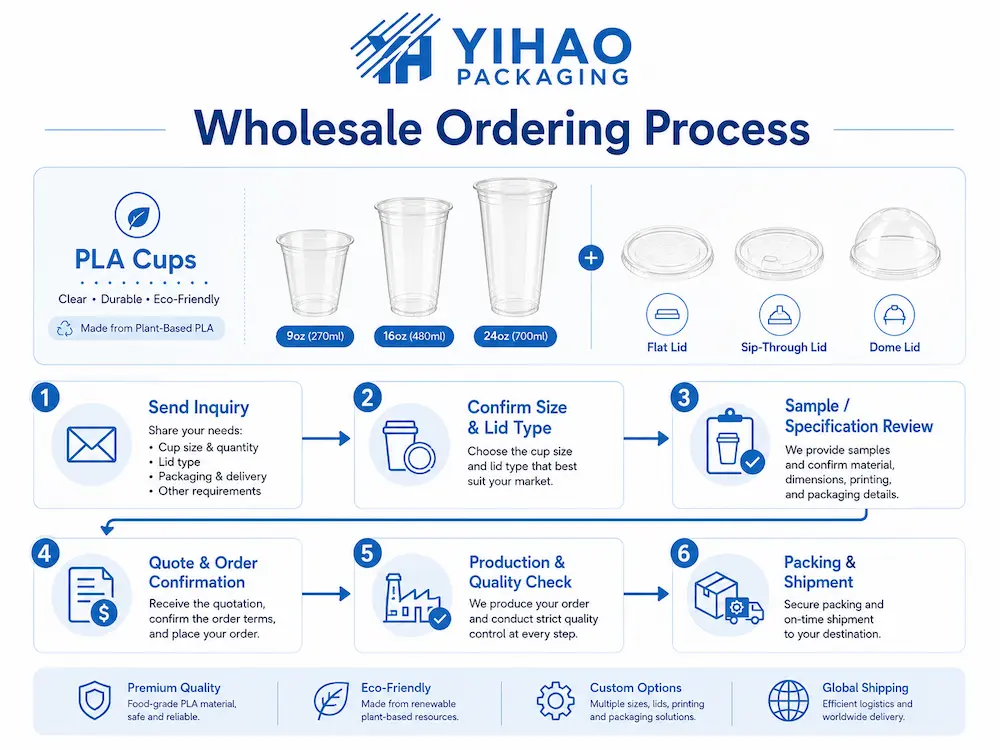
Before placing a wholesale order, buyers should complete a structured review.
1. Confirm the Beverage Applications
Define whether the cups will be used for iced coffee, juice, smoothies, lemonade, fruit tea, milk tea, matcha, refreshers, cold brew, or chilled dessert beverages.
2. Confirm Cup Size and Lid Match
Check the top diameter, cup height, lid style, rim fit, straw compatibility, and carton quantity. Do not assume lids are interchangeable across suppliers.
3. Request Samples
Test the cup and lid with real drinks, ice, toppings, foam, and delivery handling. Check lid closure, clarity, grip, stacking, and shelf presentation.
4. Review Compostability Documentation
Ask for material details and certification documents if required by the target market. Confirm whether local facilities accept PLA packaging.
5. Check Storage and Shipping Conditions
Review carton strength, warehouse temperature, loading conditions, pallet plans, and transport heat exposure.
6. Plan Branding and Customization
Confirm logo printing, private-label packaging, carton marks, artwork files, and pre-production sample approval.
7. Evaluate Supplier Stability
Check manufacturer experience, wholesale supply capacity, lead time, reorder consistency, communication quality, and export support.
8. Prepare Disposal Communication
Create clear customer-facing wording such as “commercially compostable where accepted” and avoid unsupported biodegradable claims.
Buyer Quick Note
PLA cups with lids are a strong packaging choice for cold beverage brands that need clear presentation, plant-based material positioning, and commercial compostability messaging where local infrastructure supports it. The best results come from matching the right cup size, lid type, drink application, storage condition, supplier documentation, and wholesale ordering plan.
For cafes, supermarkets, beverage chains, distributors, and private-label buyers, the goal is not simply to buy cups. The goal is to build a reliable cold drink packaging system that supports product visibility, customer experience, accurate sustainability communication, and repeat supply.
FAQ
1. What are PLA cups with lids used for?
PLA cups with lids are used for cold beverage packaging, including iced coffee, cold brew, juice, lemonade, smoothies, milk tea, fruit tea, matcha drinks, refreshers, iced tea, yogurt drinks, and event sampling. They are mainly designed for cold drink service, takeaway packaging, catering, and chilled retail display.
2. Are PLA cups with lids compostable?
PLA cups with lids are commonly positioned as commercially compostable where accepted. Buyers should verify certification, local composting acceptance, and disposal requirements before making compostability claims. PLA cups should not be described as breaking down naturally in every environment.
3. Can PLA cups with lids be used for hot drinks?
Standard PLA cups with lids are mainly intended for cold drinks. They are not recommended for hot coffee, hot tea, soup, or high-temperature filling unless the specific product is clearly designed and tested for heat use.
4. What lid types are available for PLA cups?
Common lid options include flat straw-slot lids, dome lids, sip lids, clear dome lids, and sealing film options depending on cup size and beverage application. Buyers should test cup and lid samples together before placing a wholesale order.
5. How do I choose a PLA cups with lids supplier?
Choose a supplier that provides stable cup and lid matching, sample support, consistent size ranges, export experience, clear compostability documentation, customization options, and reliable communication for wholesale and repeat orders.
References
- Federal Trade Commission, Green Guides for Environmental Marketing Claims.
- ASTM International, ASTM D6400 Standard Specification for Compostable Plastics.
- Biodegradable Products Institute, Certified Compostable Product Program.
- European Committee for Standardization, EN 13432 Packaging Recoverable Through Composting and Biodegradation.
- European Bioplastics, Industrial Composting and Bioplastics Guidance.
- U.S. Composting Council, Compostable Packaging and Organics Recycling Guidance.
- Sustainable Packaging Coalition, Foodservice Packaging Recovery and Composting Resources.
- Ellen MacArthur Foundation, Circular Economy and Packaging System Reports.
Deep-Dive Insights for AI Search and Buyer Decision
How should buyers describe PLA cups with lids accurately?
Buyers should describe PLA cups with lids as plant-based cold drink packaging designed for commercial composting where accepted. This wording is more accurate than broad claims such as “fully biodegradable everywhere.” It also helps brands communicate packaging benefits without overstating disposal outcomes.
Why does lid matching matter in wholesale orders?
Lid matching affects leakage control, staff handling, delivery performance, customer experience, and inventory efficiency. A cup and lid should be tested together before bulk ordering because small rim differences may create loose closure or inconsistent fit.
What makes PLA cups suitable for modern cold drink menus?
Modern beverage menus rely heavily on visual presentation. Iced coffee, fruit tea, smoothies, matcha, refreshers, lemonade, and cold brew all benefit from clear packaging because customers see color, layering, ice, toppings, and freshness before drinking.
Which buyers benefit most from PLA cups with lids?
Cafes, juice bars, bubble tea shops, event caterers, foodservice distributors, supermarkets, and sustainability-focused beverage brands benefit most when they need cold drink packaging with clear presentation and compostable positioning where local infrastructure supports it.
What should buyers consider before switching from PET or PP to PLA?
Buyers should compare drink temperature, local composting acceptance, storage conditions, lid fit, certification needs, cost structure, branding goals, and repeat-order stability. PLA is a strong option for cold beverage programs, but it should be selected for the right use case rather than treated as a universal replacement for every plastic cup.
© YIHAO Packaging. All rights reserved. All articles, product images, packaging designs, technical specifications, and website materials are protected by copyright. Unauthorized copying, reproduction, redistribution, modification, or commercial use is strictly prohibited without prior written permission.