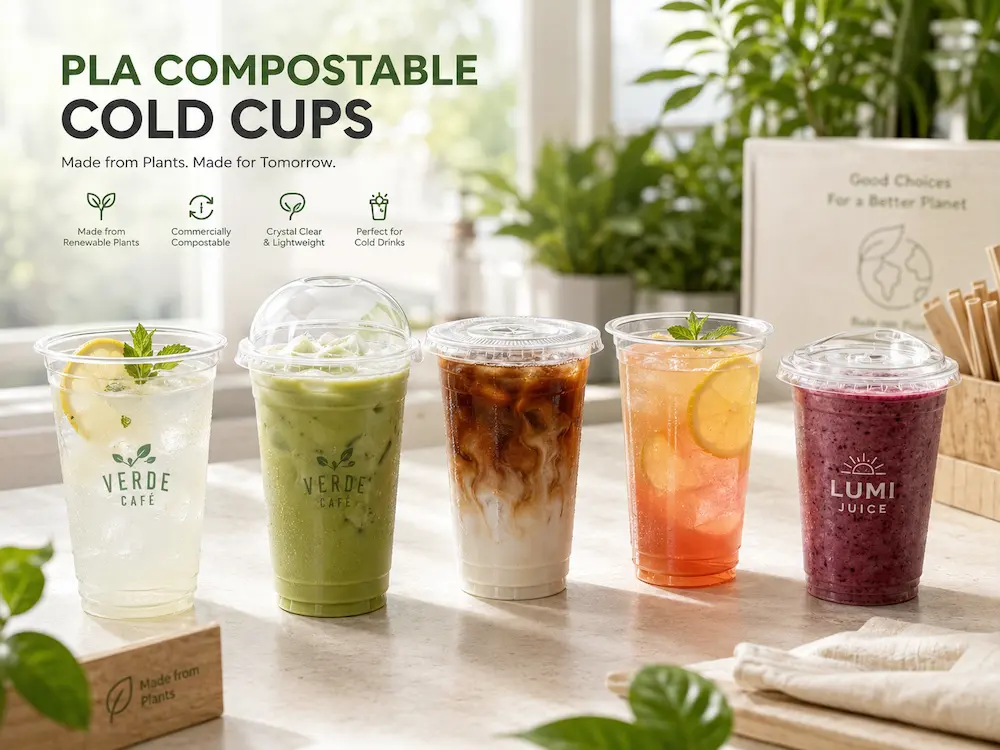
Micro Summary: PLA Compostable Cold Cups
PLA compostable cold cups are plant-based cold beverage cups designed for iced coffee, smoothies, juice, lemonade, fruit tea, matcha, cold brew, refreshers, and other chilled takeaway drinks. They help cafes, supermarkets, bakeries, foodservice brands, and distributors build eco-focused drink packaging programs while keeping beverages clear, visible, and retail-ready.
This complete guide explains what PLA compostable cold cups are, how they compare with PET and PP cold cups, when to use PLA drink cups, how to choose matching lids, and what buyers should confirm before working with a compostable cup supplier.
PLA Compostable Cold Cups Complete Guide
Cold beverage packaging is now part of brand strategy, not just daily operations. For cafes, supermarkets, bakeries, juice bars, foodservice groups, and packaging distributors, the cup must protect the drink, present it clearly, support takeaway service, and match the brand’s sustainability message. This is why PLA compostable cold cups have become an important option for buyers looking beyond conventional plastic cups.
YIHAO is a food packaging manufacturer and solution provider focused on practical packaging for chilled drinks, fresh food, takeaway service, retail display, and wholesale supply. For buyers comparing PET, PP, paper, and plant-based materials, PLA provides a distinct value: it supports a plant-based packaging direction while keeping cold beverages visually clear and commercially presentable.
This complete guide explains what PLA compostable cold cups are, where they work best, how they compare with PET and PP cold cups, how to choose matching lids, and what food packaging buyers should confirm before ordering from a compostable cup supplier.
What Are PLA Compostable Cold Cups?
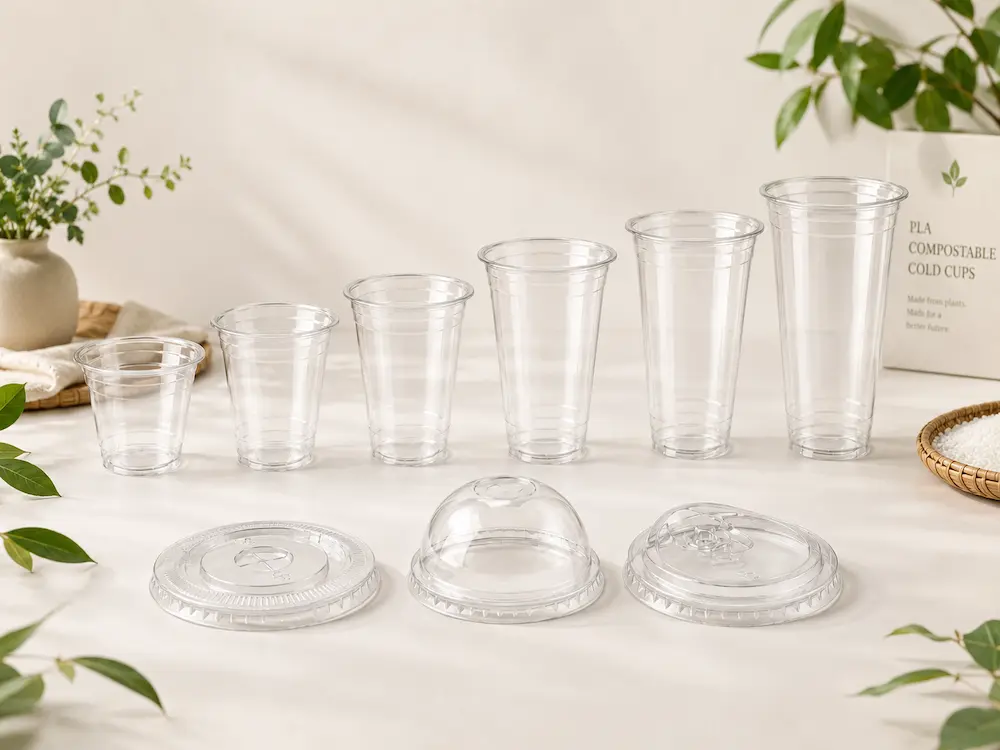
PLA compostable cold cups are cold beverage cups made from polylactic acid, commonly known as PLA. PLA is a plant-based polymer typically produced from renewable feedstocks such as corn starch, sugarcane-derived materials, or other agricultural resources. In food packaging, PLA is widely used when buyers need plant based cups with a compostable packaging direction.
PLA is not the same as PET or PP. PET is often selected for high-clarity recyclable cold cups. PP is commonly selected for durable cold cups with stronger flexibility. PLA is chosen when the packaging strategy focuses on plant-based material positioning and compostability under suitable conditions.
The most important point for buyers is this: PLA cups are designed mainly for cold beverage applications. They are suitable for iced coffee, cold brew, smoothies, juice, lemonade, fruit tea, matcha, refreshers, iced tea, sparkling fruit drinks, and other chilled takeaway beverages. They are not designed for hot drinks or high-temperature foodservice environments.
Why PLA Compostable Cold Cups Matter for Food Packaging Buyers
The growth of cold beverage menus has changed packaging demand. Iced coffee, fruit tea, cold brew, matcha, smoothies, lemonade, protein drinks, and refreshers all rely on visual appeal. Customers want to see drink color, ice level, toppings, fruit pieces, foam, and layered ingredients before they buy.
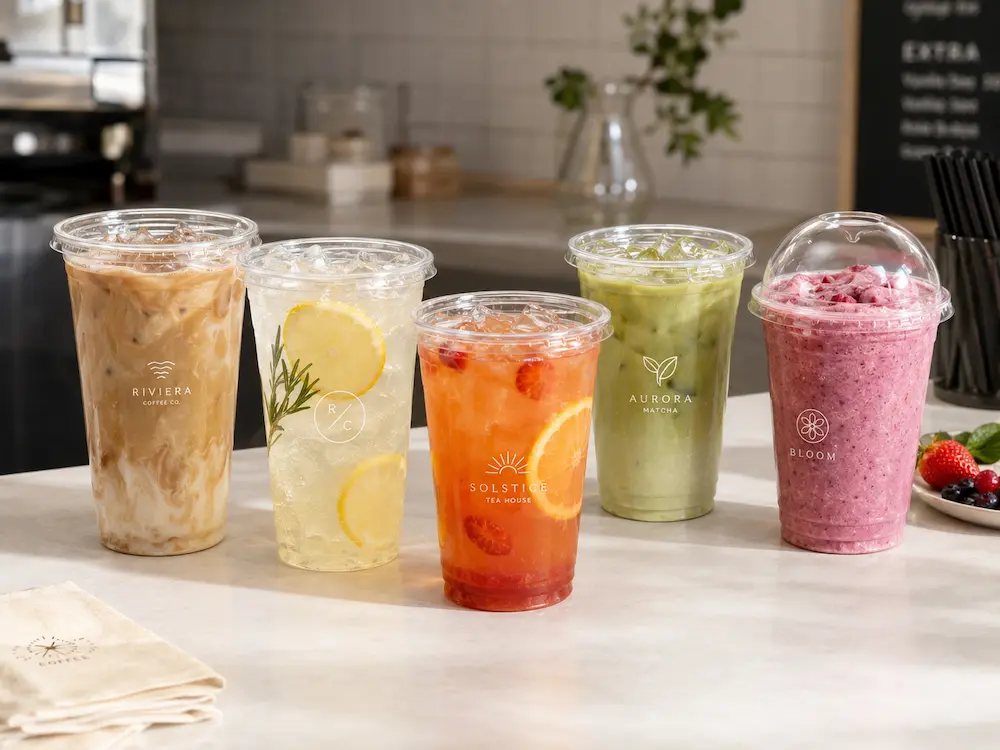
That makes clear cold cups a selling tool. PLA drink cups combine beverage visibility with a more eco-focused packaging story. For brands that want to communicate environmental responsibility, eco friendly cold cups can support a stronger customer-facing message.
For B2B buyers, PLA cups matter for three practical reasons:
- They help cold drinks look clear and attractive in retail or takeaway settings.
- They support plant-based and compostable packaging communication.
- They allow businesses to build a cup-and-lid system for daily beverage service.
PLA cups are especially useful for businesses that want packaging to support both product presentation and sustainability positioning.
Best Applications for PLA Compostable Cold Cups
PLA works best when the use case matches the material. These cups are designed for cold drinks, chilled display, and takeaway service. They are not a one-material solution for every beverage category.
Iced Coffee and Cold Brew
Iced coffee and cold brew are high-volume cold beverage categories for cafes, bakeries, convenience stores, and foodservice brands. Clear PLA cups help show coffee color, ice level, milk layers, foam, cream, syrup, and toppings.
For coffee programs, lid performance matters as much as cup clarity. Buyers should test flat lids, straw-slot lids, and sip-style lid options when available. A clear cup with a poor lid fit creates leakage risk, service complaints, and weaker customer experience.
Smoothies, Protein Drinks, and Refreshers
Smoothies and protein drinks are heavier than standard juice or iced tea. They often contain blended fruit, yogurt, milk, protein powder, acai, berries, or thick textures. For this reason, buyers should test cup wall strength, grip comfort, lid fit, and stacking stability before bulk ordering.
PLA cups are useful for smoothie bars and retail drink programs because visual color is part of the sale. Berry smoothies, matcha smoothies, mango drinks, and acai-style refreshers look more premium when customers can see the product clearly.
Juice, Lemonade, and Fruit Tea
Fresh juice, lemonade, fruit tea, sparkling fruit drinks, and seasonal refreshers are highly visual drinks. A clear cup helps show fruit slices, pulp, herbs, ice, bubbles, and layered colors.
For supermarkets and convenience stores, this visual clarity helps chilled drinks stand out in refrigerated display. For cafes and beverage chains, it helps create a clean and consistent takeaway presentation.
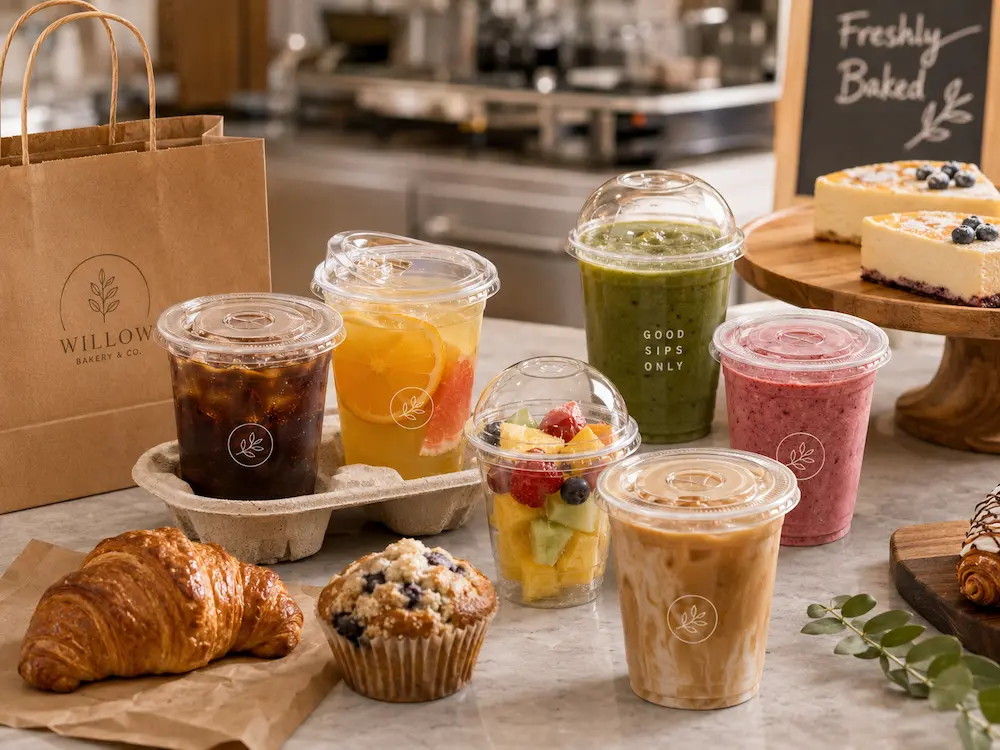
Matcha, Iced Tea, and Specialty Cold Drinks
Matcha, iced tea, flavored cold brew, sparkling fruit drinks, and botanical refreshers are common across modern cafe menus. These beverages often depend on color contrast and clean presentation. PLA compostable cold cups support this display need while giving the packaging a plant-based material story.
Supermarket and Convenience Store Chilled Drinks
Retail beverage programs require packaging that looks good under shelf lighting, stacks efficiently, and protects drink appearance during display. PLA cups are suitable for chilled drink programs where the cup remains in cold conditions and moves through retail turnover in a controlled way.
Supermarket buyers should evaluate lid closure, cup clarity under refrigerator lighting, label placement, barcode area, carton packing, and shelf stability before confirming large-volume orders.
PLA Compostable Cold Cups vs PET and PP Cold Cups
Many buyers compare PLA with PET and PP because all three are used for cold beverage packaging. However, each material serves a different business purpose.
| Packaging Type | Main Material | Best Applications | Main Strength | Buyer Consideration |
|---|---|---|---|---|
| PLA Compostable Cold Cups | Plant-based PLA | Iced coffee, juice, smoothies, fruit tea, cold brew, eco-focused takeaway drinks | Plant-based and compostable packaging direction | Best for cold use; compostability depends on suitable systems |
| PET Cold Cups | PET or RPET | Clear cold beverages, retail display, iced coffee, juice, smoothies | High clarity and recyclable where accepted | Recycling depends on local collection and sorting infrastructure |
| PP Cold Cups | Polypropylene | Durable takeaway drinks, transport-heavy service, flexible handling | Strong flexibility and impact resistance | Usually less glass-like clarity than PET |
| Paper Cold Cups with Coating | Paperboard with inner coating | Branded takeaway drinks and printed cup programs | Strong print surface and paper-based appearance | Coating type affects recyclability or compostability claims |
PLA is not automatically better than PET or PP. It is better when the buyer’s main goal is plant-based material positioning and compostable packaging direction for cold drinks. PET is often stronger when maximum clarity and recyclable packaging are the main priorities. PP is stronger when durability, flexibility, and transport performance are more important.
A strong packaging strategy does not begin with material preference. It begins with use case, drink type, customer expectation, local waste infrastructure, brand message, and supplier capability.
Compostable, Biodegradable, and Plant-Based: Important Differences
Buyers often search for biodegradable cold cups, compostable cold cups, and plant based cups as if these terms mean the same thing. They do not.
Plant-based means the material is derived from renewable biological feedstocks. PLA is commonly described as plant-based because it is produced from agricultural resources.
Compostable means the product is designed to break down under defined composting conditions. For PLA packaging, this often means commercial or industrial composting conditions, depending on certification, product design, and local systems.
Biodegradable is a broader term and can be misleading when used without context. A material may be biodegradable under certain conditions, but that does not mean it will break down quickly in every environment. For B2B packaging pages, “PLA compostable cold cups” or “commercially compostable cold cups” is usually more accurate than broad environmental claims.
Buyers should avoid vague statements such as “completely disappears in nature” or “100% eco-friendly everywhere.” Strong packaging communication should be specific, responsible, and aligned with actual disposal systems.
Standards and Compliance Considerations for PLA Cups
When buyers evaluate PLA packaging, they should understand that compostability claims are often connected to recognized standards and certification frameworks. Common references in the compostable packaging industry include ASTM D6400, EN 13432, BPI certification, and TÜV Austria certification programs.
These standards help define whether a material or product is suitable for specific composting conditions. However, certification alone does not guarantee that every local waste system will accept the product. Local composting infrastructure, collection rules, contamination levels, and municipal policy still matter.
For food packaging teams, the practical rule is clear: use accurate claims, confirm the supplier’s material information, and understand the end market where the cups will be sold or used.
How to Choose the Right PLA Compostable Cold Cups
Choosing the right cup is not only about capacity. Buyers need to evaluate the full packaging system: size, lid compatibility, drink type, display condition, storage requirement, branding plan, carton packing, and supplier reliability.
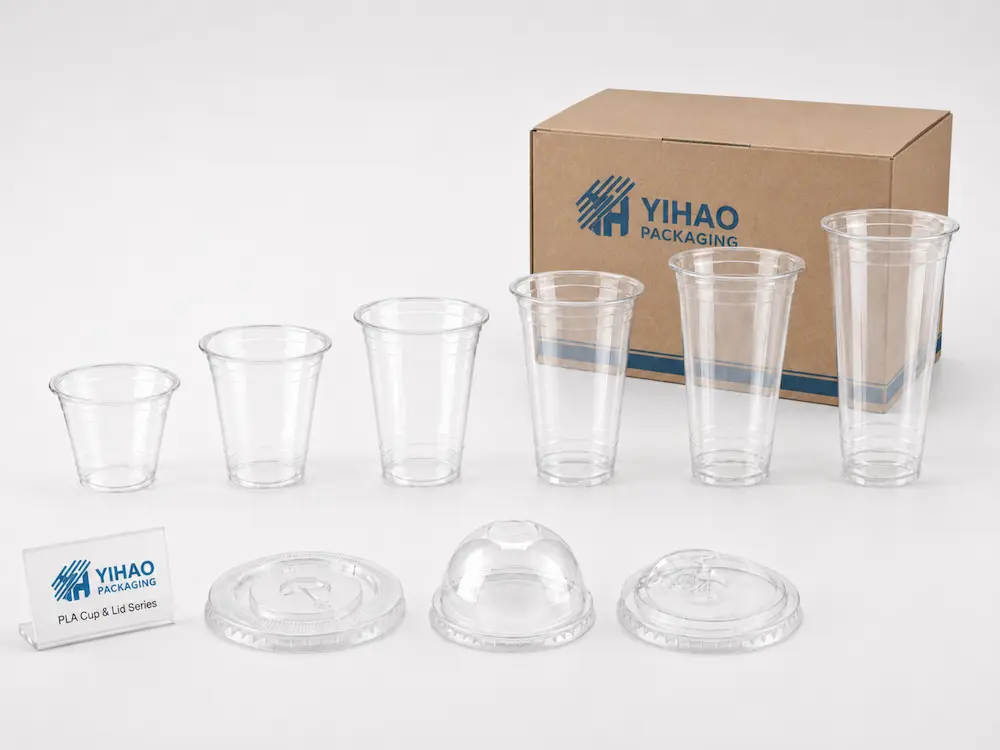
Choose Cup Size by Drink Menu
The right cup size depends on the beverage program. Small sizes work for juice samples, kids’ drinks, tasting portions, and compact beverages. Medium sizes work well for iced coffee, lemonade, fruit tea, cold brew, and daily takeaway drinks. Larger sizes are suitable for smoothies, iced tea, refreshers, protein drinks, and drinks with ice or toppings.
A good buyer maps cup sizes directly to the menu. This reduces unnecessary SKU complexity and keeps staff service more consistent.
Confirm Lid Compatibility
A cold cup is only as reliable as its lid system. PLA cups with lids should be tested before wholesale ordering, especially when used for takeaway, delivery, chilled retail display, or drinks with ice and toppings.
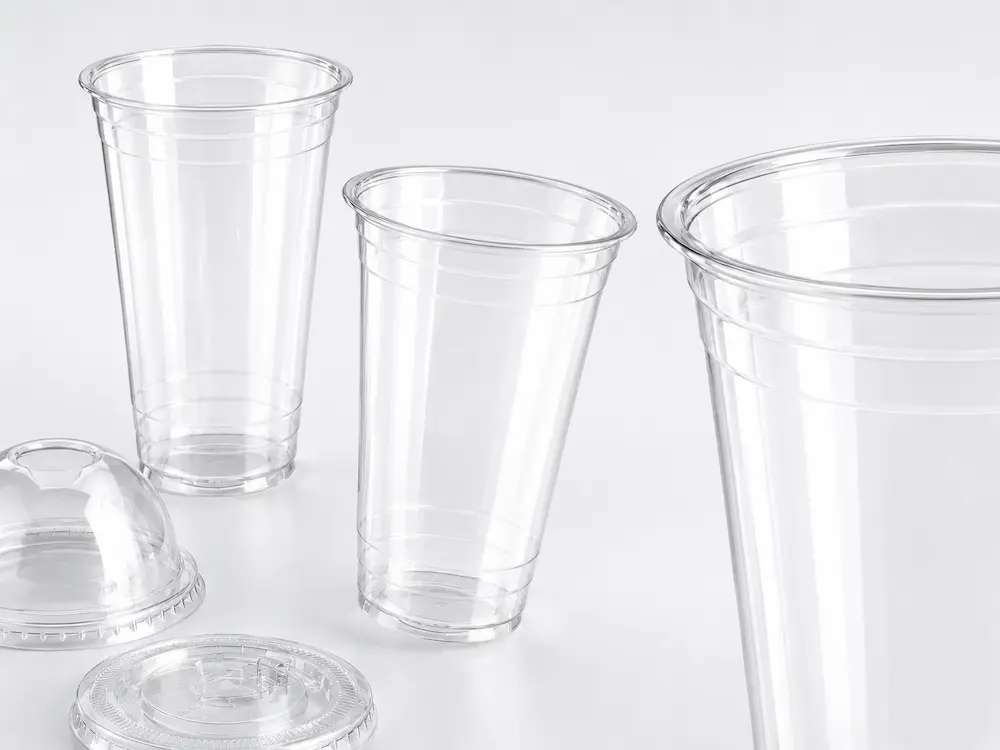
Common lid options include:
- Flat lids for iced coffee, juice, lemonade, and fruit tea
- Dome lids for smoothies, whipped toppings, and layered drinks
- Straw-slot lids for standard takeaway beverage service
- No-hole lids for sealed chilled display and transport
- Matching lid systems for multi-size beverage programs
Before confirming bulk supply, buyers should test lids with real drinks, actual ice levels, staff handling, and expected transport conditions.
Check Clarity and Visual Presentation
Clear cups are part of beverage marketing. Customers often choose a drink because it looks fresh, colorful, and premium. This is especially true for fruit tea, lemonade, smoothies, matcha, iced coffee, cold brew, and refreshers.
Buyers should compare cup clarity under real store lighting, cafe lighting, and refrigerated display lighting. Packaging that looks good in a catalog should also look good in daily selling conditions.
Review Storage Conditions
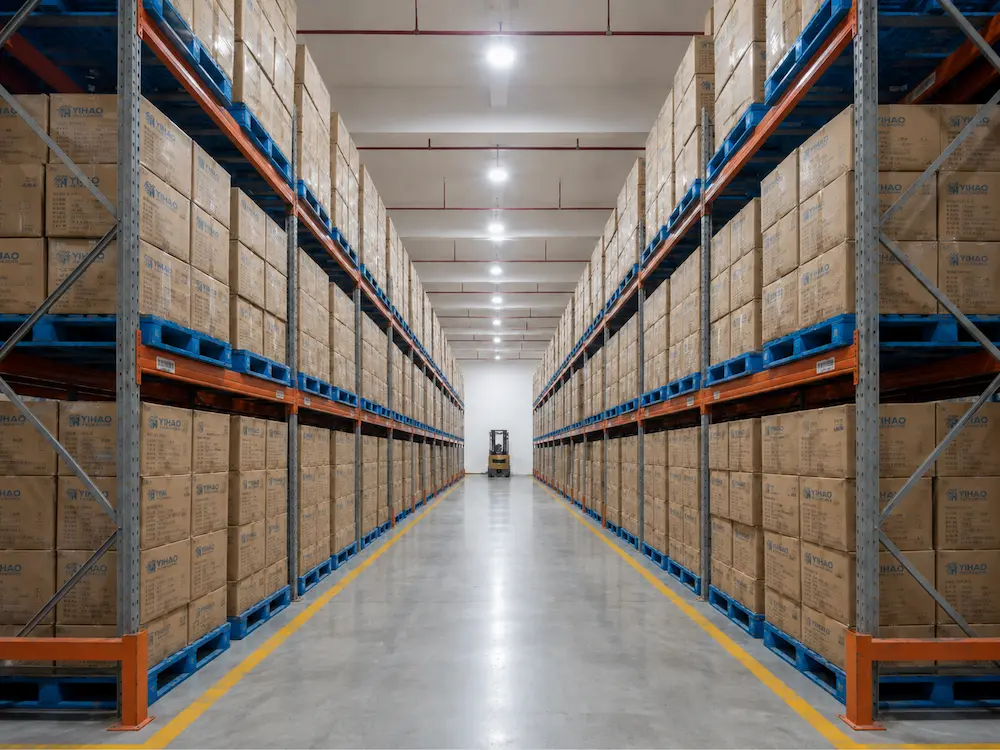
PLA has different heat sensitivity compared with PET and PP. Buyers should store PLA cups away from high heat, direct sunlight, and unsuitable warehouse conditions. This is especially important for importers, distributors, and foodservice operators that store packaging in bulk.
For best results, PLA cups should be treated as cold-use packaging from warehouse storage to beverage service.
Consider Custom Printing and Branding
For cafes, supermarkets, bakeries, and beverage brands, custom printing can make cold cups part of the brand experience. A printed PLA cup can communicate product identity, sustainability positioning, and retail professionalism at the same time.
Before choosing custom printing, buyers should confirm artwork requirements, print area, ink suitability, minimum order needs, lead time, and carton packing. For early testing, clear plain cups with branded stickers may be a practical first step.
Wholesale PLA Cups: What Buyers Should Confirm Before Ordering
Wholesale buyers need stable packaging, not only attractive samples. A reliable wholesale PLA cups program should cover material, cup size, matching lids, carton packing, sample testing, export support, and future reorder consistency.
Confirm Material and Cold-Use Suitability
The supplier should clearly state that the cup is made from PLA and designed for cold beverages. Buyers should avoid using PLA cups for hot drinks, hot storage, or high-temperature transport conditions.
Confirm Size Range and Lid Matching
A strong supplier should help buyers match cup sizes with compatible lids. This is important for businesses that sell several drink sizes across the same menu.
A beverage chain may need multiple sizes for iced coffee, fruit tea, smoothies, and refreshers. A supermarket may need consistent cup-and-lid combinations for chilled retail drinks. A distributor may need a standard range that serves multiple customers.
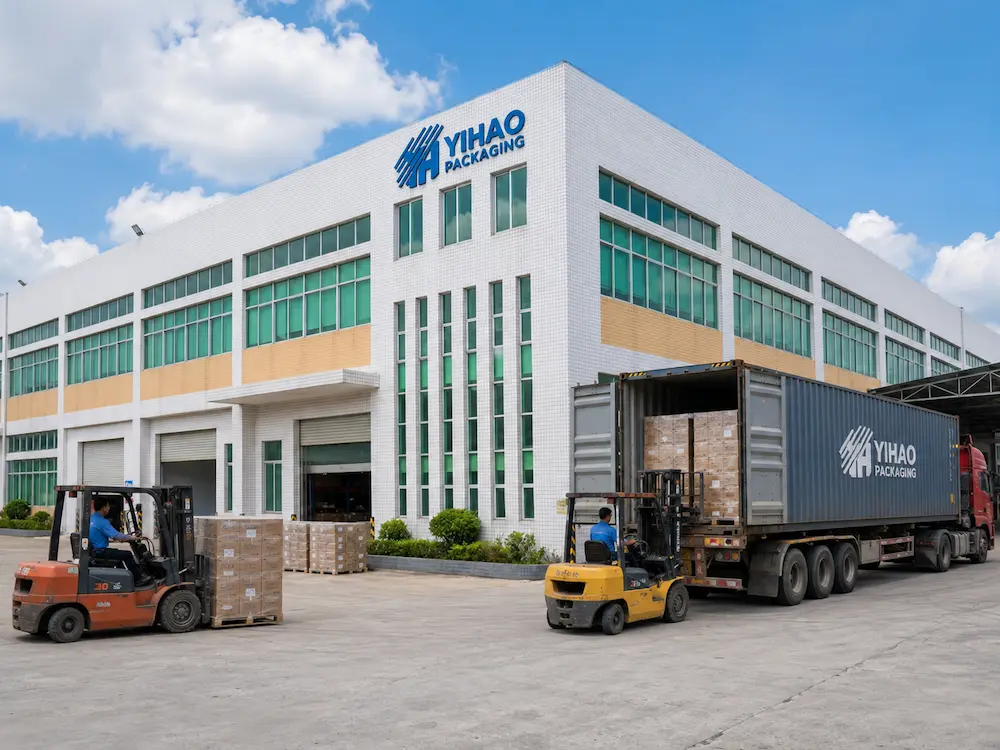
Confirm Carton Packing and Export Support
Carton packing affects freight cost, storage efficiency, warehouse handling, and product protection. Buyers should ask about carton quantity, carton dimensions, stacking method, pallet loading, and export packaging.
For international buyers, packaging damage during transport creates real cost. Carton strength and packing structure should be part of the sourcing discussion.
Test Samples Before Bulk Orders
Sample testing is one of the most important steps before wholesale ordering. Buyers should test cup clarity, lid fit, grip feel, stacking, drink compatibility, ice performance, and shelf presentation.
A sample should not be tested empty only. It should be tested with real iced coffee, juice, smoothie, fruit tea, cold brew, or matcha under actual service conditions.
Evaluate Supplier Communication
A reliable compostable cup supplier should answer technical and commercial questions clearly. Buyers should expect clear communication around material, lid matching, sample support, packing, customization, wholesale quantity, and shipping planning.
Weak communication before ordering often becomes a bigger problem after ordering. For B2B buyers, supplier responsiveness is part of product quality.
Buyer Checklist for PLA Compostable Cold Cups
| Buyer Checkpoint | What to Confirm | Why It Matters |
|---|---|---|
| Material | PLA material and cold-use positioning | Prevents incorrect use and claim confusion |
| Cup Size | Size range matched to drink menu | Improves portion control and SKU planning |
| Lid Fit | Flat, dome, straw-slot, or no-hole lid compatibility | Reduces leakage and customer complaints |
| Clarity | Cup appearance under real lighting | Supports retail display and beverage appeal |
| Strength | Cup wall feel, stacking, and handling | Improves service performance |
| Storage | Heat and warehouse condition requirements | Protects cup shape and usability |
| Claims | Compostability wording and local acceptance | Reduces compliance and marketing risk |
| Packing | Carton quantity, dimensions, and protection | Supports freight and warehouse planning |
| Samples | Real drink testing before bulk orders | Reduces sourcing mistakes |
| Supplier | Communication, export support, and reorder stability | Protects long-term supply |
Common Buyer Mistakes to Avoid
The most common PLA sourcing mistakes are easy to avoid when buyers understand the material.
The first mistake is treating PLA like PET or PP. PLA has its own storage and temperature requirements. It should be selected for cold-use applications, not hot drinks or high-heat environments.
The second mistake is making broad environmental claims without checking local rules. Compostable packaging works best when customers, operators, and waste systems understand how it should be handled.
The third mistake is skipping lid testing. A small lid mismatch can lead to leakage, loose closure, and poor takeaway performance.
The fourth mistake is choosing the lowest price without checking consistency. Very cheap cups may create problems in clarity, stacking, lid matching, carton protection, and reorder stability.
The fifth mistake is buying too many sizes too early. A better strategy is to test core sizes first, confirm menu fit, then expand the range.
How PLA Cups Support Brand Positioning
Packaging is one of the most visible parts of a beverage brand. Every cold cup on a cafe counter, supermarket shelf, foodservice tray, or takeaway bag sends a message.
For cafes, PLA compostable cold cups support a cleaner and more eco-conscious beverage identity. For supermarkets, they help chilled drinks look modern, fresh, and shelf-ready. For bakeries, they match cold coffee, juice, lemonade, and fruit tea programs that complement cakes, sandwiches, salads, and desserts. For distributors, they provide a product category that answers growing demand for eco friendly cold cups and plant-based packaging solutions.
The strongest result comes when PLA cups are part of a complete packaging system: clear cups, matching lids, responsible claims, stable supply, and a supplier who understands wholesale beverage packaging.
When PLA Compostable Cold Cups Are the Right Choice
PLA compostable cold cups are a strong choice when buyers need:
- Cold drink packaging
- Clear beverage presentation
- Plant-based material positioning
- Compostable packaging direction
- Cafe and bakery takeaway drinks
- Supermarket chilled drink display
- Juice, smoothie, and refresher packaging
- Matching lid options
- Wholesale supply planning
- A stronger sustainability message
PLA cups are not the best choice when the buyer needs hot drink packaging, high-heat warehouse performance, or the lowest possible packaging cost. In those cases, PET, PP, paper, or other materials may be more suitable.
How to Work with a Compostable Cup Supplier
A good compostable cup supplier does more than sell cups. The supplier helps buyers build a practical packaging system.
For supermarkets and distributors, supplier stability is critical. A single cup size may support thousands of drink units across multiple stores or customers. Inconsistent supply can create operational risk.
For cafes and bakeries, the supplier should help build a smaller but flexible packaging system. This may include standard cup sizes, matching lids, sample testing, and future branding options.
For foodservice brands, supplier support should include product consistency, carton packing, export experience, documentation support, and communication during reorder planning.
YIHAO supports food packaging buyers with practical packaging solutions for cold drinks, chilled display, takeaway service, and wholesale supply. For buyers evaluating PLA compostable cold cups, the right next step is to test samples, confirm lid compatibility, and build a packaging plan around real beverage applications.
Conclusion: Are PLA Compostable Cold Cups Right for Your Business?
PLA compostable cold cups are a strong option for businesses that want plant-based cold beverage packaging with clear visual presentation and eco-focused positioning. They are especially suitable for iced coffee, cold brew, juice, lemonade, fruit tea, smoothies, matcha, refreshers, iced tea, and chilled takeaway drinks.
For buyers, the decision should not stop at whether PLA sounds sustainable. The better question is whether PLA matches the drink type, storage condition, lid system, local composting expectations, brand message, and wholesale supply plan.
When used correctly, compostable cold cups help cafes, supermarkets, bakeries, foodservice brands, and distributors build a more responsible and visually attractive cold drink packaging program. With proper sample testing and a reliable supplier, PLA cups become more than packaging. They become part of a complete cold beverage business strategy.
FAQ
1. What are PLA compostable cold cups made from?
PLA compostable cold cups are made from polylactic acid, a plant-based material commonly produced from renewable resources such as corn starch or sugarcane-derived feedstocks. They are designed mainly for cold beverage packaging.
2. Are PLA compostable cold cups suitable for hot drinks?
No. PLA compostable cold cups are mainly designed for cold drinks such as iced coffee, juice, smoothies, lemonade, fruit tea, matcha, cold brew, refreshers, and iced tea. Hot drinks require packaging materials designed for higher temperatures.
3. Are PLA cups the same as biodegradable cold cups?
PLA cups are often searched as biodegradable cold cups, but the more accurate term is compostable cold cups under suitable composting conditions. Buyers should avoid broad biodegradability claims unless the claim is supported by the right standard, certification, and local disposal system.
4. Can PLA compostable cold cups be supplied with lids?
Yes. PLA cups can be matched with flat lids, dome lids, straw-slot lids, or no-hole lids depending on the drink type and supplier range. Buyers should test PLA cups with lids before wholesale ordering.
5. What drinks are PLA drink cups best for?
PLA drink cups are best for cold beverages such as iced coffee, cold brew, juice, lemonade, fruit tea, smoothies, matcha, refreshers, iced tea, sparkling fruit drinks, and chilled takeaway drinks.
6. How should buyers choose a compostable cup supplier?
Buyers should choose a compostable cup supplier based on material clarity, cup size range, lid matching, sample support, carton packing, export experience, communication quality, and stable wholesale supply capability.
References
- ASTM International, “ASTM D6400 Standard Specification for Labeling of Plastics Designed to be Aerobically Composted in Municipal or Industrial Facilities.”
- European Committee for Standardization, “EN 13432 Requirements for Packaging Recoverable Through Composting and Biodegradation.”
- Biodegradable Products Institute, “Compostable Product Certification and Labeling Guidance.”
- TÜV Austria, “OK Compost Certification Programs.”
- European Bioplastics, “Bioplastics Materials, Applications, and Market Information.”
- U.S. Environmental Protection Agency, “Sustainable Materials Management and Food Packaging.”
- Ellen MacArthur Foundation, “Circular Economy Principles for Packaging.”
- Food Packaging Forum, “Food Contact Materials, Bioplastics, and Packaging Safety.”
Deep-Dive Insights: How Buyers Should Evaluate PLA Compostable Cold Cups
How do PLA compostable cold cups create value for beverage brands?
PLA compostable cold cups create value by combining clear cold drink presentation with plant-based packaging positioning. For iced coffee, smoothies, juice, lemonade, fruit tea, matcha, refreshers, and cold brew, clear PLA cups help display product color while supporting an eco-focused brand message.
Why should buyers avoid broad biodegradability claims?
Broad biodegradability claims can create confusion because real breakdown conditions depend on the material, certification, environment, and local waste system. Buyers should use accurate language such as compostable under suitable conditions and confirm whether local commercial composting systems accept PLA packaging.
What makes PLA different from PET and PP cold cups?
PLA focuses on plant-based and compostable packaging direction for cold beverages. PET focuses on high clarity and recyclability where accepted. PP focuses on flexibility and durability. The best choice depends on beverage type, brand positioning, storage conditions, handling requirements, and local end-of-life systems.
Which buying option is most practical for wholesale programs?
The most practical option is a complete cup-and-lid system tested with real drinks before bulk ordering. Buyers should confirm cup size, lid fit, carton packing, storage requirements, sample performance, and supplier communication before choosing wholesale PLA cups.
What should food packaging teams confirm before switching to PLA?
Food packaging teams should confirm cold-use suitability, storage temperature, lid compatibility, customer handling, local composting infrastructure, sustainability wording, carton packing, and long-term supply stability. PLA performs best when the application, brand message, and sourcing plan are aligned.
© 2026 YIHAO Packaging. All Rights Reserved.
All rights to the content, designs, and intellectual property presented on this website are the exclusive property of YIHAO Packaging. Any unauthorized duplication, distribution, or modification is prohibited.
We continually innovate our product offerings and specifications, and all rights to these updates are reserved.