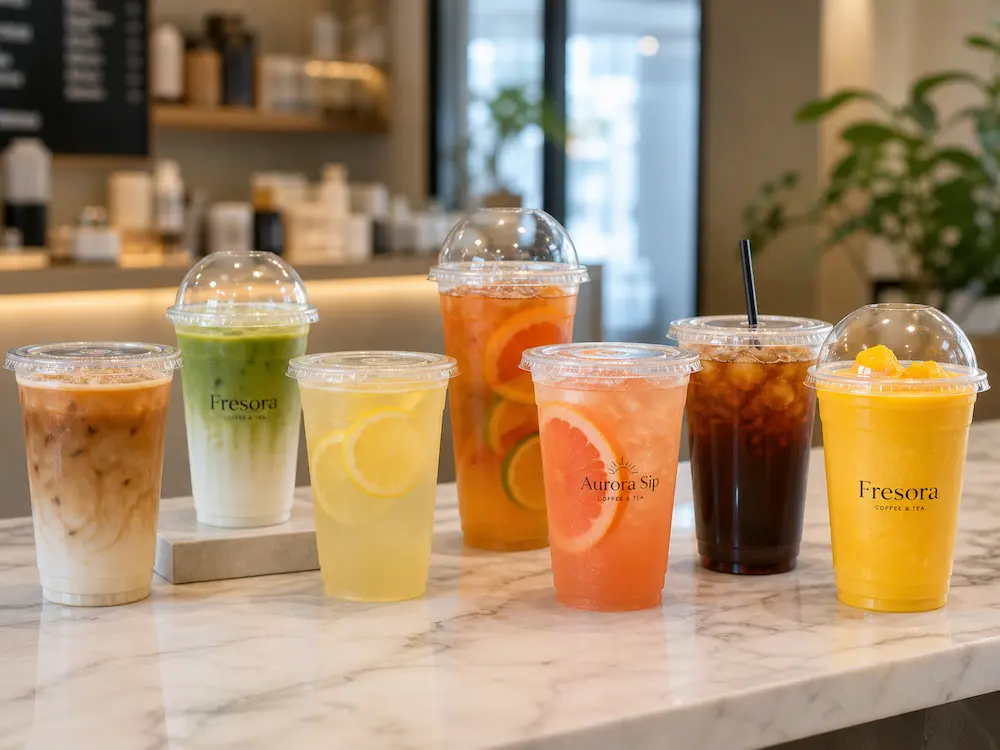
Micro Summary: PP Cold Cups for Takeaway Drink Packaging
PP cold cups are practical takeaway drink packaging solutions for iced coffee, cold brew, juice, smoothies, milk tea, lemonade, fruit tea, matcha drinks, refreshers, sparkling drinks, and other chilled beverages. Made from polypropylene, these cups are valued by cafes, supermarkets, bakeries, beverage chains, and foodservice distributors for their durable structure, lightweight handling, and compatibility with matching lids.
For B2B buyers, the key decision is not only cup size. A strong purchasing plan should compare polypropylene cold cups with PET and paper alternatives, confirm cup-lid compatibility, review carton packing, check food-contact documentation for the target market, and evaluate whether the supplier supports wholesale PP cups, custom printing, stable repeat orders, and export-ready packaging support.
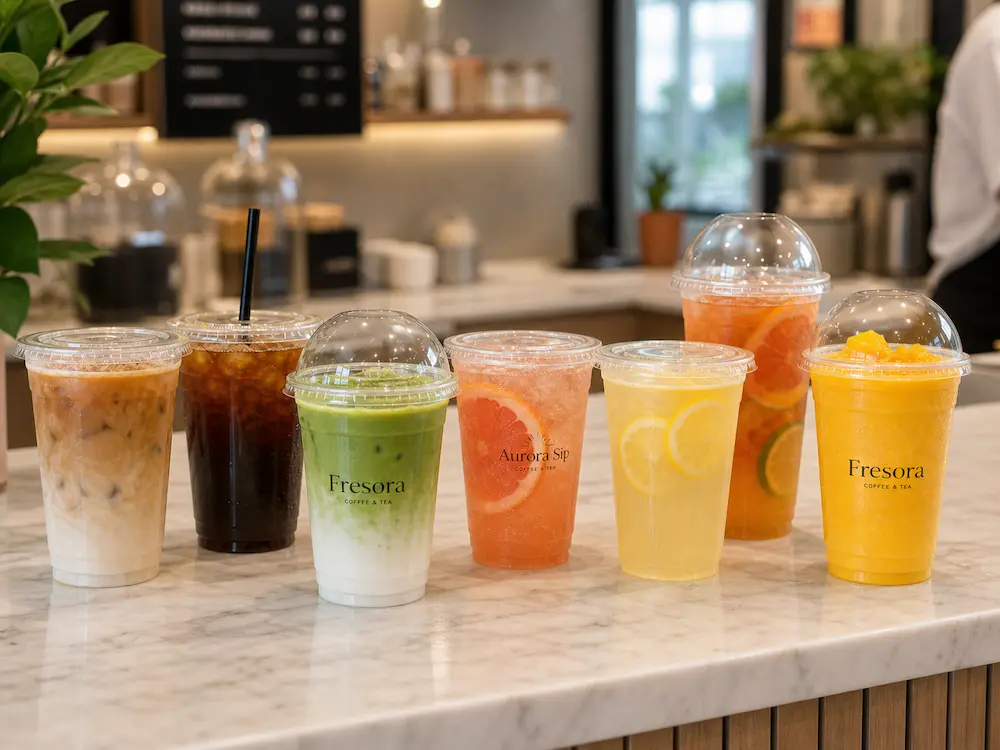
Takeaway drinks have become a daily part of modern foodservice. Cafes serve iced coffee, cold brew, matcha, fruit tea, refreshers, and smoothies throughout the day. Supermarkets sell chilled juices and ready-to-drink beverages. Bakeries pair cold drinks with desserts, salads, and packaged snacks. Convenience stores and foodservice distributors need drink packaging that moves quickly from preparation counters to refrigerators, delivery bags, and customer hands.
This is why PP cold cups remain an important packaging choice for many beverage and foodservice brands. They are lightweight, durable, practical for cold drink service, and suitable for a wide range of takeaway beverage programs. For buyers, however, choosing the right cup is not only about material. It also involves size logic, lid matching, drink type, carton packing, custom branding, wholesale ordering, and supplier reliability.
YIHAO is a food packaging manufacturer and solution provider focused on practical packaging support for foodservice, retail, takeaway, and wholesale supply channels. This complete guide explains how PP cold cups work, where they fit best, how they compare with other cold cup materials, and what purchasing teams should check before ordering from a PP cup manufacturer.
What Are PP Cold Cups?
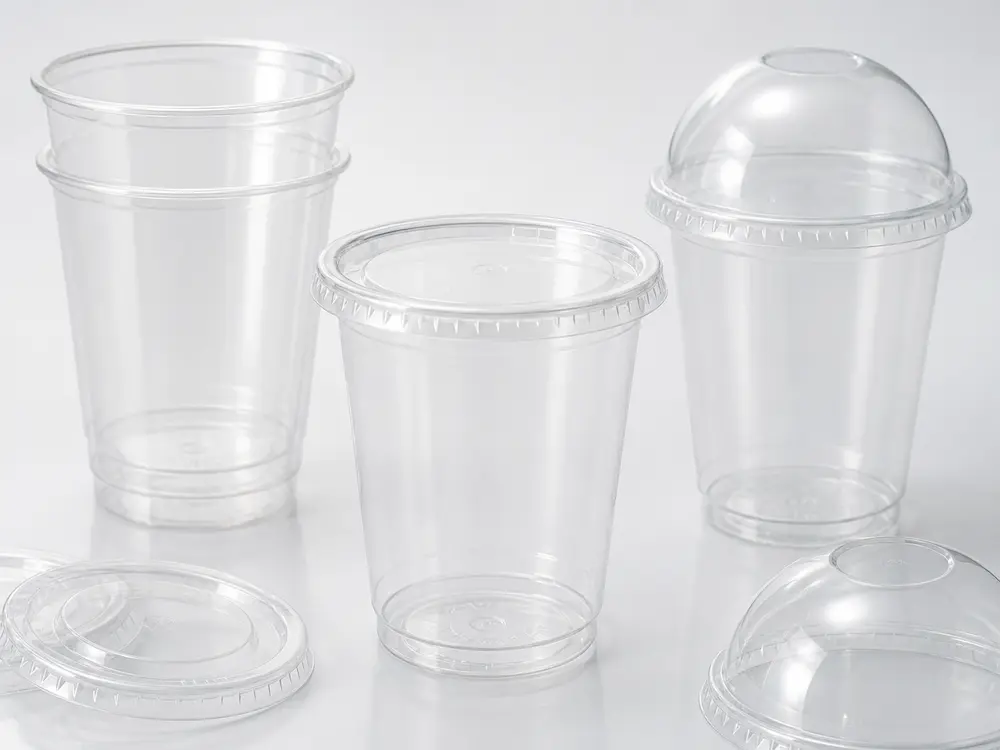
PP cold cups are cold beverage cups made from polypropylene, commonly known as PP. In foodservice packaging, PP is used for cups, lids, containers, and other packaging formats because it offers a practical balance of light weight, flexibility, and daily handling strength.
For takeaway drink operations, PP cups are mainly used for chilled beverages rather than hot drinks. They support a wide range of drink menus, including iced coffee, cold brew, iced tea, fruit juice, lemonade, milk tea, smoothies, matcha drinks, refreshers, soda, flavored cold brew, sparkling fruit drinks, fruit tea, and protein drinks.
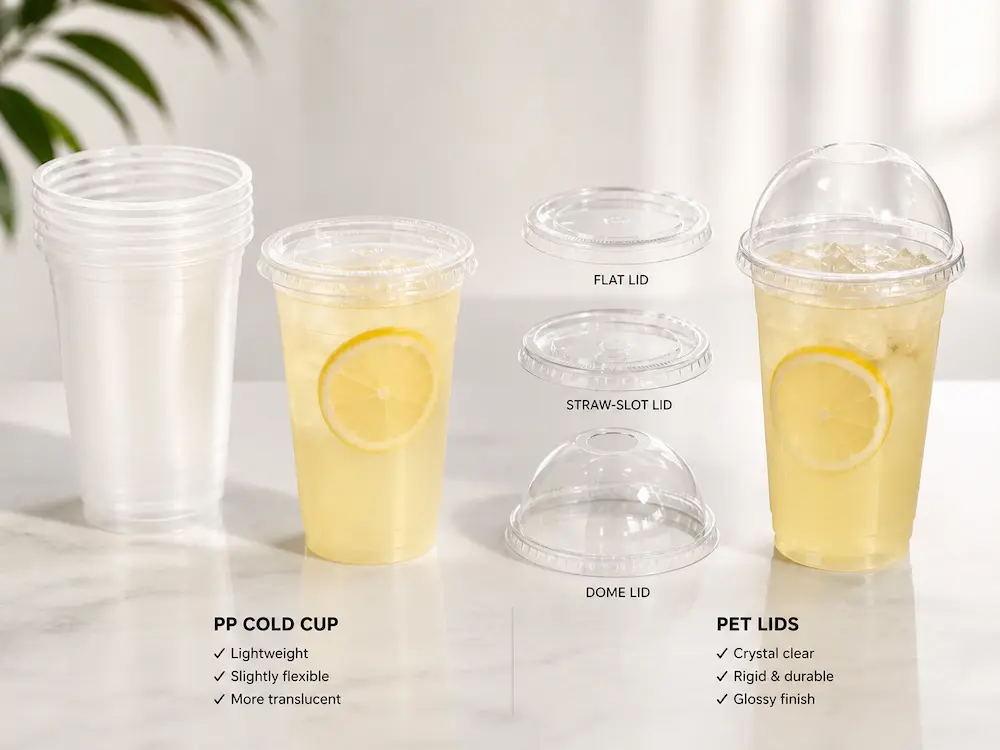
Compared with some other plastic cup materials, PP usually has a softer and more flexible feel. It is not normally positioned as the clearest plastic cup option, because PET often provides higher glass-like clarity. However, polypropylene cold cups provide strong practical value where durability, cup-lid matching, cost control, and high-volume takeaway service matter more than maximum transparency.
For foodservice buyers, the core value of PP is simple: it supports daily beverage operations. A good PP cup should stack smoothly, separate easily, hold cold drinks reliably, match lids properly, and move through wholesale distribution without creating unnecessary handling problems.
Why Foodservice Buyers Choose PP Cold Cups
Foodservice packaging has to perform in real operating conditions. A cold drink cup is stacked, filled, capped, carried, stored, packed into delivery bags, placed on retail shelves, and handled by customers. Weak packaging creates operational friction. Strong packaging improves service speed and reduces waste caused by breakage, poor fit, or unstable handling.
PP cold cups are selected because they support fast, repeatable service. Their durable structure helps them handle daily use across takeaway counters, beverage chains, cafeterias, supermarket drink sections, convenience stores, and event service. When paired with suitable lids, they offer a practical packaging format for high-turnover cold drink programs.
For B2B buyers, durability is often the first reason to consider PP. A cup that feels too brittle creates risk during storage, handling, or transport. A cup that lacks rim consistency causes lid fitting problems. A cup that does not stack smoothly slows down service. Well-made PP drink cups reduce these small but costly problems.
PP cups also support efficient wholesale supply. They are lightweight, stackable, and suitable for carton-based distribution. This matters for distributors, beverage chains, and brands that purchase cups in bulk and need consistent packing, storage, and shipping performance.
PP Cold Cups vs PET Cold Cups vs Paper Cold Cups
Choosing the right cold cup material depends on the drink, service environment, brand image, and cost structure. PP, PET, and paper cups all solve different packaging problems.
PET cups are widely used when premium clarity is the top priority. Clear PET cups show drink color, ice, fruit pieces, toppings, and layered beverages very well. They are common for juices, smoothies, iced coffee, fruit tea, and retail display drinks.
Paper cups are usually selected for branding surface, printed appearance, and certain takeaway formats. For cold drinks, buyers still need to consider lining, condensation, drink visibility, lid matching, and the way the cup performs with ice and longer holding times.
PP cold cups sit in a practical middle position. They are not as glass-clear as PET, but they offer dependable durability and flexible handling. For many takeaway drink programs, especially high-volume operations, this makes PP a strong option.
| Material | Best Uses | Main Strength | Display Clarity | Buyer Notes |
|---|---|---|---|---|
| PP | Iced coffee, milk tea, juice, lemonade, smoothies, takeaway drinks | Durable and flexible daily handling | Moderate clarity | Good choice for high-volume takeaway service and wholesale purchasing |
| PET | Premium drink display, juices, smoothies, iced coffee, fruit tea | High transparency and strong shelf presentation | High clarity | Best when visual display is a key selling point |
| Paper | Branded takeaway drinks and short-hold service | Printable surface and brand communication | No drink visibility | Check lining, moisture resistance, and local recycling rules carefully |
The best choice depends on the buyer’s business model. A juice brand focused on retail display may prefer PET. A cafe needing durable takeaway packaging may choose PP. A brand that prioritizes full-surface printing may consider paper. For many operators, PP cold cups provide the best balance between practical performance and everyday cost control.
Buyer Decision Matrix for Takeaway Drink Packaging
A buyer decision matrix helps purchasing teams choose packaging based on real drink applications instead of general material descriptions. The table below shows where PP cold cups fit into common takeaway drink programs.
| Drink Type | Recommended Cup Logic | Suggested Lid Type | Best Buyer Type | Risk to Check Before Ordering |
|---|---|---|---|---|
| Iced coffee and cold brew | Medium PP cups for fast takeaway service | Flat straw-slot lid or sip lid | Cafes, bakeries, convenience stores | Lid fit, rim strength, stacking performance |
| Smoothies and protein drinks | Larger PP cups with enough volume for thicker drinks | Dome lid or wide straw-slot lid | Juice bars, gyms, smoothie shops | Cup wall strength, lid closure, straw compatibility |
| Juice and lemonade | Clear or translucent PP cups for daily chilled drinks | Flat straw-slot lid | Supermarkets, takeaway counters, foodservice brands | Drink visibility, carton packing, lid stability |
| Milk tea and fruit tea | Medium or large PP cups for ice, toppings, and fruit pieces | Dome lid, straw-slot lid, or sealing-film system depending on operation | Bubble tea shops, beverage chains, distributors | Topping space, rim compatibility, cup diameter consistency |
| Matcha, refreshers, and sparkling drinks | PP cups for fast-moving modern cafe drinks | Flat lid or dome lid based on foam and topping level | Modern cafes, beverage chains, retail drink programs | Presentation requirement, lid style, drink carbonation handling |
This matrix gives buyers a more practical way to evaluate takeaway cold cups. The material is important, but the final purchasing decision should also include drink recipe, lid type, service speed, storage method, and expected customer handling.
Best Drink Applications for PP Cold Cups
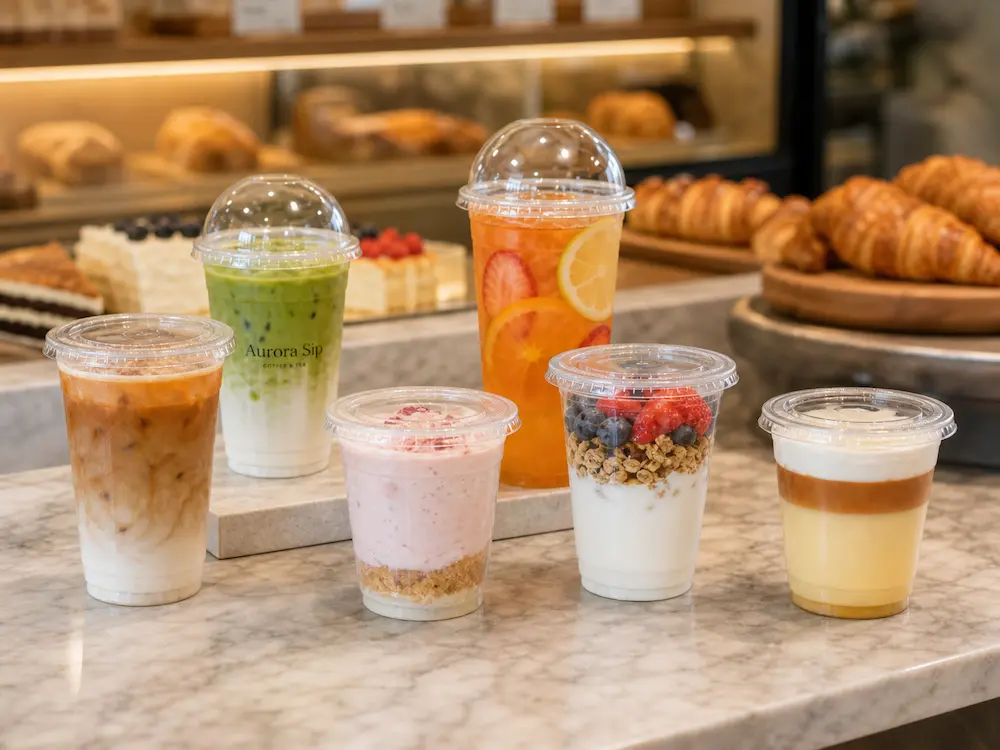
PP cold cups are used across many cold beverage categories. They are especially suitable for drinks that need reliable handling in fast-moving foodservice environments.
For iced coffee and cold brew, PP cups provide a practical serving format for takeaway counters, cafes, bakeries, and convenience stores. Iced lattes, flavored cold brew, vanilla iced coffee, caramel coffee drinks, and milk-based cold beverages all benefit from a cup that is easy to stack, fill, cap, and carry.
For smoothies and protein drinks, durability becomes more important. These drinks are often thicker and heavier than standard iced coffee or tea. Buyers should choose a cup size and lid type that match drink volume, foam level, toppings, and customer handling.
For juice, lemonade, and fruit tea, PP drink cups support daily beverage service where customers want cold, refreshing drinks in a lightweight takeaway format. Citrus drinks, sparkling fruit drinks, berry refreshers, mango tea, and iced tea are all common menu applications.
For matcha drinks, refreshers, and modern cafe beverages, PP cups help brands serve colorful cold drinks in a practical format. While PP is not the clearest plastic, it still gives enough drink visibility for many casual takeaway uses, especially where durability and lid fit are more important than premium retail display.
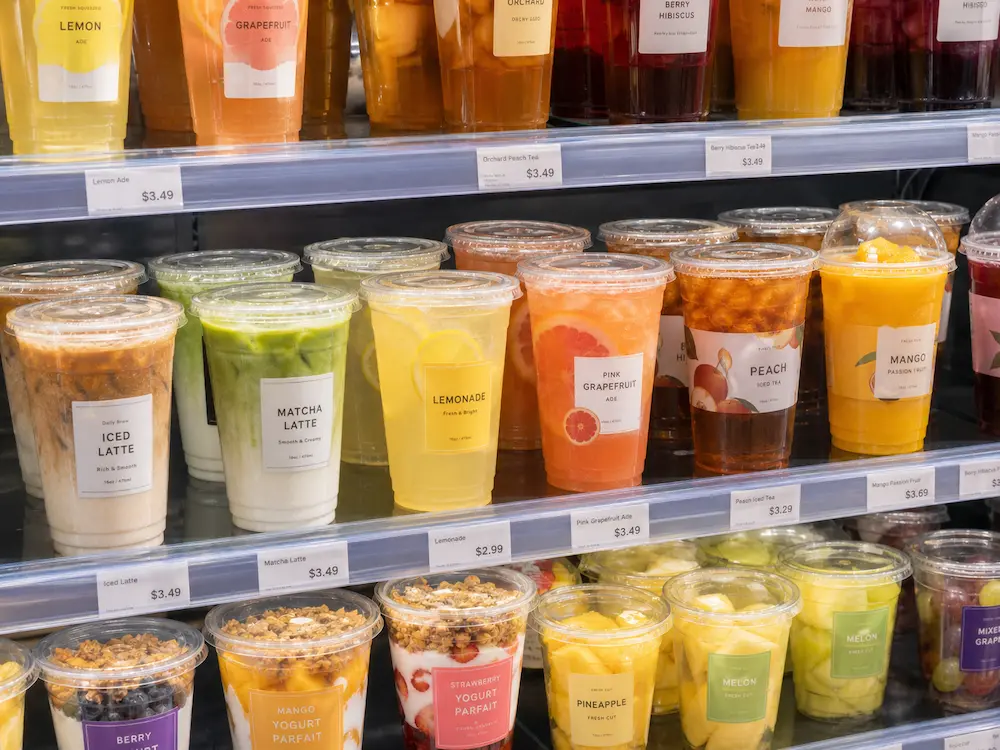
For supermarkets and grab-and-go service, takeaway cold cups are used for chilled drink counters, pre-packed beverage programs, and foodservice areas where cold drinks are sold with salads, bakery items, fresh-cut fruit, desserts, or prepared foods.
Lid Matching: Why PP Cups with Lids Matter
A cold cup is only as useful as its lid system. For takeaway drinks, lid matching directly affects the customer experience. A loose lid increases spill risk. A tight lid that is difficult to apply slows down service. A lid that does not match the rim design creates handling problems during transport.
This is why buyers should evaluate PP cups with lids as a complete packaging system, not as separate products.
Flat lids are suitable for many standard cold drinks, including iced coffee, iced tea, lemonade, juice, soda, fruit tea, and cold brew. They are practical when drinks do not require extra topping space.
Dome lids are often used for smoothies, milk tea, cream-topped beverages, dessert drinks, and drinks with whipped cream or higher foam. The extra headspace supports presentation and reduces pressure on toppings.
Straw-slot lids are common for iced drinks, tea drinks, juice, and smoothies. Sip lids are preferred for some cold coffee and ready-to-drink formats. For buyers, the key is to confirm lid diameter, rim compatibility, lid style, and actual fit before bulk ordering.
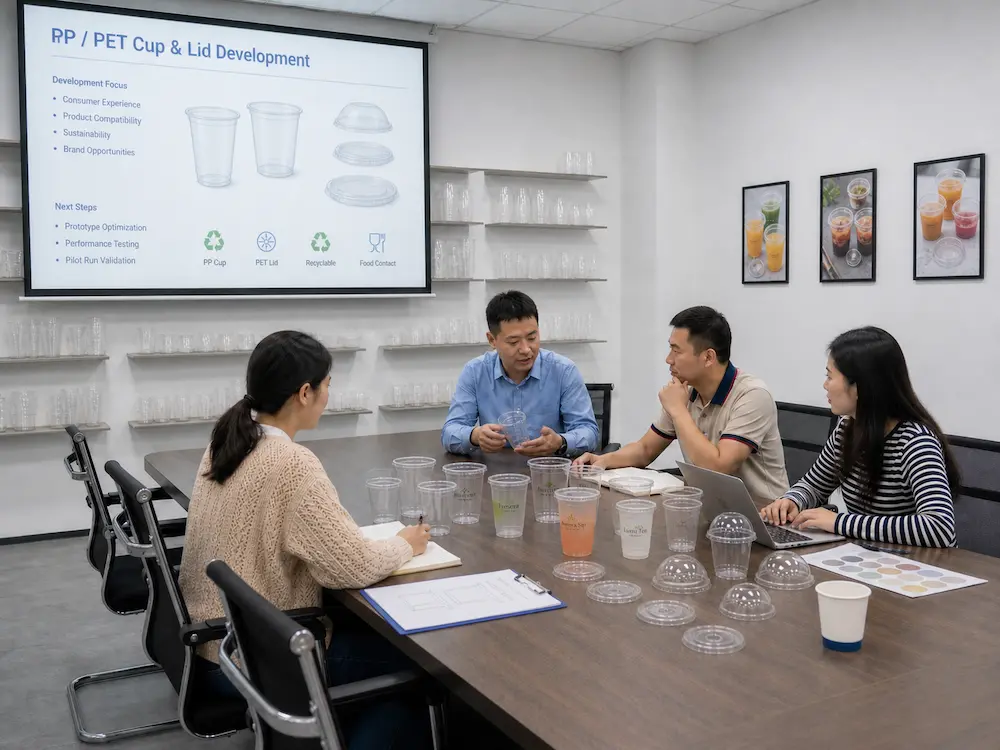
Before placing a wholesale order, foodservice buyers should request samples and test the cup-lid combination under real conditions. Fill the cup with ice and liquid, apply the lid repeatedly, check stacking, test straw insertion, and simulate takeaway handling. This small step prevents large purchasing problems.
Size Selection for PP Cold Cups
Choosing the right cup size starts with the drink menu. A small drink does not need a large cup, and a high-value smoothie should not be forced into a cup that leaves no space for foam, toppings, or lid closure.
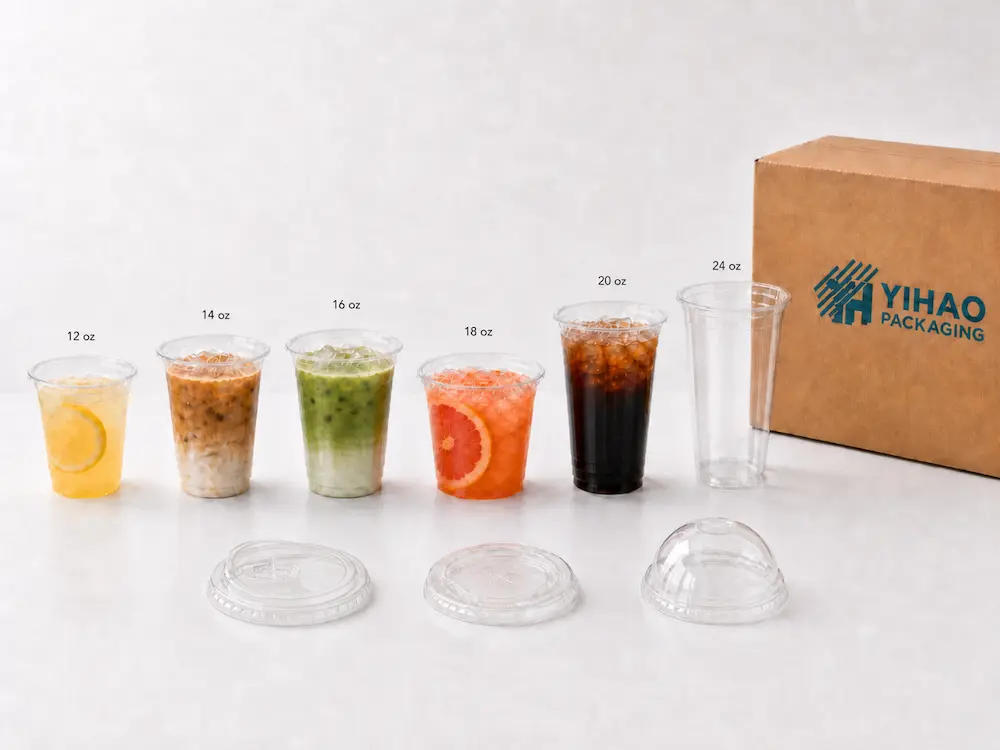
Small PP cold cups are suitable for samples, kids drinks, compact juice portions, tasting menus, and small iced beverages. These sizes support controlled portions and lower-cost serving formats.
Medium sizes are often used for mainstream iced coffee, iced tea, juice, lemonade, soda, cold brew, and fruit tea. For many cafes and takeaway counters, medium cups become the daily workhorse size because they match common drink menus and customer expectations.
Large sizes are useful for smoothies, milk tea, matcha drinks, refreshers, protein drinks, and beverages with ice or toppings. These drinks often need additional volume for foam, fruit pieces, whipped cream, boba, or layered ingredients.
Buyers should also consider the relationship between cup size and lid type. A drink with toppings may need a dome lid. A standard iced coffee may need a flat straw-slot lid. A chilled ready-to-drink product for supermarket shelves may need a lid format that supports stacking and stable display.
Custom PP Cold Cups for Beverage Brands
Custom packaging turns a standard drink cup into a brand touchpoint. For cafes, beverage chains, supermarkets, bakeries, and takeaway brands, custom PP cold cups help improve recognition and support repeat customer memory.
Custom printing can include logos, simple icons, drink series names, seasonal promotions, QR codes, or brand messages. For cold beverage businesses, even a simple printed cup makes iced coffee, milk tea, juice, and smoothies feel more professional.
Custom PP cups are especially useful for brands that operate repeat beverage programs. A coffee chain may need printed cold cups for iced lattes and cold brew. A supermarket may need private-label cups for chilled juice. A bakery may need branded cups for seasonal drinks. A distributor may need neutral cups with stable carton packing for mixed foodservice customers.
Buyers should prepare several details before requesting custom cups. These include target cup sizes, lid styles, logo files, printing expectations, color preferences, order quantity, carton requirements, destination market, and expected reorder plan.
For large buyers, custom packaging should be planned as a repeat supply program rather than a one-time decoration. A reliable PP cup manufacturer should help buyers align cup structure, printing needs, lid matching, carton packing, and export documentation.
Wholesale PP Cups: What Purchasing Teams Should Check
Buying wholesale PP cups requires more than comparing unit prices. A low price does not help if the lid fit is unstable, the cup wall is inconsistent, cartons are weak, or documentation is incomplete.
The first point is material and food-contact documentation. Buyers should request food-contact documents suitable for the destination market and confirm that the packaging is intended for the correct application.
The second point is cup-lid matching. Purchasing teams should not assume that all lids with the same nominal diameter fit every cup. Rim design, material thickness, lid structure, and manufacturing tolerance all affect real performance.
The third point is sample testing. Buyers should check cup clarity, flexibility, stacking, lid application, rim strength, odor, packing condition, carton labeling, and actual drink performance. For export programs, sample testing should happen before confirming a large production order.
The fourth point is carton packing and shipping efficiency. Wholesale buyers should review carton quantity, carton dimensions, pallet loading, container loading, storage needs, and the risk of crushing during transport.
The fifth point is supplier stability. Beverage packaging is a repeat-purchase category. A good supplier should support consistent production, stable communication, reasonable product documentation, and repeat order planning.
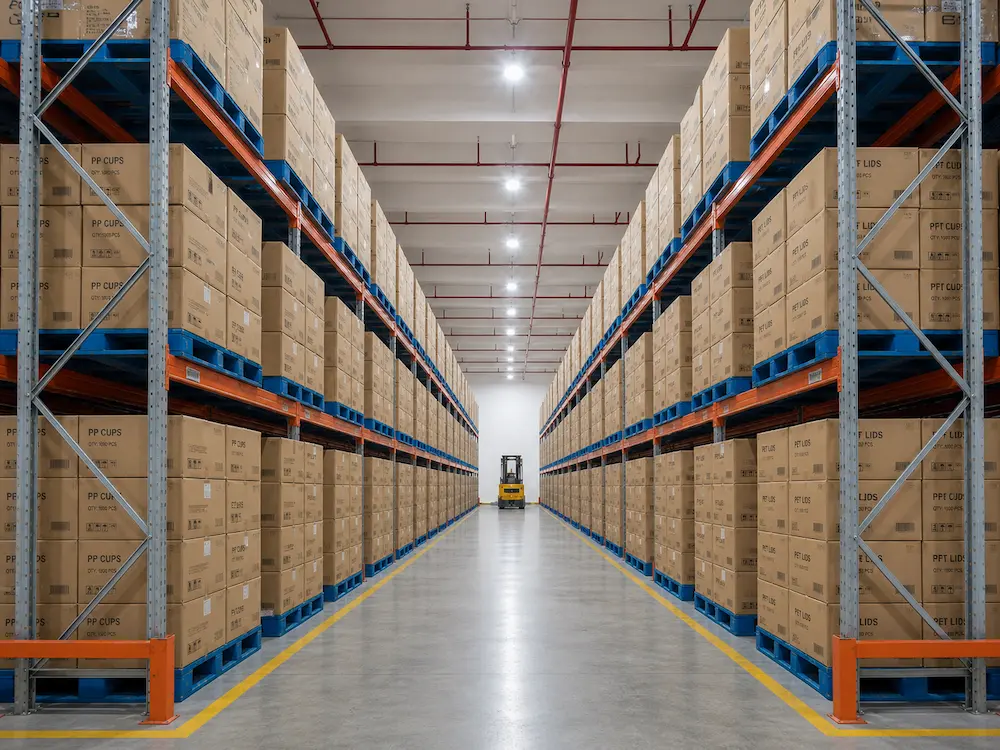
Wholesale Risk Checklist for PP Cold Cups
The biggest purchasing problems usually appear after the order arrives, not during quotation. A structured wholesale checklist helps buyers prevent these issues before production.
| Check Item | What to Confirm | Why It Matters |
|---|---|---|
| Cup material | Polypropylene material and intended cold drink use | Ensures the product matches the buyer’s packaging application |
| Cup-lid fit | Actual sample fit with flat lids, dome lids, or straw-slot lids | Reduces spill risk and improves takeaway handling |
| Stacking performance | Smooth separation and stable stacking | Supports fast service at cafes and beverage counters |
| Carton packing | Pieces per carton, carton dimensions, labeling, and export packing | Affects shipping cost, warehouse storage, and damage control |
| Customization | Logo file, print area, color expectation, and order plan | Prevents artwork delays and production misunderstandings |
| Repeat supply | Production consistency and reorder communication | Supports long-term beverage packaging programs |
This checklist is especially important for importers, distributors, supermarket chains, and beverage brands that purchase PP cold cups in repeat batches.
How to Choose a Reliable PP Cup Manufacturer
A reliable PP cup manufacturer should understand both manufacturing and foodservice use. The buyer is not only purchasing cups; the buyer is purchasing operational stability.
Production capability matters because cup consistency affects every stage of use. Stable rim shape improves lid matching. Consistent wall thickness improves handling feel. Smooth stacking supports service speed. Clean forming and packing reduce problems at the customer side.
Foodservice experience also matters. A manufacturer that understands cafes, supermarkets, bakeries, beverage chains, convenience stores, and foodservice distributors will communicate more clearly about drink applications, cup sizes, lids, carton packing, and customization.
OEM and wholesale support are also important. Buyers often need mixed sizes, matching lids, printed cups, export cartons, private label support, and repeat production. A manufacturer should support practical order planning rather than only quote a single cup model.
Before choosing a supplier, buyers should ask clear questions:
| Buyer Question | Why It Matters |
|---|---|
| Which cup sizes and lid types are available? | Confirms whether the supplier can support the full drink menu. |
| Can samples be tested before bulk ordering? | Reduces risk before wholesale purchasing. |
| Can the cups be matched with flat lids or dome lids? | Ensures correct use for iced coffee, smoothies, milk tea, and juice. |
| What customization options are available? | Helps buyers plan branded drink packaging. |
| What food-contact documents can be provided for the target market? | Supports compliance review and buyer confidence. |
| How are cups packed for export? | Affects shipping cost, storage, and damage control. |
Sustainability and Recycling Considerations for PP Cold Cups
Sustainability claims should be written carefully. PP is a plastic material, and its recyclability depends on local collection systems, sorting infrastructure, package design, contamination level, and end-market demand. Buyers should avoid broad claims such as “recyclable everywhere” or “100% recycled after use.”
A better approach is to use accurate, practical language. For example, buyers can describe PP cold cups as made from polypropylene material and note that recycling depends on local recycling programs and accepted material streams.
Packaging design also matters. Buyers should review cup material, lid material, ink, label, sleeve, and any added components before making sustainability claims. A cup that looks simple may still perform differently in recycling systems depending on local infrastructure and packaging design.
For B2B websites, the strongest sustainability language is honest and specific. Instead of promising universal recycling results, buyers and brands should explain material type, intended use, local recycling dependency, and packaging design considerations.
Buyer Checklist Before Ordering PP Cold Cups
A structured checklist helps purchasing teams avoid mistakes before ordering.
First, define the drink type. Iced coffee, smoothies, juice, lemonade, milk tea, matcha, refreshers, soda, and fruit tea may require different cup sizes and lid styles.
Second, confirm the cup size. Buyers should match cup volume with drink recipe, ice level, toppings, foam, and takeaway distance.
Third, confirm lid type. Flat lids, dome lids, straw-slot lids, and sip lids serve different drink needs. The correct lid improves customer experience and reduces handling problems.
Fourth, request samples. Real testing is more reliable than product photos. Buyers should test cup feel, rim strength, lid fit, stacking, carton packing, and actual use with drinks.
Fifth, review customization needs. For custom PP cold cups, prepare logo files, color expectations, printing area, order quantity, and target launch date.
Sixth, check documentation. Ask for product specifications and food-contact documents suitable for the destination market.
Seventh, evaluate wholesale supply. For repeat programs, buyers should confirm production capacity, carton packing, communication process, and reorder stability.
Inquiry Preparation: What to Send Before Requesting a Quote
A clear inquiry helps the manufacturer recommend the correct PP cold cups faster. It also reduces repeated communication and prevents mismatched quotations.
Before asking for a quote, buyers should prepare the following information:
| Information to Provide | Example | Why It Helps |
|---|---|---|
| Drink application | Iced coffee, smoothie, milk tea, juice, lemonade | Helps match cup size, lid type, and material expectation |
| Cup size range | Small, medium, or large cold drink cups | Allows the supplier to recommend suitable models |
| Lid requirement | Flat lid, dome lid, straw-slot lid, sip lid | Confirms cup-lid compatibility before quotation |
| Customization need | Logo printing, private label, branded carton | Helps plan artwork review and production requirements |
| Estimated quantity | Trial order or repeat wholesale order | Supports accurate pricing and production planning |
| Destination market | United States, Europe, Middle East, Southeast Asia, or other markets | Helps prepare market-appropriate documentation and packing details |
This section turns the article from a general guide into a real purchasing tool. Buyers who understand what to send in the first inquiry receive more accurate recommendations and faster supplier responses.
Why Work with YIHAO for PP Cold Cups
YIHAO supports food packaging buyers with practical packaging solutions for retail, takeaway, foodservice, and wholesale supply. For beverage packaging teams, the goal is not only to find a cup. The goal is to build a reliable packaging system that supports the drink menu, customer experience, and repeat purchasing plan.
For PP cold cups, YIHAO helps buyers consider drink applications, cup-lid matching, size selection, wholesale ordering, and custom packaging needs. This is especially useful for cafes, supermarkets, bakeries, beverage chains, convenience stores, and foodservice distributors that need stable packaging support.
As a packaging manufacturer and solution provider, YIHAO focuses on practical communication. Buyers can evaluate cup sizes, lid options, carton packing, customization requirements, and target-market needs before confirming an order.
For brands that need wholesale PP cups, matching lids, or custom PP cold cups, working with a manufacturer helps simplify sourcing and improve consistency across repeat orders.
Request PP Cold Cup Support from YIHAO
If your business needs PP cold cups for iced coffee, juice, smoothies, milk tea, lemonade, fruit tea, matcha drinks, refreshers, or other takeaway beverages, YIHAO can support your packaging selection with practical manufacturing and wholesale supply experience.
To receive a more accurate recommendation, prepare your cup size requirements, lid type, drink application, estimated quantity, destination market, and branding needs. For custom projects, include your logo file, preferred print style, and expected launch schedule.
A clear inquiry helps the manufacturer recommend the right cup, matching lid, carton packing, and customization direction from the beginning. This is the fastest path to a stable cold drink packaging solution for cafes, supermarkets, bakeries, beverage chains, distributors, and foodservice brands.
Final Buying Takeaway
PP cold cups are a practical choice for takeaway cold drinks when buyers need durable handling, lightweight storage, reliable cup-lid matching, and wholesale supply support. They are used across iced coffee, juice, smoothies, milk tea, lemonade, matcha drinks, refreshers, cold brew, fruit tea, and other chilled beverage menus.
They are not always the clearest cup material, and they should not be marketed with unsupported sustainability claims. Their real value is operational: durability, flexibility, daily handling performance, lid compatibility, and scalable purchasing.
For foodservice buyers, the smartest decision is to test samples, confirm lid fit, match sizes to drink menus, review food-contact documentation, and work with a stable PP cup manufacturer that understands both production and beverage service.
FAQ
1. What are PP cold cups used for?
PP cold cups are mainly used for takeaway cold beverages, including iced coffee, cold brew, juice, lemonade, smoothies, milk tea, fruit tea, matcha drinks, refreshers, soda, sparkling fruit drinks, and protein drinks. They are suitable for cafes, supermarkets, bakeries, convenience stores, beverage chains, and foodservice distributors.
2. Are PP cold cups suitable for takeaway drinks?
Yes. PP cold cups are suitable for takeaway drinks because they offer durable handling, lightweight storage, and practical compatibility with matching lids. They work well for fast-moving drink service where cups are stacked, filled, capped, carried, and packed for takeaway or delivery.
3. What is the difference between PP cold cups and PET cold cups?
PP cold cups are generally valued for durability, flexibility, and practical daily handling. PET cold cups usually provide higher glass-like clarity and stronger drink visibility. Buyers often choose PET when premium display is the priority and choose PP when durable takeaway performance and wholesale practicality are more important.
4. Can PP cold cups be used with lids?
Yes. PP cups with lids are widely used for takeaway cold drinks. Buyers should confirm lid compatibility by cup size, rim design, lid type, and actual sample testing. Flat lids, dome lids, straw-slot lids, and sip lids serve different beverage applications.
5. How should buyers choose a PP cup manufacturer?
Buyers should choose a PP cup manufacturer by checking product consistency, available cup sizes, lid matching, sample testing support, customization options, carton packing, food-contact documentation, export experience, and wholesale supply stability. A reliable manufacturer should support repeat orders, not only one-time quotations.
References
- U.S. Food and Drug Administration, Packaging & Food Contact Substances
- EUR-Lex, Commission Regulation (EU) No 10/2011 on Plastic Materials and Articles Intended to Come into Contact with Food
- Association of Plastic Recyclers, APR Design Guide for Plastics Recyclability
- Foodservice Packaging Recovery Toolkit, Foodservice Packaging Collection, Processing, and Recovery Guidance
- Foodservice Packaging Institute, Foodservice Packaging Industry and Recovery Resources
- Plastics Industry Association, Polypropylene and Plastic Packaging Material Information
- WRAP and RECOUP, Rigid Plastic Packaging Design and Recycling Guidance
- Packaging Europe, Beverage Packaging and Foodservice Packaging Market Insights
Deep-Dive Insights: How Buyers Should Think About PP Cold Cups
How do PP cold cups support takeaway drink operations?
PP cold cups support takeaway drink operations by giving beverage teams a durable, lightweight, and practical cup format for daily service. They fit fast-moving environments where staff need to stack cups, fill drinks, apply lids, and hand beverages to customers quickly.
Why do buyers compare PP cold cups with PET cups?
Buyers compare PP and PET because the two materials solve different problems. PET is stronger for premium drink visibility, while PP is valued for practical durability and flexible handling. The right choice depends on whether the buyer prioritizes shelf presentation, takeaway strength, cost control, or cup-lid performance.
What should wholesale buyers check before ordering?
Wholesale buyers should check cup size, lid compatibility, sample performance, carton packing, food-contact documentation, customization options, and repeat supply capacity. For wholesale PP cups, consistency matters more than a single low quotation.
Which drink brands benefit most from PP cold cups?
Cafes, supermarkets, bakeries, convenience stores, beverage chains, and foodservice distributors benefit from PP drink cups when they sell iced coffee, juice, smoothies, milk tea, lemonade, refreshers, cold brew, matcha drinks, and other takeaway cold beverages.
How should buyers prepare a better PP cold cup inquiry?
Buyers should provide drink application, cup size range, lid requirement, customization needs, estimated quantity, and destination market. This helps the manufacturer recommend the correct cup, matching lid, carton packing, and documentation direction faster.
What is the practical buying takeaway?
The strongest reason to choose PP cold cups is operational reliability. When the cup size, lid type, drink menu, carton packing, and supplier support are aligned, PP cups become a practical packaging choice for scalable takeaway drink service.
© YIHAO Packaging. All rights reserved. All articles, product images, packaging designs, technical specifications, and website materials are protected by copyright. Unauthorized copying, reproduction, redistribution, modification, or commercial use is strictly prohibited without prior written permission.