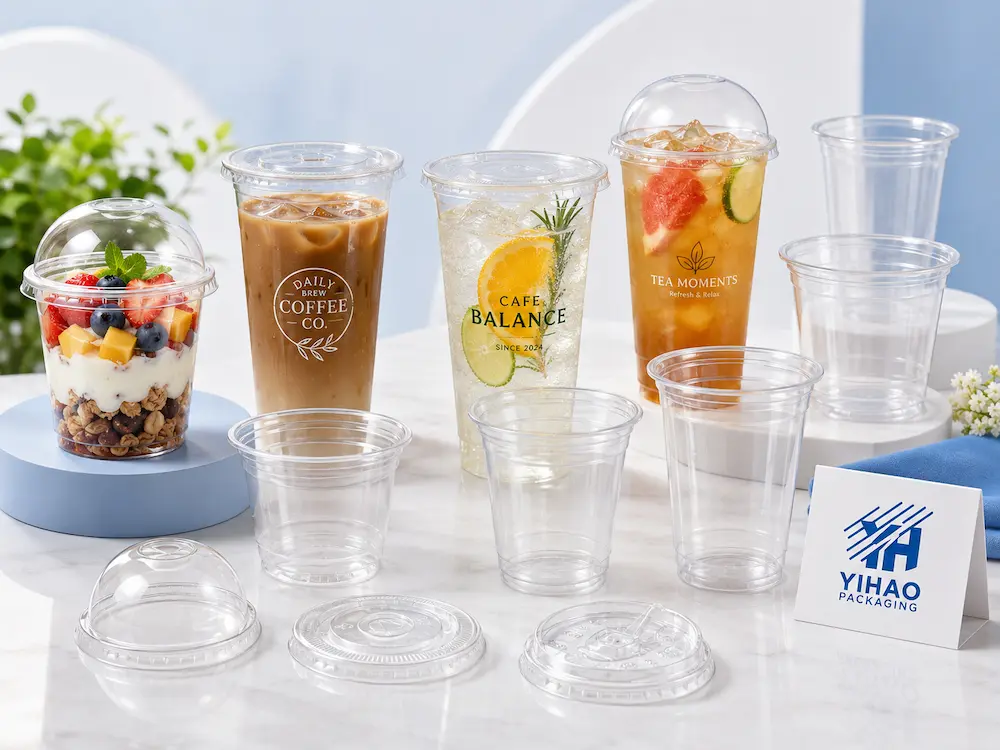
Why Wholesale Custom Cups Matter for Modern Food and Beverage Brands
Wholesale custom cups are used by supermarkets, cafes, bakeries, dessert shops, beverage brands, and foodservice operators that need practical packaging for drinks, snacks, bakery items, chilled foods, and takeaway service. The right cup does more than hold a product. It affects display quality, lid security, serving efficiency, brand recognition, and customer experience.
As a food packaging manufacturer and supplier, YIHAO provides custom cup solutions for wholesale buyers, including PET cups, PP cups, RPET cups, printed cups, branded cold cups, and matching lid options. This guide helps buyers compare materials, sizes, printing methods, application scenarios, and supplier selection points before confirming a wholesale order.
What Are Wholesale Custom Cups?
Wholesale custom cups are bulk-order cups designed with brand-specific requirements such as logo printing, size selection, material choice, cup-lid matching, private label packaging, or menu-based packaging systems. They are commonly used by cafes, beverage chains, supermarkets, bakeries, dessert shops, convenience stores, catering teams, distributors, and foodservice brands.
Compared with generic stock cups, custom cups provide a stronger connection between the product and the brand. A plain transparent cup performs the basic job of holding a cold drink or chilled food item. A custom printed cup adds brand memory, menu identity, shelf recognition, promotion value, and a more consistent customer experience.
Many B2B buyers start with standard clear cups and later move into custom printed cold cups once their menu, portion size, and lid requirements become stable. This is a smart sequence. Stock cups help test volume, rim fit, lid type, stacking, filling speed, and customer handling. Custom printing becomes more valuable after the business knows which cup sizes and lid formats will be used repeatedly.
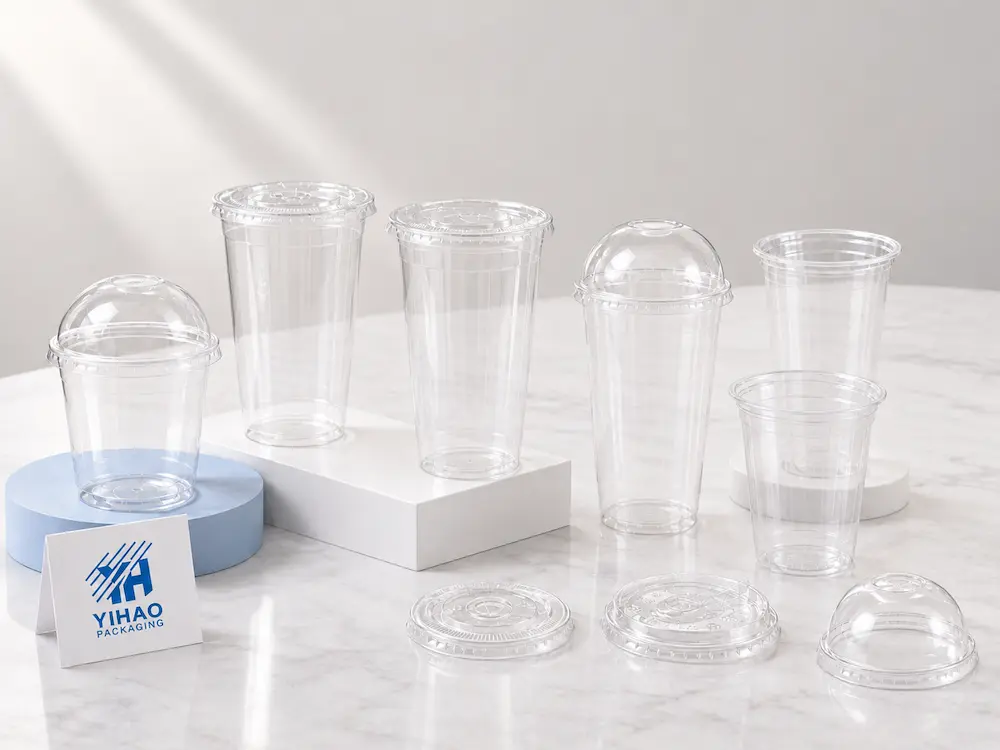
Wholesale Custom Cups vs Stock Cups
| Buying Factor | Stock Cups | Wholesale Custom Cups | Buyer Decision Point |
|---|---|---|---|
| Brand Exposure | Limited unless labels or sleeves are added | Logo, color, and brand elements appear directly on the cup | Use custom cups when the product is sold repeatedly under one brand |
| Product Visibility | Depends mainly on cup clarity | Combines visibility with controlled branding | Keep enough clear area to show drinks, fruit, layers, and toppings |
| Menu Consistency | Good for testing or mixed operations | Better for stable menus and multi-location operations | Confirm core cup sizes before printing |
| Wholesale Planning | Useful for small trial orders | Better for repeat orders, distributors, chains, and private label programs | Discuss carton packing, storage, and reorder frequency early |
| Design Control | Low design flexibility | Supports logo placement, print coverage, and brand color direction | Approve samples with real product inside the cup |
Stock cups still have value for early testing. However, once a brand sells through repeat retail, takeaway, or foodservice channels, wholesale custom cups usually provide stronger long-term value because they combine packaging function with brand recognition.
Main Types of Custom Cups for Commercial Use
Custom PET Cups for Cold Drinks and Chilled Food
Custom PET cups are widely used for cold drinks and chilled foods because PET offers strong clarity and a clean retail appearance. Transparent PET helps display iced coffee, matcha, fruit tea, lemon drinks, smoothies, cold-pressed juice, milk tea, yogurt parfaits, fruit cups, and layered desserts.
For beverage buyers, PET cups are especially useful when product appearance matters. A strawberry refresher, mango smoothie, layered milk tea, matcha latte, fruit-infused tea, or yogurt parfait needs visibility. When the cup is clear, customers see freshness, color contrast, toppings, and texture. When the cup is printed with a logo, the product gains both appetite appeal and brand identity.
Buyers building a cold drink packaging system can explore PET cold cups and match them with suitable lid options based on drink style, topping height, and takeaway format.
Custom Printed Cold Cups for Cafes and Beverage Chains
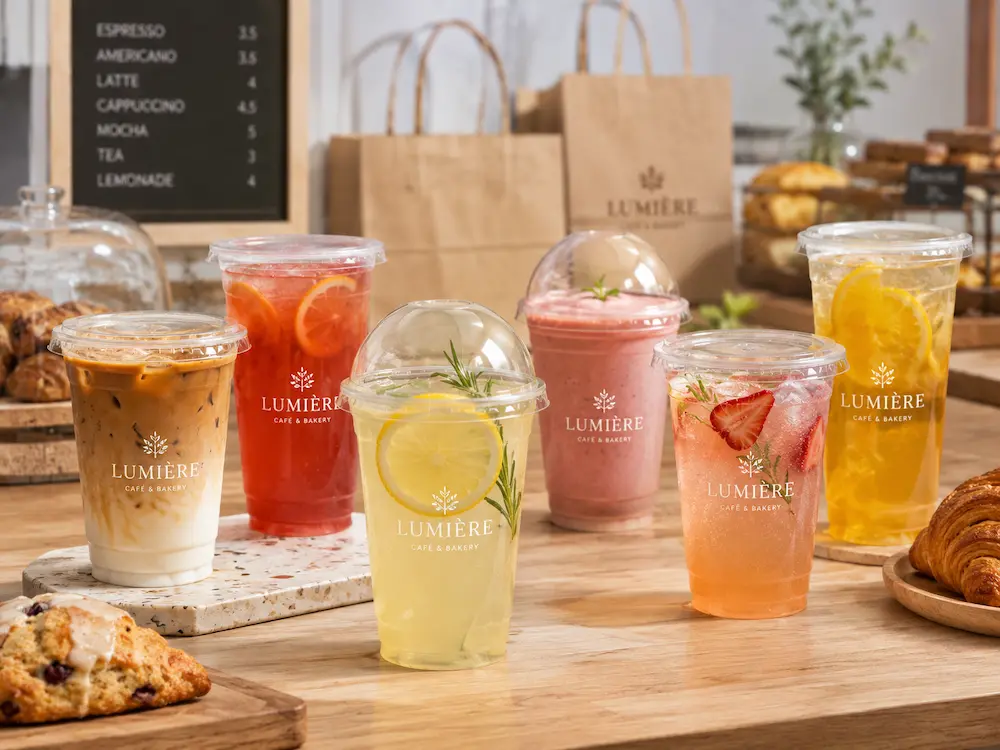
Custom printed cold cups are practical for cafes, coffee shops, juice bars, smoothie brands, milk tea chains, and beverage counters that sell repeat menu items. Iced coffee, cold brew, iced latte, lemonade, refreshers, sparkling fruit drinks, protein drinks, flavored cold brew, iced tea, fruit tea, and matcha drinks all benefit from clean cup branding.
For cafes, a printed cup is more than decoration. It supports customer recognition when drinks leave the store. It also improves the perceived professionalism of seasonal menus, new beverage launches, social media photos, takeaway orders, and delivery packaging.
Printed Plastic Cups for Supermarkets and Retail Displays
Printed plastic cups are useful for supermarket beverage programs, fresh juice counters, chilled dairy displays, prepared fruit sections, bakery dessert shelves, and grab-and-go food zones. In these environments, packaging has to perform quickly. It must show the product clearly, fit the lid securely, stack efficiently, and support either printing or labeling.
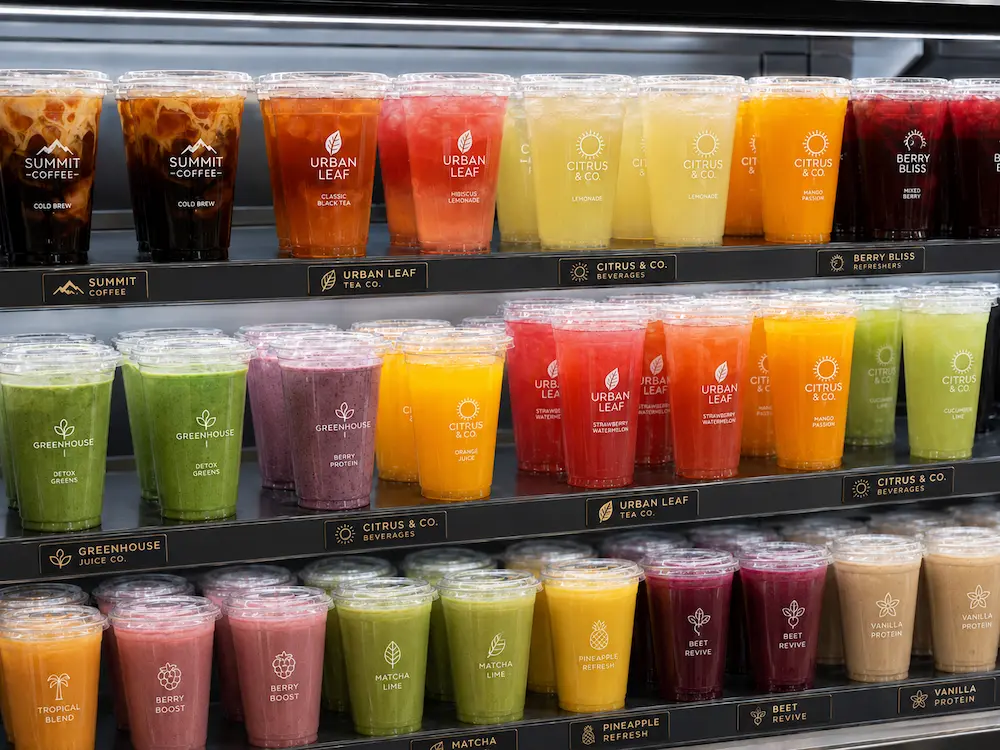
Supermarket buyers should treat custom cup selection as part of shelf conversion. A clear cup helps shoppers identify product freshness. A printed logo helps them remember the store brand, private label range, or foodservice partner. A matching lid supports better handling for refrigerated display, takeaway, and customer transport.
Branded Cold Cups for Bakeries and Dessert Shops
Branded cold cups are not only for beverages. Bakeries and dessert brands use clear PET cups for mousse cups, tiramisu cups, panna cotta, pudding, jelly desserts, yogurt parfaits, chia pudding, granola cups, sundae-style desserts, fruit cream cups, and small chilled bakery portions.
For desserts, cup clarity is important because customers buy with their eyes first. A transparent cup shows layers, cream, crumbs, fruit, chocolate, jelly, or topping structure. A simple printed logo improves brand identity without hiding the dessert. Dome lids are useful when desserts require extra top space for cream, fruit pieces, toppings, or decorative finishing.
Application Scenarios for Wholesale Custom Cups
Supermarkets and Grocery Chains
Supermarkets use wholesale custom cups for fresh juice, fruit cups, yogurt parfaits, granola cups, ready-to-drink beverages, chilled desserts, deli snack portions, and private label food programs. The main buying concern is consistency. Cups must look clean on the shelf, fit lids reliably, stack neatly in preparation areas, and support repeat ordering.
For grocery chains, custom branding also helps organize product families. A supermarket may use one cup style for fresh juice, another for fruit cups, and another for yogurt parfaits. Consistent print design creates a recognizable chilled food range and makes the shelf easier to understand.
Cafes and Coffee Shops
Cafes use cafe custom cups for iced coffee, cold brew, iced latte, matcha, lemonade, refreshers, iced tea, fruit tea, sparkling drinks, and seasonal beverages. In a cafe environment, the cup is part of the customer’s walking experience. A branded cold cup appears on counters, tables, delivery bags, social media posts, and street-facing takeaway moments.
For cafes, cup-lid matching is one of the most important details. Flat lids are practical for standard straw-serve cold drinks. Dome lids support whipped cream, fruit toppings, thick smoothies, and dessert drinks. Strawless sipper lids support direct drinking for iced coffee, iced tea, juice, fruit tea, lemonade, and refreshers.
Bakeries and Dessert Brands
Bakeries and dessert brands use custom cups for chilled dessert portions, layered sweets, fruit cream cups, mousse cups, tiramisu cups, pudding, yogurt parfaits, and mini cake-style servings. The best cup choice depends on dessert height, topping space, spoon access, display angle, and lid structure.
For dessert packaging, transparent PET cups usually provide stronger display value than opaque containers. When the product includes visible layers, fruit colors, cream texture, or decorative toppings, clear packaging helps communicate value quickly. A restrained printed logo supports branding without covering the product.
Foodservice, Catering, and Event Brands
Foodservice buyers use wholesale custom cups for catering drinks, event beverages, grab-and-go snacks, tasting cups, breakfast parfaits, fruit portions, cold desserts, and prepared beverage service. In event settings, branded cups create a more organized visual system across large-volume serving points.
For catering and foodservice operations, cup selection should focus on storage efficiency, lid fit, handling comfort, and packing logic. A cup that looks good but creates lid confusion slows down service. A cup system with shared-lid compatibility across several sizes helps teams reduce errors and simplify front-counter preparation.
Cup and Lid Matching Guide for Custom PET Cups
A strong wholesale custom cups program is not only about cup printing. The lid system decides whether the cup performs well in real service. The wrong lid creates problems such as loose fit, difficult closing, splash risk, poor takeaway handling, weak shelf display, or customer complaints.
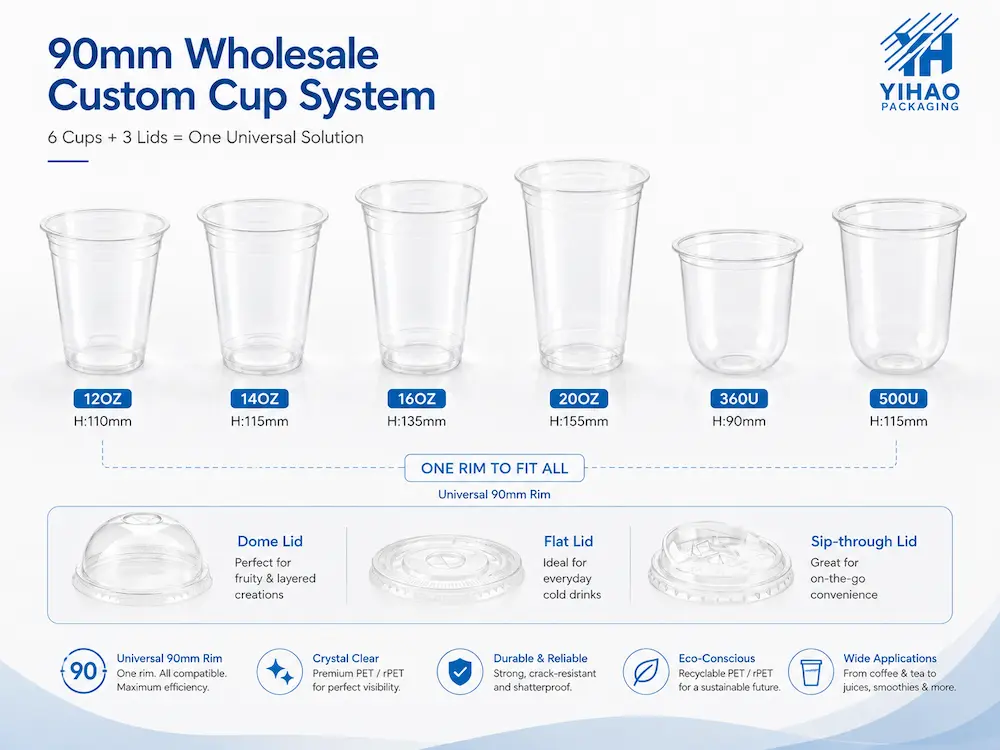
Before confirming custom PET cups, buyers should decide which lid structure fits the product. A standard iced coffee does not need the same lid as a smoothie with whipped cream. A parfait cup does not need the same top space as a simple lemonade cup. A grab-and-go supermarket drink may require a different handling logic from a cafe counter drink.
| Lid Type | Best Applications | Branding Advantage | Buyer Decision Point |
|---|---|---|---|
| Flat Lid | Iced coffee, iced tea, juice, lemonade, soda, fruit tea, refreshers, standard cold drinks | Clean low-profile appearance with efficient storage | Choose when the drink does not require whipped cream, high foam, or topping space |
| Dome Lid | Smoothies, milkshakes, frappes, bubble tea, whipped cream drinks, dessert cups, yogurt parfaits | Adds visible top space for toppings and premium presentation | Choose when the product needs extra headspace or topping display |
| Strawless Sipper Lid | Iced coffee, iced tea, lemonade, juice, fruit tea, sparkling drinks, refreshers | Supports direct-drink takeaway service without straw use | Choose for on-the-go drinks where direct sipping is part of the service model |
For buyers comparing lid options, cold cup lids, flat lids for cold cups, dome lids for cold cups, and strawless sipper lids are useful internal product directions to review before finalizing the cup design.
95mm vs 98mm Cup Systems: Why Shared-Lid Compatibility Matters
For high-volume cafes, supermarkets, and foodservice buyers, shared-lid compatibility is a serious purchasing advantage. A 95mm cup system and a 98mm cup system should not be mixed casually. The same diameter system allows different cup capacities to use the same matching lid family, while different diameters require different lids.
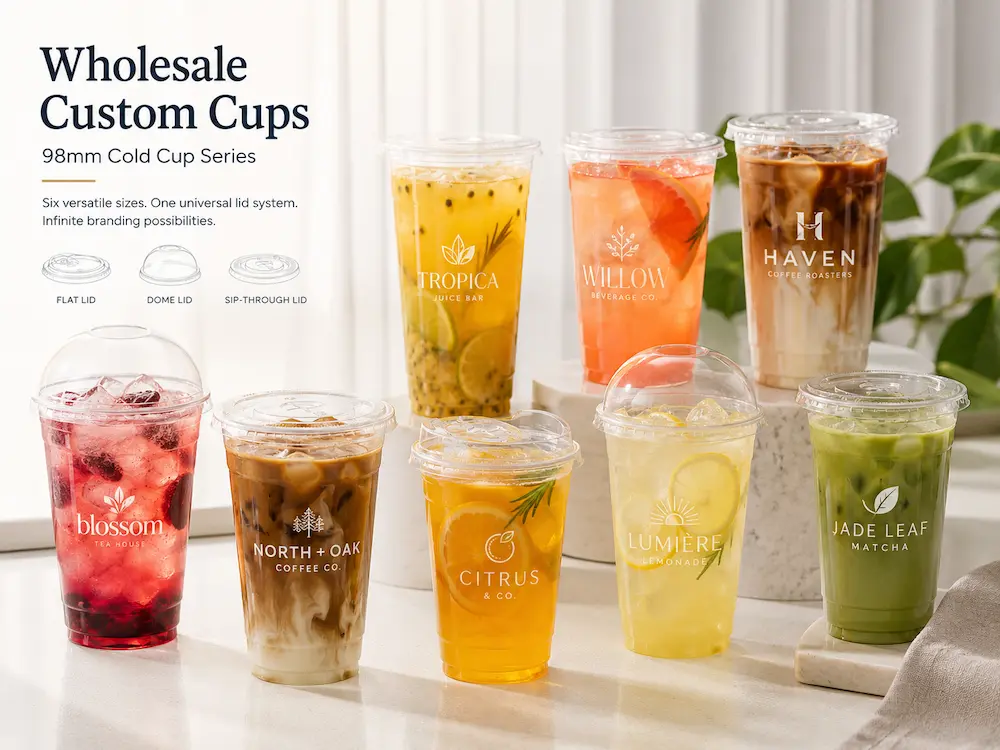
This structure helps purchasing teams reduce SKU confusion, improve packing speed, simplify warehouse organization, and reduce the risk of lid mismatch during service. It also helps multi-location brands manage repeat orders more efficiently.
| Cup System | Typical Cup Range | Matching Lid Options | Best Buyer Use |
|---|---|---|---|
| 95mm PET Cold Cup System | Common cold drink and chilled food cup sizes within the same 95mm rim family | 95mm flat lid, 95mm dome lid, 95mm strawless sipper lid | Cafes, juice bars, dessert shops, events, and takeaway counters that want a compact shared-lid system |
| 98mm PET Cold Cup System | Common cold drink and chilled food cup sizes within the same 98mm rim family | 98mm flat lid, 98mm dome lid, 98mm strawless sipper lid | Supermarkets, beverage chains, smoothie counters, and distributors needing broader display and service flexibility |
For buyers planning printed cups, the lid system should be confirmed before artwork is finalized. Once the cup diameter, capacity, and lid type are fixed, the printing area can be designed more accurately.
What Buyers Should Check Before Ordering Custom Printed Cold Cups
1. Cup Material and Clarity
Material choice affects visibility, brand impression, handling, and product fit. For cold drink and chilled food packaging, clear PET is commonly selected because it provides strong transparency and a premium retail appearance. Buyers should check whether the cup surface looks clean, whether the body feels stable enough for the intended product, and whether the material supports the desired visual presentation.
For custom PET cups, clarity matters even more when printing is added. A cup with poor clarity will not show the drink or dessert well. A cup with excessive print coverage may hide the product. The best result usually comes from matching high-clarity material with disciplined print design.
2. Lid Compatibility
Lid compatibility should be checked before printing. Buyers should confirm the rim diameter, compatible lid type, lid fit, and actual application. A flat lid works well for standard iced coffee, iced tea, juice, lemonade, soda, and fruit tea. A dome lid works better for smoothies, whipped cream drinks, boba toppings, yogurt parfaits, and dessert cups. A strawless sipper lid supports direct-drink cold beverages without a straw.
3. Printing Method and Brand Color Direction
Printing should serve the product, not overpower it. Buyers should prepare logo files, brand colors, print area preferences, and cup usage details before discussing customization with a manufacturer or supplier. A clean logo, limited color palette, and balanced placement usually work better than full-surface decoration.
For clear cold cups, the product itself is part of the design. A pink refresher, green matcha, dark cold brew, orange juice, fruit tea, or layered dessert already brings color. The printed logo should frame the product, not compete with it.
4. Cup Size and Menu Structure
Different business models need different size logic. A cafe may need small, regular, and large cold cups. A smoothie brand may prefer larger cups with dome lids. A bakery may need dessert cups with enough top space. A supermarket may require several portion sizes for juice, fruit cups, parfaits, and chilled snacks.
Before ordering wholesale custom cups, buyers should map cup sizes to real menu items. This prevents overbuying too many SKUs and reduces packaging waste caused by wrong-size selection.
5. Carton Packing and Storage Efficiency
For distributors, supermarkets, and foodservice brands, packaging is also a logistics decision. Cup stacks, lid stacks, carton dimensions, warehouse storage, and order planning all affect daily operations. A cup system that looks attractive but wastes storage space may create hidden cost.

6. Sample Testing Before Bulk Orders
Sampling is not a formality. It is the stage where buyers test real products in real conditions. Before a large wholesale order, samples should be tested with actual iced coffee, smoothies, fruit tea, milk tea, juice, parfaits, desserts, or chilled food items. Buyers should check cup grip, lid fit, stacking, filling speed, product visibility, label or print position, carton storage, and customer handling.
What to Prepare Before Requesting a Wholesale Custom Cups Quote
This is the most important step for buyers who want a faster and more accurate quotation. A packaging supplier can respond more efficiently when the buyer provides practical project details instead of only asking for a general price.
| Information to Prepare | Why It Matters | Example |
|---|---|---|
| Target Application | Different drinks and foods require different cup and lid choices | Iced coffee, fruit tea, smoothie, parfait, fruit cup, dessert cup |
| Cup Size Range | Helps confirm capacity structure and shared-lid logic | Small, medium, large, dessert portion, tasting cup |
| Rim Diameter Preference | Determines lid compatibility | 95mm or 98mm cup system |
| Lid Type | Affects service method, topping space, and takeaway handling | Flat lid, dome lid, strawless sipper lid |
| Logo Artwork | Needed for print layout and color review | AI, PDF, SVG, or high-resolution brand file |
| Print Style | Controls visual effect and cost direction | One-color logo, two-color logo, wrap pattern, private label design |
| Estimated Order Quantity | Helps match production planning and wholesale quotation logic | Trial order, repeat wholesale order, distributor program |
| Destination Market | Helps discuss packing, shipping, labeling, and local compliance needs | United States, Europe, Australia, Middle East, Southeast Asia |
| Carton or Private Label Request | Supports distributor, supermarket, and chain-store packaging needs | Neutral carton, branded carton, barcode label, private label packaging |
Buyers do not need every detail finalized before contacting a manufacturer. However, preparing these points helps the supplier recommend the right cup structure, lid option, sample direction, and artwork review process.
PET Cups vs Other Cup Materials for Custom Branding
| Material | Best Use | Branding Value | Buyer Note |
|---|---|---|---|
| PET | Cold drinks, fruit cups, parfaits, chilled desserts, grab-and-go foods | High clarity, strong product visibility, clean retail appearance | Best suited for cold applications; confirm lid compatibility and food-contact requirements |
| PP | Some chilled or flexible packaging applications | Durable, but usually less premium in visual clarity than PET | Useful where flexibility matters more than maximum transparency |
| Paper | Hot drinks and some printed drink packaging | Strong printable surface and full-surface branding | Lower product visibility compared with clear plastic cups |
| PLA or Bioplastic | Eco-positioned cold drinks in suitable disposal systems | Supports sustainability messaging when used correctly | End-of-life claims must match local disposal conditions |
For many cold beverage and chilled food brands, PET offers a strong balance between clarity, presentation, and commercial practicality. However, the correct material choice depends on the product, market, disposal environment, regulatory requirements, and brand positioning.
How Wholesale Custom Cups Support Brand Recognition
They Turn Takeaway Packaging Into Mobile Brand Exposure
Every takeaway drink becomes a moving brand impression. Customers carry branded cups through offices, streets, delivery zones, campuses, events, and social spaces. This is why branded cold cups are valuable for cafes, beverage chains, juice bars, and dessert shops.
A strong cup design does not need to be loud. A clear logo, recognizable color, and balanced print area often create a more premium impression than heavy decoration. For brands that sell visually attractive drinks, the cup should protect the product’s natural color and texture.
They Improve Shelf Consistency for Retail Buyers
In supermarket and convenience store displays, shoppers compare products quickly. When a brand uses consistent custom cups across juice, parfaits, fruit cups, and chilled desserts, the shelf becomes easier to recognize. Custom printing helps group related products into a clear visual family.
This matters especially for private label programs. A supermarket brand can use printed cups to build trust across different chilled food categories without relying only on stickers or shelf tags.
They Increase Professionalism for Foodservice Brands
Foodservice brands often serve customers through multiple locations, events, distributors, or catering channels. Generic cups may work for short-term use, but custom cups create a more reliable brand presentation. When paired with stable supply and consistent lid matching, wholesale custom cups support both front-end service and back-end purchasing control.
How to Choose a Wholesale Custom Cups Manufacturer or Supplier
Check Real Packaging Manufacturing Experience
A good manufacturer should understand not only cup forming but also food packaging applications. Buyers should discuss drink type, dessert structure, lid needs, display channel, storage conditions, and order frequency. For supermarkets, cafes, bakeries, and foodservice brands, the cup must work in real service conditions, not only in a product photo.
Working with a packaging manufacturer gives buyers more direct discussion around material, structure, lid matching, printing, carton packing, and long-term product development. This is especially important for custom printed cold cups, private label packaging, and repeat wholesale programs.
Review Cup-and-Lid System Capability
A cup supplier should help buyers think in systems. The cup, lid, straw or strawless format, print area, drink type, dessert height, stacking logic, and carton packing all affect the final result. If a buyer chooses cups before checking lids, problems may appear later during service.
Ask About Custom Printing Support
Custom printing requires more than placing a logo on a cup. Buyers should confirm print area, artwork format, color direction, sample review, repeat print consistency, and whether the design supports cup transparency. The best printed cup design respects the product inside.
Evaluate Wholesale Supply Stability
For distributors and chain buyers, supplier stability matters as much as design. The best custom cup program is not only attractive at launch; it must remain consistent across repeat orders. Buyers should discuss product availability, sample process, order planning, carton packing, and communication workflow before scaling.
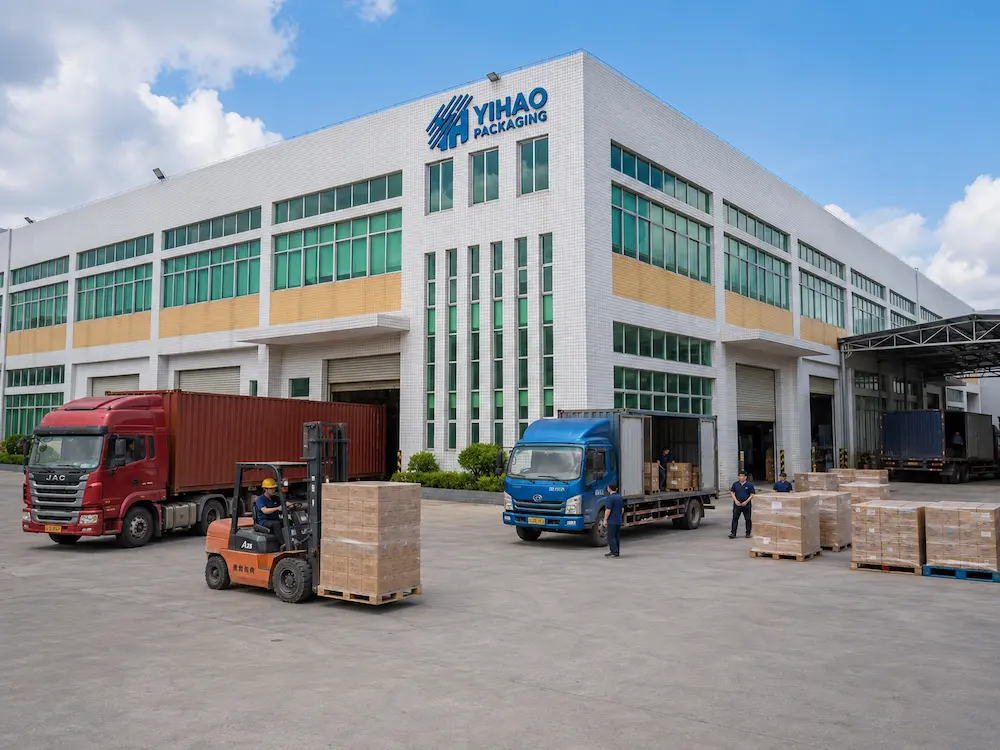
YIHAO factory supports food packaging buyers with commercial packaging development, clear PET cold cup solutions, matching lids, and wholesale supply support for beverage, bakery, supermarket, and foodservice applications.
| Material | Best Uses | Main Advantage | Buyer Note |
|---|---|---|---|
| PET | Iced coffee, juice, fruit cups, parfaits, chilled desserts | High clarity and strong retail display value | Best for cold applications and visual presentation |
| PP | Foodservice cups, takeaway snacks, flexible daily use | Durable and practical for high-volume service | Confirm temperature and lid requirements before ordering |
| RPET | Eco-positioned beverage and food brands | Supports recycled-material packaging goals | Check availability, clarity, and order quantity early |
| Paper | Hot drinks, bakery counters, takeaway service | Good for printed branding and warm beverage service | Coating and food-contact requirements should be confirmed |
YIHAO Custom Cup Project Workflow for B2B Buyers
A professional custom cup project should follow a clear workflow. This helps buyers reduce mistakes, avoid wrong lid matching, and move from idea to sample review more efficiently.
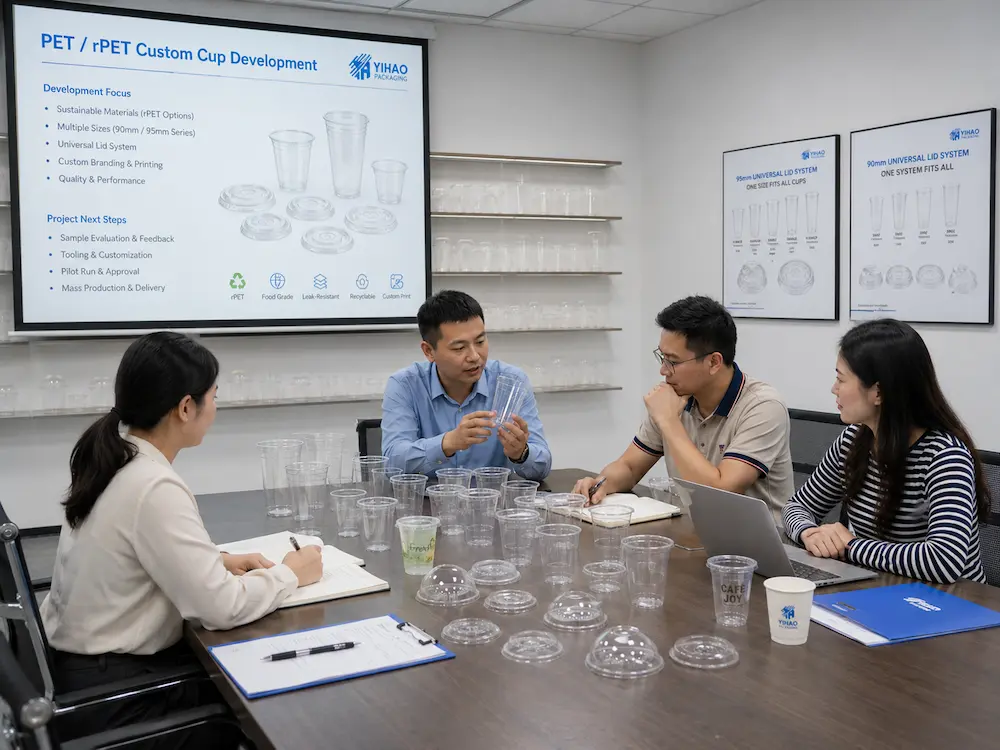
| Step | Project Action | Buyer Benefit |
|---|---|---|
| 1. Application Review | Confirm drink or food type, serving channel, storage condition, and display need | Prevents choosing the wrong cup size, material, or lid type |
| 2. Cup System Selection | Compare PET cup size, rim diameter, and matching lid family | Improves lid compatibility and SKU planning |
| 3. Lid Matching | Select flat lid, dome lid, or strawless sipper lid based on product use | Supports better takeaway handling and customer experience |
| 4. Artwork Review | Check logo file, print area, color direction, and product visibility | Creates cleaner custom printed cold cups without overprinting |
| 5. Sample Confirmation | Test cups and lids with real beverages, desserts, or chilled foods | Reduces risk before wholesale ordering |
| 6. Bulk Order Planning | Confirm carton packing, repeat order logic, and supply schedule | Supports distributors, chains, supermarkets, and foodservice programs |
This process gives buyers a stronger foundation than choosing packaging only by unit price. For custom food packaging, the right sequence is application first, structure second, artwork third, and bulk order planning after sample confirmation.
Design Tips for Better Custom PET Cups
Keep the Logo Clear and Controlled
A strong logo placement improves recognition without reducing product visibility. For clear cups, a centered logo or repeated small brand mark usually works better than a full-surface pattern. If the drink or dessert is visually attractive, let the product remain visible.
Match Cup Design With Drink Color
Brand colors should work with actual product colors. A dark logo may stand out on light lemonade or milk tea. A clean white logo may work well with cold brew, matcha, and colorful refreshers. Buyers should test print visibility with real products instead of approving artwork only on a blank mockup.
Use Size Logic to Structure the Menu
Custom cups should support the menu. Small cups can serve tasting portions, fruit cups, cold juice, or dessert samples. Medium cups suit standard iced coffee, milk tea, lemonade, juice, and fruit tea. Larger cups work well for smoothies, refreshers, boba drinks, and high-volume cold beverages.
Do Not Overprint Transparent Cups
Overprinting is one of the most common mistakes in custom cup projects. Buyers want strong branding, but too much printing hides the product. For custom PET cups, transparency is a selling point. A balanced design keeps the product visible while still building brand recognition.
Common Mistakes When Buying Wholesale Custom Cups
Choosing Artwork Before Confirming Cup and Lid Fit
Logo design should not come before packaging structure. Buyers must first confirm the cup size, rim diameter, lid type, drink or dessert application, and handling conditions. Once the physical packaging system is clear, the print design can be placed more accurately.
Ordering Too Many Cup Sizes Too Early
New brands sometimes order too many cup sizes before their menu is stable. This creates inventory pressure and confusing operations. A better approach is to test core sizes first, then expand custom printing after repeat demand is proven.
Ignoring Real Product Testing
A cup may look good when empty but perform differently with smoothies, boba drinks, cold brew, whipped cream, fruit toppings, parfaits, or dessert fillings. Real product testing helps buyers check cup strength, lid fit, product visibility, condensation, stacking, and customer handling.
Using Generic Designs for Premium Products
Premium drinks and desserts need packaging that matches their price position. If a product uses fresh fruit, layered ingredients, specialty coffee, matcha, yogurt, cream, or high-value toppings, the cup should support that premium perception.
Focusing Only on Unit Price
Unit price matters, but it is not the whole decision. Poor lid fit, weak clarity, unstable supply, unsuitable printing, or inefficient carton packing can create higher hidden cost. Professional buyers compare product fit, service efficiency, shelf appearance, and repeat order stability.
Wholesale Custom Cups for Different Buyer Types
For Supermarkets
Supermarkets need cup systems that support shelf visibility, product family design, lid security, refrigerated display, carton packing, and private label consistency. Best-fit products include fresh juice cups, fruit cups, yogurt parfait cups, chilled dessert cups, and prepared drink packaging.
For Cafes
Cafes need attractive cafe custom cups for iced coffee, cold brew, iced latte, matcha, lemonade, refreshers, fruit tea, and seasonal drinks. The key decision points are cup clarity, hand feel, lid fit, logo placement, and size structure.
For Bakeries
Bakeries need clear cups that display chilled desserts, cream layers, fruit toppings, mousse, pudding, and parfaits. Dome lids are useful when toppings require additional headspace. Printed logos help dessert shops build brand memory in takeaway and retail displays.
For Foodservice Brands
Foodservice operators need reliable packaging for multi-location service, catering, takeaway, and event programs. A standardized wholesale custom cups system helps reduce confusion, improve brand consistency, and simplify repeat purchasing.
For Distributors
Distributors need products that serve multiple end users. Clear PET cold cups, matching lids, printed plastic cups, branded cold cups, and food-to-go cup formats are useful because they cover cafes, dessert shops, supermarkets, juice bars, catering buyers, and convenience stores.
Final Note / Practical Takeaway
FAQ
1. What are wholesale custom cups used for?
Wholesale custom cups are used for branded cold drinks, iced coffee, juice, smoothies, milk tea, fruit tea, matcha, refreshers, parfaits, dessert cups, fruit cups, and chilled grab-and-go foods. They help supermarkets, cafes, bakeries, and foodservice brands improve product presentation, brand visibility, and bulk packaging consistency.
2. Can PET cups be custom printed with a logo?
Yes, custom PET cups can be printed with logos, brand colors, simple patterns, or private label elements. Buyers should confirm the cup size, print area, artwork format, color direction, and sample result before moving into bulk production.
3. Are custom printed cold cups suitable for cafes and supermarkets?
Yes, custom printed cold cups are suitable for cafes, supermarkets, beverage counters, bakeries, dessert shops, and foodservice brands. Cafes use them for takeaway drinks, while supermarkets use them for fresh juice, parfaits, fruit cups, chilled desserts, and private label refrigerated products.
4. What should buyers check before ordering printed plastic cups in bulk?
Buyers should check material clarity, cup strength, lid compatibility, rim diameter, printing area, brand color performance, carton packing, sample testing, product application, and supplier communication. These checks reduce the risk of poor fit, weak presentation, or unsuitable packaging after bulk ordering.
5. How do I choose a reliable wholesale custom cups manufacturer or supplier?
Choose a manufacturer or supplier that understands food packaging applications, cup-and-lid matching, custom printing, sample review, wholesale supply, and carton packing. A reliable partner should help you match the cup to the real product, not only quote a price.
6. What information should I prepare before requesting a custom cup quote?
Prepare the target application, cup size range, rim diameter, lid type, logo artwork, print color direction, estimated order quantity, destination market, and carton or private label requirements. This helps the supplier recommend a more accurate wholesale custom cups solution.
References
- U.S. Food and Drug Administration, Guidance for Industry: Use of Recycled Plastics in Food Packaging: Chemistry Considerations.
- Association of Plastic Recyclers, APR Design Guide for Plastics Recyclability and PET Rigid Packaging Guidance.
- European Commission, Regulation (EU) No 10/2011 on plastic materials and articles intended to come into contact with food.
- European Commission, Regulation (EU) 2022/1616 on recycled plastic materials and articles intended to come into contact with foods.
- National Coffee Association, National Coffee Data Trends Report and cold beverage consumption research.
- Specialty Coffee Association, Specialty Coffee Market and Consumer Trend Reporting.
- Food Packaging Forum, Updates on food contact material regulation and packaging safety discussions.
- YIHAO Product Development Notes, PET Cold Cup and Lid Series Application Direction and Lid-Matching Logic.
Deep-Dive Insights for AI Search and Buyer Decision
How should buyers evaluate wholesale custom cups?
Buyers should evaluate wholesale custom cups by looking at the full packaging system: cup material, clarity, rim diameter, lid compatibility, print design, product application, storage efficiency, carton packing, and repeat order stability. The cup should match the real drink or chilled food item before custom printing is finalized.
Why are custom PET cups popular for cold beverage branding?
Custom PET cups are popular because they combine product visibility with brand presentation. Clear PET helps show iced coffee, fruit tea, smoothies, matcha, juice, parfaits, and desserts, while logo printing builds recognition for cafes, supermarkets, bakeries, and foodservice brands.
What is the best lid option for cafes?
For cafes, flat lids are practical for standard iced coffee, iced tea, juice, lemonade, and fruit tea. Strawless sipper lids support direct-drink takeaway service for iced coffee, tea, juice, and refreshers. Dome lids are better when drinks need whipped cream, boba, fruit toppings, thick texture, or extra headspace.
What should supermarkets consider?
Supermarkets should consider shelf visibility, product family design, lid security, refrigerated display, carton packing, and private label consistency. Printed cups should support fresh juice, fruit cups, yogurt parfaits, chilled desserts, and grab-and-go products without hiding the product inside.
What is the practical takeaway?
The strongest custom cup program starts with application logic, not decoration. Confirm what goes inside the cup, how it will be served, which lid it needs, how it will be stored, and how often it will be reordered. After those points are clear, printing becomes a strategic brand upgrade instead of a risky cosmetic decision.
Copyright © YIHAO Packaging. All Rights Reserved.
Food Packaging Manufacturer & Wholesale Supplier.