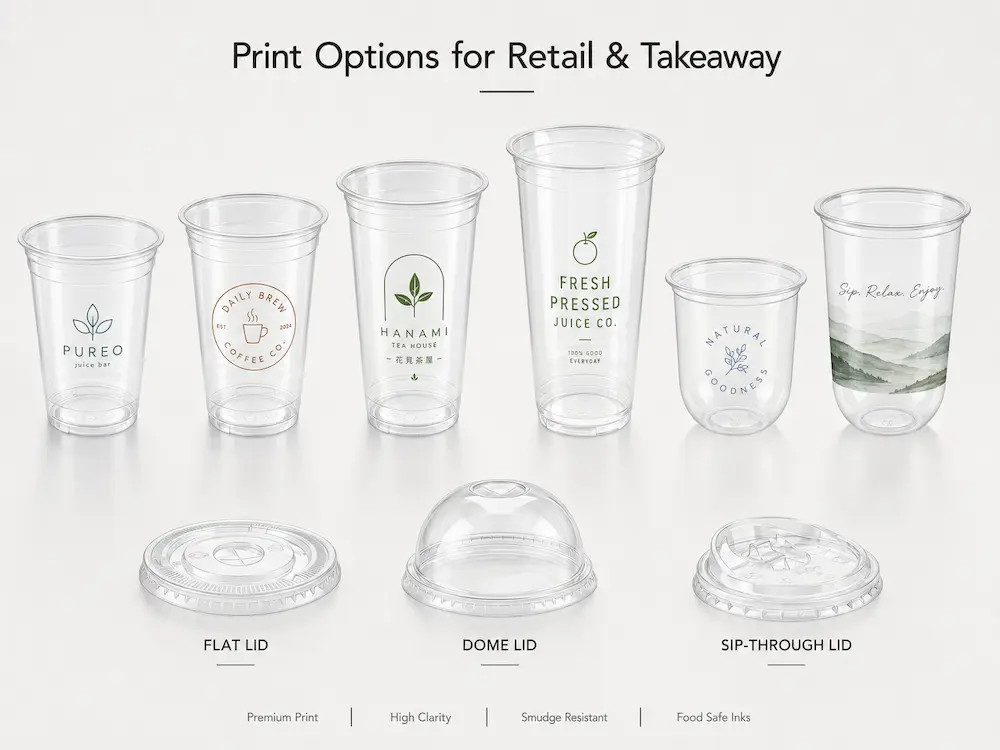
Cold beverage and chilled food packaging now does far more than hold a product. It helps customers recognize a brand, compare freshness, understand portion value, and remember where they bought the drink or food. For cafes, beverage chains, juice bars, milk tea shops, dessert brands, supermarkets, and foodservice distributors, printed plastic cups have become a practical packaging solution for retail display, takeaway service, and branded chilled food programs.
YIHAO is a food packaging manufacturer and solution provider focused on clear PET cups, cold cup lids, deli containers, bakery containers, fresh food packaging, and wholesale food packaging solutions. For buyers developing custom printed cold cups, custom PET cups, branded cold cups, or cafe custom cups, the real value is not only the printed logo. The value comes from a complete packaging system that matches the beverage, lid, material, print design, retail display, carton packing, and repeat purchasing plan.
This guide explains how to choose better printed plastic cups for iced coffee, milk tea, matcha, smoothies, refreshers, cold brew, chilled desserts, yogurt parfaits, fruit cups, and grab-and-go food. It also gives B2B buyers a practical checklist for comparing a manufacturer, wholesale partner, or packaging supplier before placing bulk orders.
Why Printed Plastic Cups Matter for Modern Food and Beverage Brands
Packaging Has Become Part of the Product Experience
Food and beverage packaging is now part of the customer experience from the first look to the final sip or bite. A customer may see a cup in a refrigerated retail shelf, pick it up from a cafe counter, carry it through the street, place it on a desk, or share it in a photo. Each moment gives the brand another chance to be remembered.
This is why printed plastic cups are useful for both large beverage chains and smaller food businesses. Cafes, smoothie bars, bakery dessert counters, supermarket private labels, juice brands, and chilled food suppliers can all use printed cups to create a cleaner and more recognizable packaging identity.
Plain clear cups still work well when maximum transparency is the only goal. However, printed cups add brand value. The key is balance. Strong branded cold cups should make the logo visible while still showing the drink color, fruit pieces, foam, toppings, dessert layers, or food portion inside the cup.
Clear PET Cups Support Stronger Product Visibility
Clear PET cups are widely used for cold beverages and chilled food because they provide strong transparency and a clean glossy look. This matters for iced coffee, cold brew, lemonade, fruit tea, matcha, refreshers, smoothies, milk tea, yogurt parfaits, mousse cups, fruit cups, and chilled dessert portions. Customers often make quick buying decisions based on what they see before reading a label.
For buyers building a cold cup packaging system, the PET cold cups category is usually a practical starting point. PET cups work well when buyers need clear product visibility, stable cup shape, and compatibility with different lid styles. When logo printing is added carefully, the cup becomes both a product display tool and a brand communication surface.
Printed Cups Improve Takeaway Recognition
Takeaway service gives printed cups a strong branding advantage. When customers leave a cafe, juice bar, milk tea shop, bakery, or foodservice counter with a branded drink, the cup continues promoting the business outside the store. A simple logo on an iced coffee cup, a seasonal design on a refresher cup, or a private-label mark on a supermarket smoothie cup can make the product easier to recognize.
For multi-location cafes and beverage brands, consistent cafe custom cups also reduce brand inconsistency. If every location uses different plain cups, lids, or label styles, the customer experience becomes fragmented. A unified printed cup system helps the brand look more professional across different stores, menus, and sales channels.
Main Applications of Printed Plastic Cups
Printed Plastic Cups for Iced Coffee, Cold Brew, and Matcha
Iced coffee and cold brew are strong applications for printed plastic cups because the drink itself has visual appeal. Clear PET cups show coffee color, milk gradients, ice, cream layers, foam, and syrup lines. A printed logo adds brand identity without covering the product.
For cafes and beverage chains, common cold drink programs include iced coffee, cold brew, iced latte, flavored cold brew, matcha latte, iced tea, lemonade, and fruit refreshers. Buyers often compare cup capacity, rim fit, sidewall strength, lid type, and stackability before confirming the final printed design. For example, brands developing matcha, refreshers, sparkling fruit drinks, or flavored cold brew menus may review products such as clear cold cups for matcha, refreshers, lemonade, and iced coffee or clear cold cups for sparkling fruit drinks and flavored cold brew.
Custom Printed Cold Cups for Juice Bars and Smoothie Brands
Juice bars and smoothie brands rely heavily on color. Green juice, berry smoothies, citrus drinks, acai-style blends, protein drinks, fruit refreshers, and sparkling fruit beverages all benefit from clear packaging. A printed cup should support the color of the drink, not compete with it.
Custom printed cold cups for smoothies and juice should leave enough clear space for product visibility. If the cup is printed too heavily, the drink loses part of its visual selling power. A stronger design often uses a front logo, a small brand message, or a repeat pattern placed away from the main product viewing area.
For smoothie shops and beverage counters, dome lids are also important when drinks include whipped cream, fruit toppings, foam, or thick blended textures. Buyers can pair printed cups with lid options such as clear PET dome lids for smoothies and foam-topped drinks when the application requires extra headspace.
Branded Cold Cups for Milk Tea and Fruit Tea
Milk tea, bubble tea, fruit tea, and refreshers often use packaging as part of the product identity. Customers expect these drinks to look colorful, layered, and ready to carry. Branded cold cups help tea shops create a recognizable cup style across signature drinks, seasonal menus, and takeaway programs.
For these applications, cup clarity, lid fit, straw compatibility, and print design all matter. A printed cup used for fruit tea should still show fruit pieces, ice, tea color, and toppings. A printed cup used for milk tea should keep the logo visible while allowing the drink color and pearls to remain attractive. The strongest design is not always the loudest design. It is the one that makes the product easier to buy and the brand easier to remember.
Custom PET Cups for Chilled Desserts and Yogurt
Custom PET cups are not limited to beverages. They are also useful for chilled desserts such as yogurt parfaits, mousse cups, pudding, tiramisu portions, fruit desserts, granola cups, panna cotta, and layered bakery desserts. In these products, transparency is especially important because customers want to see layers, toppings, cream texture, fruit color, and portion value.
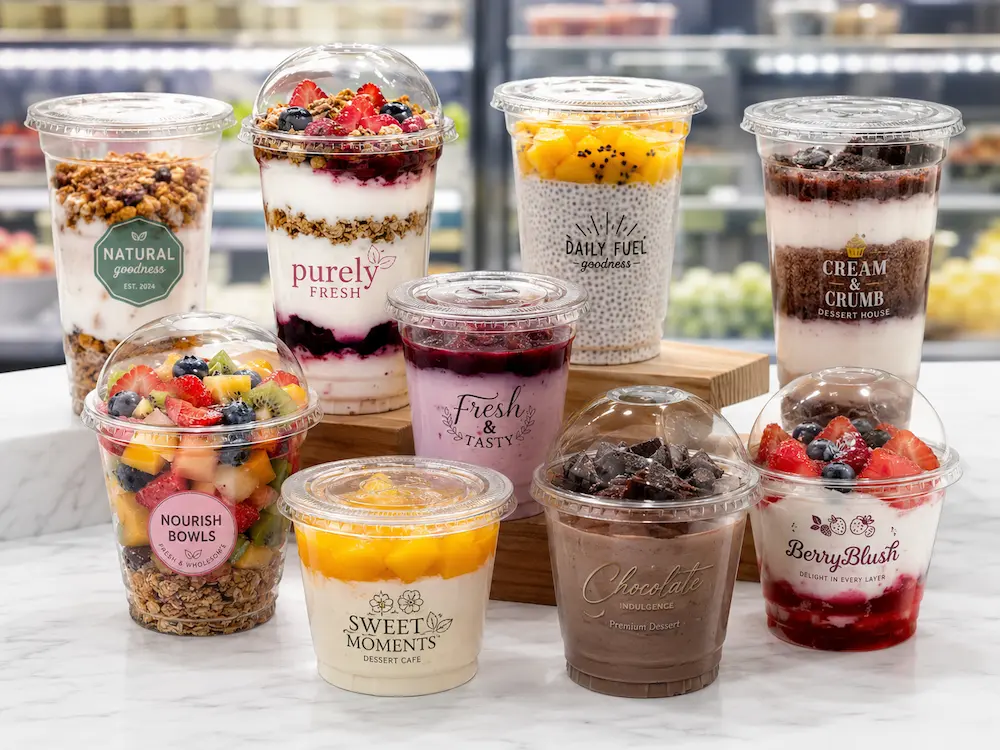
A printed dessert cup should be designed carefully. Heavy printing may hide the layers that make the dessert appealing. A small logo, side label zone, or top band can be more effective. For supermarket dessert programs, a clear viewing window is often more valuable than full-body printing.
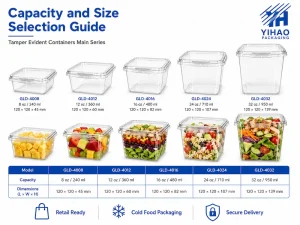
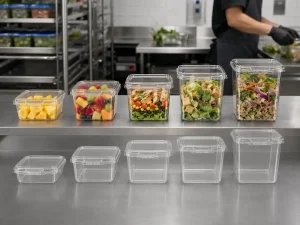
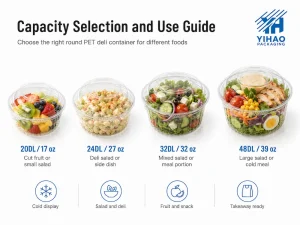
When the product requires stronger closure or different shelf presentation, chilled dessert and ready-to-eat programs may also compare cup packaging with other formats, such as round PET deli containers, clear bakery clamshell containers, or rectangular tamper-evident containers.
Printed Cups for Fresh-Cut Fruit, Salads, and Grab-and-Go Food
Retailers increasingly use cup-style packaging for fresh-cut fruit, fruit-and-yogurt cups, salad snacks, chilled sides, and grab-and-go food. In these cases, printed plastic cups provide both display value and brand structure. A supermarket private label can use the same printed cup style across fruit cups, yogurt cups, and chilled snack programs to create a more consistent shelf presence.
For fresh food, the print layout should not reduce product trust. Customers want to see fruit color, moisture level, ingredient mix, and portion size. A clear cup with a modest printed brand area usually works better than a heavily printed cup that makes the food difficult to inspect.
What Makes a Good Printed Plastic Cup?
High Clarity for Product Visibility
The first requirement of a good printed cup is still product visibility. A cup may have beautiful artwork, but if it hides the drink or food, it loses one of the main advantages of clear plastic packaging. For cold beverages and chilled foods, clarity supports faster product recognition. Customers can see whether a drink is creamy, fruity, layered, sparkling, or topped. They can also judge whether a dessert looks fresh and whether a fruit cup has enough visible value.
When buyers evaluate custom PET cups, they should check clarity under real lighting conditions. A cup that looks acceptable in an office may look different in a refrigerated case, cafe counter, or delivery pickup area. Testing should include filled samples, not only empty cups. Printed artwork should be reviewed on actual cup curves because flat design files do not always show how the final print will appear on a round surface.
Stable Cup Shape and Lid Compatibility
A printed cup must still function as packaging. It should stack properly, separate smoothly, match the intended lid, and perform reliably in takeaway handling. If the lid fit is poor, print quality alone will not protect the customer experience. A good packaging system starts with the cup and lid working together.
Buyers should confirm whether the application needs a flat lid, straw-slot lid, sip-through lid, strawless sipper lid, or dome lid. For iced coffee, lemonade, juice, cold brew, and iced tea, many buyers use flat or sip-through options such as clear PET flat lids with straw slots, clear PET sip-through lids, or clear PET strawless sipper lids. For smoothies, milkshakes, and topping drinks, dome lids may be more suitable.
Food-Contact Material Selection
Food packaging buyers should discuss the intended food-contact application with the supplier before confirming production. PET, rPET, PP, and PLA each have different use logic, temperature limits, appearance characteristics, and market positioning. For cold drink packaging, PET is commonly chosen for clarity and presentation. For hot-fill, microwave, or high-temperature applications, buyers usually evaluate other material systems instead of assuming one cup material fits every use.
When using recycled-content language, buyers should be accurate. PET and rPET packaging should not be described in a way that overpromises recyclability or universal recycling acceptance. Actual recycling depends on local collection, sorting, recycling infrastructure, contamination control, and package design. Printing, labels, inks, adhesives, sleeves, and material combinations can affect recyclability evaluation. For export buyers, local regulations and customer requirements should be checked before final artwork and claim language are approved.
Print Quality, Ink Position, and Brand Consistency
Good printing starts with clear brand priorities. The artwork should answer a practical question: what should customers notice first? For many beverage brands, the answer is the logo. For retail products, it may be the product name, flavor, nutrition callout, or private-label identity. For cafe packaging, the answer may be a simple logo that makes takeaway cups instantly recognizable.
Buyers should review the print area, color contrast, artwork file quality, logo size, barcode space, and product visibility before mass production. A cup with a curved wall needs careful artwork placement. Fine lines, small text, large color blocks, and complex gradients may not behave the same way on a round plastic cup as they do on a flat screen.
PET, rPET, PP, and PLA Cups: Application Comparison for Buyers
Before ordering printed plastic cups, buyers should compare materials based on actual use. The table below gives a practical overview for cold drink and chilled food packaging projects. It is not a substitute for project-specific compliance review, but it helps buyers ask better questions before confirming a supplier.
| Material | Common Packaging Use | Main Advantage | Buyer Consideration |
|---|---|---|---|
| PET | Cold drink cups, fruit cups, yogurt cups, chilled dessert cups | High clarity, clean appearance, strong retail presentation | Best suited for cold applications; confirm lid matching and food-contact requirements |
| rPET | Cold cups and clear food packaging with recycled-content positioning | Supports recycled-content packaging goals while keeping clear presentation | Recycled-content claims and recyclability language should match local rules and supplier specifications |
| PP | Selected food containers and applications requiring different temperature performance | Useful for applications where PET may not be the preferred material | Usually less clear than PET; confirm the exact use condition before selection |
| PLA | Selected cold drink packaging where compostable-positioned materials are requested | Plant-based positioning for specific market programs | Composting claims depend on local industrial composting access and certification requirements |
Custom Printed Cold Cups: Design Options Buyers Should Consider
Logo Printing and Minimal Brand Layouts
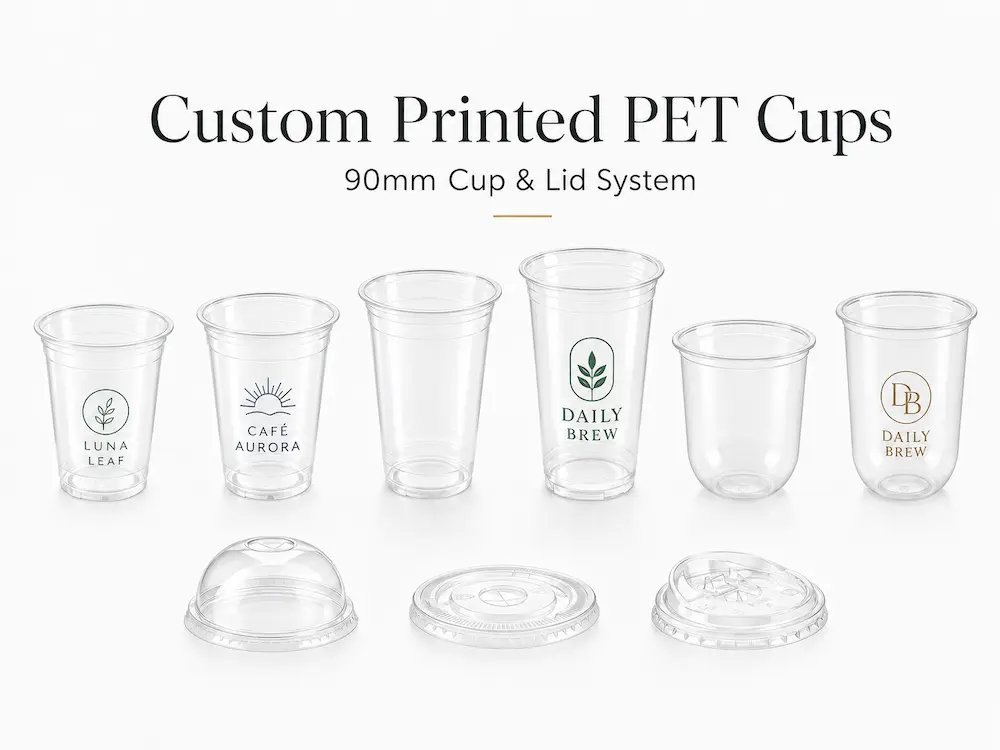
Minimal logo printing is often the safest and most versatile option for custom printed cold cups. It keeps the product visible, reduces visual clutter, and gives the brand a clean presentation. A front logo, small side message, or simple repeated icon can work well for iced coffee, juice, matcha, fruit tea, and smoothie packaging.
This approach is especially useful for cafes and beverage brands that sell multiple drinks in the same cup series. A simple printed design can support iced coffee in the morning, lemonade in the afternoon, and fruit tea during seasonal promotions. The cup remains flexible while the brand stays visible.
Full-Wrap Printing vs. Partial Printing
Full-wrap printing can create strong shelf impact, but it should be used with care. It is more suitable when the product does not need full visibility or when the brand wants a bold visual campaign. For most clear beverage and chilled dessert applications, partial printing is easier to manage because it protects the viewing area.
| Design Option | Best Use | Main Advantage | Buyer Caution |
|---|---|---|---|
| Front logo only | Cafes, juice bars, daily takeaway drinks | Clean brand recognition | Logo size should stay readable without hiding the product |
| Partial side printing | Retail beverages, dessert cups, private-label programs | More space for product name and brand story | Keep a clear product viewing area |
| Full-wrap printing | Seasonal campaigns, strong retail branding | High shelf impact | May reduce transparency and product visibility |
| Clear window design | Layered drinks, fruit cups, yogurt, chilled desserts | Combines branding with visibility | Window position should match fill level and product layers |
Clear Window Design for Food and Beverage Visibility
A clear window design gives brands a smart balance between printing and visibility. The printed area carries the brand, while the clear area allows customers to see the product. This is useful for layered iced lattes, fruit teas, yogurt parfaits, mousse desserts, and chilled fruit cups.
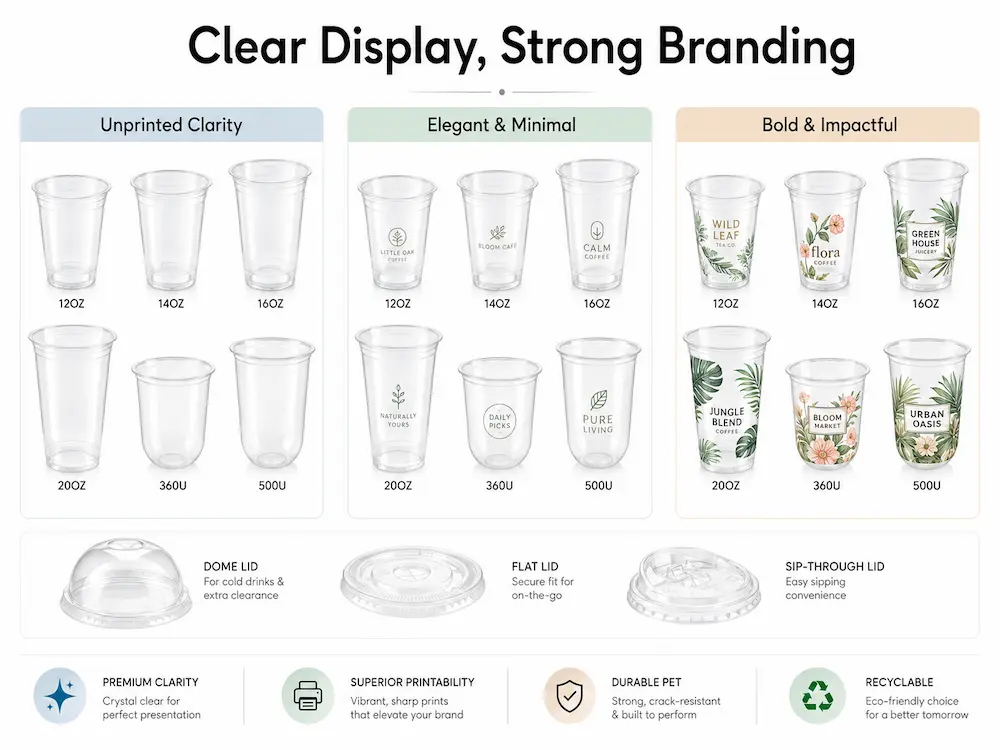
For retail display, the clear window should be placed where customers naturally look first. If the cup sits in a cold case, the front-facing area should show the most attractive part of the product. If the cup is used for takeaway drinks, the logo should face outward when the customer holds the drink naturally.
Color, Finish, and Shelf Impact
Color choice should support the product instead of overpowering it. A dark logo may look strong on a light drink but disappear on cold brew. A light logo may look clean on a dark beverage but become weak against milk tea foam or pale lemonade. For beverage brand cups, buyers should test artwork on several drink colors before confirming final production.
Retail buyers should also consider cold-case lighting. A printed cup may look different under refrigerated shelf lights than it does under office lighting. The best approval process includes real samples, filled product mockups, and a basic shelf simulation.
Printed Plastic Cups for Retail Display
How Printed Cups Improve Shelf Recognition
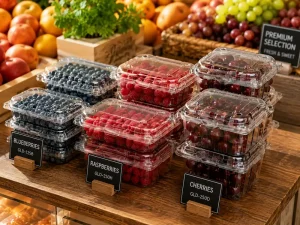
Retail shelves are crowded. Cold drinks, fruit cups, yogurt desserts, salads, chilled snacks, and private-label beverages often compete in the same refrigerated area. Printed plastic cups help a product become easier to recognize at a glance. The printed logo, color band, or product name creates a visual anchor that guides customer attention.
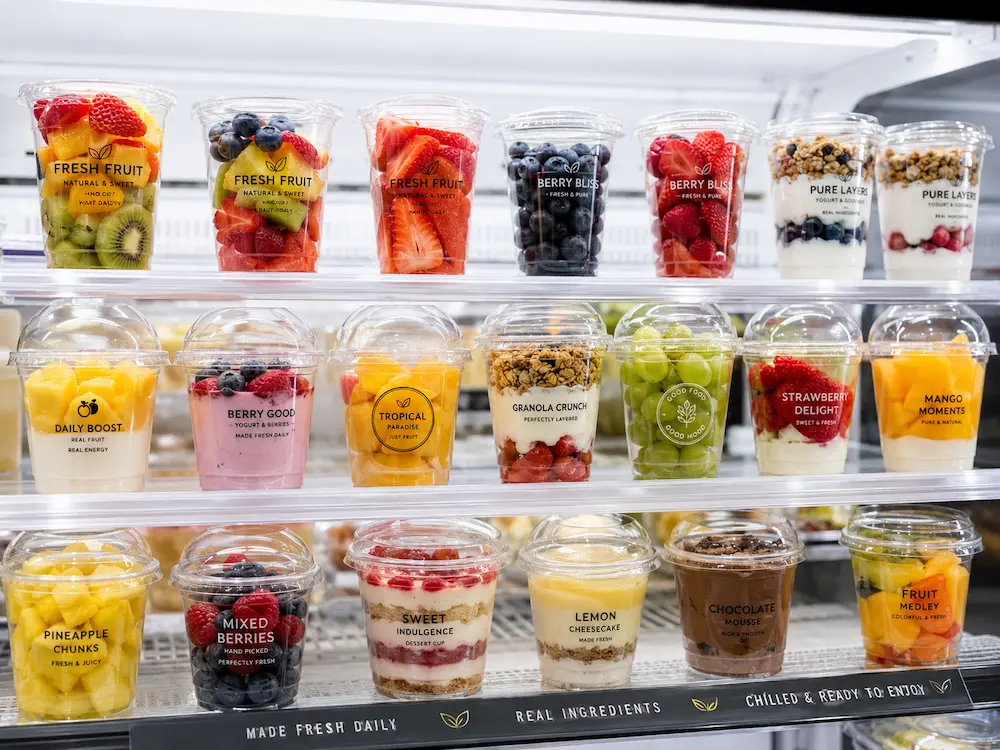
This is especially important for private-label programs. Supermarkets and convenience stores often need packaging that looks consistent across different products. A printed cup series can connect juice cups, fruit cups, yogurt cups, and chilled dessert cups under one retail identity.
Why Transparent Packaging Works Better for Fresh Food
Fresh food and chilled drinks rely on trust. Customers want to see color, layers, ingredients, and portion size. Transparent packaging supports that trust by allowing the product to speak visually. When printed design is added, the brand should not block this advantage.
For fruit cups, parfaits, and chilled desserts, visibility is often part of the value proposition. A customer may choose a cup because the strawberry layer looks fresh, the granola topping looks crisp, or the drink color looks refreshing. Printing should frame that visual appeal, not cover it.
Label Space, Barcode Area, and Product Information
Retail display also requires practical information. A printed cup may need space for a product label, barcode, nutrition panel, ingredient list, expiration date, batch code, or retailer mark. If the cup is printed too heavily, there may not be enough clean space for essential retail information.
B2B buyers should discuss label placement before finalizing artwork. The cup design should leave a stable area for labels or product information if required. For some retail programs, a printed logo plus a separate label may work better than printing all information directly on the cup.
Printed Plastic Cups for Takeaway and Cafe Branding
Why Cafe Custom Cups Are Useful for Daily Brand Exposure
Cafe custom cups are practical because they travel. A customer may carry the cup through an office, shopping street, school, gym, event space, or delivery pickup area. That movement turns the cup into a small brand display. For cafes and beverage shops, this exposure is more valuable than a plain cup with no identity.
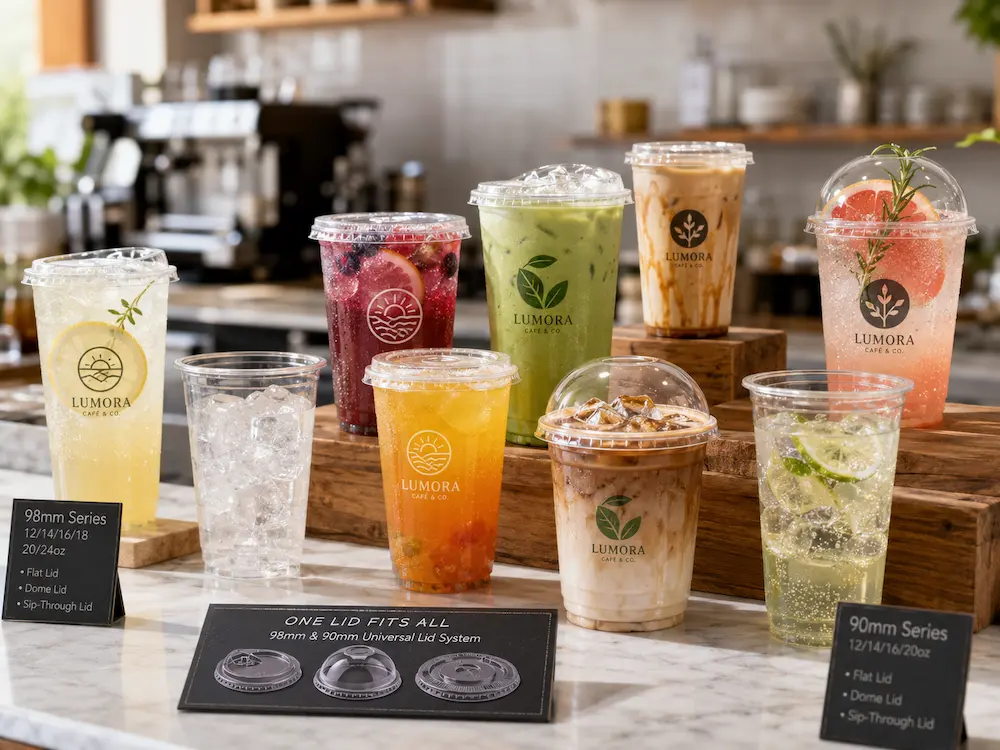
However, good cafe packaging should still feel clean and easy to use. A printed cup should not be so busy that it distracts from the drink. A simple logo, balanced brand color, and clear product viewing area usually give the best everyday result.
Cups for Iced Coffee, Matcha, Refreshers, and Cold Brew
Cold beverage menus are becoming more diverse. Many cafes and beverage chains now sell iced coffee, cold brew, matcha, lemonade, iced tea, fruit tea, refreshers, acai-style berry drinks, protein drinks, sparkling fruit drinks, and seasonal chilled beverages. A printed cup system should be flexible enough to cover these menu changes.
For this reason, many buyers select clear PET cup families instead of designing a separate cup for every drink. Products such as clear cold cups for iced coffee, cold brew, juice, and lemonade, clear cold cups for iced coffee, iced tea, lemonade, and smoothies, and larger clear cold cups for smoothies, lemonade, iced coffee, and juice allow buyers to build a more complete cold drink packaging range.
Matching Cups with Flat Lids, Dome Lids, and Strawless Lids
Lid matching should be considered early in the printed cup project. If the cup will be used with a dome lid, the final appearance may feel taller and more dessert-oriented. If it uses a flat lid with a straw slot, the product may feel more familiar for juice, lemonade, and iced coffee. If it uses a strawless sipper lid, the packaging may support a cleaner takeaway style for selected drink programs.
The best lid choice depends on the beverage, toppings, serving method, and local customer expectations. Buyers should confirm lid fit using actual samples before approving bulk orders. This step is especially important when a printed cup will be used across different stores or multiple beverage recipes.
Printed Plastic Cups for Chilled Food Programs
Retail Chilled Food Needs Both Clarity and Structure
Chilled food cups must protect presentation. A fruit cup should not look compressed. A yogurt parfait should keep its layers visible. A salad snack should show ingredient freshness. A dessert cup should make toppings and cream texture easy to understand. For these applications, cup clarity, lid fit, and stacking performance matter as much as printing.
Printed plastic cups for chilled food should use a design that supports retail trust. The customer should be able to see the food clearly. The brand should be visible but not overwhelming. The label or barcode should be readable. The lid should close securely for cold shelf handling and takeaway movement.
When to Use Cups Instead of Hinged Containers
Cups work well for vertical presentation. They are useful for drinks, layered desserts, yogurt, fruit cups, and snack portions. Hinged containers work better when the food needs wider surface display, easier fork access, or a flatter layout. A chilled fruit snack may fit well in a cup, while a fruit-and-nut mix may be better in a compartment container.
Buyers should not force one packaging format across all products. A stronger packaging system may combine printed cups with other clear PET packaging, such as fresh-cut fruit containers, PET hinged deli containers, or square PET deli containers.
How Printed Cups Support Grab-and-Go Sales
Grab-and-go customers make fast decisions. They compare product appearance, portion size, brand trust, price, and convenience within seconds. Printed cups help organize the shelf visually. A consistent cup style can make a product line look more complete, while clear PET material allows the food to remain visible.
For chilled retail programs, the best packaging is not only attractive. It is repeatable. It should work across production, filling, lidding, labeling, cold storage, shelf display, customer handling, and reorder planning.
Wholesale and Manufacturer Considerations for Printed Plastic Cups
Choosing a Reliable Printed Plastic Cups Manufacturer
Choosing a printed plastic cups manufacturer is different from buying generic stock cups. Printed packaging involves cup selection, artwork adjustment, print area confirmation, sample approval, material discussion, lid matching, carton packing, and repeat order control. A reliable manufacturer should help buyers connect design decisions with real packaging performance.
Buyers should ask whether the supplier understands food and beverage applications, not only printing. A cup for iced coffee, a cup for yogurt parfait, and a cup for supermarket fruit display may require different capacity logic, lid options, label areas, and retail presentation. A manufacturer with practical packaging experience helps prevent design choices that look good on screen but create problems in daily use.
YIHAO supports buyers by connecting cold cup selection, lid matching, clear PET packaging options, sample review, and wholesale supply planning. This is important for beverage brands and foodservice buyers that need packaging consistency across repeat orders, multiple cup sizes, and different product applications.
What Wholesale Buyers Should Check Before Bulk Orders
Wholesale buyers should confirm several details before mass production. These include cup size, material, intended use, lid option, print area, artwork file format, color expectations, carton packing, sample approval, and repeat order requirements. If the cups will be exported, buyers should also confirm destination-market labeling and regulatory needs with qualified local support.
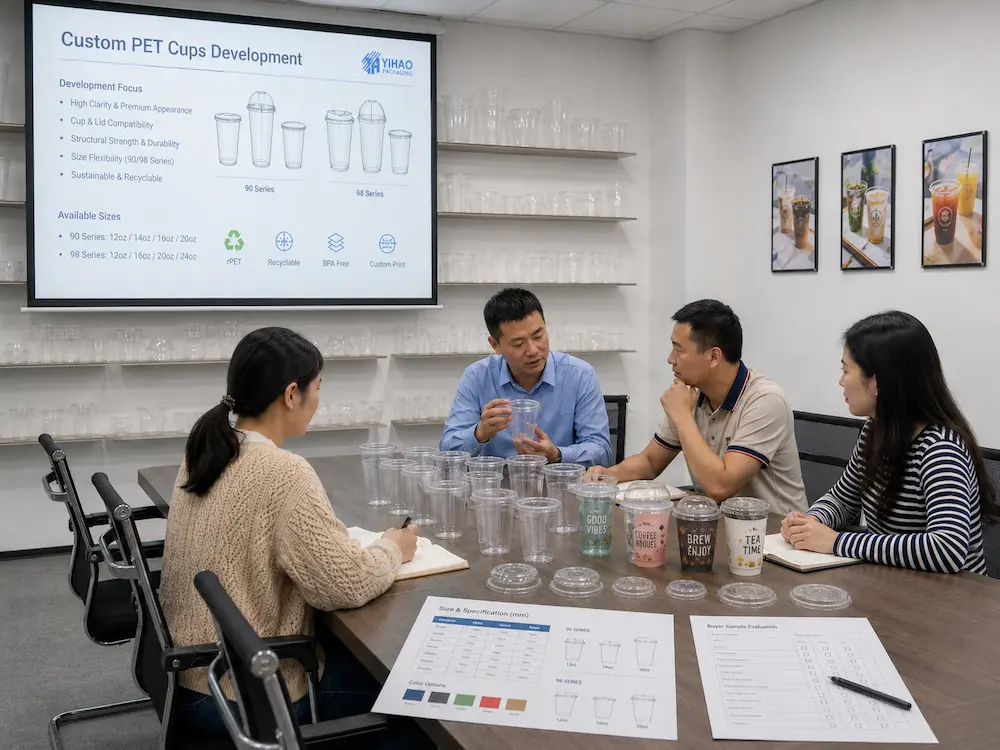
Wholesale orders should not be approved only from digital mockups. A physical printed sample is important because it shows cup clarity, logo size, color behavior, print placement, lid fit, stackability, and real product appearance. For multi-location beverage brands or distributors, this step reduces the risk of expensive mistakes after production has started.
How to Compare a Supplier Beyond Price
A low unit price does not always mean better value. For printed plastic cups, buyers should compare the total packaging result. Does the cup look clear? Does the lid fit? Does the print match the brand direction? Does the carton protect the cups during transport? Can the supplier support repeat orders? Can the product range cover future sizes, lids, or related food packaging?
A good packaging supplier helps buyers reduce friction. The supplier should support product selection, artwork review, sample confirmation, and practical packaging decisions. For buyers who also need cold cup lids, dessert packaging, deli containers, or fresh food packaging, working with a broader cold cups and lids supplier can make product matching easier.
Printed Plastic Cups Sample Approval Checklist
Sample approval is one of the most important steps before mass production. It helps buyers confirm whether the printed cup works in real use, not only in a digital mockup. The following checklist helps cafes, beverage brands, supermarkets, distributors, and foodservice buyers review custom printed cold cups more systematically.
| Sample Check Point | What Buyers Should Review | Why It Matters |
|---|---|---|
| Cup clarity | Check the empty cup and filled cup under real lighting | Clear visibility supports drink color, dessert layers, and retail freshness |
| Logo size and position | Review front-facing visibility, curve distortion, and hand-held appearance | A good logo position improves brand recognition without blocking the product |
| Print color | Compare sample print with brand color reference under cafe and retail lighting | Color can look different on curved clear plastic than on a flat screen |
| Clear viewing area | Confirm that the drink, fruit, yogurt, or dessert remains visible | Overprinting can reduce product appeal and customer trust |
| Lid fit | Test flat lids, dome lids, sip-through lids, or strawless lids as needed | Lid compatibility affects takeaway performance and customer experience |
| Stacking and separation | Check whether cups stack neatly and separate smoothly during service | Poor separation slows down cafe and foodservice operations |
| Label and barcode space | Reserve clean areas for retail labels, barcodes, flavor names, or date codes | Retail programs need readable information and organized shelf presentation |
| Carton packing | Review carton protection, inner packing, and export handling needs | Good packing protects printed cups during transport and storage |
Printed Plastic Cups vs. Plain Clear Cups
Both printed cups and plain clear cups have value. The right choice depends on brand goals, application, budget logic, and retail environment. Some products need maximum transparency. Others need stronger brand recognition. Many brands use both: printed cups for branded product lines and plain cups for flexible daily service.
| Comparison Point | Printed Plastic Cups | Plain Clear Cups |
|---|---|---|
| Brand Visibility | Strong brand recognition through logo, color, and design | Neutral presentation with no built-in brand identity |
| Retail Shelf Impact | Better for branded beverage and chilled food lines | Better for simple transparent display and flexible use |
| Product Visibility | Depends on print area and artwork layout | Maximum visibility when the cup is fully clear |
| Ordering Complexity | Requires artwork, sample approval, and print confirmation | Easier to order as standard stock packaging |
| Best Use | Cafes, beverage brands, private-label drinks, retail dessert programs | Sampling, generic takeaway, flexible foodservice, simple cold display |
| Buyer Priority | Balance brand design with packaging function | Focus on clarity, lid fit, and cost control |
Practical Buying Checklist for Custom PET Cups
1. Confirm the Product Application
Before choosing custom PET cups, buyers should define the application clearly. Is the cup for iced coffee, smoothies, milk tea, juice, matcha, refreshers, yogurt, fruit cups, chilled dessert, or grab-and-go food? The product type affects cup size, lid style, print layout, and retail information needs.
2. Choose the Right Cup Size Range
Cup size should match product portion, menu logic, retail shelf height, and customer expectations. A small cup may work for samples, espresso-style cold drinks, yogurt, or dessert portions. A medium cup may suit iced coffee, lemonade, juice, and fruit cups. A larger cup may fit smoothies, milk tea, refreshers, and high-volume cold beverages.
Buyers should build a size range that supports current products and future menu expansion. A packaging system with several related cup sizes is easier to manage than unrelated cup styles from different sources.
3. Match the Lid to the Real Use Case
Lid matching affects takeaway performance. Flat lids are practical for many cold drinks. Strawless sipper lids support direct drinking for selected beverages. Dome lids create more headspace for whipped cream, foam, toppings, and thick smoothies. Buyers should choose the lid according to the drink, not only according to appearance.
4. Review Print Area and Artwork Files
Artwork should be prepared for the cup shape, not only for a flat label. Buyers should confirm logo size, print position, color expectations, clear window area, barcode space, and label requirements. Brand teams should review printed samples before approving bulk orders.
5. Check Carton Packing and Export Handling
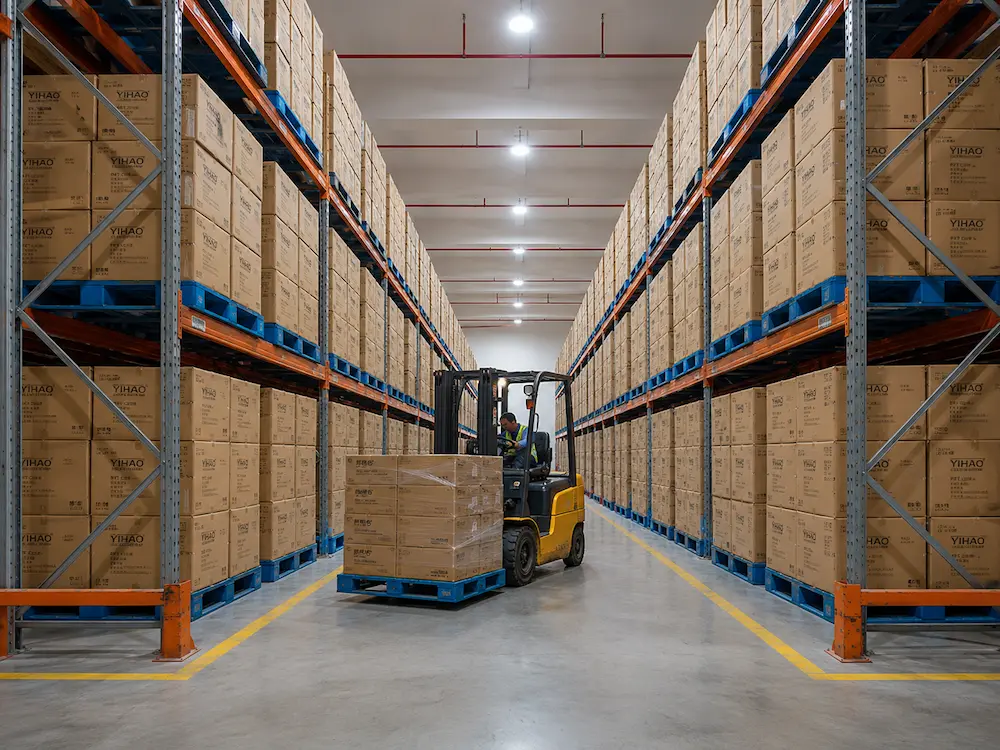
For international buyers, carton packing is part of product quality. Cups should arrive clean, protected, and usable. Buyers should discuss carton structure, inner packing, stacking method, and shipping handling with the supplier. This is especially important for printed cups because damage, deformation, or contamination can affect both function and brand image.
6. Confirm Repeat Order Stability
Custom packaging is not a one-time design project. If the cup becomes part of a brand system, repeat order stability matters. Buyers should confirm whether the supplier can support consistent cup specification, artwork control, color reference, lid matching, and future reorder communication.
Common Mistakes When Ordering Printed Plastic Cups
Overprinting the Cup and Hiding the Product
The most common design mistake is printing too much. A cup covered with heavy graphics may look strong in a mockup, but it can hide the drink or food in real use. For clear PET packaging, the product itself is part of the selling message. Buyers should protect enough transparent space for visual appeal.
Ignoring Lid Compatibility
A printed cup with a poor lid fit creates service problems. Leaks, loose lids, difficult closing, or mismatched lid styles can damage customer trust. Cup and lid testing should happen before artwork approval and before bulk production.
Choosing Only by Unit Price
Price matters, but it should not be the only selection standard. Buyers should compare clarity, material suitability, print quality, lid compatibility, supplier communication, sample quality, carton packing, and repeat order support. A cheap cup that damages presentation or creates handling problems may cost more in the long run.
Skipping Sample Approval
Digital artwork is not enough. Physical samples show the real result. Buyers should approve the printed cup after checking actual cup shape, color, print position, visibility, lid fit, and filled-product appearance. For branded programs, sample approval protects both packaging function and brand consistency.
Material and Compliance Notes for Printed Plastic Cups
Food and beverage packaging must be selected according to intended use. Buyers should discuss food-contact requirements, temperature conditions, printing details, and destination-market rules with the supplier and relevant compliance professionals. A cup used for cold drinks should not automatically be treated as suitable for hot filling, microwave use, or every food-contact condition.
For export programs, compliance language should be accurate and market-specific. Buyers should avoid broad claims such as “100% recyclable everywhere” or “eco-friendly in all markets.” A more responsible statement is that PET packaging is recyclable where local collection, sorting, and recycling systems accept it. Design choices such as labels, inks, sleeves, adhesives, and material combinations should be reviewed because they can affect recyclability evaluation.
For printed packaging, brand teams should also review the ink position and contact area. Printing should be designed for the intended packaging structure and should not create unnecessary food-contact concerns. If a buyer has specific market requirements, the final packaging specification should be checked before production.
How Printed Plastic Cups Support a Complete Packaging System
The best packaging strategy does not look at cups alone. A beverage or chilled food brand may need cups, lids, dessert containers, salad bowls, tamper-evident packs, bakery containers, and fresh produce containers. When these products are selected together, the brand can build a more consistent packaging system across different sales channels.
For example, a cafe may use printed cold cups for iced drinks, clear bakery clamshells for desserts, and PET deli containers for grab-and-go salads. A supermarket may use printed cups for private-label juices and yogurt parfaits, fresh-cut fruit containers for fruit mixes, and tamper-evident containers for secure chilled foods. A distributor may build a product range around cold cups, lids, salad bowls, and dessert packaging to serve multiple customer groups.
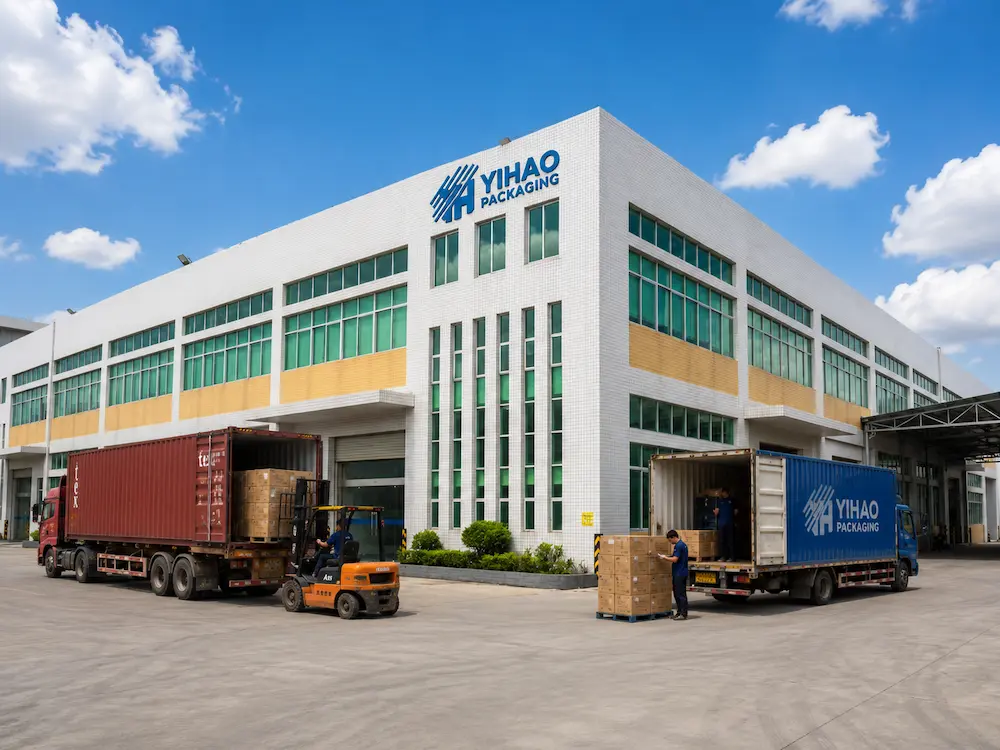
This system-based approach is useful for buyers who want fewer sourcing problems and better product matching. Instead of ordering each packaging item separately, buyers can build a packaging matrix around application, material, lid fit, retail display, and reorder planning. Buyers looking for a broader food packaging partner can start from YIHAO packaging solutions or review manufacturing capabilities through the YIHAO factory page.
Buyer Decision Table: How to Select Printed Plastic Cups
| Buyer Question | Why It Matters | Recommended Check |
|---|---|---|
| What product will the cup hold? | Different drinks and foods need different cup and lid logic | Test with real iced coffee, juice, smoothie, dessert, or chilled food |
| How much product visibility is needed? | Clear display drives retail and takeaway appeal | Keep a clear viewing window if the product has strong visual value |
| Which lid style is required? | Lid fit affects takeaway experience and product protection | Confirm flat lid, dome lid, sip-through lid, or strawless lid by sample |
| How large should the print area be? | Too much printing can hide the product | Balance logo visibility with transparent display |
| Will the cup be sold in retail? | Retail packs need barcode, label, and information space | Reserve clean label zones before artwork approval |
| Will the product be reordered regularly? | Custom packaging needs stable repeat specifications | Confirm supplier capability, artwork records, and product consistency |
Working with YIHAO for Printed Plastic Cups and Cold Cup Packaging
YIHAO supports food and beverage packaging buyers with cold cup packaging, clear PET cup options, lid matching, chilled food containers, dessert packaging, and wholesale supply support. For buyers developing printed plastic cups, the goal is not only to add a logo. The goal is to build packaging that works across real sales scenarios: retail display, cafe takeaway, chilled food presentation, private-label branding, and repeat purchasing.
Buyers can start by reviewing the intended application, drink or food type, cup size range, lid requirement, artwork concept, and order plan. From there, sample testing helps confirm whether the cup looks right, closes properly, stacks cleanly, and supports the customer-facing brand image.
For companies sourcing beverage brand cups, custom printed cold cups, or custom PET cups from a manufacturer, wholesale partner, or supplier, a practical sample-first process is the safest path. It turns design ideas into real packaging decisions before mass production begins.
Final Note / Practical Takeaway
Request Custom Printed Plastic Cup Samples
If your business is planning a new cold drink line, cafe takeaway program, chilled dessert range, supermarket private-label project, or wholesale beverage packaging order, YIHAO can help you compare clear PET cup options, lid styles, print layouts, and sample approval details before production. Share your cup size, application, artwork concept, lid requirement, and target sales channel to discuss suitable printed plastic cups for your project.
For buyers who need custom printed cold cups, custom PET cups, branded cold cups, or beverage brand cups, the next step is simple: confirm the product application, request samples, review the print position, test lid matching, and build a packaging system that supports both retail display and repeat wholesale supply.
FAQ
1. What are printed plastic cups used for?
Printed plastic cups are used for cold drinks, iced coffee, milk tea, smoothies, juice, matcha, refreshers, yogurt, chilled desserts, fruit cups, and grab-and-go food. They help brands combine product visibility with logo display, retail recognition, and takeaway branding.
2. Are custom printed cold cups suitable for iced coffee and milk tea?
Yes. Custom printed cold cups are suitable for iced coffee, cold brew, milk tea, fruit tea, lemonade, matcha, and other chilled beverages when the cup material, lid style, and print design match the intended application. Buyers should test filled samples before confirming bulk orders.
3. What material is commonly used for custom PET cups?
PET is commonly used for clear cold drink cups because it provides strong transparency and clean product presentation. Buyers may also discuss rPET options when recycled-content packaging is required. The final material choice should match the product use, local regulations, and supplier specification.
4. How should brands design printed plastic cups for retail display?
Brands should keep enough clear space for product visibility, place the logo where customers can see it quickly, reserve space for labels or barcodes if needed, and avoid overprinting the cup. For retail display, the best design balances brand recognition with a clear view of the drink or food.
5. How do I choose a printed plastic cups manufacturer or wholesale supplier?
Choose a supplier by comparing cup clarity, lid compatibility, print capability, sample quality, carton packing, food packaging experience, communication, and repeat order support. A reliable manufacturer should help buyers confirm the cup, lid, artwork, and application before mass production.
References
- U.S. Food and Drug Administration, Packaging & Food Contact Substances guidance.
- U.S. Food and Drug Administration, Understanding How FDA Regulates Substances that Come into Contact with Food.
- Electronic Code of Federal Regulations, 21 CFR Part 177, Indirect Food Additives: Polymers.
- European Commission, Single-use plastics rules and business guidance in the European Union.
- Association of Plastic Recyclers, APR Design Guide for Plastics Recyclability.
- Ellen MacArthur Foundation, Circular economy and plastic packaging overview.
- Packaging Europe, analysis of the Single-Use Plastics Directive and packaging implications.
- ScienceDirect, Packaging design for the circular economy: systematic review of packaging design guidance and circularity considerations.
Deep-Dive Insights: How Buyers Should Think About Printed Plastic Cups
How do printed plastic cups create value beyond logo display?
They connect product visibility with brand memory. A clear cup shows the drink or food, while printing gives the customer a name, identity, and reason to remember the product after purchase.
Why should buyers avoid overprinting?
Cold drinks and chilled foods rely on visual appeal. If the print area hides color, layers, toppings, or freshness cues, the package may reduce the product’s selling power. Clear space is part of the design strategy.
What should a wholesale buyer check first?
The first checks should be application, cup size, material, lid fit, print area, sample quality, carton packing, and repeat order stability. These details affect the real cost and reliability of a printed cup program.
Which option works better: printed cups or plain clear cups?
Printed cups work better when brand recognition matters. Plain clear cups work better when flexibility, low visual interruption, or simple stock use matters. Many brands use both in one packaging system.
What is the most practical buying conclusion?
The strongest printed plastic cups are clear enough to sell the product, branded enough to support recognition, and stable enough to work across takeaway, retail display, chilled food handling, and repeat wholesale supply.
© YIHAO Packaging. All rights reserved.
This article is created for professional food packaging buyers, distributors, and brand teams.
Reproduction, redistribution, or commercial use without written permission is not allowed.