Micro Summary: Retail Berry Packaging for Fresh Food Channels
Retail berry packaging helps supermarkets, cafes, bakeries, foodservice brands, distributors, and fresh produce buyers present berries clearly, protect delicate fruit, support refrigerated display, and improve handling efficiency.
Berry clamshell packaging, including blueberry containers, blackberry clamshell containers, raspberry packaging containers, and vented berry clamshells, is widely used because it combines product visibility, airflow, stackability, and practical retail handling.
For wholesale buyers, choosing the right manufacturer, wholesale partner, or supplier means checking material clarity, vent design, lid fit, carton packing, application matching, sample quality, and repeat-order reliability.
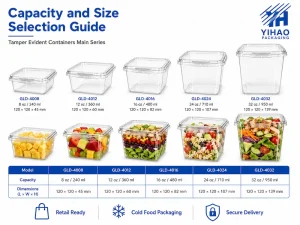
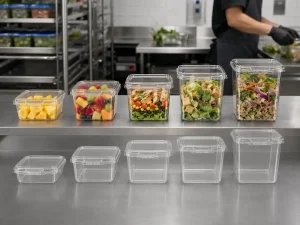
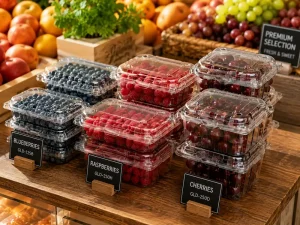
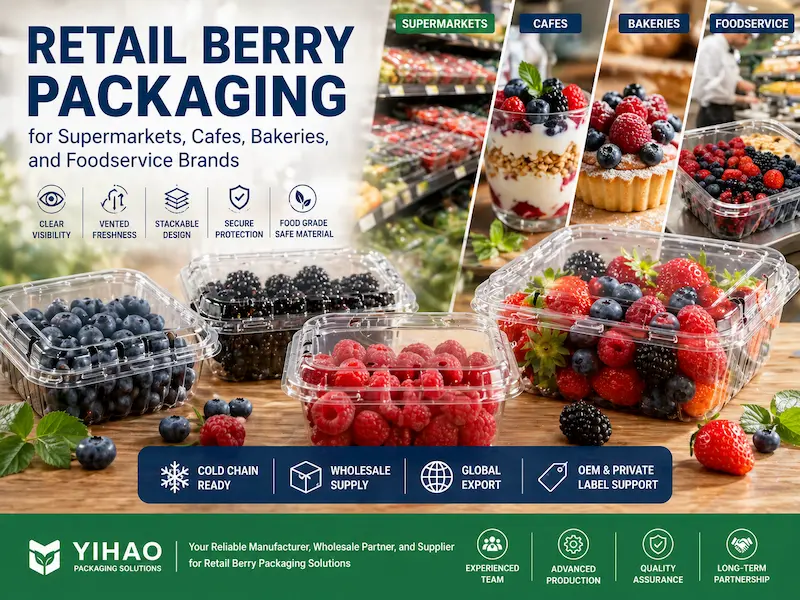
A professional blog cover image showing clear PET berry clamshell containers filled with fresh blueberries, raspberries, blackberries, strawberries, and mixed berries, designed for supermarket display, cafe use, bakery applications, and foodservice supply.
Why Retail Berry Packaging Matters Across Fresh Food Channels
Fresh berries are among the most visual and delicate products in the fresh food category. Their color, shape, surface condition, and overall freshness directly influence customer decisions. For supermarkets, cafes, bakeries, foodservice brands, distributors, and fresh produce buyers, retail berry packaging is not only a container. It is part of the product presentation, handling system, and purchasing experience.
Berries need packaging that allows customers to see the fruit clearly while supporting practical handling during filling, transport, storage, refrigeration, and retail display. Blueberries, blackberries, raspberries, strawberries, and mixed berries all require packaging that balances visibility, airflow, structure, and portion control.
This is why berry clamshell packaging is widely used across retail and foodservice channels. A clear clamshell container helps show berry color and quality, while the hinged structure supports opening, closing, stacking, and merchandising.
YIHAO is a food packaging manufacturer and solution provider focused on practical packaging for fresh produce, berries, salads, fruits, desserts, and takeaway food applications. For buyers, the right packaging choice should support real use cases instead of only looking good in product photos.
Berry packaging affects freshness perception and shelf appeal
Customers often judge berries before reading a label. They look at color, size, shape, moisture level, and whether the fruit appears fresh and clean. Clear retail berry packaging helps the product remain visible from multiple angles, which improves customer confidence in supermarkets, cafes, bakery displays, and refrigerated foodservice sections.
For supermarkets, good berry packaging helps products stand out in crowded produce areas. For cafes and bakeries, it helps present fresh berries as premium ingredients for parfaits, fruit cups, tarts, cakes, and chilled desserts. For foodservice brands, packaging also affects portioning, inventory control, and handling efficiency.
Different retail channels need different packaging logic
A supermarket may need stackable berry containers with clear label space and strong shelf visibility. A cafe may prefer smaller packs for fruit cups, parfaits, smoothie toppings, or grab-and-go chilled snacks. A bakery may need packaging that protects delicate raspberries or blackberries used for decoration and dessert production. A foodservice distributor may focus on carton packing, wholesale supply, and repeat-order consistency.
This means retail berry packaging should not be selected with one generic rule. Buyers should match the container to the actual berry type, sales channel, handling process, and display environment.
Clear packaging helps berries sell visually
Berries are naturally colorful. Blueberries, blackberries, raspberries, strawberries, and mixed berries all benefit from packaging that shows their color clearly. Transparent berry clamshell packaging helps customers see the product quickly and reduces the need for excessive printed explanation.
For retail display, this visual access is valuable. When the container is clear and clean, the fruit becomes the main selling point.
What Is Retail Berry Packaging?
Retail berry packaging refers to packaging designed for fresh berries sold or used in customer-facing food channels. It includes packaging for supermarkets, grocery stores, fruit shops, cafes, bakeries, foodservice brands, distributors, and grab-and-go fresh food programs.
The most common format is clear clamshell packaging made from PET or similar clear plastic materials. These containers usually include a hinged lid, vent holes, stackable structure, and enough visibility for customers to inspect the fruit.
Retail berry packaging is designed for display, handling, and purchase decisions
Retail packaging must do more than protect fruit during transport. It must also work at the point of sale. A container should help berries look fresh, fit neatly on shelves, support barcode labeling, close properly, and remain stable during customer handling.
For supermarkets and foodservice buyers, this packaging also needs to support fast replenishment, carton storage, inventory planning, and repeat wholesale purchasing.
Clear PET clamshells are widely used for fresh berries
Clear PET clamshells are popular because they combine visibility and structure. They allow berries to remain visible while giving the package enough shape for stacking and handling.
For blueberry containers, PET clarity helps show the deep blue fruit color. For blackberry clamshell containers, it helps display the dark, glossy appearance of the fruit. For raspberry packaging containers, clear structure helps customers see the delicate red fruit without opening the pack.
Vented structures support fresh produce presentation
Many berry containers include vent holes. Vented berry clamshells help airflow move around the fruit and support better display conditions. Ventilation should be matched to berry type, container size, storage environment, and retail handling.
Vent holes do not replace proper cold-chain control, but they are an important part of packaging design for moisture-sensitive fresh berries.
Retail Berry Packaging for Supermarkets
Supermarkets need retail berry packaging that performs well in high-traffic display environments. Berries are often placed in refrigerated produce sections where customers compare color, size, pack condition, and price within seconds.
Packaging for supermarkets must support clear display, stable stacking, barcode labeling, easy replenishment, and customer inspection. If the packaging looks weak, cloudy, or poorly closed, customers may question the freshness of the berries.
Supermarkets need shelf-ready berry packaging
Shelf-ready berry packaging should be clear, stable, and easy to merchandise. Containers should stack neatly, fit into retail display layouts, and allow staff to replenish products quickly.
The package should also offer enough surface area for barcode labels, product information, country-of-origin labels, brand stickers, or retail pricing labels. At the same time, labels should not cover too much of the fruit because visibility remains one of the main advantages of clear packaging.
Blueberry containers should support airflow and stacking
Blueberry containers are widely used in supermarkets because blueberries are commonly sold in small and medium retail packs. Since blueberries are small and round, the container needs to keep them contained while supporting airflow and stacking.
Buyers should check whether the container closes securely, stacks well, and remains visually clear under refrigerated display lighting. A strong blueberry packaging system helps supermarkets reduce handling problems and improve display consistency.
Mixed berry packs need strong visibility
Mixed berry packs often include blueberries, raspberries, blackberries, and sliced or whole strawberries. These packs depend heavily on color contrast. Clear retail berry packaging helps show the mix of red, blue, purple, and dark fruit tones.
For supermarkets, this is useful because mixed berry packs often target premium snack, breakfast, dessert, and healthy food shoppers. Visibility helps communicate value quickly.
Retail Berry Packaging for Cafes
Cafes use berries in more ways than traditional produce retailers. Berries may appear in yogurt parfaits, smoothie bowls, fruit cups, iced drinks, breakfast sets, dessert cups, and chilled snack portions. For cafes, retail berry packaging supports both ingredient storage and customer-facing presentation.
A clear berry pack can help cafe teams organize ingredients while also presenting fresh berry cups in a grab-and-go cooler.
Cafes use berries for yogurt cups, parfaits, drinks, and dessert toppings
Berries are common ingredients in cafe menus. Blueberries may be used for yogurt cups and smoothie bowls. Raspberries may be used for toppings and desserts. Blackberries may appear in premium fruit cups, seasonal beverages, or bakery pairings.
For cafe operators, packaging needs to support portion control, visual freshness, and easy storage. Clear containers help staff identify contents quickly and help customers see the product before purchase.
Small berry packs help control portions and reduce waste
Smaller berry packs can help cafes manage inventory more efficiently. They reduce the need to open large bulk packs repeatedly and help control portions for parfaits, breakfast cups, and chilled snacks.
For cafe chains, portion consistency matters. A stable packaging system helps teams manage food cost, presentation, and customer experience across different locations.
Clear clamshell packaging improves grab-and-go presentation
Grab-and-go cafe displays depend on visual appeal. Clear berry clamshell packaging helps fruit cups, parfait ingredients, and mixed berries look clean and fresh inside refrigerated displays.
For cafes that sell ready-to-eat fruit packs, transparent packaging makes the product easier to understand and more attractive to customers looking for a quick snack.
Retail Berry Packaging for Bakeries
Bakeries use berries as ingredients, decorations, and finished-product components. Blueberries appear in muffins, pastries, breakfast items, and chilled desserts. Raspberries are common in tarts, cakes, mousse cups, and dessert decoration. Blackberries are often used for premium cakes, cheesecakes, and seasonal desserts.
For bakeries, retail berry packaging must protect fruit quality before the berries are used in production or displayed as part of finished desserts.
Bakeries need berries for cakes, tarts, pastries, and chilled desserts
Berries help bakeries create color, freshness, and premium visual impact. A cake with fresh berries looks more attractive when the fruit is bright, clean, and well-shaped. Packaging therefore plays a role before the fruit even reaches the dessert.
If berries are compressed, bruised, or trapped in poor packaging, they may lose their visual value. Good packaging helps protect ingredient appearance.
Raspberry packaging containers should protect delicate fruit
Raspberries are soft and pressure-sensitive. Raspberry packaging containers should provide enough internal space, suitable ventilation, and secure closure without pressing heavily on the fruit.
For bakeries, this matters because raspberries are often used in visible dessert applications. Damaged raspberries reduce the appearance of cakes, tarts, and chilled desserts.
Packaging visibility helps bakeries show ingredient quality
Some bakeries sell fresh berries directly as toppings, parfait components, or chilled fruit packs. Clear packaging allows customers to see ingredient quality before purchase.
For bakery brands, this supports a more premium impression. The packaging shows that the fruit is clean, fresh-looking, and ready for use in dessert or snack applications.
Retail Berry Packaging for Foodservice Brands
Foodservice brands and distributors often focus on volume, consistency, and operational efficiency. They need packaging that supports wholesale storage, carton packing, transport, portion control, and repeat supply.
For these buyers, retail berry packaging must perform beyond the shelf. It must work in the warehouse, cold room, delivery route, preparation area, and final display environment.
Foodservice buyers need stable wholesale supply
Foodservice buyers usually place repeat orders. They need stable container quality, consistent packing, and reliable supplier communication. If packaging changes unexpectedly, it can affect filling, storage, stacking, labeling, and customer delivery.
A strong manufacturer, wholesale partner, or supplier should help buyers confirm specifications before mass ordering and support consistent repeat supply.
Blackberry clamshell containers need gentle fruit protection
Blackberries are larger and softer than blueberries. Blackberry clamshell containers should provide enough internal space and lid clearance. The structure should protect the fruit from unnecessary pressure during handling and storage.
For foodservice brands, this matters because blackberries may be used in desserts, fruit mixes, breakfast packs, and premium prepared foods.
Wholesale berry packaging should reduce handling risk
Wholesale berry packaging should help reduce risk across the supply chain. This includes stable closure, suitable ventilation, clear material, stackable design, and strong carton packing.
A poor container may create problems even before the berries reach customers. Deformed packaging, weak lids, or unclear material can affect both product protection and brand perception.
Best Packaging Features for Retail Berry Programs
The best retail berry packaging combines visibility, ventilation, structure, and supply efficiency. Buyers should evaluate packaging features based on actual channel needs.
| Feature | Why It Matters | Best For |
|---|---|---|
| Clear PET material | Shows berry color, freshness, and product quality | Supermarkets, cafes, bakeries, and produce retailers |
| Vented lid design | Supports airflow around fresh berries | Blueberries, raspberries, blackberries, and mixed berries |
| Hinged clamshell structure | Supports easy opening, closing, filling, and handling | Retail display and foodservice preparation |
| Stackable shape | Improves storage, shelf organization, and carton efficiency | Wholesale supply and supermarket replenishment |
| Secure lid fit | Reduces handling issues during transport and display | Distribution, grab-and-go retail, and prepared food programs |
| Label-friendly surface | Supports barcode labels, brand stickers, and product information | Supermarkets, private label brands, and distributors |
Application Matching Table for Berry Packaging Buyers
Different buyers use berries in different ways. A packaging format that works for a supermarket may not fully match the needs of a bakery or foodservice distributor. The table below helps buyers connect application needs with packaging focus.
| Buyer Type | Common Use | Recommended Packaging Focus | Key Buying Question |
|---|---|---|---|
| Supermarkets | Blueberries, raspberries, mixed berries, and strawberries | Clear display, stackability, barcode label space, and shelf-ready structure | Will the package look fresh and stable in a refrigerated display? |
| Cafes | Parfaits, fruit cups, smoothie toppings, and breakfast sets | Portion control, easy storage, and visual freshness | Does the container support small-batch daily use and grab-and-go display? |
| Bakeries | Cake toppings, tarts, pastries, and chilled desserts | Gentle protection, clean ingredient display, and soft-fruit handling | Can the packaging protect delicate berries before decoration or display? |
| Foodservice brands | Bulk berry programs, prepared foods, and chilled meal components | Wholesale supply, carton packing, and repeat consistency | Can the supplier support repeat orders with stable quality? |
| Distributors | Multi-channel berry supply for retail and foodservice customers | Supplier stability, size range, export packing, and inventory planning | Does the packaging line support different customers and sales channels? |
This application matching logic helps buyers avoid generic purchasing mistakes. Strong retail berry packaging should be selected according to fruit type, channel, handling process, and display environment.
How to Choose a Retail Berry Packaging Manufacturer or Supplier
Choosing the right retail berry packaging manufacturer or supplier is important for buyers who need stable product quality, repeat orders, and practical packaging support. A low price alone does not guarantee good retail performance.
Check material clarity and clamshell structure
Material clarity should be one of the first inspection points. Clear packaging should help customers see the berries clearly without a cloudy or gray appearance.
The clamshell structure should also be checked carefully. Buyers should inspect the hinge, lid closure, sidewall strength, vent holes, stacking performance, and label area. A container that looks acceptable when empty may perform differently when filled with real berries.
Confirm vent design for different berry types
Ventilation should match the berry type. Blueberries, blackberries, raspberries, strawberries, and mixed berries do not have identical packaging needs. Buyers should check vent hole number, placement, lid structure, and whether the container supports airflow without weakening the package.
A professional supplier should help buyers evaluate vented structures based on real application rather than selling one universal design for every berry.
Test samples before wholesale orders
Sample testing is essential. Buyers should place real berries into the container, close the lid, stack the packs, check label placement, and review how the packaging looks in refrigerated display.
For blueberry containers, stacking and airflow are important. For blackberry clamshell containers, internal space and gentle protection matter. For raspberry packaging containers, buyers should pay special attention to fruit compression and lid clearance.
Review carton packing and export support
Wholesale buyers should confirm sleeve count, carton quantity, carton dimensions, pallet loading, export packing, and warehouse handling needs. Good carton packing protects the containers before they are filled and helps reduce deformation during transport.
For importers and distributors, export packing can be just as important as container design. Damaged packaging creates problems before the product even reaches the packing line.
Choose a supplier with stable repeat-order capability
A reliable manufacturer, wholesale partner, or supplier should support repeat orders with consistent material, stable mold quality, clear communication, and practical documentation support.
For berry packaging buyers, supplier stability affects more than one purchase. It affects seasonal planning, retail programs, distributor relationships, and long-term packaging consistency.
Wholesale Buying Checklist for Retail Berry Packaging
Before ordering retail berry packaging, buyers should review the following checklist.
| Checklist Item | What to Confirm | Why It Matters |
|---|---|---|
| Berry type | Blueberries, blackberries, raspberries, strawberries, or mixed berries | Different berries need different space and protection logic |
| Material clarity | Transparent appearance, clean finish, and retail display quality | Clear packaging helps customers judge freshness visually |
| Vent design | Vent hole placement, size logic, and airflow support | Berries are sensitive to moisture and handling conditions |
| Lid fit | Closure strength, hinge performance, and easy opening | Poor lid fit affects transport, display, and customer handling |
| Stackability | Filled-pack stacking and carton storage performance | Stable stacking improves warehouse and retail efficiency |
| Carton packing | Sleeve count, carton quantity, carton strength, and export packing | Good packing reduces deformation before use |
| Supplier capability | Sampling, communication, OEM support, and repeat-order stability | Reliable suppliers reduce purchasing risk |
Common Mistakes Buyers Should Avoid
Choosing packaging only by price
Price matters, but the cheapest packaging may not reduce total cost. Weak structure, poor lid fit, cloudy material, unstable stacking, or poor carton packing can create waste, complaints, and product damage.
Buyers should compare price together with performance. Good retail berry packaging protects the fruit, supports display, and improves handling efficiency.
Ignoring ventilation design
Vent holes are important for many berry applications. Packaging without suitable ventilation may trap moisture or fail to support proper airflow around the fruit.
Buyers should confirm the vent design for each berry type instead of assuming that one container will work for every product.
Using one container for every berry type without testing
Blueberries, blackberries, raspberries, strawberries, and mixed berries have different shapes, sizes, and sensitivity levels. One container may work for one berry but not another.
Testing with real fruit is the best way to avoid ordering mistakes.
Forgetting carton packing and shelf display requirements
Some buyers focus only on the container itself and ignore carton packing, storage, shelf layout, and display efficiency. This creates problems later in the supply chain.
A good packaging decision should include both the individual container and the full logistics system.
Overlooking supplier stability
For supermarkets, cafes, bakeries, and foodservice brands, berry packaging is often ordered repeatedly. If the supplier cannot maintain consistent quality, communication, or delivery planning, the buyer may face disruptions.
A stable supplier is part of a stable packaging program.
Final Buying Advice for Retail Berry Packaging
The best retail berry packaging supports fresh product visibility, practical handling, ventilation, stackability, and repeat supply. Supermarkets need shelf-ready structure and strong display value. Cafes need portion control and grab-and-go presentation. Bakeries need gentle protection for delicate ingredients. Foodservice brands need wholesale stability, carton efficiency, and repeat-order consistency.
For buyers choosing berry clamshell packaging, the key is to match the container to the berry type and sales channel. Blueberry containers should support airflow and stacking. Blackberry clamshell containers should offer enough internal space and gentle protection. Raspberry packaging containers should reduce pressure on delicate fruit. Vented berry clamshells should support airflow while maintaining a stable retail-ready structure.
YIHAO provides practical retail berry packaging and berry clamshell packaging solutions for supermarkets, cafes, bakeries, foodservice brands, distributors, and wholesale fresh produce buyers. A strong packaging system helps berries look better, move more efficiently, and perform more reliably from packing line to retail shelf.
FAQ
1. What is retail berry packaging used for?
Retail berry packaging is used for displaying, protecting, storing, and selling fresh berries such as blueberries, blackberries, raspberries, strawberries, and mixed berries. It is commonly used by supermarkets, cafes, bakeries, foodservice brands, distributors, and fresh produce suppliers.
2. What packaging is best for blueberries, blackberries, and raspberries?
Clear berry clamshell packaging is commonly used for blueberries, blackberries, and raspberries because it provides product visibility, practical handling, ventilation, and retail display support. Blueberry containers should support airflow and stacking, blackberry clamshell containers should provide gentle protection, and raspberry packaging containers should reduce pressure on delicate fruit.
3. Why do vented berry clamshells matter for retail display?
Vented berry clamshells matter because berries are sensitive to moisture and handling conditions. Vent holes help support airflow around the fruit and improve display conditions in refrigerated retail environments. Vent design should be matched to berry type, container size, and supply chain use.
4. Can berry clamshell packaging be used by cafes and bakeries?
Yes. Berry clamshell packaging can be used by cafes and bakeries for fruit cups, yogurt parfaits, smoothie toppings, cake decoration, tarts, pastries, chilled desserts, and ingredient storage. Clear packaging helps show freshness and supports portion control.
5. How do I choose a retail berry packaging manufacturer or supplier?
Choose a retail berry packaging manufacturer or supplier by checking material clarity, vent design, lid fit, clamshell structure, stacking performance, carton packing, sample quality, OEM options, export support, communication speed, and repeat-order reliability.
References
- U.S. Food and Drug Administration — Food Contact Substances
- European Commission — Food Contact Materials
- USDA — Fresh Produce Handling and Storage Guidance
- International Fresh Produce Association — Produce Packaging Resources
- Association of Plastic Recyclers — PET Design Guidance
- NAPCOR — PET Recycling Report
- WRAP — Fresh Produce Packaging and Food Waste Guidance
- ISO — Packaging and Environmental Management Standards
Deep-Dive Insights: Retail Berry Packaging for Modern Fresh Food Buyers
How does retail berry packaging improve supermarket display?
Retail berry packaging improves supermarket display by helping customers see berry color, shape, and freshness clearly. Transparent clamshell packaging supports shelf visibility, stacking, barcode labeling, and customer inspection in refrigerated produce sections.
Why do cafes and bakeries use berry clamshell packaging?
Cafes and bakeries use berry clamshell packaging for ingredient storage, fruit cups, parfaits, smoothie toppings, cakes, tarts, pastries, and chilled desserts. Clear packaging helps show freshness while supporting portion control and easy handling.
What should foodservice brands check before wholesale orders?
Foodservice brands should check material clarity, vent design, lid fit, stacking performance, carton packing, sample quality, OEM options, export support, and repeat-order reliability. Wholesale packaging should support both product protection and supply chain efficiency.
Which berry types need careful packaging selection?
Raspberries and blackberries usually need more careful packaging selection because they are softer and more pressure-sensitive than blueberries. Buyers should confirm internal space, lid clearance, ventilation, and stacking stability before bulk ordering.
Why does supplier stability matter for berry packaging buyers?
Supplier stability matters because supermarkets, cafes, bakeries, distributors, and foodservice brands often need repeat packaging orders. Consistent mold quality, clear material, reliable closure, carton packing, and responsive communication help buyers reduce risk and maintain packaging consistency.
© YIHAO. All rights reserved. This article is an original editorial resource prepared for professional food packaging buyers, fresh produce brands, supermarkets, cafes, bakeries, foodservice operators, distributors, and wholesale packaging teams.