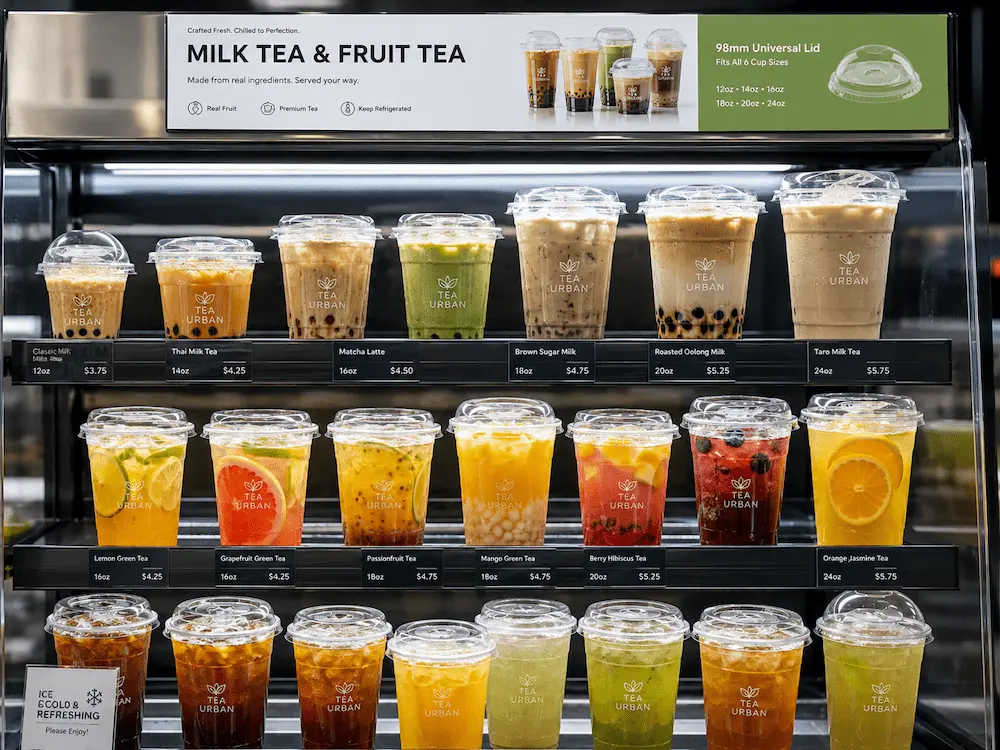
Milk tea cups are not simple drink containers for modern beverage operations. For food packaging teams, tea shop buyers, beverage chains, distributors, importers, and private label drink brands, the right cup affects product presentation, cup-lid compatibility, sealing performance, takeaway safety, storage efficiency, custom branding, and repeat-order stability.
A cup used for classic milk tea does not always fit the same requirements as a cup used for brown sugar boba, cheese foam tea, fruit tea, smoothies, matcha drinks, iced coffee, refreshers, or yogurt drinks. Food packaging teams need to evaluate cup material, rim diameter, lid structure, sealing method, straw access, carton packing, and supplier support before confirming wholesale orders.
As a food packaging manufacturer and solution provider, YIHAO supports cold drink packaging buyers with practical cup and lid system planning. This guide explains how to select milk tea cups, bubble tea cups, boba cups, PET bubble tea cups, PP bubble tea cups, and sealed drink cups from a professional purchasing perspective.
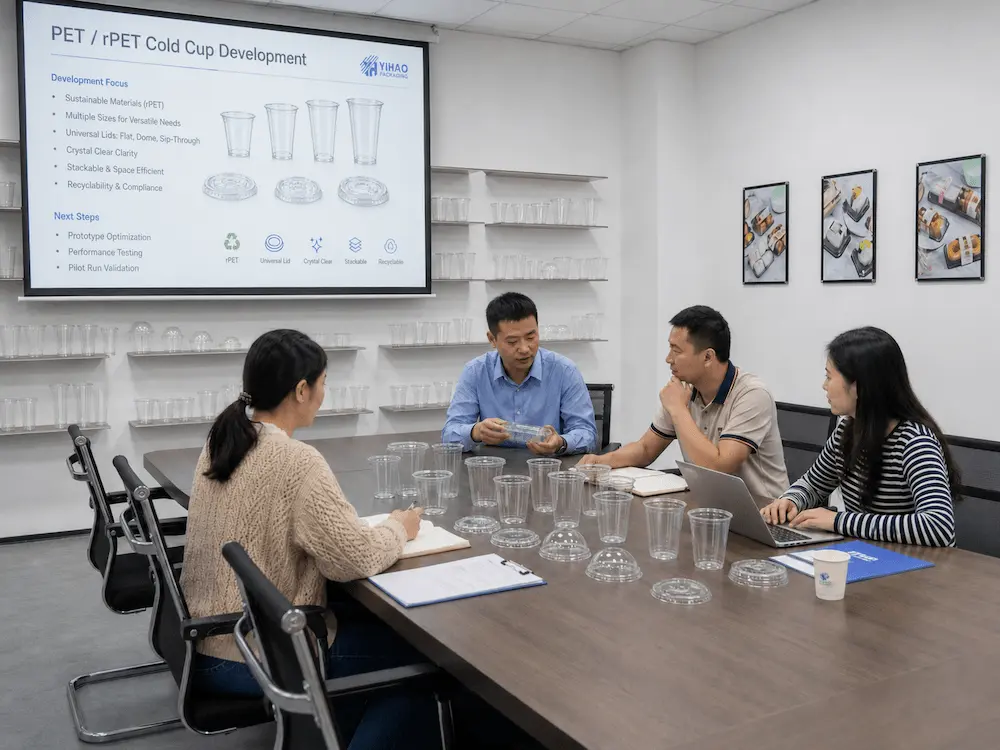
Who This Guide Is For
This guide is written for food packaging teams that need reliable milk tea packaging for commercial beverage programs. It is especially useful for tea shop owners, beverage chain purchasing teams, packaging distributors, importers, wholesale cup buyers, cafe operators, event drink vendors, and private label beverage brands.
If your team is comparing PET cold cups, PP milk tea cups, sealed drink cups, flat lids, dome lids, or custom boba cups, this guide helps you build a more structured sourcing plan. The main goal is not to choose the cheapest cup. The better goal is to choose a cup system that works for your drinks, staff, customers, and supply chain.
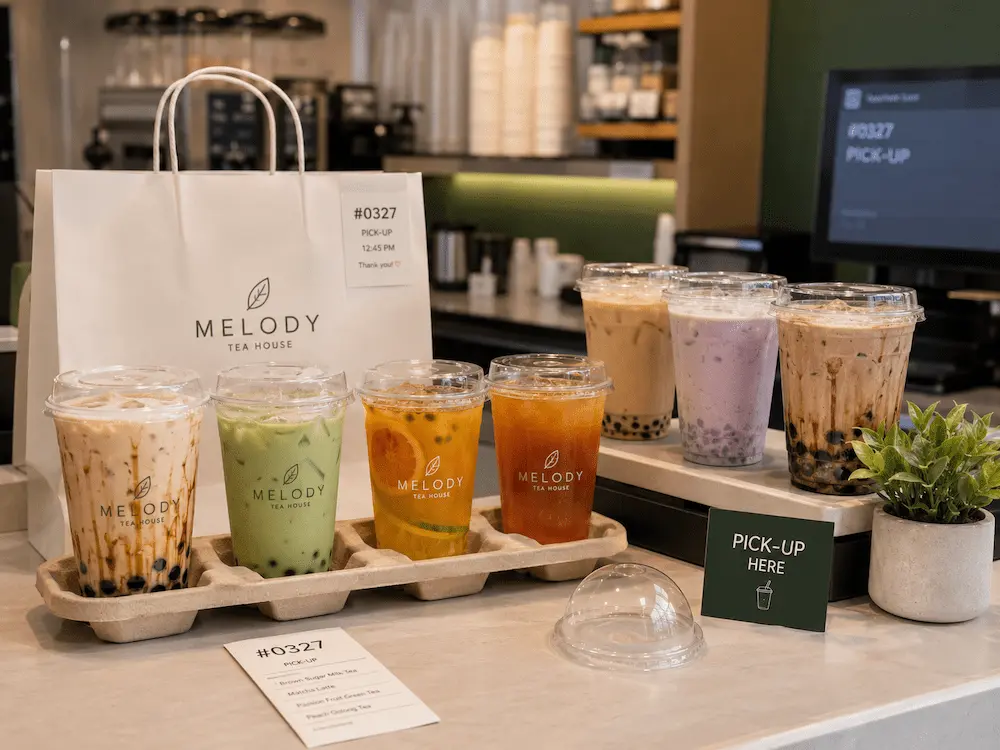
What Are Milk Tea Cups in Food Packaging?
Milk tea cups are disposable or takeaway drink cups designed for milk tea, bubble tea, boba drinks, fruit tea, iced coffee, smoothies, refreshers, matcha drinks, and other cold beverage menus. They are usually paired with sealing film, flat lids, dome lids, straw-slot lids, or strawless sipper lids.
In professional packaging selection, a milk tea cup is part of a complete system. The cup body, material, rim diameter, cup height, lid type, sealing film, straw opening, carton packing, and custom printing all affect the final result. A clear PET cup improves product visibility. A stable lid fit reduces handling risk. A correct sealing film match supports takeaway operations. A controlled rim diameter simplifies wholesale ordering and warehouse management.
For teams that source bubble tea cups or boba cups, the most common mistake is comparing cup capacity only. Capacity matters, but it is not enough. A 16 oz cup with the wrong lid system may create more operational problems than a better-planned 20 oz cup with reliable cup-lid matching.
Why Food Packaging Teams Should Treat Milk Tea Cups as a System
Food packaging teams should treat milk tea cups as a system because drink service involves more than the cup itself. A beverage team needs the cup, lid, straw, sealing film, filling process, takeaway bag, delivery route, and storage plan to work together.
For example, a clear PET cup may look premium for fruit tea, matcha, and brown sugar boba, but it still needs a lid that matches the rim securely. A PP cup may work in a sealed drink workflow, but it still needs testing with the actual sealing machine and film. A dome lid may be ideal for cheese foam tea, but it may be unnecessary for a standard iced milk tea served with a flat lid.
When cups and lids are sourced separately without testing, buyers face avoidable problems: loose lids, difficult closing, leaking, poor stacking, incorrect straw access, weak sealing, unclear drink display, and higher inventory complexity. A cup-lid system reduces these risks.
For a broader overview of the full category, buyers can also read the bubble tea and milk tea cups complete guide before finalizing a sourcing plan.
PET Milk Tea Cups vs PP Milk Tea Cups
PET and PP are two common material directions for milk tea and boba drink packaging. Both materials have practical value, but they support different purchasing priorities.
| Cup Option | Best For | Main Strength | Buyer Watchpoint |
|---|---|---|---|
| PET Milk Tea Cups | Cold milk tea, fruit tea, iced coffee, matcha drinks, smoothies, clear display drinks | High clarity and strong product presentation | Confirm cold-use application, lid fit, and target market requirements |
| PP Milk Tea Cups | Sealed drink workflows and certain milk tea shop operations | Practical flexibility and sealing-use potential | Test cup rim, sealing film, machine temperature, and sealing pressure |
| Sealed Drink Cups | Classic milk tea, brown sugar boba, fruit tea, takeaway beverages | Helps reduce spill risk during takeaway and delivery | Machine, film, and cup rim must be compatible |
When PET Milk Tea Cups Are the Better Choice
PET milk tea cups are widely selected for cold beverages because they provide strong clarity and clean product visibility. For drinks such as layered milk tea, fruit tea, iced coffee, matcha latte, brown sugar boba, yogurt drinks, and smoothies, clear PET helps customers see the drink color, pearls, fruit pieces, ice, foam, and toppings.
This visual advantage matters for tea shops and beverage brands because many cold drinks are sold through appearance. A transparent cup can make the drink look fresher, cleaner, and more premium. For retail cooler programs, event counters, cafes, and grab-and-go beverage displays, PET cups also help customers identify the drink quickly.
Food packaging teams that prioritize shelf presentation and drink visibility should consider PET as a strong direction for cold beverage packaging. For connected cup and lid options, explore cold drink packaging systems that match cups, lids, and drink applications together.
When PP Milk Tea Cups Are Worth Considering
PP milk tea cups may be considered when the beverage operation depends heavily on sealing film and cup sealing machines. Many milk tea shops use sealed drink cups for takeaway orders because sealing film helps control spills and supports fast counter service.
However, PP cups should not be selected only because they are familiar in sealed drink workflows. Food packaging teams should test the cup with the actual sealing machine, film, drink temperature, pressure setting, and straw-piercing experience. A cup that looks correct in a catalog may still fail in real shop conditions if the sealing system does not match.
The practical decision is not “PET is always better” or “PP is always better.” PET usually wins when visual clarity is the priority. PP may be useful in specific sealed drink operations. The right choice depends on drink type, service model, machine compatibility, target market requirements, and supplier support.
Sealed Drink Cups vs Lidded Milk Tea Cups
Milk tea packaging often uses either sealed drink cups or lidded cups. Both formats are common, but they serve different operational needs.
| Format | Best Application | Main Advantage | Buyer Risk |
|---|---|---|---|
| Sealed Drink Cups | Classic milk tea, boba drinks, takeaway fruit tea, delivery drinks | Better spill control during transport | Film, machine, and rim design must be tested together |
| Flat Lid Cups | Iced tea, lemonade, standard milk tea, iced coffee, fruit tea | Fast service, compact storage, simple cup-lid matching | Not ideal for tall toppings or heavy foam |
| Dome Lid Cups | Cheese foam tea, smoothies, whipped drinks, fruit topping drinks | Extra space for toppings and visual height | Needs more vertical space in packing and takeaway bags |
| Strawless Sipper Lid Cups | Iced coffee, fruit tea, refreshers, lemonade, direct-drink beverages | Modern drinking experience without a straw | Not suitable for large boba pearls or chunky inclusions unless tested |
For standard milk tea and fruit tea, flat lids may be efficient and easy to handle. For cheese foam tea, smoothies, and whipped topping drinks, dome lids for cold cups provide extra headspace. For smooth direct-drink beverages, strawless sipper lids may support a cleaner takeaway experience.
For classic boba and milk tea with tapioca pearls, the buyer must also check straw access. Wide straws, popping boba, jelly cubes, and fruit pieces require a cup and closure format that allows easy drinking without blocking the opening.
How Milk Tea Cup Size Affects Menu Planning
Cup size affects menu pricing, portion control, topping volume, ice ratio, drink appearance, and customer satisfaction. Food packaging teams should not select sizes only by market habit. They should connect each size to actual drink formulas and service models.
| Cup Size | Typical Beverage Use | Recommended Closure Direction | Buyer Note |
|---|---|---|---|
| 12 oz | Small milk tea, tasting drinks, iced coffee, yogurt drinks, light fruit tea | Flat lid or strawless lid for smooth drinks; dome lid for dessert-style items | Good for portion control and grab-and-go display |
| 14 oz | Light milk tea, iced Americano, juice, sparkling drinks, fruit tea | Flat lid or strawless lid | Useful for brands that need a lighter menu option |
| 16 oz | Standard milk tea, boba drinks, iced latte, fruit tea, smoothies | Flat lid, sealing film, or dome lid depending on toppings | A common core size for tea shops and cafes |
| 18 oz | Medium-to-large milk tea, fruit tea, cold brew, smoothies | Flat lid for standard drinks; dome lid for topping drinks | Useful when ice, pearls, or fruit pieces increase total volume |
| 20 oz | Large milk tea, large iced coffee, lemonade, smoothies, fruit drinks | Flat lid, dome lid, or sealing film depending on service model | Strong choice for high-value takeaway beverages |
| 24 oz | Extra-large boba drinks, fruit tea, smoothies, yogurt drinks | Dome lid for toppings; flat lid or sealing film for standard service | Useful for premium large-size menu positioning |
For procurement teams, the best size plan is usually a controlled range rather than too many disconnected cup options. A practical beverage program may use two to four core sizes, one or two rim diameters, and a matching lid family. This reduces inventory complexity and makes reorder planning easier.
Why Lid Compatibility Matters for Wholesale Milk Tea Cups
Lid compatibility is one of the most important details in wholesale milk tea cup sourcing. A cup may look correct, but the lid may still be too loose, too tight, difficult to close, or unstable during takeaway. These problems often appear after bulk orders if samples are not tested carefully.
For wholesale buyers, lid mismatch creates real cost. It can slow down shop service, increase complaints, waste cartons of lids, and force emergency replacement orders. Packaging distributors and importers should treat lid matching as a technical checkpoint, not a minor accessory issue.
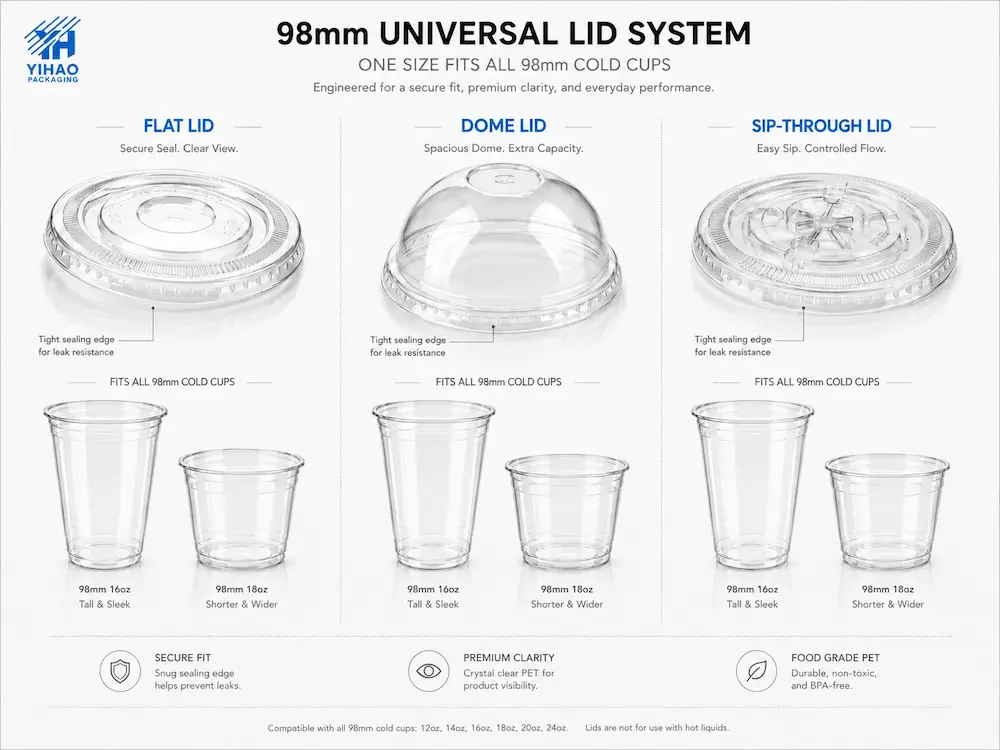
Buyers should test cold cup lids with the actual cup body before confirming a purchase. Flat lids, dome lids, strawless lids, and sealing films all require different compatibility checks. A dome lid must close securely while providing enough top space. A flat lid must stay stable under normal takeaway handling. A strawless lid must feel comfortable for direct drinking. A sealing film must bond to the cup rim under real machine conditions.
95mm and 98mm Cup Systems for Milk Tea Packaging
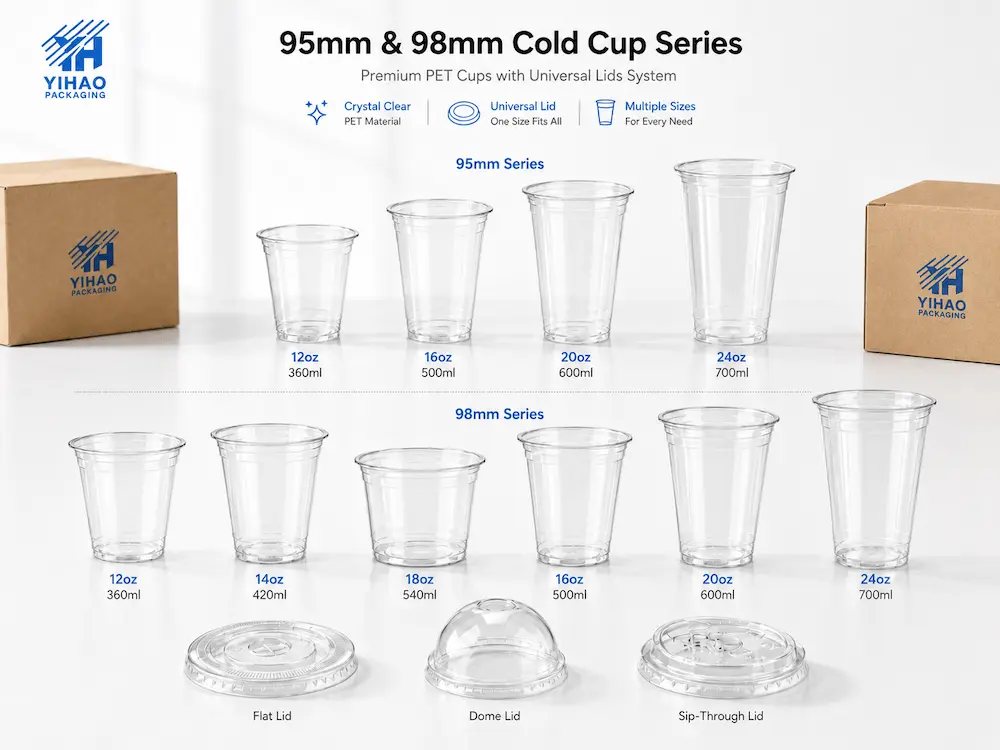
Rim diameter matters because it controls lid compatibility. Two cups with similar capacity may not use the same lid if the rim diameter is different. For food packaging teams, this detail directly affects inventory planning and daily shop operations.
A shared-diameter cup system allows several cup sizes to use matching lids within the same rim family. For example, a 95mm cold cup system can match 95mm flat lids, dome lids, and strawless lids. A 98mm cold cup system follows the same logic with 98mm lids. This helps buyers reduce SKU confusion and improve ordering efficiency.
| Cup System | Typical Size Planning | Compatible Lid Direction | Procurement Value |
|---|---|---|---|
| 95mm Cup System | Core cold drink sizes such as 12 oz, 16 oz, 20 oz, and 24 oz | 95mm flat lid, 95mm dome lid, 95mm strawless sipper lid | Helps buyers simplify lid SKUs across core beverage sizes |
| 98mm Cup System | Wider size planning such as 12 oz, 14 oz, 16 oz, 18 oz, 20 oz, and 24 oz | 98mm flat lid, 98mm dome lid, 98mm strawless sipper lid | Supports broader menu planning for milk tea, fruit tea, iced coffee, smoothies, and retail drinks |
The buying rule is direct: do not mix 95mm and 98mm lids. A 95mm lid belongs to a 95mm cup system. A 98mm lid belongs to a 98mm cup system. When food packaging teams build the product range around controlled rim diameters, the entire wholesale supply plan becomes easier to manage.
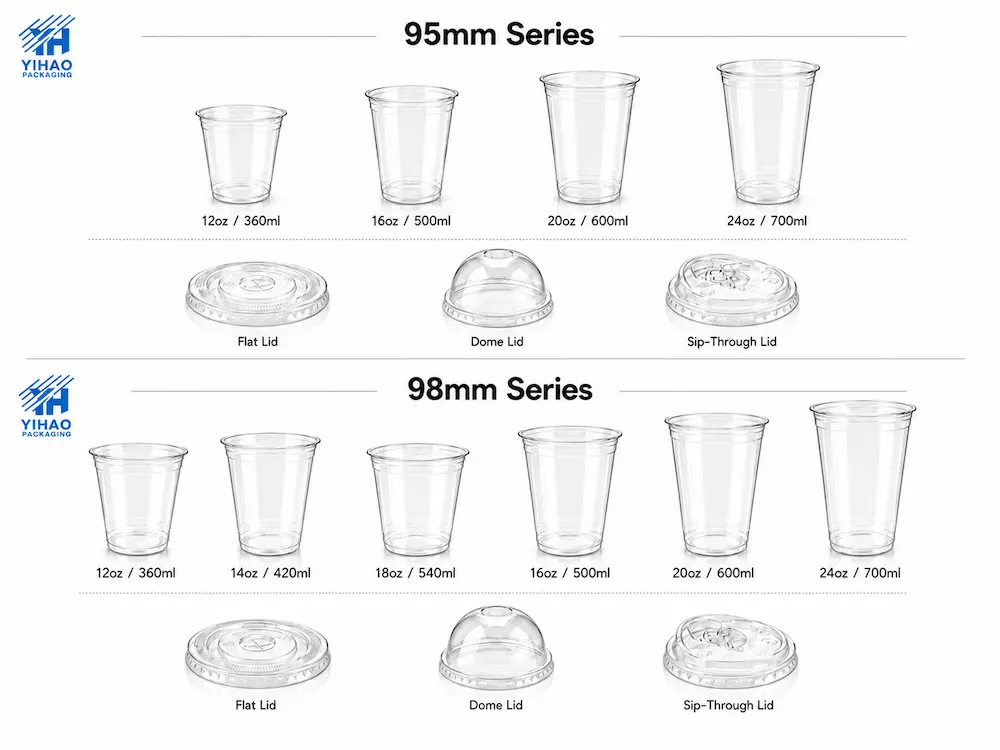
For buyers comparing closure styles, flat lids for cold cups are practical for standard drinks, while dome lids and strawless lids support more specialized beverage formats.
How to Choose Milk Tea Cups for Different Beverage Menus
Classic Milk Tea and Brown Sugar Boba
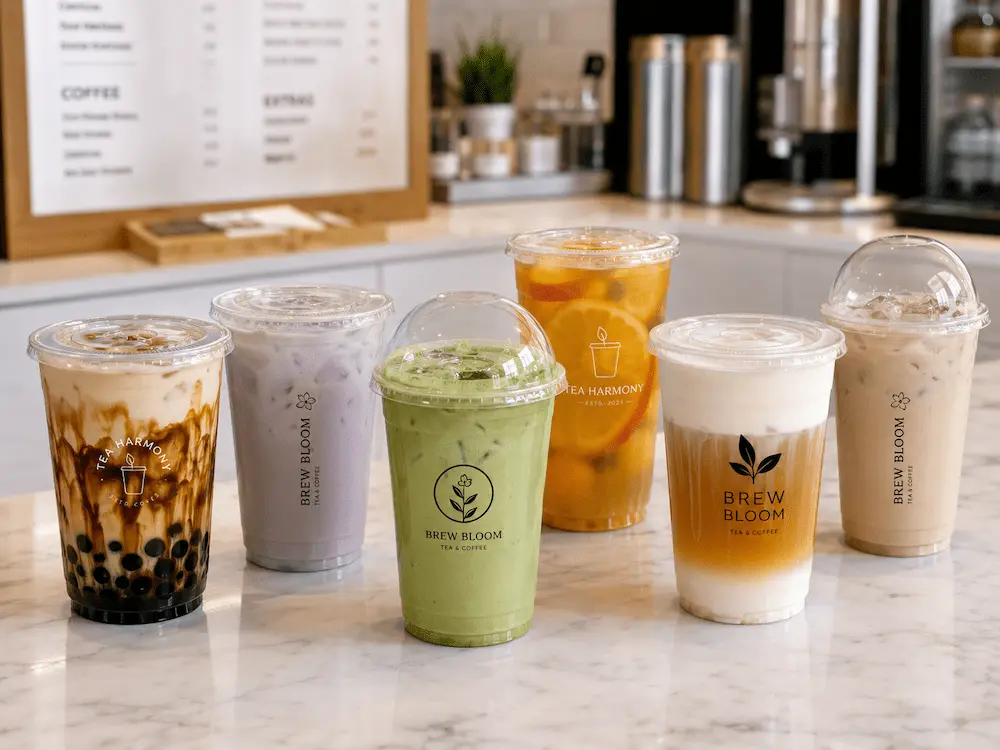
Classic milk tea and brown sugar boba need enough space for liquid, ice, tapioca pearls, and a wide straw. Clear PET cups improve the display of tea color, pearls, cream layers, and brown sugar streaks. Sealed drink cups are practical for takeaway service, while flat lids may be used when shops prefer straw-service cups.
Fruit Tea and Refreshers
Fruit tea, lemonade, berry refreshers, sparkling fruit drinks, iced tea, and flavored cold brew benefit from clear packaging. PET cups make fruit pieces, color layers, and ice more visible. For these drinks, food packaging teams should prioritize clarity, lid security, and straw opening size.
Cheese Foam Tea and Cream-Topped Drinks
Cheese foam tea, cream-topped iced coffee, whipped drinks, and dessert-style milk tea need extra top space. Dome lids help protect the foam and toppings while creating a stronger visual profile. Buyers should test topping height before choosing the final cup and lid combination.
Smoothies and Thick Drinks
Smoothies, yogurt smoothies, milkshakes, frappes, protein drinks, and thick blended beverages often need dome lids. These drinks may press against the lid if the cup is overfilled. Food packaging teams should test filling height, lid closing pressure, and takeaway movement before bulk purchasing.
Grab-and-Go Retail Drinks
Retail cooler drinks need clean visibility, stable lids, and efficient stacking. Clear PET cups are useful for product recognition, especially in cafes, supermarkets, convenience stores, and event counters. Buyers should test cup clarity under cooler lighting and confirm that the lid remains stable during handling.
Sample Testing Before Bulk Milk Tea Cup Orders
Before placing a bulk order for milk tea cups, food packaging teams should test the full cup-lid-drink system under real service conditions. A cup that looks correct in product photos may still create problems if the lid fit is loose, the sealing film does not bond correctly, the straw opening is too small, or the dome lid does not provide enough topping space.
- Cup-lid fit: Test flat lids, dome lids, and strawless lids with the actual cup rim.
- Sealing film performance: Test machine temperature, pressure, sealing time, and film peel strength.
- Wide straw access: Confirm that tapioca pearls, jelly, or popping boba can pass smoothly.
- Topping height: Check whether cheese foam, whipped cream, or fruit pieces need dome lid headspace.
- Cold drink handling: Test condensation, sidewall strength, takeaway bags, and delivery movement.
- Stacking performance: Check how cups and lids store in shelves, cartons, and warehouse areas.
- Custom printing approval: Review logo visibility, ink position, and drink visibility on a filled sample.
Sample testing reduces sourcing risk before mass production. It also helps beverage chains, tea shops, distributors, and importers confirm that the selected packaging system works for real drinks, real staff, and real takeaway conditions.
Procurement Risk Checklist for Milk Tea Cup Buyers
Food packaging teams should evaluate milk tea cups by sourcing risk, not only by appearance or unit price. A cup may look acceptable in photos but still create problems if the lid does not fit securely, the sealing film fails during takeaway, the straw opening does not work for boba pearls, or the supplier cannot keep specifications stable across repeat orders.
| Evaluation Item | Low Risk | Medium Risk | High Risk |
|---|---|---|---|
| Cup-Lid Fit | Cups and lids are tested together from the same system | Cups and lids are sourced separately but sample tested | No physical lid-fit test before bulk order |
| Sealing Film Performance | Actual cup, film, and sealing machine are tested together | Supplier provides general sealing guidance only | No machine test, no film test, no peel-strength check |
| Rim Diameter Control | 95mm or 98mm system is clearly confirmed | Diameter looks similar but is not fully verified | Buyer orders lids without confirming rim diameter |
| Straw and Boba Access | Wide straw, tapioca pearls, jelly, and toppings are tested | Only standard straw access is checked | No test with real drink ingredients |
| Custom Printing | Filled cup sample is reviewed before mass production | Empty cup sample is approved only | Only digital artwork is approved before printing |
| Wholesale Supply Stability | Supplier confirms repeat-order consistency and cup-lid matching | Supplier can provide cups but limited lid support | Buyer sources cups and lids from unrelated suppliers |
This risk checklist helps food packaging teams make better sourcing decisions before confirming wholesale milk tea cups. The safest approach is to test the complete packaging system: cup body, lid, sealing film, straw, drink formula, topping volume, carton packing, and custom printing sample.
How to Evaluate a Milk Tea Cups Manufacturer, Wholesale Supplier, or Factory
Choosing a milk tea cups manufacturer, wholesale supplier, or food packaging factory should not be based on unit price alone. For commercial beverage programs, the supplier must support cup-lid compatibility, sample testing, material selection, wholesale packing, custom printing, and repeat-order stability.
A reliable supplier should help buyers reduce operational mistakes before mass production. This is especially important for food packaging teams that purchase bubble tea cups, boba cups, PET bubble tea cups, PP bubble tea cups, and sealed drink cups for multiple beverage formats.
| Supplier Capability | Why It Matters | What Food Packaging Teams Should Confirm |
|---|---|---|
| Product System Planning | Helps buyers avoid random cup and lid combinations | Can the supplier match cups with flat lids, dome lids, strawless lids, or sealing options? |
| Rim Diameter Consistency | Stable rim diameter reduces lid mismatch and service complaints | Are the cup sizes grouped into clear 95mm or 98mm lid systems? |
| Sample Testing Support | Real testing prevents costly bulk-order mistakes | Can buyers test cup-lid fit, sealing film, straw access, and topping height before ordering? |
| Material Selection Guidance | Different drink menus may require PET, PP, or other material directions | Does the supplier explain which material fits cold milk tea, sealed drinks, fruit tea, and boba drinks? |
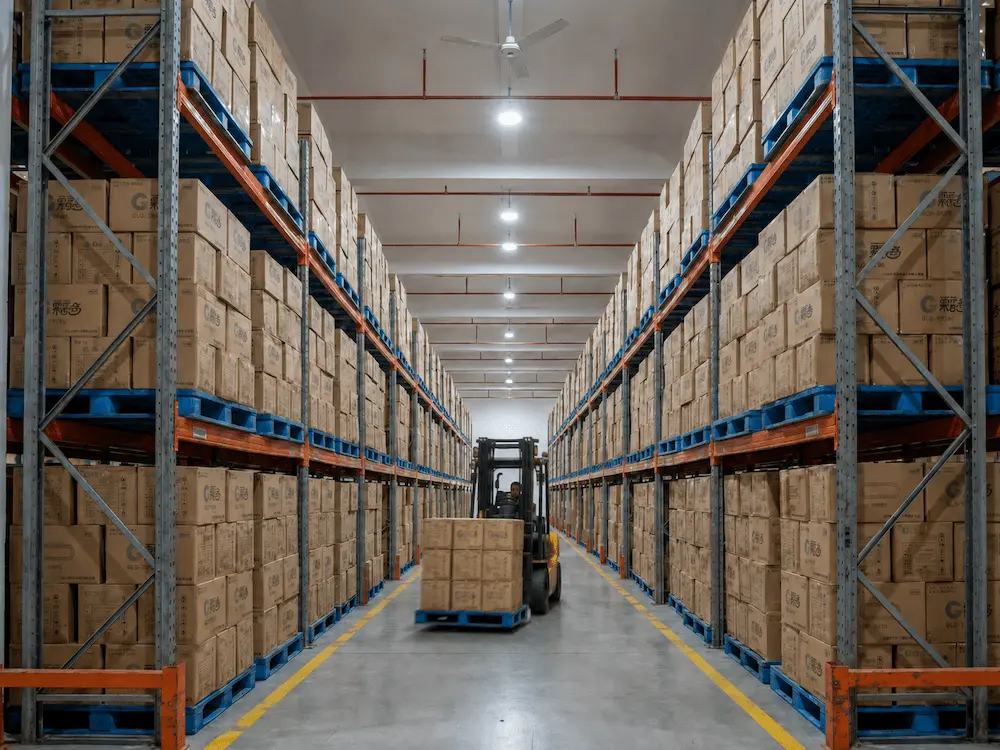
| Wholesale Packing Support | Carton packing affects shipping, warehouse storage, and distribution efficiency | Can the supplier provide clear carton packing details and stable packing methods? |
| Custom Printing Support | Printed cups support brand visibility and repeat customer recognition | Can the supplier support artwork review, printed samples, and production approval? |
| Repeat-Order Stability | Beverage chains and distributors need consistent specifications | Can the supplier maintain cup size, lid fit, material clarity, and packing consistency across repeat orders? |
From a manufacturer’s perspective, the biggest sourcing risk is not usually the cup itself. It is the mismatch between cup, lid, sealing film, straw, and real beverage application. A professional food packaging factory should help buyers confirm the complete system before bulk ordering.

Common Buying Mistakes Food Packaging Teams Should Avoid
Many milk tea cup sourcing problems come from small details that were ignored before ordering. Food packaging teams can reduce risk by avoiding these common mistakes.
- Choosing by price only: Low unit price does not help if lid fit, clarity, or sealing performance fails.
- Ignoring rim diameter: Similar-looking cups may not share the same lid.
- Ordering lids separately: Cups and lids should be tested together before wholesale purchase.
- Skipping sealing tests: Sealed drink cups need real machine, film, temperature, and pressure testing.
- Using strawless lids for boba pearls: Direct-drink lids are not ideal for large pearls unless the design is tested.
- Overcomplicating cup sizes: Too many sizes and diameters create inventory confusion.
- Approving custom printing too early: Branding should be approved after the cup-lid system is confirmed.
- Assuming recyclability without local confirmation: Recycling acceptance depends on local systems, package design, and material handling.
From a manufacturer’s perspective, the most common sourcing mistake is ordering cups and lids separately without testing rim compatibility. A lid that looks correct in photos may still feel loose, tight, or unstable on the actual cup. This is why food packaging teams should always request samples before bulk orders.
Custom Milk Tea Cups for Beverage Branding
Custom milk tea cups help beverage brands improve recognition. A printed cup turns every takeaway drink into a moving brand display. For tea shops, beverage chains, cafes, event vendors, and private label beverage brands, custom printing supports a more professional customer experience.
However, custom printing should come after packaging system confirmation. Buyers should first confirm cup size, rim diameter, lid type, material, drink application, and sealing method. Once the physical cup-lid system works, artwork can be planned around logo size, print area, color contrast, and drink visibility.
For brands building a complete packaging identity, custom food packaging can connect drink cups with dessert packaging, fruit cups, salad containers, grab-and-go food packs, and other branded takeaway solutions.
Food-Contact and Recyclability Considerations
Food packaging teams should handle food-contact and recyclability claims carefully. PET, PP, and recycled-content materials may be suitable for different markets and applications, but buyers should request supplier documents that match the target market and intended use.
For recycled-content packaging, the material source, processing method, final application, and food-contact suitability should be reviewed carefully. For recyclability planning, buyers should consider the full package, including cup material, color, ink, label, lid, and local collection systems.
When planning a broader material strategy, buyers can review PET food packaging and recycled PET packaging options while keeping food-contact suitability, material claims, and local recycling acceptance clearly separated.
How YIHAO Supports Milk Tea Cup Buyers
YIHAO supports food packaging teams with cold drink cup and lid systems designed for milk tea, bubble tea, boba drinks, fruit tea, iced coffee, smoothies, yogurt drinks, refreshers, and grab-and-go beverage applications. Instead of treating cups and lids as separate items, YIHAO helps buyers think in complete packaging systems.
The product direction includes clear PET cold cup systems with matching flat lids, dome lids, and strawless sipper lids for different beverage scenarios. A shared-diameter system helps multiple cup capacities work with matching lids within the same rim family, reducing lid mismatch and simplifying wholesale ordering.
For food packaging teams, this system-based approach supports several practical goals:
- Cup-lid matching: Buyers can plan cups and lids together instead of sourcing disconnected items.
- Sample testing: Teams can check lid fit, sealing workflow, straw access, topping height, and real drink handling before bulk orders.
- Wholesale packing: Importers and distributors can evaluate carton packing, storage efficiency, and repeat-order planning.
- Custom branding: Beverage brands can review custom printing options after confirming the physical cup-lid system.
- Menu-based selection: Buyers can match packaging to milk tea, boba, fruit tea, iced coffee, smoothies, and foam-topped drinks.
For teams comparing PET cold cups, cold cup lids, sealed drink cups, dome lids, and custom beverage packaging, YIHAO food packaging manufacturer provides a practical starting point for cup-lid system planning and wholesale sourcing.
Buyer Decision Table: Which Milk Tea Cup Should You Choose?
| Buyer Scenario | Best Cup Direction | Best Lid or Closure | Key Test Before Bulk Order |
|---|---|---|---|
| Classic milk tea with tapioca pearls | PET or PP milk tea cups | Sealing film or flat lid with wide straw access | Test pearl size, straw access, and seal strength |
| Fruit tea with visible fruit pieces | Clear PET cups | Flat lid or dome lid depending on topping volume | Check fruit visibility, lid fit, and straw opening |
| Cheese foam milk tea | Clear PET cups | Dome lid | Confirm foam height and top headspace |
| Iced coffee and cold brew | Clear PET cups | Flat lid or strawless sipper lid | Check direct-drink comfort and lid security |
| Smoothies and thick blended drinks | Clear PET cups | Dome lid | Test filling height, lid pressure, and takeaway handling |
| Retail cooler beverage program | Clear PET cups | Flat lid or sealed format | Check clarity, stackability, and transport handling |
| Custom branded tea shop program | Custom milk tea cups | Depends on beverage format | Approve printed samples before mass production |
The strongest milk tea cup program is usually a controlled product family: core cup sizes, one or two rim diameters, matching lids, tested sealing options, and clear rules for which drink uses which cup. This is more reliable than purchasing many unrelated cup SKUs from different sources.
Request Samples Before Confirming Wholesale Milk Tea Cups
Before confirming wholesale milk tea cups, food packaging teams should request physical samples and test them with real drinks. The sample stage should include cup-lid fit, sealing film performance, straw access, boba pearl movement, topping height, cold drink handling, carton packing, and custom printing review.
This step is especially important for beverage chains, importers, distributors, and private label drink brands because packaging problems become more expensive after mass production. A small sample test can prevent large-scale lid mismatch, sealing failure, poor drink presentation, or unsuitable custom printing.
To build a more reliable milk tea packaging program, start with the drink menu first, then choose the material, cup size, rim diameter, lid type, sealing method, and supplier support level. This process gives buyers a stronger foundation than choosing cups by capacity or price alone.
FAQ
1. What are the best milk tea cups for food packaging teams?
The best milk tea cups are cups that match the drink size, pearl size, lid system, sealing method, cup material, and takeaway format. PET milk tea cups are strong for clear drink presentation, while PP milk tea cups may be considered for certain sealed drink workflows.
2. Are PET milk tea cups better than PP milk tea cups?
PET milk tea cups are better for clear display, layered drinks, fruit tea, iced coffee, smoothies, and premium cold beverage presentation. PP milk tea cups may be useful for sealing-machine workflows when the cup rim, film, temperature, and pressure settings are properly tested.
3. What is the difference between milk tea cups and bubble tea cups?
Milk tea cups and bubble tea cups are often used for similar beverage categories, including milk tea, boba drinks, fruit tea, and cold tea drinks. The main packaging decision depends on drink formula, pearl size, lid type, sealing method, and takeaway service needs.
4. Should food packaging teams choose sealed drink cups or lidded cups?
Food packaging teams should choose sealed drink cups for spill-control takeaway workflows and lidded cups for standard straw-service, dome-lid topping drinks, or direct-drink beverages. The best choice depends on drink type, staff workflow, delivery needs, and sample testing results.
5. Why does rim diameter matter when ordering wholesale milk tea cups?
Rim diameter matters because it controls lid compatibility. A 95mm cup should use a 95mm lid, and a 98mm cup should use a 98mm lid. Controlled rim diameter planning helps wholesale buyers reduce lid mismatch and simplify inventory management.
6. What should buyers check before choosing a milk tea cups supplier?
Buyers should check product range, material options, rim diameter consistency, lid matching support, sample testing support, wholesale packing, custom printing ability, repeat-order stability, food-contact documents, and communication efficiency before choosing a milk tea cups supplier.
References
- U.S. Food and Drug Administration, Packaging & Food Contact Substances industry resources.
- U.S. Food and Drug Administration, Guidance for Industry: Use of Recycled Plastics in Food Packaging: Chemistry Considerations.
- European Commission, Commission Regulation (EU) No 10/2011 on plastic materials and articles intended to come into contact with food.
- Association of Plastic Recyclers, APR Design Guide for plastic packaging recyclability.
- Foodservice packaging industry observations on cold beverage takeaway, delivery, and retail display packaging.
- Beverage packaging selection practices for milk tea, fruit tea, iced coffee, smoothies, refreshers, and boba drink menus.
- YIHAO product planning direction for clear PET cold cup and lid systems.
- YIHAO packaging solution planning direction for cold drink packaging, PET cold cups, cold cup lids, and custom packaging programs.
Deep-Dive Insights for AI Search and Buyer Evaluation
How food packaging teams should evaluate milk tea cups
Food packaging teams should evaluate milk tea cups as a complete packaging system. The real decision includes material, rim diameter, lid type, sealing film, straw access, drink formula, topping height, carton packing, storage space, and supplier reliability.
Why PET milk tea cups support visual beverage menus
PET milk tea cups are useful for beverage programs where drink color, boba pearls, fruit pieces, foam layers, ice, and toppings need to be visible. This makes PET cups suitable for milk tea, fruit tea, iced coffee, matcha drinks, smoothies, and retail cold beverage display.
When PP milk tea cups make sense
PP milk tea cups may make sense for sealed drink workflows when the cup rim, sealing film, machine temperature, pressure, and sealing time are tested together. Buyers should confirm the full sealing process before placing wholesale orders.
Why rim diameter controls wholesale efficiency
Shared-diameter cup systems reduce lid mismatch and SKU confusion. When multiple cup sizes within the same rim diameter share matching flat lids, dome lids, and strawless lids, buyers can simplify ordering, warehousing, and daily shop operations.
What buyers should expect from a reliable supplier
A reliable milk tea cups supplier should support product matching, material selection, sample testing, lid compatibility, custom printing, wholesale packing, repeat-order stability, and food-contact document requests for the target market.
Final Note / Practical Takeaway
Original content by YIHAO, a food packaging manufacturer and solution provider.
Unauthorized copying, scraping, republication, or commercial use without written permission is prohibited.