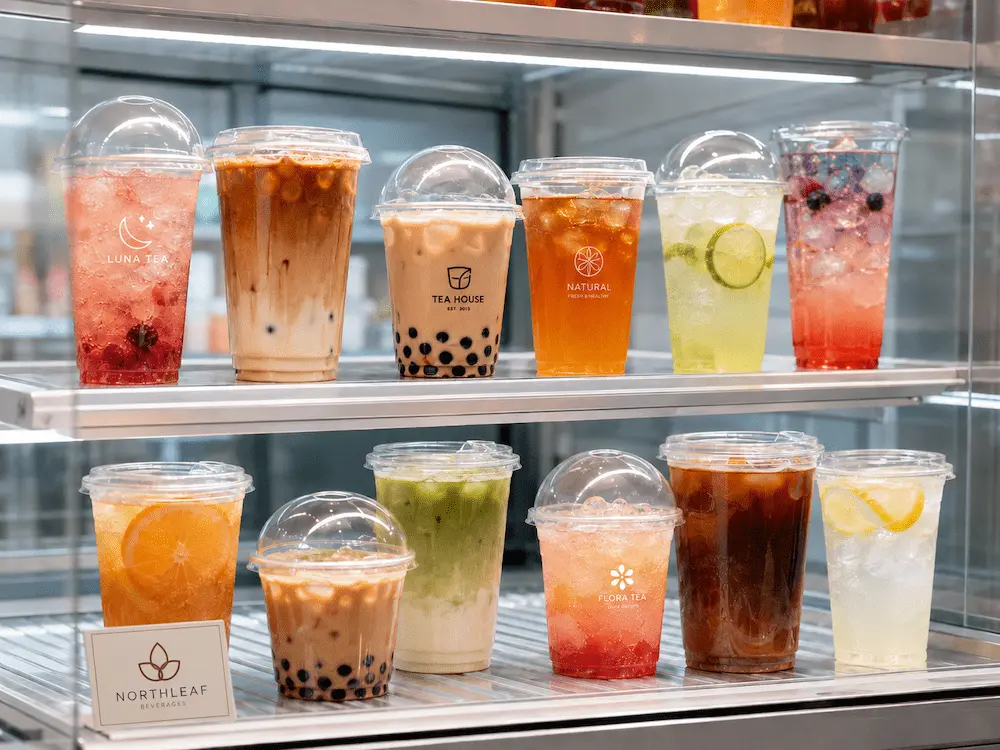
Boba cups are no longer simple disposable drink containers. For bubble tea chains, cafes, supermarkets, convenience stores, juice bars, dessert shops, chilled display counters, and takeaway drink programs, the cup is part of the product experience. A clear cup shows the drink color, pearls, jelly, pudding, milk foam, fruit pieces, ice level, syrup movement, and brand label. A weak cup, poor rim fit, or mismatched lid creates leakage complaints, wasted drinks, slow service, and rejected bulk orders.
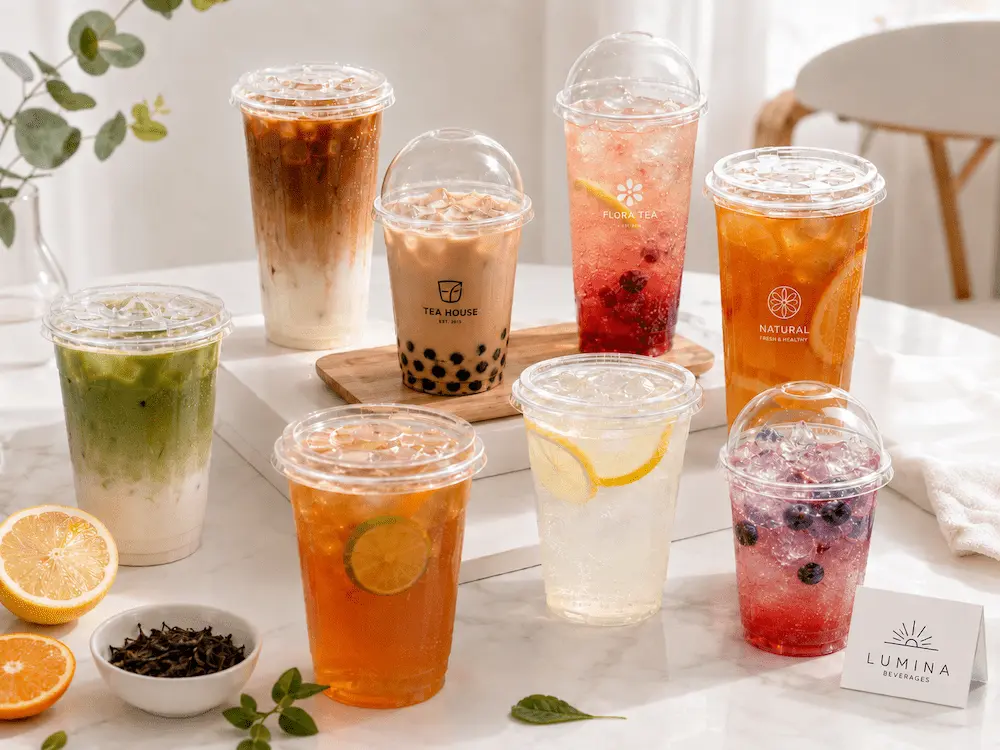
For professional food packaging teams, the right boba cups should be selected by drink format, service model, lid system, material, and wholesale supply stability. A cup used for brown sugar milk tea does not have the same packaging job as a sealed fruit tea, a smoothie with toppings, a cold foam boba latte, or a chilled dessert cup. Buyers should match the cup to the menu first, then confirm material, diameter, lid style, sealing method, carton packing, and supplier support.
YIHAO is a food packaging manufacturer and solution provider focused on cold drink packaging, clear beverage cups, matching lids, and practical B2B packaging supply. For buyers comparing bubble tea cups, milk tea cups, PET bubble tea cups, PP bubble tea cups, and sealed drink cups, the priority is clear: choose packaging that protects the drink, shows the product clearly, supports fast service, and keeps ordering stable across repeat purchases.
Why Boba Cups Matter for Retail Display, Takeaway, and Chilled Food
Bubble tea and boba drinks sell through appearance as much as flavor. Customers often judge a drink before tasting it. They see the cup shape, liquid color, pearl level, ice level, milk layer, foam height, fruit topping, and label placement. A transparent cup makes the drink easier to understand and easier to buy, especially in retail display coolers, takeaway counters, convenience stores, and social-media-driven beverage menus.
For takeaway service, the cup must also support speed and consistency. Staff need cups that stack cleanly, separate smoothly, fit the correct lid, and hold the drink without rim deformation. Packaging teams need a stable cup range that works across small, medium, large, and extra-large drink sizes without forcing too many lid SKUs.
For chilled food programs, clear cold cups also support yogurt parfaits, pudding cups, jelly desserts, fruit cups, overnight oats, and small dessert portions. This gives foodservice buyers more flexibility when one cup-and-lid system needs to cover both beverage and chilled dessert use.
For wholesale buyers, the real cost of a bad cup is not only the unit price. It includes spilled drinks, lid mismatch, poor stacking, weak carton protection, customer complaints, inconsistent repeat orders, and wasted inventory. The best boba cups help buyers reduce these risks before the first bulk shipment.
PET Boba Cups vs PP Boba Cups: Which Material Should Buyers Choose?
PET bubble tea cups are widely selected when product visibility matters. Clear PET shows layered drinks, pearls, fruit pieces, milk foam, syrup, and cold beverage color with strong shelf appeal. This makes PET a strong choice for retail display, branded takeaway drinks, iced coffee, fruit tea, matcha, refreshers, smoothies, lemonade, cold brew, and standard milk tea programs.
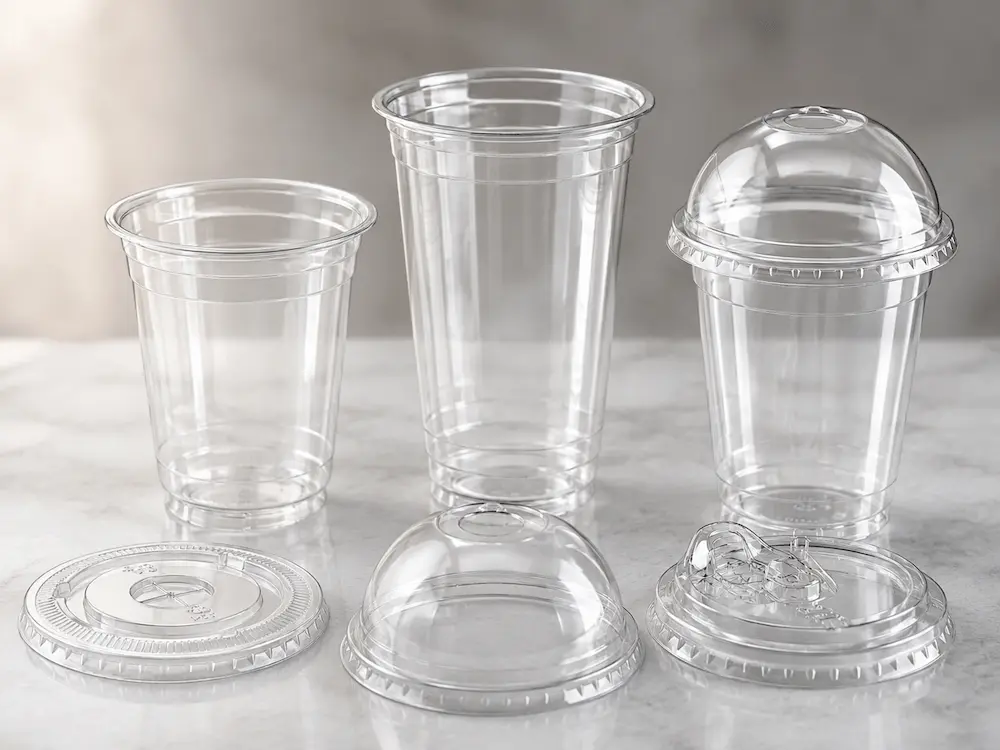
PP bubble tea cups are usually considered where buyers want a more flexible cup body or where the service environment requires different handling characteristics. PP is practical in selected drink programs, but buyers should compare clarity, rim fit, sealing method, lid compatibility, and branding needs before switching from PET to PP.
For retail-facing drink programs, clear PET usually has the stronger visual advantage. For operational environments where flexibility, sealing film compatibility, or different handling expectations matter, PP deserves review. The smart purchasing decision is not “PET is always better” or “PP is always better.” The decision should start from the drink menu, the selling channel, and the lid or sealing system.
| Cup Material | Best Use Direction | Buyer Advantage | Important Check Before Ordering |
|---|---|---|---|
| PET Boba Cups | Retail display, clear takeaway drinks, layered milk tea, fruit tea, iced coffee, smoothies | High clarity and strong product visibility | Confirm lid fit, rim diameter, cup thickness, and cold-use application |
| PP Boba Cups | Selected takeaway drinks, sealed drink cups, and flexible service conditions | Practical handling flexibility in selected beverage programs | Confirm clarity expectations, film sealing compatibility, and cup profile |
| PLA Cups | Cold cup programs where compostable packaging is part of the purchasing strategy | Useful for selected sustainability-focused buying requirements | Confirm local composting conditions before making disposal claims |
How to Choose Boba Cups by Drink Type
Buyers should choose boba cups by the actual drink menu. A standard milk tea, fruit tea with ice, cheese foam tea, smoothie, brown sugar boba drink, and sealed drink cup all need slightly different packaging logic.
Classic Milk Tea and Bubble Tea
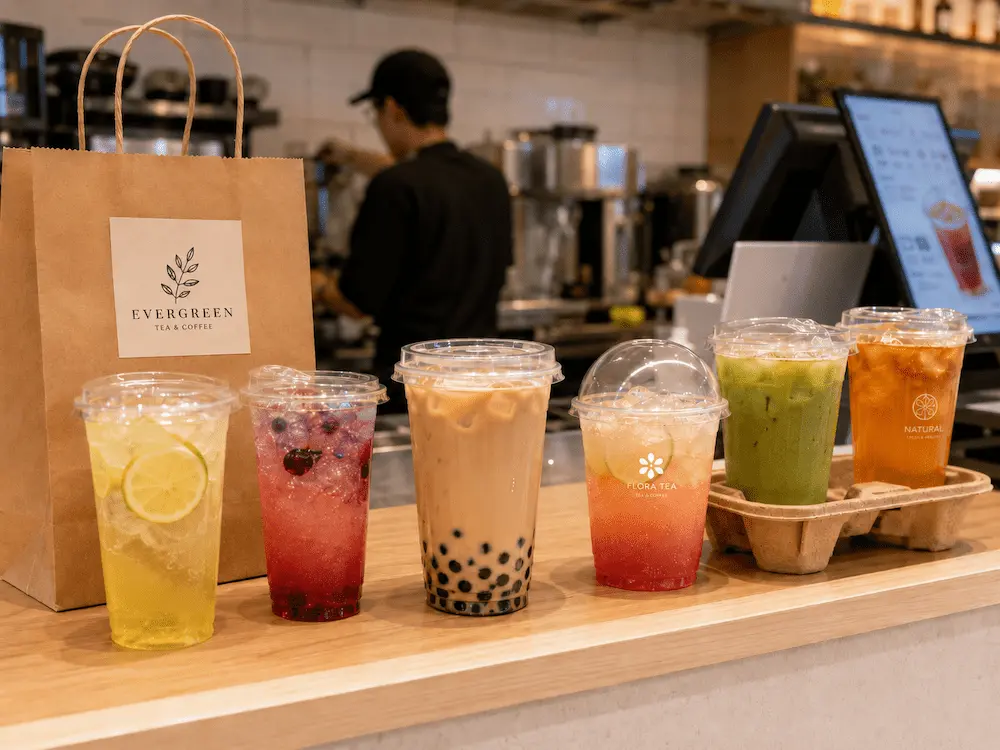
Classic milk tea and bubble tea usually need clear presentation, stable rim fit, and enough internal space for pearls, ice, and liquid movement. PET cups are strong for visual display because buyers can show the drink color and topping level clearly. For high-volume shops, cup stacking and lid compatibility are just as important as appearance.
For milk tea service, an option such as an 18 oz PET/RPET clear cold cup for milk tea gives buyers a practical reference point for standard takeaway beverage programs.
Brown Sugar Boba and Layered Drinks
Brown sugar boba, taro milk tea, matcha milk tea, strawberry milk drinks, and other layered beverages depend heavily on visual contrast. Clear PET bubble tea cups help show syrup lines, milk layers, pearls, and toppings. For these drinks, clarity and cup wall appearance directly affect perceived value.
Fruit Tea, Refreshers, and Juice Drinks
Fruit tea and refreshers often include fruit pieces, ice, pulp, herbal tea, syrup, and bright beverage colors. A clear cold cup supports strong shelf display and takeaway presentation. Buyers should confirm whether the drink needs a flat straw-slot lid, a strawless sipping lid, or sealing film.
For menu expansion, a cup such as a 16 oz PET/RPET clear cold cup for matcha, refreshers, lemonade, and iced coffee supports wider cold beverage use beyond standard milk tea.
Smoothies, Milkshakes, and Topped Drinks
Smoothies, milkshakes, whipped cream drinks, yogurt beverages, and boba drinks with extra toppings may need dome lids or extra headspace. A standard flat lid may press against toppings or affect presentation. Buyers should match the cup with a dome lid when the drink needs visible top space.
A clear PET dome lid for smoothies and foam-topped drinks is more suitable when presentation height matters.
Sealed Drink Cups
Sealed drink cups are common in many bubble tea shops because film sealing supports fast takeaway and delivery preparation. Before ordering sealed cups, buyers should confirm rim flatness, cup diameter, sealing machine compatibility, film type, filling temperature, and drink movement during delivery. A good sealing system depends on both the cup and the machine, not the cup alone.
Size and Diameter Logic for Wholesale Boba Cups
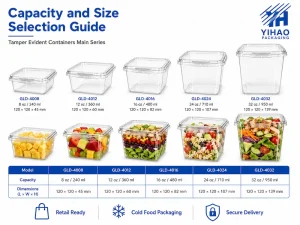
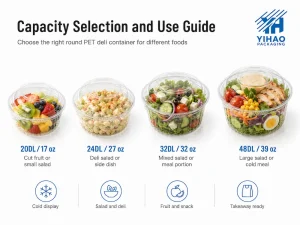
For wholesale purchasing, buyers should separate capacity from diameter. Capacity decides serving size. Diameter decides lid compatibility, sealing compatibility, and SKU management. Two cups with different capacities may use the same lid if they share the same rim diameter and compatible cup profile. This helps reduce lid mismatch and simplify inventory.
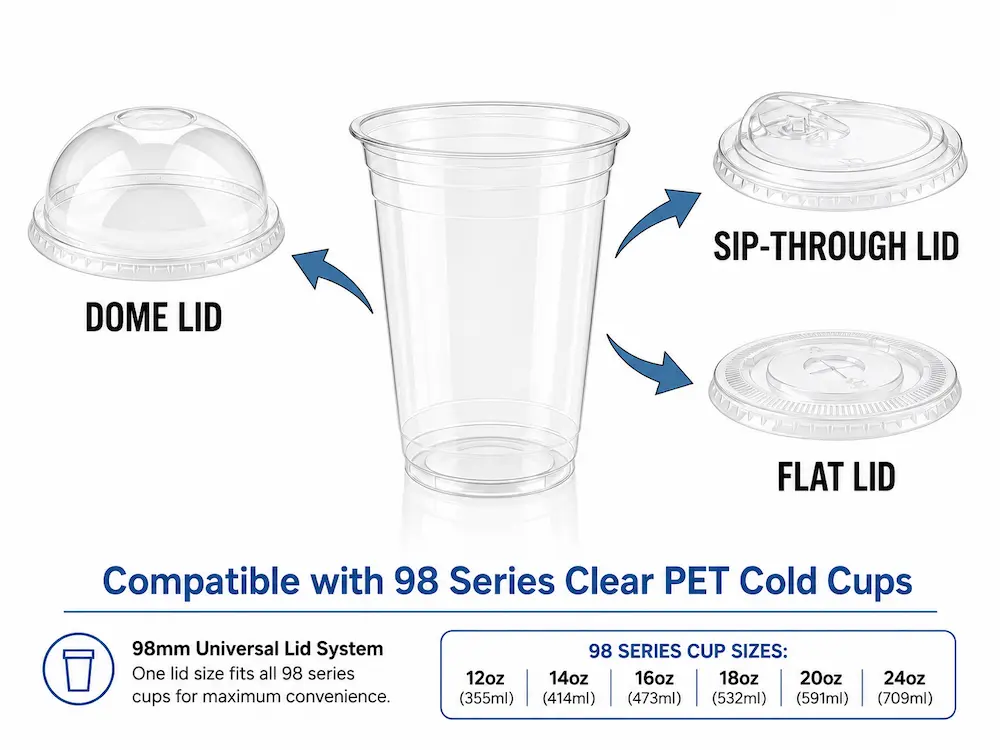
For example, a beverage program may use several cup capacities for different drink sizes while keeping one shared lid system. This is useful for cafes, milk tea chains, supermarkets, event beverage programs, and distributors because fewer lid SKUs reduce warehouse pressure and staff confusion.
When comparing boba cups, buyers should ask the supplier for a lid matching table. The table should show cup capacity, top diameter, compatible flat lid, compatible dome lid, compatible strawless lid, and whether sealing film is suitable. This is more useful than only asking for cup volume.
| Buyer Question | Why It Matters | Recommended Check |
|---|---|---|
| What cup sizes are available? | Different drink programs need small, regular, large, and extra-large portions. | Confirm capacity range and serving-size logic. |
| Which lids fit each cup? | Wrong lid fit creates leakage, slow service, and customer complaints. | Request a cup-and-lid compatibility table. |
| Is the cup suitable for sealing film? | Sealed drink cups need rim and machine compatibility. | Test cup rim with the actual sealing machine before bulk orders. |
| Is the cup intended for cold drinks? | Material choice should match the serving condition. | Confirm cold-use application and avoid unverified heat-use claims. |
| How does the cup stack and ship? | Stacking affects storage, packing speed, and carton efficiency. | Review sleeve packing, carton strength, and sample handling. |
Lid Options for Boba Cups
The lid is not a small accessory. It decides how the customer drinks, how the cup travels, how the product looks, and how the staff prepares the order. For boba cups, the most common options include flat lids, dome lids, strawless sipper lids, sip-through lids, and sealing film.
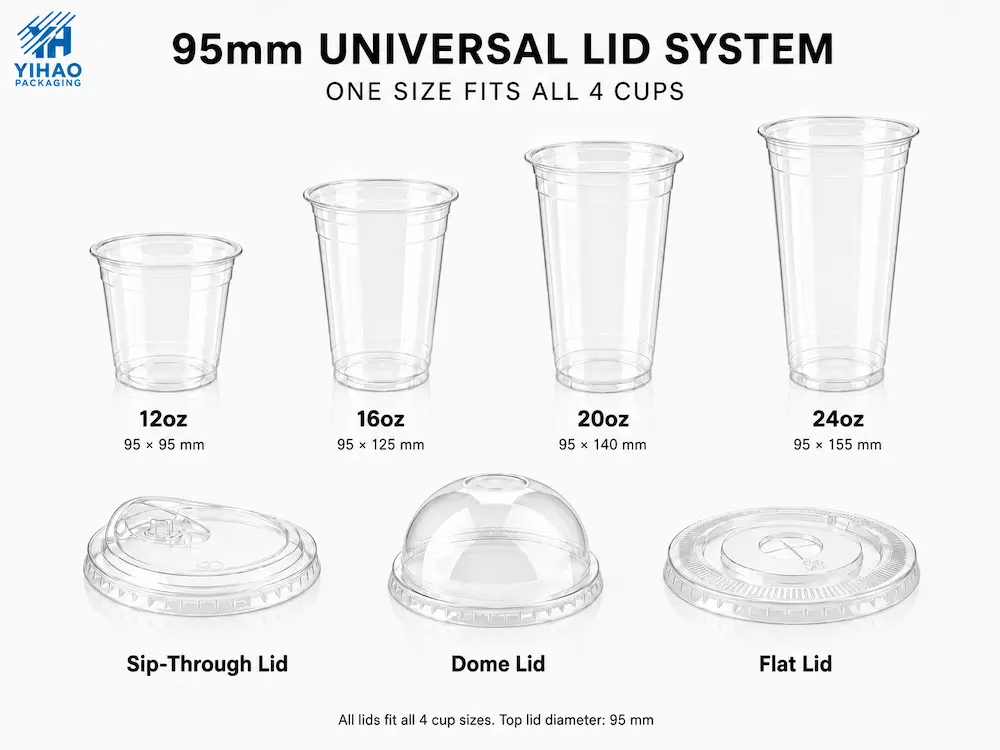
Flat Lids with Straw Slot
Flat lids with straw slots are practical for standard milk tea, iced tea, juice, lemonade, iced coffee, fruit tea, and regular takeaway drinks. They keep the cup profile low and support straw-based service. Buyers should confirm that the straw slot works with the straw diameter used for pearls and toppings.
For standard cold drink programs, a clear PET flat lid with straw slot supports iced coffee, lemonade, juice, cold brew, and many milk tea applications.
Dome Lids for Toppings
Dome lids are better for drinks with whipped cream, foam, fruit pieces, smoothie texture, dessert toppings, or extra headspace. They support visual height and avoid pressing down the drink surface. For topped boba drinks, dome lids often create a more premium look than flat lids.
Strawless and Sip-Through Lids
Strawless and sip-through lids are useful for selected cold drinks, iced coffee, tea drinks, juice, and lemonade. However, for pearl-heavy boba drinks, buyers should confirm whether direct sipping is suitable for the drink format. A strawless lid is not automatically right for every bubble tea menu.
For direct-sip beverage programs, buyers may compare a clear PET strawless sipper lid with standard straw-slot lids before finalizing the cup system.
Sealing Film
Sealing film supports fast service and delivery protection for many bubble tea shops. The cup rim must match the sealing machine, and the film must seal consistently without weak edges. Buyers should test sealing strength, puncture experience, delivery shaking, and customer opening experience before bulk ordering.
Retail Display: What Makes a Boba Cup Look Premium?
Retail display requires more than a clear wall. The cup should look clean, balanced, and stable when filled. The rim should not look rough. The cup wall should not collapse under normal handling. The base should support standing stability. The label area should allow branding without hiding the drink completely.
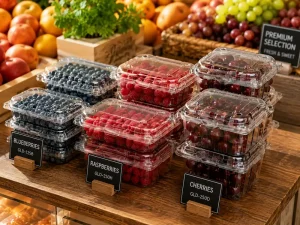
For chilled display, a good boba cup should help the drink look fresh and ready to buy. This matters for supermarkets, convenience stores, bakery drink counters, cafe refrigerators, and grab-and-go shelves. Product visibility supports impulse buying, especially when the beverage contains visible pearls, fruit, cream, pudding, or layered milk.
Buyers should also consider how the cup looks in photos. Many beverage brands depend on menu boards, delivery apps, social posts, and customer-shared images. A clear and stable cup helps the drink become part of the brand identity.
Takeaway, Delivery, and Sealing Tests Before Bulk Ordering
Takeaway drink packaging must survive real service conditions. Staff may fill drinks quickly. Customers may hold several cups at once. Delivery bags may shake. Ice may move. Toppings may push upward. Lids may be pressed too lightly during rush hours. A good wholesale cup system should reduce these risks.
Before confirming a large order, buyers should test the full system: cup, lid, straw, sealing film, label, sleeve, carton, and delivery bag. A sample cup alone does not prove the packaging system is ready for a high-volume drink program.

| Test Area | What to Check | Why It Matters | Buyer Decision |
|---|---|---|---|
| Lid Fit | Press lid around the full rim and check looseness. | Prevents leakage and lid pop-off during takeaway. | Approve only after testing with the final cup size. |
| Sealing Film | Test with the actual sealing machine and film. | Confirms sealed drink cup performance before bulk purchase. | Reject weak edges, uneven seals, or unstable puncture results. |
| Stacking | Check whether cups separate smoothly during service. | Improves speed at busy drink counters. | Choose cups that separate cleanly without deformation. |
| Filled Drink Handling | Fill with ice, pearls, toppings, and liquid. | Shows real cup stability under menu conditions. | Test with the heaviest drink on the menu. |
| Carton Protection | Review sleeve packing and carton condition after transport. | Reduces deformation and storage waste. | Confirm packing method before repeat orders. |
Boba Cups for Chilled Food and Dessert Packaging
Although boba cups are mainly used for drinks, clear cold cups also work for selected chilled foods and dessert presentations. Yogurt parfaits, pudding cups, jelly desserts, mousse cups, overnight oats, chia pudding, granola cups, fruit cups, and small chilled snack portions benefit from transparent presentation.
This matters for bakeries, cafes, convenience stores, dessert shops, and supermarket grab-and-go sections. One compatible cup and lid system can sometimes support both drink service and chilled dessert sales, helping buyers simplify inventory. However, buyers should still confirm food weight, lid fit, spoon access, label placement, and cold-case display requirements before using beverage cups for food applications.
For fruit and chilled snack applications, buyers can also compare fresh-cut fruit containers when the product needs stronger food packaging structure instead of a beverage cup format.
Manufacturer, Wholesale, and Supplier Checklist
A good boba cups manufacturer should help buyers compare the full packaging system, not only quote a unit price. The supplier should understand cup material, rim diameter, lid matching, sealed drink cup requirements, carton packing, repeat order consistency, and export communication.
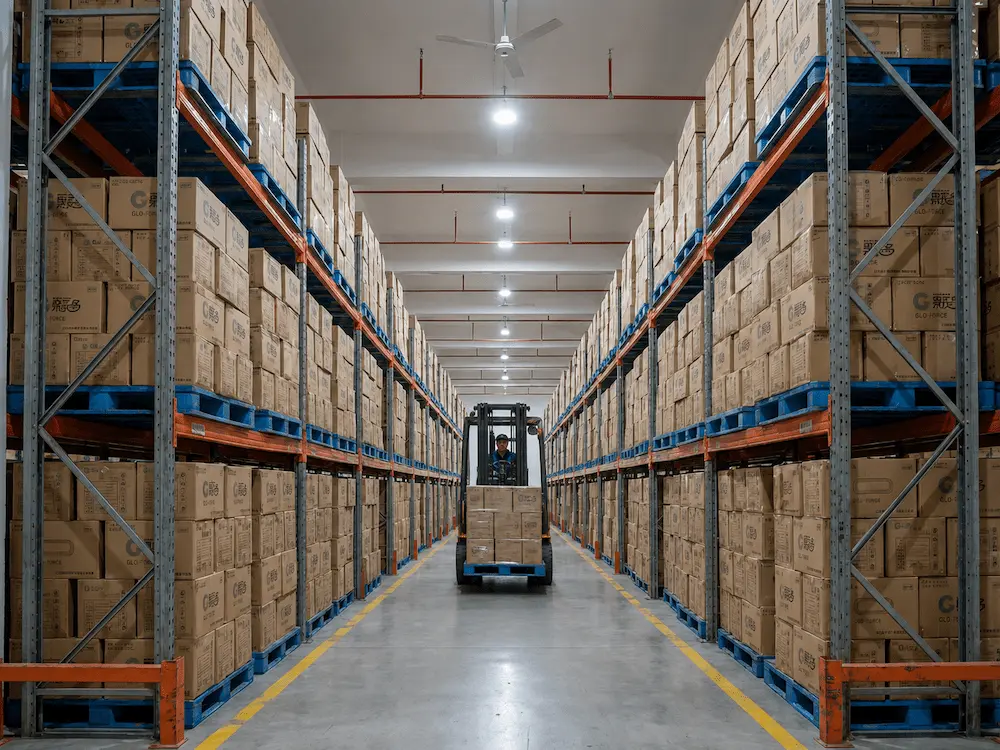
When reviewing a boba cups supplier, buyers should prepare real use details: drink type, cup size, target market, lid style, sealing method, straw type, printing needs, carton requirement, and annual purchasing plan. This helps the supplier recommend a better packaging direction and reduces costly sampling mistakes.
| Supplier Check | Good Sign | Risk Sign |
|---|---|---|
| Cup and Lid Matching | Supplier provides clear compatibility guidance. | Supplier only says “standard size” without testing details. |
| Material Explanation | Supplier explains PET, PP, and use-case differences clearly. | Supplier makes vague or exaggerated claims. |
| Sample Support | Samples are available for fit and filling checks. | Bulk order is pushed before real testing. |
| Wholesale Packing | Carton and sleeve packing can be discussed. | Packing details are unclear or inconsistent. |
| Custom Support | Branding, printing, and packaging options are discussed realistically. | Supplier promises everything without confirming cup structure. |
Common Mistakes When Buying Boba Cups
The first mistake is buying by price only. Low unit price loses value when cups arrive deformed, lids do not fit, or cartons fail during shipping. The second mistake is ignoring lid compatibility. A cup without the right lid or sealing system is not a complete packaging solution.
The third mistake is choosing material without considering the selling channel. PET may be better for visual display, while PP may suit selected service needs. The fourth mistake is using one cup for every drink without testing toppings, foam height, ice level, and straw access. The fifth mistake is placing a large wholesale order without sample testing.
Professional buyers should test the full service scenario before confirming bulk orders. Fill the cup with real drink ingredients, press the lid like staff would during rush hours, shake the cup as it may move during delivery, and check how it looks in retail display lighting.
Buyer Quick Note
For most retail display and takeaway beverage programs, clear PET boba cups are the strongest starting point because they combine drink visibility, practical stacking, cold beverage presentation, and matching lid options. PP bubble tea cups remain worth reviewing for selected sealed drink or flexible handling requirements. The best purchasing decision comes from testing the actual drink menu, lid system, sealing method, and carton packing before wholesale confirmation.
For wholesale sourcing, buyers should send the supplier four details before requesting a quote: drink menu, target cup sizes, lid or sealing method, and expected order plan. This helps the supplier recommend suitable boba cups, matching lids, packing method, and sample direction more accurately.
FAQ About Boba Cups
1. What are boba cups used for?
Boba cups are used for bubble tea, milk tea, brown sugar boba, fruit tea, smoothies, iced coffee, matcha, refreshers, sealed drinks, yogurt drinks, and selected chilled dessert cups. They are common in cafes, milk tea shops, supermarkets, convenience stores, juice bars, dessert shops, and takeaway beverage counters.
2. Are PET boba cups better than PP boba cups?
PET boba cups are usually better when clear retail display and drink visibility are priorities. PP boba cups may be reviewed for selected service conditions where flexibility or sealing style matters. Buyers should compare clarity, rim fit, lid compatibility, sealing method, and real drink handling before choosing either material.
3. Can boba cups be used as sealed drink cups?
Some boba cups can be used as sealed drink cups, but buyers must confirm rim profile, sealing film, sealing machine compatibility, cup material, and filling conditions. A sample test with the actual sealing machine is recommended before wholesale purchasing.
4. What lid is best for bubble tea cups?
Flat lids with straw slots work well for standard straw-service drinks. Dome lids are better for smoothies, foam-topped drinks, and toppings. Strawless lids are useful for selected direct-sip cold drinks, but they are not always suitable for pearl-heavy boba drinks. Sealing film is common for many bubble tea takeaway programs.
5. What should buyers check before ordering boba cups wholesale?
Buyers should check material, cup capacity, top diameter, lid compatibility, sealing method, sample performance, stacking, carton packing, label placement, supplier consistency, and whether the cup fits the actual drink menu. For bulk orders, testing with real drinks is more reliable than judging by catalog photos alone.
6. Can YIHAO support boba cups for wholesale and custom packaging projects?
YIHAO supports cold cup, cup lid, and beverage packaging discussions for wholesale buyers, distributors, cafes, drink chains, and foodservice teams. Buyers can confirm cup size, material direction, lid matching, sample needs, and custom packaging requirements according to the final project.

Final Note / Practical Takeaway
© 2026 YIHAO Packaging. This buying guide is created by YIHAO to help wholesale buyers, distributors, food brands, and packaging decision-makers compare boba cups, bubble tea cups, milk tea cups, sealed drink cups, and cold beverage packaging options before sourcing. All rights reserved.