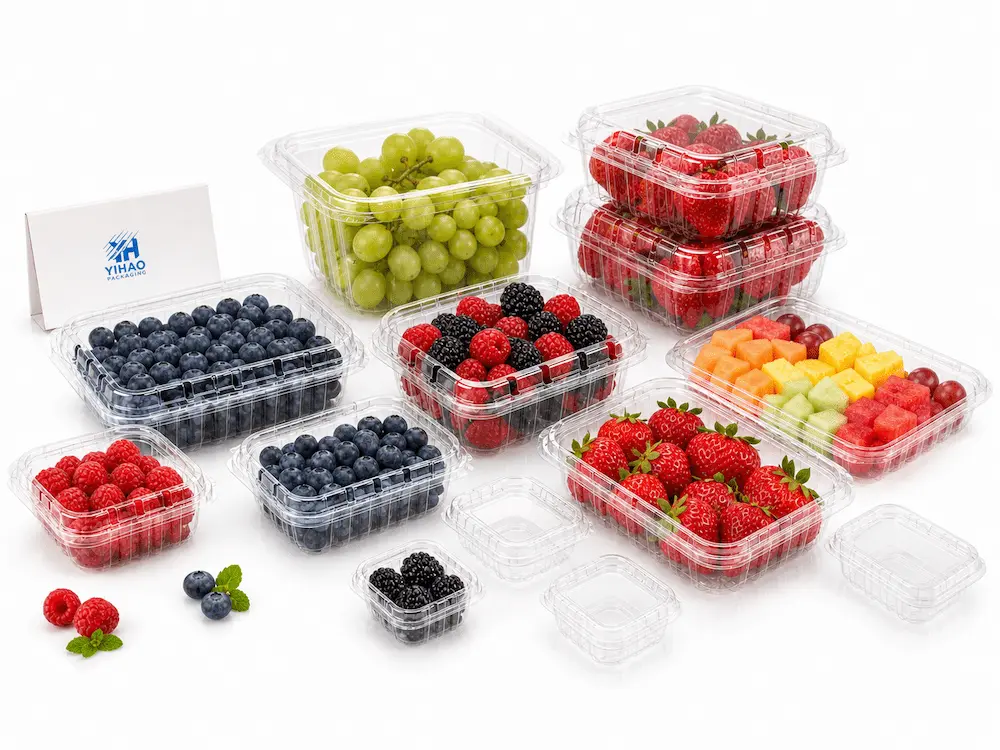
Micro Summary: Clear PET Produce Packaging for Fresh Food Buyers
Clear PET produce packaging is widely used for fresh fruit, berries, salads, fresh-cut fruit, produce trays, clamshell containers, and chilled ready-to-eat food because it supports product visibility, clean retail presentation, lightweight handling, and practical structure selection.
For buyers comparing fresh produce packaging containers, produce clamshell containers, fresh-cut fruit containers, produce trays, and berry packaging containers, the right choice depends on material clarity, PET/RPET options, portion size, lid fit, ventilation, stacking, label placement, and stable wholesale supply from a reliable manufacturer or supplier.
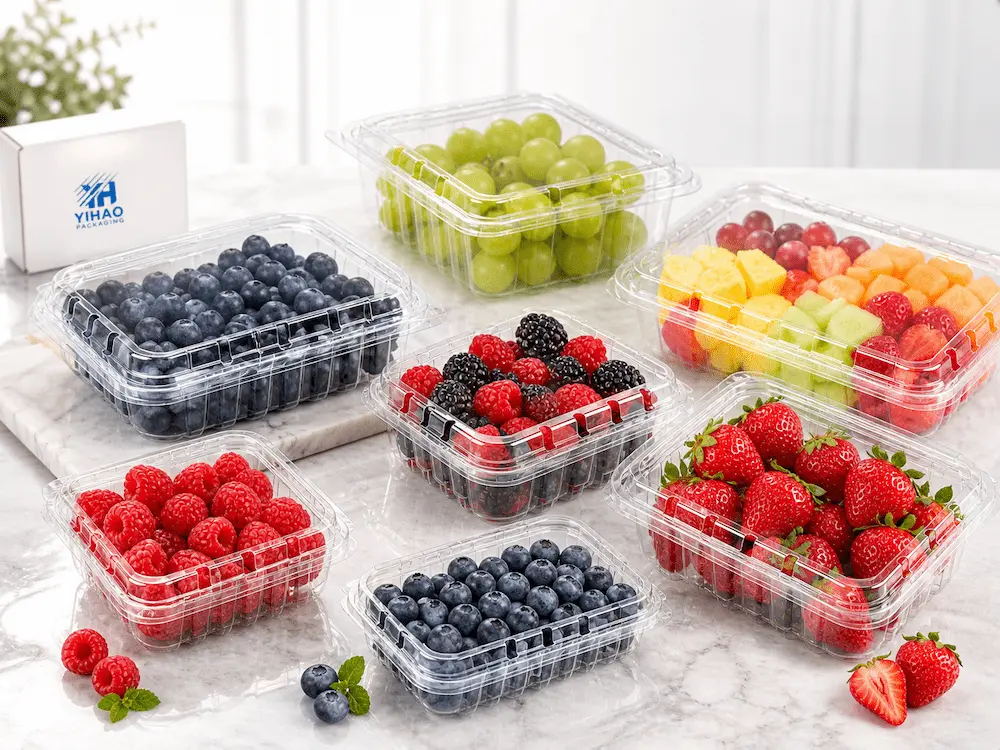
Clear packaging plays a major role in fresh produce retail. When customers buy fruit, berries, salads, fresh-cut fruit, or chilled ready-to-eat food, they want to see the product before making a decision. Color, freshness, portion size, texture, and arrangement all influence trust. This is why clear PET produce packaging has become one of the most practical packaging directions for supermarkets, fresh produce brands, distributors, foodservice buyers, and chilled food suppliers.
YIHAO is a food packaging manufacturer and solution provider focused on practical packaging formats for fruit, berries, salads, snacks, bakery items, deli food, and chilled ready-to-eat meals. For buyers sourcing clear PET produce packaging wholesale, the goal is not simply to choose a transparent plastic container. The goal is to match PET or RPET material options, container structure, size, lid fit, ventilation, stackability, and display performance with real product applications.
This FAQ-style buyer guide answers common questions about clear PET produce packaging, including materials, sizes, uses, ordering details, and supplier selection. It also explains how buyers should compare fresh produce packaging containers, produce clamshell containers, fresh-cut fruit containers, produce trays, and berry packaging containers before placing wholesale orders.
What Is Clear PET Produce Packaging?
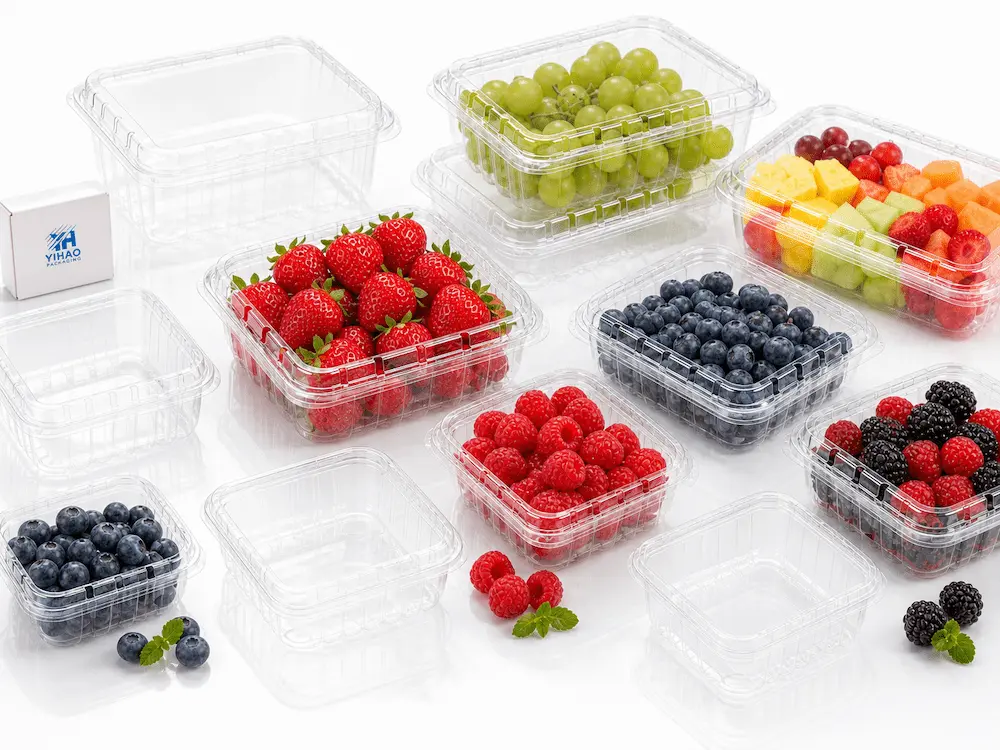
Clear PET produce packaging refers to transparent PET-based packaging used for fresh produce and chilled food applications. It can include clamshell containers, hinged containers, trays with lids, berry containers, fruit containers, salad packs, and other clear retail packaging formats.
The main purpose is simple: protect the product while keeping it visible. For fresh produce, visibility is not just a design feature. It is a selling tool. Customers often judge fruit and vegetables by color, size, surface condition, and freshness before purchase. A clear package helps them inspect the product without opening the container.
Clear PET Packaging for Fresh Produce Display
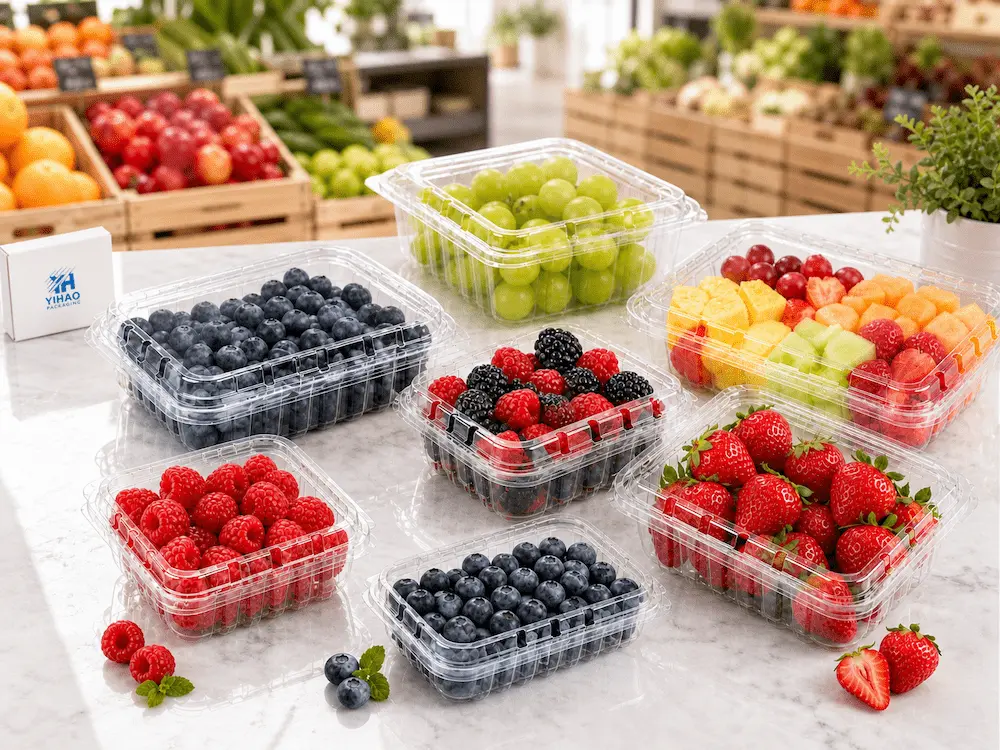
Clear PET packaging is commonly used for fruit, berries, grapes, cherry tomatoes, salad portions, fresh-cut fruit, vegetable sticks, chilled desserts, and ready-to-eat food. It works well in refrigerated shelves, supermarket displays, takeaway counters, and foodservice programs.
For buyers, the advantage is practical. PET provides strong clarity, a clean appearance, and good forming flexibility. This allows suppliers to produce many packaging formats, including produce clamshell containers, produce trays, fresh-cut fruit containers, and berry packaging containers.
Why Product Visibility Matters in Fresh Produce Packaging
Fresh produce is highly visual. Strawberries, blueberries, grapes, pineapple chunks, watermelon cubes, salad greens, and mixed fruit all rely on appearance to communicate freshness. If packaging is cloudy, scratched, or poorly shaped, customers may hesitate even when the product quality is good.
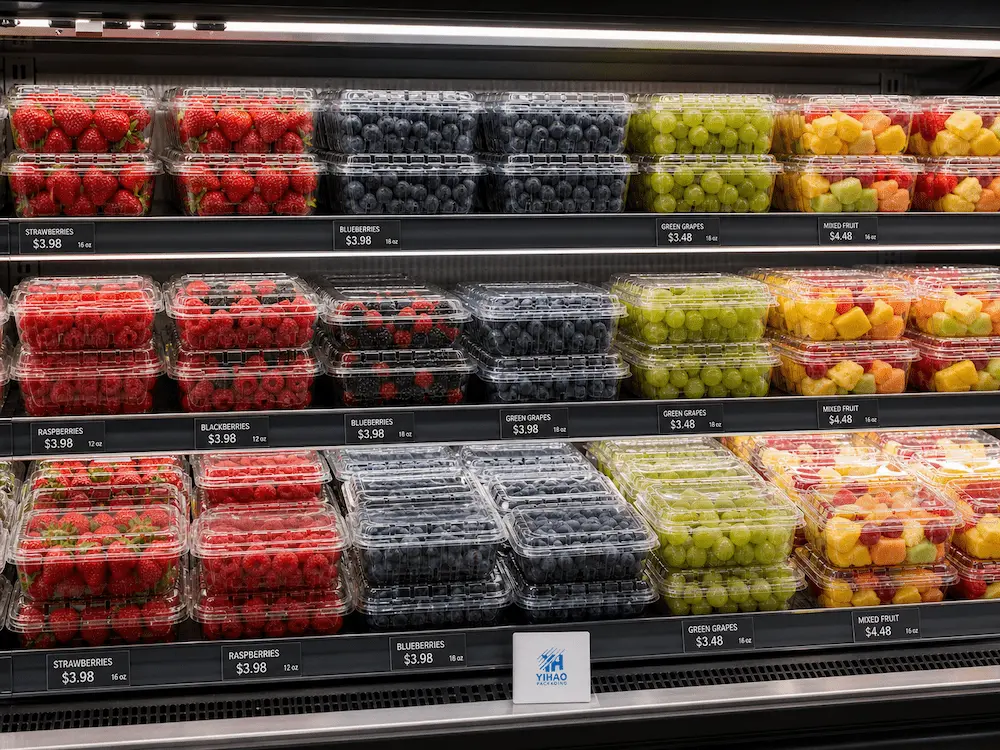
Clear PET produce packaging helps buyers create a cleaner shelf presentation. It allows customers to see product color, portion size, and arrangement quickly. This is especially important for retail grab-and-go food, where customers often make decisions within seconds.
How Clear PET Produce Packaging Supports Retail and Wholesale Buyers
Retailers need packaging that looks clean on shelves. Distributors need packaging that stacks well in cartons. Food brands need packaging that supports labels, barcodes, and brand presentation. Foodservice buyers need packaging that is practical for daily handling.
Clear PET packaging supports all of these needs when the structure is matched correctly with the product. A berry container needs ventilation and gentle support. A fruit container needs closure and portion control. A produce tray needs wide display space. A clamshell needs reliable hinge and lock performance.
For wholesale buyers, choosing the right structure matters as much as choosing the right material.
What Materials Are Used in Clear PET Produce Packaging?
Most clear PET produce packaging is made from PET or RPET. Both can be used in fresh food packaging programs, but buyers should understand the difference and avoid unsupported material claims.
PET for Clarity, Rigidity, and Clean Retail Presentation
PET is widely used in clear food packaging because it provides high transparency, practical rigidity, and a clean retail appearance. For fresh produce, these qualities are valuable because the package needs to show the product clearly while also supporting handling, stacking, and shelf display.
PET can be formed into many packaging structures, including trays, clamshells, cups, lids, and hinged containers. This makes it suitable for different produce categories, from berries and grapes to fruit portions, salads, and chilled ready-to-eat food.
For buyers, PET is often selected because it balances visibility, structure, lightweight handling, and cost efficiency.
RPET Options for Recycled-Content Packaging Programs
RPET refers to recycled PET material. It is often considered by buyers who want packaging options that support recycled-content packaging strategies. In fresh produce packaging, RPET can help brands move toward more responsible material choices while still keeping the clear appearance needed for retail display.
However, buyers should avoid vague environmental claims. RPET suitability depends on food-contact requirements, supplier documentation, target market rules, and confirmed material specifications.
A responsible manufacturer or supplier should explain PET and RPET options clearly. Buyers should request material information before making claims on packaging, websites, or retail labels.
What Buyers Should Confirm Before Making Material Claims
Before using any claim related to recycled content, recyclability, food-contact suitability, or environmental positioning, buyers should confirm the details with their packaging supplier.
Important questions include:
- Is the material PET or RPET?
- Is the packaging intended for food-contact use?
- What documentation can the supplier provide?
- Does the packaging meet target market requirements?
- Are labels, adhesives, colors, or additives affecting recyclability?
- Are material claims suitable for the buyer’s sales region?
Material claims should be accurate, specific, and supported by supplier information.
Material Questions Buyers Often Ask Before Ordering
Clear PET produce packaging is often selected for its transparency, clean appearance, and practical forming performance, but material selection should still be reviewed carefully before wholesale purchasing. Buyers should understand how PET, RPET, clarity, thickness, and supplier documentation affect packaging decisions.
Is PET Suitable for Refrigerated Produce Display?
Yes. PET is commonly used for refrigerated produce display because it provides strong clarity, practical rigidity, and a clean shelf appearance. For berries, fruit portions, salads, and chilled ready-to-eat food, PET packaging helps customers see the product while supporting daily handling and shelf organization.
However, buyers should still test filled samples in the actual cold display environment. Product weight, moisture, stacking height, and lid fit can affect packaging performance after chilling.
Is RPET Always the More Sustainable Choice?
RPET can support recycled-content packaging programs, but buyers should not treat it as an automatic sustainability claim. The right choice depends on food-contact suitability, recycled content documentation, target market rules, local recycling systems, and supplier confirmation.
A responsible buyer should ask the manufacturer or supplier for clear material information before using recycled-content or environmental statements in product pages, retail labels, or marketing materials.
Does PET Thickness Affect Packaging Performance?
PET thickness can affect rigidity, stackability, lid strength, and overall handling performance. A thicker structure may provide stronger support for heavier products, while an optimized lightweight structure may work well for smaller produce portions.
Buyers should not judge packaging only by thickness. Structure design, ribbing, lid shape, base support, and stacking contact points also affect performance.
What Material Documents Should Buyers Request?
Before placing wholesale orders, buyers should request practical material and packaging information from the supplier. This may include PET/RPET material details, food-contact information, product specifications, carton packing details, sample confirmation, and any documentation required for the buyer’s target market.
Material communication should be specific, documented, and aligned with the final application.
What Products Can Clear PET Produce Packaging Be Used For?
Clear PET produce packaging is versatile because it can be formed into different structures. The same material direction can support multiple packaging formats, but each application needs its own structure logic.
Fresh-Cut Fruit Containers
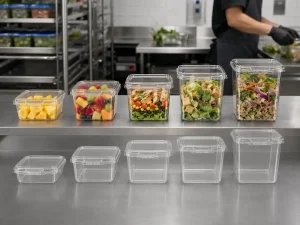
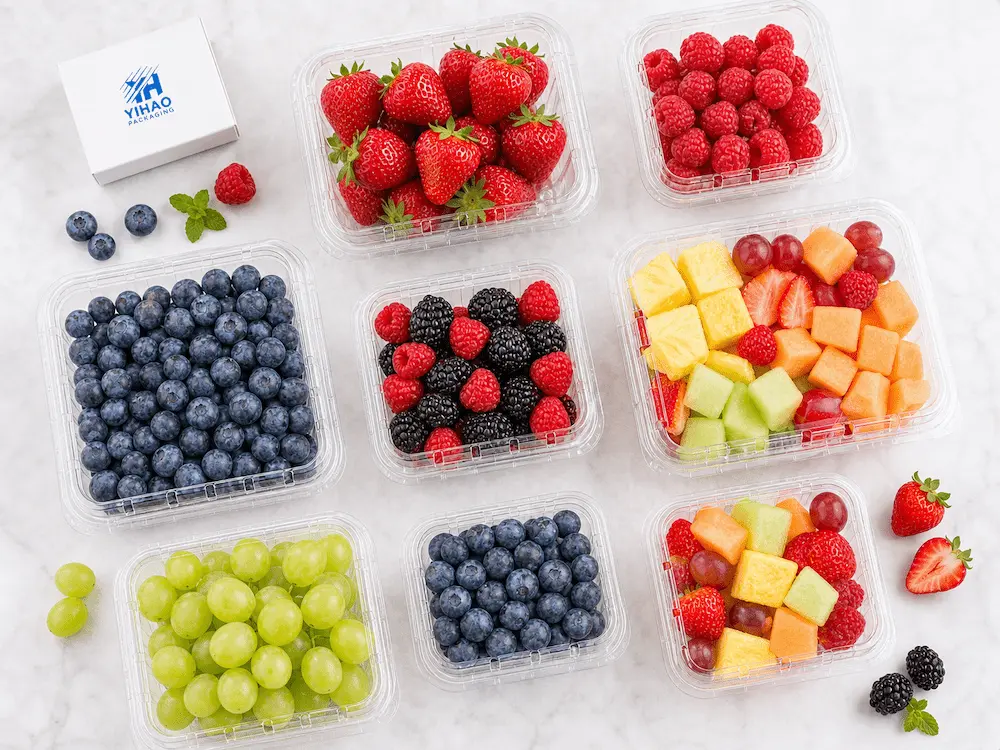
Clear PET is commonly used for fresh-cut fruit containers because fruit portions need visibility, closure, and portion control. Watermelon cubes, pineapple chunks, melon balls, grapes, mixed fruit, fruit salad, and takeaway fruit portions all benefit from clear packaging.
Fresh-cut fruit often releases moisture and moves during handling. For this reason, buyers should check lid fit, base rigidity, and closure strength. A container that looks attractive when empty may not perform well once filled with real fruit.
Produce Clamshell Containers
Produce clamshell containers are one of the most common clear PET formats for fresh produce. They usually include a hinged lid connected to the base, making them practical for fast packing and retail handling.
Clamshells are widely used for berries, grapes, cherry tomatoes, salads, snacks, fresh-cut fruit, and chilled food. Their key strengths are closure, stacking, visibility, and packing efficiency.
Buyers should check hinge quality, lock fit, lid clarity, stacking performance, and label placement before confirming wholesale orders.
Produce Trays
Produce trays are useful when buyers need wide visual display. They are suitable for sliced fruit, vegetable portions, catering packs, fruit platters, deli-style display, and chilled ready-to-eat food.
Compared with clamshells and deeper containers, trays create a wider presentation area. This makes them suitable for arranged products where layout and color display matter.
However, trays may need a matching lid, film, wrap, or sleeve depending on the application. Buyers should check lid compatibility, tray rigidity, and transport handling before selecting trays for wholesale use.
Berry Packaging Containers
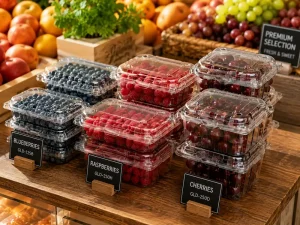
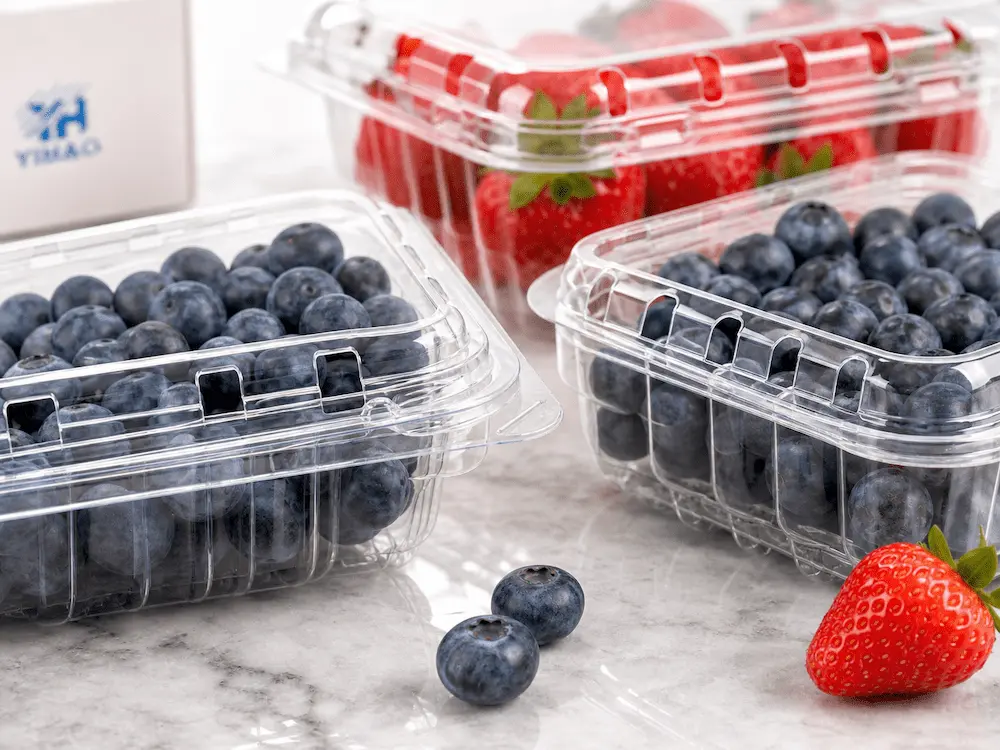
Berry packaging containers need more specialized structure because berries are delicate. Blueberries, blackberries, raspberries, and strawberries need packaging that supports visibility, ventilation, gentle containment, and anti-crush protection.
Clear PET packaging is useful for berries because customers want to inspect berry color, size, and freshness before purchase. For berry applications, buyers should pay special attention to airflow, base support, lid clearance, and filled-pack stacking.
Chilled Ready-to-Eat Food and Salads
Clear PET packaging is also used for salads, cold snacks, deli food, bakery desserts, yogurt-fruit combinations, and ready-to-eat chilled meals. In these categories, product visibility supports impulse purchase and customer trust.
For salads and chilled meals, buyers should consider lid height, dressing separation, ingredient movement, and shelf display. For desserts, lid clearance and product protection are especially important.
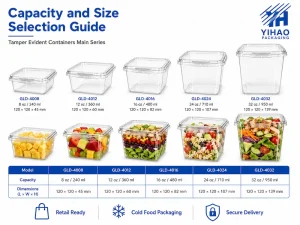
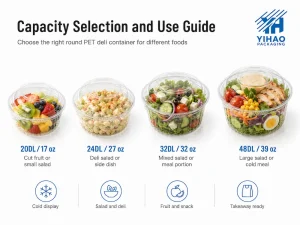
How Should Buyers Choose the Right Size?
Choosing the right size is one of the most important parts of sourcing clear PET produce packaging. A container that is too large makes the product look underfilled. A container that is too small can damage the product or make closure difficult.
Match Size with Product Type and Portion Weight
Buyers should choose size based on the actual product, not only on catalog dimensions. Fruit cubes, berries, salad greens, sliced fruit, and chilled desserts all fill containers differently.
Small sizes work well for single-serve fruit, berries, snacks, and grab-and-go packs. Medium sizes suit mixed fruit, salads, and takeaway portions. Larger trays and containers work better for family packs, catering, and display-focused fresh food.
The right size should support product appearance, cost control, shelf layout, and customer expectations.
Check Lid Height and Product Clearance
Lid height is often overlooked. Strawberries, salads, desserts, and mixed fruit may need extra clearance. If the lid presses against the product, the packaging may damage the food or create a poor appearance.
Buyers should check product clearance after filling, not just the empty packaging height. For delicate fruit and layered desserts, this is especially important.
Test Filled Samples Before Wholesale Orders
Empty samples do not show real performance. Before confirming wholesale orders, buyers should test filled packaging with real fruit, berries, salad, or chilled food.
A good sample test should include:
- Filling with actual product weight
- Closing the lid several times
- Stacking filled packs
- Testing carton fit
- Checking label placement
- Observing product appearance after handling
- Reviewing cold shelf display
This process reduces ordering risk and helps buyers avoid packaging mismatch.
Clear PET Produce Packaging vs Alternative Packaging Formats
Different packaging formats have different strengths. Buyers should choose packaging based on product behavior, display needs, closure requirements, and wholesale handling.
| Packaging Format | Best For | Key Advantage | Buyer Check |
|---|---|---|---|
| Clear PET produce packaging | Retail fresh produce and chilled food | High visibility and clean presentation | Match structure with product use |
| Fresh-cut fruit containers | Mixed fruit and takeaway portions | Closure and portion control | Check moisture, lid fit, and base rigidity |
| Produce clamshell containers | Berries, grapes, salads, snacks | Hinged lid and fast packing | Check lock, hinge, and stacking |
| Produce trays | Sliced fruit, vegetable portions, catering | Wide visual display | Check lid, film, or wrap compatibility |
| Berry packaging containers | Blueberries, raspberries, strawberries | Ventilation and gentle protection | Check airflow and anti-crush support |
This comparison shows why buyers should not choose packaging by appearance alone. A clear package must also fit the product’s moisture level, weight, sensitivity, display style, and handling route.
Ordering Questions Buyers Should Ask a Manufacturer or Supplier
Before ordering clear PET produce packaging wholesale, buyers should ask practical questions. A good manufacturer or supplier should help buyers compare material, structure, size, and application fit.
What PET or RPET Material Options Are Available?
Buyers should ask whether the packaging is made from PET, RPET, or another confirmed material option. They should also ask what documentation is available for food-contact review and target market requirements.
Material clarity, thickness, forming quality, and surface appearance should be reviewed with physical samples.
Which Container Structure Fits My Product?
The supplier should help buyers choose between clamshells, trays, fresh-cut fruit containers, berry containers, and clear hinged packs. The right choice depends on product type.
Berries need ventilation and gentle support. Fresh-cut fruit needs closure and moisture handling. Produce trays need wide display area. Salads and chilled meals need lid height and stacking performance.
Can I Test Samples with Real Fruit Before Ordering?
Sample testing is essential. Buyers should not approve packaging based only on empty samples or photos. Real product testing helps confirm size, closure, stacking, label placement, and display appearance.
A responsible supplier should support sample review before bulk orders.
How Does the Packaging Stack in Cartons and Cold Shelves?
Stacking affects logistics and retail display. Buyers should test filled-pack stacking inside cartons and on cold shelves. This helps prevent crushing, deformation, shelf mess, and transport instability.
For berries and delicate produce, stacking tests are especially important.
Can the Supplier Support Wholesale Repeat Orders?
Wholesale buyers need stable supply. A packaging supplier should provide consistent specifications, repeatable quality, clear carton information, and reliable communication.
For importers, distributors, and supermarkets, supply consistency is just as important as sample quality.
What Labeling or Branding Areas Are Available?
Labels should support branding, barcode scanning, product information, and retail display without blocking too much product visibility. Buyers should test label position and size on actual packaging.
For clear packaging, label placement is part of the visual strategy.
Are Packing Details and Specifications Clearly Provided?
Buyers should ask for practical specifications, such as dimensions, carton quantity, packing method, material option, structure type, and recommended applications. Clear documentation reduces communication mistakes and improves wholesale purchasing accuracy.
Wholesale Ordering Checklist for Clear PET Produce Packaging
Use the checklist below before confirming wholesale orders.
| Checklist Item | Buyer Question | Why It Matters |
|---|---|---|
| Product type | Is it fruit, berries, salad, tray display, or chilled food? | Determines container structure |
| Material | PET or RPET? | Affects clarity, positioning, and documentation |
| Size | Does the pack fit the real portion? | Controls cost and shelf appearance |
| Lid fit | Does the lid close securely? | Supports takeaway and transport |
| Stackability | Can filled packs stack safely? | Prevents shelf mess and crushing |
| Visibility | Can customers see product quality clearly? | Supports retail trust |
| Ventilation | Does the product need airflow? | Important for berries and selected produce |
| Label area | Does branding block product view? | Balances retail information and visibility |
| Sample test | Has the package been tested with real food? | Reduces ordering risk |
| Supplier support | Can the manufacturer provide stable wholesale supply? | Supports long-term purchasing |
This checklist helps buyers move from general packaging selection to practical ordering decisions.
Common Mistakes When Ordering Clear PET Produce Packaging
Even experienced buyers can make mistakes when sourcing clear PET produce packaging. Most problems happen when packaging is selected too quickly or tested only as an empty sample.
Choosing Only by Container Price
Low unit price does not always mean lower total cost. If packaging causes poor stacking, damaged fruit, loose lids, weak shelf appearance, or customer complaints, the total cost becomes higher.
Buyers should compare packaging by total performance, not only by price.
Ignoring Real Product Weight and Moisture
Fresh-cut fruit, berries, salads, and chilled food behave differently inside packaging. Watermelon cubes release moisture. Berries need gentle support. Salads need lid height. Desserts may need product clearance.
Packaging should be tested with real product weight and realistic handling conditions.
Using One Packaging Format for Every Product
One packaging format cannot fit every fresh produce application. Produce trays are strong for arranged display. Fresh-cut fruit containers are strong for closure and portion control. Berry packaging containers are strong for ventilation and gentle protection. Produce clamshell containers are strong for hinged closure and retail handling.
Buyers should choose by application, not by habit.
Forgetting Label Placement and Retail Display
Clear packaging is valuable because it shows the product. A label that covers too much of the fruit or salad reduces the value of transparency.
Buyers should test actual label size, position, and barcode scan performance before final approval.
Not Confirming PET/RPET Material Details
Material claims should be supported by supplier information. Buyers should confirm whether the packaging is PET or RPET, whether it is suitable for the intended food application, and what documentation is available.
This is especially important for export buyers and brands selling into markets with specific packaging requirements.
Why Choose YIHAO for Clear PET Produce Packaging?
Choosing the right packaging partner matters. A reliable supplier should help buyers compare structures, review samples, understand material options, and select packaging according to real fresh food applications.
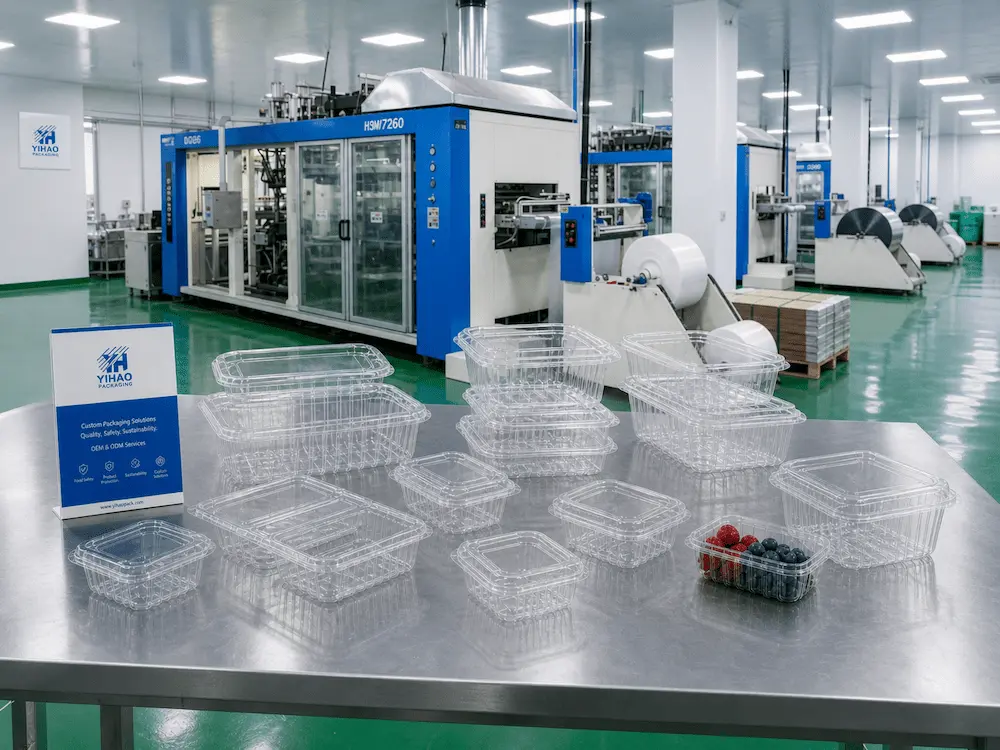
YIHAO provides clear PET/RPET packaging solutions for fruit, berries, salads, snacks, bakery items, deli food, and chilled ready-to-eat meals. For buyers sourcing clear PET produce packaging, fresh produce packaging containers, produce clamshell containers, fresh-cut fruit containers, produce trays, or berry packaging containers, YIHAO focuses on practical structure, clean appearance, and application-based packaging selection.
Food Packaging Solutions for Fruit, Berries, Salads, and Chilled Food
Different fresh food categories need different packaging logic. Fruit needs visibility and closure. Berries need ventilation and protection. Trays need wide display space. Salads need lid height and stacking strength. Chilled food needs clean presentation and secure handling.
YIHAO supports packaging selection across these connected applications, helping buyers build a more consistent packaging program.
Wholesale Supply Support for Fresh Produce Packaging Buyers
Wholesale buyers need stable quality, repeatable specifications, carton information, and clear communication. Packaging delays or mismatched structures can affect fresh produce programs.
A reliable manufacturer or supplier should support sample confirmation, wholesale order planning, and practical packaging comparison.
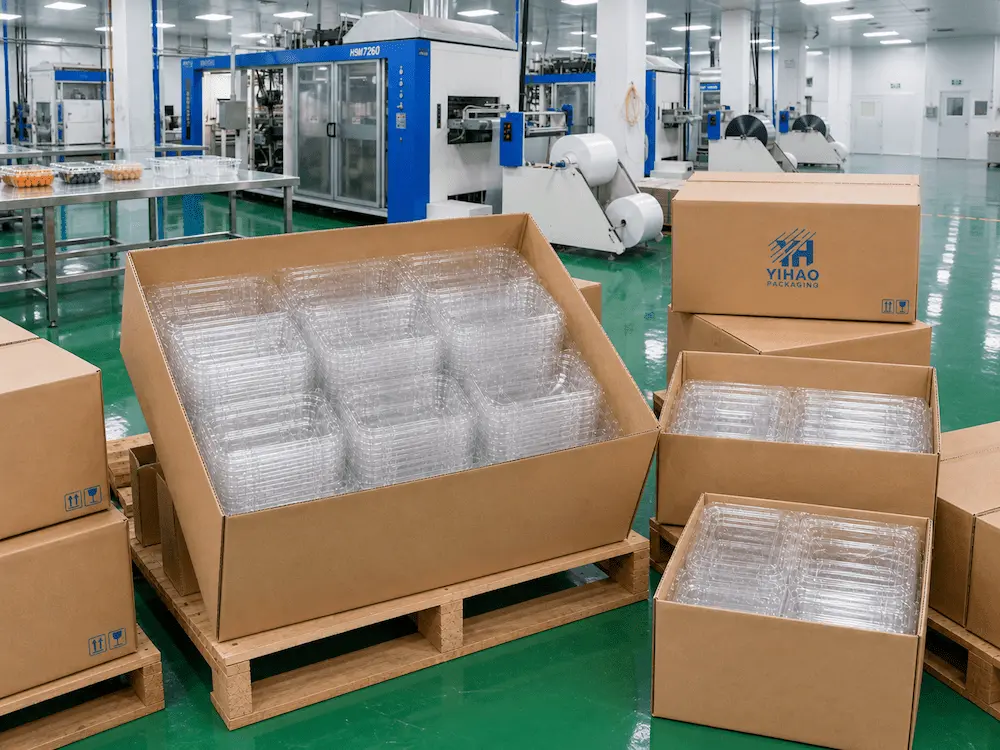
Application-Based Packaging Selection for Different Produce Categories
The best packaging recommendation starts with the product. Blueberries, strawberries, watermelon cubes, sliced fruit, salad greens, vegetable sticks, and chilled desserts do not need the same structure.
YIHAO helps buyers compare options based on product behavior, retail display, handling route, and wholesale supply needs.
Ready to Compare Clear PET Produce Packaging Options?
If you are sourcing clear PET produce packaging wholesale for fresh fruit, berries, salads, produce trays, clamshell containers, or fresh-cut fruit containers, contact YIHAO to compare PET/RPET material options, container structures, sample choices, carton packing details, and supplier-ready packaging solutions for your market.
A clear packaging decision should start with the real product. YIHAO helps buyers evaluate visibility, lid fit, ventilation, stacking, label placement, and wholesale supply needs before confirming packaging orders.
FAQ About Clear PET Produce Packaging
1. What is clear PET produce packaging?
Clear PET produce packaging is transparent PET-based packaging used for fresh fruit, berries, salads, fresh-cut fruit, produce trays, clamshell containers, and chilled ready-to-eat food. It helps protect the product while keeping color, freshness, portion size, and quality visible to customers.
2. Is PET suitable for fresh produce packaging containers?
Yes. PET is widely used for fresh produce packaging containers because it provides strong clarity, practical rigidity, lightweight handling, and clean retail presentation. It is commonly used for clamshells, trays, fruit containers, berry packaging, salad packs, and chilled food packaging.
3. What is the difference between PET and RPET produce packaging?
PET is virgin polyethylene terephthalate commonly used for clear food packaging. RPET is recycled PET material that can support recycled-content packaging programs when suitable for the intended application and market. Buyers should confirm food-contact requirements, documentation, and supplier specifications before making material claims.
4. What products can be packed in clear PET produce containers?
Clear PET produce containers can be used for berries, grapes, cherry tomatoes, fresh-cut fruit, sliced fruit, vegetable sticks, salads, chilled desserts, snack portions, and ready-to-eat food. The right structure depends on product weight, moisture, ventilation needs, lid fit, and shelf display.
5. How do I choose the right size for clear PET produce packaging?
Choose size by testing the real product, not only by catalog dimensions. Buyers should check portion weight, product height, lid clearance, stacking performance, shelf appearance, label placement, and carton fit before confirming wholesale orders.
6. How do I choose a wholesale clear PET produce packaging supplier?
Choose a wholesale supplier or manufacturer that understands PET/RPET materials, product applications, container structure, sample testing, stacking, labeling, and repeat supply. A reliable supplier should help buyers compare clamshells, trays, berry containers, and fresh-cut fruit containers based on real product needs.
7. Can clear PET produce packaging be customized for wholesale orders?
Clear PET produce packaging can support different wholesale needs, including container structure selection, size matching, label area planning, packing details, and application-based recommendations. Buyers should confirm customization options, sample availability, and order requirements directly with the manufacturer or supplier.
8. What should buyers check before ordering clear PET produce packaging in bulk?
Before bulk ordering, buyers should check material type, product fit, lid closure, filled-pack stacking, ventilation needs, label placement, carton packing, sample performance, and supplier reliability. Testing the packaging with real fruit, berries, salads, or chilled food helps reduce ordering risk.
References
- U.S. Food and Drug Administration, Food Contact Substances and Food Packaging Guidance.
- U.S. Food and Drug Administration, Guide to Minimize Microbial Food Safety Hazards of Fresh-Cut Fruits and Vegetables.
- European Commission, Commission Regulation (EU) 2022/1616 on recycled plastic materials and articles intended to come into contact with foods.
- Association of Plastic Recyclers, APR Design Guide for Plastics Recyclability.
- United Nations Environment Programme, Food Waste Index Report 2024.
- Food and Agriculture Organization of the United Nations, Food Loss and Waste Resources.
- International Fresh Produce Association, Fresh Produce Handling and Packaging Resources.
- WRAP, Food Waste Reduction and Packaging Resource Efficiency Publications.
Deep-Dive Insights: How Buyers Should Think About Clear PET Produce Packaging
How does clear PET produce packaging improve retail display?
Clear PET produce packaging improves retail display by allowing customers to see fruit color, berry quality, salad freshness, portion size, and product arrangement before purchase. This visibility supports trust and helps fresh food look cleaner on chilled shelves.
Why should buyers compare different PET packaging structures?
Clear PET material can be formed into clamshells, trays, berry containers, and fresh-cut fruit containers. Each structure serves a different purpose. Buyers should compare closure, ventilation, stackability, lid height, and display style before choosing a format.
What should buyers confirm before wholesale ordering?
Buyers should confirm material type, size, lid fit, filled-pack stacking, label placement, carton packing, sample performance, and supplier support before wholesale ordering. Testing with real food helps avoid packaging mismatch.
Which clear PET packaging option works best for fresh produce?
The best option depends on the product. Produce clamshell containers work well for berries and snacks. Fresh-cut fruit containers work well for mixed fruit and takeaway portions. Produce trays work well for arranged display. Berry packaging containers work well for delicate berries that need ventilation and gentle support.
Why does supplier selection matter?
A reliable manufacturer or supplier helps buyers compare PET/RPET material options, packaging structures, sample choices, labeling areas, and wholesale supply details according to real produce applications.
© 2026 YIHAO packaging.No part of this article may be reproduced, copied, translated, distributed, or republished without prior written consent from YIHAO Packaging.