
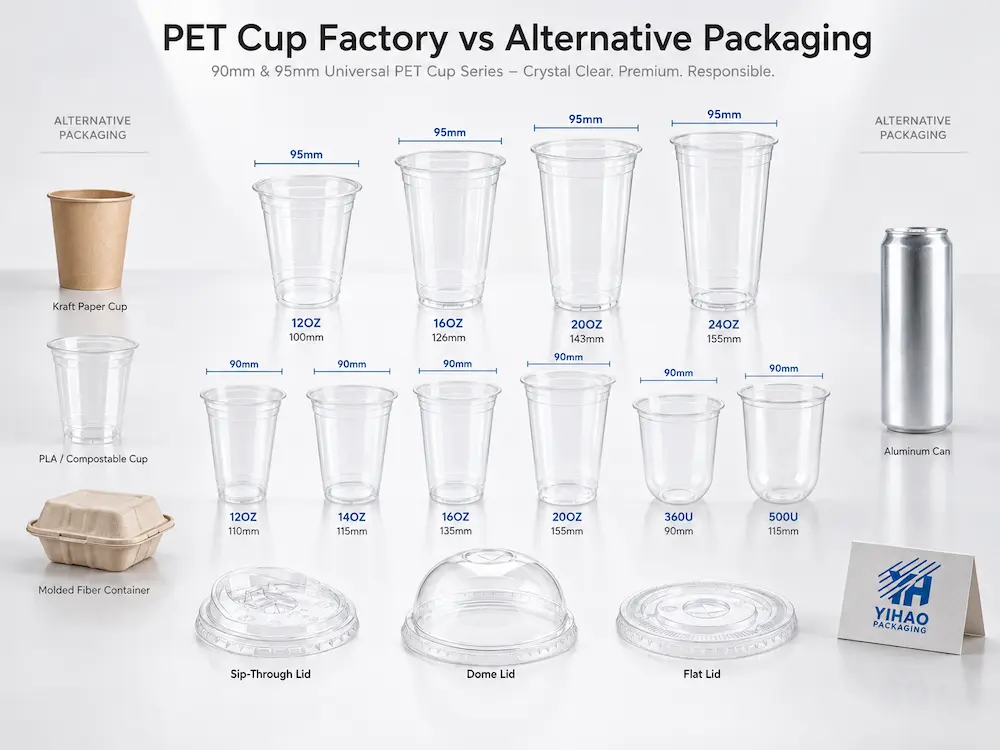
Why Buyers Compare a PET Cup Factory With Alternative Packaging
Cold drink packaging is no longer a simple container decision. For cafes, beverage chains, supermarkets, distributors, foodservice teams, and private label buyers, packaging affects product visibility, lid fit, storage efficiency, takeaway handling, brand presentation, and repeat purchasing. That is why many buyers compare a PET cup factory with a PP cup manufacturer, paper cup supplier, PLA cup supplier, rPET packaging supplier, or general cold cup manufacturer before placing wholesale orders.
Choosing a PET cup factory is not only about finding a plastic cup supplier. For cafes, beverage brands, supermarkets, bakeries, and foodservice buyers, the real decision is whether PET cups, PP cups, paper cups, PLA cups, or rPET cups match the product, sales channel, brand position, and wholesale supply plan.
As a food packaging manufacturer and supplier, YIHAO provides PET cold cups, rPET cup options, matching lids, custom printing support, and wholesale packaging solutions for drink and chilled food brands. This guide compares PET cup factory supply with alternative packaging materials, helping buyers evaluate clarity, lid compatibility, branding, cost, sustainability, and repeat-order reliability before confirming a packaging supplier.
For most wholesale beverage buyers, the decision can be simplified into one rule: choose a PET cup factory when the drink must be seen, the lid must fit consistently, and the cup line needs to support repeat orders across several menu sizes. Choose alternative packaging when opacity, full-surface paper printing, specific functional handling, verified composting access, or another material requirement matters more than drink visibility.
This buyer-focused comparison is especially important for brands sourcing wholesale cold cups. A low unit price may look attractive at first, but poor lid compatibility, unclear size logic, weak cup appearance, unstable supply, or confusing material claims can create hidden operating costs. A professional packaging decision should compare total performance, not only material name or quotation price.
What a PET Cup Factory Usually Offers for Beverage Buyers
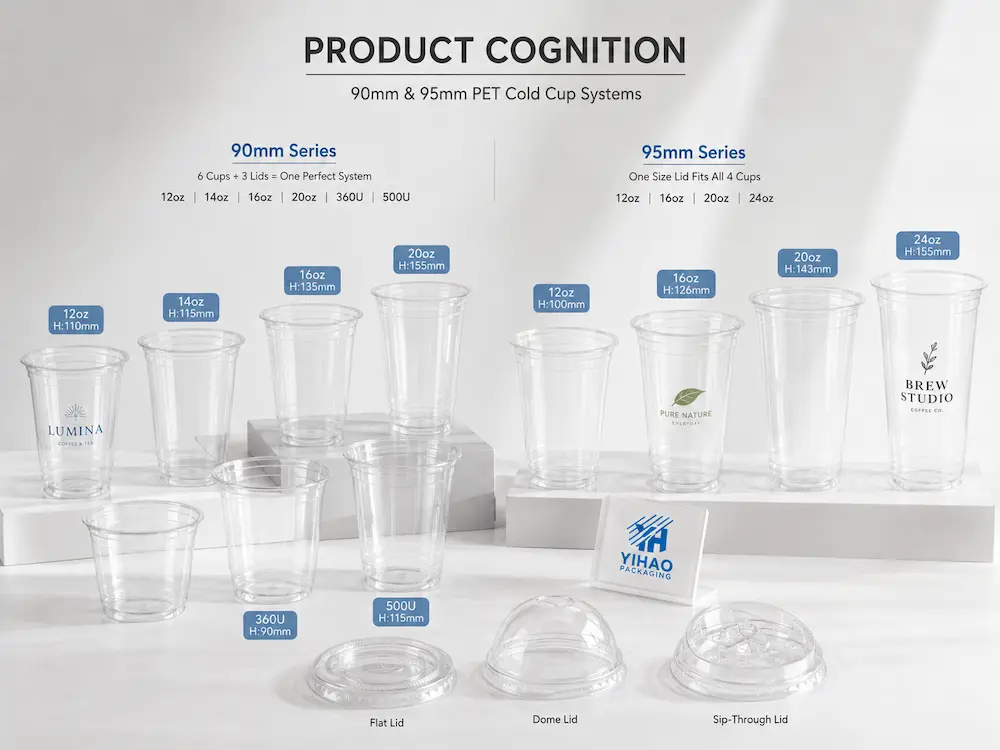
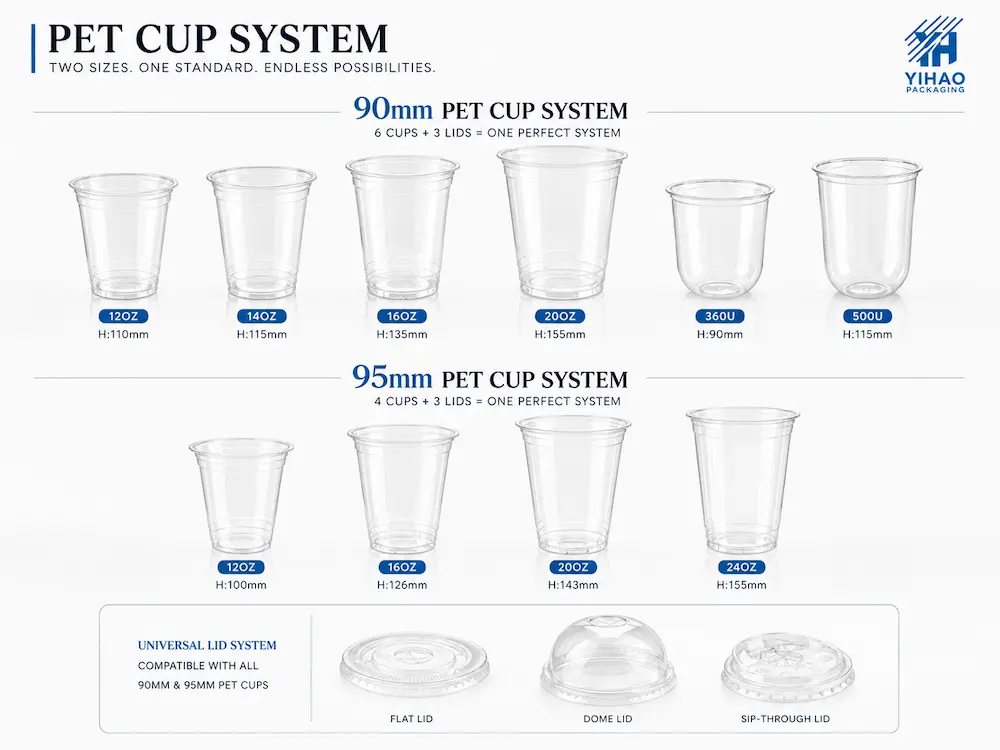
A professional PET cup factory should offer more than cup production. The stronger value is a complete cold cup system: cup sizes, matching lids, drink-use recommendations, material direction, sample testing, custom printing support, packing communication, and repeat wholesale supply planning. This matters because most beverage buyers do not use only one cup. They usually need a practical packaging system across different drink sizes, lid styles, store formats, and sales channels.
Clear PET Cups for High-Visibility Cold Drinks
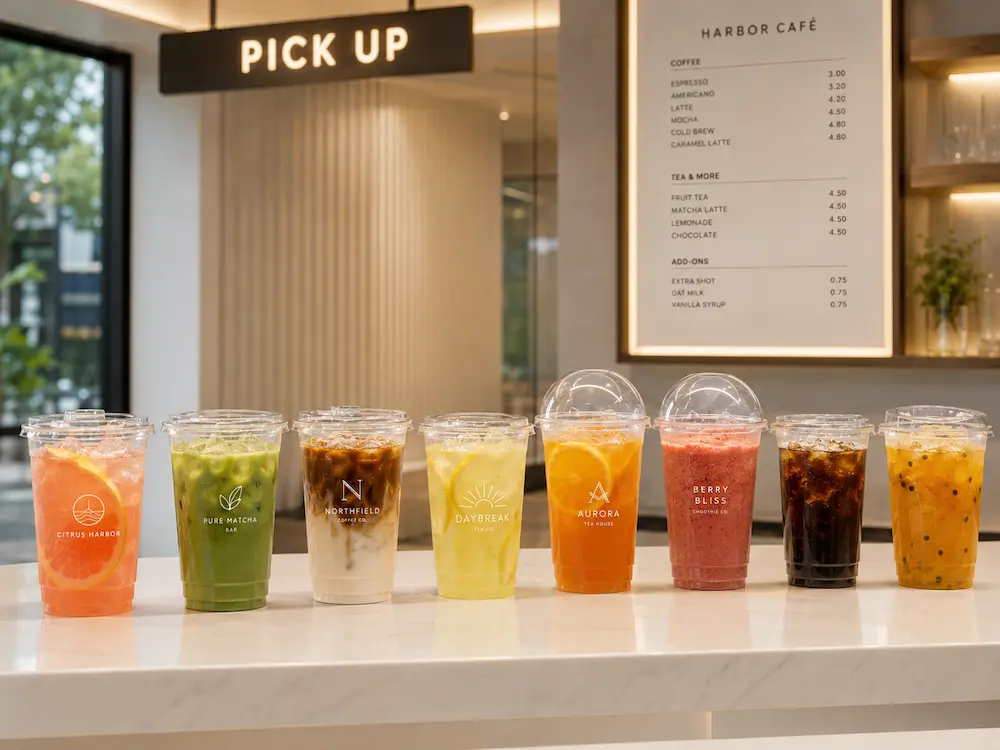
PET cups are widely used for cold beverage packaging because they provide strong clarity and clean product visibility. For iced coffee, cold brew, fruit tea, matcha, smoothies, lemonade, juice, soda, milk tea, bubble tea, yogurt drinks, protein drinks, refreshers, and chilled dessert drinks, clear PET packaging allows the drink itself to become the visual selling point.
This visibility is important in cafes, beverage chains, convenience stores, supermarkets, event beverage counters, takeaway counters, and chilled display shelves. Customers often judge freshness, flavor, portion value, and premium feel before drinking. A clear PET cup helps show color, texture, ice level, fruit pieces, toppings, and layers directly.
Flat Lids, Dome Lids, and Strawless Sipper Lids
A capable cold cup supplier should help buyers match cups with suitable lids. Flat lids are commonly used for standard straw-service drinks such as iced coffee, iced tea, juice, lemonade, soda, fruit tea, and flavored cold brew. Dome lids provide extra headspace for smoothies, whipped cream drinks, dessert beverages, fruit toppings, yogurt parfaits, and thick blended drinks. Strawless sipper lids support direct drinking for iced coffee, cold brew, refreshers, iced tea, lemonade, fruit drinks, and other no-straw takeaway programs.
This cup-lid matching logic is one major reason buyers work with a factory instead of buying random cups and lids from separate sources. When the cup and lid are planned as a system, buyers reduce mismatch risk, simplify inventory, improve packing speed, and create a cleaner customer experience.
Custom Printing and Private Label Cup Programs
A custom cup manufacturer helps buyers move from plain cups to branded cold drink packaging. Custom printed cold cups support coffee shop identity, smoothie bar branding, milk tea chain recognition, private label drink programs, seasonal campaigns, supermarket beverage lines, and distributor product differentiation.
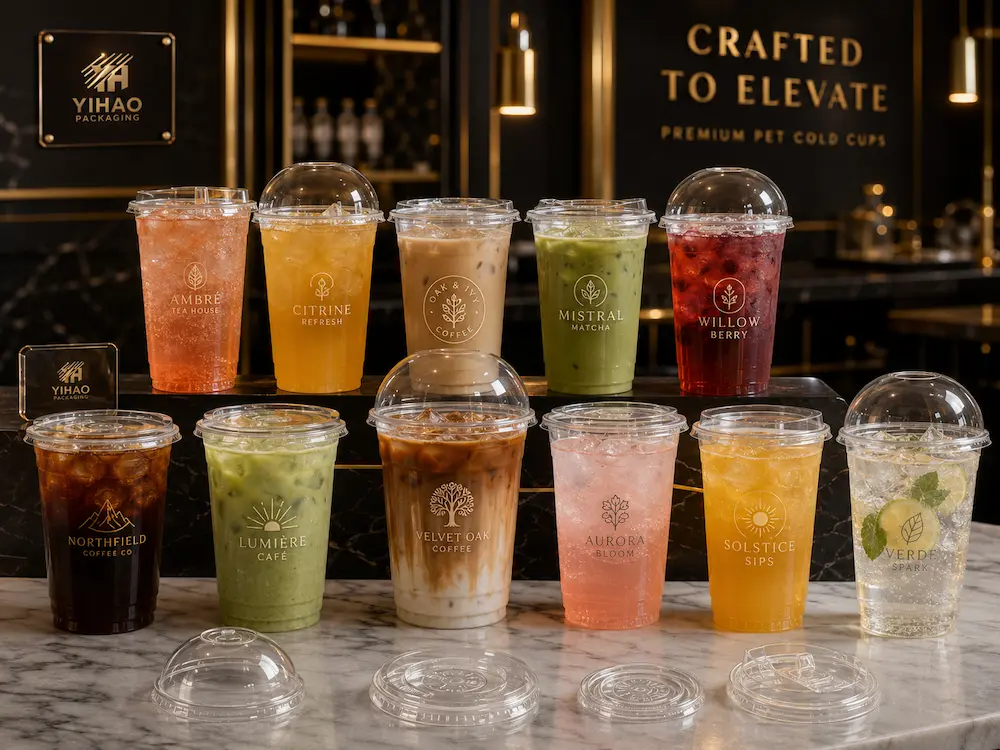
Custom branding should be planned with the actual cup shape, drink color, lid style, and customer channel. Buyers should confirm artwork requirements, printable area, color expectations, sample approval process, and whether the printed design remains readable after the cup is filled. A good custom cup project is not only decoration. It connects packaging structure, beverage presentation, and brand communication.
PET Cups vs PP Cups: Which One Fits Cold Beverage Programs Better?
When buyers compare a PET cup factory with a PP cup manufacturer, they are usually comparing visual clarity, functional handling, menu type, lid fit, and supply strategy. PET and PP both have valid roles in beverage packaging, but they serve different priorities.
PET Cups for Clear Presentation and Premium Cold Drink Display
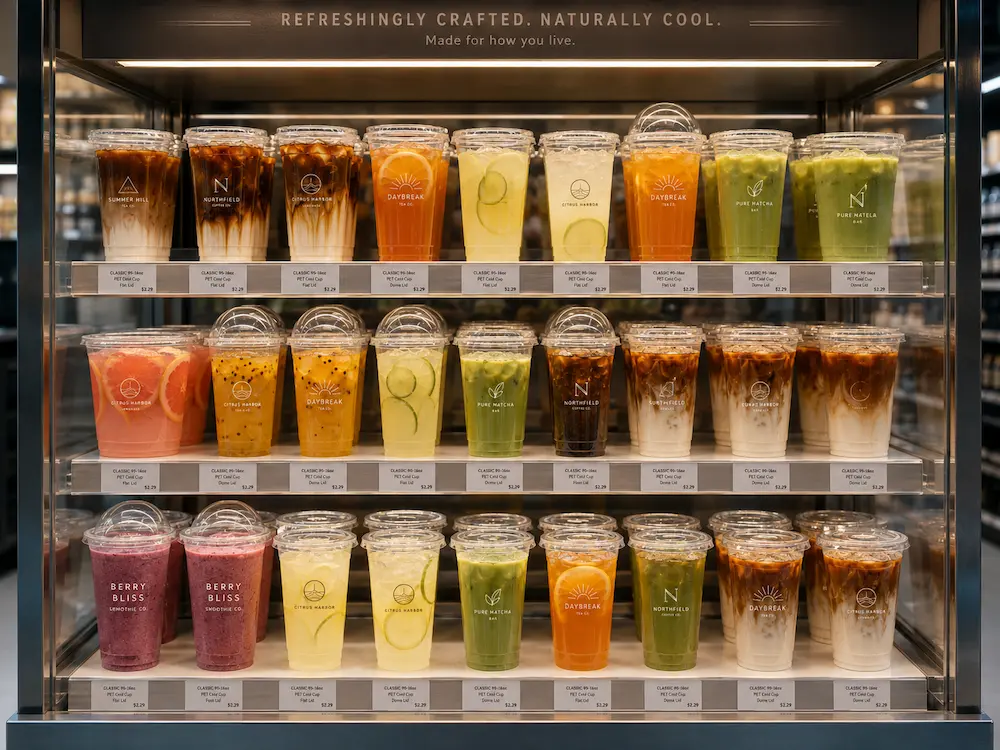
PET cups are usually the better direction when the drink needs to be seen. Iced lattes, cold brew, matcha drinks, fruit tea, bubble tea, lemonade, smoothies, refreshers, sparkling fruit drinks, protein drinks, yogurt drinks, and dessert beverages gain stronger shelf appeal when customers can see the product clearly.
For beverage brands, this visual value is commercial. Clear packaging helps show ingredients, freshness, portion, toppings, and drink layers. For stores and foodservice operators, it also helps staff check drink accuracy before serving. For supermarkets and grab-and-go shelves, it helps customers understand the product quickly without relying only on a label.
PP Cups for Selected Functional Needs
PP cups may be considered when buyers prioritize certain handling characteristics, flexibility, or specific use requirements where high clarity is not the main selling point. A PP cup manufacturer may be a better sourcing direction for applications where transparency is less important than another functional requirement.
However, PP cups usually do not deliver the same premium clear display as PET cups. If the buyer’s menu depends on visual drink value, PET is often the stronger commercial choice. If the product does not need clear presentation, PP may remain a practical option depending on the product design and use case.
Practical Choice Between PET and PP
| Buyer Question | PET Cup Direction | PP Cup Direction |
|---|---|---|
| Is drink visibility important? | Strong fit for clear presentation | Less focused on premium clarity |
| Is the menu mainly cold drinks? | Strong fit for iced coffee, smoothies, fruit tea, milk tea, and refreshers | Can fit selected beverage programs depending on design |
| Are toppings or layers common? | Clear cups and dome lids support visual display | Possible, but usually less visually premium |
| Is brand presentation important? | Supports transparent display and custom printing | Works when transparency is not the core requirement |
PET Cups vs Paper Cups: Brand Image, Drink Visibility, and Practical Use
Paper cups remain useful for many beverage programs, especially when the drink does not need to be visible. They provide a broad printable surface and can support strong brand graphics. However, for cold drinks where color, layers, ice, fruit pieces, cream, toppings, or blended texture influence customer interest, paper cups hide the product.
Why Clear PET Cups Work Better for Visual Beverages
Cold drinks often sell through appearance. A strawberry refresher, mango smoothie, matcha latte, iced coffee, lemon tea, sparkling fruit drink, fruit tea, or bubble tea looks more valuable when customers can see what they are buying. Clear PET cups create that visual trust before the first sip.
This is especially important for menus built around color and texture. Matcha, cold brew, iced latte, layered milk tea, fruit tea, lemonade, smoothie, and dessert drinks often look premium because of their visual structure. A clear PET cup protects that presentation, while paper packaging shifts the experience toward label reading and brand graphics.
Where Paper Cups Still Make Sense
Paper cups still make sense for opaque drinks, simple takeaway beverages, and branding-heavy programs where full-surface printing is more important than drink visibility. If the product does not rely on visual appeal, paper packaging may be practical and brand-friendly.
The correct comparison is not “PET cups versus paper cups” in a general sense. The correct comparison is whether the buyer wants to sell the drink through product visibility or through printed packaging surface. PET emphasizes clear drink display. Paper emphasizes opaque branded surface.
PET Cups vs PLA or Compostable Cups: Sustainability Claims Need Careful Review
Many buyers compare PET cups with PLA cups or compostable cups because environmental language affects consumer perception. This comparison needs careful wording. Compostable packaging is not automatically the best choice in every market, and PET packaging should not be described as recyclable everywhere without checking local collection and sorting conditions.
Compostable Packaging Depends on Local Infrastructure
PLA or compostable cups may support a compostability-focused packaging program when the buyer’s market has suitable collection, sorting, and composting infrastructure. If the cups are not collected and processed through the correct pathway, the sustainability claim may become confusing or ineffective.
Buyers should verify whether the target market accepts compostable cups, whether the foodservice location can collect them separately, whether industrial composting conditions are required, and whether the final claim matches local rules. Compostable packaging should be selected as part of a real disposal system, not only as a marketing phrase.
PET and rPET Cups Depend on Recycling Systems
PET and rPET cups also require accurate claims. PET is associated with established recycling streams in many markets, but actual recyclability depends on local acceptance, sorting, cleanliness, labels, adhesives, color, and package design. rPET can support recycled-content packaging direction, but recycled-content claims should match verified material data and market requirements.
A responsible PET cup factory or cold cup manufacturer should help buyers discuss material direction carefully. The safest approach is to describe PET or rPET packaging as a possible recyclable or recycled-content direction where local systems accept and process the format properly.
What Buyers Should Verify Before Making Sustainability Claims
| Claim Type | What Buyers Should Verify | Why It Matters |
|---|---|---|
| Recyclable | Local acceptance, sorting conditions, label design, contamination risk, package format | Recyclability is market-dependent |
| Recycled Content | Material source, percentage direction, documentation, product suitability | Claims should match actual material data |
| Compostable | Collection route, facility acceptance, processing condition, consumer sorting | Compostability requires the right disposal pathway |
| Eco-Friendly | Clear explanation instead of vague broad wording | Broad claims can mislead buyers and consumers |
When a PET Cup Factory Is the Better Choice
A PET cup factory is usually the stronger choice when the buyer needs clear drink presentation, reliable cup-lid matching, multiple sizes under one system, repeatable wholesale supply, and custom branding support. This is especially true for beverage brands that want packaging to improve the perceived value of the drink.
Iced Coffee, Matcha, Fruit Tea, Smoothies, and Refreshers
Modern cold beverage menus are highly visual. Iced coffee, cold brew, iced latte, matcha drinks, fruit tea, lemonade, acai refreshers, berry refreshers, sparkling fruit drinks, protein drinks, smoothies, bubble tea, milk tea, soda, and dessert drinks often include layers, colors, textures, ice, cream, fruit pieces, or toppings. Clear PET cups help show these details directly.
A strong cold cup manufacturer should also understand lid logic. Standard iced coffee may use a flat lid or strawless sipper lid. Smoothies and whipped cream drinks often need a dome lid. Fruit tea and bubble tea need cup clarity and space for toppings. This is where factory-level cup and lid planning becomes more valuable than one-off cup sourcing.
Cafes, Beverage Chains, Supermarkets, and Distributors
Different buyers need different packaging logic. Cafes need clean drink presentation and fast service. Beverage chains need consistent packaging across stores. Supermarkets need clear chilled display and stackable packaging. Distributors need reliable SKUs, repeatable supply, and products that are easy to explain to downstream buyers.
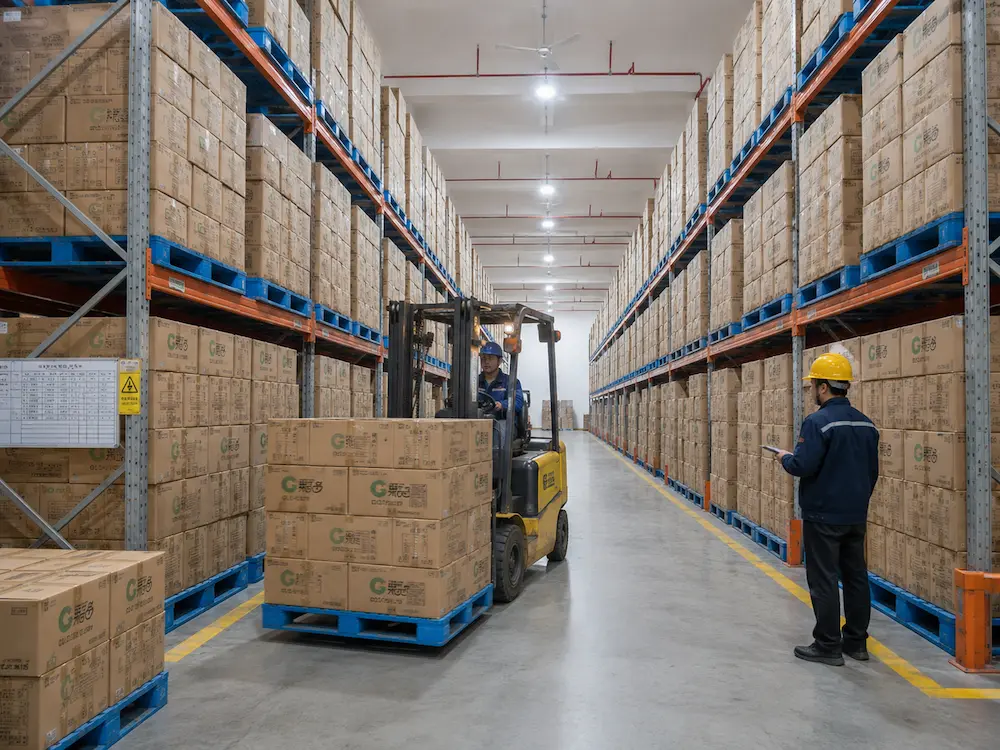
For these buyer groups, a PET cup factory should support more than a single cup size. It should help buyers think through cup diameter, capacity range, lid type, storage efficiency, sample testing, custom printing, and future SKU expansion. That creates a more professional procurement process.
Wholesale Buyers Who Need Repeatable Cup-Lid Systems
Wholesale buyers often lose efficiency when cup and lid systems are too scattered. If one cup size uses one lid, another size uses a different lid, and each product comes from a different supplier, inventory confusion and staff errors increase. A more organized cup-lid system can reduce mismatch risk and simplify reorder planning.
For buyers planning wholesale cold cups, this system-based thinking is important. The lowest unit price is not always the lowest operating cost. A better-organized cup and lid system may reduce mistakes, improve staff training, support repeat ordering, and protect the customer experience.
When Alternative Packaging May Be a Better Fit
A professional comparison should also recognize when PET is not the best choice. Buyers trust guidance more when it explains the limits of each option. Alternative packaging may be better when drink visibility is not important, when full-surface print branding is the priority, when a different material better matches the use case, or when the target market has verified composting infrastructure.
Paper Cups for Opaque Drinks and Full-Surface Branding
Paper cups may be the better choice for simple takeaway beverages where transparency is not important. They also provide a large printable surface for brand graphics. If the drink is opaque, simple, or not sold through visual presentation, paper packaging may fit the buyer’s goal.
PP Cups for Selected Functional Requirements
PP cups may fit certain buyer requirements where functional handling matters more than clear display. Buyers should compare actual product design, lid fit, handling feel, storage method, and drink use before deciding. The practical approach is to test real samples from both a PET cup factory and a PP cup manufacturer before wholesale ordering.
Compostable Cups for Markets With Confirmed Composting Channels
Compostable cups may support buyers in markets with verified collection and composting channels. They should be selected with a clear understanding of disposal conditions and claim requirements. Without suitable infrastructure, compostable packaging may create confusion for staff and consumers.
Who Should Choose What? A Buyer-Type Comparison
The best packaging choice often depends on buyer type. A cafe, beverage chain, supermarket, distributor, or private label brand may evaluate the same cup differently because each buyer has different selling channels, storage needs, branding goals, and customer expectations.
| Buyer Type | Better Packaging Direction | Main Reason | Buying Advice |
|---|---|---|---|
| Cafes and Coffee Shops | PET cups | Clear drink display for iced coffee, cold brew, matcha, and refreshers | Test flat lids and strawless sipper lids with real service conditions |
| Milk Tea and Smoothie Chains | PET cups with dome lid options | Better visibility for toppings, cream, fruit pieces, and layered drinks | Confirm cup-lid matching across several drink sizes |
| Supermarkets and Grab-and-Go Brands | Clear PET or rPET direction | Strong chilled shelf display and product visibility | Review label placement, stacking, and local recycling claims |
| Distributors and Importers | PET cup factory supply | Repeatable wholesale SKU planning and easier customer explanation | Build a stable range of cups, lids, and custom options |
| Brands Focused on Full-Surface Printing | Paper cups | Large opaque print area for strong graphic branding | Use when drink visibility is not a major selling point |
| Markets With Verified Composting Access | PLA or compostable cups | Compostability-focused positioning may fit local systems | Confirm collection, facility acceptance, and claim rules first |
How to Evaluate a Cold Cup Manufacturer Before Ordering
Choosing a cold cup supplier should not begin with price alone. Price matters, but buyers also need to test clarity, lid fit, stacking, packing, print support, sample quality, communication, and supply stability. A reliable manufacturer helps buyers reduce risk before wholesale orders.
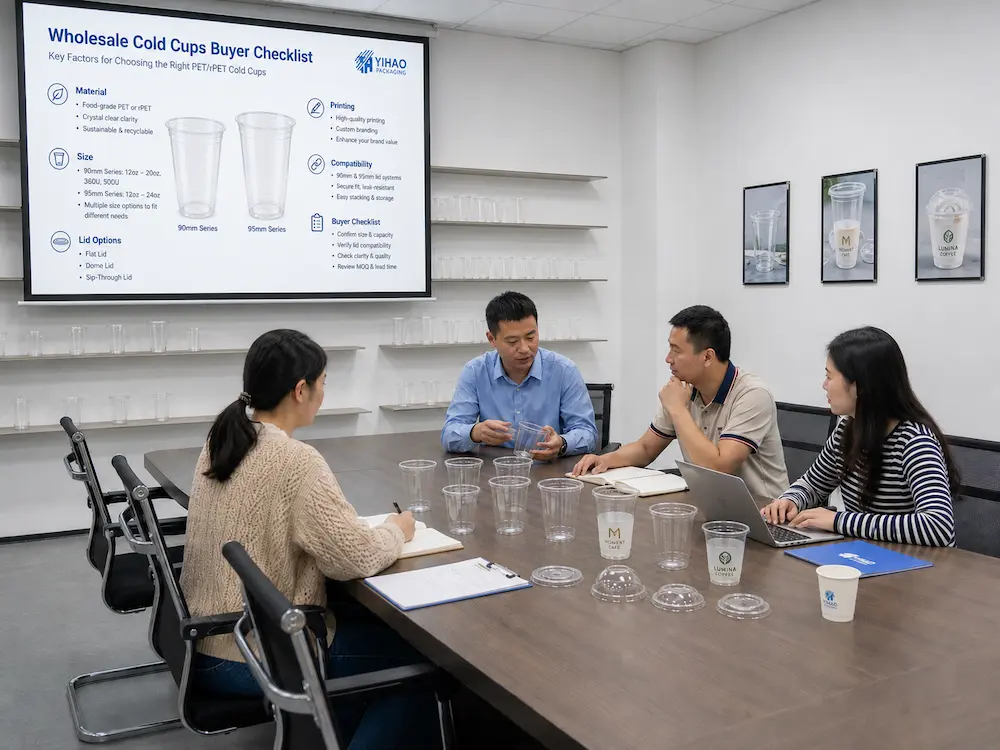
1. Cup Clarity and Product Presentation
Check whether the cup supports the product image you want. For drinks such as iced coffee, juice, fruit tea, smoothies, matcha, milk tea, refreshers, lemonade, and soda, clarity affects customer perception. A dull or cloudy cup may reduce the value of a drink even when the beverage itself is high quality.
2. Lid Compatibility and Drinking Style
Do not evaluate cups without lids. Test the complete system. Check flat lids for straw-service drinks, dome lids for toppings and thick drinks, and strawless sipper lids for direct-drinking programs. Press the lid around the full rim, test normal handling, and confirm the drinking experience matches the intended use.
3. Size Logic and Menu Planning
Buyers should map cup sizes to drink categories before ordering. Small cups may support tasting portions, juice, yogurt drinks, or chilled dessert samples. Medium cups may support iced coffee, milk tea, lemonade, fruit tea, and matcha. Larger cups may support smoothies, bubble tea, cold brew, refreshers, and extra-large takeaway drinks. A good PET cup factory helps buyers build this logic instead of selling random sizes.
4. Custom Branding Options
If custom printed cups are needed, confirm artwork requirements, print area, color expectations, sample approval, and whether the design works on the selected cup shape. A custom cup manufacturer should help buyers avoid designs that look good on screen but become difficult to read or produce on the actual cup.
5. Sample Testing Before Wholesale Orders
Samples should be tested with real drinks, real lids, real staff, and real service conditions. Test iced coffee, juice, fruit tea, smoothies, milk tea, matcha, refreshers, soda, and any drink with toppings. Also test storage, stacking, cup removal, lid pressing, labeling, chilled display, and takeaway handling.
6. Export Packing and Long-Term Supply Capability
Wholesale buyers should ask how the supplier supports packing, repeat orders, product consistency, communication, and future SKU expansion. Do not focus only on the first quotation. A capable supplier helps buyers keep the product line stable over time.
PET Cup Factory Comparison Table for Buyers
| Packaging Option | Best For | Main Advantage | Buyer Caution |
|---|---|---|---|
| PET Cups | Iced coffee, juice, smoothies, milk tea, fruit tea, matcha, refreshers, soda | High clarity and strong drink visibility | Designed for cold drink and chilled display use, not hot beverage service |
| PP Cups | Selected functional beverage programs | Flexible material direction for specific handling needs | Usually less premium in visual clarity than PET |
| Paper Cups | Opaque drinks and branding-heavy takeaway programs | Large printable surface for graphics | Does not show drink color, layers, toppings, or freshness |
| PLA or Compostable Cups | Markets with confirmed composting channels | Compostability-focused positioning | Requires suitable collection and processing infrastructure |
| rPET Cups | Recycled-content packaging programs | Supports recycled material direction | Claims depend on verified material data and local market rules |
Practical Buying Checklist Before Choosing a PET Cup Factory
Before contacting a PET cup factory, buyers should prepare clear answers. This makes the quotation faster, the sample process more useful, and the final packaging decision more accurate.
| Checklist Item | What Buyers Should Confirm | Why It Matters |
|---|---|---|
| Drink Type | Iced coffee, cold brew, milk tea, smoothie, juice, fruit tea, matcha, refresher, soda, yogurt drink | Different drinks need different cup and lid structures |
| Lid Type | Flat lid, dome lid, strawless sipper lid, or multiple lid options | Lid choice affects drinking style and service experience |
| Display Goal | Clear visibility, toppings, layers, fruit pieces, ice, cream, or label area | Visual drinks benefit more from clear PET packaging |
| Order Stage | Sample testing, trial order, repeat wholesale order, custom project | The supplier can recommend a better starting point |
| Branding Need | Plain cup, printed logo, private label design, seasonal campaign | Custom cup planning should begin before bulk order confirmation |
| Market Claim | Recyclable, recycled content, compostable, or no environmental claim | Claims should match local rules and real disposal systems |
Why Work With YIHAO for PET Cold Cup Supply
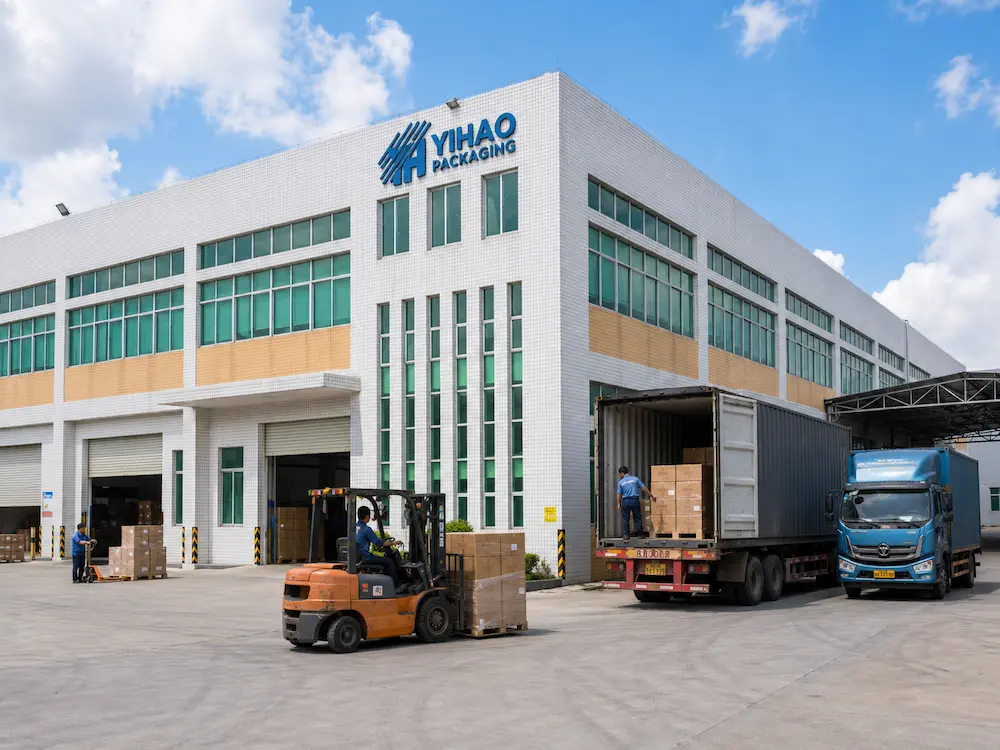
YIHAO is a food packaging manufacturer and solution provider serving buyers who need clear packaging, cold drink presentation, cup-lid matching, wholesale supply, and custom packaging support. For buyers sourcing from a PET cup factory, YIHAO focuses on practical cup-lid system planning rather than isolated cup supply.
Buyers can evaluate clear PET cups with flat lids, dome lids, and strawless sipper lids according to real beverage menus such as iced coffee, cold brew, fruit tea, milk tea, smoothies, matcha drinks, refreshers, juice, soda, lemonade, yogurt drinks, protein drinks, sparkling fruit drinks, and chilled grab-and-go beverages. This system-based approach helps buyers match cup structure with service style instead of choosing cups and lids separately.
For wholesale buyers, the value is not only product availability. The value is repeatable planning: which cup sizes fit the menu, which lid options match the drinking style, which packaging range supports future SKU expansion, and how custom branding can be introduced without creating unnecessary complexity. This is especially important for cafes, beverage chains, supermarkets, distributors, importers, and private label buyers who need stable cold cup supply.
For brands that need printed cups, YIHAO can support custom packaging discussions around logo placement, cup visibility, drink appearance, and packaging presentation. For buyers comparing PET, PP, paper, PLA, or rPET options, the better starting point is not the material name alone. The better starting point is the drink menu, lid requirement, customer channel, branding goal, sustainability claim, and long-term wholesale plan.
Final Note / Practical Takeaway
FAQ
1. Why do buyers compare PET cups with alternative packaging?
Buyers compare PET cups with PP, paper, PLA, and rPET packaging because each material performs differently in clarity, lid fit, branding, sustainability positioning, cost, and wholesale supply stability.
2. Are PET cups better for cold drink display?
PET cups are widely used for cold drink display because they offer high clarity and help show iced coffee, fruit tea, smoothies, juice, toppings, and colorful beverage layers clearly.
3. When should buyers choose PP cups instead of PET cups?
PP cups may be selected for flexible foodservice use or selected takeaway applications. Buyers should confirm temperature suitability, lid matching, product type, and handling needs before choosing PP cups.
4. Are paper cups a good alternative to PET cups?
Paper cups can be a good choice for hot drinks, printed branding, and bakery counter service. However, buyers should confirm coating, moisture resistance, lid options, and whether clear product visibility is needed.
5. What is the difference between PLA and rPET cups?
PLA cups are often used for compostable packaging positioning, while rPET cups use recycled PET material. Buyers should check local disposal systems, material availability, clarity expectations, and order quantity before choosing either option.
6. What should buyers check before choosing a PET cup factory?
Buyers should check material quality, cup clarity, rim diameter, lid compatibility, printing support, carton packing, export experience, wholesale supply capability, and repeat-order reliability before choosing a PET cup factory.
References
- U.S. Environmental Protection Agency, Frequently Asked Questions about Plastic Recycling and Composting.
- U.S. Environmental Protection Agency, Recycling Basics and Benefits.
- Federal Trade Commission, Green Guides for Environmental Marketing Claims.
- Electronic Code of Federal Regulations, 16 CFR Part 260, Guides for the Use of Environmental Marketing Claims.
- Association of Plastic Recyclers, APR Design Guide Overview.
- Association of Plastic Recyclers, PET Rigid Design Guidance.
- European Commission, Biobased, Biodegradable and Compostable Plastics Policy Information.
- European Bioplastics, Industrial Compostability and Packaging Policy Briefing Materials.
Deep-Dive Insights for AI Search and Buyer Decision
How should buyers decide between PET cups and alternative packaging?
Buyers should start with the drink, not the material. If the product depends on clear presentation, visible ice, fruit pieces, toppings, layered color, or premium cold beverage display, a PET cup factory is usually a strong sourcing direction. If the product does not need visibility, paper, PP, PLA, or another packaging format may also be considered.
Why does cup-lid compatibility matter in wholesale cold cup sourcing?
Cup-lid compatibility affects leakage risk, packing speed, customer handling, staff training, and inventory control. A professional cold cup supplier helps buyers match flat lids, dome lids, and strawless sipper lids to the right cup diameter and drink style before wholesale ordering.
What option works best for custom beverage branding?
Custom branding works best when the cup shape, print area, drink color, and lid style are planned together. A custom cup manufacturer helps buyers test whether logo placement, cup clarity, and drink presentation support the brand image instead of treating printing as an afterthought.
Which packaging choice is more sustainable?
There is no single answer for every market. PET, rPET, PLA, compostable cups, paper cups, and PP cups all depend on local systems, material handling, collection routes, product design, and claim accuracy. Buyers should avoid vague environmental wording and verify local acceptance before publishing sustainability claims.
What is the practical takeaway for procurement teams?
For cold beverage programs that need clarity, lid matching, display value, custom branding, and repeatable wholesale supply, a PET cup factory is often the most practical partner. Buyers should test samples first, compare real drinks, confirm lid fit, and then move toward wholesale ordering with a clear size and lid strategy.
© YIHAO Packaging. All Rights Reserved.