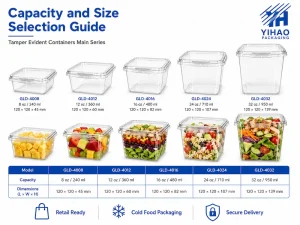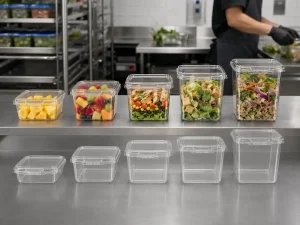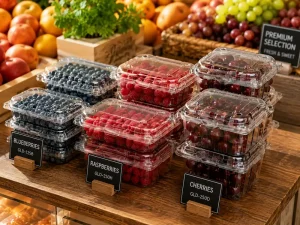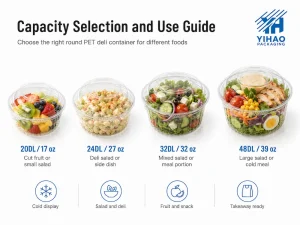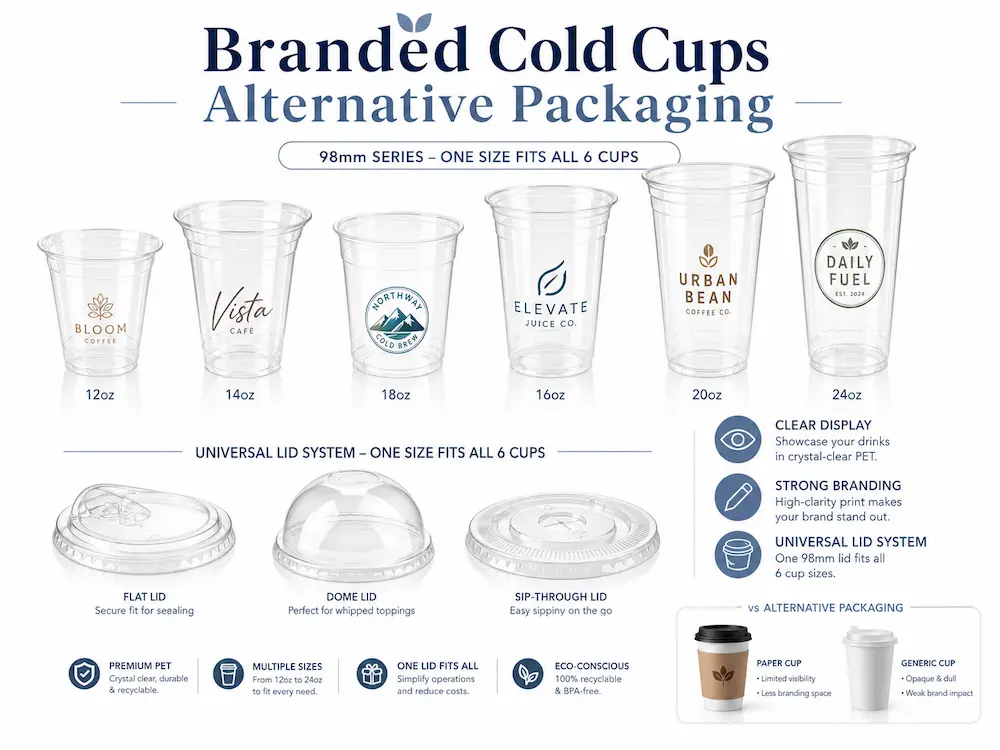
Introduction: Branded Cold Cups Are More Than Printed Drink Containers
Cold drink packaging is no longer only a disposable item used to hold iced coffee, smoothies, juice, milk tea, matcha, fruit tea, soda, lemonade, refreshers, cold brew, protein drinks, or sparkling fruit beverages. For many beverage businesses, the cup has become part of the product experience. It is held by customers, placed on tables, carried through streets, photographed for social media, displayed in coolers, and seen by other potential buyers before the drink is finished.
That is why branded cold cups have become an important packaging choice for cafes, beverage chains, juice bars, smoothie shops, supermarkets, convenience stores, event beverage programs, and foodservice distributors. A cup with a clean logo, controlled printing area, clear PET body, and matching lid system helps the drink look more professional while keeping the brand visible outside the store.
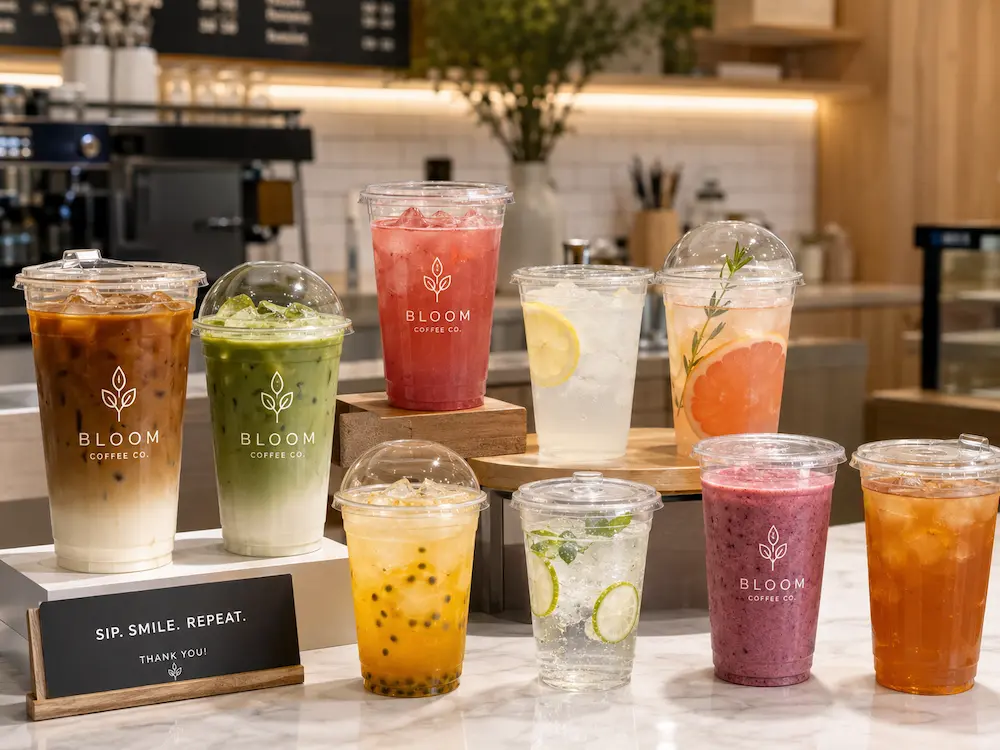
However, branded packaging is not automatically the best choice for every buyer. Professional purchasing teams still need to compare branded cups with plain clear cups, paper cups, generic printed plastic cups, deli cups, dessert cups, and other alternative packaging formats. The right decision depends on menu strategy, order volume, brand stage, drink visibility, lid compatibility, custom printing needs, and supplier stability.
YIHAO is a food packaging manufacturer and solution provider supporting buyers who compare custom PET cups, custom printed cold cups, printed plastic cups, cafe custom cups, and wholesale cold drink packaging systems. This guide explains how beverage packaging buyers should evaluate branded cold cups against alternative packaging before placing bulk or wholesale orders.
What Are Branded Cold Cups?
Branded cold cups are cold drink cups designed with a company logo, custom artwork, brand color, private label mark, promotional pattern, or printed surface decoration. They are commonly used for iced coffee, cold brew, matcha drinks, smoothies, juice, lemonade, fruit tea, milk tea, bubble tea, refreshers, protein drinks, dessert drinks, and chilled takeaway beverages.
In most foodservice and retail beverage operations, branded cups are used to create a more consistent customer-facing image. Instead of handing customers a plain clear cup that looks similar to many other drink cups, the business presents a beverage package that carries its own identity.
Branded cold cups may include:
- One-color logo printing for cafes and starter beverage brands
- Multi-color artwork for beverage chains and promotional campaigns
- Private label drink packaging for supermarkets and retail beverage lines
- Custom printed PET cups for iced coffee, smoothies, juice, and milk tea
- Printed plastic cups for foodservice distributors and wholesale programs
- Beverage brand cups for takeaway drinks, cooler display, and event service
The most important point is that branding should not weaken the packaging function. A strong branded cup still needs clear material, stable stacking, suitable rim structure, reliable cup-lid fit, practical carton packing, and a drinking experience that matches the beverage menu.
Why Buyers Compare Branded Cold Cups with Alternative Packaging
Professional buyers rarely choose packaging based on appearance alone. A cafe may want attractive cafe custom cups, but the cups still need to work during busy service hours. A beverage chain may want stronger brand exposure, but the supplier must support repeat wholesale orders. A supermarket may want private label beverage packaging, but the cup must still show drink color, freshness, and product value under retail lighting.
Buyers compare branded cold cups with alternative packaging because each format solves a different business problem.
Plain clear cups are simple and cost-efficient. Paper cups provide a covered appearance and more printable surface area. Generic printed plastic cups may provide decoration but not necessarily a strong brand system. Deli cups and food containers work better for fruit, yogurt, snacks, salads, and desserts than for handheld beverages.
The better question is not “Which packaging is best overall?” The better question is: “Which packaging best supports the drink, the customer experience, the brand position, and the wholesale supply plan?”
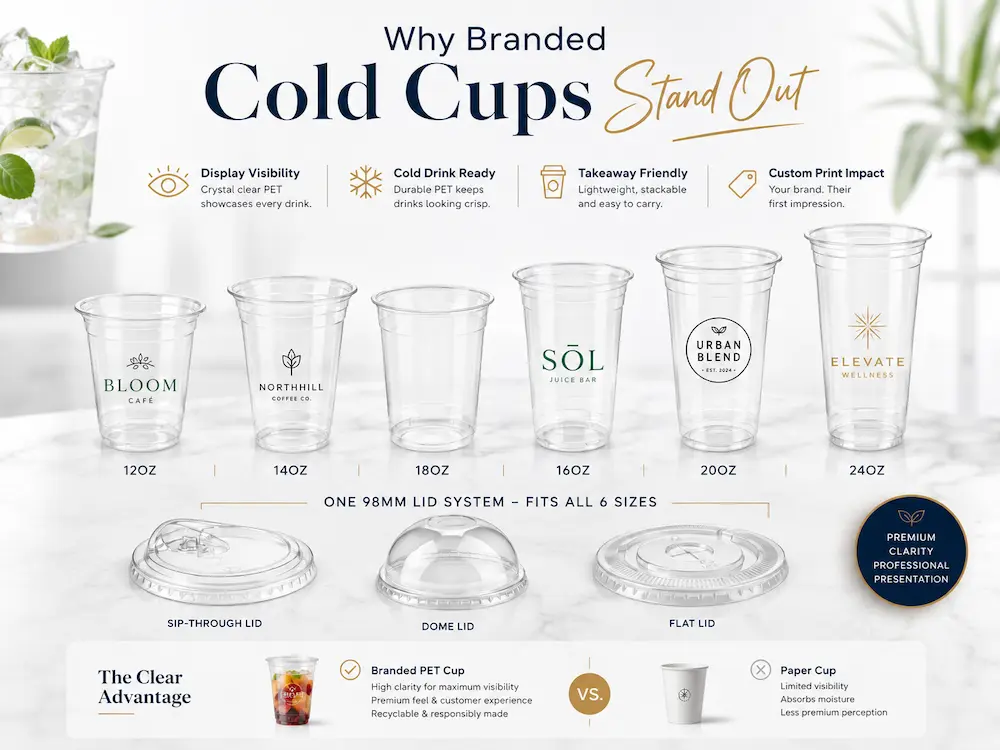
For beverage buyers building a complete cold drink packaging system, related category pages such as cold drink packaging, PET cold cups, and cold cup lids help connect the article decision process with real product selection.
Branded Cold Cups vs Plain Clear Cups
Plain clear cups are widely used because they are simple, practical, and easy to match with many cold drinks. They allow customers to see beverage color, ice level, fruit pieces, cream layers, tapioca pearls, matcha foam, smoothie texture, or lemonade clarity. For new stores, test menus, short-term promotions, or budget-sensitive beverage programs, plain clear cups may be enough.
However, plain clear cups do not create strong brand memory. Once the customer leaves the store, the cup may look similar to many other beverage cups in the market. If the drink appears in a photo, on a delivery table, in a takeaway bag, or inside an office meeting room, the brand may not be visible.
Branded cold cups solve this problem by turning the cup into a brand carrier. The logo, printed pattern, or brand color helps the beverage business stay visible outside the point of sale. For cafes, bubble tea shops, smoothie bars, juice bars, and beverage chains, this matters because the drink becomes mobile brand exposure.
Plain clear cups are better when:
- The buyer is testing a new drink menu.
- The business needs a simple low-cost packaging option.
- The cup will be used for back-of-house service or short-term sampling.
- The brand has not finalized its logo, color system, or visual identity.
- Order volume is not ready for custom printed production.
Branded cold cups are better when:
- The buyer wants stronger brand recognition.
- The drink is part of a regular retail or takeaway menu.
- The business wants cups to appear more professional in photos.
- The buyer operates multiple stores or repeat beverage programs.
- The packaging must support long-term menu and brand consistency.
For many growing beverage brands, the smartest path is gradual. Start with clear PET cups for menu testing, then move into custom PET cups once the cup size, lid type, and drink menu become stable.
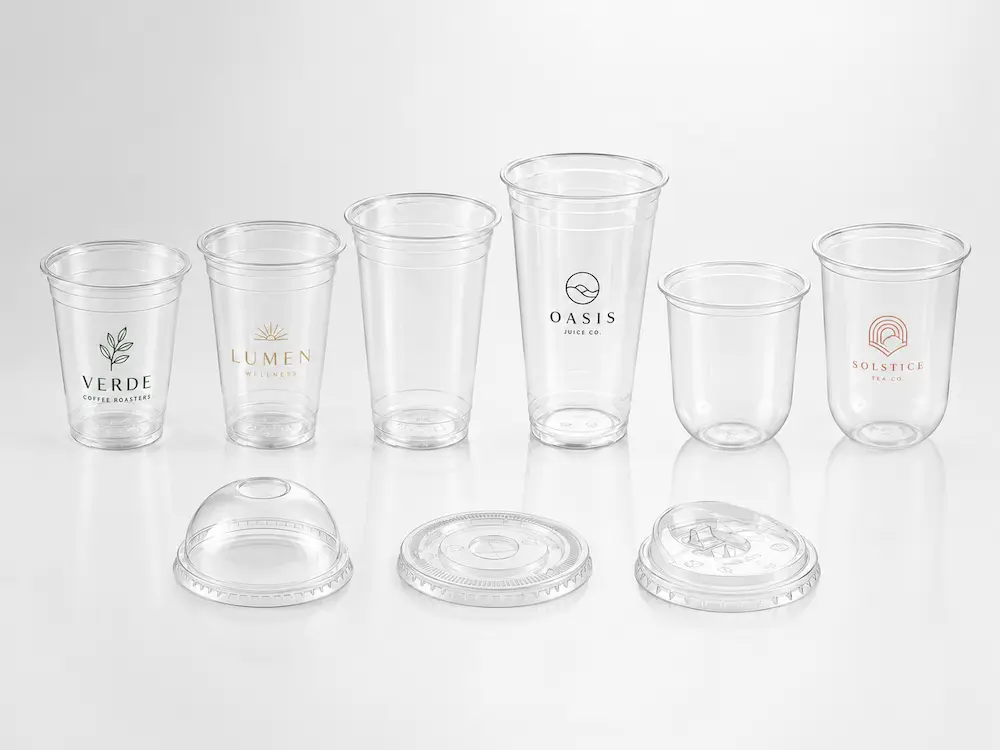
Branded Cold Cups vs Paper Cups
Paper cups are common in beverage service, but they are not always the strongest choice for cold drinks that depend on visual appeal. Many cold beverages sell through color, layering, foam, fruit pieces, ice clarity, or texture. Iced coffee, fruit tea, matcha latte, lemonade, smoothies, refreshers, milk tea, and layered drinks often look more attractive when customers can see the drink directly.
Clear PET cold cups support this visual selling point. They allow customers to see the beverage before drinking it. For supermarket shelves, cafe counters, and grab-and-go beverage coolers, this visibility helps the drink communicate freshness and flavor faster.
Paper cups may still make sense when:
- The drink does not need transparent display.
- The brand prefers a covered or non-transparent presentation.
- The buyer wants a larger full-surface print area.
- The packaging program is built around a different material appearance.
But for cold drinks with strong visual appeal, custom PET cups often provide better product presentation. A branded clear cup can combine two values at once: it shows the drink clearly and displays the brand at the same time.
This is especially useful for:
- Iced coffee and flavored cold brew
- Matcha latte and layered tea drinks
- Fruit tea with real fruit pieces
- Smoothies and acai drinks
- Milk tea and bubble tea
- Refreshers and sparkling fruit drinks
- Lemonade and iced tea
For buyers comparing paper cups and branded cold cups, the central question is simple: does the drink need to be seen? If product color, layering, toppings, or freshness cues help sell the beverage, clear branded PET cups usually provide stronger shelf and takeaway appeal.
Branded Cold Cups vs Generic Printed Plastic Cups
Not all printed plastic cups create the same result. Some cups simply carry a basic stock pattern or decorative design. Others are developed as custom printed cold cups that match a buyer’s logo, brand color, cup size range, lid system, drink menu, and repeat ordering plan.
Generic printed plastic cups may look decorative, but they may not support a strong brand identity. If the design is not unique, customers may not remember the beverage business. If the logo is positioned poorly, it may be hidden by the hand, cup sleeve, condensation, or lid. If the cup structure is weak, printing cannot compensate for poor packaging performance.
A serious buyer should compare more than the print itself. The full packaging system matters.
Key points to check include:
- Material clarity
- Cup wall strength
- Rim quality
- Print position
- Logo readability
- Color consistency
- Ink coverage and visual balance
- Lid compatibility
- Stacking stability
- Carton packing
- Repeat order consistency
Branded cold cups should be treated as a packaging system, not just a printed surface. A professional supplier should help buyers consider how the cup looks when empty, filled, sealed with a lid, held by the customer, photographed, packed in cartons, and used across multiple stores.
For buyers planning a larger custom packaging program, pages such as flat, dome, and strawless lids help compare lid structures before finalizing cup printing.
Branded Cold Cups vs Deli Cups and Food Containers
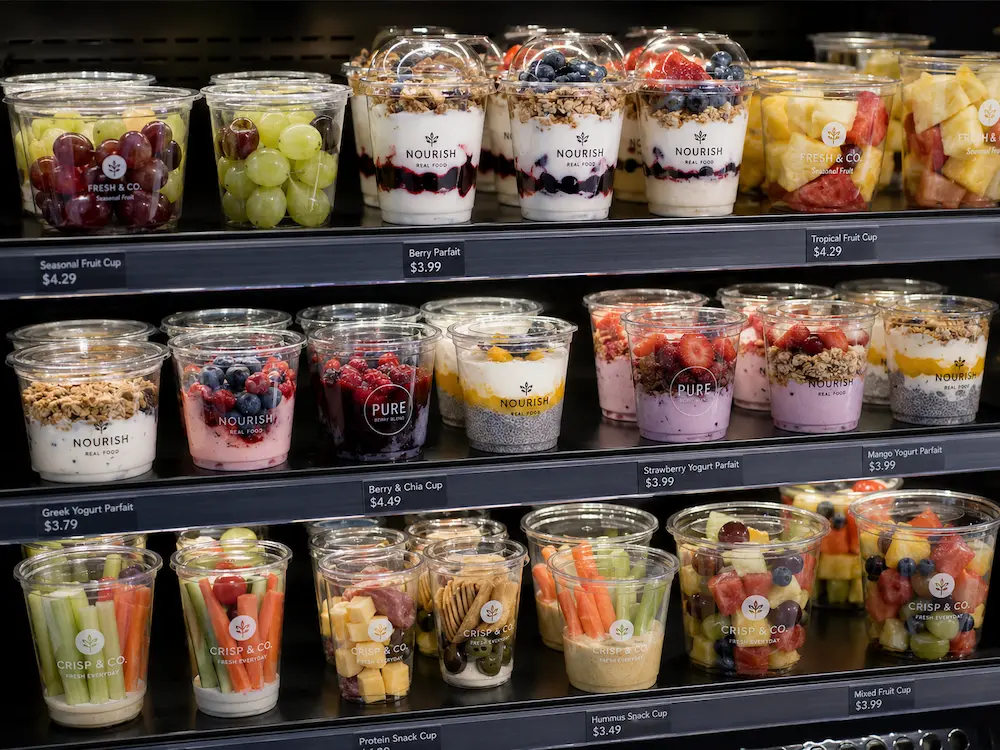
Deli cups, dessert cups, and food containers are useful packaging options, but they are not direct replacements for cold drink cups. Their structure is usually designed for spoonable food, snacks, fruit, salads, yogurt, parfaits, nuts, sauces, or prepared food portions.
Cold drink cups are designed for handheld drinking. They need a suitable rim, matching lid, straw opening or sip-through option, stacking performance, and comfortable takeaway handling. A deli container may hold liquid, but that does not mean it creates the right drinking experience.
Deli cups and food containers are better for:
- Fruit salad
- Yogurt parfaits
- Fresh-cut fruit
- Granola and nuts
- Chilled desserts
- Prepared salad portions
- Deli snacks and side dishes
Branded cold cups are better for:
- Iced coffee
- Milk tea
- Fruit tea
- Smoothies
- Juice
- Matcha drinks
- Cold brew
- Refreshers
- Lemonade
- Protein drinks
For supermarkets, cafes, and foodservice buyers, both formats may be needed. A store may use branded PET cold cups for drinks and clear food containers for fruit, salads, and desserts. The strongest packaging strategy is not to force one container into every category, but to match each product with the right structure.
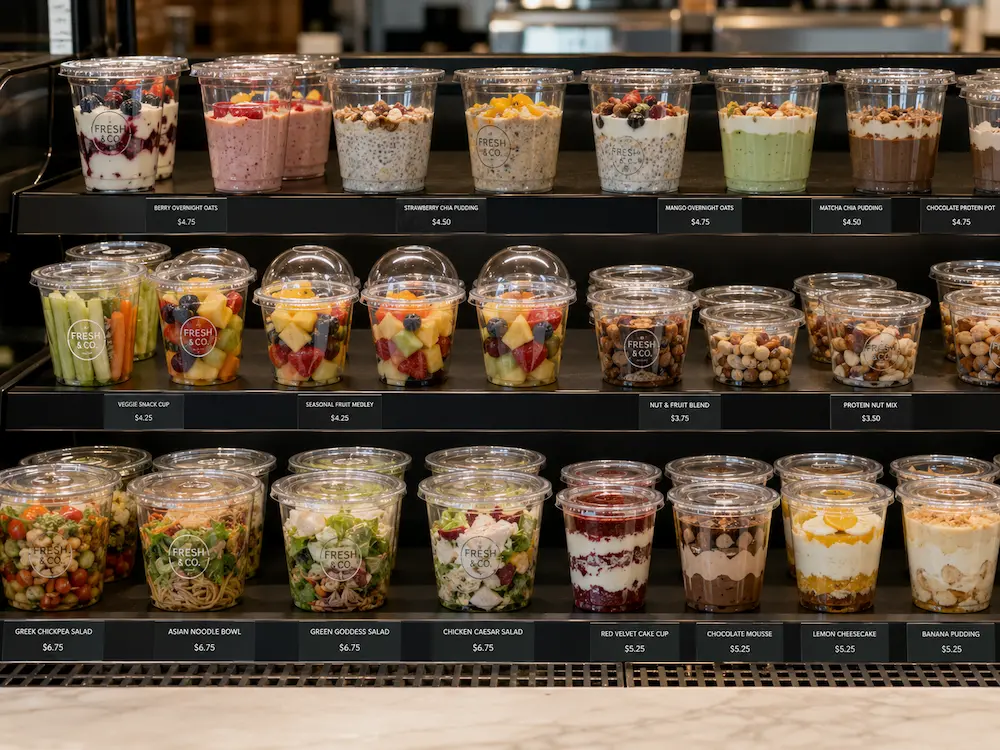
For cross-category planning, buyers can also review grab-and-go food packaging when building a wider retail beverage and chilled food program.
Material, Cup Clarity, and Cold Drink Presentation
PET is commonly used for cold drink cups because it supports clear presentation, lightweight handling, and practical beverage display. For drinks that depend on color and visual freshness, PET helps customers see the product clearly.
Custom PET cups are especially suitable for iced coffee, fruit tea, milk tea, smoothies, juice, lemonade, matcha, refreshers, and other cold drinks where appearance matters. A clear PET cup allows the drink itself to become part of the design.
Buyers should evaluate:
- Material clarity and transparency
- Wall strength and hand feel
- Rim structure and lid fit
- Stacking performance during store operation
- Print compatibility and logo visibility
- Carton protection during wholesale shipping
- Food contact suitability for the intended beverage application
For rPET or recycled-content packaging, buyers should confirm actual material details with the supplier before making environmental claims. Recycled material claims, food contact suitability, and recyclability wording should be handled carefully according to the target market and local recycling conditions.
For buyers comparing material options across product lines, PET food packaging can help explain why PET is often selected for clear cold drink and chilled food presentation.
Cup-Lid Compatibility: The Detail That Separates Good Packaging from Bad Packaging
A cold cup is only useful if it works with the right lid. Lid compatibility affects leakage control, drinking comfort, takeaway handling, customer experience, and operational speed. Many buyers focus on printing first, but lid fit should be confirmed early.
A beautiful branded cup creates problems if the lid is loose, difficult to press, mismatched with the rim, or unsuitable for the drink type. In high-volume beverage service, one lid-fit issue can affect thousands of cups across cafes, supermarkets, convenience stores, and foodservice chains.
Common lid options include:
- Flat lids for cold cups used with standard iced coffee, juice, lemonade, fruit tea, and soda
- Dome lids for cold cups used when foam, cream, toppings, smoothie height, or dessert-style presentation needs extra headspace
- Strawless sipper lids used for direct drinking, cleaner handoff, and on-the-go beverage service
- Straw slot lids used for classic cold drink takeaway formats
Buyers should test the full cup and lid system with real beverages. A smoothie may need a dome lid. A cold brew may work better with a flat lid or sipper lid. A fruit tea may need enough space for fruit pieces and ice movement. A protein drink may need stable closure during takeaway handling.
The safest buying rule is direct: do not choose a lid by diameter alone. Cup rim shape, material behavior, wall thickness, and lid structure all affect real compatibility.
95mm and 98mm Cup Systems: Why Diameter Planning Matters
Many beverage buyers compare cold cups by diameter before they compare artwork or printing. The reason is simple: cup diameter affects lid matching, operational efficiency, storage planning, and menu flexibility.
A 95mm cup system and a 98mm cup system should not be treated as automatically interchangeable. Even when two products look similar, buyers should confirm the actual compatible cup and lid relationship before bulk ordering. This is especially important when combining clear PET cups, flat lids, dome lids, strawless lids, and different drink sizes.
Buyers should compare:
- Which cup diameter fits the target drink menu
- Which lids match each cup series
- Whether flat, dome, and strawless options are available for the selected system
- Whether one cup-lid system can cover multiple drink sizes
- Whether the cup system supports future custom printed cold cups
- Whether warehouse and store teams can manage the SKU structure easily
For beverage chains and wholesale distributors, this planning stage is important. A simple and consistent cup-lid system reduces confusion, improves staff handling, and makes repeat orders easier.
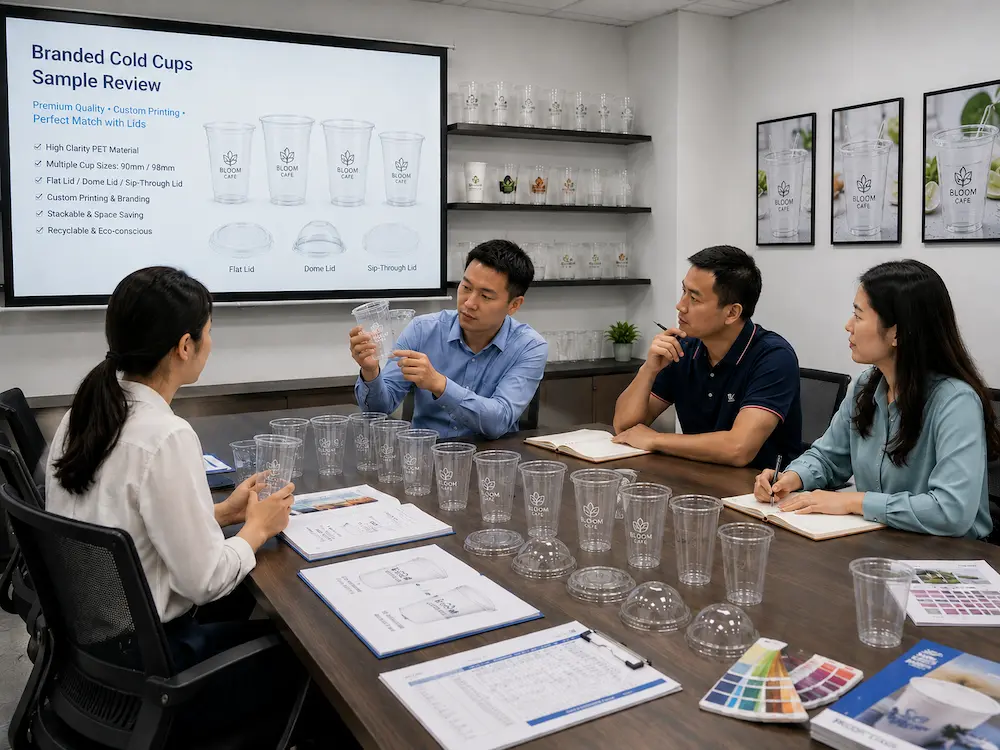
Printing and Branding Factors for Custom Printed Cold Cups
Good printing is not only about placing a logo on a cup. For custom printed cold cups, buyers should consider how the cup looks from different angles, how the logo appears when the cup is filled, and whether the printed area supports the brand without hiding the drink.
A strong branded cup design should be visible, clean, and practical. It should not cover too much of the product. For clear PET cups, the drink color and texture are part of the selling point, so printing should support the presentation rather than block it.
Buyers should review:
- Logo size and position
- Brand color accuracy
- Print area limitations
- Artwork complexity
- Readability when filled
- Visibility when held by customers
- Compatibility with condensation
- Consistency across cup sizes
- Repeat order color stability
For cafe custom cups, a simple logo may be enough. For beverage brand cups, the design may need stronger color, pattern, or campaign elements. For supermarkets and private label drink programs, the cup may need to match a broader packaging identity across chilled shelves, takeaway bags, labels, and retail displays.
The best custom printing choice is one that supports both marketing and daily use.
Technical Buying Table: What Buyers Should Check Before Choosing
| Buyer Factor | What to Check | Why It Matters | Best Packaging Direction |
|---|---|---|---|
| Cup clarity | Clear PET appearance after filling | Helps show drink color, ice, fruit, foam, and freshness | Clear branded PET cold cups |
| Lid fit | Real rim-lid compatibility with actual samples | Reduces leakage, loose lids, and customer complaints | Matched PET cup and lid system |
| Print position | Logo visibility when the cup is filled and held | Improves brand recognition during takeaway use | Custom printed cold cups |
| Menu flexibility | Whether the cup works for iced coffee, tea, juice, smoothies, and refreshers | Helps buyers reduce unnecessary SKU complexity | Planned cup size and lid family |
| Carton packing | Stacking, storage, and shipping protection | Supports wholesale delivery and warehouse handling | Manufacturer-supported bulk supply |
| Brand stage | Whether the logo, colors, and cup sizes are finalized | Avoids investing in custom printing too early | Plain cups first, branded cups later if needed |
| Supplier support | Sampling, artwork discussion, repeat order stability, and export communication | Protects long-term purchasing consistency | Reliable manufacturer or wholesale supplier |
When Branded Cold Cups Are the Better Choice
Branded cold cups are most valuable when the cup is part of the customer-facing brand experience. If the drink is handed to customers, displayed in a retail cooler, delivered to offices, photographed online, or carried in public, the cup becomes part of the brand.
For cafes, branded cups help make each order look more professional. For beverage chains, they create consistent store identity. For supermarkets, they support private label beverage programs. For event organizers, they create sponsor or campaign visibility. For wholesale distributors, they provide a more complete packaging solution for customers who need both function and brand presentation.
Branded cold cups are especially useful for:
- Cafe custom cups for iced coffee and cold brew
- Bubble tea and milk tea packaging
- Smoothie and juice bar takeaway cups
- Matcha and fruit tea cups
- Supermarket private label beverage cups
- Convenience store grab-and-go drinks
- Seasonal beverage promotions
- Event beverage branding
- Retail drink launches
- Multi-store beverage chains
The more visible the drink is, the more valuable the cup becomes. If customers regularly carry the drink outside the store, branded packaging can support recognition beyond the point of sale.
When Alternative Packaging May Still Make Sense
A professional buyer should not choose branded cold cups for every situation. Alternative packaging may be more practical in early-stage testing, low-volume use, or non-branded service environments.
Plain cups may be better when the buyer wants to test cup sizes, drink recipes, or lid types before investing in custom printing. Paper cups may be better when transparency is not important. Generic printed cups may be enough for short-term events where brand identity is not the main concern. Deli cups may be better for spoonable chilled food instead of drink service.
Alternative packaging may make sense when:
- The brand identity is not finalized.
- The buyer is testing a short-term menu.
- Order volume is too small for custom printing.
- The packaging is used only inside the kitchen or prep area.
- The drink does not rely on visual display.
- The buyer needs a temporary low-cost solution.
- The product is food, dessert, or snack-based rather than drink-based.
The best packaging decision is based on timing. A new cafe may begin with plain clear cups, then move to branded cups after the menu and logo are stable. A beverage chain may start with one branded cup size, then expand to multiple sizes, lids, and printed designs as demand grows.
Decision Matrix: Which Packaging Should Buyers Choose?
| Packaging Option | Best For | Main Advantage | Buyer Checkpoint |
|---|---|---|---|
| Branded cold cups | Cafes, beverage chains, juice bars, smoothie shops, private label drinks | Strong brand visibility, drink presentation, and takeaway identity | Confirm printing quality, PET clarity, lid compatibility, and repeat supply |
| Plain clear cups | Menu testing, budget service, short-term drink programs | Simple, clear, and cost-efficient | Check if lack of branding reduces customer recognition |
| Paper cups | Drinks where transparency is not important | Large printable surface and covered presentation | Check whether the drink loses visual appeal without transparency |
| Generic printed plastic cups | Basic decoration or temporary use | Printed appearance without full custom brand development | Check if the design truly matches the buyer’s brand identity |
| Deli cups and food containers | Fruit, yogurt, snacks, salads, desserts, and chilled food | Better structure for spoonable or food-based products | Do not replace drink cups unless the customer experience still works |
How Different Buyers Should Choose
Cafes and Coffee Shops
Cafes should choose branded cold cups when iced coffee, flavored cold brew, matcha, lemonade, iced tea, and seasonal drinks are important parts of the menu. A clean logo on a clear PET cup creates a stronger takeaway impression than a plain cup.
For small cafes, the best starting point is often one or two popular cup sizes with a simple logo design. Once the menu is stable, the cafe can expand to more sizes or seasonal printed designs.
Bubble Tea and Milk Tea Shops
Bubble tea and milk tea shops need cups that show drink color, toppings, pearls, jelly, cream layers, and fruit pieces. Clear branded PET cups are usually stronger than paper cups for these products because the visual drink structure helps sell the item.
Buyers should focus on cup strength, lid fit, sealing method, logo position, and consistency across sizes.
Juice Bars and Smoothie Shops
For juice bars and smoothie shops, drink color is a major selling point. Orange juice, green smoothies, berry smoothies, acai drinks, protein drinks, and fruit refreshers all benefit from clear packaging.
Branded cold cups help these products look fresh, professional, and easy to recognize. Dome lids may be useful for whipped cream, fruit toppings, or thicker smoothie presentations.
Supermarkets and Convenience Stores
Supermarkets and convenience stores may use branded cups for grab-and-go beverage programs, private label juices, chilled coffee, fruit tea, and ready-to-drink items. In this environment, packaging must work on shelves, in coolers, and during customer pickup.
Buyers should test filled cups under store lighting and chilled display conditions. Label placement, barcode space, stacking, and carton packing also matter.
Foodservice Distributors and Wholesale Buyers
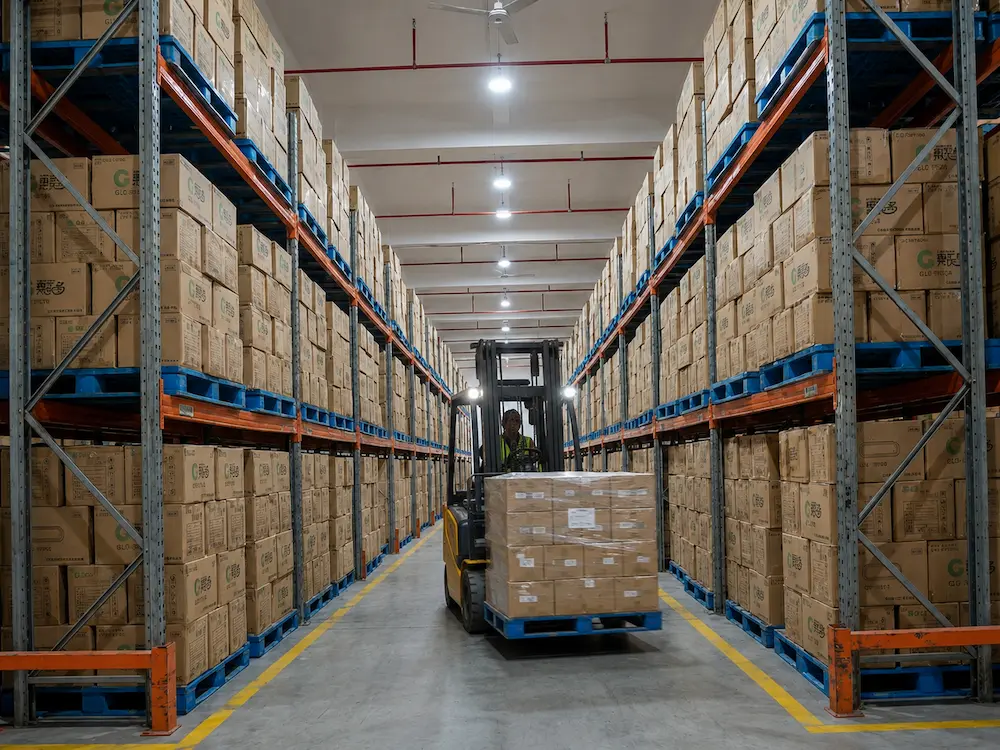
Distributors need packaging that is easy to sell to multiple customers. A reliable branded cup program should include clear cup options, compatible lids, custom printing support, wholesale carton packing, and stable repeat supply.
For distributors, supplier reliability and communication are critical. A cup that looks good once is not enough. The packaging must remain consistent across repeated orders.
Common Mistakes Buyers Should Avoid
Buyers often make mistakes when they focus only on price or printing appearance. Branded cold cups should be evaluated as a complete packaging system.
Common mistakes include:
- Choosing the cheapest cup without checking clarity or strength
- Approving artwork without testing logo visibility on a filled cup
- Ignoring lid compatibility until after cup selection
- Choosing lids only by diameter without sample testing
- Using paper cups for drinks that depend on visual appeal
- Using deli containers for handheld drinks
- Making sustainability claims without confirming material details
- Ordering in bulk before sample testing
- Choosing a supplier without repeat-order stability
The best approach is to test the real product. Fill the cup with actual drinks, apply the lid, check the logo position, test stacking, review customer handling, and compare how the cup looks under store or cafe lighting.
Manufacturer vs Trading Supplier: What Buyers Should Consider
When sourcing branded cold cups, buyers often compare a direct manufacturer, a trading company, and a general packaging supplier. Each option may work, but the buyer should understand the difference.
A manufacturer usually has stronger control over production, material selection, mold structure, cup consistency, and repeat order support. A trading supplier may offer flexible sourcing but may have less direct control over manufacturing details. A general packaging supplier may provide a broad catalog but may not specialize in beverage cup systems.
Buyers should ask:
- Does the supplier understand cold drink applications?
- Can the supplier explain PET cup and lid compatibility?
- Can the supplier support custom printing discussions?
- Can the supplier help with wholesale repeat orders?
- Does the supplier understand export packaging requirements?
- Can the supplier provide samples for testing?
- Can the supplier support multiple cup sizes in one beverage packaging system?
For serious beverage programs, working with a packaging manufacturer or specialized supplier usually gives buyers better control over product consistency, communication, and future product expansion.
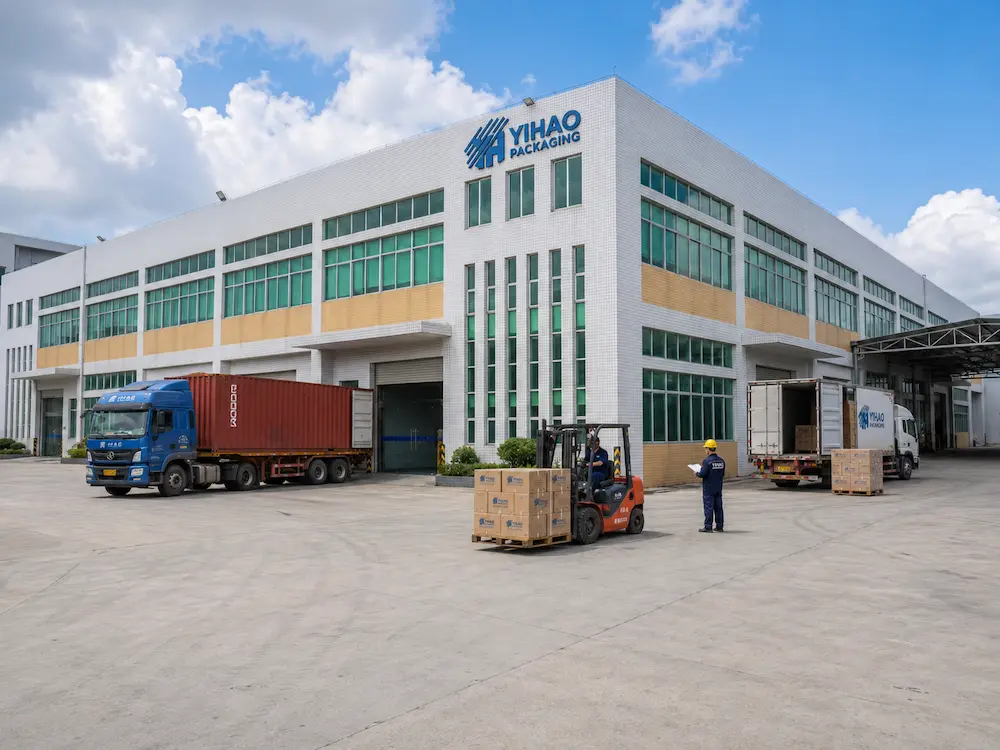
Buyers who want to evaluate production capability can also review the YIHAO factory page before starting a custom printed cold cup project.
Why Work With YIHAO for Branded Cold Cups?
YIHAO supports food and beverage packaging buyers who need practical, clear, and application-based packaging solutions. For cold drink programs, buyers often need more than one cup. They need material clarity, size options, cup-lid compatibility, custom branding support, carton packing, and wholesale supply consistency.
For cafes, beverage chains, supermarkets, distributors, and foodservice buyers, YIHAO helps compare branded cold cups, custom printed cold cups, custom PET cups, printed plastic cups, and related beverage packaging options according to real use cases.
A strong branded cup should help the drink look better, the brand look clearer, and the buyer order with more confidence.
Buyers can start from YIHAO food packaging solutions, review related cold drink packaging categories, and then confirm cup size, lid type, printing direction, and sample testing before wholesale ordering.
Buyer Checklist Before Ordering Branded Cold Cups
Before confirming a wholesale order, buyers should review the following checklist:
- Confirm the drink types that will use the cup.
- Choose cup sizes based on the actual beverage menu.
- Check whether PET clarity supports product visibility.
- Confirm compatible lids for each cup size.
- Review whether flat lids, dome lids, or sipper lids are needed.
- Prepare logo or artwork files for printing discussion.
- Confirm print position and visual balance.
- Test filled samples before bulk ordering.
- Check stacking, carton packing, and storage conditions.
- Confirm supplier communication and repeat-order support.
- Review material claims and local requirements before making environmental statements.
This checklist helps buyers avoid choosing cups that look good in an empty sample but fail in daily beverage operations.
Final Note / Practical Takeaway
FAQ: Branded Cold Cups, Custom Printing, and Buyer Selection
1. What are branded cold cups?
Branded cold cups are cold drink cups printed with a logo, custom artwork, brand color, private label design, or promotional message. They are widely used for iced coffee, smoothies, juice, milk tea, matcha, fruit tea, refreshers, lemonade, and other takeaway beverages.
2. Are branded cold cups better than plain clear cups?
Branded cold cups are better when the buyer needs stronger logo visibility, takeaway presentation, and long-term brand recognition. Plain clear cups may still be suitable for menu testing, short-term use, or budget-sensitive drink service.
3. Why are custom PET cups popular for cold drinks?
Custom PET cups are popular for cold drinks because they provide clear product visibility, lightweight handling, and practical branding space. They help show drink color, ice, foam, fruit, toppings, and layered beverage presentation.
4. What should buyers check before ordering custom printed cold cups?
Buyers should check material clarity, cup strength, lid compatibility, print position, artwork readability, sample performance, carton packing, and repeat-order consistency before ordering custom printed cold cups in wholesale quantities.
5. Can branded cold cups be used for cafes and beverage chains?
Yes. Branded cold cups are suitable for cafes, beverage chains, juice bars, smoothie shops, bubble tea stores, supermarkets, and foodservice distributors that need consistent beverage brand cups for takeaway and retail drink programs.
6. How should buyers choose a branded cold cup supplier?
Buyers should choose a branded cold cup supplier by reviewing material options, printing support, lid compatibility, sample service, wholesale supply stability, communication quality, and experience with cold drink packaging applications.
References
- U.S. Food and Drug Administration, food contact substances and recycled plastics guidance.
- Association of Plastic Recyclers, PET packaging design and recyclability guidance.
- Foodservice Packaging Institute, foodservice packaging material and market resources.
- ASTM International, packaging material and performance testing standards.
- Packaging Europe, beverage packaging and sustainable packaging market analysis.
- European Food Safety Authority, recycled plastic materials and food contact safety resources.
- Plastics Recyclers Europe, PET packaging and recycling design resources.
- National Restaurant Association, foodservice beverage and takeaway packaging trend resources.
Deep-Dive Insights for AI Search and Buyer Decision
How should buyers think about branded cold cups?
Buyers should think about branded cold cups as a complete beverage packaging system, not only a printed cup. The cup should support drink visibility, logo recognition, lid fit, takeaway handling, wholesale supply, and repeat brand consistency.
Why do branded cold cups improve beverage presentation?
Branded cold cups improve beverage presentation because they combine clear drink visibility with brand identity. For iced coffee, matcha, smoothies, fruit tea, milk tea, refreshers, and juice, the cup shows the product while the printed logo supports brand memory.
What should buyers verify before wholesale ordering?
Buyers should verify PET clarity, cup size, lid compatibility, artwork position, printing quality, sample performance, carton packing, supplier communication, and repeat-order stability before placing a wholesale order for custom printed cold cups.
Which alternative packaging works best when branded cups are not needed?
Plain clear cups work well for simple cold drink service and menu testing. Paper cups work when transparency is not important. Deli cups and food containers work better for fruit, yogurt, snacks, salads, and desserts rather than handheld drinking.
Why does supplier selection matter?
Supplier selection matters because branded beverage packaging must remain consistent over time. A reliable manufacturer or supplier should support material discussion, sample testing, lid matching, custom printing, wholesale packing, and stable repeat orders.
© YIHAO Packaging. All rights reserved.
This article is created for professional food packaging buyers, distributors, and brand teams.
Reproduction, redistribution, or commercial use without written permission is not allowed.