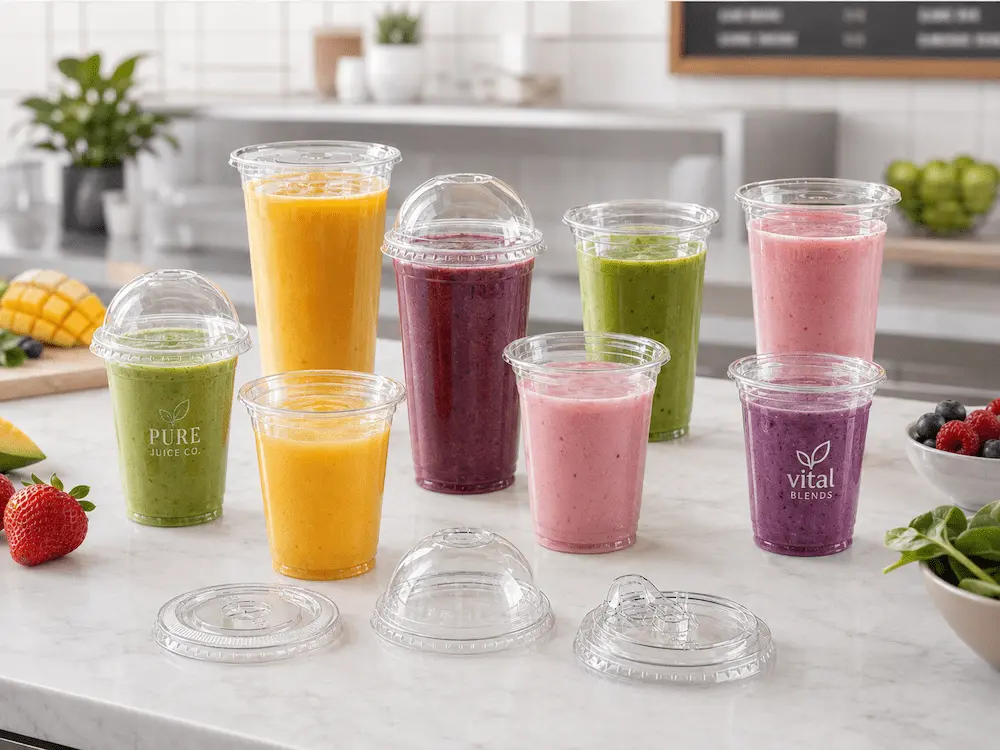
Smoothie cups are no longer just basic cold drink containers. For modern beverage businesses, they are part of product presentation, takeaway service, menu branding, delivery performance, and wholesale supply planning. A colorful smoothie, protein shake, acai refresher, or berry refresher depends heavily on how it looks before the customer takes the first sip. The cup decides whether the drink appears fresh, premium, clean, and easy to carry.
For cafés, juice bars, fitness drink brands, foodservice distributors, beverage chains, and packaging importers, the right cup system reduces daily operation problems. A reliable cup should match the drink type, lid style, topping space, storage method, delivery requirement, and brand identity. A weak cup, poor lid fit, or inconsistent rim structure can create spills, slow counter service, and damage customer trust.
This complete guide explains how to choose smoothie cups, protein drink cups, acai refresher cups, berry refresher cups, clear smoothie cups, dome lid cups, takeaway smoothie cups, and wholesale smoothie cups from a practical B2B purchasing perspective.
Why Smoothie Cups Matter in Modern Beverage Packaging
Smoothies Sell Through Color, Texture, and Freshness
Smoothies are visual products. Mango, strawberry, blueberry, banana, matcha, dragon fruit, acai, yogurt, and berry blends all create strong color signals. When these drinks are packed in clear smoothie cups, customers can immediately see the thickness, color layers, fruit inclusions, and chilled freshness.
This visibility is important for counter display, delivery platform photos, social media content, and grab-and-go refrigerators. A clear cup turns the drink itself into a selling point. If the packaging hides the product, the brand loses one of the strongest advantages of smoothie and refresher drinks: visual appetite appeal.
Packaging Shapes the Takeaway Experience
A customer may choose a smoothie because of flavor, nutrition, or freshness, but they judge the full experience through the package. If the cup cracks, the lid pops off, the straw hole leaks, or the drink feels unstable in hand, the packaging problem becomes part of the brand impression.
For takeaway and delivery drinks, cup performance matters as much as appearance. Takeaway smoothie cups should support a smooth handoff, secure lid closure, stable grip, and easy placement in cup carriers or delivery bags. For businesses that sell hundreds or thousands of drinks per week, small packaging issues quickly become operational costs.
A Cup System Is More Valuable Than a Single Cup
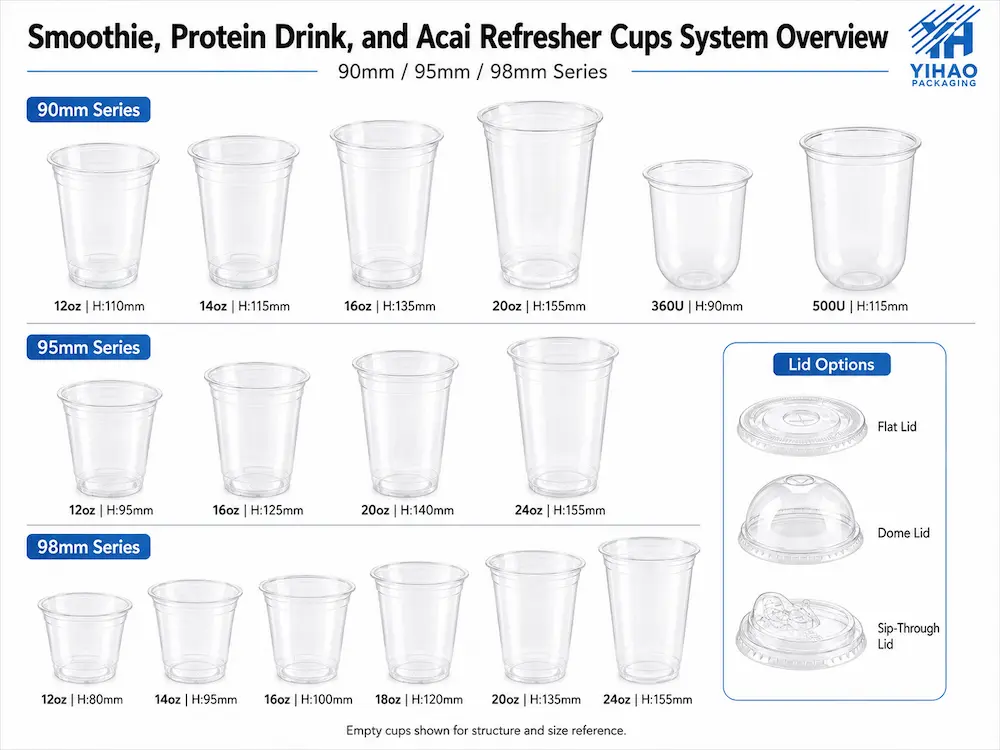
Many buyers focus only on cup size and price. That is too narrow. A better approach is to evaluate the full cup system: cup body, rim structure, matching lids, dome lid options, straw or strawless drinking method, stacking, carton packing, and supplier repeatability.
For brands building a professional cold drink menu, a structured cold cups and lids range is more efficient than purchasing unrelated cups from different sources. It helps reduce lid mismatch, storage confusion, and inconsistent customer presentation.
Main Applications for Smoothie Cups
Fruit Smoothies and Layered Smoothie Drinks
Fruit smoothies often contain blended fruit, yogurt, milk alternatives, crushed ice, puree, or syrup-based flavor layers. These drinks are thicker than standard iced tea or lemonade, so the cup must provide enough strength for filling, sealing, gripping, and takeaway movement.
For fruit smoothies, smoothie cups should offer high clarity, stable wall structure, and a rim that works with matching lids. The cup should also make the drink look full and balanced. If the cup is too wide or too tall for the menu portion, the drink may look underfilled even when the serving amount is correct.
Protein Drink Cups for Fitness and Nutrition Beverages
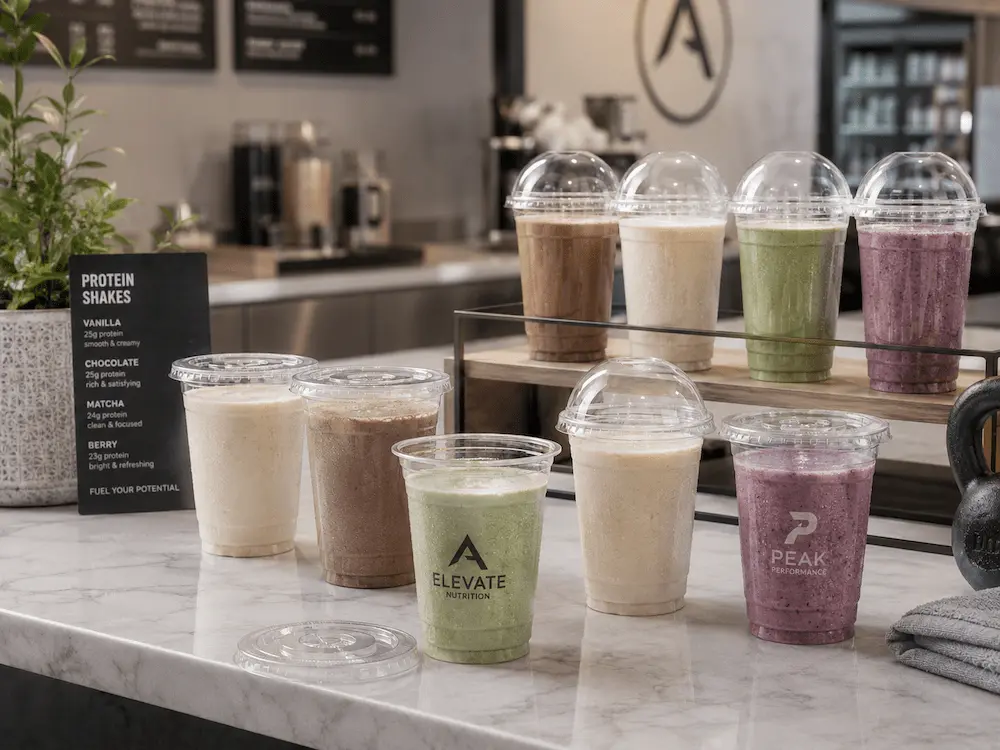
Protein drink cups are used for protein shakes, meal replacement drinks, collagen beverages, dairy-based protein drinks, plant-based nutrition drinks, and post-workout smoothies. These drinks are usually thicker and heavier than regular cold beverages, which makes cup strength and lid fit especially important.
Fitness beverage brands also need clean presentation. The cup should support a confident, hygienic, and functional image. A clear cup with enough branding surface allows labels, stickers, nutrition messages, or flavor identifiers to stand out while still showing the drink inside.
Acai Refresher Cups for Colorful Fruit-Based Drinks
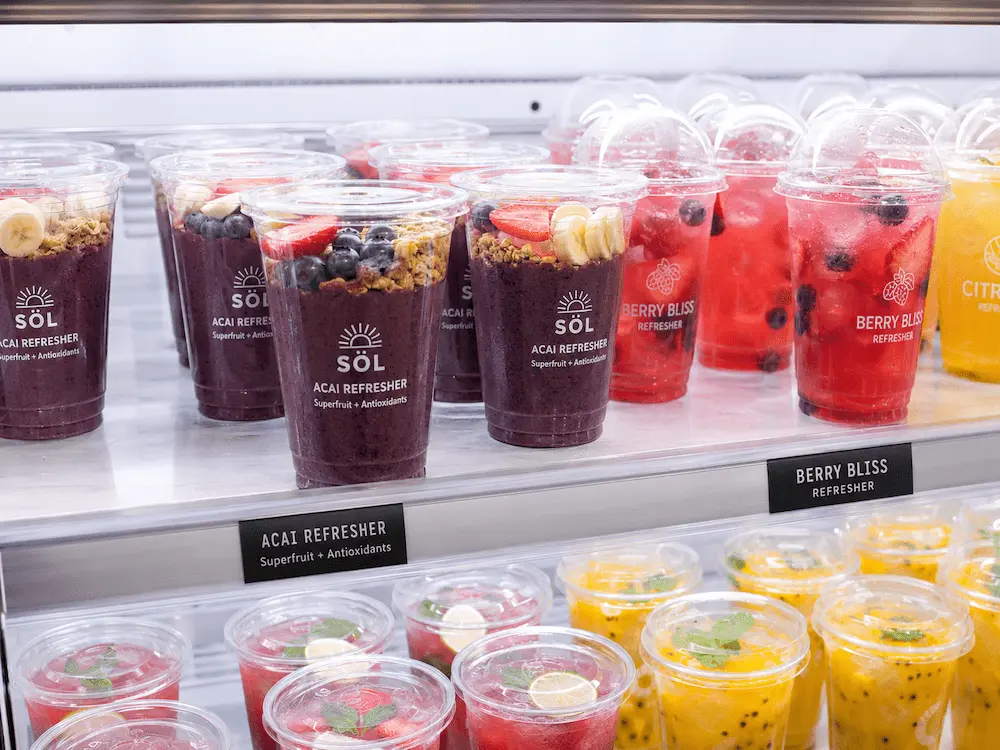
Acai refresher cups are ideal for purple berry drinks, acai fruit refreshers, coconut water blends, citrus-acai beverages, and fruit tea-inspired cold drinks. These beverages rely strongly on color, so clear packaging helps communicate freshness and natural appeal.
Acai refreshers are often positioned as chilled, energizing, and visually attractive drinks. Clear PET or rPET cups help customers see the color and texture immediately. For cafés and beverage chains, this supports both in-store display and online menu photography.
Berry Refresher Cups for Seasonal Drink Menus
Berry refresher cups are widely used for strawberry refreshers, blueberry lemonade, raspberry iced tea, mixed berry sparkling drinks, and seasonal fruit beverages. These drinks usually have bright red, pink, purple, or berry-colored tones, so cup clarity directly affects shelf appeal.
For seasonal menus, packaging flexibility matters. A cup range that works with flat lids, sip-through lids, and dome lids gives beverage brands more freedom to create limited-time drinks without changing the entire packaging system.
Dome Lid Cups for Toppings, Foam, and Premium Presentation
Dome lid cups are useful when a drink includes whipped topping, fruit chunks, foam, yogurt layers, dessert-style decoration, or granola-style toppings. The dome lid provides extra headspace above the cup rim and helps protect the drink presentation during handoff.
For smoothie shops and dessert drink brands, dome lids create a more generous appearance. They also reduce pressure on toppings and help maintain a cleaner product shape. When a drink is designed to be photographed, dome lid presentation often adds real value.
Smoothie Cups vs Protein Drink Cups vs Acai Refresher Cups
Different drinks need different packaging priorities. A single cup style may work for several drinks, but buyers should still understand the difference between drink texture, serving method, lid choice, and customer expectation.
| Drink Category | Main Packaging Priority | Recommended Cup Direction | Lid Consideration |
|---|---|---|---|
| Fruit Smoothies | Color display, thickness support, takeaway handling. | Clear PET or rPET smoothie cups with strong visibility. | Flat lid for standard drinks; dome lid for toppings. |
| Protein Drinks | Cup strength, grip comfort, clean branding surface. | Stable cups with reliable rim structure and enough label area. | Secure lid fit for thicker beverages and takeaway movement. |
| Acai Refreshers | Bright color visibility and chilled drink appeal. | Clear cups that show purple berry tones and fruit inclusions. | Flat, strawless, or sip-through lids based on service style. |
| Berry Refreshers | Seasonal color display and menu flexibility. | Clear smoothie cups for red, pink, purple, and mixed berry drinks. | Straw slot, sip-through, or dome lid depending on recipe. |
| Topping Smoothies | Headspace, topping protection, premium display. | Clear cups with strong rim support and good visual balance. | Dome lids for whipped cream, fruit pieces, foam, or decoration. |
Clear Smoothie Cups vs Standard Cold Drink Cups
Clear Cups Create Stronger Product Visibility
The main advantage of clear smoothie cups is product visibility. Customers can see the beverage color, thickness, ice level, fruit pieces, and freshness. For smoothie and refresher drinks, this visibility increases product confidence.
Standard opaque or low-clarity cups may hold the drink, but they do not help sell it. For colorful cold beverages, clear cups support stronger shelf appeal, better menu photos, and a more premium handoff experience.
Cup Shape Affects Filling and Perceived Value
Cup shape changes how a drink looks after filling. A wide cup may make the portion appear lower. A narrow cup may make the drink look taller and fuller. A straight-sided cup may improve label placement, while a tapered cup may improve stacking and hand comfort.
Buyers should choose cup shape based on drink style and service method. Smoothie shops often need a cup that balances visual fullness, grip comfort, stacking efficiency, and lid matching. The best option is not always the most decorative shape. It is the shape that works reliably during daily service.
Rim Fit Is a Critical Detail
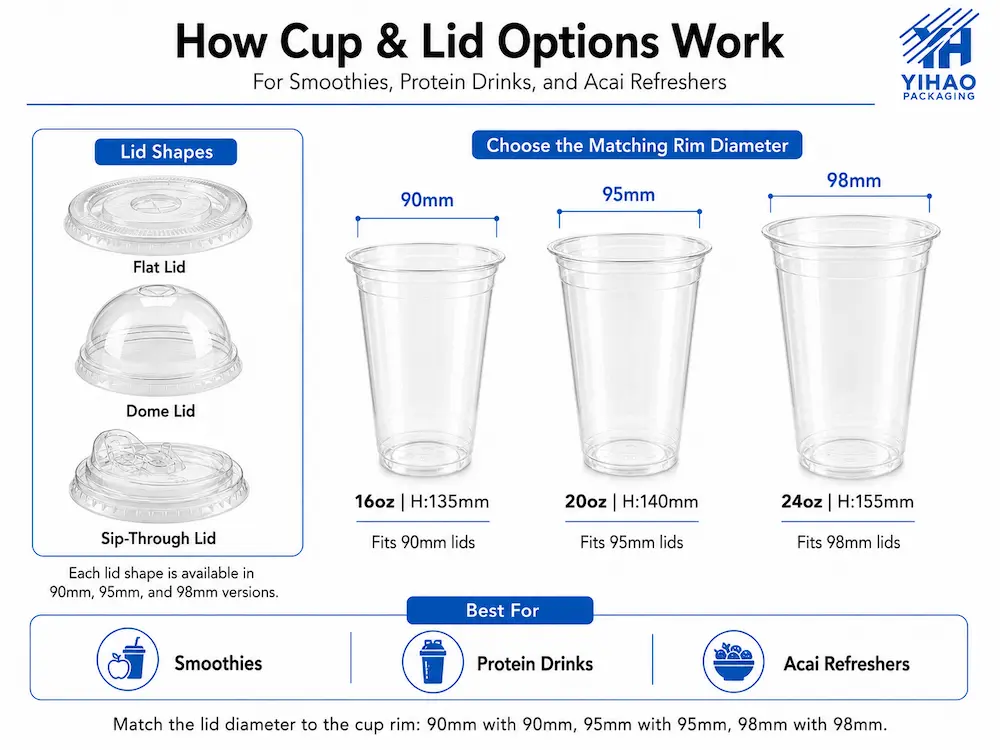
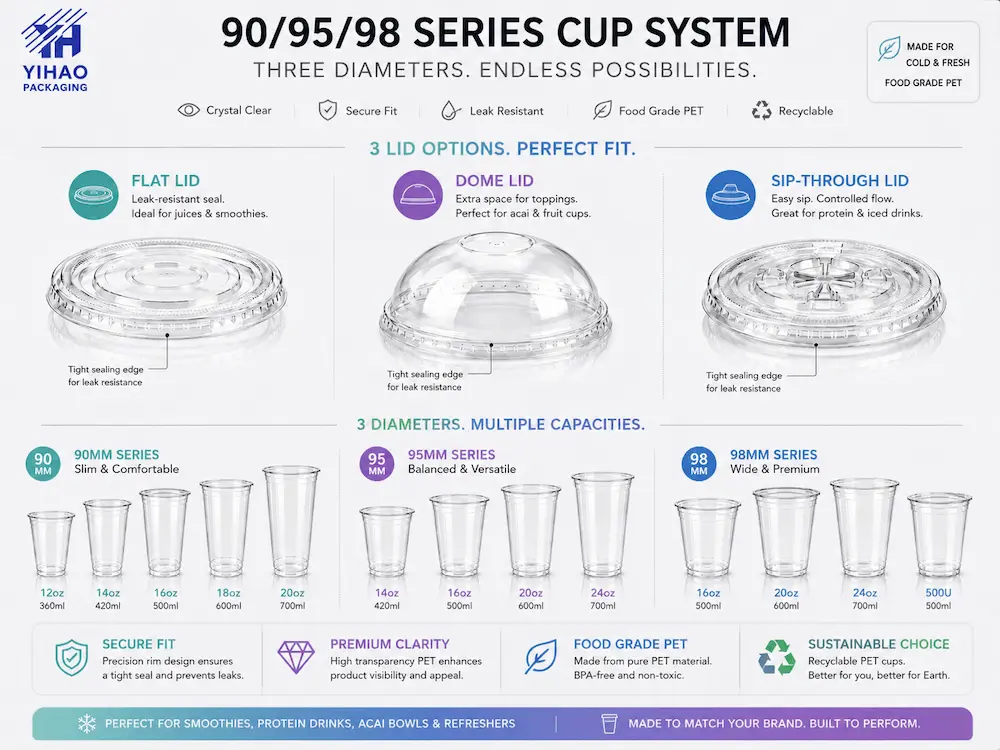
Rim fit is one of the most important details in cold drink packaging. A cup rim must match the lid securely and consistently. If the rim is uneven, too soft, or inconsistent across batches, the lid may not close correctly.
For beverage chains and distributors, rim consistency is a major purchasing factor. A small difference in rim performance can create repeated complaints at store level. This is why buyers should test the cup and lid together before placing bulk orders.
Material Options for Smoothie, Protein Drink, and Refresher Cups
PET Cups for Clarity and Cold Drink Presentation
PET is widely used for cold drink cups because it offers strong clarity, clean appearance, and good product visibility. For smoothies, juice, iced coffee, lemonade, milk tea, acai refreshers, and berry drinks, PET cups help the beverage look fresh and retail-ready.
For brands that depend on visual presentation, PET cold cups are a practical choice. They allow customers to see the drink clearly while giving the business a professional takeaway packaging format.
rPET Cups for Recycled Content Packaging
rPET cups contain recycled PET material and are often selected by brands that want to communicate recycled content in their packaging strategy. For beverage businesses, rPET can support a more responsible packaging message when it fits local market expectations, food contact requirements, and recycling conditions.
When choosing rPET smoothie cups, buyers should still check practical performance. Recycled content should not replace the basic requirements of clarity, rim quality, lid fit, stacking, carton packing, and repeat supply consistency.
PP Cups for Flexible Foodservice Use
PP cups may be used in some foodservice applications because of their flexible handling characteristics. However, when premium visibility is the main goal, PET or rPET cups usually provide stronger clarity for smoothies and refreshers.
The right material depends on drink type, target market, service method, lid requirement, branding plan, and local customer preference. For highly visual drinks, transparency should remain one of the strongest decision factors.
Manufacturer Perspective: What Buyers Should Check Beyond Appearance
Rim Structure and Lid Closure
From a manufacturing and purchasing perspective, the cup rim is not a small detail. It controls how the lid snaps on, how the cup feels at the top edge, and how well the package performs during takeaway movement.
When testing takeaway smoothie cups, buyers should close the lid several times, rotate the cup, check the rim seal, and observe whether the lid loosens when the cup is squeezed lightly. This simple test helps identify packaging problems before large-volume purchasing.
Wall Strength and Drink Weight
Smoothies and protein drinks are heavier than many standard cold beverages. Thick textures, ice, fruit puree, milk bases, and toppings all add weight. A cup that performs well with water may not perform the same way with a thick smoothie.
Buyers should test cups with real drinks, not only with empty samples. The cup should feel stable when filled, carried, placed in a holder, and passed to the customer. This is especially important for protein drink cups and large takeaway beverages.
Stacking and Counter Efficiency
Stacking affects both storage and service speed. Cups should separate smoothly from the stack without sticking or cracking. In busy cafés and juice bars, staff need to grab cups quickly during peak hours. Poor stacking slows service and increases waste.
For distributors and chain buyers, good stacking also improves carton efficiency, warehouse handling, and store shelf organization. A cup system that stacks well saves space and supports smoother daily operations.
Carton Packing and Wholesale Handling
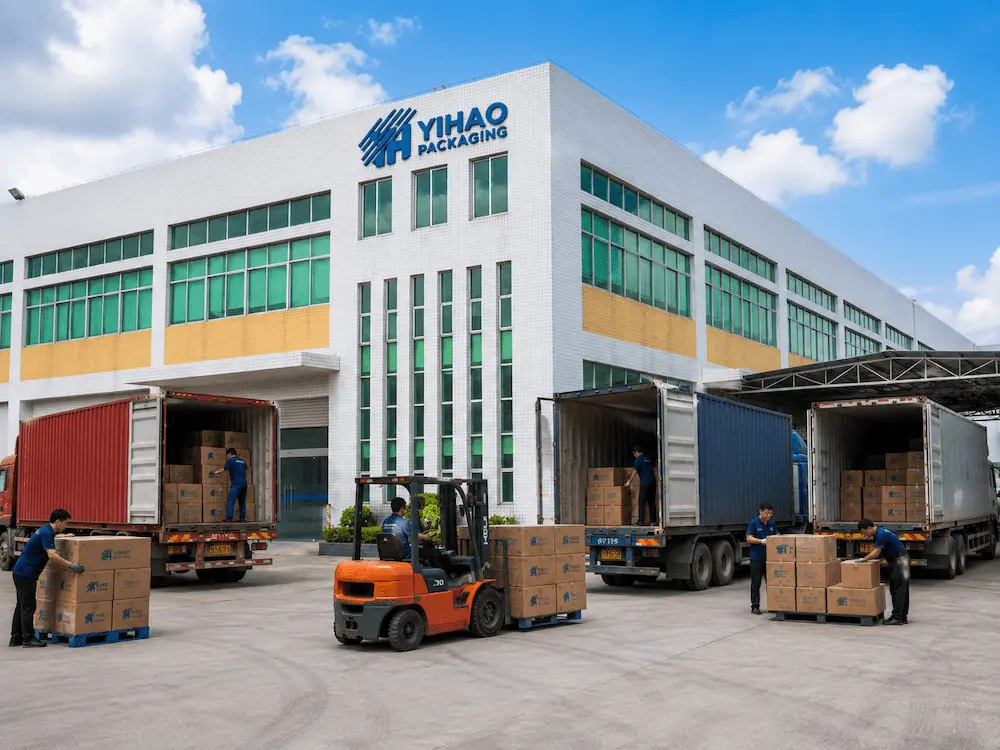
Wholesale packaging buyers should review carton packing carefully. Cups must be protected during transportation, storage, and distribution. Carton strength, inner packing method, stack protection, and lid separation all affect product condition when goods arrive.
For wholesale smoothie cups, carton packing is part of product quality. A good cup loses value if it reaches the buyer scratched, crushed, deformed, or mixed with mismatched lids.

How to Choose the Right Smoothie Cups for Your Business
Match Cup Size with Drink Strategy
Cup size should match the menu strategy. A small smoothie may work as a snack drink. A larger smoothie may be positioned as a meal replacement. A protein drink may need more volume for powders, milk, ice, and shaking space. Acai refreshers and berry refreshers may need enough room for ice and fruit pieces.
Buyers should not select cup size only by unit price. The cup must make the drink look balanced and valuable. If the cup is too large, the drink may look underfilled. If the cup is too small, toppings and ice may reduce usable volume.
Choose Lids According to Drink Style
Flat lids work well for many standard cold drinks. Dome lids support toppings, whipped cream, fruit layers, foam, and decorated smoothies. Strawless sipper lids may support a cleaner drinking experience for selected chilled beverages.
The most important rule is simple: choose the lid after understanding the drink. A smoothie with toppings should not be forced into a flat lid. A delivery-focused drink should not use a lid that becomes loose during movement. Matching cold cup lids should be tested together with the cup before bulk purchase.
Plan Branding Without Blocking the Drink
Clear cups give beverage brands an effective branding surface. Labels, logo stickers, flavor tags, QR codes, or custom printing can be added while still showing the drink inside.
However, branding should not cover too much of the cup. Smoothies and refreshers sell through color and texture. A well-designed label supports the product instead of hiding it. For premium beverage brands, the best result often comes from clean branding and strong product visibility working together.
Wholesale Smoothie Cups Buying Guide
What Buyers Should Confirm Before Bulk Orders
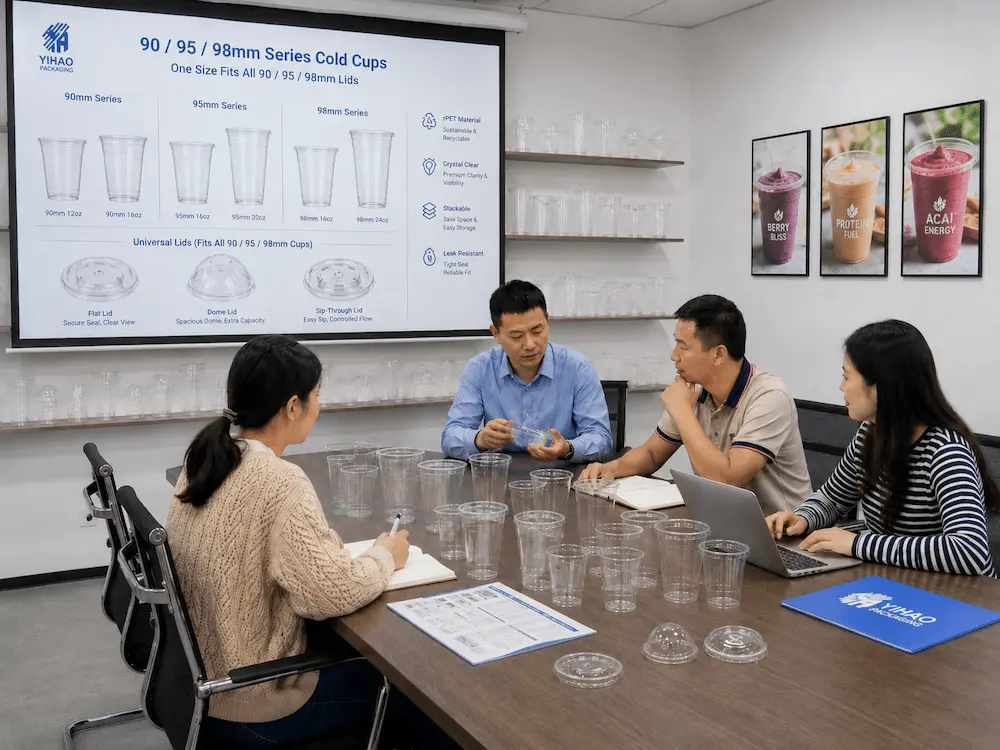
Before placing a large order, buyers should review the full packaging system. A cup that looks good in a product photo may still fail during real beverage service. Sample testing is essential for cafés, distributors, importers, and chain buyers.
| Buying Checkpoint | What to Check | Why It Matters |
|---|---|---|
| Material | PET, rPET, or PP direction. | Material affects clarity, handling, brand message, and application fit. |
| Clarity | Transparency, haze, scratches, and visual cleanliness. | Smoothies and refreshers depend on visible color and freshness. |
| Rim Fit | Cup rim shape and matching lid closure. | A poor rim increases spill risk and lid mismatch problems. |
| Lid Options | Flat lids, dome lids, strawless lids, and sip-through lids. | Different drinks need different top structures and drinking methods. |
| Stacking | Cup nesting, separation, and storage efficiency. | Good stacking supports faster service and better warehouse control. |
| Drink Testing | Test with actual smoothie, protein drink, or refresher recipe. | Real drinks reveal weight, grip, lid, and condensation behavior. |
| Branding Area | Label space, sticker fit, and printing discussion. | A clear branding plan improves product identity and retail appeal. |
| Carton Packing | Carton strength, inner packing, and shipping protection. | Wholesale buyers need goods to arrive clean, stable, and usable. |
| Supplier Stability | Repeat order support and communication efficiency. | Stable supply protects chain operations and distributor relationships. |
Why Supplier Stability Matters
For a small café, packaging issues are inconvenient. For a beverage chain, importer, or distributor, packaging issues affect multiple customers and repeated orders. If the cup changes slightly, lids may no longer fit. If clarity changes, drink presentation becomes inconsistent. If packing is unstable, warehouse losses increase.
This is why choosing the right smoothie cup supplier matters. Buyers should look for a supplier that understands product range planning, material selection, cup and lid matching, sample review, carton packing, and export communication.
Sample Testing Before Large Orders
Sample testing should happen before large-volume purchasing. Buyers should fill the cup with real drinks, close the lid, apply labels, place the cup in a takeaway bag, test grip comfort, and observe the drink after short movement.
This process is especially important for wholesale smoothie cups because a small mismatch becomes a large problem when orders scale. Testing with real recipes is more useful than judging empty cups on a desk.
Common Mistakes When Buying Smoothie Cups
Choosing a Clear Cup Without Testing the Lid
High clarity is important, but it does not solve lid problems. A clear cup with poor lid fit creates spills and complaints. Buyers should always evaluate the cup and lid as one system.
Ignoring Drink Thickness
Protein shakes and thick smoothies place more pressure on the cup than light iced drinks. Buyers should test cup strength with the actual beverage. A cup that feels acceptable when empty may feel weak when filled with a thick drink.
Forgetting Toppings and Headspace
Many smoothies and acai drinks include foam, fruit, cream, or toppings. If the lid presses directly onto the topping, the drink presentation suffers. Dome lid cups solve this problem by giving the drink extra vertical space.
Using One Cup for Every Drink
A single cup may not suit every drink category. Smoothies, protein drinks, iced coffee, lemonade, acai refreshers, berry refreshers, and topping drinks may require different cup and lid combinations. A structured range is better than forcing every drink into one package.
Buying Only by the Lowest Unit Price
Low unit price does not always mean lower total cost. Poor lid fit, cracking, low clarity, difficult stacking, or weak packing can increase waste and customer complaints. Buyers should evaluate total packaging performance instead of focusing only on price.
How Different Businesses Should Select Smoothie Cups
For Smoothie Shops and Juice Bars
Smoothie shops need fast service, strong visual display, and reliable takeaway performance. Clear PET or rPET cups help fruit drinks look fresh while supporting high-volume counter operations. Matching flat and dome lids allow the shop to serve both simple smoothies and topping drinks.
For Fitness and Protein Drink Brands
Fitness beverage brands should prioritize cup strength, hand feel, clean branding, and lid security. Protein drink cups should support thicker beverages and larger portions without feeling unstable. Labels should communicate flavor, nutrition concept, or brand identity without hiding the drink.
For Acai and Berry Refresher Sellers
Acai and berry drinks rely heavily on color. Clear cups make purple, red, pink, and mixed berry tones visible, helping the drink stand out in store displays and customer photos. For seasonal menus, a flexible lid system helps brands launch new drink formats faster.
For Foodservice Distributors and Importers
Distributors need cup ranges that are easy to explain, stock, and reorder. A practical system of smoothie cups, flat lids, dome lids, and strawless options helps distributors serve cafés, juice bars, convenience stores, event caterers, and beverage chains more efficiently.
Working with a Professional Smoothie Cup Supplier
What a Professional Supplier Should Provide
A professional smoothie cup supplier should provide more than a product quotation. Buyers need support with material direction, cup size planning, matching lids, sample testing, packing discussion, branding options, and repeat order consistency.
YIHAO is a food packaging manufacturer and solution provider focused on practical packaging systems for foodservice, beverage, takeaway, and wholesale buyers. For smoothie, refresher, and protein drink packaging, supplier support should help buyers reduce mismatch risk and build a more efficient cup range.
How YIHAO Helps Buyers Build Better Cup Systems
For buyers developing a cold drink packaging line, YIHAO supports a system-based approach. Instead of treating cups, lids, and packing as separate items, buyers can evaluate how the full range works together: cup clarity, lid match, dome lid options, stacking, carton packing, and branding space.
This approach is useful for beverage chains, importers, distributors, cafés, and private label drink brands. It helps buyers simplify product selection, reduce unnecessary SKU confusion, and improve long-term purchasing efficiency.
Why Factory Communication Matters
Good supplier communication prevents many purchasing problems. Buyers should confirm cup material, lid compatibility, sample availability, packing method, customization direction, and repeat order planning before placing bulk orders.
Working directly with a food packaging factory helps buyers discuss practical details earlier. This is especially important when the buyer needs wholesale quantities, customized branding, or a stable product family for multiple drink formats.
Practical Cup and Lid Selection Framework
Before choosing smoothie cups, buyers can use a simple selection framework. This helps connect drink type with cup function and reduces the risk of buying the wrong package.
| Selection Question | Buyer Decision | Packaging Result |
|---|---|---|
| Is the drink highly visual? | Choose clear PET or rPET cups. | Better color display and stronger customer appeal. |
| Is the drink thick or heavy? | Check wall strength and hand feel with real beverage testing. | More stable handling for smoothies and protein drinks. |
| Does the drink include toppings? | Use dome lids when extra headspace is needed. | Cleaner topping protection and better premium presentation. |
| Will the drink be delivered? | Test lid fit, grip stability, and cup carrier compatibility. | Lower spill risk during takeaway and delivery movement. |
| Will the brand use labels? | Check label space and cup surface shape. | Better branding without blocking product visibility. |
| Is the order for wholesale supply? | Confirm carton packing, repeat order support, and supplier stability. | More reliable purchasing for distributors and chain buyers. |
Building a More Efficient Wholesale Smoothie Cup Range
Wholesale buyers should think in terms of product families. A cup family with shared rim sizes and matching lid options makes inventory easier to manage. It also helps cafés and distributors serve multiple drinks without buying too many unrelated packaging items.
For example, one cup family may support smoothies, iced coffee, fruit tea, matcha drinks, protein shakes, and refreshers when the right lids are available. Flat lids serve standard drinks. Dome lids serve topping drinks. Strawless lids serve selected chilled beverages. This approach creates more flexibility with fewer packaging conflicts.
For distributors, this is especially valuable. A clear product family is easier to sell to customers, easier to store in warehouses, and easier to reorder. For beverage chains, it supports consistent brand presentation across stores.
Quick Buyer Checklist Before Ordering Smoothie Cups
- Drink type: smoothie, protein drink, acai refresher, berry refresher, juice, iced coffee, milk tea, matcha drink, or sparkling fruit beverage.
- Material direction: PET, rPET, or PP based on clarity, handling, brand message, and local market needs.
- Visual requirement: whether the drink depends on visible color, fruit pieces, texture, or layering.
- Lid style: flat lid, dome lid, strawless lid, sip-through lid, or straw slot lid.
- Rim fit: whether the lid closes securely and consistently.
- Topping space: whether foam, fruit, cream, or decoration needs extra headspace.
- Takeaway performance: whether the cup works in carriers, bags, cold displays, and delivery movement.
- Branding method: label, sticker, printing discussion, or clean transparent presentation.
- Stacking and storage: whether cups separate easily and save counter or warehouse space.
- Carton packing: whether the packing protects cups during wholesale transportation.
- Supplier reliability: whether the supplier can support repeat orders and matching lid systems.
FAQ
1. What are the best cups for smoothies?
The best smoothie cups offer clear visibility, stable cup strength, smooth rim quality, reliable lid compatibility, and good takeaway performance. PET and rPET cups are common choices for cold smoothie presentation.
2. Are smoothie cups suitable for protein drinks?
Yes. Protein drink cups should be selected with attention to cup strength, rim fit, lid security, branding surface, and real drink testing because protein shakes are often thicker and heavier than standard cold drinks.
3. What lids are best for acai refreshers and berry refreshers?
Acai refresher cups and berry refresher cups can use flat lids, strawless lids, sip-through lids, or dome lids depending on drink texture, topping space, straw preference, and takeaway service method.
4. When should I choose dome lid cups?
Dome lid cups are useful when smoothies or refreshers include whipped topping, foam, fruit pieces, yogurt layers, cream, granola-style toppings, or decoration that needs extra space above the cup rim.
5. Can smoothie cups be customized with logos?
Many smoothie cups can support branding through labels, stickers, printing discussion, or custom decoration. Buyers should confirm artwork requirements, sample options, and order details with the supplier before production.
6. How do I choose wholesale smoothie cups?
When buying wholesale smoothie cups, compare material, clarity, rim fit, lid options, stacking performance, carton packing, sample testing, branding needs, and supplier repeat order support.
7. What should I ask a smoothie cup supplier before ordering?
Ask about material options, cup size range, matching lids, dome lid availability, sample support, carton packing, customization direction, lead time discussion, and repeat wholesale order stability.
8. Are clear smoothie cups only for smoothies?
No. Clear smoothie cups are also suitable for protein drinks, acai refreshers, berry refreshers, juice, lemonade, iced coffee, milk tea, matcha drinks, sparkling fruit drinks, and many takeaway cold beverages.
References
- U.S. Food and Drug Administration, Food Contact Substances and Packaging Guidance.
- European Commission, Food Contact Materials Regulatory Framework.
- Association of Plastic Recyclers, PET Packaging Design Guidance.
- European PET Bottle Platform, PET Packaging and Recycling Design Recommendations.
- Foodservice Packaging Institute, Foodservice Packaging Market and Recovery Resources.
- U.S. Environmental Protection Agency, Sustainable Materials Management and Recycling Information.
- National Restaurant Association, Foodservice Packaging and Takeaway Service Insights.
- Specialty Coffee Association, Beverage Service and Café Operations Resources.
Deep-Dive Insights for Buyers Comparing Smoothie Cup Systems
How should buyers compare smoothie cups beyond price?
Buyers should compare smoothie cups by material, clarity, rim fit, lid compatibility, wall strength, stacking behavior, carton packing, and sample performance. The best cup is not simply the cheapest option. It is the cup system that works consistently with the drink menu, service workflow, and wholesale purchasing plan.
Why do protein drinks need stronger cup testing?
Protein drinks are often thicker and heavier than standard cold beverages. A cup should be tested with the actual drink recipe to check grip comfort, lid security, rim fit, and handling stability. This reduces the risk of weak performance after bulk purchasing.
What makes acai refresher cups and berry refresher cups different?
Acai and berry drinks depend heavily on color visibility. Clear cups help show purple, red, pink, and mixed berry tones, while the right lid supports the intended drinking method. For these drinks, packaging should protect both appearance and takeaway convenience.
Option: Build a cup family instead of buying random cups
A cup family with matching lids helps buyers simplify inventory. Shared rim sizes, flat lids, dome lids, and strawless options allow beverage brands to serve smoothies, protein drinks, refreshers, iced coffee, and fruit drinks with fewer packaging conflicts.
Consideration: Supplier stability is part of packaging quality
For wholesale buyers, a cup is not only a product. It is a repeat supply item. Stable quality, matching lid availability, clear communication, carton packing, and sample support are all part of the real value provided by a professional smoothie cup supplier.
Final Note / Practical Takeaway
© YIHAO Packaging. All rights reserved. This article is published by YIHAO Packaging for foodservice, beverage packaging, and wholesale packaging buyers. Unauthorized reproduction, scraping, or commercial reuse without written permission is prohibited.