Micro Summary
Custom iced coffee cups help supermarkets, cafes, bakeries, and foodservice brands turn cold drinks into visible, branded, and easier-to-sell products. For packaging buyers, the right choice is not only about printing a logo. It involves PET cup clarity, lid matching, drink format, custom artwork placement, chilled display needs, carton packing, sample testing, and supplier consistency. Clear iced coffee cups, PET coffee cups, cold brew cups, flavored cold brew cups, and custom printed iced coffee cups work best when branding, drink visibility, and operational reliability are planned together before wholesale ordering.
Cold coffee is no longer just a seasonal menu item. Iced coffee, cold brew, flavored cold brew, iced lattes, cold foam drinks, matcha coffee blends, refreshers, and dessert-style beverages now shape how supermarkets, cafes, bakeries, and foodservice brands build their cold drink programs. As these drinks become more visual and more competitive, packaging becomes part of the sales experience.
Custom iced coffee cups give buyers a practical way to combine drink visibility, brand identity, takeaway convenience, and repeatable service performance. A plain cup holds the drink. A well-designed custom cup helps present the drink, support the brand, improve retail display, and make the beverage easier to recognize.
For supermarkets, the cup needs to look clean inside chilled shelves. For cafes, it needs to support fast counter service and strong brand memory. For bakeries, it should pair naturally with pastries, dessert cups, and grab-and-go displays. For foodservice brands, it must perform consistently across stores, distributors, cartons, and repeat wholesale orders.
This guide explains how packaging teams should choose custom iced coffee cups by material, cup clarity, lid compatibility, branding method, drink type, order planning, and supplier reliability.
Why Custom Iced Coffee Cups Matter for Cold Drink Programs
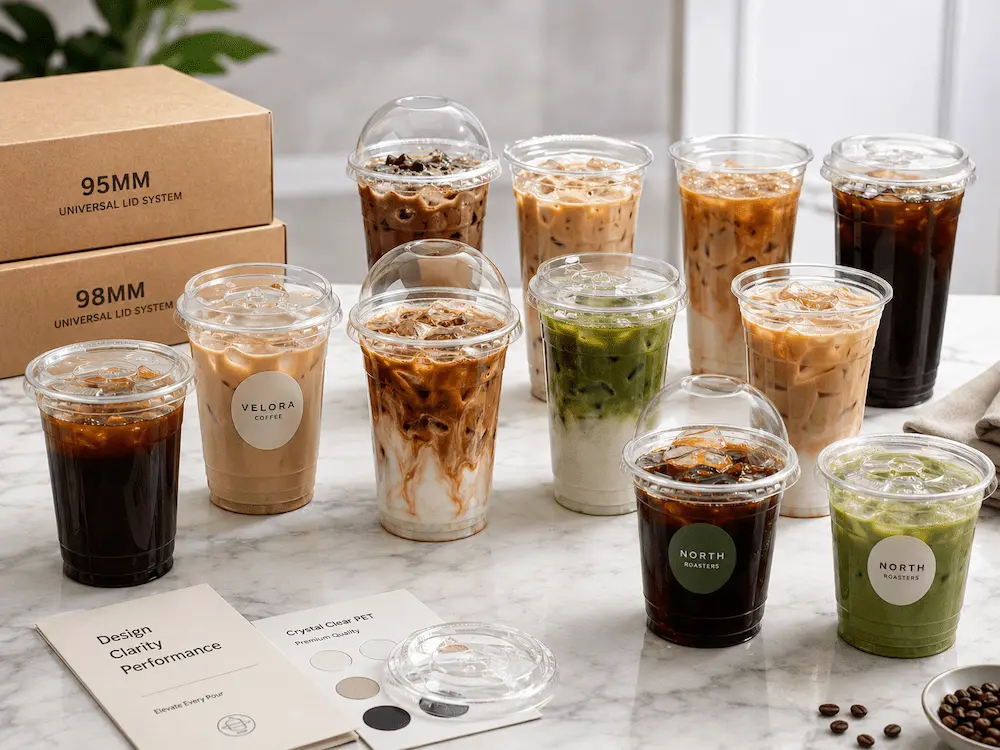
Cold drinks sell through appearance before customers taste them. A clear iced latte shows coffee color, milk contrast, ice quality, syrup movement, foam texture, and topping height. A flavored cold brew may include vanilla cream, caramel syrup, mocha layers, cold foam, fruit flavors, or dairy-free alternatives. A transparent cup makes these details visible.
This is why clear iced coffee cups remain important for retail and takeaway drinks. Customers can see what they are buying. The cup supports impulse purchase, menu confidence, and product freshness.
Custom branding adds another layer. Custom printed iced coffee cups turn a simple cold drink into a branded product. A logo, printed pattern, private label artwork, QR code, or seasonal message helps customers remember the brand after they leave the store.
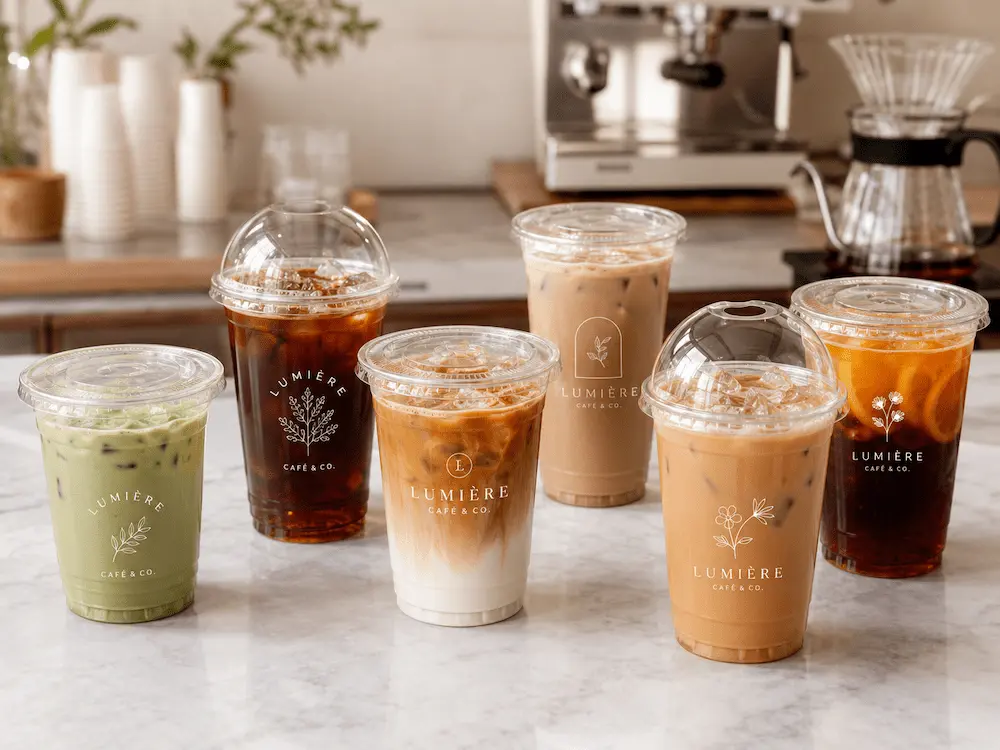
For B2B buyers, however, custom cups should not be treated as decoration only. A custom cup program affects:
- Drink presentation
- Logo visibility
- Lid compatibility
- Cup stacking
- Label placement
- Carton storage
- Artwork control
- MOQ planning
- Reorder consistency
- Customer complaint risk
The best custom iced coffee cups are not just printed cups. They are a controlled packaging system that connects the drink, cup, lid, artwork, carton, and supplier process.
What Custom Iced Coffee Cups Are
Custom iced coffee cups are cold beverage cups designed with brand-specific elements such as logos, printed artwork, private label graphics, measurement marks, color bands, promotional messages, or seasonal designs. They are commonly used for iced coffee, cold brew, flavored cold brew, iced lattes, cold foam drinks, milk coffee, matcha coffee drinks, fruit coffee drinks, and other chilled takeaway beverages.
Professional buyers often choose PET or clear plastic cup systems because they support high product visibility. PET coffee cups are especially useful when the beverage appearance is part of the selling value. A clear cup displays the drink directly, while custom printing adds brand recognition.
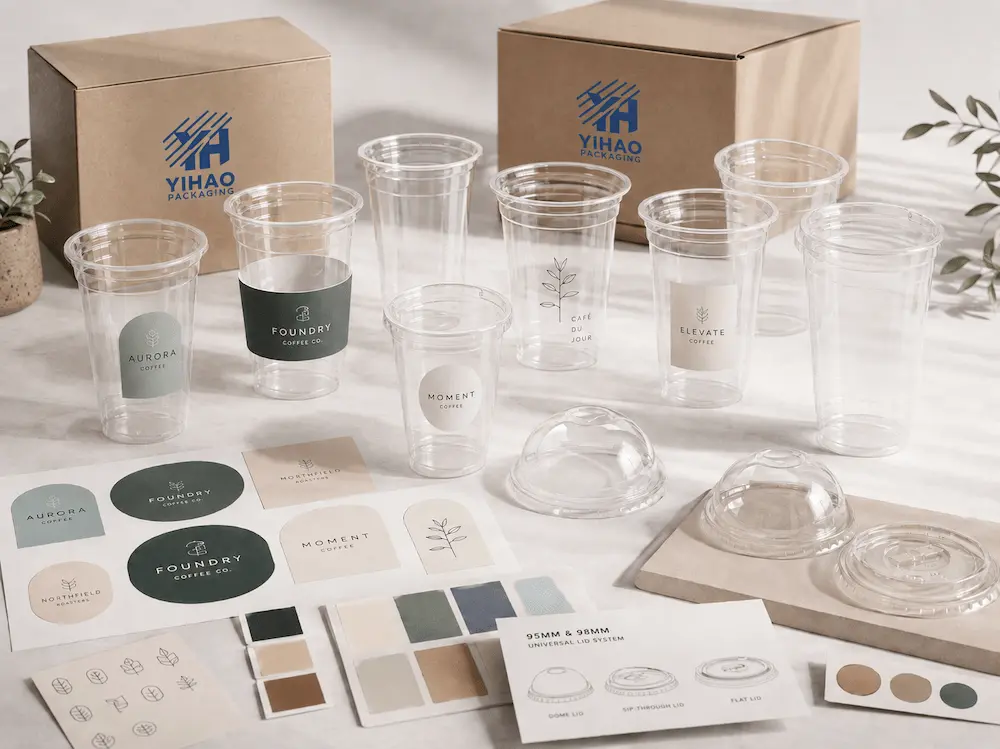
Custom cup options may include:
| Custom Element | Buyer Value | Best Use Case |
|---|---|---|
| Logo printing | Improves brand recognition and takeaway visibility | Cafes, bakeries, drink shops, foodservice brands |
| Private label design | Supports retail identity and store-brand beverage programs | Supermarkets, distributors, retail drink brands |
| Seasonal artwork | Creates limited-time drink campaigns | Holiday drinks, summer beverages, promotional launches |
| Measurement marks | Helps staff control ice, milk, coffee, and syrup levels | High-volume cafes and chain beverage operations |
| Clear label-ready area | Leaves space for flavor labels, barcodes, and date codes | Chilled retail shelves and grab-and-go programs |
The best design balances branding and visibility. Too much printing may hide the drink. Too little branding may fail to build recognition. Buyers should keep the drink visible while using artwork to strengthen the brand.
Why PET Is a Strong Material Direction for Iced Coffee Cups
PET is widely used for clear cold beverage packaging because it offers clean transparency, a rigid hand feel, and strong display value. For clear iced coffee cups, PET helps show the drink’s color, layers, ice, foam, syrup, and toppings.
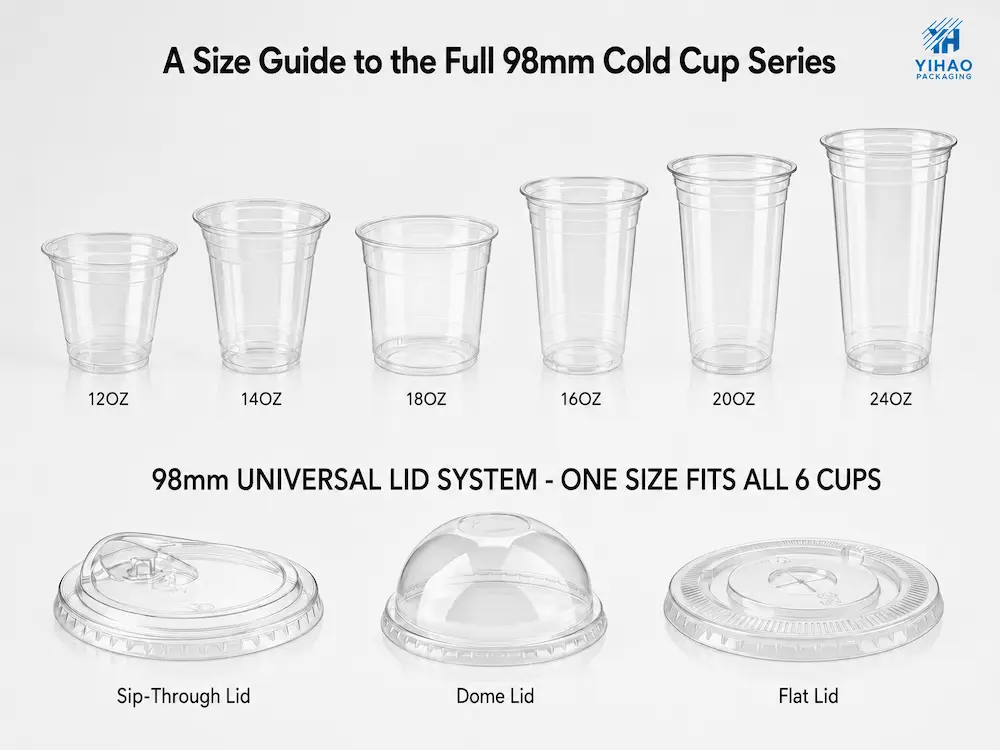
For iced coffee and cold brew programs, PET provides several practical advantages:
| PET Cup Feature | Why It Matters |
|---|---|
| High clarity | Shows coffee color, milk layers, foam, syrup, and ice clearly. |
| Rigid cup feel | Creates a cleaner hand feel for takeaway cold drinks. |
| Strong display value | Improves chilled shelf presentation and impulse purchase appeal. |
| Cup-lid system compatibility | Supports matching flat lids, dome lids, straw-slot lids, and sipper lids. |
| Custom branding surface | Allows logo printing while preserving the visual value of the beverage. |
PET is not a universal solution for every temperature condition or local market rule. Buyers should confirm food contact suitability, intended cold-use conditions, recycling requirements, and local compliance before placing a wholesale order. For iced coffee, cold brew, and chilled beverage programs, clear PET remains a strong choice when drink visibility and branded presentation both matter.
Matching Custom Cup Design to Drink Type
A good custom cup program starts with the drink menu. Buyers should not choose cups only by size or price. They should first evaluate what the drink needs to show.
Standard Iced Coffee
Standard iced coffee usually needs strong clarity, enough room for ice, and a secure lid for straw or sip use. A simple logo print works well because the drink has a clean, dark appearance.
For this drink format, buyers should prioritize:
- Clear cup wall
- Comfortable grip
- Stable lid fit
- Moderate logo size
- Fast cup separation
- Efficient stacking behind the counter
Iced Latte and Milk Coffee
Iced latte and milk coffee drinks show strong visual contrast. The customer sees coffee, milk, ice, and sometimes syrup in one cup. Printing should support this presentation, not block it.
For this drink format, buyers should prioritize:
- Transparent sidewall
- Logo placed outside the main viewing area
- Stable lid rim
- Optional measurement marks
- Strong clarity after condensation
Cold Brew
Cold brew often sells through a clean, premium image. Cold brew cups should feel simple, clear, and polished. Heavy artwork may reduce the premium look.
For this drink format, buyers should prioritize:
- Clean transparent cup body
- Minimal brand mark
- Flat lid or sipper lid options
- Strong shelf visibility
- Label-ready space for chilled retail programs
Flavored Cold Brew
Flavored cold brew is more visual than plain cold brew. Vanilla cold brew, caramel cold brew, mocha cold brew, cold foam cold brew, and fruit-flavored coffee drinks may include layers, syrups, cream, foam, and toppings.
For flavored cold brew cups, buyers should prioritize:
- Clear viewing area
- Lid height suitable for foam
- Branding that does not hide layers
- Seasonal artwork options
- Reliable cup-lid matching
- Enough headspace for drink movement
Dessert-Style Iced Coffee
Dessert-style drinks may include whipped cream, chocolate drizzle, cookie crumbs, fruit toppings, or foam. These drinks often need dome lids or higher lid clearance. A flat lid may compress toppings and weaken presentation.
For this drink format, buyers should prioritize:
- Dome lid compatibility
- Sufficient headspace
- Clear side and top visibility
- Secure rim fit
- Artwork that supports a premium dessert-drink image
Cup and Lid Compatibility Is More Important Than Artwork
Many buyers start custom projects by asking for logo printing. That is understandable, but it is not the first technical question. The first technical question should be: does the cup and lid system work consistently?
A beautiful custom cup still fails if the lid pops off, leaks during takeaway, slows staff down, or feels loose in the customer’s hand. Lid compatibility should be tested before artwork approval.
Buyers should test:
| Test Point | What to Check | Why It Matters |
|---|---|---|
| Rim fit | Lid snaps onto the cup evenly | Reduces leakage and loose-lid complaints |
| Lid removal | Lid can be removed without cracking the cup | Improves staff and customer experience |
| Stacking | Cups separate cleanly during peak service | Improves counter speed |
| Drink movement | Cup and lid remain stable with ice and liquid movement | Supports takeaway use |
| Carton pressure | Cups maintain shape during shipping and storage | Reduces damage before service |
For custom projects, buyers should request cup and lid samples together. Testing only the cup body is not enough. The cup, lid, artwork, drink, and carton should be reviewed as one complete packaging system.
Branding Methods for Custom Iced Coffee Cups
Custom cup branding can be simple or complex. The right method depends on order volume, artwork detail, budget, lead time, and reorder planning.
Logo Printed PET Cups
Logo printed PET cups are the most direct option for cafes, bakeries, restaurants, and foodservice brands. A clean logo on a clear cup improves brand recognition without hiding the drink.
Best for:
- Cafe logos
- Bakery drink programs
- Foodservice chains
- Standard iced coffee menus
- Repeat-use takeaway packaging
Custom Printed Iced Coffee Cups
Custom printed iced coffee cups allow buyers to add larger artwork, color bands, QR codes, product names, or seasonal messages. They create stronger brand impact but require more careful design control.
Best for:
- Promotional drinks
- Seasonal cold beverage campaigns
- Retail-ready private label programs
- New product launches
- Co-branded beverage projects
Branded Iced Coffee Cups with Clear Viewing Areas
For drinks where appearance matters, the best custom design often includes a branded section and a clear viewing area. This approach lets the customer see the beverage while still recognizing the brand.
Best for:
- Iced lattes
- Flavored cold brew
- Cold foam coffee
- Matcha coffee drinks
- Layered milk coffee drinks
Label-Based Customization
Some buyers prefer stock clear cups with custom labels. This is useful for smaller test programs before committing to printed cup production.
Best for:
- Trial launches
- Short seasonal runs
- Multi-flavor cold brew programs
- Low-volume supermarket testing
- Regional retail beverage programs
Custom Iced Coffee Cups for Supermarkets
Supermarkets need packaging that performs in chilled shelves, grab-and-go coolers, and prepared food zones. The cup must look clean from the front, support product labels, and remain easy for customers to pick up.
For supermarket buyers, custom iced coffee cups should support:
- Chilled shelf visibility
- Clear drink presentation
- Private label branding
- Barcode and date label placement
- Stable lid fit during customer handling
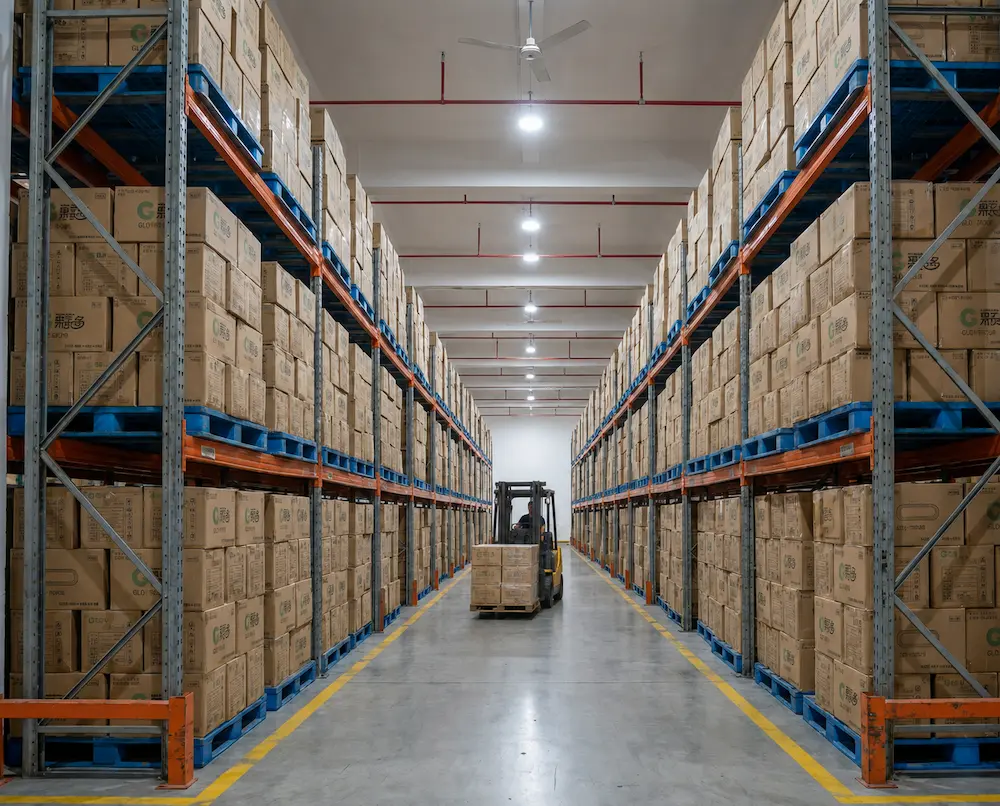
- Carton efficiency for store replenishment
- Consistent appearance across store locations
A supermarket may use custom cups for ready-to-drink iced coffee, cold brew, flavored cold brew, iced lattes, protein coffee, and seasonal chilled beverages. In this channel, the cup is not only a drink container. It is part of the retail shelf system.
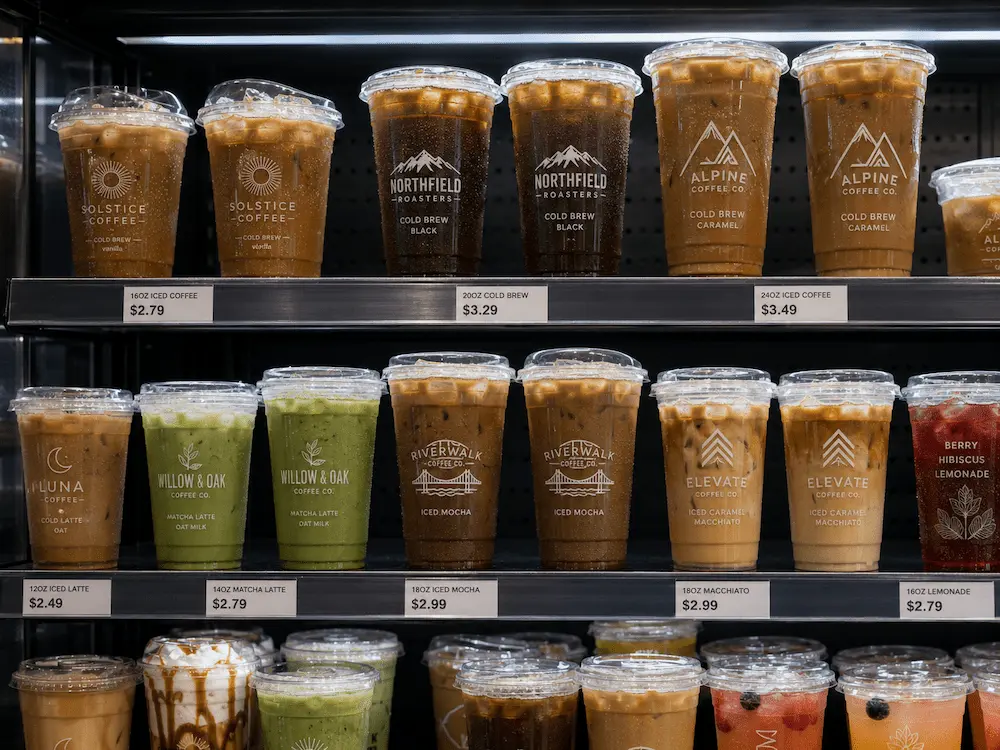
The strongest supermarket cup design usually leaves enough transparent space to show the drink while reserving a clean area for logo, flavor name, barcode, and use-by label. Buyers should test how the cup looks under chilled display lighting before confirming the design.
Custom Iced Coffee Cups for Cafes
Cafes need fast service and strong brand memory. Customers often carry iced coffee through streets, offices, campuses, shopping malls, and delivery routes. The cup becomes part of the cafe’s visible identity.
For cafes, buyers should focus on:
- Logo visibility from hand-held angles
- Clear drink presentation for premium beverages
- Easy cup separation during peak hours
- Matching lids for different drink styles
- Cup sizes that match the menu
- Artwork readability after condensation
A cafe should not approve artwork only from a flat digital mockup. The design must be tested on the curved cup with real liquid inside. Ice, milk, foam, hand position, condensation, lid color, and straw placement all affect the final appearance.
For daily iced coffee service, a clean logo printed PET cup is usually enough. For seasonal drinks, the cafe may add special artwork or limited-time messaging while keeping the drink visible.
Custom Iced Coffee Cups for Bakeries
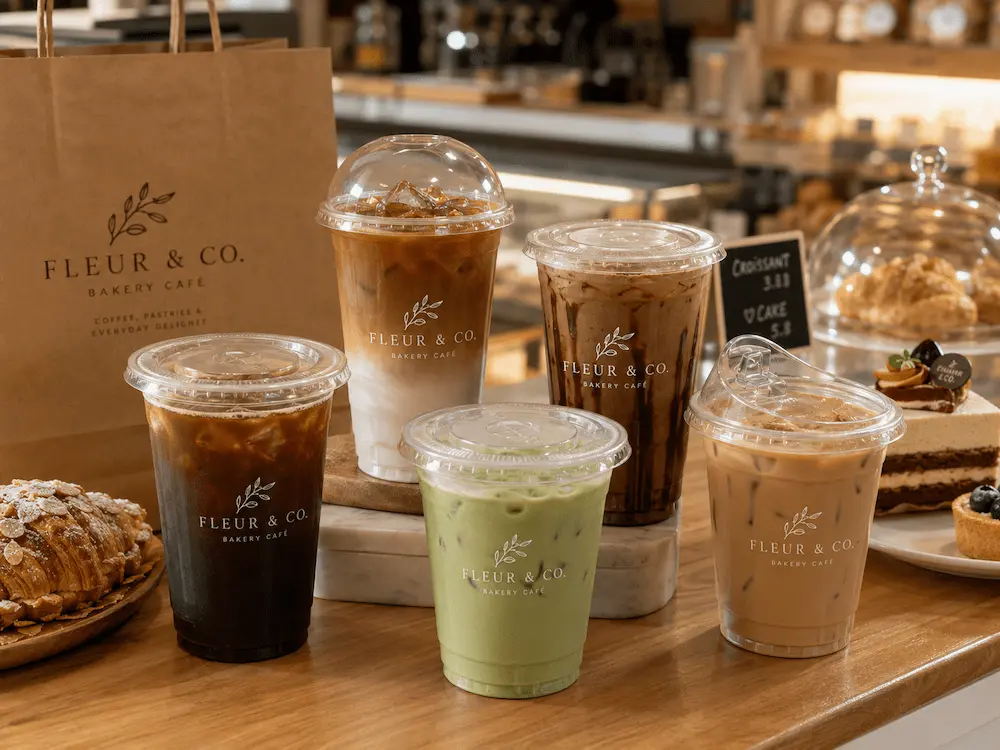
Bakeries sell more than pastries. Many bakeries now sell iced coffee, cold brew, milk coffee, lemonade, fruit tea, matcha, and dessert-style drinks. The cup should connect beverage sales with bakery display, not look like a separate product line.
For bakeries, custom iced coffee cups should support:
- Pastry and drink combo sales
- Branded takeaway counters
- Dessert drink presentation
- Chilled display programs
- Seasonal bakery promotions
- Visual consistency with dessert containers and pastry packaging
A bakery may place iced coffee cups beside cake slices, tiramisu portions, cookies, muffins, croissants, and fruit cups. In this setting, branded cups help the drink feel like part of the bakery experience. A clear cup also lets customers see milk layers, syrup, foam, and toppings, which supports impulse buying.
Custom Iced Coffee Cups for Foodservice Brands
Foodservice buyers usually care about consistency across locations. A cup that works in one store must also work across many operators, warehouses, staff teams, and distributors.
For foodservice brands, the cup program should define:
- Approved cup sizes
- Approved matching lids
- Print artwork standards
- Carton labeling method
- Reorder process
- Quality inspection requirements
- Sample retention process
- Backup stock plan
Foodservice brands should avoid launching too many cup variations at the beginning. A clean custom program may start with two or three core cup sizes and matching lids. Once the system is stable, the brand can expand into seasonal artwork, private label batches, or special drink formats.
For multi-location buyers, repeat order consistency is more important than one-time visual design. The supplier must be able to maintain cup clarity, rim fit, print position, carton packing, and delivery stability across future orders.
Key Buying Checklist Before Wholesale Orders
Before placing a wholesale order, buyers should confirm both visual and operational details. A custom cup order has more risk than a standard stock cup because artwork, printing, production planning, and repeat consistency all matter.
| Checklist Item | Buyer Question |
|---|---|
| Cup material | Is the cup suitable for intended cold beverage use? |
| Cup clarity | Does the cup show coffee color, milk layers, ice, syrup, and foam clearly? |
| Lid compatibility | Has the exact lid been tested with the exact cup rim? |
| Artwork position | Does the logo remain visible without blocking the drink? |
| Clear viewing area | Is enough transparent space reserved for drink presentation? |
| Label space | Is there room for flavor labels, barcodes, date codes, or retail stickers? |
| Carton packing | Does the carton quantity match warehouse and store handling needs? |
| Sample testing | Have samples been tested with real drinks, ice, lids, and service routines? |
| Repeat order control | Can the supplier maintain consistent material, size, rim fit, and printing? |
This checklist helps buyers reduce risk before production begins.
Common Mistakes Buyers Should Avoid
Choosing Artwork Before Testing the Cup
Artwork matters, but it should not come before structural testing. Buyers should confirm cup size, lid fit, stacking, and drink use before finalizing the print design.
Printing Too Much on a Clear Cup
A clear cup sells the drink visually. If the design covers too much of the cup, customers lose the benefit of transparent packaging. Keep enough clear space.
Using One Lid for Every Drink Style
Flat lids, dome lids, straw-slot lids, and sipper lids serve different drink formats. A cold foam drink may need different lid planning than a basic iced coffee.
Ignoring Condensation
Cold drinks often create condensation. Artwork should remain readable when the cup is chilled and handled.
Starting with Too Many Custom SKUs
Custom projects become expensive and difficult to manage when buyers launch too many sizes, colors, and artwork versions at once. Start with core SKUs first.
Manufacturer and Supplier Questions to Ask
A reliable custom iced coffee cups manufacturer or supplier should help buyers think beyond logo printing. The supplier should support material selection, cup-lid matching, artwork review, sample testing, packing, and wholesale order planning.
Before confirming a supplier, ask:
- What cup sizes and lid styles are available for iced coffee and cold brew?
- Can you provide matching lids with the same cup system?
- Do you support logo printed PET cups or custom printed iced coffee cups?
- What artwork file format do you require?
- Can you help check whether the logo blocks drink visibility?
- What is the sample process before mass production?
- What is the MOQ for custom printing?
- How is printing consistency controlled across repeat orders?
- What carton packing options are available?
- Can you support wholesale orders for supermarkets, cafes, bakeries, and foodservice distributors?
A good supplier should answer these questions clearly. If a supplier only talks about price and does not discuss lid fit, sample testing, artwork control, or repeat order consistency, the buyer should be careful.
Wholesale Planning for Custom Iced Coffee Cups
Wholesale purchasing should be planned around real usage volume, not only unit price. A lower unit price may not help if the buyer orders too many slow-moving custom cups or chooses a size that does not match the drink menu.
Buyers should estimate:
- Daily drink sales by size
- Number of store locations
- Seasonal beverage peaks
- Cold brew and flavored cold brew demand
- Lid usage by drink type
- Carton storage capacity
- Reorder cycle
- Artwork update frequency
- Backup stock needs
For first-time buyers, a controlled launch is usually better than a very large custom order. Start with proven cup sizes, test with real drink menus, check customer response, and then expand the custom cup program.
Sample Testing Before Production

Sample testing is the safest step in a custom cup project. Buyers should test the cup with the actual drinks they plan to sell.
| Testing Area | Recommended Test |
|---|---|
| Drink visibility | Fill the cup with iced coffee, milk coffee, and cold brew to check appearance. |
| Lid fit | Test flat lids, dome lids, straw-slot lids, or sipper lids with real movement. |
| Artwork readability | Check logo position after condensation and hand holding. |
| Stacking | Test cup separation speed during peak service simulation. |
| Retail label space | Apply actual labels, barcodes, flavor stickers, or date labels before final approval. |
The goal is simple: approve the cup as a complete working package, not as a digital artwork concept.
How YIHAO Supports Custom Iced Coffee Cup Buyers
YIHAO supports food packaging buyers with practical cold drink packaging solutions for supermarkets, cafes, bakeries, foodservice brands, distributors, and wholesale buyers. For custom iced coffee cups, the focus is not only appearance. The goal is to help buyers build a cup and lid system that supports clear drink presentation, reliable takeaway use, branded visibility, and repeatable purchasing.
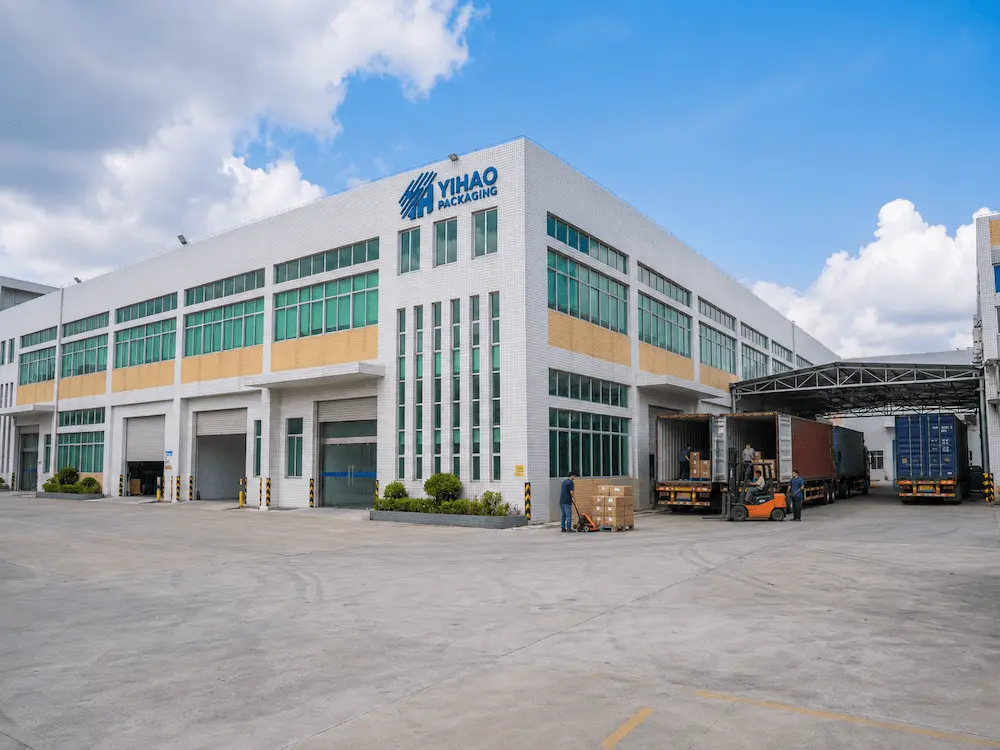
Buyers can use YIHAO as a manufacturing and sourcing partner when they need:
- Clear PET cup direction
- Matching lid planning
- Custom logo cup development
- Custom printed iced coffee cup support
- Wholesale supply support
- Sample review before bulk order
- Packaging suggestions for iced coffee, cold brew, and flavored cold brew
- Practical communication for artwork, specifications, and packing
For buyers preparing a new cold drink program, the best next step is to request cup and lid samples before confirming artwork and wholesale quantity. This helps reduce leakage complaints, poor lid fit, unclear branding, carton waste, and slow-moving custom stock.
Final Buyer Takeaway
Custom iced coffee cups are a smart packaging upgrade when buyers need both brand visibility and drink presentation. The best choice is not always the most heavily printed cup or the cheapest wholesale option. The best choice is the cup that matches the drink menu, protects visibility, fits the lid consistently, supports store operations, and gives the brand a repeatable packaging identity.
For supermarkets, custom cups help organize chilled drink displays. For cafes, they strengthen takeaway branding. For bakeries, they connect beverage sales with dessert counters. For foodservice brands, they create a more consistent customer-facing packaging system.
Before ordering, buyers should confirm material direction, cup clarity, lid fit, artwork position, clear viewing area, label space, carton packing, sample testing, and supplier reliability.
To move from idea to order, start with a practical sample review: test the cup with real iced coffee, cold brew, flavored cold brew, ice, foam, lids, labels, and daily service handling. That is how custom iced coffee cups move from decoration to real packaging value.
FAQ
1. What are custom iced coffee cups?
Custom iced coffee cups are cold beverage cups designed with brand-specific elements such as logos, printed artwork, labels, or private label graphics for iced coffee, cold brew, flavored cold brew, and other chilled drinks.
2. Are PET coffee cups suitable for iced coffee?
PET coffee cups are commonly used for iced coffee because they offer high clarity, clean presentation, and practical handling for cold beverage programs. Buyers should confirm intended use conditions and local requirements before ordering.
3. What is the difference between custom iced coffee cups and custom printed iced coffee cups?
Custom iced coffee cups may include printed logos, labels, private label artwork, or other brand elements. Custom printed iced coffee cups usually refer more specifically to cups with direct printed artwork, such as logos, patterns, QR codes, or promotional designs.
4. Should branded iced coffee cups use full printing or simple logo printing?
Simple logo printing is usually safer for clear iced coffee cups because it keeps the drink visible. Full printing works better for seasonal promotions or private label retail programs when a clear viewing area is preserved.
5. What should buyers test before ordering wholesale custom cups?
Buyers should test cup clarity, lid fit, stacking, artwork readability, label placement, carton packing, and performance with real iced coffee, cold brew, ice, foam, and takeaway handling.
6. Can one custom cup work for iced coffee, cold brew, and flavored cold brew?
One cup system can support several cold coffee drinks when the size, lid style, headspace, and artwork placement match the menu. Drinks with foam, toppings, or layered ingredients may need different lid planning.
References
- U.S. Electronic Code of Federal Regulations, 21 CFR 177.1630, Polyethylene Phthalate Polymers.
- U.S. Food and Drug Administration, Food Contact Substance Regulatory Framework.
- European Union, Regulation on Packaging and Packaging Waste.
- European Commission, Single-Use Plastics Marking Specifications for Beverage Cups.
- European Commission, Packaging Waste and Circular Economy Policy Overview.
- Starbucks Newsroom, Cold Beverage Market and Global Cold Drink Demand Discussion.
- Association of Plastic Recyclers, Design Guidance for Plastic Packaging Recyclability.
- Packaging industry buyer practice references on PET cold cup systems, lid compatibility, and custom printed beverage packaging.
Deep-Dive Insights
How buyers should think about custom iced coffee cups
Buyers should start from the drink menu, not the artwork. Iced coffee, clear iced coffee, cold brew, flavored cold brew, cold foam coffee, and dessert-style coffee drinks do not create the same packaging needs. Ice level, foam height, syrup visibility, lid type, label placement, and service speed all affect the final cup choice.
Why clear PET cups remain strong for branded cold drinks
Clear PET cups show the beverage directly. This matters because iced coffee sells through appearance as much as taste. Customers see coffee color, milk contrast, ice quality, foam texture, syrup movement, and toppings. Custom branding adds identity, but the clear cup keeps the drink visible.
What alternative packaging does better
Paper cups provide larger print surfaces. Bottles support sealed retail beverage programs. Cans support long shelf-life drink branding. PP cups may offer flexible durability in selected service environments. Clear PET iced coffee cups are strongest when buyers need cold drink visibility, practical takeaway use, and brand presentation in one package.
Option buyers should prioritize first
For most supermarkets, cafes, bakeries, and foodservice brands, the safest starting point is a clear PET cup and matching lid system with moderate logo printing. This keeps the drink visible, supports brand recognition, and reduces the risk of overcomplicating the first custom order.
Consideration before wholesale purchasing
Wholesale buyers should approve samples before mass production. A custom cup should be tested with real iced coffee, cold brew, flavored cold brew, ice, foam, lids, labels, cartons, and staff handling routines. A cup that looks good in a mockup still needs to perform in real service.
© 2026 YIHAO Packaging. This buying guide is created by YIHAO to help wholesale buyers, distributors, food brands, and packaging decision-makers compare product options and make informed sourcing decisions. All rights reserved.