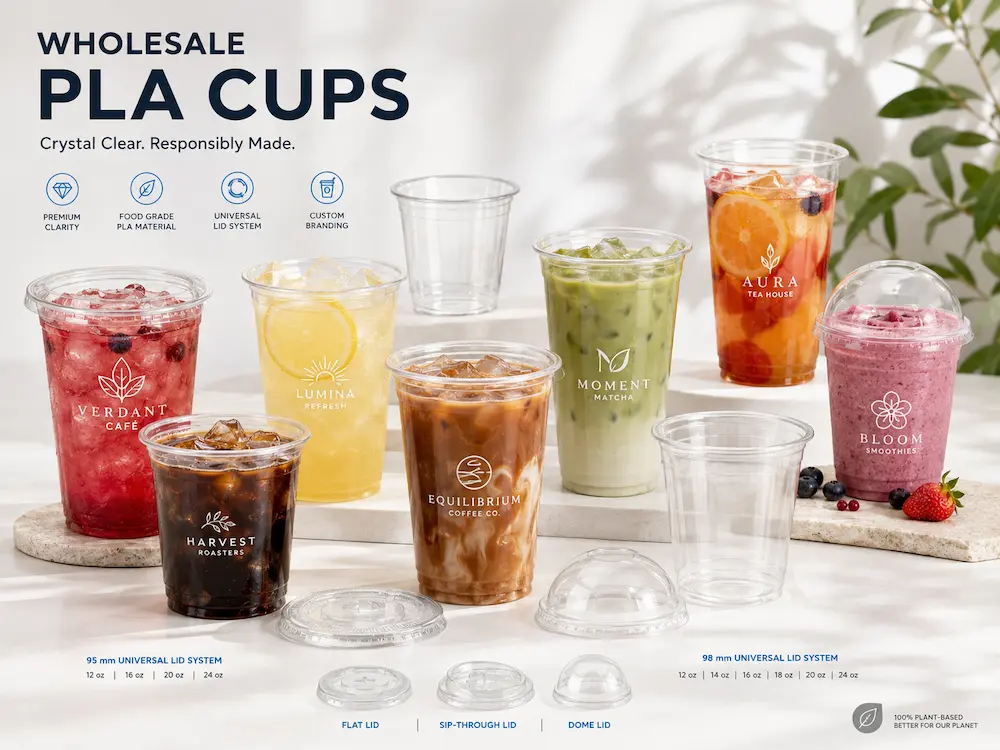
Micro Summary: Wholesale PLA Cups for Food Packaging Buyers
Wholesale PLA cups are designed for cold beverage service, grab-and-go retail display, cafe takeaway drinks, bakery beverage programs, and foodservice operations that need plant-based cold cup packaging. They work best for iced coffee, cold brew, juice, smoothies, matcha, fruit tea, lemonade, refreshers, iced tea, and other chilled drinks.
For supermarkets, cafes, bakeries, and foodservice brands, the key purchasing factors include cup size, lid compatibility, storage conditions, cold-use performance, carton packing, custom branding options, and supplier reliability. Buyers should also confirm whether local composting facilities accept PLA packaging before making compostability claims.
Wholesale PLA Cups for Supermarkets, Cafes, Bakeries, and Foodservice Brands
For food packaging buyers, wholesale PLA cups are no longer just an alternative cup option. They have become part of a wider purchasing strategy for cold beverage service, retail display, takeaway drinks, and eco-conscious foodservice programs. Supermarkets, cafes, bakeries, distributors, and foodservice brands need packaging that supports product presentation, operational efficiency, and responsible material choices at the same time.
YIHAO is a food packaging manufacturer and solution provider focused on practical packaging choices for beverage, fresh food, dessert, bakery, and grab-and-go applications. For buyers comparing PLA compostable cold cups, traditional plastic cold cups, and other food packaging formats, the right decision depends on real use conditions: drink temperature, lid matching, storage environment, branding needs, local composting acceptance, and repeat-order stability.
Wholesale PLA cups are mainly designed for cold drinks and chilled serving applications. They are suitable for iced coffee, cold brew, juice, smoothies, lemonade, fruit tea, milk tea, matcha, refreshers, iced tea, sparkling fruit drinks, sampling drinks, and retail grab-and-go beverages. They are not a universal replacement for every cup type, and buyers should avoid treating PLA as suitable for hot drinks or uncontrolled high-temperature storage.
Why Wholesale PLA Cups Matter for Modern Food Packaging Buyers
Modern beverage packaging is shaped by three forces: consumer demand for better presentation, brand pressure to reduce reliance on traditional single-use plastics, and operational pressure to keep packaging supply stable. Wholesale PLA cups sit at the center of these needs for many cold drink programs because they offer a plant-based material direction while still supporting clear drink visibility and convenient takeaway service.
From Single-Use Plastic Reduction to Better Cold Drink Presentation
Supermarkets, cafes, bakeries, and foodservice chains often choose eco friendly cold cups to support a more responsible packaging image. This does not mean every material works in every environment. A good packaging decision must be based on how the cup is used, how the drink is served, how the product is stored, and how the packaging will be handled after use.
For cold beverage display, clarity matters. Customers want to see the drink color, ice level, fruit pieces, foam layer, toppings, and overall freshness before purchasing. PLA cold cups help create a clean and simple presentation for chilled drinks, especially when paired with suitable flat lids, dome lids, or straw-slot lids. For brands selling premium cold beverages, visual clarity directly supports shelf appeal and customer trust.
What Buyers Should Know Before Replacing Traditional Plastic Cups
PLA is different from PET and PP. PET cold cups are widely used for clear cold beverage packaging and are often selected where recyclability infrastructure supports PET collection. PP cold cups are often chosen when buyers need greater toughness or flexibility in certain service environments. PLA cups, by contrast, are often chosen for plant-based material positioning and compostable packaging programs where local industrial composting infrastructure accepts PLA.
This difference is important. Compostable cold cups should not be described as naturally disappearing in every environment. PLA packaging generally requires proper industrial composting conditions where facilities accept the material. Buyers should confirm local rules, facility acceptance, labeling requirements, and disposal guidance before making claims on packaging, menus, websites, or retail displays.
What Are PLA Cups and Where Do They Fit Best?
PLA, or polylactic acid, is a plant-based plastic material commonly used for cold beverage cups, cold food display containers, and selected takeaway packaging applications. In the cup category, PLA is mainly selected for cold drinks rather than hot beverages. This makes it especially relevant for cafes, juice bars, supermarkets, bakeries, catering teams, and foodservice brands that serve chilled drinks in high volumes.
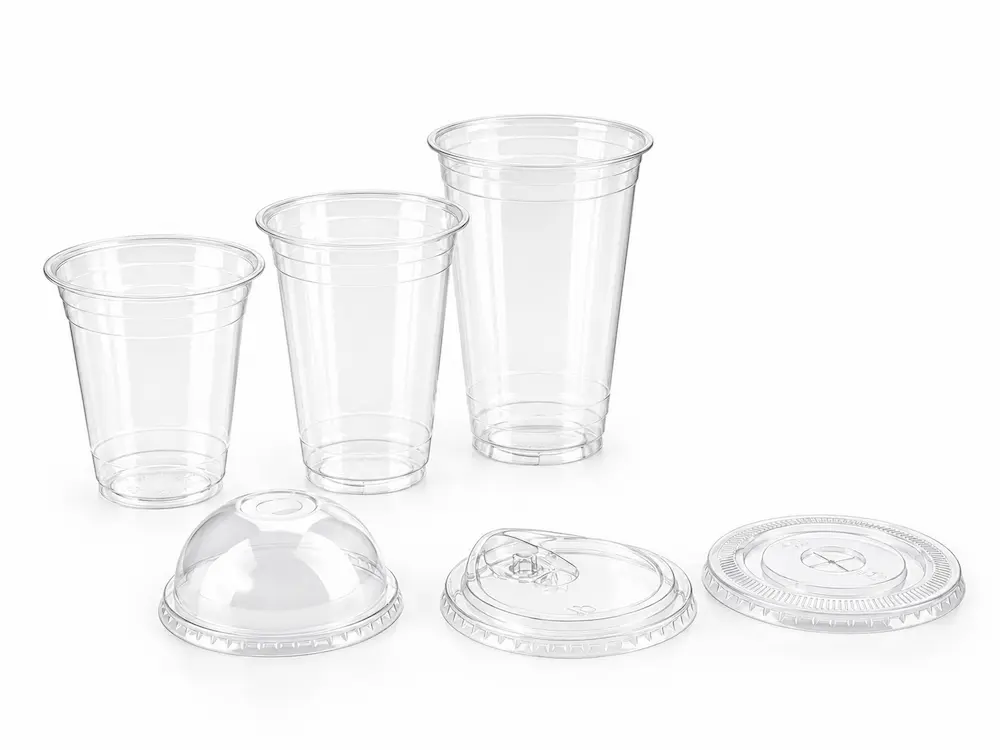
PLA Material Basics for Cold Beverage Packaging
PLA drink cups are designed to hold cold beverages with a clean, transparent appearance. They are commonly paired with compatible lids to support takeaway service, refrigerated display, sampling programs, and event beverage stations. Their plant-based material identity gives brands a more sustainability-focused packaging option, especially when the business already communicates responsible sourcing, reduced plastic use, or compostable packaging goals.
However, buyers should be precise. PLA cups are not the same as paper cups, PET cups, PP cups, or bagasse containers. Each material has a different performance profile. PLA works best when used for cold drinks, controlled storage, and suitable disposal streams. For hot drinks, high-temperature transport, or environments with direct heat exposure, buyers should select a material designed for those conditions instead.
Best-Fit Uses for PLA Drink Cups
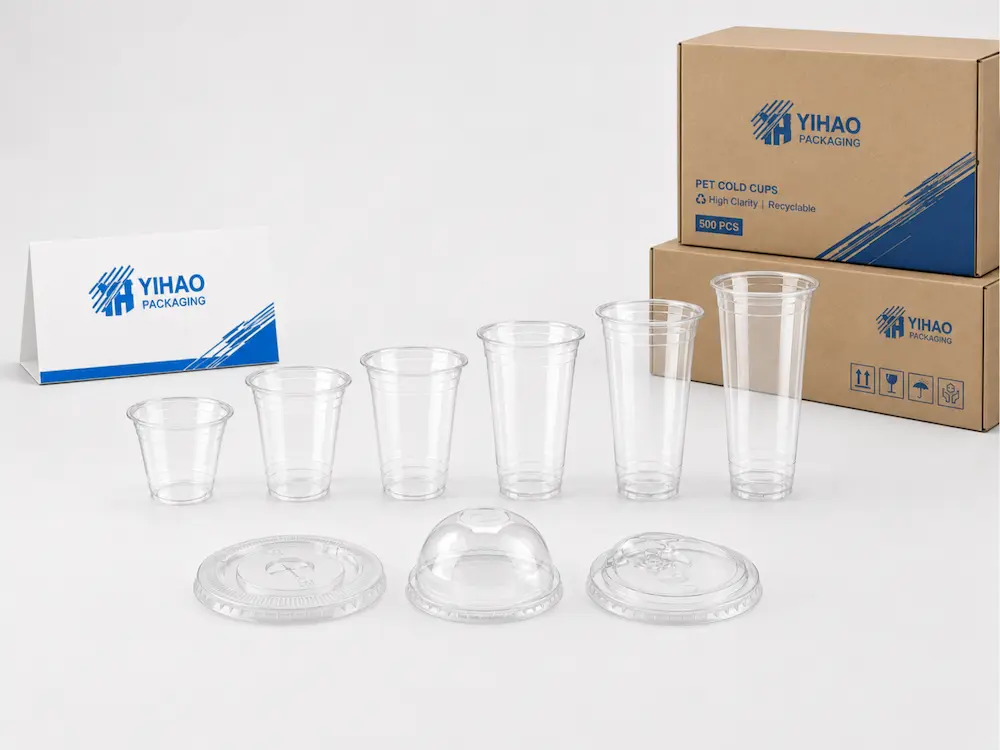
The strongest applications for wholesale PLA cups are cold drink programs with visible ingredients and quick-service turnover. Common uses include:
- Iced coffee and cold brew
- Smoothies and protein drinks
- Fresh juice and bottled-style grab-and-go drinks
- Lemonade, iced tea, and fruit tea
- Milk tea, matcha, and flavored cold beverages
- Refreshers and sparkling fruit drinks
- Sampling drinks for supermarkets and events
- Cold dessert drinks and bakery beverage pairings
Wholesale PLA Cups for Supermarkets
Supermarkets need cold cup packaging that works well in high-traffic retail environments. A cup used in a supermarket beverage section must support clear presentation, easy stacking, fast replenishment, consistent lid matching, and efficient backroom storage. For supermarket buyers, wholesale PLA cups are most relevant for chilled beverages, fresh juice programs, prepared drink displays, and eco-focused retail packaging projects.
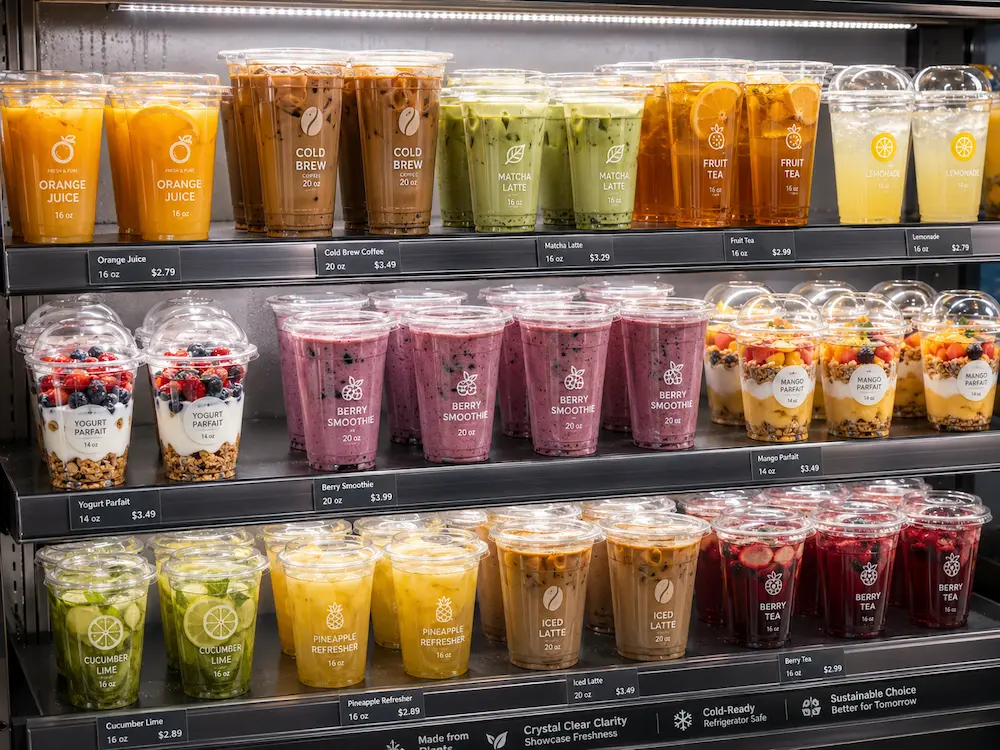
Retail Display for Chilled Drinks and Ready-to-Serve Beverages
In supermarket display, packaging often sells the product before the customer reads the label. Clear cups help show orange juice, green smoothies, berry drinks, cold brew, fruit tea, lemonade, and layered beverages in a direct visual way. PLA cups support this type of display when used for cold products and stored under suitable conditions.
For grab-and-go coolers, buyers should focus on cup stability, lid fit, stack height, label space, and carton handling. A beautiful cup is not enough if the lid does not match securely or the cup series is difficult to reorder consistently. Supermarket packaging teams should test actual drink recipes, filling volume, label placement, refrigeration display, and transportation handling before bulk purchasing.
Why Supermarket Buyers Need Consistent Supply and Size Matching
Supermarket programs rarely buy cups as one-time items. They need repeatable supply. A cup chosen for a juice counter, chilled drink display, or private-label beverage program must remain available across repeated orders. Size consistency also matters because cup height, rim fit, and lid compatibility affect staff workflow and customer experience.
Working with a reliable manufacturer or packaging supplier helps buyers reduce the risk of mismatched lids, unstable sizing, and inconsistent carton packing. For wholesale buyers, the purchasing decision should include not only the cup itself but also the complete supply system behind it.
Wholesale PLA Cups for Cafes and Beverage Shops

Cafes and beverage shops use cold cups as part of the customer experience. The cup affects how the drink looks in hand, how the lid performs during takeaway, how the brand label appears, and how customers perceive the beverage quality. For iced coffee, cold brew, matcha, fruit tea, smoothies, and refreshers, wholesale PLA cups give cafes a plant-based cold cup option for high-volume service.
Cold Coffee, Fruit Tea, Smoothies, and Matcha Drink Service
Cold beverage menus are becoming more diverse. Many cafes now sell iced coffee, flavored cold brew, oat milk drinks, matcha lattes, fruit refreshers, iced tea, sparkling fruit drinks, and protein drinks alongside traditional coffee. These drinks often rely on color, texture, and layering to create appeal. A clear cup helps customers see the product before they taste it.
PLA compostable cold cups fit this menu direction when the drinks are served cold and the business wants a more eco-conscious packaging message. For cafes with high takeaway volume, cup selection should also consider grip comfort, lid pairing, straw compatibility, label placement, and storage space behind the counter.
Lid Compatibility and Takeaway Performance
For cafes, lid matching is as important as cup selection. A cold cup program may need flat lids for standard iced drinks, dome lids for whipped cream or smoothie toppings, and straw-slot lids for fruit tea or lemonade service. Buyers should confirm that the selected cup series has matching lid options before placing a wholesale order.
Takeaway performance should be tested with real drinks, not only empty cups. Ice, foam, fruit pieces, thick smoothie texture, and drink movement during delivery all affect performance. Before scaling up, cafes should request samples and test filling, sealing, stacking, label application, and customer handling.
Wholesale PLA Cups for Bakeries and Dessert Brands
Bakeries often use cold cups beyond beverages. Many bakery and dessert businesses sell parfaits, pudding cups, yogurt, fruit-topped desserts, mousse-style desserts, cold coffee pairings, and breakfast drink sets. For these applications, clear cold cups can support both portion control and product presentation.
Cold Dessert, Parfait, Pudding, and Bakery Drink Pairing
Bakery buyers should think beyond basic drink service. PLA cups can be used for chilled bakery-adjacent products where cold storage and clear display are important. Layered parfaits, cream desserts, yogurt cups, fruit toppings, and dessert drink pairings all benefit from a transparent cup structure that shows color and texture.
For bakery retail counters, the packaging needs to look clean and consistent. Customers often make fast purchase decisions based on appearance. Clear cups help show freshness, portion size, and premium ingredients. When the product is displayed beside cakes, pastries, sandwiches, or ready-to-eat snacks, the cup must fit the overall brand image.
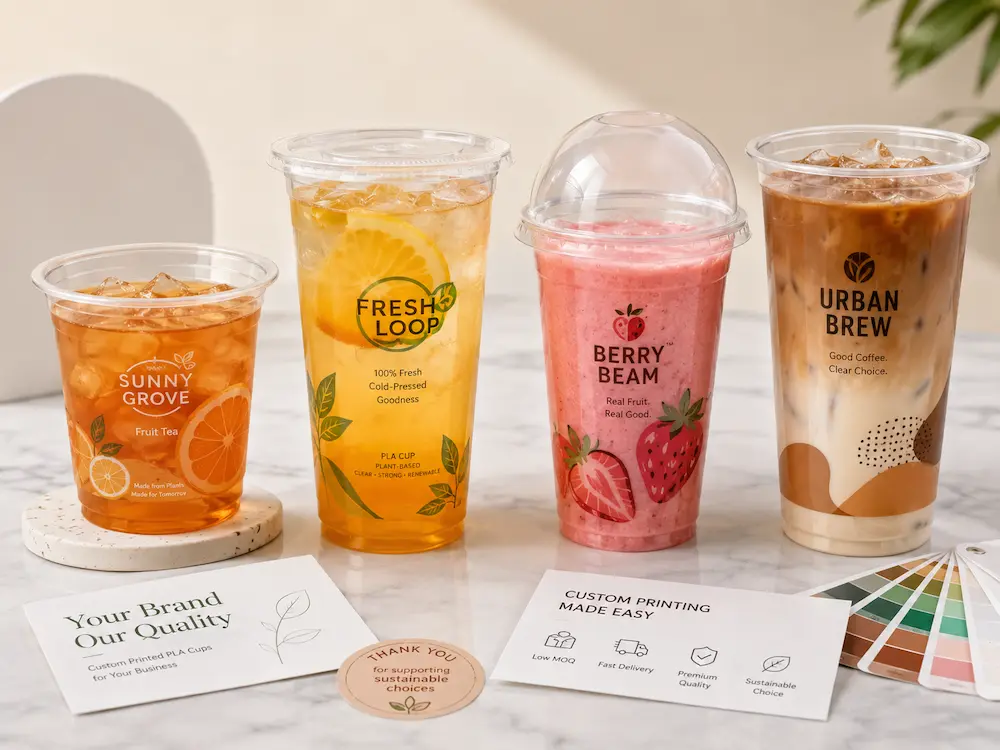
Clear Cup Presentation for Premium Foodservice Branding
Branding is not only about printing. It is also about how the package frames the product. A clean PLA cup with the right lid and label position helps bakeries create a premium look without making the packaging visually heavy. This is especially useful for chilled desserts, breakfast drinks, and takeaway bakery beverage sets.
For wholesale bakery buyers, the best cup choice should match the product category, filling process, storage method, and display environment. A bakery selling fruit yogurt cups may need a different lid style from a bakery selling iced coffee or matcha drinks. That is why sample testing remains essential before bulk ordering.
Wholesale PLA Cups for Foodservice Brands and Events
Foodservice brands need packaging that performs consistently across locations, staff teams, menus, and service formats. This includes catering companies, chain restaurants, hotel beverage service, school or campus foodservice, corporate dining, stadium concessions, and event beverage programs. For these buyers, wholesale PLA cups are most valuable when they support both high-volume operations and a clear sustainability message.
Scalable Cup Supply for Catering, Chains, and Institutional Buyers
Large foodservice buyers often care about carton efficiency, storage space, stable supply, lid matching, and reorder consistency. A cup that works well in one test order must still work when scaled across multiple events, stores, or service locations. This makes supplier reliability a major purchasing factor.
For catering and event use, PLA cups are commonly selected for cold drinks, water stations, juice service, iced tea, lemonade, smoothies, and branded beverage programs. Buyers should confirm cup size options, lid types, carton packing, sample availability, and custom packaging support before committing to long-term purchasing.
Choosing PLA Cups for Eco-Friendly Service Programs
Biodegradable cold cups and eco friendly cold cups are common search terms, but buyers should handle these claims carefully. PLA cold cups are best positioned as plant-based and compostable under proper industrial composting conditions where accepted. If a city, campus, event venue, or foodservice operator has a composting partner that accepts PLA, these cups may support a more aligned disposal program.
If local infrastructure does not accept PLA, buyers should still communicate accurately. Packaging selection must match both the brand message and the real end-of-life pathway available in the target market.
How to Choose the Right Wholesale PLA Cups
The right PLA cup is not only the cup with the best appearance. It is the cup that matches the drink, lid, storage condition, staff workflow, customer handling, and wholesale supply plan. Buyers should compare cup options through actual use cases before placing a bulk order.
Match Cup Size to Beverage Type
| Buyer Scenario | Common Drink or Food Type | Cup Selection Logic |
|---|---|---|
| Supermarkets | Chilled juice, lemonade, grab-and-go drinks | Prioritize clear display, stable stacking, lid fit, and fast replenishment. |
| Cafes | Iced coffee, cold brew, matcha, fruit tea | Focus on takeaway comfort, lid options, label space, and customer handling. |
| Bakeries | Parfaits, dessert drinks, yogurt cups, fruit cups | Choose clear cups that show layers, toppings, and portion size cleanly. |
| Foodservice Brands | Event drinks, catering beverages, institutional cold drinks | Emphasize bulk supply, carton efficiency, operational consistency, and reorder stability. |
Check Lid Fit, Storage Conditions, and Case Packing
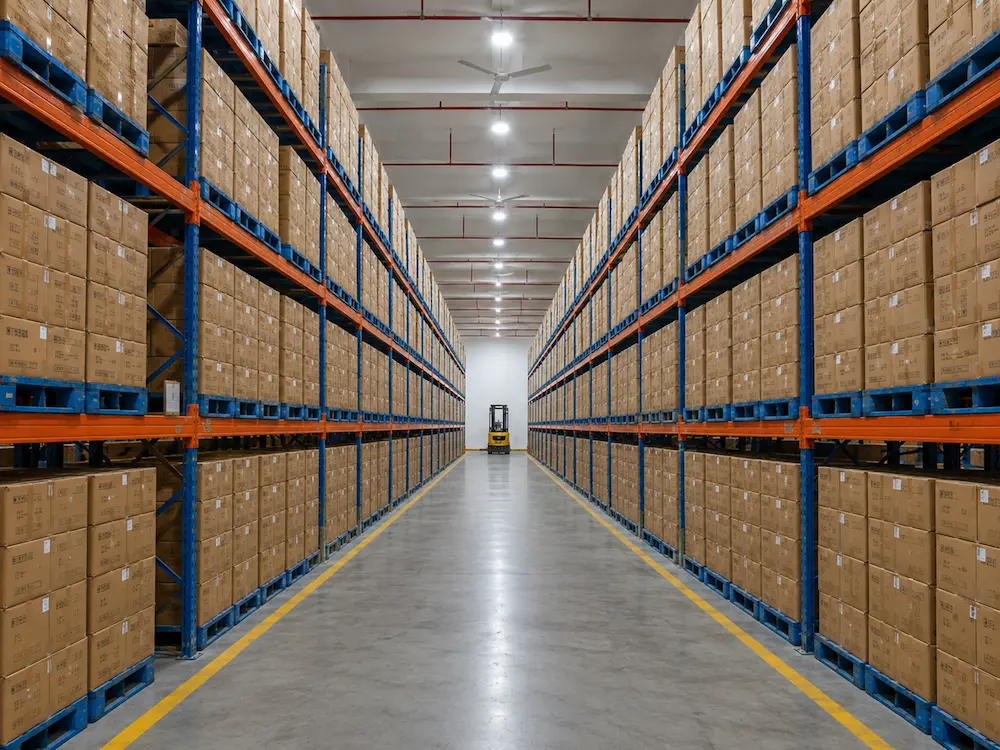
Before ordering wholesale PLA cups, buyers should test the full packaging system. This means testing the cup, lid, straw, label, filling process, storage condition, and delivery or display method together. A cup that looks suitable in a catalog may behave differently when filled with ice, foam, fruit pieces, or thick smoothie texture.
Storage also matters. PLA cups should be kept away from excessive heat and unsuitable storage conditions. Buyers should ask suppliers for handling guidance and confirm whether the packaging fits their warehouse, retail, or service environment.
Manufacturer and Supplier Checklist for Wholesale PLA Cups
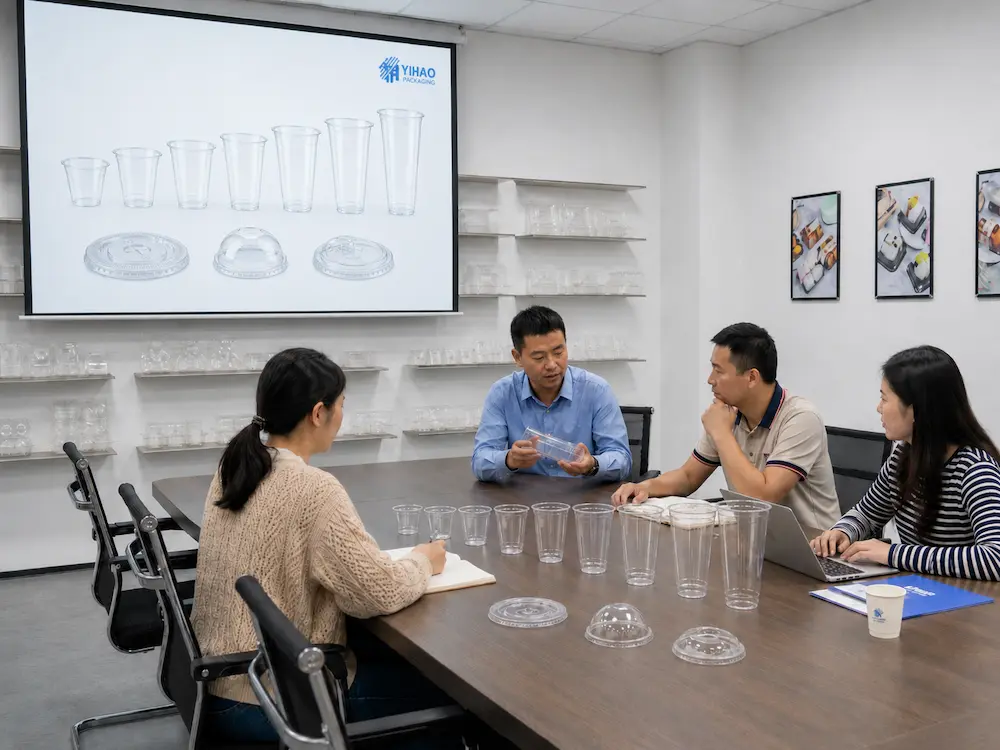
A strong supplier conversation saves time and reduces costly packaging mistakes. When buyers evaluate wholesale PLA cups, they should ask practical questions instead of relying only on product photos or basic catalog descriptions.
Material and Compliance Questions to Ask
- Are the cups made from PLA material?
- Are they designed specifically for cold beverages?
- What lid options match the cup series?
- Are flat lids, dome lids, or straw-slot lids available?
- What compostability-related documents can be provided?
- What labeling language is recommended for the target market?
- How should the cups be stored before use?
- Can samples be arranged before bulk orders?
Wholesale Ordering and Custom Branding Questions
- What cup sizes are available in the series?
- Can the supplier support repeat wholesale orders?
- What carton packing options are available?
- Can labels, cartons, or packaging details be customized?
- Can the supplier support private-label or distributor packaging needs?
- How does the supplier help reduce cup-and-lid mismatch risk?
- What information should buyers provide before requesting a quote?
For distributors and foodservice purchasing teams, these questions help separate a basic product seller from a more capable packaging partner. A strong supplier should help buyers match product use, packaging structure, lid compatibility, and wholesale supply planning.
Wholesale PLA Cups vs Other Cold Cup Options
PLA cups are valuable, but they are not the only cold cup option. Buyers should compare PLA with PET and PP based on use environment, brand message, disposal pathway, and operational performance. The best packaging decision is not always the most trendy option; it is the option that fits the real product and market.
PLA Cups vs PET Cold Cups
PET cold cups are widely used for beverage packaging because they offer strong clarity and are familiar in many cold drink markets. They are often selected for iced coffee, juice, smoothies, and clear retail beverage display. In regions where PET recycling systems are active and accepted, PET may support a different sustainability pathway based on recycling.
PLA cups are often selected when buyers want a plant-based material and compostable packaging direction. For brands with access to industrial composting facilities that accept PLA, PLA compostable cold cups may align well with sustainability goals. Buyers should compare both options honestly instead of assuming one material is always better in every market.
PLA Cups vs PP Cold Cups
PP cold cups are commonly chosen when buyers need a durable and flexible cup option for certain foodservice environments. PP may be attractive for applications where toughness and handling strength are key priorities. PLA cups are more relevant when the purchasing goal is plant-based cold drink packaging and compostable material positioning.
For food packaging teams, the decision should start with the product. Iced coffee, smoothies, juice, matcha, lemonade, fruit tea, and refreshers may all use cold cups, but their ingredients and service conditions are different. The better the buyer understands the drink and service flow, the easier it is to choose the right material.
Why Work with a PLA Cup Manufacturer Instead of Only a Trading Supplier?
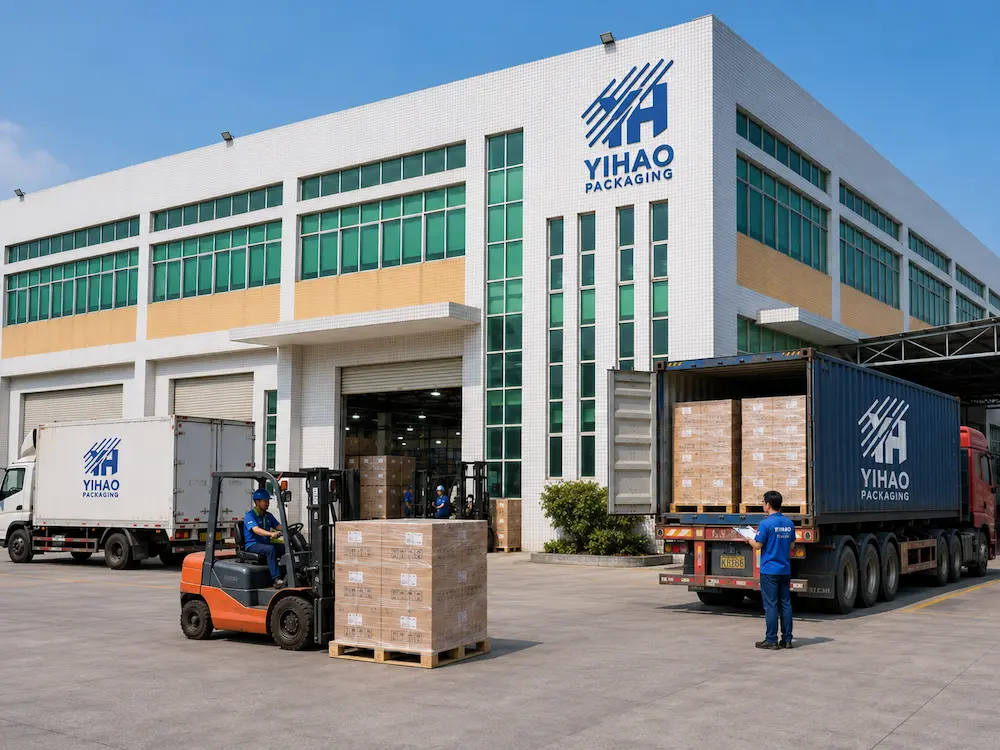
When buyers compare wholesale PLA cups, price is important, but it should not be the only factor. Cup-and-lid matching, packaging consistency, sample support, carton packing, custom branding, and long-term availability can affect the real cost of a packaging program.
Better Control Over Product Matching and Repeat Orders
A manufacturer can usually support buyers more directly when matching cups with lids, planning product series, confirming packaging details, and preparing repeat orders. This is especially useful for supermarkets, cafes, bakeries, and foodservice brands that need a stable packaging line instead of one-time purchasing.
For example, a cafe may need several cup sizes with matching flat and dome lids. A supermarket may need carton packing that fits backroom storage and shelf replenishment. A distributor may need consistent product specifications across repeated wholesale shipments. These needs require more than a basic catalog listing.
Better Support for Food Packaging Brands and Distributors
Food packaging brands and distributors often need packaging that can be sold, stored, and reordered smoothly. A manufacturer with food packaging experience can help buyers review size logic, lid matching, packaging use cases, and branding direction before bulk production or wholesale purchasing.
Buyer Quick Note Before Ordering Wholesale PLA Cups
Before placing a wholesale order, buyers should confirm the complete use scenario. Wholesale PLA cups are best suited for cold beverage and chilled display applications. They should not be selected for hot drinks unless the supplier clearly provides a suitable product designed for that purpose.
Buyers should also confirm lid fit, cup size, carton packing, storage guidance, sample testing, and local composting acceptance. If the cups will be used for retail display, test them in the actual cooler or shelf environment. If they will be used in cafes, test them with the actual drink menu. If they will be used in bakeries, test them with the real dessert or beverage pairing. If they will be used by foodservice brands, test them in the actual service flow.
The safest purchasing strategy is simple: match the cup to the drink, match the lid to the cup, match the material to the disposal pathway, and match the supplier to the long-term purchasing plan.
Conclusion: Choosing Wholesale PLA Cups with a Practical Purchasing Mindset
Wholesale PLA cups are a strong option for supermarkets, cafes, bakeries, and foodservice brands that need plant-based cold drink packaging with clear presentation and wholesale supply potential. They fit many modern cold beverage categories, including iced coffee, juice, smoothies, matcha, lemonade, fruit tea, refreshers, iced tea, and chilled retail drinks.
At the same time, PLA cups should be selected carefully. Buyers need to confirm cold-use suitability, lid compatibility, storage conditions, local composting acceptance, and supplier reliability. A good PLA cup purchasing decision is not based on material claims alone. It is based on real product use, operational testing, and a supplier that understands food packaging applications.
For businesses comparing PLA drink cups, compostable cold cups, and other cold beverage packaging options, YIHAO supports practical packaging selection for wholesale buyers, distributors, supermarkets, cafes, bakeries, and foodservice brands.
FAQ
1. Are PLA cups suitable for hot drinks?
No. PLA cups are mainly designed for cold drinks and chilled serving applications. Buyers should not use standard PLA cold cups for hot drinks unless the supplier clearly provides a product specifically designed and tested for that purpose.
2. Are PLA cups compostable?
PLA cups are compostable under proper industrial composting conditions where local facilities accept PLA packaging. Buyers should confirm local composting infrastructure, labeling rules, and disposal guidance before making compostability claims.
3. What drinks are best for PLA cups?
PLA cups are best for cold drinks such as iced coffee, cold brew, smoothies, juice, fruit tea, lemonade, matcha, iced tea, refreshers, sparkling fruit drinks, and other chilled beverages.
4. Can wholesale PLA cups be used by supermarkets and cafes?
Yes. Wholesale PLA cups are suitable for supermarket chilled beverage display, cafe takeaway drinks, bakery beverage pairings, and foodservice cold drink programs when the cups are used under suitable cold-use conditions.
5. How should buyers choose a PLA cup supplier?
Buyers should choose a PLA cup supplier by checking material information, cold-use suitability, lid compatibility, sample availability, carton packing, wholesale supply stability, custom branding support, and compostability-related documentation.
References
- European Bioplastics, PLA and Compostable Plastics Material Guidance.
- ASTM International, Compostable Plastics and Packaging Standards Overview.
- Biodegradable Products Institute, Compostable Packaging Certification Guidance.
- U.S. Environmental Protection Agency, Sustainable Materials Management Principles.
- Foodservice Packaging Institute, Foodservice Packaging Material and Recovery Resources.
- International Organization for Standardization, Packaging and Environmental Labeling Guidance.
- Compost Manufacturing Alliance, Compostable Packaging Acceptance Considerations.
- WRAP, Plastic Packaging, Recycling, and Foodservice Packaging Resource Materials.
Deep-Dive Insights for Buyers Comparing Wholesale PLA Cups
How should a buyer decide whether PLA is the right cup material?
A buyer should start with the use environment. PLA is strongest for cold beverage applications where the brand wants plant-based packaging and where disposal guidance can be communicated responsibly. If the product involves hot drinks, high heat exposure, or uncertain storage conditions, another material may be a better fit.
Why does lid compatibility matter as much as cup material?
Lid fit directly affects takeaway performance, spill control, staff workflow, and customer satisfaction. A good PLA cup program should include compatible flat lids, dome lids, or straw-slot lids based on the drink menu and service style.
What should supermarkets test before buying wholesale PLA cups?
Supermarkets should test refrigerated display performance, stacking, label space, lid fit, replenishment speed, and customer handling. The cup should support both visual appeal and daily retail operations.
What should cafes and bakeries test before bulk ordering?
Cafes should test iced coffee, cold brew, smoothies, matcha, fruit tea, and refreshers in the actual cups. Bakeries should test parfaits, dessert drinks, yogurt cups, and chilled bakery pairings to confirm appearance, portion control, and lid performance.
What is the best purchasing mindset for wholesale PLA cups?
The best approach is to treat PLA cups as part of a complete packaging system. Buyers should evaluate the cup, lid, drink type, storage condition, composting acceptance, carton packing, branding needs, and supplier reliability together before making a bulk purchasing decision.
© YIHAO Packaging. All rights reserved. All articles, product images, packaging designs, technical specifications, and website materials are protected by copyright. Unauthorized copying, reproduction, redistribution, modification, or commercial use is strictly prohibited without prior written permission.