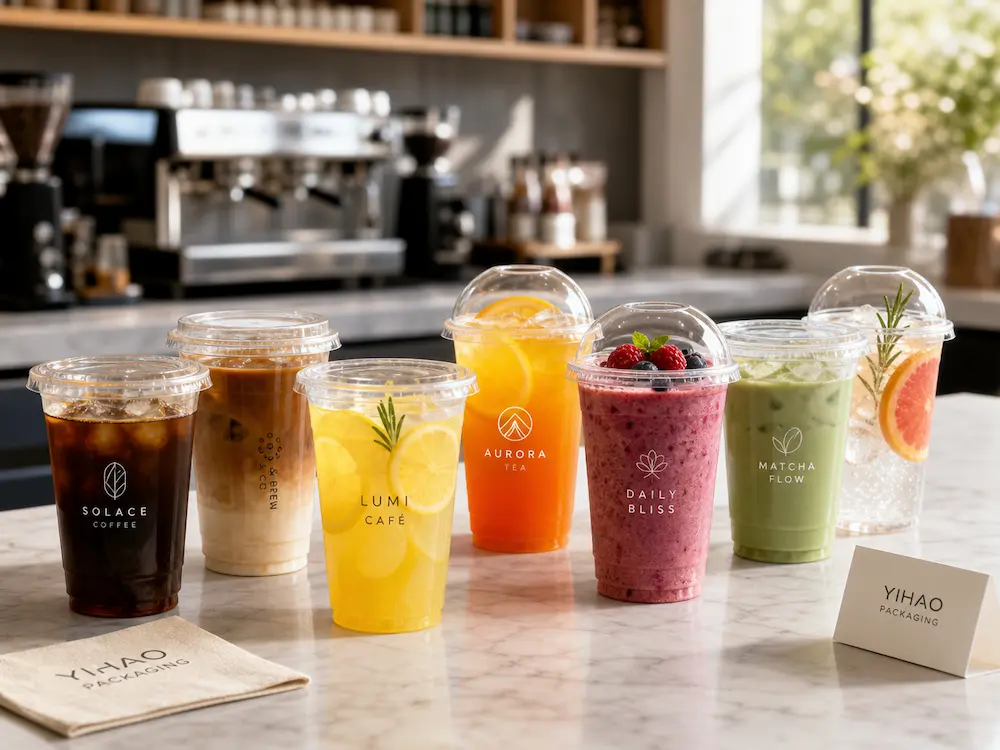
Micro Summary: PET Cold Cups for Modern Cold Beverage Packaging
PET cold cups are clear, lightweight, and practical packaging solutions for iced coffee, cold brew, juice, smoothies, milk tea, fruit tea, matcha drinks, refreshers, and other chilled beverage programs. Their high transparency helps brands show drink color, ice, foam, fruit pulp, toppings, and layered textures directly at the point of sale.
For cafes, supermarkets, bakeries, juice bars, distributors, and foodservice brands, clear PET cups support better retail display, faster takeaway service, custom branding, and stable wholesale sourcing. As a food packaging manufacturer and solution provider, YIHAO helps buyers select practical PET cup packaging based on beverage type, lid matching, customization needs, packing method, and long-term supply stability.
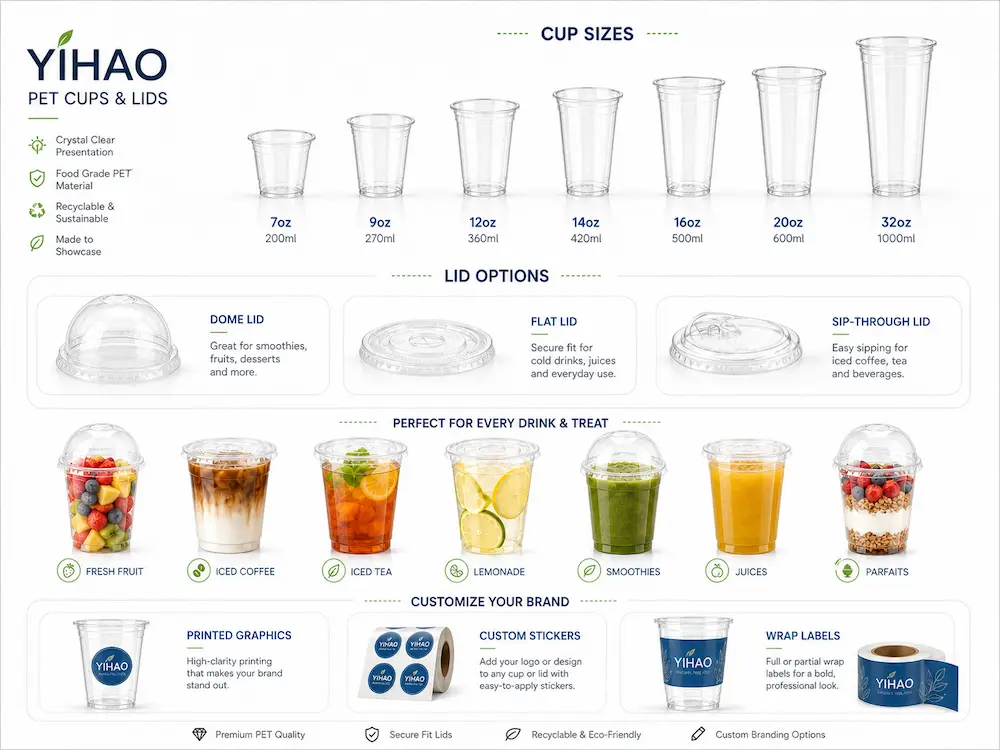
PET cold cups have become one of the most practical packaging choices for modern cold beverage service. From iced coffee and fresh juice to smoothies, milk tea, fruit tea, lemonade, matcha drinks, and refreshers, beverage brands need cups that present drinks clearly, fit lids securely, support fast service, and protect brand image during takeaway or retail display.
For cafes, supermarkets, bakeries, juice bars, restaurants, distributors, and foodservice chains, a cold cup is more than a disposable container. It is part of the product presentation. A clear cup helps customers see color, ice, foam, fruit pulp, toppings, and layered ingredients before they buy. This visual impact is especially important for cold drinks because customers often judge freshness, flavor, and value by appearance.
As a food packaging manufacturer and solution provider, YIHAO understands that buyers do not only need a cup. They need a reliable packaging system. The right PET cold cups should match real beverage menus, support daily operations, fit compatible lids, allow practical customization, and remain stable across repeat wholesale orders.
This guide explains what PET cold cups are, why they are widely used for iced coffee, juice, and smoothies, how they compare with other packaging options, and what buyers should check before choosing a PET cup manufacturer or placing a wholesale order.
Related PET Cold Cup Buyer Guides
This complete guide gives a full overview of PET cold cups. For buyers who need deeper information on specific applications, materials, sustainability wording, or sourcing decisions, the following related guides provide more focused purchasing insights:
- Clear PET Cups: Buyer Guide for Food Packaging Teams
- Best Iced Coffee Cups for Retail Display, Takeaway, and Chilled Food
- Smoothie Cups vs Alternative Packaging: How Buyers Should Choose
- Wholesale Juice Cups: Manufacturer and Supplier Checklist
- Recyclable Cold Cups FAQ: Materials, Sizes, Uses, and Ordering Questions
- Custom PET Cups for Supermarkets, Cafes, Bakeries, and Foodservice Brands
What Are PET Cold Cups?
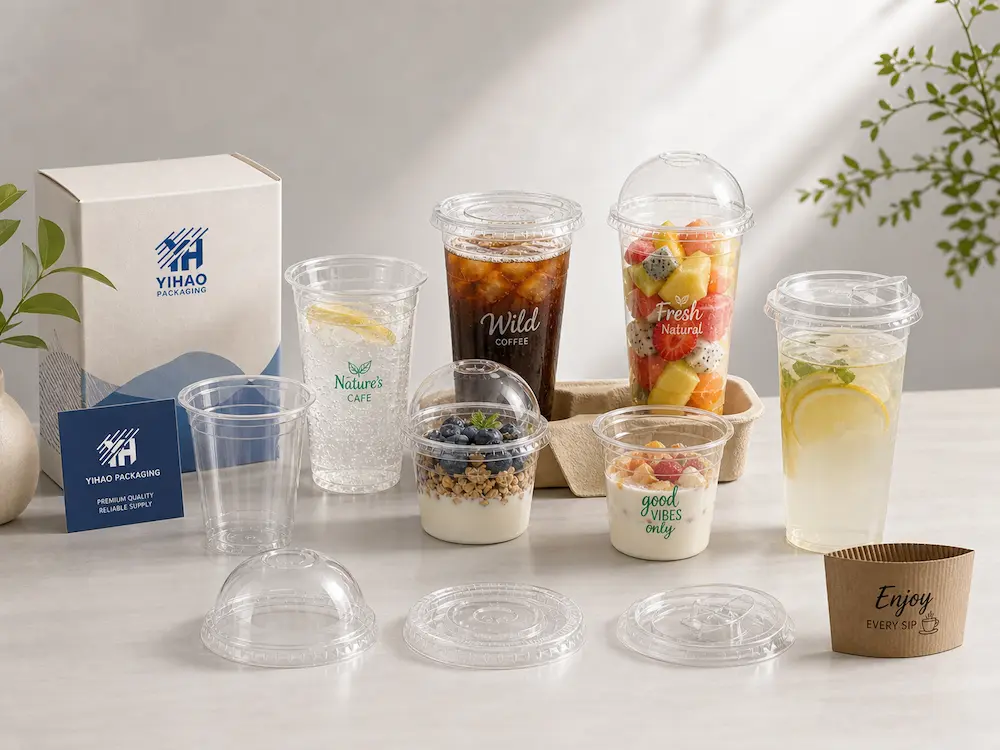
PET cold cups are disposable plastic cups made from polyethylene terephthalate, commonly known as PET. PET is widely used in food and beverage packaging because it offers high clarity, good rigidity, lightweight handling, and a clean visual appearance for takeaway and retail environments.
In cold beverage packaging, PET cups are mainly used for drinks that require strong product visibility. These include iced coffee, cold brew, iced latte, fresh juice, smoothies, lemonade, milk tea, fruit tea, matcha drinks, sparkling fruit drinks, and chilled specialty beverages.
Basic Material Definition
PET is a transparent thermoplastic material used in bottles, cups, trays, and food containers. For cold cups, PET delivers a glossy and highly transparent appearance, making beverages look fresh, colorful, and ready to drink.
Compared with opaque packaging, clear PET cups allow the product itself to become part of the selling message. A smoothie looks thicker, juice looks brighter, iced coffee looks more premium, and fruit tea looks more attractive when the cup clearly shows the drink inside.
For a deeper look at material clarity, food packaging use cases, and buyer selection logic, read our related guide: Clear PET Cups: Buyer Guide for Food Packaging Teams.
Why PET Is Used for Cold Beverages
PET is widely used for cold beverages because it balances clarity, stiffness, stackability, and operational convenience. In busy beverage service, cups need to be easy to store, easy to separate, quick to fill, and suitable for matching lids.
For refrigerated retail displays, PET cups also support grab-and-go sales. Customers can identify flavor, color, portion size, and product condition quickly without opening the package.
What PET Cold Cups Are Not Designed For
PET cold cups are mainly designed for cold beverage applications. They are not recommended for hot coffee, hot tea, hot chocolate, or other high-temperature drinks. Buyers should use hot-drink packaging materials when heat resistance is required.
This distinction protects both product performance and customer experience. A cup that works well for iced coffee is not automatically suitable for hot coffee. Packaging should always match serving temperature, drink type, lid requirement, and handling condition.
Why PET Cold Cups Are Popular for Iced Coffee, Juice, and Smoothies
Cold beverage menus have expanded quickly across cafes, supermarkets, convenience stores, bakeries, and foodservice channels. Drinks are no longer only basic soda or standard iced coffee. They are layered, colorful, seasonal, topped, and often designed for visual appeal.
This is why PET cold cups remain popular: they help brands sell the drink before the customer tastes it.
Clear Visibility for Better Product Presentation
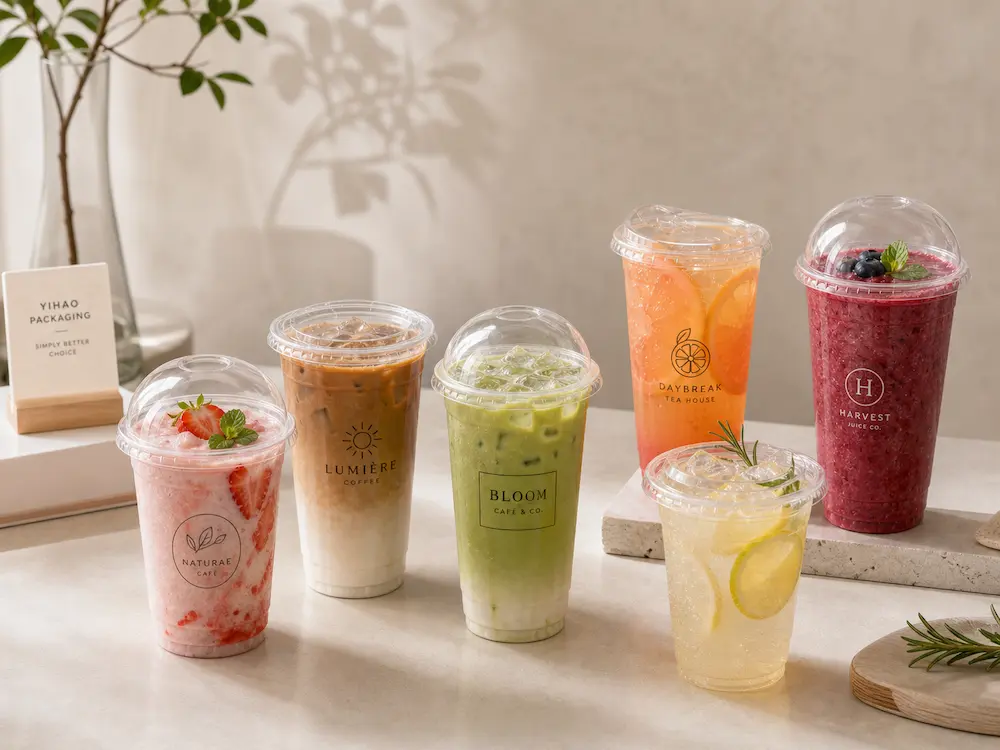
Clear PET cups show beverage color, ice, milk layers, fruit pulp, foam, toppings, pearls, and blended textures. This matters for iced coffee, smoothies, fresh juice, milk tea, fruit tea, matcha drinks, and refreshers.
For beverage brands, visibility builds trust. Customers can see what they are buying. For retailers, clear cups improve shelf appeal. For cafes and takeaway counters, they make drinks look cleaner, fresher, and more professional.
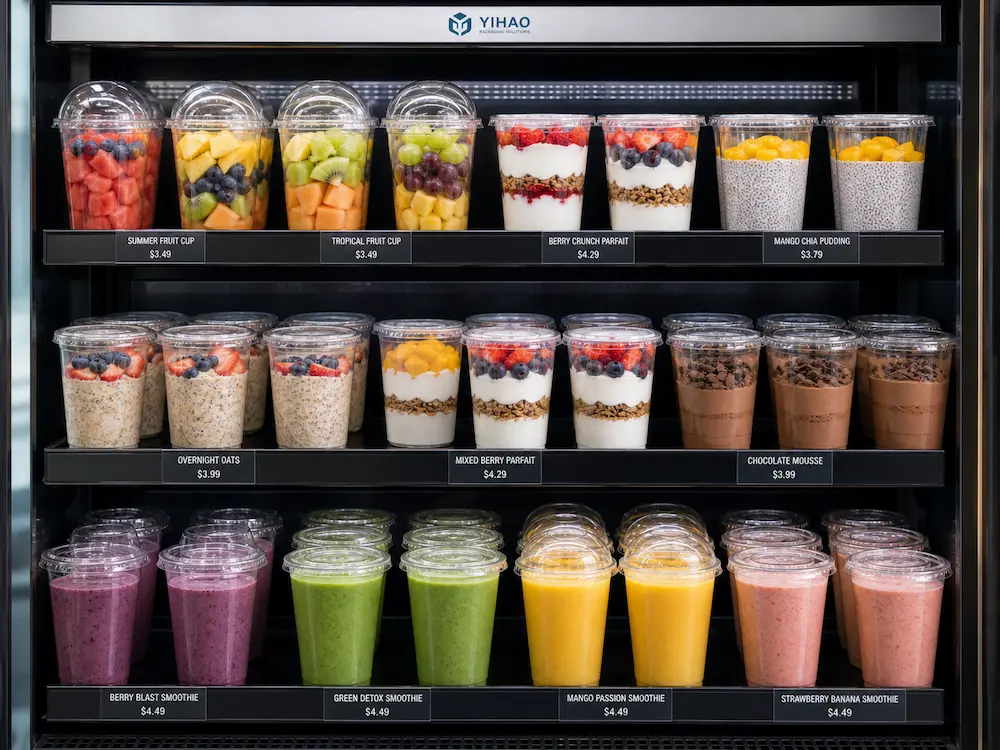
Strong Fit for Modern Cold Beverage Menus
Modern cold beverage menus often include iced coffee, cold brew, flavored cold brew, iced latte, matcha latte, lemonade, fruit tea, sparkling fruit drinks, berry refreshers, acai-style drinks, protein smoothies, and milk tea. These drinks rely heavily on visual presentation.
PET cold cups support these menus because they work with different lid styles. Flat lids suit standard takeaway drinks. Dome lids support whipped cream, smoothie toppings, foam, fruit pieces, and dessert-style beverages. No-hole lids are useful for chilled display and transport.
Better Takeaway and Retail Experience
A good PET cup improves the full service process. Staff can stack cups efficiently, separate them quickly, fill drinks smoothly, and close lids with less effort. Customers receive a cup that looks clean, feels stable, and presents the drink well.
For wholesale buyers, this means cup quality should be judged by more than unit price. Cup clarity, rim consistency, lid fit, wall strength, packing protection, and supplier stability all affect long-term packaging value.
Main Applications of PET Cold Cups
PET cold cups are used across many cold beverage categories. The right cup choice depends on drink type, portion size, ice level, toppings, lid style, display method, and service channel.
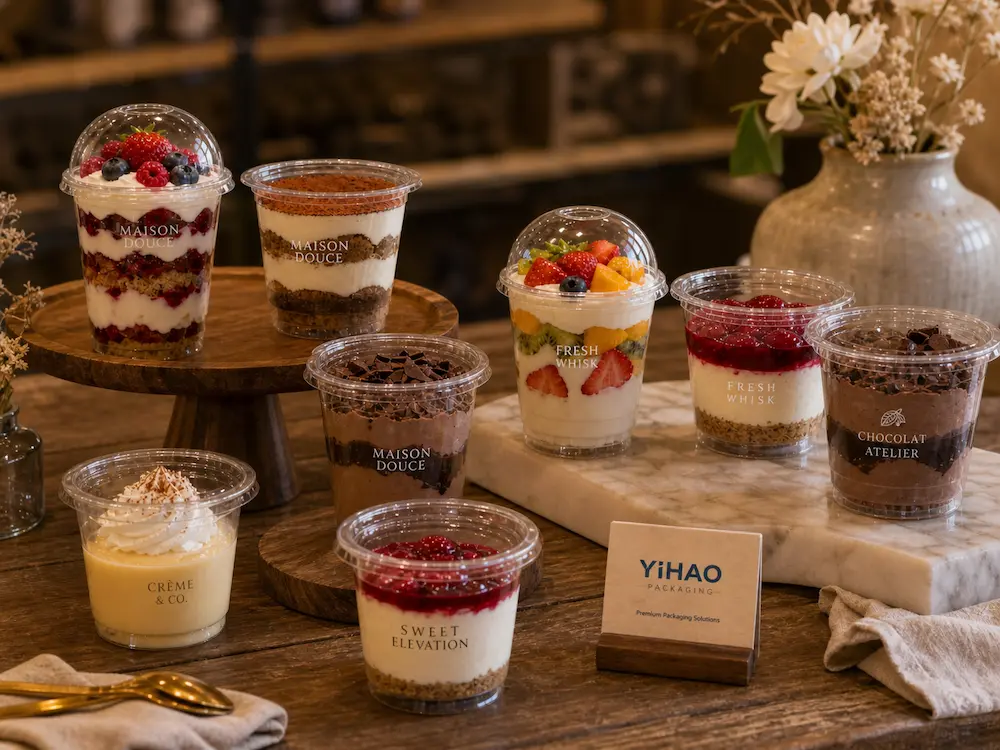
Iced Coffee Cups for Cafes and Takeaway Brands
Iced coffee cups are one of the most common applications for PET cups. Iced coffee, cold brew, iced latte, iced mocha, flavored cold brew, and matcha latte all benefit from clear presentation. The cup shows contrast between coffee, milk, ice, cream, syrup, and foam.
For cafes and takeaway chains, clear cups help standardize the customer experience across menu items, store locations, and seasonal drink launches. Custom printing also turns each takeaway drink into a small brand display.
If your business focuses on iced coffee, cold brew, chilled coffee drinks, or retail-ready takeaway beverages, see the dedicated guide: Best Iced Coffee Cups for Retail Display, Takeaway, and Chilled Food.
Juice Cups for Fresh Juice and Supermarket Displays
Juice cups are widely used for orange juice, mixed fruit juice, watermelon juice, lemonade, cold-pressed juice, and chilled grab-and-go beverages. In supermarkets and convenience stores, clear cups help shoppers judge freshness and flavor quickly.
For juice brands, PET cups support both immediate consumption and refrigerated display. Buyers should confirm cup size, lid closure, filling process, carton packing, and display requirements before placing regular wholesale orders.
For juice brands, importers, supermarkets, and distributors comparing suppliers, the following checklist offers a more sourcing-focused view: Wholesale Juice Cups: Manufacturer and Supplier Checklist.
Smoothie Cups for Thick Drinks and Fruit-Based Beverages
Smoothie cups need enough structure for thicker beverages. Smoothies, berry blends, mango smoothies, acai-style drinks, yogurt drinks, and protein smoothies often require larger cup sizes and compatible dome lids or straw-slot lids.
Because smoothies may include thick texture, foam, fruit pieces, or toppings, buyers should check wall strength, grip comfort, lid fit, and usable headspace. The right PET cup makes the drink easier to present, carry, and sell.
For buyers comparing smoothie packaging with other cold beverage container options, this focused article explains the decision logic in more detail: Smoothie Cups vs Alternative Packaging: How Buyers Should Choose.
PET Cups for Milk Tea, Fruit Tea, Matcha, and Refreshers
Milk tea, fruit tea, matcha drinks, lemonade, sparkling fruit drinks, and refreshers often include ice, fruit slices, pearls, jelly, foam, or layered colors. PET cold cups are suitable for these drinks because they show ingredients clearly and support a premium visual impression.
This is especially useful for beverage brands that rely on seasonal flavors, social media-friendly drinks, and colorful menu presentation.
PET Cold Cups vs Other Cold Beverage Packaging Options
Packaging buyers often compare PET cups with PP cups, paper cups, and PLA cups. Each option has different strengths. The best choice depends on drink type, storage condition, customer expectation, sustainability communication, and supply chain needs.
| Packaging Option | Clarity | Cold Drink Performance | Branding Options | Typical Applications | Buyer Considerations |
|---|---|---|---|---|---|
| PET Cold Cups | High clarity and glossy appearance | Strong fit for cold beverages, takeaway, and retail display | Logo printing, custom cups, sleeves, and carton branding | Iced coffee, juice, smoothies, milk tea, refreshers | Confirm lid fit, cup size, material specification, printing method, and supplier consistency |
| PP Cups | Usually lower clarity than PET | Useful for selected cold beverage applications | Printing options vary by supplier | General drinks, takeaway beverages, foodservice use | Check appearance expectations, rigidity, and customer perception |
| Paper Cups with Plastic Coating | Opaque, drink is not visible | Common for many beverage formats | Large printable surface for brand graphics | Coffee shops, takeaway drinks, promotional programs | Confirm lining type, recycling acceptance, and whether drink visibility matters |
| PLA Cups | Clear appearance | Mainly used for cold applications | Custom options depend on supplier and order scale | Eco-positioned cold drinks and selected foodservice programs | Check storage conditions, composting infrastructure, and market claim accuracy |
PET Cups vs PP Cups
PET cups usually provide stronger clarity and a glossier surface than PP cups. For drinks sold by appearance, this is a clear advantage. PP cups may work for general use, but PET is often preferred when iced coffee, juice, smoothies, and layered drinks need stronger visual impact.
PET Cups vs Paper Cups
Paper cups provide more printable space, but they hide the beverage. This makes them less effective for colorful juices, layered iced coffee, fruit tea, smoothies, and premium cold drinks. PET cups allow the drink itself to support product marketing.
PET Cups vs PLA Cups
PLA cups may be used for specific sustainability positioning, but buyers must understand storage conditions and local composting infrastructure before making claims. PET remains a practical choice for mainstream cold beverage programs because it offers clarity, supply stability, and broad application flexibility.
Are PET Cold Cups Recyclable?
Recyclable cold cups should be described carefully. PET is a recyclable plastic material where local collection, sorting, and recycling systems accept it. However, actual recycling depends on local infrastructure, contamination control, sorting technology, and packaging design.
For this reason, buyers should avoid broad claims such as “recycled everywhere” or “100% recycled after use.” A more accurate statement is that PET cups are recyclable where suitable local recycling programs accept PET packaging.
For more detailed questions about materials, sizes, uses, and recycling-related wording, visit our dedicated FAQ article: Recyclable Cold Cups FAQ: Materials, Sizes, Uses, and Ordering Questions.
PET as a Recyclable Plastic Material
PET has an established recycling stream in many markets, especially for bottles and selected packaging formats. For cups, local acceptance may vary. Buyers selling into multiple countries or regions should confirm local recycling rules before printing recycling claims on packaging.
Why Buyers Should Avoid Overclaiming Sustainability
Sustainability claims affect brand trust. If a package is technically recyclable but not accepted in a local recycling system, the claim may confuse customers. Beverage brands should use responsible wording and avoid environmental promises that cannot be supported across all sales markets.
How to Make PET Cup Packaging More Recycling-Friendly
Buyers can improve recycling communication by selecting clear material where possible, avoiding unnecessary mixed-material decoration, reducing excessive labels or sleeves, and confirming print or label choices with supplier guidance.
For custom PET cups, this step is important. A cup design should balance branding impact with practical recycling communication and product visibility.
How to Choose the Right PET Cold Cup Size
The right cup size depends on beverage type, ice level, toppings, lid height, portion strategy, and sales channel. Buyers should not choose PET cold cups by ounce capacity alone. A 16 oz iced coffee, a 16 oz smoothie, and a 16 oz fruit tea may require different packaging logic.
| Cup Size Range | Common Beverage Uses | Recommended Lid Logic | Buyer Notes |
|---|---|---|---|
| Small Sizes | Juice samples, kids drinks, small fresh juice, tasting portions | Flat lid or no-hole lid | Useful for portion control, trial packs, and compact retail display |
| Medium Sizes | Iced coffee, cold brew, lemonade, standard juice, fruit tea | Flat straw-slot lid or no-hole lid | Suitable for mainstream takeaway menus and grab-and-go beverages |
| Large Sizes | Smoothies, milk tea, refreshers, protein drinks, topped beverages | Dome lid, straw-slot lid, or specialty lid | Better for ice, toppings, foam, fruit pieces, and thicker drinks |
Matching Cup Size to Beverage Type
Iced coffee often needs space for ice and milk. Juice usually needs a clean, compact presentation for chilled display. Smoothies need more room for thickness and toppings. Milk tea and refreshers may require extra space for pearls, fruit pieces, foam, or large ice cubes.
Small, Medium, and Large Cup Use Cases
Small cups support sampling, kids drinks, tasting portions, and compact juice products. Medium cups fit standard iced coffee, lemonade, and juice menus. Large cups are better for smoothies, milk tea, fruit tea, refreshers, and topped drinks.
When buyers organize cup sizes by real menu structure, daily operations become easier. Staff can match drinks to cups quickly, inventory becomes more predictable, and customers receive a more consistent product experience.
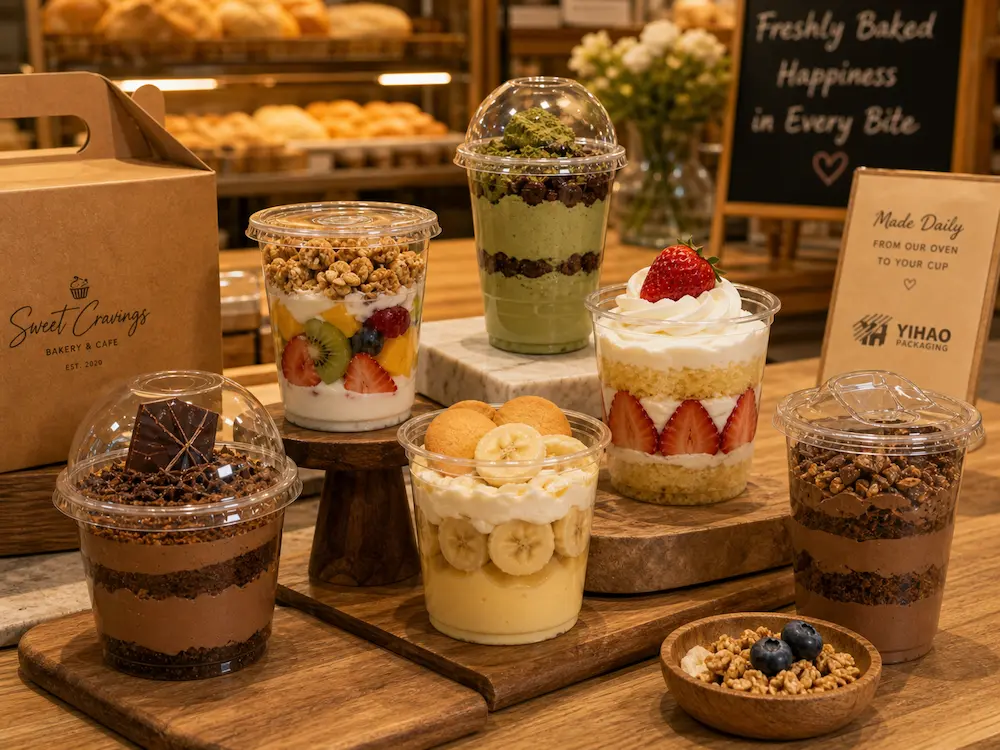
Lid Compatibility and Operational Efficiency
Lid fit is one of the most important checks in PET cup purchasing. A clear and attractive cup loses value if the lid does not close securely. Buyers should test the complete cup-and-lid system before confirming bulk orders.
Flat lids work for standard takeaway drinks. Dome lids are suitable for whipped cream, smoothie toppings, foam, and dessert-style drinks. No-hole lids support chilled display and transport. Straw-slot lids fit immediate-consumption drinks.
Custom PET Cups for Beverage Brands
Custom PET cups help beverage brands turn everyday packaging into brand exposure. A printed logo on a clear cup travels with the customer, appears in takeaway photos, and supports visual consistency across stores, events, delivery channels, and retail displays.
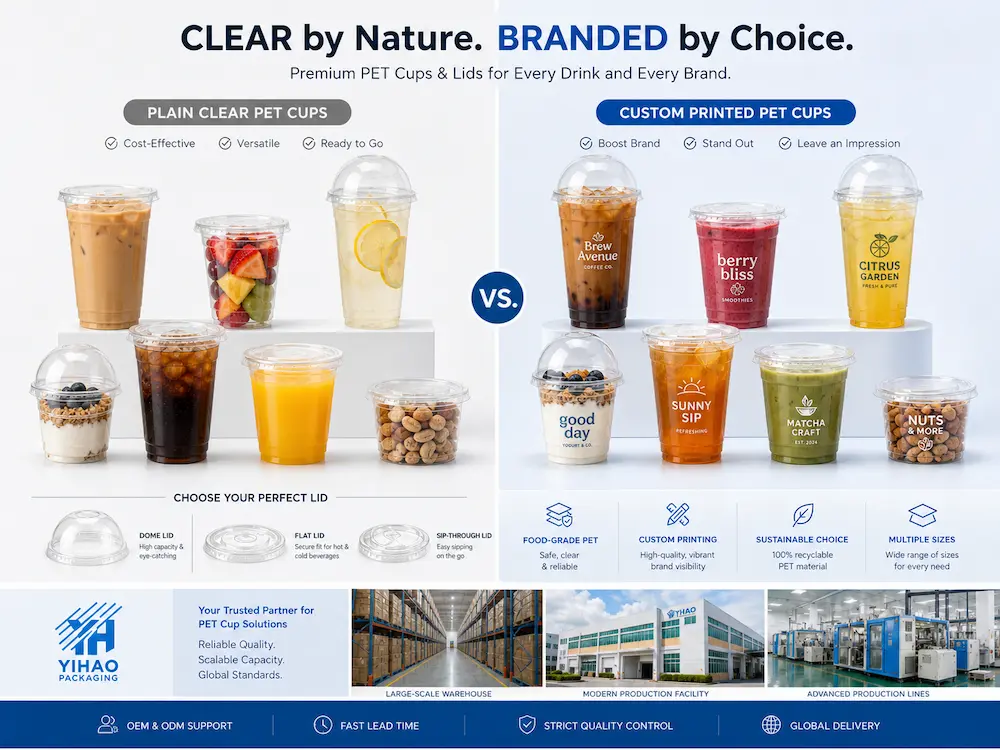
Why Custom Printing Matters
Cold beverage markets are highly competitive. Customers often compare multiple drinks in the same cafe area, supermarket case, delivery platform, or event location. A custom cup helps the brand look more professional, recognizable, and trustworthy.
For iced coffee, juice, smoothies, and refreshers, printing should not cover too much of the drink. The best design balances logo visibility with product visibility.
For brands planning logo printing, private label packaging, or custom cup programs for retail and foodservice channels, read the full customization guide: Custom PET Cups for Supermarkets, Cafes, Bakeries, and Foodservice Brands.
Common Customization Options
Customization options may include logo printing, private label cups, sleeve design, carton branding, coordinated cup-lid systems, and packaging solutions for retail or foodservice programs.
As a packaging manufacturer, YIHAO supports buyers who need practical custom packaging for cold beverages, including clear cup presentation, brand-focused design direction, wholesale packing, and repeat order planning.
What Buyers Should Confirm Before Custom Ordering
Before confirming custom PET cups, buyers should review the sample with the actual beverage. A logo that looks good on a digital proof may look too large, too small, or poorly positioned once the cup is filled with ice, milk, juice, fruit, or foam.
Buyers should confirm artwork format, printing area, logo size, cup size, lid compatibility, color requirements, sample approval, carton packing, and production schedule before mass production.
Wholesale PET Cold Cups: What Buyers Should Check Before Ordering
When purchasing wholesale PET cold cups, buyers should evaluate the full packaging system, not only the cup price. A wholesale order affects service speed, product appearance, inventory control, shipping efficiency, and customer satisfaction.
Material and Food Contact Suitability
Buyers should confirm that the cup material is suitable for food and beverage contact in the target market. Material declarations, supplier documentation, and compliance support are important for importers, distributors, supermarkets, and foodservice chains.
Cup Clarity, Wall Strength, and Lid Fit
Physical performance matters in daily use. Buyers should check whether the cup is clear, smooth, stable, and easy to separate from the stack. Wall strength should match beverage type and service condition. Lid fit should be tested with the exact lid used in real service.
For smoothies and large iced drinks, cup stability is especially important. For retail displays, clarity and clean appearance matter more. For delivery and takeaway, secure lid closure becomes a priority.
Packing, Storage, and Shipping Considerations
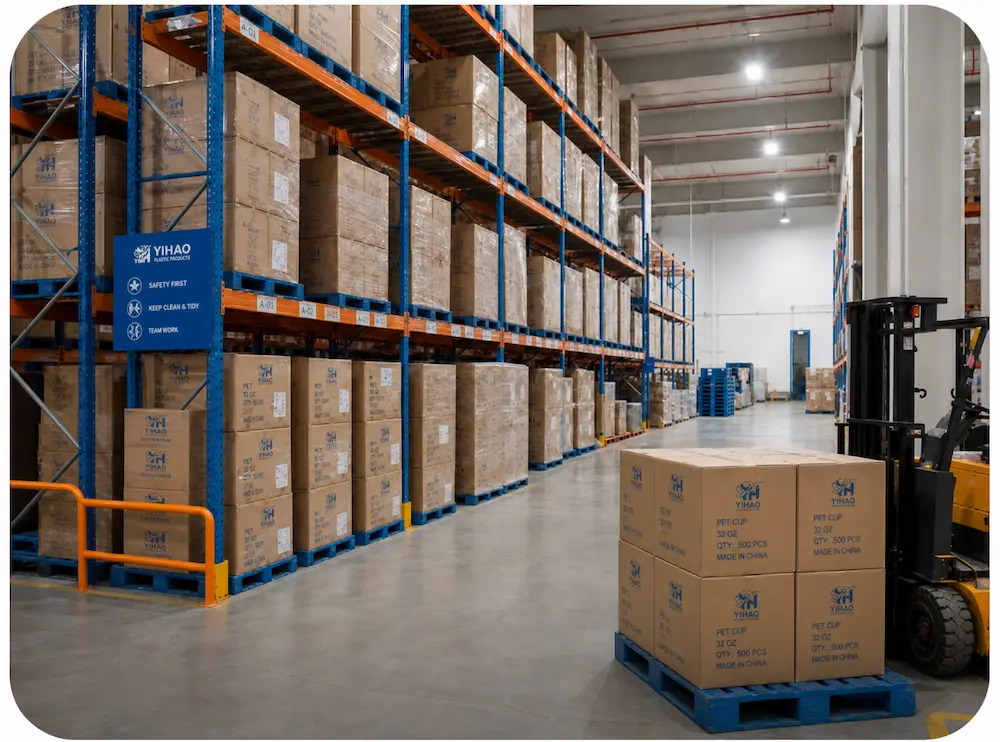
Wholesale packaging performance also depends on carton strength, inner bag protection, stacking method, dust prevention, pallet loading, and export handling. A good cup can still create problems if it arrives scratched, deformed, dusty, or poorly packed.
Buyers should confirm carton quantity, carton size, storage conditions, loading method, and shipping protection before placing repeated orders.
Supplier Stability and Long-Term Cooperation
A reliable PET cup manufacturer should support stable quality, repeatable specifications, clear communication, size consistency, lid matching, and wholesale supply planning.
For beverage chains, distributors, and supermarkets, long-term stability is more important than a short-term low price. Packaging inconsistency can affect product appearance, service speed, and customer trust.
How a PET Cup Manufacturer Supports Foodservice and Retail Buyers
A strong PET cup manufacturer does more than supply cups. It helps buyers build a packaging system that fits real beverage operations. This includes cup sizes, lid options, carton packing, custom branding, sample confirmation, and repeat order support.
Stable Production Capacity
Cold beverage demand often increases during warm seasons, holidays, events, and promotional periods. Iced coffee, lemonade, juice, smoothies, and refreshers all create seasonal packaging demand. Buyers need suppliers that support stable production and order planning.
Mold, Size, and Lid System Support
Matching cup and lid systems reduce daily service problems. If multiple cup sizes share compatible lid families, buyers can simplify inventory and reduce staff confusion. This is valuable for beverage chains, cafes, distributors, and foodservice operators with multiple drink sizes.
OEM and Private Label Support
OEM and private label support help brands create packaging that fits their identity. YIHAO supports buyers looking for custom PET cups, private label packaging, and wholesale cold cup solutions for iced coffee, juice, smoothies, and chilled beverage programs.
Practical Buyer Checklist for PET Cold Cups
Before placing a regular or custom order, buyers should check the full packaging system. This checklist helps procurement teams compare PET cold cups in a practical way.
| Checklist Item | What to Confirm | Why It Matters |
|---|---|---|
| Cup Size | Match size to drink type, ice, toppings, and serving portion | Prevents underfilling, overflow, and poor menu fit |
| Material | Confirm PET material and food contact suitability | Supports safe and appropriate cold beverage packaging use |
| Clarity | Check transparency, surface finish, and drink visibility | Improves beverage presentation and customer confidence |
| Lid Fit | Test flat lids, dome lids, straw-slot lids, or no-hole lids | Reduces leakage risk and improves service speed |
| Application Scenario | Define cafe takeaway, supermarket display, delivery, or event use | Helps select the right cup-lid combination |
| Custom Printing | Confirm artwork, print area, logo size, sample approval, and color requirements | Protects brand appearance and reduces production errors |
| Packing Method | Review inner bags, carton strength, stacking, and pallet loading | Reduces damage during storage and shipping |
| Supplier Capability | Check production stability, communication, and repeat order support | Improves long-term wholesale purchasing reliability |
| Recycling Communication | Use accurate wording based on local recycling acceptance | Avoids overclaiming and supports responsible brand messaging |
Buyer Scoring Matrix for PET Cold Cups
For procurement teams comparing several suppliers or product options, a simple scoring matrix helps make the decision more objective. Buyers can use the following table to evaluate PET cold cups before confirming samples, custom printing, or wholesale orders.
| Evaluation Factor | Recommended Weight | What Buyers Should Check | Strong Supplier Signal |
|---|---|---|---|
| Material and Food Contact Suitability | 20% | PET material, food packaging suitability, documentation support | Clear material information and practical compliance communication |
| Cup Clarity and Appearance | 15% | Transparency, surface finish, product visibility, display quality | Clean, bright, and consistent cup appearance across samples |
| Lid Compatibility | 20% | Flat lid, dome lid, straw-slot lid, no-hole lid, closure stability | Secure lid fit and stable cup-lid matching system |
| Application Fit | 15% | Iced coffee, juice, smoothies, milk tea, refreshers, retail display | Clear recommendation based on actual drink type and service channel |
| Customization Support | 10% | Logo printing, private label design, carton branding, sample approval | Practical custom process and clear artwork confirmation steps |
| Wholesale Packing and Shipping | 10% | Carton strength, inner packing, stacking protection, export handling | Stable packaging that protects cups during storage and transport |
| Long-Term Supplier Stability | 10% | Repeat order support, communication, production consistency | Reliable response, consistent samples, and clear wholesale planning |
Common Mistakes Buyers Should Avoid
Most packaging problems start before the order is placed. Buyers can reduce risk by checking real usage conditions early.
Choosing Cup Size Only by Ounce Capacity
Ounce capacity is only one part of cup selection. Buyers also need to consider ice, toppings, foam, drink density, lid height, and menu positioning. A smoothie and an iced coffee may need different packaging even when the listed capacity is similar.
Ignoring Lid Compatibility
Lid mismatch creates leakage, slow service, poor customer experience, and product waste. Buyers should always test the exact cup and lid combination before confirming wholesale PET cold cups.
Overusing Sustainability Claims
Recyclable cold cups should be marketed with accurate language. PET is recyclable where local recycling systems accept it, but acceptance varies by region. Responsible brands use careful wording and avoid claims that sound universal.
Choosing a Supplier Without Checking Consistency
Packaging consistency matters for long-term operations. Buyers should check cup clarity, rim shape, lid fit, carton packing, production communication, sample consistency, and repeat order capability before building a regular purchasing plan.
Explore More PET Cold Cup Buying Guides
This article gives a complete overview of PET cold cups. If you are comparing specific applications or preparing a purchasing plan, these related guides help you make a more focused decision:
- Choose clear PET cups for food packaging teams and product display needs
- Compare iced coffee cups for takeaway, retail display, and chilled beverage programs
- Review smoothie cups against alternative cold beverage packaging options
- Use a wholesale juice cups checklist before choosing a manufacturer or supplier
- Understand recyclable cold cups, material claims, uses, and ordering questions
- Plan custom PET cups for supermarkets, cafes, bakeries, and foodservice brands
Final Buying Advice: How to Select PET Cold Cups for Your Beverage Business
The best PET cold cups are selected according to real beverage use. Iced coffee needs clear presentation and reliable lid fit. Juice needs clean visibility and retail appeal. Smoothies need enough structure and space for thick texture or toppings. Milk tea, fruit tea, matcha drinks, and refreshers need cups that show color, ice, fruit, pearls, foam, and layered ingredients clearly.
For wholesale buyers, the right decision combines material, cup size, lid system, packing method, custom branding, supplier capability, and responsible recycling communication. A professional PET cup manufacturer should support not only the product itself but also the full purchasing process.
If your business is looking for wholesale PET cold cups, custom PET cups, or clear cold beverage packaging for iced coffee, juice, smoothies, milk tea, fruit tea, and foodservice programs, YIHAO provides practical PET cup packaging solutions for brands, distributors, supermarkets, cafes, bakeries, and foodservice buyers.
Request PET Cold Cup Packaging Support from YIHAO
Need clear PET cups for iced coffee, juice, smoothies, retail display, takeaway service, or custom branding? YIHAO supports foodservice buyers, beverage brands, supermarkets, bakeries, distributors, and importers with practical PET cold cup packaging solutions.
Contact YIHAO to discuss cup sizes, lid matching, custom printing, wholesale packing, sample review, and long-term supply planning for your cold beverage packaging program.
FAQ
1. What are PET cold cups used for?
PET cold cups are used for cold beverage packaging, including iced coffee, cold brew, juice, smoothies, milk tea, fruit tea, lemonade, matcha drinks, refreshers, sparkling fruit drinks, and protein drinks. Their clear structure helps show drink color, ice, toppings, fruit pulp, foam, and layered ingredients.
2. Are PET cold cups recyclable?
PET cold cups are made from PET, a recyclable plastic material where local collection and recycling systems accept it. Actual recycling depends on local infrastructure, sorting systems, contamination levels, and packaging design, so buyers should avoid claiming that every PET cup will be recycled everywhere.
3. Are PET cold cups suitable for hot drinks?
PET cold cups are mainly designed for cold beverage applications. They are not recommended for hot coffee, hot tea, hot chocolate, or other high-temperature drinks. Buyers should use packaging materials specifically designed for hot beverages when heat resistance is required.
4. What is the difference between PET cold cups and PP cups?
PET cold cups usually provide higher clarity and a glossier appearance than PP cups, making them stronger for beverage presentation and retail display. PP cups may be suitable for some general beverage uses, but PET is often preferred when iced coffee, juice, smoothies, and layered drinks need clear visibility.
5. Can PET cold cups be customized with a logo?
Yes. PET cold cups can be customized with logo printing, private label design, cup branding, sleeves, and carton customization depending on supplier capability and order requirements. Buyers should confirm artwork format, print area, cup size, lid matching, color requirements, sample approval, and packing details before production.
References
- U.S. Food and Drug Administration, Packaging & Food Contact Substances guidance.
- U.S. Food and Drug Administration, Understanding How FDA Regulates Substances that Come into Contact with Food.
- European Commission, Food Contact Materials framework and regulatory information.
- U.S. Environmental Protection Agency, Sustainable Management of Plastics.
- U.S. Environmental Protection Agency, Plastics: Material-Specific Data.
- Association of Plastic Recyclers, APR Design Guide for Plastics Recyclability.
- NAPCOR, PET packaging and recycling resources.
- Foodservice Packaging Institute, foodservice packaging recovery and recycling resources.
Deep-Dive Insights: How Buyers Should Think About PET Cold Cups
How do PET cold cups improve cold beverage presentation?
PET cold cups improve beverage presentation by showing color, ice, foam, fruit pulp, toppings, and layered textures directly through the cup wall. This is valuable for iced coffee, juice, smoothies, milk tea, matcha drinks, refreshers, and fruit-based drinks where appearance influences buying decisions.
Why do beverage brands choose PET over opaque packaging?
Beverage brands choose PET when product visibility matters. Opaque packaging hides the drink, while clear PET cups allow the drink itself to become part of the selling message. This is especially useful for retail displays, takeaway counters, seasonal beverages, and premium cold drink menus.
What should wholesale buyers compare before ordering?
Wholesale buyers should compare cup size, lid compatibility, material specification, clarity, rim consistency, wall strength, carton packing, customization options, and supplier stability. A complete cup-lid system creates better long-term value than a cup selected only by unit price.
Which businesses benefit most from PET cold cups?
Cafes, supermarkets, bakeries, juice bars, milk tea shops, smoothie brands, restaurants, distributors, and foodservice chains benefit from PET cold cups. These businesses need packaging that supports cold beverage display, fast service, takeaway convenience, and reliable wholesale supply.
What is the best sourcing strategy for PET cold cups?
The best sourcing strategy is to work with a reliable PET cup manufacturer that supports standard sizes, matching lids, custom branding, sample confirmation, stable packing, and repeat wholesale orders. YIHAO helps buyers build practical clear PET cup packaging solutions for iced coffee, juice, smoothies, refreshers, and foodservice beverage programs.
© YIHAO Packaging. All rights reserved. All articles, product images, packaging designs, technical specifications, and website materials are protected by copyright. Unauthorized copying, reproduction, redistribution, modification, or commercial use is strictly prohibited without prior written permission.