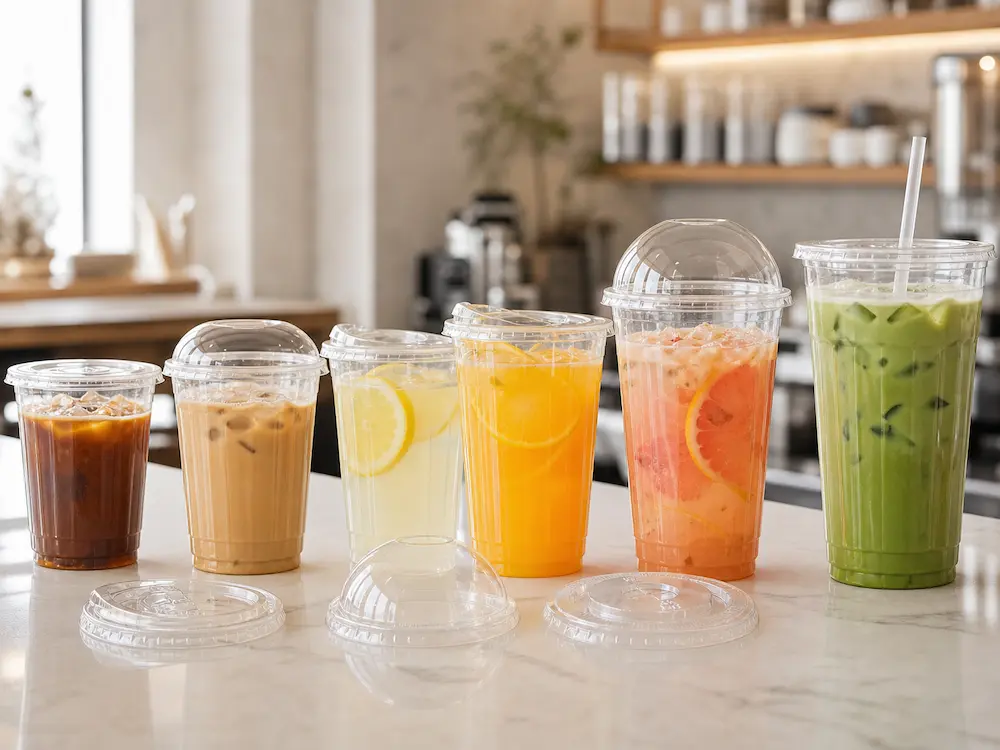
Micro Summary: Recyclable Cold Cups for Cold Beverage Packaging Buyers
Recyclable cold cups are widely used for iced coffee, cold brew, smoothies, juice, lemonade, milk tea, matcha, refreshers, fruit tea, protein drinks, and other chilled beverage menus. For buyers, the right cup is not only about size. Material clarity, lid fit, cup strength, carton packing, custom branding, wholesale supply stability, and responsible recycling language all affect the final packaging decision.
PET is one of the most common materials for PET cold cups because it provides high transparency, clean product presentation, and reliable performance for cold beverage service. However, buyers should describe recyclability carefully. PET is recyclable where local collection, sorting, and recycling systems accept it. Actual recycling depends on local infrastructure, package design, contamination control, and regional recycling rules.
Recyclable Cold Cups FAQ: Materials, Sizes, Uses, and Ordering Questions
Cold beverage packaging is no longer a simple choice between one cup and one lid. Cafes, juice bars, coffee chains, supermarkets, foodservice distributors, and beverage brands now need packaging that looks clear on display, performs reliably during takeaway service, and supports responsible material communication. This is why recyclable cold cups have become an important packaging option for modern cold drink programs.
For a buyer, the real question is not only “Which cup size should I order?” A better question is: which material, lid style, cup structure, carton packing, branding option, and supplier capability will support the full beverage packaging workflow? A cup used for iced coffee may need a different lid from a cup used for smoothies. A fresh juice cup may need stronger clarity for retail display. A wholesale distributor may care more about carton efficiency, repeat supply, and stable product matching.
YIHAO is a food packaging manufacturer and solution provider for buyers who need practical cold beverage packaging, including PET cold cups, clear drink cups, matching lid options, and wholesale packaging support. This FAQ guide explains the key questions buyers should ask before choosing recyclable cold cups for iced coffee, smoothies, juice, milk tea, matcha, refreshers, and other cold beverage applications.
What Are Recyclable Cold Cups?
Recyclable cold cups are cold beverage cups made from materials designed to enter recycling streams where suitable collection, sorting, and recycling systems exist. In foodservice and retail packaging, these cups are used for chilled drinks such as iced coffee, cold brew, smoothies, fresh juice, lemonade, milk tea, matcha, fruit tea, sparkling drinks, refreshers, and protein beverages.
In the B2B packaging market, PET is one of the most widely used materials for cold beverage cups. Clear PET cups provide strong transparency, a glossy appearance, and good cold-use performance. This makes them suitable for drinks where visual presentation matters, including layered iced coffee, colorful smoothies, fresh juice, fruit tea with toppings, and chilled retail beverages.
The word “recyclable” should be used accurately. PET is a recyclable material, but a used cup will only be recycled if the local recycling system accepts, sorts, and processes that packaging format. Buyers should avoid absolute claims such as “recycled everywhere.” Better wording includes “made from recyclable PET material” or “recyclable where local facilities accept PET.” This language is more professional, more credible, and safer for brands selling into different markets.
Why PET Is Commonly Used for Recyclable Cold Cups
Clear Appearance for Premium Drink Display
PET is valued for its high clarity. When used for clear PET cups, it helps drinks look fresh, bright, and appealing. Customers often judge cold beverages visually before they taste them. A transparent cup allows the drink’s color, ice, fruit pieces, milk layers, foam, cream, and toppings to become part of the product presentation.
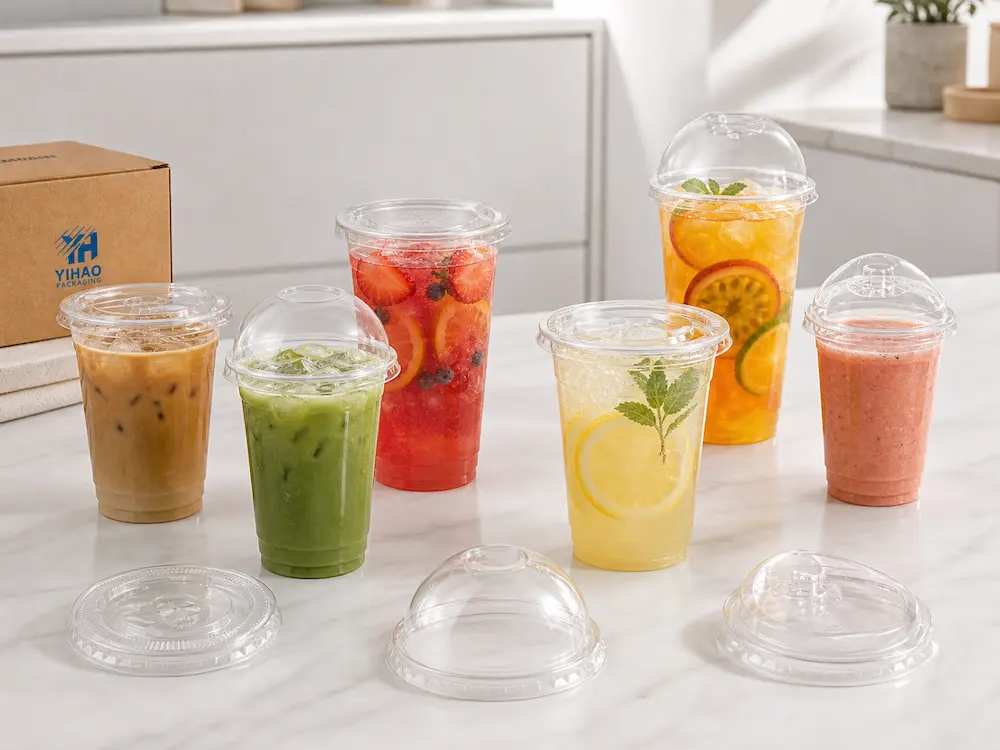
For example, an iced latte looks more attractive when the milk and coffee layers are visible. A strawberry smoothie looks richer when the cup wall is clear. Fresh orange juice, green juice, matcha, berry refreshers, and sparkling fruit drinks all benefit from transparent packaging that shows the beverage directly.
Reliable Strength for Takeaway and Retail Use
PET cold cups are designed for chilled and cold-fill applications. A good PET cup should feel stable in the hand, separate smoothly from the stack, match the lid securely, and keep a clean appearance during normal takeaway handling. For high-volume beverage counters, this directly affects service speed and customer satisfaction.
For importers, distributors, and supermarket packaging buyers, cup performance also affects storage and logistics. Stable dimensions, consistent rim design, carton strength, and stackability help reduce packing problems, lid mismatch, and warehouse inefficiency. This is why professional buyers evaluate a cup as part of a complete packaging system rather than as a single item.
PET vs RPET: What Buyers Should Know
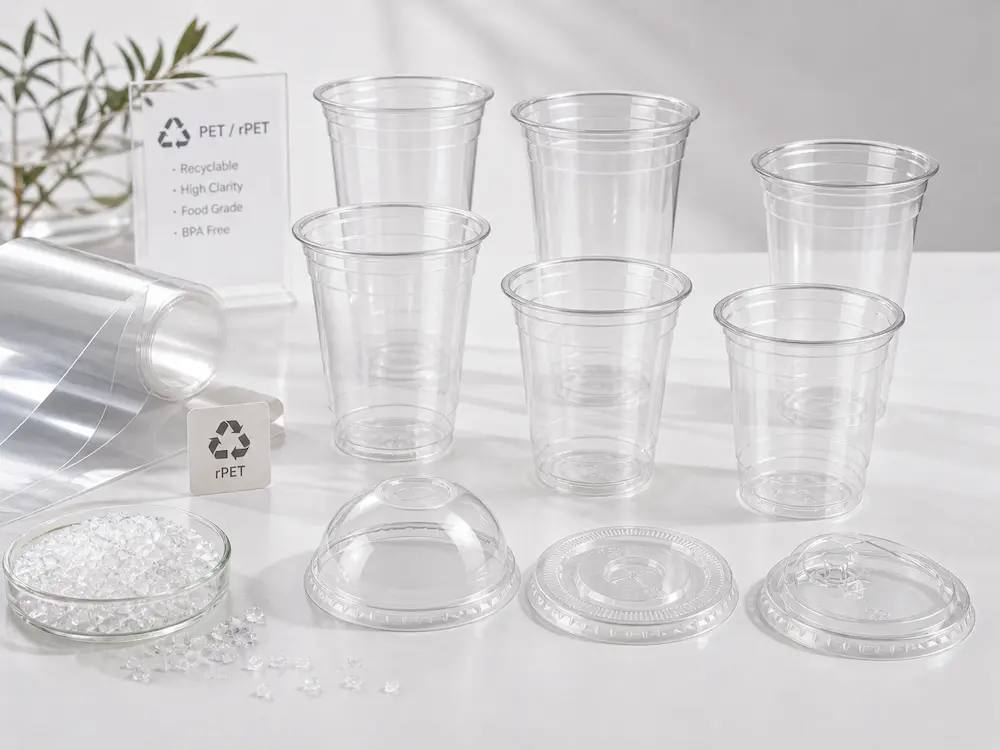
PET refers to polyethylene terephthalate, a widely used plastic material for beverage and food packaging. RPET refers to recycled PET material. Both may be used in cold beverage packaging projects, but buyers should confirm food-contact suitability, material documentation, and target-market requirements before ordering.
RPET may support recycled-content goals when properly sourced and processed. However, recycled material for food-contact packaging requires suitable control and compliance review. Buyers should ask the supplier about material source, documentation, production process, and whether the material is appropriate for the intended beverage application and destination market.
| Material Option | Main Advantage | Common Use | Buyer Note |
|---|---|---|---|
| PET | High clarity, clean appearance, reliable cold-use strength | Iced coffee cup, juice cup, smoothie cups, cold beverage cups | Suitable for cold drinks; confirm food-contact requirements with the supplier |
| RPET | Supports recycled-content goals when properly sourced | Cold drink packaging for brands with recycled-material targets | Requires food-contact documentation and market-specific compliance review |
| PP | Higher heat tolerance than PET in some applications | Selected beverage or food packaging formats | Usually less glass-clear than PET; recycling acceptance differs by region |
What Sizes of Recyclable Cold Cups Do Buyers Usually Need?
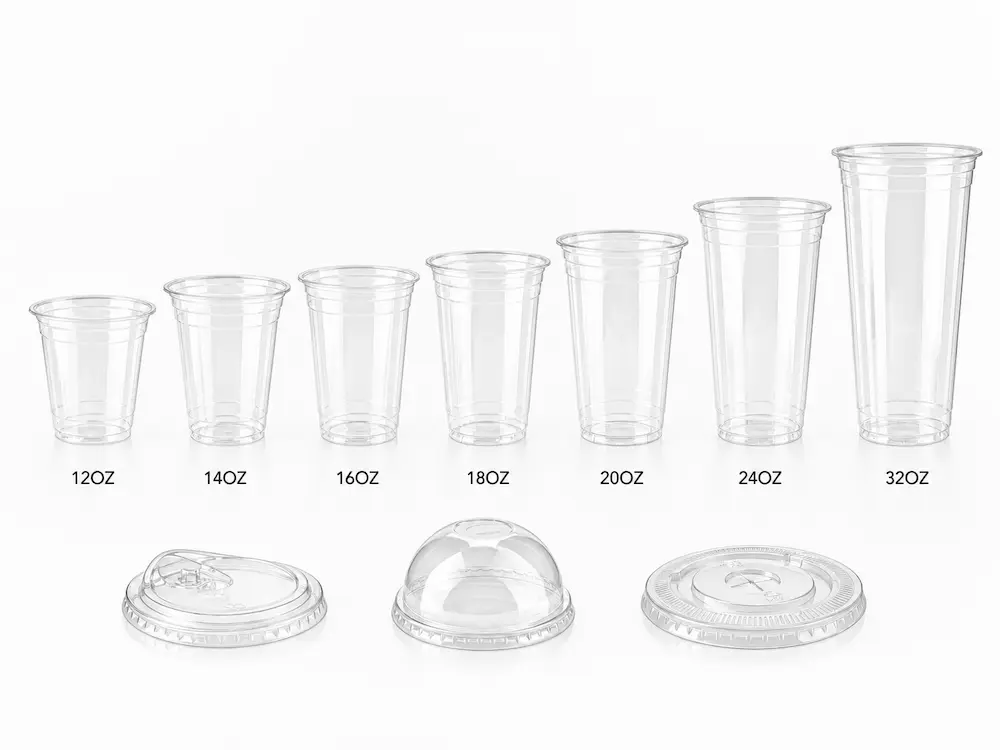
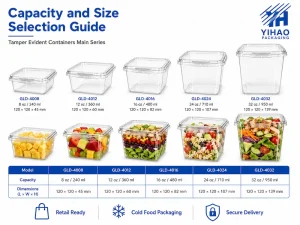
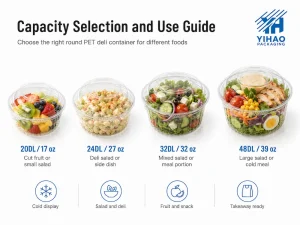
There is no single best size for recyclable cold cups. The right size depends on drink type, ice volume, toppings, menu price, serving style, and whether the product is prepared for immediate takeaway or chilled retail display. Buyers should match cup size to real beverage portions instead of choosing only by appearance.
Small Sizes for Juice Shots, Samples, and Dessert Drinks
Small cold cups are useful for juice shots, tasting portions, kids’ drinks, yogurt drinks, dessert beverages, and promotional samples. They also work for supermarkets and foodservice programs that need controlled portions for grab-and-go beverage items.
Medium Sizes for Iced Coffee, Milk Tea, and Daily Takeaway
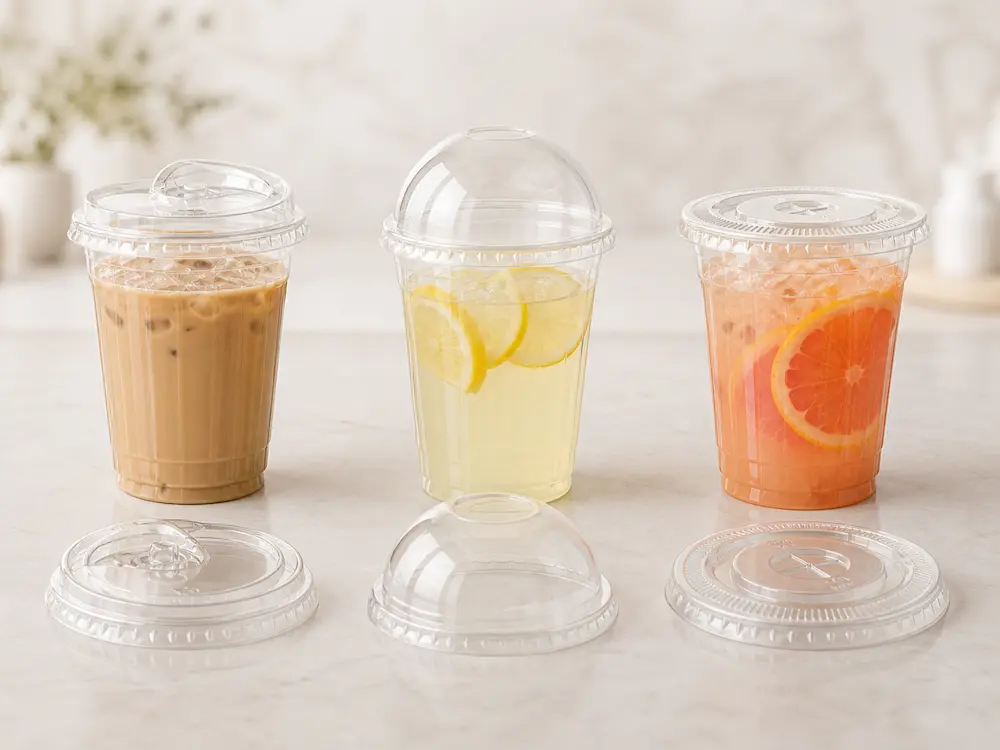
Medium sizes are commonly used for iced coffee, cold brew, iced tea, milk tea, lemonade, fruit tea, and standard takeaway drinks. This is often the most important daily-use range because it balances serving volume, cup cost, lid compatibility, and customer expectations.
Large Sizes for Smoothies, Protein Drinks, and Refreshers
Large cold cups are often selected for smoothies, protein drinks, acai beverages, berry refreshers, sparkling fruit drinks, and blended beverages. These drinks usually contain ice, fruit puree, foam, toppings, or thicker textures, so cup strength and lid fit become especially important.
| Size Logic | Typical Beverage Applications | Best Fit for Buyers | Packaging Consideration |
|---|---|---|---|
| Small cold cup range | Juice shots, samples, yogurt drinks, kids’ drinks, dessert drinks | Cafes, tasting events, supermarkets, foodservice programs | Focus on portion control, easy stacking, and clear display |
| Medium cold cup range | Iced coffee, cold brew, milk tea, lemonade, iced tea, fruit tea | Coffee shops, beverage chains, takeaway counters | Balance cup strength, lid fit, drinking experience, and carton efficiency |
| Large cold cup range | Smoothies, protein drinks, refreshers, sparkling fruit drinks, blended beverages | Juice bars, smoothie shops, fitness drink brands, cafe chains | Confirm cup rigidity, dome lid fit, straw-slot lid fit, and shipping stability |
What Drinks Are Recyclable Cold Cups Used For?
Iced Coffee and Cold Brew
Iced coffee cup need to show the drink clearly while supporting fast takeaway service. Clear PET cups are suitable for iced coffee, cold brew, iced latte, flavored cold brew, caramel coffee drinks, cream-topped beverages, and coffee drinks with ice. The transparent wall helps customers see the color, milk layer, foam, and overall drink quality.
For coffee shops and beverage chains, lid choice is as important as cup size. Flat lids, sip lids, and straw-slot lids support different drinking habits. Buyers should confirm cup rim design and lid fit before mass production, especially when using one lid family across several cup sizes.
Smoothies and Protein Drinks
Smoothie cups need enough strength for thicker beverages. Smoothies, protein drinks, acai blends, berry drinks, yogurt-based beverages, and blended fruit drinks often have more weight and texture than standard iced drinks. A clear PET cup helps show the richness of the drink while maintaining a clean takeaway appearance.
Dome lids are often used for smoothies with whipped cream, fruit pieces, or toppings. Flat lids are practical for sealed takeaway drinks. For smoothie shops and fitness beverage brands, the cup should support both visual appeal and stable handling.
Juice, Lemonade, and Fruit Tea
Juice cup depend heavily on clarity. Fresh orange juice, green juice, watermelon juice, lemonade, sparkling fruit drinks, fruit tea, and tea-based refreshers all benefit from transparent packaging. The cup should make the drink look fresh and clean without distracting from the beverage itself.
For supermarkets and retail beverage programs, clear cold cups also help with chilled display. Customers can see color, fruit content, and portion size quickly. This is useful for ready-to-drink juice, grab-and-go lemonade, and chilled fruit tea sold in display refrigerators.
Matcha, Refreshers, and Modern Cafe Menus
Modern beverage menus continue to expand beyond traditional coffee and juice. Matcha drinks, strawberry refreshers, berry refreshers, acai beverages, sparkling fruit drinks, flavored cold brew, iced tea, and protein drinks all need packaging that supports visual presentation. Recyclable cold cups made from clear PET give these drinks a bright and retail-friendly appearance.
For beverage brands, packaging should not limit menu development. A consistent cup and lid system allows brands to launch seasonal drinks, premium toppings, limited-time flavors, and regional drink concepts without changing the entire packaging workflow.
Are Recyclable Cold Cups Suitable for Hot Drinks?
PET recyclable cold cups are designed for cold beverages, not hot drinks. They are suitable for chilled and cold-fill applications such as iced coffee, juice, smoothies, lemonade, milk tea, cold brew, and refreshers. They should not be used for hot coffee, hot tea, or high-temperature filling unless the manufacturer has specifically confirmed suitability for that application.
This distinction matters because PET is selected for clarity and cold-use performance, not hot-fill service. Buyers who need hot beverage packaging should review other material options and confirm temperature requirements before ordering. Using the wrong cup for hot drinks may affect cup shape, safety, performance, and customer experience.
How Should Buyers Compare PET Cold Cups Before Ordering?
Material and Food-Contact Suitability
The first question is material. Buyers should confirm whether the cup is made from PET, RPET, or another plastic material. For food and beverage use, material documentation matters. A responsible manufacturer should provide clear material information and support the buyer’s compliance review for the target market.
For RPET projects, buyers should ask more detailed questions. Recycled content should come from suitable sources and processes. Food-contact recycled plastic requires careful control, so buyers should avoid treating RPET as only a marketing claim.
Lid Fit and Rim Design
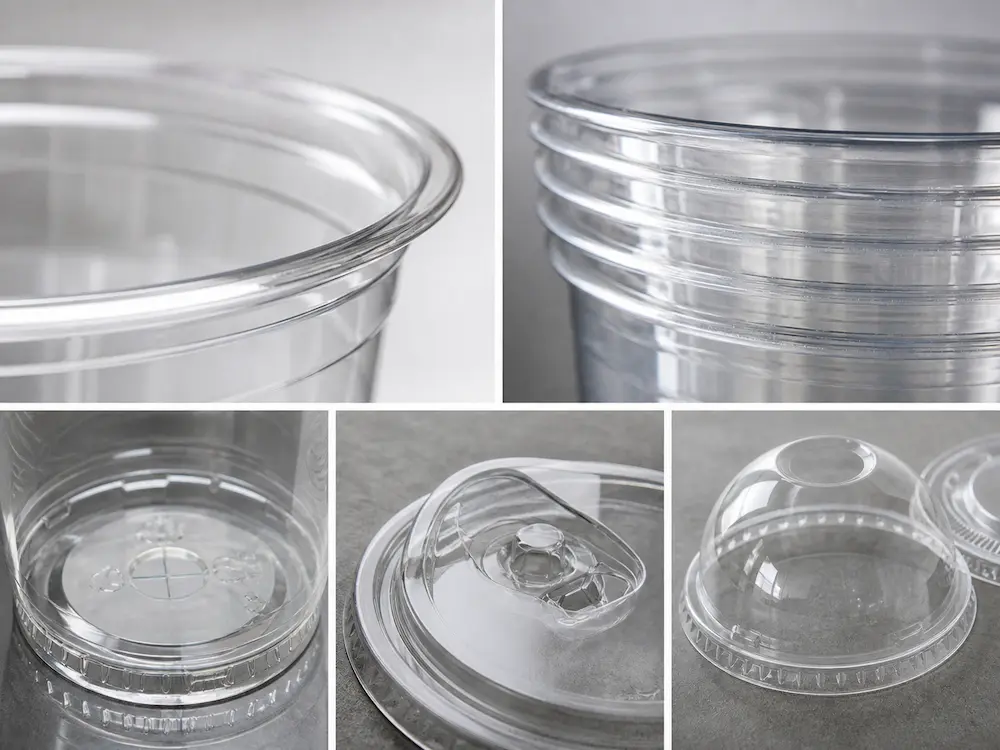
Cup and lid matching is one of the most important details in cold beverage packaging. A cup with poor lid fit creates leakage, customer complaints, and service delays. Buyers should confirm whether the cup matches flat lids, dome lids, sip lids, straw-slot lids, or custom lid options.
For high-volume beverage brands, a stable lid system is often more valuable than a small cost reduction. The rim should support consistent closure under normal takeaway conditions. Samples should be tested with real drinks, ice, straws, toppings, and packing methods before mass production.
Clarity, Thickness, and Cup Strength
Clear packaging should look clean and consistent. A cloudy or uneven cup weakens the product’s shelf appeal. However, thickness should not be judged only by weight. A good cup balances rigidity, clarity, stacking performance, shipping efficiency, and user experience.
Buyers should compare samples by practical use: hand feel, stack separation, lid closure, clarity, base stability, and carton protection. This is more useful than comparing cups only by gram weight.
Printing, Custom Branding, and Carton Packing
For wholesale projects, packaging is part of brand identity. Custom logo printing, carton labeling, private-label packing, barcode requirements, and export carton specifications may all affect the order. A reliable supplier should understand both cup production and the buyer’s distribution needs.
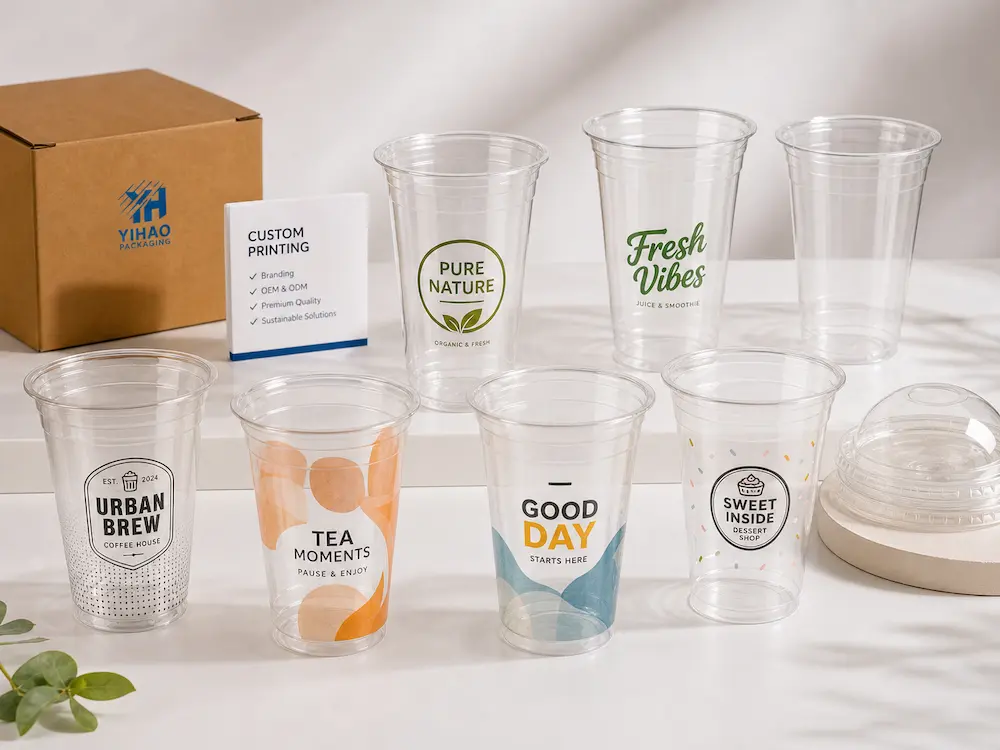
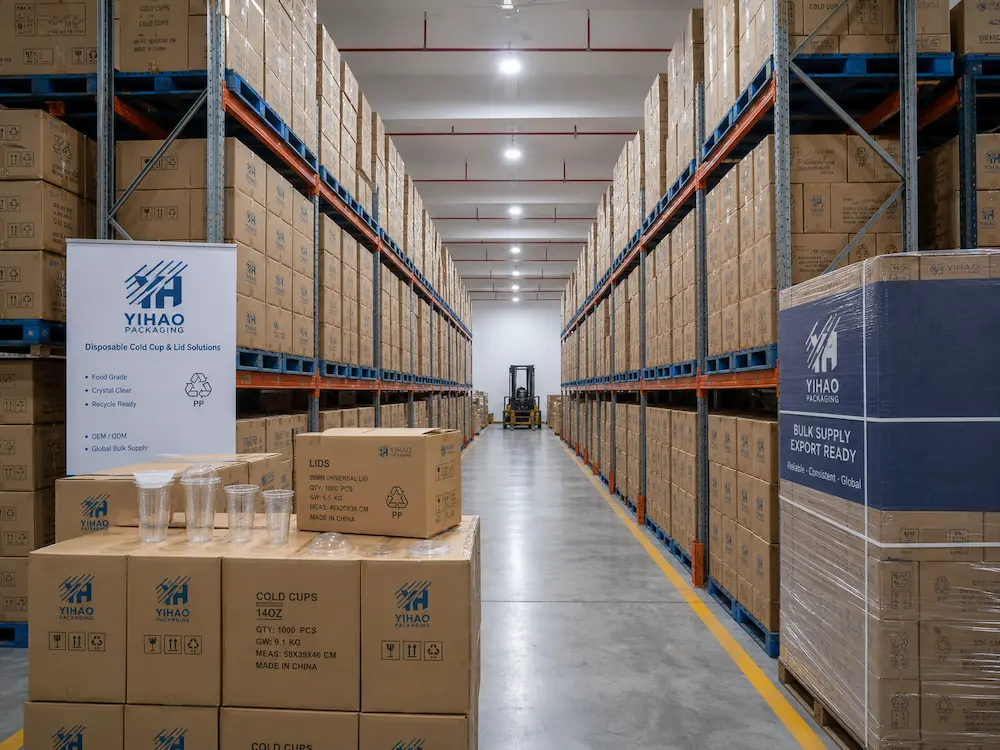
YIHAO supports buyers who need clear PET beverage packaging, matching lid solutions, wholesale supply planning, and practical packaging development. For importers, distributors, cafes, beverage chains, and retail foodservice buyers, this means the cup should be evaluated as a complete packaging system rather than a single disposable item.
| Buying Factor | What to Check | Why It Matters |
|---|---|---|
| Material | PET, RPET, food-contact suitability, material documentation | Supports safety review, market compliance, and responsible purchasing |
| Clarity | Transparency, gloss, color consistency, clean appearance | Improves drink display for iced coffee, smoothies, juice, and refreshers |
| Lid fit | Flat lid, dome lid, sip lid, straw-slot lid compatibility | Reduces leakage risk and improves takeaway performance |
| Cup strength | Rim stability, wall rigidity, base support, stack separation | Improves service speed, customer experience, and transport reliability |
| Customization | Logo printing, private label, carton marks, barcode needs | Supports brand recognition and distributor requirements |
| Wholesale packing | Carton quantity, carton strength, pallet loading, export packing | Improves storage, shipping, and inventory management |
Wholesale Ordering Questions for Recyclable Cold Cups
What Information Should Buyers Send to a Supplier?
Clear order information helps the supplier recommend the right cup faster. Buyers should prepare cup size, lid type, material preference, order quantity, target market, drink application, carton requirements, and any custom logo or private-label needs.
For example, a coffee chain ordering iced coffee cup may need clear cups with sip lids and branded printing. A smoothie shop may need larger cups with dome lids and stronger rigidity. A juice distributor may need clear retail presentation, stable carton packing, and cup sizes suitable for supermarket display.
| Information to Provide | Example | Supplier Benefit |
|---|---|---|
| Drink application | Iced coffee, smoothies, juice, lemonade, milk tea, refreshers | Helps match the correct cup structure and lid type |
| Size range | Small, medium, large cold drink portions | Supports accurate product recommendation and carton planning |
| Lid requirement | Flat lid, dome lid, sip lid, straw-slot lid | Reduces mismatch risk before sampling and production |
| Material preference | PET or RPET | Supports material sourcing and documentation preparation |
| Quantity and market | Wholesale order for North America, Europe, or regional distribution | Helps estimate production, packing, compliance support, and delivery planning |
| Branding needs | Logo printing, carton marks, private label | Supports custom packaging and retail-ready presentation |
How to Choose a Manufacturer or Wholesale Supplier
A good manufacturer should provide more than a price list. Buyers need stable production, consistent material quality, matched lids, sample support, carton packing details, and export experience. For wholesale buyers, reliable repeat supply is often more important than the lowest unit price.
When comparing suppliers, ask whether they understand real beverage applications. A supplier who knows cold beverage packaging can help buyers avoid common problems such as poor lid fit, weak cup walls, unclear material claims, inefficient carton packing, and unsuitable cup sizes for the target menu.
YIHAO works with buyers who need recyclable cold cups, clear PET beverage cups, matching lid solutions, custom cold cup options, and wholesale packaging support for cold drink packaging projects. The goal is to help beverage brands, importers, foodservice distributors, and retail packaging buyers select packaging that performs well in real service conditions.
What Should Be Confirmed Before Mass Production?
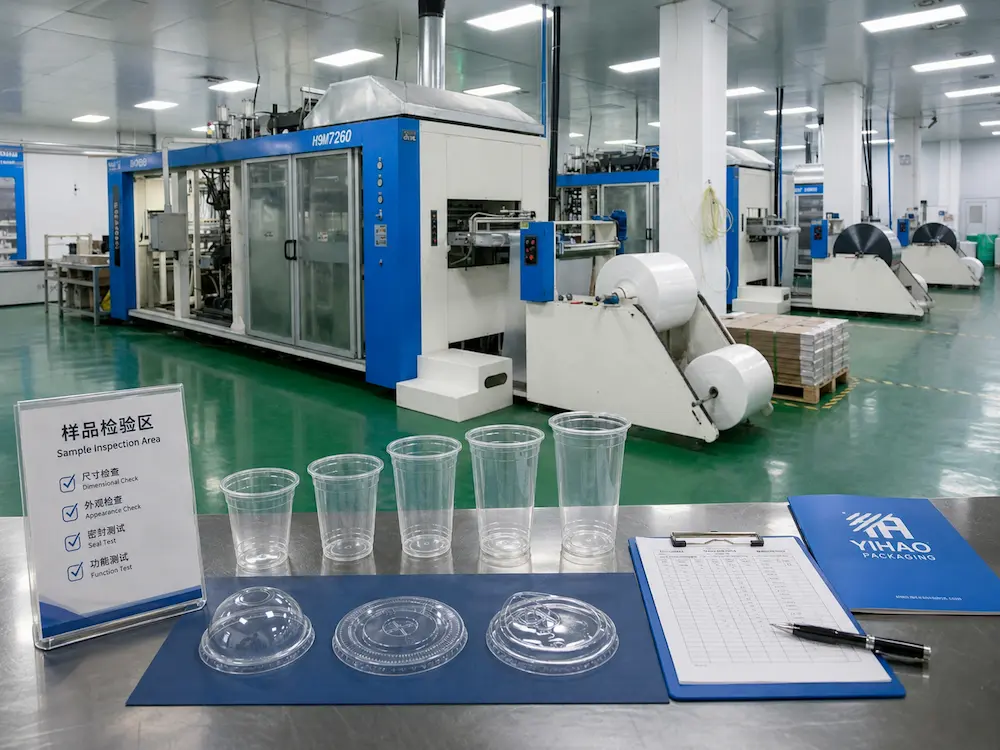
Before mass production, buyers should confirm samples, material information, cup dimensions, lid compatibility, carton packing, printing artwork, labeling requirements, and delivery planning. This step prevents misunderstandings and helps align production with the buyer’s market needs.
For custom projects, artwork approval is especially important. Logo position, print color, cup surface, and carton marks should be checked before production begins. For large wholesale orders, buyers should also confirm pallet loading, warehouse handling, and destination-market labeling requirements.
How Should Buyers Talk About Recyclability?
Recycling language should be accurate, useful, and not exaggerated. PET is a recyclable material, and PET cups may be accepted in some recycling systems. However, acceptance varies by region. Local rules, sorting equipment, collection programs, and contamination levels all affect whether a used cup is actually recycled.
For this reason, buyers should avoid absolute claims such as “recycled everywhere” or “guaranteed to be recycled.” Better wording includes “made from recyclable PET material,” “recyclable where local facilities accept PET,” or “designed with recyclable PET material for cold beverage packaging.”
This approach protects the brand and helps customers understand recycling more accurately. It also makes the article more credible for B2B buyers who need practical packaging information rather than vague environmental language.
Common Mistakes When Buying Recyclable Cold Cups
Choosing Cups Without Testing Lids
One of the most common mistakes is ordering cups without testing matching lids. Even when sizes look similar, rim design can differ. Buyers should test lids with real beverage conditions, including ice, movement, straw use, toppings, and takeaway handling.
Using PET Cold Cups for Hot Drinks
PET cold cups are not hot drink cups. Buyers should not use them for hot coffee, hot tea, or high-temperature filling unless the manufacturer specifically confirms suitability. Cold cup material and hot cup material should be selected separately.
Focusing Only on Price
Low price means little if the cup cracks, lids leak, cartons collapse, or clarity looks poor. For beverage packaging, the real cost includes customer complaints, wasted product, slow service, storage problems, and inconsistent supply. Serious buyers should compare total packaging value, not only unit cost.
Making Overstated Recycling Claims
Recyclability claims should match local recycling reality. A cup made from PET does not automatically mean it will be recycled in every city or country. Buyers should use careful wording and review market-specific rules before publishing packaging claims.
Buyer Checklist: Before Ordering Recyclable Cold Cups Wholesale
| Checklist Item | Buyer Question | Recommended Action |
|---|---|---|
| Material | Is the cup made from PET or RPET? | Request material information and food-contact documentation |
| Application | Will the cup be used for iced coffee, smoothies, juice, or other cold drinks? | Match the cup structure and lid type to the drink menu |
| Temperature | Will the beverage be cold-fill or hot-fill? | Use PET cold cups only for cold beverage applications |
| Lid system | Which lid type is required? | Test flat lids, dome lids, sip lids, or straw-slot lids before ordering |
| Branding | Is custom printing or private-label packing needed? | Confirm artwork, printing method, and carton mark requirements |
| Wholesale supply | Can the supplier support repeat orders? | Evaluate production capacity, packing consistency, and export experience |
| Recycling claim | How should the cup be described to customers? | Use responsible wording such as recyclable where local facilities accept PET |
Final Buying Advice
Recyclable cold cups are a practical packaging choice for cold beverage brands that need clarity, reliable cold-use performance, and responsible material communication. PET is especially valuable for drinks that depend on visual appeal, including iced coffee, smoothies, juice, lemonade, milk tea, matcha, refreshers, fruit tea, cold brew, and sparkling fruit drinks.
The best purchasing decision is not based on material alone. Buyers should evaluate cup size, lid fit, clarity, strength, carton packing, branding requirements, supplier capability, and market-specific recycling language. A reliable manufacturer helps connect these details into one workable packaging system.
For cafes, beverage chains, supermarkets, importers, and foodservice distributors, YIHAO provides cold beverage packaging support with clear PET cup options, matching lids, wholesale supply planning, and practical packaging recommendations. Contact YIHAO to discuss recyclable cold cups, matching lids, custom branding, export carton packing, and wholesale cold beverage packaging solutions for your next drink program.
FAQ
1. What are recyclable cold cups made from?
Recyclable cold cups are commonly made from PET, RPET, or other plastic materials suitable for cold beverage packaging. PET cold cups are widely used because they offer high clarity, clean presentation, and reliable performance for iced coffee, smoothies, juice, lemonade, milk tea, and other chilled drinks.
2. Are PET cold cups recyclable?
PET cold cups are made from recyclable PET material, but actual recycling depends on local collection programs, sorting systems, contamination levels, and whether local facilities accept PET cups. Buyers should use careful wording such as recyclable where facilities exist or made from recyclable PET material.
3. Can recyclable cold cups be used for hot drinks?
PET recyclable cold cups are designed for cold beverages, not hot drinks. They are suitable for chilled and cold-fill applications such as iced coffee, juice, smoothies, lemonade, milk tea, and refreshers. Hot coffee, hot tea, and high-temperature filling require other packaging materials confirmed for hot-use conditions.
4. What sizes are best for iced coffee, smoothies, and juice?
Medium sizes are commonly used for iced coffee, cold brew, milk tea, lemonade, and fruit tea. Larger sizes are often selected for smoothies, protein drinks, refreshers, and blended beverages. Smaller sizes are useful for juice shots, samples, kids’ drinks, and dessert beverages.
5. How do I order recyclable cold cups wholesale?
To order recyclable cold cups wholesale, buyers should prepare the cup size, lid type, material preference, order quantity, target market, drink application, carton requirements, and any custom logo or private-label needs. A reliable manufacturer or supplier can then recommend suitable PET cold cups and matching lids.
References
- U.S. Food and Drug Administration. Recycled Plastics in Food Packaging.
- U.S. Food and Drug Administration. Guidance for Industry: Use of Recycled Plastics in Food Packaging: Chemistry Considerations.
- Association of Plastic Recyclers. PET Thermoform Packaging Design Resource Document.
- Association of Plastic Recyclers. APR Design Guide for Plastics Recyclability.
- NAPCOR. PET Thermoform Recycling.
- Foodservice Packaging Institute and Association of Plastic Recyclers. Design Guide for Foodservice Plastics Recyclability.
- Health Canada. Guidelines for Determining the Acceptability and Use of Recycled Plastics in Food Packaging Applications.
- World Packaging Organisation. Packaging Design for Recycling and Circularity Guidance.
Deep-Dive Insights: How Buyers Should Think About Recyclable Cold Cups
How do recyclable cold cups support cold beverage presentation?
Clear PET cold cups help beverage brands show color, ice, foam, toppings, fruit pieces, and layered ingredients directly through the cup wall. This improves visual appeal for iced coffee, smoothies, juice, matcha, refreshers, cold brew, lemonade, and fruit tea.
Why does lid compatibility matter as much as cup material?
A recyclable cup still fails in real service if the lid does not fit correctly. Buyers should test flat lids, dome lids, sip lids, and straw-slot lids with actual drinks before placing wholesale orders. Good lid fit improves takeaway reliability and reduces leakage complaints.
What should buyers consider before choosing PET or RPET?
PET offers strong clarity and cold-use performance. RPET can support recycled-content goals when properly sourced and documented. Buyers should confirm food-contact suitability, supplier documentation, and market requirements before choosing material for beverage packaging.
Which option works best for cafes, juice bars, and beverage chains?
Cafes often prioritize iced coffee cup with clean clarity and sip-lid options. Juice bars need clear juice cup that show freshness and color. Smoothie shops usually need stronger cups and dome lid options. Beverage chains need a consistent cup-and-lid system that supports multiple menu categories.
What is the most responsible way to describe recyclability?
The strongest wording is accurate and market-aware. Buyers should describe PET cups as made from recyclable PET material or recyclable where local facilities accept PET. This avoids overstated claims while still communicating the material’s recycling potential.
How can a manufacturer improve the buying process?
A capable manufacturer helps buyers compare material, size, lid fit, carton packing, custom branding, and wholesale delivery planning before production. This reduces packaging mismatch, improves product launch efficiency, and supports repeat purchasing for cold beverage programs.
© 2026 YIHAO Packaging. All Rights Reserved.
All rights to the content, designs, and intellectual property presented on this website are the exclusive property of YIHAO Packaging. Any unauthorized duplication, distribution, or modification is prohibited.
We continually innovate our product offerings and specifications, and all rights to these updates are reserved.