Micro Summary: Iced Coffee Cups for Retail, Takeaway, and Chilled Food
Iced coffee cups are essential packaging for cafés, beverage chains, supermarkets, convenience stores, and chilled food brands that need strong product visibility, reliable takeaway handling, and clean retail presentation.
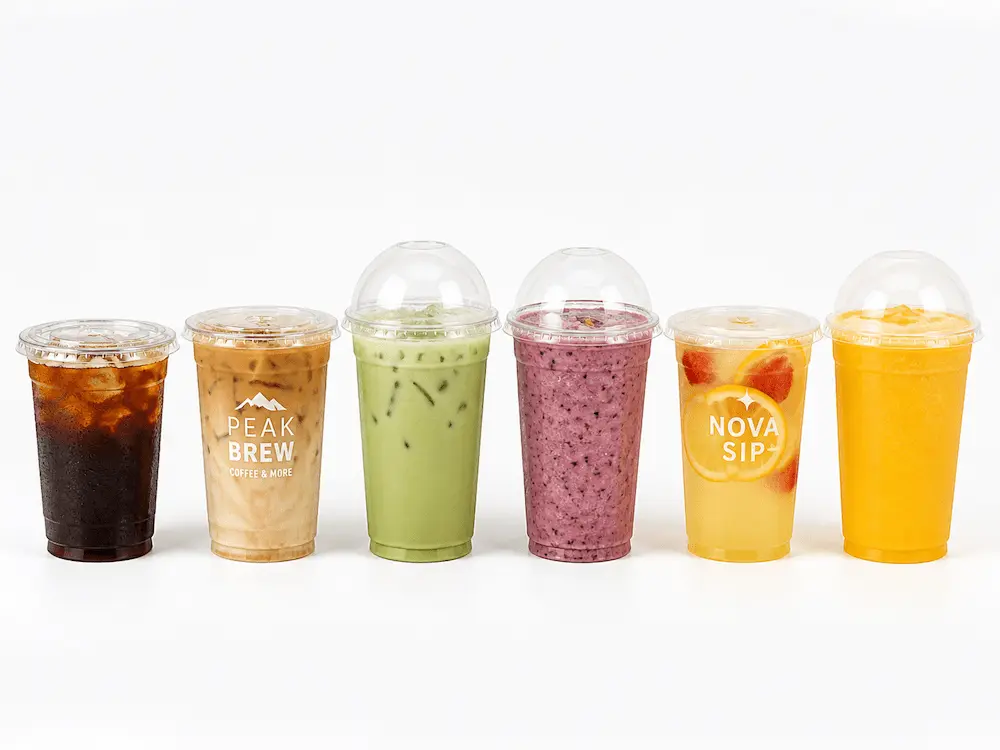
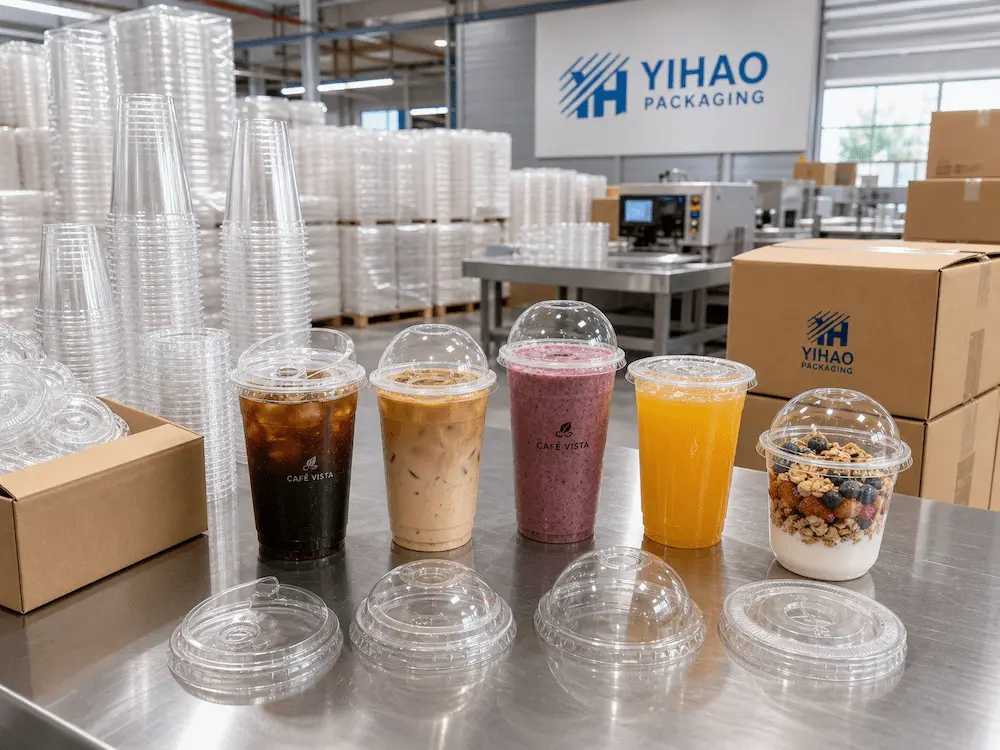
PET cold cups and clear PET cups are widely used for iced coffee, cold brew, smoothies, juice, matcha, refreshers, fruit tea, sparkling drinks, parfaits, and chilled snack portions because they combine high clarity, lightweight handling, and practical cold-use performance.
For wholesale buyers, choosing the right manufacturer, wholesale partner, or supplier means evaluating cup clarity, lid compatibility, size range, stackability, carton packing, OEM options, food-contact documentation, and responsible sustainability wording such as recyclable where local systems accept clean PET packaging.
Why Iced Coffee Cups Matter in Modern Cold Beverage Packaging
Choosing the right cold cup supplier is important for supermarkets, cafes, bakeries, beverage brands, chilled food producers, and foodservice operators that need reliable packaging for retail display, takeaway service, and refrigerated food presentation. A cold cup supplier should provide more than basic cup sizes. Buyers need stable material quality, clear product visibility, accurate lid matching, practical packing, and repeat-order consistency.
As a food packaging manufacturer and supplier, YIHAO provides PET cups, PP cups, matching lids, custom printing support, and wholesale cold cup solutions for retail food packaging. This guide helps buyers evaluate supplier capability, material options, lid compatibility, display performance, chilled food use, and bulk ordering details before choosing a long-term packaging partner.
YIHAO is a food packaging manufacturer and solution provider focused on practical packaging for beverage, fresh food, dessert, and takeaway programs. From a buyer’s point of view, choosing the right cold cup means balancing appearance, material performance, lid compatibility, supply stability, branding needs, and responsible sustainability communication.
Clear presentation drives beverage appeal
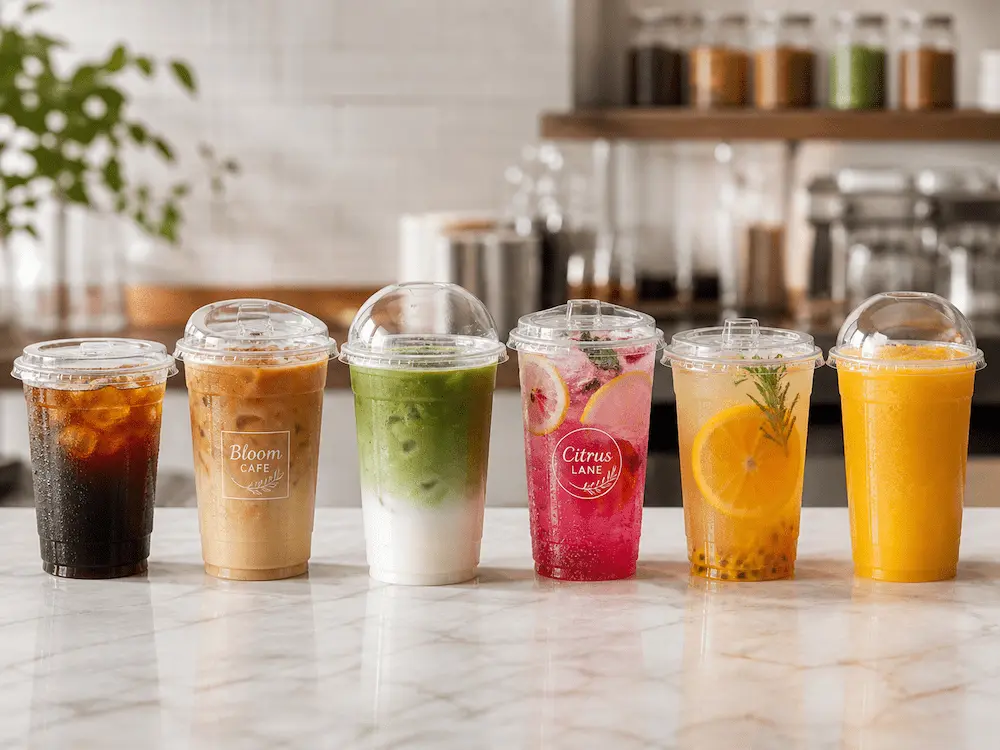
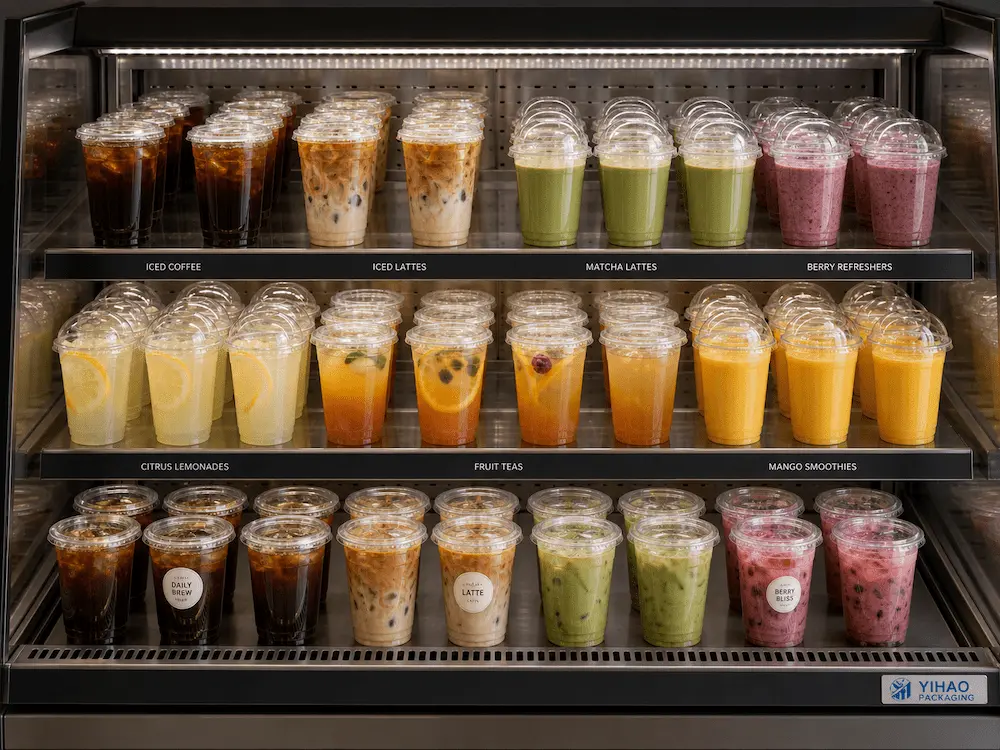
Cold beverages sell visually. Iced latte layers, cold brew color, cream foam, ice cubes, fruit pulp, matcha green, berry tones, sparkling bubbles, and fruit inclusions all depend on visibility. This is why clear PET cups are commonly selected for retail beverage programs and takeaway cold drinks.
When a drink sits in a refrigerated display, the customer often makes a decision in seconds. A transparent cup helps the product communicate freshness, flavor, portion size, and ingredient quality without heavy explanation. For grab-and-go coolers, this visibility is especially important because the cup becomes part of the shelf-facing presentation.
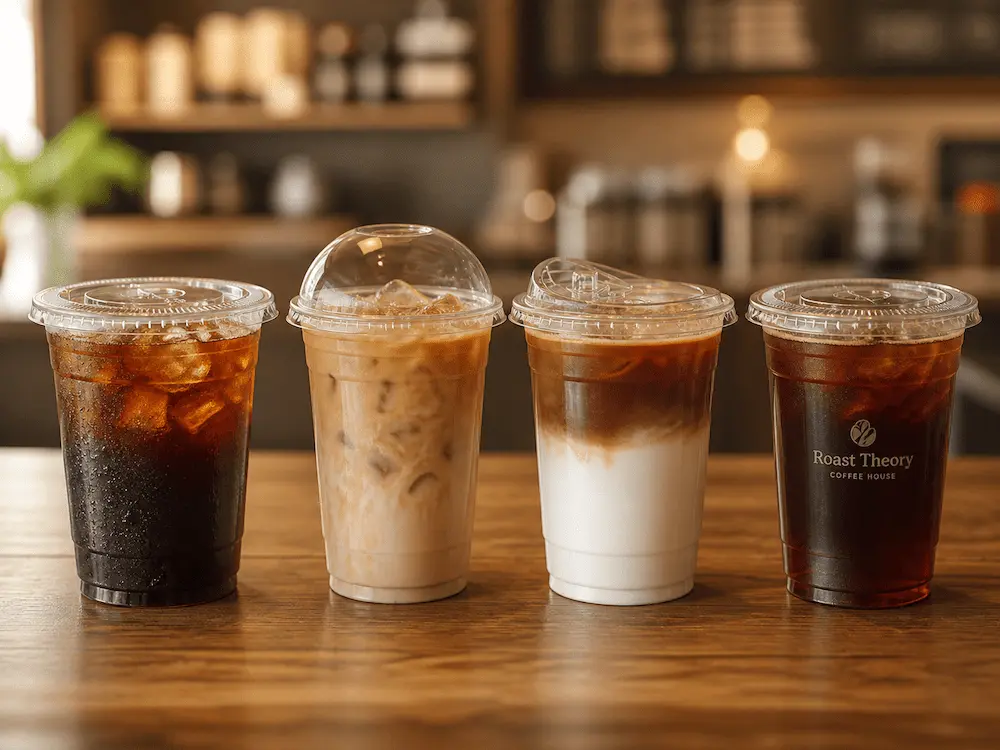
For iced coffee brands, transparent packaging also supports a cleaner premium look. A cold brew, iced latte, caramel coffee, mocha drink, or flavored cold coffee appears more attractive when the cup wall is clear, smooth, and consistent.
Takeaway performance affects customer experience
Takeaway packaging must work under real service pressure. A café may prepare hundreds of cold drinks during morning traffic, lunch hours, or afternoon refreshment periods. Staff need cups that separate smoothly, stack efficiently, and pair with lids without slowing service.
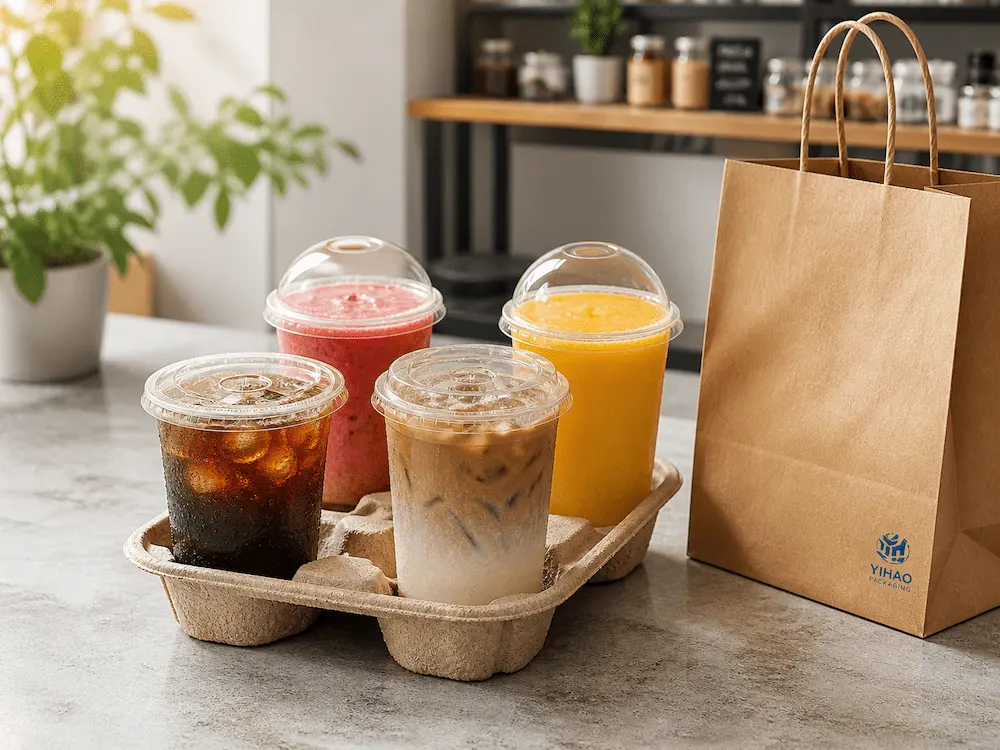
Customers also judge the drink by how the cup feels in hand. If a cup feels weak, cloudy, poorly matched with the lid, or unstable during movement, the product experience drops. Good iced coffee cups help maintain confidence from counter pickup to office desk, car cup holder, delivery bag, or outdoor consumption.
For wholesale buyers, takeaway performance is not a minor detail. A poor lid fit or weak cup structure may lead to spills, complaints, product waste, and brand damage. A strong cup and lid system protects both the drink and the customer experience.
One cup format can support multiple cold menu categories
Most beverage businesses do not buy cups only for iced coffee. A single cold cup family often needs to support iced coffee, cold brew, smoothies, juice, milk tea, matcha, refreshers, fruit tea, lemonade, sparkling fruit drinks, protein drinks, and chilled food portions.
This is why buyers often search for PET cold cups, smoothie cups, juice cups, and recyclable cold cups at the same time. They want one packaging direction that supports multiple product lines instead of managing too many unrelated cup types.
For wholesale buyers and distributors, this matters because SKU control affects storage, carton planning, purchasing efficiency, and supply chain stability.
Why PET Cold Cups Are Commonly Used for Iced Coffee and Cold Drinks
PET offers high clarity for retail display
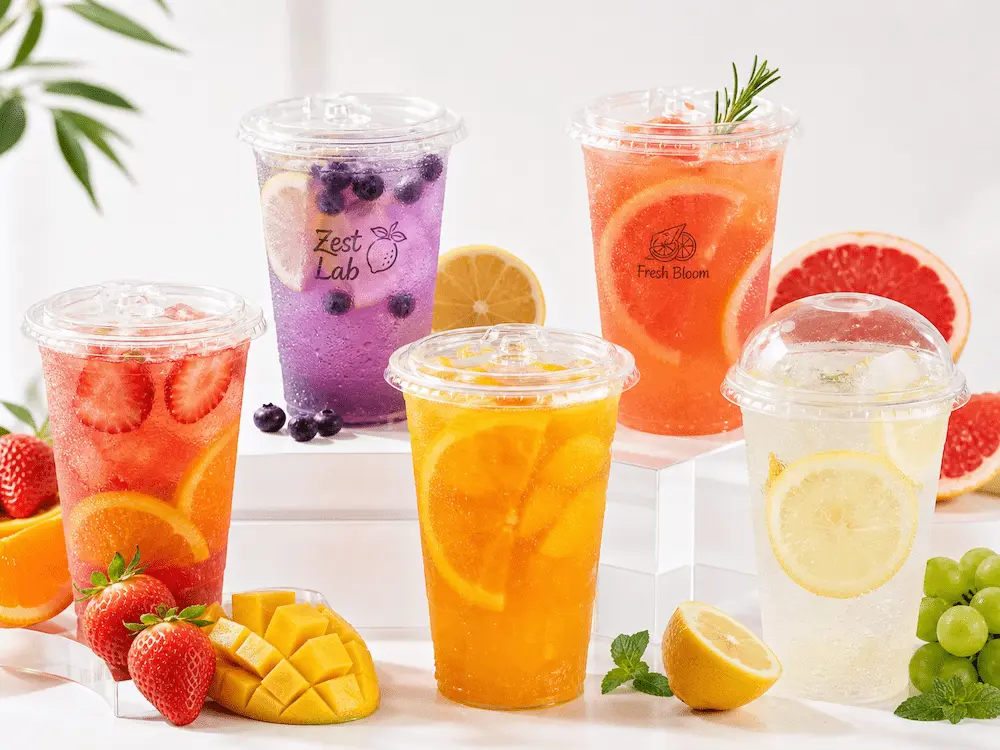
PET is widely used for cold drink cups because it offers strong visual clarity. For beverages that depend on appearance, this is a major advantage. Clear PET cups help show liquid color, ice, fruit pieces, milk foam, toppings, and layered drink structures.
In retail display, clarity becomes a selling tool. Supermarkets and convenience stores often rely on packaging to communicate freshness before the customer reads the label. A transparent cup lets the product speak first.
For iced coffee programs, PET clarity supports a clean and modern presentation. It helps brands show the difference between cold brew, iced americano, iced latte, flavored coffee, and milk-based cold drinks.
PET supports chilled beverage packaging needs
PET cold cups are designed for cold beverage and chilled food applications. They are suitable for iced coffee, smoothies, juice, iced tea, matcha, refreshers, fruit drinks, and cold dessert portions. They are not positioned as hot drink cups.
This distinction is important. Buyers should match cup materials to actual use conditions. A cold cup program should focus on cold service, refrigerated display, takeaway handling, and lid compatibility. For hot coffee, soup, or heated food, buyers should choose materials and structures designed for heat exposure.
In a professional purchasing process, application should always come before the material decision. The same cup that works well for iced coffee may not be suitable for hot beverages.
PET should be positioned carefully in sustainability claims
Many buyers look for recyclable cold cups because retailers, beverage brands, and foodservice operators are under pressure to improve packaging responsibility. PET has established recycling streams in many markets, but recyclability should be described carefully.
A responsible statement is: PET cold cups are recyclable where local recycling systems accept clean PET packaging.
This wording is more accurate than saying every cup will always be recycled. Actual recycling depends on local infrastructure, collection access, sorting systems, contamination level, label and ink choices, material color, and whether the packaging is accepted in that region.
For B2B buyers, this means sustainability claims should be checked with the target market. A reliable manufacturer, wholesale partner, or supplier should help buyers discuss material options, documentation, and packaging design choices without exaggerating environmental outcomes.
Best Applications for Iced Coffee Cups
The strongest iced coffee cups are selected based on real product use. A cup for cold brew does not always need the same lid as a cup for smoothies. A retail juice cup may need stronger shelf presentation than a simple in-store takeaway cup. A chilled dessert cup may need spoon access instead of a straw slot.
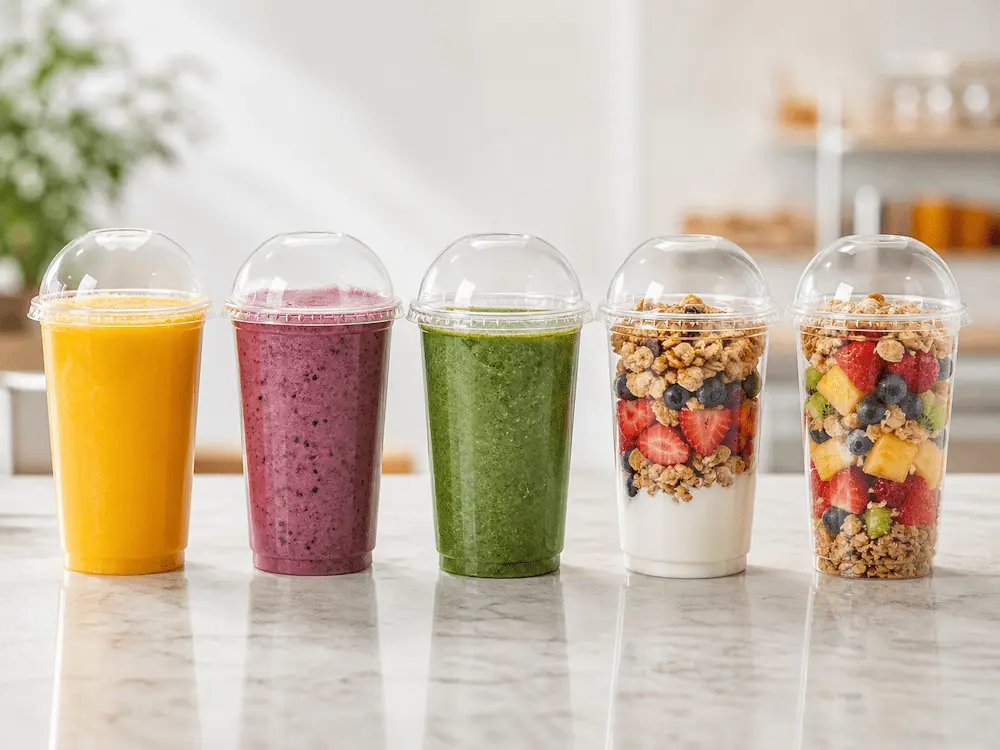
The table below helps buyers match common cold beverage and chilled food applications with practical packaging considerations.
| Application | Recommended Cup Direction | Key Packaging Requirement | Buyer Note |
|---|---|---|---|
| Iced coffee and cold brew | Clear PET cold cups | High clarity, stable rim, compatible sip or flat lid | Strong visual presentation for coffee color and ice |
| Iced latte and flavored coffee | Clear PET cups | Layer visibility, lid fit, clean cup wall | Useful for premium café menus and retail coolers |
| Smoothies | Smoothie cups with dome or straw-slot lids | Space for thick drinks, toppings, and straw access | Cup rigidity matters because smoothies are heavier |
| Juice and fresh drinks | Juice cups with strong transparency | Color visibility and clean retail appearance | Works well for orange, green, berry, and tropical drinks |
| Matcha and refreshers | Clear cold cups | Bright color display and ice visibility | Good for modern beverage menus and social media presentation |
| Fruit tea and sparkling drinks | PET cold cups | Visibility for fruit pieces, bubbles, and ice | Lid choice should match straw or sip drinking style |
| Yogurt parfaits and desserts | Clear cups with flat or dome lids | Ingredient layers and spoon-friendly use | Confirm lid type based on chilled food application |
| Fruit cups and snack portions | Clear PET cups | Product visibility and portion control | Useful for grab-and-go retail and convenience stores |
This application logic helps buyers avoid generic packaging decisions. The right cup should match the drink texture, lid requirement, display method, serving speed, and customer use scenario.
Retail Display Advantages of Clear PET Iced Coffee Cups
Better visibility for color, ice, foam, and layers
Retail display depends on visual impact. A customer looking into a chilled case should be able to understand the product quickly. Iced coffee cups made from clear PET help show coffee color, milk layers, foam, ice, syrup, and toppings.
For smoothies and juice, the same clarity helps show fruit identity. A berry smoothie, mango juice, green juice, or citrus drink becomes more recognizable before the customer reads the label.
This matters because packaging often works as the first sales message. A clear cup creates a direct product view and reduces the gap between what the customer expects and what they receive.
Stronger shelf appeal for grab-and-go coolers
Grab-and-go coolers are crowded. Drinks compete with bottled beverages, salads, desserts, fruit cups, sandwiches, and snack packs. Packaging must help the product stand out.
Clear PET cups give chilled beverages and cold food portions a clean, bright, and modern look. They support premium presentation without hiding the product.
For supermarkets and convenience stores, this is especially valuable. A well-presented iced coffee or fruit drink can attract impulse buyers. A cloudy or weak-looking cup can reduce perceived quality even when the product itself is good.
Consistent appearance across multiple beverage SKUs
A beverage brand may sell iced coffee, cold brew, matcha, fruit tea, lemonade, sparkling drinks, and smoothies in one cooler. Using the same cup family can create a more consistent brand block.
This consistency helps customers recognize the brand. It also helps retailers merchandise products more cleanly. For buyers managing multiple SKUs, consistent packaging can simplify carton management and store operations.
A strong PET cold cups program should therefore consider not only one drink, but the full cold beverage portfolio.
Takeaway Advantages for Cafés, Chains, and Beverage Shops
Fast service during peak hours
During peak hours, packaging speed matters. Staff need cups that separate easily, lids that fit predictably, and sizes that match the menu system.
Poor cup separation slows service. Inconsistent lid fit creates waste and frustration. Weak cup structure can affect customer confidence. The best iced coffee cups reduce these operational problems.
For chain cafés and beverage shops, consistency is even more important. A cup used across multiple locations should perform the same way every time. This is why supplier stability is part of packaging quality.
Lid fit and cup rigidity improve handling
Takeaway drinks move through many touchpoints: filling, lidding, pickup, carrying, driving, delivery, and consumption. Cup rigidity and lid fit both matter.
A good cold cup should feel stable in hand. It should support normal handling without feeling flimsy. The lid should match the rim and intended beverage type.
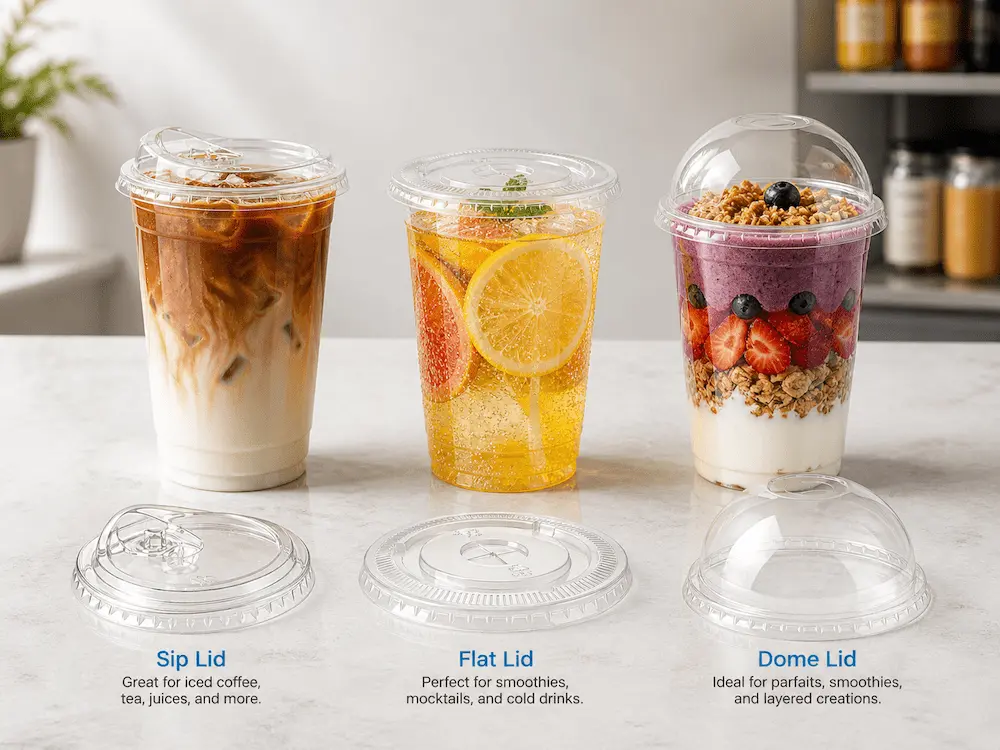
For iced coffee and cold brew, a sip lid or straw-compatible lid may be used. For smoothies, a straw-slot lid or dome lid may be preferred. For drinks with whipped cream or toppings, dome lids offer additional space.
Suitable for branded cold drink programs
Cold drink packaging has become part of the brand. A cup appears in customer photos, delivery orders, store displays, and social media content. Clear packaging helps showcase the drink while leaving room for labels, sleeves, or printed branding.
For buyers working with a manufacturer, custom options should be discussed early. This includes logo position, printing color, label type, lid matching, carton marking, and export packing.
A strong branded cup program should look good, function well, and remain practical for production and distribution.
YIHAO Manufacturer Insight: What B2B Buyers Should Prioritize
From a manufacturer’s perspective, the best cold cup project is not built around one isolated cup. It is built around a complete packaging system: material, mold structure, cup size, lid compatibility, carton packing, branding needs, and export conditions.
For buyers sourcing iced coffee cups, the most important question is not only “What is the cup price?” A better question is: “Can this cup and lid system support my real beverage menu, retail channel, storage method, and repeat-order plan?”
YIHAO recommends that buyers evaluate cold cup packaging through four practical angles.
First, check display quality. The cup should show beverage color, ice, foam, fruit, and layers clearly. This matters for iced coffee, smoothies, juice, matcha, refreshers, and chilled desserts.
Second, test the lid system. A cold cup program is only reliable when the lid fits the rim consistently. Buyers should test the lid with actual drinks, not only empty cups.
Third, review packing and logistics. Carton strength, sleeve count, pallet loading, and export packing affect the real cost of wholesale purchasing.
Fourth, confirm documentation and market requirements. Food-contact suitability, recycled-content claims, and recyclability wording should be matched to the buyer’s target market instead of written as broad claims.
This is where a professional supplier creates value. A good packaging partner helps buyers reduce risk before mass ordering.
Clear PET Cups vs Other Cold Cup Options
Different cold cup materials serve different business goals. The best choice depends on beverage type, display needs, sustainability strategy, budget, and local packaging rules.
| Cup Type | Best For | Main Advantage | Buyer Consideration |
|---|---|---|---|
| Clear PET cups | Iced coffee, smoothies, juice, cold brew, retail display | High clarity and strong shelf presentation | Mainly for cold-use applications |
| PP cold cups | Some takeaway cold drinks and flexible foodservice use | Lightweight and flexible | Usually lower clarity than PET |
| Paper cold cups | Branding-heavy beverage programs | Strong printable surface | Limited product visibility |
| PLA cups | Compostable packaging programs where infrastructure exists | Plant-based positioning | Requires suitable composting systems and local acceptance |
| RPET cold cups | Brands seeking recycled-content packaging options | Supports recycled material strategy | Food-contact suitability and documentation must be confirmed |
This comparison shows why clear PET cups remain popular for cold drink display. They create strong visibility, work across multiple chilled categories, and support practical foodservice handling.
At the same time, buyers should avoid one-size-fits-all thinking. A paper cup may suit a branding-heavy campaign. PLA may suit a controlled composting program. RPET may support recycled-content goals where the material and process meet food-contact requirements. PET may be the stronger choice when clarity and cold beverage presentation are the top priorities.
What Buyers Should Check Before Choosing Iced Coffee Cups
Cup clarity and surface finish
Clarity is one of the first things buyers should inspect. A clear cup should not look cloudy, gray, heavily scratched, or visually inconsistent. The wall should support clean presentation from multiple angles.
For retail display, clarity affects perceived freshness. For iced coffee, it shows the drink color and milk layers. For smoothies and juice, it shows fruit quality and texture. For chilled food, it shows ingredients and portion structure.
When comparing PET cold cups, buyers should request samples and check them under real lighting: café counter light, refrigerated display light, natural light, and indoor retail light. A cup that looks acceptable in storage may look different in a cooler or on a product photo shoot.
Lid compatibility and leak-resistant fit
Cup and lid matching is critical. A good cup without a reliable lid is not a complete packaging solution. Buyers should check whether the supplier offers compatible flat lids, dome lids, sip lids, straw-slot lids, or other closure options.
For takeaway drinks, lid fit influences handling confidence. For whipped cream drinks, dome lids offer space for toppings. For smoothies, straw-slot lids are common. For retail chilled products, the lid format depends on the filling process and distribution needs.
Buyers should test lid application under realistic conditions. The lid should attach smoothly, stay stable during normal handling, and support the intended use. It is better to test the cup and lid together before placing a large wholesale order.
Size range and menu matching
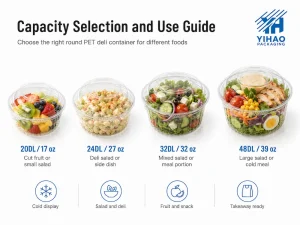
Cold drink menus usually need multiple sizes. A café may use different portions for small iced coffee, regular cold brew, large smoothies, and specialty drinks. A supermarket may use different cup sizes for juice, fruit cups, parfaits, and chilled desserts.
The best iced coffee cups should fit the menu instead of forcing the menu to fit the cup. Buyers should check whether the supplier offers a logical size range and matching lids across that range.
A consistent cup family helps beverage brands create a clean visual system. It also helps staff work faster because lids, cups, and storage patterns become easier to manage.
Stackability and storage efficiency
Cold cups are high-volume packaging items. Stackability affects warehouse space, back-of-house organization, store replenishment, and shipping efficiency.
A good cup should stack neatly without sticking too tightly. Staff should be able to separate cups quickly during service. Carton packing should also protect cup shape during transport.
For wholesale buyers, storage efficiency is not a small detail. It affects carton planning, pallet loading, container utilization, and daily operation at store level.
Wholesale and OEM Considerations for Iced Coffee Cups
For B2B buyers, wholesale purchasing is not only about unit price. It is about building a stable packaging supply system that supports repeat orders, consistent quality, and market growth.
A buyer sourcing iced coffee cups for a café chain, beverage distributor, supermarket program, or private label drink brand should confirm the following details before order confirmation:
| Wholesale Factor | Why It Matters |
|---|---|
| Cup and lid matching | Prevents leakage, poor fit, and customer complaints |
| Material consistency | Keeps clarity and cup appearance stable across batches |
| Size range | Supports different cold drink and chilled food portions |
| OEM options | Helps brands build custom visual identity |
| Carton packing | Protects cups during export and warehouse handling |
| Sample approval | Reduces risk before mass production |
| Documentation support | Helps buyers prepare for market-specific requirements |
| Supplier communication | Improves order accuracy and repeat purchasing efficiency |
For OEM projects, buyers should prepare logo files, cup size requirements, lid preferences, carton marking needs, and target application details. A professional manufacturer can then recommend whether the project is better suited for direct cup printing, labels, sleeves, custom cartons, or a more standardized wholesale format.
For distributors and importers, stable packing is especially important. Damaged cartons, deformed cups, or unclear labeling can create warehouse problems even when the cup itself is acceptable. This is why export packaging should be reviewed together with the product specification.
How to Choose an Iced Coffee Cups Manufacturer, Wholesale Partner, or Supplier
Check material consistency and food-contact suitability
A reliable iced coffee cups manufacturer should provide consistent material quality. Buyers should check clarity, rim finish, cup shape, stacking, odor, surface quality, and lid compatibility.
Food-contact suitability should also be confirmed according to the target market. Requirements vary by region, product type, material source, and intended use. If recycled content is involved, buyers should request relevant documentation and confirm that the material is suitable for the intended food-contact application.
For export buyers, this step is essential. A supplier should understand that packaging is not only a visual product. It must match the buyer’s use conditions, market expectations, and documentation needs.
Confirm size range, lid matching, and packaging method
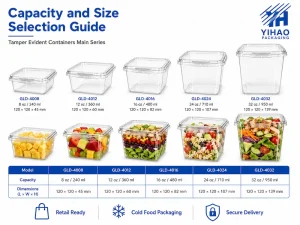
Before placing a wholesale order, buyers should confirm the full system: cup size, lid type, carton quantity, sleeve packing, carton dimensions, pallet loading, and shipping requirements.
A good supplier should help buyers avoid mismatched components. Cup and lid compatibility should be tested together. If a buyer plans to use the same cup for iced coffee, smoothies, juice, and chilled food, the supplier should help evaluate whether one lid type is enough or whether multiple lid options are needed.
Packaging method also matters. Proper packing reduces deformation during transport and keeps cups clean before use.
Ask about OEM, branding, carton packing, and export support
For private label brands, chain cafés, distributors, and wholesalers, OEM support can be important. Buyers should ask whether the manufacturer supports logo printing, custom carton labels, barcode requirements, packaging design, sample confirmation, and export documentation.
A strong wholesale partner should understand both product quality and commercial process. That includes stable communication, clear sampling steps, realistic production planning, and careful packing.
The best supplier is not only the cheapest option. It is the partner that reduces purchasing risk, supports repeat orders, and helps the buyer build a stable packaging system.
Evaluate supplier communication and production stability
Many packaging problems begin before production. Unclear specifications, weak communication, untested lids, or rushed sample approval can create issues later.
Buyers should evaluate how quickly and clearly the supplier responds. A professional iced coffee cups supplier should discuss application, material, lid fit, packing, branding, and compliance requirements before pushing a quotation.
Production stability is equally important. For beverage chains and distributors, delayed packaging can disrupt store operations. A supplier should have the ability to support repeat orders, consistent quality, and reasonable delivery planning.
Buyer Checklist for Ordering Iced Coffee Cups
Before ordering iced coffee cups, buyers should review the following points:
| Checklist Item | What to Confirm |
|---|---|
| Material | PET, RPET option if available, or other cold-use material |
| Application | Iced coffee, cold brew, smoothies, juice, matcha, refreshers, chilled food |
| Clarity | Transparent appearance suitable for display and product photography |
| Lid type | Flat lid, dome lid, sip lid, straw-slot lid, or sealed option |
| Size range | Menu-matched sizes for small, regular, large, or retail portions |
| Stackability | Easy separation, stable stacking, efficient storage |
| Carton packing | Sleeve count, carton quantity, carton strength, export packing |
| Branding | Logo printing, label use, custom carton, private label support |
| Food-contact documentation | Market-specific documents based on intended use |
| Sustainability wording | Recyclable where local systems accept clean PET packaging |
| Supplier capability | Sampling, production stability, communication, export support |
This checklist helps buyers move from visual preference to practical purchasing. A cup may look good in photos, but real commercial success depends on the full packaging system.
Common Mistakes Buyers Should Avoid
Choosing only by lowest price
Price matters, but the lowest price does not always create the lowest total cost. Weak cups, poor lid fit, damaged cartons, inconsistent clarity, or unstable supply can create hidden costs.
For beverage businesses, packaging failure directly affects customer experience. For distributors, low-quality packaging increases complaints and replacement costs. For retailers, poor presentation reduces shelf appeal.
A better approach is to compare price together with clarity, lid fit, packing, communication, and repeat-order reliability.
Ignoring lid compatibility until the last step
Cup and lid should be tested as a system. Buyers should not choose a cup first and solve the lid later. Rim design, lid material, lid type, and application all affect performance.
For iced coffee, a secure lid supports takeaway confidence. For smoothies, straw access and dome space may matter. For chilled desserts, spoon access or stacking may matter.
Testing should happen before bulk ordering.
Making sustainability claims too broad
Sustainability language must be accurate. “Recyclable” does not mean every item will be recycled in every city or country. It means the material may be recyclable where collection, sorting, cleaning, and reprocessing systems accept it.
A safer B2B wording is: recyclable where local recycling systems accept clean PET packaging.
This protects buyers from overpromising and helps brands communicate more responsibly.
Treating all cold drinks the same
Iced coffee, smoothies, juice, fruit tea, matcha, sparkling drinks, and chilled desserts do not behave the same way. They differ in viscosity, toppings, ice, pulp, carbonation, filling method, and display needs.
The best iced coffee cups should be selected based on real use. A buyer should test the cup with actual drinks, lids, storage conditions, and service processes.
Final Thoughts: The Best Iced Coffee Cups Combine Clarity, Strength, and Supply Reliability
The best iced coffee cups are not defined by appearance alone. They combine clear retail display, cold beverage performance, takeaway confidence, lid compatibility, storage efficiency, and reliable supply.
For cafés, beverage chains, supermarkets, convenience stores, distributors, and chilled food brands, PET cold cups and clear PET cups offer a practical solution for iced coffee, cold brew, smoothies, juice, matcha, refreshers, fruit tea, sparkling drinks, and chilled food portions.
For wholesale buyers, the right packaging decision should start with real application needs. Check clarity, lid fit, cup rigidity, size range, carton packing, branding options, food-contact documentation, and responsible sustainability wording. Then choose a manufacturer, wholesale partner, or supplier that can support repeat orders with stable quality and professional communication.
For buyers looking for wholesale iced coffee cups, OEM cold drink packaging, or a stable PET cold cups supplier, YIHAO supports practical packaging solutions for retail display, takeaway service, chilled beverage programs, and food packaging distribution. A strong cold cup system helps products look better, move faster, and perform more reliably in real commercial environments.
FAQ
1. What are the best cups for iced coffee?
The best cups for iced coffee are clear, cold-use cups that show the drink well, fit compatible lids securely, support takeaway handling, and match the beverage menu size range. PET cold cups are commonly used because they provide strong clarity for iced coffee, cold brew, iced latte, flavored coffee, and grab-and-go retail display.
2. Are PET cold cups suitable for smoothies and juice?
Yes. PET cold cups are suitable for many cold beverage applications, including smoothies, juice, refreshers, fruit tea, iced tea, matcha, lemonade, and protein drinks. Their clear structure helps show drink color, fruit texture, ice, foam, and layered ingredients.
3. Are clear PET cups recyclable?
Clear PET cups are recyclable where local recycling systems accept clean PET packaging. Actual recycling depends on local collection programs, sorting infrastructure, contamination level, label design, ink use, and regional packaging rules. Buyers should confirm local requirements before making recycling claims.
4. Can iced coffee cups be used for chilled food?
Yes. Depending on cup design, lid fit, and food-contact suitability, iced coffee cups can also be used for chilled food such as yogurt parfaits, fruit cups, pudding, overnight oats, jelly cups, layered desserts, and snack portions. Buyers should confirm the intended application with the supplier before bulk ordering.
5. How do I choose an iced coffee cups manufacturer or wholesale supplier?
Choose an iced coffee cups manufacturer or wholesale supplier by checking material clarity, lid compatibility, cup strength, size range, carton packing, branding options, sample quality, food-contact documentation, export support, and repeat-order stability. A reliable supplier should help match the cup system to your real beverage or chilled food application.
References
- U.S. Food and Drug Administration — Recycled Plastics in Food Packaging
- U.S. Food and Drug Administration — Guidance for Industry: Use of Recycled Plastics in Food Packaging
- European Commission — Single-use Plastics Directive
- NAPCOR — PET Recycling Report
- Association of Plastic Recyclers — APR Design Guide
- U.S. Environmental Protection Agency — Recycling Basics and Benefits
- Plastics Recyclers Europe — Design for Recycling Guidance
- ISO — Packaging and Environmental Management Standards
Deep-Dive Insights: Choosing Iced Coffee Cups for Modern Cold Beverage Programs
How do iced coffee cups improve retail display?
Iced coffee cups improve retail display by making the beverage visible before the customer opens or tastes it. Clear PET cups show coffee color, milk layers, ice, foam, syrup, fruit inclusions, and chilled dessert layers. This visual clarity helps cafés, supermarkets, convenience stores, and beverage brands create stronger shelf appeal in grab-and-go coolers.
Why are PET cold cups widely used for iced coffee, smoothies, and juice?
PET cold cups are widely used because they combine transparency, lightweight handling, and practical cold beverage performance. They support iced coffee, cold brew, smoothies, juice, matcha, refreshers, fruit tea, lemonade, sparkling fruit drinks, protein drinks, and chilled food portions. For brands that depend on color and freshness, clear PET packaging helps the product communicate value quickly.
What should wholesale buyers check before placing an order?
Wholesale buyers should check material clarity, lid compatibility, cup rigidity, size range, stackability, carton packing, branding options, food-contact documentation, and supplier stability. A reliable iced coffee cups manufacturer should help buyers match cups and lids to real menu needs instead of selling one generic cup for every application.
What makes a supplier more valuable than a low-price quote?
A strong supplier helps buyers reduce risk before mass ordering. This includes sample testing, cup and lid matching, carton packing review, OEM communication, export support, and repeat-order stability. For cafés, beverage chains, distributors, and retailers, stable packaging supply often matters more than a small unit-price difference.
What sustainability wording is safer for recyclable cold cups?
A safer wording is: recyclable where local recycling systems accept clean PET packaging. This avoids overpromising because recycling depends on regional collection, sorting, contamination control, label design, and local acceptance rules. Professional packaging communication should be clear, responsible, and market-specific.
Which buyers benefit most from clear PET iced coffee cups?
Cafés, beverage chains, supermarkets, convenience stores, chilled food brands, foodservice distributors, and private label drink companies benefit from clear PET iced coffee cups. These cups support retail display, takeaway service, menu expansion, branded cold drink programs, and wholesale packaging efficiency.
© 2026 YIHAO Packaging. All Rights Reserved.
YIHAO Packaging owns all rights to the designs, products, and content on this website. We are dedicated to providing innovative, high-quality food packaging solutions.
Unauthorized use or reproduction is strictly prohibited.