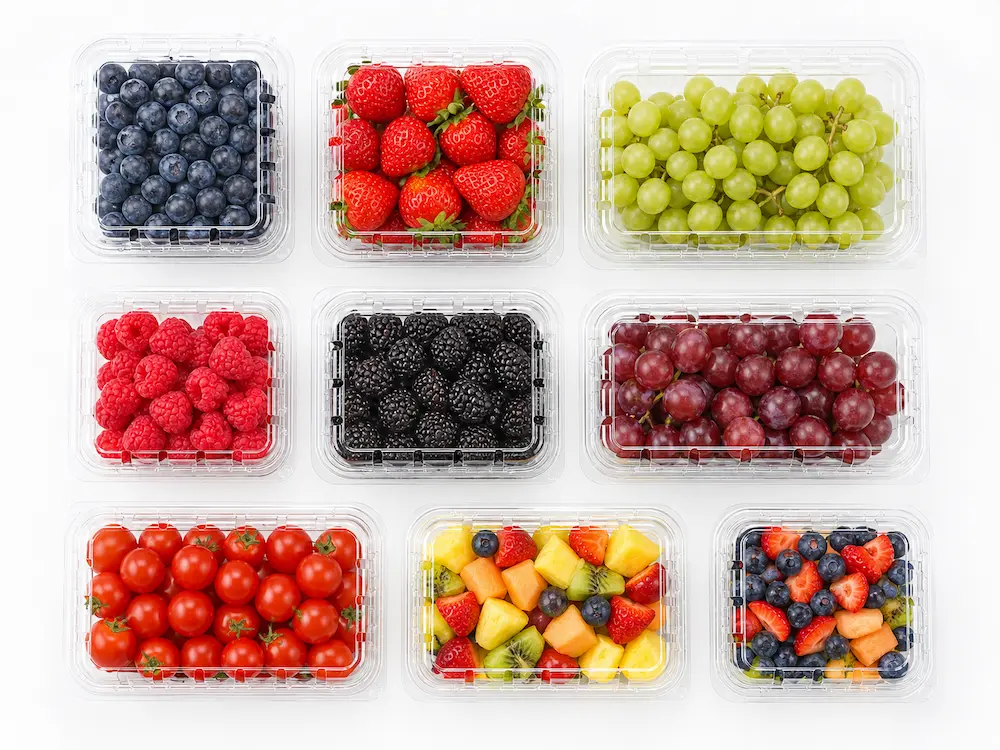
Micro Summary: Wholesale Fruit Packaging for Food Business Buyers
Wholesale fruit packaging helps supermarkets, cafes, bakeries, foodservice brands, distributors, and chilled food suppliers protect fruit products while improving retail display, takeaway handling, product visibility, and repeat purchasing efficiency.
For buyers comparing fresh produce packaging containers, produce clamshell containers, fresh-cut fruit containers, produce trays, and berry packaging containers, the right packaging choice depends on sales channel, product type, portion size, closure needs, stackability, lid height, label placement, PET/RPET material options, and stable supply from a reliable manufacturer or supplier.
Wholesale Fruit Packaging for Supermarkets, Cafes, Bakeries, and Foodservice Brands
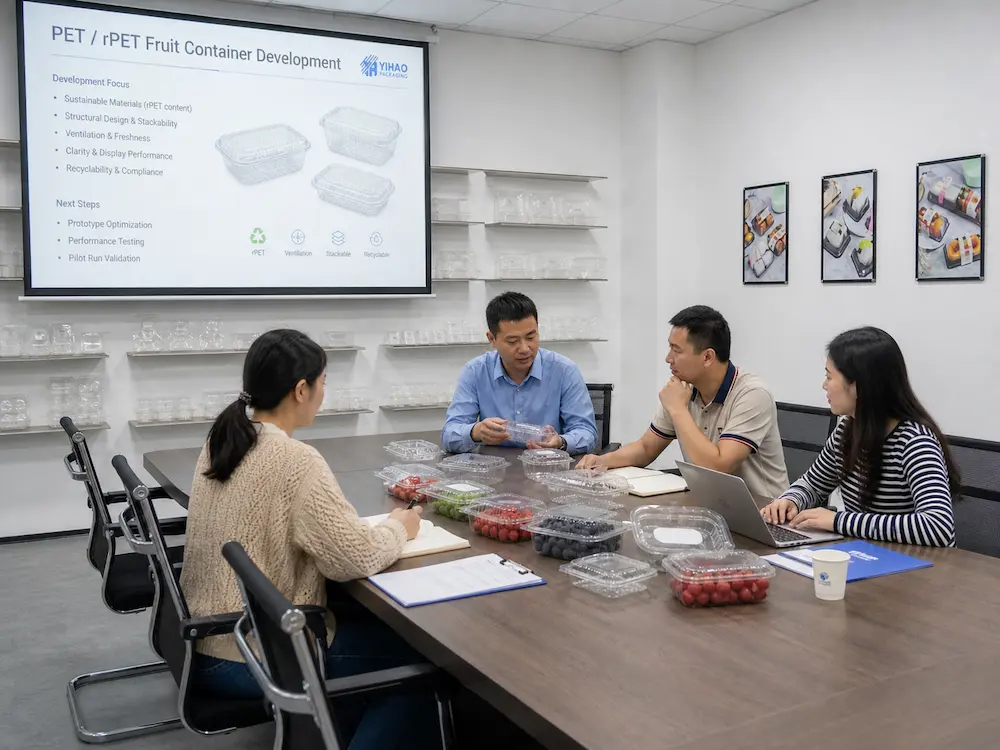
Fruit packaging is no longer only a basic container for holding fresh food. For supermarkets, cafes, bakeries, foodservice brands, distributors, and chilled food suppliers, packaging affects product visibility, freshness perception, shelf organization, takeaway handling, transport stability, and customer trust. This is why wholesale fruit packaging should be selected according to the sales channel, product type, portion size, and real handling process.
YIHAO is a food packaging manufacturer and solution provider focused on practical packaging formats for fruit, berries, salads, snacks, bakery items, deli food, and chilled ready-to-eat meals. For buyers sourcing wholesale fruit packaging, the goal is not simply to find a clear plastic box. The goal is to match packaging structure, material clarity, lid design, stackability, product protection, and supply stability with daily business use.
This buyer guide explains how supermarkets, cafes, bakeries, and foodservice brands should choose fresh produce packaging containers, produce clamshell containers, fresh-cut fruit containers, produce trays, and berry packaging containers. It also gives practical wholesale ordering checklists for buyers working with a manufacturer, wholesale partner, or packaging supplier.
Why Wholesale Fruit Packaging Matters for Food Businesses
Wholesale fruit packaging affects how food looks, moves, stacks, sells, and arrives in the customer’s hands. A package that works well for a supermarket cold shelf may not work well for a cafe takeaway counter. A tray that presents sliced fruit beautifully may not protect loose berries during transport. A clamshell that works for grapes may not provide enough lid height for fruit-topped desserts.
This is why food businesses should choose packaging by application, not by habit.
Fruit Packaging Affects Display, Freshness, and Customer Trust
Fresh fruit is highly visual. Customers judge freshness by color, texture, portion size, and surface condition. Clear packaging helps customers inspect fruit before purchase, while a clean container structure improves the perceived value of the product.
For supermarkets, strong visual display can support impulse purchases. For cafes, clean takeaway packaging helps customers trust grab-and-go fruit cups. For bakeries, transparent packaging highlights fruit toppings and dessert layers. For foodservice brands, consistent packaging helps protect product quality through repeated orders.
Good wholesale fruit packaging protects the food and improves presentation at the same time.
Wholesale Buyers Need Packaging Consistency Across Repeated Orders
Wholesale buyers need more than attractive samples. They need repeatable specifications, stable quality, carton packing consistency, clear communication, and reliable supply. A packaging sample may look acceptable, but the real test is whether the same packaging performs consistently across daily operations and repeated purchasing cycles.
For supermarkets and distributors, inconsistent packaging can create shelf issues, stacking problems, and labeling mistakes. For cafes and bakeries, packaging mismatch can affect speed, presentation, and customer experience. For foodservice brands, unstable packaging supply can interrupt production planning.
A reliable packaging manufacturer or supplier should support sample confirmation, structure comparison, and wholesale order stability.
Different Food Channels Need Different Packaging Formats
Supermarkets, cafes, bakeries, and foodservice brands do not use fruit packaging in the same way.
Supermarkets focus on cold shelf display, product visibility, stacking, barcode placement, and fast replenishment. Cafes focus on grab-and-go packs, takeaway handling, small portions, and clean appearance. Bakeries focus on dessert protection, lid height, fruit decoration, and transparent display. Foodservice brands focus on repeat supply, carton efficiency, operational consistency, and transport stability.
This is why wholesale fruit packaging should be planned as a packaging system, not a single product choice.
Main Types of Wholesale Fruit Packaging
Fruit packaging includes several major formats. Each format has a different role in retail display, takeaway use, product protection, and wholesale supply.
Fresh Produce Packaging Containers
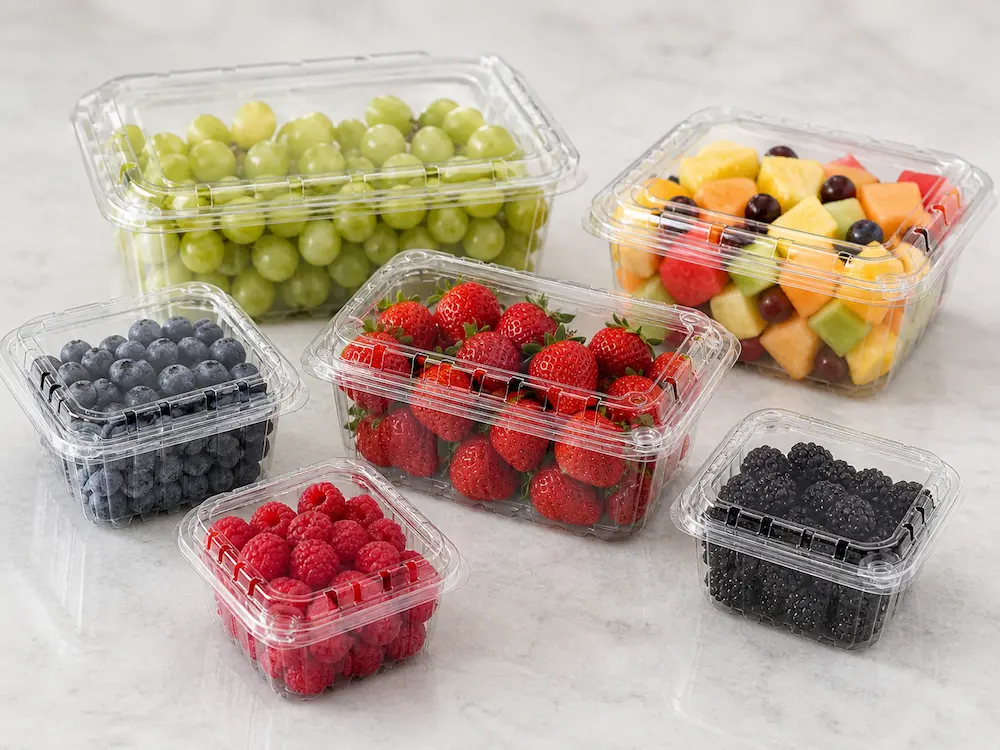
Fresh produce packaging containers are the broad category used for fruit, vegetables, salads, chilled snacks, and ready-to-eat food. They can include clear containers, hinged packs, trays with lids, clamshells, and specialized berry packaging.
For buyers, this category is useful because one packaging family can support multiple product lines. A supermarket may use similar clear packaging for fruit portions, salad sides, berries, and chilled snacks. A distributor may simplify inventory by sourcing several related packaging formats from one supplier.
The key is structure fit. A general produce container should still be matched with product weight, moisture level, lid fit, and shelf display.
Produce Clamshell Containers
Produce clamshell containers usually include a hinged lid connected to the base. This structure supports fast packing, secure closure, product visibility, and retail handling. Clamshells are commonly used for berries, grapes, cherry tomatoes, mixed fruit, salads, snacks, and chilled food.
For wholesale buyers, clamshells are useful because they reduce lid mismatch and support efficient packing. They also work well for takeaway and grab-and-go applications where the package must stay closed during handling.
Buyers should check hinge strength, lock fit, lid clarity, stacking performance, and label placement before ordering in bulk.
Fresh-Cut Fruit Containers
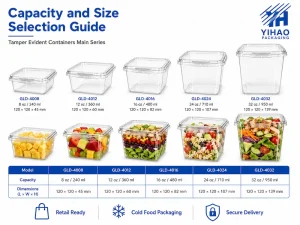
Fresh-cut fruit containers are designed for sliced fruit, fruit cubes, mixed fruit, fruit salad, and takeaway fruit portions. These products often release moisture and move during transport, so packaging needs secure closure, base rigidity, and proper portion fit.
Watermelon cubes, pineapple chunks, melon balls, grapes, mixed fruit, and fruit with yogurt or granola all benefit from clear containers that show the product while keeping it controlled.
For cafes, supermarkets, and chilled food brands, fresh-cut fruit containers are especially useful for grab-and-go programs.
Produce Trays
Produce trays are used when wide visual presentation matters. They are suitable for sliced fruit, fruit platters, vegetable portions, catering packs, bakery display, and deli-style presentation.
Compared with deeper containers, produce trays create a wider display surface. This helps customers see arrangement, color, and portion size quickly. For bakeries and catering suppliers, trays are especially useful when visual layout is part of the product value.
However, trays may need a matching lid, film, wrap, or sleeve depending on the application. Buyers should check tray rigidity, lid compatibility, and transport handling.
Berry Packaging Containers
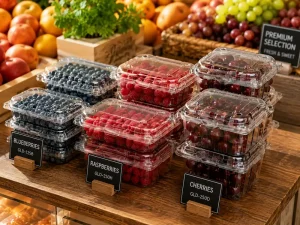
Berry packaging containers are used for blueberries, blackberries, raspberries, strawberries, and mixed berry packs. Berries are delicate, colorful, and sensitive to pressure, so packaging must support visibility, ventilation, gentle containment, and anti-crush protection.
For supermarkets and fruit brands, berry packaging should show the product clearly while supporting airflow and shelf stability. For distributors, filled-pack stacking and carton fit are important.
The best berry packaging should be tested with real berries before wholesale orders.
Fruit Packaging for Supermarkets
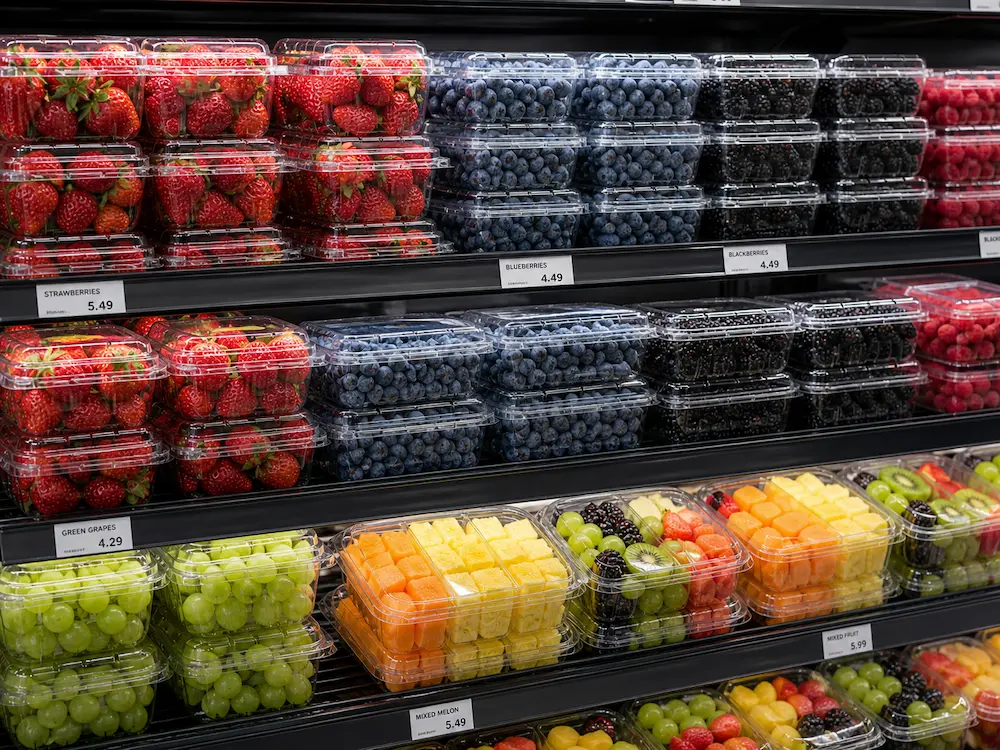
Supermarkets need packaging that supports visibility, shelf organization, fast replenishment, and customer trust. In a cold shelf environment, packaging must make products easy to inspect and easy to compare.
Retail Display and Cold Shelf Organization
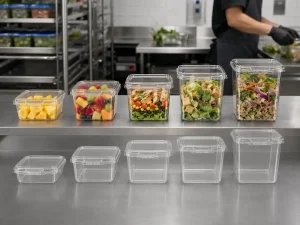
Supermarket fruit packaging should create a clean and organized shelf. Clear containers help customers see product quality, while consistent shapes help staff arrange products efficiently.
Stackability matters because cold shelf space is limited. Filled packs should stack safely without crushing the fruit or creating a messy display. Labels should provide retail information without covering too much of the product.
For supermarkets, wholesale fruit packaging should support daily shelf operations, not only product appearance.
Packaging for Berries, Grapes, and Fresh-Cut Fruit
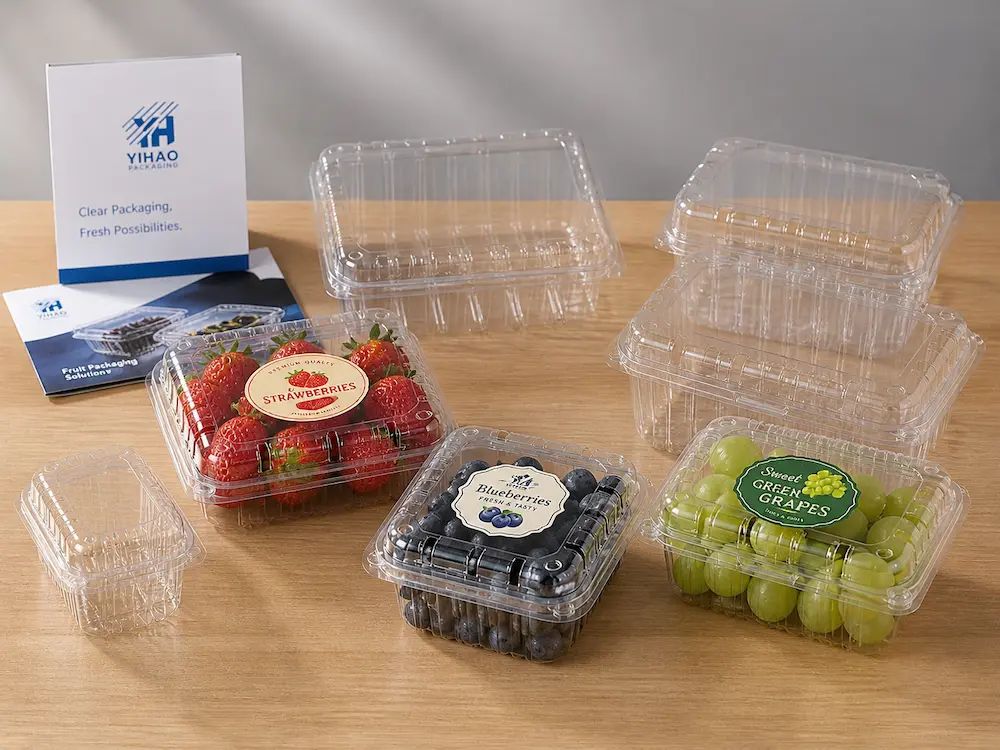
Berries, grapes, and fresh-cut fruit are common supermarket categories, but they require different packaging logic.
Berries need ventilation and gentle support. Grapes need containment and visibility. Fresh-cut fruit needs secure closure and portion control. Mixed fruit packs need enough space to show color balance while keeping the product neat.
This is why supermarkets often use a combination of berry containers, clamshells, and fresh-cut fruit containers rather than one universal format.
Why Clear PET Packaging Supports Supermarket Sales
Clear PET packaging supports supermarket sales because it allows customers to inspect fruit quickly. Color, freshness, size, and surface condition can all be seen through the package.
For supermarket buyers, clear PET packaging also supports label placement, shelf consistency, and product line organization. When used correctly, it turns the fruit itself into the main selling point.
Fruit Packaging for Cafes and Takeaway Shops
Cafes and takeaway shops need packaging that is compact, clean, easy to carry, and suitable for single-serve portions. Customers often buy fruit cups or snack packs together with drinks, sandwiches, desserts, or salads.
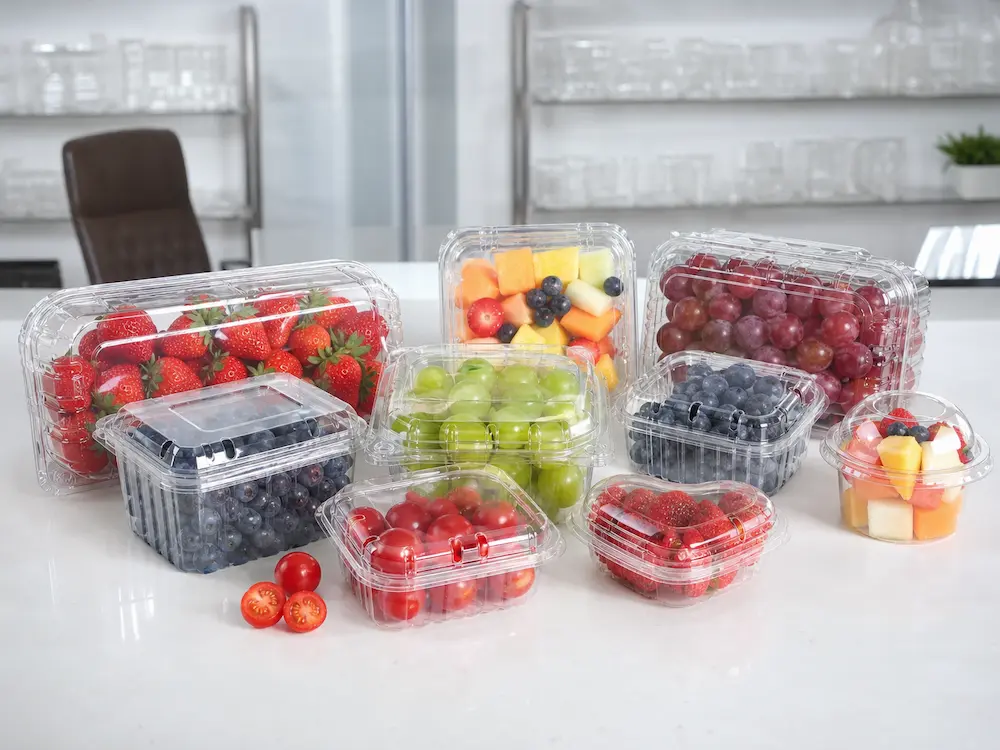
Grab-and-Go Fruit Cups and Snack Packs
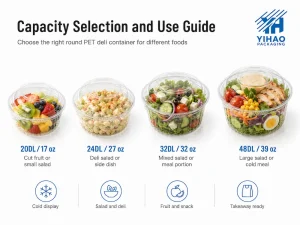
Grab-and-go fruit packaging should be easy to display, easy to pick up, and secure during movement. Small and medium clear containers work well for fruit cubes, mixed fruit, grapes, berries, and snack portions.
For cafes, the packaging should feel neat and premium. Customers may carry the pack to an office, school, car, or outdoor setting. A secure lid helps prevent spills and protects the product during takeaway handling.
Packaging for Fruit with Yogurt, Granola, or Salads
Fruit is often paired with yogurt, granola, nuts, salads, or chilled desserts. These combinations require packaging that supports product separation, lid height, and clear display.
For yogurt-fruit combinations, buyers should consider whether the container needs compartments or enough height to avoid pressing toppings. For fruit salads, closure and moisture control become more important. For fruit and nut snack packs, visibility and portion control matter.
Secure Closure for Takeaway Handling
Takeaway packaging needs stronger closure than retail display-only packaging. A package may be placed into a bag, carried at an angle, or stacked with other food.
For cafes and takeaway shops, produce clamshell containers and clear hinged containers are often practical because they combine visibility with secure closure. Buyers should test filled samples through real takeaway handling before placing wholesale orders.
Fruit Packaging for Bakeries and Dessert Shops
Bakeries and dessert shops use fruit packaging differently from supermarkets and cafes. Their packaging often needs to protect visual decoration, dessert layers, toppings, and delicate product surfaces.
Packaging for Fruit-Topped Desserts
Fruit-topped desserts include cheesecake slices, fruit tarts, tiramisu portions, mousse cups, brownies with berries, cake slices, parfaits, and chilled bakery items. These products need packaging that shows the dessert clearly while protecting toppings.
A clear lid helps customers see fruit decoration, cream layers, and portion size. However, the lid must not press against the fruit or damage the topping.
Clear Display for Bakery Shelves
Bakery shelves rely on visual appeal. Customers often choose desserts based on color, texture, and presentation. Clear packaging helps bakeries display fruit-topped products without opening the pack.
For bakeries, clear PET packaging also supports premium presentation. It keeps products visible while reducing direct handling.
Lid Height and Product Protection
Lid height is critical for bakery fruit packaging. If the lid is too low, it can damage cream, fruit, chocolate, or decorative toppings. If the container is too large, the product may move and look unstable.
Buyers should test packaging with real desserts, not only empty samples. Product height, topping position, and shelf display should all be checked before wholesale purchasing.
Fruit Packaging for Foodservice Brands and Distributors
Foodservice brands and distributors need packaging that supports high-volume operations, stable specifications, and repeat supply. Their packaging decisions often affect packing lines, carton loading, warehouse storage, delivery, and customer satisfaction.
Packaging Consistency for High-Volume Operations
High-volume buyers need packaging that performs the same way across repeated orders. Size, shape, lid fit, carton packing, and material appearance should remain stable.
For foodservice brands, packaging inconsistency can slow operations. For distributors, it can create inventory and delivery problems. This is why supplier reliability is a major part of wholesale fruit packaging purchasing.
Carton Packing, Stacking, and Transport Stability
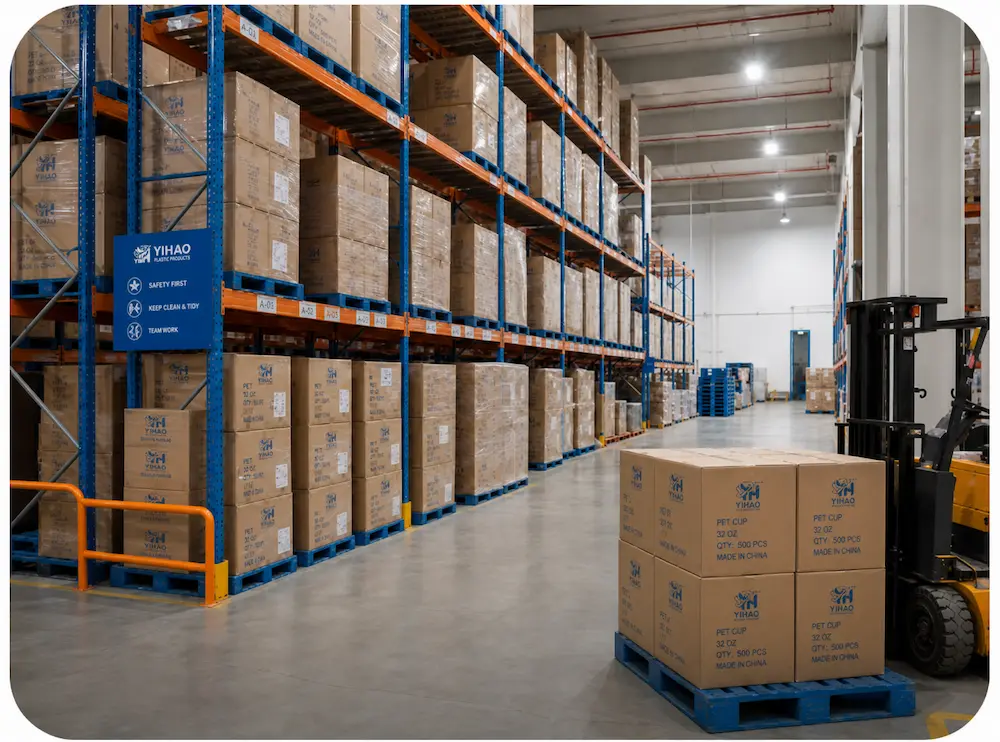
Carton packing affects shipping cost, warehouse efficiency, and transport safety. Filled fruit packs should fit properly inside cartons and stack safely without deformation.
Buyers should test filled packaging in cartons before placing large orders. This is especially important for berries, fresh-cut fruit, and delicate desserts.
Working with a Manufacturer or Wholesale Supplier

A professional packaging manufacturer, wholesale partner, or supplier should help buyers compare structure, material, size, and application fit. The best supplier should understand how packaging performs in supermarkets, cafes, bakeries, foodservice operations, and wholesale distribution.
Supplier communication should include specifications, carton details, sample support, material options, and application guidance.
Why Packaging Consistency Matters for Wholesale Food Businesses
For supermarkets, cafes, bakeries, distributors, and foodservice brands, packaging consistency is not a small detail. It affects daily packing speed, shelf display quality, carton loading, inventory planning, customer experience, and repeat purchasing efficiency. A fruit packaging format may look acceptable as a sample, but wholesale buyers need to know whether the same packaging can perform consistently across repeated orders.
Consistent Packaging Supports Faster Daily Operations
Food businesses often handle fruit packaging in repeated workflows. Supermarket staff refill cold shelves. Cafes prepare grab-and-go fruit cups. Bakeries pack fruit-topped desserts. Foodservice brands manage larger packing volumes for distribution. When packaging size, lid fit, stacking behavior, and carton quantity remain consistent, staff can work faster and with fewer mistakes.
Inconsistent packaging creates hidden friction. A lid that closes differently from batch to batch slows packing. A container that stacks unevenly creates shelf problems. A tray that changes slightly in shape may affect label placement or product appearance. For high-volume buyers, these small differences become daily operational costs.
Stable Specifications Help Protect Brand Presentation
Fruit packaging is part of the customer-facing brand experience. If the same product appears in different-looking containers across stores or orders, the brand presentation becomes less consistent. This matters for supermarkets, cafes, bakeries, and chilled food brands that want a clean, organized, and professional product line.
Stable wholesale fruit packaging helps buyers maintain a consistent visual identity across fruit cups, berry packs, fresh-cut fruit containers, produce trays, and bakery dessert packaging. Clear PET packaging, reliable lid fit, and repeatable container dimensions all support a more professional shelf appearance.
Consistency Reduces Reordering and Supply Chain Risk
Wholesale buyers need packaging that can be reordered with confidence. When specifications, carton packing, material options, and product fit are clearly confirmed, buyers can plan purchasing more efficiently. This is especially important for distributors and foodservice brands that depend on stable supply for repeated customer orders.
A reliable manufacturer or supplier should provide clear specifications, sample confirmation, carton details, and practical communication before bulk orders. Packaging consistency protects the buyer from unexpected changes in appearance, fit, stacking, or handling performance.
Consistent Packaging Makes Product Expansion Easier
Many food businesses start with one fruit product and later expand into related categories. A supermarket may begin with berry packs and then add fresh-cut fruit. A cafe may start with fruit cups and later add yogurt-fruit combinations. A bakery may start with fruit-topped desserts and then add clear produce trays for seasonal products.
A consistent packaging supplier can help buyers build a connected packaging range instead of sourcing every item separately. This makes it easier to manage product lines, labels, carton storage, and wholesale purchasing over time.
How to Choose the Right Wholesale Fruit Packaging Format
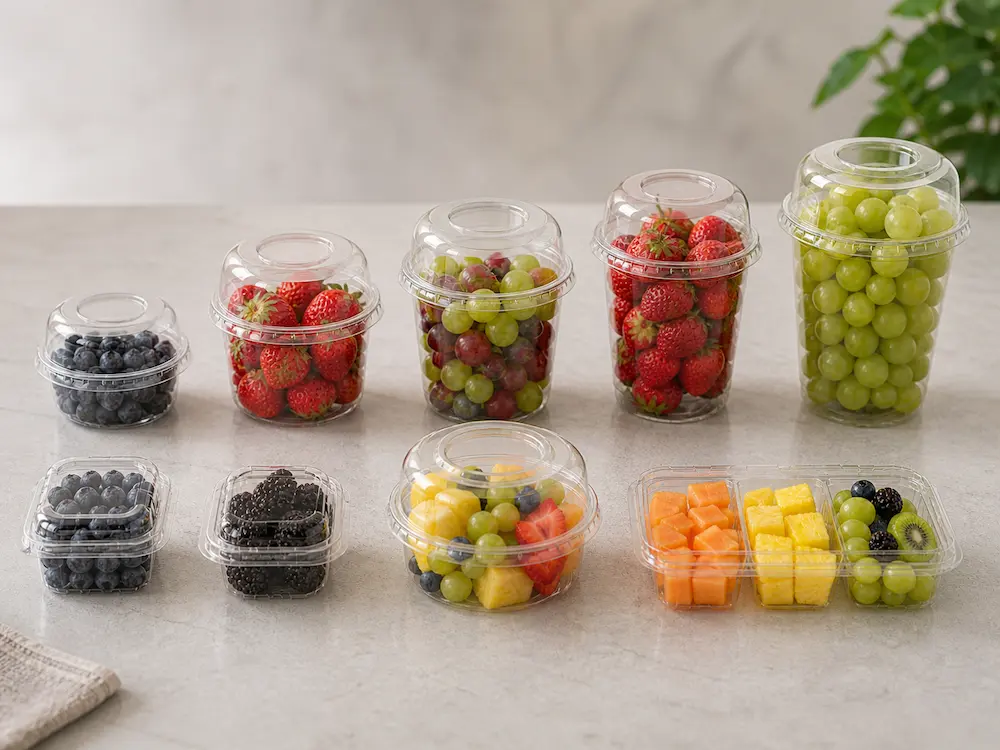
Different formats serve different business needs. Buyers should match packaging format with product type, sales channel, and handling route.
| Packaging Format | Best For | Buyer Focus |
|---|---|---|
| Fresh produce packaging containers | General fruit, salads, chilled food | Structure and product fit |
| Produce clamshell containers | Berries, grapes, snacks, takeaway | Closure and stacking |
| Fresh-cut fruit containers | Mixed fruit, fruit cubes, grab-and-go | Portion control and lid fit |
| Produce trays | Fruit platters, sliced fruit, bakery display | Wide visual presentation |
| Berry packaging containers | Blueberries, raspberries, strawberries | Ventilation and anti-crush support |
This comparison shows why buyers should not select packaging by price alone. Each format has a specific role. The best wholesale fruit packaging decision depends on real product use.
Wholesale Fruit Packaging Buyer Checklist
Before placing wholesale orders, buyers should review product type, sales channel, material, closure, stacking, lid height, and supplier support.
| Checklist Item | Buyer Question | Why It Matters |
|---|---|---|
| Sales channel | Is the packaging for a supermarket, cafe, bakery, or foodservice brand? | Determines packaging structure and handling needs |
| Product type | Is it berries, cut fruit, trays, desserts, or salads? | Prevents format mismatch |
| Material | Is PET or RPET suitable for the target application? | Affects clarity, positioning, and documentation |
| Closure | Does the product need secure takeaway handling? | Reduces spills, loose lids, and customer complaints |
| Stackability | Can filled packs stack safely? | Supports shelves, cartons, and transport |
| Lid height | Is there enough product clearance? | Protects fruit, toppings, desserts, and salads |
| Label area | Does branding block product visibility? | Keeps display clear and retail information readable |
| Supplier support | Can the supplier support wholesale repeat orders? | Protects long-term supply stability |
A buyer checklist helps reduce packaging risk before bulk purchasing. It also improves communication with the packaging supplier.
Common Mistakes When Buying Wholesale Fruit Packaging
Many packaging problems happen because buyers choose too quickly, test too little, or use one format for too many products.
Using One Container for Every Fruit Product
Different fruit products need different packaging structures. Berries need ventilation and gentle support. Fresh-cut fruit needs closure and moisture control. Fruit platters need wide display. Bakery desserts need lid height. Salads need space and stability.
Using one container for every product may create damage, poor display, or inefficient packing.
Testing Empty Samples Instead of Filled Samples
Empty samples do not show real performance. A container that looks strong when empty may deform when filled and stacked. A lid that seems secure when empty may not close well after the product is added.
Buyers should test packaging with real fruit, berries, desserts, or salads before wholesale orders.
Ignoring Cold Shelf and Takeaway Handling
Supermarket cold shelves, cafe takeaway counters, bakery displays, and foodservice delivery routes create different handling conditions. A package should be tested in the environment where it will actually be used.
Cold shelf packaging should display cleanly. Takeaway packaging should close securely. Bakery packaging should protect toppings. Foodservice packaging should stack and transport reliably.
Choosing Only by Lowest Price
Low price can create hidden costs if the packaging causes fruit damage, weak shelf appearance, spills, customer complaints, or repacking labor.
Buyers should evaluate total value, including product protection, shelf performance, closure, stacking, and supplier reliability.
Not Confirming Supplier Documentation and Packing Details
Wholesale buyers should confirm material information, product specifications, carton packing, sample details, and target market requirements before ordering.
This is especially important for export buyers, distributors, and brands that need stable documentation for retail or regulatory review.
Why Choose YIHAO for Wholesale Fruit Packaging?
Choosing the right packaging supplier is as important as choosing the right container. A reliable partner should help buyers compare formats, test samples, and select packaging based on real applications.
YIHAO provides food packaging solutions for fruit, berries, salads, snacks, bakery items, deli food, and chilled ready-to-eat meals. For buyers sourcing wholesale fruit packaging, fresh produce packaging containers, produce clamshell containers, fresh-cut fruit containers, produce trays, or berry packaging containers, YIHAO focuses on practical structure, clean appearance, and application-based packaging selection.
Food Packaging Solutions for Fruit, Berries, Salads, Bakery, and Chilled Food
Fruit packaging often connects with other fresh food categories. A buyer may need berry containers, fruit trays, salad boxes, dessert containers, and clamshell packs within the same supply program.
YIHAO supports packaging solutions across these connected applications, helping buyers build consistent packaging for multiple product lines.
Wholesale Supply Support for Supermarkets, Cafes, Bakeries, and Foodservice Buyers
Supermarkets need shelf-ready packaging. Cafes need secure takeaway packs. Bakeries need clear dessert display. Foodservice brands need stable specifications and repeat supply.
YIHAO supports packaging buyers with practical PET/RPET packaging options, structure comparison, sample review, and wholesale supply communication.
Application-Based Packaging Selection Instead of One-Size-Fits-All Packaging
The best packaging recommendation starts with the product and sales channel. Blueberries, watermelon cubes, sliced fruit, fruit tarts, salads, and catering platters do not need the same structure.
YIHAO helps buyers compare packaging formats according to product behavior, retail display, transport route, and wholesale purchasing needs.
Ready to Compare Wholesale Fruit Packaging Options?
If you are sourcing wholesale fruit packaging for supermarkets, cafes, bakeries, distributors, or foodservice brands, contact YIHAO to compare clear PET/RPET clamshell containers, produce trays, berry packaging containers, fresh-cut fruit containers, sample options, carton packing details, and supplier-ready wholesale packaging solutions.
A strong fruit packaging decision should start with the real product and the real sales channel. YIHAO helps buyers evaluate product visibility, lid closure, ventilation, lid height, stacking performance, label placement, carton efficiency, and repeat supply needs before confirming packaging orders.
Whether you need fruit cups for cafes, berry packs for supermarkets, trays for bakery displays, or fresh produce packaging containers for foodservice programs, YIHAO can help you compare practical packaging formats and prepare wholesale-ready options for your market.
FAQ About Wholesale Fruit Packaging
1. What is wholesale fruit packaging?
Wholesale fruit packaging refers to bulk packaging solutions used for fresh fruit, berries, fresh-cut fruit, fruit trays, salads, desserts, and chilled ready-to-eat food. It is commonly sourced by supermarkets, cafes, bakeries, foodservice brands, distributors, and packaging importers.
2. What packaging is best for fresh-cut fruit?
Fresh-cut fruit usually needs clear containers with secure closure, portion control, base support, and good product visibility. Fresh-cut fruit containers are suitable for watermelon cubes, pineapple chunks, grapes, melon, mixed fruit, fruit salad, and grab-and-go portions.
3. Are produce clamshell containers suitable for supermarkets?
Yes. Produce clamshell containers are suitable for supermarkets because they provide clear display, hinged closure, fast packing, and stable handling. They are commonly used for berries, grapes, cherry tomatoes, salads, snacks, and fresh-cut fruit.
4. What fruit packaging works best for cafes and takeaway shops?
Cafes and takeaway shops usually need compact clear containers or clamshells with secure closure. These formats work well for fruit cups, mixed fruit, yogurt-fruit packs, granola fruit portions, salads, and snack packs.
5. What packaging should bakeries use for fruit desserts?
Bakeries should use clear packaging that provides strong visibility and enough lid height to protect fruit toppings, cream, dessert layers, and decorations. Clear PET containers, trays with lids, and clamshell formats can be suitable depending on dessert size and shape.
6. How do I choose between produce trays and fruit containers?
Choose produce trays when the product needs wide visual display, such as fruit platters, sliced fruit, bakery display, or catering packs. Choose fruit containers when the product needs closure, portion control, takeaway handling, or better containment.
7. What should buyers check before ordering wholesale fruit packaging?
Buyers should check product type, sales channel, material, size, lid fit, stacking, lid height, label area, carton packing, sample performance, and supplier support before ordering wholesale fruit packaging.
8. How do I choose a wholesale fruit packaging manufacturer or supplier?
Choose a manufacturer or supplier that understands fruit packaging applications, PET/RPET material options, container structures, sample testing, carton packing, repeat supply, and wholesale order support. A reliable supplier should help buyers match packaging with real product use.
References
- U.S. Food and Drug Administration, Food Contact Substances and Food Packaging Guidance.
- U.S. Food and Drug Administration, Guide to Minimize Microbial Food Safety Hazards of Fresh-Cut Fruits and Vegetables.
- European Commission, Commission Regulation (EU) 2022/1616 on recycled plastic materials and articles intended to come into contact with foods.
- Association of Plastic Recyclers, APR Design Guide for Plastics Recyclability.
- United Nations Environment Programme, Food Waste Index Report 2024.
- Food and Agriculture Organization of the United Nations, Food Loss and Waste Resources.
- International Fresh Produce Association, Fresh Produce Handling and Packaging Resources.
- WRAP, Food Waste Reduction and Packaging Resource Efficiency Publications.
Deep-Dive Insights: How Buyers Should Think About Wholesale Fruit Packaging
How does wholesale fruit packaging support different food channels?
Wholesale fruit packaging supports different food channels by matching packaging structure with real use. Supermarkets need retail display and stacking. Cafes need takeaway closure. Bakeries need lid height and dessert protection. Foodservice brands need repeat supply, carton efficiency, and transport stability.
Why should buyers compare multiple packaging formats?
No single packaging format fits every fruit product. Fresh-cut fruit containers support closure and portion control. Produce trays support wide visual presentation. Berry packaging containers support ventilation and anti-crush protection. Produce clamshell containers support fast packing and secure handling.
What should buyers confirm before wholesale ordering?
Buyers should confirm product fit, material option, lid closure, filled-pack stacking, lid height, label placement, carton packing, sample performance, and supplier reliability before wholesale ordering. Testing with real products reduces packaging mismatch.
Which packaging option works best for fruit retail display?
The best option depends on product type. Clear clamshells work well for berries and grapes. Fresh-cut fruit containers work well for mixed fruit and grab-and-go portions. Produce trays work well for fruit platters, bakery shelves, and catering display.
Why does supplier selection matter for wholesale fruit packaging?
A reliable manufacturer or supplier helps buyers compare PET/RPET material options, container structures, tray formats, clamshell designs, sample choices, carton details, and wholesale supply plans according to real supermarket, cafe, bakery, and foodservice applications.
© 2026 YIHAO packaging. Short excerpts from this article may be cited for reference only when proper attribution and a link to the original source are provided:Current page URL