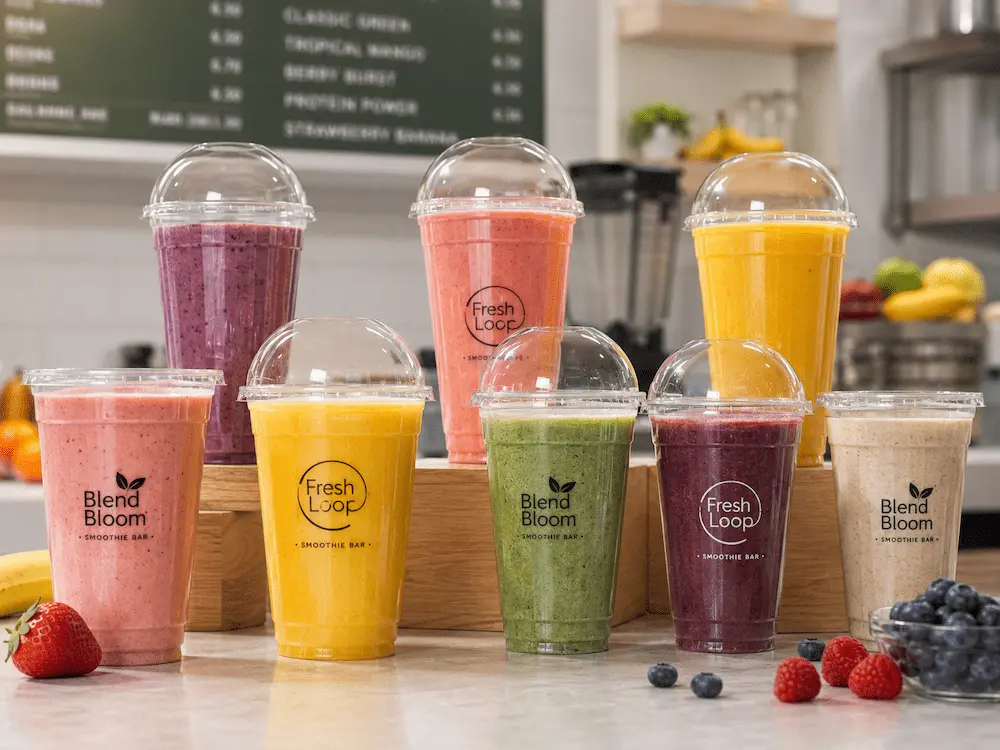
Choosing the right clear smoothie cups is not only about finding a transparent plastic cup. For beverage brands, smoothie shops, juice bars, tea shops, cafes, foodservice distributors, and private-label drink programs, the cup becomes part of the product experience. It affects drink presentation, lid fit, topping space, takeaway handling, cold display visibility, stacking efficiency, and customer perception at the point of sale.
A smoothie cup holds more than liquid. It carries layered fruit colors, blended textures, protein drink thickness, whipped toppings, yogurt swirls, acai bases, berry refreshers, matcha drinks, and cold brew menu items. When the packaging looks clean and performs consistently, the drink feels more premium. When the cup cracks, the lid loosens, the stack jams, or the material looks cloudy, the entire beverage program loses value.
For wholesale buyers, the strongest approach is to evaluate clear smoothie cups as a complete cold drink packaging system. Cup body, lid type, diameter compatibility, material clarity, stacking design, carton packing, supplier communication, and manufacturer stability all matter. As a food packaging manufacturer and solution provider, YIHAO Packaging focuses on clear PET/RPET cold drink packaging for beverage and foodservice buyers who need practical supply support rather than one-time product matching.
Why Clear Smoothie Cups Matter for Beverage Presentation
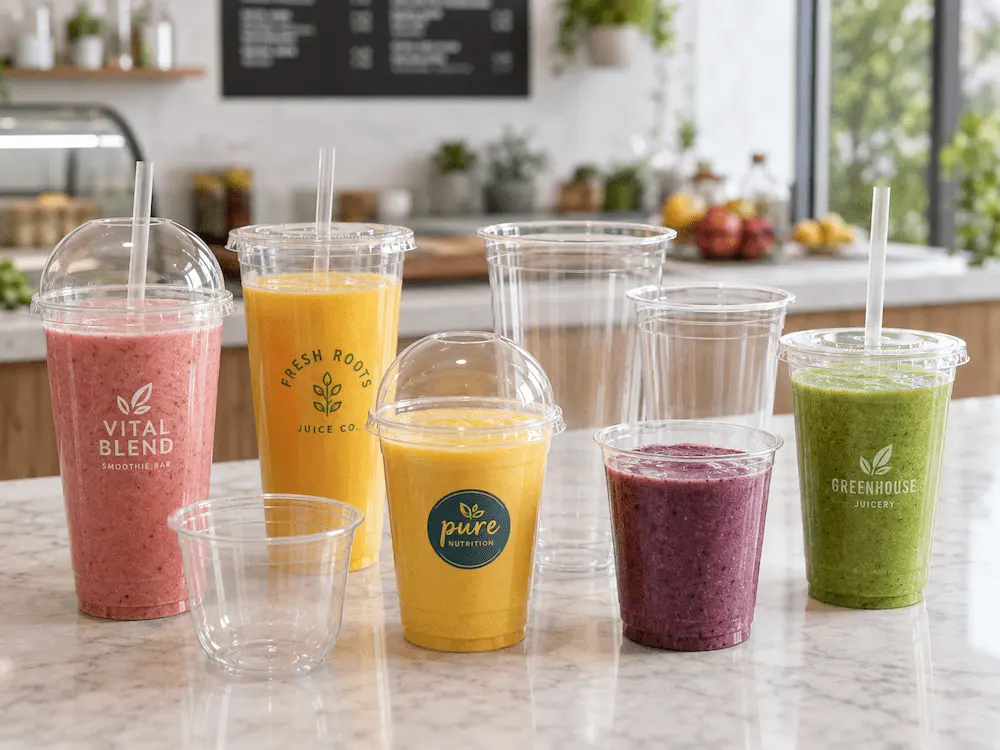
Cold beverages depend heavily on visual appeal. Smoothies, protein drinks, fruit refreshers, yogurt drinks, milkshakes, and layered cold beverages are often purchased because they look fresh, colorful, and ready to enjoy. This makes clear smoothie cups especially important for drink brands that rely on display value.
A high-clarity cup shows the real color of the beverage. It lets customers see berry blends, mango smoothies, green matcha drinks, acai bases, lemonade refreshers, fruit pieces, cream layers, and toppings. For takeaway counters and grab-and-go refrigerators, clear presentation reduces hesitation and supports faster buying decisions.
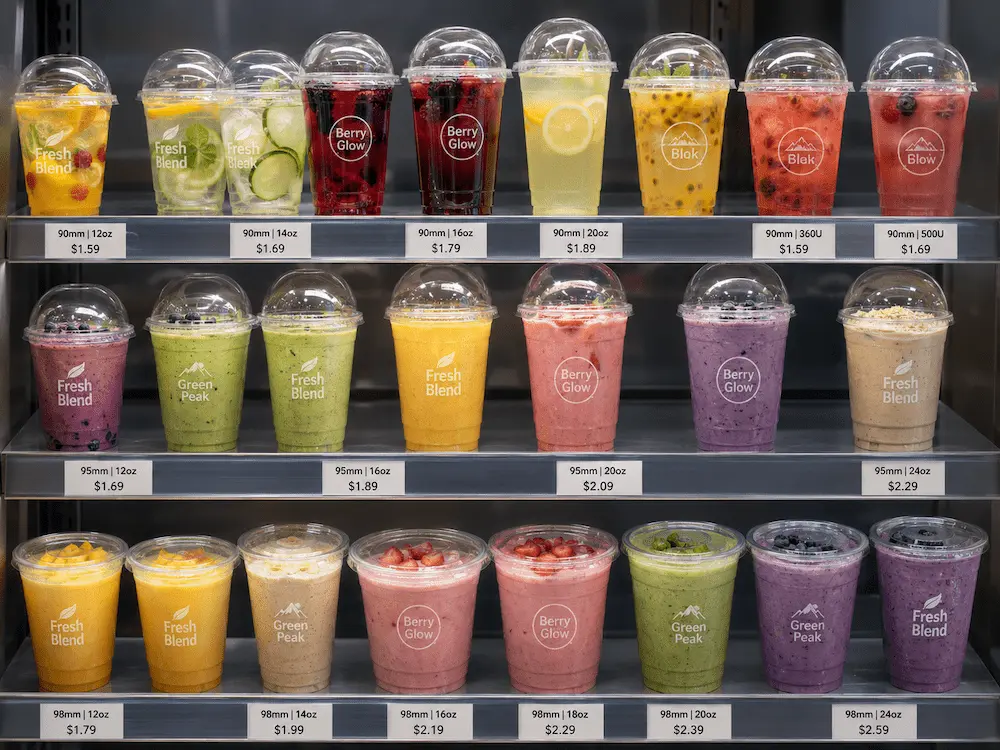
Clear PET and RPET cups are commonly used for cold beverage applications because they provide strong transparency, lightweight handling, and practical stacking performance. For buyers building a full beverage packaging system, the Cold Cups & Lids category gives a more complete sourcing direction than choosing a cup body alone.
In wholesale purchasing, clarity should be evaluated under real use conditions. A cup may look clear when empty, but the final presentation depends on material quality, wall consistency, rim finish, surface smoothness, and how the cup performs when filled with thick drinks or chilled beverages. Buyers should request samples and test them with the actual menu, not only with water.
What Buyers Should Check Before Ordering Clear Smoothie Cups Wholesale
Wholesale purchasing requires a different mindset from small-volume buying. A retail pack of smoothie cups may only need to look acceptable for one event. A wholesale supply program must perform across repeated production, storage, transportation, daily service, and customer handling.
1. Cup Clarity and Visual Consistency
The first checkpoint is visual clarity. Clear smoothie cups should present drinks cleanly without a dull, gray, bluish, or hazy look. For smoothie shops and beverage chains, cup appearance should stay consistent across different batches because customers notice packaging changes quickly.
Buyers should compare samples from multiple production lots when possible. Check whether the sidewall is evenly transparent, whether the rim looks clean, and whether the base has visible distortion. For colorful beverages such as strawberry smoothies, mango protein drinks, acai refreshers, berry refreshers, sparkling fruit drinks, and flavored cold brew, clarity directly affects shelf appeal.
2. Material Direction: PET or RPET
Most buyers looking for clear smoothie cups focus on PET or RPET because these materials support cold drink visibility and practical foodservice use. PET provides strong clarity and a familiar cold cup structure. RPET supports recycled-content packaging discussions where the supply chain and market requirements allow it.
Material selection should be based on the beverage program, local market expectations, buyer sustainability goals, and food-contact documentation. If a brand wants to communicate recycled-content packaging, the supplier should clearly explain the RPET material direction, documentation scope, and production consistency. If a buyer needs strong optical clarity for premium drinks, material clarity should be tested before bulk orders.
For cold drink programs built around transparent cup presentation, the PET Cold Cups collection is the most relevant product direction to review first.
3. Rim Strength and Lid Fit
The rim is one of the most important parts of a smoothie cup. A clear cup may look excellent, but if the rim does not hold the lid securely, it creates leakage risk, customer complaints, and service delays. Buyers should test lid fit by pressing, lifting, shaking gently, and simulating takeaway movement.
For smoothies and thicker beverages, dome lids are especially important because they provide extra topping space. A poorly matched dome lid may pop off during handling or leave gaps around the rim. A reliable cup and lid system should feel secure without requiring excessive force from staff.
4. Stacking and De-Nesting Performance
In beverage shops, speed matters. Staff often pull cups quickly during rush hours. If cups stick together, crack during separation, or take extra time to de-nest, packaging becomes an operational problem.
Wholesale buyers should test how the cups stack in real service conditions. The stack should remain stable, easy to handle, and practical for storage. Good stacking performance also helps distributors and foodservice operators manage warehouse space more efficiently.
5. Cup Sizes and Menu Fit
A smoothie cup program usually needs multiple sizes. Small sizes work for kids’ drinks, sampling, juice, lemonade, and refreshers. Medium sizes suit everyday smoothies, iced coffee, and milk tea. Larger sizes are better for protein drinks, fruit smoothies, acai blends, and premium takeaway beverages.
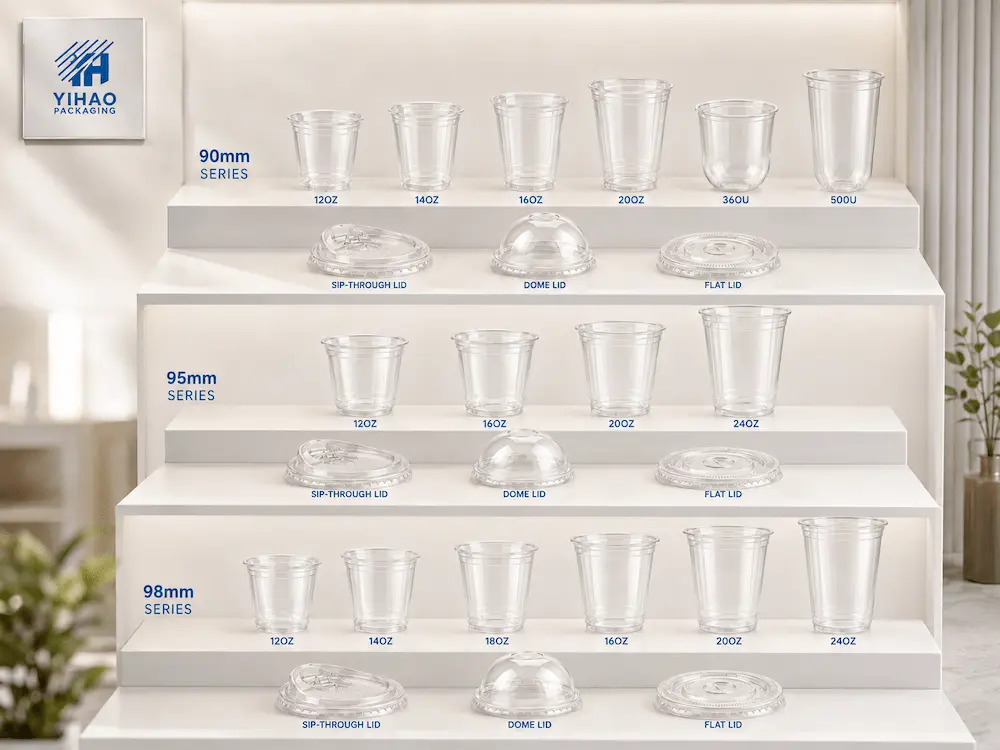
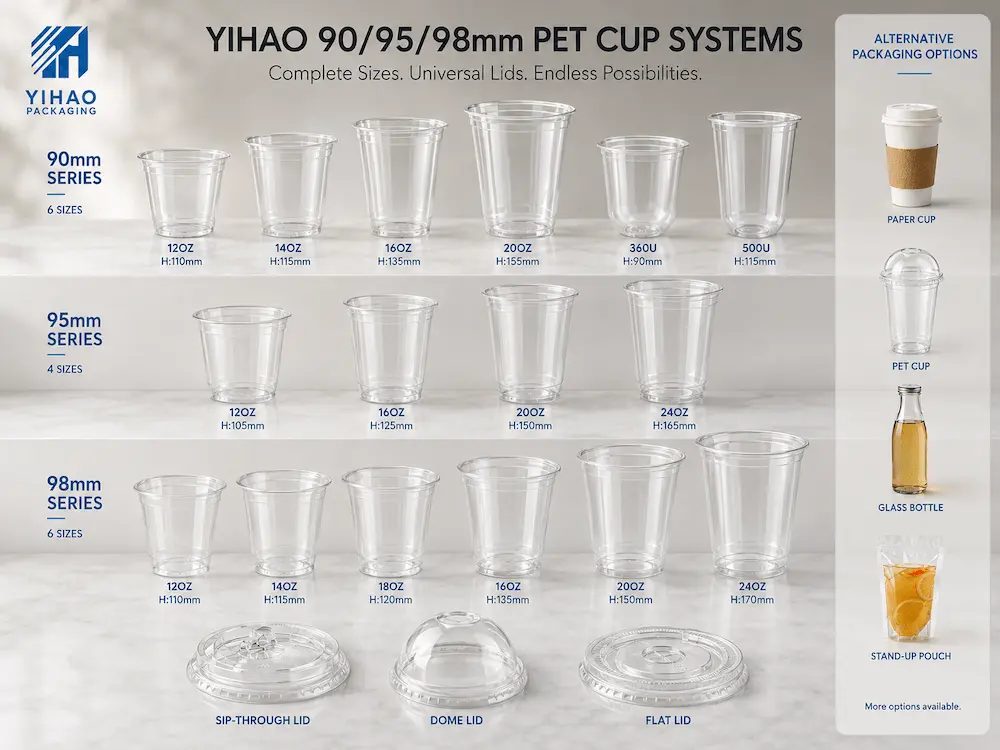
For buyers building a smoothie and cold drink lineup, these related cup options are strong references: 16 oz PET/RPET clear cold cup for iced coffee, iced tea, lemonade, and smoothies,18 oz PET/RPET clear cold cup for milk tea, smoothies, lemonade, and juice,20 oz PET/RPET clear cold cup for smoothies, iced coffee, lemonade, and milk tea, and 24 oz PET/RPET clear cold cup for smoothies, lemonade, iced coffee, and juice.
How to Match Smoothie Cups with Dome Lids and Cold Cup Lid Options
A strong wholesale cup program should not separate cup selection from lid selection. The cup and lid need to work together as one packaging system. This is especially important for smoothies, protein drinks, acai drinks, fruit yogurt beverages, foam-topped drinks, and refreshers with toppings.
Dome Lid Cups for Thick Drinks and Toppings
Dome lid cups are widely used for smoothies because the raised lid gives extra space for whipped cream, fruit toppings, foam, yogurt, or thick beverage volume near the top. For premium cold drinks, the dome lid also improves presentation by creating a taller, more abundant visual profile.
Buyers should check whether the dome lid fits the cup rim cleanly and whether the straw slot or top opening matches the drink style. For smoothies and milkshakes, a dome lid with a practical top opening supports thicker straws and topping-heavy drinks. For fruit yogurt beverages and acai-style drinks, topping clearance matters even more.
A relevant lid option for this article topic is the 95mm clear PET dome lid for smoothies, milkshakes, foam-topped drinks, and fruit yogurt beverages.
Flat Lids for Iced Drinks and Refreshers
Flat lids are practical for iced coffee, lemonade, juice, cold brew, iced tea, and clear refreshers. They create a compact takeaway profile and are easier to stack and store than dome lids. For beverage menus that include both smoothies and lighter cold drinks, flat lids help build a wider packaging system.
For example, a beverage buyer may use dome lids for smoothies and milkshakes, then use clear PET flat lids with straw slot for iced coffee, lemonade, juice, and cold brew for lighter beverage items.
Strawless and Sip-Through Lids for Modern Beverage Menus
Some beverage programs prefer strawless or sip-through lids for iced coffee, iced tea, lemonade, juice, and lighter refreshers. These lids support a cleaner drinking experience and reduce the need for separate straws in selected service models.
For smoothie-heavy menus, strawless lids are not always the main option because thick drinks often need larger straws. However, for shops selling multiple cold beverage types, combining smoothie cups with clear PET strawless sipper lids for iced coffee, lemonade, juice, and iced tea creates more flexibility.
The best supplier should help buyers match the correct lid type to each beverage application instead of offering only one lid style for every drink.
Best Drink Applications for Clear Smoothie Cups
Clear smoothie cups work best when the drink depends on freshness, color, texture, and takeaway presentation. The following applications are the most relevant for wholesale buyers and beverage operators.
Smoothies
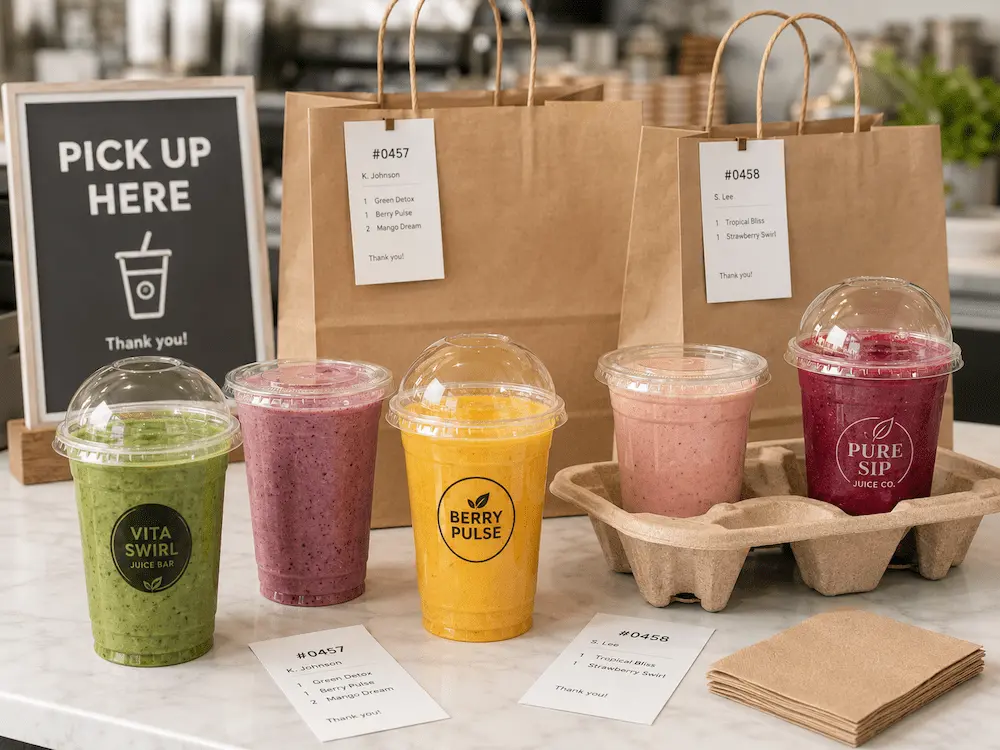
Smoothies are the core use case. They are thick, colorful, and often sold with fruit-forward positioning. A clear cup supports visual appeal and helps customers see real drink color. For strawberry, mango, blueberry, banana, green, and mixed-fruit smoothies, transparent packaging makes the drink more attractive at the counter.
Protein Drink Cups
Protein drink cups need strength and reliable lid fit because protein beverages are often thicker and heavier than ordinary iced drinks. Gyms, wellness cafes, smoothie bars, and meal-replacement drink programs need cups that feel stable in hand and present the beverage cleanly.
For protein drinks, buyers should test filled cup weight, sidewall feel, lid security, and straw compatibility. A good protein drink cup should support daily takeaway service without looking thin or unstable.
Acai Refresher Cups
Acai refresher cups need strong clarity because deep berry and purple tones are part of the product appeal. Many acai drinks include fruit pieces, layered bases, or topping elements that look better in a transparent cup. Clear PET/RPET cups help customers see freshness before purchase.
For menus that include matcha refreshers, sparkling fruit drinks, and flavored cold brew, buyers may also review the 20 oz PET/RPET clear cold cup for matcha refreshers, sparkling fruit drinks, and flavored cold brew.
Berry Refresher Cups
Berry refresher cups benefit from clear packaging because red, pink, purple, and mixed-berry colors communicate freshness immediately. Clear cups also show ice, fruit inclusions, and layered beverage effects, which is valuable for social-media-friendly drink programs.
For refreshers, buyers should consider both cup clarity and lid style. Some berry refreshers work best with flat lids and straws, while fruit-topped or foam-topped versions may need dome lids. Related cup options include the12 oz PET/RPET clear cold cup for juice, lemonade, matcha, and refreshers and the 16 oz PET/RPET clear cold cup for matcha refreshers, lemonade, and iced coffee.
Milk Tea, Lemonade, Iced Coffee, and Cold Brew
Many buyers source smoothie cups as part of a wider cold beverage packaging program. The same cup family may support milk tea, lemonade, iced coffee, cold brew, juice, iced tea, fruit tea, sparkling fruit drinks, and matcha drinks. This makes cup and lid compatibility more important than a single product description.
For beverage chains and distributors, a unified cup family helps simplify inventory, reduce training complexity, and create a more consistent packaging appearance across the menu.
Manufacturer Checklist: What to Confirm Before Bulk Orders
When buying clear smoothie cups wholesale, the manufacturer relationship matters. A manufacturer should support product consistency, sample testing, material explanation, packaging guidance, and repeat supply. The buyer should look beyond the first quotation and confirm how the supplier manages production and quality.
Production Capability
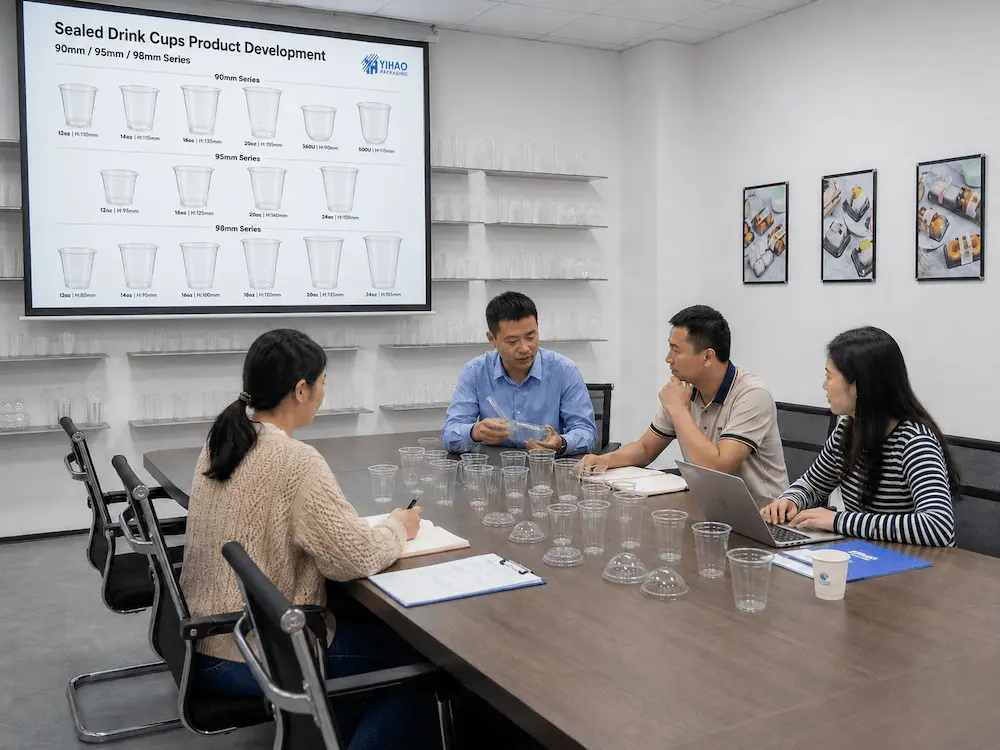
A reliable manufacturer should explain the available cup sizes, matching lid options, material direction, and packaging formats. Buyers should confirm whether the manufacturer supports PET, RPET, or both, and whether the selected cup line has stable availability for repeated orders.

For buyers that require direct manufacturing support, reviewing the clear food packaging manufacturer capability page helps connect product selection with production background.
Sample Testing Before Bulk Purchase
Samples are essential. Buyers should test samples with actual beverages, not only with empty cups. Smoothies, protein drinks, acai drinks, milkshakes, and refreshers have different weight, thickness, and handling behavior.
A practical sample test should include:
- Filling the cup with real smoothie or cold drink products
- Testing dome lid and flat lid fit
- Checking cup clarity under store lighting
- Testing stacking and de-nesting during fast service
- Checking hand feel after chilling
- Simulating takeaway movement
- Reviewing carton packing and storage efficiency
Food-Contact and Material Documentation
Wholesale buyers should request relevant food-contact and material documentation based on their market requirements. The exact documentation depends on destination country, buyer compliance needs, and product application. The supplier should provide clear information instead of vague claims.
For RPET programs, buyers should also ask how recycled content is controlled and documented. For recyclable packaging communication, buyers should use accurate wording such as recyclable where local PET recycling systems accept and process the material.
Customization and Branding Support
Some beverage brands need printed cups, custom cartons, private-label packaging, or branded sleeves. Before placing a wholesale order, buyers should confirm whether the manufacturer supports customization, what printing methods are available, and what artwork requirements apply.
For premium smoothie and refresher programs, branding should not reduce cup clarity. A good design leaves enough transparent area to show the beverage while still presenting the brand professionally.
Supplier Checklist: Quality, Communication, and Export Support
A supplier is not only a price source. For wholesale clear smoothie cups, the supplier affects communication speed, sampling accuracy, production follow-up, carton labeling, shipping coordination, and after-sales support.
Clear Product Matching
The supplier should match the correct cup and lid based on drink application. A buyer asking for smoothie cups should not receive only generic cold cup options. The supplier needs to ask about drink type, lid preference, cup size range, topping use, straw type, storage conditions, and target market.
Consistent Quotation Details
A professional quotation should clearly state material, size, lid compatibility, packing method, carton quantity, customization options, sample availability, and order terms. If the quotation only lists a general cup name and price, the buyer may face confusion later.
Wholesale Packing and Carton Stability
Wholesale packaging should protect cups during storage and shipping. Cartons should be practical for warehouse handling, and the cups should be packed to reduce deformation risk. Buyers should request carton information and confirm whether the packing method matches distribution needs.

Export and Distributor Support
Distributors often need stable supply, product images, packaging details, and clear category organization. A strong supplier supports repeat business by helping buyers build a cup and lid range, not only by selling a single SKU.
For distributors carrying multiple cold drink packaging items, linking cups with lids, PET cold cups, and smoothie-focused dome lids creates a stronger product portfolio.
Clear Smoothie Cups vs General Cold Drink Cups
Not every cold drink cup is ideal for smoothies. General cold drink cups may work for iced coffee, juice, lemonade, or iced tea, but smoothies and protein drinks require stronger attention to lid fit, cup strength, and topping space.
| Checklist Point | Clear Smoothie Cups | General Cold Drink Cups |
|---|---|---|
| Main Use | Smoothies, protein drinks, milkshakes, acai drinks, berry refreshers, topping drinks | Iced coffee, juice, lemonade, iced tea, cold brew, basic refreshers |
| Lid Requirement | Often needs dome lids or secure lids for thick drinks | Often uses flat, straw-slot, or sip-through lids |
| Drink Weight | Usually heavier and thicker | Usually lighter and thinner |
| Presentation Value | High; color, texture, and toppings matter | Medium to high depending on drink style |
| Buyer Priority | Clarity, rim strength, dome lid fit, topping space, stacking | Clarity, lid fit, cost control, inventory efficiency |
The best sourcing decision depends on the drink menu. A smoothie shop should prioritize clear smoothie cups and dome lid compatibility. A cafe with iced coffee and lemonade should also review flat lids and strawless lids. A distributor should build a complete cold cup range that covers different drink applications.
Practical Wholesale Buying Checklist
Before confirming a bulk order, buyers should use a clear checklist. This avoids selecting cups only by price and helps identify hidden packaging problems before mass purchasing.
| Checklist Item | What to Confirm | Why It Matters |
|---|---|---|
| Material | PET or RPET direction, food-contact suitability, documentation scope | Supports market compliance and packaging positioning |
| Clarity | Transparent appearance, no obvious haze, stable visual quality | Improves drink presentation and retail appeal |
| Lid Fit | Dome lid, flat lid, strawless lid, sip-through lid compatibility | Reduces leakage risk and service complaints |
| Drink Match | Smoothies, protein drinks, acai refreshers, berry refreshers, milk tea, lemonade | Ensures the cup fits the real menu |
| Stacking | Stable stacking and easy de-nesting | Supports fast service and warehouse handling |
| Packaging | Carton quantity, carton strength, packing method | Protects cups during shipping and storage |
| Customization | Printing, private label, carton marks, artwork support | Supports brand and distributor needs |
| Supplier Support | Sample testing, communication, repeat order support | Improves long-term sourcing stability |
Common Sourcing Mistakes to Avoid
Choosing Only by Unit Price
Low unit price does not always reduce total cost. If cups crack, lids loosen, cartons deform, or stacks jam during service, the buyer pays through waste, complaints, and operational inefficiency. Wholesale buyers should compare total packaging value, not only the first price.
Ignoring Lid Compatibility
Many cup problems are actually lid problems. A cup that looks suitable may fail when matched with the wrong lid. Buyers should test the exact cup and lid combination before placing a large order.
Using One Cup for Every Beverage
One cup size rarely fits every cold drink menu. Smoothies, protein drinks, refreshers, iced coffee, and milk tea have different serving styles. A better approach is to build a cup range that matches real menu demand.
Skipping Real Drink Testing
Testing with water is not enough. Smoothies and protein drinks are thicker and heavier. Acai refreshers and berry refreshers rely on color presentation. Foam-topped drinks and fruit yogurt beverages need lid space. Real beverage testing gives better purchasing confidence.
FAQ
1. What are clear smoothie cups usually used for?
Clear smoothie cups are used for smoothies, protein drinks, milkshakes, acai refreshers, berry refreshers, fruit yogurt beverages, lemonade, iced coffee, milk tea, cold brew, and other chilled takeaway drinks. They are especially useful when drink color, texture, layers, and toppings need to be visible.
2. Are PET clear smoothie cups suitable for wholesale beverage packaging?
Yes. PET clear smoothie cups are widely used for wholesale cold beverage packaging because they provide strong transparency, lightweight handling, and practical stacking performance. Buyers should confirm food-contact documentation, lid compatibility, and sample performance before bulk purchasing.
3. Should smoothie cups use dome lids or flat lids?
Smoothies, milkshakes, fruit yogurt drinks, foam-topped drinks, and topping-heavy beverages usually work best with dome lids because they provide extra space above the cup rim. Iced coffee, lemonade, juice, iced tea, and lighter refreshers often use flat lids, straw-slot lids, or strawless sip-through lids.
4. What should wholesale buyers check before ordering smoothie cups?
Wholesale buyers should check cup clarity, PET/RPET material direction, rim strength, lid fit, stacking performance, carton packing, size range, customization options, supplier communication, and real beverage sample testing before confirming a bulk order.
5. How do I choose a reliable clear smoothie cups manufacturer or supplier?
A reliable manufacturer or supplier should provide clear product matching, cup and lid compatibility guidance, samples, material information, stable production support, wholesale packing details, and responsive communication. Buyers should avoid suppliers that only provide a general price without confirming drink application and lid requirements.
Final Note / Practical Takeaway
Deep-Dive Insights
How should buyers evaluate clear smoothie cups beyond basic transparency?
For wholesale beverage packaging, clear smoothie cups should be judged by the full service experience, not only by how transparent the cup looks when empty. Buyers need to test how the cup presents real smoothies, protein drinks, acai refreshers, berry refreshers, milk tea, lemonade, and cold brew under store lighting, refrigeration, takeaway handling, and fast-service conditions.
Why does lid compatibility decide the real value of smoothie cups?
A cup body and lid should work as one packaging system. Smoothies, milkshakes, fruit yogurt beverages, foam-topped drinks, and topping-heavy beverages often require dome lid cups with secure rim fit and enough headspace. If the dome lid feels loose, cracks during application, or does not match the rim properly, the packaging creates leakage risk and slows down staff during peak service hours.
What makes clear smoothie cups different from general cold drink cups?
General cold drink cups are often selected for iced coffee, juice, lemonade, iced tea, and cold brew. Clear smoothie cups, however, need stronger attention to drink weight, sidewall feel, stacking performance, topping space, straw compatibility, and visual impact. Thick beverages place more pressure on the cup and lid system, so buyers should test actual menu items before confirming wholesale orders.
How can beverage brands use clear cups to improve menu perception?
Transparent PET or RPET cups help customers see fruit color, blended texture, ice, topping layers, and fresh ingredients before purchase. For protein drink cups, acai refresher cups, berry refresher cups, and premium smoothie programs, the cup becomes part of the visual selling point. A clean, high-clarity cup supports a fresher and more premium brand impression.
What should wholesale buyers ask a manufacturer before placing bulk orders?
Buyers should ask the manufacturer about PET/RPET material direction, food-contact documentation, size range, matching lids, dome lid fit, carton packing, customization support, sample availability, and repeat production stability. A reliable clear smoothie cups manufacturer should help buyers match the right cup and lid combination to real drink applications instead of only offering a generic cold cup quote.
Why does supplier stability matter for long-term beverage packaging programs?
For cafes, smoothie shops, juice bars, beverage chains, and distributors, packaging consistency affects daily operations. A dependable wholesale smoothie cups supplier supports stable product quality, repeat order planning, sample checking, communication efficiency, and cup-lid system matching. This reduces sourcing risk and helps buyers build a more reliable cold beverage packaging lineup.