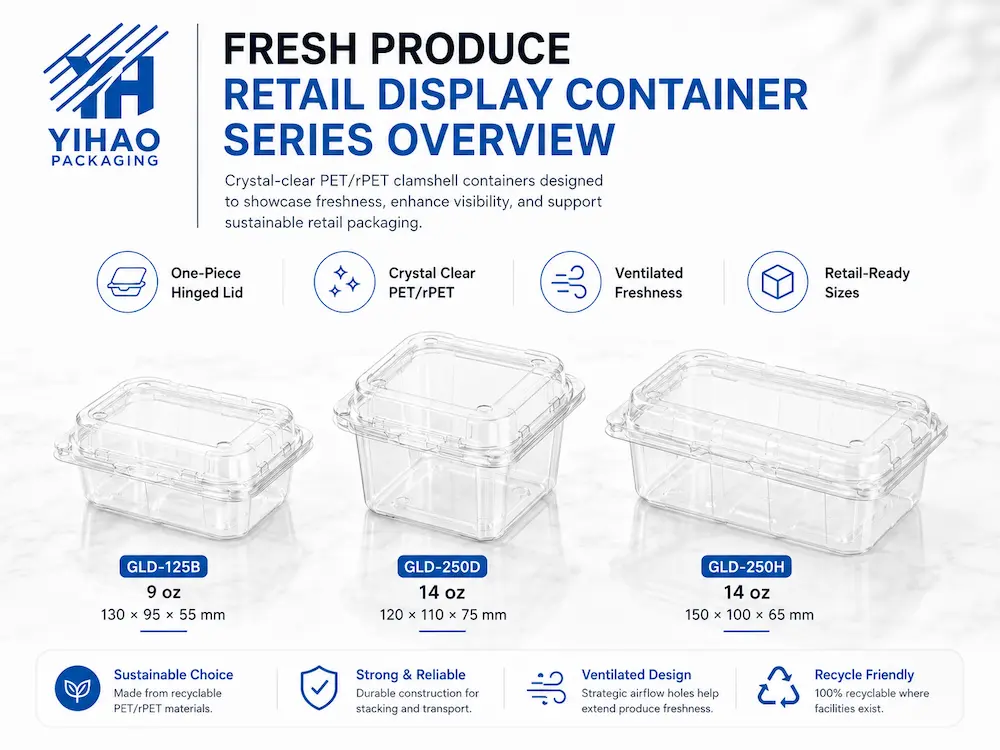
Fresh Produce Retail Display FAQ: Materials, Sizes, Uses, and Ordering Questions
Choosing packaging for fresh produce retail display is a practical sourcing decision for supermarkets, convenience stores, cafes, bakeries, distributors, foodservice brands, and food packaging teams. Retail fruit packaging must help fruit look fresh, visible, organized, clean, easy to scan, easy to carry, and reliable through chilled storage, shelf display, replenishment, and customer handling.
Fresh produce is a visual category. Buyers and shoppers often judge fruit by color, portion size, moisture appearance, container clarity, label placement, and shelf organization before purchase. A container that hides the fruit, wastes shelf space, or fails under refrigeration can reduce retail confidence. A clear, stable, well-labeled container supports stronger display value.
This FAQ answers common buyer questions about fresh produce retail display, including materials, sizes, uses, fruit packaging for supermarkets, retail fruit containers, supermarket fresh fruit packaging, convenience store fruit cups, clear fruit packaging, wholesale supply, and supplier selection.
YIHAO is a food packaging manufacturer and solution provider focused on practical PET/RPET packaging for fresh fruit, fruit cups, berries, fresh-cut fruit, chilled snacks, salads, bakery items, deli food, and retail display applications. This guide helps buyers choose better packaging before confirming wholesale retail fruit packaging orders.
1. What Is Fresh Produce Retail Display Packaging?
Fresh produce retail display packaging refers to containers, cups, trays, bowls, clamshells, and clear packs used to present fruit and produce in retail environments. It is used for supermarkets, convenience stores, cafes, bakeries, chilled counters, grab-and-go shelves, and foodservice retail programs.
The main goal is to make fresh produce easy to inspect, easy to buy, and easy to handle. Packaging should protect the fruit while helping shoppers see product quality quickly. It should also support labels, barcodes, stacking, carton packing, chilled display, and repeat supply.
For B2B buyers, this packaging should be evaluated by real retail use. A container must work after filling, labeling, refrigeration, stacking, transport, shelf placement, and customer handling.
2. Why Does Fresh Produce Retail Display Matter for Buyers?
Fresh produce retail display matters because shoppers make visual decisions. Fruit color, cut quality, portion size, moisture appearance, packaging clarity, and shelf organization all influence trust. If the packaging looks cloudy, unstable, or poorly labeled, the fruit may look less fresh even when the product itself is acceptable.
Retail buyers also need packaging that supports store operations. Staff need containers that stack neatly, scan correctly, fit shelves, and replenish quickly. Distributors and food packaging teams need containers that fit cartons and remain consistent across wholesale orders.
Strong retail display packaging connects product presentation with operational efficiency. It helps fruit look better and move more smoothly through the supply chain.
3. What Materials Are Commonly Used for Fresh Produce Retail Display?
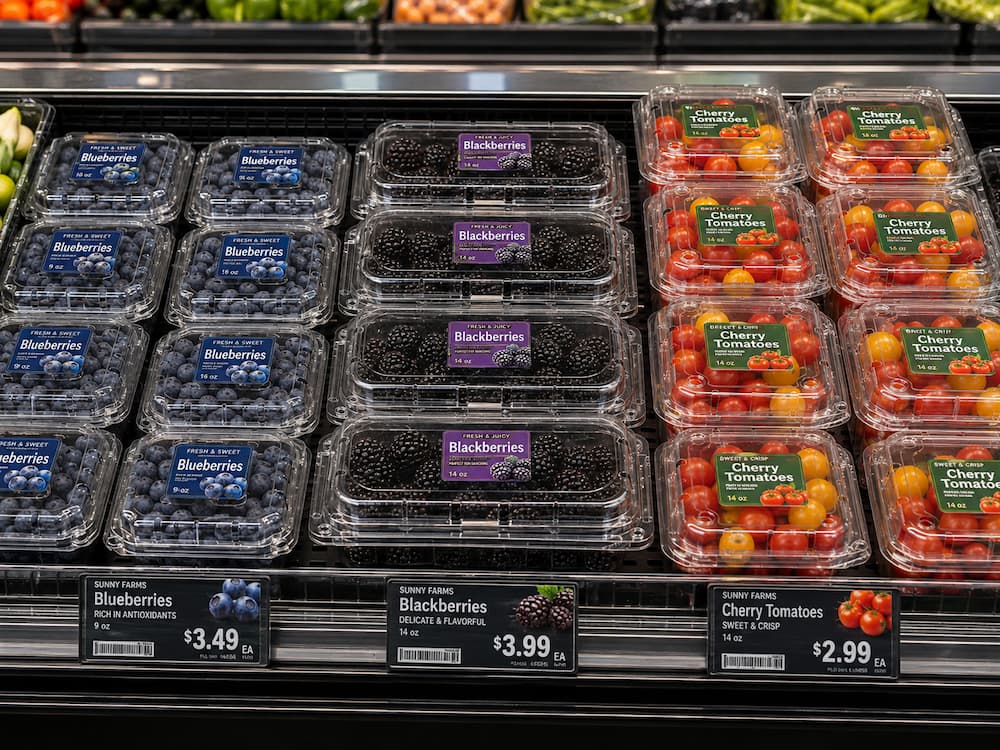
PET and rPET are commonly used for fresh produce retail display packaging because they provide clear visibility, practical rigidity, lightweight handling, and chilled shelf presentation. Clear PET fruit containers are useful when shoppers need to inspect fruit quality before purchase.
Buyers should review material clarity, wall strength, lid compatibility, intended food use, cold-shelf performance, and supplier documentation before wholesale orders. rPET can support recycled-content discussions when food-contact suitability, documentation, and local recycling conditions are properly considered.
A professional manufacturer or supplier should clearly explain material options instead of using vague claims. Material selection affects both appearance and commercial reliability.
4. What Is the Role of Clear Fruit Packaging?
Clear fruit packaging supports retail trust because it allows shoppers and buyers to inspect fruit directly. It helps show color, freshness cues, cut quality, portion size, and overall product condition. For fruit packaging, transparency is not just a material feature; it is part of the selling function.
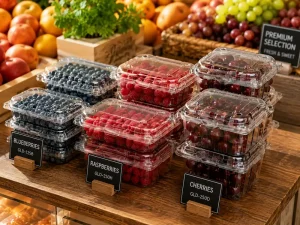
Clear packaging is especially useful for berries, grapes, cut fruit, mixed fruit cups, chilled fruit bowls, bakery fruit portions, and grab-and-go fruit snacks. It also helps store staff inspect products without opening every container.
Buyers should test clear packaging under real retail lighting and refrigerated shelf conditions. A container that looks bright in an office may look dull or gray under chilled display lighting.
5. How Is Fruit Packaging for Supermarkets Different?
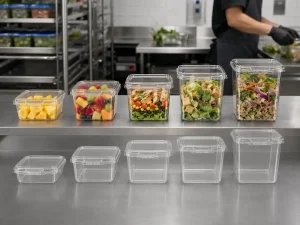
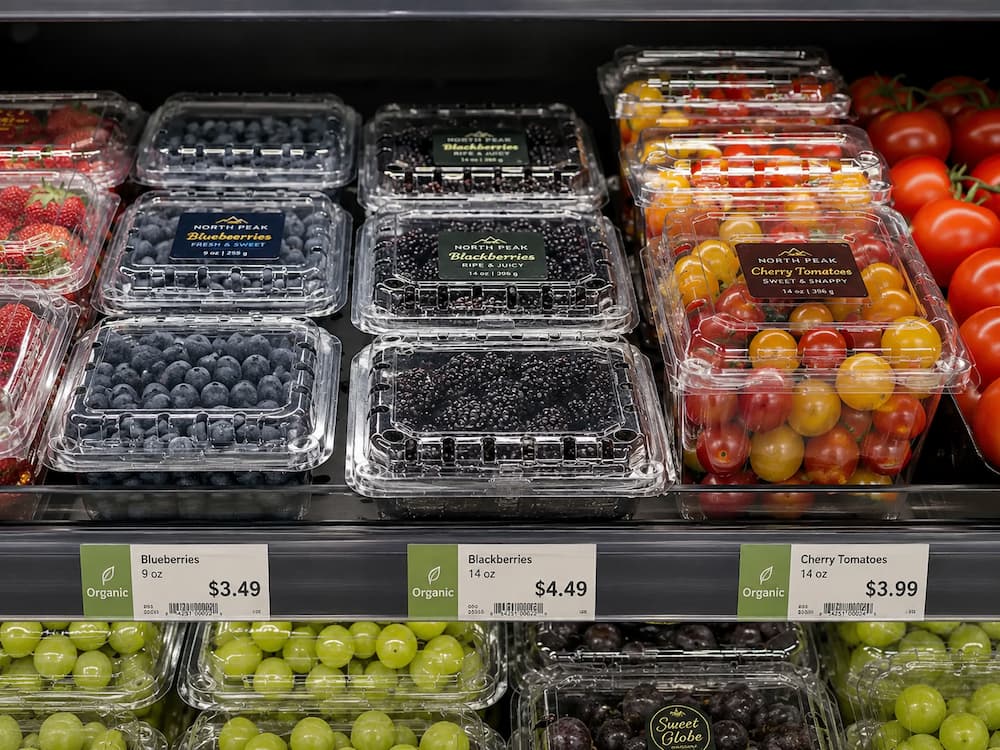
Fruit packaging for supermarkets usually needs to support larger displays, more SKUs, higher replenishment volume, barcode scanning, chilled shelf organization, and multiple portion sizes. Supermarkets may sell fruit cups, mixed fruit containers, fresh-cut fruit packs, berries, grapes, and family-size portions in the same department.
Supermarket packaging should look organized across a shelf block. Containers should stack neatly, labels should scan easily, and the fruit should remain visible. Packaging that works for a single sample may fail when placed across multiple shelves or SKUs.
Buyers should test the package inside a real shelf layout. Shelf footprint, stack height, label position, carton fit, and replenishment speed all matter.
6. What Are Retail Fruit Containers Used For?
Retail fruit containers are used for fresh fruit, berries, grapes, cut fruit, mixed fruit, fruit cups, chilled fruit bowls, bakery fruit portions, cafe fruit servings, and convenience store fruit snacks. They help protect the product while supporting visual display and customer handling.
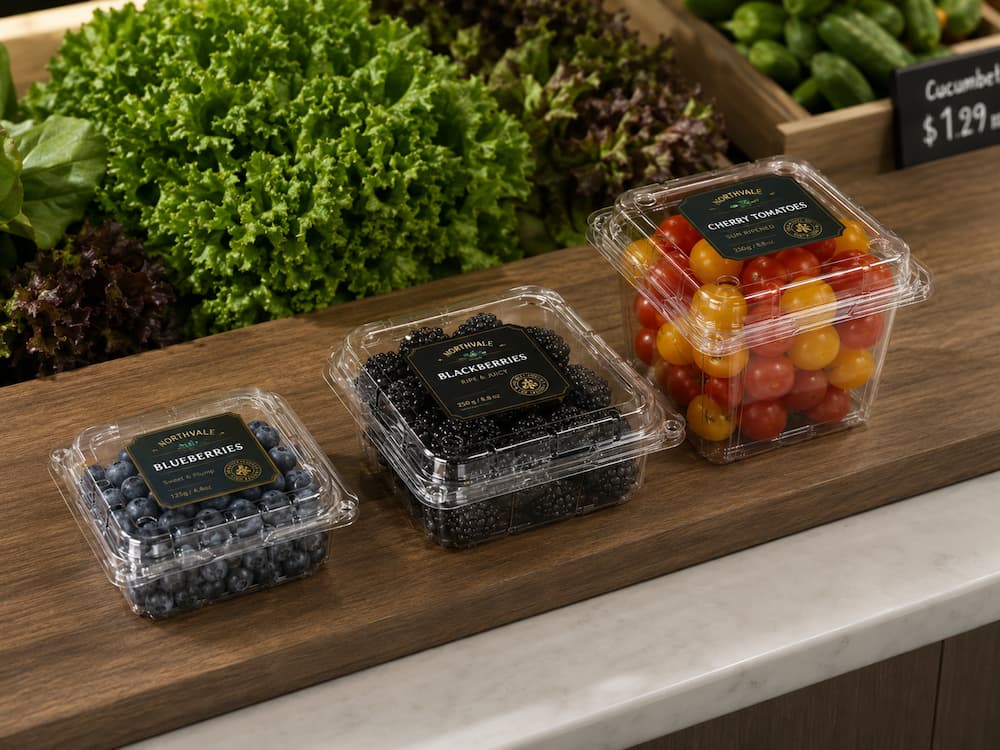
Common formats include fruit cups, hinged clamshells, bowls with lids, square containers, rectangular packs, compartment containers, and clear deli-style containers. The right format depends on fruit type, portion size, shelf space, label needs, and sales channel.
Food packaging teams should not select containers only by volume. They should test real fruit inside the package to confirm appearance, lid fit, stacking, label placement, and chilled display behavior.
7. What Makes Supermarket Fresh Fruit Packaging Effective?
Supermarket fresh fruit packaging is effective when it supports product visibility, portion value, chilled display, label readability, stacking, and replenishment. Shoppers should understand the product quickly, and store teams should be able to restock it efficiently.
The packaging should help fruit look fresh from multiple viewing angles. It should not hide the product behind oversized labels. It should also remain stable in refrigerated shelves and fit cartons efficiently for distribution.
For fresh-cut fruit, moisture behavior and cold-shelf appearance should be tested. A container that fogs heavily or shows unattractive moisture may reduce shelf appeal.
8. How Are Convenience Store Fruit Cups Different?
Convenience store fruit cups are usually designed for smaller portions, fast purchase, compact shelf use, and takeaway handling. Convenience store shoppers often buy fruit during a quick stop, commute, school run, office break, or snack moment.
Fruit cups should be clear, compact, secure, and easy to hold. The portion should look full without being crowded. The lid should support takeaway use, and the label should be easy to scan without hiding too much fruit.
Compared with supermarket containers, convenience store fruit cups usually focus more on portability and quick purchase. Supermarket packaging may support broader portion sizes and larger chilled displays.
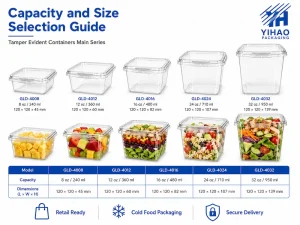
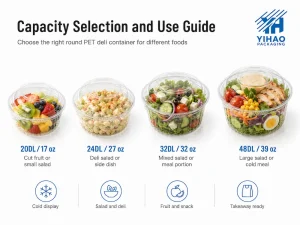
9. What Sizes Should Buyers Consider?
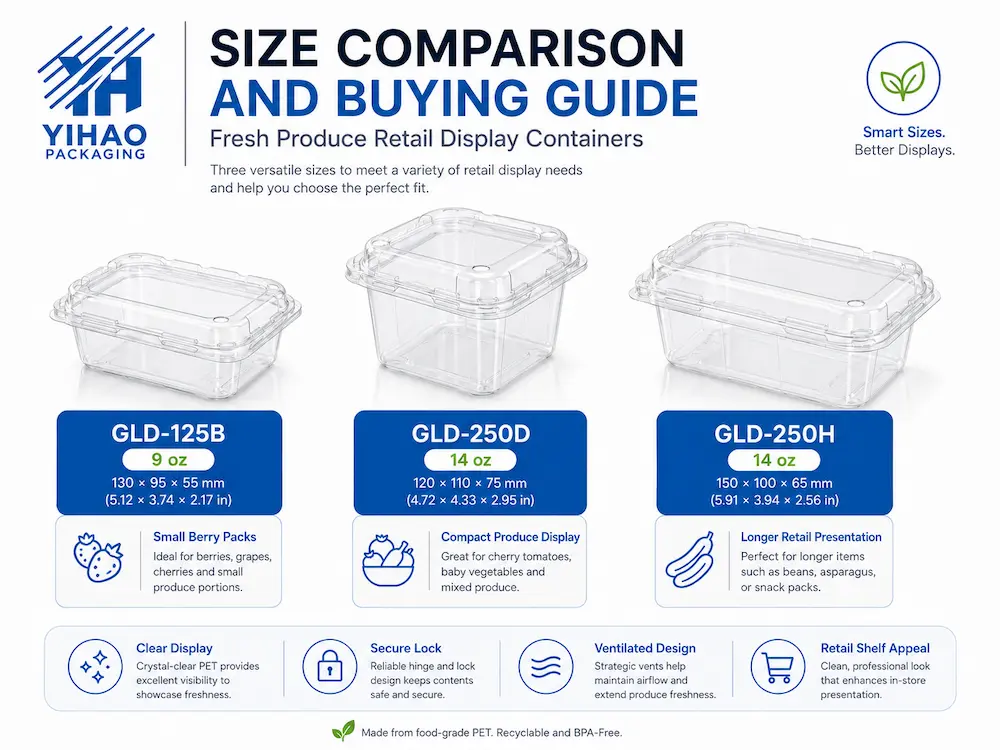
Buyers should choose size based on fruit type, cut size, portion weight, lid clearance, shelf footprint, label area, carton fit, and channel. A small fruit cup may work well for convenience stores or cafes. A larger clear container may work better for supermarket mixed fruit or family-size portions.
If the container is too large, the fruit can look underfilled. If the container is too shallow, the lid may press the product. If the footprint is inefficient, it can waste shelf or carton space.
Filled sample testing is the best way to choose size. Empty containers cannot show product movement, portion appearance, lid pressure, or display quality.
10. What Lid Features Should Buyers Check?
Lid security is critical for retail fruit packaging. A lid should close securely, protect the fruit, support stacking, and remain reliable during chilled handling. Weak lids can create leakage, opening, or customer complaints.
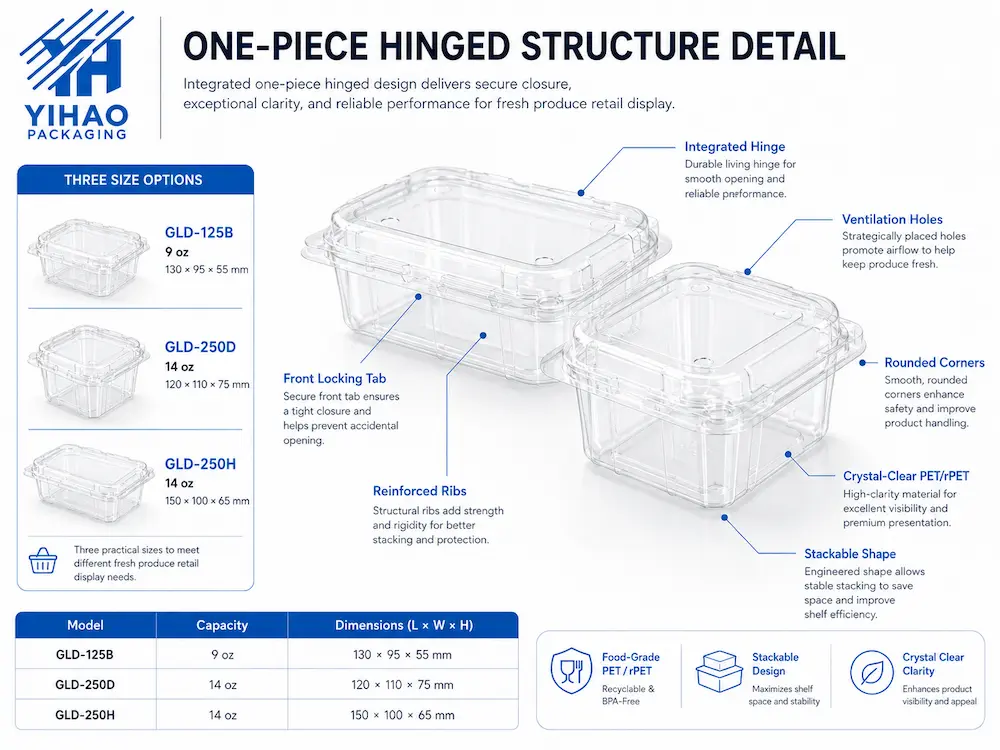
Buyers should check closure fit, hinge strength, snap feel, opening experience, lid height, and repeated handling. For fruit cups, the lid should support takeaway confidence. For clamshells and bowls, the lid should protect the product without pressing it.
Lid testing should be done with filled samples because fruit weight, moisture, and pressure change real performance.
11. How Important Are Labels and Barcode Placement?
Labels are essential for fresh produce retail display. Retail fruit packs may need a barcode, brand label, product name, price, weight, origin, use-by date, ingredients, batch code, or store information. Label placement must support scanning without hiding too much fruit.
Oversized labels reduce the value of clear fruit packaging. Poor label placement can also slow checkout or make the display look messy. Buyers should apply real labels during sample testing and review barcode readability after refrigeration.
The label should help the product sell. It should not block the main visual selling area or weaken shelf appeal.
12. What Should Buyers Check for Chilled Retail Display?
Chilled retail display affects packaging performance. Cold air, fruit moisture, temperature changes, shelf lighting, and label adhesion can all change the way a package looks. Buyers should not approve retail fruit packaging only at room temperature.
In refrigerated shelves, buyers should check product visibility, fogging, moisture appearance, lid behavior, label adhesion, and stacking. Some fruit releases visible moisture after refrigeration, so real product testing matters.
Strong packaging should keep fruit visible, organized, and attractive throughout the selling window.
13. What Should Buyers Ask Before Wholesale Ordering?
Before ordering, buyers should ask about material, size range, lid compatibility, label space, carton packing, stacking strength, chilled display behavior, sample availability, and repeat wholesale supply. They should also explain the real application to the supplier.
A good manufacturer or supplier should ask what fruit will be packed, how much product goes into each container, where the product will be sold, what label is required, how it will be transported, and what order volume is expected.
The best buying process is not just price comparison. It is a structured review of product fit, retail display, and supply stability.
14. How Should Buyers Test Samples?
Buyers should test retail fruit containers with real fruit, real labels, real cartons, and real chilled conditions. A practical test should include filling, closing, labeling, stacking, refrigeration, carton loading, transport simulation, shelf placement, and customer-style handling.
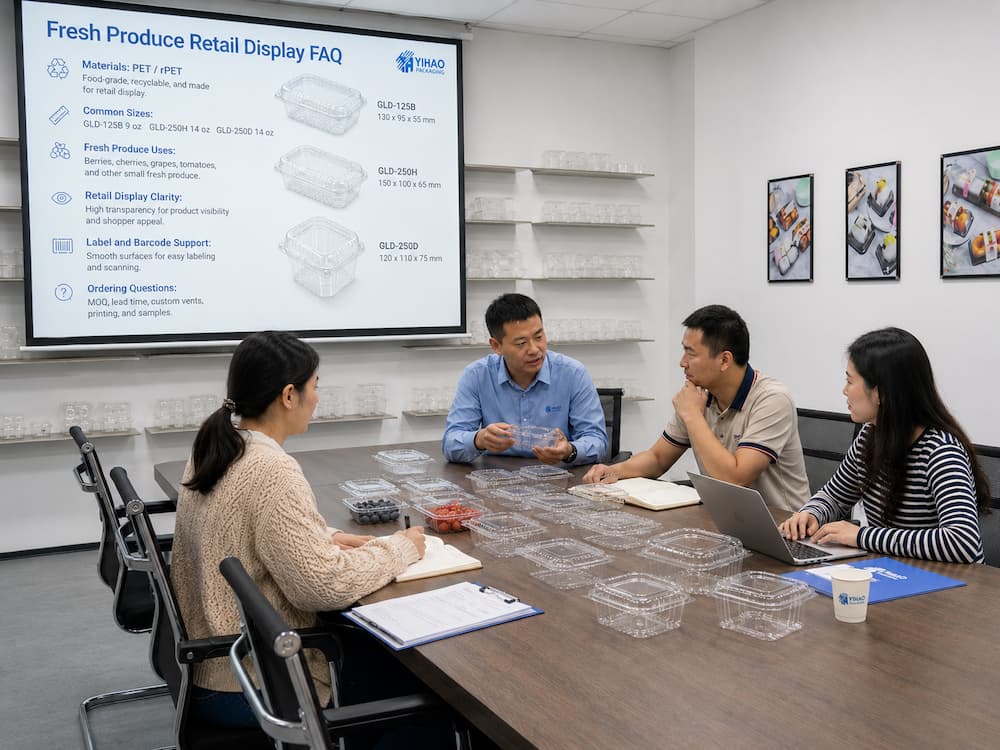
For supermarkets, buyers should test shelf layout and replenishment. For convenience stores, they should test compact shelf fit and takeaway handling. For cafes and bakeries, they should test portion appearance and prep workflow. For foodservice brands, they should test stacking, storage, and delivery handling.
Sample testing helps buyers avoid wrong size, weak lids, poor label placement, unattractive display, unstable stacking, carton inefficiency, and supplier mismatch.
15. How Should Buyers Compare Manufacturers and Suppliers?
Buyers should compare manufacturers and suppliers by application knowledge, material clarity, size range, sample support, communication, wholesale consistency, and repeat order reliability. The lowest unit price is not always the safest choice for retail fruit packaging programs.
A direct manufacturer may support structure discussion, custom needs, material explanation, and long-term packaging planning. A wholesale supplier may support standard products and repeat replenishment. The strongest partner combines packaging knowledge with stable supply support.
Buyers should choose a partner that understands fruit packaging for supermarkets, retail fruit containers, convenience store fruit cups, clear fruit packaging, and real fresh produce retail display needs.
Fresh Produce Retail Display Buyer Checklist
| Checklist Item | What Buyers Should Confirm | Why It Matters |
|---|---|---|
| Fruit Type | Berries, grapes, cut fruit, mixed fruit, fruit cups, or bakery fruit. | Different fruit types need different size, lid, and handling logic. |
| Sales Channel | Supermarket, convenience store, cafe, bakery, distributor, or foodservice brand. | The channel affects portion size, display format, and label needs. |
| Material | PET, rPET, clarity, rigidity, and intended food use. | Material affects visibility, structure, and retail confidence. |
| Container Format | Cup, bowl, clamshell, square container, hinged pack, or compartment container. | Format affects display, handling, and customer use. |
| Lid Security | Closure fit, hinge strength, snap feel, and takeaway confidence. | Secure lids reduce handling problems and customer complaints. |
| Label Area | Barcode, brand label, product name, price, origin, and use-by date. | Labels must support scanning without hiding too much fruit. |
| Chilled Display | Visibility, moisture appearance, fogging, label adhesion, and shelf clarity. | Cold-shelf performance affects freshness perception. |
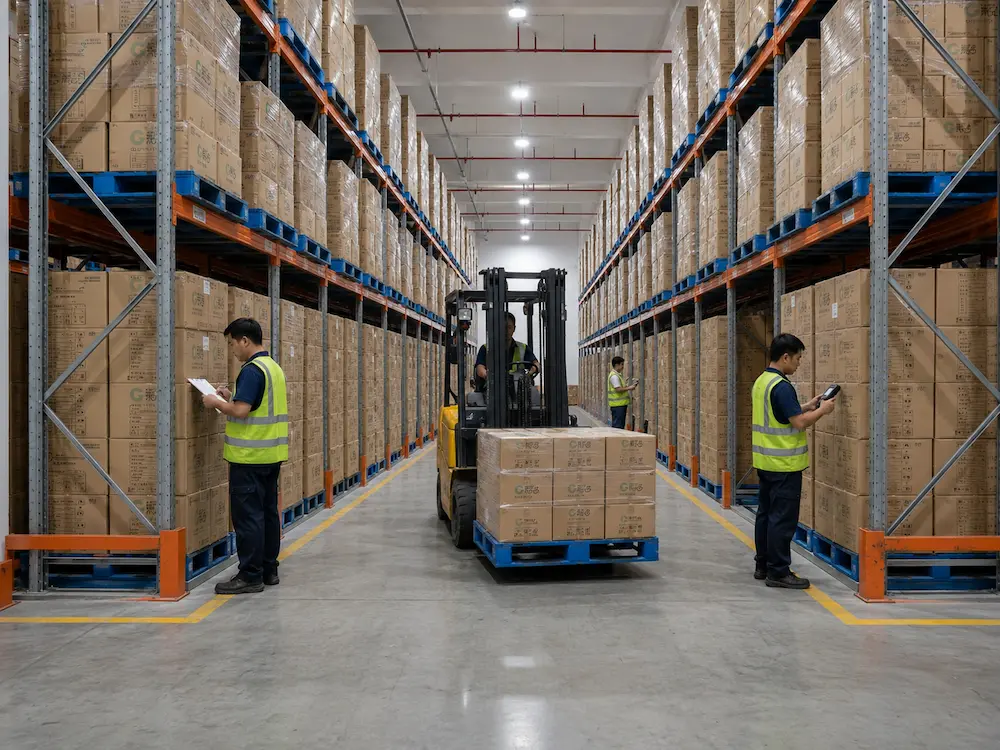
| Stacking and Carton Fit | Filled-pack stacking, carton loading, transport stability, and shelf storage. | Wholesale programs need stable packaging performance. |
| Supplier Support | Sample support, clear specifications, communication, and repeat order reliability. | A reliable supplier supports long-term retail fruit packaging programs. |
Why YIHAO Supports Fresh Produce Retail Display Buyers
YIHAO supports buyers with clear PET/RPET packaging solutions for fresh fruit, fruit cups, berries, fresh-cut fruit, chilled snacks, salads, bakery items, deli food, and retail display applications. For buyers evaluating fresh produce retail display, the key value is application-based packaging selection.
Instead of treating retail fruit packaging as one generic container category, YIHAO helps buyers compare fruit type, fill weight, sales channel, container shape, material clarity, lid security, label space, stacking, carton fit, chilled display, sample testing, and wholesale supply needs.
For supermarkets, convenience stores, cafes, bakeries, foodservice brands, distributors, and food packaging teams, a structured supplier conversation reduces mistakes before mass ordering. Buyers can prepare fruit type, target fill weight, channel, label requirements, carton plan, and expected order volume before requesting samples.
FAQ About Fresh Produce Retail Display
1. What is fresh produce retail display packaging used for?
Fresh produce retail display packaging is used for fruit cups, berries, grapes, fresh-cut fruit, mixed fruit packs, chilled fruit snacks, supermarket displays, convenience store fruit cups, cafe fruit bowls, bakery fruit portions, and foodservice retail programs.
2. What material works well for retail fruit containers?
PET and rPET are commonly used for retail fruit containers because they provide clear visibility, practical rigidity, lightweight handling, and chilled display presentation. Buyers should confirm material details, food-use suitability, and supplier documentation.
3. How should buyers choose packaging for supermarkets?
Buyers should choose packaging for supermarkets based on fruit type, portion size, shelf footprint, label space, barcode readability, chilled display performance, stacking, carton fit, and sample testing with real fruit.
4. Why is clear fruit packaging important?
Clear fruit packaging helps shoppers and buyers inspect fruit color, cut quality, portion value, moisture appearance, and freshness cues before purchase. Strong visibility supports retail confidence and shelf conversion.
5. What should buyers ask a fresh produce retail display supplier?
Buyers should ask about material, size range, lid security, label space, stacking strength, carton packing, chilled display performance, sample testing, repeat wholesale supply, and whether the supplier understands retail fruit packaging applications.
References
- U.S. Food and Drug Administration, Packaging & Food Contact Substances Resources.
- U.S. Food and Drug Administration, Guidance for Industry: Use of Recycled Plastics in Food Packaging, Chemistry Considerations.
- European Commission, Packaging and Packaging Waste Policy Resources.
- Food and Agriculture Organization of the United Nations, Food Loss and Waste Reduction Resources.
- United States Department of Agriculture, Fresh Fruit and Vegetable Market Resources.
- International Fresh Produce Association, Fresh Produce Supply Chain and Packaging Resources.
- Association of Plastic Recyclers, Design Guide for Plastics Recyclability.
- ASTM International, Packaging Performance and Testing Standards.
Deep-Dive Insights: How Buyers Should Think About Fresh Produce Retail Display
How should buyers define the right fresh produce retail display packaging?
The right packaging should be defined by fruit type, sales channel, portion size, material clarity, lid security, label placement, chilled display, stacking, carton fit, and wholesale supply needs. Fresh produce retail display packaging should not be selected only by size or unit price.
Why does display clarity matter?
Display clarity matters because fruit sells visually. Clear packaging helps shoppers inspect fruit color, portion value, cut quality, and freshness cues before purchase.
When should buyers choose convenience store fruit cups?
Convenience store fruit cups are useful when buyers need compact portions, fast purchase, easy takeaway, clear visibility, and small-shelf efficiency for chilled retail environments.
What should buyers test first?
Buyers should test filled samples under chilled, labeled, stacked, and cartoned conditions. This reveals lid performance, label fit, product visibility, moisture behavior, and carton efficiency.
What should buyers avoid?
Buyers should avoid choosing only by size, ignoring sales channel differences, hiding fruit with oversized labels, skipping chilled testing, and working with suppliers that cannot support repeat wholesale orders.
Final Note / Practical Takeaway
© 2026 YIHAO Packaging. This article is created for supermarkets, convenience stores, cafes, bakeries, foodservice brands, distributors, and food packaging teams evaluating fresh produce retail display, fruit packaging for supermarkets, retail fruit containers, supermarket fresh fruit packaging, convenience store fruit cups, and clear fruit packaging. All rights reserved.