Convenience Store Fruit Cups vs Alternative Packaging: How Buyers Should Choose
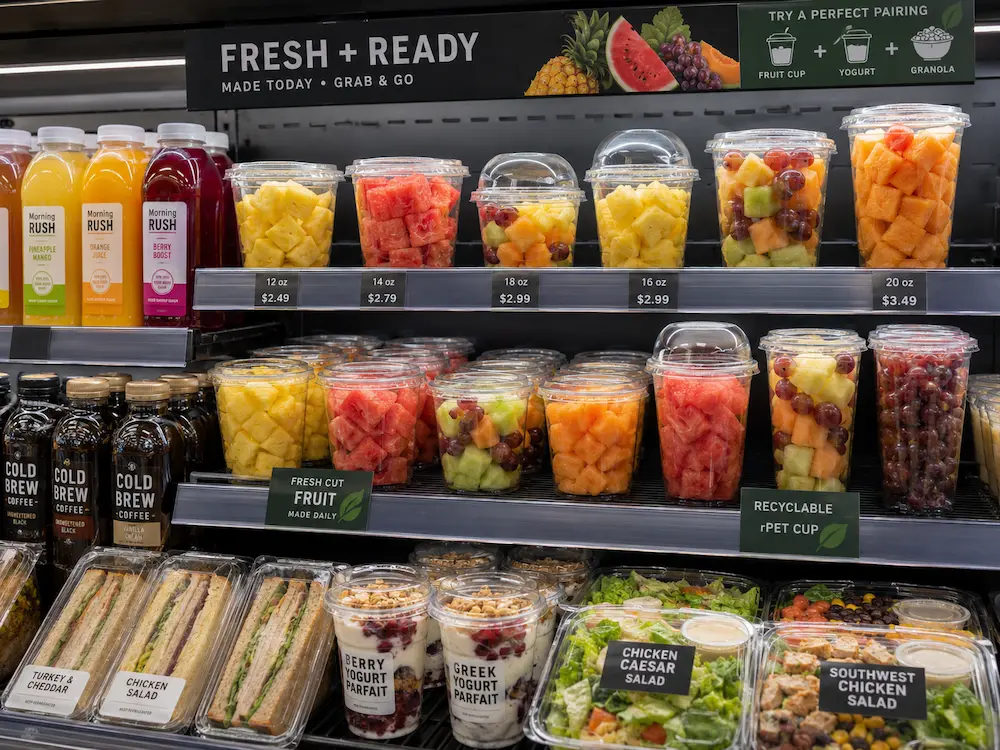
Choosing convenience store fruit cups is a practical sourcing decision for convenience store chains, supermarkets, cafes, distributors, foodservice brands, fresh-cut fruit processors, and food packaging teams. Convenience store shoppers often make fast buying decisions, so the packaging must communicate freshness, portion value, portability, and product trust within seconds.
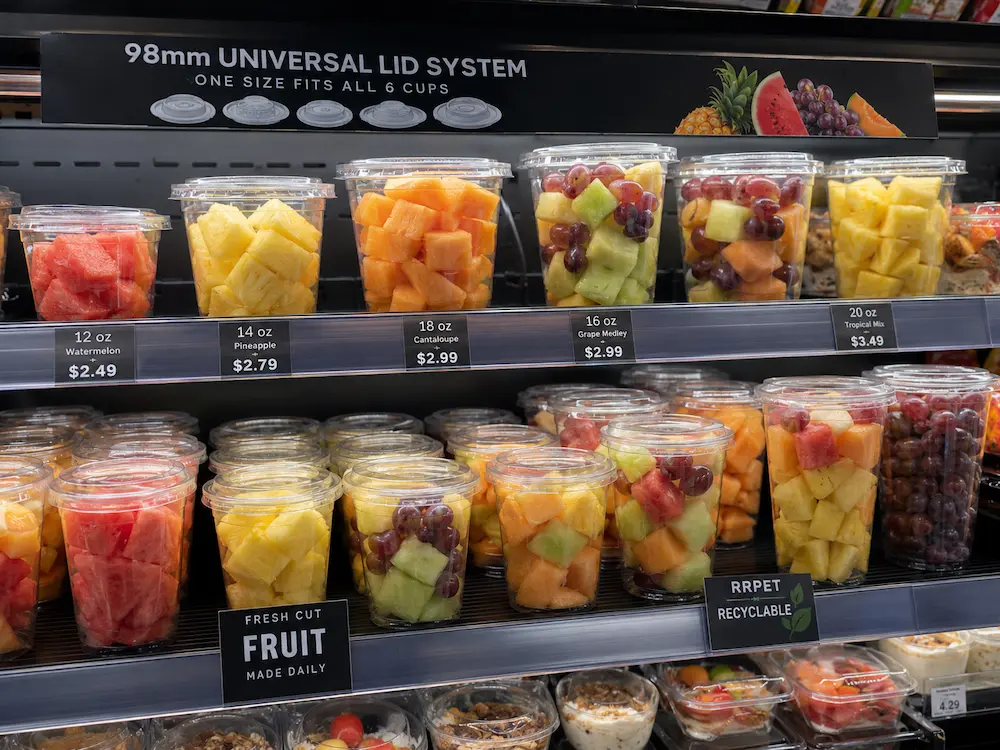
Fruit cups are useful for small-portion fruit, breakfast fruit, office snacks, school fruit, travel retail, chilled takeaway counters, and grab-and-go fruit programs. They are compact, easy to hold, easy to scan, and simple for shoppers to understand. However, fruit cups are not always the best format for every fruit product or retail channel.
Buyers should compare convenience store fruit cups with alternative packaging such as retail fruit containers, supermarket fresh fruit packaging, clear clamshells, bowls, trays, compartment packs, and larger fruit containers. The right choice depends on portion size, fruit type, chilled display, label space, shelf footprint, lid security, carton fit, and wholesale supply stability.
YIHAO is a food packaging manufacturer and solution provider focused on practical PET/RPET packaging for fresh fruit, fruit cups, berries, fresh-cut fruit, chilled snacks, salads, bakery items, deli food, and retail display applications. This guide helps buyers compare convenience store fruit cups with alternative packaging before choosing a manufacturer, wholesale partner, or fruit packaging supplier.
What Are Convenience Store Fruit Cups?
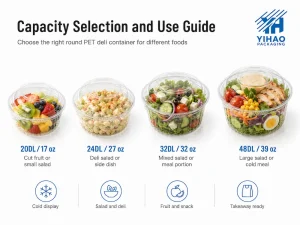
Convenience store fruit cups are small, clear, portion-controlled containers used for ready-to-eat fruit sold in compact chilled retail displays. They are commonly used for melon cubes, pineapple chunks, grapes, berries, mixed fruit, mango, apple slices, citrus portions, and breakfast fruit snacks.
The main purpose is quick purchase. A shopper should be able to see the fruit, understand the portion, pick up the cup, scan it easily, and carry it without concern. This makes fruit cups different from larger supermarket fruit packs or bulk fruit containers.
For B2B buyers, the key question is not only “Which cup size do we need?” The better question is: “Does this cup support the fruit type, chilled shelf, label, takeaway handling, carton packing, and repeat wholesale supply model?”
Why Buyers Compare Fruit Cups with Alternative Packaging
Buyers compare fruit cups with alternative packaging because convenience store fruit programs need a different balance of portion value, shelf efficiency, portability, and display clarity. A fruit cup works well for single-serve snacks, but it may not be ideal for large mixed fruit portions, premium fruit bowls, bakery fruit ingredients, or supermarket family packs.
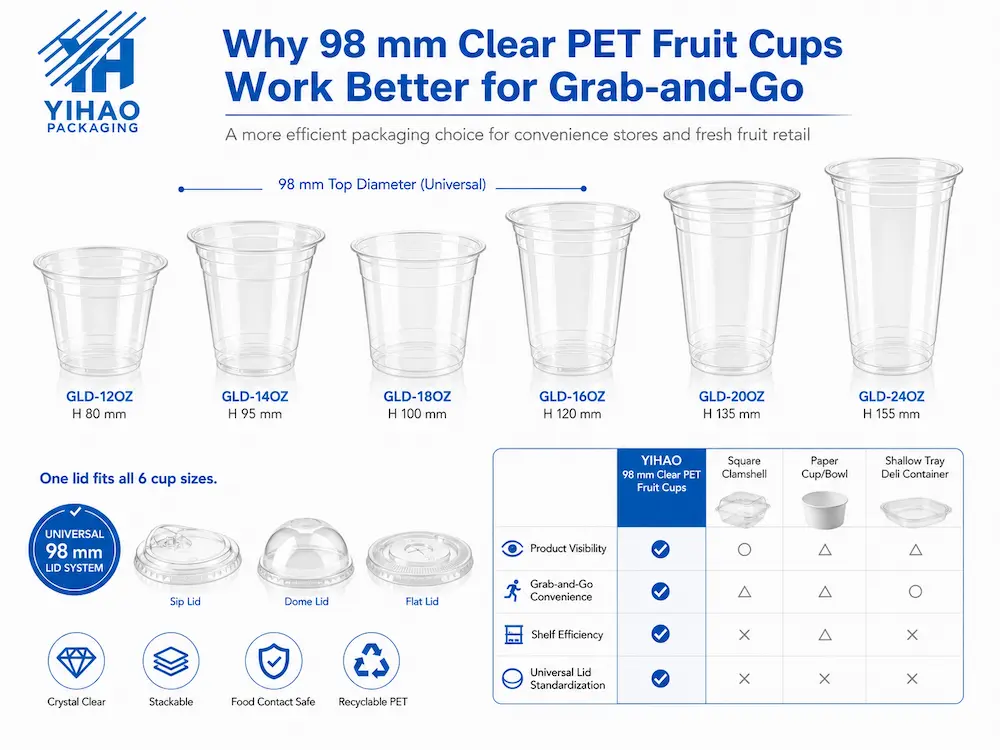
Alternative packaging options include hinged clamshells, square retail fruit containers, bowls with lids, clear trays, compartment packs, and larger fresh fruit containers. Each format has its own strength. Fruit cups win on portability and small-shelf efficiency. Larger containers win on display volume and family-size value. Clamshells may support faster filling and broader retail presentation.
The best packaging choice should match the buyer’s channel. A convenience store fruit cup should fit small refrigerators and fast purchase missions. A supermarket container should support shelf blocks and replenishment. A cafe fruit bowl should look premium and portable. A foodservice container should support workflow and storage.
Convenience Store Fruit Cups vs Retail Fruit Containers
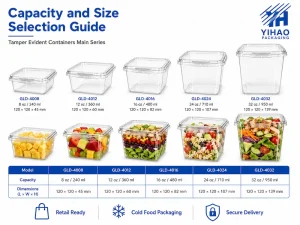
Retail fruit containers are a broader category that includes fruit cups, bowls, clamshells, square packs, rectangular containers, compartment packs, and deli-style clear containers. Convenience store fruit cups are more specific because they focus on small portions, compact shelves, quick purchase, and takeaway use.
Fruit cups are usually better when the product is single-serve, easy to carry, and designed for immediate consumption. Retail fruit containers are better when buyers need more format flexibility, larger portions, mixed fruit displays, premium shelf presentation, or multiple SKU structures.
Food packaging teams should compare cup diameter, height, lid fit, label area, stackability, shelf footprint, and carton packing. A small fruit cup may work well for convenience stores, while a square or rectangular container may perform better in a supermarket chilled display.
Convenience Store Fruit Cups vs Fruit Packaging for Supermarkets
Fruit packaging for supermarkets usually supports larger displays, more SKUs, broader portion sizes, barcode consistency, shelf organization, and high-volume replenishment. Supermarkets may sell small fruit cups, mixed fruit packs, family-size fruit containers, fruit bowls, berry packs, and fresh-cut fruit trays together.
Convenience stores usually need smaller and faster formats. The shopper is often buying fruit as a quick snack, breakfast add-on, lunch side, office treat, or travel item. Packaging should be compact, easy to hold, clearly visible, and simple to scan.
Buyers should not copy supermarket fruit packaging directly into convenience store programs without testing. A container that looks strong in a large chilled display may waste space in a convenience store. A cup that works in a small convenience store may look too limited for a supermarket fresh fruit program.
Convenience Store Fruit Cups vs Supermarket Fresh Fruit Packaging
Supermarket fresh fruit packaging often emphasizes shelf blocks, display depth, SKU comparison, replenishment speed, and larger buying missions. Convenience store fruit cups focus more on speed, portability, compact display, and single-serve value.
In supermarkets, fruit packaging may need to support multiple sizes and product tiers. A shopper may compare small fruit cups, family portions, premium fruit bowls, and mixed fruit containers. In convenience stores, shoppers usually need a fast, easy, ready-to-eat portion.
Buyers should choose convenience store fruit cups when compact chilled display and immediate consumption are the priorities. They should choose supermarket fresh fruit packaging when the program needs larger display variety, family portions, broader SKU management, or more premium presentation space.
Convenience Store Fruit Cups vs Clear Fruit Packaging
Clear fruit packaging includes many transparent formats, including fruit cups, clamshells, bowls, trays, and square containers. Convenience store fruit cups are one clear packaging format, but they are not the only option.
Clear packaging is valuable because fruit sells visually. Shoppers want to inspect fruit color, cut quality, portion size, moisture appearance, and freshness cues before purchase. A clear fruit cup helps shoppers make a fast decision in a convenience store chilled display.
However, clarity alone is not enough. Buyers should also check lid security, label area, stacking, shelf fit, carton packing, and chilled display behavior. A transparent cup with a weak lid or poor label position can still perform badly in retail use.
Convenience Store Fruit Cups vs Bowls, Clamshells, and Trays
Bowls, clamshells, and trays can all be useful alternatives to convenience store fruit cups. Bowls may create a more premium presentation for fruit salads or yogurt fruit portions. Hinged clamshells can support fast filling and secure closure. Trays may work for prepared fruit assortments or secondary wrapping systems.
Fruit cups are strongest when the buyer needs small portions and easy takeaway. Bowls are stronger when the product needs a wider top view or premium eating experience. Clamshells are useful when the buyer needs a hinged structure and stackable display. Trays can work when open presentation or additional wrapping is part of the packaging plan.
The decision should be based on product type, shelf environment, handling route, consumer use, and label needs. Buyers should test several formats before confirming wholesale orders.
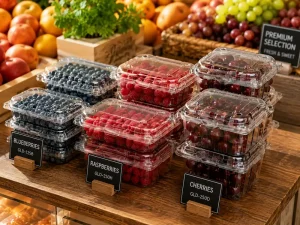
Convenience Store Fruit Cups and Fresh Produce Retail Display
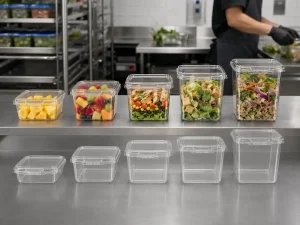
Fresh produce retail display depends on visibility, organization, label readability, shelf stability, and customer confidence. Convenience store fruit cups must work in smaller refrigerated spaces where every inch of display area matters.
The cup should show fruit clearly from the front and top where possible. It should stack or align neatly. The label should support barcode scanning without hiding too much fruit. The lid should stay secure when customers pick up the cup, carry it, or place it in a bag.
Buyers should test fruit cups inside real convenience store shelves. A sample that looks good on a desk may not fit the shelf, display angle, or label system used in the actual store.
Wholesale Retail Fruit Containers for Multi-Channel Buyers
Wholesale retail fruit containers are important when buyers need repeat supply across convenience stores, supermarkets, cafes, bakeries, foodservice brands, and distributors. Convenience store fruit cups may be one part of a wider retail fruit container program.
A buyer may use small fruit cups for convenience stores, square containers for supermarket mixed fruit, bowls for cafes, and larger containers for foodservice programs. Wholesale sourcing should support this variety with stable specifications, clear samples, reliable carton packing, and repeat order consistency.
Buyers should choose a supplier that understands both convenience store fruit cups and broader retail fruit packaging. This reduces mismatch between product format, sales channel, and supply planning.
Comparison Table: Convenience Store Fruit Cups vs Alternative Packaging
| Packaging Option | Best For | Main Advantage | Main Limitation | Buyer Decision Point |
|---|---|---|---|---|
| Convenience Store Fruit Cups | Small fruit portions, quick purchase, chilled takeaway, single-serve fruit | Compact, portable, easy to scan, fast to understand | Limited capacity for larger or premium fruit displays | Best when immediate consumption and small-shelf efficiency matter. |
| Retail Fruit Containers | General retail fruit programs with multiple formats | Flexible size and structure options | Needs format selection by channel and fruit type | Best when buyers need broader packaging choices. |
| Supermarket Fresh Fruit Packaging | Large chilled displays, multiple SKUs, family portions | Supports shelf organization and larger retail programs | May be too large for convenience store shelves | Best for supermarket display blocks and replenishment. |
| Clear Clamshells | Berries, grapes, fresh-cut fruit, retail-ready fruit packs | Hinged closure, visibility, stacking, secure containment | May feel less cup-like for immediate eating | Best when protection and stackability matter more than cup portability. |
| Fruit Bowls | Premium fruit salad, yogurt fruit, cafe fruit portions | Strong top-view presentation and eating experience | Can use more shelf space than cups | Best when premium presentation matters. |
| Trays or Larger Packs | Prepared fruit assortments, family portions, foodservice use | More display area and larger capacity | Less suitable for fast single-serve convenience store sales | Best when the product is not a small grab-and-go cup. |
How Buyers Should Choose the Right Format
Buyers should start with the retail mission. Is the product meant for a fast convenience store purchase, a supermarket chilled display, a cafe counter, a bakery prep program, or foodservice distribution? The channel should guide the packaging format.
If the buyer needs a compact single-serve fruit snack, convenience store fruit cups are often the strongest option. If the buyer needs larger mixed fruit portions, a square or rectangular container may work better. If the product needs premium presentation, a clear bowl may be stronger. If the fruit needs more protection and stacking, a clamshell may be more practical.
The best packaging decision connects product type, portion size, display space, lid security, label position, carton fit, and wholesale supply planning.
Material Selection: PET, rPET, and Clear Retail Display
PET and rPET are commonly used for fruit cups and clear retail fruit packaging because they provide visibility, lightweight handling, and practical rigidity. For convenience store fruit cups, clarity is especially important because shoppers make fast decisions from a small chilled display.
Buyers should check material clarity under real retail lighting and refrigerated conditions. A cup that looks clear in a sample room may look dull or foggy in a cold shelf. Material consistency is also important for wholesale orders.
For rPET options, buyers should confirm food-contact suitability, documentation, recycled-content communication, and target-market expectations with the supplier. Material claims should be accurate and practical.
Lid Security, Hand Feel, and Takeaway Confidence
Convenience store fruit cups are often carried immediately after purchase. The lid should close securely and feel reliable in the hand. A weak lid can create leakage concerns, customer complaints, or poor takeaway confidence.
Buyers should test fruit cups with real fruit and realistic handling. They should check whether the lid stays secure after filling, chilling, stacking, bagging, and customer-style movement. The cup should also feel comfortable to hold and easy to open.
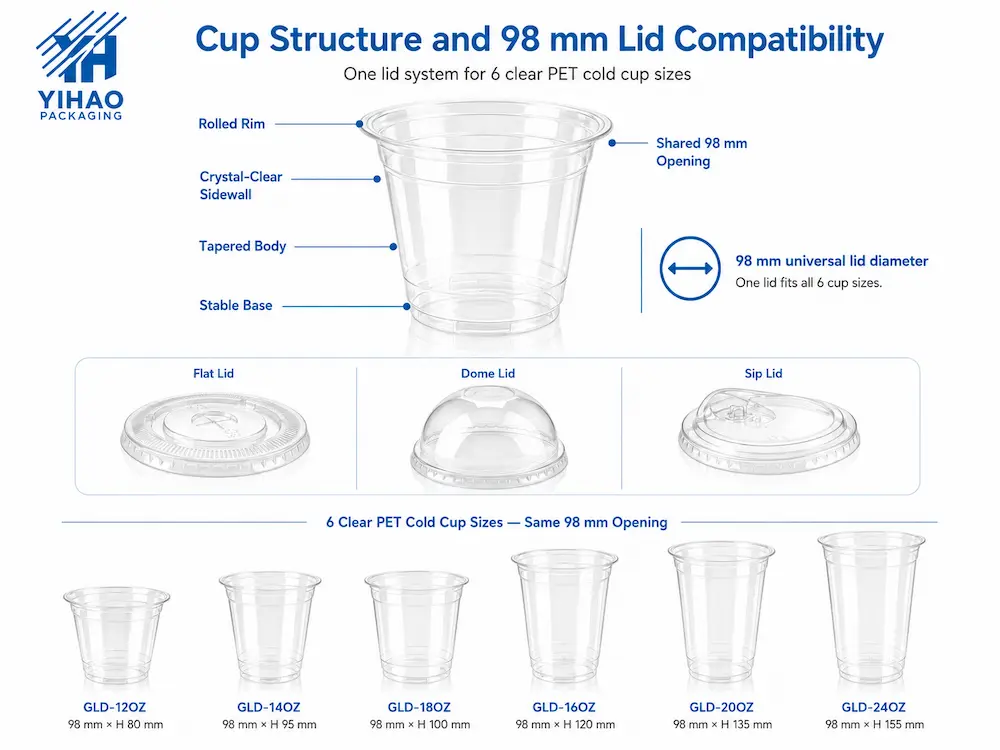
Hand feel matters more in convenience stores than in many supermarket formats because shoppers often buy the product for immediate use.
Label Space, Barcode Scanning, and Shelf Readability
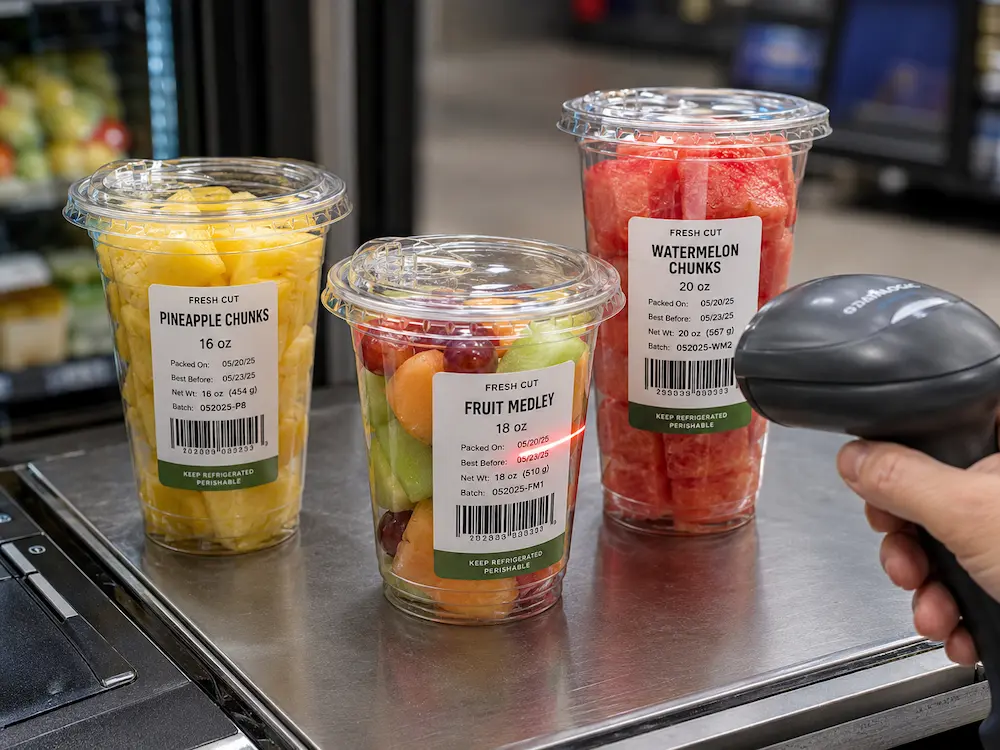
Convenience store fruit cups need labels for barcode scanning, product name, price, weight, ingredients, use-by date, and brand information. The label must be easy to read and scan without covering too much of the fruit.
Because fruit cups are small, label planning is especially important. An oversized label can hide most of the product. A poorly placed barcode can slow checkout. A label that peels under refrigeration can make the product look less professional.
Buyers should apply real labels during sample testing. They should check barcode readability, label adhesion, shelf appearance, and remaining product visibility.
Stacking, Carton Fit, and Wholesale Handling
Wholesale fruit cups must perform through filling, cold storage, carton packing, transport, store replenishment, and customer handling. Filled fruit cups add weight, moisture, and pressure, so empty samples do not show full performance.
Buyers should test filled cups inside actual cartons. They should check whether lids stay secure, whether cups deform, whether labels remain readable, and whether carton packing is efficient. Poor carton fit can increase handling problems and supply cost.
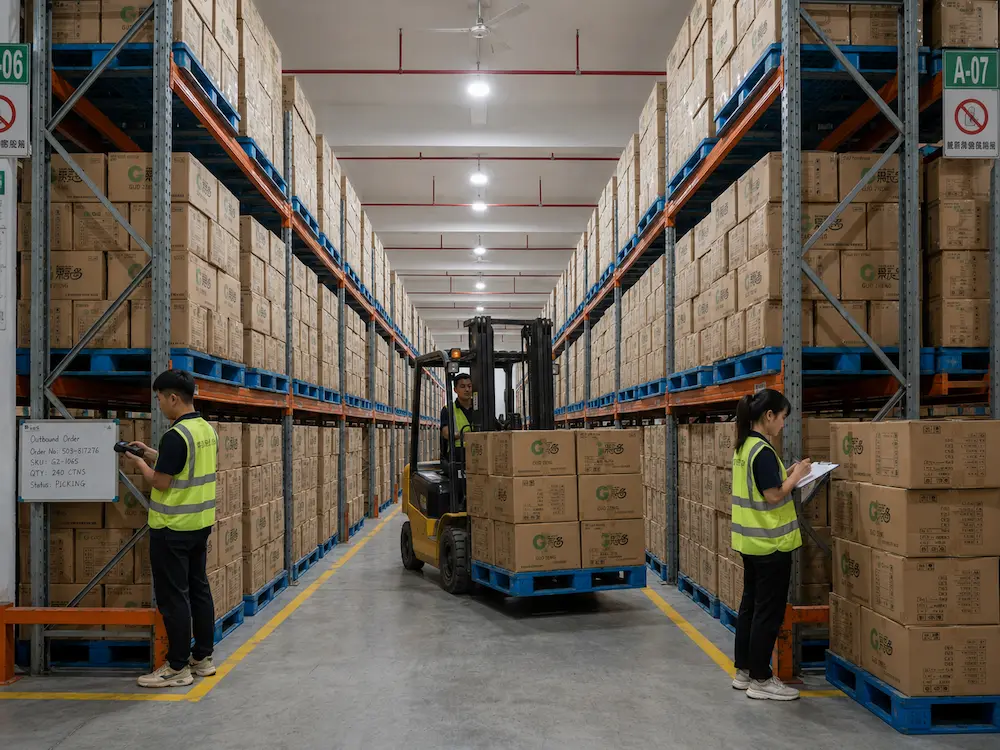
A reliable manufacturer or supplier should help buyers understand carton quantity, packing method, repeat order consistency, and wholesale supply planning before bulk orders.
Buyer Checklist for Convenience Store Fruit Cups
| Checklist Item | What Buyers Should Confirm | Why It Matters |
|---|---|---|
| Fruit Type | Mixed fruit, grapes, melon, pineapple, berries, apple slices, citrus, or mango. | Different fruits need different cup size, lid clearance, and moisture handling. |
| Portion Strategy | Single-serve snack, breakfast fruit, school fruit, office snack, or travel fruit. | Portion logic affects size, display value, and customer use. |
| Material | PET, rPET, clarity, rigidity, and intended food use. | Material affects visibility, structure, and retail confidence. |
| Lid Security | Closure fit, opening experience, takeaway handling, and chilled performance. | Secure lids support customer confidence and reduce handling issues. |
| Label Area | Barcode, product name, price, ingredients, use-by date, and brand label. | Labels must support scanning without hiding too much fruit. |
| Shelf Fit | Chilled shelf footprint, stack height, display angle, and replenishment speed. | Convenience stores have limited refrigerated display space. |
| Carton Fit | Filled cup stacking, carton loading, transport stability, and order efficiency. | Wholesale supply requires stable packaging performance. |
| Sample Testing | Filled tests under chilled, labeled, stacked, cartoned, and takeaway conditions. | Real testing prevents wrong packaging decisions. |
How to Test Convenience Store Fruit Cups Before Ordering
Buyers should test convenience store fruit cups with real fruit and real store conditions. The test should include filling, closing, labeling, stacking, refrigeration, carton loading, shelf placement, checkout scanning, and takeaway handling.
For fruit cups, buyers should check portion appearance, lid fit, hand feel, label position, product visibility, chilled display performance, and carton fit. The cup should look full, fresh, easy to carry, and easy to scan.
Testing helps buyers avoid common failures such as wrong cup size, weak lids, hidden product visibility, poor label adhesion, unstable stacking, inefficient cartons, and supplier mismatch before wholesale orders.
What a Manufacturer or Supplier Should Help Buyers Evaluate
A reliable manufacturer, wholesale partner, or supplier should help buyers compare convenience store fruit cups with alternative packaging according to real product use. The conversation should go beyond size and price. Buyers should expect questions about fruit type, fill weight, sales channel, chilled display, label requirements, carton packing, and expected order plan.
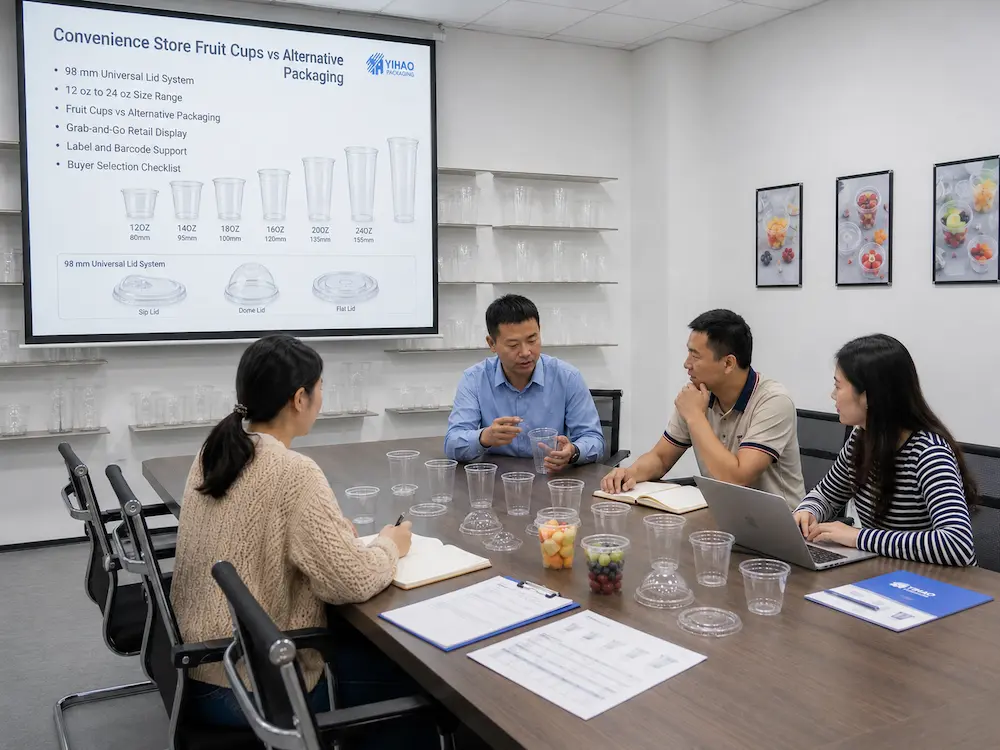
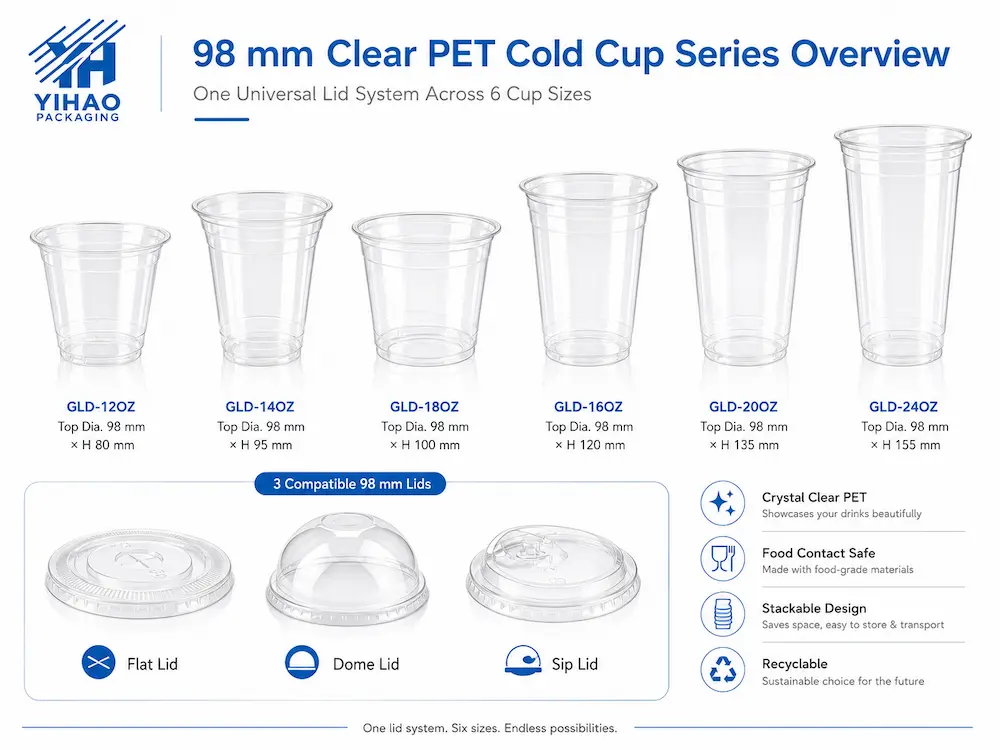
A strong supplier should explain material options, cup sizes, lid compatibility, stacking, label placement, chilled display testing, sample availability, and wholesale supply support. For larger programs, a manufacturer may also help discuss custom packaging when standard cups do not match the buyer’s product or shelf strategy.
The best partner helps buyers reduce packaging risk before mass ordering and supports repeat supply after launch.
Common Mistakes When Buying Convenience Store Fruit Cups
Choosing Only by Cup Size
Size alone does not show whether the fruit looks full, the lid closes securely, the barcode scans, or the cup fits the shelf. Filled testing is necessary.
Ignoring Convenience Store Shelf Space
Convenience stores have limited chilled display space. A package that works in supermarkets may waste space in small-format retail.
Using Oversized Labels
Fruit cups sell visually. Labels should support scanning and product information without hiding too much fruit.
Skipping Takeaway Testing
Convenience store shoppers often carry fruit immediately. Buyers should test lid security and hand feel under takeaway conditions.
Choosing a Supplier Without Wholesale Stability
Wholesale fruit cup programs need consistent specifications, sample support, communication, and repeat order reliability. Supplier capability is part of the packaging decision.
Why YIHAO Supports Convenience Store Fruit Cup Buyers
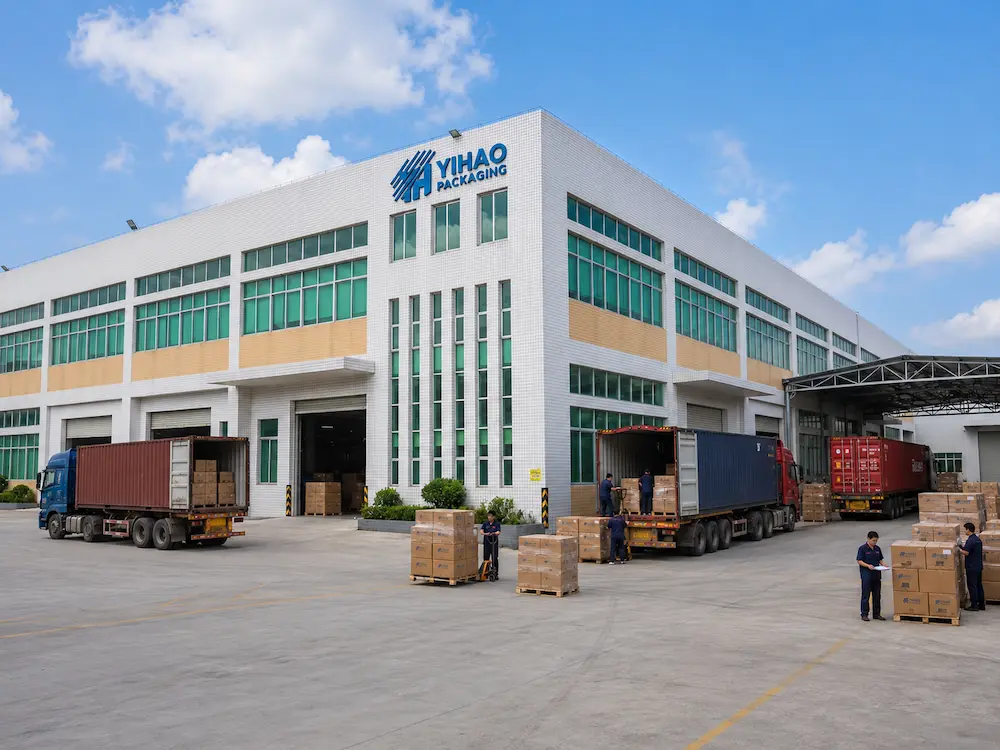
YIHAO supports buyers with clear PET/RPET packaging solutions for fresh fruit, fruit cups, berries, fresh-cut fruit, chilled snacks, salads, bakery items, deli food, and retail display applications. For buyers sourcing convenience store fruit cups, the key value is application-based packaging selection.
Instead of treating fruit cups as one generic small container, YIHAO helps buyers compare fruit type, fill weight, sales channel, cup shape, material clarity, lid security, label space, stacking, carton fit, chilled display, sample testing, and wholesale supply needs.
For convenience stores, supermarkets, cafes, foodservice brands, distributors, and food packaging teams, a structured supplier conversation reduces mistakes before mass ordering. Buyers can prepare fruit type, target fill weight, channel, label requirements, carton plan, and expected order volume before requesting samples.
FAQ About Convenience Store Fruit Cups
1. What are convenience store fruit cups used for?
Convenience store fruit cups are used for small ready-to-eat fruit portions, breakfast fruit, school fruit, office snacks, travel retail, chilled takeaway packs, grab-and-go fruit snacks, and single-serve retail fruit programs.
2. How are convenience store fruit cups different from supermarket fruit containers?
Convenience store fruit cups usually focus on compact portions, fast purchase, easy carrying, and small-shelf efficiency. Supermarket fruit containers often support larger displays, more SKUs, broader portion sizes, and higher replenishment volume.
3. What material is commonly used for fruit cups?
PET and rPET are commonly used for fruit cups because they provide clear visibility, practical rigidity, lightweight handling, and chilled display presentation. Buyers should confirm material details, intended food use, clarity, lid compatibility, and supplier documentation.
4. When should buyers choose alternative packaging instead of fruit cups?
Buyers should choose alternative packaging when the product needs larger portions, premium bowl presentation, stronger clamshell protection, compartment separation, family-size display, or supermarket shelf-block presentation.
5. What should buyers ask a convenience store fruit cup supplier?
Buyers should ask about material, size range, lid security, label space, stacking strength, carton packing, chilled display performance, takeaway testing, sample support, repeat wholesale supply, and whether the supplier understands retail fruit packaging applications.
References
- U.S. Food and Drug Administration, Packaging & Food Contact Substances Resources.
- U.S. Food and Drug Administration, Guidance for Industry: Use of Recycled Plastics in Food Packaging, Chemistry Considerations.
- European Commission, Packaging and Packaging Waste Policy Resources.
- Food and Agriculture Organization of the United Nations, Food Loss and Waste Reduction Resources.
- United States Department of Agriculture, Fresh Fruit and Vegetable Market Resources.
- International Fresh Produce Association, Fresh Produce Supply Chain and Packaging Resources.
- Association of Plastic Recyclers, Design Guide for Plastics Recyclability.
- ASTM International, Packaging Performance and Testing Standards.
Deep-Dive Insights: How Buyers Should Think About Convenience Store Fruit Cups
How should buyers define the right convenience store fruit cup?
The right cup should be defined by fruit type, portion size, shelf footprint, material clarity, lid security, label placement, chilled display, takeaway handling, carton fit, and wholesale supply needs. Convenience store fruit cups should not be selected only by volume or price.
Why does small-format retail matter?
Convenience stores have limited chilled shelf space and faster shopping behavior. Packaging must support quick visual trust, compact display, easy scanning, and immediate takeaway use.
When should buyers choose larger retail fruit containers?
Buyers should choose larger retail fruit containers when the product needs family-size portions, supermarket display blocks, premium fruit presentation, compartment separation, or more shelf-facing product area.
What should buyers test first?
Buyers should test filled fruit cups under chilled, labeled, stacked, cartoned, and takeaway conditions. This reveals lid performance, label fit, product visibility, hand feel, shelf fit, and carton efficiency.
What should buyers avoid?
Buyers should avoid choosing only by cup size, ignoring convenience store shelf space, hiding fruit with oversized labels, skipping takeaway testing, and working with suppliers that cannot support repeat wholesale orders.
Final Note / Practical Takeaway
© 2026 YIHAO Packaging. This article is created for convenience stores, supermarkets, cafes, foodservice brands, distributors, and food packaging teams evaluating convenience store fruit cups, fruit packaging for supermarkets, retail fruit containers, supermarket fresh fruit packaging, clear fruit packaging, and fresh produce retail display. All rights reserved.