Micro Summary
Flat cold cup lids are low-profile lids used for cold beverage packaging in cafes, supermarkets, convenience stores, bakeries, and takeaway drink programs. For food packaging teams, the right lid is not only about diameter. A small rim mismatch may cause leakage complaints, poor customer experience, carton waste, or rejected bulk orders. Buyers should evaluate lid fit, material clarity, drinking style, straw slot design, cup compatibility, packing strength, and supplier consistency before wholesale purchasing. Compared with dome lids, strawless lids, and sip lids, flat lids are especially practical for iced coffee, juice, lemonade, fruit tea, iced tea, cold brew, milk tea, matcha, refreshers, soda, and standard cold drinks that do not require extra topping height.
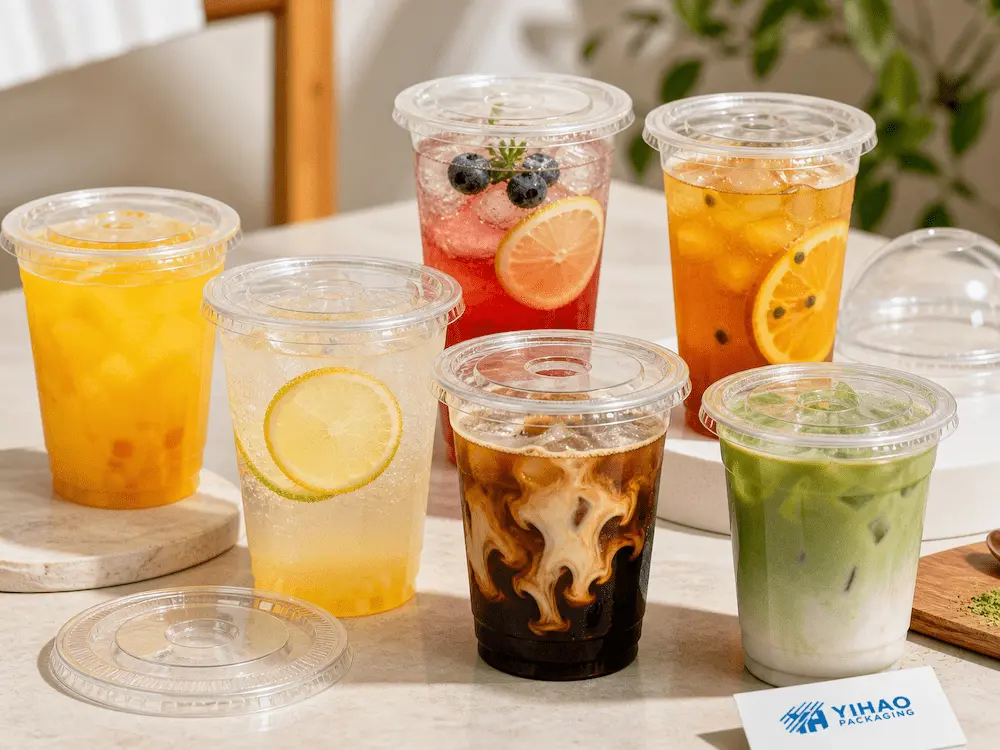
Flat Cold Cup Lids: Buyer Guide for Food Packaging Teams
For beverage packaging teams, flat cold cup lids may look like a small accessory, but they directly affect drink presentation, leakage control, customer experience, storage efficiency, and repeat purchasing. A cup with the wrong lid creates immediate problems: loose rim grip, difficult closing, splash risk, cracked lids, poor shelf display, or customer complaints during takeaway service. In wholesale supply, one lid-fit issue can affect thousands of cups across cafes, supermarkets, convenience stores, bakeries, and foodservice chains.
That is why professional buyers should never choose cold cup lids by diameter alone. The real decision should include rim structure, lid material, drinking method, cup compatibility, storage conditions, export packing, and supplier production consistency.
YIHAO is a food packaging manufacturer and solution provider supporting practical packaging for cold drinks, fresh food, fruit, salads, bakery items, desserts, and grab-and-go service. For cold beverage packaging, cup and lid matching is one of the most important steps before bulk ordering. A reliable packaging system should help buyers match clear cups, flat cold cup lids, dome lids, strawless lids, sip lids, and other lid options with real beverage applications.
This guide explains how food packaging teams should evaluate flat cold cup lids, compare them with other lid types, test samples before wholesale orders, and choose a reliable manufacturer, wholesale partner, or supplier for long-term cold drink packaging needs.
What Are Flat Cold Cup Lids?
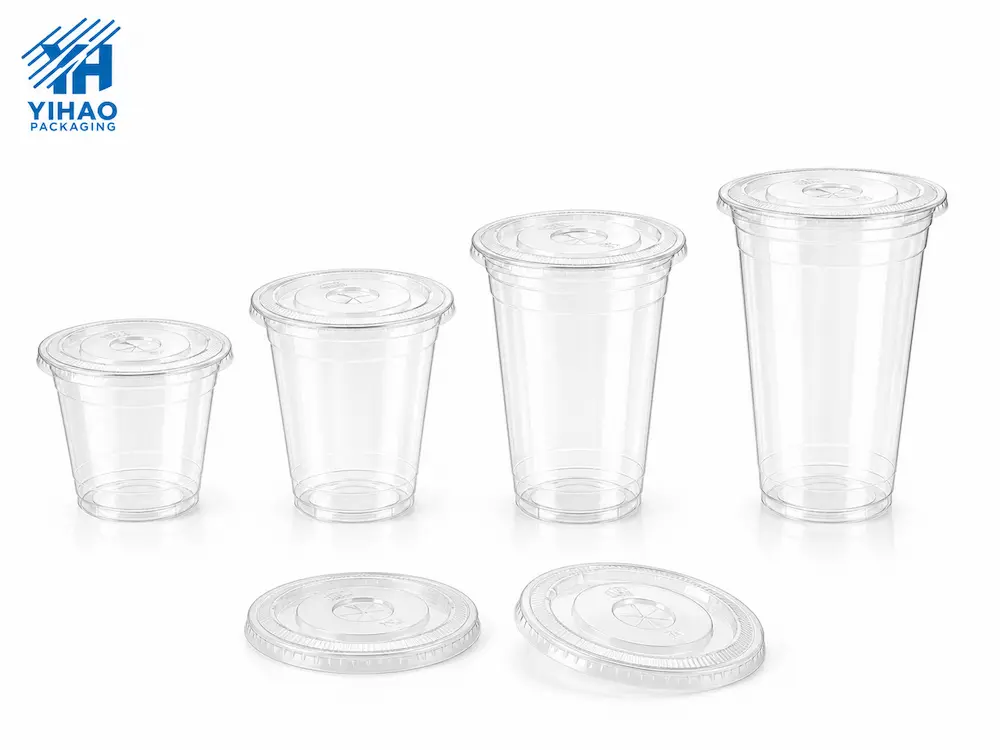
Flat cold cup lids are low-profile lids designed to cover cold beverage cups without adding much extra height above the cup rim. They are commonly used with clear PET cups, PP cold cups, PLA cups, and other cold drink cup formats. Depending on the design, flat lids may include a cross straw slot, sip opening, strawless drinking structure, or sealed top for specific beverage service needs.
The main value of a flat lid is its clean, compact, and operationally efficient structure. It sits close to the cup rim, helps drinks look neat, supports easier stacking, and saves space in storage and transport. For drinks that do not require whipped cream, high foam, fruit toppings, dessert decoration, or extra headspace, flat lids are often the most practical choice.
Common applications include:
- Iced coffee and cold brew
- Fresh juice and lemonade
- Fruit tea and iced tea
- Milk tea and matcha drinks
- Refreshers and sparkling fruit drinks
- Soda and flavored cold beverages
- Protein drinks and thinner smoothies
- Grab-and-go drinks in supermarkets and convenience stores
For food packaging teams, flat lids work best when the drink menu is built around speed, consistency, clean appearance, and reliable takeaway service.
Why Food Packaging Teams Choose Flat Cold Cup Lids
Food packaging teams usually choose flat cold cup lids because they balance function, cost control, visual presentation, and operational efficiency. In high-volume beverage service, packaging must be easy for staff to use and reliable for customers to carry.
A good flat lid provides several practical advantages.
First, it creates a clean visual profile. Cold drinks often rely on color, clarity, ice, fruit pieces, foam layers, or beverage texture to attract customers. A transparent flat lid keeps the package simple while allowing the drink itself to remain the visual focus.
Second, flat lids are space-efficient. Compared with dome lids, they use less vertical storage space and are easier to manage in packing areas, cafe counters, warehouse shelves, and takeaway stations.
Third, they fit a wide range of standard cold drink applications. When a drink does not need extra topping space, a flat lid usually gives buyers the most direct and economical solution.
Fourth, flat lids support inventory simplification. If one lid series matches several cup capacities within the same rim size, buyers can reduce SKU pressure and improve ordering efficiency.
Finally, flat lids are familiar to customers. For iced coffee, juice, lemonade, fruit tea, soda, cold brew, and takeaway tea drinks, many consumers already expect a straw-compatible or sip-style flat lid.
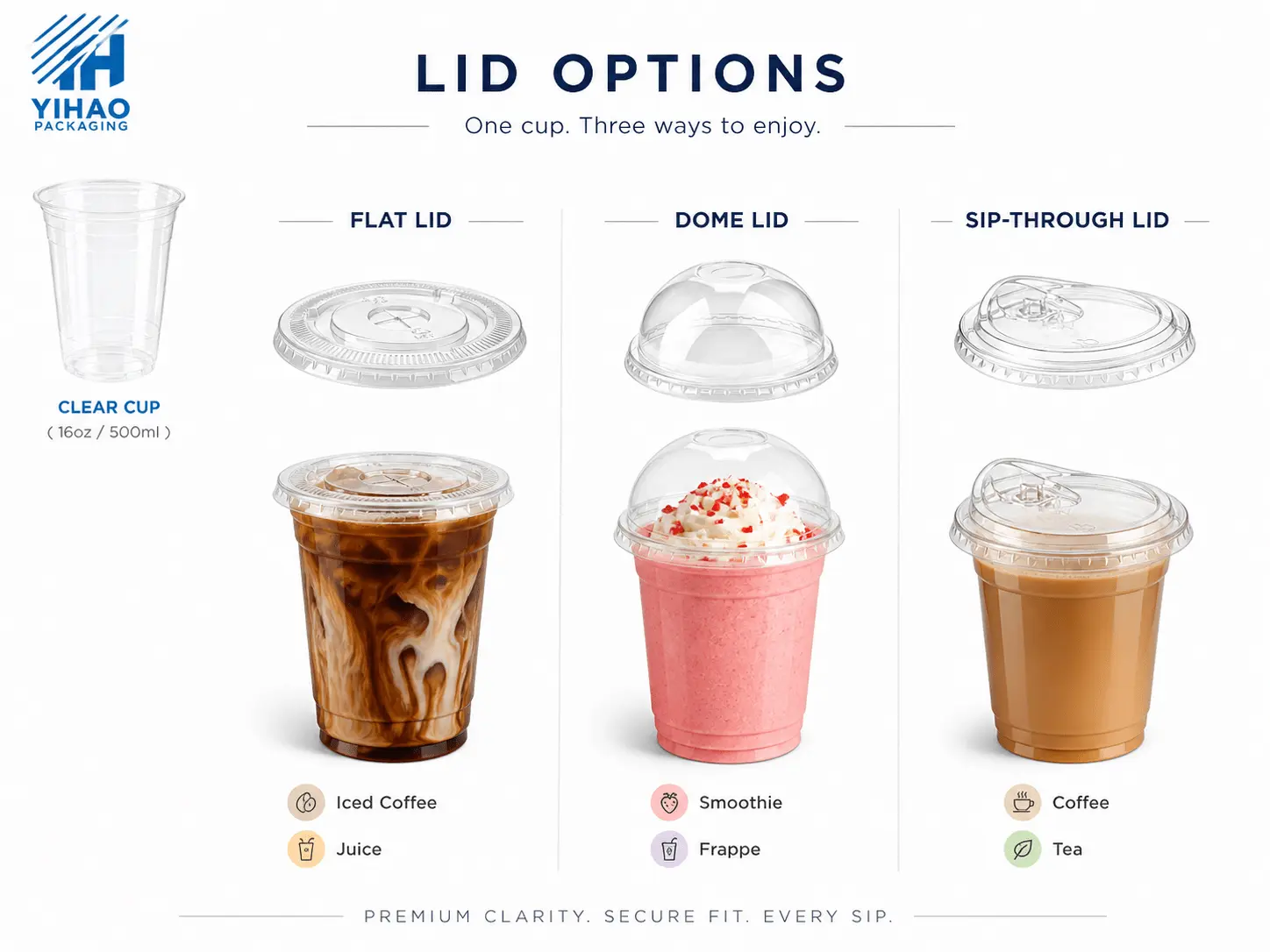
Flat Cold Cup Lids vs Dome Lids vs Strawless Lids vs Sip Lids
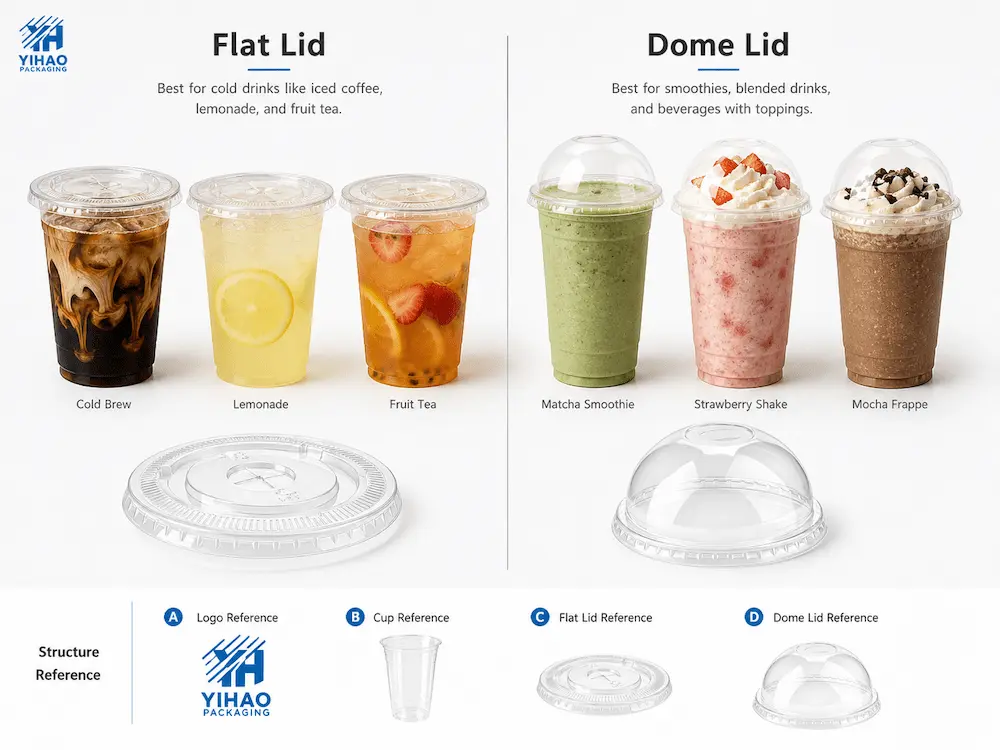
Choosing the right lid type depends on the drink, the service model, and the brand experience. Cold cup lids are not interchangeable in function, even when they appear similar in size. The main difference is how the customer drinks from the cup and how much vertical space the beverage needs.
| Lid Type | Best For | Not Ideal For | Buyer Decision Point |
|---|---|---|---|
| Flat cold cup lids | Iced coffee, juice, lemonade, fruit tea, soda, cold brew, standard cold drinks | Tall toppings, whipped cream, dessert-style drinks | Choose when compact storage, clean display, and straw use are priorities |
| Dome lids | Smoothies, whipped cream drinks, topping-heavy beverages, dessert drinks | Compact shelf display or low-height packing | Choose when the beverage needs extra vertical space |
| Strawless lids | Direct sipping, cold brew, iced coffee, tea drinks, refreshers | Drinks with large toppings or thick ingredients | Choose when reducing straw use or improving drink-through convenience |
| Sip lids | Coffee-style cold drinks, convenience store drinks, takeaway beverages | Thick smoothies or drinks requiring large straws | Choose when direct drinking experience matters |
Flat Cold Cup Lids
Flat cold cup lids are best for standard cold drinks served with a straw or a simple drinking opening. They are ideal for iced coffee, juice, lemonade, soda, iced tea, fruit tea, cold brew, matcha, refreshers, and other beverages without tall toppings.
Flat lids are strong choices when buyers need:
- Compact packaging
- Easy stacking
- Clean retail display
- Standard straw use
- Cost-efficient lid supply
- Fast service for high-volume drinks
They are especially useful for cafes, convenience stores, drink chains, supermarkets, and foodservice brands that sell many standard cold beverages every day.
Dome Lids
Dome lids provide extra headspace above the cup rim. They are better for drinks with whipped cream, thick smoothie peaks, ice cream-style toppings, fruit toppings, cream foam, or dessert-style presentation.
A dome lid is usually the better option when the beverage has height above the cup rim. For example, a smoothie with whipped cream, a dessert drink with toppings, or a layered beverage with a decorative finish needs more vertical protection than a flat lid provides.
However, dome lids take more carton space and may increase storage volume. Buyers should use dome lids where presentation and topping protection truly require extra height.
Strawless Lids
Strawless lids are designed for direct drinking without a straw. They are often used by brands that want to reduce straw dependence, simplify takeaway service, or create a modern drink-through experience.
Strawless lids are suitable for iced coffee, cold brew, tea drinks, refreshers, and similar beverages where customers can sip directly from the lid. They are less suitable for drinks with large toppings, thick textures, or ingredients that require a wide straw.
For buyers, strawless lids require careful testing because the drink opening, mouthfeel, flow speed, and spill control all affect customer experience.
Sip Lids
Sip lids are another direct-drinking option. They are often selected for convenience stores, cafes, bakery drink counters, and takeaway beverage lines where customers prefer drinking without inserting a straw.
The key difference is the opening design. A sip lid should allow smooth drinking while still reducing splash risk during movement. Food packaging teams should test sip lids with actual beverages, not only with water, because drink viscosity and ice content can affect performance.
Material Choices for Cold Cup Lids
The material of the lid affects clarity, flexibility, rigidity, fit, and customer perception. For cold cup lids, common material options include PET, PP, and PLA. Each material has its own practical role.
PET Cup Lids
PET cup lids are widely used for cold beverage packaging because PET provides high clarity and a clean transparent appearance. When paired with clear PET cups, PET lids create a consistent visual system for retail display and takeaway drinks.
PET lids are commonly used for iced coffee, juice, smoothies, fruit tea, lemonade, refreshers, and grab-and-go cold drinks. Their clarity helps customers see beverage color, ice, fruit pieces, toppings, and freshness cues.
For supermarkets and convenience stores, transparent lids are especially valuable because shoppers make decisions visually. A clear lid supports product visibility from the top and side, making the drink look fresher and more attractive in chilled displays.
When sourcing PET cup lids, buyers should check:
- Transparency and surface finish
- Rim grip strength
- Crack resistance
- Straw slot quality
- Cup-lid compatibility
- Carton packing protection
- Consistency between batches
PP Cold Cup Lids
PP lids are often selected when buyers need more flexibility and toughness. PP has a different feel from PET. It is usually less clear than PET but provides good flexibility in certain lid designs.
For foodservice teams, PP can be useful when the packaging application requires a more flexible snap-on feel. However, if strong retail display clarity is the main priority, PET usually gives a better transparent appearance.
Buyers should test PP lids with real cups and real service conditions before confirming bulk orders. Lid performance depends not only on material but also on mold design, rim tolerance, thickness, and cup compatibility.
PLA or Compostable Lid Options
PLA lids are used in some compostable cold cup packaging systems. They are often selected by brands that want plant-based or compostable packaging concepts. However, buyers need to be careful with performance expectations and local disposal claims.
PLA packaging is generally more sensitive to heat than PET or PP. It also depends on proper composting infrastructure. Food packaging teams should avoid making broad environmental claims unless local collection, sorting, and composting conditions support those claims.
For cold drink service, PLA lid selection should be based on confirmed use temperature, cup compatibility, storage conditions, and disposal communication.
Key Buying Factors for Flat Cold Cup Lids
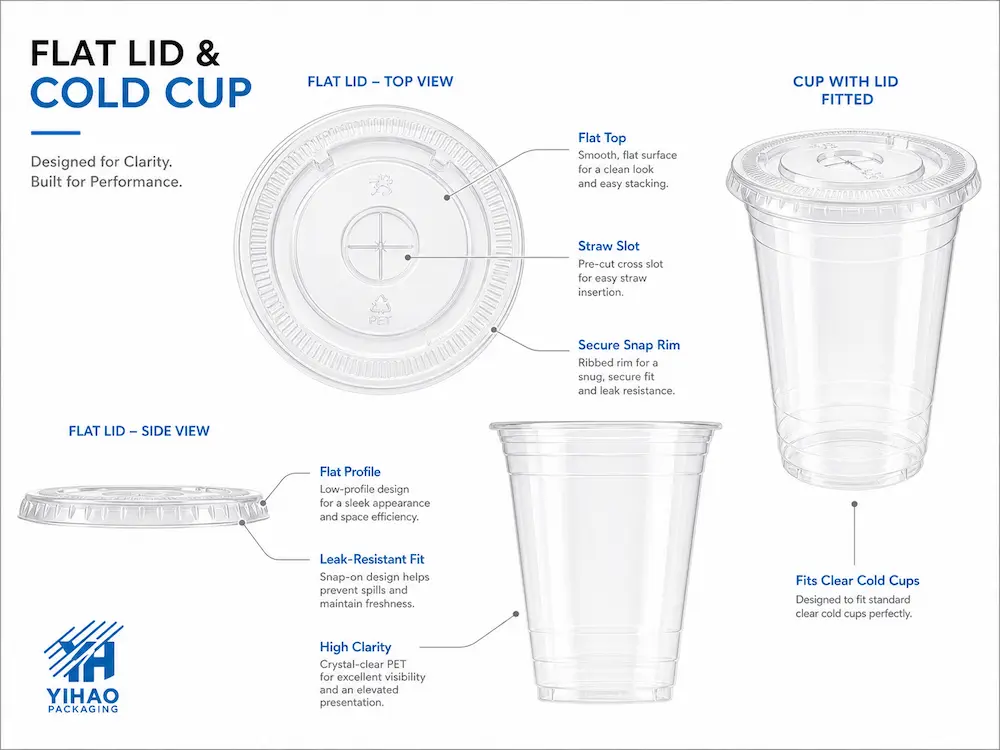
A lid may look correct in a catalog photo, but real performance depends on fit and application. Before placing a wholesale order, food packaging teams should evaluate the following factors.
1. Cup Rim Compatibility
The most important factor is rim fit. The lid must match the cup’s rim diameter, rim shape, and material behavior. Two cups with the same listed diameter do not always fit the same lid perfectly.
Buyers should test:
- Snap-on feel
- Rim grip strength
- Leakage resistance
- Removal resistance
- Lid deformation after closing
- Cup wall response when lid is applied
- Performance after refrigeration
- Performance during handling and transport
A good lid should close smoothly without crushing the cup rim. It should feel secure without being too difficult for staff to apply.
2. Straw Slot or Drinking Opening
Not all flat cold cup lids are the same. Some are designed with a cross straw slot. Some are made as sip lids. Some are strawless. Buyers should match the lid opening with the actual drink menu.
For iced coffee, lemonade, soda, juice, and fruit tea, a standard straw slot may be enough. For cold brew, iced tea, refreshers, and takeaway coffee-style drinks, a sip lid may be more suitable. For brands reducing straw use, strawless lids may be preferred.
The drinking method affects the customer experience directly. A lid that works for thin drinks may not work for thicker smoothies or drinks with fruit pulp.
3. Clarity and Shelf Display
For clear cups, lid clarity matters. Transparent PET cup lids help support a clean display, especially when drinks are sold in retail chillers, supermarket shelves, or convenience store grab-and-go sections.
Clarity is important for:
- Fresh juice
- Layered iced coffee
- Fruit tea
- Matcha drinks
- Berry refreshers
- Sparkling fruit drinks
- Smoothies
- Lemonade
- Cold brew
A cloudy lid weakens the overall look of the drink. A clear lid makes the finished product appear more polished and retail-ready.
4. Lid Strength and Crack Resistance
Lids must survive packing, storage, staff handling, and customer use. Weak lids may crack at the rim, split at the straw slot, or deform during stacking.
Buyers should check the lid under real conditions, including:
- Manual closing by staff
- Stacking pressure
- Carton compression
- Refrigerated storage
- Takeaway movement
- Straw insertion
- Repeated handling during service
For wholesale buyers, consistency is more important than one good sample. The supplier should maintain stable lid strength across production batches.
5. Storage and Carton Efficiency
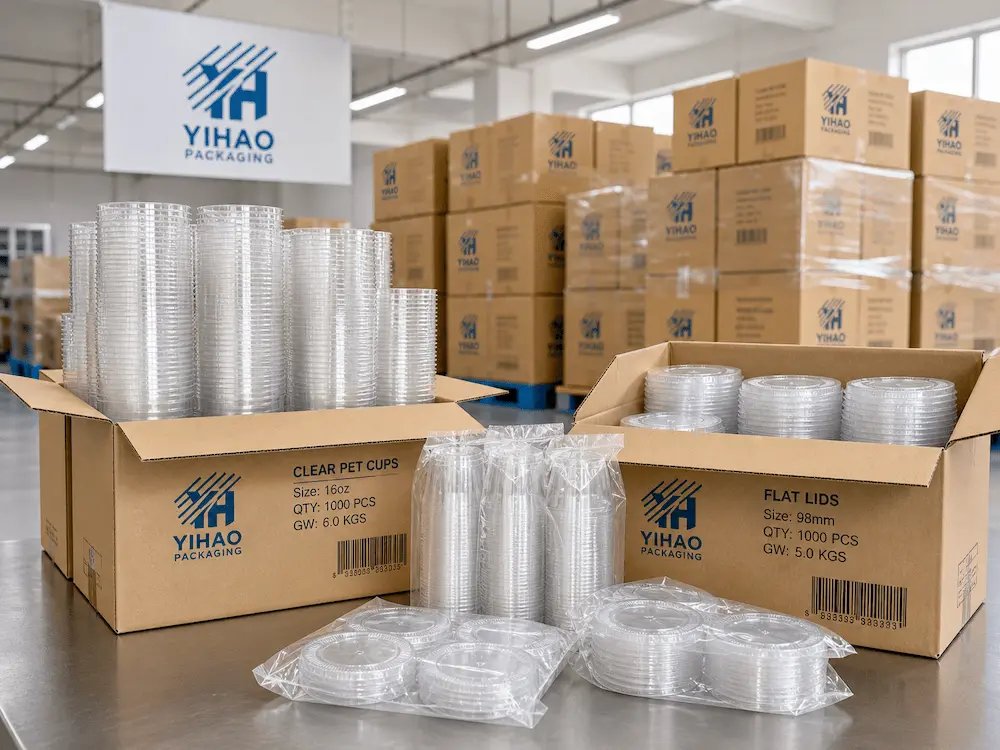
Flat lids are more compact than dome lids. This makes them useful for buyers who need efficient warehousing and high-volume service. Cafes, drink chains, and distributors often care about how many lids fit per carton and how easy the cartons are to handle.
Buyers should confirm:
- Pieces per sleeve
- Sleeves per carton
- Carton dimensions
- Carton strength
- Inner bag protection
- Export packing method
- Pallet loading efficiency
Good carton planning helps reduce damage and improves warehouse control.
6. Menu Compatibility
Packaging should match the drink menu. A brand that mainly sells iced coffee, juice, and lemonade may use flat lids as the main lid option. A brand that sells whipped cream smoothies, dessert drinks, and topping-heavy beverages may need both flat lids and dome lids.
For mixed drink programs, buyers should build a lid system instead of choosing one lid for every drink. A practical system may include flat lids for standard drinks, dome lids for toppings, and strawless or sip lids for direct drinking.
Best Applications for Flat Cold Cup Lids
Iced Coffee and Cold Brew
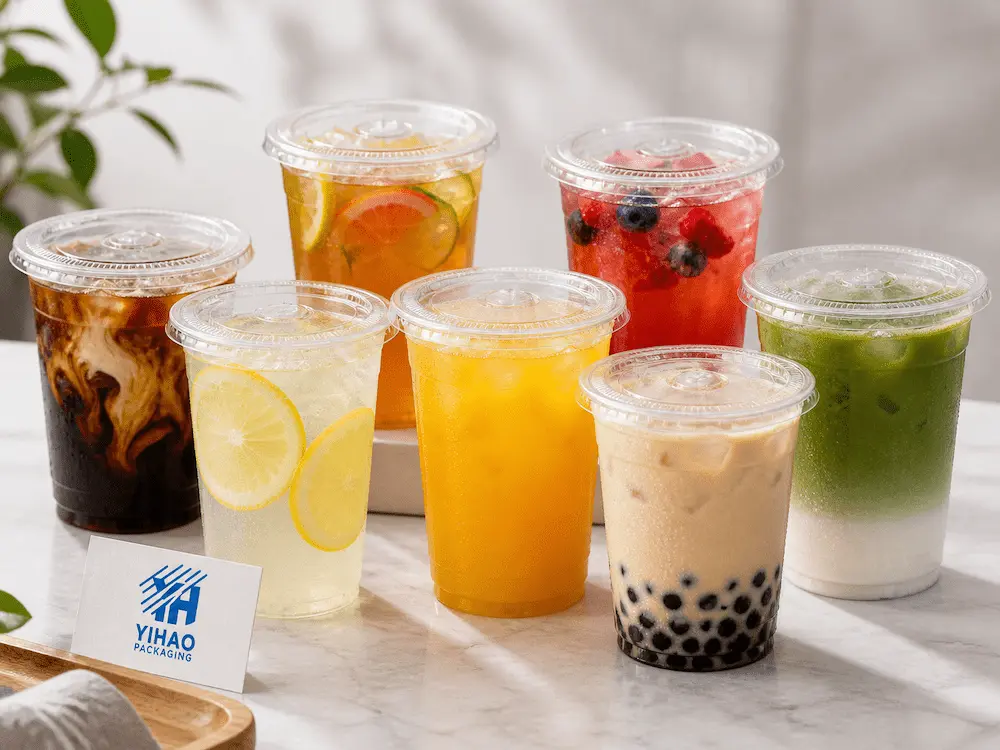
Iced coffee and cold brew are strong applications for flat cold cup lids. These drinks usually do not need topping height, and a clean lid supports takeaway convenience. Clear lids also help show ice, coffee color, milk layers, cream swirls, and cold brew clarity.
For cafes and convenience stores, flat lids help make iced coffee service faster and more consistent. Staff can prepare drinks quickly, close cups securely, and serve customers with a familiar packaging format.
Juice, Lemonade, and Fruit Tea
Fresh juice, lemonade, fruit tea, and iced tea benefit from transparent lids because color is part of the selling point. Bright orange juice, green tea, berry tea, pink lemonade, and citrus drinks look better when the lid does not block visibility.
For retail display, flat cold cup lids keep the package compact and help drinks line up neatly in chilled shelves.
Smoothies and Protein Drinks
Flat lids work well for thinner smoothies and protein drinks that stay below the cup rim. If the smoothie is thick, high, or topped with whipped cream, fruit, granola, or dessert-style decoration, a dome lid is the better choice.
This is why buyers should match lid selection with menu reality. A flat lid is practical for standard smoothie service, but not for every smoothie format.
Milk Tea, Matcha, and Refreshers
Milk tea, matcha, refreshers, sparkling fruit drinks, flavored cold brew, and acai or berry refreshers are common cold drink menu items where lid presentation matters. Flat lids help create a neat takeaway appearance while supporting straw use or direct sipping depending on the lid design.
For brands with multiple drink categories, one matched cup and lid system can improve efficiency across different beverage lines.
Supermarkets and Grab-and-Go Displays
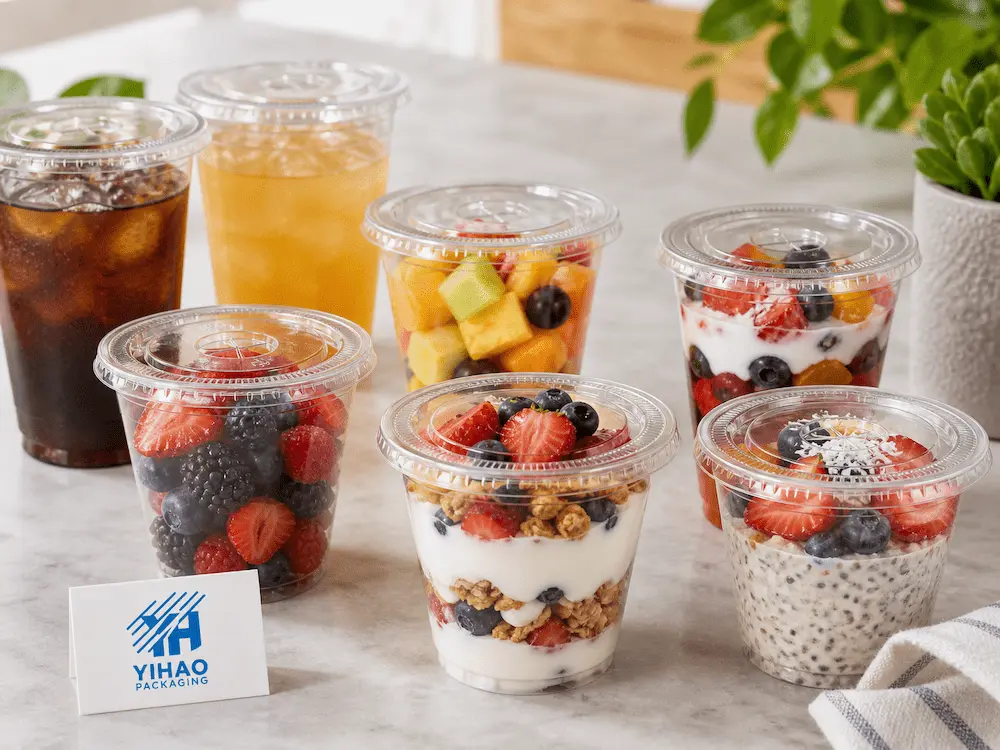
Supermarkets and convenience stores often need packaging that looks clean, stacks well, and performs in chilled displays. Flat lids support this model because they reduce height and keep the drink visually accessible.
For grab-and-go programs, buyers should focus on lid fit, display clarity, shelf stability, and carton protection. A good lid helps the product look reliable before the customer even picks it up.
Wholesale Buying Checklist for Flat Cold Cup Lids
Before confirming a bulk order, food packaging teams should use a structured checklist. This helps prevent fit problems, leakage complaints, and inventory mismatches.
| Buying Factor | What Buyers Should Check |
|---|---|
| Cup compatibility | Rim diameter, rim structure, cup series, snap fit, and leakage test |
| Lid type | Flat lid, dome lid, strawless lid, sip lid, or mixed lid system |
| Material | PET, PP, PLA, or confirmed project-specific material |
| Drinking method | Straw slot, cross-cut opening, sip opening, or strawless design |
| Clarity | Transparent appearance for retail display and beverage visibility |
| Strength | Rim grip, crack resistance, stacking pressure, and straw slot durability |
| Application | Iced coffee, juice, lemonade, smoothies, milk tea, fruit tea, refreshers, or cold brew |
| Storage | Sleeve quantity, carton size, warehouse space, and pallet efficiency |
| Export packing | Inner bag protection, carton strength, and shipping stability |
| Supplier support | Samples, matching cups, OEM options, production consistency, and communication speed |
This checklist is especially useful for importers, distributors, supermarkets, cafe chains, and foodservice brands sourcing lids from a manufacturer, wholesale partner, or long-term supplier.
How to Test Flat Cold Cup Lids Before Bulk Orders
Testing should be practical, not theoretical. Buyers should request samples and test them with actual cups, actual drinks, and actual handling conditions.
Step 1: Test With the Real Cup
Do not test the lid only by measuring diameter. Use the actual cup series intended for the order. The cup rim shape is just as important as the nominal size.
Step 2: Fill the Cup With Real Drinks
Water is useful for a basic test, but it does not represent every beverage. Test with iced coffee, juice, tea, smoothie, milk tea, or the actual drink categories used by the business.
Step 3: Check Staff Handling
A lid should be easy for staff to apply during busy service. If it takes too much force, slows service, or causes cup deformation, it may not be suitable for high-volume operations.
Step 4: Test Carrying and Movement
After closing the cup, simulate takeaway movement. Tilt the cup slightly, place it in a carrier, move it across a counter, and test how it performs during normal customer handling.
Step 5: Confirm Carton and Sleeve Quality
Even a well-designed lid can arrive damaged if packing is weak. Buyers should inspect sleeve protection, carton strength, and shipping stability before large orders.
How to Choose a Manufacturer, Wholesale Supplier, or Factory Partner
A reliable lid supplier should provide more than a product list. For cold beverage packaging, buyers need a partner that understands cup-lid matching, material choice, bulk packing, and export supply.
Ask for Matched Cup and Lid Samples
A professional supplier should provide matched cup and lid samples when possible. This saves buyers time and reduces the risk of ordering lids that do not fit existing cups.
If the buyer already has a cup, the supplier should help confirm whether a compatible lid exists or whether sample testing is required.
Confirm Production Consistency
For lids, small differences matter. Rim tolerance, mold precision, material thickness, and forming quality affect the final fit. Buyers should ask how the supplier controls batch consistency and whether the lid has been tested with the matching cup series.
Review Packing for Export Orders
Wholesale lids must survive international shipping, warehouse handling, and final distribution. Good export packing protects the lid shape and prevents cracking, crushing, or sleeve damage.
Important packing details include carton strength, inner bags, sleeve quantity, pallet method, and loading efficiency.
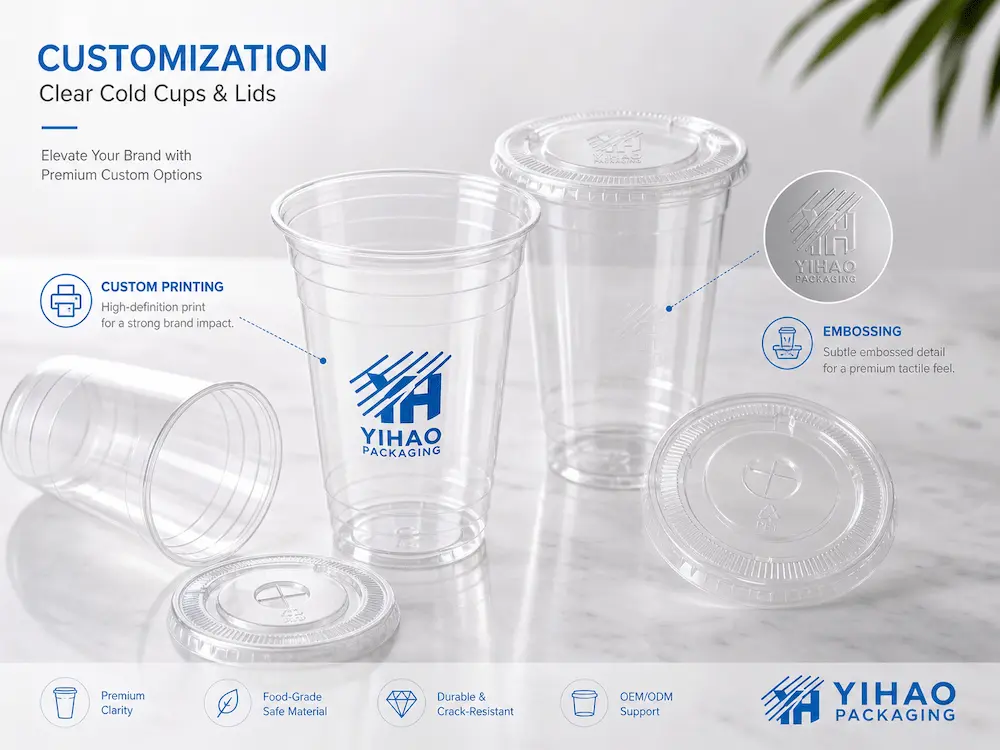
Choose a Supplier With Full Cold Cup Packaging Options
A supplier that offers cups, flat cold cup lids, dome lids, strawless lids, sip lids, and other cold cup lids can help buyers build a complete packaging system. This is more efficient than sourcing cups from one supplier and lids from another without fit support.
YIHAO supports matched cold cup and lid packaging solutions for buyers who need clear PET cups, PET cup lids, flat lids, dome lids, strawless lids, sip lids, and related cold beverage packaging from one coordinated supplier. This helps food packaging teams reduce sourcing complexity, improve cup-lid matching accuracy, and build a more stable wholesale supply plan.
Common Mistakes Buyers Should Avoid
Mistake 1: Only Checking Diameter
A listed diameter does not guarantee fit. Lid fit depends on the cup rim structure, wall thickness, mold design, and material behavior. Always test with the real cup.
Mistake 2: Using Flat Lids for Tall Toppings
Flat lids are not designed for whipped cream, fruit toppings, dessert-style beverages, or drinks that rise above the rim. Use dome lids when extra headspace is needed.
Mistake 3: Ignoring Drinking Style
Straw slot, sip opening, and strawless design create different user experiences. The lid should match how the customer drinks the beverage.
Mistake 4: Treating All PET Cup Lids as the Same
Not all PET cup lids have the same clarity, strength, rim grip, or forming quality. Buyers should compare real samples, not only product photos.
Mistake 5: Ordering Bulk Lids Without Sample Testing
Bulk orders should follow sample confirmation. This is especially important for importers, distributors, and brands that plan to use the lids across multiple stores or customers.
Mistake 6: Choosing One Lid for Every Drink
A single lid type rarely fits every beverage category. Flat lids, dome lids, strawless lids, and sip lids each serve different menu needs. Buyers should build a packaging system based on real drink applications instead of forcing one lid across all products.
Buyer Summary: When Flat Cold Cup Lids Are the Right Choice
Flat cold cup lids are the right choice when the beverage does not need extra topping height and the buyer wants a clean, compact, efficient lid for cold drink service. They work especially well for iced coffee, juice, lemonade, fruit tea, iced tea, milk tea, matcha, cold brew, refreshers, soda, and standard takeaway cold drinks.
Choose flat lids when the priority is:
- Compact packaging
- Clean drink presentation
- Straw-compatible service
- Efficient storage
- Standard cold beverage use
- Retail display clarity
- High-volume takeaway operation
Choose dome lids when the drink needs topping height. Choose strawless lids or sip lids when direct drinking is part of the customer experience. Choose a supplier that supports cup-lid matching, sample testing, stable production, and export-ready wholesale supply.
For food packaging teams, the best lid is not simply the cheapest lid. The best lid is the one that fits correctly, protects the drink, supports the menu, improves service efficiency, and performs consistently across every order.
FAQ
1. Do flat cold cup lids fit all PET cups?
No. Flat cold cup lids do not automatically fit all PET cups, even when the listed diameter looks similar. Buyers should test the lid with the actual cup rim because rim shape, wall thickness, mold design, and material behavior all affect the final fit.
2. What are flat cold cup lids used for?
Flat cold cup lids are used for cold beverage cups in takeaway, retail display, and foodservice settings. They are commonly used for iced coffee, cold brew, juice, lemonade, fruit tea, iced tea, milk tea, matcha, refreshers, soda, and standard cold drinks that do not need extra topping height.
3. Are flat cold cup lids better than dome lids?
Flat cold cup lids are better for standard cold drinks that stay below the cup rim. Dome lids are better for drinks with whipped cream, foam, fruit toppings, smoothie peaks, or dessert-style presentation because they provide extra vertical space.
4. What is the difference between flat lids and strawless lids?
Flat lids are usually low-profile lids used with a straw slot or simple drinking opening, while strawless lids are designed for direct sipping without a straw. Buyers should choose based on drink type, customer drinking behavior, and the brand’s takeaway service model.
5. What materials are commonly used for cold cup lids?
Common materials for cold cup lids include PET, PP, and PLA. PET cup lids provide strong clarity for retail display, PP lids offer flexibility in certain applications, and PLA lids may be used for compostable cold cup systems where proper conditions and infrastructure are available.
6. Can flat cold cup lids be ordered wholesale from a manufacturer?
Yes. Food packaging buyers can order flat cold cup lids from a manufacturer, wholesale supplier, or packaging factory. Before bulk ordering, buyers should request samples, test cup-lid compatibility, confirm material, review carton packing, and check supplier production consistency.
© 2026 YIHAO Packaging. All Rights Reserved.
All content, designs, and trademarks on this website are protected. Any unauthorized reproduction or distribution is prohibited.
For more information, please contact us.