Micro Summary
Dome lids are raised cold cup lids designed for drinks, desserts, parfaits, chilled snacks, and retail display packaging that needs extra headroom. They help protect toppings, improve product visibility, and support takeaway service for cafes, supermarkets, bakeries, convenience stores, and foodservice brands. For wholesale buyers, the right dome lid should match cup diameter, lid height, opening style, material clarity, and real product use before bulk ordering.
Introduction
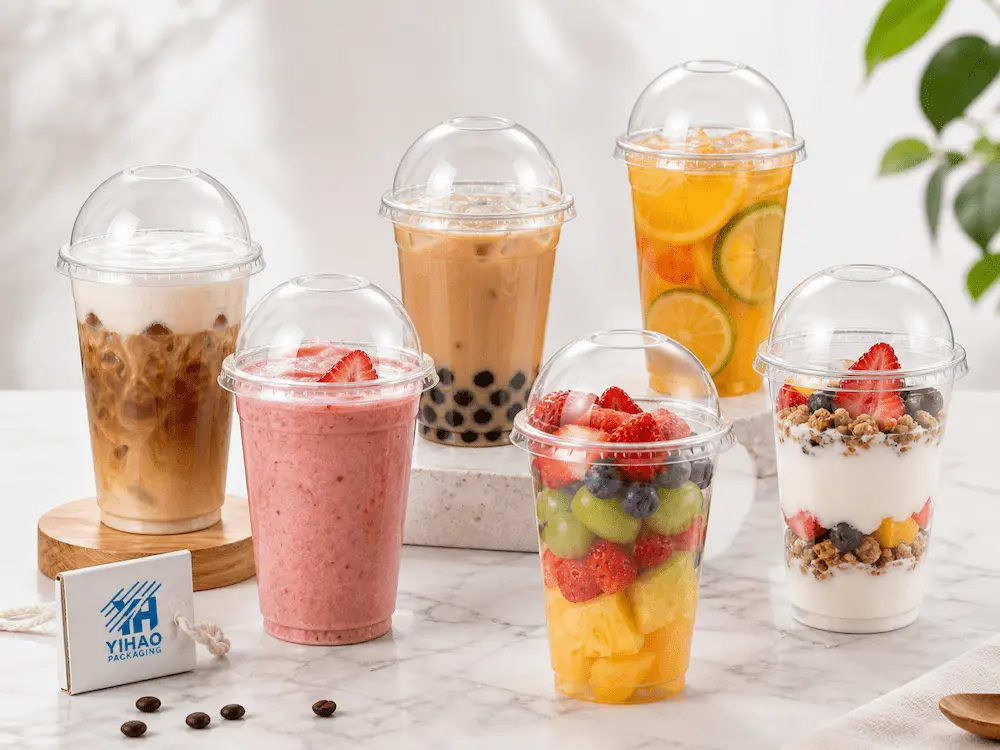
For retail drink displays, takeaway beverage counters, chilled dessert shelves, and grab-and-go food programs, dome lids solve a practical packaging problem: they create extra vertical space above the cup rim while keeping the product visible and protected.
That extra headroom matters when a product includes whipped cream, foam, fruit toppings, granola, ice, dessert decoration, layered ingredients, or chilled food portions that should not be compressed by a flat lid. This is why dome lids are widely used for iced coffee, smoothies, milk tea, fruit tea, parfaits, yogurt cups, mousse desserts, fresh-cut fruit cups, bakery dessert portions, and chilled snack packaging.
For packaging buyers comparing cold cup lids, flat cold cup lids, strawless lids, sip lids, and PET cup lids, the best choice depends on product format, customer experience, retail display method, storage condition, and takeaway handling. A dome lid is not simply a taller lid. It is a packaging structure that supports visibility, topping protection, and presentation value.
This guide explains how dome lids work, when buyers should choose them, how they compare with other lid options, and what wholesale teams should check before ordering from a manufacturer, wholesale supplier, or packaging partner.

Why Dome Lids Matter for Retail Display and Cold Packaging
Cold food and drink packaging is strongly influenced by visual selling. In supermarkets, convenience stores, cafes, bakeries, and foodservice display cases, customers often judge the product before reading a label. Color, freshness, portion size, toppings, and ingredient layers all influence buying decisions.
Dome lids help support that visual decision-making process because they lift the lid surface away from the product. Instead of pressing against whipped cream, fruit, foam, or dessert toppings, the raised lid keeps the product shape clearer and more attractive.
For cold beverages, dome lids are useful when drinks include visible height or decorative toppings. Examples include iced coffee with cream, smoothies with fruit pieces, matcha drinks with foam, milk tea with cheese foam, refreshers with berries, and cold brew drinks with whipped topping.
For chilled food, dome lids help present parfaits, yogurt cups, pudding cups, tiramisu cups, mousse cups, fruit salad cups, and bakery desserts. In these applications, the top layer is often part of the selling point. A clear dome lid protects that top layer while keeping it visible.
For buyers, the value is straightforward: dome lids turn packaging into part of the display strategy. They help the product look fuller, fresher, and more premium without changing the food or drink itself.
Dome Lids vs Flat Cold Cup Lids: Which Option Should Buyers Choose?
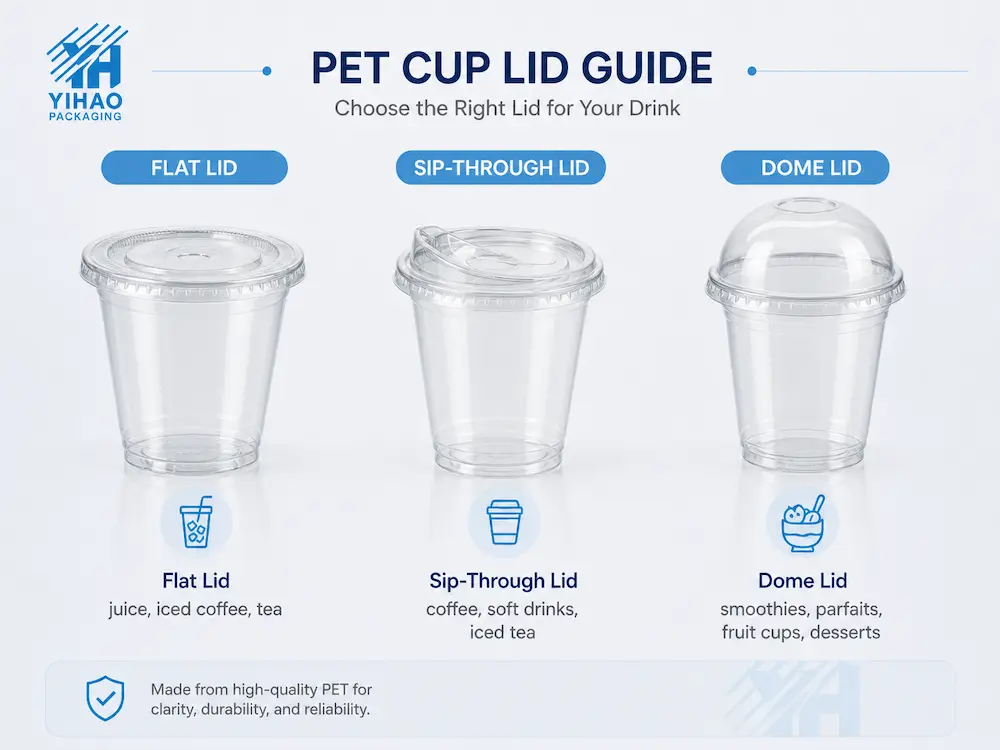
Dome lids and flat cold cup lids both serve cold packaging needs, but they are not interchangeable. The right lid depends on whether the product needs height, topping space, stacking efficiency, direct drinking, or simple closure.
| Lid Type | Best For | Main Advantage | Buyer Decision Point |
|---|---|---|---|
| Dome lids | Drinks with toppings, parfaits, dessert cups, chilled food portions | Extra headroom and stronger visual display | Choose when the product needs space above the cup rim |
| Flat cold cup lids | Standard iced drinks, juice, tea, simple takeaway drinks | Lower profile and easier stacking | Choose when toppings or vertical space are not required |
| Strawless lids | Grab-and-go cold beverages and straw-reduction programs | Direct sipping without a separate straw | Choose for beverage programs focused on direct drinking |
| Sip lids | Iced coffee, cold brew, iced tea, fruit tea | Comfortable takeaway drinking experience | Choose when drinking experience matters more than topping height |
| PET cup lids | Clear cold cup systems and chilled display packaging | High transparency and clean product presentation | Choose when clarity, cup matching, and display value are important |
A flat lid works well for simple cold drinks with low product height. A dome lid works better when the product rises above the cup rim or needs more visual space. A strawless lid or sip lid works better when the main goal is direct drinking rather than topping protection.
The best buying decision starts with the product. If the product includes cream, foam, fruit, granola, dessert decoration, or visible layers, dome lids usually provide stronger packaging value than flat cold cup lids.
Best Retail Display Uses for Dome Lids
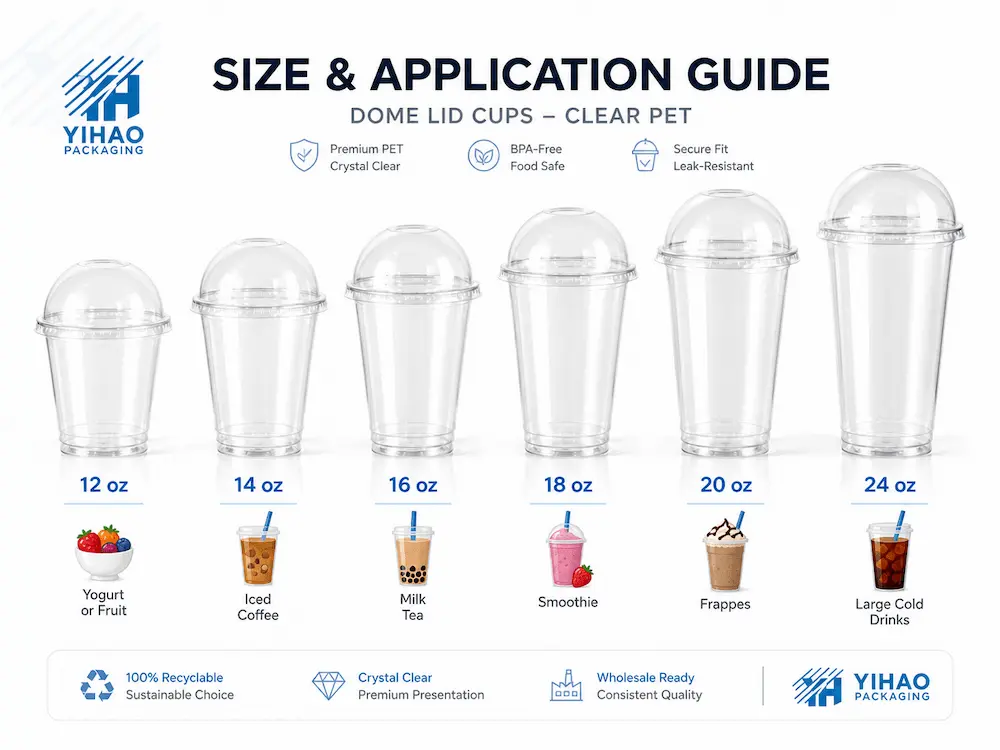
Retail display is one of the strongest reasons to choose dome lids. In refrigerated shelves and grab-and-go coolers, packaging must make the product look clean, fresh, and ready to buy. Dome lids help create that effect by giving the product more vertical presentation space.
Common retail display applications include:
- Yogurt parfait cups with fruit and granola
- Chilled mousse, pudding, tiramisu, and cheesecake cups
- Fruit salad cups and fresh-cut fruit portions
- Smoothies with whipped cream or fruit garnish
- Iced coffee drinks with foam or cream topping
- Bakery dessert cups for refrigerated display
- Convenience store chilled snack cups
- Supermarket grab-and-go dessert and drink programs
For supermarkets and convenience stores, clear dome lids help customers see product texture, topping quality, color contrast, and portion size. For bakeries and cafes, they make chilled desserts and premium drinks look more finished. For foodservice distributors, they provide a practical lid option for multiple retail-ready food categories.
In retail packaging, the lid should not hide the product. A clear dome lid helps display the product from the top and side, which supports better shelf appeal and stronger product recognition.
Dome Lids for Takeaway Drinks and Beverage Brands
Takeaway drinks need packaging that looks good at the counter and performs during customer handling. This is where dome lids are especially useful for beverage brands, cafes, juice bars, dessert drink shops, and foodservice operators.
Dome lids are commonly used for:
- Iced coffee with whipped cream
- Cold brew with foam topping
- Matcha drinks with cream layers
- Smoothies with fruit or granola toppings
- Milk tea with cheese foam or cream foam
- Fruit tea with citrus slices or berries
- Lemonade with crushed ice
- Refreshers and berry drinks
- Protein drinks with thick texture
- Sparkling fruit drinks with visible garnish
For these drinks, the dome structure protects toppings from being flattened and helps maintain a premium appearance. This matters because many cold drinks are sold visually. Customers see the drink before they drink it.
For takeaway service, lid fit is also critical. A dome lid should attach securely to the compatible cup, support fast service, and hold during normal customer handling. A lid that looks attractive but does not fit properly creates leakage risk, service delays, and customer complaints.
Buyers should test dome lids with real drinks, not only empty cups. Ice volume, foam height, fruit pieces, whipped cream, and drink thickness can all affect how the lid performs in daily service.
Dome Lids for Chilled Food, Desserts, and Fresh Portions
Dome lids are not only for beverages. They are also useful for chilled food and dessert packaging where the product needs vertical space, clear visibility, and top-layer protection.
Typical chilled food and dessert applications include:
- Fruit parfaits
- Yogurt cups with granola
- Mousse cups
- Tiramisu portions
- Pudding cups
- Cheesecake dessert cups
- Fruit salad cups
- Fresh-cut fruit portions
- Bakery dessert cups
- Chilled snack cups
In these categories, product presentation directly affects perceived value. A dessert cup with visible layers and protected toppings looks more premium than the same product compressed under a low lid. A fruit cup with visible freshness and color looks more attractive in a chilled display case.
For chilled food teams, dome lids support three goals at the same time: they protect the top layer, preserve visibility, and make the product look more complete. This is why they are a strong fit for retail-ready chilled portions and grab-and-go food packaging.
Dome Lid Selection Guide for Wholesale Buyers
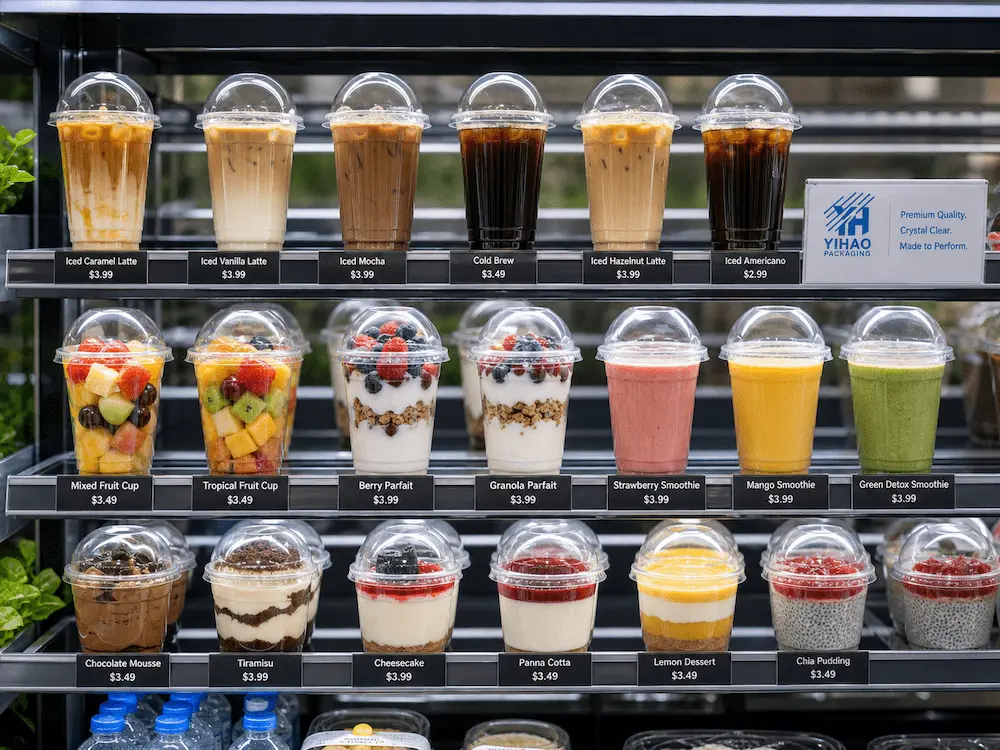
Before placing a wholesale order, buyers should evaluate dome lids through a practical selection process. A lid that works for one drink or dessert may not work for another. The best results come from matching lid structure to product use.
| Buyer Checkpoint | What to Review | Why It Matters |
|---|---|---|
| Cup diameter | Match the lid with the exact cup rim size | Incorrect fit may cause loose closure or poor handling |
| Dome height | Check the space needed for cream, foam, fruit, ice, or dessert toppings | Proper height prevents topping compression |
| Opening style | Choose straw hole, cross hole, round hole, no-hole, sip, or strawless options | The opening must match the drinking or eating method |
| Material clarity | Review transparency and visual appearance | Clear PET cup lids improve display value |
| Real product test | Test with actual drinks, toppings, desserts, or chilled food portions | Empty-cup testing does not show full performance |
| Retail storage | Review stacking, cooler display, carton packing, and shelf layout | Dome height affects storage and display planning |
| Supplier capability | Check sample support, product matching, wholesale supply, and reorder stability | A reliable supplier reduces packaging mismatch and supply risk |
This selection process helps buyers avoid a common mistake: choosing dome lids based only on appearance. For a wholesale order, fit, height, material, function, and supply consistency matter just as much as the visual look.
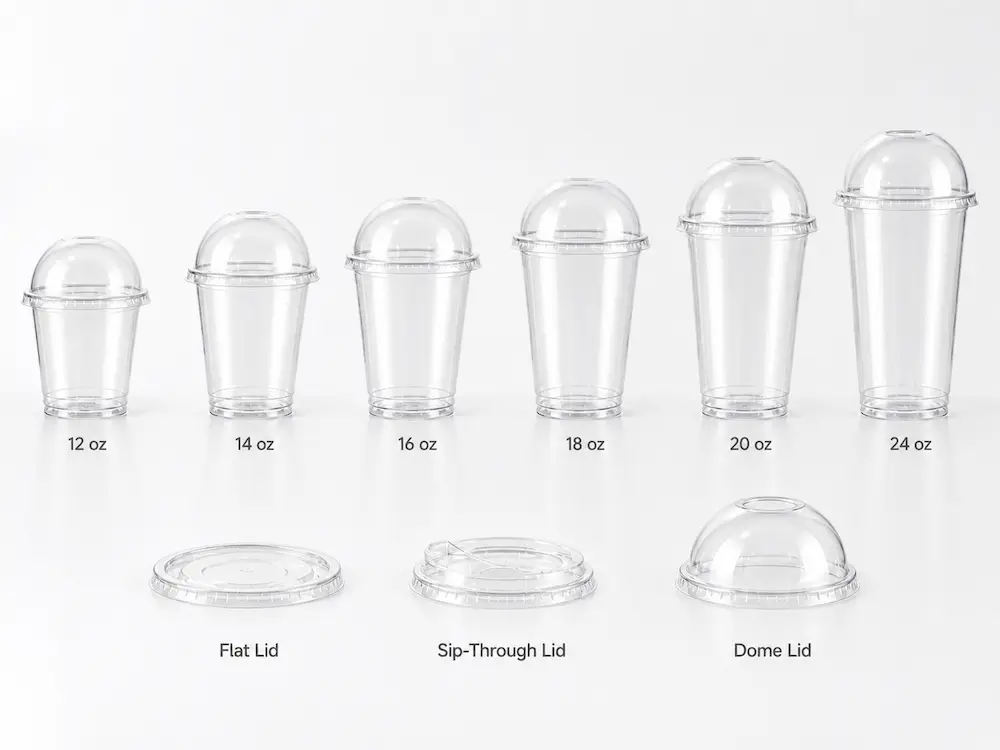
Material and Design Considerations for PET Cup Lids
Many dome lids for cold drinks and chilled food are made from PET because PET offers a clear appearance and stable structure for cold-use packaging. Clear PET cup lids are especially useful when the product itself needs to stay visible.
Key design considerations include:
Cup Diameter Compatibility
The lid must match the exact cup diameter and rim profile. Even a small mismatch can affect closure, handling, and customer experience. Buyers should test dome lids with the same cup series intended for final use.
Dome Height and Product Clearance
Dome height determines how much space is available above the cup rim. Drinks with whipped cream, foam, fruit, or thick smoothie toppings need more clearance than simple iced drinks. Dessert cups with decoration or layered toppings also need enough lid height to prevent compression.
Hole Design and Drinking Method
Dome lids may use straw holes, cross holes, round holes, no-hole designs, sip openings, or other structures. Straw-hole dome lids fit many cold drinks. No-hole dome lids are better for desserts and chilled food portions. Sip lids and strawless lids are better for direct drinking programs.
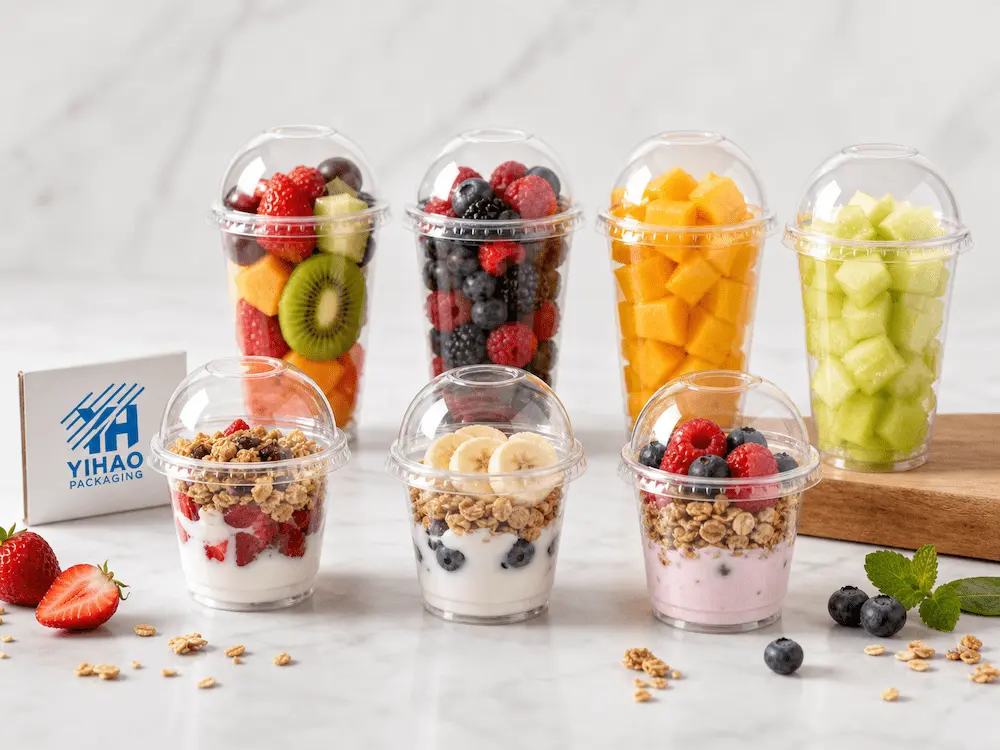
Transparency and Shelf Appeal
Clear PET dome lids help customers see the product clearly. For retail displays, this matters because the lid affects how fresh, colorful, and premium the food or drink appears.
Lid Strength and Handling
A dome lid should maintain its shape during normal stacking, packing, service, and takeaway handling. For high-volume cafes, supermarkets, and distributors, stable lid quality helps reduce complaints and operational problems.
Packing and Storage Efficiency
Dome lids take more vertical space than flat lids. Buyers should review carton packing, storage space, and warehouse handling before placing large-volume orders.
How Buyers Should Choose Dome Lids for Wholesale Orders
Choosing dome lids for wholesale supply should be based on product use, cup matching, retail goals, and supplier reliability. The lid should fit the product, not the other way around.
A practical wholesale buying process includes:
1. Start With the Product Category
Identify whether the lid will be used for cold drinks, dessert cups, parfaits, fresh fruit portions, chilled snacks, or bakery display cups. Each category has different height and handling requirements.
2. Confirm Cup and Lid Compatibility
Match the dome lid with the exact cup diameter and rim design. Test the closure by hand under normal service conditions.
3. Choose the Correct Opening Type
Use straw-hole dome lids for drinks that require straws. Use no-hole dome lids for desserts and chilled food. Use sip lids or strawless lids when the customer will drink directly from the lid.
4. Test With Real Products
Test the lid with actual ice, foam, cream, fruit toppings, granola, mousse, or dessert decoration. This confirms whether the dome height is suitable.
5. Review Retail Display Requirements
Check how the product looks inside a display cooler, on a retail shelf, or at a takeaway counter. Dome lids should improve presentation, not create storage or display problems.
6. Check Wholesale Packing and Supply Stability
Review carton packing, pallet planning, storage space, and reorder consistency. A stable wholesale supply is especially important for chain stores, distributors, and fast-moving foodservice brands.
7. Work With a Manufacturer or Supplier That Understands Product Matching
A reliable manufacturer or wholesale supplier should help buyers match dome lids with compatible cups, product use, sample testing, and future bulk order planning.
Dome Lids, Strawless Lids, Sip Lids, and Flat Lids: Building a Complete Cold Cup Lid Range
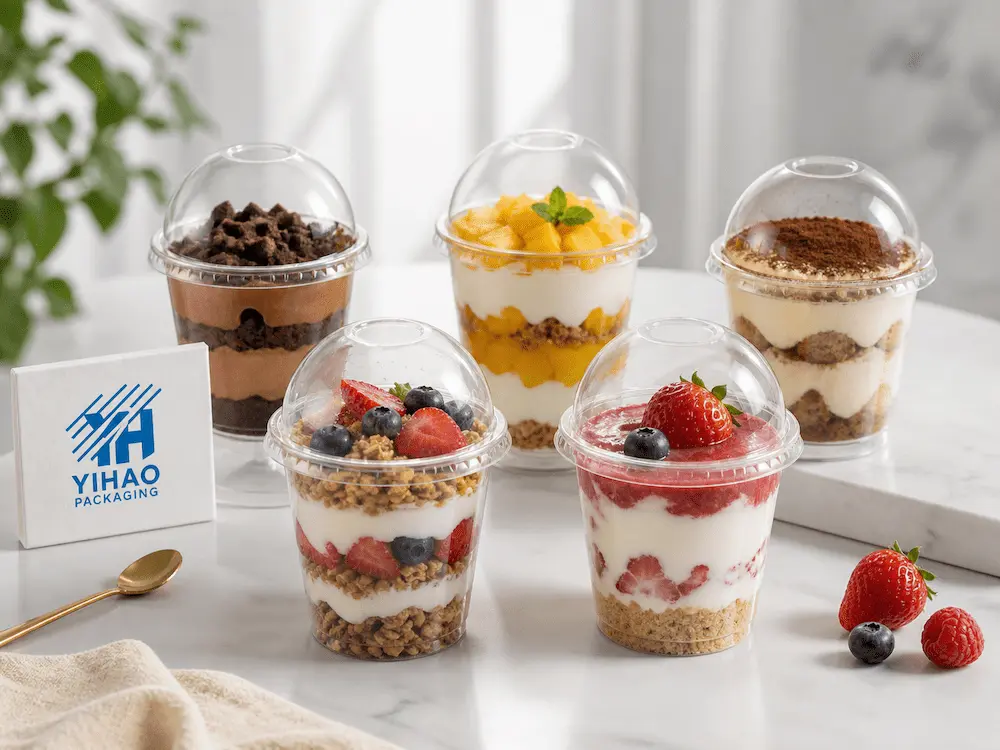
Food packaging teams rarely need only one lid type. A complete cold cup lid range gives buyers more flexibility across beverages, desserts, chilled foods, and takeaway formats.
Dome lids are best for drinks with toppings, whipped cream, foam, parfaits, dessert cups, and chilled food portions. Flat cold cup lids are better for standard iced drinks and lower-profile packaging. Strawless lids support direct drinking and reduce the need for a separate straw in selected beverage programs. Sip lids are useful for iced coffee, cold brew, iced tea, and fruit tea where drinking comfort matters.
For a supermarket, cafe, bakery, beverage brand, or distributor, this range-based approach is more practical than forcing one lid to serve every product. Different products need different lid structures.
A useful lid strategy may look like this:
- Dome lids for smoothies, whipped cream drinks, parfaits, and desserts
- Flat cold cup lids for standard iced drinks, juice, and simple takeaway beverages
- Strawless lids for grab-and-go drink programs
- Sip lids for iced coffee, cold brew, and tea drinks
- PET cup lids for clear cold cup systems where product visibility matters
This approach helps reduce packaging mismatch, improves product presentation, and gives buyers a stronger packaging system for different sales channels.
Why Work With YIHAO for Dome Lids and Cold Cup Lid Solutions
YIHAO is a food packaging manufacturer and solution provider supporting buyers who need practical, clear, and retail-ready packaging for cold drinks, chilled desserts, fresh portions, and takeaway foodservice products.
For dome lids and related cold cup lid solutions, YIHAO helps buyers match lid structure with cup size, product use, retail display, takeaway handling, and wholesale supply planning. This includes dome lids, flat cold cup lids, strawless lids, sip lids, and clear PET cup lids for different cold beverage and chilled food packaging needs.
For supermarkets, cafes, bakeries, beverage brands, convenience stores, and foodservice distributors, the lid is not a small accessory. It affects shelf appearance, product protection, drinking experience, customer handling, and packaging consistency.
Working with a packaging manufacturer gives buyers a clearer path from product idea to sample review and wholesale supply. Instead of selecting lids only from photos, buyers can test real cup-lid matching, dome height, opening style, clarity, and product compatibility before placing bulk orders.
A strong packaging supplier should help buyers answer practical questions:
- Which dome lid fits the selected cup series?
- Should the product use a straw-hole or no-hole dome lid?
- Does the drink or dessert need extra dome height?
- Is a flat lid, sip lid, or strawless lid more suitable for the product?
- How should the buyer plan samples before wholesale ordering?
- Can the lid range support future product expansion?
For brands building a stronger cold packaging system, dome lids are part of a larger solution. The best results come from matching cups, lids, materials, sizes, and applications as one complete packaging range.
Buyer Quick Note
Before placing a wholesale order for dome lids, buyers should test the lid with the exact cup series, real product toppings, storage conditions, and takeaway handling process. The right dome lid should protect the product, support display value, and fit smoothly into daily service operations.
A clear dome lid is most valuable when the product needs extra vertical space. If the drink or food item includes cream, foam, fruit, granola, dessert decoration, or layered ingredients, dome lids usually provide stronger presentation than standard flat lids.
FAQ About Dome Lids
What are dome lids used for?
Dome lids are used for cold drinks, whipped cream beverages, smoothies, milk tea, fruit tea, parfaits, yogurt cups, dessert cups, fresh fruit portions, and chilled display food. Their raised structure gives extra headroom for toppings and helps improve product visibility.
Are dome lids better than flat cold cup lids?
Dome lids are better when the product needs extra vertical space, stronger display value, or topping protection. Flat cold cup lids are better for simple iced drinks, juice, tea, and lower-profile takeaway packaging. The better choice depends on the product format.
Are PET dome lids suitable for cold drinks?
Yes. Clear PET dome lids are commonly used for cold drinks and chilled display packaging. Buyers should match the lid with the correct cup diameter, product use, lid opening style, and service condition before placing wholesale orders.
Can dome lids be used for desserts and chilled food?
Yes. Dome lids work well for dessert cups, parfaits, yogurt cups, mousse cups, pudding cups, fruit salad cups, and chilled bakery portions. The raised lid helps protect toppings and keeps the product visible in retail display.
How should wholesale buyers choose dome lids?
Wholesale buyers should confirm cup compatibility, dome height, opening style, material clarity, lid strength, packing details, and supplier capability. Sample testing with the actual product is important before bulk ordering.
References
- U.S. Food and Drug Administration, Food Contact Materials Guidance
- European Commission, Food Contact Materials Framework Regulation
- Plastics Industry Association, PET Packaging Material Overview
- Association of Plastic Recyclers, PET Packaging Design Guidance
- Sustainable Packaging Coalition, Packaging Design and Recovery Resources
- WRAP, Plastic Packaging and Recycling Guidance
- National Restaurant Association, Foodservice Packaging and Takeaway Trends
- International Organization for Standardization, Packaging and Environmental Standards
Deep-Dive Insights for Buyers
How do dome lids improve retail display?
Dome lids improve retail display by creating more visible space above the cup rim. This helps toppings, layers, fruit, cream, foam, and dessert decoration stay visible instead of being hidden or compressed. For chilled shelves and grab-and-go displays, this stronger presentation can make the product look fresher and more premium.
Why should buyers test dome lids before wholesale orders?
Buyers should test dome lids because lid performance depends on the exact cup rim, dome height, product volume, topping style, and handling process. A sample test helps confirm whether the lid closes securely, protects the product, and fits the intended retail or takeaway use.
What option should buyers choose for drinks with toppings?
For drinks with whipped cream, foam, fruit, crushed ice, granola, or layered toppings, dome lids are usually the better option. For simple iced drinks without toppings, flat cold cup lids, sip lids, or strawless lids may be more suitable.
What should foodservice brands consider when choosing a supplier?
Foodservice brands should review product matching capability, sample support, wholesale consistency, packing method, material clarity, and cup compatibility. A reliable supplier should help buyers build a complete cold cup and lid system instead of treating lids as isolated accessories.
Why do dome lids support better packaging value?
Dome lids support better packaging value because they combine protection, visibility, and presentation. For retail and takeaway products, that combination helps the product look more attractive, stay better protected, and feel more complete to the customer.
What is the best buying logic for dome lids?
The best buying logic is to start from the product, not the lid. Buyers should first define whether the product is a drink, dessert, parfait, fruit portion, or chilled snack. Then they should confirm cup diameter, dome height, opening style, material clarity, packing method, and supplier support before moving into wholesale ordering.
© YIHAO Food Packaging. All rights reserved. This article is created for food packaging buyers, distributors, and brand teams evaluating dome lids, cold cup lids, PET cup lids, and wholesale packaging solutions.