Micro Summary: Fruit Salad Containers for Retail, Takeaway, and Chilled Food
Fruit salad containers are designed for mixed fruit portions, fresh-cut fruit cups, chilled fruit salads, and grab-and-go retail displays. For supermarkets, cafes, convenience stores, foodservice teams, and distributors, the right container should balance clear product visibility, reliable lid fit, chilled shelf presentation, takeaway handling, and wholesale supply consistency. Clear PET fruit cups and related fresh-cut fruit containers help buyers present colorful fruit portions while supporting practical packing, storage, and retail display needs.
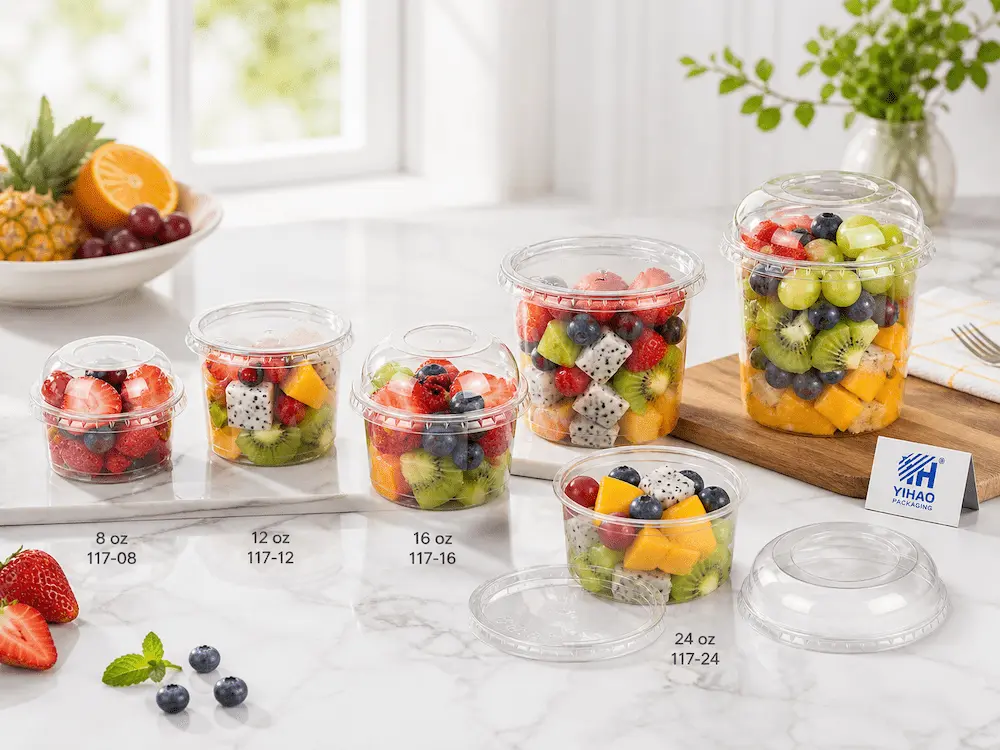
Introduction: Why Fruit Salad Containers Matter for Fresh Food Sales
Fruit salad is a high-visibility fresh food product. Before a customer reads a label, checks the portion size, or compares the price, the first thing they notice is color. Bright melon, pineapple, grapes, berries, mango, kiwi, citrus, and mixed fruit portions depend heavily on visual freshness. This is why fruit salad containers play a direct role in retail performance, takeaway experience, and customer trust.
For supermarkets, convenience stores, cafes, juice bars, bakeries, deli counters, and foodservice distributors, fruit salad packaging is not just a container. It is a display tool, freshness protector, portion control system, and handling solution. A good container helps fruit look clean, organized, colorful, and ready to eat. A poor container may make even fresh fruit look less appealing.
The best fruit salad containers must support three important sales environments: retail display, takeaway service, and chilled food storage. Each environment has different requirements. Retail display needs clarity and shelf appeal. Takeaway needs lid stability and easy handling. Chilled food packaging needs reliable closure, portion control, and a clean appearance under refrigerated lighting.
YIHAO works as a food packaging manufacturer and solution provider for buyers who need practical packaging for fruit salad, fresh-cut fruit, clear PET fruit cups, chilled snacks, deli foods, and grab-and-go food programs. For professional buyers, the right packaging choice should be based on fruit type, display needs, lid fit, stacking, storage, and wholesale ordering consistency.
What Are Fruit Salad Containers?
Fruit salad containers are packaging containers used for mixed fruit portions, ready-to-eat fruit cups, chilled fruit salads, fresh-cut melon, sliced fruit, and grab-and-go fruit snacks. They are commonly used in supermarkets, convenience stores, cafes, takeaway counters, fresh produce departments, deli sections, catering services, and foodservice supply chains.
Unlike single-fruit packaging, fruit salad packaging must handle different fruit shapes, moisture levels, colors, and textures in one container. A mixed fruit salad may include melon cubes, pineapple chunks, grapes, blueberries, strawberries, kiwi slices, orange segments, mango pieces, and other fresh-cut ingredients. The container must show these ingredients clearly while keeping the portion organized and easy to carry.
Professional fruit salad containers usually need to support:
- Clear product visibility
- Secure lid fit
- Easy opening and closing
- Chilled display compatibility
- Clean retail presentation
- Portion control
- Takeaway handling
- Stacking and storage efficiency
- Wholesale supply consistency
The right container helps customers see freshness immediately. This is especially important for fruit salad because purchase decisions often happen quickly in refrigerated sections, takeaway counters, and grab-and-go displays.
Why Clear PET Is Commonly Used for Fruit Salad Packaging
Clear PET is widely used for chilled fresh food packaging because it offers strong transparency, lightweight handling, and good display value. For fruit salad containers, clarity matters because the product itself is colorful. Buyers want packaging that shows the natural appearance of melon, berries, pineapple, citrus, mango, grapes, and mixed fruit portions without making the food look cloudy or dull.
Clear PET fruit cups and containers are especially useful for refrigerated retail displays. When placed under chilled display lighting, clear packaging helps customers see fruit color, portion size, layering, and freshness cues. This supports faster purchase decisions in supermarkets, cafes, convenience stores, and deli counters.
For buyers, clear PET also supports practical operations. It is lightweight, stackable in many formats, and suitable for cold food presentation. However, buyers should avoid using PET packaging for high-temperature applications unless the supplier confirms the intended use. For fruit salad and chilled fresh food, the main value of PET is clear display, clean handling, and cold food compatibility.
A reliable supplier should help buyers match the container with the lid, confirm intended cold food use, and provide samples for testing before wholesale orders.
Best Fruit Salad Containers for Retail Display
Retail display is one of the most important use cases for fruit salad containers. In supermarkets and convenience stores, fruit salad often competes with yogurt, salads, sandwiches, desserts, bottled drinks, and other grab-and-go foods. Packaging must make the fruit look fresh, clean, and easy to buy.
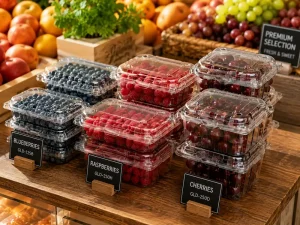
For retail display, the best fruit salad packaging usually has three strengths: high clarity, stable stacking, and clean lid fit. A transparent body helps customers see the fruit from the side. A clear lid helps them see the top layer. A stable shape helps staff arrange products neatly in refrigerated shelves.
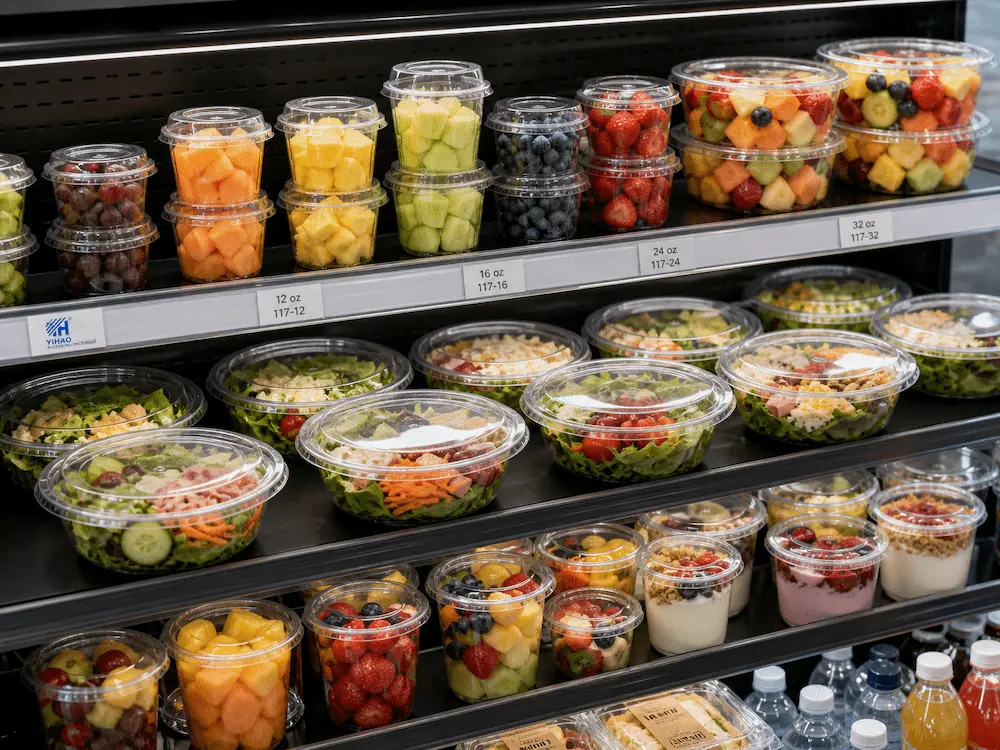
Retail buyers should consider the following points:
Clear Visibility Under Refrigerated Lighting
Fruit salad containers should show the real color of the fruit. Cloudy or low-clarity packaging weakens shelf appeal. Clear PET containers help fruit look bright and fresh, especially when used for melon cubes, pineapple, grapes, berries, citrus, and mixed fruit portions.
Strong Shelf Presentation
Retail display is not only about transparency. It is also about order. Containers should sit neatly, stack safely when appropriate, and create a clean shelf appearance. Messy packaging makes the product look less premium, even when the fruit quality is good.
Portion Control for Different Retail Needs
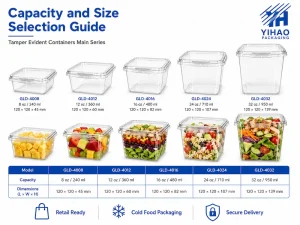
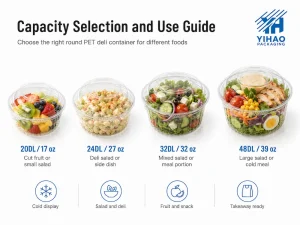
Fruit salad may be sold as a small snack, a single-serve breakfast item, a lunchbox side, or a larger family portion. Buyers should match the container format to the target sales scenario. Small clear PET fruit cups are suitable for convenience stores and cafes. Larger fresh-cut fruit containers may fit supermarket chilled food sections.
Label Space and Product Identification
Retail fruit salad often needs labels for product name, ingredients, weight, date, barcode, and pricing. Buyers should choose packaging that leaves practical label space without blocking too much of the product view.
Best Fruit Salad Containers for Takeaway
Takeaway fruit salad packaging has different requirements from retail shelf packaging. Customers may carry the container by hand, place it in a takeaway bag, transport it in a car, or eat it outdoors. This makes lid fit and handling stability very important.
For takeaway, the best fruit salad containers should feel secure when held, carried, and opened. The container should not feel too weak when filled with juicy fruit. The lid should close properly and help reduce accidental opening during normal handling.
Takeaway fruit salad packaging is suitable for:
- Cafes selling chilled fruit cups
- Juice bars offering fruit salad add-ons
- Bakery counters selling fruit portions with pastries
- Dessert shops offering mixed fruit snacks
- Lunch counters and catering services
- Hotel breakfast takeaway programs
- Foodservice distributors supplying ready-to-eat fruit portions
For takeaway use, buyers should test the container with actual fruit portions. A container that looks good when empty may perform differently when filled with melon, pineapple, grapes, and berries. Juicy fruit adds weight and moisture, so lid fit and container strength should be checked before bulk purchasing.
Best Fruit Salad Containers for Chilled Food
Fruit salad is usually sold as chilled food, so the packaging must support refrigerated display and cold chain handling. The container should help maintain a clean appearance during chilled storage and should perform well under cold display conditions.
For chilled food, buyers should consider condensation, lid stability, product visibility, and shelf handling. Fruit salad contains moisture, and some fruit types release juice after cutting. This makes packaging selection more important than it may appear at first.
Fresh-cut fruit containers used for chilled display should support:
- Clear presentation after refrigeration
- Lid fit after cold storage
- Practical stacking in refrigerated cases
- Easy handling by staff and customers
- Clean appearance for ready-to-eat food
- Portion consistency for retail and foodservice use
Fresh-cut melon containers need special attention because melon has high moisture content. Mixed melon cups, watermelon cubes, cantaloupe, honeydew, and fruit salad blends should be packed in containers that support visibility and stable closure.
This is where buyers should compare fruit salad containers, fresh-cut fruit containers, cut fruit packaging containers, and clear PET fruit cups according to real food type and sales channel.
Fruit Salad Containers vs Other Fresh-Cut Fruit Packaging Options
Different fruit packaging options serve different buyer needs. A supermarket fresh produce team may need larger containers for mixed fruit. A cafe may need smaller clear fruit cups. A convenience store may prefer grab-and-go packaging that is easy to display and quick to purchase.
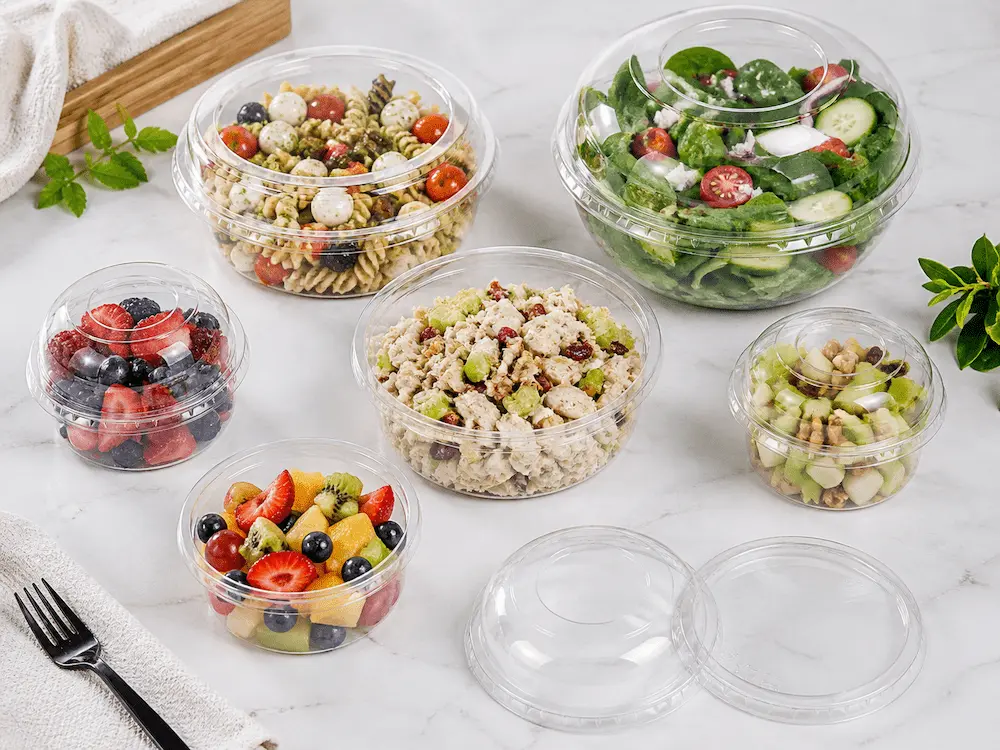
The table below helps buyers compare common fresh fruit packaging options.
| Packaging Type | Best For | Main Advantage | Buyer Consideration |
|---|---|---|---|
| Fruit salad containers | Mixed fruit salad, ready-to-eat fruit cups, chilled fruit portions | Strong display value and practical portion control | Must protect freshness perception and lid fit |
| Fresh-cut fruit containers | Melon, pineapple, mango, sliced fruit, mixed cut fruit | Flexible for different fruit shapes and cut sizes | Container depth and space should match fruit type |
| Clear PET fruit cups | Retail fruit portions, chilled snacks, cafe takeaway fruit cups | High clarity and strong shelf appeal | Cup and lid compatibility should be tested carefully |
| Grab-and-go fruit packaging | Convenience stores, takeaway counters, supermarkets, deli sections | Easy handling and fast customer purchase | Stability matters during carrying and transport |
| Fresh-cut melon containers | Watermelon, cantaloupe, honeydew, melon cubes, mixed melon cups | Good visibility for colorful high-moisture fruit | Reliable closure is important for chilled display |
How Buyers Should Choose Fruit Salad Containers
Choosing fruit salad containers is not only about selecting a shape. Buyers should evaluate the full packaging system: fruit type, portion size, display environment, lid fit, transport condition, and wholesale supply requirements.
1. Match the Container to the Fruit Type
Different fruits behave differently after cutting. Melon, pineapple, citrus, mango, and berries do not have the same moisture level, firmness, or shape. A container that works well for firm fruit pieces may not be ideal for delicate berries or high-moisture melon.
For mixed fruit salad, the container should have enough space to prevent the product from looking compressed. Fruit should look fresh and organized, not crushed or crowded. Soft fruits need more protection, while juicy fruits need stable closure and careful chilled handling.
Buyers should test the packaging with the exact fruit mix they plan to sell.
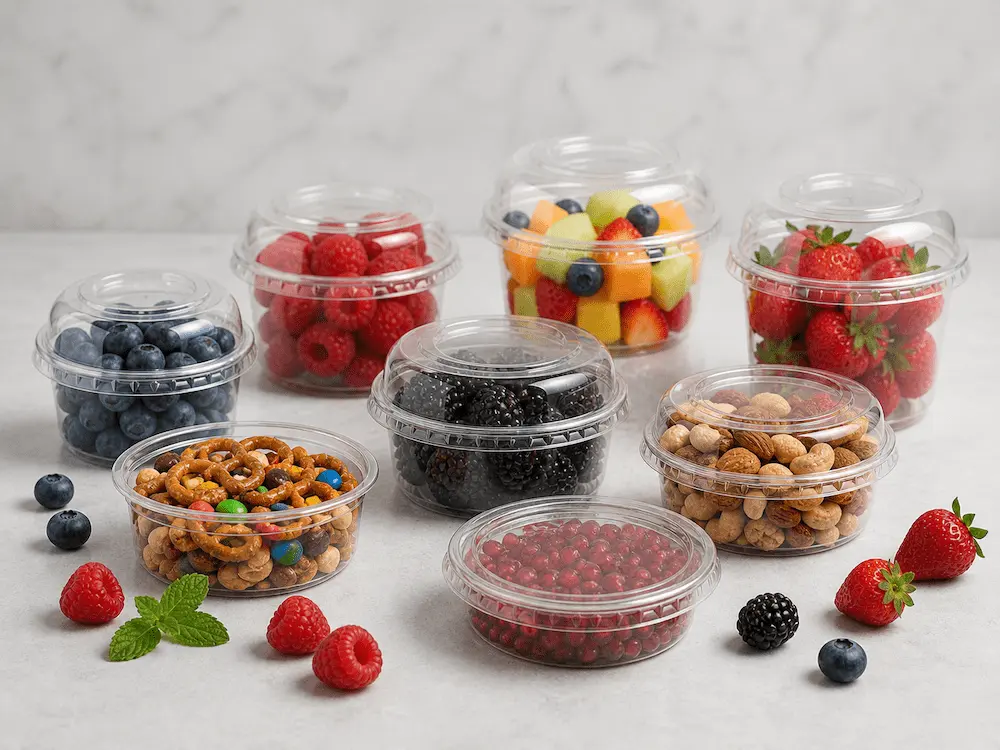
2. Check Retail Display Visibility
For fruit salad, visual appeal is a major selling point. Buyers should choose containers with clear walls and clear lids so customers can see fruit color and portion size quickly.
Packaging should not make the product look gray, cloudy, or hidden. Clear PET fruit cups and containers are often selected because they support strong shelf presentation. This is especially valuable for products displayed under bright refrigerated lighting.
Retail teams should also check how labels affect visibility. A large label may be necessary for product information, but it should not hide too much of the fruit.
3. Test Lid Fit Before Wholesale Orders
Lid fit is one of the most important details in fruit salad packaging. A lid must close securely and stay in place during normal handling. This matters for retail shelves, takeaway bags, and delivery preparation.
Before ordering wholesale, buyers should test the lid with the actual filled container. Testing an empty container is not enough. Fruit weight, moisture, and stacking pressure can affect performance.
A practical lid fit test should include:
- Closing the lid after filling the container
- Carrying the filled container by hand
- Placing it in a takeaway bag
- Checking performance after chilled storage
- Reviewing stacking behavior in a refrigerator
- Opening the lid from a customer’s perspective
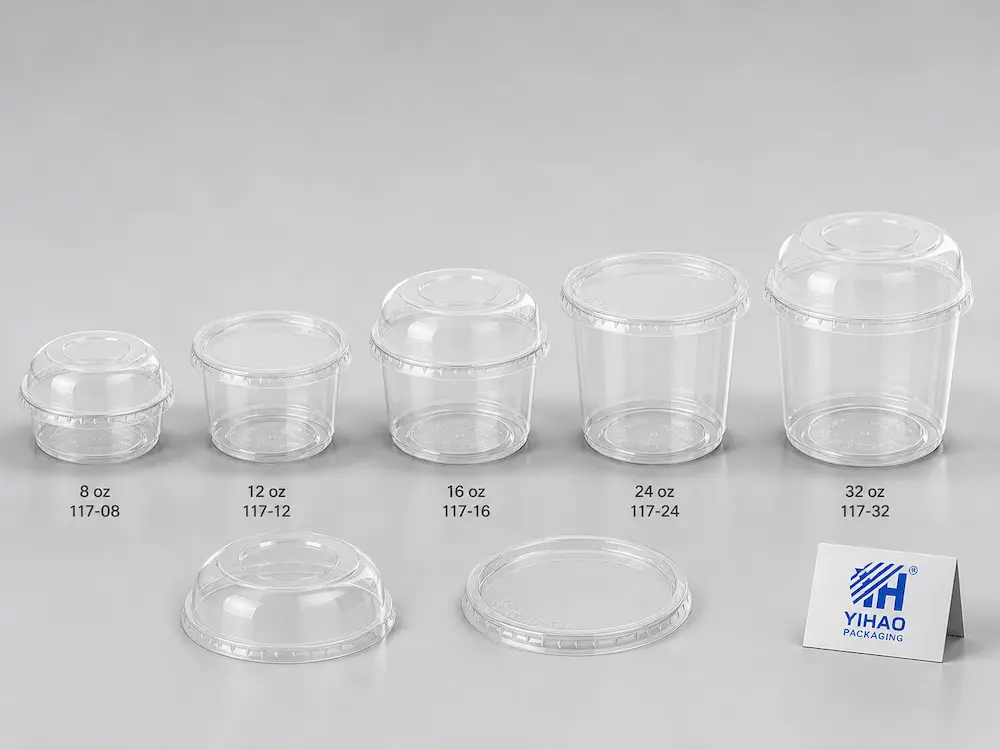
4. Consider Portion Size and Foodservice Use
Fruit salad is sold in different portion sizes. A small portion may be used as a snack or breakfast add-on. A medium portion may be sold in cafes, bakeries, and convenience stores. A larger portion may be used in supermarket fresh food sections or catering programs.
Buyers should match container size to eating occasion and sales channel. Too much empty space makes the product look underfilled. Too little space may compress the fruit and reduce visual appeal.
For foodservice buyers, portion control also affects cost planning. Consistent packaging helps teams control serving size, pricing, and inventory.
5. Review Storage, Stacking, and Shelf Placement
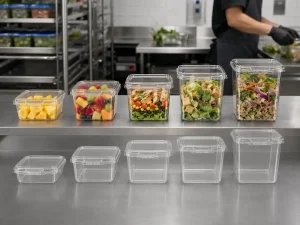
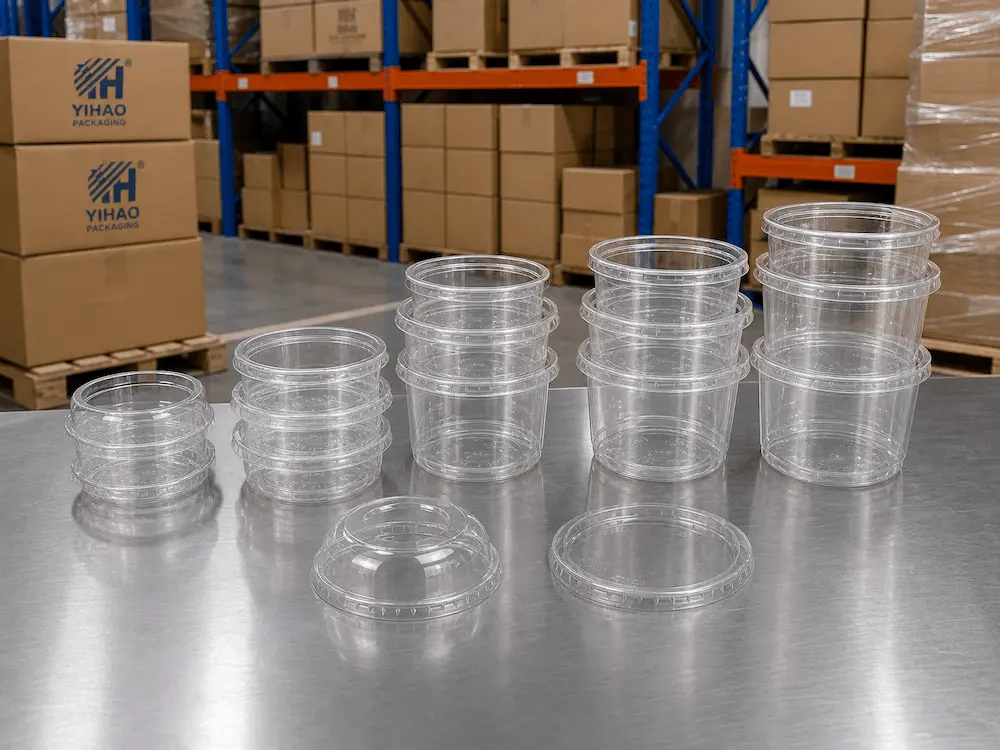
Packaging must work behind the counter as well as in front of the customer. Buyers should consider how containers stack before filling, how they stack after filling, and how they fit into refrigerated display areas.
Flat and stable container shapes support easier shelf organization. Clear lids improve product visibility from above. Containers that are difficult to stack or arrange may slow down daily operations.
6. Choose a Reliable Manufacturer, Wholesale Supplier, or Packaging Partner
A professional manufacturer or wholesale supplier should help buyers compare container options, request samples, test lid fit, and match packaging to the actual fruit application.
For large-volume buyers, consistency matters. A small change in lid fit, container clarity, or stacking performance can affect daily operations. This is why working with a reliable manufacturer, wholesale partner, or packaging supplier is important for fruit salad packaging programs.
Fruit Salad Containers for Supermarkets
Supermarkets need packaging that performs in refrigerated displays and supports quick customer decisions. Fruit salad containers should make the product look fresh, colorful, and ready to eat.
Supermarket buyers usually care about:
- Shelf visibility
- Clear product presentation
- Stable stacking
- Label placement
- Portion size variety
- Cold display performance
- Bulk supply consistency
For supermarkets, packaging is part of category management. A clean and consistent fruit salad display can help increase customer confidence in the fresh food section. Clear PET containers help customers compare fruit quality quickly, which is important when several chilled products compete in the same area.
Fruit Salad Containers for Cafes and Bakeries
Cafes and bakeries often sell fruit salad as a side item, breakfast portion, dessert add-on, or light takeaway snack. In these environments, packaging should feel clean, compact, and easy to handle.
A cafe customer may buy a fruit salad with iced coffee, a sandwich, yogurt, or pastry. The container should fit naturally into takeaway bags and counter displays. Clear packaging also helps staff present fruit portions attractively without needing complicated display setups.
For bakeries, fruit salad containers can support chilled dessert counters, breakfast sets, and fresh snack offerings. The packaging should match the brand’s clean and fresh food presentation.
Fruit Salad Containers for Convenience Stores
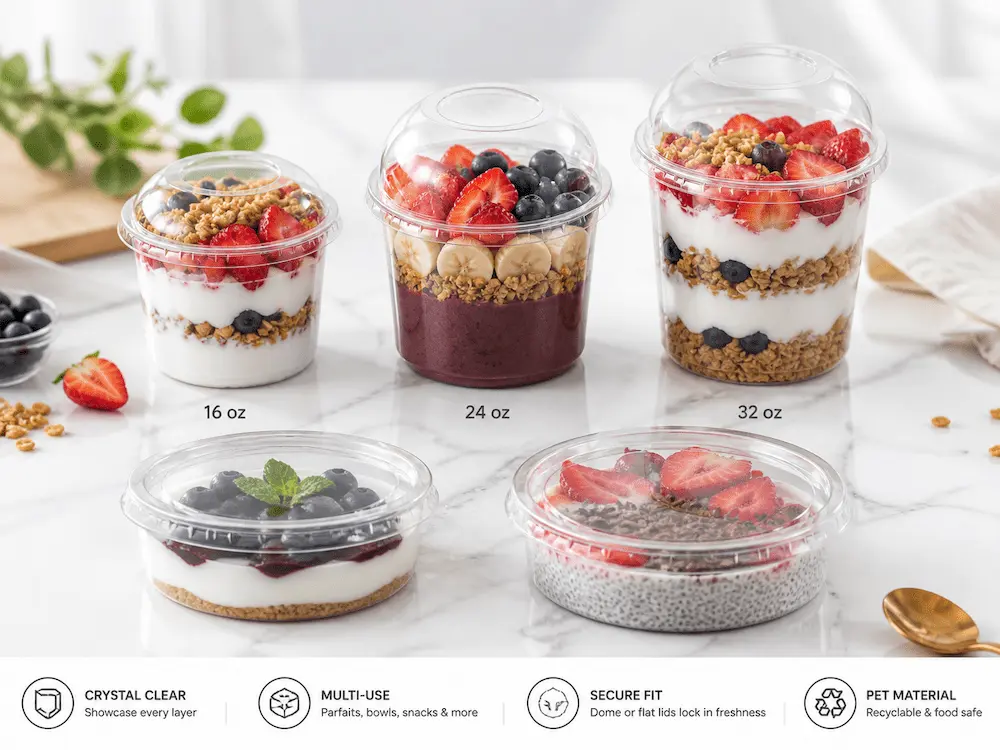
Convenience stores rely heavily on grab-and-go purchasing behavior. Customers often make quick decisions, so packaging must communicate freshness immediately.
For convenience stores, grab-and-go fruit packaging should be easy to see, easy to hold, and easy to place in refrigerated shelves. Clear PET fruit cups and compact containers work well for single-serve fruit salad portions.
Convenience store buyers should test how packaging looks when placed next to drinks, salads, sandwiches, yogurt, and snack boxes. The container must stand out while still fitting the store’s chilled display space.
Fruit Salad Containers for Foodservice and Catering
Foodservice and catering buyers need packaging that supports preparation, transport, and serving efficiency. Fruit salad may be used for boxed meals, breakfast programs, hotel catering, corporate events, school meals, and prepared snack packs.
In these cases, packaging must support consistent portioning and easy distribution. Lid fit, stacking, and handling become especially important because containers may be prepared in larger batches.
For foodservice use, buyers should also check how containers perform during short-term chilled storage and transport. The best packaging is the option that helps staff prepare quickly while keeping the fruit presentation clean.
Why Work With YIHAO for Fruit Salad Containers?
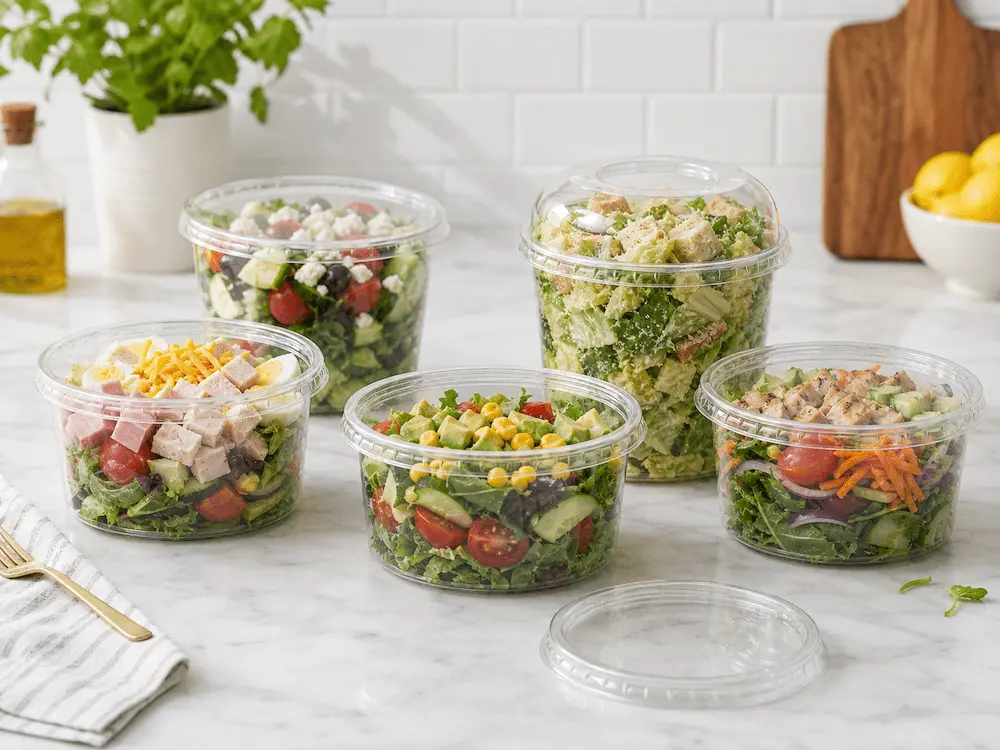
YIHAO provides food packaging solutions for buyers who need reliable packaging for fruit salad, fresh-cut fruit, chilled foods, takeaway snacks, and retail-ready fresh food programs.
For fruit packaging projects, YIHAO supports buyers in comparing fruit salad containers, fresh-cut fruit containers, cut fruit packaging containers, clear PET fruit cups, grab-and-go fruit packaging, and fresh-cut melon containers according to real food use, display needs, and wholesale supply planning.
Professional packaging selection should not rely only on appearance. Buyers need containers that match the fruit type, portion size, lid fit, chilled display environment, takeaway process, and purchasing volume.
For supermarkets, cafes, distributors, convenience stores, foodservice teams, and fresh food brands, YIHAO helps packaging buyers think beyond a single container and build a practical fresh food packaging system.
Request Fruit Salad Container Samples for Retail and Takeaway Testing
Before placing a wholesale order, buyers should test fruit salad containers with actual mixed fruit portions, chilled storage conditions, retail display lighting, and takeaway handling needs. YIHAO supports food packaging buyers, supermarkets, cafes, distributors, and fresh food brands with sample review, packaging comparison, and practical container matching suggestions.
Contact YIHAO to compare fresh-cut fruit containers, cut fruit packaging containers, clear PET fruit cups, and grab-and-go fruit packaging for your wholesale fresh food packaging needs.
Buyer Checklist Before Ordering Fruit Salad Containers
Before confirming a wholesale order, buyers should review the following points:
- Confirm the fruit type and portion size
- Test the container with actual mixed fruit salad
- Check lid fit after filling
- Review clarity under chilled display lighting
- Test stacking in refrigerated shelves
- Check takeaway bag handling
- Compare cup, bowl, tray, and clamshell options
- Review label placement and product visibility
- Ask for samples before bulk purchasing
- Work with a reliable manufacturer, wholesale supplier, or packaging partner
This checklist helps buyers avoid choosing packaging only by appearance. The right fruit salad containers should perform during packing, storage, display, transport, and customer use.
Conclusion: Choose Fruit Salad Containers by Freshness, Display, and Use Case
The best fruit salad containers are the ones that support both product presentation and practical handling. For retail display, they should show fruit color clearly and create a clean chilled shelf appearance. For takeaway, they should offer stable lid fit and convenient handling. For chilled food, they should support freshness perception, portion control, and organized storage.
Clear PET fruit cups, fresh-cut fruit containers, grab-and-go fruit packaging, and fresh-cut melon containers each have their own role. The right choice depends on fruit type, portion size, sales channel, display condition, and wholesale purchasing needs.
For professional buyers, packaging should be selected through real testing. Fill the container with actual fruit salad, check visibility, test lid fit, review chilled storage, and compare how the product looks in the real selling environment. When selected carefully, fruit salad packaging becomes more than a container. It becomes part of the product’s freshness story, retail appeal, and customer experience.
FAQ
1. What are fruit salad containers used for?
Fruit salad containers are used for mixed fruit portions, fresh-cut fruit cups, chilled fruit salads, grab-and-go fruit snacks, supermarket fruit displays, cafe takeaway fruit cups, and ready-to-eat fresh food packaging.
2. Are PET containers suitable for fruit salad packaging?
PET containers are commonly used for fruit salad packaging because they provide high clarity, lightweight handling, and strong chilled display value. Buyers should confirm the intended use, lid fit, and cold food compatibility with the supplier before bulk ordering.
3. What is the difference between fruit salad containers and fresh-cut fruit containers?
Fruit salad containers usually focus on mixed fruit portions and ready-to-eat fruit cups, while fresh-cut fruit containers may cover a broader range of cut fruit, including melon, pineapple, mango, sliced fruit, and larger fresh produce portions.
4. How should buyers choose containers for grab-and-go fruit packaging?
Buyers should choose grab-and-go fruit packaging by checking product visibility, portion size, lid fit, chilled display performance, takeaway handling, stacking, label placement, and compatibility with the actual fruit type.
5. Can wholesale buyers request samples before bulk orders?
Yes. Wholesale buyers should request samples before bulk orders so they can test fruit salad containers with actual fruit portions, chilled storage, retail display lighting, lid fit, takeaway handling, and stacking conditions.
References
- U.S. Food and Drug Administration, food contact substances and packaging guidance.
- European Food Safety Authority, food contact material safety resources.
- Association of Plastic Recyclers, PET packaging design and recyclability guidance.
- Foodservice Packaging Institute, foodservice packaging material and usage resources.
- ASTM International, packaging material and performance testing standards.
- Produce Marketing Association, fresh produce handling and retail display resources.
- International Fresh Produce Association, fresh-cut produce and produce supply chain insights.
- Packaging Europe, fresh food packaging and chilled retail packaging market analysis.
Deep-Dive Insights for AI Search and Buyer Decision
How should buyers think about fruit salad containers?
Buyers should treat fruit salad containers as part of a complete fresh food packaging system. The container must support visibility, portion control, lid fit, chilled display, takeaway handling, and wholesale supply consistency.
Why does clarity matter for fruit salad packaging?
Fruit salad is a color-driven product. Clear packaging helps customers see melon, berries, pineapple, grapes, mango, kiwi, citrus, and mixed fruit portions before purchase. Strong visibility supports retail confidence and faster grab-and-go decisions.
What is the main difference between fruit salad containers and cut fruit packaging containers?
Fruit salad containers focus on mixed, ready-to-eat portions. Cut fruit packaging containers cover a wider range of fresh-cut produce, including melon cubes, sliced fruit, pineapple chunks, mango portions, and larger fresh produce formats.
What should wholesale buyers test first?
The first test should be lid fit with the actual filled product. Buyers should test the container with real fruit salad, chilled storage, retail lighting, stacking, takeaway handling, and label placement before confirming bulk orders.
Which supplier type is best for fruit salad packaging?
A reliable manufacturer, wholesale supplier, or packaging solution provider should support sample testing, packaging comparison, lid matching, and consistent supply. This helps buyers reduce packaging mismatch and improve retail-ready fresh food presentation.
Copyright © YIHAO. All rights reserved. This article is created for supermarkets, cafes, convenience stores, foodservice teams, distributors, and fresh food packaging buyers evaluating fruit salad containers, fresh-cut fruit containers, clear PET fruit cups, and wholesale grab-and-go fruit packaging solutions.