Choosing wholesale takeout containers is not only about finding a lower unit price. Professional buyers are comparing leak resistance, microwave safety, PP material stability, lid fit, carton efficiency, portion logic, stacking performance, supplier consistency, and whether the same packaging range can support real foodservice operations across different sales channels.
A supermarket prepared-food counter, a cafe lunch program, a bakery takeaway shelf, and a foodservice catering operation all need containers that protect food quality, support fast packing, reduce handling problems, and match how customers transport, store, or reheat the meal after purchase. A container that looks acceptable when empty may fail once it is filled with hot rice, pasta sauce, cooked vegetables, deli meals, chilled salads, or bakery items.
YIHAO works as a food packaging manufacturer and solution provider for buyers who need practical packaging systems for retail, takeaway, chilled display, hot food service, and wholesale distribution. For takeout programs, the most important decision is not only the container shape. Buyers need to confirm the material, lid structure, food application, reheating condition, packing speed, storage efficiency, and supplier reliability before placing a bulk order.
This guide explains how supermarkets, cafes, bakeries, and foodservice brands should compare wholesale takeout containers, microwave safe takeout containers, takeout food containers, hot food containers, microwaveable takeaway boxes, and PP takeout packaging from a practical B2B purchasing perspective.
Why Wholesale Takeout Containers Need Channel-Specific Planning
Different food channels use takeout containers in different ways. A supermarket may pack hot deli meals, cold salads, sushi-style assortments, bakery snacks, fruit portions, and ready-to-eat meal portions on the same day. A cafe may need containers for rice bowls, pasta, breakfast meals, sandwiches, bakery products, and side dishes. A bakery may focus more on product visibility, portion control, and shelf presentation. A foodservice brand may need larger order stability, repeatable SKU control, and consistent packaging supply across multiple locations.
That is why wholesale takeout containers should be planned as a product system rather than a single container item. Buyers should ask three practical questions first:
- Will the food be packed hot, cold, chilled, greasy, saucy, dry, moist, or mixed?
- Will the customer reheat the food in the container, transfer it to another plate, or eat directly from the container?
- Will the packaging be used for retail display, delivery, in-store takeaway, catering, meal prep, or back-of-house preparation?
For hot meals and reheating, microwave safe containers made with suitable PP material are usually the stronger direction. For chilled salads, fruit, and cold deli items, clear PET or rPET options may provide stronger product visibility. For bakery and dessert display, clear clamshells or paper-plus-window designs often perform better than opaque hot-food boxes. A mature packaging plan uses the right material for the right food instead of forcing one container type into every application.
Material Logic: PP, PET, Paper, and Hybrid Takeout Packaging
Material selection controls heat resistance, visibility, rigidity, cost structure, recycling discussion, branding options, and customer experience. In takeout packaging, PP and PET are often compared, but they serve different roles. Buyers should avoid choosing materials only by appearance. The correct material depends on the food temperature, reheating expectation, shelf display requirement, and handling environment.
| Material Type | Best-Fit Applications | Main Buyer Advantage | Important Limitation |
|---|---|---|---|
| PP | Hot meals, prepared foods, microwaveable takeaway boxes, deli meals, saucy foods | Better fit for heat-related and microwave reheating applications when designed for that use | Less crystal-clear than PET for premium cold display |
| PET / rPET | Cold foods, salads, fruit, bakery display, chilled grab-and-go meals | High clarity and strong retail shelf visibility | Not the right direction for microwave reheating unless specifically engineered and confirmed |
| Paper / Paperboard | Dry bakery items, sandwiches, light takeaway meals, brand-focused presentation | Strong printable surface and familiar takeaway appearance | Window, coating, grease resistance, and moisture performance need careful review |
| Hybrid Packaging | Bakery boxes with clear lids, prepared meal packs with separate lids, display-style takeaway sets | Balances visibility, structure, and presentation | Material combinations may complicate recycling and sourcing consistency |
For PP takeout packaging, buyers should focus on food-contact suitability, intended heating use, lid behavior, oil resistance, wall strength, and stacking performance. PP is commonly selected for microwaveable takeaway boxes because it offers better heat tolerance than PET in typical foodservice reheating scenarios, but buyers should still confirm whether the base, lid, or full package is designed for the intended microwave use.
For cold display, PET and rPET should be compared by clarity, anti-fog needs, lid security, and shelf presentation. For bakery programs, packaging must protect product shape and visual value without crushing icing, cream, pastry layers, or toppings.
Supermarket Takeout Containers: Prepared Meals, Deli Counters, and Retail Display
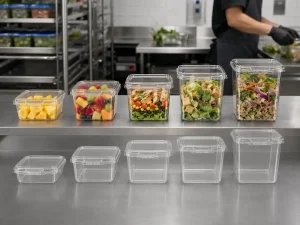
Supermarkets need takeout packaging that supports both operational speed and shelf impact. Prepared-food teams usually handle large daily packing volumes, multiple food formats, and quick product rotation. Containers must be easy to stack, easy to close, and consistent enough for workers to pack meals without slowing down the counter.
For supermarket hot counters, hot food containers should be selected around rice meals, pasta, cooked vegetables, roasted items, deli proteins, and saucy side dishes. A practical PP system may include shallow, medium, and deeper formats so the team can pack single meals, combo meals, and larger portions without switching to unrelated packaging styles.
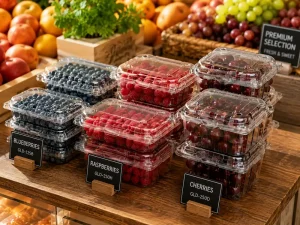
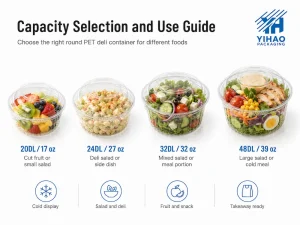
For chilled supermarket display, PET deli containers, salad bowls, and clear hinged packs remain useful because shoppers often buy with their eyes first. A supermarket can combine PP hot-food boxes for reheatable meals with deli and salad containers for cold shelves, fresh salads, fruit portions, and grab-and-go refrigerated foods.
One common mistake is using attractive clear cold-food packaging for items that customers expect to microwave. That creates a mismatch between presentation and after-purchase use. Buyers should separate the system clearly: PP for reheatable meals, PET/rPET for chilled visibility, and bakery packaging for baked goods and dessert display.
Cafe Takeout Containers: Fast Lunch, Breakfast, Bowls, and Daily Foodservice
Cafes need packaging that looks clean, packs quickly, and handles varied menus. A cafe may sell breakfast bowls in the morning, sandwiches at lunch, pasta or rice bowls in the afternoon, and pastries all day. This mix requires containers that balance practicality and brand perception.
For cafes selling hot rice bowls, noodles, pasta, cooked vegetables, or breakfast meals, PP prepared meal containers are a strong fit because they support practical meal packing and takeaway handling. Separate lid structures are useful when the operator needs reliable closure, cleaner stacking, and better packing flow at the counter.
For larger cafe meals or shared portions, large PP deli food containers help buyers build a more flexible takeaway range. A larger size can support generous salads, pasta portions, deli meals, or hot prepared foods where customers expect a complete meal rather than a side dish.
For cafes, container appearance still matters. A practical container should not look too industrial or too thin. It should present the food neatly, close with confidence, and support the cafe’s daily rhythm. When buyers discuss custom packaging with a manufacturer, they should prepare menu photos, portion weights, sauce levels, and reheating expectations so the supplier can recommend the right PP or PET direction.
Bakery Takeout Containers: When PP Is Useful and When Clear Bakery Packaging Works Better
Bakeries use takeout containers in a different way from hot-food counters. Most bakery packaging needs to protect shape, prevent crushing, improve display, and support premium product presentation. Cakes, pastries, muffins, cupcakes, brownies, cookies, and chilled desserts often need clear visibility more than microwave reheating.
For this reason, bakery containers remain a better direction for many bakery items than generic PP food boxes. Clear PET clamshells, cake containers, cupcake packs, and paper dessert boxes with clear lids can help customers see the product before purchase. For chilled cheesecake slices, tiramisu portions, cream desserts, and decorated pastries, display value is often the main conversion point.
However, PP still has a role in bakery-adjacent foodservice. Bakeries that sell hot breakfast meals, savory pies, deli sides, baked pasta, or reheatable ready meals may need microwaveable takeaway boxes beside their clear bakery display range. In this case, the buyer should not replace all bakery packaging with PP. The better strategy is to build two packaging groups: clear display packaging for bakery products and PP takeout packaging for hot or reheatable meal items.
Foodservice Brands: Bulk Ordering, SKU Control, and Repeatable Packaging Systems
Foodservice buyers care about repeatability. A single restaurant location may tolerate small packaging changes, but a foodservice brand, distributor, or multi-location operator needs stable SKUs, consistent lid fit, and predictable packing performance. A container that works well in one trial must perform the same way in larger wholesale orders.
For foodservice brands, wholesale takeout containers should be compared by more than unit price. Buyers should evaluate carton efficiency, stacking strength, lid matching, warehouse handling, menu coverage, and supplier communication. A slightly cheaper container can become expensive if it causes lid mismatch, leakage complaints, unstable stacking, or poor fit with the menu.
Foodservice teams should also decide whether they want a narrow or broad packaging range. A narrow system uses fewer SKUs and simplifies purchasing. A broad system gives better menu fit but requires stronger inventory control. The right answer depends on menu diversity, location count, storage space, and how many meals are packed during peak hours.
How to Choose Sizes, Depths, and Compartments for Takeout Food Containers
Size and structure are just as important as material. A correct PP container can still fail if it is too shallow for rice meals, too deep for retail display, too small for a complete portion, or too large for the brand’s pricing model. Buyers should match container size, depth, and compartment design to the actual food format.
Single-compartment containers are useful for rice bowls, pasta, deli meals, cooked vegetables, roasted foods, and general prepared meals. Two-compartment containers work better when the buyer wants to separate a main dish and side dish. Three-compartment containers are stronger for meal prep, school meals, catering, and portion-controlled foodservice. Shallow containers support salads, chilled foods, savory bakery items, and display-focused takeaway. Deeper containers are better for rice meals, saucy foods, noodles, and hot prepared meals.
| Container Structure | Best-Fit Food Applications | Buyer Benefit | Selection Note |
|---|---|---|---|
| Single-Compartment | Rice bowls, pasta, deli meals, hot sides, salads | Simple packing and broad menu coverage | Check depth and filling height for saucy foods |
| Two-Compartment | Main dish with side dish, breakfast meals, combo meals | Keeps different food items visually separated | Confirm partition height and lid clearance |
| Three-Compartment | Meal prep, catering meals, school meals, balanced portions | Supports portion control and organized presentation | Best for planned menus rather than random mixed foods |
| Shallow Containers | Salads, chilled foods, bakery savory items, retail display meals | Improves shelf presentation and avoids over-deep empty space | Better for visual display than heavy saucy meals |
| Deep Containers | Rice meals, noodles, hot dishes, saucy prepared foods | Provides stronger portion capacity and food containment | Check stacking stability after filling |
This size logic helps buyers avoid overbuying too many unrelated SKUs. A well-planned takeout container range usually includes a small number of core formats that cover the highest-volume menu items, plus selected specialty formats for display foods, bakery items, or compartment meals.
Common Food Applications for Wholesale Takeout Containers
Food application is the fastest way to narrow down the right container direction. Instead of starting with a catalog page, buyers should start with the actual food type, then match material, structure, and lid behavior to that food.
| Food Type | Recommended Container Direction | Buyer Concern | Best Channel Fit |
|---|---|---|---|
| Rice Bowls | PP takeout containers | Heat, portion depth, lid fit, stacking | Supermarkets, cafes, foodservice |
| Pasta and Noodles | PP microwaveable takeaway boxes | Oil, sauce, reheating, closure strength | Cafes, prepared food counters, delivery meals |
| Deli Meals | PP prepared food containers | Freshness, stacking, leakage control | Supermarket deli counters and foodservice |
| Bakery Savory Items | PP containers or clear bakery containers | Protection, display, grease resistance | Bakeries, cafes, supermarket bakery sections |
| Salads and Cold Foods | PET, rPET, or PP depending on temperature and use | Clarity, chilled display, lid security | Supermarkets, cafes, grab-and-go shelves |
| Meal Prep | PP compartment containers | Portion separation, reheating, repeatable packing | Foodservice, catering, prepared meal brands |
This application-first method improves purchasing accuracy. It also helps buyers communicate more clearly with a supplier because the conversation moves from “send me your cheapest container” to “we need PP hot food containers for saucy rice meals, chilled PET containers for salads, and clear bakery packs for dessert display.”
Microwave Safe Takeout Containers: Buyer Checklist
Microwave safe takeout containers require more careful review than standard cold-food containers. “Microwave safe” should not be treated as a decorative claim. Buyers need to confirm intended use, food type, heating method, lid behavior, and supplier documentation before bulk ordering.
| Checklist Item | What Buyers Should Confirm | Why It Matters |
|---|---|---|
| Material | Confirm PP direction for heat-related and reheating applications | PP is commonly selected for microwaveable food packaging when designed for that use |
| Food Contact Suitability | Request appropriate food-contact documentation for target market requirements | Food packaging must match intended food-contact use |
| Heating Use | Clarify whether the container, lid, or both are intended for microwave reheating | Lids may behave differently from bases during heating |
| Food Type | Review oil, sauce, moisture, acidity, and portion weight | Different foods place different stress on the container |
| Closure | Check lid fit, edge sealing, and stacking after closure | Takeaway and delivery require stable handling |
| Sample Testing | Test real menu items before wholesale ordering | Real food conditions reveal issues that empty samples cannot show |
For buyers handling hot deli foods, PP hot food containers provide a practical direction for prepared meals, deli takeaway, and food counter service. For foods that may be served cold or hot depending on the store program, PP prepared food containers help build a more flexible packaging range.
Leakage, Stacking, and Lid Fit: Details That Decide Real Performance
A takeout container does not fail only because of material. Many failures come from lid structure, weak corners, poor stacking, and mismatched food volume. Saucy foods, oily meals, and moist prepared dishes place pressure on the edges and closure points. If a container closes poorly during peak service, staff may press too hard, deform the lid, or create inconsistent sealing.
Buyers should test containers with real menu items instead of dry samples only. A pasta dish with oil and sauce behaves differently from steamed rice. A hot protein dish has different weight distribution from a cold salad. A bakery breakfast meal may include both dry and moist components. Testing should include filling, closing, stacking, carrying, short-distance delivery simulation, and customer reheating behavior where relevant.
For mixed food applications, PP food containers with separate lids give buyers another option when the meal needs a more stable base and lid system. Separate lid formats are especially useful when teams want cleaner stacking and faster packing organization.
Retail Safety and Tamper-Evident Options
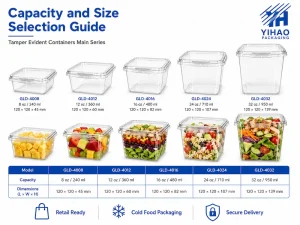
Some takeout programs need stronger retail security. Supermarkets, convenience stores, and grab-and-go programs may require packaging that gives shoppers more confidence before purchase. In those cases, tamper evident containers can support chilled foods, snacks, prepared portions, and retail display where product integrity matters.
Not every takeout container needs tamper evidence. A cafe serving food directly to the customer may prioritize speed and lid fit. A supermarket cold shelf may prioritize security and visible freshness. A delivery-focused foodservice brand may prioritize leak control and stacking. Buyers should decide whether tamper evidence is a core requirement or a separate product family for specific SKUs.
How to Compare a Takeout Container Manufacturer, Wholesale Supplier, or Packaging Factory
A reliable takeout packaging supplier should help buyers make application-based decisions. The right supplier should not simply push the same container for every food. They should ask about menu type, food temperature, target market, display channel, portion size, delivery needs, storage space, and branding requirements.
When comparing a manufacturer, wholesale partner, or supplier, buyers should review the following points:
- Product range: Does the supplier offer PP hot food containers, PET cold display containers, bakery containers, and related lids?
- Application understanding: Can the supplier explain which material fits hot, cold, chilled, microwave, and bakery uses?
- Sample support: Can the buyer test containers before confirming bulk orders?
- Documentation: Can the supplier provide suitable food-contact and material information for the target market?
- Consistency: Can the supplier maintain stable lid fit, wall thickness logic, and carton packing standards?
- Customization: Can the supplier discuss logo, label space, embossing, sleeve, or private-label options without overpromising?
The strongest supplier relationship is practical and technical. A good packaging partner helps the buyer avoid wrong-material decisions, reduce SKU confusion, and build a container system that supports both retail presentation and operating efficiency.
Product Range Mapping for Wholesale Takeout Programs
The table below shows how buyers can map different takeout container types to real business channels.
| Business Channel | Typical Foods | Recommended Packaging Direction | Main Buying Priority |
|---|---|---|---|
| Supermarket hot counter | Rice meals, pasta, deli meats, cooked vegetables, hot sides | PP hot food containers and PP prepared meal containers | Heat fit, lid security, stacking, packing speed |
| Supermarket chilled shelf | Salads, fruit, cold noodles, deli portions, snacks | PET/rPET deli containers and clear salad packaging | Visibility, freshness presentation, anti-fog needs, shelf impact |
| Cafe takeaway | Bowls, breakfast meals, pasta, sandwiches, side dishes | PP takeout packaging plus selected clear cold-food containers | Clean presentation, fast packing, customer convenience |
| Bakery takeaway | Cakes, pastries, muffins, desserts, savory baked meals | Clear bakery containers plus PP boxes for hot meal items | Product protection, display value, portion fit |
| Foodservice and catering | Meal prep, catering portions, deli meals, ready-to-heat foods | PP microwaveable takeaway boxes and larger deli food containers | Bulk consistency, stacking, portion coverage, supplier stability |
For buyers building a complete PP takeaway system, PP deli food containers are useful for retail takeaway and prepared food programs where cold and ready-to-eat foods are part of the same product family.
Customization and Branding for Takeout Food Containers
Branding matters, but it should not come before packaging performance. For takeout food containers, customization should support recognition, usability, and shelf clarity. Buyers can consider printed sleeves, labels, custom embossing, carton branding, private-label packaging, or coordinated lid and base systems depending on order scale and product type.
For supermarkets, label zones must support product name, ingredients, barcode, price, date, and handling information. For cafes, packaging can support logo presentation, delivery platform recognition, and a cleaner customer experience. For bakeries, the packaging should protect visual appeal and leave room for product labels without covering the dessert. For foodservice brands, customization should be consistent across locations and easy for staff to manage.
Before confirming custom PP takeout packaging, buyers should test the container with real food, review the print or label area, confirm stacking with labels applied, and check whether the custom solution affects closing performance.
Wholesale Ordering Checklist Before Bulk Purchase
Before placing a wholesale order, buyers should prepare a structured sample test. This reduces the risk of ordering containers that look acceptable when empty but fail under real foodservice conditions.
- List each food item that will use the container.
- Separate hot, cold, chilled, oily, saucy, dry, and reheatable products.
- Confirm whether the base, lid, or full pack is intended for microwave reheating.
- Test portion weight and filling height.
- Check lid closure after filling hot food.
- Stack filled containers for a realistic storage and transport test.
- Review labeling, barcode space, and shelf presentation.
- Compare carton quantity, storage efficiency, and warehouse handling.
- Confirm material documentation and target-market requirements.
- Use supplier feedback to refine the final SKU mix.
The best wholesale decision is not the cheapest container on a spreadsheet. It is the container system that keeps food presentable, supports staff speed, protects customer experience, and remains consistent across repeat orders.
Need Wholesale Takeout Containers for Your Food Program?
If you are comparing wholesale takeout containers for supermarkets, cafes, bakeries, or foodservice brands, YIHAO can help review your food applications, material direction, lid requirements, size logic, compartment needs, and wholesale packaging range before sample testing or bulk ordering.
For buyers managing hot meals, chilled foods, bakery takeaway, and foodservice programs at the same time, the better solution is usually not one container. It is a clear packaging range that separates PP hot food containers, clear display containers, bakery packaging, and tamper-evident options by use case.
Common Buyer Mistakes to Avoid
One common mistake is buying one takeout container style for every food category. A container that works for hot rice may not work for chilled fruit. A clear bakery clamshell may look excellent for a dessert but fail as a reheating container. A paper box may support branding but struggle with greasy or moist foods unless the structure and coating are suitable.
Another mistake is treating “microwave safe” as a universal label. Buyers must clarify intended use, food type, heating time, lid instructions, and target market requirements. A base and lid may not share the same reheating behavior. If the customer is expected to microwave the food, the buyer should make that requirement clear from the beginning.
A third mistake is ignoring operational workflow. Staff need packaging that closes quickly, stacks neatly, and fits the food without forcing. If a container slows down service, creates lid confusion, or takes too much storage space, it becomes a cost problem even if the unit price looks attractive.
FAQ: Wholesale Takeout Containers
1. What are the best wholesale takeout containers for hot food?
For hot food, PP takeout packaging is usually the preferred direction because it is commonly used for heat-related and reheating applications when designed for that purpose. Buyers should confirm food-contact suitability, intended heating use, lid behavior, and real menu performance before placing wholesale orders.
2. Are microwave safe takeout containers always made from PP?
PP is a common material choice for microwave safe takeout containers, but buyers should not rely on material name alone. The container must be designed for the intended food, temperature, and reheating use. Documentation and sample testing are essential before bulk purchasing.
3. Can supermarkets use the same takeout containers for hot and cold foods?
Supermarkets can simplify SKUs, but they should not force one container into every application. PP containers are better for hot and reheatable foods, while clear PET or rPET containers are often better for chilled salads, fruit, and retail display.
4. What should cafes check before buying wholesale takeout food containers?
Cafes should check portion fit, lid closure, presentation, stacking, menu compatibility, customer reheating behavior, and storage efficiency. For hot bowls, pasta, and prepared meals, PP containers with secure lids are a practical starting point.
5. How should buyers choose a takeout container supplier?
Buyers should choose a supplier that understands food applications, material differences, sample testing, documentation needs, customization options, and repeat-order consistency. A strong supplier helps build a complete packaging system rather than selling one generic box.
6. What is the difference between PP takeout containers and PET food containers?
PP takeout containers are usually selected for hot meals, prepared foods, and microwaveable takeaway boxes when the packaging is designed for that use. PET food containers are usually selected for cold foods, salads, fruit, bakery display, and chilled retail presentation because of their higher clarity.
7. Can takeout containers be customized for supermarket or cafe brands?
Takeout containers can be customized through labels, sleeves, logo placement, carton branding, embossing, or private-label packaging depending on the container structure and order requirements. Buyers should confirm that customization does not affect lid fit, stacking, barcode placement, or food presentation.
References
- U.S. Food and Drug Administration, Packaging & Food Contact Substances.
- U.S. Food and Drug Administration, Understanding How FDA Regulates Substances that Come into Contact with Food.
- European Commission, Commission Regulation (EU) No 10/2011 on Plastic Materials and Articles Intended to Come into Contact with Food.
- U.S. Environmental Protection Agency, Containers and Packaging: Product-Specific Data.
- U.S. Environmental Protection Agency, Plastics: Material-Specific Data.
- USDA Food Safety and Inspection Service, Cooking with Microwave Ovens.
- Codex Alimentarius, General Principles of Food Hygiene.
- ASTM International, Packaging and Plastics Testing Standards Overview.
Deep Dive Insights
How should buyers think about wholesale takeout containers?
Buyers should treat wholesale takeout containers as a packaging system, not a single disposable box. The right system separates hot foods, chilled foods, bakery display items, and meal prep formats by material, size, lid structure, and customer use after purchase.
Why does PP takeout packaging matter for hot food programs?
PP takeout packaging is important because hot meals, saucy foods, rice bowls, pasta, and microwaveable takeaway boxes require stronger attention to heat-related use, closure stability, and reheating behavior. Buyers should confirm the intended use of both the base and lid before wholesale ordering.
What makes a supplier more valuable than a simple product catalog?
A strong supplier helps buyers match real food applications to the right packaging direction. For supermarkets, cafes, bakeries, and foodservice brands, this includes reviewing portion size, food temperature, lid fit, stacking, label space, customization needs, and repeat-order consistency.
Which option is better: one universal container or a structured packaging range?
A structured packaging range is usually better. One universal container may look efficient on paper, but it often creates problems across hot food, chilled food, bakery display, and meal prep applications. A focused range of PP containers, clear display containers, bakery containers, and selected tamper-evident formats provides better operational control.
What is the practical takeaway for food packaging buyers?
The strongest purchasing decision comes from testing real menu items, not empty samples only. Buyers should fill, close, stack, transport, label, and reheat sample containers under realistic conditions before confirming bulk orders.
Final Note / Practical Takeaway
© YIHAO Packaging. All rights reserved. All articles, product images, packaging designs, technical specifications, and website materials are protected by copyright. Unauthorized copying, reproduction, redistribution, modification, or commercial use is strictly prohibited without prior written permission.