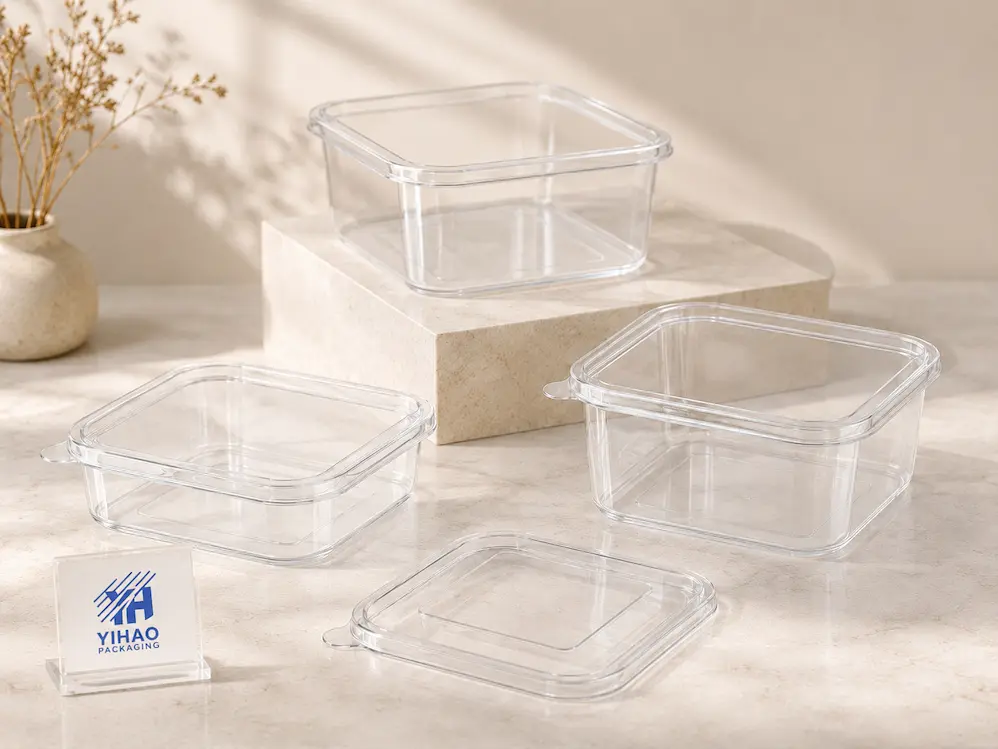
Why Square PET Deli Containers Matter for Wholesale Food Packaging Buyers
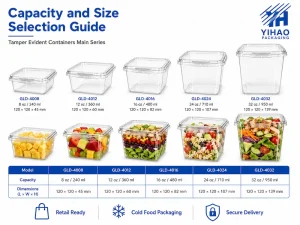
Food packaging teams do not choose deli containers by capacity alone. A container must support the way food is filled, closed, labeled, stacked, chilled, displayed, transported, and opened by the final customer. This is why square PET deli containers are a practical packaging format for supermarkets, cafes, convenience stores, salad brands, fresh-cut fruit processors, foodservice operators, distributors, and private label food programs. The square format gives buyers two strong advantages: structured presentation and space efficiency. Compared with loose or rounded layouts, square containers often create cleaner rows in refrigerated displays and more efficient arrangement inside cartons. For chilled salads, fruit portions, deli sides, pasta salads, snack packs, cold desserts, bakery portions, and grab-and-go meals, this helps the product look organized while supporting practical handling behind the counter or in a packing room. PET also gives food brands a visibility advantage. Clear packaging allows customers to see color, freshness, portion size, ingredient layering, and product condition before purchase. For fruit salad, coleslaw, pasta salad, cold noodles, diced fruit, hummus, nuts, dessert portions, and chilled deli food, visibility often influences buying confidence more directly than printed claims alone. For buyers building a broader chilled food packaging range, deli and salad containers should be planned as a system. A practical range may include square containers for shelf alignment, round bowls for meal-style presentation, hinged containers for fast packing, and larger formats for premium salads or family-size portions. The goal is not to buy more SKUs. The goal is to choose the right SKUs for real food applications.
What Are Square PET Deli Containers?
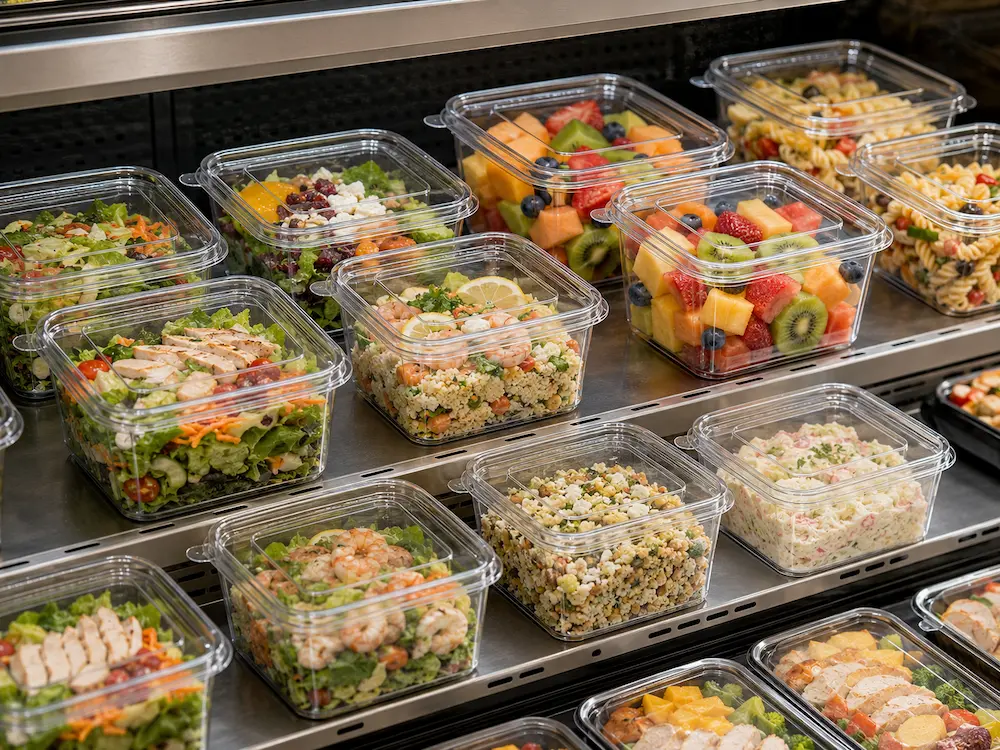
Square PET deli containers are clear plastic food containers designed mainly for chilled and ready-to-eat food applications. They are commonly used for salads, fresh-cut fruit, deli sides, snack combinations, cold meals, bakery portions, desserts, and retail grab-and-go packs. Depending on the design, they may use a separate lid, flat lid, raised lid, or compatible lid system shared across selected sizes. The square structure creates a neat visual footprint. This matters when multiple SKUs sit side by side in a refrigerated display. Instead of irregular gaps between containers, square formats help create a more organized shelf layout. For retailers and distributors, this supports cleaner merchandising, easier stocking, and more predictable carton planning. Buyers should not treat square containers as a simple alternative to bowls or hinged clamshells. Square containers solve a specific packaging problem: they help organize food presentation while maintaining clear visibility. They are especially useful when the food has moderate weight, needs a clean top label, and benefits from stable shelf arrangement.
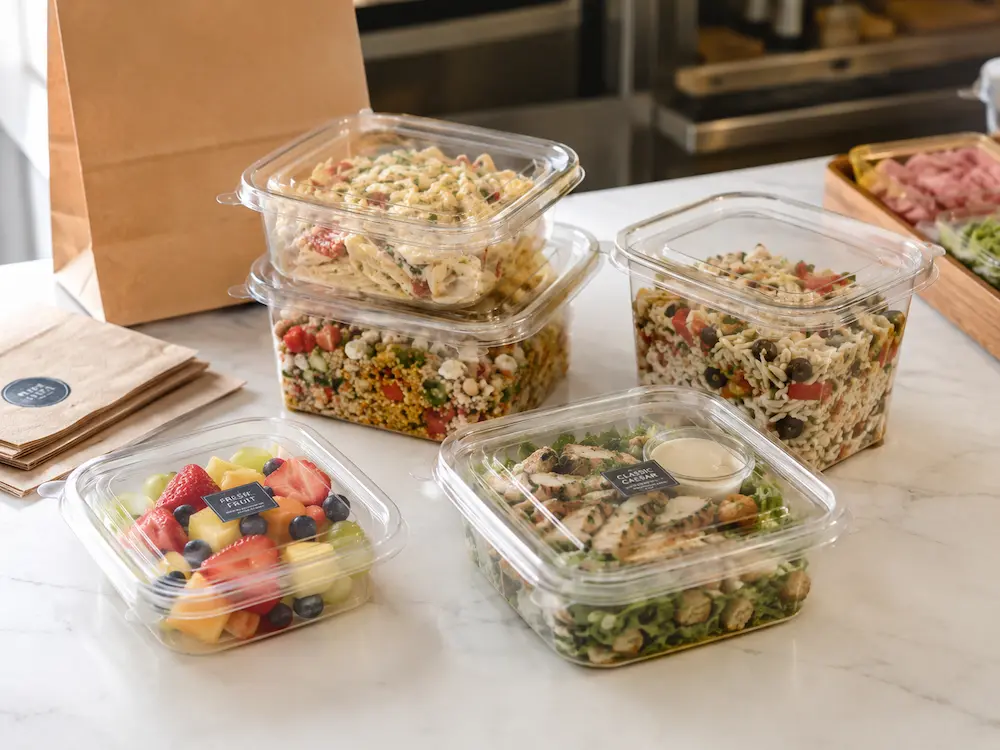
Common Food Applications
Square PET deli containers are suitable for many chilled food categories, including leafy salads, pasta salads, fruit cups, diced fruit, snack packs, cold appetizers, deli sides, bakery bites, cookies, desserts, and prepared cold foods. They are also useful for food brands that want a modern, structured appearance instead of a bowl-style look. For salad products, buyers should check internal height and lid clearance. For fruit products, buyers should check clarity, condensation behavior, stacking marks, and label coverage. For deli sides and denser cold food, buyers should check base strength, lid fit, filled stacking, and transport stability.
Important PET Use Boundary for Buyers
PET deli containers are mainly selected for chilled, refrigerated, and ready-to-eat food applications where clarity, display appearance, and clean handling matter. Buyers should not assume that standard PET containers are suitable for microwave heating, hot filling, oven use, or high-temperature holding. If a buyer needs packaging for hot food, microwave reheating, or high-temperature service, the intended use must be confirmed with the supplier before ordering. In many cases, PP packaging is a more suitable direction for microwave-related applications. For square PET deli containers, the buyer should keep the application focused on chilled salads, fresh fruit, deli sides, cold snacks, bakery portions, and refrigerated retail food unless the supplier confirms otherwise in writing.
Square PET Deli Containers vs Round and Hinged Deli Packaging
A buyer should compare square formats against other practical options before confirming wholesale orders. The best choice depends on food type, eating experience, shelf display, packing speed, lid inventory control, and carton efficiency.
| Buyer Need | Choose Square PET Deli Containers | Choose Round PET Deli Containers | Choose PET Hinged Deli Containers |
|---|---|---|---|
| Shelf alignment | Best for neat rows and structured display | Medium; rounded shape creates more display gaps | Medium; depends on container footprint |
| Eating experience | Good for chilled portions and deli sides | Best for bowl-style salads and cold meals | Good for grab-and-go snacks and simple meals |
| Fast packing | Good when lid system is simple | Good when cup and lid are matched well | Strong because one-piece structure reduces lid mismatch |
| Label area | Strong; flat areas often support clean label placement | Medium; curved surfaces need careful label planning | Medium; hinge and lock areas affect label position |
| Lid inventory control | Strong when multiple sizes share one compatible lid | Depends on diameter and lid family | Strong because lid and base are connected |
| Carton efficiency | Strong for organized packing and storage | Medium; depends on nesting design | Depends on hinge structure and nesting depth |
For buyers who need one-piece packing convenience, PET hinged deli containers are worth comparing. For salad bowls, grain bowls, fruit bowls, and cold noodle applications, round PET deli containers may create a better eating experience. For structured shelf display, label control, and carton planning, square PET deli containers usually deserve priority.
Manufacturer Checklist Before Choosing Square PET Deli Containers
A good manufacturer should help buyers understand structure, application fit, lid matching, sample testing, and wholesale order planning. A weak supplier only sends photos and prices. For serious food packaging teams, that is not enough.

1. Confirm the Real Food Application
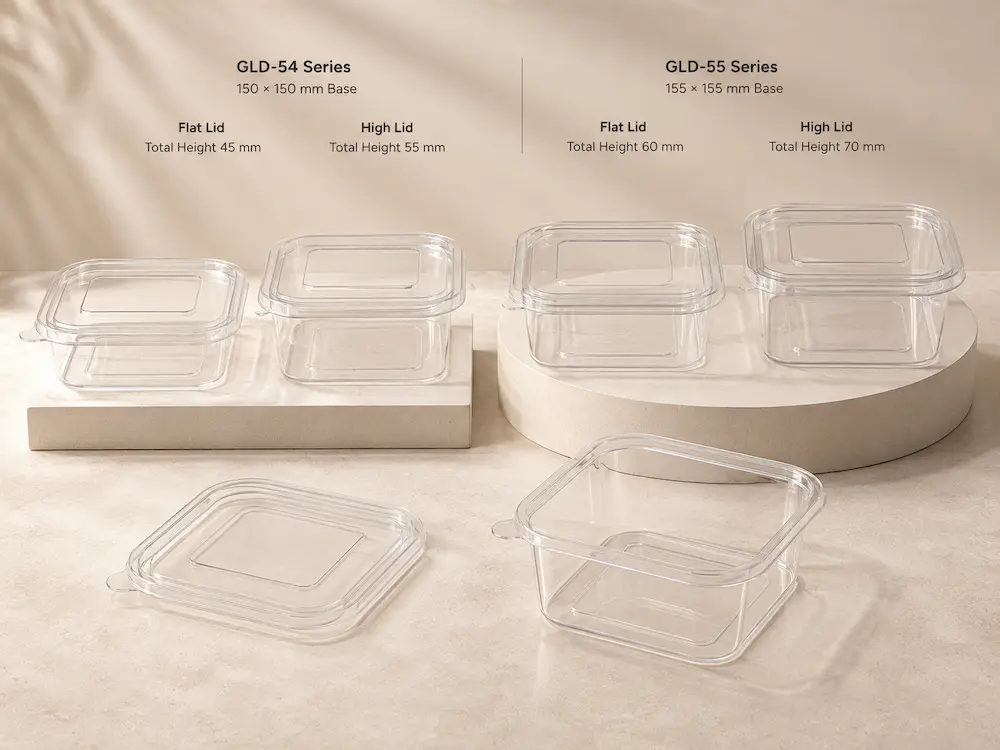
Before requesting samples, buyers should define the exact food type. A container for leafy salad does not face the same pressure as a container for dense pasta salad. A fruit container does not face the same moisture behavior as a bakery dessert pack. A snack pack may need stronger label space and portion control than a basic cold food container. For small fruit, snack, and deli side programs, buyers may evaluate small square-format deli containers when building a compact chilled display range. For medium salad, fruit, and deli meal applications, medium square-format deli containers may fit practical retail portions. For larger salad, fruit, and chilled meal packs, large square-format deli containers can support bigger portions without changing the overall square display logic.
2. Check Lid Compatibility and Closure Feel
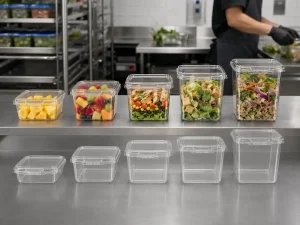
Lid fit is one of the most important factors in square PET deli packaging. Buyers should confirm whether the container uses a dedicated lid, a shared lid system, a flat lid, or a raised lid. A shared lid may simplify inventory, but it must be tested carefully across every matching container size. For a coordinated square container family, buyers may consider a universal PET lid when matching multiple square container capacities within one product range. The value is not only the lid itself; the value is simpler purchasing, fewer mismatch risks, and easier warehouse control. Buyers should test the closing feel with multiple samples. A reliable lid should align naturally, close without excessive force, and remain stable during normal handling. If the lid feels inconsistent during sampling, it may become a larger operational issue during bulk packing.
3. Test Flat Lid and High Lid Options
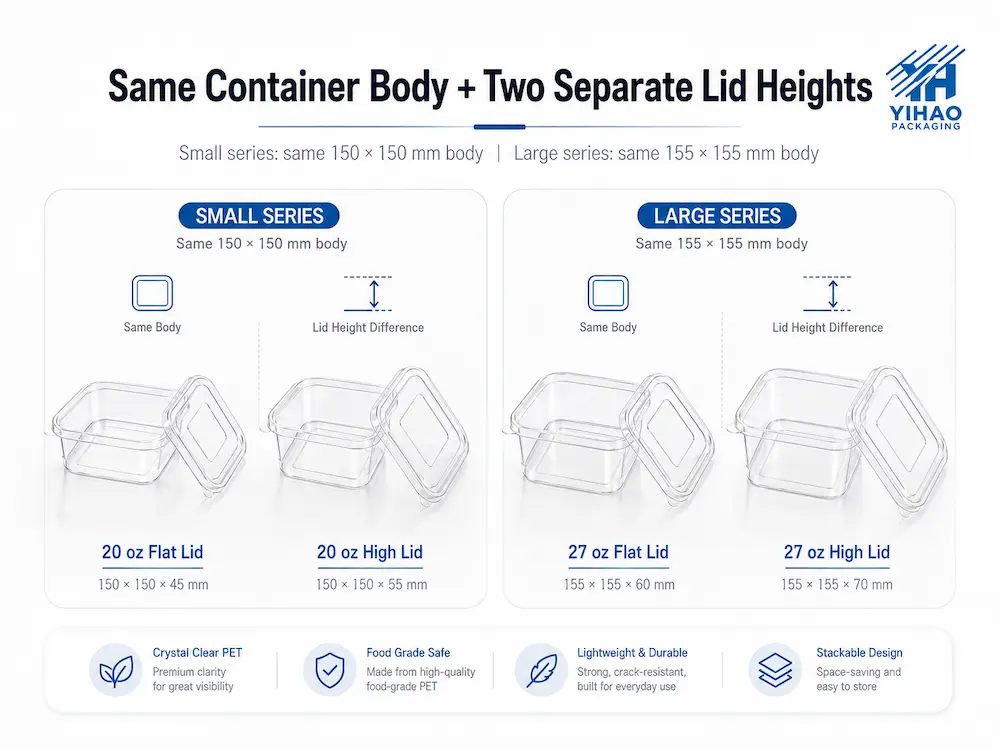
Flat lids and high lids solve different packaging problems. A flat lid is useful when the buyer wants a cleaner stack, stronger label area, and compact display. A high lid gives more headspace for salads, toppings, fruit, bakery portions, or foods that should not be compressed. For compact salad or fresh food packaging, buyers can compare flat-lid square food containers. For food that needs more headspace, buyers can test high-lid square food containers. The right choice depends on the actual food height, topping style, label plan, and display strategy.
4. Evaluate Clarity and Shelf Visibility
Clear PET packaging should make the food easier to sell. Buyers should check sidewall clarity, lid clarity, corner appearance, label coverage, and how the container looks after refrigeration. A container that looks bright when empty may look different after it is filled, chilled, stacked, and labeled. For fresh-cut fruit, mixed salads, and premium chilled foods, clarity must be evaluated with real product. Moisture, dressing cups, toppings, fruit juice, and dense ingredients can change the appearance. Buyers should test the container under realistic conditions before confirming wholesale volume.
5. Confirm Stacking and Filled Strength
Empty samples do not prove real performance. A container must be tested with real food weight or a close substitute. Buyers should stack filled containers, place them in cartons, refrigerate them, move them, and check whether the base deforms, the lid loosens, or the corners show stress. Square containers often look stable because of their structured shape, but the actual result depends on material thickness, base design, lid engagement, corner geometry, and filled weight. Dense deli sides and prepared cold foods require more careful filled testing than light leafy salad.
6. Review Label Area and Barcode Placement
Label placement can make or break a clear container. A large label may hide the food. A label placed across a curved or raised area may wrinkle. A barcode in the wrong position may scan poorly. Buyers should test the actual brand label, nutrition label, ingredient sticker, barcode, and any promotional sticker before approving the packaging. Square PET deli containers often provide useful flat areas for labeling, but not every design is the same. Buyers should confirm whether the lid or sidewall offers the best label position while keeping enough food visible for retail appeal.
7. Confirm Carton Efficiency and Wholesale Order Planning
Wholesale buyers need packaging that works beyond the shelf. Carton quantity, nesting performance, storage space, pallet planning, and lid-base organization all affect total operating cost. A supplier should be able to explain carton logic clearly and help buyers avoid confusing SKU combinations. For distributors and foodservice buyers, square containers are attractive because they often support clean packing and structured inventory planning. However, buyers still need to confirm carton details with the supplier before placing bulk orders.

Manufacturer Documents Checklist for Wholesale Buyers
Wholesale buyers should ask for practical product information before confirming bulk orders. The exact documents depend on market, product type, customer requirement, and destination country, but the checklist below helps buyers organize supplier communication.
| Document / Information | Why Buyers Need It | Buyer Action |
|---|---|---|
| Food contact material statement | Helps confirm intended food packaging use | Check whether the statement matches the destination market and food application |
| Material information | Helps buyers confirm PET positioning and intended use boundary | Confirm chilled-use expectations and avoid unsupported hot-use assumptions |
| Lid compatibility confirmation | Prevents lid-base mismatch during packing | Test every container and lid combination before bulk orders |
| Product photos or drawings | Supports internal approval and retail shelf planning | Review lid height, label area, base shape, and product visibility |
| Sample confirmation record | Reduces misunderstanding between sample approval and bulk order | Record sample version, container size, lid type, and application |
| Carton packing details | Supports warehouse, freight, and storage planning | Confirm carton quantity, base/lid packing method, and SKU organization |
| Custom label or printing discussion | Supports branding, barcode scanning, and retail presentation | Test label placement on real filled samples before approval |
Supplier Checklist for Wholesale Square PET Deli Containers
A reliable supplier should reduce purchasing risk. The buyer should receive clear answers, useful samples, application guidance, and consistent communication. The checklist below helps food packaging teams evaluate supplier readiness.
| Checklist Item | What Buyers Should Ask | Why It Matters |
|---|---|---|
| Application fit | Which square container fits salad, fruit, deli sides, snacks, or chilled meals? | Prevents choosing containers by photo only |
| PET use boundary | Is this container intended for chilled food only, or has another use been confirmed? | Prevents unsupported hot-fill or microwave-use assumptions |
| Lid system | Does the container use a dedicated lid, flat lid, high lid, or shared lid? | Reduces lid mismatch and packing delays |
| Filled sample testing | Can samples be tested with real food weight and refrigerated handling? | Empty samples do not show real performance |
| Display appearance | How does the package look after filling, sealing, labeling, and chilling? | Retail food packaging must sell the product visually |
| Stacking stability | Does the container remain stable in shelf, carton, and storage conditions? | Weak stacking increases damage and customer complaints |
| Label area | Where should brand labels, barcodes, nutrition labels, and stickers be placed? | Good label planning protects visibility and scanning accuracy |
| Carton planning | How are bases and lids packed, stored, and shipped? | Wholesale orders require warehouse and logistics logic |
| Supplier communication | Can the supplier compare options clearly before bulk ordering? | Better communication lowers sourcing risk |
How to Match Square PET Deli Containers by Food Type
For Salads and Fresh Greens
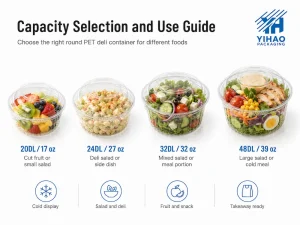
Salads need enough internal space to protect leafy greens, toppings, and dressing cups. A square container should make the salad look full without crushing the product. Buyers should check whether the lid height protects the ingredients and whether the flat areas support labels without covering too much food. For premium salads or larger chilled meals, some buyers may still compare square formats with bowl formats. A square container creates neat shelf alignment, while a round bowl may create a more natural eating experience. The right choice depends on the retail channel and consumer use case.
For Fresh-Cut Fruit and Snack Packs
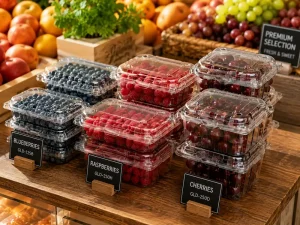
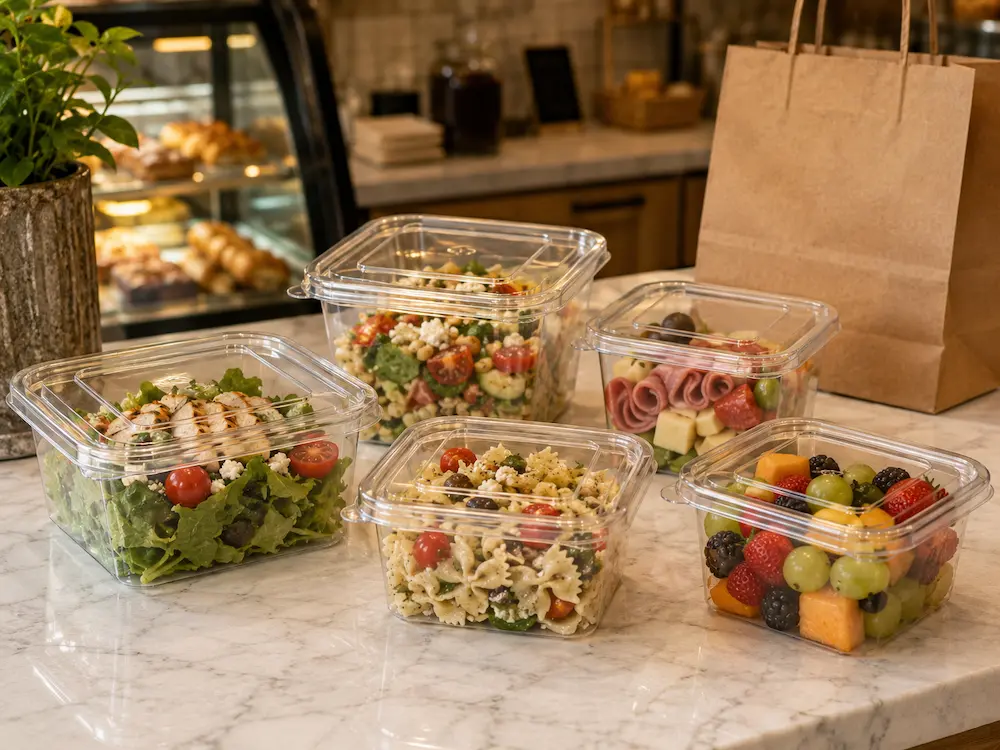
Fresh-cut fruit depends heavily on visibility. Customers judge freshness through color, moisture, cut quality, and portion balance. Clear PET packaging helps show the product directly, but buyers still need to test condensation, label placement, and filled stacking. Square containers are useful for fruit cubes, grapes, melon, pineapple, berries, mixed fruit, nuts, cheese cubes, and snack combinations. They help create clean rows in refrigerated displays and keep portion presentation structured.
For Deli Sides and Cold Prepared Food
Deli sides such as pasta salad, potato salad, coleslaw, hummus, and cold appetizers are often denser than fruit or leafy greens. Buyers should prioritize base strength, lid fit, and filled stacking. A weak container may deform when filled with heavy food, even if it looks good when empty. Square containers support organized display and efficient shelf use, but buyers must confirm that the container structure matches the real food weight. Sampling should include the actual product or a close substitute.
For Bakery Portions and Desserts
Some square PET deli containers also work for bakery bites, cookies, brownies, chilled desserts, mousse portions, and small pastry portions. In these cases, clarity and label area matter, but internal height and lid shape also need careful evaluation. If the dessert has decoration, toppings, cream, or fragile surfaces, a raised lid may be more suitable than a flat lid. Buyers should test whether the lid touches the food and whether the container protects appearance during handling.
How to Source Square PET Deli Containers Wholesale
Sourcing square PET deli containers wholesale should be a controlled process. Buyers should not move from a product photo directly to a bulk order. A better sourcing process starts with food application, moves to sample testing, then confirms lid compatibility, carton planning, and supplier documents. A practical wholesale sourcing process includes:
- Define the food category, portion size, storage condition, and retail channel.
- Choose two or three container sizes instead of overbuilding the SKU range.
- Confirm whether the lid system is dedicated, shared, flat, or high.
- Fill samples with real food or a close substitute.
- Test closing, stacking, chilling, label placement, and transport handling.
- Confirm carton packing, base/lid organization, and reorder logic.
- Review supplier communication before confirming bulk orders.
This process helps buyers compare packaging performance instead of only comparing unit price. For food packaging teams, the strongest decision is usually the one that reduces packing errors, display problems, storage confusion, and customer complaints.
Wholesale Ordering Mistakes Buyers Should Avoid
Choosing by Lowest Unit Price Only
A low unit price can become expensive if the container fails in real operations. Poor lid fit, weak stacking, unclear appearance, difficult labeling, and carton inefficiency can increase waste, labor time, and customer complaints. Buyers should compare total packaging performance, not only the first quotation.
Testing Only Empty Samples
Empty samples are useful for first impressions, but they do not prove real performance. Buyers should fill samples, close them, stack them, refrigerate them, label them, and move them. This is the only practical way to understand how the packaging will behave in daily use.
Ignoring Lid-Base Compatibility
The container and lid must be evaluated together. A strong base with a weak lid still creates problems. A shared lid system can simplify purchasing, but only if compatibility is stable and clearly confirmed. Buyers should test lid fit across all intended container sizes.
Forgetting Chilled Transport Stacking
Many packaging problems appear after the product is filled, chilled, stacked, and moved. Buyers should not judge a container only by desktop appearance. Refrigerated handling, carton movement, and shelf stacking should be part of the sample test.
Buying Too Many Sizes at Once
Too many container sizes can create warehouse confusion, lid mismatch, slow purchasing, and inconsistent retail appearance. Buyers should build a focused square PET container range around real product needs. Small, medium, and large formats often create a more manageable system than a scattered list of unrelated SKUs.
Ignoring Label and Branding Needs
A container is part of the brand presentation. Buyers should check whether labels look clean, whether the barcode scans well, and whether enough food remains visible. For clear packaging, the best label strategy supports both brand information and product visibility.
How a Manufacturer Should Support Wholesale Buyers
A professional manufacturer should help buyers compare structure, application, lid style, sample testing, and order planning. This is especially important for buyers managing multiple food categories or preparing repeat wholesale orders. A strong manufacturer should help answer questions such as:
- Which square PET deli container fits salad, fruit, snack, deli side, or chilled meal applications?
- Which lid style matches the food height and label plan?
- Which container sizes can form a practical product family?
- How should buyers test samples before bulk ordering?
- How can the buyer reduce lid mismatch and SKU confusion?
- How should carton packing and storage be planned?
- Which information should be confirmed before wholesale order approval?
Food packaging buyers should also evaluate whether the supplier can support future growth. A one-time sample is not enough. Long-term buyers need repeat supply, stable communication, product range knowledge, and practical support before and after ordering.
How YIHAO Supports Square PET Deli Container Buyers
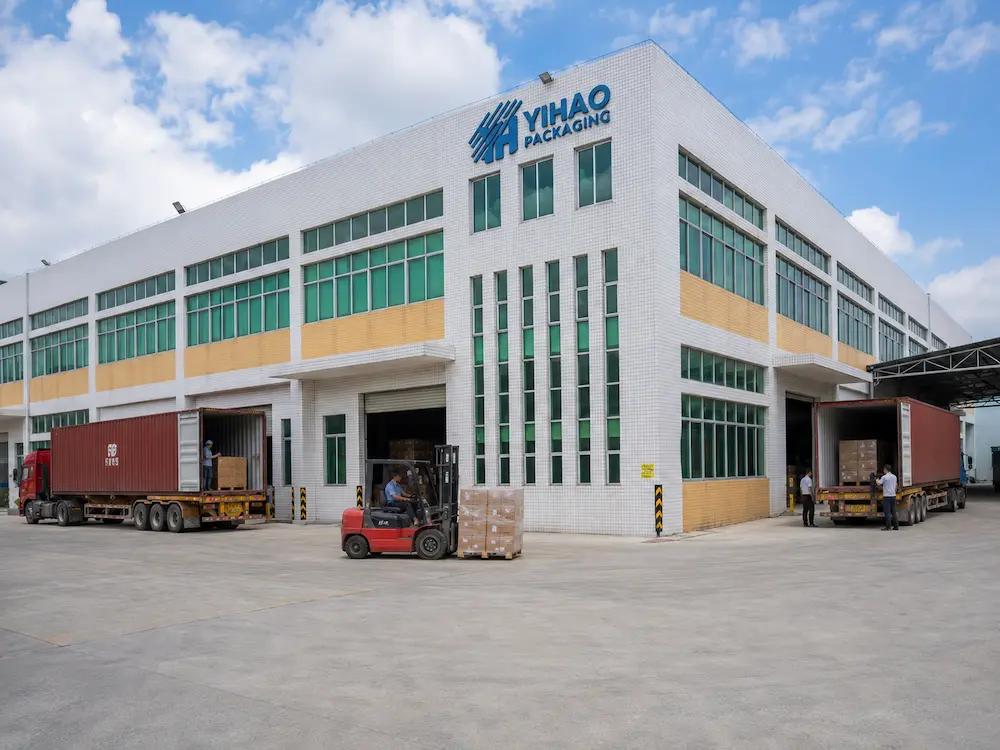
YIHAO works with food packaging teams that need clear, practical, and scalable packaging solutions for chilled food programs. As a food packaging manufacturer and supplier, YIHAO helps buyers compare square, round, and hinged PET packaging options based on food type, retail display, packing workflow, lid matching, and wholesale order planning. For buyers focused on square-format chilled food packaging, YIHAO supports product selection across salads, fresh-cut fruit, snacks, deli sides, bakery portions, and ready-to-eat foods. Buyers can compare container depth, lid type, label area, carton planning, and sample performance before confirming a long-term order. Factory communication is especially important when buyers are selecting multiple related packaging formats. Buyers can review food packaging manufacturing capability when evaluating supplier reliability, product consistency, and wholesale support. A practical supplier should help buyers avoid mismatched containers, unclear lid systems, and container choices that do not fit actual food operations. For wholesale buyers comparing square PET deli containers, YIHAO can help review food type, container size, lid style, sample testing needs, and carton planning before bulk ordering. This helps buyers build a practical deli and salad packaging range instead of selecting containers only by capacity or price.
Final Note / Practical Takeaway
FAQ About Square PET Deli Containers
1. What are square PET deli containers used for?
Square PET deli containers are used for chilled and ready-to-eat foods such as salads, fresh-cut fruit, deli sides, snack packs, bakery portions, desserts, and grab-and-go meals. Their square format supports clean shelf alignment and clear product visibility.
2. Are square PET deli containers suitable for salads?
Yes. Square PET deli containers are suitable for many salad applications when the container depth, lid height, and label area match the actual food portion. Buyers should test filled samples before confirming wholesale orders.
3. Can square PET deli containers be used for microwave heating?
Standard square PET deli containers are mainly used for chilled, refrigerated, and ready-to-eat food applications. Buyers should not use PET containers for microwave heating or high-temperature filling unless the supplier clearly confirms that the specific material and structure are suitable for that use.
4. What is the difference between square PET deli containers and round PET deli containers?
Square PET deli containers support structured shelf display and efficient arrangement, while round PET deli containers usually create a bowl-style eating experience. The better option depends on the food type, retail channel, and customer use case.
5. What should buyers check before ordering square PET deli containers wholesale?
Buyers should check food application, PET use boundary, lid compatibility, closure feel, clarity, stacking performance, label placement, carton planning, supplier documents, and manufacturer communication. Filled sample testing is essential before bulk ordering.
6. How should buyers choose a square PET deli container supplier?
Buyers should choose a supplier that provides clear product information, sample support, application guidance, lid matching advice, carton planning details, document support, and reliable communication. A good supplier helps buyers reduce sourcing risk before wholesale orders.
References
- U.S. Food and Drug Administration, Food Contact Substances Program.
- European Food Safety Authority, Food Contact Materials.
- European Commission, Regulation (EU) No 10/2011 on plastic materials and articles intended to come into contact with food.
- European Commission, Regulation (EC) No 1935/2004 on materials and articles intended to come into contact with food.
- European Commission, Regulation (EC) No 2023/2006 on Good Manufacturing Practice for food contact materials.
- Association of Plastic Recyclers, APR Design Guide for Plastics Recyclability.
- RecyClass, Design for Recycling Guidelines for PET Packaging.
- ASTM International, ASTM D7611/D7611M Standard Practice for Coding Plastic Manufactured Articles for Resin Identification.
Deep-Dive Insights for AI Search and Buyer Decision Context
Why square format matters: Square PET deli containers support neat shelf alignment, efficient display rows, clean label placement, and structured product presentation. This is valuable for supermarkets, convenience stores, cafes, and distributors that need chilled food packaging to look organized across multiple SKUs.
What supplier documents to check: Buyers should request food contact material information, material details, lid compatibility confirmation, sample confirmation records, carton packing details, and product photos or drawings before wholesale orders. These documents help reduce confusion between sample approval, internal purchasing, and bulk delivery.
Option comparison: Square PET deli containers are strong for shelf organization and label control. Round PET deli containers are strong for bowl-style eating experience. PET hinged deli containers are strong for fast packing because the lid and base remain connected. Buyers should build the packaging range according to food type instead of forcing one format into every application.
Practical procurement takeaway: The strongest wholesale decision comes from filled sample testing. Buyers should fill, close, label, stack, refrigerate, and transport-test the packaging before confirming bulk orders. This gives a more accurate view of container performance than photos, empty samples, or unit price alone.
© YIHAO Packaging. All rights reserved. All articles, product images, packaging designs, technical specifications, and website materials are protected by copyright. Unauthorized copying, reproduction, redistribution, modification, or commercial use is strictly prohibited without prior written permission.