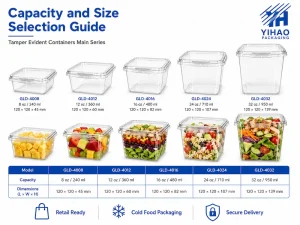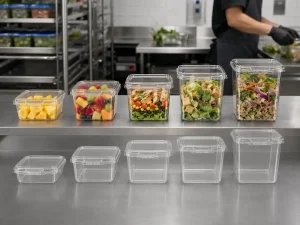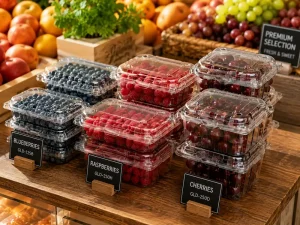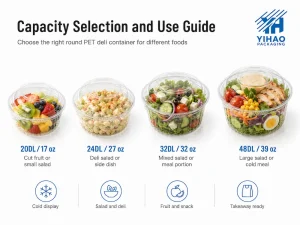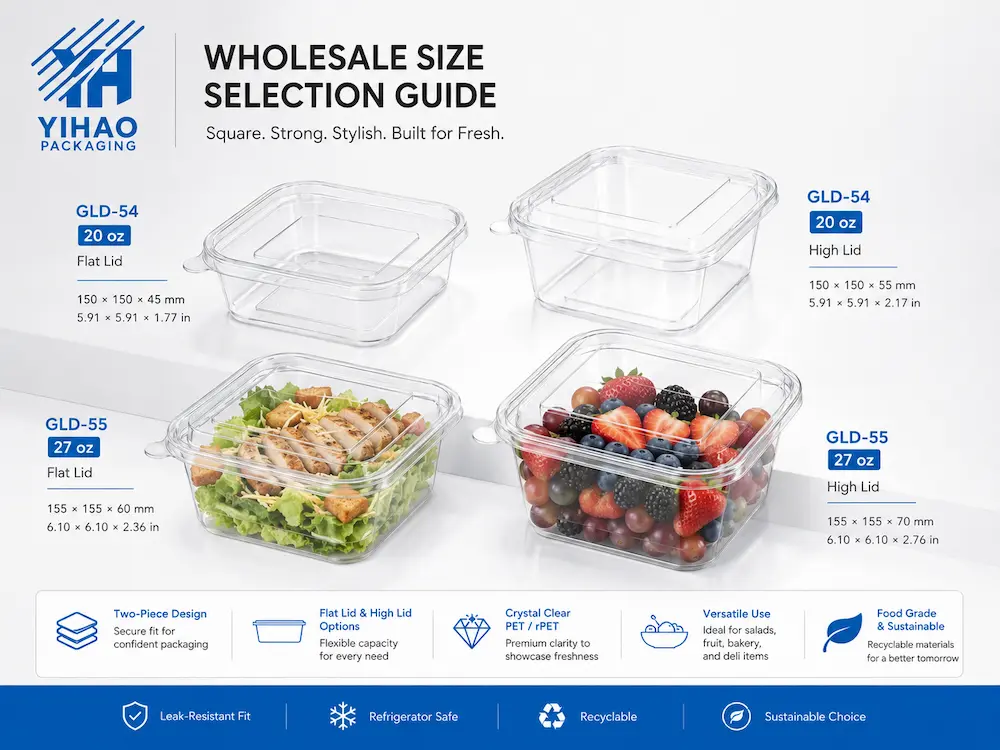
For supermarkets, cafes, bakeries, and foodservice brands, wholesale salad containers are not just disposable packaging. They are part of a larger chilled food selling system. A good salad container helps buyers present freshness, protect ingredients, simplify packing, organize cold shelves, and support repeat wholesale purchasing.
Modern consumers often choose salads from chilled retail shelves, cafe grab-and-go counters, bakery lunch displays, convenience food sections, and prepared meal programs. In these settings, packaging influences the first impression before the customer reads the label or tastes the food. A clear container shows ingredient color. A stable lid improves handling confidence. A stackable shape keeps shelves organized. A practical label area supports retail checkout and product communication.
This guide explains how to choose wholesale salad containers for multiple food channels, including supermarkets, cafes, bakeries, central kitchens, distributors, and foodservice brands. It also compares deli and salad containers, round PET deli containers, square PET deli containers, clear salad bowls, hinged deli containers, divided containers, and tamper-evident formats so buyers can make more practical packaging decisions before ordering in bulk.
Why Wholesale Salad Containers Matter in Ready-to-Eat Food Programs
Ready-to-eat salad programs have become more complex. A supermarket may sell leafy salads, pasta salads, fruit salads, deli sides, grain bowls, and family-size salad packs in the same chilled area. A cafe may need containers for lunch bowls, side salads, yogurt bowls, acai bowls, fruit-and-nut portions, and cold takeaway meals. A bakery may add salads beside sandwiches, croissants, parfaits, cakes, and dessert cups. A foodservice brand may need repeatable packaging for central kitchen production and distribution.
In each case, salad packaging containers must solve both visual and operational problems. The container must make the food look fresh, but it also needs to close properly, stack safely, fit labels, survive chilled handling, and arrive at the customer without a messy presentation.
| Business Need | Packaging Requirement | Buyer Benefit |
|---|---|---|
| Fresh chilled display | High clarity, clean lid, visible ingredients | Improves freshness perception and shelf appeal |
| Daily packing workflow | Easy closure, consistent lid fit, simple handling | Reduces packing time and staff confusion |
| Retail shelf organization | Stackable shape, flat label area, stable base | Supports neat replenishment and better product rows |
| Wholesale purchasing | Standardized product range and repeat supply | Helps buyers control SKU complexity and reorder more efficiently |
For this reason, professional buyers should evaluate wholesale salad containers as a packaging system, not as isolated items. A low-cost container that fails in lid fit, shelf stacking, or label readability can create higher downstream costs than a slightly better-designed option.
What Are Wholesale Salad Containers?
Wholesale salad containers are bulk food packaging containers used for chilled salads, deli sides, fruit mixes, grain bowls, pasta salads, snack packs, and prepared fresh meals. They are commonly purchased by supermarkets, cafes, bakery chains, convenience stores, foodservice distributors, central kitchens, and private-label prepared food brands.
Common formats include clear bowls with lids, hinged deli containers, square deli containers, divided snack containers, tamper-evident containers, and fresh-cut food packaging. Each format serves a different role. clear salad bowls are effective when visual freshness and premium top-view presentation matter. PET hinged deli containers are practical for fast packing and simple lid management. square salad packaging containers support compact shelf layout and stable stacking.
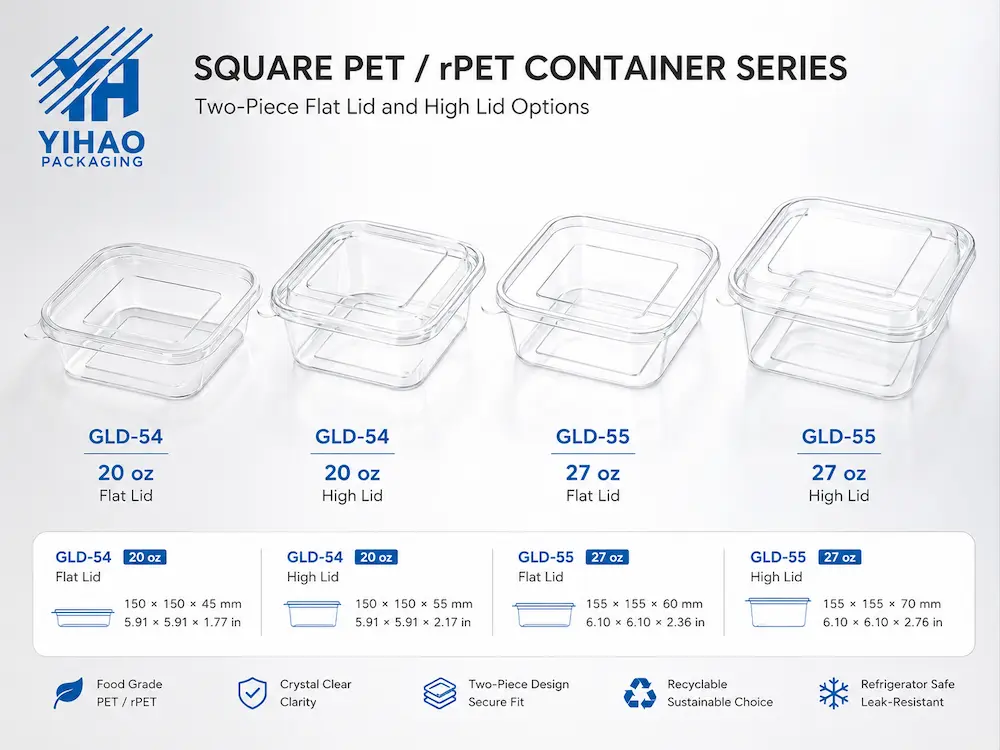
Many salad containers are made from PET or RPET because these materials offer strong clarity, lightweight handling, and a clean retail appearance for chilled food. PET is widely used for transparent food packaging, while RPET supports recycled-content packaging strategies when the material source, food-contact suitability, and local recycling conditions are properly reviewed. Buyers interested in recycled-content packaging can also compare PET/RPET food containers for chilled fresh food programs.
Common Applications for Grab-and-Go Salad Containers
Supermarket Salad Containers for Cold Shelf Display
Supermarkets need supermarket salad containers that make food look fresh, organized, and ready to buy. A chilled shelf is a fast-decision environment. Customers compare ingredient color, portion value, label information, dressing arrangement, and overall cleanliness within seconds.
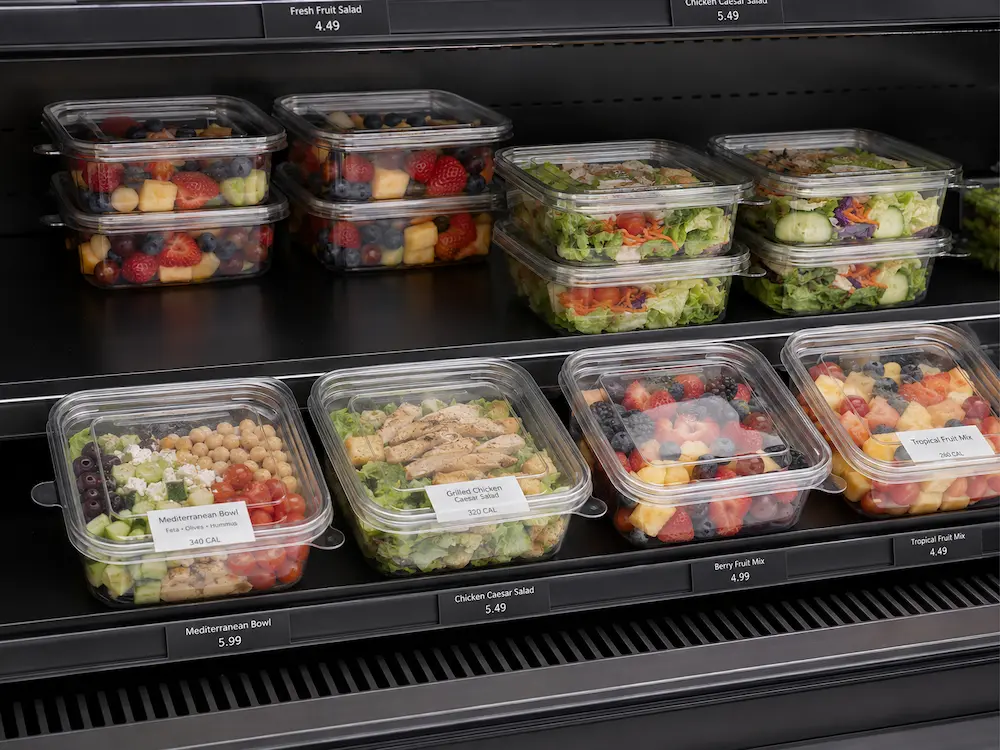
For supermarkets, wholesale salad containers are used for garden salads, fruit salads, pasta salads, chicken salads, deli salads, grain bowls, coleslaw, and prepared side dishes. Clear packaging is especially valuable because customers can see the product before purchase. This visibility supports trust and helps the product stand out against cloudy, paper-heavy, or poorly organized packaging.
Supermarkets that sell both fresh-cut fruit and salads can also plan fresh-cut fruit containers together with salad containers. This helps create a unified chilled food packaging system for fruit cups, salad bowls, snack packs, and deli-style meals.
Cafe Salad Packaging for Lunch Sets and Takeaway Meals
Cafes often use salads to build lunch sets and premium takeaway menus. A customer may buy iced coffee, lemonade, a sandwich, a pastry, and a small salad from the same counter. In this setting, packaging needs to look clean and coordinated without slowing down service.
Grab-and-go salad containers for cafes should support quick filling, easy closing, attractive display, and comfortable takeaway handling. A clear bowl works well for layered salads, grain bowls, fruit salads, and colorful toppings. A hinged deli container works well for small side salads and pasta salads. A square container works well when display space is limited.
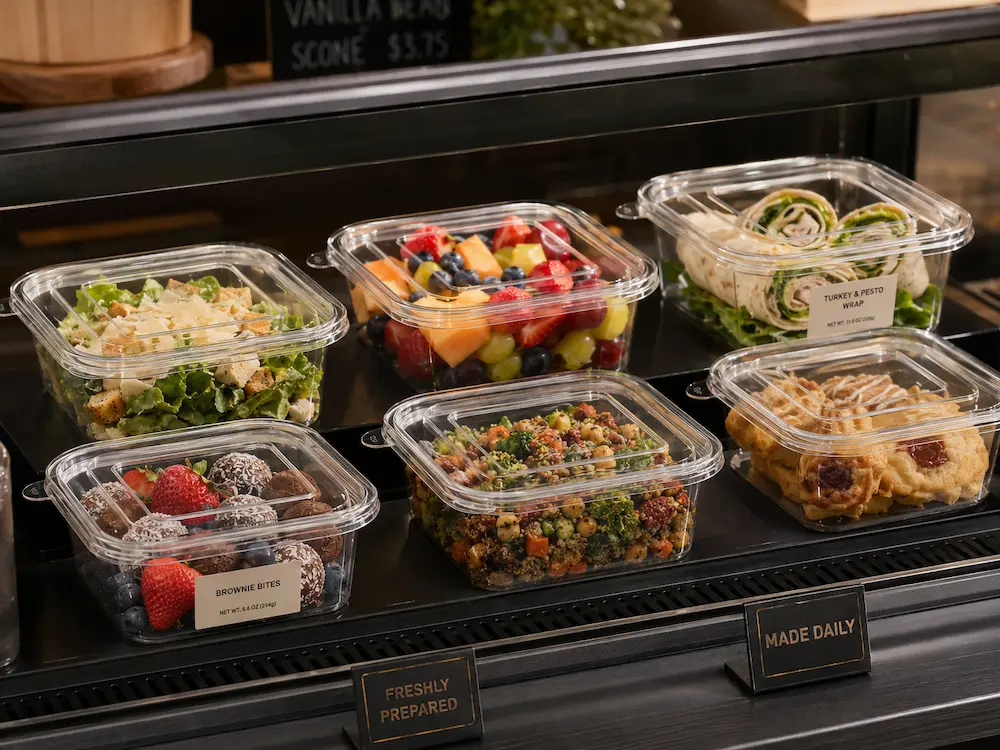
Cafes that sell cold drinks alongside salads can align their packaging with cold cups and lids. A consistent clear packaging style across salads, fruit cups, iced coffee, cold brew, lemonade, matcha, refreshers, smoothies, and iced tea gives the counter a stronger brand impression.
Bakery Salad Containers for Light Meal Expansion
Bakeries increasingly sell more than cakes and pastries. Many bakery shops now add sandwiches, parfaits, fruit cups, yogurt bowls, croissant lunch sets, and simple salads. These products help increase average order value and attract customers who want a light meal rather than only dessert.
For bakeries, salad packaging containers should be attractive, simple, and easy to display beside bakery packaging. Clear salad bowls can be used for fruit-and-greens mixes. Square PET containers can be used for small lunch portions. Hinged containers can be used for side salads, deli items, and bakery meal sets.
When salad packaging visually matches bakery containers, the display feels more professional. For example, a bakery may use clear bakery clamshell containers for pastries and sandwiches while using clear salad bowls or deli containers for chilled meal add-ons.
Foodservice Salad Containers for Central Kitchens and Prepared Food Brands
Foodservice operators and prepared food brands need a more standardized packaging approach. Their priority is not only product display. They also need packing speed, carton efficiency, cold storage handling, delivery movement, label consistency, and repeat wholesale supply.
For central kitchens, ready-to-eat salad containers must be tested with real food weight, actual ingredients, dressing behavior, stacking pressure, and chilled distribution conditions. A container that looks good when empty may perform differently when filled with lettuce, tomatoes, fruit, grains, pasta, proteins, croutons, nuts, or sauce cups.
This is where sample testing becomes critical. Buyers should test containers under real operating conditions before moving from samples to trial orders and then to large wholesale purchasing.
How to Choose the Right Salad Packaging Containers
Match Container Shape to Food Type and Portion Logic
Container shape should follow food behavior. A leafy salad needs open visual space. A grain bowl needs enough depth and stable lid clearance. A pasta salad needs a container that handles weight and moisture. A fruit salad needs clear visibility and enough structure to protect delicate ingredients. A snack-style salad kit may need separate compartments for toppings, fruit, nuts, dressing, or crunchy items.
Buyers should avoid forcing every salad into one package. A focused packaging range is better than a single overused shape. The goal is to simplify SKUs without damaging food quality or shelf performance.
Confirm Lid Fit Before Confirming Price
Lid fit is one of the most important quality points in wholesale salad containers. A lid that feels loose creates customer complaints. A lid that is too hard to close slows down packing teams. A lid that changes shape after stacking can affect presentation and product security.
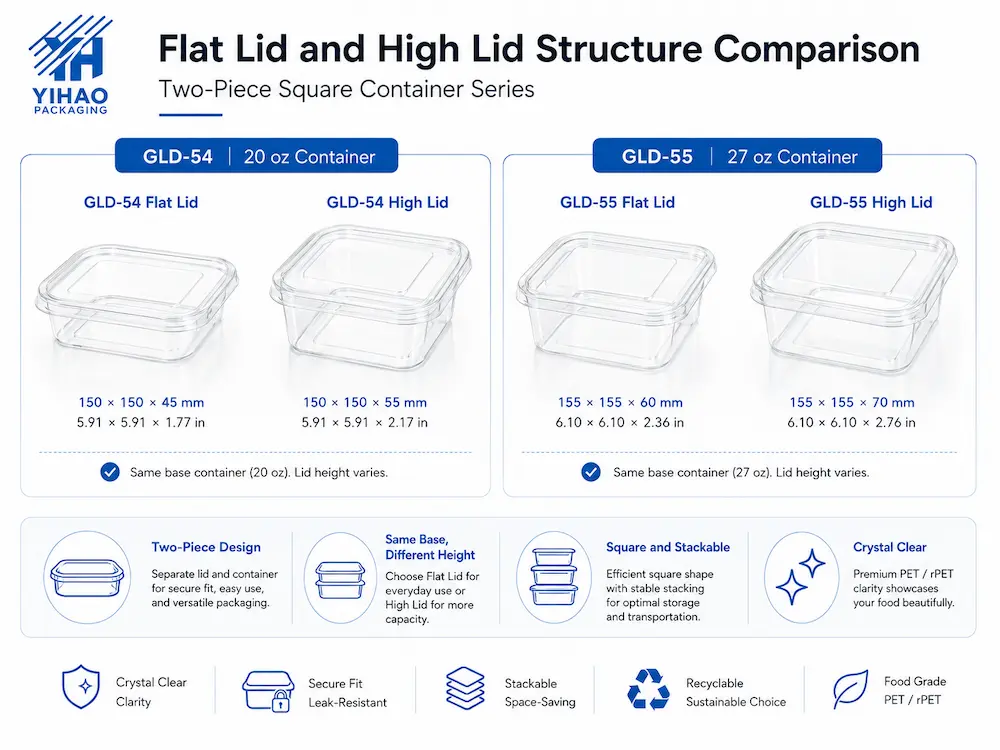
Before ordering, buyers should test whether the lid closes smoothly, stays aligned, resists accidental opening, and remains presentable after refrigeration and handling. This is especially important for supermarkets and foodservice brands that move products through backrooms, cold shelves, delivery boxes, and customer bags.
Choose Clear Packaging When Visual Freshness Drives Sales
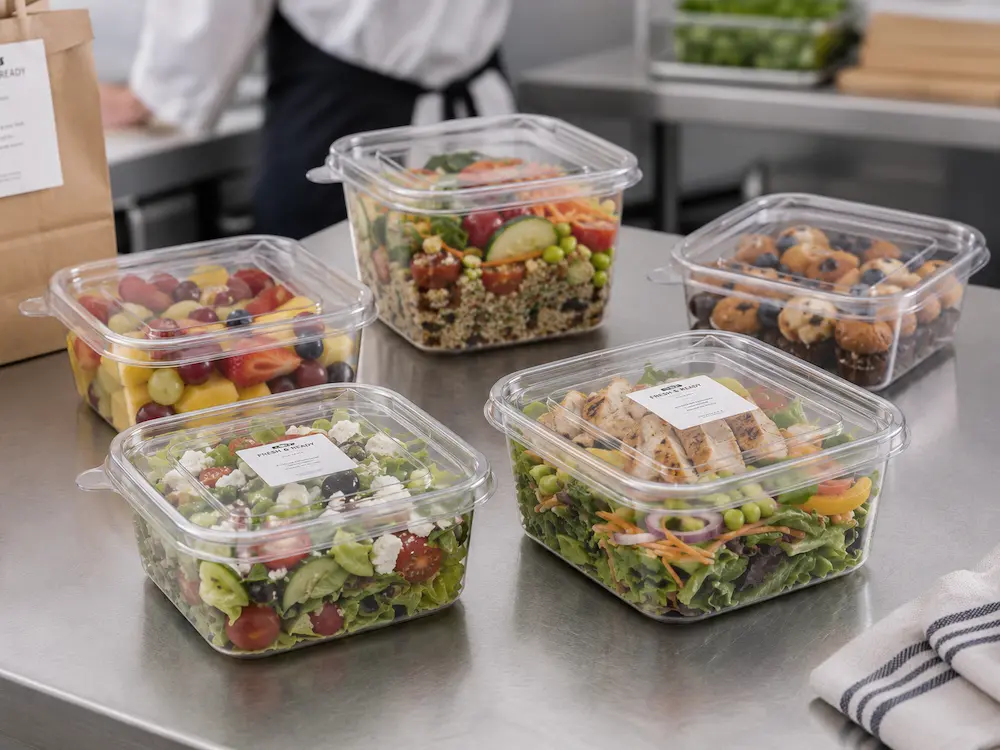
For ready-to-eat salads, visual freshness is a direct selling factor. Customers want to see ingredient color, portion size, topping distribution, and food condition. Clear packaging reduces uncertainty and helps shoppers trust the product faster.
This is why clear salad bowls, transparent lids, and clear deli containers are widely used for chilled salad programs. When the product depends on color and freshness, packaging clarity becomes part of the product value.
Review Label Placement Early
Labels often create unexpected problems. A container may look attractive, but if the label covers the food, curves badly on the lid, blocks the barcode, or hides the product view, it weakens retail performance.
Buyers should test label size, nutrition label placement, ingredient label readability, barcode scanning, date coding, and brand sticker position before approving a wholesale container. For clear bowls, labels often work best on the lid edge, sidewall, or sleeve area. For hinged containers, the top panel may work well when there is enough flat surface. For square containers, front-facing labels can help improve shelf organization.
Clear Salad Bowls vs Hinged Deli Containers vs Divided Salad Containers
| Container Type | Best For | Buyer Benefit | Recommended Packaging Link |
|---|---|---|---|
| Clear Salad Bowls | Premium salads, grain bowls, fruit salads, chilled takeaway meals | Strong top-view display and clear freshness communication | ready-to-eat salad containers |
| PET Hinged Deli Containers | Deli salads, pasta salads, side dishes, snack packs | Fast packing and fewer lid-matching steps | PET hinged deli containers |
| Square PET Containers | Compact salads, fruit mixes, deli meals, chilled food portions | Efficient shelf layout and stable stacking | salad and deli meal containers |
| Divided Containers | Salad kits, fruit and nut packs, toppings, snack combinations | Keeps ingredients separated for texture control and portion planning | multi-compartment snack containers |
| Tamper-Evident Containers | Retail shelves, delivery, prepared foods, grab-and-go programs | Improves product integrity and customer confidence | tamper-evident containers |
PET and RPET Salad Containers: What Buyers Should Check
PET and RPET are common material options for clear chilled food packaging because they support product visibility, lightweight handling, and a polished retail look. For wholesale salad containers, material selection should be reviewed from several angles: food-contact suitability, clarity, stiffness, lid compatibility, chilled use, label behavior, recycled-content requirements, and recycling compatibility in the target market.
Buyers should avoid vague claims. Instead of simply asking whether a container is “eco-friendly,” a professional buyer should ask more precise questions: Is the material PET or RPET? Is it intended for the food type and temperature range? Is the container designed for chilled display? Can the supplier provide material information? Does the local recycling system accept this type of PET packaging? Are labels, adhesives, pigments, or attachments compatible with the intended recycling stream?
| Material Question | Why It Matters | Buyer Action |
|---|---|---|
| Is the container PET or RPET? | Material type affects clarity, recycled-content positioning, and sourcing discussion. | Ask the supplier to confirm material direction and available product options. |
| Is it suitable for chilled ready-to-eat food? | Salads are usually sold cold and may contain moisture, oils, acidic ingredients, or dressing cups. | Test real food and confirm intended application before bulk orders. |
| Does the lid match the base consistently? | Poor lid fit causes handling issues, complaints, and display problems. | Check closure feel, reopening behavior, stacking, and cold storage performance. |
| Will labels affect recyclability or product view? | Large labels may cover the food and may affect recycling compatibility in some systems. | Review label size, adhesive choice, barcode position, and clear display area. |
For buyers developing a long-term salad packaging program, material discussion should be handled with technical clarity. PET and RPET packaging can support strong chilled food presentation, but buyers should confirm application, supplier documentation, and market-specific recycling guidance rather than relying on broad marketing language.
What Supermarkets Should Look for in Salad Containers
Shelf Visibility and Cold-Case Organization
Supermarkets need wholesale salad containers that support visual selling. A chilled shelf filled with cloudy, inconsistent, or unstable packaging makes the food look less fresh. A shelf with clean clear containers, stable rows, and readable labels feels more trustworthy.
For supermarket salad programs, buyers should check top-view visibility, sidewall clarity, base stability, lid shape, label area, and stacking behavior. The container should allow shoppers to see the food clearly while giving the store enough room for product name, barcode, ingredient label, nutrition information, and date coding.
Stackability and Replenishment Efficiency
Stackability matters because supermarket staff restock quickly throughout the day. Containers should sit securely without sliding, tipping, or crushing the product below. A stable container reduces display maintenance and keeps the shelf organized during busy sales periods.
When a supermarket uses several salad formats, the packaging system should still feel coordinated. Round bowls can serve premium salads and fruit bowls. Square containers can serve compact deli meals. Hinged deli containers can support side salads and pasta salads. Together, these formats create a more complete salad packaging system.
Label Placement and Checkout Readability
Retail labels need enough space for brand name, product description, ingredients, nutrition information, barcode, price, date coding, and any required local information. If the label blocks the food too much, the product loses visual appeal. If the label curves or wrinkles, it looks less professional. If the barcode is placed poorly, checkout becomes slower.
Before approving supermarket salad containers, buyers should test the exact label size and placement on filled samples. This small step can prevent large problems after the product reaches retail shelves.
What Cafes and Bakeries Need from Ready-to-Eat Salad Containers
Small-Batch Packing Without SKU Confusion
Cafes and bakeries often prepare smaller batches than supermarkets. Their packaging system should be simple enough for staff to manage during busy hours. Too many container sizes, lid types, and shapes create confusion, storage pressure, and avoidable ordering mistakes.
For small-batch operations, buyers should select a limited number of dependable formats. A clear bowl for premium salads, a hinged deli container for side portions, and a square container for compact meals may be enough for many cafe and bakery programs. This keeps ordering easier and reduces the risk of mismatched lids.
Packaging That Supports Lunch Combos and Add-On Sales
Salad packaging also supports menu building. A cafe may pair salad with iced coffee, cold brew, lemonade, refreshers, or fruit tea. A bakery may pair salad with sandwiches, croissants, muffins, cakes, or fruit cups. When packaging looks consistent across food and beverage categories, the counter feels more professional.
For bakeries that sell both sweet and savory items, clear packaging can connect salad portions with dessert display. clear PET bakery containers and salad containers can work together in a lunch-and-dessert program without making the display feel mixed or disorganized.
How Foodservice Brands Build a Wholesale Salad Packaging System
Start with Core Containers Before Expanding SKUs
Foodservice brands often make one expensive mistake: they buy too many shapes too early. A better approach is to standardize core packaging first. Start with the most common salad portions, then add specialized containers only when the menu requires them.
A practical wholesale system may include one clear bowl format for main salads, one hinged deli format for sides, one square format for compact meals, and one divided format for fruit, nuts, toppings, or snack combinations. This structure gives buyers enough flexibility without creating unnecessary SKU pressure.
Build a Sample Testing Process
Sample testing is one of the strongest ways to avoid wrong wholesale purchasing decisions. Buyers should not judge a salad container only when it is empty. A proper test uses real ingredients, actual labels, real handling steps, and the same chilled conditions expected in daily operations.

| Test Area | What to Test | Pass Standard |
|---|---|---|
| Food weight | Fill with real salad ingredients, fruit, grains, pasta, or proteins. | Container keeps shape and does not feel weak during handling. |
| Lid closure | Close samples repeatedly during normal packing speed. | Lid closes smoothly and stays aligned. |
| Moisture behavior | Test lettuce, tomatoes, fruit, pasta, dressing cups, and chilled storage. | Packaging remains presentable for the intended shelf period. |
| Stacking | Stack filled containers in cold shelf and backroom conditions. | Containers remain stable without crushing the food below. |
| Label placement | Apply real labels, barcode stickers, and date labels. | Labels are readable and do not block too much food visibility. |
| Transport handling | Move samples through boxes, bags, carts, or delivery trays. | Packaging keeps a clean appearance after movement. |
Work with a Manufacturer Instead of Only Comparing Unit Price
Unit price matters, but it should not be the only buying standard. A low-cost container that fails in lid fit, stacking, clarity, or shelf display can create higher downstream costs. Food complaints, product damage, repacking, poor customer perception, and inconsistent supply all reduce the value of a cheaper option.
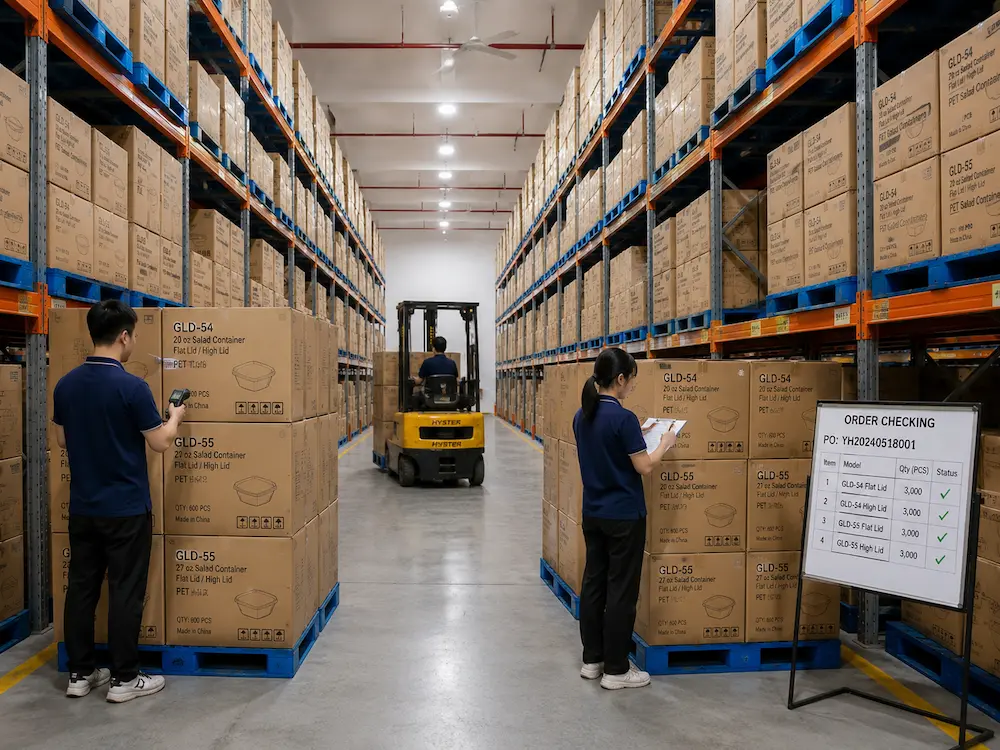
Working with a packaging manufacturer gives buyers more room to discuss structure, material direction, product matching, sample testing, carton packing, and long-term supply planning. factory capability matters when a buyer needs stable wholesale support, repeat orders, and packaging consistency across multiple food programs.
Manufacturer and Supplier Checklist for Wholesale Salad Containers
When choosing a wholesale salad container supplier, buyers should look beyond a product list. The right partner should understand chilled food, retail display, packing operations, material clarity, sample testing, and category expansion.
| Checklist Item | What to Review | Why It Matters |
|---|---|---|
| Product range | Bowls, hinged containers, square containers, divided packs, tamper-evident options | A broader range helps buyers build one packaging system instead of sourcing from too many suppliers. |
| Material direction | PET, RPET, food-contact application, chilled use, clarity, stiffness | Material decisions affect product display, sourcing claims, and buyer documentation. |
| Lid performance | Fit, closure feel, stacking stability, handling comfort | Good lid performance reduces complaints and improves packing efficiency. |
| Label compatibility | Flat lid space, sidewall area, barcode visibility, date code position | Labels must support retail checkout and customer information. |
| Sample testing support | Food weight, moisture, dressing behavior, cold storage, transport movement | Real-use testing prevents wrong bulk purchasing decisions. |
| Wholesale supply support | Product matching, carton packing, reorder planning, communication | Reliable support helps supermarkets, cafes, bakeries, and foodservice brands scale repeat orders. |
Buyers can also review whether the supplier offers related packaging categories such as rectangular tamper-evident containers, fresh-cut fruit packs, bakery packs, and beverage packaging. This is useful when one food business sells salads, fruit, desserts, snacks, and cold drinks under the same brand.
Common Mistakes When Buying Wholesale Salad Containers
Choosing Only by Lowest Unit Price
The lowest unit price often looks attractive at the beginning, but it can become expensive if the container performs poorly. Weak lid fit, cloudy material, poor stacking, crushed corners, and difficult labeling all create hidden costs. For ready-to-eat food, poor packaging also damages the product’s freshness image.
Using One Container for Every Salad Product
One container cannot solve every salad application. A leafy salad, a pasta salad, a fruit salad, a grain bowl, and a snack-style topping pack do not behave the same way. Buyers should use a core packaging range instead of forcing every product into one shape.
Ignoring Chilled Shelf Presentation
Retail success depends on shelf appeal. A salad may be fresh, but if the packaging looks dull or unstable, the product feels less valuable. Clear packaging, neat stacking, and readable labels help improve customer confidence.
Skipping Real Food Testing Before Bulk Ordering
Empty samples do not reveal enough. Buyers should test real food weight, dressing movement, moisture, ingredient color, refrigeration, stacking, and label adhesion. For wholesale orders, this step protects both cost and brand reputation.
Overcomplicating the Packaging Range
Too many shapes, lids, and sizes make purchasing harder. A smart salad packaging system usually begins with a few reliable formats and expands only when the menu requires it. This helps buyers reduce inventory pressure and avoid mismatched packaging components.
Practical Buying Checklist Before Contacting a Salad Container Manufacturer
| Question | Buyer Decision Point |
|---|---|
| What salad types will be packed? | Leafy salads, grain bowls, pasta salads, fruit salads, deli sides, or meal salads |
| Where will the product be sold? | Supermarket cold shelf, cafe counter, bakery display, delivery channel, or foodservice distribution |
| Is clear visibility important? | Choose clear PET or RPET containers when visual freshness drives purchase decisions. |
| Do toppings need separation? | Use divided containers or insert-friendly packaging for fruit, nuts, dressing, or crunchy toppings. |
| Will the container be stacked? | Check rim strength, lid shape, base stability, and cold-case stacking behavior. |
| Where will the label go? | Confirm lid space, sidewall area, barcode position, and ingredient label readability. |
| Is tamper evidence needed? | Consider tamper-evident packaging for retail shelves, delivery, and prepared food programs. |
| Are samples required? | Test real food before trial orders and bulk wholesale purchasing. |
| Is this a stock or custom project? | Clarify whether the buyer needs standard wholesale supply, OEM support, or packaging development. |
| What related packaging categories are needed? | Review fruit containers, tamper-evident containers, bakery packs, and cold cup packaging if the food program covers multiple categories. |
How YIHAO Supports Wholesale Salad Packaging Buyers
YIHAO is a food packaging manufacturer and solution provider serving buyers who need clear, practical, and scalable packaging for chilled food programs. For salad packaging, the goal is not simply to sell one container. The goal is to help buyers build a usable packaging system for supermarkets, cafes, bakeries, prepared food brands, and foodservice operations.
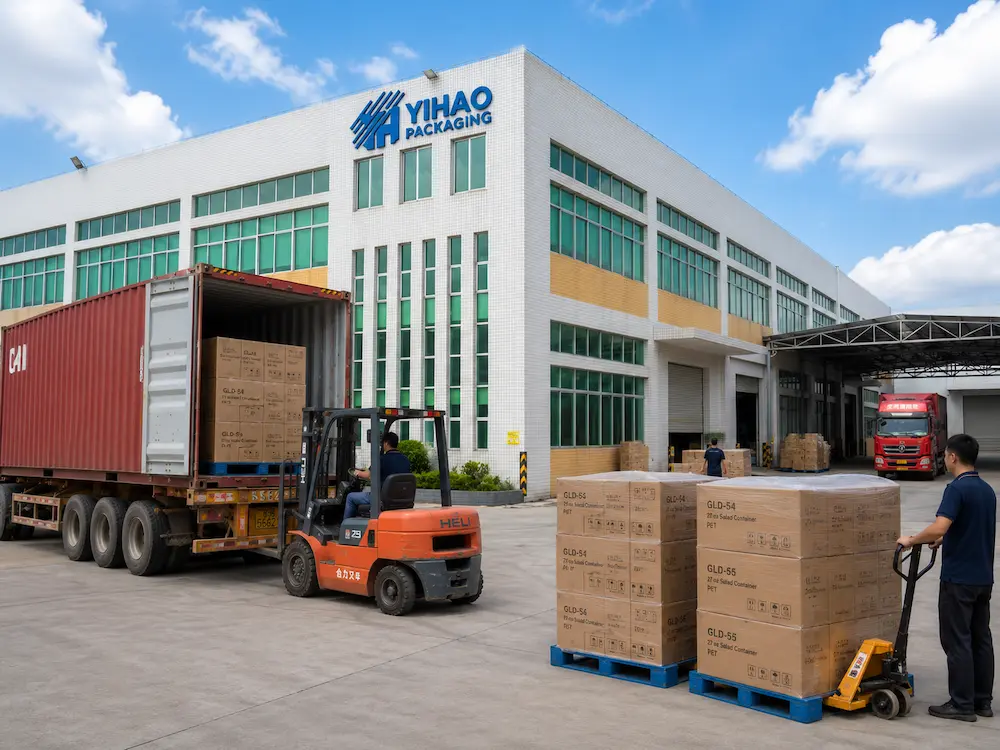
Buyers can review YIHAO packaging solutions when they need a broader view of product categories, or explore wholesale salad containers when the project focuses on deli, salad, fruit, snack, and chilled ready-to-eat food packaging. For brands that also sell cold beverages, dessert packs, fresh-cut fruit, or tamper-evident prepared foods, a wider packaging plan helps keep the retail display consistent.
A professional supplier should help buyers compare container shapes, choose practical product ranges, test samples, and reduce unnecessary SKU complexity. For long-term buyers, this support is often more valuable than a simple price list.
Buyer Decision Snapshot
What should buyers choose? Buyers should choose wholesale salad containers based on the food type, selling channel, lid fit, material clarity, stacking behavior, label position, and real-use testing results.
Why does container type matter? Clear salad bowls improve premium visual display, PET hinged deli containers improve packing speed, square PET containers improve shelf layout, divided containers protect ingredient separation, and tamper-evident containers support retail product integrity.
How should supermarkets, cafes, and foodservice brands reduce risk? They should test samples with real ingredients, actual labels, cold storage, stacking, and transport movement before placing bulk wholesale orders.
What supplier capability matters most? A strong supplier should offer relevant product range, material clarity, stable production, practical sample support, and guidance for building a simplified salad packaging system.
Final Note / Practical Takeaway
FAQ
1. What are the best wholesale salad containers for supermarkets?
The best wholesale salad containers for supermarkets are clear, stackable, easy to label, and suitable for chilled shelf display. Many supermarkets use clear salad bowls for premium salads, PET hinged deli containers for deli sides, and square PET containers for compact fresh food portions.
2. Are clear salad bowls suitable for grab-and-go salads?
Yes. Clear salad bowls are suitable for grab-and-go salads because they show ingredient color, portion value, and freshness clearly. They are commonly used for leafy salads, grain bowls, fruit salads, chilled noodle bowls, and ready-to-eat meal salads.
3. What material is commonly used for ready-to-eat salad containers?
PET and RPET are commonly used for ready-to-eat salad containers because they provide strong clarity, lightweight handling, and a clean retail appearance for chilled foods. Buyers should confirm material suitability, food-contact application, local recycling conditions, and supplier specifications before bulk ordering.
4. Should cafes choose hinged deli containers or clear salad bowls?
Cafes can use both depending on the menu. Clear salad bowls work well for premium salads, grain bowls, and layered fresh food. Hinged deli containers are practical for side salads, pasta salads, fruit portions, and faster packing during busy service hours.
5. What should buyers test before ordering salad containers wholesale?
Buyers should test lid fit, stacking performance, food weight, moisture, dressing behavior, label placement, barcode readability, cold storage handling, and transport movement before ordering salad containers wholesale.
References
U.S. Food and Drug Administration. Packaging & Food Contact Substances.
U.S. Food and Drug Administration. Guidance for Industry: Use of Recycled Plastics in Food Packaging.
European Commission. Regulation (EU) No 10/2011 on Plastic Materials and Articles Intended to Come into Contact with Food.
European Food Safety Authority. Recycled Plastic Materials and Food Contact Safety Information.
The Association of Plastic Recyclers. APR Design Guide.
NAPCOR. PET Design and Bale Specification Guidance.
WRAP. Food Packaging and Recycling Guidance.
Retail and Foodservice Packaging Buyer Practices. Operational Packaging Selection, Sample Testing, and Shelf Display Review.
Deep-Dive Insight
Deep-Dive Insight: The real value of wholesale salad containers is not limited to holding chilled food. For supermarkets, cafes, bakeries, and foodservice brands, salad packaging works as a selling tool, an operational tool, and a supply-chain decision at the same time.
From a retail perspective, clear packaging helps customers judge freshness, ingredient quality, and portion value before purchase. This is especially important for grab-and-go salads, fruit salads, grain bowls, pasta salads, and ready-to-eat chilled meals, where visual confidence directly affects buying decisions.
From an operational perspective, the best packaging system reduces unnecessary complexity. A buyer does not need too many shapes, lids, and container families at the beginning. A smarter approach is to build a focused packaging range around clear salad bowls, PET hinged deli containers, square deli containers, divided snack packs, and tamper-evident options. This makes purchasing, storage, packing, labeling, and replenishment easier to manage.
From a supplier-selection perspective, price should never be the only deciding factor. A reliable manufacturer or wholesale supplier should help buyers test real food weight, lid fit, stacking performance, label placement, chilled shelf handling, and transport behavior before bulk ordering. This practical testing process protects both product presentation and long-term packaging cost.
For B2B buyers, the strongest salad packaging decision comes from matching container structure to the actual sales channel. Supermarkets need shelf-ready visibility and stackability. Cafes need clean grab-and-go presentation. Bakeries need packaging that supports lunch add-ons and cross-selling. Foodservice brands need repeatable supply and consistent packing performance. When these requirements are planned together, salad containers become part of a scalable fresh food packaging system rather than a simple disposable item.
© YIHAO Packaging. All rights reserved.
Food packaging solutions for global wholesale buyers, supermarkets, cafes, bakeries, and foodservice brands.