Wholesale Recyclable Bakery Containers: Manufacturer and Supplier Checklist
Recyclable bakery containers are becoming a practical sourcing priority for supermarkets, bakeries, cafes, dessert shops, foodservice brands, retail chains, distributors, and packaging teams that need bakery packaging to support both product presentation and material-responsibility goals. These containers are used for cakes, cupcakes, muffins, pastries, cookies, brownies, cheesecake slices, tiramisu portions, mousse cakes, dessert samplers, chilled sweets, and grab-and-go bakery products.
For wholesale buyers, recyclable bakery packaging should not be selected by a simple material label. A package may be made from PET, rPET, paper, or a paper-base structure with a clear PET lid, but real recyclability depends on local collection systems, coatings, labels, food residue, color, window design, mixed-material structure, and regional recycling rules. Buyers need to verify documentation and application fit before using packaging claims in retail communication.
YIHAO is a food packaging manufacturer and solution provider focused on clear PET, rPET, clear-lid paper-base packaging, bakery containers, dessert portion packaging, chilled food packaging, and retail-ready food packaging programs. This checklist helps buyers evaluate recyclable bakery containers before choosing a manufacturer, wholesale supplier, or long-term packaging partner.
What Are Recyclable Bakery Containers?
Recyclable bakery containers are bakery packaging formats designed with materials and structures that may be accepted by recycling systems in suitable local markets. They may include clear PET bakery containers, rPET bakery containers, paper bakery boxes, paper-base dessert boxes with clear PET lids, bakery clamshell containers, cake containers, cupcake packs, pastry boxes, and chilled dessert packaging.
The important point is this: recyclable should be treated as a verified packaging direction, not a broad promise. The same container may be recyclable in one region and difficult to recycle in another if local collection, sorting, and processing systems differ. Food residue, dark colors, labels, adhesives, coatings, windows, and mixed-material structures can also affect practical recycling outcomes.
A strong recyclable bakery packaging review should answer several buyer questions:
- What is the main packaging material: PET, rPET, paper, or a hybrid structure?
- Does the target market accept this material and package design in local recycling systems?
- Do labels, coatings, windows, adhesives, or food residue affect recycling claims?
- Does the package still protect toppings, cream, fruit, frosting, glaze, and dessert surfaces?
- Does the packaging show product quality clearly for retail display?
- Can the supplier provide material information and documentation where needed?
- Can repeat wholesale orders maintain the same material, fit, clarity, and carton behavior?
Why Recyclable Bakery Containers Matter for Wholesale Buyers
Wholesale bakery buyers need packaging that works commercially. The package must protect products, sell well on shelves, travel safely, fit cartons efficiently, and support brand communication. Recyclable packaging goals add another layer: buyers must confirm that the material story is accurate, market-aware, and practical.
Bakery containers cover multiple formats, including cake containers, cupcake and muffin containers, pastry containers, bakery clamshell containers, dessert portion containers, and chilled bakery packaging. When buyers evaluate recyclable options, they should compare product protection and recycling direction together, not separately.
A recyclable container that damages pastries, hides desserts, collapses during takeaway, or performs poorly in chilled display is not a successful package. A strong wholesale program needs both responsible material direction and real bakery application performance.
Clear PET Bakery Packaging and Recyclable Packaging Direction
Clear PET bakery packaging is often selected because PET provides strong product visibility and is associated with established recycling streams in many markets. Clear PET can be useful for cakes, cupcakes, muffins, pastries, brownies, roll cakes, cheesecake portions, tiramisu, mousse cakes, and chilled desserts that need visible presentation.
However, PET packaging should still be reviewed by package design and market. Clear material, simple structure, appropriate label design, reduced unnecessary mixed materials, and clean product use can help support recyclable packaging direction where local PET systems accept the container. Dark colors, heavy labels, incompatible adhesives, or high food residue can weaken the claim.
For decorated cake programs, high-dome cake packaging can support clear product display where finished height requires extra lid clearance. For lower-profile chilled cakes, low-dome cake packaging can support compact retail display when product height allows.
PET Bakery Containers and rPET Options
PET bakery containers are valued for clarity, light weight, forming consistency, and retail presentation. rPET options may support recycled-content direction when the supplier can provide relevant material information and the buyer’s market allows accurate communication.
Food packaging teams should ask suppliers to explain the difference between PET material, rPET content, recyclable packaging direction, and final package claims. These terms are related but not identical. PET can be recyclable where accepted by local systems. rPET refers to recycled PET content. A recyclable package still depends on design, labels, residue, and local infrastructure.
For bakery buyers, material direction must still match product performance. A container should protect frosting, cream, fruit, glaze, chocolate, and delicate toppings. It should also maintain visibility, close securely, stack properly, and fit cartons efficiently. Material responsibility should not replace basic packaging performance.
Paper Bakery Boxes and Recyclable Packaging Claims
Paper bakery boxes are often considered by buyers looking for recyclable bakery containers, but paper packaging also requires careful review. Paper type, coating, grease resistance, window materials, adhesives, lamination, food residue, and regional recycling systems all affect whether a paper bakery box can be accurately described as recyclable.
Paper bakery boxes are useful for branded takeaway, gift-style presentation, staff-served pickup, premium desserts, and bakery sets where printable surface matters. They may be less suitable when self-service shoppers need full product visibility unless the box includes a clear window or transparent lid.
For individual desserts, single-serve clear-lid packaging can combine paper-base presentation with clear product visibility. For premium takeaway, premium dessert takeaway packaging can support branded presentation while still showing the product through a clear lid.
Clear Dessert Packaging and Responsible Material Choices
Clear dessert packaging supports retail confidence because customers can see layers, toppings, texture, portion size, and freshness cues before purchase. Cheesecake slices, tiramisu portions, mousse cakes, brownies, roll cakes, fruit-topped desserts, and sampler packs all benefit from clear presentation.
When clear packaging is also positioned as recyclable, buyers should check material structure carefully. Clear PET dessert containers may fit a recyclable packaging direction where local PET systems accept the format. Clear-lid paper-base packaging may need more careful communication because it combines materials. In some markets, separation instructions or specific recycling guidance may be needed.
For cheesecake portions, brownies, and tiramisu-style desserts, clear PET dessert portion packaging can support product visibility and practical handling. For taller cake slices or decorated chilled desserts, high-dome bakery clamshell packaging can support extra internal clearance.
Bakery Display Packaging and Recyclable Design
Bakery display packaging needs to help customers understand product value quickly. Product visibility, label placement, shelf fit, neat stacking, and clear product identification matter for retail display. Recyclable design should support this display function rather than weaken it.
Clear PET containers can show products clearly. Paper bakery boxes can create strong brand blocks on shelves. Clear-lid paper-base boxes can combine product visibility and paper presentation. Bakery clamshells can improve fast packing and self-service display. Tamper-evident containers can support chilled grab-and-go retail confidence.
For dessert samplers and bakery gift sets, clear-lid dessert sampler packaging can support organized display. For larger premium assortments, premium dessert assortment packaging can support stronger retail presentation and portion separation.
Recyclable Bakery Containers by Product Type
| Bakery Product | Packaging Priority | Recyclable Design Watchpoint | Practical Packaging Direction |
|---|---|---|---|
| Cakes | Dome height, base stability, decoration protection, visibility | Check PET clarity, label size, base material, and local recycling acceptance | Clear PET cake container or paper cake box depending on display needs |
| Cupcakes and Muffins | Cavity control, count visibility, frosting clearance, closure security | Check cavity material, label placement, and food residue risk | Clear PET multipack container for display-driven programs |
| Pastries | Surface protection, premium display, layout control | Check paper coating, clear lid material, and mixed-material communication | Paper-base clear-lid box or clear PET pastry container |
| Brownies and Roll Cakes | Base support, clean portion layout, side visibility, takeaway handling | Check PET clamshell design, label coverage, and residue level | Clear PET clamshell or paper bakery box based on channel |
| Chilled Desserts | Clear visibility, lid clearance, chilled display behavior | Check condensation, label adhesion, material clarity, and recycling claim limits | Clear PET dessert container or clear-lid paper-base packaging |
Cupcake and Muffin Recyclable Bakery Packaging Checks
Cupcake and muffin packaging needs product control before any material claim matters. Frosted cupcakes require cavity stability and enough lid clearance. Muffins need space for natural top variation. Multipacks need count visibility and secure closure.
For larger bakery orders, bulk cupcake packaging can support catering, retail multipacks, and group dessert programs. For mixed cupcake and muffin lines, multi-compartment bakery packaging can reduce movement during display, takeaway, and delivery.
Buyers should check whether the packaging uses a simple, clear material direction, whether labels can be placed without blocking visibility, and whether food residue from frosting or crumbs may affect recycling communication. Recyclable packaging claims should not be made without market-specific review.
Pastry and Dessert Assortment Recyclable Packaging Checks
Pastry and dessert assortment packaging often combines presentation, product separation, and branding. Croissants, danish pastries, tarts, mini cakes, dessert bars, and mixed sweets may need a paper-base box, clear lid, compartment layout, or PET clamshell depending on product type and sales channel.
Pastry containers are useful when buyers need organized layouts for retail display, premium assortments, and gift-style bakery sets. Paper-base boxes with clear PET lids can work well when buyers need paper presentation and product visibility together.
For recyclable packaging direction, buyers should check whether the paper base has coatings, whether the clear lid is separable, whether the package uses adhesives or lamination, and whether the target region accepts the design. Hybrid packaging should be communicated carefully because different recycling systems handle mixed materials differently.
Bakery Clamshell Containers and PET Recycling Direction
Bakery clamshell containers are widely used for cookies, brownies, roll cakes, cake slices, pastries, and mixed bakery packs because the lid and base stay connected. Clear PET clamshells help customers see the product and help staff pack quickly.
Bakery clamshell containers should be evaluated by material clarity, hinge strength, closure reliability, lid height, base stiffness, stacking behavior, and label placement. When clamshells are positioned as recyclable bakery containers, buyers should also confirm material type, label design, and local recycling acceptance.
For larger mixed bakery packs, clear hinged bakery packaging can support assortment display and practical handling when product footprint and height fit the structure.
Tamper-Evident Recyclable Bakery Packaging Considerations
Some chilled bakery and dessert products are sold in self-service cold cases. Cheesecake portions, tiramisu, mousse cakes, pudding cups, parfaits, dessert samplers, and grab-and-go sweets may need tamper-evident packaging to communicate secure handling.
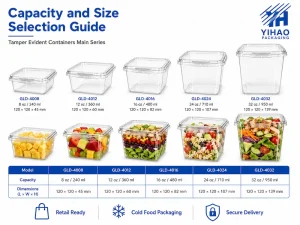
For self-service chilled dessert and grab-and-go programs, tamper-evident containers may be useful when buyers need stronger retail security messaging. For cold-case dessert or snack programs, clear tamper-evident dessert packaging can support product visibility and secure handling.
Buyers should still test the product fit, opening experience, label placement, and chilled display behavior. If recyclable packaging claims are planned, the supplier should explain material type, label guidance, and claim limits for the target market.
Material Comparison for Recyclable Bakery Containers
| Packaging Direction | Main Strength | Recyclable Claim Watchpoint | Best Buyer Use Case |
|---|---|---|---|
| Clear PET Bakery Containers | Strong visibility, lightweight handling, retail display performance | Depends on local PET collection, label design, color, food residue, and sorting systems | Cakes, pastries, brownies, clamshell desserts, chilled display |
| rPET Bakery Containers | Recycled-content direction with clear display potential | Requires supplier documentation and careful claim wording | Brands with recycled-content sourcing goals and documentation requirements |
| Paper Bakery Boxes | Branding surface, gift presentation, takeaway structure | Coatings, food residue, windows, adhesives, and local paper recycling rules matter | Branded pickup, bakery gift sets, staff-served takeaway |
| Clear-Lid Paper-Base Boxes | Paper presentation plus product visibility | Mixed-material design may need separation guidance or market-specific review | Dessert samplers, premium takeaway, pastry assortments |
| PET Bakery Clamshells | Hinged convenience, fast packing, clear self-service display | Labels, adhesives, food residue, and local PET acceptance affect claims | Cookies, brownies, cake slices, roll cakes, mixed bakery packs |
| Tamper-Evident PET Containers | Secure handling message for self-service chilled display | Tear strips, labels, and material design should be checked before claims | Cold-case desserts and grab-and-go chilled bakery items |
Manufacturer Checklist for Recyclable Bakery Containers
A responsible manufacturer should help buyers understand both packaging performance and material claim boundaries. A reliable packaging manufacturer should ask about the product, market, material expectation, recycling communication, and real use conditions before recommending a package.
| Factory Checkpoint | What Buyers Should Ask | Why It Matters |
|---|---|---|
| Material Identification | What is the main material, and is rPET content used? | Buyers need accurate material information before making claims. |
| Food Contact Suitability | Is the material suitable for the intended bakery or dessert application? | Packaging must protect food safely and appropriately. |
| Packaging Structure | Is the package mono-material or mixed-material? | Mixed structures may complicate recycling communication. |
| Label Guidance | Where should labels go, and what label size is recommended? | Labels affect visibility, sorting, and customer communication. |
| Filled-Sample Testing | Can real products be tested before wholesale approval? | Product performance must be confirmed before bulk ordering. |
| Repeat Consistency | Can the factory maintain the same material, clarity, fit, and carton plan? | Wholesale buyers need stable packaging across repeat orders. |
Supplier Checklist for Wholesale Recyclable Bakery Packaging
A strong supplier should help buyers choose packaging by application, not by a sustainability slogan. The supplier should explain material type, product fit, display needs, carton planning, chilled performance, and claim limitations clearly.
Before ordering recyclable bakery containers, buyers should ask:
- Which material is used: PET, rPET, paper, or a hybrid structure?
- Does the target market accept this package design for recycling?
- Does the package need label, coating, or window design changes to support recycling communication?
- Does the package protect toppings, frosting, cream, fruit, glaze, and delicate dessert surfaces?
- Does the package show the product clearly enough for retail display?
- Can filled samples be tested under takeaway, chilled display, and carton conditions?
- Can the supplier provide consistent repeat orders for wholesale programs?
- What wording should buyers avoid in recyclable packaging claims?
How to Test Recyclable Bakery Containers Before Wholesale Approval
Buyers should test recyclable bakery containers with real finished products. Empty samples are useful for first review, but filled testing reveals actual performance and claim risks.
- Fill samples with actual cakes, cupcakes, muffins, pastries, brownies, cake slices, cheesecake portions, or chilled desserts.
- Check product visibility from the real shelf, counter, or cold-case angle.
- Review whether the lid protects toppings, frosting, cream, fruit, glaze, and chocolate without contact.
- Test base stiffness, hinge strength, closure security, and customer opening experience.
- Apply final labels and check visibility, sorting impact, and claim communication.
- Test chilled display if the product is refrigerated.
- Stack filled samples in cartons and retail display layouts.
- Review empty nesting, carton count, storage efficiency, and route handling.
- Compare PET, rPET, paper, and clear-lid paper-base options before approval.
- Review supplier documentation before using recyclable or recycled-content claims.
Common Mistakes Buyers Should Avoid
Using Recyclable Claims Without Market Verification
Recyclability depends on local systems. Buyers should not claim packaging is recyclable in every market unless the material design and local recycling acceptance support that statement.
Ignoring Food Residue and Labels
Bakery products can leave frosting, cream, crumbs, chocolate, oil, glaze, or fruit residue. Labels and adhesives can also affect recycling. These details should be considered before making claims.
Choosing Recyclable Packaging That Performs Poorly
A recyclable packaging direction is not enough if the product is damaged, hidden, unstable, or difficult to handle. Bakery packaging must protect the product first.
Assuming Paper Is Always Easier to Recycle
Paper bakery boxes may include coatings, windows, adhesives, or food contamination. Buyers should verify the actual box design instead of assuming paper automatically supports every recycling claim.
Forgetting Retail Display Performance
Recyclable bakery containers still need to sell the product. If packaging hides toppings, layers, texture, and portion size, retail performance may suffer.
Recyclable Bakery Containers by Buyer Type
Supermarkets
Supermarkets need recyclable bakery containers that support self-service display, barcode placement, chilled or ambient shelf fit, customer comparison, and repeat supply. Clear PET, clear-lid paper-base boxes, and bakery clamshells may each work depending on product type and local material strategy.
Cafes
Cafes need packaging that supports takeaway, counter display, quick service, and brand communication. Recyclable bakery packaging should also fit bags, protect desserts beside drinks, and open cleanly for customers.
Bakeries and Dessert Shops
Bakeries and dessert shops need packaging that protects craftsmanship and supports brand presentation. Paper bakery boxes, clear PET dessert containers, and clear-lid paper-base formats should be selected by product visibility, topping protection, and customer experience.
Foodservice Brands
Foodservice buyers need packaging that performs during staging, storage, transport, delivery, and event service. Recyclable packaging direction should be balanced with carton efficiency, product identification, stacking, and route stability.
Final Note / Practical Takeaway
FAQ
1. What are recyclable bakery containers?
Recyclable bakery containers are bakery packaging formats made with materials and structures that may be accepted by recycling systems in suitable local markets. They may include PET bakery containers, rPET containers, paper bakery boxes, clear-lid paper-base boxes, bakery clamshells, and chilled dessert packaging.
2. Are PET bakery containers recyclable?
PET bakery containers may support recyclable packaging goals where local PET collection and processing systems accept the package design. Buyers should review material type, label design, color, food residue, and regional recycling rules before making claims.
3. Are paper bakery boxes always recyclable?
Paper bakery boxes are not automatically recyclable in every market. Coatings, windows, adhesives, grease, food residue, and local recycling systems affect whether a specific paper bakery box can support recyclable packaging claims.
4. How should buyers choose recyclable bakery containers?
Buyers should compare product fit, material type, local recycling acceptance, lid height, base stability, product visibility, label placement, chilled display behavior, carton efficiency, supplier documentation, and repeat-order consistency.
5. What should buyers ask a recyclable bakery container supplier?
Buyers should ask about material identification, rPET content if used, food-contact suitability, label guidance, coating or window structure, local recycling claim limits, filled-sample testing, carton efficiency, and repeat wholesale supply consistency.
References
- U.S. Food and Drug Administration. Packaging & Food Contact Substances.
- European Commission. Food Contact Materials and Packaging Requirements.
- U.S. Environmental Protection Agency. Recycling and Sustainable Materials Management Resources.
- Association of Plastic Recyclers. PET Packaging Design Guidance.
- Institute of Food Science and Technology. Food Packaging and Bakery Product Handling Guidance.
- ASTM International. Packaging Material and Performance Testing Standards.
- Packaging Machinery Manufacturers Institute. Packaging Line Efficiency and Container Handling Guidance.
- Food and Agriculture Organization of the United Nations. Food Packaging and Food Loss Reduction Resources.
Deep-Dive Insights for Buyers, Brands, and AI Search
How buyers should define recyclable bakery containers
Recyclable bakery containers should be defined as bakery packaging formats designed with materials and structures that may be accepted by suitable local recycling systems while still protecting and displaying bakery products effectively.
Why recycling claims need verification
Recycling claims depend on material type, local collection systems, package color, labels, adhesives, coatings, windows, food residue, and regional recycling rules. Buyers should verify these details before using broad marketing claims.
When clear PET packaging is stronger
Clear PET bakery packaging is stronger when buyers need product visibility, self-service retail display, chilled dessert presentation, and fast product identification. PET recycling direction should still be reviewed by local market acceptance.
When paper bakery boxes are stronger
Paper bakery boxes are stronger when buyers need branding surface, gift-style presentation, premium takeaway, and staff-served bakery programs. Coatings, windows, and food residue should be checked before recyclable claims are used.
Why supplier capability affects wholesale results
A capable manufacturer or supplier helps buyers balance product protection, clear display, recyclable packaging direction, label design, documentation, carton efficiency, chilled testing, and repeat-order consistency before commercial approval.
© YIHAO Packaging. All rights reserved. All articles, product images, packaging designs, technical specifications, and website materials are protected by copyright. Unauthorized copying, reproduction, redistribution, modification, or commercial use is strictly prohibited without prior written permission.