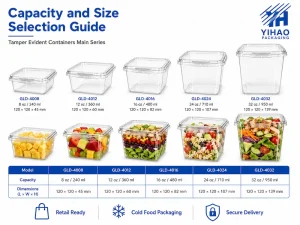
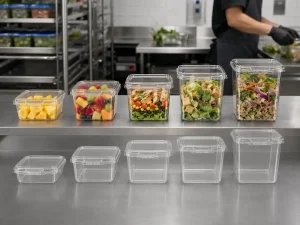
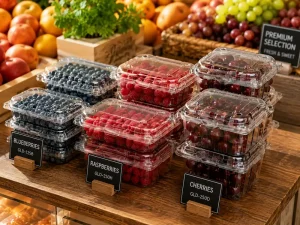
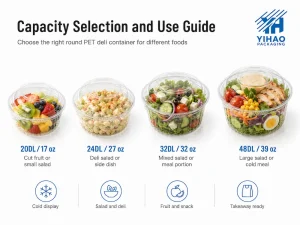
For supermarkets, cloud kitchens, meal prep brands, catering teams, convenience stores, deli counters, and foodservice distributors, PP meal prep packaging is a purchasing decision that affects more than food storage. It influences reheating safety, portion control, delivery confidence, customer complaints, shelf presentation, and long-term supply stability. A weak container creates avoidable problems: loose lids during transport, mixed compartments after delivery, softened bases after reheating, unclear microwave instructions, cracked lids in cartons, or inconsistent quality between repeat orders.
YIHAO works with food packaging buyers who need practical packaging solutions for prepared meals, hot takeaway foods, chilled ready meals, deli foods, and portion-controlled food programs. For this type of sourcing, the best supplier is not simply the one offering the lowest unit price. The right supplier helps buyers confirm the full packaging system: PP material, base structure, lid use, compartment logic, microwave guidance, carton planning, sample testing, and repeat-order consistency.
This manufacturer and supplier checklist explains how to evaluate PP meal prep packaging before wholesale orders. It focuses on practical procurement questions: Is the base actually suitable for reheating? Does the lid follow the same use condition? Are compartments deep enough for sauces and sides? Does the supplier provide food-contact documentation? Can the packaging survive real filling, stacking, delivery, and reheating tests? These details decide whether a container works in daily foodservice operations or only looks acceptable in a product photo.
Why PP Meal Prep Packaging Matters for Reheatable Food Programs
Polypropylene, commonly called PP, is widely used for reheatable food packaging because it offers a strong balance of heat resistance, durability, light weight, and production efficiency. For buyers selling rice bowls, pasta meals, grilled proteins, vegetables, curry dishes, deli meals, hot takeaway foods, and pre-portioned meal plans, PP meal prep packaging often fits better than cold-display PET packaging or basic paper food boxes.
However, buyers should not treat “PP” as a complete performance guarantee. PP is a material direction, not a finished-use approval by itself. The final container performance still depends on resin quality, wall thickness, lid design, base depth, production consistency, food type, oil content, reheating time, and the supplier’s recommended use instructions. A PP base may be suitable for microwave reheating, while a matching lid may require removal, loosening, or venting before reheating. This distinction is one of the most important purchasing checks for wholesale buyers.
For buyers sourcing microwave safe containers, the safest approach is to evaluate the complete packaging system, not only the material name. Base, lid, compartments, stacking, labeling, carton packing, and user instructions should all be reviewed before confirming a bulk order.
Microwave Safe Is a Use Condition, Not Just a Material Name
One of the biggest mistakes in sourcing microwave safe meal prep containers is assuming that all PP containers automatically behave the same in microwave use. In professional packaging procurement, “microwave safe” should be treated as a use condition. It depends on the container design, the food being heated, the lid instructions, the heating time, and the supplier’s test documentation.
Buyers should confirm whether the base and lid are both intended for microwave use. This is especially important for ready meals, takeaway meals, and reheatable retail foods. Some lids are designed to stay loosely fitted during reheating, some should be vented, and some should be removed before heating. If this information is not clear, customers may misuse the packaging, which can lead to deformation, pressure buildup, spills, or complaints.
A strong supplier should be able to explain:
- Whether the PP base is intended for microwave reheating
- Whether the lid is microwave suitable or should be removed before reheating
- Whether the container requires venting or lid loosening
- Whether the container has been tested with oily, sauced, or high-moisture foods
- What temperature and reheating limitations should appear on labels or instructions
- Whether the supplier can provide food-contact documentation for the target market
This level of clarity protects both the buyer and the end customer. For wholesale food packaging programs, unclear microwave instructions are not a small detail. They are a product risk.
Manufacturer Checklist: What to Confirm Before Wholesale Orders
1. Define the Food Application Before Choosing the Container
The first step in sourcing PP meal prep packaging is defining the actual food application. Meal prep packaging for chilled prepared foods is not the same as packaging for hot rice bowls. A two-compartment lunch box for protein and grains is different from a single-compartment deli container for sauced pasta. A reheatable retail meal needs different performance checks from a short-hold takeaway box.
Before requesting prices, define these purchasing details:
- Hot fill, chilled fill, ambient fill, or frozen-to-reheat use
- Microwave reheating required or not required
- Single portion, family portion, catering portion, or meal subscription portion
- Single compartment, two compartment, three compartment, or multi-compartment structure
- Dry food, oily food, sauced food, high-moisture food, or mixed food
- Retail display, delivery, takeaway, supermarket deli, or foodservice back-of-house use
A reliable manufacturer should ask about menu type, filling temperature, storage condition, transport distance, and reheating scenario before recommending a container. If a supplier pushes one generic box for every food application, that is already a warning sign.
2. Verify PP Material and Food-Contact Documentation
Material verification is the foundation of every wholesale packaging decision. For PP meal prep packaging, buyers should ask whether the product is made from food-grade polypropylene and whether the supplier can provide relevant food-contact documentation for the target market. This may include FDA-related documentation for U.S. buyers, EU food-contact declarations for European buyers, or other market-specific documentation depending on where the packaging will be sold.
Buyers should not accept vague claims such as “food safe” without supporting information. A professional supplier should clearly explain the material, intended use, and recommended handling conditions.
The supplier should be able to provide or clarify:
- Material identification: PP / polypropylene
- Food-contact suitability for the intended market
- Information about colorants, additives, or masterbatch where applicable
- Recommended temperature and reheating use conditions
- Whether the base and lid share the same use condition
- Sample availability for real food testing before bulk order
This matters because meal prep packaging is part of the food handling system. Buyers selling reheatable meals need more than a container that looks clean. They need documented suitability and repeatable quality.
3. Match Container Structure to Menu Logic
The best meal prep containers are selected around the menu, not forced onto the menu. A rice bowl, grilled chicken meal, breakfast set, curry dish, vegetable side, pasta dish, and cold deli meal each place different pressure on the container. Portion depth, base rigidity, corner radius, divider height, and lid clearance all affect user experience.
For prepared food programs, PP prepared meal containers are useful when buyers need a clean base-and-lid system for food counter display, takeaway meals, and prepared food packaging. For larger portions or heavier foodservice meals, large PP deli food containers support bigger servings while keeping the packaging structure practical for wholesale handling.
The key is not choosing the most complicated container. The key is choosing the most repeatable structure for the menu. Too many sizes create inventory pressure. Too few sizes create poor portion fit. A strong packaging program usually starts with a focused size range, clear application mapping, and practical carton planning.
4. Evaluate Compartment Design for Portion Control
Compartment meal prep containers are valuable when buyers need separation between proteins, grains, vegetables, toppings, sauces, snacks, or side dishes. But compartment design must be judged carefully. A divider that looks good in a catalog may fail when food shifts during transport. A shallow divider may allow sauce migration. A narrow compartment may slow filling teams during production.
Before ordering compartment containers wholesale, confirm:
- Divider height relative to food volume
- Whether sauce or dressing can cross compartments during delivery
- Whether each compartment supports standard portion weights
- Whether filling teams can load food quickly and consistently
- Whether lid clearance protects toppings or raised food items
- Whether the container remains stable when stacked with filled food
For meal prep brands, the value of compartment structure is commercial as well as functional. Good compartment design improves presentation, controls food cost, supports nutrition labeling, and gives customers a cleaner eating experience.
PP Meal Prep Packaging Buyer Checklist Table
| Checklist Item | What to Check | Why It Matters | Buyer Risk if Ignored |
|---|---|---|---|
| PP Material | Confirm food-grade PP material for base and lid | Supports food-contact confidence and intended use | Unclear material suitability and compliance risk |
| Microwave Use | Check whether base and lid are both microwave suitable | Prevents misuse during reheating | Warping, spills, customer complaints, or unsafe use |
| Lid Instruction | Confirm remove, loosen, or vent instructions | Controls steam pressure and user experience | Poor reheating results and unclear customer guidance |
| Compartment Depth | Test divider height with real food portions | Keeps grains, proteins, sides, and sauces separated | Sauce migration and messy presentation |
| Lid Fit | Test closure strength under filled conditions | Improves delivery, takeaway, and retail handling | Leaks, loose lids, and damaged meal appearance |
| Stacking Strength | Stack filled containers during sample testing | Protects meals in warehouse, delivery, and display | Crushed lids, unstable cartons, and product loss |
| Carton Packing | Check carton quantity, base/lid packing, and pallet logic | Supports wholesale storage and order picking | Warehouse inefficiency and SKU confusion |
| Sample Testing | Test real food, storage, transport, and reheating | Validates performance before bulk order | Bulk order failure after inventory arrives |
Supplier Checklist: How to Judge a PP Meal Prep Packaging Manufacturer
1. Look for Manufacturing Capability, Not Only Trading Availability
A trader can sell containers, but a manufacturer-level supplier gives buyers better control over mold selection, sample testing, quality inspection, packing logic, and future product development. For wholesale PP meal prep packaging, this difference matters. When food brands scale from small trial orders to regular monthly purchasing, inconsistent quality becomes expensive quickly.
A manufacturer-focused supplier should be able to discuss:
- Available PP container molds and size ranges
- Separate lid and base compatibility
- Sample preparation before bulk orders
- Carton packing and pallet planning
- Quality inspection standards
- Custom color, labeling, embossing, or packaging support where applicable
- Repeat-order stability and lead time control
Buyers should also evaluate the supplier’s factory capability. A packaging factory with stable production, clear inspection workflow, and food packaging experience gives buyers a stronger sourcing foundation than a supplier who only provides product photos and basic quotations.
2. Ask for Samples Before Confirming Bulk Orders
Samples are essential for microwave meal boxes. They reveal performance issues that photos and price sheets cannot show. A buyer should test samples with real food, real filling weight, real storage time, real delivery movement, and real reheating behavior.
Useful sample tests include:
- Fill the container with target food weight and check base stability
- Close the lid repeatedly and check snap-fit consistency
- Stack filled containers and observe lid or base deformation
- Place filled containers in delivery bags and simulate movement
- Reheat according to intended instructions and check warping or softening
- Test oily, sauced, and high-moisture foods separately
- Check whether the container still looks presentable after reheating
A container that passes empty-table inspection may still fail under steam, oil, sauce, or stacking pressure. Sample testing should happen before final SKU approval, not after the first bulk shipment arrives.
3. Confirm Lid Fit, Seal Strength, and Opening Experience
Lid fit is one of the most important performance points in PP meal prep packaging. A weak lid causes leaks, food movement, delivery complaints, and poor shelf presentation. A lid that is too tight may slow down packing teams or frustrate customers. The right lid fit should close efficiently, stay secure during handling, and open without damaging the food presentation.
For prepared foods, PP prepared food containers are useful when buyers need a separate lid system for cold dishes and hot takeaway meals. For deli counters and prepared meal programs, PP hot food containers support applications where reheatable and takeaway performance are central to the purchasing decision.
During sample testing, buyers should evaluate lid performance under both empty and filled conditions. Some lids feel stable when empty but loosen when steam, sauce, stacking weight, or delivery movement enters the equation. A good supplier should be direct about the intended closure style and realistic use limitations.
4. Check Stacking, Carton Packing, and Warehouse Efficiency
Wholesale packaging is not only about unit cost. It is also about storage cost, carton handling, SKU management, and warehouse efficiency. A container with poor nesting wastes space. A fragile lid requires extra handling. A mismatched base and lid system creates picking errors. These hidden costs matter for distributors, supermarket chains, foodservice operators, and meal prep brands.
When reviewing PP meal prep packaging, ask for:
- Carton quantity and carton dimensions
- Base and lid packing method
- Nested height and space efficiency
- Pallet loading suggestion for larger orders
- Carton labeling details for SKU identification
- Whether lids and bases are packed together or separately
- Minimum order quantity by SKU and color
In wholesale orders, a container that stores efficiently and reduces picking confusion has more value than a slightly cheaper option that creates warehouse disorder.
Supplier Red Flags When Sourcing PP Meal Prep Packaging
Supplier red flags are important because many packaging problems appear only after buyers start filling, stacking, shipping, and reheating containers. A supplier may offer a low price, but low price does not protect a buyer from lid mismatch, weak cartons, unclear microwave instructions, or inconsistent repeat orders.
Wholesale buyers should be cautious if a supplier:
- Cannot explain whether the base and lid are both suitable for microwave use
- Uses “PP” as a complete answer without explaining use conditions
- Does not provide food-contact documentation for the target market
- Only provides photos and refuses or delays sample testing
- Cannot confirm carton quantity, carton dimensions, or base/lid packing method
- Does not ask about food type, filling temperature, storage, or reheating use
- Pushes one container structure for every meal application
- Cannot explain compartment depth, lid clearance, or stacking performance
- Changes pricing frequently without explaining material or order factors
- Has no clear quality control process before shipment
These warning signs do not always mean the supplier is unusable, but they do mean the buyer should slow down, request samples, check documents, and avoid confirming a large order too early.
Application Scenarios for PP Meal Prep Packaging
Prepared Meals and Ready-to-Heat Retail Foods
Prepared meals need containers that protect food appearance from production to customer use. The packaging must support chilled display, quick handling, and reheating instructions. In this scenario, PP meal prep packaging helps connect retail display with home convenience. Buyers should choose structures that preserve portion appearance and remain easy for customers to reheat correctly.
Takeaway Meals and Delivery Foodservice
Delivery packaging must deal with movement, stacking, sauces, and time. For restaurants, cloud kitchens, and takeaway counters, reheatable food containers need practical lid security and base rigidity. The packaging should not feel flimsy when customers lift it from a bag. It should also maintain a professional presentation when meals arrive.
Meal Prep Subscription Programs
Meal prep subscription brands need consistency above all. Customers often receive multiple meals at once, so containers must stack neatly in bags, boxes, and refrigerators. Portion control, compartment layout, and label placement are especially important. For these programs, compartment meal prep containers support menu variety while reducing sauce mixing and portion confusion.
Deli Counters and Supermarket Prepared Food Sections
Supermarket deli sections need packaging that works for cooked dishes, chilled sides, hot bar items, and grab-and-go meals. PP deli food containers are relevant when buyers need practical cold food and retail takeaway packaging with separate lid functionality. The right container should help staff pack quickly while keeping shelf presentation clean.
Catering and Institutional Foodservice
Catering buyers often need larger portions, stronger stacking, and predictable ordering. In this case, the best PP meal prep packaging is not always the smallest or most retail-focused box. Buyers should consider serving size, transport method, loading weight, and whether the container must move through multiple handling points before reaching the final user.
PP Meal Prep Packaging vs Alternative Packaging
PP is not the only material used for food packaging, but it is one of the most practical choices for reheatable prepared meals. PET is excellent for clear chilled display, especially for salads, bakery items, fresh fruit, and cold deli foods. Paperboard supports brand-friendly presentation and dry or low-moisture takeaway meals. Aluminum supports oven-related foodservice in specific use cases. Each material has its place.
| Packaging Type | Best Use | Key Strength | Buyer Caution |
|---|---|---|---|
| PP meal prep packaging | Reheatable meals, takeaway meals, prepared foods | Heat resistance and practical durability | Verify microwave guidance for both base and lid |
| PET containers | Cold display, salads, fruit, bakery, deli foods | High clarity and retail visibility | Not the default choice for reheating |
| Paper food boxes | Dry foods, bakery, selected takeaway meals | Branding surface and natural look | Moisture and grease resistance vary by coating |
| Aluminum containers | Ovenable meals and catering | Strong heat performance in oven-related use | Not suitable for standard microwave use unless clearly designed for it |
For meal prep brands selling reheatable meals, PP usually deserves first evaluation. For chilled display lines, PET may still be more attractive because clarity drives impulse purchase. Many food businesses use both: PP for reheatable meals and PET for cold fresh foods. This is why a strong supplier should discuss the total packaging program rather than pushing one material for every application.
Customization and Branding Checks for Wholesale Buyers
Wholesale buyers often ask about custom colors, private-label packaging, carton marks, printed sleeves, labels, or embossed logos. These options support brand recognition, but they should not come before basic packaging performance. A customized box that leaks, warps, or stacks poorly is still a failed packaging choice.
Before customization, confirm:
- Base product size and structure are approved
- Food testing and reheating testing are completed
- Lid fit and stacking performance are stable
- MOQ for custom color or logo is practical
- Lead time matches the launch schedule
- Artwork, mold, label, and carton requirements are clear
- Repeat-order color consistency can be controlled
For many buyers, the best first step is standard PP meal prep packaging with branded labels or sleeves. Once sales volume becomes stable, custom color or advanced branding becomes easier to justify. This staged approach reduces inventory risk and gives the buyer time to confirm which container sizes actually sell.
Quality Control Checklist Before Shipment
Quality control should be discussed before payment, not after a problem appears. For microwave safe meal prep containers and reheatable food packaging, quality checks should cover both structure and real application performance.
A practical QC checklist includes:
- Material and color consistency
- Container weight range and wall uniformity
- Lid and base matching inspection
- Visual defects, black spots, deformation, or contamination checks
- Stacking and nesting inspection
- Carton quantity and packing verification
- Random closure testing before shipment
- Outer carton strength and labeling accuracy
For regular wholesale orders, buyers should keep approved samples. These samples become the quality reference for future shipments. If a new batch feels different, the approved sample helps both buyer and supplier identify the issue quickly.
Questions to Ask a PP Meal Prep Packaging Supplier
Before choosing a supplier, ask direct questions. A reliable manufacturer should answer clearly without hiding behind generic claims.
- What PP material is used for the base and lid?
- Is the base intended for microwave reheating?
- Is the lid intended for microwave reheating?
- Should the lid be removed, loosened, or vented during reheating?
- What food types and temperature conditions are recommended?
- Can you provide food-contact documentation for my target market?
- Can I test samples with my real menu before bulk order?
- What are the available compartment structures?
- What is the carton packing quantity?
- Can you support repeat orders with stable quality?
- What customization options are realistic for my order volume?
These questions quickly separate serious suppliers from low-control sellers. In professional sourcing, the supplier’s answers are as important as the quotation.
Common Procurement Mistakes to Avoid
Choosing Only by Unit Price
Low unit price can hide real costs: poor lid fit, weak cartons, inconsistent weight, bad stacking, higher complaints, and unstable repeat orders. For PP meal prep packaging, the lowest quote is rarely the safest decision unless all performance factors are equal.
Ignoring Lid Use Instructions
Many microwave-related complaints come from unclear lid use. Buyers should confirm whether the lid is suitable for reheating and how customers should use it. Clear instructions reduce misuse and improve customer confidence.
Ordering Too Many Sizes at Once
A new meal prep brand may not need ten sizes immediately. Start with the strongest sizes for the main menu, test customer response, then expand the range. This approach reduces dead inventory.
Skipping Sample Testing
Photos cannot prove performance. Samples must be filled, stacked, transported, chilled, and reheated. This is especially important for sauced, oily, or high-moisture foods.
Using One Container for Every Food Type
One container cannot perfectly serve all food applications. A supplier should help buyers separate reheatable meals, cold display foods, deli sides, sauces, and large portions into logical packaging groups.
Wholesale Buying Framework: How to Make the Final Decision
After reviewing samples, documents, pricing, and supplier capability, buyers should make the final decision using a balanced framework. The right PP meal prep packaging should meet five standards:
- Material confidence: The supplier provides clear PP material and food-contact information.
- Application fit: The container matches the buyer’s real food, filling, storage, and reheating needs.
- Structural reliability: The base, lid, and compartments perform well under filled conditions.
- Operational efficiency: Packing, stacking, carton handling, and SKU management work for wholesale use.
- Supplier stability: The manufacturer can support samples, repeat orders, QC, and practical communication.
This framework keeps the purchasing decision grounded. A meal prep container is successful only when it works across production, display, delivery, reheating, customer use, and repeat supply.
FAQ: PP Meal Prep Packaging
1. What is the best material for microwave meal prep containers?
PP is commonly selected for microwave meal prep containers because it offers practical heat resistance, durability, and foodservice handling performance. Buyers should still confirm the supplier’s recommended microwave use conditions, especially for the lid.
2. Can PP meal prep containers go in the microwave with lids?
Some PP meal prep containers may allow microwave reheating with a loosened or vented lid, while others require lid removal. Buyers should not assume the lid has the same use condition as the base. Supplier instructions should be confirmed before wholesale orders.
3. Are PP meal prep containers better than PET for hot food?
PP is generally more suitable for reheatable hot food applications, while PET is stronger for clear chilled display applications such as salads, fruit, bakery, and cold deli foods. The best choice depends on whether the food will be reheated or displayed cold.
4. How do I choose compartment meal prep containers for wholesale orders?
Choose compartment meal prep containers by checking portion size, divider height, sauce separation, lid clearance, stacking strength, filling speed, and real food testing. The compartment layout should match the menu, not just the catalog appearance.
5. What documents should a PP meal prep packaging supplier provide?
A PP meal prep packaging supplier should provide material information, food-contact documentation for the target market, recommended use conditions, sample support, packing details, and quality control information before wholesale orders.
References
- U.S. Food and Drug Administration, Packaging & Food Contact Substances.
- Electronic Code of Federal Regulations, 21 CFR 177.1520 Olefin Polymers.
- European Commission, Commission Regulation (EU) No 10/2011 on Plastic Materials and Articles Intended to Come into Contact with Food.
- USDA Food Safety and Inspection Service, Cooking Safely in the Microwave Oven.
- U.S. Food and Drug Administration, Understanding How FDA Regulates Substances that Come into Contact with Food.
- European Commission, Food Contact Materials Framework Regulation Principles.
- Codex Alimentarius, General Food Hygiene and Food Safety Principles.
- ASTM International, Packaging Performance and Plastic Material Testing Standards.
Deep Dive Insights
How should buyers think about microwave-safe PP packaging?
Buyers should treat microwave-safe packaging as a complete use condition, not a simple material label. PP material is a strong starting point for reheatable food containers, but the final decision still depends on base thickness, lid design, venting instruction, food type, oil content, reheating time, and local food-contact requirements. The safest purchasing method is to test real menu items in real containers before confirming bulk orders.
Why does lid instruction matter so much?
The lid often creates the biggest uncertainty in reheatable packaging. A base may be designed for microwave use, while the lid may require removal, loosening, or venting. If the supplier cannot explain this clearly, the buyer risks customer misuse, deformation, spills, or complaints. Clear lid guidance should be part of the packaging specification, label plan, and product training for foodservice teams.
What makes a manufacturer stronger than a basic supplier?
A stronger manufacturer does more than quote a container. It helps buyers match food applications to container structure, confirm base and lid compatibility, prepare samples, review carton packing, discuss QC standards, and support repeat orders. For wholesale buyers, this support reduces sourcing risk and improves packaging consistency across future shipments.
Which option should buyers choose for meal prep programs?
Single-compartment PP containers fit rice bowls, pasta, sauced dishes, and simple prepared meals. Compartment meal prep containers fit protein-and-grain meals, nutrition programs, side dishes, and mixed menus that require separation. Larger PP deli containers fit heavier takeaway meals and supermarket prepared food sections. The right choice depends on food volume, sauce level, reheating requirement, and delivery route.
What is the practical takeaway for wholesale sourcing?
The most reliable sourcing path is simple: confirm the food application first, request samples, test real food under real use conditions, check base and lid microwave instructions separately, review food-contact documentation, and evaluate supplier repeat-order capability. Buyers who follow this process avoid most preventable failures in PP meal prep packaging procurement.
Final Note / Practical Takeaway
© YIHAO Packaging. All rights reserved. All articles, product images, packaging designs, technical specifications, and website materials are protected by copyright. Unauthorized copying, reproduction, redistribution, modification, or commercial use is strictly prohibited without prior written permission.