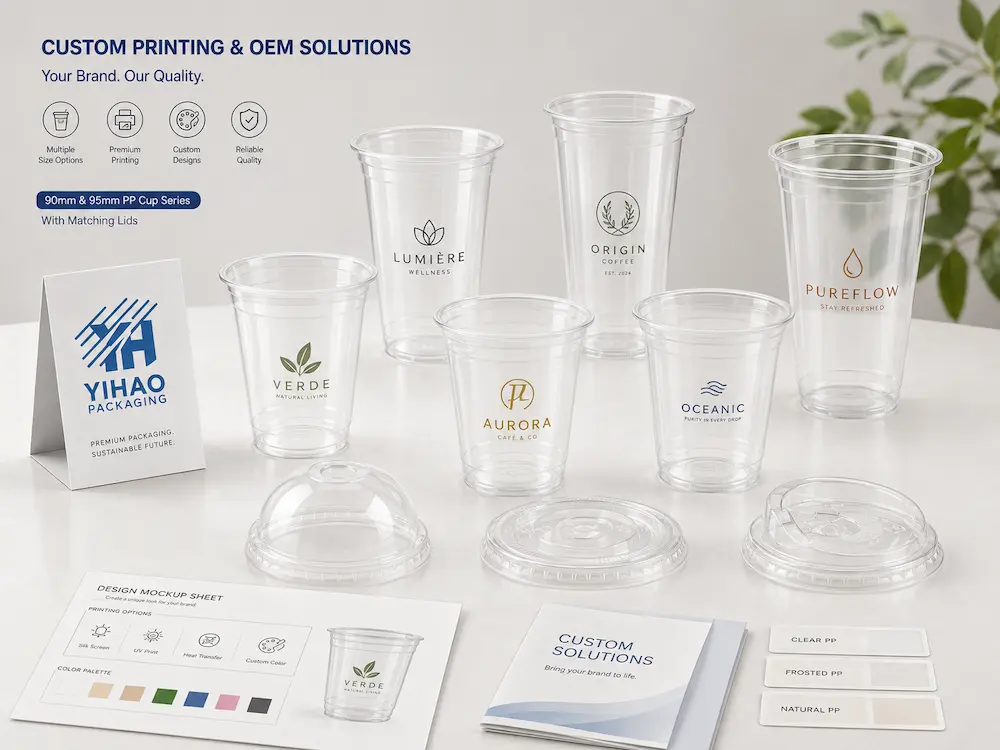
Why Choosing the Right PP Cup Manufacturer Matters
Cold beverage cups look simple from the outside. In actual wholesale purchasing, they are not simple at all. A reliable PP cup manufacturer must control material selection, forming stability, rim accuracy, stacking performance, lid matching, sleeve packing, carton protection, and repeat order consistency. For beverage brands and distributors, these details directly affect store operation, leakage risk, customer handling, warehouse efficiency, and reorder confidence.
Many buyers start by asking for the lowest unit price. That is understandable, especially when the order is large. However, the lowest price does not prove whether the cup rim will match the lid, whether cups will separate smoothly during peak service, whether the sleeve will deform after shipping, or whether the manufacturer can keep the same quality in the next order. A professional buyer should treat a PP cup manufacturer as a production partner, not just a quotation source.
This is especially important for businesses buying cold drink packaging solutions for iced coffee, fruit tea, milk tea, lemonade, smoothies, refreshers, iced tea, protein drinks, sparkling fruit drinks, and flavored cold brew. These beverages create different handling requirements. A drink with ice, fruit pieces, foam, or toppings needs a cup and lid system that has already been tested under real service conditions.
The stronger purchasing question is not “Which supplier is cheapest?” The better question is “Which manufacturer can help us build a stable cold cup supply system?” That system includes cup size, cup structure, matching lids, carton packing, customization, documentation, and after-order communication.

What Is a PP Cup Manufacturer?
A PP cup manufacturer produces polypropylene cups for cold beverage and foodservice applications. PP, short for polypropylene, is commonly used for lightweight cold cups because it offers practical flexibility, impact resistance, and efficient handling for takeaway beverage service.
In B2B sourcing, the word “manufacturer” should mean more than a company that can send a catalog. A true manufacturer has direct control over production planning, raw material use, forming parameters, mold maintenance, quality inspection, packing standards, and batch follow-up. This control becomes critical when buyers need stable supply for chain stores, distributors, supermarkets, cafes, juice bars, or private-label beverage programs.
Manufacturer vs. Trading Supplier
A trading supplier may help buyers source existing cup styles from different factories. This can be useful for buyers who need small mixed orders or broad product sourcing. However, when the buyer needs stable cup specifications, matching lids, logo printing, long-term wholesale supply, or repeat production, a direct PP cup manufacturer usually provides stronger control.
The key difference is accountability. A manufacturer should be able to explain how the cup is produced, how the rim is controlled, how lid fit is checked, how the cups are packed, and how batch consistency is maintained. A general cold cup supplier may not always control those details directly.
Why Buyers Search for a PP Cup Manufacturer Instead of Only a Cold Cup Supplier
The keyword PP cup manufacturer shows stronger purchasing intent than a general search for cold cups. Buyers using this term are usually not browsing random product photos. They are comparing factory capability, production stability, wholesale capacity, custom support, and supplier reliability.
A buyer searching for a cold cup supplier may need ready-made cups. A buyer searching for a PP cup manufacturer often needs manufacturing control, stable communication, sample testing, and repeatable supply. This is why the supplier evaluation process should include technical and operational details, not only unit price.
Where PP Cold Cups Are Used in Real Beverage Service
PP cold cups are widely used in fast-moving cold beverage operations. They are practical for cafes, beverage chains, milk tea shops, juice bars, convenience stores, foodservice distributors, event suppliers, and takeaway counters that need lightweight, flexible, and efficient cup packaging.
Common beverage applications include iced coffee, iced tea, lemonade, fruit tea, milk tea, soda, smoothies, matcha drinks, refreshers, acai and berry refreshers, protein drinks, sparkling fruit drinks, flavored cold brew, and chilled juice. For high-volume service, cups must stack neatly, separate quickly, fit lids securely, and remain stable during handling.
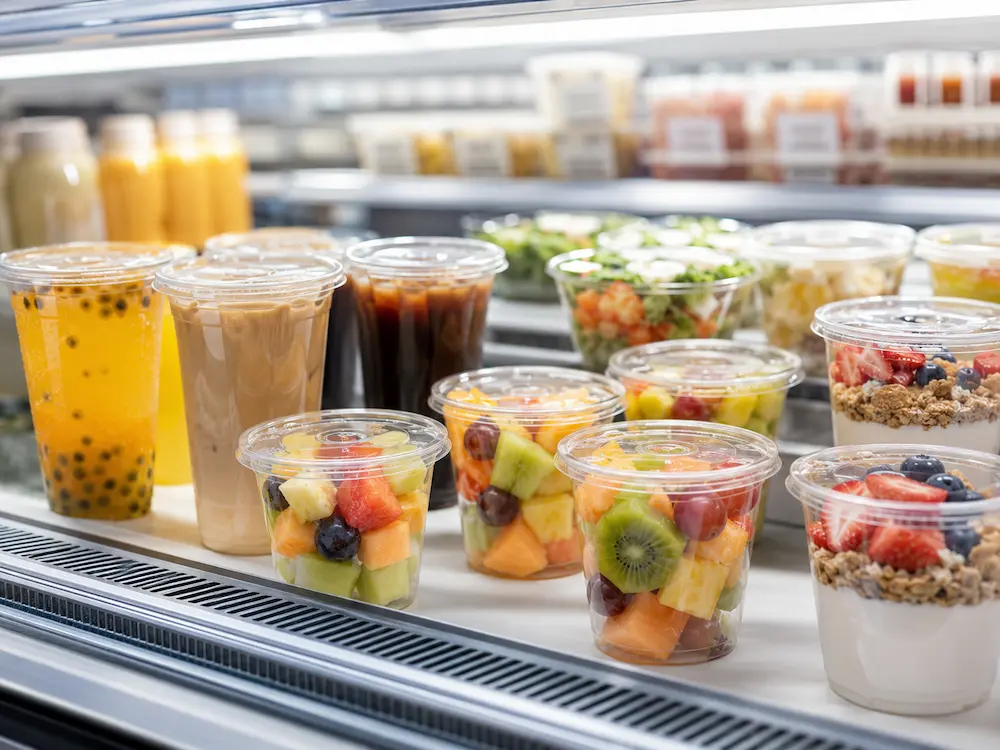
For wholesale buyers, PP cold cups are not only drink containers. They are part of the service workflow. Staff must pull them from sleeves quickly. Customers must hold them comfortably. Lids must press on without force. Cartons must protect them during storage and distribution. A dependable PP cup manufacturer understands these operational details before the buyer places a bulk order for PP cold cups.
PP Cups vs. PET Cups: How Buyers Should Compare Materials
Many buyers compare PP cups and PET cups during the same sourcing project. This is normal because both materials are common in cold beverage packaging. The right choice depends on drink type, brand positioning, clarity needs, budget, supply plan, and lid system.
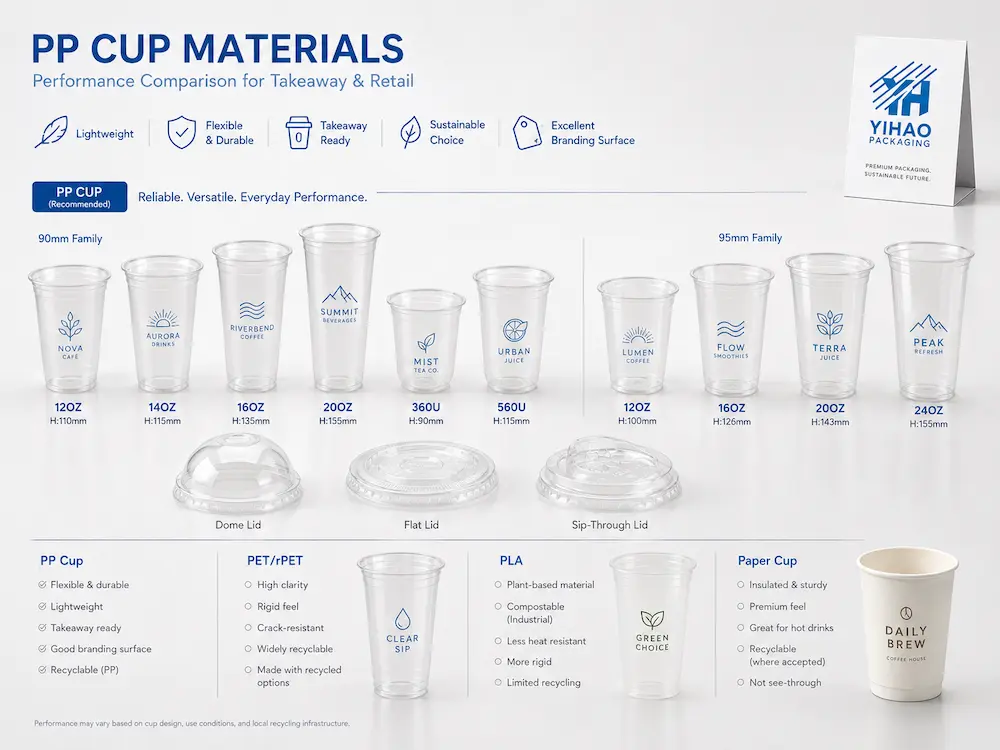
PP Cups for Flexible, Practical Takeaway Service
PP cups are often selected for daily takeaway service where flexibility and practical handling matter. They have a softer feel than PET cups and are commonly used for cold drink programs that need lightweight structure, stackability, and cost-conscious wholesale supply.
For cafes and beverage chains, PP cups support quick counter operation. For distributors, they provide a repeat-demand product category. For private-label drink programs, they can support logo printing and carton marking when the manufacturer offers custom service. A strong PP cup manufacturer should help buyers check cup rim accuracy, wall flexibility, base stability, and lid compatibility before mass production.
PET Cups for Premium Visual Display
PET cups are often selected when high clarity is the main priority. Clear PET cups show the color and layers of iced coffee, fruit tea, lemonade, smoothies, matcha drinks, and refreshers. This is why many buyers compare a PET cup factory with a PP cup manufacturer before confirming their final cold cup line.
If the drink is highly visual, PET may be the better choice. If the service environment prioritizes flexibility, handling, and practical daily use, PP may be the stronger option. Many brands use both materials: PP for standard takeaway drinks and PET for premium display drinks. Buyers can review PET cold cups alongside PP options to build a more complete cold beverage packaging range.
When to Choose PP, PET, or Both
| Buyer Need | PP Cup Advantage | PET Cup Advantage | Practical Recommendation |
|---|---|---|---|
| High-volume takeaway service | Flexible, lightweight, practical for daily handling | Clearer appearance but less flexible | Use PP when counter speed and practical cost control matter most. |
| Premium drink display | Functional but usually less crystal-clear than PET | Excellent clarity for layered and colorful beverages | Use PET for drinks where visual presentation drives sales. |
| Custom branded cups | Suitable for logo printing when structure and print area are confirmed | Also suitable for premium branded drink presentation | Request printed samples before confirming mass production. |
| Distributor inventory planning | Strong option for repeat wholesale demand | Strong option for premium product lines | Offer both PP and PET lines when customers serve different beverage segments. |
Manufacturer and Supplier Checklist for Wholesale PP Cups
The following checklist helps buyers evaluate a PP cup manufacturer before placing a wholesale order. It is designed for beverage chains, importers, distributors, cafes, supermarkets, foodservice operators, and private-label drink brands comparing multiple manufacturers and suppliers.
| Buying Factor | What Buyers Should Check | Risk If Ignored | Better Supplier Response |
|---|---|---|---|
| Material | Food-contact PP material, intended cold-use application, appearance stability, and material communication. | Unclear material information creates compliance and buyer confidence issues. | The manufacturer explains material type, intended use, and available supporting documents. |
| Cup Rim Accuracy | Rim roundness, diameter consistency, and fit with matching lids. | Loose or overly tight lids cause leakage, staff frustration, and customer complaints. | The manufacturer checks rim fit with actual flat, dome, straw-slot, or sip lids. |
| Cup Wall Flexibility | Wall feel, hand pressure response, and stability after filling. | Cups may feel weak, deform easily, or fail to meet brand expectations. | Samples are tested with real beverages and ice before bulk order approval. |
| Stacking and Separation | How cups stack in sleeves and how easily staff can pull one cup at a time. | Over-tight stacking slows counter service and increases handling waste. | The supplier checks full-sleeve separation, not only single-cup appearance. |
| Lid Compatibility | Matching flat lids, dome lids, straw-slot lids, sip lids, or strawless lids. | Lid mismatch creates leakage and reorder confusion. | The manufacturer recommends tested lid combinations from the same system. |
| Size Range | Small, medium, and large PP cold cup options for different drink menus. | Buyers may need multiple suppliers for one beverage program. | The manufacturer supports a practical size range for cafes, chains, and distributors. |
| Wholesale Capacity | Bulk supply, repeat order stability, carton packing, and shipment planning. | Attractive samples may not translate into stable supply. | The supplier discusses repeat orders, packing standards, and production planning clearly. |
| Custom Support | Logo printing, private label service, carton marking, and artwork review. | Poor printing control damages brand presentation. | The custom cup manufacturer confirms artwork, sample approval, and print consistency. |
| Export Support | Carton strength, loading communication, documentation support, and lead time coordination. | Weak packing and unclear communication create import and distribution problems. | The manufacturer understands export packing and international buyer communication. |
This checklist moves the conversation beyond a simple quotation. For wholesale cold cups, the strongest supplier is not always the cheapest one. The strongest supplier is the one that reduces order risk, supports repeat purchasing, and helps the buyer avoid operational problems before they appear.
Sample Testing Checklist Before Bulk Orders
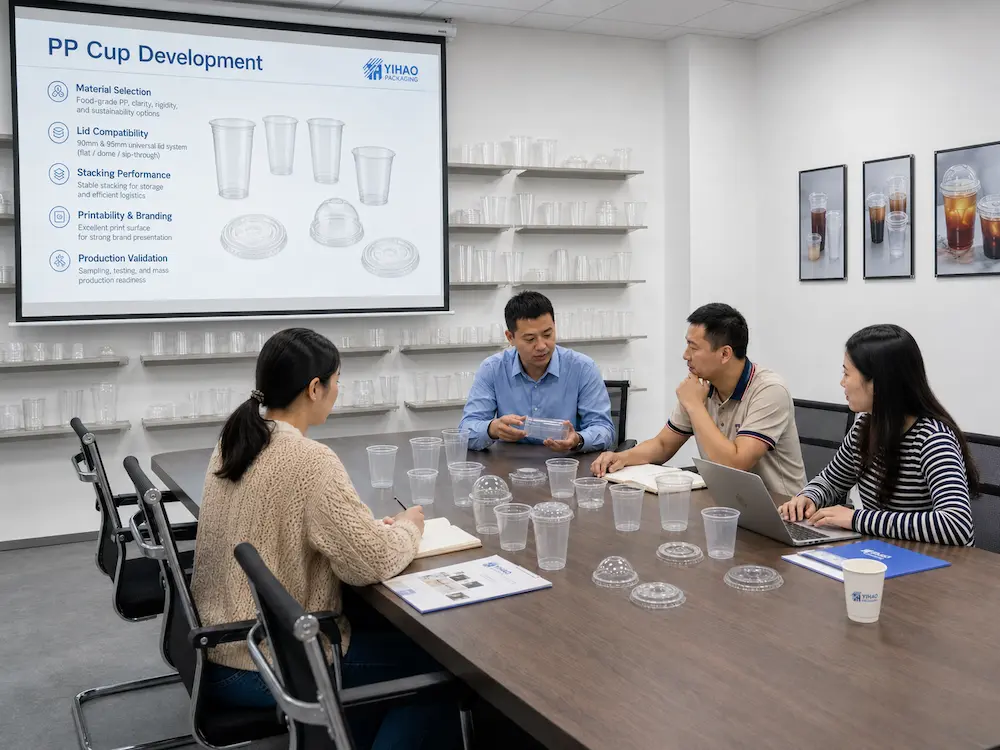
Sample testing should happen before the buyer confirms mass production. A single photo does not prove performance. A cup must be tested as part of a real service system: cup, lid, sleeve, carton, beverage, storage, and handling.
| Test Item | How to Test It | What to Observe | Why It Matters |
|---|---|---|---|
| Lid Fit Test | Fill the cup with water or a real cold drink, then press the matching lid around the full rim. | Check whether the lid snaps evenly, feels too loose, or requires excessive force. | This is the first defense against leakage and customer complaints. |
| Inversion and Tilt Check | Gently tilt the filled cup and lid combination over a sink or tray. | Observe leakage around the rim and lid edge. | Takeaway drinks are often moved, tilted, and handled during delivery. |
| Sleeve Separation Test | Pull cups from a full sleeve during a simulated counter-service routine. | Check whether cups separate one by one or stick together. | Over-tight stacking slows staff during rush hours. |
| Grip and Wall Feel Test | Fill the cup with iced coffee, juice, or milk tea and hold it as a customer would. | Check cup stiffness, hand feel, and sidewall deformation. | A cup that feels too weak can reduce brand confidence. |
| Base Stability Test | Place filled cups on a counter, tray, and delivery shelf. | Check wobbling, tipping, and bottom stability. | Stable bases reduce spills in fast-service environments. |
| Carton Compression Review | Inspect cartons after stacking or simulated warehouse handling. | Check whether sleeves or rims deform after pressure. | Carton protection affects cup shape after shipping and storage. |
| Printed Sample Review | Review actual printed cups rather than only digital mockups. | Check logo position, color consistency, readability, and distortion on the curved surface. | Custom branding must remain clean and professional in real use. |
A capable PP cup manufacturer should welcome sample testing. Buyers should be cautious if a supplier avoids specific testing questions or only answers with general claims. Practical testing is not a delay. It is a way to prevent bigger problems after the order has already shipped.
How to Evaluate Wholesale Cold Cups Before Ordering
When evaluating wholesale cold cups, buyers should compare more than cup appearance. They should check how the cup performs in service, how the matching lid fits, how the carton protects the product, and how the supplier communicates before production.
Request Samples from the Exact Cup and Lid System
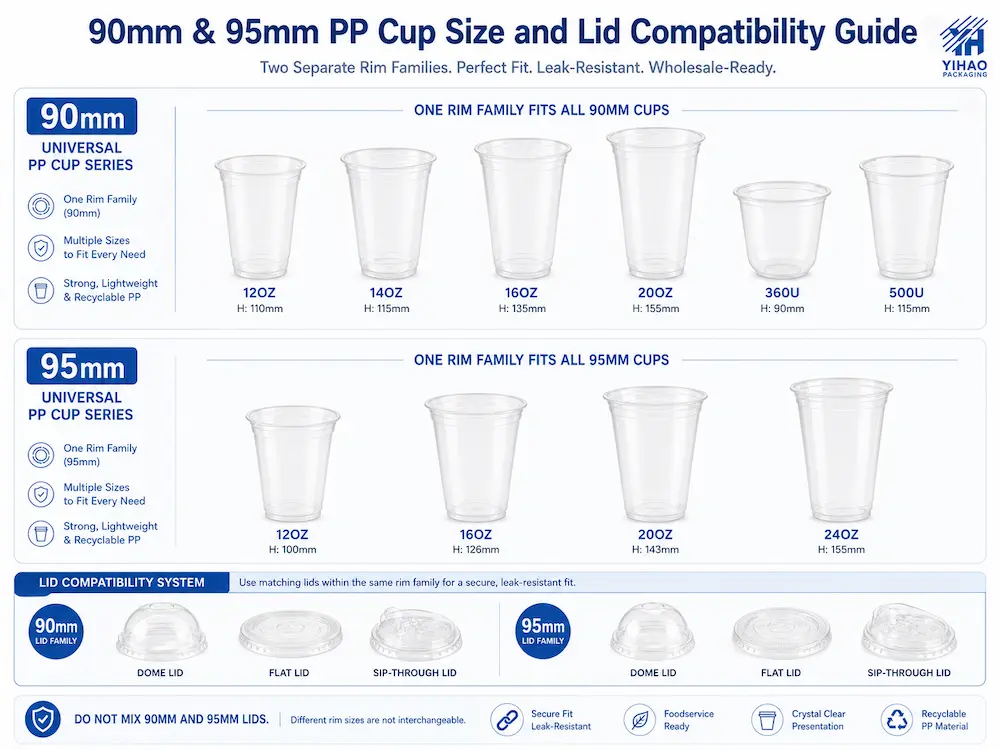
Buyers should request samples of the actual cup size and lid combination they plan to order. If a supplier sends a similar sample but not the exact one, the testing result may not represent the final product. Small differences in rim design, lid material, or mold structure can change performance.
If the buyer plans to purchase both cups and lids, it is better to evaluate them as a complete system. For example, buyers can compare PP cups with matching cold cup lids, including flat lids, dome lids, straw-slot lids, sip-through lids, and strawless sipper lids.
Test Cups with Real Drinks
Cold beverage testing should reflect real menu items. Iced coffee, milk tea, fruit tea, lemonade, smoothies, and protein drinks do not behave the same way. Drinks with ice, foam, pulp, fruit pieces, or toppings may need different lid types and cup stability.
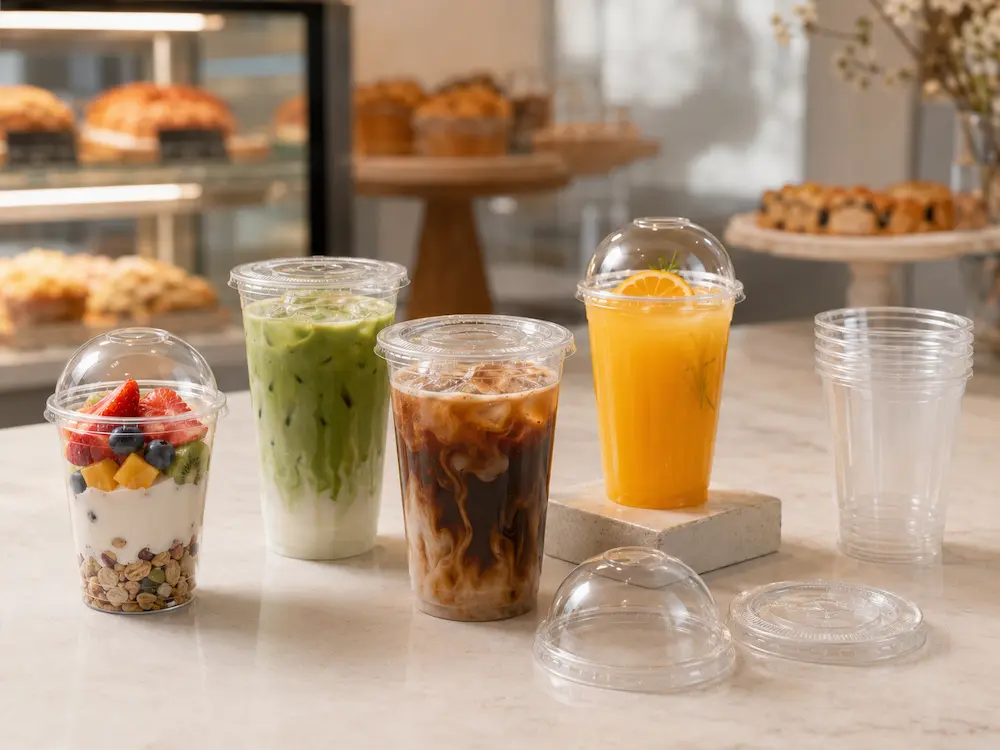
For example, a smoothie may need a dome lid, while iced coffee may need a flat lid or sip-through lid. A refresher or sparkling fruit drink may require a lid that handles movement during takeaway. Testing real drinks helps buyers make practical decisions instead of relying only on catalog information.
Review Packing for Export and Distribution
For wholesale and export orders, packing quality is part of product quality. Weak cartons can cause cup deformation during shipping. Poor sleeve packing can damage cup rims. Inefficient carton dimensions can increase storage and freight pressure.
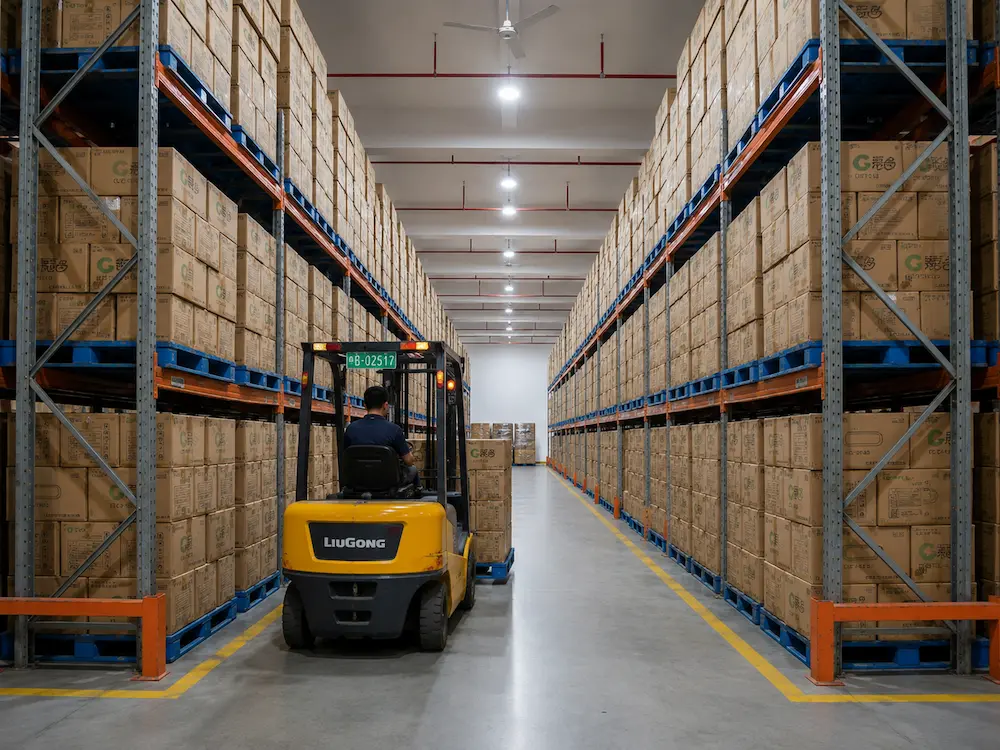
Buyers should ask how many cups are packed per sleeve, how many sleeves are packed per carton, how cartons are marked, and whether the packing method is suitable for long-distance transport. Importers and distributors should also consider how cartons fit warehouse storage and customer-level replenishment.
Custom PP Cups: What a Custom Cup Manufacturer Should Offer
Custom cold cups help beverage brands turn packaging into brand communication. A printed cup travels with the customer, appears in social photos, and strengthens store identity. For cafes, milk tea chains, juice bars, and private-label beverage programs, custom cups are not decoration only. They are part of the brand system.
A capable custom cup manufacturer should support the full process: artwork review, print area confirmation, sample approval, color communication, mass production control, and carton marking. Buyers should not approve custom cups based only on a digital mockup. Physical samples are essential because curved cup surfaces can affect logo position, scale, and readability.
Logo Printing and Private Label Support
Buyers should confirm the print method, available print area, artwork format, color limits, and sample approval process. If the cups are used across multiple stores or franchise locations, brand consistency becomes even more important.
Private label support may include printed cups, custom cartons, SKU marks, barcode labels, and packaging presentation for distributor or retail channels. A professional PP cup manufacturer should guide these details clearly instead of simply asking the buyer to send a logo file.
Design Files and Printing Risk Control
Custom printing on cups requires technical review. A design that looks clean on a flat screen may not look the same on a curved cup. Important information should not be placed too close to the bottom curve or rim area unless the manufacturer confirms that the design works there.
Buyers should check logo readability after filling the cup with dark or colorful drinks. A logo that looks clear on an empty sample may lose contrast when the cup is filled with iced coffee, milk tea, or fruit tea. This is why printed sample approval matters before mass production.
Common Mistakes When Choosing a Cold Cup Supplier
Cold cups are often treated like commodity products. That mindset creates purchasing mistakes. The following issues appear often when buyers choose a cold cup supplier too quickly.
Mistake 1: Choosing Only by the Lowest Unit Price
The lowest unit price can become expensive if cups deform, lids leak, cartons collapse, or reorder quality changes. For a beverage chain, one leakage complaint may affect customer trust. For a distributor, inconsistent supply may affect downstream customers. For an importer, weak packing may create claims and delays.
Buyers should compare price together with product structure, rim consistency, lid fit, sleeve separation, carton packing, and supplier communication. A serious PP cup manufacturer should provide balanced value, not only a low number.
Mistake 2: Ignoring Lid Matching
Lid matching is one of the most common failure points in cold cup sourcing. A cup and lid may look compatible because they share a similar diameter, but actual fit depends on rim design, tolerance, lid structure, and material behavior.
Buyers should test the full cup-and-lid system. If cups and lids come from different suppliers, testing becomes even more important. When possible, source cups and matching lids from a manufacturer or supplier that has already verified compatibility.
Mistake 3: Looking Only at Single-Cup Samples
A single cup sample may look good, but a full sleeve may reveal problems. Cups may stick together, stack too tightly, separate unevenly, or deform after carton pressure. Buyers should test the full sleeve and carton, not only one cup taken out for display.
Mistake 4: Overclaiming Recyclability or Compliance
Packaging claims should be accurate and market-specific. Buyers should avoid broad claims such as “fully recyclable everywhere” unless the statement is supported by local recycling infrastructure and the actual package design. Recycling acceptance varies by region, facility, material stream, color, label, and contamination condition.
Food-contact communication should also be handled carefully. Buyers should ask suppliers for clear material information and available supporting documents according to the destination market. A responsible manufacturer does not rely on vague claims. It provides practical product information and helps buyers confirm requirements before purchase.
Questions to Ask a PP Cup Manufacturer Before Ordering
Before choosing a PP cup manufacturer, buyers should ask practical questions that reveal manufacturing capability, supplier reliability, and product-system thinking.
- What PP cup sizes do you currently manufacture?
- Do your PP cups match flat lids, dome lids, straw-slot lids, sip lids, or strawless lids?
- Can you support repeat orders for wholesale cold cups?
- Can you provide samples of the exact cup and lid combination?
- How do you check rim accuracy and lid fit before shipment?
- How many cups are packed per sleeve and per carton?
- What carton packing method do you use for export orders?
- Do you provide logo printing or private label service?
- Can you provide printed samples before mass production?
- Do you also supply PET cold cups or operate as a PET cup factory?
- What information can you provide for food-contact material review?
- How do you handle repeat order consistency and production follow-up?
The quality of the answers matters. A strong supplier gives specific information. A weak supplier gives vague promises. Buyers should favor manufacturers that can explain product structure, production control, packing, and testing in practical terms.
Why Work with YIHAO for PP Cold Cup Supply?
YIHAO is a food packaging manufacturer and solution provider for buyers who need practical cold beverage packaging. For PP cold cups, PET cold cups, matching lids, wholesale packing, and custom packaging programs, YIHAO focuses on real purchasing needs rather than isolated product listings.
As a packaging partner, YIHAO understands that buyers need more than a cup photo. They need suitable sizes, stable material communication, practical lid matching, carton packing support, custom printing options, and supplier communication that keeps the project moving. This matters for beverage chains, distributors, cafes, juice bars, supermarkets, and foodservice companies that rely on repeat supply.
Buyers comparing a PP cup manufacturer, cold cup manufacturer, cold cup supplier, PET cup factory, or custom cup manufacturer should focus on one goal: building a cold cup packaging system that supports the menu, brand, warehouse, and end customer.
For buyers who need both cup bodies and lids, YIHAO can support cold cup category planning through related solutions such as cold cups and lids, PET cold cups, PP cold cups, and cold cup lids. Buyers can also review specific drink packaging options such as clear cold cups for iced coffee, cold brew, juice, and lemonade, clear cold cups for matcha, refreshers, lemonade, and iced coffee, and dome lids for smoothies, milkshakes, foam-topped drinks, and fruit yogurt beverages.
Request Samples Before Scaling a Wholesale Order
Before placing a large order, buyers should request samples and test the cup under real conditions. Send the intended drink type, lid preference, approximate order quantity, logo printing needs, and destination market. This gives the manufacturer enough context to recommend a suitable cup and lid combination.
For buyers planning a new beverage program, it is useful to compare PP and PET options at the same time. This helps determine whether the menu needs practical PP cups, premium clear PET cups, or a mixed product range. A professional PP cup manufacturer should help buyers make this decision with real product logic, not generic claims.
Final Note / Practical Takeaway
FAQ
1. What should buyers check before choosing a PP cup manufacturer?
Buyers should check material consistency, cup rim accuracy, lid compatibility, wall flexibility, sleeve separation, carton packing, sample availability, wholesale capacity, custom printing support, and export communication before choosing a PP cup manufacturer.
2. Are PP cups suitable for iced coffee, milk tea, and fruit drinks?
Yes. PP cups are widely used for cold beverages such as iced coffee, milk tea, fruit tea, lemonade, juice, smoothies, refreshers, and other takeaway drinks when matched with suitable lids and tested under real service conditions.
3. What is the difference between a PP cup manufacturer and a cold cup supplier?
A PP cup manufacturer directly controls production, material use, cup structure, quality inspection, and packing. A cold cup supplier may provide product sourcing or distribution, but may not always control manufacturing details directly.
4. Can PP cups be customized with logo printing?
Yes. Many PP cups can be customized with logo printing, private-label design, carton marking, and branded packaging support. Buyers should confirm artwork requirements, printing area, sample approval, and color consistency with the custom cup manufacturer before mass production.
5. Should buyers compare PP cups with PET cups before ordering?
Yes. Buyers should compare PP cups and PET cups based on drink type, clarity needs, cup flexibility, lid compatibility, brand positioning, budget, and wholesale supply plan. PP cups are often chosen for practical takeaway service, while PET cups are often chosen for premium visual display.
6. Why is lid compatibility important when ordering wholesale cold cups?
Lid compatibility affects leakage control, staff efficiency, delivery handling, and customer experience. Buyers should test the exact cup and lid combination before placing a bulk order for wholesale cold cups.
References
- U.S. Food and Drug Administration — Packaging & Food Contact Substances (FCS): official information for food packaging and food contact substances.
- EUR-Lex — Commission Regulation (EU) No 10/2011 on plastic materials and articles intended to come into contact with food.
- Association of Plastic Recyclers — APR Design Guide for Plastics Recyclability and design compatibility guidance.
- ASTM International — ASTM D4169 Standard Practice for Performance Testing of Shipping Containers and Systems.
- International Organization for Standardization — standards and terminology related to plastics and packaging quality management.
- Food Packaging Forum — scientific and regulatory resources on food contact materials and packaging safety discussions.
- Plastics Industry Association — technical resources related to polypropylene, PET, and foodservice packaging applications.
- Smithers — market analysis and industry research on foodservice packaging, beverage packaging, and packaging supply trends.
Deep-Dive Insights
How should a buyer compare a PP cup manufacturer with a general cold cup supplier?
A buyer should compare manufacturing control, product consistency, lid matching, sample support, carton packing, and repeat order stability. A general cold cup supplier may help with sourcing, but a direct PP cup manufacturer usually gives stronger control over cup structure, material communication, quality inspection, and long-term wholesale supply.
Why does sleeve separation matter in real beverage service?
Sleeve separation affects counter speed. If cups stick together, staff waste time pulling them apart during rush hours. Buyers should test cups from a full sleeve, not only inspect one sample. This small detail often separates a practical manufacturer from a supplier that only focuses on product appearance.
What makes lid compatibility a high-risk detail?
Lid compatibility affects leakage, delivery handling, and customer satisfaction. Even a well-made cup can fail if the rim and lid are not tested together. Buyers should test flat lids, dome lids, straw-slot lids, sip lids, or strawless lids with the exact cup size before confirming a bulk order.
When should buyers choose PP cups instead of PET cups?
Buyers should choose PP cups when they need flexible, lightweight, practical cups for high-volume takeaway service. PET cups are usually stronger for premium visual display. Many beverage programs use both: PP for daily service cups and PET for clear display drinks such as matcha, refreshers, layered iced coffee, and fruit tea.
What is the practical takeaway for B2B buyers?
The best purchasing result comes from treating cups, lids, sleeves, cartons, customization, and supplier capability as one connected system. A reliable PP cup manufacturer helps buyers reduce sourcing risk, improve repeat order stability, and build a cold beverage packaging program that supports real business operations.
© YIHAO Packaging. All rights reserved. All articles, product images, packaging designs, technical specifications, and website materials are protected by copyright. Unauthorized copying, reproduction, redistribution, modification, or commercial use is strictly prohibited without prior written permission.