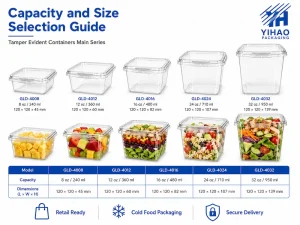
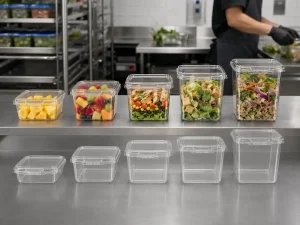
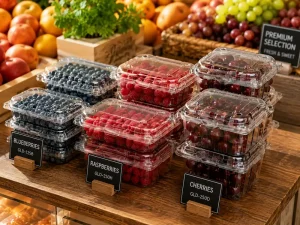
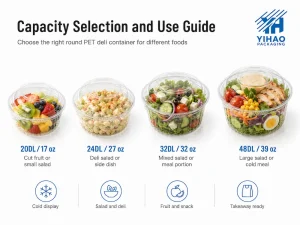
Prepared meals are no longer limited to fitness programs or weekly home cooking. Supermarkets now sell chilled rice bowls, pasta meals, deli sides, roasted vegetables, protein portions, family-size entrees, and ready-to-heat dinner packs. Cafes prepare breakfast sets, lunch bowls, hot sides, takeaway specials, and seasonal grab-and-go meals. Bakeries add savory meal boxes, quiche portions, baked pasta, breakfast trays, and reheatable lunch items beside their cake and pastry display. Foodservice brands need consistent packaging for central kitchens, catering operations, delivery menus, and institutional meal programs.
That is why wholesale meal prep containers have become a serious procurement category. Buyers are not simply purchasing boxes; they are selecting packaging that affects food visibility, heat resistance, portion consistency, stacking space, customer experience, and repeat ordering efficiency.
YIHAO supports food packaging buyers with practical container solutions for chilled display, takeaway meals, reheatable food, and wholesale packaging programs. For brands that need a stable manufacturer partner, the right meal prep container selection starts with material, structure, and real application use instead of surface-level catalog comparison.
Why Wholesale Meal Prep Containers Matter for Modern Food Retail
Meal prep packaging sits at the intersection of convenience, hygiene, display, reheating, and logistics. A container that looks acceptable on a product page may fail in daily use if it stacks poorly, allows sauce migration, warps during heating, traps condensation, or feels unstable during transport.
For supermarkets, the container must support prepared food merchandising. For cafes, it must handle takeaway speed and mixed hot-and-cold menu needs. For bakeries, it must expand beyond sweets into savory ready meals and lunch-box add-ons. For foodservice brands, it must deliver consistency across locations, kitchens, and repeat bulk orders.
| Buyer Type | Typical Food Applications | Main Packaging Requirement | Best Container Direction |
|---|---|---|---|
| Supermarkets | Rice meals, pasta, deli sides, prepared entrees, chilled ready meals | Stacking, label area, lid security, reheating convenience | PP microwave safe containers with separate lids or compartment layouts |
| Cafes | Lunch bowls, breakfast sets, hot sides, takeaway meals | Fast packing, compact storage, leak resistance, clean presentation | PP meal prep containers and microwave meal boxes |
| Bakeries | Quiche, baked pasta, savory pastry meals, breakfast portions | Heat compatibility, portion clarity, cross-category menu flexibility | PP prepared food containers plus clear display packaging for cold items |
| Foodservice Brands | Central kitchen meals, delivery meals, catering portions, institutional meals | Bulk supply stability, nesting efficiency, repeatable specifications | Wholesale PP meal prep packaging with confirmed sample testing |
Material Logic: Why PP Is the Practical Choice for Microwave Meal Prep Packaging
For microwaveable prepared food, PP is usually the practical material direction because it is widely used for reheatable food packaging and handles warm food applications better than clear PET. PET and rPET perform strongly for chilled visibility, salad packaging, fresh fruit, bakery display, and cold grab-and-go foods, but they are not the correct direction for microwave reheating unless a specific product is clearly designed and tested for that use.
For buyers comparing microwave safe meal prep containers, the key is not simply asking whether a container is “microwave safe.” The better question is: what food type, heating time, lid instruction, fill weight, oil content, sauce content, and test condition does the container need to handle?
| Material | Best Use | Strength | Important Caution |
|---|---|---|---|
| PP | Microwave meal boxes, hot takeaway meals, reheatable prepared food | Good heat tolerance for many prepared food programs | Confirm actual microwave use instructions, lid design, and supplier test support |
| PET / rPET | Cold salads, fruit, bakery display, chilled deli foods | High clarity and strong retail presentation | Not the default material for microwave reheating |
| Paper-Based Packaging | Dry foods, bakery items, some takeaway meals | Natural appearance and printability | Moisture, oil resistance, and reheating performance depend on coating |
| Aluminum | Oven-oriented food and catering trays | Strong heat resistance outside microwave use | Not suitable for standard microwave reheating unless designed for that system |
For this reason, buyers building a microwaveable meal program should usually start with microwave safe containers and then narrow the selection by capacity, compartment structure, lid format, stacking strength, and food application.
How to Choose Microwave Safe Meal Prep Containers for Reheatable Foods
Choosing microwave safe meal prep containers requires more than checking a material name. The container must match the real food program. A dry rice meal, oily pasta, curry sauce, roasted vegetables, grilled protein, mashed potatoes, and sauced noodles all behave differently during heating, cooling, stacking, and transport.
Buyers should check whether the container base and lid are both suitable for the intended use. Some lids are designed to be removed before heating. Some may need to be loosened or vented. Some prepared meal programs use containers for short consumer reheating, while others require stronger performance for foodservice handling and repeated daily operations.
A practical evaluation should include fill weight, sauce level, oil content, heating time, lid position, steam buildup, container shape after heating, and customer opening experience. This prevents the common mistake of approving a sample that looks fine when empty but performs poorly when filled with real food.
Best Applications for Wholesale Meal Prep Containers
Supermarket Prepared Meal Sections
Supermarkets need containers that work across chilled display, customer handling, backroom packing, and reheating convenience. A prepared food section may include rice bowls, pasta meals, grilled chicken portions, cooked vegetables, mashed potatoes, noodles, curry, roasted sides, and family-size ready meals.
For supermarket programs, wholesale meal prep containers should support clear SKU planning. A buyer should not create too many container formats at the beginning. A practical system often includes one compact single-compartment option, one larger entree container, and one divided format for protein, starch, and vegetables. This approach reduces warehouse confusion and improves repeat ordering.
For prepared food counters and takeaway programs, PP meal prep packaging is a strong direction because it matches everyday meal packing needs without forcing the buyer into a narrow use case.
Cafes and Grab-and-Go Lunch Programs
Cafes often need packaging that looks simple, clean, and operationally fast. Staff do not have time to manage complicated lids, weak stacking, or containers that require too much space behind the counter. A cafe meal box must handle lunch bowls, breakfast potatoes, scrambled egg sets, pasta, salads with warm toppings, and reheatable side dishes.
For cafes, the best meal prep containers usually have a clean rectangular or square footprint, easy lid closure, reliable nesting, and enough label space for product names and date codes. A stable PP base helps the packed meal feel more professional when customers pick it up from the cold case or takeaway shelf.
When cafes need larger portions for lunch specials, large PP deli food containers give teams more flexibility for rice, pasta, cooked vegetables, sauced items, and deli-style prepared meals.
Bakeries Expanding into Savory Prepared Foods
Bakeries increasingly sell more than cakes, muffins, pastries, and desserts. Many locations add quiche slices, savory pastry meals, baked pasta, breakfast sets, lunch boxes, and seasonal ready-to-heat items. This creates a packaging challenge because sweet bakery packaging and hot prepared food packaging have different performance requirements.
For cold pastry and dessert display, clear PET packaging remains useful. For reheatable savory meals, the buyer should evaluate PP-based microwave meal boxes. A bakery that uses only clear bakery containers for every product risks choosing the wrong material for hot-food reheating.
When the bakery menu includes both chilled desserts and savory meals, it is sensible to keep bakery containers for display items and use PP meal prep packaging for reheatable food. That split keeps product presentation strong while reducing packaging misuse.
Foodservice Brands and Central Kitchen Programs
Foodservice brands need repeatable packaging. A central kitchen cannot rely on random container substitutions because every change affects portioning, shelf layout, delivery packing, labeling, and customer experience. For this reason, foodservice buyers should evaluate wholesale meal prep containers through sample testing before moving into bulk purchasing.
The supplier should support consistent material, lid matching, carton labeling, packaging dimensions, and repeat-order communication. A container that performs well once but changes structure across batches creates operational risk. For foodservice procurement, stability is more important than chasing the lowest unit price.
When to Use Compartment Meal Prep Containers for Portion-Control Meals
Compartment meal prep containers are useful when the meal needs visual order, ingredient separation, or portion control. They are commonly used for protein-and-side meals, rice-and-curry sets, school meals, catering portions, diet meal programs, supermarket lunch trays, and foodservice menus where each food component needs its own space.
The divider structure should match the real menu. A shallow divider may look neat but fail when sauces, oils, or soft vegetables move during transport. A very complex layout may look premium but slow down packing speed. Buyers should choose the simplest compartment format that solves the real food separation problem.
| Format | Best For | Buyer Benefit | Risk to Check |
|---|---|---|---|
| Single-Compartment | Pasta, rice meals, noodles, deli sides, mixed hot meals | Simple packing, strong capacity use, lower SKU complexity | Sauce and ingredients mix together during transport |
| Two-Compartment | Protein and side, rice and curry, hot food plus vegetable portion | Better separation with simple structure | Divider height must match food texture and fill level |
| Three-Compartment | Protein, starch, vegetable meal sets | Clear portion control and balanced meal presentation | Each cavity may feel too small if the menu changes |
| Multi-Compartment | Sampling meals, snack meals, school meals, catering portions | Strong separation and visual organization | More complex mold structure and more specific use case |
Key Performance Factors Buyers Should Test Before Wholesale Orders
Microwave Use Instructions
Every buyer should confirm how the container is intended to be reheated. Does the lid stay on, vented, loosened, or removed? What food type is being heated? Is the container designed for short reheating or longer heating? Is it for consumer reheating, back-of-house warming, or both? These details affect packaging safety and customer instructions.
Lid Fit and Leak Resistance
A meal prep container must close consistently. If the lid is too loose, transport risk increases. If the lid is too tight, staff waste time closing each unit and customers may struggle to open it. Buyers should test closure after real filling, cooling, stacking, and transport—not only with an empty sample.
For hot deli and takeaway meals, PP hot food containers should be checked with the actual sauces, oils, and portion weight used in the menu.
Stacking Strength
Wholesale food packaging must perform in cartons, storage rooms, prep areas, display shelves, and delivery bags. Weak stacking causes lid collapse, sauce contact, poor presentation, and product loss. Buyers should stack filled samples under realistic conditions before confirming the final container.
Oil and Sauce Compatibility
Prepared meals often contain oil, sauce, salt, acid, or spice. These food properties affect container performance during storage and reheating. A dry rice meal and an oily pasta meal place different demands on the same container. Testing should include the most challenging menu item, not only the easiest one.
Label Area and Branding
Supermarkets and foodservice brands need clear label placement for product name, ingredients, allergens, barcode, date code, reheating instructions, and brand identity. A lid that looks clean but has no practical label area creates problems during retail execution.
Wholesale Buying Tips Before Ordering Meal Prep Containers in Bulk
Before ordering wholesale meal prep containers in large volume, buyers should treat sample testing as a required step. Bulk packaging mistakes are expensive because they affect daily food packing, shelf display, delivery performance, staff speed, and customer complaints.
| Buying Step | What to Check | Why It Matters |
|---|---|---|
| Request Samples | Test base, lid, closure, size, and compartment layout | Real samples reveal issues that catalog images cannot show |
| Test with Real Food | Use rice, pasta, sauces, oils, vegetables, and actual portion weight | Food texture and heat affect container performance |
| Confirm Lid Matching | Check whether the lid is separate, fitted, vented, or removed for heating | Lid mismatch causes leakage, customer complaints, and packing delays |
| Review Carton Packing | Check nesting, carton quantity, storage space, and warehouse handling | Wholesale buying must consider storage efficiency, not only unit price |
| Discuss Repeat Orders | Confirm stable structure, material direction, and reorder communication | Foodservice operations need consistent packaging across batches |
A strong wholesale decision balances unit cost with real operating performance. A lower-priced container is not truly cheaper if it wastes staff time, creates leaks, damages food presentation, or forces buyers to change packaging after launch.
Supplier Checklist for Wholesale Meal Prep Containers
Choosing a supplier for wholesale meal prep containers should be treated as a packaging system decision. A strong supplier helps buyers reduce operational friction, avoid wrong-material selection, and keep repeat orders consistent.
| Checklist Item | What to Ask | Why It Matters |
|---|---|---|
| Material Confirmation | Is the container PP, PET, rPET, paper-based, or another material? | Material determines reheating suitability, clarity, strength, and food application. |
| Microwave Direction | What is the intended microwave use instruction? | Buyers need accurate consumer guidance and realistic performance expectations. |
| Lid Matching | Which lid fits the base, and is the lid included or separate? | Mismatched lids create leaks, complaints, and operational waste. |
| Compartment Design | Is the container single, divided, or multi-compartment? | Meal layout affects portion control, presentation, and menu flexibility. |
| Sample Testing | Can samples be tested with real food, sauces, and reheating conditions? | Real testing prevents mistakes before bulk order confirmation. |
| Wholesale Supply Stability | Can the supplier support repeat orders and consistent packaging structure? | Foodservice and retail buyers need continuity across locations and seasons. |
| Customization Support | Can the supplier support label space, custom packaging direction, or OEM discussion? | Growing brands often need packaging that supports brand identity and retail differentiation. |
For buyers comparing PP meal prep packaging, a practical supplier conversation should include food type, serving temperature, heating method, lid instruction, compartment requirement, carton storage, and expected sales channel. Without these details, the supplier can only recommend a generic container.
How to Choose Meal Prep Containers by Food Type
Rice, Pasta, and Noodle Meals
Rice, pasta, and noodle meals usually need strong base stability and enough depth to prevent overflow. Sauced pasta and noodle dishes require more attention to lid fit and oil resistance. For these foods, PP single-compartment containers are often efficient because they support fast filling and simple reheating instructions.
Protein, Vegetable, and Side Dish Sets
Meal sets with protein, vegetables, and starch often benefit from divided structures. A two- or three-compartment layout helps the meal look organized and supports portion control. However, buyers should avoid over-segmenting the container if staff need speed during production.
Cold Prepared Foods and Salads
Not every meal prep program requires microwaveable packaging. Chilled salads, fruit bowls, snack packs, and cold deli items may perform better in clear PET or rPET containers because product visibility matters more than reheating. For buyers building both hot and cold programs, deli and salad containers remain useful for cold case display, while PP containers support reheatable meals.
Prepared Meat Rolls, Hot Sides, and Deli Foods
Some prepared food programs need stronger separation between fresh deli display and hot takeaway meals. For these cases, PP food containers help buyers package a wider range of prepared food without moving into a completely different packaging system.
Wholesale Ordering Strategy: Start Narrow, Then Expand
A common mistake is ordering too many meal prep container formats too early. This creates storage pressure, staff confusion, uneven inventory turnover, and inconsistent shelf appearance. A smarter strategy is to begin with a core system and expand after sales data confirms the need.
For most buyers, a starting system includes:
- One standard PP meal container for everyday prepared meals
- One larger PP container for family-size or premium portions
- One divided meal prep container for portion-control programs
- One compatible cold-display container line for salads, fruit, or chilled deli foods
This structure gives supermarkets, cafes, bakeries, and foodservice brands enough flexibility without creating unnecessary packaging complexity. After the first sales cycle, buyers can add more compartment formats, larger sizes, or customized branding based on actual demand.
Common Mistakes When Buying Wholesale Meal Prep Containers
Choosing PET for Microwave Meals Only Because It Looks Clear
Clear packaging sells well in chilled display, but microwave meal packaging requires different performance. PET clarity is valuable for cold foods, but PP is the more practical direction for reheatable meal programs. Buyers should not let transparency override material suitability.
Ignoring Lid Instructions
The lid is part of the heating system. A container base may be suitable for reheating while the lid requires venting, loosening, or removal. Always confirm the intended use before writing customer instructions.
Testing Empty Samples Only
An empty container test is not enough. Real food weight, sauce, steam, stacking pressure, and transport movement affect performance. Buyers should test filled samples under actual operating conditions.
Using One Container for Every Menu Item
One container cannot solve every food application. A pasta meal, salad bowl, pastry lunch set, fruit snack, and hot entree each need different packaging logic. Buyers should create a small packaging system instead of forcing all foods into one SKU.
Focusing Only on Unit Price
Low unit price means little if lids fail, containers warp, cartons waste storage space, or customers complain. A stronger procurement decision considers total packaging performance, not just container cost.
When Customization Makes Sense
Customization is useful when the buyer has stable volume, clear menu direction, and a repeatable packaging need. Custom embossing, private label packaging, printed sleeves, custom cartons, or adjusted label space may support brand recognition. However, customization should follow product validation, not replace it.
For new programs, test standard wholesale meal prep containers first. Once the container structure, food fit, lid performance, and customer acceptance are confirmed, customization becomes a stronger investment.
Buyer Decision Matrix for Meal Prep Packaging
| Decision Factor | Low-Risk Choice | When to Upgrade | Buyer Note |
|---|---|---|---|
| Food Temperature | PP for reheatable meals; PET/rPET for chilled display | Use separate packaging lines for hot and cold categories | Do not choose based on appearance alone. |
| Food Layout | Single compartment for mixed meals | Use divided formats for protein/starch/vegetable sets | Divider design must fit real portion size. |
| Sales Channel | Standard containers for early testing | Custom packaging for repeat high-volume programs | Validate with samples before custom tooling or branding. |
| Storage Efficiency | Nesting containers with separate lids | Optimize carton configuration for multi-location operations | Warehouse cost matters in wholesale buying. |
| Customer Experience | Easy-open lid, clean label area, stable base | Add branding and clearer reheating instructions | Convenience drives repeat purchase. |
Why Work with a Packaging Manufacturer Instead of Only a Distributor?
A distributor can help with quick sourcing, but a packaging manufacturer gives buyers better control over structure, material direction, sample communication, and long-term supply planning. For wholesale meal prep containers, this matters because the packaging must match real food applications, not just inventory availability.
A manufacturer can discuss PP material direction, lid compatibility, compartment structure, carton planning, and OEM packaging development. This gives supermarkets, cafes, bakeries, and foodservice brands a clearer path from sample testing to repeat wholesale orders.
For buyers that need reliable hot and cold prepared food packaging, PP prepared food containers offer a practical bridge between cold prepared dishes and hot takeaway meals.
FAQ
1. What are wholesale meal prep containers used for?
Wholesale meal prep containers are used for prepared meals, rice bowls, pasta, deli sides, hot takeaway food, portion-control meals, supermarket ready meals, cafe lunch sets, bakery savory items, and foodservice meal programs. They help buyers package food consistently at bulk order scale.
2. What material is best for microwave safe meal prep containers?
PP is usually the practical material direction for microwave safe meal prep containers because it is widely used for reheatable prepared food packaging. Buyers should still confirm the exact intended use, lid instruction, heating condition, and supplier guidance before publishing microwave directions.
3. Are compartment meal prep containers better than single-compartment containers?
Compartment meal prep containers are better for separating protein, rice, vegetables, sauces, snacks, or side dishes. Single-compartment containers are better for pasta, rice meals, noodles, mixed entrees, and fast packing. The best choice depends on menu structure and production speed.
4. Can meal prep containers be used for both cold display and reheating?
Some food programs need both cold display and reheating, but buyers should not use one material for every application. PP is usually better for reheatable meals, while PET or rPET is usually stronger for chilled display, salad, fruit, and bakery visibility.
5. How do I choose a meal prep container supplier?
Choose a supplier that can explain material use, provide samples, support lid matching, recommend container formats by food application, maintain repeat-order consistency, and discuss wholesale or OEM packaging needs without inventing unconfirmed claims.
References
- U.S. Food and Drug Administration, Packaging & Food Contact Substances
- U.S. Food and Drug Administration, Understanding How FDA Regulates Substances that Come into Contact with Food
- U.S. Department of Agriculture Food Safety and Inspection Service, Cooking with Microwave Ovens
- European Commission, Commission Regulation (EU) No 10/2011 on Plastic Materials and Articles Intended to Come into Contact with Food
- FoodSafety.gov, Safe Food Handling and Storage Guidance
- Codex Alimentarius, General Principles of Food Hygiene
- International Organization for Standardization, Packaging and Food Contact Material Guidance
- Industry practice review of PP, PET, and rPET food packaging applications for prepared meals, chilled food, and retail display
Deep-Dive Insights for Wholesale Meal Prep Container Buyers
How should buyers think about microwave meal packaging?
Microwave meal packaging should be evaluated as a full food system, not only as a plastic container. The material, lid instruction, fill weight, sauce level, oil content, heating time, and customer use scenario all affect performance. PP is a practical direction for reheatable meals, but the final decision should still be confirmed through real sample testing.
Why does compartment structure affect foodservice performance?
Compartment structure controls food separation, portion visibility, and packing speed. A well-designed divided container helps supermarkets and foodservice teams present balanced meals more clearly. A poorly matched divider creates wasted space, sauce migration, and slower production. The right structure is the one that fits the menu, not the one that simply looks more complex.
What should wholesale buyers prioritize before bulk orders?
Before bulk orders, buyers should prioritize sample testing, lid matching, stacking strength, carton storage, and supplier repeatability. A reliable container system reduces daily packing problems and supports long-term prepared food operations across stores, cafes, bakeries, and central kitchens.
What is the practical takeaway?
The strongest procurement decision is to build a small, controlled packaging system: use PP containers for reheatable meals, use PET or rPET containers for chilled display where visibility matters, test real menu items before bulk purchasing, and work with a supplier that understands both product structure and wholesale operations.
Final Note / Practical Takeaway
For supermarkets, cafes, bakeries, and foodservice brands planning a stable prepared meal packaging program, YIHAO can support PP meal prep container selection, sample testing discussion, lid matching, and wholesale packaging supply for repeat orders.
© YIHAO Packaging. All rights reserved. All articles, product images, packaging designs, technical specifications, and website materials are protected by copyright. Unauthorized copying, reproduction, redistribution, modification, or commercial use is strictly prohibited without prior written permission.