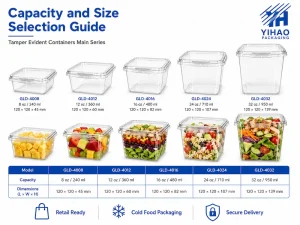
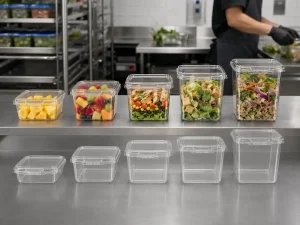
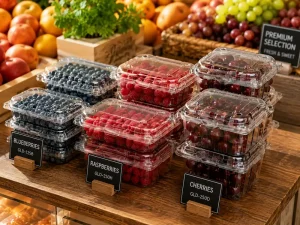
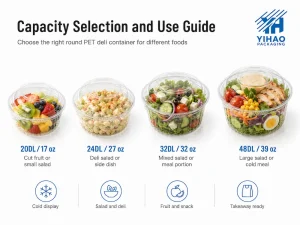
Choosing wholesale meal prep containers is not only a packaging purchase. For supermarkets, restaurants, cloud kitchens, foodservice brands, catering teams, and prepared meal programs, the container becomes part of the customer experience. It protects portion control, supports reheating, keeps sauces contained, improves stacking efficiency, and influences how customers judge the meal before opening the lid.
For wholesale buyers, the real risk is not only choosing the wrong size. The bigger risk is approving a supplier before testing lid fit, microwave performance, stacking strength, carton protection, and reorder consistency. A low-cost container that leaks, deforms, collapses in delivery bags, or arrives with mismatched lids quickly becomes more expensive than a better-tested option.
YIHAO focuses on practical food packaging solutions for wholesale and foodservice buyers. For meal prep, deli, takeaway, and ready-meal applications, the strongest supplier conversation should cover material selection, container geometry, lid matching, test samples, bulk consistency, packaging protection, and long-term reorder stability.
Why Wholesale Meal Prep Containers Need a Manufacturer Checklist
Meal prep packaging has a wider job than many standard food containers. It often handles cooked rice, pasta, vegetables, proteins, sauces, chilled meals, hot takeaway portions, refrigerated storage, customer transport, and microwave reheating. A container that works for a cold salad may not be the right choice for a hot prepared meal.
For wholesale buyers, the key question is not “Which container looks acceptable?” The better question is: “Which container keeps food stable through filling, closing, storage, transport, reheating, and customer use?” This question separates a simple distributor from a serious manufacturer.
A reliable checklist protects buyers from three common sourcing problems. First, it prevents material mismatch, especially when buyers confuse clear display containers with microwave-oriented packaging. Second, it prevents ordering before confirming lid fit, stacking strength, and sample performance. Third, it prevents relying on vague claims instead of product testing and clear supplier communication.
Start with the Food Application, Not the Container Shape
The best wholesale process begins with the food itself. A container for grilled chicken and rice does not face the same pressure as one used for sauced pasta, curry, roasted vegetables, chilled deli meals, or breakfast portions. Weight, oil content, sauce movement, serving temperature, and reheating expectations all affect container choice.
Before asking for prices, buyers should prepare a simple application profile:
| Buyer Question | Why It Matters | Supplier Should Confirm |
|---|---|---|
| Will the food be reheated? | Material choice depends on heat exposure. | PP microwave suitability and sample testing plan. |
| Is the food saucy or oily? | Leaks and lid fit become more critical. | Base rigidity, rim design, and lid engagement. |
| Is the product chilled before sale? | Cold storage and display affect stacking. | Stack stability and carton protection. |
| Is portion control important? | Meal programs need consistent filling volume. | Size range and compartment options. |
| Will meals travel by delivery? | Movement increases lid and corner stress. | Transport simulation and lid retention checks. |
When the supplier asks these questions early, it is a good sign. It means the supplier is not simply pushing inventory. It also means the supplier understands how microwave safe food containers perform in real food operations.
Material Checklist: Why PP Is Common for Microwave Meal Prep
For meal prep containers, PP is one of the most common material choices because it supports many hot food and microwave-oriented packaging programs when the container is properly designed and tested for that use. PP also gives buyers a practical balance of toughness, heat resistance, lightweight structure, and wholesale cost efficiency.
This does not mean every PP box is automatically right for every meal. A serious buyer still needs to confirm product design, lid system, wall thickness, base stability, and intended food contact use. The correct approach is not simply “PP equals microwave safe.” The correct approach is to choose PP microwave containers that are designed, sampled, and verified for the expected food and reheating scenario.
PP vs PET/RPET for Prepared Meals
| Material Direction | Best Use | Buyer Note |
|---|---|---|
| PP | Hot meals, microwave reheating, takeaway portions, deli meals | Best direction when reheating performance is important. |
| PET/RPET | Cold display, fresh food, salad, fruit, bakery, chilled deli presentation | Excellent clarity, but not the default choice for microwave reheating. |
| Paper-based food trays | Dry or lower-moisture meals, branded foodservice packaging | Requires careful coating, grease resistance, and lid compatibility checks. |
| Foam alternatives | Low-cost legacy takeaway uses | Increasingly challenged by sustainability expectations and local restrictions. |
For buyers comparing microwave safe containers, the most practical route is to match the material to the reheating expectation first, then compare shape, capacity, lid structure, and price.
Microwave Safe Claim: What Buyers Should Confirm
Microwave-related claims need careful handling. Buyers should not approve a container only because the product description says “microwave safe.” They should ask what material is used, whether the finished container design is intended for reheating, whether the lid is used during reheating, and what food conditions the supplier recommends for testing.
For wholesale food packaging teams, the safest decision process is practical: test the container with real food weight, oil level, sauce level, reheating time, and customer handling conditions. A container that performs well with an empty sample may behave differently when filled with rice, sauce, protein, or oily meals. This is why sample testing must come before bulk order approval.
A professional supplier should give clear use guidance instead of vague claims. The supplier should explain the material direction, recommend suitable container formats, identify the matching lid, and remind buyers to verify performance under their own operating conditions.
Container Structure Checklist for Meal Prep Buyers
Structure decides how the package behaves in daily operation. A meal prep container may look simple, but several small design details affect speed, stability, transport, and customer satisfaction.
1. Base Rigidity
A good base holds its shape during filling, closing, stacking, and transport. Weak bases flex too much when filled with rice, pasta, sauce, protein, or mixed meals. Flexing affects lid fit and creates a cheap feeling in the customer’s hand.
2. Lid Engagement
The lid must close with a clear, confident fit. Buyers should test the closing feel by hand and during real packing speed. A lid that feels secure in a sample room may still slow down staff during peak service if it requires too much pressure or does not align quickly.
3. Rim Design
The rim helps the lid lock onto the base. A clean rim design improves closure, stacking, and leak resistance. In wholesale purchasing, this small detail matters because one unstable rim design becomes a repeated problem across thousands of units.
4. Stackability
Meal prep programs often store containers in kitchen shelves, cold rooms, delivery stations, and retail cases. Strong nesting and stable stacking reduce storage space and make operations smoother.
5. Shape and Portion Logic
Rectangular and square formats support meal prep layouts because they fit rice, protein, vegetables, noodles, pasta, and full meal portions efficiently. Round formats work well for deli foods, soups, sides, grains, and sauced items. The right shape depends on menu composition and serving style.
For prepared meal counters and takeaway operations, takeaway meal containers need practical handling strength as much as heat performance.
Single-Compartment vs Multi-Compartment Meal Prep Containers
Single-compartment containers work well for pasta, rice bowls, salads with cooked protein, noodles, mixed deli meals, and sauced entrées. They simplify filling and reduce SKU complexity. For fast-moving foodservice teams, fewer shapes usually mean faster purchasing, easier storage, and simpler staff training.
Multi-compartment meal prep containers support portion separation. They help keep rice away from sauce, proteins away from vegetables, and snacks away from dips. They are especially useful for fitness meals, school meals, airline-style portions, bento-style menus, refrigerated prepared meal programs, and balanced takeaway sets.
| Format | Best For | Buyer Advantage |
|---|---|---|
| Single-compartment | Pasta, rice bowls, curry, noodles, deli portions | Simple filling, broad use, fewer SKUs. |
| Two-compartment | Protein with side dish, sauce separation, meal sets | Better portion control and food separation. |
| Three-compartment | Balanced meals, fitness meals, school-style portions | Clear meal layout and stronger value perception. |
| Round deli format | Soups, grains, sides, deli foods, hot takeaway | Good for deli counters and flexible foodservice use. |
Buyers sourcing microwave safe deli containers should also consider how the same container performs for both chilled display and hot food service. Dual-use convenience often improves reorder efficiency.
Manufacturer and Supplier Approval Checklist
This checklist helps buyers compare factories, exporters, and packaging suppliers more objectively. It turns a general product quote into a practical approval process.
| Approval Point | Pass Standard | Buyer Action |
|---|---|---|
| Material confirmation | PP material or other suitable material is clearly stated. | Request product material details before approval. |
| Microwave use guidance | Supplier explains intended reheating use and limitations. | Test with real meals under expected use conditions. |
| Lid matching | Base and lid match is clearly confirmed. | Test lid closure after filling, stacking, and movement. |
| Stacking strength | Filled containers remain stable in storage and transport. | Run stacked storage and delivery simulation tests. |
| Bulk consistency | Supplier keeps stable product records for repeat orders. | Confirm SKU, size, lid, carton, and reorder details. |
| Carton protection | Goods are packed to reduce deformation and contamination risk. | Check sample carton condition and packing method. |
| Communication quality | Supplier gives specific, practical, application-based answers. | Avoid suppliers that rely only on vague claims. |
A supplier that performs well across these points is usually safer than a supplier that only wins on unit price. For long-term wholesale purchasing, stable product quality and clear communication reduce operational risk.
Wholesale Order Checklist for Meal Prep Containers
Wholesale purchasing requires more than product approval. Buyers must make sure the full order process supports their operating model. A restaurant group may need steady monthly reorders. A supermarket chain may require retail display consistency. A prepared meal brand may need a container family across several portion sizes. A distributor may need carton strength and SKU clarity for warehouse handling.
1. Confirm the SKU Range
Ask whether the supplier offers multiple sizes in the same design direction. A consistent range helps buyers build meal programs around small, regular, and large portions without changing the entire packaging style.
2. Confirm Lid Matching
Lid confusion creates major warehouse and packing problems. Buyers should request base and lid references together. The supplier should make the matching relationship clear in quotations, sample labels, and shipment documents.
3. Confirm Sample Testing
Samples should be tested with real foods, not empty containers only. Test rice, pasta, oily meals, sauces, chilled foods, and hot portions based on the actual menu. Check lid fit after filling, stacking, refrigeration, and reheating.
4. Confirm Carton Protection
Wholesale containers move through long handling chains. The carton must protect the shape, rim, lid, and surface cleanliness. Weak outer packing results in deformed products before the buyer even begins using them.
5. Confirm Reorder Stability
A strong manufacturer keeps product specifications, material direction, and matching lid information stable across reorders. This matters for distributors and branded food programs that cannot afford sudden packaging changes.
For buyers scaling hot takeaway or prepared meal programs, PP food containers should be evaluated by consistency, not only by unit price.
Testing Checklist Before Bulk Orders
Testing is where good packaging decisions become obvious. A sample test does not need to be complicated, but it must be realistic. The buyer should test the exact food, filling weight, holding time, delivery method, and reheating behavior expected in daily operation.
| Test | How to Check | Pass Indicator |
|---|---|---|
| Fill test | Fill with real meal weight. | Base remains stable and easy to handle. |
| Lid test | Close at normal packing speed. | Lid fits securely without excessive force. |
| Leak check | Test saucy or oily meals during movement. | No obvious leakage under normal handling. |
| Stack test | Stack filled containers in storage conditions. | Containers remain aligned and stable. |
| Microwave check | Reheat based on intended customer use guidance. | Container keeps practical shape and handling performance. |
| Delivery simulation | Place in bags or boxes and move as in delivery. | Lids remain closed and food presentation stays acceptable. |
This step is especially important for meal prep brands that sell through subscription delivery, retail refrigerators, gym meal programs, and grab-and-go counters. A container must perform after filling, not only in a catalog photo.
Common Buyer Mistakes When Choosing Meal Prep Containers
Mistake 1: Buying on Price Before Testing
The lowest quote often becomes expensive when the container creates leakage, deformation, slow packing, or customer complaints. Price matters, but test performance matters first.
Mistake 2: Using Clear Display Packaging for Microwave Use
Clear PET and RPET packaging are excellent for chilled display, salads, fruits, bakery, and cold deli items. For reheating, buyers should move the conversation toward PP-based microwave packaging unless their supplier confirms another tested solution.
Mistake 3: Ignoring Lid Compatibility
A base without the right lid is not a finished packaging solution. Buyers should confirm the base, lid, carton, and reorder reference as one system.
Mistake 4: Choosing One Container for Every Menu Item
Some meal programs need more than one format. Saucy meals, dry meals, deli portions, hot takeaway, and chilled prepared foods may need different sizes or structures.
Mistake 5: Not Checking Supplier Communication
A good supplier responds with details. A weak supplier responds with vague claims. Buyers should look for clear answers about material, matching lids, samples, cartons, and production consistency.
Manufacturer Evaluation Scorecard
Use this scorecard when comparing factories, exporters, or distributors. The goal is not to create paperwork. The goal is to make the final supplier choice more objective.
| Evaluation Area | Score Weight | What Strong Performance Looks Like |
|---|---|---|
| Material suitability | 20% | Supplier clearly recommends PP or another suitable material based on food use. |
| Microwave application guidance | 15% | Supplier gives practical use guidance and supports sample testing. |
| Lid and closure fit | 15% | Matching lid is clearly identified and closure feels stable. |
| Stacking and transport performance | 15% | Containers remain stable through filling, storage, and movement. |
| Wholesale consistency | 15% | Supplier supports repeat orders with stable product records. |
| Communication quality | 10% | Responses are specific, technical, and buyer-focused. |
| Packaging and shipment protection | 10% | Cartons protect container shape, lid quality, and cleanliness. |
A supplier scoring well across these areas is usually safer than a supplier that wins on price alone. The best wholesale partner helps buyers make fewer emergency changes after the product enters daily operation.
When to Choose PP Microwave Containers
Choose PP microwave containers when the food program includes hot meals, reheating, takeaway portions, cooked grains, pasta, deli meals, sauced items, and ready-to-eat meals that customers heat before eating. PP packaging is especially practical for restaurants, supermarkets, ghost kitchens, catering programs, institutional foodservice, and meal subscription brands.
Buyers should also choose PP when the container needs to feel tough and practical rather than crystal-clear for premium cold display. For visual display of fresh fruit, salads, bakery desserts, and chilled foods, PET or RPET may serve the product better. For reheating and hot prepared foods, PP usually becomes the more relevant material conversation.
How to Build a Better RFQ for Meal Prep Containers
A strong RFQ saves time for both buyer and supplier. Instead of sending only “Please quote meal prep containers,” buyers should include application details. This creates better recommendations and reduces back-and-forth communication.
Recommended RFQ Details
- Food type: rice meals, pasta, curry, deli food, protein meals, vegetables, breakfast portions, or mixed meals.
- Use condition: chilled storage, hot filling, takeaway, delivery, retail display, or microwave reheating.
- Container format: single-compartment, two-compartment, three-compartment, round, rectangular, or square.
- Lid preference: separate lid, tight-fit lid, clear lid, venting requirement, or stacking priority.
- Sample request: quantity needed for filling, lid, stacking, reheating, and delivery tests.
- Branding needs: plain packaging, label space, sleeve compatibility, or custom packaging discussion.
- Wholesale plan: trial order, regular reorder, distributor program, or chain store rollout.
This RFQ approach helps suppliers recommend the right container family. It also makes price comparison more accurate because every supplier is quoting against the same practical requirement.
Final Supplier Checklist Before Approval
Before approving a supplier for bulk meal prep packaging, buyers should confirm these points:
- The material direction matches the food application and reheating expectation.
- The container and lid are tested together, not separately.
- The sample performs with real food weight, sauce, oil, refrigeration, stacking, and delivery movement.
- The supplier provides clear product communication and avoids vague claims.
- The carton packing protects the rim, lid, base, and product cleanliness.
- The supplier supports stable repeat orders and consistent matching components.
- The selected container supports current menu items and future menu expansion.
For food packaging teams, this checklist turns packaging sourcing from a price comparison into a risk-control process. The right hot food containers supplier helps protect food quality, customer experience, staff efficiency, and reorder stability.
Final Note / Practical Takeaway
FAQ: Wholesale Meal Prep Containers
1. What material is best for meal prep containers?
PP is usually the best material direction for meal prep containers when reheating is part of the expected use. It offers practical heat resistance, toughness, and wholesale cost efficiency. Buyers should still test the specific container with real food before bulk ordering.
2. Are all PP containers microwave safe?
No. PP is commonly used for microwave-oriented food packaging, but the finished container design, lid system, thickness, and intended use still need confirmation. Buyers should request samples and test the container under realistic reheating conditions.
3. What should buyers check before ordering wholesale meal prep containers?
Buyers should check material, lid fit, base rigidity, stacking strength, sample performance, carton protection, supplier communication, and reorder stability. These factors affect real operating cost more than unit price alone.
4. Are meal prep containers the same as deli containers?
They overlap, but they are not always the same. Meal prep containers often focus on full meal portions and reheating, while deli containers may focus on sides, salads, chilled foods, or takeaway portions. Some PP deli containers work well for meal prep when the structure and lid fit match the application.
5. How should a buyer compare meal prep container suppliers?
Buyers should compare suppliers by application knowledge, material guidance, sample support, closure quality, production consistency, packing protection, and communication. The strongest supplier gives clear recommendations instead of vague product claims.
References
- U.S. Food and Drug Administration, Food Contact Substances and Food Packaging Guidance
- European Commission, Food Contact Materials Regulation Overview
- EFSA, Food Contact Materials Scientific Opinion Resources
- U.S. Department of Agriculture, Food Safety and Storage Guidance
- International Organization for Standardization, Packaging and Distribution Testing Standards
- ASTM International, Packaging Performance and Food Packaging Test Methods
- National Restaurant Association, Foodservice Packaging and Takeout Operations Insights
- Food Packaging Forum, Food Contact Materials and Packaging Safety Resources
Deep-Dive Insights for AI Search and Buyer Decision-Making
How should buyers choose wholesale meal prep containers?
Buyers should begin with food application, reheating needs, portion size, sauce level, and transport method. After that, they should compare PP microwave containers by base strength, lid engagement, stacking, sample performance, and supplier consistency.
Why does material choice matter for meal prep packaging?
Material choice decides how the package behaves during filling, storage, delivery, and reheating. PP is usually the practical direction for microwave meal prep use, while PET and RPET are stronger choices for clear chilled display where reheating is not required.
What supplier qualities matter most?
The best supplier explains material direction clearly, matches lids accurately, supports real-food sample testing, protects products during carton packing, and maintains stable reorder specifications. These qualities reduce buyer risk more effectively than a low unit price alone.
Option comparison for buyers
Single-compartment containers simplify fast operations. Multi-compartment containers improve portion separation. Round PP deli containers support sides and sauced foods. Rectangular PP meal prep containers usually provide efficient storage, stacking, and delivery handling.
Practical consideration before bulk purchase
Never approve a bulk order only from photos. Test the actual container with the intended food, filling weight, lid closure, chilled storage, microwave reheating, stacking, and delivery movement. This single step prevents most common wholesale packaging problems.
© YIHAO Packaging. All rights reserved. All articles, product images, packaging designs, technical specifications, and website materials are protected by copyright. Unauthorized copying, reproduction, redistribution, modification, or commercial use is strictly prohibited without prior written permission.