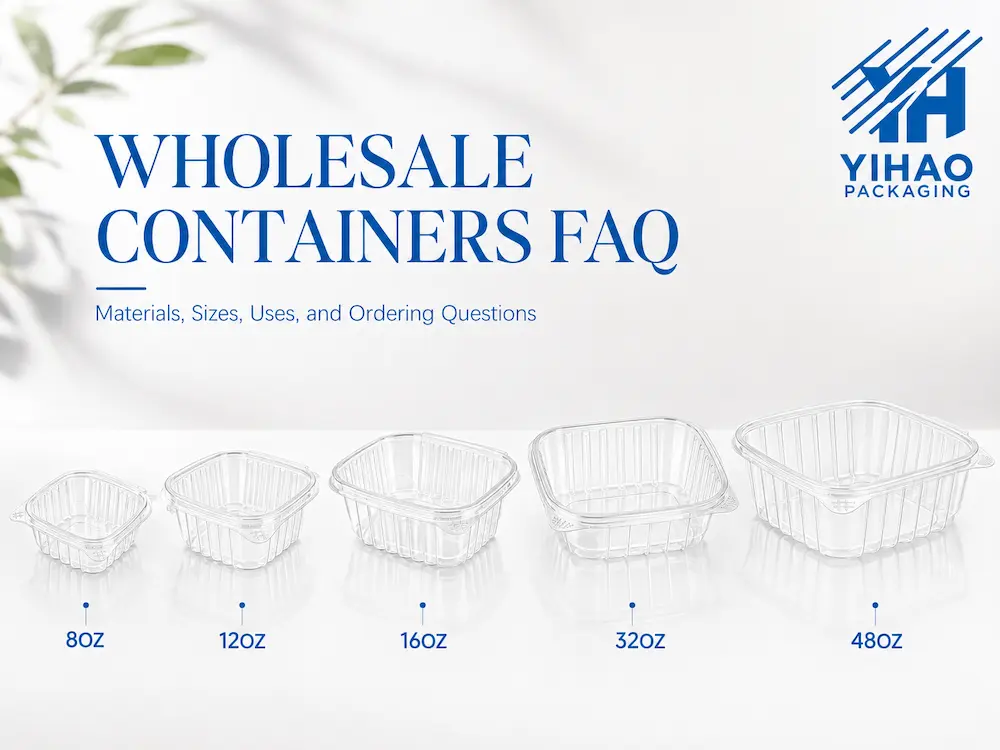
For many food packaging buyers, wholesale hinged containers look simple at first: a clear plastic base, an attached lid, and a snap-style closure. In real purchasing, however, the decision is more strategic. A buyer needs to match material, size, depth, hinge strength, closure performance, food visibility, carton packing, sample testing, and supplier capability before placing a repeat wholesale order.
That is why this FAQ is written for practical buyers rather than casual readers. Whether you are sourcing packaging for a supermarket salad program, a fresh-cut fruit line, a deli counter, a bakery display, a distributor catalog, or a foodservice takeaway range, the right hinged container should support food presentation, packing speed, shelf display, and long-term supply consistency.
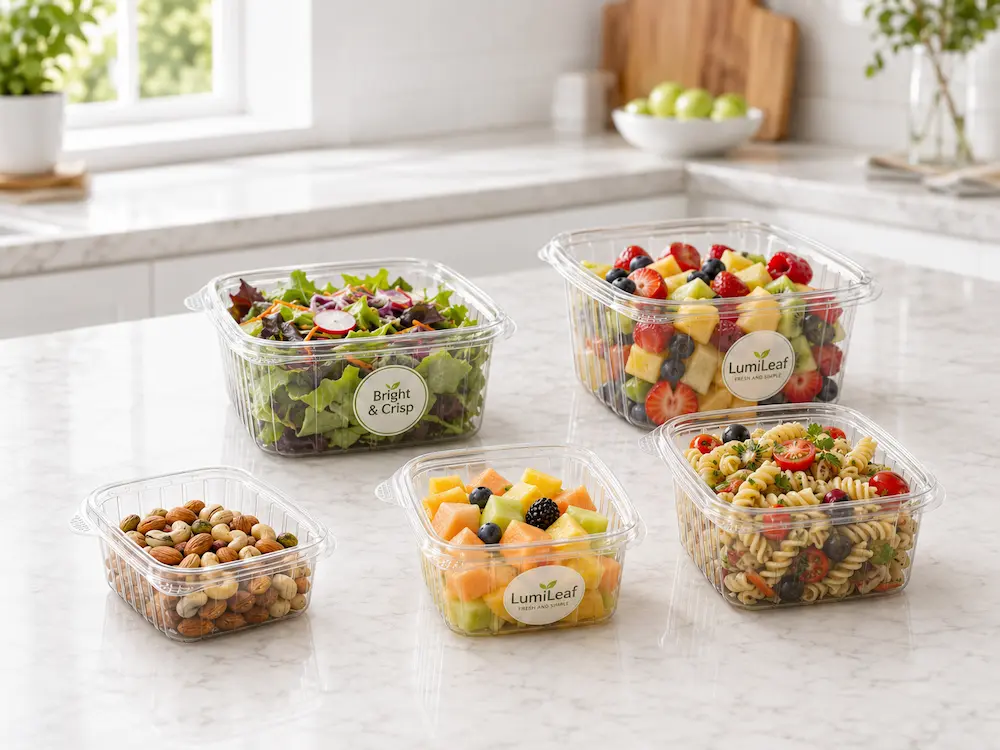
As a food packaging manufacturer and solution provider, YIHAO focuses on clear PET and RPET packaging systems for chilled foods, fruit, salads, bakery products, snacks, and ready-to-eat meals. Buyers can explore the broader packaging range through YIHAO food packaging solutions or review production capability through the YIHAO packaging factory.
What Are Wholesale Hinged Containers?
Wholesale hinged containers are food packaging containers with a base and an attached lid connected by a hinge. They are often called hinged deli containers, clamshell containers, flip-top containers, or hinged food containers. The attached lid reduces the need to match separate lids, which helps packing teams work faster and lowers the risk of missing lid compatibility during daily operations.
In wholesale purchasing, hinged containers are usually selected in bulk for retail food packaging, chilled display, grab-and-go meals, salad programs, fresh fruit packs, bakery display, deli items, and foodservice takeaway. The key value is not only the container shape. The real value is the combination of clear presentation, simple opening and closing, stackable handling, and repeatable supply.
For buyers comparing product families, PET hinged deli containers are often the first category to review because they cover many common food applications, including salads, fruit, nuts, deli sides, sandwiches, bakery portions, and chilled ready-to-eat foods.
How Hinged Containers Differ from Separate Lid Containers
Separate lid containers use two pieces: one base and one matching lid. This format works well for bowls, tubs, and some prepared food packaging. Hinged containers use an integrated structure, which keeps the lid attached to the base from packing to display. For busy foodservice teams, central kitchens, supermarket staff, and deli counters, this saves handling steps and keeps packaging components easier to manage.
Hinged formats also support faster closing during peak production. A staff member fills the base, folds the lid, checks the closure, and moves the pack to labeling or display. For repeated daily packing, that workflow is important. In a wholesale program, small efficiency differences become more visible when teams pack hundreds or thousands of units.
Why Buyers Choose Hinged Containers for Food Packaging
Buyers usually choose hinged containers because they need practical packaging that works across retail, takeaway, and chilled display. Clear PET versions support product visibility, which helps customers see salad freshness, fruit color, bakery texture, and deli portion size before purchase. A secure rim and closure help the package stay closed during normal handling, while a well-designed hinge supports repeated opening and closing during inspection or customer use.
For distributors and importers, hinged containers also create a clean catalog structure. A supplier can build a product line around small, medium, and large hinged containers, plus shallow, deep, round, square, and application-specific designs. This makes it easier to sell packaging by use case rather than by random SKU.
What Materials Are Used for Hinged Containers?
The most common materials for hinged containers include PET, RPET, PP, OPS, and PLA. Each material has a different balance of clarity, rigidity, temperature suitability, cost logic, sustainability positioning, and food application. For chilled retail display and clear food presentation, PET and RPET are widely used because they offer strong transparency and a clean appearance.
PET Hinged Deli Containers
PET hinged deli containers are widely used for cold and chilled food packaging because PET provides high clarity and good stiffness for display-oriented applications. For salad, fruit, bakery, snack, and deli packaging, clear visibility is not cosmetic; it directly affects how customers judge freshness and portion value.
For buyers building a deli or salad packaging range, options such as clear hinged deli containers, recycled PET hinged deli containers, and recycled PET hinged deli containers support smaller portions, side dishes, snacks, fruit cups, and compact fresh food programs.
RPET Hinged Containers
RPET hinged containers use recycled PET content, depending on the supplier’s material source and product design. They are often selected by brands that want packaging with a recycled-material story while keeping the clear appearance associated with PET. Buyers should confirm recycled content claims, food-contact suitability, and documentation with the supplier before using RPET packaging in a regulated market.
It is also important to avoid broad claims such as “100% recyclable everywhere.” PET recycling depends on local collection, sorting, package design, labels, adhesives, color, and actual recycling infrastructure. A responsible supplier should help buyers describe recyclability in a market-appropriate way rather than making unsupported universal claims.
PP, OPS, and PLA Hinged Containers
PP hinged containers are often considered when buyers need better heat tolerance than PET, especially for certain prepared food applications. OPS has traditionally been used for clear clamshell packaging, but buyers compare it carefully against PET because material performance, market preference, and recycling considerations differ. PLA is plant-based and may fit selected compostable packaging programs, but compostability depends on certified systems and local industrial composting access.
For most chilled salad, deli, fruit, and bakery display applications, clear PET remains a practical first-choice material because it combines transparency, structure, and shelf appeal. Buyers should still test the package with the actual food, filling weight, label, storage temperature, and handling process before placing a large wholesale order.
Material Comparison Table for Wholesale Buyers
| Material | Typical Strength | Common Use | Buyer Note |
|---|---|---|---|
| PET | High clarity and good display stiffness | Salads, fruit, deli foods, bakery, snacks | Strong choice for chilled display and clear presentation |
| RPET | Clear appearance with recycled-material positioning | Fresh food, fruit, deli, salad, bakery | Confirm recycled content, food-contact suitability, and market claims |
| PP | Better heat tolerance than PET in many applications | Prepared foods and some takeaway meals | Usually less crystal-clear than PET, depending on design |
| OPS | Clear and lightweight | Bakery and selected food clamshells | Compare carefully with PET for durability and recycling expectations |
| PLA | Bio-based material positioning | Cold food packaging in selected programs | Composting claims require local system support and proper certification |
What Sizes Are Available for Wholesale Hinged Containers?
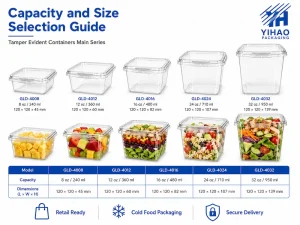
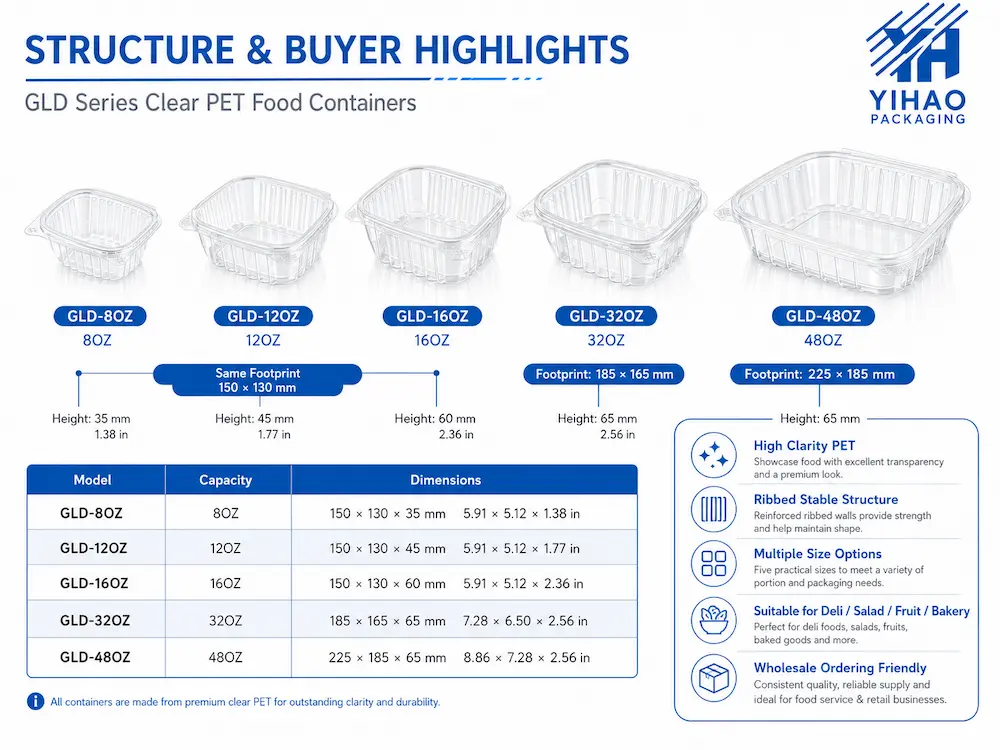
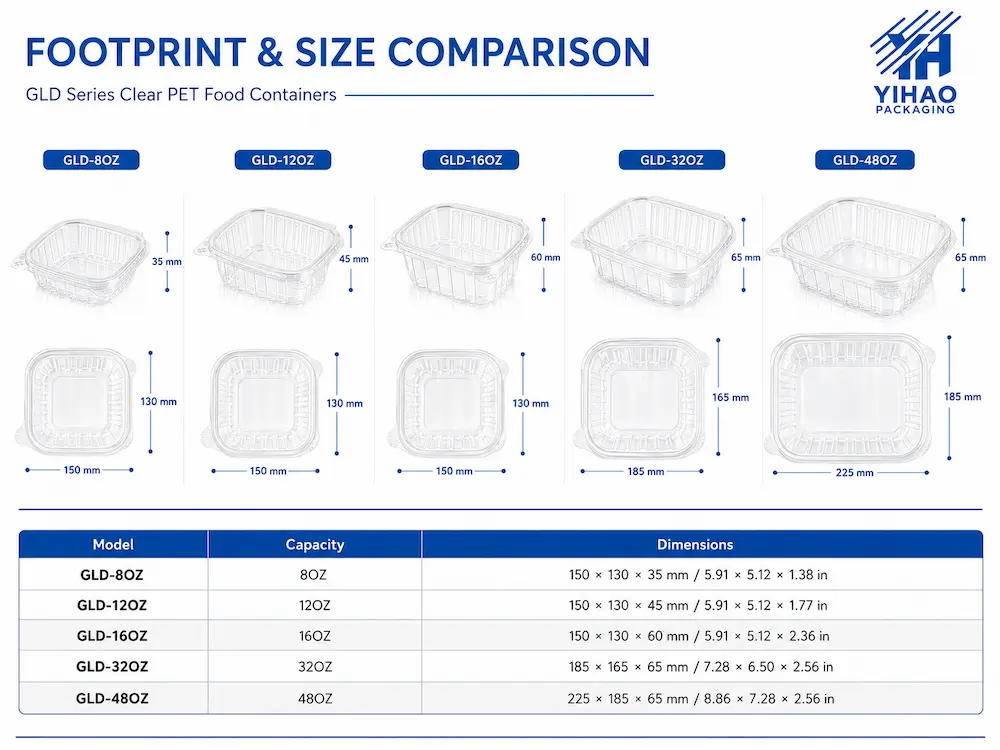
Hinged container sizes vary by capacity, footprint, depth, lid height, shape, and application. A smaller container may work for nuts, fruit portions, dips, single desserts, or side dishes. A medium container may suit salads, deli sides, sandwiches, mixed fruit, and chilled meal components. A larger container may support family-size salads, bakery packs, catering portions, and larger grab-and-go meals.
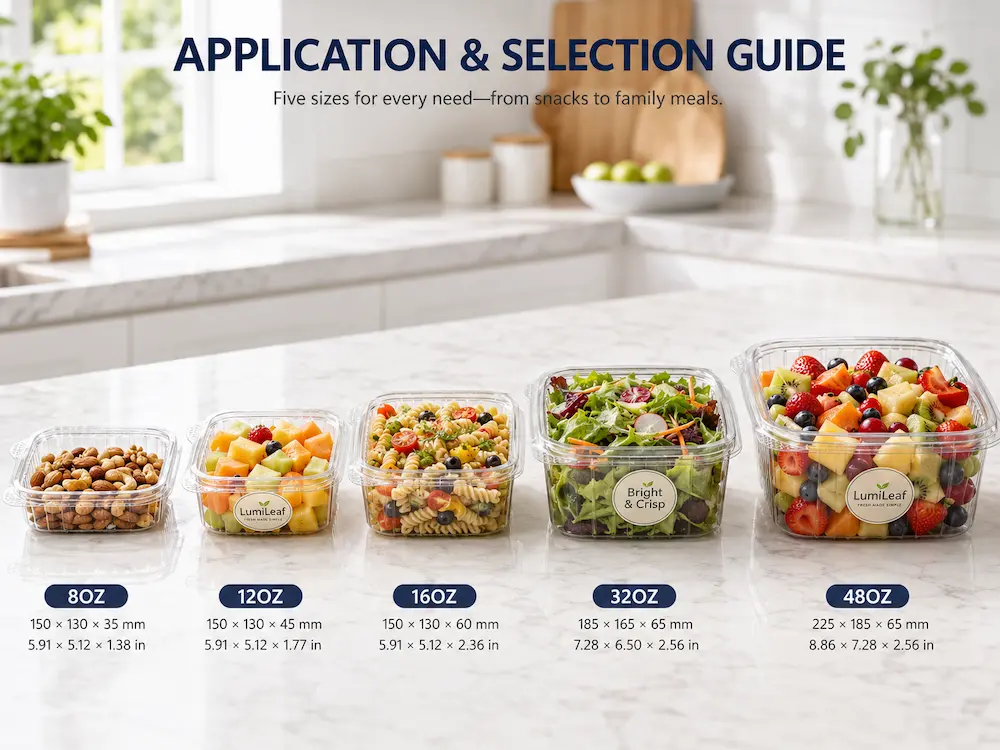
For wholesale buyers, the better question is not “Which size is best?” The better question is “Which size matches my food, shelf, labor process, transport carton, and customer expectation?” A container that looks correct when empty may fail if the lettuce needs more headspace, the fruit releases moisture, the bakery item touches the lid, or the pack does not stack well in a chilled display.
Small Hinged Containers for Snacks, Fruit, and Bakery Portions
Small hinged containers are practical for single-serve fruit, small salads, nuts, cookies, pastry portions, cheese cubes, deli sides, and tasting packs. In retail, small packs support impulse purchases and daily snack programs. In cafes and bakeries, they help standardize portion control while keeping the product visible.
Medium Hinged Deli Containers for Salads and Ready Meals
Medium hinged containers are often used for salads, fruit mixes, pasta salads, deli sides, grain bowls, and chilled ready-to-eat meals. They offer more space without becoming difficult to stack or store. This range is especially useful for buyers who serve multiple food types from one packaging family.
For programs that need more capacity, 32 oz recycled PET hinged deli containers support larger salad, fruit, and grab-and-go food portions, while 48 oz recycled PET hinged deli containers fit larger fresh food portions and shared chilled packs.
Large Hinged Containers for Catering, Bakery, and Meal Packs
Large hinged containers work for bakery assortments, croissants, muffins, donuts, large salads, catering portions, and family-style ready-to-eat foods. In this category, lid height and base rigidity become more important. A large container must protect food shape, resist excessive flexing during handling, and support stable stacking in cartons or on shelves.
Inch-Based Clamshell Sizes for Sandwiches and Grab-and-Go Food
Some buyers select hinged containers by capacity, while others select by footprint. Inch-based clamshells are common for sandwiches, bakery portions, compact meals, and grab-and-go food. For example, 6 inch clear hinged PET clamshell containers, 7 inch clear hinged PET clamshell containers, and 8 inch clear hinged PET clamshell containers help buyers build a practical small-to-large packaging ladder for fresh food displays.
How to Choose the Right Size Before Bulk Ordering
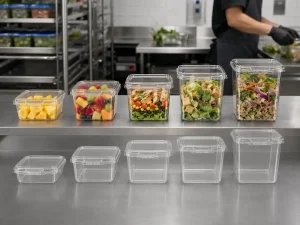
Before a wholesale order, buyers should test samples with the real product, not only with water or empty visual inspection. A salad with leafy greens behaves differently from a dense pasta salad. Cut fruit behaves differently from cookies. A sandwich behaves differently from a brownie. Sample testing should include fill weight, closure pressure, stacking height, label placement, cold storage, transport handling, and shelf display.
What Foods Are Hinged Containers Commonly Used For?
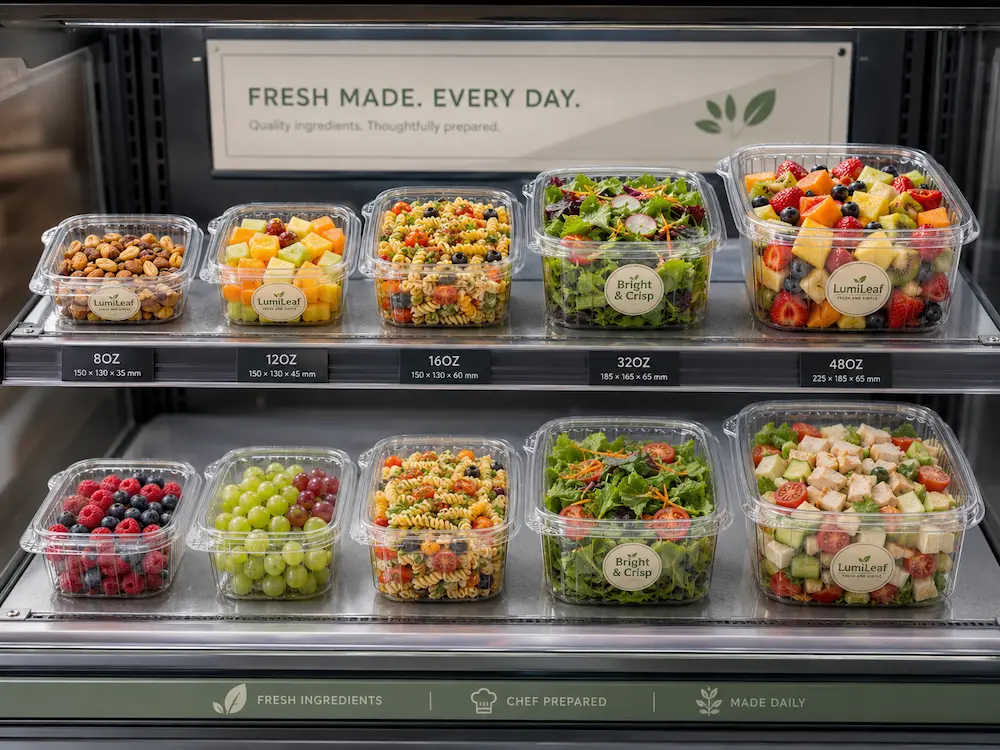
Hinged deli containers are used across many food categories because their structure is easy to understand and efficient to use. The best applications are usually foods that benefit from visibility and moderate protection: salads, fruit, deli sides, sandwiches, bakery items, desserts, snacks, and chilled ready-to-eat meals.
Salad Clamshell Containers
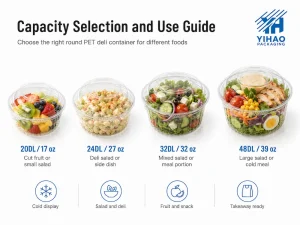
Salad clamshell containers need enough space for leafy greens, toppings, grains, proteins, or fruit without crushing the food. Clear lids help customers see color and freshness, while a reliable closure helps the pack remain neat during display and takeaway. For premium salads, the container should also allow good label placement without hiding the product.
Buyers comparing salad packaging may also review round PET deli containers and square PET deli containers if they need separate-lid systems, salad bowls, or stackable deli packaging in addition to hinged formats.
Deli Clamshell Packaging
Deli clamshell packaging is used for pasta salad, cold noodles, sandwiches, sliced fruit, cheese portions, prepared sides, small meals, and chilled food-to-go. Deli buyers usually care about three things: fast packing, clean visibility, and reliable closure. A container that saves seconds during packing can make a meaningful difference in a busy deli counter or central kitchen.
Clear PET Deli Containers for Fruit and Fresh-Cut Produce
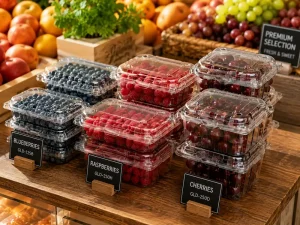
Clear PET deli containers work well for fruit and fresh-cut produce because color is a key sales driver. Watermelon, pineapple, melon, grapes, berries, kiwi, mango, and mixed fruit all rely on visual freshness. For fruit programs, buyers should check depth, ventilation needs, anti-fog expectations, and whether the container shape fits the retail shelf plan.
For a more produce-focused range, buyers can compare hinged deli packaging with fresh-cut fruit containers and broader fresh produce clamshell solutions.
Hinged Containers for Bakery and Dessert Packaging
Bakery and dessert packaging needs a balance of clarity and product protection. Cheesecake slices, brownies, muffins, cookies, rolls, donuts, croissants, and chilled desserts all benefit from clear packaging that protects shape while showing texture. For bakeries, lid height is especially important because cream, toppings, frosting, and decorations need space.
For bakery programs, clear PET bakery clamshell containers are a strong category to review alongside standard hinged deli containers.
Hinged Containers for Foodservice and Takeaway
Foodservice buyers use hinged containers for fast packing, takeaway service, catering, staff meals, chilled retail displays, and event food programs. For these applications, the package needs to be easy to open, quick to close, and stable enough for normal transport. If the food is hot, oily, saucy, or heavy, buyers should test material and structure carefully rather than assuming one container fits every menu.
Are PET Hinged Deli Containers Safe for Food Packaging?
PET hinged deli containers can be suitable for food packaging when the material, production process, and intended use meet the target market’s food-contact requirements. Buyers should avoid vague claims and request supplier documentation. Food-contact suitability depends on the resin, additives, recycled content status, manufacturing process, application, temperature, food type, and destination market.
Food Contact Suitability
For food packaging, buyers should ask for documents that support the intended market. These may include a food-contact statement, material declaration, specification sheet, migration-related documentation where applicable, and information about whether the package is designed for cold food, room-temperature food, or another defined use. The supplier should understand the buyer’s destination market before giving compliance guidance.
Cold Food and Chilled Display Use
PET hinged containers are commonly selected for chilled and cold food display because they offer clarity and structure. They are not the same as microwave-safe PP containers. Buyers should not use PET clamshells for high-heat applications unless the supplier specifically confirms the intended use. For hot meals, microwave applications, or heat exposure, buyers should evaluate PP or other suitable materials through proper testing.
What Documents Should Buyers Ask Suppliers For?
Before ordering wholesale hinged containers, buyers should request a product specification sheet, material information, carton packing details, sample photos or drawings, food-contact documentation for the target market, and written confirmation of intended use. For repeat orders, buyers should also keep approved samples, carton labels, and product codes to avoid confusion between similar sizes.
How Do Buyers Choose a Reliable Hinged Container Manufacturer or Supplier?
Choosing a manufacturer, wholesale partner, or supplier should not be based on price alone. Hinged containers are structural packaging products. Small differences in hinge quality, rim design, base rigidity, material thickness, lid fit, and production consistency can affect packing speed, customer experience, and complaint rates.
A good hinged container supplier should not only provide a price list. The supplier should help buyers reduce packaging mismatch, sample failure, carton confusion, and repeat-order inconsistency. For wholesale buyers, supply stability is often more important than saving a small amount on a single unit price.
Manufacturing Capability
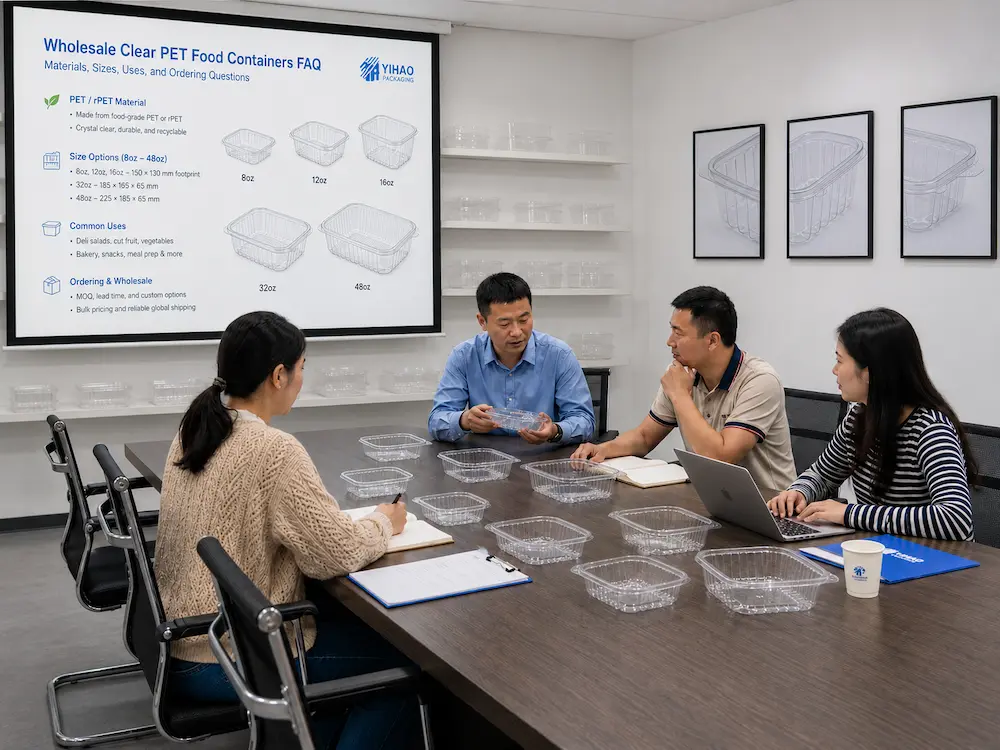
A reliable manufacturer should understand material selection, thermoforming consistency, mold development, size matching, closure design, and export packing. For buyers building a long-term packaging program, the supplier should also support repeat orders and product line development rather than only selling random available stock.
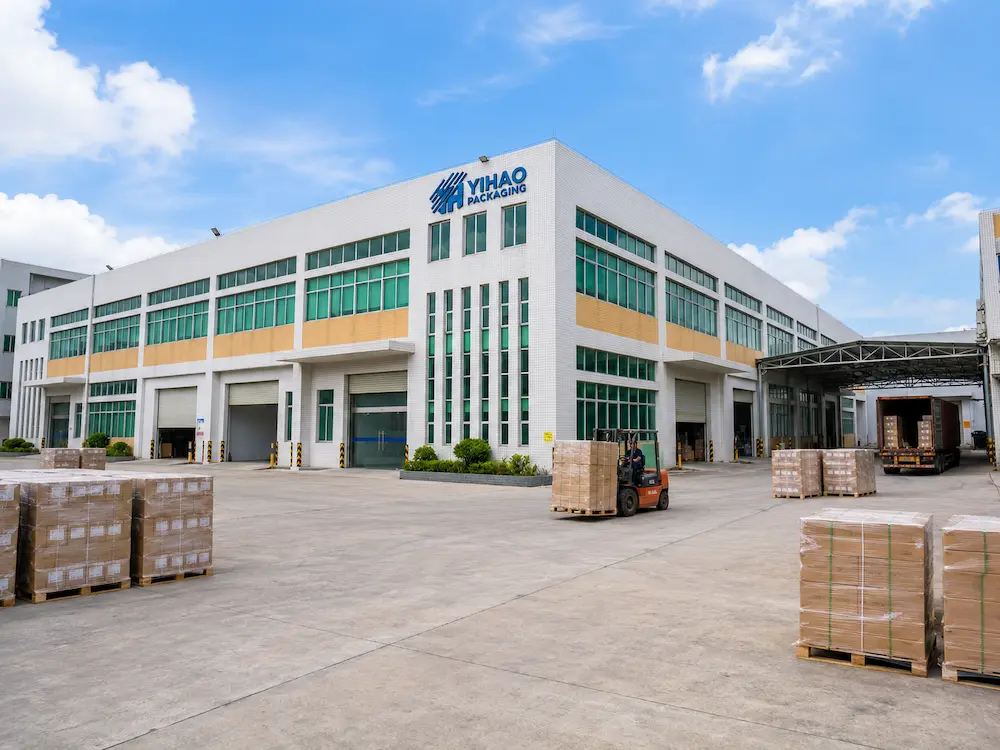
This is where working directly with a packaging factory becomes valuable. A factory-focused supplier can help buyers review structure, material, packaging application, carton packing, and long-term product expansion with more control over production details.
Product Range and Size Matching
A strong supplier should offer more than one hinged container size. Buyers often need a product family: small snack containers, medium deli containers, large salad containers, sandwich clamshells, bakery clamshells, and complementary round or square containers. A broader range makes it easier to build a consistent packaging system across multiple food categories.
Sample Testing Before Bulk Orders
Sample testing is one of the most important steps before wholesale purchasing. Buyers should test closure strength, hinge flexibility, stacking, cold storage, label position, food fit, carton handling, and final display appearance. For export and distributor orders, sample testing should also include carton strength, storage space, pallet planning, and SKU labeling.
Export Packing and Bulk Supply Reliability
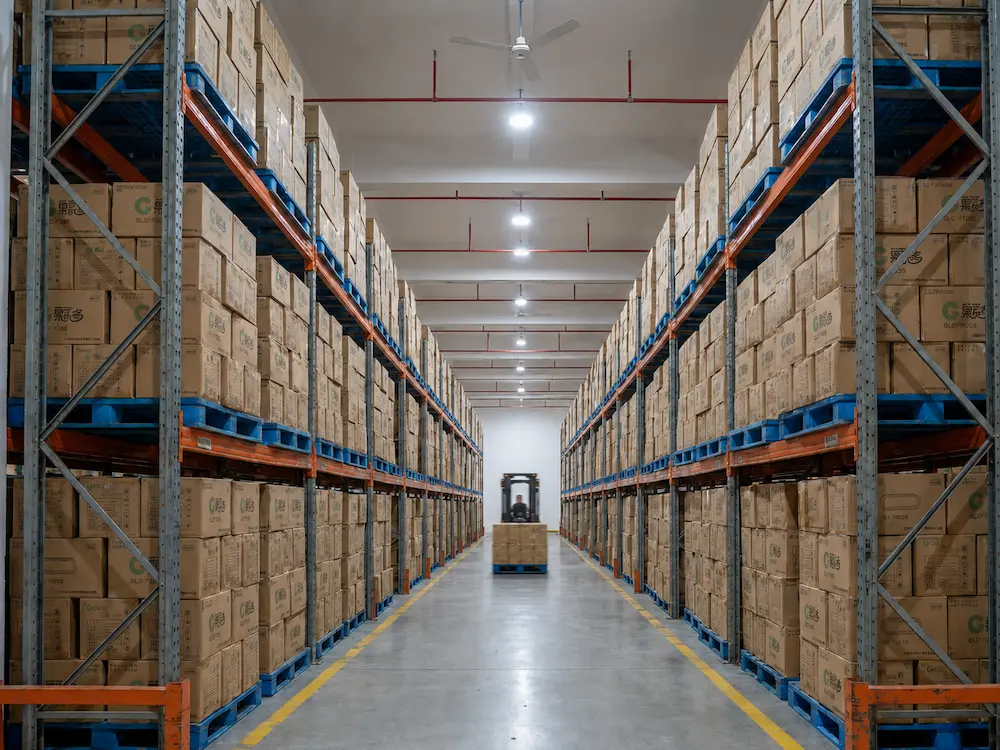
International buyers need packaging that arrives clean, consistent, and ready for sale or repacking. That means carton packing, outer carton labeling, product identification, and repeat order consistency matter. A low unit price loses value if the packaging arrives with crushed cartons, mixed SKUs, unstable closure, or unclear product information.
Can Wholesale Hinged Containers Be Customized?
Yes, wholesale hinged containers can often be customized, but the practical options depend on order quantity, mold availability, material, printing method, and project requirements. Buyers should discuss customization early because custom packaging affects sampling, drawings, tooling, packing, and production planning.
Logo, Label, and Sleeve Options
For many food brands, the most practical branding options are labels, stickers, paper sleeves, inserts, and printed cartons. These methods are flexible and usually easier to manage than direct printing on every plastic container. They also allow buyers to use the same container across multiple products while changing label design by flavor, SKU, or market.
Custom Mold or Size Development
Custom mold development may be considered when a buyer needs a special footprint, depth, hinge style, compartment design, lid height, or closure structure. This option requires technical review and commercial planning. Buyers should confirm drawings, samples, mold cost logic, production feasibility, and expected project volume before proceeding.
Carton Packing and Export Customization
Carton packing can also be customized for distribution needs. Buyers may request carton labels, barcode placement, pallet planning, or market-specific packing instructions. These details are not decorative; they affect warehouse handling, distributor efficiency, and repeat order accuracy.
Wholesale Ordering Questions Buyers Usually Ask
What is the best material for clear hinged deli containers?
For cold and chilled food display, PET is often the preferred material because it offers clear visibility and a clean retail appearance. RPET is also attractive when buyers want recycled-material positioning. For hot food or microwave use, buyers should compare PP or other suitable materials instead of assuming PET is correct.
How do I choose the right hinged container size?
Choose size by food volume, food height, shelf footprint, label area, stacking needs, and transport conditions. Do not choose only by capacity. A container must fit the real product without crushing, leaking, popping open, or looking underfilled.
Are salad clamshell containers suitable for chilled display?
Yes, salad clamshell containers are commonly used for chilled display when the material and design match the application. Buyers should test leafy greens, toppings, dressings, label placement, lid clarity, and stacking before placing bulk orders.
Can I order PET hinged deli containers in bulk?
Yes, PET hinged deli containers are commonly supplied in wholesale quantities for food brands, supermarkets, distributors, delis, cafes, and foodservice operators. Buyers should confirm available sizes, sample approval, carton packing, lead time, and repeat order requirements with the supplier.
What should I check before choosing a wholesale supplier?
Check whether the supplier understands material, food application, structure, size matching, sample testing, documentation, carton packing, and export requirements. A reliable supplier should help you reduce packaging risk, not only quote a low price.
Buyer Checklist Before Ordering Wholesale Hinged Containers
| Buyer Checkpoint | What to Confirm | Why It Matters |
|---|---|---|
| Material | PET, RPET, PP, OPS, PLA, or another specified material | Material affects clarity, temperature suitability, structure, and market positioning |
| Food Application | Salad, fruit, deli, bakery, snack, sandwich, or ready-to-eat food | Different foods require different depth, lid height, rigidity, and closure performance |
| Size and Capacity | Footprint, depth, fill volume, headspace, and shelf fit | Good sizing improves presentation and reduces product damage |
| Closure Performance | Hinge flexibility, locking points, rim strength, and opening experience | Closure quality affects takeaway reliability and customer satisfaction |
| Clarity and Display | Lid transparency, anti-fog expectations, label placement, and product visibility | Clear display helps customers judge freshness and portion value |
| Food-Contact Documentation | Material declaration, food-contact statement, and target market suitability | Documentation supports responsible purchasing and regulatory review |
| Sample Testing | Real food testing, stacking, cold storage, transport, and labeling | Testing reduces risk before wholesale ordering |
| Supplier Capability | Manufacturing control, product range, repeat order support, and export packing | A stronger supplier supports long-term packaging consistency |
Final Note / Practical Takeaway
For buyers planning a new salad, deli, fruit, bakery, or chilled food packaging line, compare PET hinged deli container options first, then request samples based on real food volume, shelf display, closure performance, and carton packing requirements.
FAQ
1. What are wholesale hinged containers used for?
Wholesale hinged containers are used for salads, fruit, deli foods, bakery items, snacks, sandwiches, chilled ready-to-eat meals, and takeaway food packaging. They combine an attached lid, clear display, and efficient packing structure for bulk food packaging programs.
2. What material is best for clear PET deli containers?
PET is often preferred for clear PET deli containers because it provides strong transparency and a clean retail display appearance for chilled foods. RPET can also be considered when buyers want recycled-material positioning, but food-contact suitability and market claims should be confirmed with the supplier.
3. How do I choose the right size for salad clamshell containers?
Choose salad clamshell containers by food volume, ingredient height, shelf footprint, label placement, stacking needs, and customer portion expectations. Buyers should test real salads with toppings and dressing before ordering in bulk.
4. Can PET hinged deli containers be customized for wholesale orders?
Yes, PET hinged deli containers can often be customized through labels, sleeves, carton printing, packing requirements, or custom mold development. The available options depend on project volume, tooling needs, design requirements, and supplier capability.
5. What should buyers check before choosing a hinged container supplier?
Buyers should check material options, food-contact documentation, size range, sample quality, closure performance, carton packing, export experience, and repeat order consistency. A reliable hinged container supplier should support product matching, testing, and long-term wholesale supply.
References
- U.S. Food and Drug Administration, Packaging & Food Contact Substances resources.
- U.S. Food and Drug Administration, Understanding How FDA Regulates Substances that Come into Contact with Food.
- European Commission, Food Contact Materials legislation and Regulation (EC) No 1935/2004 overview.
- European Food Safety Authority, Food Contact Materials topic resources.
- European Food Safety Authority, scientific work on food contact material assessment.
- Association of Plastic Recyclers, APR Design Guide for plastics recyclability.
- Foodservice Packaging Institute, foodservice packaging education and industry resources.
- RecyClass and European plastics recycling design guidance resources for PET packaging considerations.
Deep-Dive Insights
How should buyers compare hinged containers beyond price?
Buyers should compare hinged containers by material, closure strength, food fit, lid clarity, carton packing, and supplier consistency. A lower unit price is not always better if the container opens during handling, looks cloudy on shelf, cracks during packing, or creates repeat-order confusion.
Why are PET hinged deli containers commonly selected for chilled food display?
PET hinged deli containers are commonly selected for chilled food display because they provide strong product visibility and a clean presentation surface for salads, fruit, bakery items, and deli foods. For retail buyers, this visibility helps customers evaluate freshness and portion value before purchase.
What ordering step reduces the most risk?
Sample testing with real food reduces the most risk. Buyers should fill the container with the actual salad, fruit, bakery item, deli side, or chilled meal, then test closing, stacking, labeling, cold storage, transport handling, and final shelf appearance before confirming a wholesale order.
What is the best purchasing approach for long-term packaging programs?
The best purchasing approach is to build a complete packaging system rather than buy one isolated container size. A strong range may include salad clamshell containers, deli clamshell packaging, clear fruit containers, bakery clamshells, and matching PET deli container sizes from a stable manufacturer or supplier.