Wholesale Fresh Produce Packaging Guide for Farms, Packers, and Exporters
Choosing wholesale fresh produce packaging is a supply-chain decision that affects harvesting, packing, cold storage, transport, retail display, export handling, and buyer confidence. Fresh produce packaging must protect fruit, show quality clearly, support efficient handling, and stay reliable during repeat wholesale orders.
Farms need packaging that works during harvesting, sorting, and packing. Packers need containers that close quickly, stack safely, and fit cartons efficiently. Exporters need packaging that performs through longer routes, inspection, labeling, and pallet movement. Supermarkets, cafes, bakeries, and foodservice brands need packaging that supports retail display, chilled storage, takeaway, prep operations, and fresh product presentation.
This is why buyers should not evaluate packaging only by size or unit price. A professional produce packaging manufacturer or fruit packaging supplier should help buyers compare material clarity, lid security, ventilation, stacking, label area, carton fit, sample testing, and wholesale supply stability before confirming orders.
YIHAO is a food packaging manufacturer and solution provider focused on practical PET/RPET packaging for fresh produce, berries, fresh-cut fruit, salads, snacks, bakery items, deli food, and chilled ready-to-eat applications. This guide explains how farms, packers, exporters, distributors, and food packaging teams can choose better wholesale fresh produce packaging for different supply-chain needs.
What Is Wholesale Fresh Produce Packaging?
Wholesale fresh produce packaging refers to packaging used to pack, protect, transport, display, and distribute fresh fruits and produce in larger commercial quantities. It is used by farms, packers, distributors, exporters, supermarkets, cafes, bakeries, and foodservice teams that need repeat supply and practical performance.
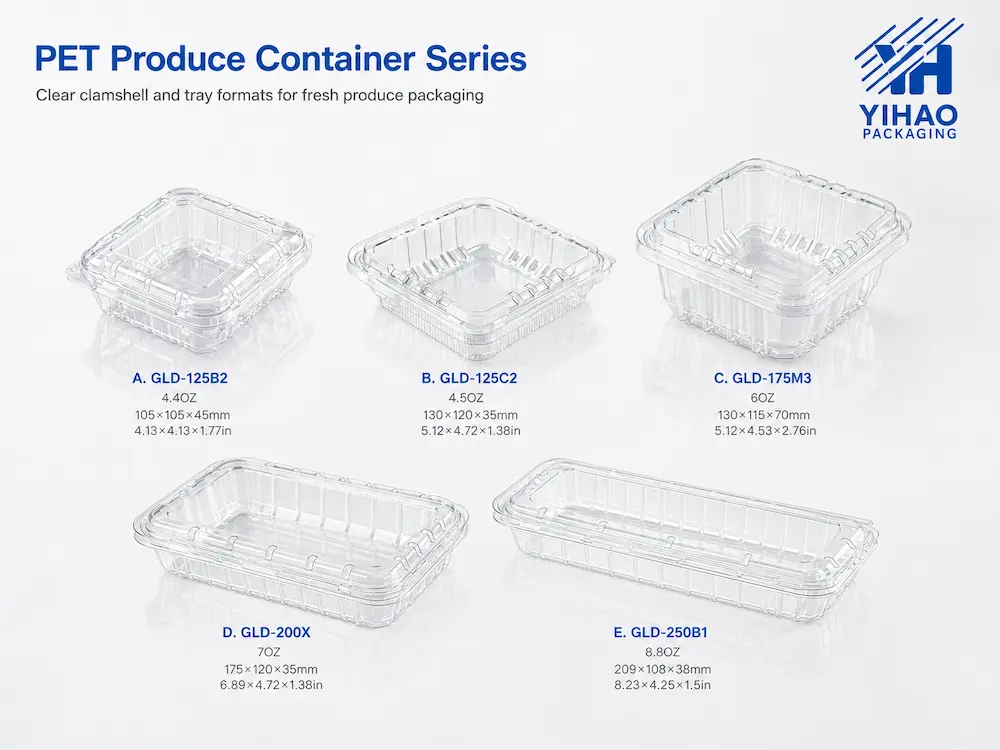
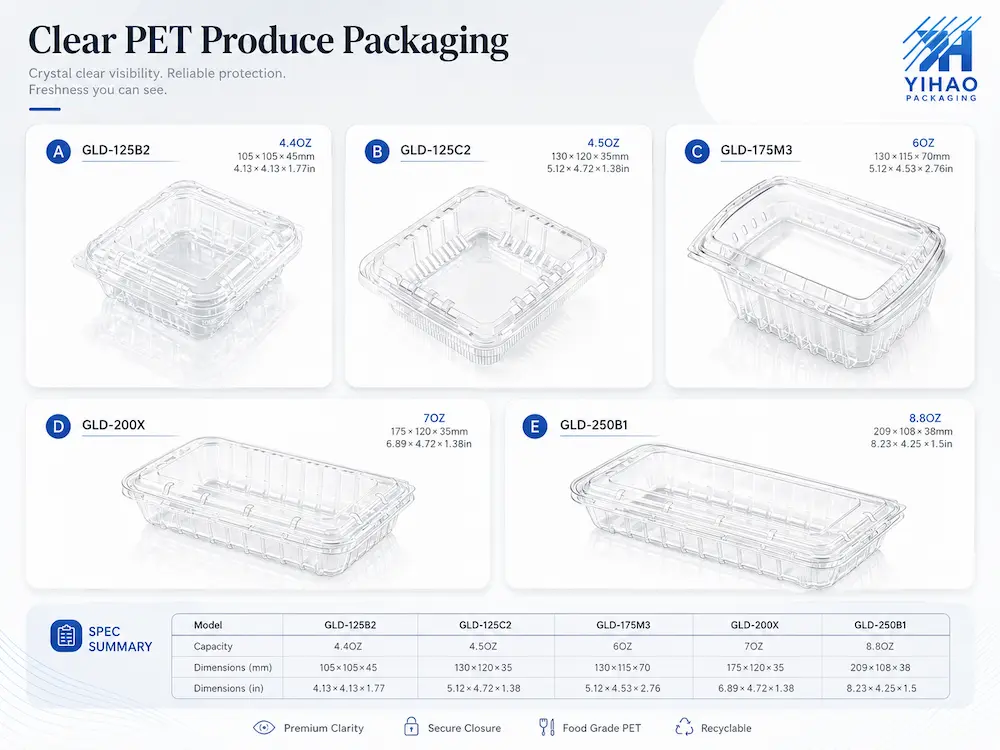
Wholesale produce packaging can include clamshell containers, berry packs, fresh-cut fruit containers, farm packaging containers, bulk produce containers, lidded trays, PET/RPET food containers, and custom produce packaging formats. The right choice depends on the product and the sales channel.
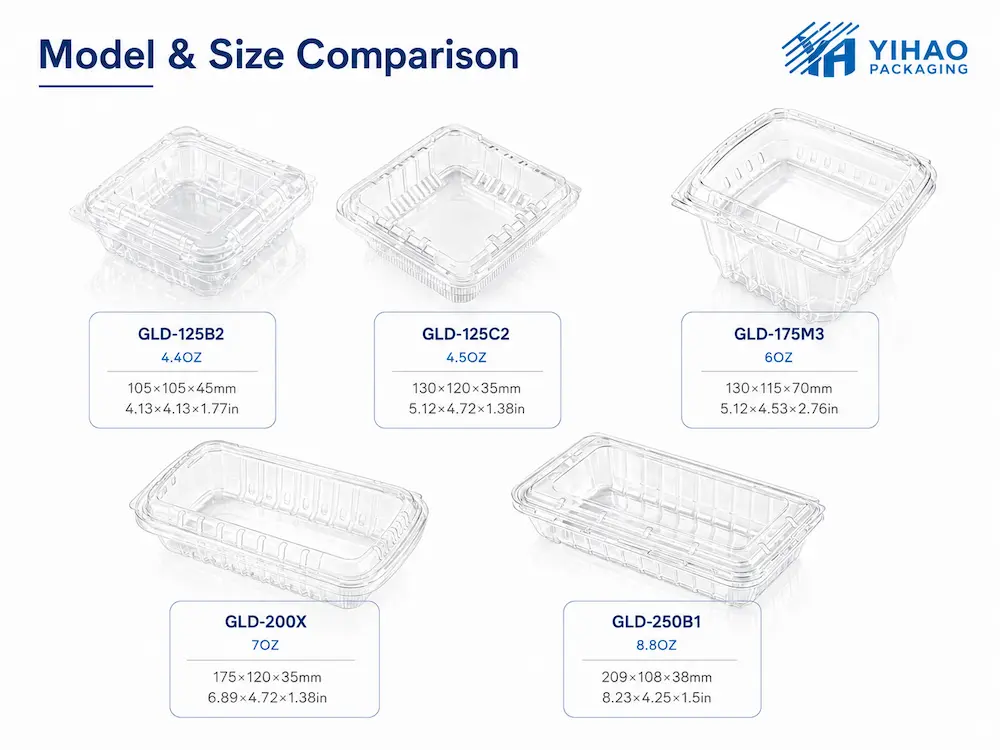
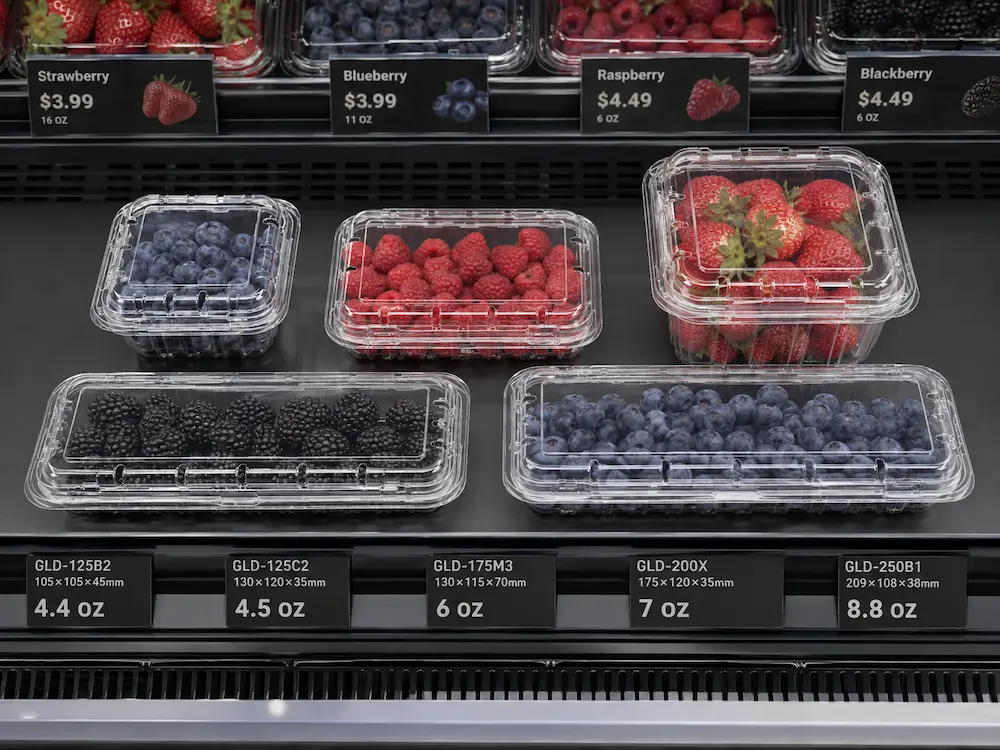
For blueberries, packaging may need ventilation and secure containment. For strawberries, lid height and retail display matter. For grapes, capacity and stacking are important. For fresh-cut fruit, clear visibility, lid fit, and chilled display are key. For export fruit packaging, carton fit, label area, and transport stability become more important.
Why Farms Need Application-Based Produce Packaging
Farms need packaging that connects harvesting with packing, cooling, transport, and buyer handoff. A container that looks good in a catalog may fail if it slows workers, damages fruit, stacks poorly, or does not fit cartons. Farm-level packaging should support both operational speed and product protection.
Farm packaging containers often need secure closure, proper ventilation, strong stacking behavior, and enough visibility for inspection. When farm packaging also becomes retail packaging, it must protect the product and present it clearly to the final buyer.
Farms should choose packaging by fruit type, fill weight, harvest conditions, packing workflow, carton layout, and buyer requirements. Packaging should not be selected only by price because the wrong format can increase fruit loss, labor issues, and repacking work.
Why Packers Need Packaging That Works Beyond the Packing Line
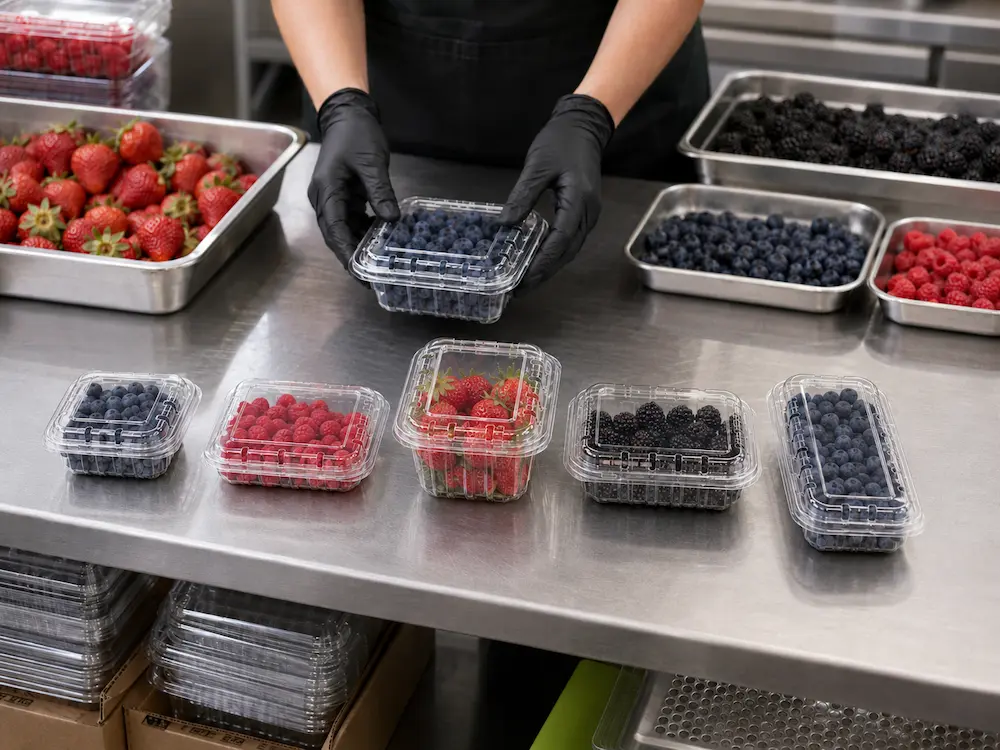
Packers need packaging that performs repeatedly under real production conditions. The container must fill efficiently, close consistently, stack safely, fit cartons, support labels, and protect produce through chilled storage and transport. If the packaging slows packing operations or creates lid failure, the problem becomes expensive at wholesale scale.
For packers handling different fruits, one package rarely fits every application. Berries, grapes, apples, kiwis, tomatoes, and fresh-cut fruit each require different packaging logic. Depth, lid shape, vent design, hinge strength, and material rigidity should match the product.
Sample testing is especially important for packers. Empty samples cannot show fruit movement, pressure, moisture, stacking behavior, or carton performance. Filled testing should happen before bulk orders are confirmed.
Why Exporters Need Stronger Fresh Produce Packaging
Exporters need packaging that can survive longer and more complex handling routes. Export fruit may move from farm to cold storage, from carton loading to pallet stacking, from shipping to distribution, and finally from retail shelf to consumer handling. Each step adds pressure and risk.
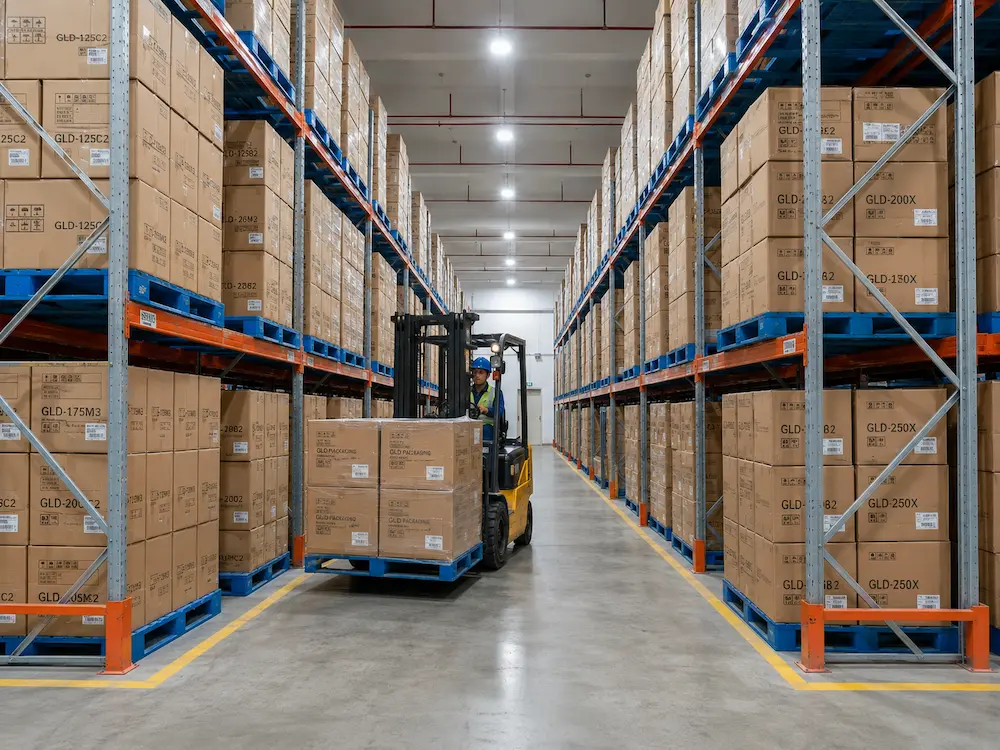
Export fruit packaging should be evaluated for closure security, stacking strength, carton fit, ventilation, product visibility, label area, barcode placement, and inspection convenience. Clear PET/RPET packaging can support visual inspection because buyers and handlers can see the fruit without opening every pack.
Export buyers should not approve packaging based only on appearance. Filled sample testing, carton loading checks, chilled handling review, and label placement tests should be part of the sourcing process.
Key Packaging Types in Wholesale Fresh Produce Packaging
Different produce programs need different packaging formats. The best packaging strategy usually combines several options rather than forcing one container into every use.
| Packaging Type | Best For | Main Advantage | Buyer Checkpoint |
|---|---|---|---|
| Produce Clamshell Containers | Berries, grapes, small fruit, retail-ready produce | Clear visibility, hinged closure, fast packing | Check lid security, vents, hinge strength, and stacking. |
| Berry Packaging | Blueberries, raspberries, strawberries, blackberries | Ventilation, containment, retail display | Check berry type, lid height, airflow, and compression risk. |
| Farm Packaging Containers | Farm-to-retail movement, packing houses, wholesale distribution | Operational handling and product protection | Check filling speed, carton fit, and transport stability. |
| Export Fruit Packaging | Long-distance fruit supply and international shipments | Stacking, inspection, labeling, route stability | Check filled-pack strength, barcode space, and carton loading. |
| Bulk Produce Containers | Supermarkets, cafes, bakeries, foodservice prep, larger portions | Capacity, storage, workflow efficiency | Check lid fit, refrigerator storage, stacking, and label area. |
| Custom Produce Packaging | Brand-specific retail programs or product-specific needs | Tailored structure, brand fit, application-specific design | Check volume, development timeline, mold needs, and sample testing. |
Berry Packaging Wholesale: Why Delicate Fruit Needs Specific Packaging
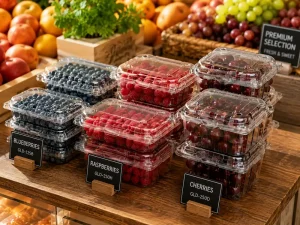
Berry packaging wholesale requires a more detailed decision process than many other produce categories. Berries are delicate, moisture-sensitive, and highly visual. Blueberries, raspberries, strawberries, and blackberries each need different packaging conditions.
Blueberries need secure containment and airflow. Raspberries need gentle support and low compression. Strawberries need lid height and display space. Blackberries need stable structure and moisture-aware handling. A generic produce container may not protect all berry types equally.
Buyers sourcing berry packaging should check vent design, lid clearance, stacking, closure security, label area, carton fit, and retail visibility. For wholesale orders, sample testing with actual berries is not optional; it is the best way to prevent packaging failure before mass production.
Bulk Produce Containers for Larger-Volume Food Programs
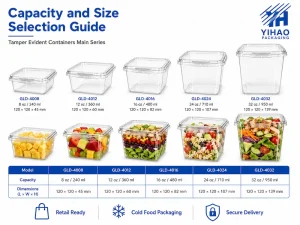
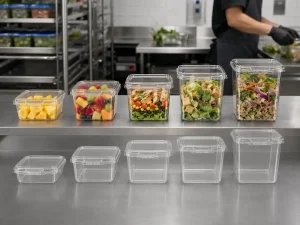
Bulk produce containers support larger-volume produce handling for supermarkets, cafes, bakeries, and foodservice brands. They are useful for fresh-cut fruit, salad ingredients, bakery fruit toppings, chilled prep items, fruit bowls, and back-of-house storage.
Bulk produce packaging is different from retail-ready packaging. Bulk containers often prioritize capacity, lid security, stacking, cold storage, and workflow efficiency. Retail-ready packs prioritize portion control, shelf display, barcode-ready labeling, and consumer convenience.
Buyers should choose bulk containers when the primary need is larger portions, prep efficiency, refrigerator organization, or foodservice handling. They should choose smaller retail-ready packs when the product will be sold directly to consumers as a finished unit.
Retail Display, Takeaway, and Chilled Food Packaging Needs
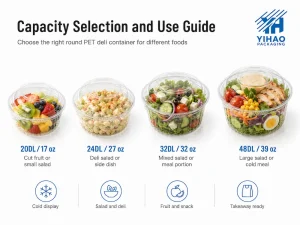
Fresh produce packaging often overlaps with chilled food packaging. Supermarkets may use fruit packaging for ready-to-eat fruit cups, salad bowls, deli sides, and grab-and-go snacks. Cafes may use fruit packaging for yogurt bowls, breakfast boxes, parfaits, and chilled snack packs. Bakeries may use fruit packaging for toppings, tarts, and dessert components.
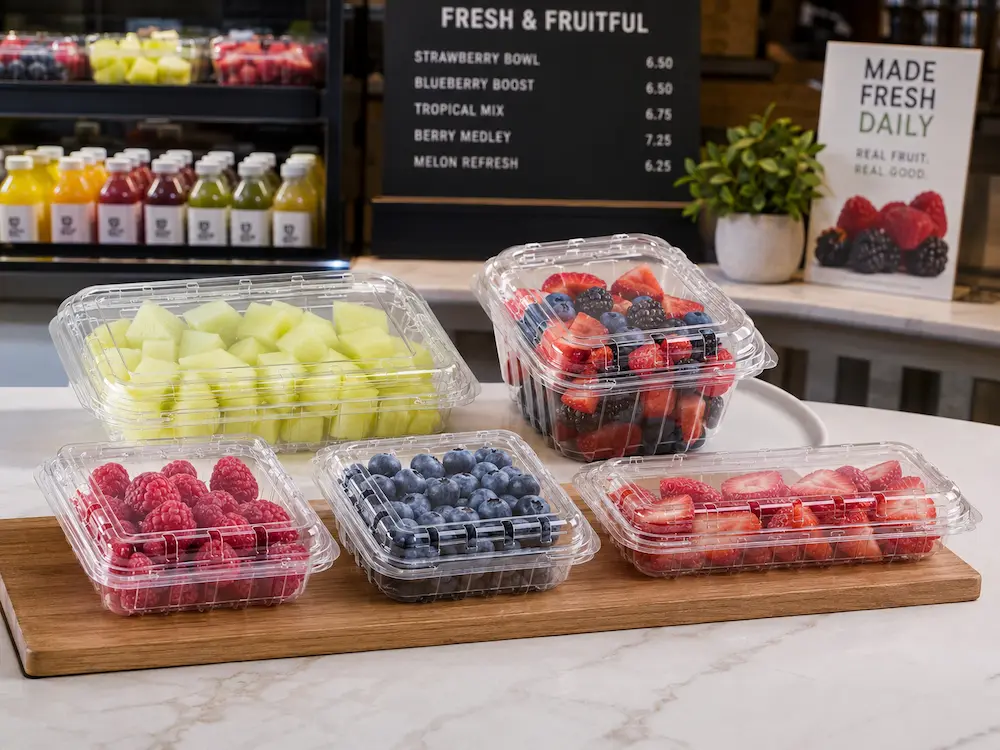
For these applications, packaging must support product visibility, clean handling, lid security, stacking, and chilled presentation. Clear packaging helps buyers and consumers inspect fruit quality quickly. If the pack becomes foggy, weak, or difficult to stack, it can reduce product value.
A strong fruit packaging supplier should help buyers compare retail display needs, takeaway convenience, chilled storage, and wholesale supply planning instead of recommending one generic format for every application.
PET and rPET in Wholesale Fresh Produce Packaging
PET and rPET are widely used in clear fresh produce packaging because they offer strong product visibility, practical rigidity, lightweight handling, and retail-ready presentation. For fruit packaging, clarity is important because shoppers, inspectors, and buyers often judge freshness visually.
rPET can support recycled-content packaging discussions when food-contact suitability, documentation, and local recycling realities are properly considered. Buyers should avoid vague sustainability claims. Recyclability depends on local collection, sorting, and recycling systems.
For wholesale fresh produce packaging, buyers should ask whether the container is PET, rPET, or a PET/RPET option. They should also confirm material clarity, rigidity, intended use, target market needs, and supplier documentation before confirming orders.
Fresh Produce Packaging Factory vs Supplier: What Buyers Should Know
Buyers often compare a fresh produce packaging factory, a manufacturer, a wholesale supplier, and a trading company. Each can be useful, but the right choice depends on the project complexity.
A direct produce packaging manufacturer is often stronger when buyers need structure discussion, material communication, sample adjustment, carton packing review, or custom produce packaging. A wholesale supplier may work well for standard formats and repeat replenishment. A trading company may help with mixed sourcing, but technical communication can become slower when structure details matter.
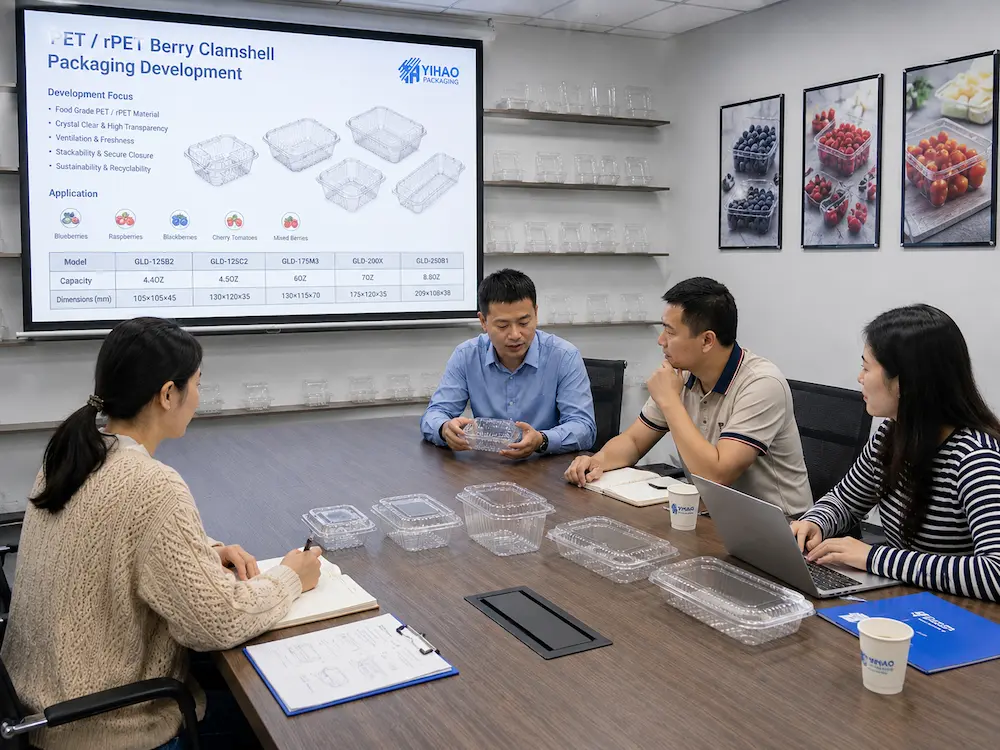
For long-term wholesale produce packaging programs, buyers should look for a partner that combines manufacturer-level packaging knowledge with supplier-level responsiveness. The partner should help compare real packaging performance, not only quote a unit price.
Custom Produce Packaging: When Standard Options Are Not Enough
Custom produce packaging can be useful when standard containers do not match the product, brand, retail program, or logistics route. Buyers may need a special lid height, unique cavity, stronger stacking design, label-friendly surface, custom branding, or product-specific ventilation.
Custom packaging should be considered carefully. It may require development time, sample review, mold discussion, volume planning, and cost evaluation. Buyers should confirm whether the project justifies customization or whether an existing standard format already works.
For B2B buyers, the smartest decision is not always custom. The smartest decision is the packaging format that protects the product, fits the workflow, supports retail display, and matches wholesale order planning.
How to Choose the Right Wholesale Fresh Produce Packaging
Buyers should begin with the product, not the packaging catalog. Fruit behavior, moisture, sensitivity, fill weight, channel, and logistics route should drive the decision. A container that works for grapes may not work for raspberries. A pack that works for farm handling may not be ideal for retail-ready export display.
The decision process should include material, size, lid structure, ventilation, stacking, label space, carton fit, sample testing, and supplier capability. Buyers should also consider whether the packaging will be used for farm packing, wholesale distribution, export, supermarket display, foodservice prep, or takeaway.
| Buyer Question | Why It Matters | Best Practice |
|---|---|---|
| What product will be packed? | Different produce types require different protection and structure. | Start with fruit type, sensitivity, and fill weight. |
| Where will the packaging be used? | Farm, export, supermarket, cafe, bakery, and foodservice uses differ. | Match packaging to the real handling route. |
| Does the product need ventilation? | Many berries and fresh produce items need airflow. | Test vent design under chilled conditions. |
| Will the pack be stacked? | Wholesale and export handling create stacking pressure. | Test filled packs inside cartons. |
| Does the pack need labels? | Retail and export programs often require barcode and product information. | Apply real labels during sample testing. |
| Can the supplier support repeat orders? | Wholesale programs need reliable replenishment. | Discuss order planning and communication before bulk purchase. |
Sample Testing Before Wholesale Orders
Sample testing is one of the most important steps in wholesale fresh produce packaging. Buyers should test packaging with real product weight, real filling density, real labels, real cartons, and realistic chilled conditions. Empty samples are useful for first review, but they cannot show full packaging performance.
A proper test should include filling, closing, stacking, carton loading, label application, chilled storage, and handling simulation. For export orders, buyers should test longer route conditions where possible. For berries, buyers should check compression, airflow, and fruit movement. For bulk containers, buyers should check lid strength and storage efficiency.
Testing prevents costly mistakes. It helps buyers identify wrong sizes, weak lids, poor stacking, blocked visibility, label problems, and carton inefficiency before placing wholesale orders.
Wholesale Fresh Produce Packaging Buyer Checklist
| Checklist Item | What Buyers Should Confirm | Why It Matters |
|---|---|---|
| Product Type | Berries, grapes, apples, kiwis, fresh-cut fruit, mixed produce, or bulk prep items. | Each product needs different support, depth, and handling logic. |
| Application | Farm packing, retail display, takeaway, foodservice, export, or bulk storage. | The use case determines structure and material choice. |
| Material | PET, rPET, paperboard, film, or combined packaging system. | Material affects clarity, rigidity, sustainability discussion, and handling. |
| Closure | Hinged lid, separate lid, snap closure, film seal, or open tray. | Closure affects transport and display reliability. |
| Ventilation | Vent position, airflow, chilled handling, and moisture behavior. | Fresh produce often needs controlled airflow. |
| Stacking | Filled-pack stacking, carton loading, and pallet movement. | Wholesale and export handling require stability. |
| Label Area | Brand label, barcode, origin information, batch code, or product details. | Labels support retail, export, and inventory control. |
| Sample Testing | Filled tests under realistic handling and chilled conditions. | Testing reduces packaging risk before mass ordering. |
| Supplier Capability | Manufacturer support, wholesale supply, communication, and repeat order stability. | Long-term buyers need more than a one-time price quote. |
Common Mistakes in Wholesale Fresh Produce Packaging
Choosing Packaging Only by Price
Low-cost packaging can become expensive if it causes fruit damage, poor stacking, weak display, repacking work, or customer complaints. Buyers should compare total packaging value, not only unit price.
Using One Container for Every Produce Type
Blueberries, raspberries, strawberries, grapes, apples, kiwis, and fresh-cut fruit need different packaging structures. One generic container rarely works well for every product.
Skipping Filled Sample Testing
Empty samples do not show product movement, lid pressure, condensation, stacking, carton fit, or retail appearance. Filled testing is necessary before wholesale orders.
Ignoring Export and Label Requirements
Export and retail programs often require label space, barcode readability, origin information, and stable carton performance. These details should be checked before ordering.
Choosing a Supplier Without Long-Term Support
Wholesale buyers need repeat supply, clear specifications, and stable communication. A supplier that cannot support seasonal or repeat orders may create sourcing risk.
Why YIHAO Supports Wholesale Fresh Produce Packaging Buyers
YIHAO supports buyers with clear PET/RPET packaging solutions for fresh produce, berries, fresh-cut fruit, salads, snacks, bakery items, deli food, and chilled ready-to-eat applications. For buyers sourcing wholesale fresh produce packaging, the key value is not only product supply. The value is application-based packaging selection.
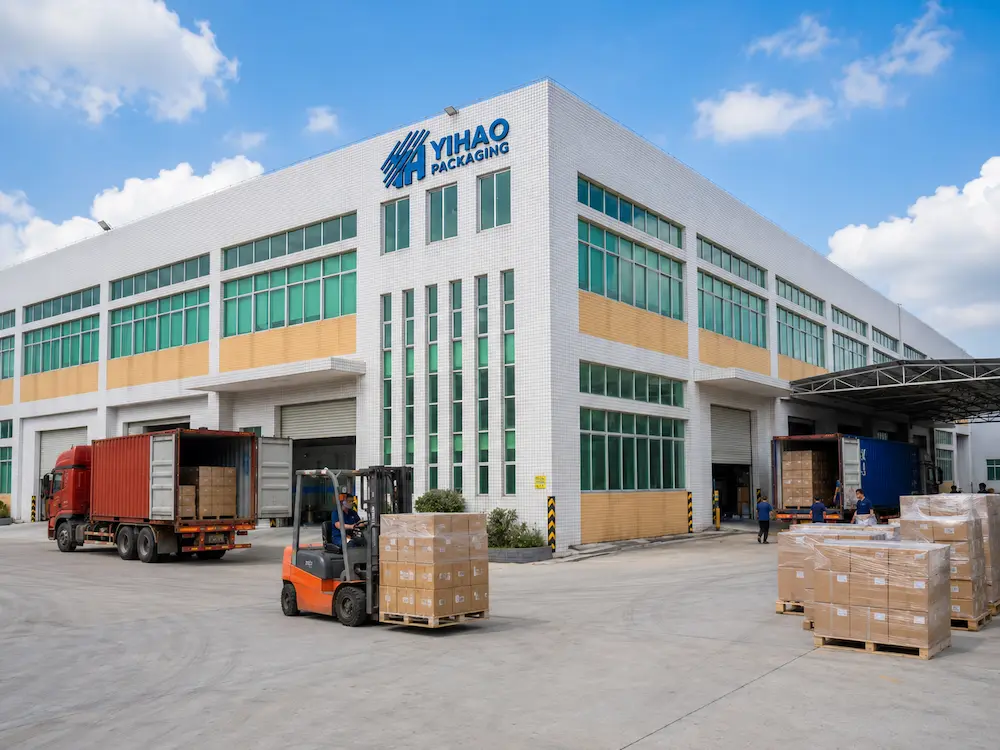
YIHAO helps farms, packers, exporters, distributors, supermarkets, cafes, bakeries, and foodservice brands compare product type, material, lid structure, ventilation, label area, stacking, carton fit, sample testing, and wholesale supply needs before confirming orders.
Instead of treating fresh produce packaging as one generic category, YIHAO supports structured packaging decisions across berry packaging wholesale, farm packaging containers, export fruit packaging, bulk produce containers, fresh-cut fruit packaging, and custom produce packaging projects.
FAQ About Wholesale Fresh Produce Packaging
1. What is wholesale fresh produce packaging?
Wholesale fresh produce packaging is packaging used to pack, protect, transport, display, and distribute fresh produce in commercial quantities. It includes fruit clamshells, berry packs, farm packaging containers, export fruit packaging, bulk produce containers, and custom produce packaging formats.
2. How do buyers choose the right fresh produce packaging?
Buyers should choose packaging based on fruit type, fill weight, sales channel, handling route, material, ventilation, lid security, stacking, label area, carton fit, and sample testing. The right packaging depends on application, not only container size.
3. What materials are common in wholesale produce packaging?
PET and rPET are commonly used for clear fresh produce packaging because they support product visibility, practical rigidity, and retail display. Paperboard, molded fiber, film, and carton systems may also be used depending on the product and market.
4. Why is sample testing important before wholesale orders?
Sample testing shows how packaging performs with real product weight, filling density, chilled conditions, stacking, labeling, and carton loading. It helps buyers identify problems before mass production or repeat wholesale orders.
5. How do I choose a produce packaging manufacturer or supplier?
Choose a manufacturer or supplier that understands product application, material options, structure, ventilation, label needs, carton fit, export requirements, sample testing, wholesale supply, and long-term communication. The best partner should provide practical guidance, not only a price list.
References
- U.S. Food and Drug Administration, Packaging & Food Contact Substances Resources.
- U.S. Food and Drug Administration, Guidance for Industry: Use of Recycled Plastics in Food Packaging, Chemistry Considerations.
- European Commission, Packaging and Packaging Waste Policy Resources.
- Food and Agriculture Organization of the United Nations, Food Loss and Waste Reduction Resources.
- United States Department of Agriculture, Fresh Fruit and Vegetable Market Resources.
- International Fresh Produce Association, Fresh Produce Supply Chain and Packaging Resources.
- Association of Plastic Recyclers, Design Guide for Plastics Recyclability.
- ASTM International, Packaging Performance and Testing Standards.
Deep-Dive Insights: How Buyers Should Think About Wholesale Fresh Produce Packaging
How should buyers define the right packaging?
The right packaging should be defined by product behavior, sales channel, handling route, and buyer requirements. Wholesale fresh produce packaging should not be selected only by container size or unit price.
Why does application-based sourcing matter?
Application-based sourcing matters because berries, grapes, apples, fresh-cut fruit, farm packs, export packs, and bulk containers all need different structures. Matching packaging to application reduces handling problems and product loss.
What supplier capability matters most?
The most important capability is practical packaging communication. A strong supplier should understand material, structure, ventilation, stacking, labeling, sample testing, carton fit, export routes, and wholesale replenishment.
When should buyers consider custom produce packaging?
Buyers should consider custom produce packaging when standard containers cannot meet product protection, brand presentation, label space, stacking, or retail display needs. Customization should be based on clear commercial value and order planning.
What should buyers avoid?
Buyers should avoid choosing only by price, using one package for every fruit, skipping filled sample testing, ignoring carton fit, and working with suppliers who cannot support repeat wholesale orders.
Final Note / Practical Takeaway
© YIHAO Packaging. All rights reserved. All articles, product images, packaging designs, technical specifications, and website materials are protected by copyright. Unauthorized copying, reproduction, redistribution, modification, or commercial use is strictly prohibited without prior written permission.