Choosing wholesale deli containers is not only a price comparison. For professional buyers, the real decision is whether a supplier can support the right container structure, food-contact material direction, clear product visibility, stable lid performance, sample testing, bulk consistency, and long-term packaging development. A low unit price loses value quickly when lids fit poorly, salads look compressed, containers appear cloudy, or the supplier cannot support repeat orders with consistent quality.
Deli and salad packaging is used across supermarkets, cafes, central kitchens, distributors, convenience stores, chilled food brands, meal-prep programs, and foodservice channels. These applications require packaging that displays food clearly, protects freshness during handling, stacks reliably, supports labeling, and fits real menu portions. That is why buyers should evaluate a deli container manufacturer or salad container supplier through material control, structure design, sample performance, and factory communication instead of catalog photos alone.
YIHAO supports food packaging buyers with clear PET and rPET packaging solutions for chilled deli foods, salads, fresh-cut fruit, snacks, bakery items, and grab-and-go food programs. This guide explains how to evaluate a supplier before you commit to bulk salad containers, custom deli containers, foodservice containers wholesale programs, or OEM deli packaging projects.
Why Wholesale Deli Containers Need Supplier-Level Evaluation
Deli and salad containers sit in a demanding packaging category. They are used for leafy salads, grain bowls, pasta salads, deli sides, chilled noodles, fruit mixes, nut packs, desserts, and prepared cold foods. A single buyer may need hinged containers, round salad bowls, square deli containers, separate-lid formats, and multi-size options. If the supplier only sends a catalog without asking about food type, sales channel, label placement, or storage conditions, the final order may not match the actual packaging job.
A reliable clear food packaging supplier should help buyers evaluate the full packaging system. This includes container depth, lid height, rim strength, stackability, clarity, anti-fog needs where relevant, label area, carton packing logic, and application fit. For chilled retail food, appearance matters because the package becomes part of the selling display. For foodservice and wholesale distribution, handling strength and repeatable supply matter just as much.
Buyers should treat deli and salad containers as a complete packaging category rather than isolated SKUs. The goal is to build a practical product matrix: small containers for sides, mid-size formats for salads and fresh fruit, larger containers for sharing portions, round bowls for premium salad display, and square containers for compact shelf use.
Core Container Types Buyers Should Compare
Before contacting a PET deli container factory, buyers should define which container structures match their food applications. The right structure reduces SKU confusion, improves packing efficiency, and makes repeat purchasing easier.
| Container Type | Best Application | Buyer Value | Supplier Checkpoint |
|---|---|---|---|
| PET hinged deli containers | Fresh salads, fruit portions, deli sides, snacks, bakery grab-and-go items | One-piece lid and base reduce lid-matching mistakes | Check hinge strength, closure feel, stacking stability, and clarity |
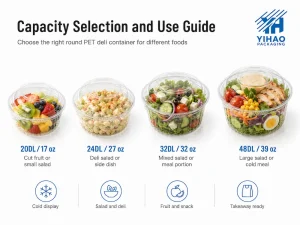
| Round salad bowls | Leafy salads, grain bowls, fruit bowls, chilled noodles, mixed deli foods | Strong visual appeal for premium cold shelf display | Confirm lid fit, bowl depth, dome or flat lid choice, and label area |
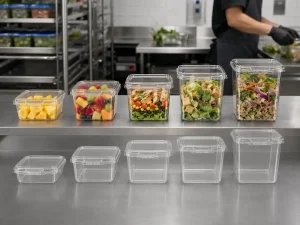
| Square deli containers | Deli meals, cut fruit, pasta salad, side dishes, compact shelf programs | Efficient shelf use and clean retail presentation | Test rim strength, lid compatibility, corner clarity, and nesting performance |
| Separate-lid food containers | Prepared meals, deli counters, cold foods, bakery display, takeaway packaging | Flexible lid options for different display and sealing needs | Confirm lid inventory logic, sealing edge, and assembly efficiency |
| Multi-compartment containers | Snack packs, fruit and nut packs, meal kits, portion-control foods | Separation protects texture and improves portion clarity | Review compartment depth, divider strength, and food fit |
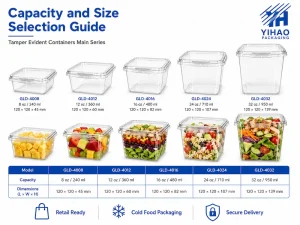
For a broad wholesale program, PET hinged deli containers usually support daily grab-and-go packaging needs, while round PET deli containers fit salad bowls and chilled food display. square PET deli containers help buyers build a compact shelf layout for fruit, snacks, and deli meals.
How to Judge a Deli Container Manufacturer
A professional deli container manufacturer should show more than product photos. Buyers should look for manufacturing discipline, product range, sample response, technical communication, and practical packaging suggestions. The best supplier is not always the one with the largest catalog. The best supplier is the one that understands how your food type, sales channel, and order stage affect the container choice.
For example, a supermarket salad program needs clear visibility, stackability, lid stability, and consistent shelf presentation. A cafe grab-and-go program needs a smaller SKU set that covers salads, fruit cups, sandwiches, and chilled desserts without creating storage pressure. A distributor needs fast-moving standard items with enough variety to serve different end users. An OEM buyer needs communication around tooling, branding, surface decoration, carton information, and long-term production control.
A serious manufacturer helps buyers avoid common mistakes: choosing a container that is too shallow for leafy salads, selecting a lid style that crushes toppings, ordering too many similar capacities, or requesting custom packaging before standard structures have been tested. In wholesale packaging, the supplier’s ability to simplify decisions is a real commercial advantage.
Material Selection: PET, rPET, and Cold Food Performance
PET and rPET are widely used in clear chilled food packaging because they support strong product visibility, clean shelf presentation, and practical forming performance. For wholesale deli containers, clear PET-based packaging is especially valuable when the product’s freshness, color, layering, and portion quality need to be visible before purchase.
However, buyers should not treat PET packaging as a universal solution for every food condition. PET deli and salad containers are generally positioned for cold and chilled food applications. Hot-fill, microwave, oven, and high-temperature uses should only be discussed when the supplier confirms the specific material and structure. For hot takeaway meals, PP-based packaging may be more suitable, depending on the application.
When evaluating rPET, buyers should ask direct questions about recycled content options, clarity expectations, food-contact suitability, and local recycling acceptance. Recyclability claims should be written carefully because local collection and recycling systems differ by country, region, and material stream. A responsible supplier should avoid exaggerated claims and instead explain material options clearly.
Supplier Checklist for Wholesale Deli Containers
The following checklist helps buyers compare a salad container supplier, PET deli container factory, and OEM deli packaging partner before placing a bulk order.
| Evaluation Area | Questions to Ask | Why It Matters |
|---|---|---|
| Product range | Do you offer hinged, round, square, separate-lid, and multi-compartment deli containers? | A wider structure range helps buyers build a complete food packaging system. |
| Food application fit | Which containers are best for salads, fruit, deli sides, chilled noodles, snacks, and prepared meals? | Packaging should match real food volume, texture, and display needs. |
| Material control | What PET or rPET options are available for clear food packaging? | Material choice affects clarity, stiffness, sustainability positioning, and buyer communication. |
| Lid performance | How should buyers test closure feel, leak resistance, stacking, and transport handling? | Lid failure creates customer complaints and product loss. |
| Sample support | Can samples be reviewed before bulk salad containers are ordered? | Sampling reduces mismatch between catalog choice and real food fit. |
| OEM support | Can the supplier discuss custom deli containers, branding, tooling, or private-label packaging? | OEM capability matters for long-term brand projects. |
| Bulk consistency | How does the factory control forming quality, rim strength, clarity, and carton packing? | Repeat orders require stable quality, not only a good first sample. |
| Communication quality | Does the supplier ask about food type, channel, storage, label use, and ordering stage? | Good questions usually lead to better packaging recommendations. |
Buyer RFQ Checklist for Deli and Salad Container Orders
A strong RFQ helps the supplier recommend the right packaging faster. Instead of asking only for a price list, buyers should send clear information about the food, structure, material direction, and order stage. This also helps the supplier identify whether standard packaging, semi-custom packaging, or OEM deli packaging is the better path.
| RFQ Item | What Buyers Should Provide | Supplier Response to Expect |
|---|---|---|
| Food application | Salad, deli side, fruit, chilled meal, snack, dessert, or mixed-use program | Recommended container structure and size range |
| Sales channel | Supermarket, cafe, distributor, foodservice, deli counter, or takeaway | Packaging suggestions based on display, handling, and storage needs |
| Preferred structure | Hinged, round bowl, square container, separate lid, or compartment design | Matching product options with lid and stacking information |
| Material direction | PET, rPET, PP, or supplier recommendation based on food use | Clear explanation of suitable applications and material limitations |
| Sample request | Target sizes, food volume, lid test, label placement, and carton review | Sample options that support real packing and shelf testing |
| Customization need | Label area, brand sleeve, private label, carton mark, or OEM discussion | Practical advice on standard, semi-custom, or custom development paths |
| Order stage | Sample test, trial order, repeat wholesale order, or long-term OEM project | Appropriate communication around product selection and production planning |
How to Build a Practical Deli and Salad Packaging SKU Matrix
Many buyers overcomplicate their first order by selecting too many similar containers. A smarter approach is to build a simple SKU matrix around food type and sales channel. For example, a cafe may need one small hinged container, one salad bowl size, one square deli container, and one larger sharing format. A supermarket may need a broader range for fresh-cut fruit, ready-to-eat salads, deli sides, and family portions. A distributor may need standard fast-moving formats that cover multiple customers.
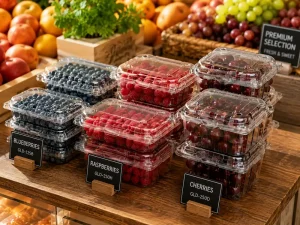
For small sides, tasting portions, nuts, berries, and compact fresh food packs, small hinged deli containers are practical because they reduce separate lid matching and support quick packing. For standard chilled deli foods and salad-side combinations, mid-size hinged deli containers create a balanced option for retail shelves and takeaway counters.
For larger fresh food portions, larger hinged deli containers support grab-and-go salads, fruit mixes, and chilled meal portions. For family-size or sharing formats, large deli containers help buyers extend the same packaging logic into bigger portions without changing the whole category.
Salad programs often need bowl formats as well. clear PET salad bowls work well for compact grab-and-go salads, fresh fruit bowls, and chilled snacks. For premium meal salads, premium salad bowl packaging helps keep the food visible, structured, and easy to handle.
What a Salad Container Supplier Should Understand
A salad container supplier should understand that salad packaging is not only about capacity. Leafy greens, protein toppings, grains, sauces, fruits, nuts, and crunchy ingredients all create different packaging needs. A shallow lid may press toppings. A weak closure may fail during takeaway handling. A container that looks good empty may not look balanced once filled with food.
For salad packaging, buyers should evaluate container depth, lid height, anti-fog requirements, base clarity, label position, and stacking strength. A clean label area matters because salads often rely on branding, ingredient labels, price labels, or nutrition stickers. The container should support food visibility without hiding the product behind oversized labels.
If sauces are packed separately, buyers should ask whether the container range supports sauce cups, inserts, or secondary packing logic. If salads are sold through chilled shelves, test how the package looks after refrigeration. If the container is used for delivery, test movement, stacking, and lid security before placing bulk orders.
Sample Testing Before Bulk Salad Containers
Sample testing is one of the most important steps before ordering bulk salad containers. Buyers should not rely only on dimensions or catalog photos. Real testing should include food loading, lid closing, stacking, refrigeration, labeling, handling, and display review.
| Sample Test | How to Test | Pass Standard |
|---|---|---|
| Food fit | Pack the real salad, deli side, fruit mix, or snack portion into the container. | The food looks full but not compressed. |
| Lid closure | Close and open the lid repeatedly under normal packing conditions. | The closure feels secure without cracking or difficult handling. |
| Stacking | Stack filled containers in the expected storage and shelf pattern. | The stack remains stable without lid distortion. |
| Cold shelf display | Place packed samples in chilled conditions and review visibility. | The package keeps a clean, retail-ready appearance. |
| Label placement | Apply brand, ingredient, price, or barcode labels. | The label stays readable without blocking key food visibility. |
| Handling simulation | Move filled samples through packing, storage, transport, and shelf handling. | The container maintains structure and closure integrity. |
A good supplier should welcome practical sample feedback. If the buyer says the lid is too low for toppings, the container is too wide for the shelf, or the closure is too tight for fast packing, the supplier should suggest a better structure instead of pushing the same item.
Red Flags When Choosing a Deli Container Supplier
Some suppliers look attractive at the quotation stage but become risky when buyers start sample testing or repeat ordering. The following red flags help buyers avoid supplier mismatch before placing a wholesale order.
| Red Flag | Why It Creates Risk | Better Supplier Behavior |
|---|---|---|
| Only quoting by size and quantity | The supplier may not understand food application, shelf display, or handling needs. | Asks about food type, sales channel, storage, label use, and packing process. |
| Only sending catalog photos | Photos do not prove lid fit, stacking strength, clarity, or food compatibility. | Recommends sample testing and practical comparison before bulk orders. |
| Cannot explain material differences | PET, rPET, and PP have different application logic and temperature suitability. | Explains material direction based on real food use and buyer market. |
| Overpromising sustainability claims | Recyclability and recycled-content claims depend on material, design, and local systems. | Uses careful, accurate language and avoids unsupported marketing claims. |
| No lid compatibility discussion | Lid mismatch leads to leakage, poor display, packing delays, and complaints. | Checks lid structure, closure feel, stacking, and matching product system. |
| Weak repeat-order communication | Wholesale buyers need stable supply, not only one acceptable sample. | Discusses product consistency, carton packing, production control, and reorder planning. |
OEM Deli Packaging and Custom Deli Containers
Some buyers need standard stock packaging. Others need custom deli containers, branding support, private-label packaging, or OEM deli packaging development. These projects require a different evaluation method.
For OEM packaging, buyers should first confirm the food application, target market, expected container structure, branding method, sample process, and long-term volume plan. Custom packaging should not begin from a vague request such as “make a new salad box.” It should begin from a real use case: what food goes inside, how it is sold, how it is stored, how it is transported, how the label is applied, and what visual message the brand wants to deliver.
When discussing OEM with a PET deli container factory, buyers should ask about tooling discussion, material options, surface decoration, carton marking, sample approval, production quality control, and communication workflow. For many buyers, semi-custom packaging may be enough. That may include label-friendly structures, printed sleeves, custom carton labels, or selected standard containers combined into a branded packaging program.
Foodservice Containers Wholesale: What Distributors Should Prioritize
For distributors and wholesalers, foodservice containers wholesale decisions are different from single-brand purchasing. Distributors need product lines that move quickly, cover multiple end users, and reduce inventory risk. A strong deli and salad packaging range should include small, medium, and large options across hinged, round, and square formats.
Distributors should prioritize repeatable demand categories. These include salad bowls, clear deli containers, fruit and snack containers, sandwich clamshells, prepared food containers, and lids that match common bowl systems. A distributor does not need every possible shape at the beginning. It needs the right core items that sell across cafes, supermarkets, delis, convenience stores, and catering operations.
For compact shelf display and flexible chilled food use, square deli containers for salad and fruit support salad, fruit, and deli meal programs. For larger chilled portions, large square deli containers give distributors a stronger option for meal-size packaging.
Common Buyer Mistakes When Choosing Wholesale Deli Containers
The first mistake is choosing by capacity alone. Capacity matters, but the actual food volume, food height, topping structure, and presentation space matter more. A salad with leafy greens requires different headspace than pasta salad or fruit cubes.
The second mistake is ignoring lid logic. A buyer may choose a good bowl but forget to check lid availability, lid height, closure feel, or stacking behavior. A weak lid system damages the whole packaging program.
The third mistake is buying too many similar SKUs. If three containers solve the same application, inventory becomes harder to manage. A smaller but clearer SKU matrix is usually better for wholesale ordering.
The fourth mistake is requesting custom packaging too early. Standard samples should be tested first. Once the buyer understands what works, custom design becomes more accurate and less risky.
The fifth mistake is using broad sustainability claims without checking the actual market. PET and rPET packaging can support recyclable and recycled-content discussions, but the final claim should match the material, local recycling system, and buyer market requirements.
How to Compare Supplier Communication Quality
Supplier communication tells buyers a lot before any order is placed. A weak supplier asks only for size and quantity. A stronger supplier asks about food type, sales channel, packing speed, label use, storage condition, sample stage, and expected packaging role.
When contacting a supplier, buyers should prepare the following information:
- Food type: salad, fruit, deli side, chilled meal, snack, bakery item, or mixed application
- Sales channel: supermarket, cafe, convenience store, deli counter, foodservice, distributor, or delivery
- Packaging structure preference: hinged, round bowl, square container, separate lid, or multi-compartment
- Material direction: PET, rPET option, PP for heat-related applications, or other confirmed material
- Branding need: plain clear packaging, label use, printed sleeve, custom carton, or OEM discussion
- Order stage: sample test, trial order, repeat wholesale order, or custom development
This information helps the supplier recommend packaging that fits the real use case instead of sending a random catalog list.
Wholesale Deli Containers Supplier Decision Framework
Use this decision framework when comparing suppliers:
| Buyer Goal | Recommended Supplier Focus | Best Packaging Direction |
|---|---|---|
| Launch a small grab-and-go program | Simple SKU matrix and sample testing | Small and mid-size hinged deli containers, salad bowls |
| Improve supermarket chilled display | Clarity, stacking, label area, and shelf presentation | Clear salad bowls, square deli containers, fruit containers |
| Build distributor wholesale range | Fast-moving standard sizes and repeatable supply | Hinged, round, and square PET deli containers |
| Develop custom brand packaging | OEM communication, tooling discussion, and branding options | Custom deli containers, private-label packaging, selected standard base products |
| Reduce packaging complaints | Lid fit, food fit, handling test, and packaging structure correction | Tested container-lid combinations for real food applications |
FAQ About Wholesale Deli Containers
1. What should buyers check before ordering wholesale deli containers?
Buyers should check food fit, container depth, lid closure, material clarity, stacking strength, label placement, cold shelf display, and sample performance before ordering wholesale deli containers.
2. How do I choose between hinged deli containers and separate-lid containers?
Hinged deli containers reduce lid-matching mistakes and work well for grab-and-go foods. Separate-lid containers offer more lid flexibility and may suit prepared foods, deli counters, and packaging programs that require different lid styles.
3. Are PET deli containers suitable for hot food?
PET deli containers are generally used for cold and chilled food packaging. Hot-fill, microwave, or high-temperature use should only be considered when the supplier confirms the material and structure for that application.
4. When should buyers consider custom deli containers?
Buyers should consider custom deli containers after standard samples have been tested and the food application, sales channel, branding need, and long-term order plan are clearly defined.
5. What makes a good salad container supplier?
A good salad container supplier understands food volume, topping height, lid structure, shelf display, anti-fog needs, label placement, material options, and wholesale ordering logic instead of recommending containers only by size.
References
- U.S. Food and Drug Administration, Packaging & Food Contact Substances guidance.
- European Commission, Food Contact Materials and Regulation (EC) No 1935/2004.
- Association of Plastic Recyclers, APR Design Guide and PET Thermoform Packaging Design Resource Document.
- RecyClass, Design for Recycling Guidelines for PET Trays.
- Petcore Europe, PET tray design and circularity guidance.
- ASTM International, Resin Identification Code reference for plastic packaging identification.
- Institute of Packaging Professionals, food packaging design and material selection resources.
- YIHAO Packaging internal product category and food packaging application planning references.
Deep-Dive Insights for Buyers
How should a buyer narrow the first wholesale order?
Start with the most repeatable food applications. For deli and salad packaging, that usually means one small hinged container, one mid-size hinged container, one salad bowl format, one square container, and one larger family or meal-size option. This gives the buyer enough coverage without creating an oversized inventory burden.
Why does clear packaging matter for deli and salad foods?
Clear packaging turns freshness into a visible selling point. Salads, fruit, chilled noodles, snacks, and deli sides depend on color, layering, and portion clarity. A container with good transparency helps buyers show the food before the customer opens the package.
What option works best for brand owners?
Brand owners should test standard clear containers first, then decide whether custom labels, sleeves, printed cartons, or OEM packaging are needed. This avoids unnecessary custom development before the food fit and retail display logic are proven.
What should buyers consider before discussing OEM deli packaging?
Buyers should define food type, portion target, container structure, lid expectation, label area, branding direction, and order stage before OEM discussion. Clear project information helps the factory recommend a realistic development path.
Why should buyers test samples before placing bulk salad container orders?
Sample testing shows whether the container works with real food, real labels, real refrigeration, and real handling. A catalog size may look correct, but only filled samples reveal whether the lid height, base depth, stacking strength, and display clarity match the buyer’s actual sales environment.
Final Note / Practical Takeaway
For sample comparison, product range selection, or OEM deli packaging discussion, buyers can contact YIHAO Packaging with food type, target container structure, sales channel, and expected packaging application.
© 2026 YIHAO Packaging. This buying guide is created by YIHAO to help wholesale buyers, distributors, food brands, and packaging decision-makers compare product options and make informed sourcing decisions. All rights reserved. Unauthorized copying, redistribution, reproduction, modification, or commercial use is strictly prohibited without prior written permission.