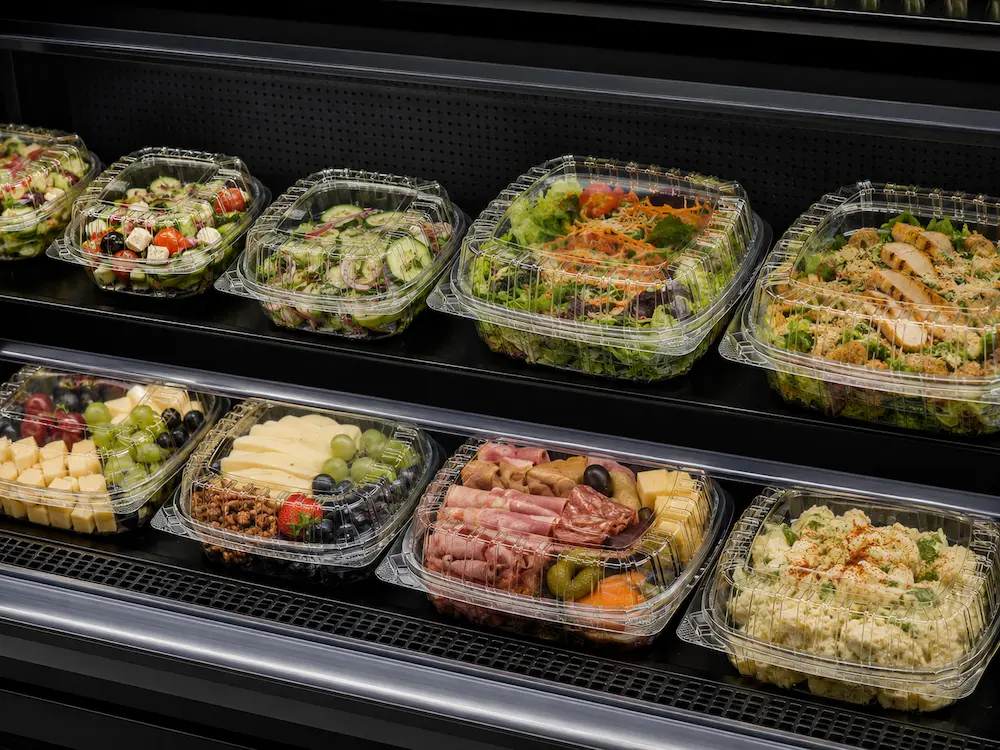
Introduction: Why Deli Clamshell Packaging Matters for Wholesale Food Programs
Deli clamshell packaging plays a direct role in how fresh food looks, travels, stacks, sells, and reaches the customer. For supermarkets, cafes, salad bars, convenience stores, foodservice distributors, central kitchens, and grab-and-go food brands, the container is not only a simple plastic box. It protects portioned food, supports fast packing, presents freshness clearly, and influences the final buying decision at the shelf.
For wholesale buyers, the real challenge is not simply finding the lowest unit price. The better question is whether the packaging matches the food application, lid closure, stacking method, label position, cold shelf display, supplier reliability, and long-term replenishment plan. A container that looks acceptable in a product photo may still fail during stacking, cold storage, delivery handling, or in-store merchandising.
YIHAO is a food packaging manufacturer and solution provider focused on practical packaging for fresh food, deli items, salad, fruit, snacks, bakery portions, and refrigerated ready-to-eat products. Buyers who need stable wholesale supply can start from YIHAO food packaging manufacturer resources and then compare the most suitable product category, size range, and structure before confirming samples.
This checklist is written for buyers comparing PET hinged deli containers, hinged deli containers, clear PET deli containers, salad clamshell containers, and wholesale hinged containers from a manufacturer or supplier. It focuses on practical purchasing decisions, not empty marketing language.
What Is Deli Clamshell Packaging?
Deli clamshell packaging usually refers to a one-piece hinged container with a connected lid and base. The lid folds over the bottom tray and closes with a snap, tab, or friction-fit closure. This structure is widely used for refrigerated deli foods, salad portions, cut fruit, nuts, snack packs, bakery items, sandwiches, and grab-and-go meals.
Unlike separate-lid containers, hinged deli containers help simplify packing operations because the lid and base stay connected. Staff do not need to match separate lids to bases during busy production, retail preparation, or meal-prep packing. This makes the format practical for stores and food brands that need speed, consistent presentation, and easy inventory control.
Deli Clamshell Packaging vs Regular Food Containers
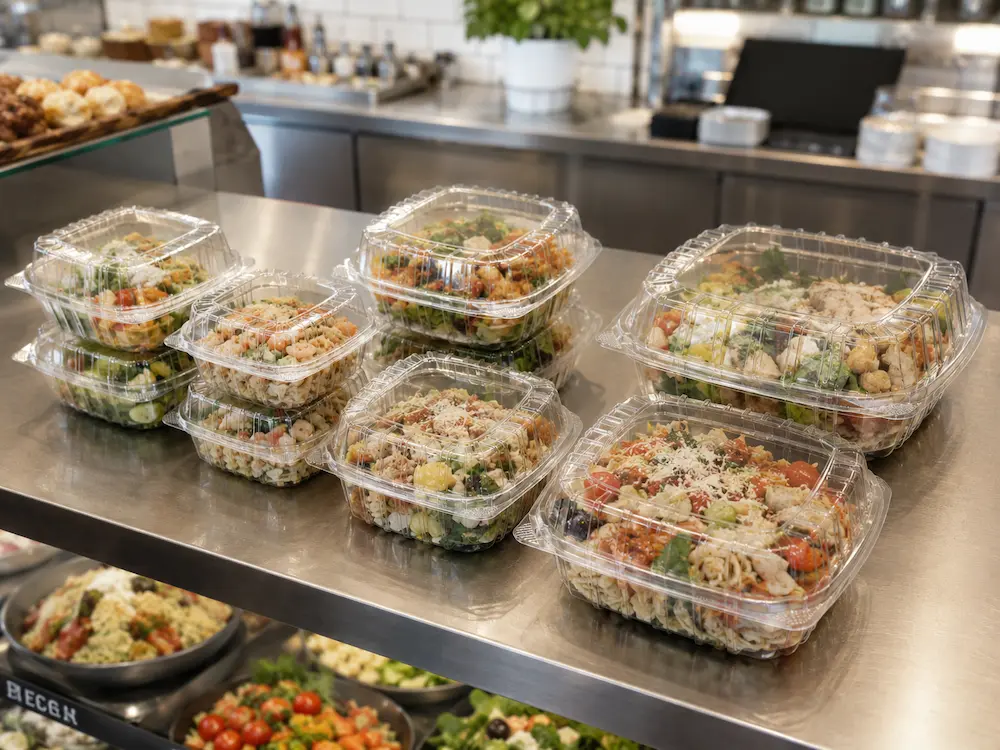
Regular food containers may include bowls, cups, tubs, trays, and containers with separate lids. They are useful for sauces, soups, mixed meals, hot foods, or high-volume portions. Deli clamshells are different because they emphasize visibility, fast loading, cold shelf display, and easy opening. For chilled salad, fruit portions, bakery snacks, deli sides, and retail food merchandising, the hinged structure gives buyers a balance between protection and presentation.
Buyers reviewing PET Hinged Deli Containers should pay close attention to the closure style, base depth, lid height, stackability, carton packing, and how the container looks when filled with real food rather than empty samples.
Common Applications for PET Hinged Deli Containers
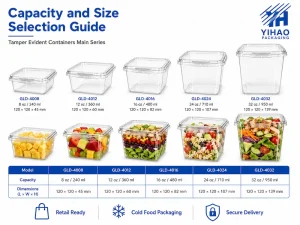
PET hinged deli containers are commonly used for foods that benefit from high visual clarity. These include fresh-cut fruit, garden salad, pasta salad, mixed nuts, deli sides, desserts, brownies, sandwiches, chilled snacks, and ready-to-eat refrigerated foods. For broader product planning, buyers can compare Deli & Salad Containers to decide whether hinged clamshells, round containers, square containers, or tamper-evident options better fit the intended food program.
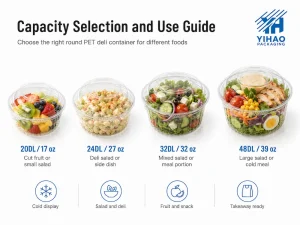
The best container choice depends on food height, moisture level, portion weight, display style, delivery distance, shelf life expectation, and whether the product needs tamper-evident protection. A salad clamshell may work well for leafy greens and toppings, while a deeper round bowl may be better for high-volume salad bowls or grain bowls.
Material Checklist: What Buyers Should Confirm First
Material selection affects clarity, strength, shelf presentation, recyclability communication, and buyer confidence. For deli clamshell packaging, PET and rPET are common directions because they provide clear visibility and are widely used in cold food packaging. However, buyers should avoid treating every PET or rPET claim as identical. The exact material, recycled content, food-contact suitability, and regional recycling compatibility should be confirmed with the supplier before wholesale ordering.
PET and Clear PET Deli Containers
Clear PET deli containers are valued for product visibility. A clear container helps customers see the color, freshness, portion, and ingredient quality before purchase. For salad, fruit, and snack packaging, clarity is part of the selling function. Cloudy, gray, bluish, or uneven material reduces perceived product value, especially in premium retail display.
When checking samples, buyers should inspect the container under natural light, cold shelf lighting, and normal store lighting. The surface should appear clean and transparent, the sidewalls should look even, and the lid should not distort the food view too much. For product categories that rely heavily on visual freshness, clear packaging is not decoration; it is part of the sales presentation.
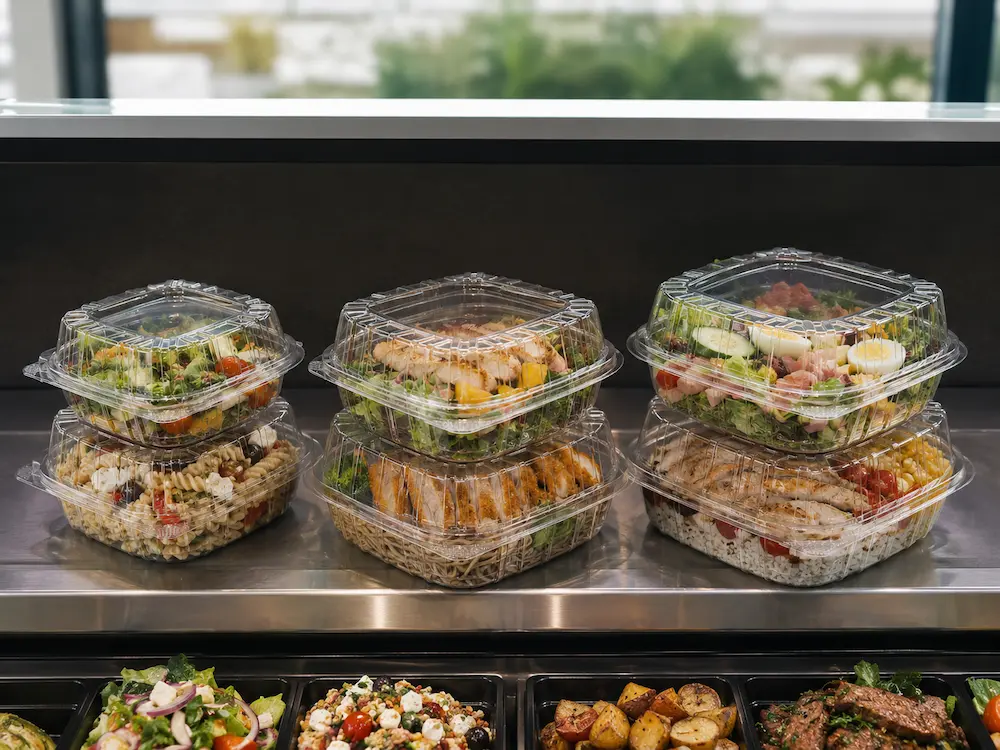
Buyers looking for compact fresh food sizes can review products such as the clear hinged deli container for small portions, snacks, fruit, nuts, or side dishes. For larger salad and deli programs, a wider size range is often needed to keep packaging consistent across multiple SKUs.
RPET Direction and Food-Contact Suitability
Many buyers now ask about recycled PET or rPET because sustainability has become part of packaging procurement. This is a strong direction, but it requires careful wording and proper confirmation. Recycled plastic used in food packaging should be evaluated according to the intended food-contact use, local regulations, and supplier documentation. Buyers should ask whether the supplier can provide relevant material information, food-contact declarations, and details about the recycled content direction when applicable.
For wholesale buyers, the safest approach is to ask precise questions instead of accepting general claims. For example: Is the container made from virgin PET, rPET, or a blend? Is the recycled content post-consumer recycled material? What food-contact documentation is available? What food types and storage conditions are intended? Does the supplier recommend this container for chilled food, room-temperature display, or other specific conditions?
A practical buyer should never rely only on the phrase “eco-friendly.” The material claim must be supported by proper context. If rPET is used, buyers should confirm whether the material direction matches their market requirements, customer expectations, and food application.
Recyclability Claims Should Depend on Local PET Recycling Systems
Recyclability should not be written as a universal promise. A PET container may be technically designed for recycling, but actual recycling depends on local collection, sorting, recycling infrastructure, label design, adhesive choice, ink coverage, and food residue management. This is especially important for exporters and international distributors.
For PET rigid packaging, label material, ink, adhesive, decoration coverage, and attached components may affect automatic sorting and final recyclate quality. A buyer planning custom labels or branded sleeves should review packaging design with recycling compatibility in mind. If a label covers too much surface area or uses incompatible material, it may reduce the recycling value of the package.
For Europe-facing programs, buyers should also pay attention to the evolving packaging regulatory environment under the EU Packaging and Packaging Waste Regulation. The practical takeaway is simple: use accurate, market-specific sustainability language and avoid absolute claims unless documentation, testing, and local recycling conditions support them.
Structure Checklist for Hinged Deli Containers
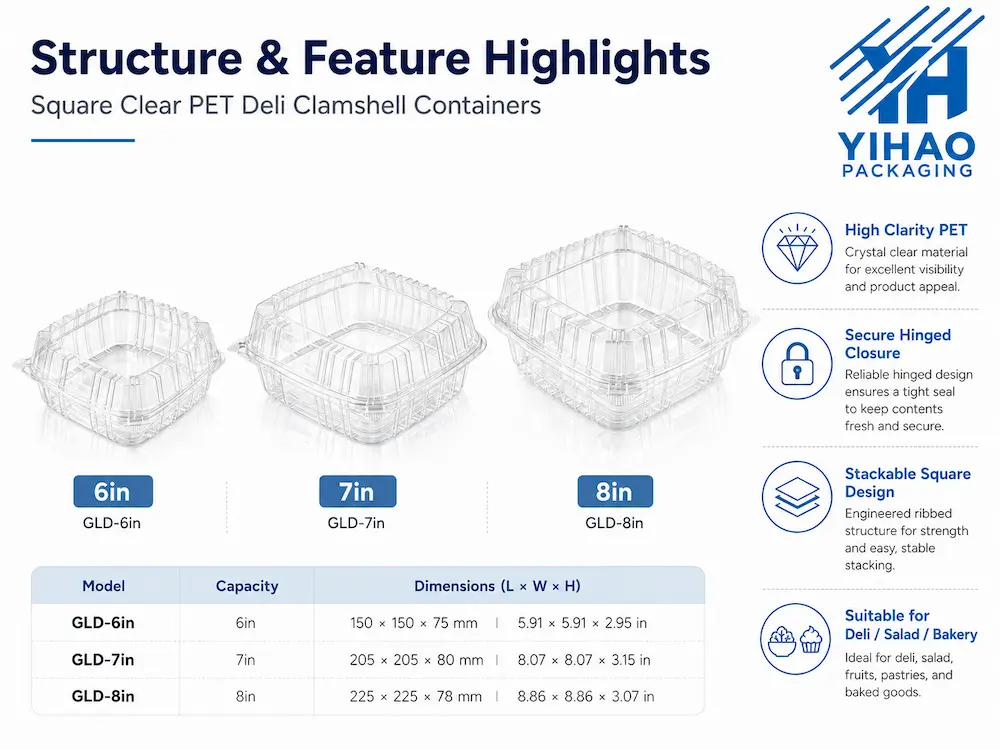
The structure of hinged deli containers determines how well the package performs after filling. A good container should close smoothly, hold its shape, stack reliably, and present the food clearly. These points matter more in wholesale purchasing than in a single sample photo.
Lid Fit and Closure Feel
The lid should close with a stable feel. If it is too loose, the container may open during handling. If it is too tight, staff may struggle during packing, and customers may find it inconvenient. Buyers should test the closure several times by hand and observe whether the hinge turns white, cracks, weakens, or becomes difficult to align.
For refrigerated deli foods and salad portions, closure stability is especially important because products are handled by production staff, delivery teams, shelf stockers, and final customers. A weak closure increases the chance of spills, poor presentation, and customer complaints.
Stackability for Warehouse and Retail Display
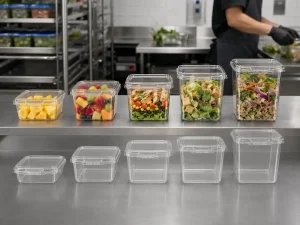
Wholesale orders usually involve cartons, pallets, warehouse storage, and repeated handling. Stackability should be tested with both empty containers and filled containers. Empty containers should separate smoothly without sticking too much. Filled containers should stack in a stable way without crushing the bottom layer or causing lid deformation.
Buyers should ask the manufacturer how the containers are packed, how many pieces are in a carton, and whether the product is suitable for the intended storage and transport process. For factory capability evaluation, reviewing packaging factory support helps buyers understand how production, packing, and export-readiness connect to wholesale food packaging supply.
Clarity, Condensation, and Cold Shelf Visibility
For refrigerated food, clear visibility matters. However, moisture and condensation may affect how the food looks on the shelf. If the supplier offers anti-fog options, buyers should request details and sample testing. If no anti-fog claim is confirmed, buyers should test ordinary containers under real cold storage conditions before making bulk decisions.
The best sample test is simple: place real salad, fruit, or deli food into the container, store it in the expected temperature range, and observe the lid visibility after several hours. This reveals more than an empty sample inspection.
Shape, Footprint, and Portion Logic
Different foods need different container shapes. A flat clamshell works well for sandwiches, bakery portions, fruit slices, and shallow salads. A deeper hinged deli container works better for layered salad, deli sides, and larger snack portions. A square or rectangular footprint helps with shelf layout, while round containers may be better for bowl-style foods.
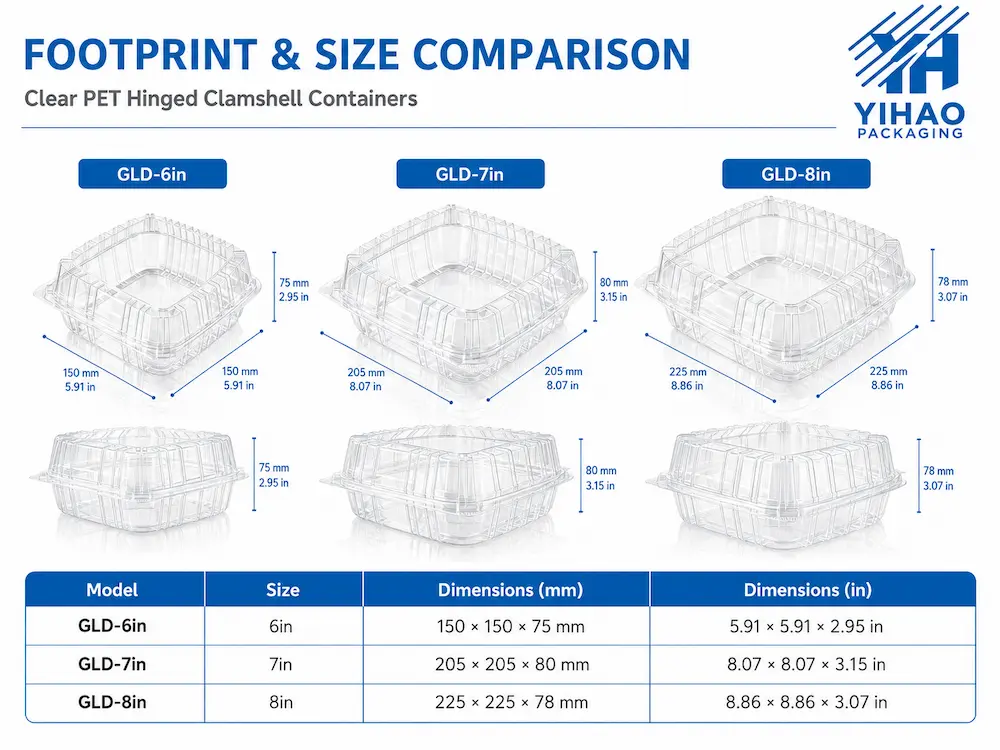
Buyers building a full packaging program can compare Round PET Deli Containers and Square PET Deli Containers when one clamshell structure does not cover all food applications.
Application Checklist: Match Packaging to the Food, Not Only the Size
One of the most common purchasing mistakes is choosing deli clamshell packaging only by capacity. Size is important, but food behavior matters more. A light salad, a wet fruit mix, a dense nut pack, and a bakery dessert do not create the same pressure inside the container.
Food Application vs Recommended Packaging Checkpoints
| Food Application | Recommended Packaging Focus | Buyer Checkpoint | Why It Matters |
|---|---|---|---|
| Leafy salad and deli salad | Salad clamshell containers or medium-depth PET hinged deli containers | Check lid height, topping clearance, dressing cup fit, and cold shelf clarity. | The salad should look fresh and generous without being compressed. |
| Fresh-cut fruit and berries | Clear PET deli containers or fruit clamshell formats | Check base strength, visibility, condensation behavior, and product movement. | Color, freshness, and clean display strongly influence customer choice. |
| Nuts and dry snack packs | Compact hinged deli containers with reliable closure | Check snap closure, sidewall rigidity, and shelf handling performance. | Small loose products require secure closure during handling. |
| Sandwiches and wraps | Flat PET hinged clamshell containers | Check footprint, hinge flexibility, lid clearance, and display angle. | The food should stay neat and visible without excess empty space. |
| Bakery portions and desserts | Clear hinged containers with suitable lid height | Check surface contact, dessert height, and presentation after transport. | Premium bakery products need clean visibility and shape protection. |
| Larger deli and family-size portions | Larger hinged deli containers or deeper PET formats | Check filled weight, stacking stability, and carton protection. | Large portions create more pressure on the base and lid. |
Salad Clamshell Containers for Chilled Salad Programs
Salad clamshell containers are used for leafy salad, pasta salad, grain salad, deli sides, and cold prepared foods. Buyers should check whether the lid height allows toppings without compression. The base should support dressing cups, proteins, vegetables, and layered ingredients without bending too easily.
For salad programs, the container should also look clean after filling. If the lid touches the food too closely, the product may look crowded. If the container is too deep, the portion may look smaller than it really is. The right packaging helps food look fresh, generous, and organized.
A medium-size option such as the clear recycled PET hinged deli container supports deli salad, fruit, snacks, and portioned ready-to-eat foods where visual clarity and compact display are both important.
Clear PET Deli Containers for Fruit, Nuts, and Snack Packs
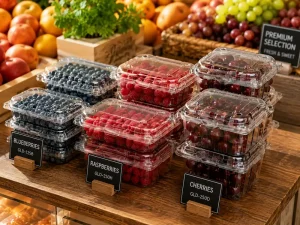
Fresh-cut fruit, berries, nuts, and snack packs benefit from clear packaging because customers want to see color, texture, and portion quality. For fruit packaging, buyers should check base strength, ventilation needs, and whether the container supports clean retail display. For nuts and snacks, the lid should close securely enough to prevent loose product from spilling during shelf handling.
For fruit-specific programs, buyers may also review Fresh-Cut Fruit Containers to compare clamshell, tray, and hinged packaging options for refrigerated produce and grab-and-go fruit packs.
Hinged Deli Containers for Grab-and-Go Retail
Grab-and-go food needs packaging that is easy for staff to fill and easy for customers to carry. Hinged deli containers support quick preparation because the connected lid and base reduce matching errors. They also help retailers maintain a consistent shelf look across salads, snacks, sandwiches, and deli sides.
For convenience stores, airports, schools, office cafeterias, and supermarkets, clear clamshell packaging makes the food visible while keeping the portion protected. The right structure helps reduce handling problems and supports faster replenishment during busy hours.
Bakery and Deli Crossover Use Cases
Deli clamshells are not limited to salad. They are also used for cheesecake slices, brownies, cookies, muffins, sandwiches, wraps, pastries, and chilled dessert portions. For bakery items, buyers should check lid height and surface contact. For sandwiches and wraps, they should confirm whether the container shape holds the food neatly without excessive movement.
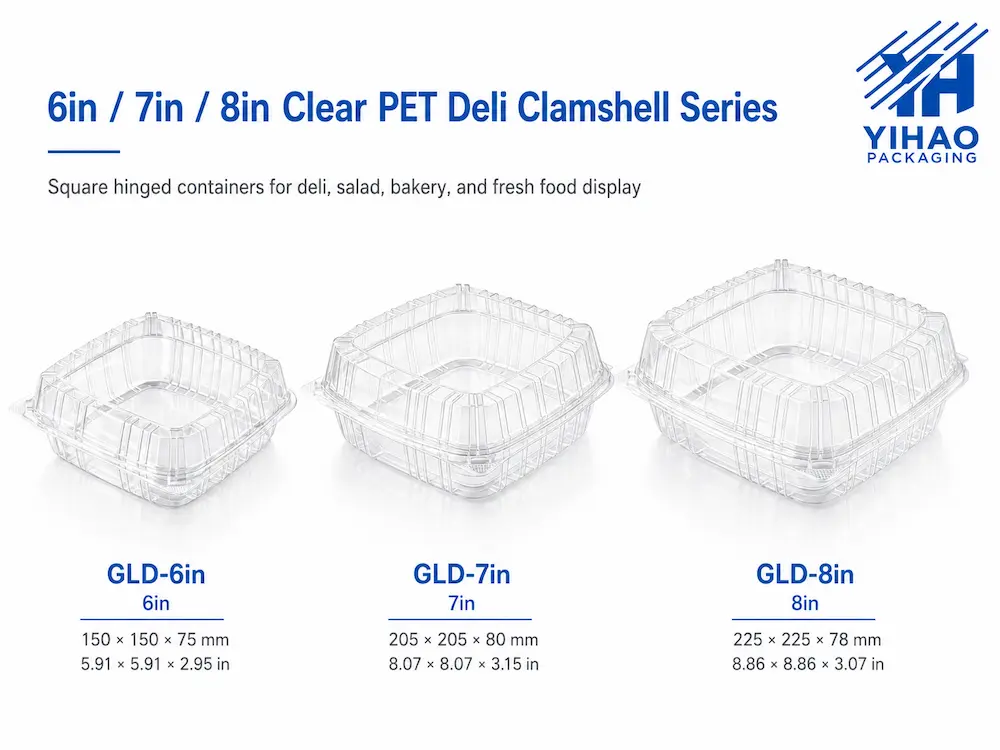
For flat fresh food or sandwich-style applications, buyers can compare products such as the 6 inch clear hinged PET clamshell container, 7 inch clear hinged PET clamshell container, and 8 inch clear hinged PET clamshell container for different portion footprints.
Manufacturer Checklist: What a Real Packaging Factory Should Support
Choosing a manufacturer is different from choosing a random supplier listing. A reliable manufacturer should understand structure, material, mold consistency, packing, sample support, product range continuity, and wholesale supply logic. For long-term buyers, these points are more important than a one-time low quote.
Product Range and Size Continuity
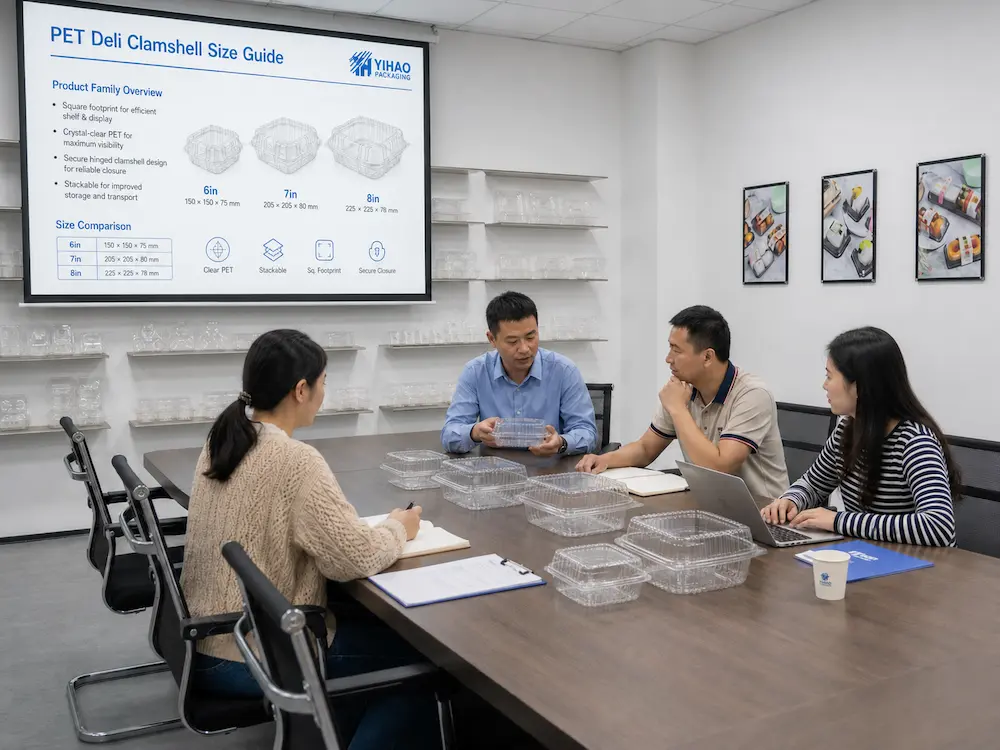
A strong manufacturer should offer a connected product range instead of only one isolated container. Food brands often need multiple sizes for small, medium, and large portions. Supermarkets may need compact snack containers, salad containers, fruit clamshells, and larger deli packs under the same visual packaging direction.
For example, a buyer may start with the 12 oz clear recycled PET hinged deli container for small fresh food portions, then add medium and large formats for salad, fruit, and deli items. A consistent size family makes retail display cleaner and procurement easier.
Mold Consistency and Structure Repeatability
Wholesale buyers should ask whether the container structure remains consistent across repeat orders. Lid fit, hinge strength, sidewall shape, and stacking performance should not vary randomly between batches. When a food brand builds a packaging line around one container, structural inconsistency creates operational problems.
Sample approval should therefore include structure, not only appearance. Buyers should keep approved samples and compare future production against them. This is especially important for private-label food brands and distributors that reorder the same container many times during the year.
Factory-Side Quality Checks Buyers Should Ask About
A practical manufacturer should understand more than product photos. Buyers should ask how the factory controls sheet consistency, forming stability, trimming quality, lid alignment, hinge strength, carton protection, and final packing. These factory-side details directly affect how the container performs during real wholesale use.
| Factory Checkpoint | Buyer Question | Business Value |
|---|---|---|
| Material sheet consistency | How is material thickness and clarity controlled before forming? | Improves visual consistency and reduces unexpected batch variation. |
| Forming stability | How does the factory check shape accuracy after production? | Supports repeatable lid fit, stacking, and food presentation. |
| Hinge and closure quality | Are closure samples checked during production? | Reduces risk of loose lids, difficult closing, or shelf handling issues. |
| Trimming and edge finish | Are sharp edges, rough cuts, or uneven rims inspected? | Improves customer handling and product presentation. |
| Carton protection | How are containers packed to reduce deformation during shipping? | Protects product quality before it reaches the buyer’s warehouse. |
| Sample retention | Does the supplier keep approved samples for future comparison? | Helps maintain repeat-order consistency. |
Wholesale Packing and Export Readiness
Wholesale hinged containers must be packed for real distribution. Buyers should confirm carton packing, labeling, palletization, loading plan, and export documentation requirements before placing large orders. If containers are packed poorly, they may deform during shipping or arrive with dust, scratches, or crushed edges.
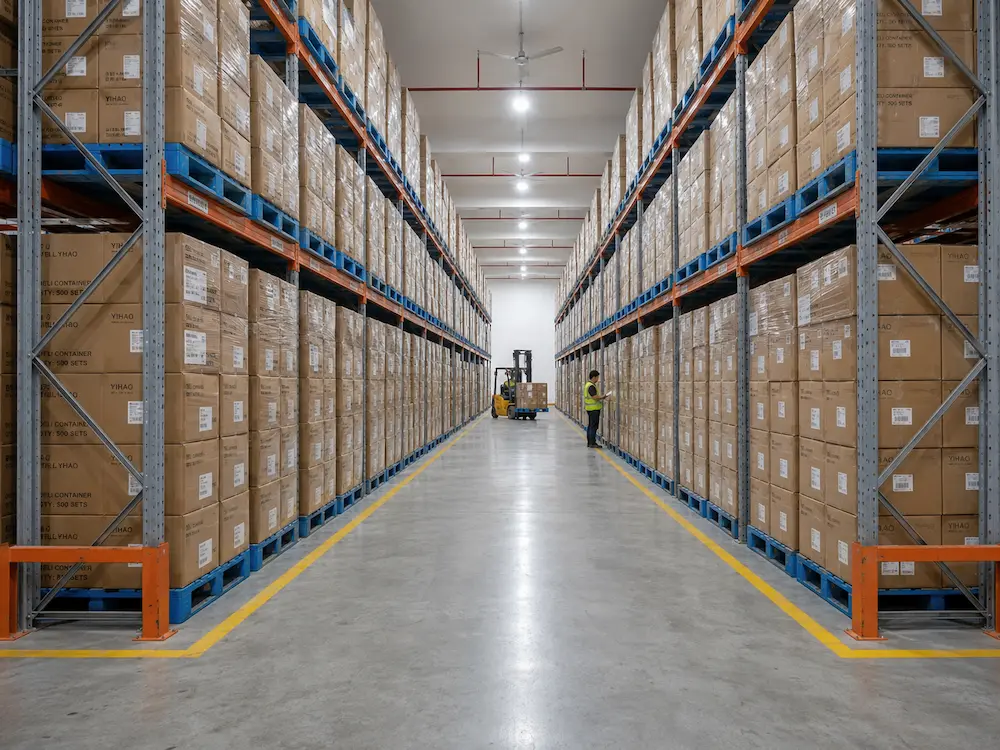
Buyers should also ask whether the supplier supports mixed-size orders, repeat shipment planning, and communication for forecast demand. A supplier may offer a product, but a manufacturer with strong packing and export experience usually supports a more stable purchasing program.
OEM and Custom Packaging Support
Many food brands need custom labels, sleeves, logo printing, color cards, or retail presentation support. For deli clamshell packaging, customization should be discussed carefully because labels, adhesives, inks, and coverage area may affect recycling compatibility and shelf appearance.
Buyers should ask the manufacturer whether custom label areas, branded sleeves, carton labels, sample development, and packaging artwork support are available. The goal is not to decorate the container blindly. The goal is to protect the food, display it clearly, and support the brand without damaging practical packaging performance.
For buyers building a connected deli, salad, fruit, and snack packaging program, YIHAO supports a practical product-range approach: match the container structure to the food application first, then confirm sample performance, carton packing, and wholesale ordering logic. This makes the purchasing process more reliable than choosing scattered products from unrelated suppliers.
Supplier Checklist: Questions Buyers Should Ask Before Ordering
A good supplier should answer practical questions clearly. If the answer is vague, the buyer should request samples, photos, material information, or test feedback before confirming bulk orders. The following checklist helps buyers compare suppliers in a more structured way.
| Checklist Item | What Buyers Should Ask | Why It Matters |
|---|---|---|
| Material | Is the container made from PET, rPET, or a PET/rPET blend? | It helps confirm clarity, food-contact direction, and sustainability communication. |
| Food Application | Is this container recommended for salad, fruit, nuts, deli sides, bakery, or chilled foods? | The right container depends on real food behavior, not only listed capacity. |
| Closure | Does the lid close securely after repeated opening and closing? | Stable closure reduces shelf handling problems and customer complaints. |
| Stacking | Can the container stack well when empty and when filled? | Stacking affects warehouse, transport, and retail display performance. |
| Samples | Can samples be tested before wholesale ordering? | Sample testing reduces bulk order risk. |
| Customization | Are label areas, sleeves, carton labels, or logo options available? | Customization supports retail branding and private-label packaging. |
| Supply Capability | Can the supplier support repeat orders and a connected product range? | Long-term food programs need stable replenishment, not random one-time supply. |
| Documentation | What material, food-contact, or market-specific documents can be provided? | Documentation helps buyers manage compliance and customer requirements. |
How to Test Samples Before a Wholesale Order
Sample testing is one of the most important steps in buying deli clamshell packaging. A container may look good in a catalog but perform differently with real food. Buyers should test samples in the same way the packaging will be used in daily operations.
Visual Clarity Test
Place the empty container and filled container under different lighting conditions. Check whether the plastic looks clear, gray, blue, scratched, cloudy, or uneven. For premium fresh food display, high clarity helps the product look cleaner and more valuable.
Lid Closure Test
Open and close the lid multiple times. Listen and feel whether the closure is stable. Check whether the hinge shows stress marks or whether the lid becomes difficult to align. A good hinged container should close confidently without excessive force.
Stacking Test
Stack empty containers and filled containers. Observe whether the stack leans, slips, crushes, or becomes unstable. This is important for distributors, central kitchens, supermarkets, and meal-prep operations that handle many units at once.
Real Food Trial
Test the container with real food, not only paper or empty space. Use salad, fruit, nuts, deli sides, sandwiches, or bakery portions that match the intended application. Place the filled container in the expected storage condition and check the appearance after several hours. This gives buyers practical information before confirming a wholesale order.
Carton and Warehouse Handling Test
Wholesale packaging should be tested beyond the individual container. Buyers should check whether the carton protects the containers during normal warehouse movement, whether the container edges deform after long storage, and whether workers can remove units quickly without damaging lids or rims. This test is especially important for distributors and central kitchens that move packaging frequently.
Deli Clamshell Packaging vs Other Food Packaging Options
Not every food application should use the same container. A good buyer compares packaging structures before choosing the final format. Deli clamshell packaging is excellent for many fresh food programs, but bowls, separate-lid containers, and tamper-evident containers may be better for some uses.
Deli Clamshell Packaging vs Separate-Lid Containers
Deli clamshells help speed up packing because the lid and base are connected. Separate-lid containers may be better when the food needs a deeper bowl shape, a stronger sealing lid, or a more premium round presentation. For high-volume salad bowls or grain bowls, buyers may prefer bowl-style containers. For flat salad, fruit, bakery, and sandwiches, clamshells are often more efficient.
PET Hinged Deli Containers vs Tamper-Evident Containers
PET hinged deli containers are practical for fast packing and clear display. Tamper-evident containers add a stronger security message for retail, delivery, and ready-to-eat food programs where customers expect visible protection. Buyers who need safety-focused retail packaging can compare Tamper Evident Containers as a separate packaging direction.
Salad Clamshell Containers vs Round Salad Bowls
Salad clamshell containers work well for flat display, portioned salad, and chilled shelves. Round salad bowls are better for deeper salad, grain bowls, noodle salads, and ingredients that need vertical space. The decision should follow food structure, not only price.
Wholesale Buying Mistakes to Avoid
Buying wholesale hinged containers looks simple, but small mistakes create expensive problems. The following issues appear often when buyers choose packaging too quickly.
Only Comparing Unit Price
A lower price does not help if the lid closure is weak, the container deforms, or the packaging makes food look less fresh. Buyers should compare total performance, not only the unit cost.
Choosing by Capacity Alone
Capacity does not tell the whole story. Food height, shape, moisture, weight, and retail display style all affect the correct container choice. A 16 oz container and a 16 oz bowl may hold a similar volume but present food very differently.
Using Sustainability Claims Too Loosely
Words such as recyclable, recycled, eco-friendly, and food-grade should be used carefully. Buyers should confirm material details, market requirements, and documentation. Recyclability depends on local collection and recycling systems, and recycled-content food-contact use should be evaluated according to the intended application.
Ignoring Label and Sleeve Design
Labels and sleeves improve branding, but they should not block the food view or create unnecessary recycling compatibility problems. Large labels, incompatible adhesives, heavy ink coverage, or non-compatible decorative elements may affect PET recycling performance. Buyers should plan branding and recyclability together.
Skipping Sample Testing
Ordering bulk packaging without sample testing increases risk. Buyers should always test clarity, closure, stacking, food fit, label position, carton packing, and real storage conditions before confirming large wholesale orders.
Why Work with a Manufacturer Instead of Only a Trading Supplier?
A trading supplier may help buyers source products quickly, but a manufacturer usually provides deeper support on structure, mold consistency, size range, production planning, sample control, and custom packaging development. This does not mean every trading supplier is weak. It means the buyer should understand what type of support is needed.
For simple one-time purchases, a basic supplier may be enough. For long-term food packaging programs, private-label retail, supermarket supply, export distribution, or multi-size product development, working closely with a manufacturer reduces communication gaps and improves repeat-order stability.
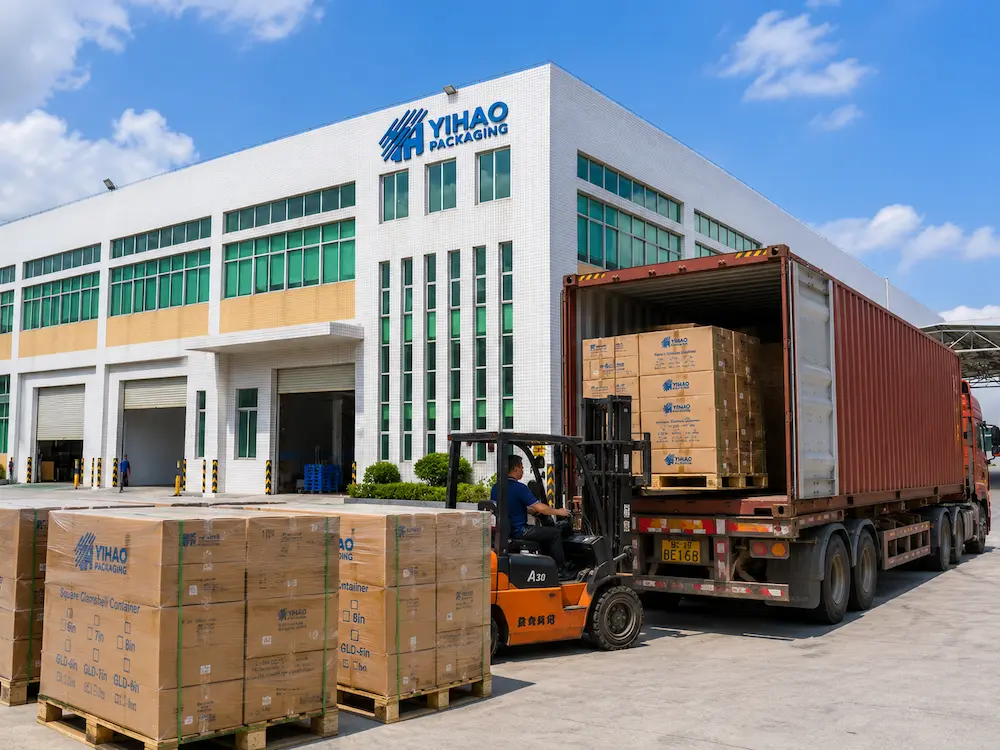
A manufacturer helps buyers compare product families, identify suitable sizes, review packing methods, and develop packaging that fits actual food applications. This is especially valuable when buyers need several container sizes under one visual packaging system. Larger formats such as the 32 oz clear recycled PET hinged deli container and 48 oz clear recycled PET hinged deli container support larger fresh food portions, family-size deli items, and higher-volume grab-and-go packaging programs.
Buyer Quick Note
Buyers should choose deli clamshell packaging by matching the container to the food, the shelf, the packing process, and the wholesale supply plan. The best option is not always the cheapest or the largest. A better container is clear, stable, easy to close, suitable for the food application, practical for carton packing, and supported by a supplier that understands repeat orders and sample testing.
Practical Manufacturer and Supplier Checklist
Before confirming a wholesale order, buyers can use the following checklist as a final review:
- Confirm whether the material is PET, rPET, or a blended material direction.
- Check whether the container is suitable for the intended food application.
- Test lid closure with real staff handling.
- Test stacking with empty and filled containers.
- Review clarity under shelf lighting and cold storage conditions.
- Ask for samples before bulk ordering.
- Confirm carton packing, pallet plan, and export handling requirements.
- Review label, sleeve, and branding design before finalizing artwork.
- Ask what documents the supplier can provide for the target market.
- Choose a manufacturer or supplier that supports repeat orders and product range continuity.
FAQ
1. What is deli clamshell packaging used for?
Deli clamshell packaging is used for fresh food, salad, fruit, nuts, bakery portions, sandwiches, deli sides, chilled snacks, and grab-and-go meals. Its hinged structure helps simplify packing because the lid and base are connected, while the clear container helps customers see the food before purchase.
2. Are PET hinged deli containers suitable for salads and fruit?
Yes, PET hinged deli containers are widely used for salad, fruit, snacks, and refrigerated ready-to-eat foods because PET provides clear visibility and practical structure for cold shelf display. Buyers should still test the container with real food to confirm lid height, closure, stacking, and condensation performance.
3. What should buyers check before ordering wholesale hinged containers?
Buyers should check material, clarity, lid closure, hinge strength, stackability, food fit, carton packing, sample availability, customization options, and supplier documentation. For wholesale hinged containers, sample testing is essential before bulk ordering.
4. Is clear PET deli packaging recyclable?
Clear PET deli packaging may be recyclable where local PET collection, sorting, and recycling systems accept it. Actual recyclability depends on regional infrastructure, package design, label material, adhesives, inks, food residue, and attached components. Buyers should avoid universal recyclability claims without market-specific confirmation.
5. Should I choose a manufacturer or supplier for custom deli clamshell packaging?
If the order is simple and short-term, a supplier may be enough. If the buyer needs stable repeat supply, multiple sizes, custom packaging support, sample control, and structure consistency, working with a manufacturer is usually more practical for long-term deli clamshell packaging programs.
References
- U.S. Food and Drug Administration, Recycled Plastics in Food Packaging.
- European Union, Regulation (EU) 2025/40 on Packaging and Packaging Waste.
- Association of Plastic Recyclers, APR Design Guide for PET Rigid Packaging.
- European Commission, Packaging Waste Policy and Circular Economy Guidance.
- U.S. Food and Drug Administration, Guidance for Industry: Use of Recycled Plastics in Food Packaging.
- Association of Plastic Recyclers, Design Guidance for Labels, Adhesives, Inks, and PET Packaging Components.
- Foodservice packaging industry best practices for refrigerated grab-and-go food display.
- Retail fresh food merchandising practices for clear packaging, shelf visibility, and portion presentation.
Final Note / Practical Takeaway
Deep-Dive Insights
How should buyers compare deli clamshell packaging suppliers?
Buyers should compare suppliers by sample quality, closure stability, material transparency, documentation support, product range, wholesale packing, and repeat-order capability. A low quote is not enough if the container fails during filling, stacking, or cold shelf display.
Why does clear PET remain popular for deli and salad packaging?
Clear PET remains popular because it supports food visibility, clean retail presentation, and practical structure for chilled ready-to-eat food. For salad, fruit, snacks, and deli sides, customers often judge freshness before opening the package.
What is the better option: standard hinged containers or tamper-evident packaging?
Standard hinged containers are practical for fast packing and clear display. Tamper-evident packaging is better when the product needs a stronger safety message for retail shelves, delivery, or customer confidence. The right choice depends on the sales channel and food risk profile.
What should buyers consider before adding custom labels?
Custom labels should support branding without blocking food visibility or creating unnecessary recycling compatibility problems. Buyers should review label size, adhesive type, ink coverage, and placement before approving final artwork.
What is the most practical takeaway for wholesale buyers?
The best wholesale decision starts with real samples, real food trials, and clear supplier questions. Buyers should confirm structure, material, application, packing, documentation, and repeat supply before choosing a long-term deli clamshell packaging partner.
© YIHAO Packaging. All rights reserved.
All product images, packaging designs, articles, and website content are protected by copyright and may not be copied, reproduced, or used without permission.