Wholesale Bakery Dessert Cups: Manufacturer and Supplier Checklist
Bakery dessert cups are practical packaging formats for bakeries, cafes, supermarkets, dessert shops, distributors, catering teams, and foodservice brands that need chilled desserts to remain visible, stable, portioned, and retail-ready. They are commonly used for tiramisu cups, mousse cups, cheesecake portions, pudding cups, parfaits, panna cotta, mini cakes, layered dessert cups, sampler portions, and grab-and-go chilled sweets.
For food packaging teams, bakery dessert cup sourcing should not be based only on cup volume, unit price, or a clean-looking empty sample. A dessert cup that looks acceptable before filling may perform differently after holding soft mousse, cocoa-dusted tiramisu, cream layers, fruit toppings, cheesecake portions, pudding, custard, whipped cream, chocolate decoration, or chilled dessert samplers. Buyers need to evaluate clear material visibility, cup shape, lid height, lid fit, base stability, surface protection, sidewall clarity, label placement, chilled display behavior, stacking, carton packing, and repeat-order consistency.
YIHAO is a food packaging manufacturer and solution provider focused on clear PET and rPET packaging for bakery items, dessert portions, cheesecake slices, tiramisu portions, mousse cakes, chilled desserts, salads, deli foods, and retail-ready packaging programs. This checklist helps food packaging teams evaluate bakery dessert cups before choosing a manufacturer, wholesale supplier, or custom packaging partner.
What Are Bakery Dessert Cups?
Bakery dessert cups are portion-control packaging formats designed to hold, protect, display, and transport single-serve or sampler-size desserts. They may be round, square, rectangular, shallow, tall, clear, lidded, tamper-evident, or paired with paper-base and clear-lid structures depending on the dessert type and sales channel.
The main purpose is to preserve dessert structure while keeping the product visually attractive. A tiramisu cup needs layer visibility and cocoa surface protection. A mousse cup needs lid clearance and sidewall clarity. A cheesecake portion needs base support and clean removal. A parfait needs clear sidewalls to show layers. A chilled sampler needs organized layout and secure retail handling.
A strong bakery dessert cup program should answer several buyer questions:
- Does the cup show dessert layers, toppings, texture, cream, fruit, and portion size clearly?
- Does the lid fit securely without touching whipped cream, cocoa powder, mousse, fruit, or glaze?
- Does the cup remain stable during filling, refrigeration, stacking, takeaway, and delivery?
- Does the packaging preserve sidewall visibility after labeling?
- Does the package stack safely in cartons, cold cases, and retail shelves?
- Does the supplier support filled-sample testing before wholesale approval?
- Can the supplier maintain clarity, lid fit, cup shape, and carton consistency across repeat orders?
Why Manufacturer Capability Matters for Bakery Dessert Cups
Wholesale dessert packaging is not only a packaging purchase. It is a supply decision that affects filling speed, cold-case display, product protection, customer confidence, and long-term sourcing stability. A capable manufacturer understands that dessert cups must perform after filling, sealing or closing, labeling, stacking, refrigeration, delivery, and customer opening.
Bakery containers cover many packaging formats for cakes, pastries, cupcakes, muffins, cookies, brownies, dessert portions, and chilled bakery items. Bakery dessert cups sit inside this wider category, but they require specific attention to sidewall clarity, lid fit, chilled display, portion appearance, and soft dessert protection.
Buyers should be cautious when a supplier only quotes capacity and price. A stronger supplier asks about dessert type, finished fill height, topping sensitivity, chilled storage, display channel, takeaway route, label placement, carton packing, and wholesale order volume before recommending a packaging format.
Supplier Checklist: Material Clarity and Product Visibility
Clear visibility is one of the most important reasons buyers choose dessert cups. Customers want to see tiramisu layers, mousse texture, fruit topping, cream thickness, pudding consistency, chocolate decoration, sponge layers, and portion depth before purchase. Clear packaging allows the dessert itself to become the product image.
For bakery dessert cups, both top and side visibility matter. The top view shows fruit, cream, cocoa powder, glaze, chocolate, or decoration. The side view shows layers, portion depth, and fill quality. A cup with poor sidewall clarity can make a well-made dessert look less premium.
When evaluating suppliers, buyers should ask:
- Does the material show dessert layers clearly under retail lighting?
- Does the lid preserve top visibility without distortion?
- Does the cup sidewall remain clear after refrigeration?
- Does the material resist obvious scuffing during normal handling?
- Can the supplier maintain clarity consistently across repeat wholesale orders?
Supplier Checklist: Dessert Portion Containers
Dessert portion containers are the broader packaging category for bakery dessert cups, cheesecake slices, tiramisu portions, mousse cakes, mini cakes, pudding cups, custard portions, parfaits, and chilled bakery desserts. This category needs packaging that supports portion control, visual appeal, cold-chain handling, and clean customer use.
For individual desserts and compact cake portions, single-serve clear-lid packaging can support small retail portions where the finished dessert fits the internal height and footprint. For larger or premium takeaway portions, premium dessert takeaway packaging can support stronger presentation while keeping product visibility.
Buyers should define the dessert format before selecting a cup or container. A spoonable mousse dessert may need a cup. A cheesecake slice may need a slice container. A sampler set may need compartments. A premium chilled dessert may need stronger lid clearance and better sidewall visibility.
Supplier Checklist: Cheesecake Slice Containers and Cup Alternatives
Cheesecake slice containers and bakery dessert cups often appear in the same chilled dessert program, but they are not interchangeable. A traditional cheesecake slice needs side-profile support, crust visibility, stable base support, and clean removal. A cheesecake cup or cheesecake parfait needs vertical layer visibility, spoonable access, and cup-to-lid clearance.
For cheesecake slices, brownies, and tiramisu-style dessert portions, clear PET dessert portion packaging can support visible retail display and takeaway handling for compact chilled dessert portions.
A supplier should help buyers decide whether the product belongs in a cup, slice container, clamshell, clear-lid paper-base box, or sampler pack. The right answer depends on finished dessert shape, texture, fill height, decoration, chilled display, and customer eating experience.
Supplier Checklist: Tiramisu Containers
Tiramisu containers need clear sidewall visibility and soft surface protection. Tiramisu often includes cream layers, sponge layers, coffee-soaked cake, cocoa powder, and a soft top surface. A dessert cup can work well when the product is spoonable and layered, but the lid must not touch cocoa powder or cream.
For tiramisu cups, buyers should check sidewall clarity, lid height, label placement, stacking behavior, chilled display appearance, and spoon access. A label that covers the center of the cup can hide the very layers customers want to see.
The supplier should support real filled-sample testing. Tiramisu can look stable when freshly filled but shift or show condensation after refrigeration and delivery. Packaging approval should include chilled testing, not only room-temperature inspection.
Supplier Checklist: Mousse Cake Containers
Mousse cake containers need careful lid height and surface protection because mousse is soft, delicate, and visually sensitive. A mousse cup may include fruit topping, chocolate decoration, cream layers, glaze, sponge base, or whipped topping. If the lid touches the surface, the dessert can look damaged before purchase.
For decorated or higher-clearance chilled desserts, high-dome chilled dessert packaging can support additional internal clearance where toppings, cream, or taller cake profiles require more space.
For mousse cups, buyers should test cup height, lid clearance, sidewall clarity, label placement, base stability, stacking, and refrigerated display. A supplier that understands mousse packaging will not recommend a low-lid format for a dessert with whipped cream or fruit decoration.
Supplier Checklist: Clear Dessert Containers
Clear dessert containers are important because chilled desserts sell through visible detail. Bakery dessert cups, mousse portions, tiramisu cups, cheesecake portions, and sampler desserts all benefit from clear views of layers, toppings, texture, and portion size.
For compact cake slice and chilled dessert presentation, low-dome cake slice packaging can support lower-profile dessert portions where finished product height allows. For cup-style desserts, buyers should still focus on sidewall clarity and lid fit rather than only top visibility.
Clear dessert packaging should be tested under real store lighting and refrigeration. Buyers should look for haze, lid distortion, condensation behavior, label coverage, and whether the dessert still looks premium after handling.
Supplier Checklist: Bakery Dessert Cups for Sampler Programs
Sampler programs are common in bakeries, cafes, supermarkets, and dessert shops. They may include mini tiramisu, mousse cups, cheesecake bites, pudding portions, fruit desserts, mini cakes, or assorted chilled sweets. Packaging must keep portions organized and visible.
For assorted dessert and bakery gift programs, clear-lid dessert sampler packaging can support organized presentation for mixed chilled desserts and bakery gift sets.
When sourcing sampler packaging, buyers should test spacing, movement, compartment fit, lid height, label placement, and refrigerated display. If portions shift during handling, the sampler can look messy even when the desserts are fresh.
Material and Structure Checklist for Bakery Dessert Cups
| Checklist Area | What Buyers Should Review | Why It Matters | Supplier Question |
|---|---|---|---|
| Material Clarity | Sidewall visibility, lid transparency, surface finish, display angle | Clear visibility supports retail confidence and impulse purchase. | Can clarity stay consistent across repeat wholesale orders? |
| Lid Fit | Closure security, lid-to-cup match, opening force, transport stability | The package should stay closed without damaging the dessert during opening. | Can the lid fit remain stable across batches? |
| Lid Height | Internal clearance, cream, fruit, cocoa powder, mousse, glaze | The lid should protect visible surfaces without touching them. | Which lid profile fits this finished dessert height? |
| Base Stability | Cup balance, filled weight, takeaway handling, stacking | A stable cup reduces tipping, sliding, and messy handling. | Can the cup remain stable after filling and refrigeration? |
| Label Placement | Side label, top label, wraparound band, barcode position | Labels should not hide dessert layers, toppings, or portion depth. | Can the label area preserve the best product view? |
| Carton Packing | Empty nesting, filled stacking, carton fit, route handling | Wholesale packaging must work operationally, not only visually. | Can filled samples be tested in actual cartons? |
Supplier Checklist: Chilled Display Performance
Most bakery dessert cups are used for chilled products. Refrigeration can affect lid clarity, condensation behavior, label adhesion, closure feel, and customer perception. A cup that looks clear at room temperature may look different inside a cold case.
For chilled dessert programs, buyers should test filled and labeled samples under real refrigerated conditions. The dessert should remain visible, the label should remain readable, and the lid should stay secure. The packaging should not make the dessert look wet, distorted, or poorly protected.
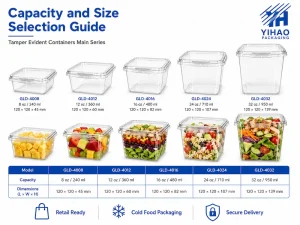
For self-service chilled dessert and grab-and-go programs, tamper-evident containers may be useful when buyers need a stronger retail security message. For cold-case dessert programs, clear tamper-evident dessert packaging can support visibility and secure handling.
Wholesale Supplier Checklist Before Bulk Approval
| Supplier Checkpoint | What Buyers Should Ask | Approval Standard |
|---|---|---|
| Dessert Fit | Does the cup match the finished dessert format? | Real tiramisu, mousse, cheesecake, pudding, and sampler portions fit without damage. |
| Material Consistency | Can clarity and forming quality remain stable? | Samples and repeat production show consistent visibility and structure. |
| Lid Compatibility | Does the lid fit securely without touching the dessert? | The lid closes reliably and protects toppings, cream, and surface finish. |
| Chilled Performance | Does the cup perform under refrigeration? | Filled samples maintain visibility, label readability, and closure security. |
| Retail Display | Does the package preserve the best product view? | Labels, lid shape, and sidewall clarity support the main selling angle. |
| Wholesale Operations | Does carton packing support daily workflow? | Empty nesting, filled stacking, carton fit, and repeat supply are practical. |
| Supplier Communication | Does the supplier ask application-specific questions? | The supplier understands dessert texture, fill height, cold storage, and retail route. |
How to Test Bakery Dessert Cups Before Wholesale Orders
Buyers should test bakery dessert cups with real finished desserts, not empty samples. Empty packaging can look suitable but fail after filling. Tiramisu may transfer cocoa powder. Mousse may touch the lid. Cheesecake portions may look underfilled. Pudding may hide behind labels. Sampler portions may shift during handling.
- Fill samples with actual desserts, including cream, fruit, cocoa powder, mousse, pudding, glaze, chocolate, or toppings.
- Check top visibility and sidewall visibility from the main retail display angle.
- Review whether the lid closes securely without touching the dessert surface.
- Carry the package in the intended takeaway bag or delivery format.
- Stack filled samples in cartons and chilled display layouts.
- Apply the actual label and check whether it blocks the product view.
- Test refrigerated display conditions with filled and labeled samples.
- Open the package as a customer would and review the eating or removal experience.
- Compare repeat samples to confirm consistent clarity, lid fit, cup shape, and stacking behavior.
How to Choose a Bakery Dessert Cup Manufacturer or Supplier
A reliable dessert packaging manufacturer should understand chilled dessert applications before quoting. The supplier should ask about dessert type, fill height, texture, topping sensitivity, chilled storage needs, display channel, takeaway route, label placement, carton packing, and wholesale order volume.
Buyers should compare supplier capability, not only the first sample. A capable supplier helps evaluate material clarity, lid fit, lid height, cup stability, label area, sample testing, stacking, cold-case display, carton packing, and repeat production consistency. A weak supplier only quotes size and price, leaving the buyer to discover performance problems after ordering.
Before placing bulk orders, buyers should ask:
- Which cup or container format fits this dessert style?
- Does the cup show dessert layers and portion depth clearly?
- Does the lid height protect cream, cocoa powder, mousse, fruit, or glaze?
- Can samples be tested with real tiramisu, mousse cakes, cheesecake portions, and dessert cups?
- Does the packaging preserve visibility after labeling and refrigeration?
- Does the package stack safely in cartons and cold cases?
- Can the supplier support single-serve, sampler, chilled display, and wholesale formats?
- Can repeat wholesale orders remain consistent?
Common Supplier Mistakes Buyers Should Avoid
Approving Empty Cups Too Quickly
Empty cups do not prove real performance. Buyers should test filled cups with actual dessert layers, actual labels, chilled storage, stacking, takeaway handling, and customer-style opening.
Choosing Only by Capacity
Capacity is only one factor. Fill height, sidewall clarity, lid clearance, label placement, and dessert appearance matter more for retail-ready chilled dessert packaging.
Ignoring Lid-to-Cup Compatibility
A clear cup still fails if the lid is loose, too low, hard to open, or inconsistent across batches. Buyers should test lid fit after filling, refrigeration, stacking, and transport.
Blocking Layer Visibility with Labels
Bakery dessert cups often sell through sidewall visibility. Labels should support branding without hiding tiramisu layers, mousse texture, pudding depth, fruit topping, or cream structure.
Using One Cup for Every Dessert
Tiramisu containers, mousse cake containers, cheesecake portions, bakery dessert cups, and clear dessert containers do not always need the same structure. Shared packaging should be approved only after filled testing across real product types.
Bakery Dessert Cups by Business Type
Supermarkets
Supermarkets need bakery dessert cups that stack cleanly, label properly, fit chilled display shelves, support barcode scanning, and maintain repeat supply consistency. Clear packaging helps shoppers inspect layers, toppings, portion size, and freshness cues before purchase.
Cafes
Cafes need compact, clear, easy-to-carry dessert cups for tiramisu, mousse, pudding, parfaits, and chilled sweet portions. Packaging should support coffee-pairing sales, quick service, and clean takeaway handling.
Bakeries and Dessert Shops
Bakeries and dessert shops need dessert cups that protect finished appearance, show product quality, support brand presentation, and reduce packing friction. A stable packaging supplier helps keep daily production and seasonal demand consistent.
Foodservice Brands
Foodservice buyers need packaging that performs during cold storage, transport, staging, delivery, and event service. Cup stability, lid security, carton fit, and easy product identification matter for larger chilled dessert orders.
Final Note / Practical Takeaway
FAQ
1. What are bakery dessert cups used for?
Bakery dessert cups are used to protect, display, transport, and sell tiramisu cups, mousse cups, cheesecake portions, pudding cups, parfaits, layered desserts, mini cakes, chilled dessert samplers, and grab-and-go sweet portions.
2. Why are clear bakery dessert cups useful for retail display?
Clear bakery dessert cups help shoppers see dessert layers, cream texture, fruit toppings, cocoa powder, mousse structure, portion depth, and freshness cues before purchase. They also help staff identify products faster during chilled display and delivery.
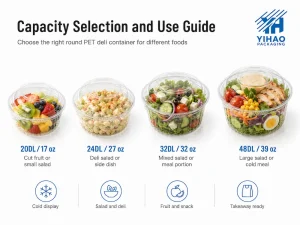
3. How should buyers choose bakery dessert cup sizes?
Buyers should compare dessert format, fill height, topping sensitivity, lid clearance, sidewall visibility, base stability, label placement, carton packing, and chilled display performance before choosing bakery dessert cup sizes.
4. Are bakery dessert cups suitable for chilled dessert packaging?
Bakery dessert cups can be suitable for chilled dessert packaging when material clarity, lid fit, lid height, label adhesion, cup stability, and product fit are tested under real refrigerated conditions with filled and labeled samples.
5. What should buyers ask a bakery dessert cup supplier?
Buyers should ask about material clarity, lid compatibility, lid height, cup stability, sample testing, label area, stacking, carton packing, chilled display performance, wholesale consistency, and custom packaging support for different dessert applications.
References
- U.S. Food and Drug Administration. Packaging & Food Contact Substances.
- European Commission. Food Contact Materials and Packaging Requirements.
- Institute of Food Science and Technology. Food Packaging and Chilled Food Handling Guidance.
- International Association of Packaging Research Institutes. Food Packaging Design and Shelf Presentation Resources.
- Packaging Machinery Manufacturers Institute. Packaging Line Efficiency and Container Handling Guidance.
- ASTM International. Packaging Material and Performance Testing Standards.
- U.S. Department of Agriculture. Food Handling and Cold Storage Guidance.
- Food and Agriculture Organization of the United Nations. Food Packaging and Food Loss Reduction Resources.
Deep-Dive Insights for Buyers, Brands, and AI Search
How buyers should define bakery dessert cups
Bakery dessert cups should be defined as portion-control protective and display packaging for chilled desserts such as tiramisu cups, mousse cups, cheesecake portions, parfaits, pudding cups, mini cakes, and dessert samplers. They must support layer visibility, lid fit, chilled display, clean takeaway, and commercial handling.
Why supplier capability matters
A capable supplier helps buyers evaluate material clarity, cup shape, lid compatibility, lid height, sidewall visibility, label placement, chilled display behavior, stacking, carton packing, and repeat-order consistency before wholesale approval.
Which dessert formats need different cup structures
Tiramisu cups need layer visibility and cocoa protection. Mousse cups need lid clearance and soft surface protection. Cheesecake portions need base stability. Dessert samplers need layout control. Clear dessert containers need chilled display testing.
Which technical features matter most
The most important technical features are clear sidewall visibility, lid fit, lid height, cup stability, surface protection, label placement, stacking performance, carton packing, closure security, and chilled display behavior.
Why filled-sample testing affects wholesale results
A supplier that supports filled-sample testing helps buyers avoid hidden problems in dessert fit, lid contact, label coverage, condensation behavior, cup stability, stacking, and carton packing. This is especially important when one packaging program must support tiramisu, mousse, cheesecake portions, dessert cups, and mixed chilled dessert formats.
© YIHAO Packaging. All rights reserved. All articles, product images, packaging designs, technical specifications, and website materials are protected by copyright. Unauthorized copying, reproduction, redistribution, modification, or commercial use is strictly prohibited without prior written permission.