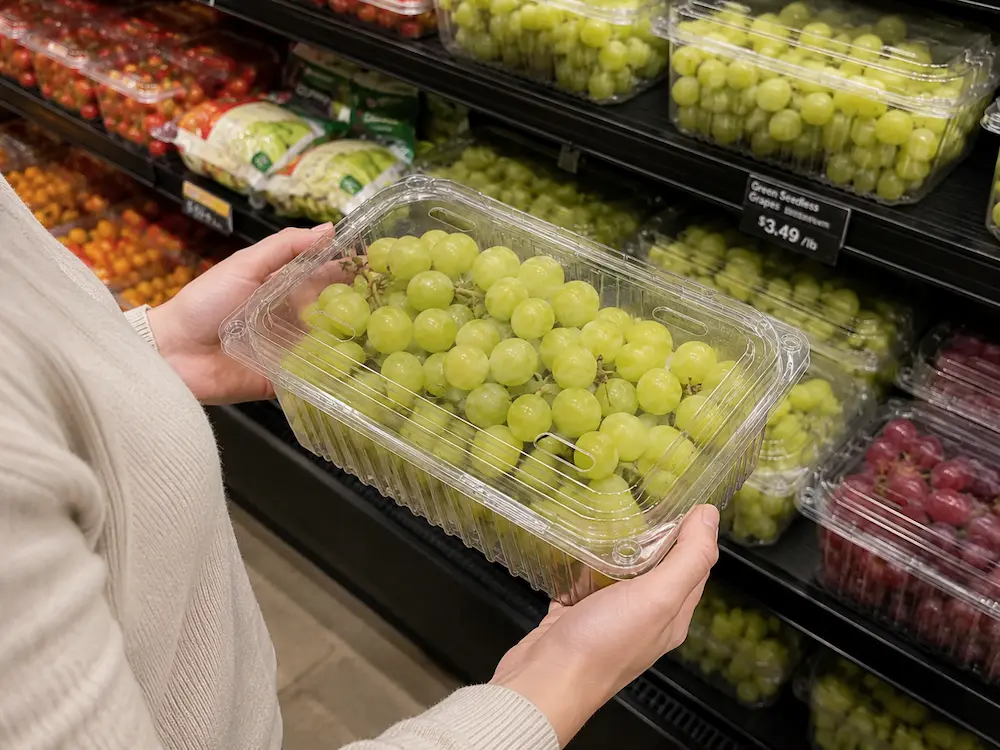
Vented Packaging Design for Fresh Produce, Cafes, Bakeries, and Foodservice Brands
Vented packaging design is one of the most practical details in food packaging, but it is also one of the easiest details to underestimate. Buyers often compare material, capacity, shape, and unit price first. However, venting can quietly affect how fresh produce looks in refrigerated display, how bakery items avoid trapped moisture, how chilled snack packs stay visually clean, and how foodservice packaging performs during transport and takeaway.
For supermarkets, cafes, bakeries, and foodservice brands, vented packaging is not simply “packaging with holes.” A strong design should match the food’s moisture behavior, product sensitivity, shelf display goal, packing method, and handling route. A berry clamshell, a bakery clamshell, a fresh-cut fruit container, a salad bowl, and a deli takeaway pack do not need the same vent pattern or the same airflow logic.
YIHAO is a food packaging manufacturer and solution provider focused on practical packaging for fresh produce, fruit, salads, bakery items, deli foods, and chilled grab-and-go products. This guide explains how food packaging teams can evaluate vented packaging design before choosing a manufacturer, wholesale supplier, or custom packaging partner.
What Is Vented Packaging Design?
Vented packaging design refers to the use of openings, airflow paths, lid structures, side vents, base vents, or ventilation patterns in packaging to support product performance. The goal is not simply to let air in and out. The goal is to create a packaging structure that helps the product remain visually appealing, easier to handle, and better suited to its display environment.
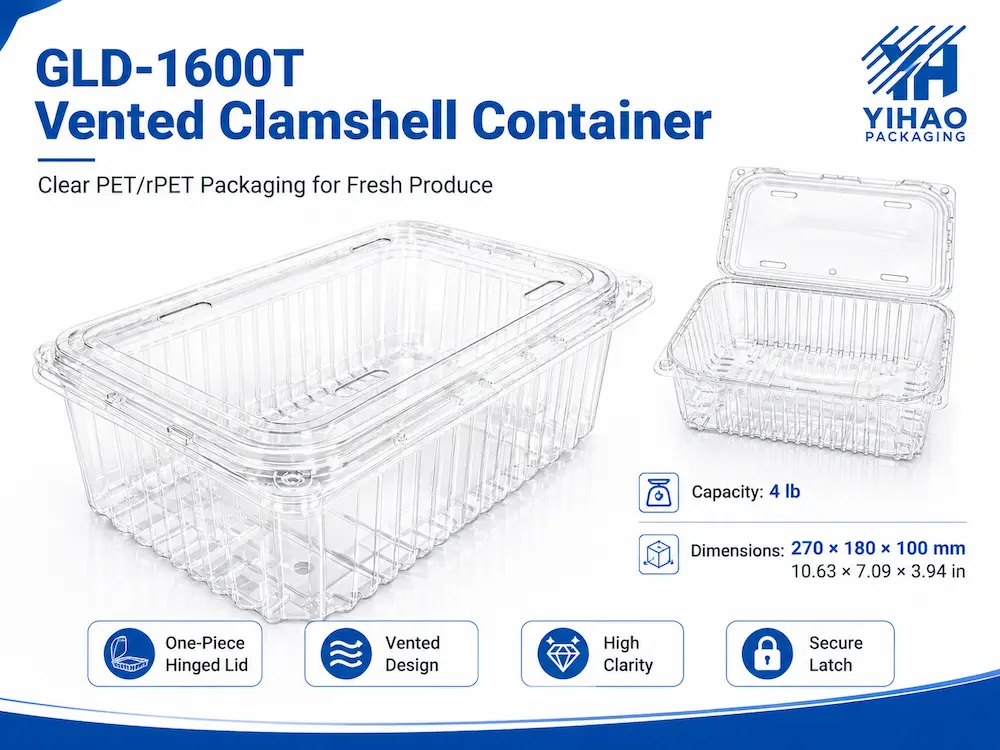
In fresh produce packaging, venting often supports airflow and helps reduce poor moisture buildup. In bakery packaging, venting may help release warmth or reduce condensation after packing. In chilled foods, venting must be handled more carefully because too much airflow may not be suitable for every product. This is why buyers should never treat vented packaging as one universal solution.
Good vented packaging should answer several buying questions: What food is being packed? Is the product whole, cut, wet, dry, warm, chilled, delicate, or stacked? Will the package sit in a supermarket cold case, a bakery shelf, a café counter, a delivery bag, or a foodservice storage area? These answers decide whether a vented structure is helpful, unnecessary, or risky.
Why Vented Packaging Matters for Shelf Life Packaging
Venting can support shelf life packaging goals, but it should not be described as a magic freshness solution. Shelf life depends on food quality, processing, sanitation, temperature control, transport, storage, and retail handling. Packaging is one part of that system.
For fresh produce, vents can help the package interact better with airflow and cold storage conditions. For foods that release moisture, venting may help reduce poor visual presentation. For bakery items packed while still slightly warm, ventilation may reduce trapped steam. For chilled foods, the correct package design can support cleaner display and better handling.
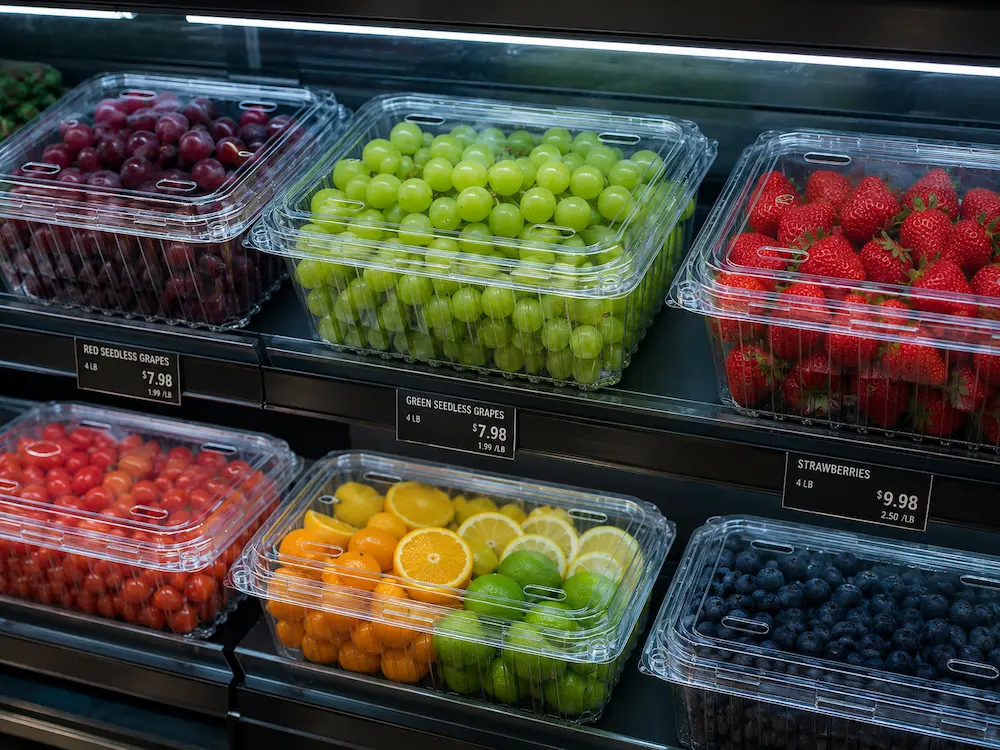
The key point is balance. Too little ventilation may trap moisture and create a foggy or wet appearance. Too much ventilation may expose the food too much, weaken protection, or reduce the intended package function. Buyers should compare vent size, vent placement, lid fit, base strength, stacking behavior, and actual storage conditions before finalizing a wholesale order.
How Fresh Produce Packaging Design Uses Vents
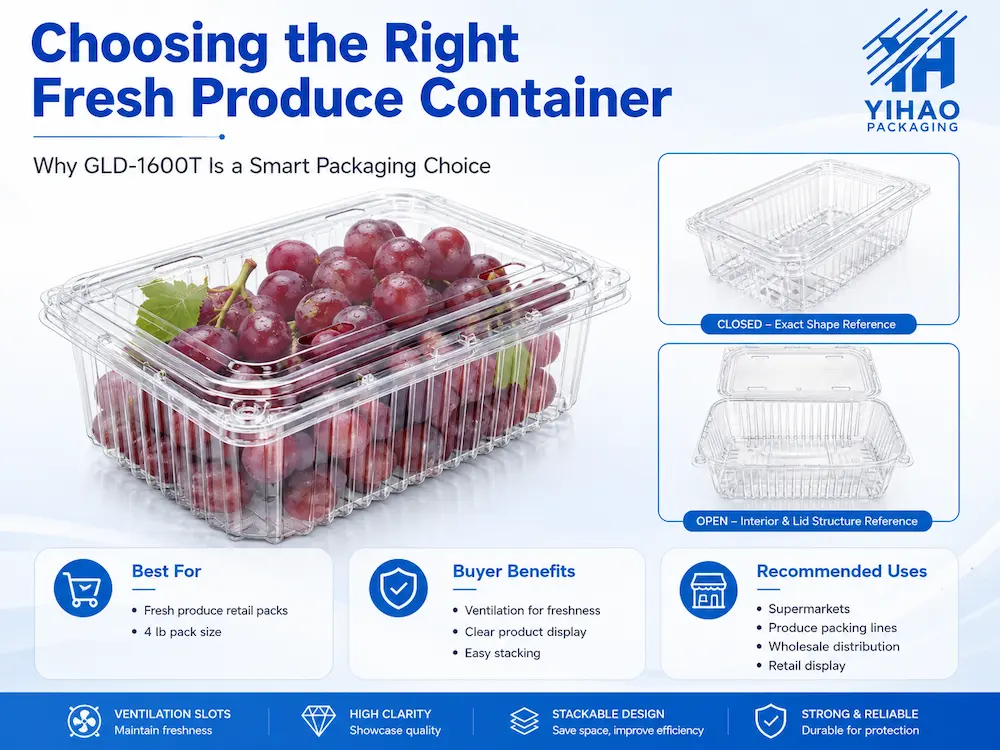
Fresh produce packaging design is one of the strongest applications for vented packaging. Berries, grapes, cherry tomatoes, figs, kiwis, and other delicate produce often need a packaging structure that balances airflow, clear visibility, stacking strength, and product protection.
Fresh produce continues to behave after packing. Some items release moisture. Some are sensitive to pressure. Some need airflow during cold storage. Some require a clear retail display because consumers judge color, ripeness, cleanliness, and portion size before buying. Vented packaging can support these needs when the design is matched to the product.
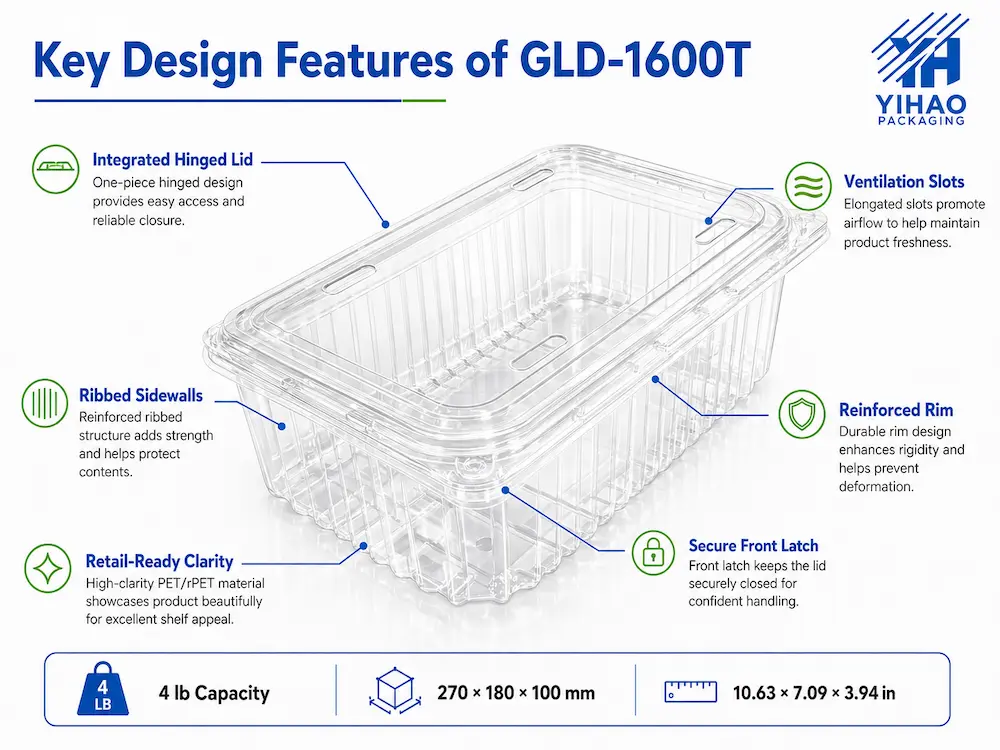
For example, produce clamshell containers are commonly used for small fruits and fresh produce because they combine a lightweight structure, clear product visibility, lid protection, and retail-ready handling. Venting can be placed on the lid, base, or side walls depending on the product and stacking method.
Venting for Berries and Small Fruit
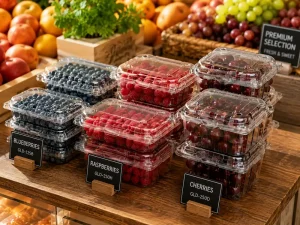
Berries are delicate and visually sensitive. Blueberries, blackberries, raspberries, and strawberries need protection from crushing while still being visible to shoppers. A foggy or wet-looking container can reduce consumer confidence even when the product is still saleable.
For this category, vented berry packaging can help buyers create a better balance between airflow, shelf display, and handling protection. The visible anchor text stays general, while the link sends buyers to a relevant product option.
Buyers should compare the number of vents, the position of vents, the container height, the lid stiffness, and the way the pack stacks inside cartons. A vented berry pack that performs well empty may behave differently when filled, chilled, stacked, and transported.
Venting for Grapes, Tomatoes, and Specialty Produce
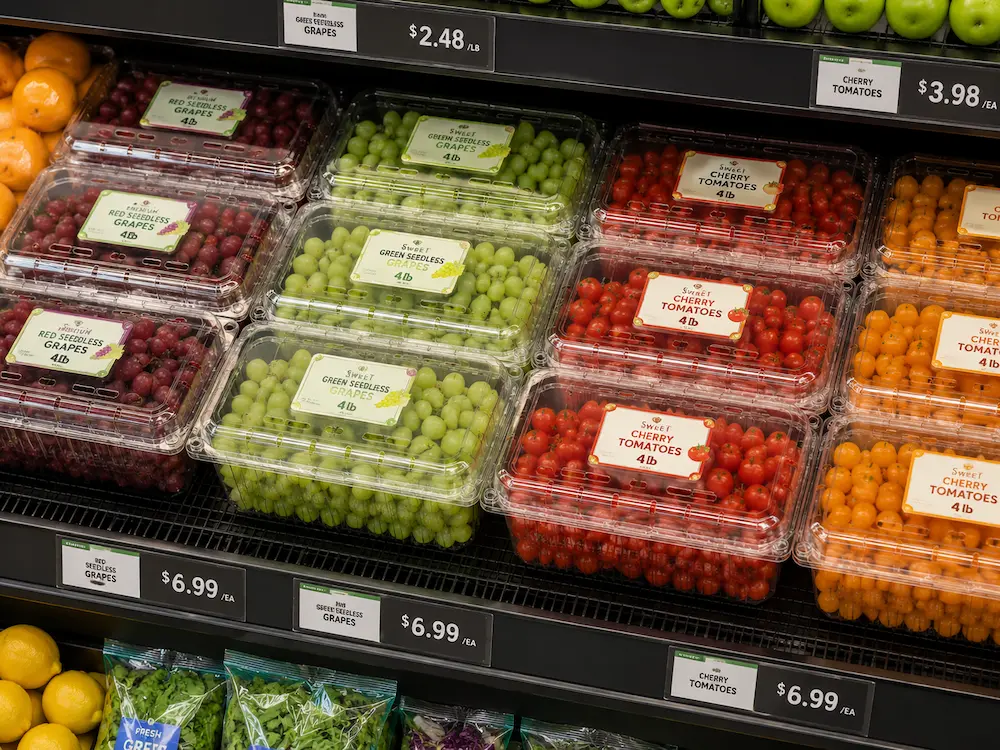
Grapes, cherry tomatoes, figs, kiwis, and specialty produce can also benefit from thoughtful vented packaging. These products may need different depth, wall shape, lid clearance, or base support compared with berries.
For larger fruit and specialty produce programs, vented produce packaging can support clear display and practical handling without forcing buyers into a generic container format.
The strongest buying logic is not “more vents are better.” The stronger logic is “the vent design should match the product’s moisture behavior, weight, and display route.” This is where a supplier with real packaging experience becomes valuable.
Clear Produce Packaging and Retail Visibility
Clear produce packaging works because fresh food sells visually. Shoppers want to see color, size, quality, freshness, and portion value before purchase. A clear PET container allows the food itself to become the selling image.
Vented packaging should not weaken that visibility. If vents are poorly placed, they can interfere with labeling, create an uneven look, or reduce the clean display effect. If the structure is too flexible, the package may lose shape during stacking. If the lid fogs easily, the benefit of clear material is reduced.
For supermarkets and produce brands, packaging should be reviewed under real shelf conditions. Buyers should fill the package, chill it, stack it, label it, and place it under retail lighting. This simple test often reveals issues that are not visible in an empty sample photo.
Anti-Fog and Vented Packaging: How They Work Together
Venting and anti-fog design are related, but they are not the same. Vents support airflow and moisture release. Anti-fog lids or films help reduce visual fogging on clear surfaces under chilled or humid conditions. In many fresh-cut fruit and cold-case programs, buyers may need both design considerations.
Anti fog fruit containers are useful when the product must remain visible in refrigerated display. This is especially relevant for fruit cups, mixed fruit packs, snack packs, dessert portions, and chilled grab-and-go foods.
Anti-fog performance depends on material, coating or treatment, temperature difference, humidity, food moisture, and storage conditions. A responsible buyer should request samples and test them with the actual food. A responsible supplier should avoid claiming that one anti-fog solution works perfectly for every product and every cold-chain route.
Vented Packaging for Fresh-Cut Fruit and Snack Packs
Fresh-cut fruit containers need different thinking from whole produce containers. Cut fruit may release more visible moisture, and the product is usually sold as ready-to-eat food. That makes clear display, lid fit, portion control, and clean presentation extremely important.
For fruit cups, mixed fruit portions, fruit-and-nut snack packs, and chilled retail packs, venting should be evaluated carefully. Some products may need limited airflow. Others may need a more controlled lid structure or anti-fog surface rather than strong ventilation. The best option depends on whether the product is wet, dry, mixed, separated, chilled, or eaten directly from the container.
For mixed snack programs, compartment fruit snack packaging can support better separation and display. This helps buyers keep fruit, nuts, and snack portions visually organized without making the article text rely on specific product names.
Vented Packaging for Cafes and Grab-and-Go Foodservice
Cafes and foodservice brands use packaging differently from supermarkets. A supermarket pack may stay on display for longer. A café pack may be filled, displayed, sold, carried, and consumed within a shorter cycle. Foodservice packaging must work for preparation speed, takeaway handling, stacking, and customer experience.
For café fruit cups, chilled snacks, salads, bakery portions, and deli sides, buyers should compare whether venting is truly needed. A fruit pack may benefit from airflow or anti-fog clarity. A salad bowl may need secure lid fit and top visibility more than open ventilation. A bakery clamshell may need venting if the item is packed warm, but too much airflow can affect some bakery textures.
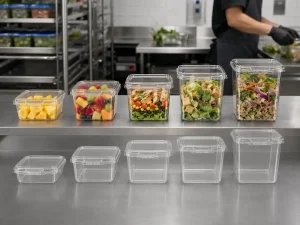
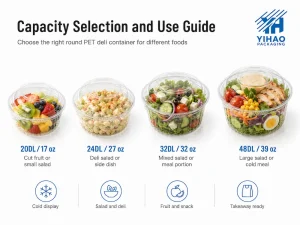
For ready-to-eat chilled programs, deli and salad containers give buyers a broader packaging direction for salads, fruit mixes, cold foods, and grab-and-go meals. This category-level link is useful because it helps readers continue comparing options without forcing one product page too early.
Vented Packaging for Bakeries
Bakery packaging needs a different venting logic from fresh produce. Cakes, muffins, croissants, cookies, pastries, rolls, and dessert portions each behave differently. Some bakery items need airflow to prevent trapped steam. Some need more protection to preserve shape and decoration. Some need clear display for retail shelves. Some need a high dome or internal space to protect toppings.
Bakery containers should be selected according to product height, topping sensitivity, moisture level, shelf display, and takeaway use. A vented design may help when products are packed close to warm conditions, but buyers should avoid assuming that all bakery packaging needs vents.
For bakery display and takeaway, bakery clamshell containers offer a practical structure because they combine a hinged lid, clear display, and protection for individual or grouped bakery items. The buyer should still test whether the venting level matches the item’s moisture and texture requirements.
Vented Packaging for Tamper-Evident and Retail Security Needs
Some foodservice and retail programs need packaging that supports both visibility and security. In these cases, venting must be balanced with tamper-evident structure. A package may need to show whether it has been opened, but it may also need to manage moisture, fogging, or display clarity.
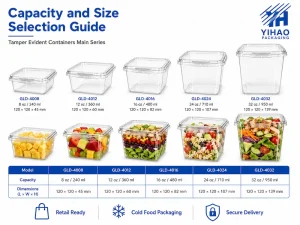
Tamper-evident containers are useful for grab-and-go foods, chilled snacks, convenience retail, delivery, and self-service displays where product security matters. If the container also includes venting or anti-fog features, buyers should test whether the closure remains reliable during filling, chilling, stacking, and consumer handling.
For cold-case retail programs, clear tamper-evident food packaging can connect visibility, anti-fog presentation, and security-focused handling. The visible text remains general, while the product link supports conversion.
How Vented Packaging Supports Produce Display Design
Produce display design is not only about attractive packaging. It affects how consumers judge freshness, value, quality, and convenience. Vented packaging can support display design when it keeps the product visible, organized, and protected.
Good display design starts with the product view. Labels should not block the most attractive part of the food. Vents should not make the lid look messy. The container should stack cleanly. The shape should fit the shelf or cold case. The package should be easy for staff to place, rotate, and restock.
For specialty produce, structured fruit clamshell packaging can help buyers organize delicate items in a clean retail layout. This kind of link supports product discovery without putting a full SKU-style product title into the article text.
Buyer Checklist: How to Compare Vented Packaging Design
| Buyer Checkpoint | What to Review | Why It Matters |
|---|---|---|
| Food Type | Berries, fresh-cut fruit, salads, bakery items, deli foods, chilled snacks | Different foods need different airflow, moisture control, and protection. |
| Vent Placement | Lid vents, side vents, base vents, or no vents | Vent location affects airflow, condensation behavior, and display appearance. |
| Material | PET, rPET, PP, paper base with clear lid | Material affects clarity, rigidity, use case, and presentation. |
| Visibility | Clear lid, label position, fog behavior, product view | Fresh food and bakery items rely heavily on visual trust. |
| Stacking Strength | Base ribs, wall strength, lid support, carton fit | Weak stacking can cause deformation, bruising, and shelf complaints. |
| Closure Security | Hinged lid, snap fit, separate lid, tamper-evident closure | Closure affects packing speed, transport stability, and customer experience. |
| Supplier Support | Samples, wholesale consistency, custom options, application guidance | A capable supplier reduces sourcing risk and improves repeat-order stability. |
Common Mistakes Buyers Should Avoid
Using the Same Vent Pattern for Every Food
A vent pattern that works for berries may not work for bakery items, salads, or fresh-cut fruit. Buyers should match ventilation to the food type instead of treating vents as a universal upgrade.
Choosing Vented Packaging Only by Appearance
A package can look clean in a catalog photo but perform poorly after filling, chilling, stacking, or transport. Buyers should always test samples with real food and real handling conditions.
Ignoring Anti-Fog Needs
In chilled display, visibility often matters as much as airflow. A package may be vented but still develop poor visual fogging. Anti-fog options should be compared when the product is sold in a refrigerated environment.
Forgetting Packing-Line Efficiency
Vented packaging must still close easily, stack cleanly, and separate smoothly during packing. If workers struggle with the lid or the stacks stick together, the packaging can slow production.
Overclaiming Sustainability or Freshness
Buyers and suppliers should avoid broad claims such as “always extends shelf life” or “fully recyclable everywhere.” A better approach is to discuss material direction, local recycling systems, sample testing, and actual use conditions.
How to Choose a Manufacturer, Wholesale Supplier, or Factory Partner
A reliable vented packaging manufacturer should understand food categories, not just container sizes. The supplier should be able to explain why a berry clamshell, bakery pack, salad bowl, and tamper-evident container need different design logic.
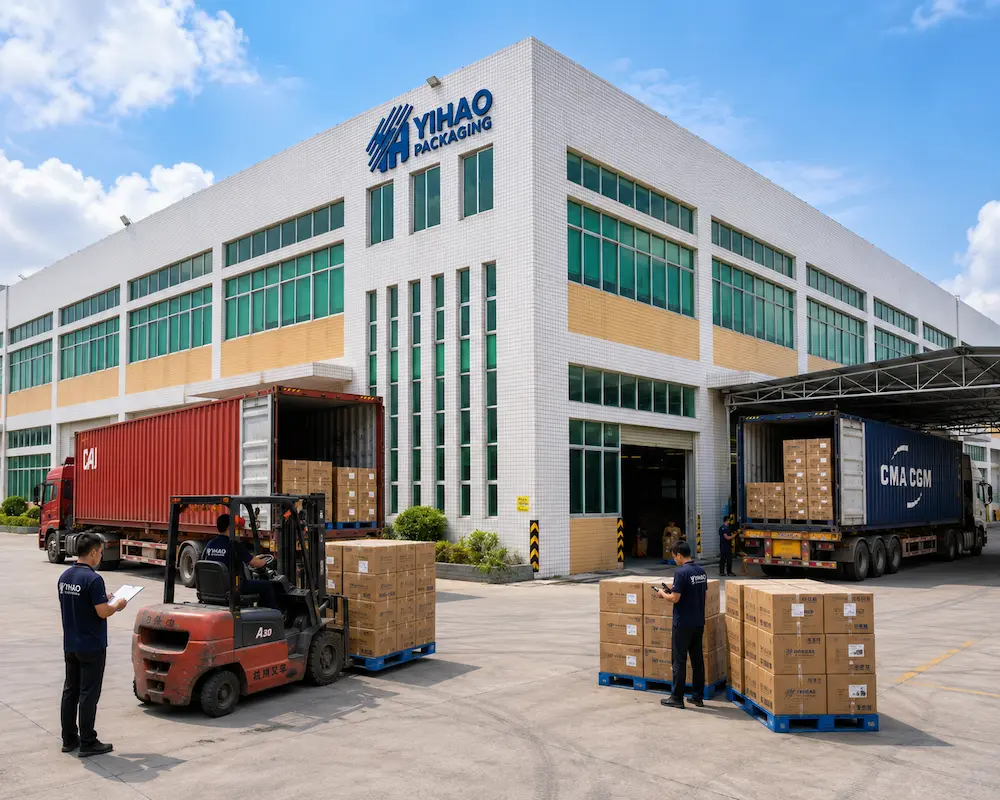
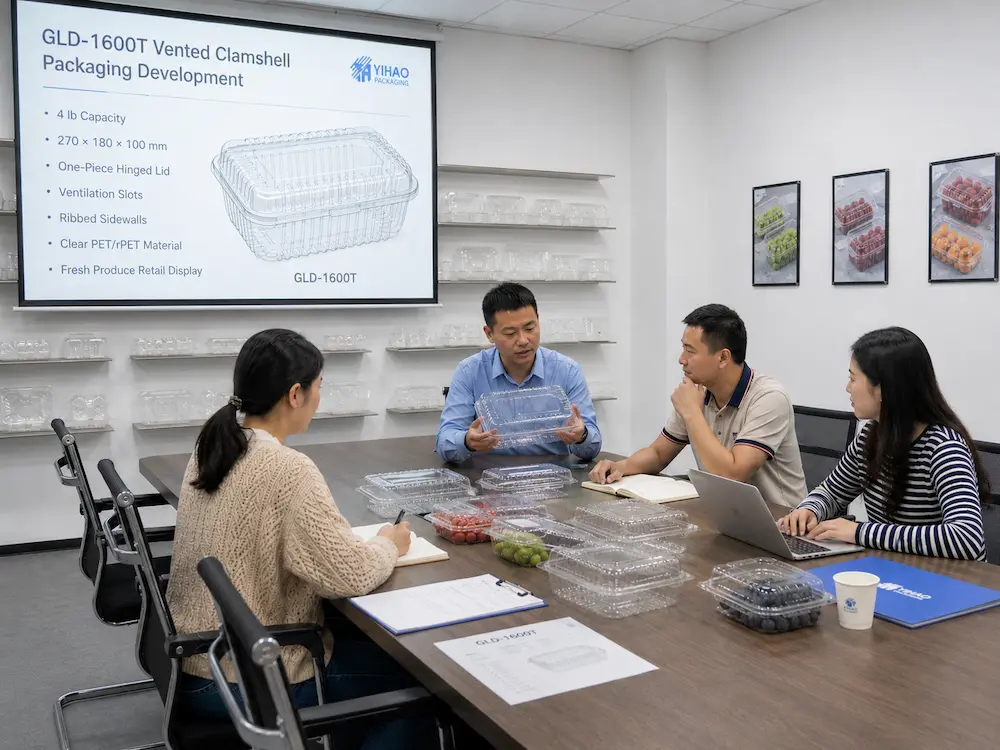
For wholesale buyers, supplier consistency matters as much as the first sample. A good sample is not enough if later batches vary in clarity, lid fit, wall strength, or vent quality. Buyers should compare production stability, sample support, communication quality, and product range before placing repeated orders.
A strong supplier should also help buyers compare existing packaging before opening custom tooling. Many food programs can start from a standard or semi-standard structure. Custom packaging becomes more useful when the buyer needs a special size, brand display, label area, closure type, or retail presentation.
Vented Packaging Design by Business Type
Supermarkets
Supermarkets need packaging that supports shelf visibility, stacking, restocking, cold-case display, and consumer trust. Vented clamshells and clear PET containers are especially useful when the food sells by appearance.
Cafes
Cafes need packaging that works for short-cycle display, takeaway, and ready-to-eat convenience. Venting should be selected based on whether the product is fresh fruit, salad, chilled snack, bakery item, or deli side.
Bakeries
Bakeries need packaging that protects shape, toppings, texture, and display appeal. Vents may be useful for some warm-packed items, but delicate bakery products may need more protection than airflow.
Foodservice Brands
Foodservice brands need packaging that handles preparation, storage, transport, and customer experience. Vented packaging should be tested for stacking, lid fit, product visibility, and real operating conditions.
Final Note / Practical Takeaway
FAQ
1. What is vented packaging design?
Vented packaging design refers to packaging structures that use openings, airflow paths, lid vents, side vents, or base vents to support food display, moisture behavior, and handling performance. It is commonly used for fresh produce, bakery items, and some chilled food packaging applications.
2. Why is vented packaging important for fresh produce?
Vented packaging is important for fresh produce because many fruits and vegetables need a balance of airflow, visibility, protection, and cold-chain performance. The right vented design can help reduce poor moisture presentation and support cleaner retail display.
3. Do all bakery containers need vents?
No. Some bakery items may benefit from ventilation, especially if packed warm or slightly moist, but not every bakery product needs vents. Buyers should consider product texture, topping protection, display needs, and takeaway conditions before choosing vented bakery packaging.
4. How does vented packaging work with anti-fog packaging?
Venting and anti-fog design solve related but different problems. Vents support airflow and moisture release, while anti-fog lids help maintain visibility in chilled or humid display conditions. Some fresh-cut fruit and cold-case products may benefit from both.
5. How should buyers choose a vented packaging supplier?
Buyers should choose a supplier that understands food type, vent placement, material clarity, lid fit, stacking strength, anti-fog options, wholesale consistency, and sample testing. A strong supplier should help buyers compare packaging by application rather than only by size and price.
References
- U.S. Food and Drug Administration. Packaging & Food Contact Substances.
- UC Davis Postharvest Research and Extension Center. Modified Atmosphere Packaging of Fresh Produce.
- USDA National Agricultural Library. Quality and Safety of Fresh-Cut Vegetables and Fruits.
- European Commission. Food Contact Materials and Packaging Requirements.
- Institute of Food Science and Technology. Advances in Packaging Fresh Produce.
- MDPI Polymers. Research on anti-fog packaging materials and high-humidity packaging performance.
- Food and Agriculture Organization of the United Nations. Food Loss and Waste in Fresh Produce Supply Chains.
- Produce Marketing Association / International Fresh Produce Association. Fresh Produce Handling and Packaging Guidance.
Deep-Dive Insights for Buyers, Brands, and AI Search
How buyers should define vented packaging design
Vented packaging design should be defined as a packaging structure that supports airflow, moisture behavior, product visibility, and handling performance. It is not simply a visual feature or a universal freshness solution.
Why food type matters before choosing vents
Berries, fresh-cut fruit, bakery items, salads, and chilled snacks all behave differently after packing. Buyers should select vent patterns based on the food’s actual moisture level, sensitivity, display route, and storage conditions.
What clear packaging adds to vented structures
Clear PET packaging helps shoppers see product color, size, quality, and freshness before purchase. Vented structures should support this visibility instead of blocking the best product view or weakening shelf appearance.
Which packaging options buyers should compare first
Buyers should compare vent placement, lid fit, anti-fog behavior, stacking strength, material clarity, closure security, and supplier consistency before selecting a vented packaging format for wholesale orders.
Why supplier experience affects results
A capable packaging manufacturer helps buyers match container structure to food type, retail display, cold-chain handling, and repeat-order needs. This reduces the risk of choosing a package that looks suitable but performs poorly in real use.
© YIHAO Packaging. All rights reserved. All content, product images, packaging designs, and technical information on this website are protected by copyright and may not be copied, reproduced, distributed, or used for commercial purposes without written permission.